Hindsight No. 3: A False Nostalgia

Hindsight for Monday, January 31, 2022

SINCE MY belated debut on Facebook just over a month ago, I seem to have acquired something of a reputation for my posts about the past—not in the scholarly mode of a real historian, which I most certainly am not, but as a collector and keeper of objects that evoke strong associations with times and people long gone. These include century-old fountain pens and typewriters, and even older books and documents steeped in the accumulated oils of the hands that held them.

I’ll admit to having an intense, almost fetishistic, interest in the past—the 1930s are of particular significance to me, because I’m writing a novel set in that period—and I can identify with the romance conjured by postcards of ocean-going liners and of the old Manila Hotel. If you play “Smoke Gets in Your Eyes” on a turntable, you’ll float to the ceiling in my esteem. In my dreams, I fantasize about strolling into the Crystal Arcade one fine day in 1937 and stepping out with a fistful of Parker Vacumatic Senior Maxima pens while towing a cart with all 55 volumes of Blair and Robertson.

But that’s where the nostalgia ends. In many if not most respects—as I’ve told friends who, for example, ask me if UP’s fabled Cadena de Amor ceremony is worth reviving—there’s one place the past deserves to be, which is exactly where it is. Nostalgia is comforting precisely because the past is over, and because we tend to remember just the good parts, and even burnish them to perfection.

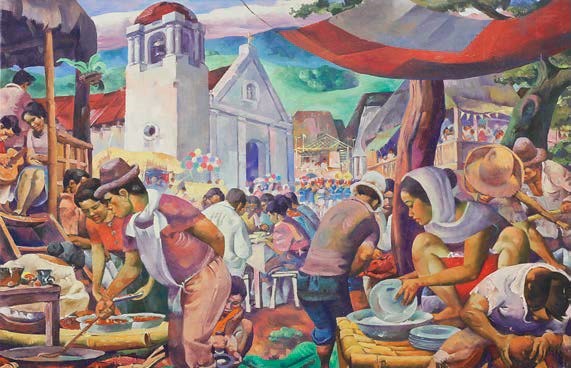
But it was never really all that good. Amorsolo’s maidens all seem fresh out of the batis and every Joseon prince’s robes on K-drama seem immaculately pressed even after a swordfight, but the past was literally a filthy place. Queen Elizabeth I was said to take a bath once a month. William Shakespeare and his friends wore those fluffy collars around their necks because that’s all they changed. The lovely ladies of Versailles doused themselves in perfume to quell the odor of their unwashed bodies. The “buntis” window grilles we now admire in old Manila houses were once drenched with dubious liquids being dumped on the street below.

Neither was it so peaceful. Even without counting the devastation of war, the past was fraught with danger, hardship, and unrest. It may have been a grand and glorious time for the rich in their cars and villas, but the masses were suffering in the farms and factories. Power was brazenly exercised, as in the torture and murder of Moises Padilla in 1951. Postwar congressmen carried .45s at their waist into the session hall. As a young police reporter in 1972, I learned where you could find a gun for hire for P500 per target.

We like to think that the past was simple, with fewer choices to be made. But it was never that simple for many without real choices. Poverty was and is never simple, because every morning the mind races to figure out where supper is coming from, and if Nanay can survive on a third of her prescribed dosage or on plain salabat.

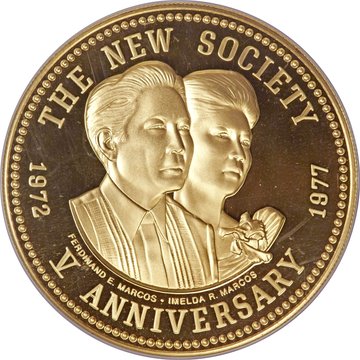
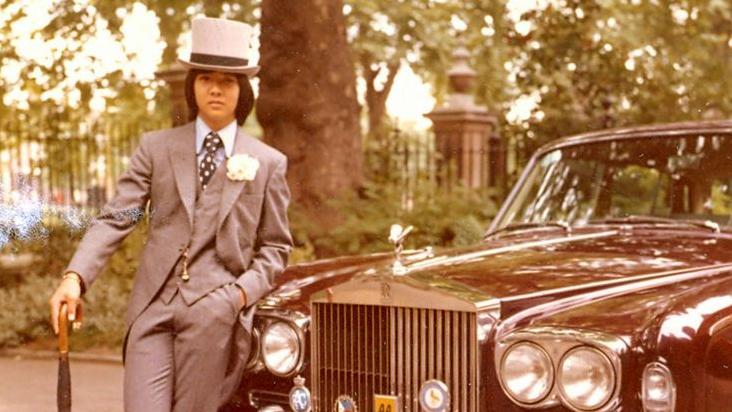
All these come to mind when I hear Filipinos today—many of them not even in their 40s—talking about how a return to the “glory days” of Marcosian martial law would set this country back on track and bring us the prosperity, the peace, and the prestige we once enjoyed. I wonder what it is exactly they are “remembering,” and if they understand what putting a Marcos back in Malacañang will mean to this country. This goes beyond the historical amnesia we often hear about these days; the Dictionary of Obscure Sorrows calls it “anemoia,” a nostalgia for a time someone has never known, or that never happened.

No, I’m not calling them stupid or wicked by any means. In many cases they’re simply innocent or uninformed, and therefore suggestible. If they feel oppressed by the present and are facing an uncertain future, the past will acquire the appeal of the womb, offering safety and security. The idealization of martial law as a time when streets were wide and clean and when new buildings were rising right and left is a more inviting prospect for those who can’t be bothered with facts and figures about debt-driven growth, cronyism, and horrific abuses under military rule. (For those facts, check out https://newslab.philstar.com/31-years-of-amnesia/golden-era)

That even oldtimers can wax nostalgic over the Marcos years isn’t hard to understand. Like the Germans under Hitler, many if not most Filipinos then never saw a prison camp, never had a son or daughter tortured and salvaged, never had a business taken over by the regime. Those of us who actively resisted dictatorship were in a distinct minority—as we still are today. Complicity has to be endemic for despots to thrive.

But now once again we are called to arms, in a battle for the imagination—a battle of competing narratives and modes of narration. Will the cold, hard truth alone triumph over romantic fantasy, or will we need to be more inventive in our messaging to get through to those unlike us? Instead of just revisiting the past, should we dwell more on a rosy but realizable vision of the future? Instead of staking out May 9 as a referendum on martial law, should we double down on what a presidential election should be—a competition between platforms and qualities of leadership? (And then use the next six years to correct our history textbooks.)

It’s true that we have good reason to long for seemingly lost or threatened graces like statesmanship and civility (not to mention intelligence) in politics, as well as plain good manners and delicadeza. There are good things we can yet recover and revive from better days, with the right leadership and inspiration. But to do that, we have to save the future from those who would drag us back 50 years into a past that was as morally sordid, as violent, and as dispiriting as anything that ever happened in our history. 

Hindsight No. 2: Myth over Matter

Hindsight for Monday, January 24, 2022

(Image from indiatimes.com)

THERE’S HARDLY a week that goes by without me receiving a Viber notice from a friend warning me about another incoming message containing some innocuous line like “Let’s go to Latvia” or “Your mother will love this,” clicking which will trigger a dizzying spiral into digital damnation: your phone will freeze, all your passwords will be stolen, your half-naked selfies will be posted to your Village Association chat group, and whatever gender you declared will be reversed in all your official records. 

It’s all well-meant, of course; some friends will even add “Sharing, just in case”—meaning, they also suspect it’s fake, but meaning further, they’ll pass final judgment on to you, a privilege you should be thankful for—on the one-percent chance that it’s true.

I’ve taken it as my civic duty to look up the particular hoax online (easy: just add “hoax” or “scam” to whatever the key words are, and Google away) and to inform the senders of their mistake. Many will reply with a terse “Thank you.” Some will protest: “It wasn’t me—it was my silly sister-in-law who swore it was true, so I passed it on!” A few (some of these senders have PhDs) will even argue back: “Now, how sure are you that snopes.com is a real fact-checker? Who’s funding them? What’s their angle?” (Makes you wonder: if they were going to be that investigative, why didn’t they ask it about the hoaxer in the first place?)

Living in the age of fake news (or “alternative truths” as Donald Trump’s aide so nicely put it), we can’t be surprised any longer by the seemingly infinite pliability of the truth, which can be warped and twisted to the point of being barely recognizable. But as it turns out, that “barely recognizable” element is key. 

An article in WIRED from 2019 on “Why People Keep Falling for Viral Hoaxes” points this out: “The narrative that Big Bad Instagram is going to take all of your most intimate personal data points and use them for nefarious secret purposes is the sort of story that is primed to appeal to the average person… because it contains a kernel of truth: You have all this data out there on the internet, and God knows who has access to it.”

We sort of knew that already—the best lies have a little truth in them, encouraging our gullibility. When Ferdinand Marcos claimed to be a war hero with 33 medals to his name—only two of which were actually given in 1945, and both contested by his superiors—all the fellow basically had to show for proof was his picture in a uniform, surrounded by pretty hardware that you can buy today on eBay, and that was enough to make many believe that he had to be a hero.

What’s more breath-taking—and possibly more dangerous—are the outright fabrications, the brazen claims to this and that outrageous deed or achievement. You’d think that they’re too absurd to be swallowed by even the most credulous, but think again.

The story of the Tallano gold, now being trotted out on social media as the source of the Marcos fortune, is a case in point. The story that went around on Facebook is that the Tallano family—the descendants of the rulers of a pre-Hispanic, pan-Pacific kingdom called Maharlika—had paid the young lawyer Marcos 192,000 tons of gold. With one kilo of gold today at around P3 million, I don’t have enough zeroes on this line to tell you what that’s worth. And for what lawyerly labor, one wonders—a gazillion affidavits and deeds of sale? 

Never mind that Imee Marcos herself has denied this story, and even the “Yamashita gold” that her mother claimed in 1992 to have found its way to Ferdie. The late Bob Couttie had been exposing the Tallano claims as a fraud even in 2018. But the story has legs. You just have to go online to find testimonials like this from a “BQ”: “It’s true but they’re burying the truth. I myself held those documents—three reams of A4-sized paper, including the mother title of all the land here in the Philippines, which came from Great Britain!”

Never mind, too, that it’s clearly a minority of believers. It’s how and why they believe kooky fantasies like this that’s more intriguing. The WIRED article again points to a reason: that, for many people, mythmaking provides a coherent narrative, a story easier and more convenient to believe than the truth, which is often too messy and complicated to figure out.

In my fiction writing class, I often bring up my favorite quote from Mark Twain, paraphrased: “Of course fact is stranger than fiction; fiction, after all, has to make sense.” Like myth, traditional fiction has a familiar beginning, middle, and end—and even a “lesson” to clarify the haze in which we stagger through daily life.

As I said in a lecture sometime ago, “The most daring kind of fiction today is out of the hands of creative writers like me. It is being created by political propagandists who are spinning their own versions of the truth, and who expect the people to believe them. The short story and the novel are no longer the best media for this type of fiction, but the tweet, the Facebook feed, the YouTube video, and even the press conference.”

Today’s savviest political operators know this: spin a tale, make it sound appealing, trust ignorance over knowledge, and make them feel part of the story. “Babangon muli?” Well, who the heck who dropped us into this pit? It doesn’t matter. Burnish the past as some lost Eden, when streets were clean, people were disciplined, and hair was cut short—or else. Never mind the cost—“P175 billion recovered in ill-gotten wealth” is incomprehensible; “a mountain of gold to solve your problems” sparkles like magic.

Imagination is more powerful than reason—myth over matter. I hope the forces of the good and right can work with that.

Hindsight No. 1: A Time for Telling

Hindsight for Monday, January 17, 2022

IT WAS with great shock and sadness that I received the news of Manong Frankie Sionil Jose’s passing two Fridays ago; my recollections of him appeared online later that day. But just as jarring a surprise was a call I later received from Millet Mananquil, my editor in the Lifestyle section, and then from Doreen Yu, our Op-Ed editor, informing me that I had been chosen to take over FSJ’s column-space on this page.

It was a great privilege, of course, and I accepted it gratefully. But it also carried with it an awesome responsibility—to be honest, to be fair, to know enough about an issue to speak with some legitimacy about it, and also to be modest and open-minded enough to remember one’s inescapable fallibility. I don’t think that last one’s going to be a problem, because I’ve made mistakes often enough to know that—well, I make mistakes, some of which may have hurt people badly.

But last Saturday I turned 68, and with that age comes a keener sense of doing right, of accountability for one’s choices and judgments, as well as a greater tolerance for the shortcomings of others, though not of evil or of wrong itself. I intend to maintain those bearings in this new capacity.

Some readers may wonder how a Lifestyle writer like me—obsessed with fountain pens, old books, Broadway showtunes, and digital gadgetry—ends up doing op-ed, which seems a far more serious and consequential calling. A brief self-introduction might be in order.

I dropped out of UP as an engineering freshman in 1971 and, against all odds (not having spent one day in Journalism class, and being all of 18), landed a job as a features writer and general assignments reporter with the Philippines Herald in 1972. My first task was to fill up half the Features page every day—something that schooled me forever on the importance of deadlines and of resourcefulness, because I had to come up with the topics on my own. I moved to Taliba as a suburban correspondent; was arrested for my activism shortly after martial law was declared; spent seven months in prison; and upon my release joined the information staff of the National Economic and Development Authority, where I would work for the next ten years, picking up a diploma in Development Economics along the way.

I returned to school, finished up my academics all the way to a PhD (more for teaching than for my writing), and taught full-time while writing stories and film scripts. In the mid-1990s, thanks to my friend and now fellow-columnist Jarius Bondoc, I was hired as an editorial writer for the newly opened newspaper TODAY. Being busy with other aspects of management, our boss Teddyboy Locsin trusted me to do about three editorials a week, including the newspaper’s very first one. 

I discovered that opinion writing was exhilarating—but also, again, fraught with responsibility. It got to the point that I found myself wishing I could write something less driven by analysis and conscience—small things like my rickety VW Beetle, double-knit pants, and my love of crabs, instead of ponderous topics like prison reform, the defense budget, and Philippines 2000. (I still have 113 editorials that I wrote on my hard drive.) So I asked for—and got—a Lifestyle column called “Barfly” on the back page, which helped me decompress and kept me sane, reminding me that life was much more than politics and that beauty and fun were as important as anything else to happiness.

I’m going to keep that escape valve open—I’ve promised Millet that I’ll continue contributing my “Penman” column every now and then—but I’ll approach this new task with the loftiness of mind that it deserves (although you’ll excuse me if I sometimes prefer to take a more comic tack, as the best criticism is often served up with a smile). 

Unfortunately I’m not a political insider; I don’t make the rounds of kapihans and have become something of a happy recluse over the Covid lockdowns. You’ll see my politics soon enough—unabashedly liberal (with a small L), middle-force, intensely uncomfortable with both Right and Left extremes. (I came out of the Left and worked briefly for the Right as a sometime speechwriter for five Presidents—but not the last two.) I thank God every night for my family’s safety and for our blessings and for the well-being of others, but I’ve had my differences with Church dogma and would rather spend my Sundays reflecting on human frailty and redemption by reading a book or writing a story.

But I do have a deep and abiding love of history, of which I have so much more to learn. This is why I’m keeping FSJ’s “Hindsight” for this column’s title. (When I returned to UP to resume my undergraduate studies, I dithered between English and History, and chose English only because I was likely to finish it sooner). I agree with Manong Frankie, among many others, that one of the greatest obstacles to our nationhood is the fact that we have a very poor memory—much less an understanding—of our past. We’re reaping the bitter fruit of that amnesia now, in the prospect of electing a dictator’s son to the presidency, a full half-century after the father plunged this country into political and moral darkness by declaring martial law to perpetuate himself in power.

There—it’s when vexatious thoughts like that cross my mind that my fingers begin to itch and I want to editorialize, the complete opposite of my impulse as a fictionist to show and not tell. (I often begin my fiction-writing classes by comparing an editorial on, say, justice for the poor with a short story dealing with the same concern, but without once mentioning “justice,” “poverty,” and such abstractions.) But even as I remain a fictionist at heart, there’s a time for telling, for gathering up the threads of an unfolding narrative and declaring, in plain language, what they mean. That’s what I hope to do.

Penman No. 433: Finally, Facebook

Penman for January 16, 2022

My Lifestyle column in the Philippine STAR, “Penman,” has now been moved to every other Sunday, to avoid the awkwardness (and extravagance) of having two of my columns appear in the paper on Mondays. My takeover of F. Sionil Jose’s “Hindsight” on the Op-Ed page debuts tomorrow.

I WAS sixteen years late to the party, but I finally gave in and opened a Facebook account last June under my name, initially just for family. A few weeks ago I began accepting “friends,” of which I now have about 600, and I don’t intend to add too many more, although time and tolerance could change that reticence as well.

I resisted joining Facebook all those years for all the reasons some of my real-life friends remain staunch holdouts. Foremostly, it seemed to diminish and commodify the idea of friendship, replacing what should have been forged over conversation, coffee, and even conflict with a few keystrokes. Even now, looking at the roster of my newfound “friends,” I know—and do not really regret—that less than half of them are people I have actually broken bread or raised a toast with.

Honest to God, not being a politician, I don’t need 5,000 friends; I wouldn’t even know what to do with 1,000 of them. If they all pledged to buy my next book, then maybe I’d reconsider and lower the bar by a foot or two, in the cause of promoting literacy and my Fountain Pen Rescue Fund.

And then of course Facebook is a total timesuck, defined by the Urban Dictionary as “the void that gets created by engaging in an activity that seems like it will be short but ends up taking up huge amounts of time.” It’s just not human not to read and then not to respond to comments on your posts, and then not to read the posts of others and not to react to them.

Every “tag” might as well be a distress call; somewhere out there you’re being praised or reviled, and you just have to pause that report you’re drafting for the Board of Regents or that article you’re refereeing for the Journal of Linguistics to see what Cookie has been saying about that encounter in Boracay or Chef Dodo’s opinion of your dinuguan recipe.

As it is, even deciding who gets to be your Facebook “friend” or not raises all kinds of vexing and time-consuming moral dilemmas. I don’t know how others do it, but I review nearly every request I receive, going through that person’s profile—and not just our common “friends”—to see who and what’s behind the name. My rule of thumb is, if I really know you—and like you—then you’re in; if I know you by reputation, I might even feel honored, and click “confirm.” If I’ve never met or heard about you at all—which isn’t your fault or any fault for that matter—then I evaluate your application for virtual “friendship” using my shamelessly subjective criteria.

First, I check to see if you’re a real person, or that you are who you say you are. Early on in this “friendship” game, I received a slew of requests from impossibly pretty and shapely ladies, which made me wonder why I had waited sixteen years to enter paradise. (They all seemed to have one or two common “friends” with me, always the same persons, so I know who’s been extraordinarily amiable out there.) Out of curiosity (I swear!), I accepted one such request, and almost instantly got a private message that invited me to become her digital pen pal, because she was lonely and unoccupied in some far-off country. I wanted to tell her to buy my book of funny essays, or even my short stories, to relieve her boredom, but I had an inkling that creative nonfiction wasn’t going to be the bridge between us.

I checked out her posts—all of them suggestive of her good health and weight maintenance, and of her preference for clothes that did not consume too much fabric (kudos for sustainability)—only to notice that they had all been posted on the same day! My wonderment quickly turned to dismay, realizing that I, among other papas of the world, was being suckered into hell by this honeypot, who was very likely some ugly fellow like me named George or Brando. And so I sadly punched “delete,” as I did for the many others who would follow in Ms. Lonely’s wake.

Second, I check to see if you’re interesting and if we’ll get along. If all you can show me are endless updates of your profile picture—here’s me on the beach, here’s me with my dog, here’s me with a balloon, here’s me lifting weights—then we really don’t need each other, thank you. I have a soft spot for all kinds of artists, and I don’t necessarily just go for the famous or abundantly talented ones; I’ve signed in struggling young people because I admire honest effort.

If you’re a benign plantita proud of your grandkids, your succulents, and your muffins, you’re in—the world needs you! If you became my friend just to sell me something, you’re out (unless you buy my book first). Now here’s a killer: if I see even the slightest sign of you supporting dictatorship, book-banning, EJK, and fake news, you’re out. (I know we’re supposed to make friends across the political divide, hold hands, and sing “Kumbaya,” but I didn’t join Facebook to get my daily dose of aggravation.)

Penman No. 431: Restoring a Binondo Landmark

Penman for Monday, January 3, 2021

THERE’S A charm and a mystery to old Manila’s Binondo district that even casual passersby can’t miss, an appeal compounded of centuries of history, commerce, and the daily lives of one of the country’s most industrious and yet also least understood communities, the Chinese Filipinos (the usage Teresita Ang See advocates over “Filipino Chinese,” given that the second term denotes their political and geographical home). 

Having been established in 1594 by the Spanish as a settlement for Catholic Chinese, Binondo (among other contiguous districts) became the world’s oldest Chinatown, evolving down the centuries into one of Manila’s most thriving business centers and choicest real estate locations. Here, all within hailing distance of the 425-year-old Binondo Church, hardware shops selling everything from portable generators and electrical equipment to automotive spare parts and screws of all sizes stand cheek-by-jowl with seafood restaurants and, inevitably, banks.

One of those banks has been an economic and cultural landmark not just in Chinatown but in the country’s history for a century now, and the restoration of its old Binondo headquarters is a fitting capstone to the bank’s centennial celebration.

The bank is none other than China Bank, which set up shop in 1920 in the same general neighborhood—at No. 90 Calle Rosario (now Quintin Paredes St.). It didn’t take too long before the bank realized that it needed more space for its growing business, and by 1924, it had moved into its newly built, five-story (later extended to seven) building at the corner of Juan Luna and Dasmariñas streets. It had been designed by the German architect Arthur Julius Niclaus Gabler Gumbert in the Neoclassical style then in vogue, with Beaux-Arts touches. Later known as the Binondo Business Center, the building served as the bank’s head office until 1969, when China Bank moved its key operations to Makati.

No one could have walked up to that building pre-war and remained unimpressed. It was the physical manifestation of China Bank’s high ambitions, but grounded in the realities and challenges of operating in an environment that in some ways remained suspicious of if not hostile to Chinese businessmen. The young visionary Dee C. Chuan, already a lumber magnate in his twenties, was quoted to have said around 1911 that “Many Chinese known by their countrymen to be worth half a million pesos are unable to get credit from the present banks.” 

The answer was to form China Bank, with the help of such highly respected co-founders as Guillermo Cu Unjieng, Carlos Palanca, and Albino SyCip; it was to be a bank that would combine Eastern values with Western banking know-how and cater to the underserved community of Chinese businessmen and entrepreneurs in the Philippines, many of whom would move on to be become taipans in their own right. And from early on, through the Depression and the Second World War, the bank relied on its close relationship with its clients—among whom xinyong or word of honor was paramountly important—to retain their business, paying off its obligations even when other banks had defaulted on theirs. A century later, China Bank has moved far beyond its Chinese-Filipino niche market to serve a much broader public, achieving its target milestones of P1 trillion in assets and P100 billion in capital by the end of 2020. 

But the bank didn’t want to celebrate its centennial just by counting its money. According to China Bank SVP and Centennial Committee chairman Alex C. Escucha, as early as 2016, the bank’s leadership under its chairman Hans Sy had already decided that the restoration of the old Binondo headquarters would be the centerpiece of their centennial. 

Not only would the building undergo a thorough and historically authentic renovation led by Architect Manuel Noche, former secretary of the Heritage Conservation Society; a bank museum would also be built, curated by Marian Pastor Roces, for the public to appreciate the business and culture of banking through memorabilia, art, and mementoes. Sonia Olivares Santiago & Associates and Maja Olivares-Co would work on the contemporary design aspects of the Binondo branch. This was realized last December 21 with the unveiling of two historical markers for the restored Binondo Heritage Center and the China Bank Museum by the National Museum and the National Historical Commission of the Philippines.

The bank also published a comprehensive coffee table book, 100 Years of Trust: The China Bank Story, a substantially new version of its 90th-anniversary book written by the late Raul Rodrigo, updated by his wife Nancy Pe Rodrigo; edited by me, with the invaluable assistance of Alex Escucha (the bank’s encyclopedic institutional memory), Ann Ducanes, and Hershey Villegas, among others; and handsomely designed and produced by Perez NuMedia. 

But it’s the Binondo Heritage and Restoration Project that the general public will likely appreciate the most, because it visibly connects past with present and shows the way forward for institutions with similar forms of heritage to protect. At a time when cultural treasures and landmarks are being demolished wholesale to make way for new malls and condos, China Bank proves that history can be a continuing concern (in all its decades of operation, the Binondo office never stopped being a bank). What’s needed is vision and commitment, which China Bank Chairman Hans Sy and President William Whang have proven to have in abundance.

My Wishes for the New Year

EVEN AS we all wish for a more benign 2022, free of Covid and conflict, we know deep within that our biggest battles lie ahead in the war between good and evil that it has always been—not between parties nor personalities nor platforms, but between those who will lie and steal and kill, and those who will fight for truth, justice, and prosperity for all.

Good and evil is as stark and simple as it gets, and no amount of spin or sophistry and certainly no surveys will change that. Even one good person in a roomful of the malignant and misled will still be right, and worthy of our praise and emulation.

And whatever happens in May, our struggles will not cease. Evil is a virus with infinite mutations. Our corrupt and power-hungry politicians are worse than Covid, and have infected the masses of our people with their lies and false promises. But they can be arrested and contained, with vigilance and resolve.

For myself, I cannot be a friend to anyone who willfully supports and benefits from those who will plunge our country into another six years of moral and economic ruin.

I look to 2022 as an opportunity to stand up and be counted among the forces of the good, whatever my personal faults and impairments may be. The only survey or judgment that will matter will be God’s, and I would like to be able to tell my Maker that I did the right thing when it mattered—that I managed to remember the difference between good and evil, and chose rightly.

I can only wish you feel the same, so we can have a truly happy and liberating New Year!

(Image from candles.lovetoknow,com)

Some Families, Very Large (A Christmas Story)

(I wrote and published this story twenty years ago for the Christmas issue of The Philippine STAR, and I’m posting it here as a Christmas offering to my readers, who may not have come across it yet.)

A FUNERAL parlor was the last place Sammy expected to be on Christmas Eve—especially since no one he knew had died. And despite his father’s assurances that the man who lay in the shiny white coffin was a distant uncle of his—maybe one of those people who had come over for games and drinks and had mussed his hair—Sammy could not remember the long, rat-like face in the picture that hung over the burial announcement. 

Sammy was only nine, but he had a good head for faces. The names escaped him—his father kept teasing him for being hard of hearing—but he made a game of attaching a face to something else: mud-caked shoes, yellow nails, pitted cheeks. Most of them were his father’s friends, and while he had seen very few of them between this Christmas and the last one, he felt reasonably sure he could recognize any of them again, if he met them on the street. They had walked many streets that morning, and he had seen many new faces, but he had met no one even vaguely familiar. 

Sammy also knew something about death and funeral wakes. When he was six, his playmate Leo had drowned in the black froth of the estero. He had watched from the bank as they fished out the boy’s body with a hook-tipped pole. Leo looked very fat and very oily, and his tongue stuck out of his mouth like a peeled banana. They had stuffed him into a coffin and set up a wake on the sidewalk, where the borrowed candelabra outshone everything else at night, and passersby threw coins into a plastic can, which Leo’s mother emptied into a large pocket in her apron now and then. Leo’s mother sold fish at the talipapa, like Sammy’s own mother, who sold vegetables when she wasn’t turning scraps of fabric into hand mops. 

But she was gone now, like many things they had let go of over the past few years: the motorcycle, his mother’s sewing machine, the television set, even a typewriter said to have been used by his grandfather, a writer of dramas for radio. Indeed, a small transistor radio was the only thing they had left over from the old times, and Sammy would sometimes imagine hearing his grandfather on it, saying all kinds of important, grown-up things, although the man had died many years before Sammy was born.

That morning, his father had shaken him awake with an unusual gleam in his eyes. “Eat and get dressed,” his father had said. “I’m taking you out.” 

Sammy shot up. “Where?” It had been weeks—months—since they had gone anywhere interesting, like the seawall or the basement of the mall, where there were all kinds of food—and rides, fabulous rides on pastel dragons and rampant horses and bug-eyed fish. That was the one time his father had won anything big—five thousand pesos, his father had said, although Sammy couldn’t imagine what five thousand pesos could buy. It certainly was enough for a few days of roast pork, fried rice, and noodles, and he could run to the corner store and ask for anything without having to mumble that word he had learned to dread, “Lista.” 

That moment came and went, replaced by the old routine of making his own meals—opening a can of sardines and dunking a piece of bread into the red mush, leaving the best parts for his sleeping father—before rushing off for the twenty-minute walk to school. He had never come around to hating his father, although he had many questions to ask. His child’s instincts told him that something was terribly wrong, but his father seemed to have an explanation for everything: Mama had gone back to her hometown, very far down south, to take care of her own dying father, and the government was having a hard time keeping her island from drifting farther away into the ocean; Papa lost his job as a filing clerk at the factory because someone didn’t like the way Papa cheered for his favorite basketball team; the kind and quantity of food on their table depended on one’s success at dilhensya, which was in turn dependent on one’s abilidad

These two words burned themselves into young Sammy’s brain: they were what got you ahead in the world, or at least what saved you from curling up in a spasm of hunger. That was a man’s most important job, Papa said: to put food on the table, no matter what. Sammy had some vague idea of what his father did: a classmate said that he had seen Sammy’s Papa at the jeepney stop, barking out destinations and herding passengers onto waiting rides. When Sammy asked him about it, the father said that he was actually a kind of policeman’s assistant, a volunteer enforcer of traffic rules and regulations. People needed to be told where to go, and how to get there fast. People paid for that kind of abilidad.

That day, they had visited three houses on opposite ends of the city. They waited all morning outside the gate of a large compound on Roberts Street in Pasay. Through a vent in the wall, Sammy could see a lawn as wide as the sea, and a fleet of cars and vans on the far side. There was an armed guard just inside the gate who spoke to them through perforations in the iron. “He’s my congressman,” his Papa said. “We were born in the same hometown. I voted for him in the last election. I just wanted to say Merry Christmas. I brought my son to greet him as well.” 

The guard snickered and said, “I’ll send him your compliments. Go home, he’s not here, he left very early.” A metal panel dropped in front of the holes. 

“I’ll wait! We’ll wait! He knows me, he shook my hand once at a wedding!” They stood outside and then sat on their haunches for another hour. 

“Let me tell you something. This guy,” his Papa whispered to Sammy, “this guy, I saw him hand out crisp new five-hundred peso bills during the campaign, like he was giving away mint candies. I know he’ll be good for something.” At a quarter to eleven, the heavy gate swung open, and a large Mercedes-Benz the color of midnight slid out. Father and son jumped to their feet. The Mercedes paused just out of the gate for a second as the guard exchanged words with the unseen passenger, then the car lurched forward and sped rightward, and the gate closed again before Sammy’s father could say anything. “I don’t think he recognized me,” the man said to the boy. “The last time he saw me, I was wearing a barong.”

They next went to Concepcion in Marikina to look for one of Sammy’s godfathers, whom neither Sammy nor his father had seen since his baptism, but when they got to the neighborhood and the address that Sammy’s Papa remembered, there was nothing there but the charred hulk of a plastics factory that hadn’t even been there the last time. Sammy’s father had only a hundred pesos left on him, and they used some of that for a lunch of two bowls of arroz caldo at a roadside stand. Sammy loved arroz caldo, and would have been happy to let the day end there, but his father had another address on his list. Sammy didn’t mind moving around—the rides themselves were interesting, and he marveled at how his father knew so many places. Even so he was getting tired and teary-eyed, his eyes and nostrils smarting from the dust and the gas fumes. Many jeepney transfers later, they reached Damar Village in Quezon City, where his father convinced the guard to let them into the village. 

They found the place they were looking for—a large white house with Roman columns and statues of fish with coins in their mouths. This, the father said, was the home of his former employer, Mr. Cua. Mr. Cua always had a soft spot for him and would not have let him go, he added, but too many people felt threatened by his smartness, and in the end Mr. Cua had no choice but to sacrifice him for the sake of industrial peace. Sammy’s father announced himself to another guard—this was, Sammy thought, truly a city of guards, and he wondered if his father had ever considered becoming one himself, seeing how they held the keys to everything—and again they waited while the guard checked them out with Mr. Cua. But even before the guard could get in the door, Mr. Cua himself emerged, wearing a Santa hat and leading a group of children out to the yard, where small tables had been set. Some of the children wore masks that made Sammy’s heart leap with envy—Batman, King Kong, and other cartoon and fairy tale characters he could only guess at. Sammy stared at a pigtailed Chinese-looking girl who stared back at him, and his father stepped forward to get to Mr. Cua before he could vanish. The guard still stood between the two men and Mr. Cua shrank back as if by instinct, but Sammy’s father began to speak. “Mr. Cua! How are you, sir? I was a clerk in your factory, remember me? My name is Felipe Dinglasan—” At this point the guard drew his gun and the children shrieked, and Felipe Dinglasan, not knowing what else to do, seized Mr. Cua’s hands and said, “I just came to say Merry Christmas, Mr. Cua! Look, I brought my son Sammy, he’s only nine, but he knows—I told him—what a great and generous man you are! Say good afternoon to Mr. Cua, Sammy!” The boy stepped forward and said, gravely, “Good afternoon, Mr. Cua.” The guard lowered his gun. Still shaking from what he thought might have been an assault on his life, Mr. Cua forced himself to laugh—to come up with his best Santa ho-ho-ho—and patted Sammy on the head. “Good afternoon, Sammy! Ho-ho-ho!” Sammy’s father sidled up to them and said. “Wait for your present, Sammy. Santa will give you a present.” Caught in the middle of another ho-ho-ho, the befuddled Mr. Cua reached for his wallet, looking desperately for small bills, but finding nothing smaller than a five hundred, he peeled out a bill and made a show of presenting it to the boy. “Merry Christmas, Sammy! Be a good boy!” All the children cheered as Sammy mumbled his thanks and as Mr. Cua glared at Felipe Dinglasan, who had the good sense to begin walking backwards, flashing his most non-threatening smile.

“What did I tell you, boy?” Felipe said as he flipped the five-hundred-peso bill between his hands, before folding it neatly and sticking it in his wallet. “All you need is a little ability—well, more than a little, more than a little!” Sammy got the feeling that he, too, had done something marvelous for the both of them, and the boy smiled in anticipation of a reward—a movie, perhaps, or, dare he say it, the one Christmas present he wanted most, the battery-powered laser sword he had seen at a Rizal Avenue shop window.

The sun had fallen now, and Sammy could imagine that incandescent saber cutting swaths in the gathering darkness.

But they walked past that store, and as large as the lump in his throat was, Sammy did not complain. “You must be getting hungry,” his father said, and Sammy nodded. “There’s this special noodle place I know, just around one of these corners, your mother and I used to go there. We deserve something special—special beef noodles, what do you say?”

“You’re the boss!” Sammy chirped, and they veered off into a warren of streets and alleys. Half an hour passed and still they could not find the noodle shop Felipe remembered. In the dark the streets looked even more alike. Sammy trudged behind his father, wishing, praying to be carried, but he was too big for such favors now, and he soldiered on as one alley led to another. Finally they emerged into a street with one side lit up like a carnival and smelling like flowers. Boys Sammy’s age ran from one end of it to another, and men and women sat in chairs on the sidewalk, smoking and chatting, scratching their ankles. Vendors sold fried bananas, jellied drinks, and duck eggs on the street. It seemed incredibly alive, this nook of the city, and Sammy soon understood why: it was a street of funeral parlors all in a row, and even Christmas saw no let-up in business here. Sammy himself felt his senses quicken, awakened by the sweetness of caramelized sugar.

Felipe Dinglasan felt revived as well, for in a trice he had spotted a group of men in a corner, huddled over what he did not need to see to know. Breathing even more hoarsely than when he had been walking, Sammy’s father drew a ten-peso bill from his wallet—the remainder of his last hundred—and gave it to the boy. “Get yourself something to eat,” he said. “I won’t be long.”

The money was enough for a large glass of gulaman and a packet of cookies. Sammy watched his father insinuate himself into the group of men—at first watching, then chatting the others up, then finally taking a place in the circle, his back to Sammy. Once or twice, Felipe cast a furtive glance over his back toward his son, knowing the boy would never stray too far away. When Sammy approached him, wanting only to ask if they were waiting for someone again, Felipe excused himself from the game and quickly found themselves a solution. “Aniceto Navarrete,” read the sign on the door, but it meant nothing to the boy. “You wait here,” his Papa said. “I knew this man, he was a cousin of mine in Dipolog, it’s always good to meet new family at Christmas.”

And this was how Sammy—finally yielding to boredom and fatigue—found himself straying into the quietest and most desolate funeral parlor of the lot, the Funeraria Dahlia. Indeed there was no one and nothing in it but the white coffin when Sammy stepped in. A weak bulb kept flickering overhead like a solitary Christmas light. Sammy took one of the back pews, and soon fell asleep. 

When Sammy awoke hours later, jarred by the retort of a tricycle on the street, there was a woman seated beside him, holding a glass of milky coffee in one hand and a lighted cigarette in the other. A curl of lipstick marked the coffee glass. She had a large, hooked nose, and she looked much older than Sammy’s mother. She wore a collarless black dress, and her hair towered above them both in a pile of buns. The first things that struck Sammy were the bags under her eyes, and her broad red lips.

“What’s your name, boy?” the woman said.

“I’m sorry, I’m sorry!” Sammy cried. “I was just waiting for my father!”

“I wasn’t telling you to go,” she said, flicking her ashes on the floor. “I was just asking who you were.”

“Sammy,” the boy said. “Samuel Dinglasan, ma’am.”

“Thank you,” the woman said, bowing to the boy. “My name is Mrs. Concordia Navarrete, and that’s my son Necing over there. Do you want some coffee? Are you old enough for coffee? Go get something to eat.” There was a small table on one side of the room with a thermos bottle, a jar of coffee, three or four Chinese apples, and a tin of butter cookies.

“No, ma’am, thank you, ma’am.”

“Well, then, suit yourself. Where’s your father?”

“Out there, ma’am.” Sammy could see his father, still hunched over the card game. 

Mrs. Navarrete looked at the men and blew a cloud of smoke in their direction. “He’ll be there all night. Unless—”

“Unless what, ma’am?”

“Nothing. My son Necing, he was going to be a lawyer. Do you know what a lawyer is?”

“No, ma’am.”

“A smart person—but never mind.”

“I know about smart persons, ma’am. My Papa is very smart.”

“Oh, is he, now?” Sammy noticed that Mrs. Navarrete’s eyebrows had no hair on them. “And just how did you find that out?”

Sammy began telling Mrs. Navarrete about his father, and the events of the day, as far as he understood them. When he got to the part about Mr. Cua and the guard with the gun, he giggled, although Mrs. Navarrete seemed very upset. “What’s so funny about that?” she asked.

“Well,” Sammy said, gesticulating breezily, “they were pointing a gun at Papa—and then they gave him lots of money!” It wasn’t how things worked—even Sammy knew that from the movies and from their games at recess.

“Well,” Mrs. Navarrete said, mulling over the story, “I suppose that’s funny. And where’s your mother, by the way?”

Sammy fell silent, and he looked fervently in Felipe’s direction, wanting to go home. The lady took his hand and her fingers felt like a bony animal perching on his. “Some families are large, very, very large,” she said. “Some families are small—very, very small.”

“My Papa says—” Sammy began, then paused, seized by a sudden doubt.

“Your Papa says?”

“My Papa says he knew your son. My Papa says they were cousins in Dipolog.”

“Is that soooo?” the woman said, arching her eyebrows again.

“What did you say your name was, again?”

“Samuel Dinglasan, ma’am. Samuel Occeña Dinglasan.”

“Dinglasan…. Weeell….. Like I said, some families are very large.  What else did your Papa say?”

“Papa says—”

“Papa says we should go home,” a voice behind them said, and there Felipe Dinglasan was, looking for all the world like he had lost everything, and while Sammy could not recall Mrs. Navarrete ever coming to their house, it did seem to him that she and his father had met before by the way she was sizing him up and his fortunes, that they were all relatives like he said, and therefore family. “I’m sorry if he’s been bothering you—”

“Not at all,” Mrs. Navarrete cried, getting to her feet. “Mr. Dinglasan, how good to see you, how nice of you to come and to pay your respects, it’s been such a long time!”

“But how—”

“Sammy here, of course, told me everything, reminded me of our connections—Dipolog, wasn’t it? Yes, Necing often told me about Dipolog, and how well he was treated by family when he came to visit. Please, have a seat—”

“But we really have to—”

“Go where, do what? It’s Christmas Eve—what should I call you again?”

“Ipe, ma’am—”

“Don’t call me ma’am, it’s always been Tita Connie. Lola Connie to you,” she said to Sammy. “But of course everyone forgot. That’s just how things are these days. I’m used to it. Tonight we meet, tomorrow no more, maybe never again. So take a look at your, uhm, cousin, go pay your respects—you, too, little boy, don’t be scared of the dead—while I make us some coffee.” Without taking another look at Felipe, she went to the small table and busied herself, lighting up another cigarette while pouring the water.

Sammy’s father lifted him up so he could see into the coffin, so they could both look very closely at Aniceto Navarrete for any kind of family resemblance. The dead man’s skin was very dark, and long thin whiskers stuck out stiffly from both sides of his mouth.

“You were right, Papa,” Sammy whispered. 

“Here, have an apple,” Mrs. Navarrete told Sammy when they regathered in the back row. “Rest up a bit and tell me stories, that’s all I ask, tell me stories. You, too, Ipe.” Leaning closer to him, she added, “And I’ll give you your fare in the morning.”

“Thank you,” Felipe croaked.

The woman made like she didn’t hear, and took the lid off the can of butter cookies. “Dunk these into your coffee, then close your eyes, and imagine you’re having ham and cake and grapes and cheese. The imagination, it’s a wonderful thing.” She demonstrated her technique with flair, holding the coffee and a cookie out as far as she could in front of her and shutting her eyes while joining the two.

“Yes!” Sammy shrieked, aping the woman. Even Sammy’s father found his own eyes closing.

The errant bulb flickered again and finally gave out, but not one of the three or the four of them knew it, not for a long moment.

(First published in the Philippine Star, December 24, 2001)

Penman No. 429: Becoming Miss Demeanor

Penman for Monday, December 6, 2021

(Photo from Pageanthology 101)

IF YOU’RE still wondering what to give your teenager or 20-something this Christmas (older folks can count as kids), I can recommend a highly unique book that came into my mailbox recently from a former student, titled A Creativity Mix Book by Hilom Pagasa. 

We’re often told—and it’s true—that Filipinos are a highly creative people, full of ideas and passions waiting to be expressed in some artful way. But even the most creative persons sometimes need help to turn that spark into a flame—something wondrous and illuminating, without burning down the house. This book can be immensely helpful in making that happen, even for people who may not think of themselves as being creative. There’s an artist and a poet in you, and this book will help you find it.

Written for these challenging times, it’s full of exercises, artworks, essays, poems, and other materials meant to make our Covid-benighted world bright and exciting again. The author describes herself as “just a housewife who wants to heal,” having battled bipolar disorder, but the book is about you, not her. Check it out on Lazada and other places online.

ALTHOUGH NOT much of a beauty pageant fan, I was dismayed to read about the recent experience of Ms. Gianna Llanes, a lovely young Filipina who flew to Mexico to represent the country at the coronation night of “Miss Glamour International 2021”—only to realize, along with five other candidates, that the whole thing was bogus, with no judges and no sponsors to be found for the big event. How anyone could dash the hopes of these ladies so summarily is beyond me, and I can only wish better luck for Gianna in her future endeavors, whether or not they involve chasing after a glittery tiara.

That sad episode also piqued my interest in “Miss Glamour International” and all these other new and relatively little known pageants that seem to have appeared all over the planet since I last took a long, hard look at Miss Universe in 1994. A quick check of Wikipedia turned up a lot more contests I’d barely or never heard of: Miss Global, Miss Globe International, Miss Grand International, Miss Heritage, Miss Model of the World, Miss Supertalent, Miss Supranational, and Miss Intercontinental, among others. As it turns out, the Philippines has figured prominently in many of these pageants, which should come as no surprise.

Back in the day, there were really only three big beauty contests to speak of—Miss Universe, Miss International, and Miss World (or four, if you add Miss Philippines, which was something of a prerequisite to all of the foregoing). It was, of course, Miss Universe that first captivated the Pinoy in 1952, when Armi Kuusela won the title and was promptly captivated by a Pinoy. (An aside I can’t resist making is the fact that Miss Kuusela, or Mrs. Hilario—she’s since become Mrs. Williams—attended a lecture I gave on the Philippines at the University of California San Diego fifteen years ago. We were introduced by a mutual friend, but I guess I was too starstruck to take a selfie.) 

I don’t need to reprise the long, illustrious list of Filipina beauties who’ve won titles at these pageants, major and minor, especially as I’m familiar with only the older ones, who enlivened my juvenile fantasies and who must be grandmothers by now. I guess what fascinates and also depresses me is how something that used to be a happy-go-lucky joyride—a pretty girl gets nudged or cajoled into joining a pageant, which strikes her as a ridiculous idea that the Mother Superior would surely object to, but she does it anyway just to see what it’s like—has been turned into a full-blown industry, with fashion designers and coaches for every quarter-turn. It’s no longer enough just to be fresh-faced and wide-eyed; you’ll need to be trained like a Marine recruit at boot camp so you can sashay in high heels beneath a canopy of feathers for which a whole ostrich farm died and answer questions about climate change and racial discrimination like a PhD candidate.

Online, there are even sites like missacademy.com that promise to turn you into Miss Demeanor, or whoever it is you dream of becoming: “We apologize for interrupting your stereotypical programming, but news flash… pageantry is getting a MAJOR makeover! Say goodbye to the trends of yesteryear and hello to MISS Academy–the future of pageants. Our training will get you primped, primed, polished and prepped in every aspect of competition. The skills you develop at MISS Academy are sure to give you an edge above the rest, in any arena of life, long after you retire the crown.” Not to be outdone, crowndiva.com offers private lessons in ten areas of training ranging from “wardrobe and accessories consultation and selection” to “pageant-specific makeup and hair lessons” for the price of $175 per hour. 

I have absolutely no doubt that our ladies have been prepared well enough by life in the Philippines to surmount any hurdles on their path to international (or universal) fame. I’m more worried by the possibility that, the way things are going, pageant organizers will soon run out of names for their ventures. Well, there’s still Miss Multinational, Miss Globalization, Miss Galaxy, Miss Cosmos, Miss Supernova, Miss Milky Way, Miss Constellation….

Penman No. 427: Lights and Loudspeakers

Penman for Monday, November 8, 2021

THE ELECTION season is upon us, and for Pinoys for whom Christmas begins in September, November 15 can’t come soon enough to start figuring out who they’ll be voting for on May 9, a full half-year down the road. That date should really have been October 8, the official deadline for the filing of candidacies, but given our penchant to further complicate the already-complicated, we just had to set the stage for the last-minute substitution dramas we expect to happen by next Monday.

What couldn’t wait for November 15 or even October 8 was the onset of the propaganda war—the long series of campaigns and battles for our hearts and minds, with the prize being the right to seat someone you think you know and who thinks they know you in the Palace by the Pasig. And if there’s anything we can depend on to display Pinoy character and creativity at their best and worst, it will be a political exercise like a presidential election, during which people who had been largely content with watching telenovelas, munching sweet corn, playing pusoy, and sharing some kakanin with the neighbors suddenly rediscover their convictions, prejudices, longings, and peeves, and jump onto one bandwagon or another, many with knives drawn. (Of course, there are others who had been suffering in silence and gritting their teeth for the past five years, just waiting for the trumpet to sound from the top of the hill.) 

As a boy in the 1960s whose father kept getting roped into some politico’s campaign, I reveled in the hoopla that heralded every election. The contending parties held rallies in the plaza or the bukid (depending, I guess, on whose side the incumbent mayor was), and places more often attended by dog poo and carabao dung were transformed into one-night circuses. 

The stages were festooned with banderitas, and the lights and loudspeakers promised an evening of entertainment, at least from the movie stars, singers, and comedians whom the people really came for, before the real jokers running for congressman or mayor came onstage. Bands played as pickpockets worked the crowd. They gave away fans, hats, key fobs, stickers, and anything they could stamp a candidate’s face on, and if you were lucky you got a T-shirt—flimsy as hell and reeking of paint thinner or whatever it was they used for silkscreening. I’m sure some folks got more than that, but being too young to vote, I missed out on the serious stuff backstage.

The speeches were loud and bombastic, and you stood in rapt attention, feeling like a droplet in a huge surging wave about to engulf the nation. (Decades later, someone would call this “astroturfing.”) One particularly artful speaker might weave a tale of woe, of how the people had only themselves to blame for all the misery they had sunk into, because they had cast their lot with the other party in the previous election. (Decades later, someone would call this “gaslighting.”) Every candidate promised the moon, the stars, and a galaxy or two of blessings dependent on his or her election: more artesian wells, more puericulture centers, free dental clinics, free coffins, and a lechon for every barrio’s fiesta (loud applause). At some point, some bags of rice and boxes of milk might even go around, the word “RELIEF” overstamped with its new donor’s name.

No self-respecting campaign today would not claim a party color or motif—pink, white, blue, checkered, etc. (What was that? Pink as well? Maybe I should have said “No self-respecting campaign today would claim another party’s color.”) Back in the day, this didn’t seem to be a big deal. The Nacionalista Party’s colors were red, white, and blue, while the Liberal Party’s colors were—well, red, white, and blue. At least, if you were a Liberal today and a Nacionalista tomorrow, which sometimes happened, you didn’t have to change your wardrobe or your paraphernalia.

Neither do I recall proprietary hand signs then, like the Cory-Laban “L” that helped to overthrow her predecessor, and FVR’s jaunty thumbs-up. Ferdinand Marcos flashed the “V” sign, but that had been around for ages, and is now more widely associated with young girls in white socks trying to look their cutest for the camera. I suppose it stands for “victory,” although the “V” word that springs to mind most quickly when I hear that particular name is “vaults.” (Is there such a word as “villions,” like a billion billions?) Mayor Isko has appropriated the “No. 1” sign, with the forefinger pointing up, as if to suggest he has nowhere else to go. (That other mayor who became President, which must inspire Isko, prefers raising the next finger.) 

Frankly Leni’s hand sign remains a bit of a mystery to me, and I haven’t seen one from the boxer and the police general. At any rate I doubt this election will be won with carpal contortions. After all, there are only so many things you can do with your fingers, and the Vulcan “Live long and prosper” hand salute is difficult enough to master.

The fight, as everyone says, has gone to the Internet and the airwaves, and while we may like to believe that everything has changed in half a century, the very players on the field tell us they haven’t—only the lights and the loudspeakers have. So now, as ever, truth, reason, and justice will remain the underdogs, and those who root and clap for the jokers will end up getting their pockets picked.

(Photo from asiatimes.com)

The President We Deserve

I GREW up a Marcos believer.

He was the guest of honor at my grade school graduation in 1966. Newly elected, he looked every inch the hero he said he was—handsome, dashing, gifted with a golden tongue. Watching him I thought that a President was a great man, greater than all of us.

Just seven years later, I spent most of my 19th year in martial-law prison. I was there because the President I admired as a child had lied to me. He said he wanted to make the Philippines great again. Instead he acquired more power and more wealth, for which he stole from both the rich and poor, and punished those who opposed him. 

That included young students like me. They called us “radicals” and put many of us in prison, and many of my friends suffered horrible deaths. Sadly, many more Filipinos didn’t care. Happy to see new roads, they did not know that billions that should have gone to their food, housing, and education went to secret bank accounts abroad.

I was at EDSA when Marcos left, and I was overjoyed that a good and honest woman would now bring change. But even Cory couldn’t do it alone. The system was too strong. Many Presidents followed Cory, some better than others, but the lust for wealth and power did not leave with Marcos. And instead of being remembered as the man who destroyed Philippine democracy, Marcos became a model for some of his successors, who not only buried him as a hero but who now want to resurrect him in his son.

When VP Leni Robredo offered herself for the presidency and said “Mas radikal ang magmahal,” I had to think long and hard about what she meant, and what kind of difference she would make in our lives and futures. Was she asking us, like Jesus, to love our enemies? After all the evil—the corruption, the oppression, and the despotism—we have been through, could we find it in ourselves to love those who clearly do not love us?

And then I remembered what another visionary, Martin Luther King, preached on the same subject. He said: “In the final analysis, love is not this sentimental something that we talk about. Love is creative, understanding goodwill for all men. It is the refusal to defeat any individual. When you rise to the level of love, of its great beauty and power, you seek only to defeat evil systems.”

And that’s when it struck me that the real enemy is not people, but the “evil systems” that have created and supported the Marcoses among us. It is not one man or family we must vote against, but what they represent.

The easy temptation is to focus on personalities and their shortcomings. The harder option is to fight for the good and the positive.

These are the values and ideals that many of our national leaders, by their speech and behavior, have forsaken over the past five years. These are what VP Leni reminds us are worth loving and living for. And in today’s environment of violence, fear, and falsehood, to love them is to be radical indeed:

God. Country. Freedom. Justice. Peace. Truth. Life. Beauty.

Big words, they take big hearts and minds to accommodate. If I can find that largeness in me, then I can be a radical again, and instead of imprisoning us, our new President will free us from our past to become the nation we aspire to be. And that President—the President we deserve—can only be as great as we ourselves can be.

(Photos from ph.news and the Friedrich Naumann Foundation.)