

 I TOOK these shots of dried fish in Cebu some years ago–something ghostlike about them fascinated me.

I TOOK these shots of dried fish in Cebu some years ago–something ghostlike about them fascinated me.
 Penman for Monday, July 21, 2014
LAST WEEK, I wrote a piece extolling the emergence of dissident themes and voices in Singaporean literature, particularly in the novel The River’s Song by Suchen Christine Lim, who reminded us how much of that city-state’s wealth and power grew on the back of its underclass. I’m sure that there are many voices harsher and more strident than Suchen’s among Singapore’s younger writers, which is good. We’ve long expected this kind of literary insurgency to happen, as it is almost invariably the writers of any nation who form the spearpoint of social protest.
As I said last week, many Filipinos—whether mistakenly or not—take Singapore’s enviable prosperity as the result of a pact with the devil of authoritarianism, a compromise between getting fed well and shutting up. So we’re glad to see Singaporean society loosening up and speaking out, and to meet the humans behind the industrial facade. Surely, we’d like to think, Singapore’s economic ascendancy and its emphatic claim to full modernization deserve to be crowned by a more liberal, compassionate, and inclusive democracy. A rich nation should be able to afford more, not less, freedom.
Or so we thought. Very recently, Singapore’s government delivered another rude reminder of how deep in the dark cavern of the feudal mind its ministers remain, even as their citizens have begun to step out into the sunlight.
At issue was the decision of the National Library Board—supported by the Information Minister—to remove three children’s books from the shelves and to destroy all remaining copies, out of fear that the books, because of their unusual content, would condone and promote homosexual behavior. (Singapore still has a law criminalizing sex between men, punishable by up to two years’ imprisonment.)
Reports say that the banned books include “And Tango Makes Three,” based on a true story about two male penguins that raised a baby penguin in a New York zoo. In “The White Swan Express,” children are adopted by straight, gay, mixed-race, and single parents. The third book, “Who’s In My Family,” includes gay couples among different types of families. Because a conservative parent complained about these books, an internal review was undertaken by the NLB, which then deemed them unsuitable and subject to removal and destruction.
Not surprisingly, Singapore’s writers, artists, and academics—the liberal types every authoritarian regime fears and detests—are up in arms over the decision. Three prominent judges have resigned from the board of the biennial Singapore Literature Prize, and writers’ and gay organizations all over the world have denounced both the homophobia and the Hitlerite evocation of bookburning that the NLB action embodies. They point out, fairly enough, that conservatives who disagree with the books have a choice not to read them, but that others should have the option and opportunity to read them should they want to.
One of the strongest voices raised against the NLB was that of Suchen Lim, who last Thursday keynoted the Asia Pacific Writers and Translators Conference at Singapore’s Arts House. (I should’ve been there, but thanks to Typhoon Glenda, my flight was canceled and I couldn’t rebook myself in time to catch my two events, so I decided to stay home and mend our typhoon-battered roof.) The Singapore Straits Times would report on Suchen’s impassioned attack on the NLB thus:
“Lim, 65, was a single parent to her two sons and was also brought up in a single parent family for a time before her mother remarried. She said the removal of these books was a disappointment.
“’In removing and pulping those books on various family structures, the National Library Board is telling these children that they and their families don’t count. In removing these books, NLB is reducing such children and their families into invisibility,’ she said.
“The audience in the Chamber of the former Parliament House stood and applauded her words, including Hong Kong writer Nury Vittachi and Singapore writers Verena Tay and Josephine Chia. Also present was writer Felix Cheong, who along with fellow authors Gwee Li Sui, Adrian Tan and Prem Anand, withdrew from an NLB panel discussion last week, to protest against the withdrawal of the picture books.
“Cheong, 49, wore a brand-new T-shirt decorated with three penguins, a logo which has been adopted by those against NLB’s removal of the books.”
Had I been there, I would’ve stood up myself and cheered Suchen on, even at the risk of being blacklisted and turned away the next time I present myself at Changi’s immigration line. The fight against prejudice and censorship knows no national boundaries, which is why I’m writing up this issue for Filipino readers who couldn’t care less about Singapore and gay penguins.
In truth, I’m a fairly frequent visitor to Singapore and have been the appreciative guest of both its government and of my fellow writers there. A couple of years ago, its tourism ministry took me, among other journalists, on a tour of Singapore’s cultural landmarks, including the National Library, and we were suitably impressed. I wrote glowing reports about Singapore’s emergence as a new cultural hotspot in Asia. Why not? The view from The Hub—a glass bubble at the top of the library—was breathtaking, and I was moved by a special exhibit their ultramodern library had of their prominent writers’ memorabilia. When, I thought, would we come around to making these investments in books and culture in the Philippines?
But as I noted last week, there are always two sides to Singapore, and this book-banning incident reminded me of (for us Filipinos) a much sadder story from almost 20 years ago, when Filipino domestic helper Flor Contemplacion, convicted of murder, was about to be hanged in Singapore’s Changi prison. As the editorial writer then of the now-defunct Today newspaper, on the eve of Flor’s execution, I looked helplessly at this painful spectacle and remarked:
“Something went terribly wrong with Flor’s dream—whether through her fault or someone else’s, as now seems highly plausible, only God for the moment knows for certain. Two people died, allegedly by Flor’s maddened hand, and that was tragic enough. Today, Flor Contemplacion will die in turn in judicial payment for those lives—and that, too, will cause untold sorrow, especially among her people who have rallied to her defense.
“But almost as saddening, perplexing, and infuriating as these losses is today’s freshest reminder of savagery in what had been held up, for all the world to see, as the very model of civilized society and behavior in our time. And this was hardly the savagery of individuals gone amuck, but the institutional primitivism of a government which, for all its claims to modernity and discipline, has finally revealed nothing but its simian brain and tom-tom heart. Flor’s execution will be a quick and convenient end; any further complications, by way of entertaining an appeal for a stay and a reinvestigation, would have strained the brutish simplemindedness of Singaporean justice.”
They were harsh words for a harsh situation, and even as I subsequently accepted and enjoyed, with not a little guilt, Singapore’s official hospitality, hoping that things had changed, I never quite lost the suspicion that beneath the First-World ease was a hair-trigger reflex that could be set off by any perceived threat to stability and security.
A government that fears that the carefully constructed and presumably robust society it has built can be unraveled by the affection between two male penguins is exhibiting not just ignorance but paranoia. One has to wonder of what use it is to tout such 21st-century marvels as the Marina Bay Sands—and, yes, a state-of-the-art National Library—when the consciousness that directs the place is stuck somewhere in the 16th century.
But before we Filipinos beat our chests and congratulate ourselves over how much more open we are to such modern concepts as tolerance and acceptance, let’s not forget that our own public officials share something with their Singaporean counterparts. When our President denied the accomplished actress but alleged drug user Nora Aunor the National Artist Award for fear that honoring her would encourage Filipinos to run out for their nearest dose of shabu, it showed that governments everywhere don’t have the foggiest idea of how art and artists work. But they do know that art works—much more effectively than government PR—and in that knowledge, perhaps, lies the source of their fear and disquietude.
 Penman for Monday, June 23, 2014
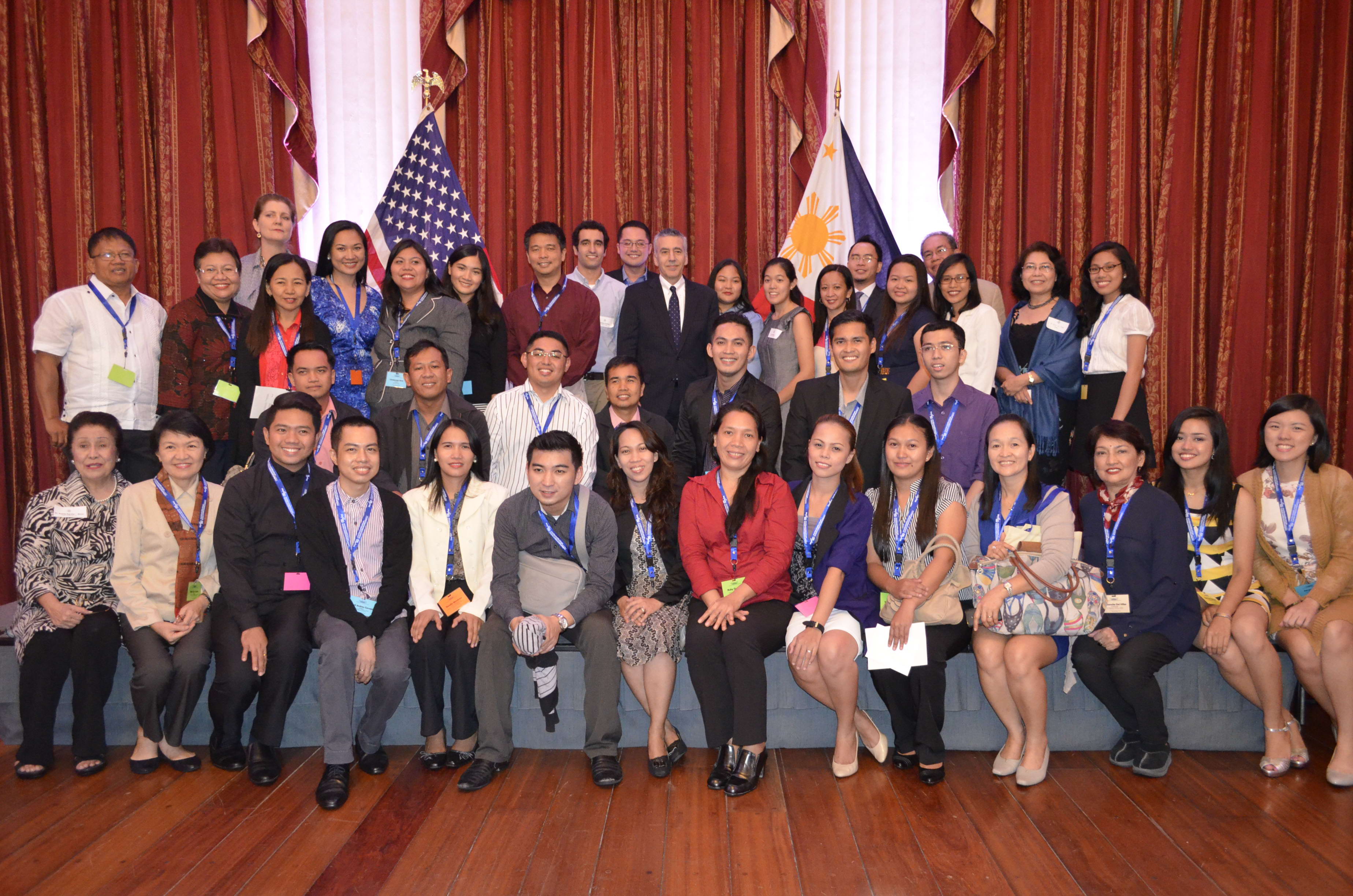
A FEW weeks ago, I was happy to attend a pre-departure orientation seminar for this year’s US-bound batch of Fulbright and Hubert Humphrey scholars. I’ve been to quite a few of these PDOs over the past decade or so, and normally I’d be there up front, giving one of the orientation talks.
I’m usually the closer at these seminars, my task being to remind our scholars to enjoy their stay in America and to learn all they can—and then to come home and serve their people. “Love America all you please,” goes my spiel, “but never forget where your home is, which is here—not even here in 21st century Makati, but in those parts of our country which languish in the 20th and even the 19th century. We go to the great schools of America not just to improve our lives but theirs—those Filipinos who cannot even read, or are too hungry and tired from work to read.”
Last month, I sat in the audience on the listening end, having been privileged with a Fulbright grant—again, after my first one nearly 30 years ago, when I left for the US to do my master’s at Michigan and my PhD at Wisconsin before returning in 1991. This September, if all goes well, I’ll be leaving for Washington, DC to do advanced research in connection with my ongoing book project on the First Quarter Storm, specifically to seek out American perceptions of and experiences with martial law in the Philippines, and also to interview Filipino-American activists from that period.
The Philippine-American Educational Foundation, headed by the very capable and amiable Dr. Esmeralda “EC” Cunanan, actually administers or acts as a conduit for several distinct scholarship programs that fall loosely under the “Fulbright” rubric, named after the late Sen. William J. Fulbright, who saw educational exchanges as the best way to promote international cooperation and understanding between America and the rest of the world. (The Fulbright program also sends out American scholars for studies abroad.) Indeed, as I often tell my American friends, one Fulbright scholarship will probably cost a hundredth of and produce a thousand times more enduring goodwill than one bomb. For us Filipinos, this is the pensionado concept brought over into a new century, with the important difference that our learning is no longer meant to serve American ends, but ours.
A scan of this year’s batch of outgoing scholars offers great hope for the future. Chosen from many hundreds if not thousands of applicants after rigorous evaluations and interviews, they represent truly the cream of the crop, and I felt honored to be in their company.
The so-called “classic” Fulbright scholars—those going for their master’s and PhD degrees—include the likes of Lisa Decenteceo of UP Diliman, who’s going for her PhD in Musicology at the University of Michigan in Ann Arbor (yay, go Blue!); Neil Andrew Mijares of the University of San Carlos, who’s doing an MA in Urban and Regional Planning at the University of Iowa; and Ramjie Odin of Mindanao State University-Maguindanao, who’s entering the PhD program in Fisheries and Allied Aquaculture at Auburn University.
Among my three fellow “senior” postgraduate scholars, despite the fact that she looks young enough to pass for an undergrad, is Marites Sanguila of Father Saturnino Urios University in Butuan, who’ll be going to the University of Oklahoma to undertake advanced research in “Species Diversity and Survival in a Changing Environment: Developing a New Center for Biodiversity Conservation.”
For many years now, there’s also been a special Fulbright program focused on agriculture, the Philippine Agriculture Scholarship Program for Advanced Research, which was set up at the initiative of then Agriculture Secretary Edgardo J. Angara to improve our agricultural expertise. This year’s nine grantees include Ma-Ann Camarin of MSU-Marawi who’s going to another MSU, Mississippi State University, to do doctoral dissertation research on (hold your breath) “Disease Surveillance and Study on the Bacterial Flora of Freshwater Prawn (Machrobrachium rosenbergii) as Biological Control Against Pathogenic Bacteria.” Meanwhile, Shirley Villanueva of the University of Southeastern Philippines in Tagum is going to the University of California-Davis to conduct research on the “Genetic Diversity of Native Chicken Groups in the Davao Region.”
Among the two US-ASEAN Visiting Scholars will be Jay Batongbacal of UP, one of our foremost legal experts on maritime law, who’ll be studying issues related to current disputes in the South China Sea. The three Hubert Humphrey fellows—all accomplished professionals in mid-career—include a PNP major and former Pasay City precinct commander, Kimberly M. Gonzales, who’ll be looking into public policy and administration concerns at the University of Minnesota.
To help Americans—especially Fil-Ams—learn Filipino, the Fulbright program is sending out three Foreign Language Teaching Assistants, who include Edward Nubla from the University of St. La Salle in Bacolod; he’ll be on his way to Skyline College in San Bruno, California. Lastly, four Filipino undergraduates will soon be spending a year on a US campus, thanks to the Fulbright program. They include Michiko Bito-on of Silliman University in Dumaguete, who’s taking up Mass Communications.
It’s heartening to see the diversity not only in these scholars’ expertise and concerns but also in their representation of all corners of the archipelago, ensuring that the Fulbright experience is shared not only by the usual suspects like me from Manila’s academia, but by bright young minds from north, south, and center.
SPEAKING OF the Filipino presence overseas, a big cultural event will take place in Hong Kong over this weekend, thanks to the efforts of the poet and scholar Armida M. Azada, who’s been based there for many years now.
On Friday, June 27, 5:30-7:00 pm, Mida will sit in conversation with visiting Filipino writers Joel Toledo, Charms Tianzon, and Daryll Delgado in a symposium on new Philippine writing titled “Our Words, Other Worlds,” at the Amenities Building, Lingnan University. The next day, at noon, Mida’s new book of poems, Catalclysmal: Seventy Wasted Poems will be launched at the 7th Floor of Hong Kong City Hall in Central. Earlier that morning, from 10:30 to 12 noon in the same venue, a free writing workshop will be held for Pinoy helpers and HK-Pinoy youth. On Sunday the 29th, from 6 to 7:30 pm, a poetry reading by Filipino writers and their friends will be held on the first floor of DB Plaza Terrace near Dymocks in Discovery Bay.
This is a wonderful thing that Mida Azada—a gifted poet who was a colleague at the UP Department of English before she moved to Hong Kong and the UK—is doing not just for herself but for her fellow Filipinos in the diaspora. As prizewinning poet Joel Toledo puts it in his endorsement of Mida’s new collection, “Cataclysmal is a collection of haunts and visitations. The poems here flit in and out of the Philippine archipelago, travelling to London, Hong Kong, and New York without losing touch of a Filipino rootedness. The poet’s concerns stray and meander from the personal and cathartic to the phenomenal and ultimately global. But Azada’s voice is keen and focused, filtered on the page by a careful attention to language. One may argue that this is the poetics of the expatriate ruminating on both the post-modern and post-colonial. Yet at the heart of this collection is fierce integrity, a resonant ‘I’ persona that won’t flinch. Here are poems that both strain to capture the fleeting and restrain from exoticizing the past. The poet Fanny Howe once wrote, “Double the beautiful/because they are so little.” While phenomena can sometimes be indeed cataclysmal, the hurtful is never wasted—so long as poems remember and reconstruct and, in time, recollect the sorrows, parse them into bliss.”
Mida, Joel, Charms, Daryll, and the other fine, memorable voices of their generation—they too are the cream of the crop.
 Penman for Monday, June 16, 2014
LAST WEEK I wrote about some websites that you could check out if you’re planning to go on a trip, especially to some place you’ve never been before. Practically everything today can be planned online, from choosing destinations to booking flights and hotels and buying travel insurance. But what about when you’re already on the road?
This is where travel apps come in—“apps” being those small programs or applets (little applications) that come with your tablet or smartphone, or that can be downloaded to them. These apps can be lifesavers—literally, when you’re lost close to midnight in the bowels of a subway station in a strange city, without the foggiest idea how to get back to your hotel. Some will require an Internet connection, but many won’t, after their initial installation—and that’s when you’ll be happy and relieved that you had the foresight to install them when you could, before you even left for the airport. Whatever I’ll list here won’t be your only options—in many cases, there may even be other, better apps other will know about—but these are the ones I’ve roadtested myself, over many years of traipsing around the planet, with PDA (remember those?) or smartphone in hand. (Do note that I use an iPhone, but many of these apps gave their Android counterparts. For IOS devices, go to the App Store.)
Trip planning. If you travel often, you’ll need an all-around planner to organize your trips—remind you of your itinerary, make your bookings, check your flight status, provide weather forecasts, convert currencies, and such. Your datebook can take care of some of these things, but not all. For many years now, my reliable sidekick in this department has been an app called WorldMate, which can do all of the above, and more (it can also calculate tips).
WorldMate’s strongest feature is its flight planner and notifier, which comes in really handy when you have a string of flights to take in a mad dash from one airport, one terminal, and one gate to another. Let’s say you’re flying Delta to Detroit via Tokyo Narita, or Cathay to London via Hong Kong. As soon as you make your booking and receive it in your email, all you do is forward your confirmation email or e-ticket to trips@worldmate.com. WorldMate will automatically digest that email and reflect your itinerary on the app on your phone or tablet—and, if you’ve configured WorldMate to sync with your datebook, it’ll show up on your calendar as well. If your flight gets delayed, WorldMate will advise you of it. It will give you your terminal on arrival and departure. (WorldMate has a free basic version and a paid Gold version with more features.)
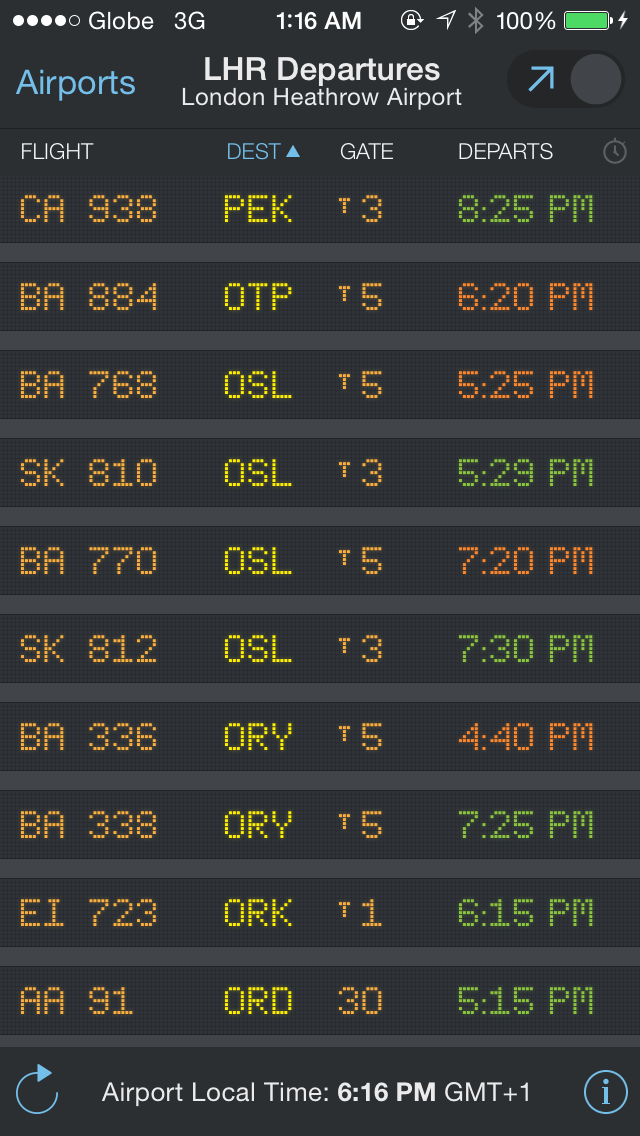
Flight tracking. You’re dashing to the airport in a cab, late for your flight, and you don’t even know which terminal or gate it will be leaving from (and if you’re really unlucky, you’ll be in Madrid, where Terminal 4 is several kilometers away from Terminal 2, and Terminal 4S takes another 20 minutes to get to); you’re praying like mad that your flight’s delayed. At this point, your friend is an app called FlightBoard, which tracks scheduled flights—arrivals and departures—at airports all over the world in real time. A similar app called FlightAware allows you to track all the flights between two airports for a given day, and to zero in on a particular one; if it’s up in the air somewhere over Siberia, it will show exactly where it’s supposed to be on a global map, much like you’d see on those onboard monitors. Both FlightBoard and FlightAware are free. (These apps are also good for when you’re meeting someone in Arrivals.)
Getting around. Once you’ve reached your destination, there are two things you’ll almost certainly need to get around: a city map, and a local transport (subway and bus) guide. Many airports will give you free city maps on arrival, and they’re fun to spread out on the table over breakfast to plan the day, but they’re a hassle to unfold at streetcorners and in the middle of the plaza to locate where you are and where you’re going (and at that instant, you might as well wear a T-shirt saying, “I’m a lost tourist—please, victimize me!”).
A good map stored in your digital device—without needing to go online, as you would with Google Maps—can save you a lot of anxiety, if not a lot of footsteps. On our recent sortie around Europe, I was glad to be guided by one invaluable resource: Ulmon maps of Barcelona, Venice, Florence, and Paris. All of these maps were free, and could be blown up to the level of individual streets and even alleys; if you feel lost, you could input the name of the nearest street, and it will locate your neighborhood in relation to popular landmarks. Clicking on the name of a hotel will give you rates; public transport stops are also indicated.
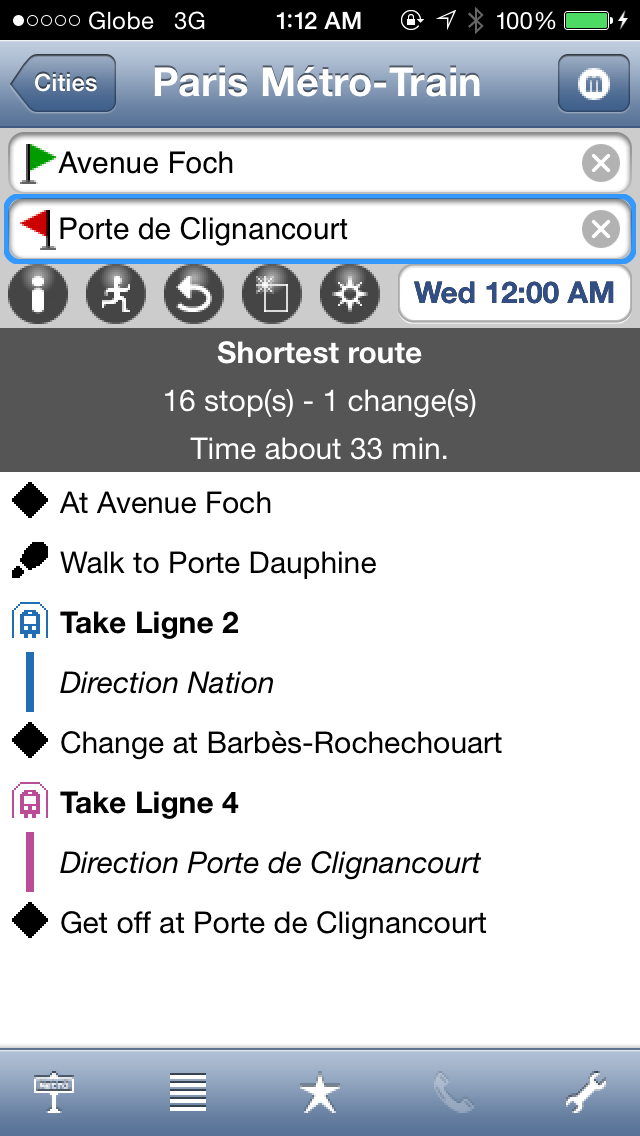
Speaking of public transport, nearly all the major cities of the world have some kind of subway or metro rail line, and this gives me an opportunity to introduce my favorite travel app of all time—and I mean that almost literally, because I’ve been using it in its various incarnations since 1999, or 15 years, an eternity in digital time. It’s called Metro, and it’ a guide to the world’s subways, metros, and bus lines. I first used Metro on my Palm Pilot when I was navigating around London, and the app—though regularly updated—has remained essentially the same. You choose a city (say Paris), and decide that, from your hotel on Avenue Foch, you want to go to the weekend flea market at the Porte de Clignancourt. You input “Avenue Foch” and “Clignancourt” and tap an icon, and Metro will yield the information that the shortest subway route will take 16 stops involving one change (at Barbes-Roucheouart—thankfully, you don’t need to know how to pronounce these names), for approximately 33 minutes total. Each subway stop is identified, as well as the direction of the train you should be taking. The best thing about Metro? It’s absolutely free, and works offline.
This list of apps could go on, but as travel is complicated enough, let’s keep it simple: for as long as you have these apps (WorldMate, FlightBoard, Ulmon Maps, and Metro), your next trip will be much less of a headache, and you can enjoy the view out the window rather than wonder and worry over where your train is going.
(Let me just add, before I forget: these apps will be totally useless if your phone or tablet is dead; I always travel with a universal adaptor, an extension cord, and a power bank for extra juice. If you blow air into my pants, I could go on a spacewalk.)
 Penman for Monday, June 9, 2014
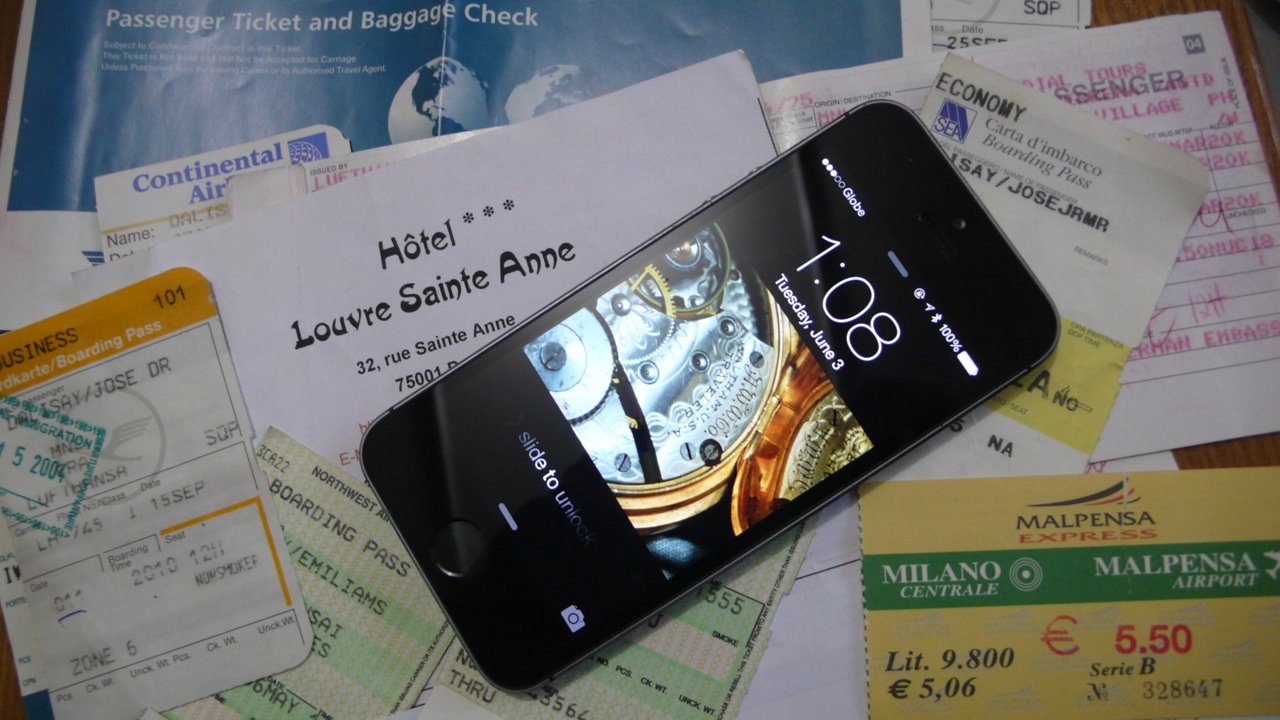
SOME FRIENDS who perhaps still miss the days when you dressed up for plane flights (even if it was only to Hong Kong) and carried your paper ticket in a cardboard sleeve asked me upon our recent return from Europe to draw up a digital roadmap for tourists. In other words, what kind of digital resources can tourists and travelers avail themselves of to ensure better, cheaper, and safer travel? By “digital resources,” we mean things that you can find online on the Internet, like hotels and their rates, or carry around with you on your mobile phone or laptop, like travel apps that can record and remind you of your bookings.
It used to be that all you needed in your carry-on was an alarm clock, the kind with two brass bells that roused you like your mother from your jetlagged slumber (if you remembered to set the alarm the night before). But now we travel with smartphones, laptops, tablets, and a raft of batteries, chargers, and adapters, the better to maintain that indispensable virtue, connectivity, also known as your digital tether to home, office, and social network. (All this should make us want to ask why we even left home and what a vacation is supposed to mean, but as everyone knows all too well these days, leaving home means bringing as much of it with you.)
So herewith, some of my favorite digital-travel tips and tricks:
Where to go. While our destinations are often chosen for us (a conference here, a wedding there), sometimes we actually have that rare and precious option of deciding where to go, budgets and schedules permitting. Everyone will have his or her own bucket list—I’d still like to visit South America, Scandinavia, and Eastern Europe someday—but Beng and I prefer to go around Asia for quick, cheap holidays, and are always on the lookout for special deals from regional airlines. Sign up with Cebu Pacific and Philippine Airlines, among others, for regular advisories on their packages. This way, we’ve visited Beijing, Kota Kinabalu, Hanoi, Shanghai and many other places nearby at giveaway fares (about P5,000 round-trip, all-in, for two of us to Beijing). Be open and adventurous, and be ready to book a trip months in advance to get the lowest fares. That also allows you to reconfigure your calendar around those trips.
How to get there. Again, check out airline offers, as well as travel agency packages. Make sure to factor in taxes and surcharges, which can bloat the final bill. What you want to get is the “all-in” price. Factor in baggage allowance; some airlines will charge you even for your first checked bag, especially on local flights. Budget airlines can offer aggressively low fares, especially off-season (that’s why we went to Beijing in December—freezing, but fewer fellow tourists to nudge you around), but it won’t hurt to check as many rates as you can. There are many online guides where you can check prices and book flights—Expedia, Orbitz, Travelocity, etc.—but I use SkyScanner (skyscanner.com.ph) a lot; it gives you the price in pesos, and immediately identifies the lowest price, with many other options. Sometimes it’s also good to check directly with the airline; recently, I found that Air France, on its own website, was offering a flight from Paris to Madrid that was lower than anyone else’s. Also, sometimes, cheapest may not always be the best for you. Cebu Pacific has great regional fares, but they often mean arriving in your destination around midnight, costing you a day and some anxiety in a strange airport. Adding a little more could also mean extras like a better plane and a better layover (we chose to fly BA to Madrid and back via Heathrow, to try out the new A380 and even marginally revisit London, one of our favorite cities). For local travel, don’t forget to explore your train and bus options—ground travel may be slower and not always cheaper, but you’ll see a lot more of the country.
Where to stay. Beng and I are lucky to get special rates from the Starwood chain (Westin, Sheraton, Le Meridien, etc.) because our daughter works there, but when we have to find other hotels, then TripAdvisor and Booking.com are our best friends. As a rule, I never book a hotel (even a Starwood one) without checking the TripAdvisor reviews, which can reveal problems like “great hotel, but terrible location” or uncover pluses like “free, strong wi-fi, two minutes’ walk from the Metro.” TripAdvisor can rank hotels according to your budget and other preferences, assigning one to five stars. Once, on a lark, Beng and I decided to go slumming in Hong Kong and stay in the cheapest dive we could find, so I reversed TripAdvisor’s rankings and found a one-star place on Nathan Road. It was cheap—and fun; we survived! Booking.com is another great guide to hotels and bed-and-breakfast places; they allow you to book often without any downpayment, cancellable without penalty within 24 hours of your stay. I booked our Venice hotel in Mestre and our Madrid airport hotel on this site. (A tip about Venice and Mestre—hotels in prime tourist spots like Venice can cost a fortune, but staying in places like Mestre, a very short train ride from Venice, can save you precious euros better spent on food and sightseeing.)
What to do. Every destination will have scores of travel guides online, but again, TripAdvisor’s thousands of reviews will give you a good sense of what’s worth visiting and what you can forego, especially on a tight budget and schedule (we passed up going to Halong Bay in Vietnam—pretty pictures, but a very pricey day trip). Like I wrote in a recent column, this is where we often let Serendipity take us by the hand and just let one streetcorner lead to another. Unlike many others, travel for us isn’t racking up a series of posed shots before famous landmarks; it’s about seeing what most other people will miss, or doing what most other tourists won’t. I don’t necessarily mean “going native,” which no one can honestly do on a three-day parachute tour, but finding or straying into unusual places, like that dusty, forgotten museum in Shanghai filled with dinosaurs and ancient, mummified Aryans, or that bookshop in Hanoi selling bright purple ink for 20 pesos a bottle.
Before I forget, and even before you begin your digital tour, scan, save, and upload (to one of your own email accounts) copies of your passport, visas, and travel insurance. (Yes, you can and should book travel insurance online—it’s one of those things you’ll be happy to never need.)
Next time, I’ll list and discuss specific apps—WorldMate, Metro, and FlightBoard, among others—and other tools (maps, photos, currency exchange) to help make that next trip of yours a more pleasant and fulfilling experience—as long as you don’t lose your tablet or smartphone.
Penman for Monday, May 26, 2014
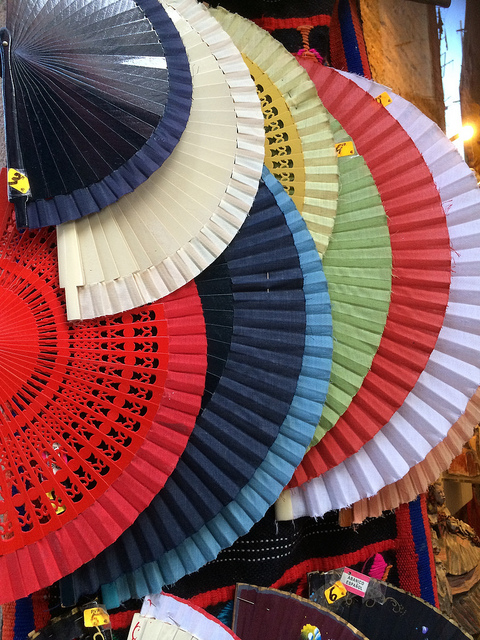
MAYTIME IN Europe, particularly in Spain, is a festive season; Madrid has the same patron saint and feast day as many Philippine towns such as Lucban—San Isidro Labrador, on May 15—and so it was a fine time to be there these past two weeks. We missed the actual feast days, and in France all the buzz was going on in Cannes while we were in Paris, but it was just as well because the crowds were a bit smaller but the experiences no less interesting at the periphery.
As I mentioned last week, doing six cities—Madrid, San Sebastian, Barcelona, Venice, Florence, and Paris—in 12 days is murder for sexagenarians, and maybe not the best way to get to know places, but the intensity of this “amazing race” approach has its own advantages and surprises.
I’m usually an obsessive planner when it comes to travel, going digital as much as I can, months in advance—from consulting TripAdvisor to making plane and hotel bookings to reconnoitering possible spots to visit and downloading street maps, subway guides, and travel apps. (I’ll do a separate piece on this madness, one of these days.) This time, aside from some basic planning, we left many things to chance, going by such general interests as “museums and flea markets” or “art galleries and food” to guide us though a city. Serendipity (informed, to some extent, by a limited budget) proved to be the best tour guide, as we allowed one street to lead to the next, and open up to unexpected delights.
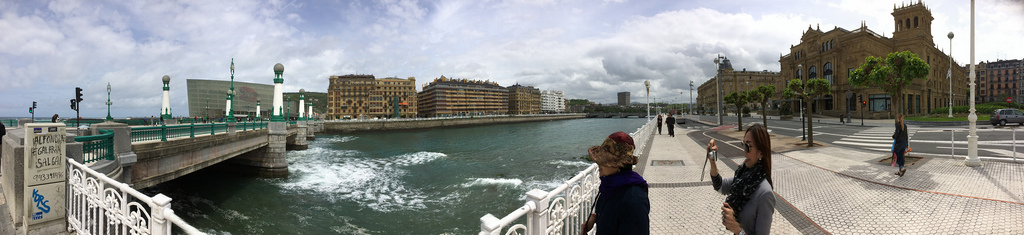
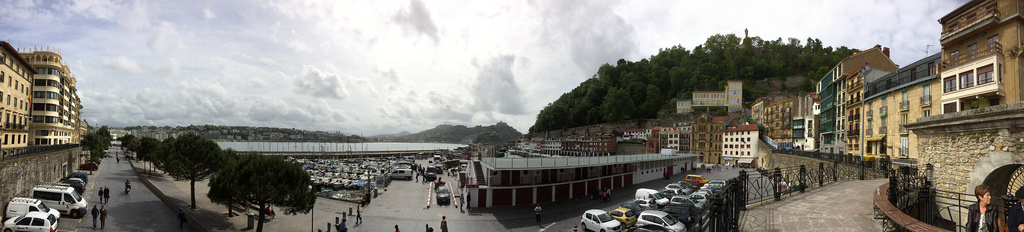
San Sebastian, or Donastia in Basque, was the wild card on our itinerary. The place doesn’t figure in most visitors’ travel plans, and frankly, as global-savvy as I pretend to be, I had to look it up on a Spanish map when our daughter Demi and her husband Jerry mentioned it to me. The two had met Anthony Bourdain at an event in California, and had asked him where in the whole world he would retire if he had his choice, and Bourdain didn’t take two seconds to answer “San Sebastian,” obviously because of the food.
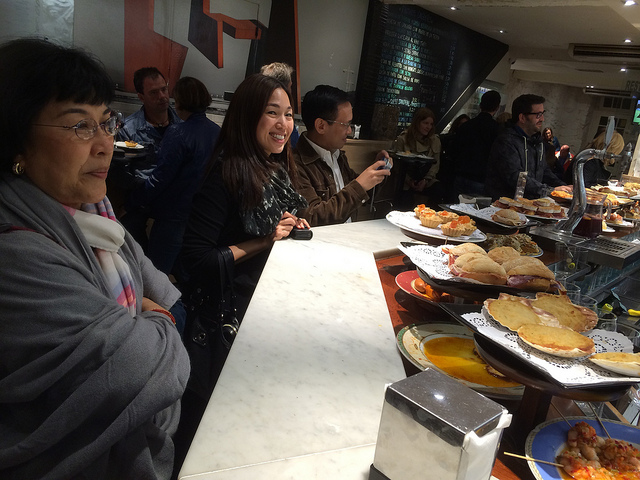
That answer stuck with Demi and Jerry, and when the four of us started planning our European sojourn early this year—we made all our bookings in mid-January—San Sebastian was firmly on the list, although we knew very little about it. For me, the appeal was that it was up in Basque country, on the coast of the Bay of Biscay close to the French border, so it promised an atmosphere different from central Madrid, or Barcelona in the Balearic-Mediterranean south. I also relished the thought of taking the five-hour train ride cross-country; train travel is one of Europe’s most relaxing treats.
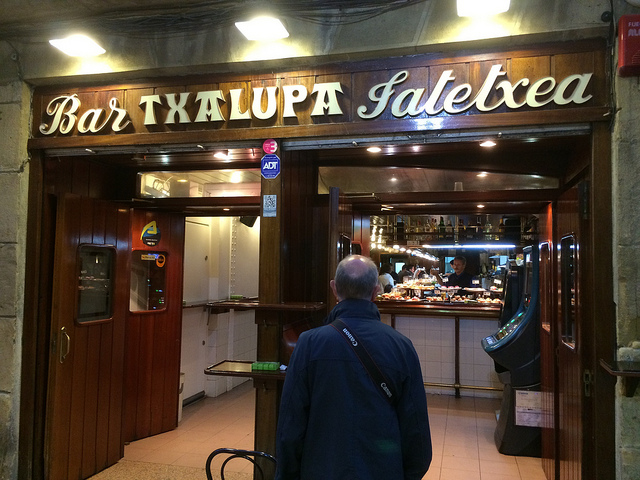
The Basque language, I’m sure, has its poetic charms, but to the untrained eye and ear (like mine) it might as well be Klingon, with a surfeit of X’s, K’s, and T’s. Many words have absolutely no relation to their Spanish or Latin counterparts; a restaurante in Spain or a ristorante in Italy is a jatetxea in Basque.
That said, food is a universal language, and while I’ve maintained a stubborn and silly pride in calling myself a culinary philistine (as usual, I brought six packets of ramen in my suitcase), I had to yield to the majesty of Basque cuisine, particularly their pintxos—the local version of the more familiar tapas. Laid out on the bar of every jatetxea we entered, and selling for a little over a euro each, the pintxos were scrumptious combinations of such staples as shrimp, crab, mushroom, asparagus, anchovy, jamon serrano, and bread.
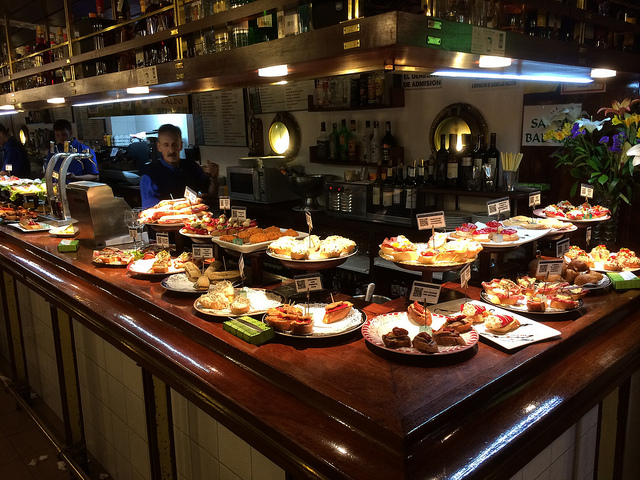
Good, affordable food would be our constant on this tour, often found in rather unlikely places (no Michelin guide for us, just our budgets and our noses): the best pasta we’d ever had, in a nondescript restaurant in Florence; a roast chicken, rice, and salad dish at the Doner Kebab place beside our airport hotel in Madrid; a dish of stewed mushrooms in Madrid and then also in Barcelona.
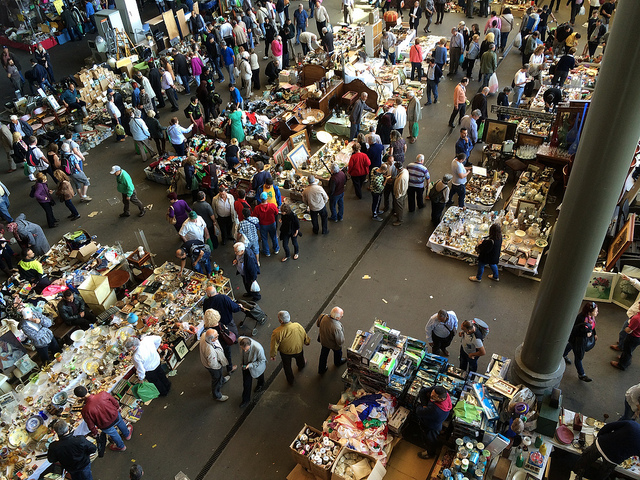
Our next high came from shopping—albeit more with our eyes than our wallets. Beng and I are incorrigible flea and weekend market addicts, and we’ve been to a few of the world’s better-known ones, from Hell’s Kitchen in Manhattan and Portobello Road in London to Chatuchak in Bangkok and Panjiayuan in Beijing. Providentially, our European schedule coincided with the Mercat del Encants in Barcelona and the Marche aux Puces de Saint-Ouen at Clignancourt in Paris. Hundreds of stalls and tons of glorious junk met us in both places, from century-old magazines and posters to ‘20s flapper dresses and hats and erotic postcards of nubile maidens long vanished.
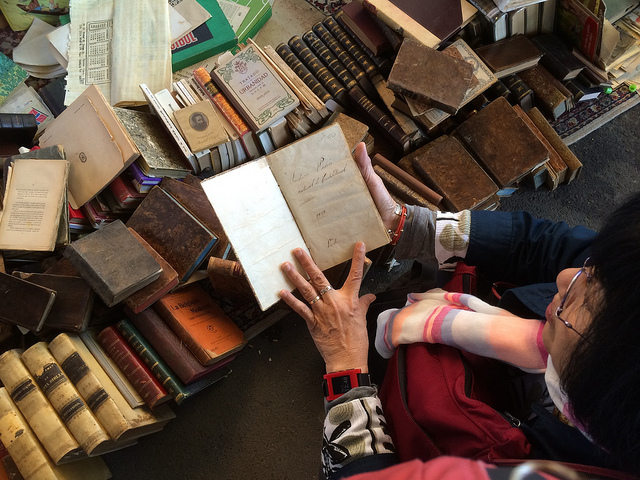
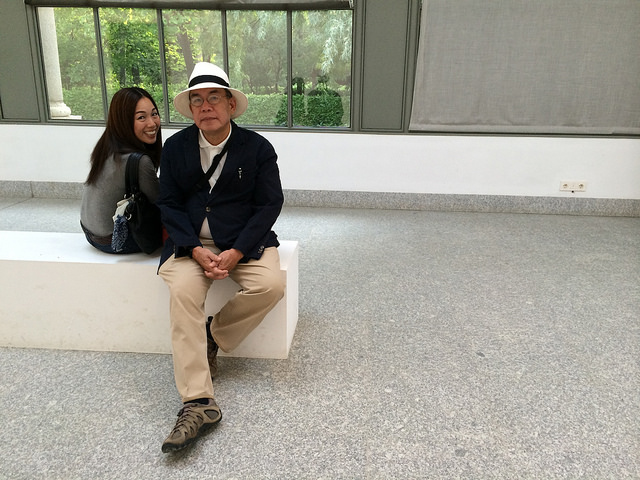
I did find quite a few fine fountain pens—only to realize, alas, or perhaps fortunately, that I should be happy with my present collection, and that looking without buying can be pleasure enough. I came home from Europe with a new panama hat from Madrid (where, I would find, it was quite the fashion) and a 4-euro, 1960s bottle of Pelikan ink in royal blue, still almost full and certainly usable, from Barcelona. Beng and I kept looking at marvelous pieces of décor and sighing, “If we had a larger house…” or “If we were younger….” and then taking a picture for the memory before walking away.

Third, next to food and markets, were the sights themselves. With limited time, we focused on museums, landmarks, and gardens. Everyone goes to Barcelona to see Gaudi’s outrageously magnificent Sagrada Familia, and we did, if only from the outside, from where there was more than enough to appreciate, from the strawberries to the scripted verses climbing up the spires. What resonated more deeply with me was a visit to the Castell de Montjuic, an imposing fortress with a tragic past, including the brief incarceration of Jose Rizal in 1896, shortly before his forcible return to the Philippines; an exhibition room in the fortress is named after Rizal.

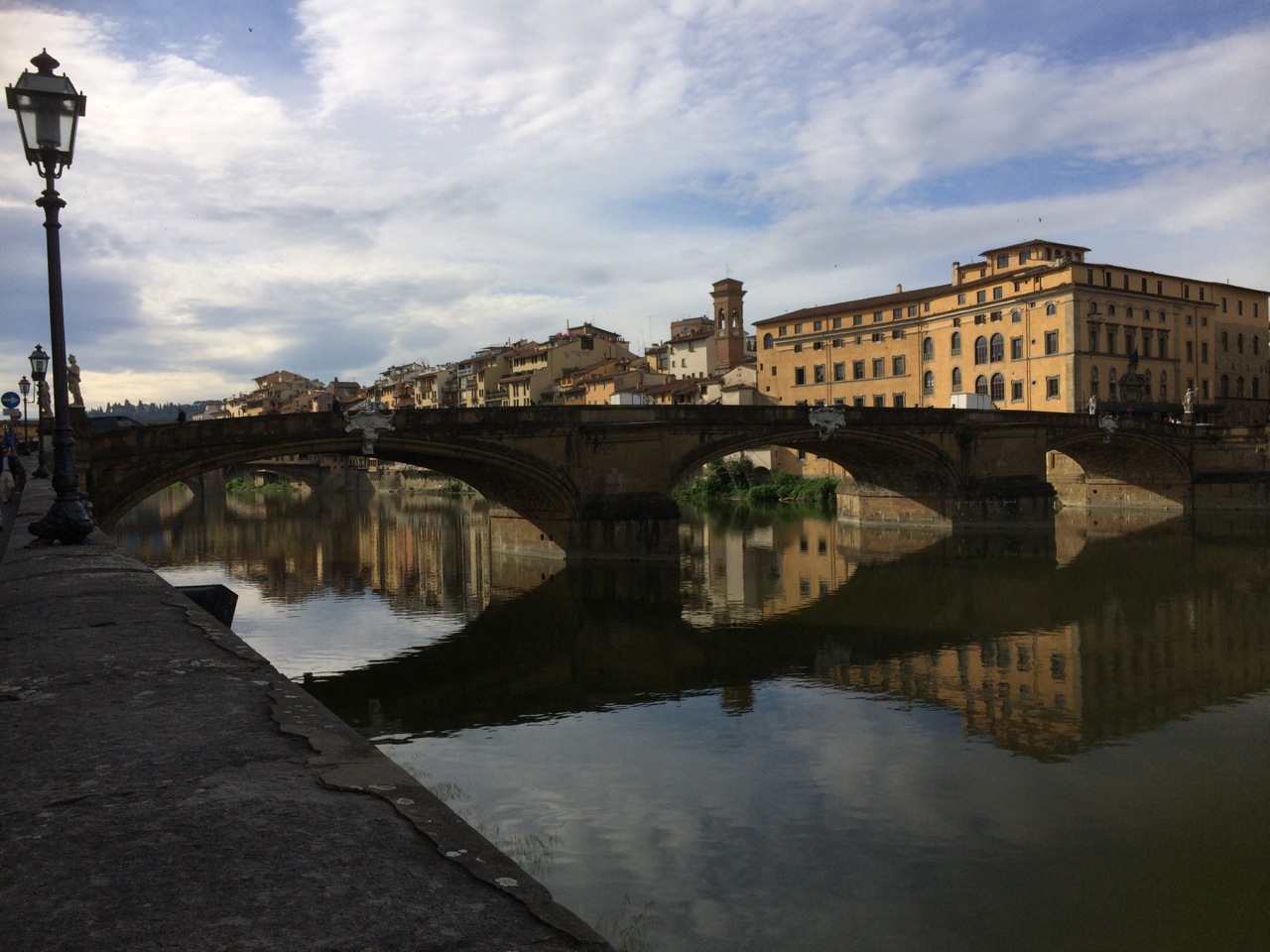
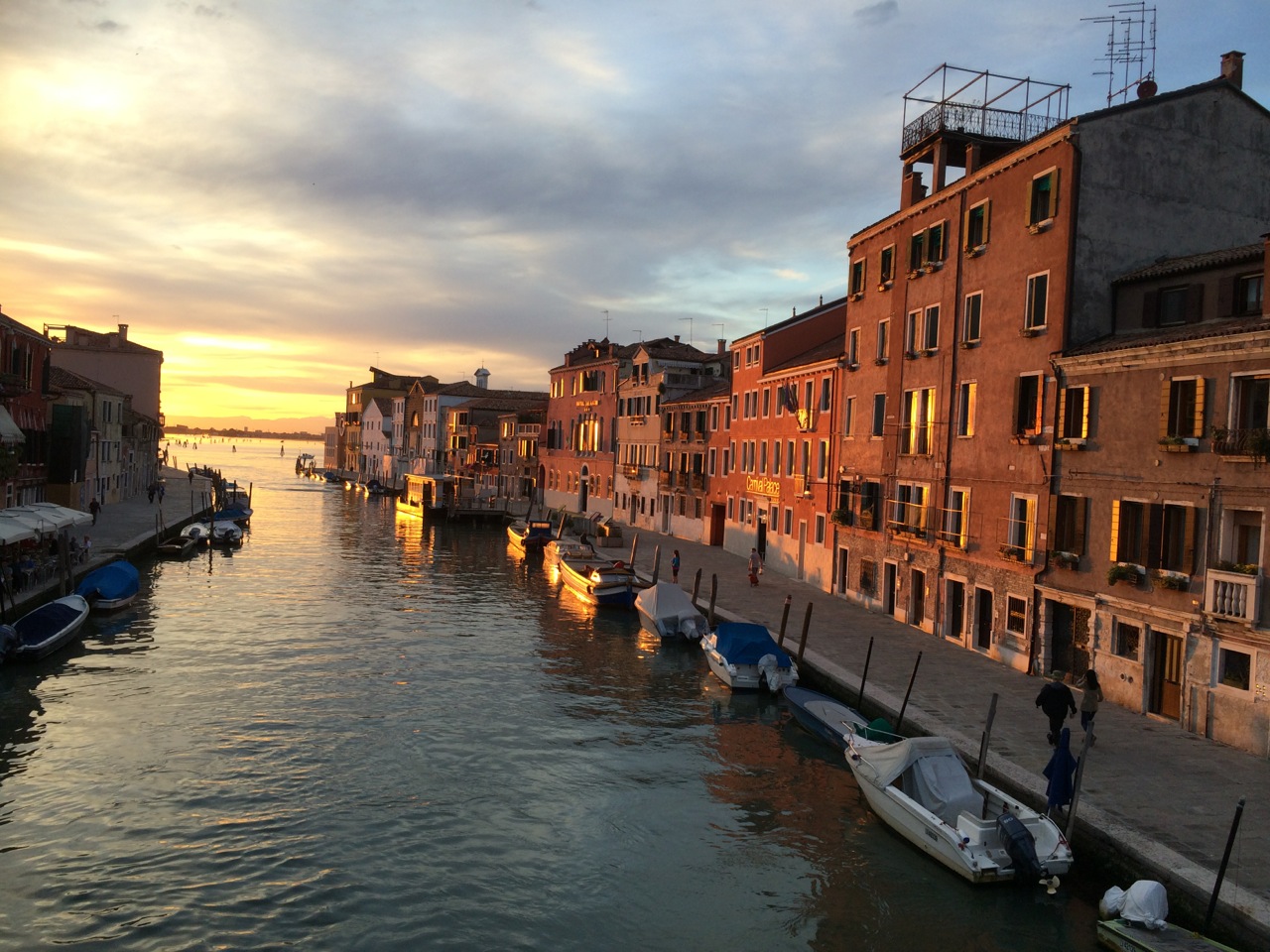
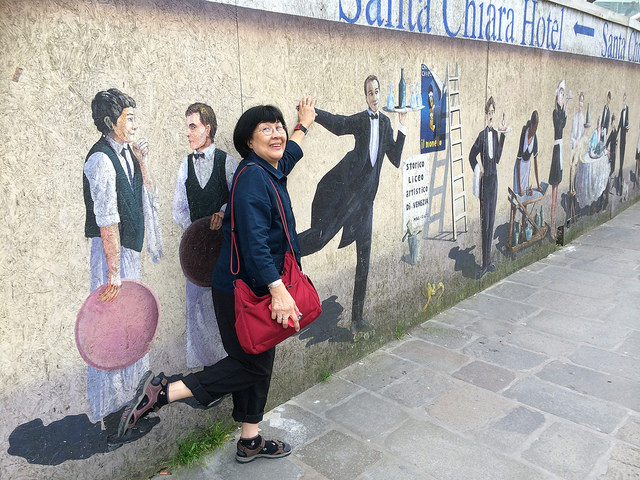 Venice and Florence were the original reasons we thought of this tour; having visited them three years ago, I vowed to bring Beng along to see them, and we just had time for a long vaporetto ride around Venice in the gathering dusk and a day trip by train to Florence. Both cities offer a surfeit of majestic sights, but again it was less the landmark everybody knows than the accidental detour to a spectacular sunset from a little bridge and a view of steeples in the Tuscan countryside that mattered more.
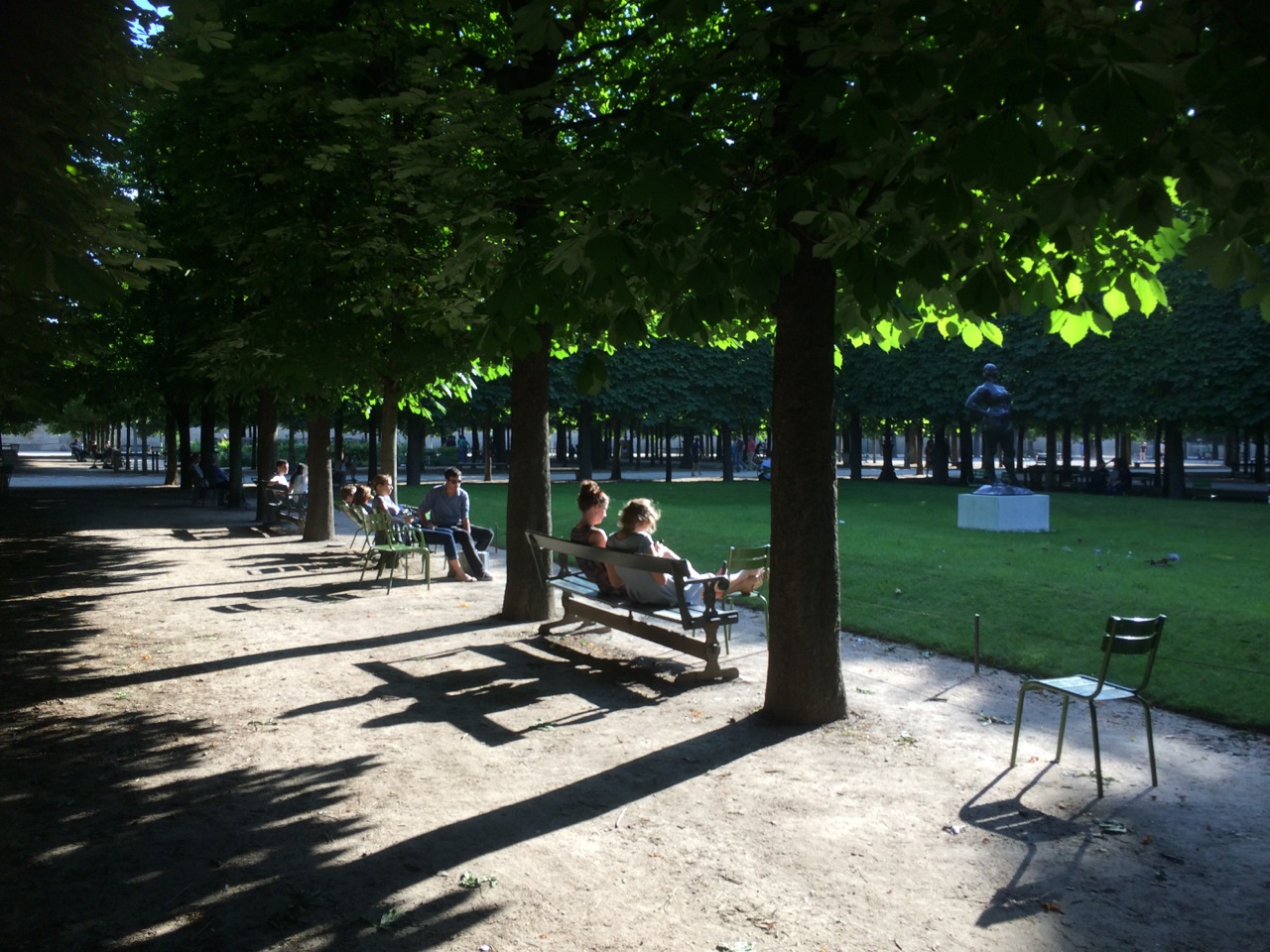
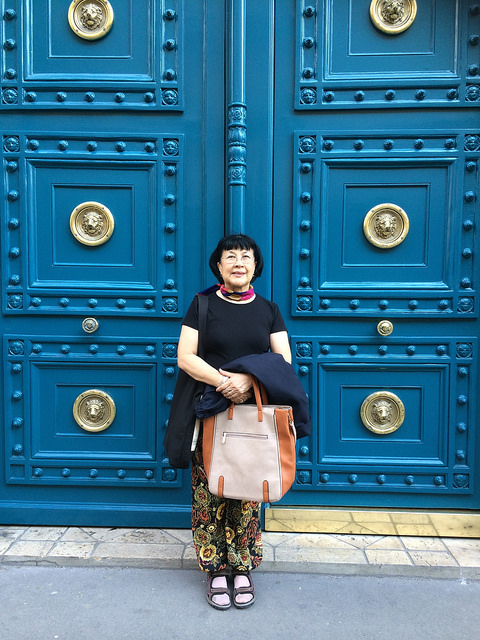
Beng and I had been to Paris twice before, for very brief sorties like this one. In 1999 we almost literally breezed through Paris on a bus from England, on a 99-pound all-in weekend tour; Beng made the mistake of going to the onboard loo while we whipped past Rodin’s “The Thinker.” In 2002 we spent another couple of days in Paris on our way home from my month-long fellowship in Bellagio, and I was so starved for Chinese food that we ate nothing but Chinese, in the restaurants behind the Galeries Lafayette (we went back there last Sunday for a reprise, but the place was closed, much to our dismay).
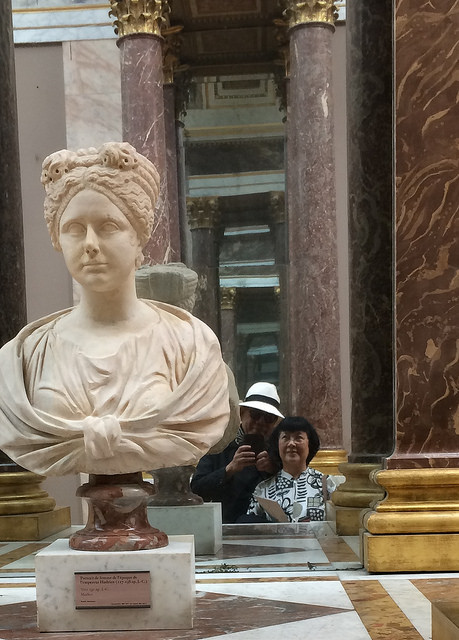
We revisited the Louvre, and of course again the Mona Lisa (this time set a little farther back from the public than it used to be, but still accessible enough for the inevitable selfie). The Louvre draws 15,000 visitors a day, most of them, like us, paying the standard admission of 12 euros—a cost you’ll quickly forget the minute you step into the galleries. This time I happily stumbled into a hallway exhibiting three of the most iconic of French paintings: Delacroix’s Liberty Leading the People, Gericault’s The Raft of the Medusa, and David’s The Coronation of Napoleon. Somewhere in the Egyptian antiquities section, my knees began to wobble, and I knew it was time to declare an end to our museum-hopping.
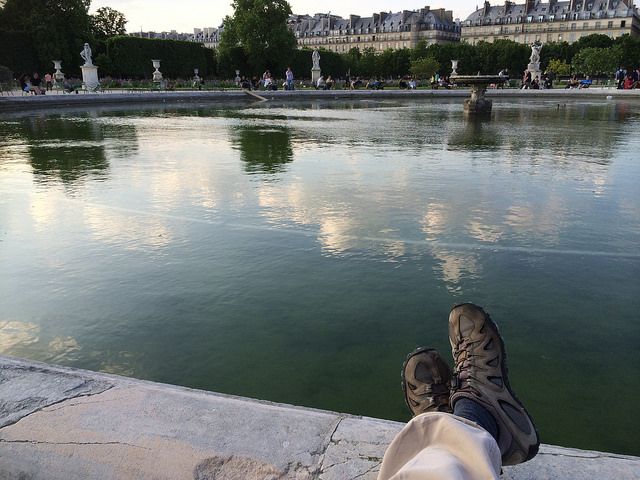
What we’ll remember most from this trip is a leisurely walk through the Jardin des Tuileries, across the bridge to the Musee d’Orsay, then back to the big fountain in the park, trying to take in the immense joy and gloriousness of a spring day shared with the one person you’d like to see the world with. It was the gift of a lifetime, for which Beng and I would like to thank Demi, Jerry, and the gods of poker.
Penman for Monday, May 17, 2014
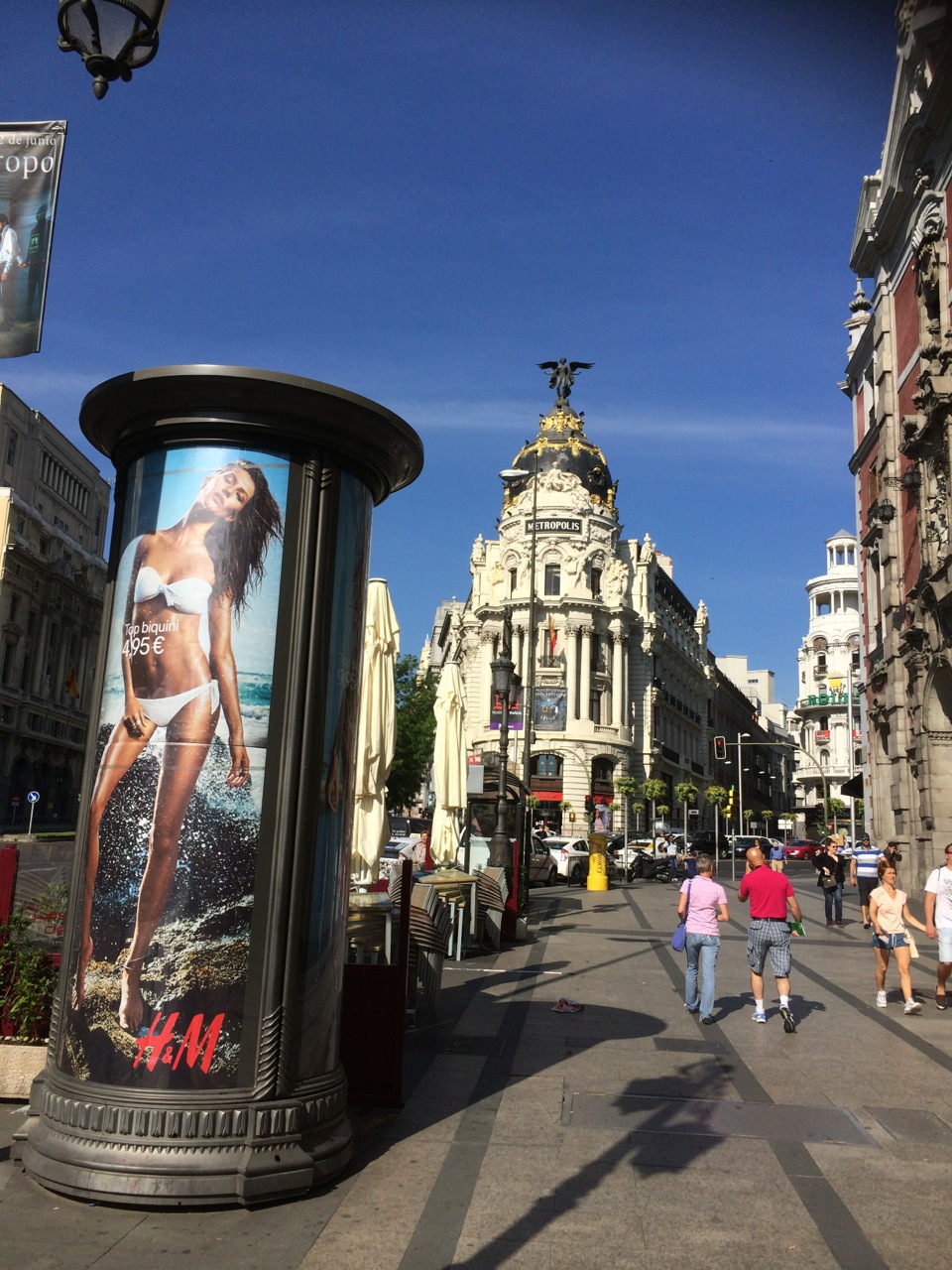
I’M WRITING this at the airport in Barcelona, awaiting the departure of our much-delayed flight to Venice. Beng and I are at the midpoint of a two-week jaunt through Europe, and we’ve just said goodbye to our unica hija Demi and her husband Jerry, who are going on to Rome and to Sardinia. We spent a blissful week together in Spain—meeting up in Madrid (Demi and Jerry live in California, in San Diego), then spending a couple of days each in San Sebastian and Barcelona.
I’m taking Beng to Venice and Florence in fulfillment of a promise I made three years ago, when I first visited those cities, to share the wonders of those cities with her, the artist and conservator who will surely gain more from the experience than I can; and then we’ll pass by Paris before flying back to Madrid, then home. For us, as footloose as we already are, it’s the trip of a lifetime—largely a treat from Demi and Jerry for our 40th anniversary, and partly realized by my recent poker windfall; I figured the stash was better spent popping our heads into a few museums and cathedrals rather than vanishing chip by chip back across the green felt table.
For reasons I just made obvious, we’re calling this our “Amazing Race,” a breathless dash across three countries in Europe, with layovers in London and Hong Kong, in 14 days. I know, I know—the seasoned travelers among us will say that this is no way to see Europe, and that one’s time is better spent savoring one or two places and their features to the last morsel than hopping like mad rabbits across borders and barely seeing or tasting anything. But while it’s our first time in Spain, Beng and I have been to Europe before, and are used to and prefer this kind of cherry-picking: a little of this and that, much the tapas and pintxos on offer in the restaurants of Madrid and San Sebastian. We’ll happily admit to being shameless tourists than National Geographic correspondents, although, of course, I can’t help taking the notes I’m now sharing with you.
Having gone around the planet quite a bit, we came to Spain quite late. I’d always wanted to see what Jose Rizal saw. Today’s Spain may be a vastly different place in many respects from Rizal’s time, but so much of Europe, and thus Spain, is immutably set in hard rock, and remains impervious to rain, wind, and time.
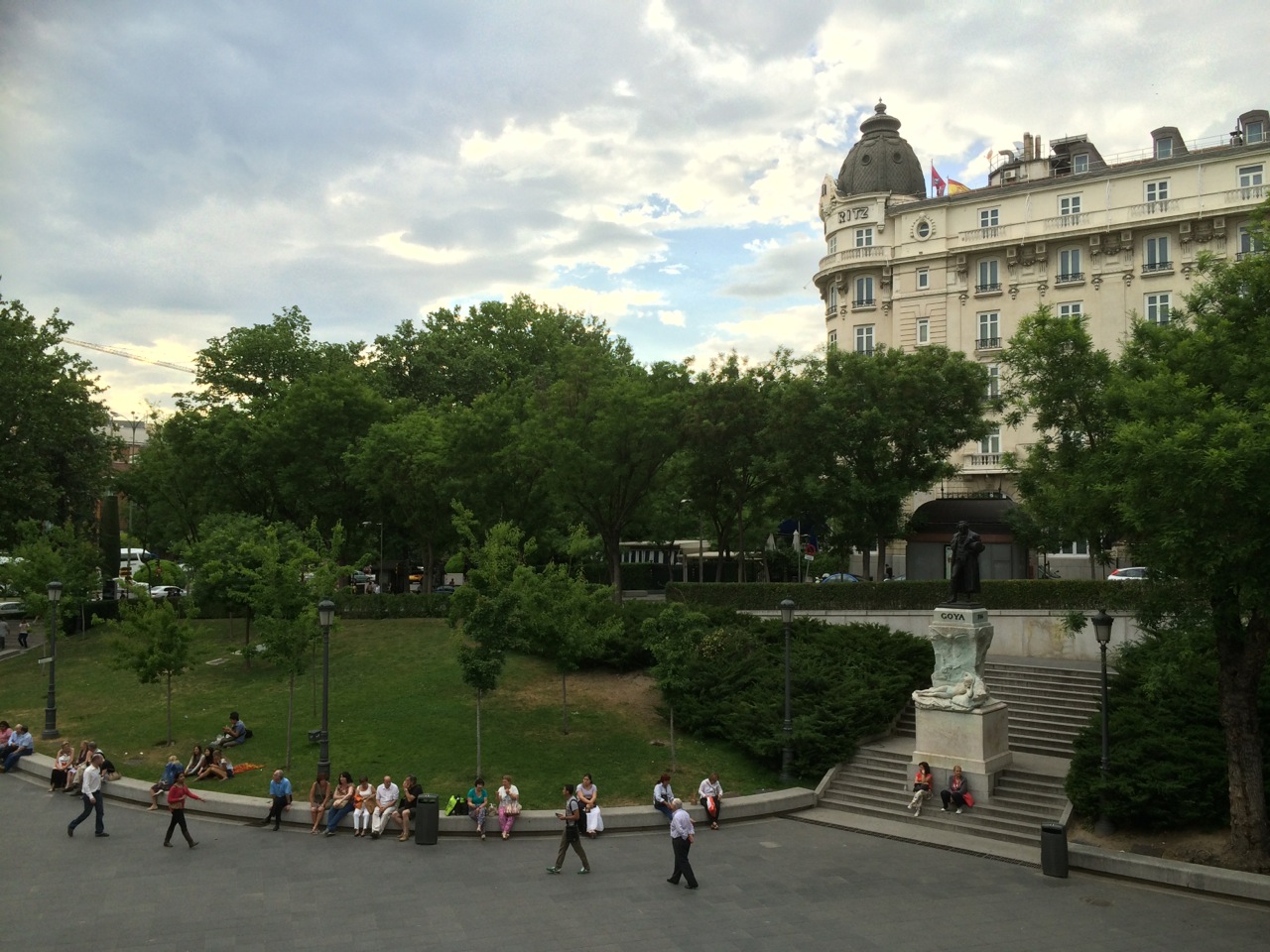
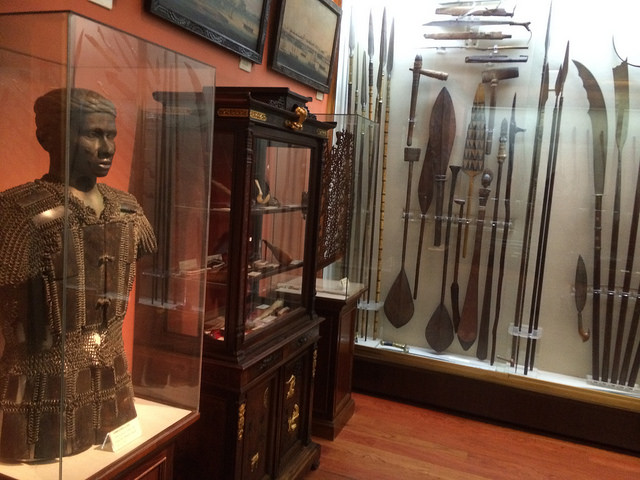
We flew into Madrid on a bright spring morning, and quickly discovered, to our great delight, that it was a city of parks, plazas, museums, monuments—and restaurants and bars. The first thing that hits you about Madrid is its architecture, steeped in neoclassical grandeur, the streets all at sharp angles converging in roundabouts capped by marble statues erected to the memory of heroes, not all of them warlike figures but rather also icons of art and literature. You’re never too far from reminders of Spain’s imperial legacy in Madrid. The first museum we visited was the Naval Museum, rich with exhibits from Spain’s colonial exploits, including the Philippines, represented by a roomful of precious artifacts from the San Diego wreck of 1600 and by yet another gallery of native weaponry from Filipino tribes.
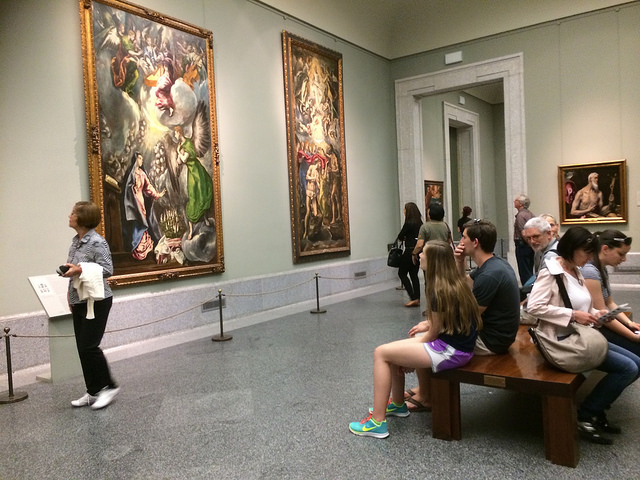
Just a few blocks away was the Prado, Madrid’s temple devoted to its most sublime masters of centuries past—Velasquez, Goya, El Greco, and Sorolla, among others. Since visiting the Louvre more than a decade ago, I’ve always been amazed by the freshness and luminosity of paintings 500 years old; some of it, of course, is due to the skill of restorers like my wife (who was incidentally trained by Spanish teachers), but in a world lit by only candles and torches, the masters knew best how work with light and to use it to best effect.
But as enthralled as I was by this encounter with the finest art of the past, it was at the Reina Sofia museum—again within walking distance of most other places of interest in central Madrid—that I nearly fell on my knees as I approached and beheld Picasso’s massive Guernica, his enduring indictment of war. The Reina Sofia is Madrid’s modernist counterpart of the classical Prado, and its stunning façade alone and the plaza before it are well worth the visit. Here, Picasso, Miro, and Dali rule, along with many other less known but no less fascinating champions of new ways of looking at and representing reality and irreality. Here, as I did years ago at London’s Tate Modern, I remembered and understood again why classical art held me in awe, but modernism spoke more directly and more deeply to me—making me laugh, making me think, and making me angry or sad, sometimes all at once.
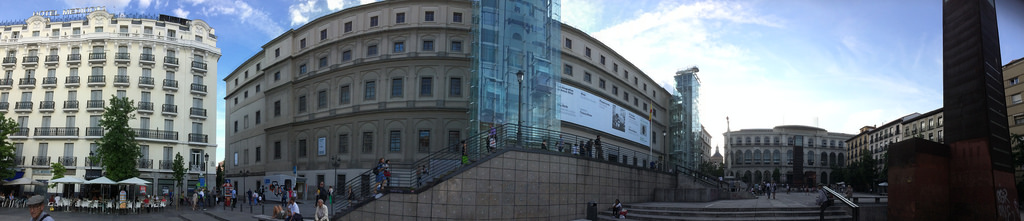
One more thing I noticed about Madrid’s museums and other attractions like the Botanical Garden and the Royal Palace: you may have to pay a modest fee to get in—it was 3 euros at the Naval Museum—but if you wait until the last couple of hours (6:00-8:00 pm at the Prado) or for special days, you could get in for free. Also, for the first time in my life (and I should add the first place, because nowhere in the Philippines did I get this favor), my university faculty ID gave me free entry. That’s a society that values its teachers.
For all our museum-hopping, my favorite “museo” turned out to be the Museo de Jamon, a chain of restaurants you’ll find on every other city block offering all manner of meat, and a scrumptiously wet seafood paella. I quickly grew addicted to bocadillo de jamon—thin slices of jamon serrano in crusty bread—which was on special at the Museo de Jamon for one euro apiece.
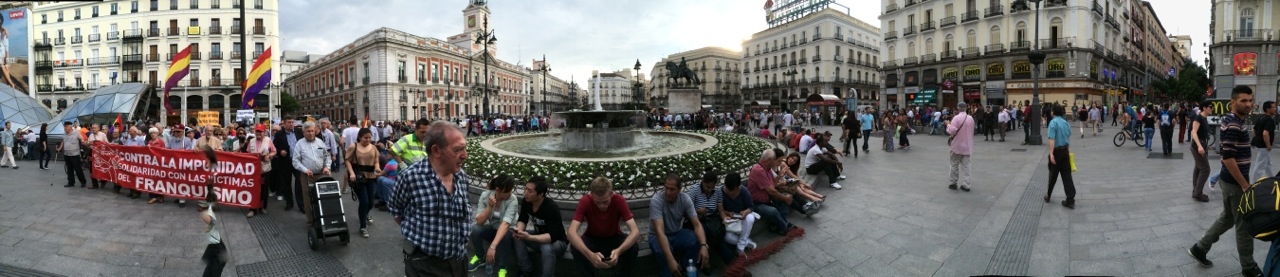
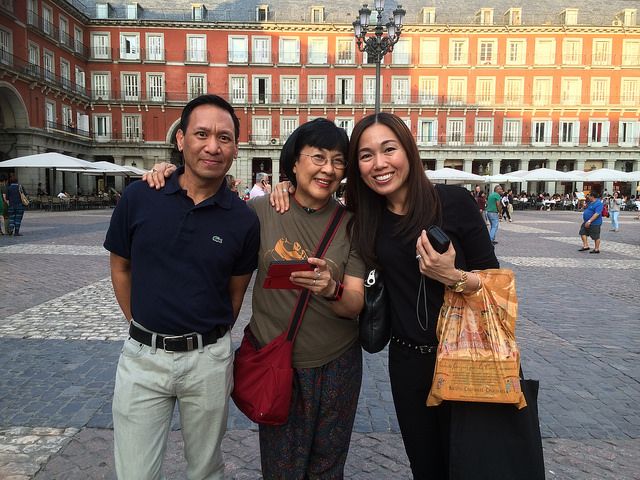

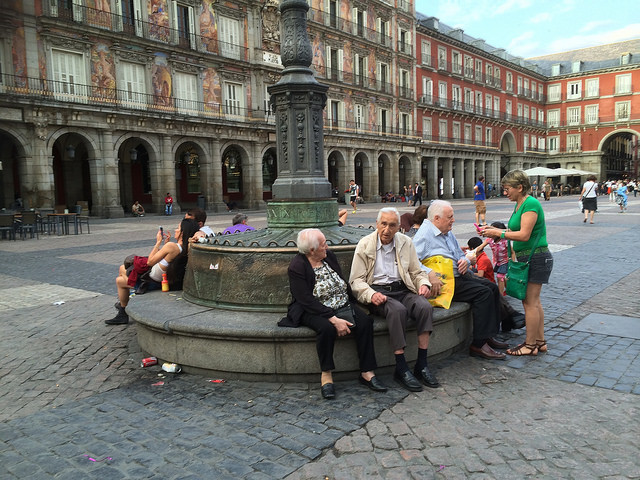
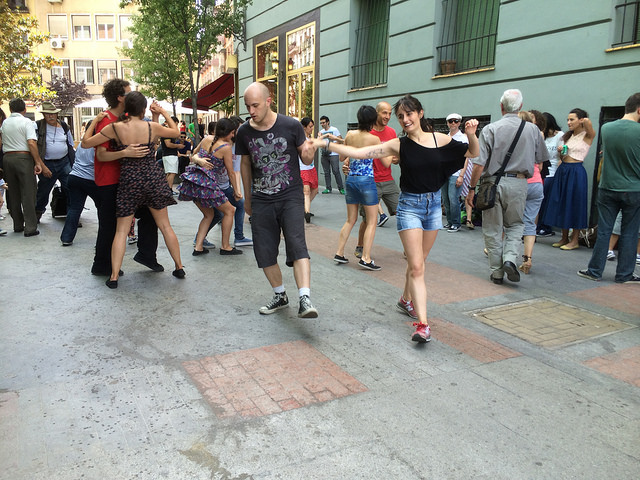 We did as tourists do: hang out at the Plaza Mayor and Plaza del Sol, watching an anti-fascist demonstration here (like Marcos, Generalissimo Francisco Franco died decades ago but his victims have yet to receive full justice) and a busker there (playing what else but Tarrega—whose Gran Vals many will inadvertently if cavalierly know as the source of the Nokia ringtone). We dipped churros in our chocolate at the Chocolateria San Gines, which has been in the business since 1894; but even this venerable chocolateria seemed a newcomer compared to the Restaurante de Botin, reputed to be the oldest running restaurant in the world, having opened in the same place in 1725. More contemporary-minded diners will prefer a quick bite at the trendy Mercado de San Miguel, an old market converted into a covered food court just off the Plaza Mayor, and neatly organized: all the meats here, all the sweets there, and so on.
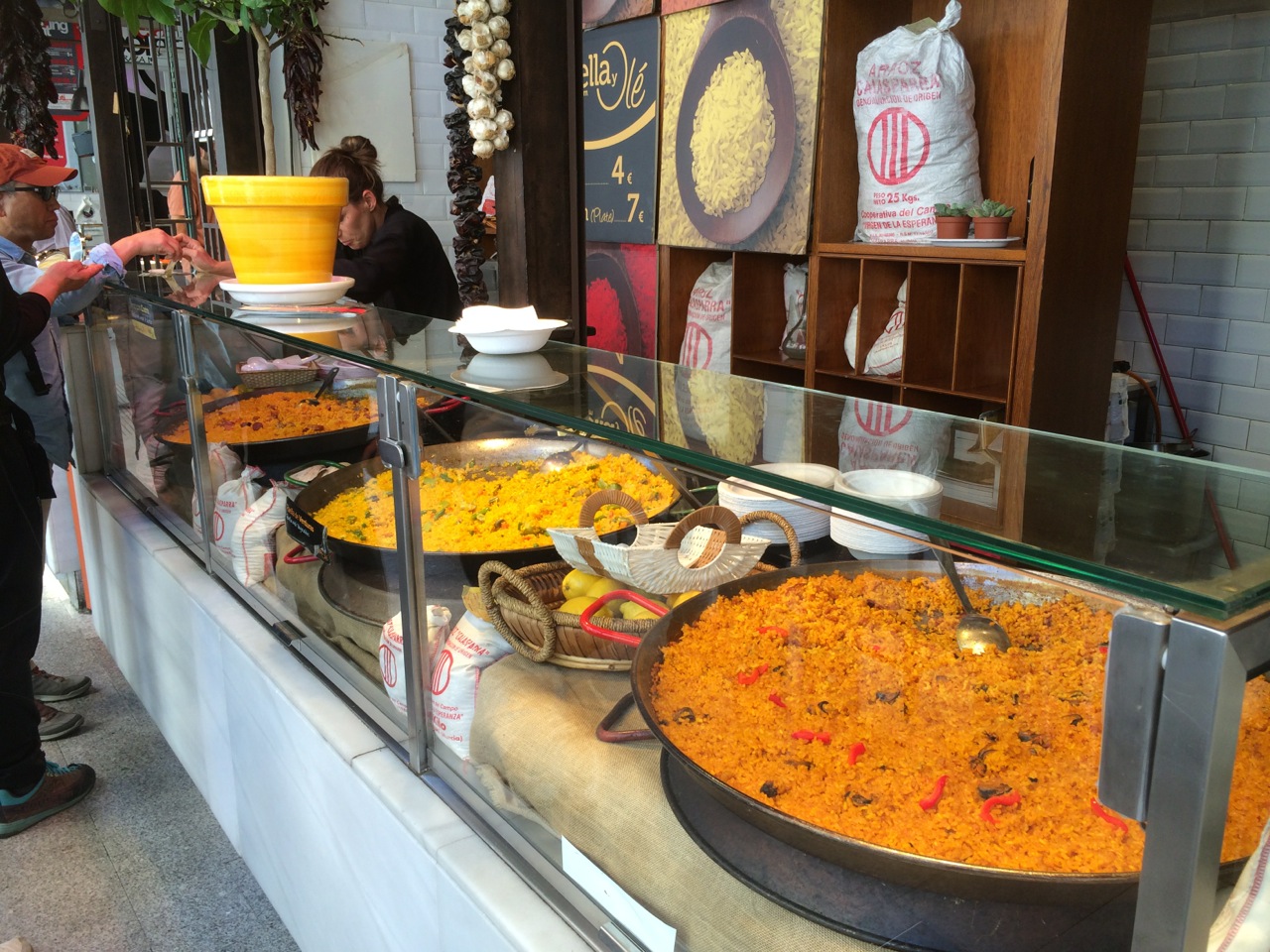
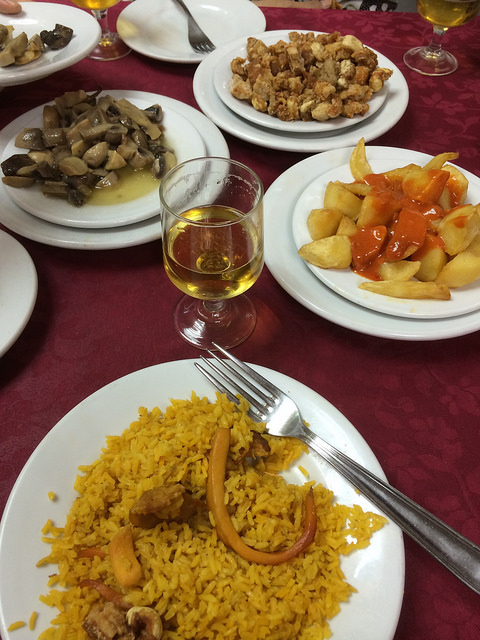
The culinary and perhaps even cultural highlight of our Madrid sojourn took place in a hole-in-the-wall restaurant close to the Reina Sofia. Unlike me and even the far more adventurous Beng, Demi and Jerry are gourmets who seek out and relish fine food, but—perhaps out of respect for the philistine papa—we had resolved to eat like the locals on this trip, and so we spent our last night in Madrid feasting on paella, mushrooms, patatas bravas, and chicharrones, washed down with what apparently was Madrid’s if not Spain’s most popular beer—San Miguel. This is our beer, we tried to tell the genial restaurant owner in our best pidgin Spanish, but I don’t think the Empire heard us.
 Penman for Monday, May 12, 2014
MY WIFE Beng’s profession as an art restorer and conservator brings her into contact with some very interesting people, and one of them is a quiet, unassuming man named Mike Santos, whose arrival at our home always causes the usually calm and cool Beng to groan in distress, not because of anything she holds against the fellow but because she’s sure that, invariably, he’s going to be bringing in another job that will test Beng’s skills as a restorer to the limit.
“Why do you do this to me?” I keep hearing Beng wail at the smiling Mike. One piece I remember him dropping on Beng was a century-old poster or banner of the Virgin Mary, apparently painted or printed on silk, lovely except for the fact that the silk was stained, tattered, and coming apart in places, like a battleworn flag. “Can this even be saved?” I recall thinking. But wonder of wonders, after weeks of careful and well-studied work, Beng was able to restore the piece and to return it to a happy Mike.
Perhaps in appreciation for all her labors, Mike invited Beng and the rest of her family—that meant me, my mother, Beng’s mother, Beng’s cousin Lando, and my sister Elaine and her husband Eddie who were visiting from the States—to merienda in his Antipolo home. But as sumptuous as it was, the merienda was just the climax to the real purpose and pleasure of the visit, which was the ancestral house itself.
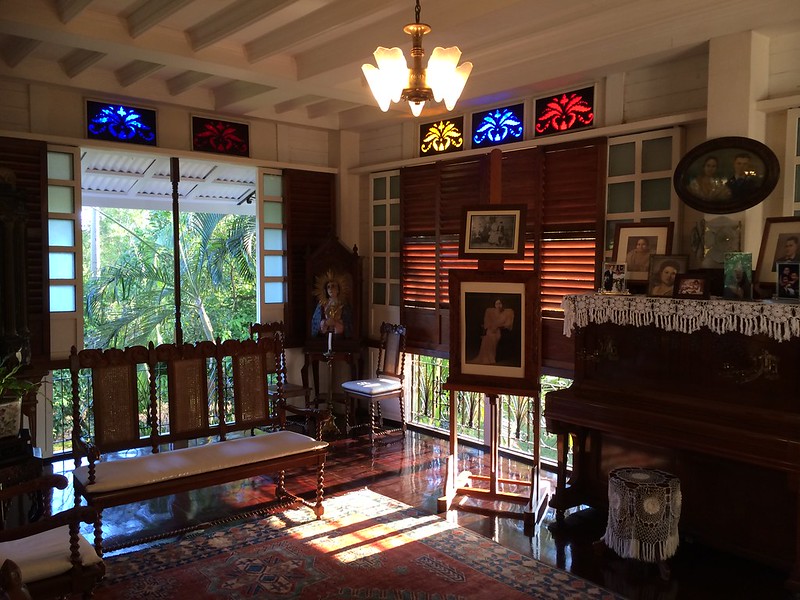
The Santos house now stands on a hilltop lot in one of Antipolo’s subdivisions, and what’s remarkable about it isn’t just the beauty of the Spanish-American colonial architecture but the information you soon receive that this house was transported and rebuilt brick by brick and plank by plank from Navotas to Antipolo. It had been built by Mike’s grandfather Roman—the founder of Prudential Bank—for his young wife in 1917.
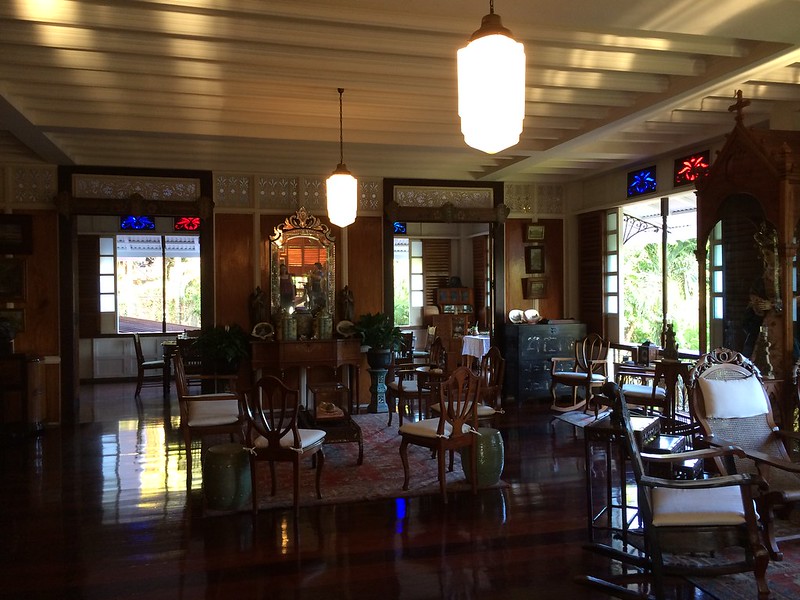
Over the decades, it withstood all kinds of natural and human challenges—Navotas’ chronic flooding periodically soaked the lower floor, and during the Second World War the Japanese used the house as a garrison and torture chamber, and of course the ravages of time took their toll on the structure and the furnishings—but sheer love of the house and what it stood for drove Mike and his family to save it before it got much worse. But it would have suffered the same fate over the decades where it stood, so the Santoses decided to move the house to high ground in Antipolo, where it now towers over its more modernistic neighbors.
We were delighted with our tour of the house, marveling at how well preserved the furnishings and appointments were, many of them handed down the generations. The merienda, of course, was excellent, with everything from suman to hot chocolate with pinipig and the sweet mangoes that Mike now grows on the family farm in Bulacan. The company and the stories of Mike and his neighbor Eddie Lindenberg made the afternoon even more special. Of course Beng didn’t get away scot-free: she got a glimpse of her next headache, another century-old painting on canvas of the Immaculate Heart of Jesus that had been cut into several pieces, with losses, then mounted on a wooden board. If it’s going to a house like Mike’s Antipolo manse, I’m sure Beng isn’t going to mind. Salamat, Mike!
THIS JULY, from the 17th to the 20th, another big regional conference will take place in Singapore, promising to bring Asia’s best and most active literary practitioners together under the auspices of Asia-Pacific Writers and Translators.
This moveable feast has been hopping around the region—these past two years, it’s been held in Bangkok, but previous meetings have taken place in Hong Kong and Australia, and next year we’ll get to host it in Manila. I’ve been to most if not all of these meetings—they put me on the APWT board last year, probably in recognition of the fact that a sizeable Filipino delegation has always attended these conferences—and they’ve invariably proven to be well worth the expense of going. (APWT is almost totally dependent on membership and conference fees, and many members like myself go on our own; since the annual conference happens somewhere just around Asia, it’s often doable on a budget fare, and members in academia can and do apply for travel grants to cover costs.)
The difference between APWT and other similar literary conferences is that APWT focuses on practice rather than theory; in other words, while it welcomes teachers, critics, and scholars, APWT is intended primarily for working writers and translators, so they can get together to discuss common concerns like publishing, copyrights, digital media, censorship, and various aspects of the craft. No long and abstruse academic papers are read at APWT; instead, writers and translators engage in lively, jargon-free conversation, sharing experiences across the region and the world.
This July in Singapore, the focus will be on “Bridging Cultures,” and the first keynote will be delivered by none other than our recent guest in Manila, the Singaporean novelist Suchen Christine Lim. Another keynote, titled “Border Lover in Uncertain Times: Story-Making Across Cultures, Languages, and Literary Forms” will be delivered bythe amazingly versatile and accomplished Merlinda Bobis, who was born and bred in Bicol but who has been a longtime resident of Australia, where she teaches at the University of Wollongong. I regularly teach one of Merlinda’s short stories, and am immensely proud of how she has been able to interject a Filipino voice into Australian literature.
According to the tentative program, I’ll be involved in at least two sessions. The first will be a roundtable that I’ll moderate on “Twisting the Truth: Truth in Fiction, Lies in Non-Fiction,” an exploration of storytelling as art and why we tell stories, with David Carlin, Lisa Walker, Michael Vatikiotis, and Philip McLaren. The second will be a session on “Writing Under Political Pressure,” moderated by Michael Vatikiotis, where I’ll be speaking with translator Alfred Birnbaum, who translated the work of Burmese novelist Nu Nu Yi, and with our own Menchu Sarmiento, who’ll be giving an overview on the literary work of some political prisoners in the Philippines.
Aside from myself and Menchu, fellow Filipino writers Christine Godinez-Ortega and Hope Sabanpan-Yu are also already on the tentative program, which can be accessed at http://wp.me/p2yK4I-bD. There’s still room for Filipino delegates to participate in panels they may be interested in and qualified for, but they’d have to register for the conference very soon, according to APWT’s executive director, Jane Camens, who has been the organization’s busybody all these years, and who’s hoping for another big turnout from the Philippines in Singapore. The full member registration is now S$60, and non-member registration is $$80 (in US$ that amounts to around $45 and $65).
Filipino writers and translators interested in attending the conference should know, again, that the organization has no funds to support individual writers, so they’ll have to book their own fares and lodgings for the July 17-20 event. I got online and booked budget airfares for myself and Beng, and then looked for and found a good, clean, cheap hotel—the only seeming downside being that it’s located in Geylang, Singapore’s red light district. This is going to be an interesting conference.
For more details, please check www.apwriters.com.
 Penman for Monday, May 5, 2014
I HADN’T been back to Hanoi in 20 years, so last January, when Beng and I thought of a place to visit for the summer on one of Cebu Pacific’s promotional fares, Hanoi was at the top of my list. I’d taken Beng to Ho Chi Minh City a few years ago and we’d had a blast with the food, the history, and the shopping, so a northern sojourn seemed in order. Joining us on the trip last week were my niece Susie and her husband Toto, taking a break from their business chores and eager to be initiated into the cheap thrills of regional travel.
When we arrived past midnight, rain was lashing the city, and the unseasonable weather persisted to the next day. For the rest of our four-day stay the sky was overcast, not altogether a bad thing, as we hardly sweated on our marathon walking tours. Few people realize how far north Hanoi is, as used as we are to thinking of Vietnam in terms of Saigon, nearly as low on the map as Davao. But Vietnam is a very long, thin country, and to fly the three hours from Manila to Hanoi is to actually fly northwest, practically toward China.
While HCMC—the old Saigon—might swelter in the heat, Hanoi is happily cooler. It’s also older, smaller, and quieter than its southern counterpart, which makes for more pleasant touring. At its core, the city is lived in by just around 2 million people, so it’s a city that can still boast of a lot of greenery and free space, with sidewalks wide enough to host the ubiquitous, low-slung food stalls that the Vietnamese would probably starve to death without.
Few cities around the world can claim to be more than 1,000 years old, and that’s a milestone that Hanoi passed in 2010, to much fanfare. The event is still commemorated by a four-kilometer-long wall of mosaic art that runs along the city’s main avenue. Ranging in inspiration from Van Gogh’s “Starry Night” to comic-book art, the vibrant mural is free of any graffiti whatsoever. Paint, of course, would have a hard time sticking to the tiles, but perhaps more significantly, it’s a reminder of how strongly social order has been maintained by Vietnam’s political managers, despite its exuberant capitalism, manifest on every street and streetcorner, in the thousands of small shops that make up Hanoi’s Old Quarter.

The charm of old Hanoi was in the fact that its traditional center—the “36 Streets District”—used to be devoted to guilds of craftsmen, with each guild occupying a street, the silk merchants here and the shoemakers there, and so on. Some of that remains—the silk shops and therefore Beng and Susie themselves were mostly to be found on Hang Gai street—but modernization, plastic, and mass production have inevitably worked their way into the Old Quarter, rendering swaths of it indistinguishable from other streets in Shanghai, Bangkok, and Kuala Lumpur. All these are signs of the energetic entrepreneurship that has swept up the Vietnamese; I read that almost 98 percent of businesses in Vietnam are small ones, and it did seem that nearly every Vietnamese person we met was a shopkeeper or a tradesman. “We work from 9 in the morning to 11 in the evening,” said one girl in a souvenir shop, in the same tone she would have used to talk about the weather.
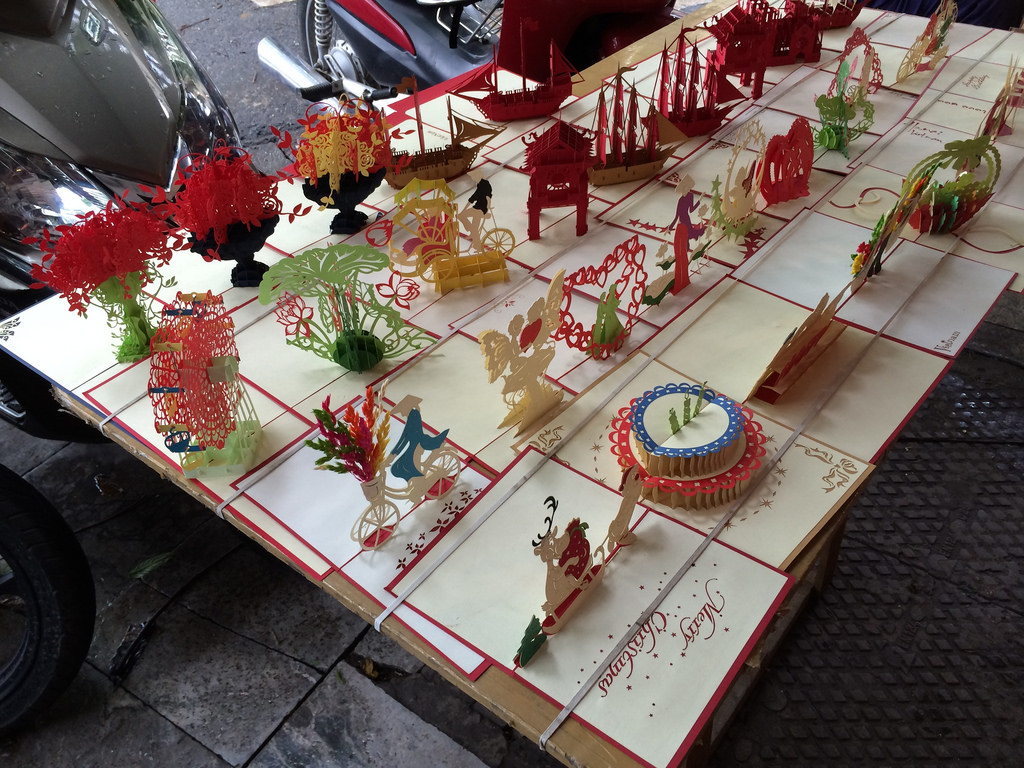
Speaking of shopping, any visitor to Vietnam quickly realizes that you become an instant millionaire the minute you exchange as little as US$50, which is equivalent to just over a million dong, or VND. (Toto devised an easy way to figure out how much things cost in pesos—drop the last three zeroes, then multiply the remaining number by two, so 400,000 dong is 800 pesos.) Costs have gone up a bit, but Tripadvisor recently still listed Hanoi as the world’s cheapest city for tourists: a one-night stay in a four-star hotel, and cocktails and dinner for two with wine plus taxi for two miles averaged just $141, compared to London’s $518.
When I first visited Hanoi in 1994 with a small group of Filipino journalists and artists, we stayed in a hostel in an old French-colonial building; our room had a ceiling fan and a mosquito net, and it cost us all of $5 per day. This time (thanks to our daughter Demi’s employee discount) we were booked at the swanky Sheraton overlooking the West Lake, with free wifi and the kind of sumptuous breakfast buffet that you could just as well find in Hong Kong’s or Singapore’s best hotels. A leisurely walk along the nearby lakefront revealed that a robust industry had sprung up in the construction of modern “executive villas”, presumably for expats and managers. Every now and then a coffee shop broke the succession of leased apartments; Vietnam is one of the world’s largest producers and consumers of coffee, and Hanoi is dotted with virtual temples to the godly brew.
Aside from coffee, the most popular drinks seemed to be fresh coconut water and the local Bia Noi beer—all of which, of course, we joyfully imbibed. Just as naturally, food is one of the best reasons for visiting Vietnam, and Hanoi did not fail to satisfy in this department, with rice noodles, spring rolls, roast pork, and fresh fruit topping the menu.
But for all that they had to eat and drink, the Vietnamese we met remained slim and fit, ready for another long day’s work. Surely there must be poor and even very poor people in Vietnam—you just can’t find them on the streets of Hanoi; not once were we approached by a beggar or a street person; neither were the sellers as pushy with their wares as they might be elsewhere in many an Asian market. Come to think of it, we didn’t meet too many uniformed policemen, and no blue guards stood watch over stores and businesses.

In the museums—such as the military memorial that impressed me the first time I saw it, with its display of scraps from fallen B-52s—grim reminders exist of the horrors of that terrible war by which alone many outsiders know Vietnam. Ho Chi Minh’s mausoleum—built in his honor against his express wishes—was closed the day we visited, but even among the milling crowds outside at Independence Park, the affection for the man was palpable; unlike Mao and Stalin, Ho was more a teacher and an uncle than a ruler or despot, and books of his poetry were still sold in the bookstores.
Hanoi is a city of parks and lakes, the most famous of them being Hoan Kiem in the Old Quarter, its centerpiece a temple to which pilgrims cross over a red bridge; I daresay that no one visits Hanoi without having his or her picture taken on that bridge. Nor will tourists miss the famous Water Puppet Theater in one corner of that lakeshore, a cultural institution that draws on the traditional affinity of the Vietnamese to the water, defined as the north and south are by the Red and Mekong Rivers. Playing for at least four one-hour shows every day, the theater was packed with tourists, each one paying just around 200 pesos for truly unique, ingenious, and wholesome entertainment.

The smiles on our faces as we stepped out of that theater pretty much summed up our long Hanoi weekend, and over coffee in a park beside Hoan Kiem, the inevitable question came up: if the Vietnamese can do this for themselves, why can’t we?
 Penman for Monday, November 4, 2013
BY WHICH I don’t mean writers pulling back or running scared (for which, to be persnickety about it, the prepositional phrase should be “in retreat”), but rather writers doing something they need to do every now and then, if they are to produce more noteworthy novels, poems, and plays—recharge, rewind, recover, then write and rewrite, preferably in some form of isolation or seclusion.
As I reported last week, I went with a small group of writers and friends down to Palawan on the first Adverbum Retreat for Writers organized by the Chicago-based Almira Astudillo-Gilles. We stayed at Ambrosia, The Amazing Villa (which, as it turned out, is just past Puerto Princesa in Sitio Bubusawin in Barangay Apurawan, in the municipality of Aborlan), run by Herwig Gielen and his wife Theresa. The idea was to give writers some R&R while they worked on their current projects, and in this case it was in a place remote enough that we were out of text, email, and Internet contact for a week (except for literally a few moments, twice, when we drove out to another barangay and sailed out to a point about 30 minutes offshore to catch a weak cellular signal and a few messages).
Writers’ retreats—some private and personal, some institutional—have had a long and colorful history. The Huffington Post’s UK edition has a list of 19 of the more unique ones, including a rotating hut that George Bernard Shaw built in the bottom of his garden near Hertfordshire; Dylan Thomas had a boat house in Wales, Virginia Woolf a hut in Sussex, J. K. Rowling her Edinburgh café, and George Orwell a house on a remote Scottish island. And Henry David Thoreau, of course, had Walden Pond.
Rowling’s caffeinated sequestration aside, modern retreats have evolved into much more sociable residencies, where not just one but several writers inhabit a home together for some time, each with his or her own space to work on an individual project. This setup acknowledges the fact that, in most cases, writers need not only to write but also to talk, preferably with fellow writers who understand what the whole fuss over words and ideas is all about, if only for an hour or two each day before each one slinks back into his or her own burrow.
While they may engage groups of writers, a writers’ retreat or residency isn’t like a workshop, where the focus is on helping younger and newer writers with matters of craft and other professional concerns. A residency is a gathering of peers, and while socialization is encouraged, privacy is respected, and no detailed reports or submission of outputs is expected, on the understanding that mature artists will proceed and produce at their own pace, without need of overbearing guidance or monitoring.
I’ve been privileged to attend a few of these residencies—which, until we had Adverbum in Palawan, were all overseas. One of the most popular ones (at least among writers) was the Hawthornden International Retreat for Writers in Lasswade, Midlothian, Scotland, about 45 minutes by bus out of Edinburgh. More than a dozen Filipino writers have now gone to Hawthornden over the past 20 years, including the likes of Krip Yuson, Ricky de Ungria, Danton Remoto, Marj Evasco, Rofel Brion, and Eric Gamalinda, and, among the younger ones, Sarge Lacuesta, Mia Gonzalez, and Chingbee Cruz.
I went to Hawthornden in 1994, thanks to a British Council grant (you have to apply directly to Hawthornden for a fellowship, which covers board and lodging in the 15th-century castle, but it used to be, in pre-recessionary days, that the British Council provided funds for the round-trip fare). The castle has several rooms for residents, each named after a famous writer (I stayed, I think, in “Boswell”), and you get your name inscribed on that room’s door once you submit the published proof of your work after your residency. The fellowship lasts for about four weeks, and you share the castle over that period with three or four other writers from around the world. There may be more staff than fellows at any given time, and the only time you meet the others is at 6 pm, when you “foregather” for sherry before dinner. Breakfast is at your own time and pace, and lunch (usually a generous sandwich and lentil soup) is served on a tray at your door, as if you were in some exclusive prison. (There is, in fact, a dungeon-like prison beneath the tower, but thankfully no writers have had to stay there; another of Hawthornden’s features is its proximity to Rosslyn Chapel, recently made famous by The Da Vinci Code, which had yet to be written when we were visiting it.)

Rather more opulent were two other residencies I later attended in Italy: the Rockefeller Foundation’s Bellagio Center in northern Italy, near Como and Milan, in 2002, and Civitella Ranieri in 2011. Bellagio was a medieval palace turned into a villa and a haven for artists and scholars by the Rockefeller Foundation, and today it offers residencies to a broad range of academics, artists, and professionals. When I went there to work on Soledad’s Sister, my fellow fellows comprised an American architect, a Russian pianist, a British Bible scholar, a South African novelist, and a South African arms expert, among others. The batches in Bellagio were much bigger, at about ten to a dozen per month-long batch. Like Hawthornden, what it took was an application consisting largely of a proposal for a work-in-progress, and samples of one’s past work. (I should add that I failed on my first application, but made it on my second try, so nothing is ever guaranteed with these things.) Many Filipinos have also gone to Bellagio—among them F. Sionil Jose, and many in the Hawthornden group, the usual suspects—including non-artists such as lawyer Raul Pangalangan; next year, fictionist Menchu Sarmiento will be going there to work on a new book of stories.
Civitella Ranieri is another medieval castle in Umbria, just outside Perugia, but here admission is by invitation only, and it’s limited to artists (writers, painters, musicians, dancers, filmmakers, and so on). Among other Filipinos, poet Mark Cayanan and novelist Miguel Syjuco were Civitella fellows this year, preceded by artist Lan Tuazon (2012), writer Gina Apostol (2009), and musicians Chino Toledo (2004) and Ramon Santos (1999).

How productive can one get in these places? I suppose it depends on your own work habits and, in a sense, on the setup of the place and the fellowship itself. I hate to admit this as a digital junkie, but I produced the most work—four new stories and a short novel in a month—when I was offline in Hawthornden, having gone there in pre-digital times; I did write “Penmanship” on a 286-SX laptop and a floppy disk, but otherwise had no cellphone or wifi to distract me. Bellagio was good for a few chapters, but the villa’s intensely social schedule (and the overpowering beauty of the scenery) proved surprisingly less than ideal for sustained work. Civitella Ranieri resulted in 30,000 words of new fiction and final revisions on a book of poetry. And Palawan? I did final revisions on a biography, and edited several chapters for a friend’s book of travel essays.
Could I have gotten all this new work done at home, in the boonies of Diliman? Maybe. But distance strangely provides more clarity and urgency to things we take for granted in too-familiar surroundings, and a lake or an ocean to view outside one’s window can only help the imagination and refresh both body and spirit.

LET ME take this opportunity to acknowledge and to thank another of our Palawan sponsors, aside from Cebu Pacific—the Hotel Centro in downtown Puerto Princesa, where we stayed for the final night of our getaway. I’ve been to Puerto often, and can say that this new 111-room hotel is one of the city’s finest, located close to its most important locations. The rooms are clean and well-furnished, with free wifi (a godsend after a week’s digital dieting), and a very attentive staff who can also arrange special package tours around the city and Honda Bay and to the Underground River for you. The Sicily Bar on the fifth floor is set up for meetings and conferences. We had a sumptuous poolside dinner under a tent, a perfect point of re-entry to urban living after a week of sylvan solitude. Check them out at www.hotelcentro.ph for more details and reservations.
 Pinoy Penman 3.0