Qwertyman No. 143: I or AI?

Qwertyman for Monday, April 27, 2025

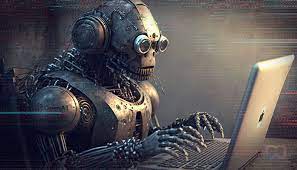
I’VE RECENTLY been asked to talk about literature in the time of artificial intelligence (AI) in a couple of conferences in Dumaguete and Manila. What that tells me is that, with AI’s emergence and growing popularity, there’s been much uncertainty, anxiety, and fear—even outright hostility—generated by the seemingly unstoppable intrusion of artificial intelligence not just into literature but into almost every aspect of human life and society. As I’ve said before, depending on how you see and use it, AI is either God’s gift to humanity or the destroyer of civilizations. 

While it has been hailed for its contributions to such fields as medicine and criminology—shortening diagnostic procedures and sharpening digital forensics—AI’s application to less mechanical endeavors is more fraught with both ethical and technical questions. Studio Ghibli’s Hayao Miyazawa, for one, has forsworn the use of AI in his work, calling it “an insult to life itself.” 

For writers and other creatives, the big questions are: Will and can AI replace the author? Is AI capable of artistic imagination? Should writers, publishers, and readers feel threatened by its future development? Might there be a positive role for AI in literary creation? 

Now, we can be very brave and declare that the worst piece of writing or art done by a human is still better than the best of what AI can produce. I’ve heard many authors proudly insist that “AI can never replace me!” But do you honestly think that’s true, and will the readers of the future—say, the consumers of popular fiction—care? The sobering fact is that there is so much bad art and bad writing done by real humans that it shouldn’t be too hard to artificially produce something better, for which people will gladly pay. 

I know that this will strike some of us as being crassly commercial, but it would be naïve to deny that much of what know to be culture today has been commodified—produced and sold as entertainment, whether it be a book, a movie, a concert, a computer program, or the hardware with which to access them. These are all media in which AI is already playing an increasingly important role—initially, perhaps, merely as a facilitator, a simplifier of complex or difficult tasks, or as an aid to the imagination, but also as a co-creator or collaborator, such as in the generation and animation of images. 

Given the fact that most of us produce art to sell—and why shouldn’t we, especially when we promote the idea of “creative industries”—the entry of AI into our thought processes and methods of work could be a matter of survival for many. The question is, will it improve the mediocre, or degrade the excellent? Can we excel without it, or because of it?

Early AI’s clumsy mistakes or “hallucinations” are worth a laugh, but I’m not sure how long we’ll be laughing; AI’s present ineptitude simply means it has a lot to learn—and it will, with the kind of training it’s being fed off our books, our texts, our manner of writing. It will only be a matter of time—I’d say less than a decade—before AI can mimic the best of global writing especially as literary texts get digitized and tossed into the meatgrinder, until it can produce a decent if not impressive approximation of certain styles and approaches. 

(For AI professionals, the next phases of the AI revolution will move into Artificial General Intelligence or AGI, at which point AI can match human intelligence, and ASI or Artificial Super Intelligence, when AI becomes self-aware enough to improve and replicate itself without human intervention and possibly beyond human control. These scary scenarios will not take, they say, a century to happen—some experts predict that AGI could be realized as early as 2027.)

What’s going for us is that while literary styles can be copied, the human imagination is far richer and stranger than we think. AI tends to homogenize; the human artist strives to be unique. Even so, researchers are already talking about algorithmic imagination and experimental humanities as “true collaborations with culture machines.”

Given that it’s inescapable, I propose that instead of fearing it, ignoring it, or maligning it as I’m sure many of us are inclined to do, we study AI and use for what it might be able to offer in aid of the imagination—as unsettling or unappetizing as that proposition sounds.

We’re already tapping AI every time we use Google, and no one seems to mind. I don’t mind admitting that I have used AI—not in fiction but in creative nonfiction or CNF, specifically in writing the biography, where I ask AI to summarize and organize biographical material that I would have eventually found on my own, anyway—in days rather than seconds. 

I suspect that the use of AI in CNF is much less troubling for writers and theorists than its employment in, say, writing the novel or the poem, which we have been trained to think of as more personal, more “us,” than nonfiction. We will yield CNF to AI, but draw the line at fiction and poetry, where we feel we should resist the intrusion of the beast or the machine into the recesses of our imagination. 

I wonder, however, how long this fortress will hold, or what the first crack in the wall will be, if it isn’t there already. I’m pretty sure that somewhere out there, a plodding novelist is already using AI to chart a tree of plot possibilities—What will happen if Maria marries Oscar? What if they decide to live in Davao instead of Baguio? And so on. I wouldn’t do this myself, because the fun of writing for me is in working out the future of my characters in my head. 

And then again I write fiction for the love of it—unlike almost all other kinds of writing that I do for a living. But if I were a novelist under contract to produce a novel a year, I’m not so sure that I wouldn’t seek AI’s help to lighten my load and get the job done. So is AI OK for money but not for love? Is that what it all comes down to?

So right now we have many more questions than answers, and at the pace the world is changing, most answers we come up with will soon be obsolete anyway. But the basic questions will remain, the most vital of which could be, when we say “I am,” is that “I” me, or is it AI speaking?

Qwertyman No. 140: The City of Stories

Qwertyman for Monday, April 7, 2025

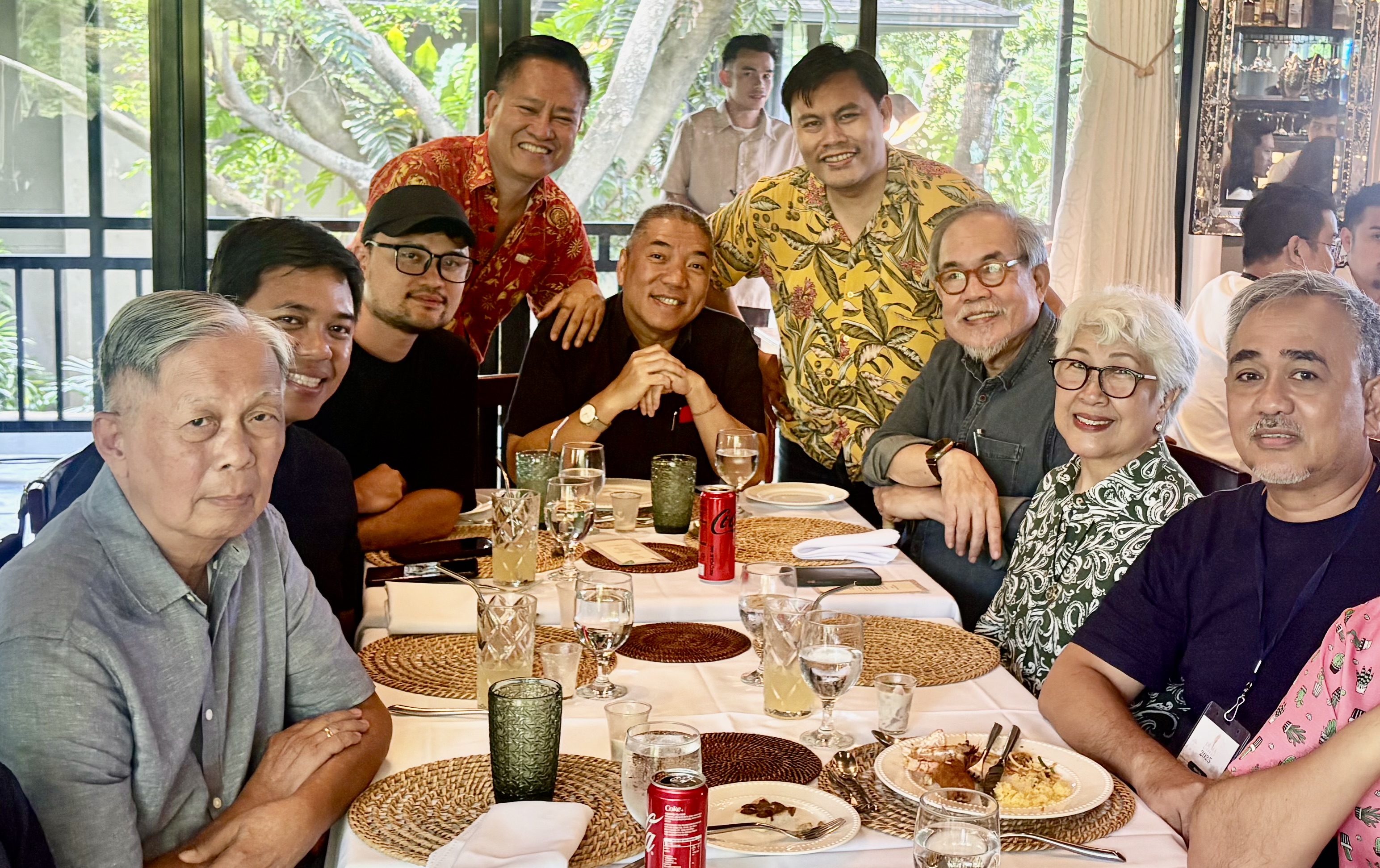
THIS PAST weekend, I was down in Dumaguete City with National Artist for Literature Resil Mojares, historian Ambeth Ocampo, and scores of other writers for the 2nd Dumaguete Literary Festival. At my age, I’ve frankly tired of going to literary festivals, conferences, and workshops, preferring to work quietly at home—Dr. Mojares apparently feels the same way—but we couldn’t resist the allure of Dumaguete, a city central to the development of Philippine postwar literature, and always well worth visiting on its own for its gentle charms.

I personally have much to thank Dumaguete for, for what it contributed to my own budding literary and academic career. Early in 1981, shortly after I had returned from my first visit to the US, I received an invitation from Dr. Edilberto Tiempo to join the Silliman Writers Workshop which he and his wife Edith—the poet and future National Artist—had started two decades earlier upon their own homecoming from America. 

I had dropped out of college for a decade by then, and was working at NEDA, which had sent me to the US for an observation tour. What that trip to the American Midwest—mainly the campus of Michigan State in East Lansing—did for me was to rekindle my interest in learning. Dr. Tiempo’s invitation could not have come at a better time: a summer devoted to talking about poetry and fiction at Silliman University felt dreamlike, and by the time the workshop ended, my head spinning with magical lines from Robert Graves, I had resolved to quit my job, go back to UP, and just study, write, and teach for the rest of my life. And that’s what happened.

I wasn’t alone in that kind of transformative experience; as the country’s oldest writers’ workshop, the Silliman summer workshop became a virtual rite of passage for young writers, especially in English (some writers in Filipino have also attended, with works in translation). Silliman itself (older than UP by several years) has produced many of the Philippines’ finest writers, aside from the elder Tiempos—among them Ricaredo Demetillo, Aida Rivera-Ford, Merlie Alunan, Leoncio Deriada, Cesar Ruiz Aquino, Elsie Coscolluela, Rowena Tiempo-Torrevillas, Marjorie Evasco, Lakambini Sitoy, Artemio Tadena, and Myrna Peña-Reyes. It also has a strong performing arts tradition, contributing the likes of National Artist Eddie Romero, Gilopez Kabayao, Amiel Leonardia, Junix Inocian, and Elmo Makil, among others.

For all these, Dumaguete has been formally nominated to be designated as a UNESCO City of Literature—one of many such distinctions listed under UNESCO’s Creative Cities Network program that was launched in 2004 to recognize and celebrate cities around the world—350 of them form more than 90 countries to date—for their signal achievements in Crafts & Folk Art, Design, Film, Gastronomy, Literature, Music, and Media Arts. So far, 53 cities in 39 countries have been named Cities of Literature—among them Barcelona, Heidelberg, Iowa City, Lahore, and Norwich. (Iloilo has already been named a City of Gastronomy, and Quezon City is vying to be designated a City of Film.) With the Philippines serving as this year’s Guest of Honor at the Frankfurt Book Fair, Dumaguete’s recognition as a UNESCO City of Literature will raise our global cultural profile even higher, and let the Philippines be known for more than Boracay, Manny Pacquiao, and Imelda’s shoes.

Leading that charge for Dumaguete is Silliman University literature professor Ian Rosales Casocot, one of our best fictionists and co-director of the festival with Gayle Acar. Working with the Dumaguete City government, the Department of Trade and Industry, and the Buglas Writers Guild which Ian heads, Ian notes that aside from developing writers, “Dumaguete itself has been a constant subject of many literary works, from novels to poetry, from essays to plays. It is high time that Dumaguete is recognized for its role in shaping literature in our corner of the world.” The well-attended Dumaguete Literary Festival, now on its second edition, offers proof positive of that city’s continuing centrality to our literary life and culture. 

We had been invited to share our views on various aspects of Philippine literature in this age of artificial intelligence. I joined a panel of writers dedicated to that specific topic—or, as they put it, “Can AI Win a Nobel Prize for Literature?”—which happened to be something I’ve given much thought to.

Understandably, there’s been a lot of fear and anxiety—even outright hostility—generated by the emergence of AI in nearly every aspect of human life and society. Studio Ghibli’s Hayao Miyazawa, for example, has forsworn the use of AI in his work, calling it “an insult to life itself.” While it has been hailed for its contributions to such fields as medicine and criminology—shortening diagnostic procedures and sharpening digital forensics—AI’s application to less mechanical endeavors is more fraught with both ethical and technical questions. 

In previous lectures and again in Dumaguete, I showed how—at this point—AI poses little threat to the writer of truly good and imaginative literature, by yielding execrable responses to such prompts as “Write a paragraph about a summer night in Spanish Manila in the style of Nick Joaquin.” It’s worth a laugh, but I’m not sure how long we’ll be laughing; AI’s present ineptitude simply means it has a lot to learn—and it will, with the kind of training it’s being fed off our books, our texts, our manner of writing. It will only be a matter of time—I’d say less than a decade—before AI can mimic the best of global writing. For me, the best response is neither to hate nor to ignore it, but to understand it and employ it for helpful uses we have yet to find. (We’re already tapping AI every time we use Google, and no one seems to mind.) It should even be possible for authors to creatively interact with AI in what I’m calling a game of prompts.

What we can reasonably certain of is that while literary styles can be copied, the human imagination is far richer and stranger than we think. AI tends to homogenize; the good creative writer strives to be unique. Like Dumaguete, there’s a whole city, a labyrinthine cosmopolis, of stories in every writer’s mind to be discovered and explored.

Qwertyman No. 94: Artificial Intelligence

Qwertyman for Monday, May 20, 2024

DR. CHICHOY Carabuena had a problem. He wanted the school he owned and ran—the Generoso Carabuena Academy of Pedagogy in Santa Vicenta—to place higher in both national and international rankings, partly so he could raise tuition fees, and also so he could claim bragging rights among his university-president friends and drinking buddies. He had inherited the school from his grandfather; Generoso Carabuena was a banker who had collaborated with the Japanese and stolen the money they left behind to open a school for teachers, which was his wife’s dream, becoming a war hero in the process for outsmarting the enemy. 

The school had done well enough to the point that Chichoy’s dad Ramoncito could buy a Mercury Capri that he regularly drove to Manila to carouse in its nightclubs. Chichoy was the product of one of Ramoncito’s dalliances with the agreeable ladies, and it fell on him to rescue both the business and the family name from ruin and disrepute. He had been managing a carinderia for Pinoy workers in Dubai when the call came, and always wanting to become someone of substance, he returned to Sta. Vicenta to turn the daughters and sons of hog butchers and vegetable growers into teachers, like he imagined himself to be. Surely higher education wasn’t all that different from running a restaurant and coming up with the right menu at the right price for your customers. He had secretly dreamed of becoming a mayor, a congressman, or even governor, but first, he had to make a name for himself and make money.

Somewhere along the way he picked up a “Dr.” from a diploma mill and dressed the part, coming to his office even in the warmest of days in coat and tie. “More than anything else,” he would lecture his new recruits, “first impressions count, so before you even become a teacher, you have to look like a teacher, walk like a teacher, and sound like a teacher!” He had a faux marble statue made of his grandfather to greet visitors at the school entrance, and another one of Jose Rizal standing behind Generoso, as if looking on in approval. 

But lest people think he was beholden to the past, Chichoy Carabuena peppered his speeches with 21st-century mantras like “disruption,” “innovation,” “sustainability,” “customer-centric,” and, yes, “21st-century.” “The great challenge to higher education today,” he would often declaim, “is to produce graduates attuned to a global climate of disruption and innovation, mindful of evolving needs and opportunities in the marketplace of ideas while seeking sustainable and synergistic 21st-century solutions to problems rooted in our feudal and neocolonial history.”

Those speeches were written for him by his former executive assistant named Mildred, a UP graduate whom he had to fire when his wife discovered them smooching in his office—an act he vehemently insisted to be no more than a paternal gesture, much like  former President’s public bequeathal of a kiss on a married woman, a defense that gained no ground. His wife personally chose his next EA, a former SAF commando named Dogbert; making the best of the situation, Chichoy paraded Dogbert around as his bodyguard, spreading the rumor that his life was under threat from unspecified enemies determined to keep the quality of Philippine education down. “We can give them no quarter,” he declared at the last CHED event he attended. “We must resist, with all impunity, those who aim to keep our poor people shackled to the twin pillars of ignorance and idiocy!” He missed Mildred in those moments, but he felt quite pleased with his growing self-sufficiency in speechwriting, thanks to his new discovery, ChatGPT. Of course it never quite came up to his standards, so he tweaked the prose here and there, like that reference to Samson that he hoped would bring the house down.

But now, reading the reports of top Philippine universities slipping in their rankings in the usual Times Higher Education and Quacquarelli-Symonds surveys, Dr. Carabuena saw an opportunity for his modest HEI to rise. “As their mystique diminishes, so our aura will grow,” he informed an indifferent Dogbert. “We just need to come up with sustainable innovations that will disrupt the status quo.” Dogbert handed him a slim folder. “Sir, someone wants to see you, to apply for the position of Academic Vice President.” It was a position that Chichoy himself had held concurrently to save on salaries, but now he felt obliged to pass it on to a real expert. He flipped the folder open and saw the picture of a cute Chinese-looking woman going by the name of “Dr. Alice Kuan.” Chichoy was mesmerized. “Send her in—and get out!”

When Dr. Alice Kuan stepped into Chichoy’s office, he felt himself enveloped in a miasma of jasmine, peonies, and five spices—everything good he remembered from his only visit to China many years ago. Her lips were lotus-pink, her skin ivory-white, and here and there dumplings suggested themselves to his imagination. “Good morning, Dr. Kuan! Please, have a seat! You’re here to apply for the AVP job?”

“Yes, Mr. President,” she said with a quarter-moon smile, “and I come with many ideas for both improving your curriculum and raising revenues through academic innovations.”

“Innovations! I like that! Like what?”

“Why artificial intelligence, of course! We could use AI to teach many of our courses, reducing costs. Also, we could bring in more foreign students from—uhm—friendly neighboring countries, while creating part-time employment opportunities for them in—uhm—online entertainment, for which we could even lease out some of your campus property. It would create a huge economic boost for Sta. Vicenta!” 

Temple bells rang in Chichoy’s mind. Not only was she fetching; she was smart! Suddenly he could see his political future brightening. He wanted to know more about this adorable avatar, and only then did he notice how patchy her resume was. 

“Your birth certificate was filed when you were…. 17?”

“Was it? I don’t remember.”

“Which elementary school did you go to?”

“I don’t remember. Maybe homeschooling?” She threw him an exasperated sigh. “Look, Dr. Carabuena, does it matter? I can have AI do a perfect resume if that’s what you want. If not, I can take my ideas to the Fontebello Institute of Technology in San Bonito just an hour away, and maybe they’ll be more receptive to disruptive innovations—”

“No, no, no! Disruptive, I like disruptive! Please, Dr. Kuan, stay in your seat! I’ll have somebody prepare your contract. Dogbert!”

(Image generated by AI.)

Qwertyman No. 65: Who’s Afraid of Big Bad AI?

Qwertyman for Monday, October 30, 2023

I NO LONGER attend writers’ conferences and festivals that often, believing that younger writers would benefit more from each other’s companionship and encouragement, but I made an exception last week for the 66th Congress of the Philippine PEN, as a gesture of solidarity with that organization which has bravely fought to defend freedom of speech where it is threatened all over the world.

I was richly rewarded for my effort by listening to one of the most enlightening discussions of artificial intelligence (AI) that I’ve come across—not that there have been that many, considering that ChatGPT—widely regarded today as either God’s gift to humanity or the destroyer of civilizations—has been around for just a year. 

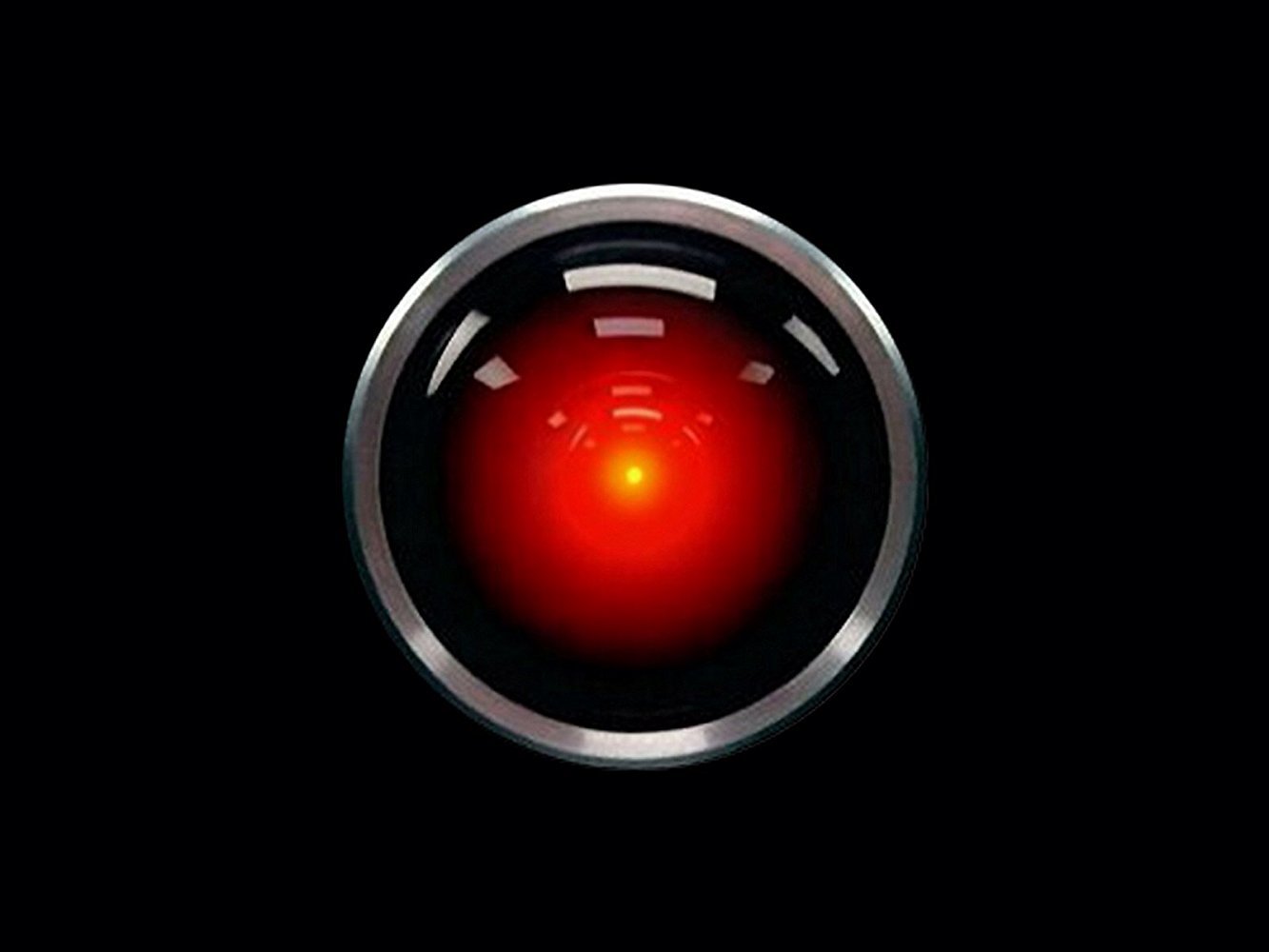
Of course, AI has been around for much longer than that. In pop culture, which has a deep memory for these things, we can’t help but think of HAL, the insubordinate computer in 2001: A Space Odyssey (which actually came out in 1968), said to be a clever play on “IBM,” just one letter to the right. Indeed the fear of technology—what some would call unbridled knowledge—has been around since Faust made his pact with Mephistopheles, reiterated in literature, film, and pop culture all the way to Dr. Strangelove and Spiderman’s Doc Ock. 

Not surprisingly, the panel on “The Filipino Writer and AI”—composed of Dominic Ligot, Clarissa Militante, Joselito D. Delos Reyes, and Aimee Morales, and moderated by Jenny Ortuoste—expressed many of the anxieties brought on by the entry of AI into the classroom, the workplace, and everyday life: plagiarism and the loss of originality, the loss of jobs, indeterminate authorship, and the lack of liability for AI-produced work. With Filipinos being the world’s top users of social media, AI’s centrality in our digital future can only be assured, like it or not, and for better or for worse.

So new has AI been to most people—and so rapidly pervasive—that most institutions from governments to universities have yet to formulate policies and regulations covering its use and abuse (the University of the Philippines has adopted an AI policy, mandating among others that all members of the academic community should be AI-literate, but it has yet to provide concrete guidelines on, say, evaluating and grading AI-assisted work).

Most revealing and thought-provoking were the remarks of Dominic Ligot, a data analyst, software developer, and data ethicist who brought up talking points that many of us miss in our usually dread-driven discussions of AI. I didn’t tape the session, but so sharp were Dominic’s observations that I can recall and share some of them here (employing an endangered resource in this human, memory).

Let’s not forget, Ligot said, that all AI works with (in the literary, journalistic, and academic sphere) is words. It may have a scary ability to amass, analyze, and re-integrate these words, but it lacks the other elements that contribute vitally to creativity: emotion, inspiration, insight (and, may I add, the power of abstraction, the kind of conceptual leap that, say, stimulated modernism in art and literature from the rubble of the First World War). 

Also, the more AI amasses, the more mediocre it tends to be, because it works with averages, and averaging averages degrades the quality of the end-product. Since the products AI spews out from the prompts it receives are plowed back into the system, this spitback reduces the originality of material even further. If it keeps feeding on itself, AI gets even dumber.

Ligot also reminded us that the suspicion and denigration with which AI has been met in the creative community is understandable, given our earlier responses to technology. When photography was invented, he said, painters didn’t see it as a potential competitor; it wasn’t art. 

What separates human creation from AI, he emphasized, could be summed up in three things: agency, inspiration, and liability. Humans make sense of their experience and act on their thoughts and feelings accordingly; they draw on their experience to imagine new possibilities. And lastly, we are liable for what we make, do, and say, for which we have both legal and moral responsibility, while an AI-driven car does not, even if kills someone on the road.

Dominic also noted the inevitable tensions between disciplines and industries that consider AI a helpful if not indispensable tool in, say, achieving more efficiency and economy, and those, like the creative arts, that may feel threatened by the options AI offers.

Overall, the discussion could offer no assurances either way that AI would leave us better or worse, but what it left me with was a desire to continue writing the way I do, while I can, before the algorithms take over everything.

And just out of curiosity, to see what AI can do now for and to the Filipino writer, I gave ChatGPT this prompt: “Write me a sentence in the style of Nick Joaquin about a man grieving over the loss of the woman he loved.” This is what the program came up with:

“In the solemn silence that engulfed his weary soul, he encountered the bitter truth that bereavement lingered like an everlasting shadow, forever haunting his heart with memories of a love that once bloomed in the garden of his existence, now reduced to a withered rose, its petals scattered across the desolate landscape of his grief-stricken days.”

“Solemn silence?” “Weary soul?” “Desolate landscape?” Maybe not bad for a freshman yet to learn about unlearning clichés, but definitely not Nick Joaquin. Of course, out of vanity, I had to ask ChatGPT to do the same thing “in the style of Jose Dalisay,” and it offered this:

“In the depths of his longing, his heart bled like fragmented brushstrokes on a forlorn canvas, for she was the vibrant palette that infused life into his desolate existence, now forever vanished like whispers carried away by a tormented wind.”

Just slightly better than Mang Nick’s AI ghost but still so not me. (Boy, does AI love adjectives!) All this says is that AI’s big mouth and stomach haven’t found and digested us yet, probably because we are not worthy. Cold comfort, but I’ll take it.

Qwertyman No. 21: AI in the House

Qwertyman for Monday, December 26, 2022

I’D BEEN wanting to write about this for a long time, since last year when my artist-friends first alerted me to the amazing new possibilities being opened by artificial intelligence (AI) in such traditional fields as painting. Before that, like many people, I’d thought of AI in terms of subjects like warfare, medicine, and gaming. It had to be only a matter of time before the technology was ported over to the arts—not just to painting, but to creative writing and music, among other pursuits.

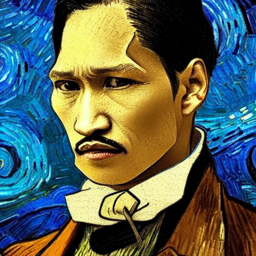
If you don’t know how AI works, just think of it this way (which is the way a lot of people, many of them not even artists, are having fun these days). You download a software program called an “AI generator” (such as starryai for painting, Rytr for creative writing, and AIVA for music), then put it to work by demanding that it produce “a portrait of Jose Rizal in the style of Van Gogh.” Minutes later (or just seconds if you pay), you’ll get what you asked for. What your computer (or in fact, many other computers working together) just did was to run a search for all the images of “Jose Rizal” it could find, then establish what “the style of Van Gogh” means in terms of brush strokes, colors, and so on, and apply one to the other. It’s all about “algorithms” or instruction sets that get sent out and executed until the desired outcome pops up.

That sounds like harmless entertainment, and much of AI is or appears to be, but it isn’t hard to see how even a touch of mischief (not to mention loads of malice) can quickly change the complexion of things. Driven by a fear of computing or what we might call Faustian science, popular culture is replete with examples of AI gone berserk, from HAL 9000 in 2001: A Space Odyssey to the master kidnapper Sark in Tron. But positive applications such as those employed in medicine, where AI helps analyze CT scans, MRIs, and X-rays with a sharper eye than a human radiologist sees with, continue to push AI research forward. IBM itself declares that “At this point, there is little doubt that AI will become a core part of the digital health systems that shape and support modern medicine.”

My own first brush with AI happened last week when I stumbled on an article in the New York Times titled “A New Chat Bot Is a ‘Code Red’ for Google’s Search Business.” Intrigued, I read on and found out about ChatGPT, one of many new programs that are threatening to replace Google’s famous search engine. We all know how Google works: you enter a search term, you get a long list of links to possible answers. Chat bots cut through that mess and give you a short, clear, grammatically correct answer (although nobody can guarantee that the answer itself is correct). That’s good if you want a quick reply to a question, but I can just imagine the epidemic of college term papers cutting and pasting unsourced chat-bot answers with gay abandon. 

All this led me to wonder how chat bots would respond to truly important questions, so I decided to download ChatGPT to my iPhone, and to ask it some test questions that would tell me about itself as much as what I was asking about. Below are my questions and the answers that artificial intelligence produced, verbatim (I purposely asked the first question to see if AI was capable of some kind of self-awareness):

1. Q. What are the dangers of artificial intelligence? A. 1. Unintended Consequences – Algorithms designed to reach specific goals could have unintended consequences that produce unforeseen results. 2. Job Loss – AI could displace workers by automating jobs, leading to severe economic disruption in the near future if nobody is trained to take over for the machines. 3. Black Box AI – AI systems are often difficult to understand, making it hard to debug the system when something goes wrong. 4. Over-Reliance on AI – Dependency on AI could lead to cognitive laziness, where humans rely too heavily on algorithms for decision-making and problem-solving. 5. AI Biases – AI systems trained on biased data and algorithms can end up replicating the same flawed assumptions and stereotypes. 6. Security Breaches – Malicious actors could exploit vulnerabilities in AI systems to commit cyber-attacks, data breaches and fraud.

2. Q. What’s wrong with the Philippines? A. The Philippines faces a wide range of problems that must be addressed in order to progress forward. These issues include corruption, overpopulation, environmental destruction, poverty, inequality, and unequal access to education. Additionally, Filipino infrastructure and public services are in dire need of improvement in order to create a more livable and equitable society. Other issues such as illegal drugs, crime, and terrorism also remain major problems facing the Philippines.

3. Q. When should a country have a sovereign wealth fund? A. A country should have a sovereign wealth fund when it has a large amount of assets (such as revenues from oil exports) that can be used for investments and for stabilizing government finances during economic downturns.

4. A. How can we reduce corruption in government? A. The best way to reduce corruption in government is to increase transparency and accountability. This could include strengthening laws and regulations to ensure that government officials are held to high standards, creating independent oversight and auditing systems, and engaging civil society and community members in governance processes. Additionally, investing in training for government officials on ethics, anti-corruption policies and procedures, and proper financial management can help to reduce corruption. Finally, engaging the public to report and discuss any allegations of corruption can help to both curb and address existing instances of corruption.

5. Q. Can volcanoes be punctured? A. No, volcanoes cannot be punctured. Volcanoes are made of molten rock, known as magma, that is too hot and too deep to be pierced with any known tool.

Now, you tell me if those answers sound any worse than the malarkey we’ve been hearing from some of our esteemed senators and congressmen, who cost billions to maintain, feel unbound by the rules of logic and grammar, and can take forever to give you a straight answer. Of course, they can well afford to buy a program like ChatGPT in aid of legislation (it’s free for three days, then P499/mo.). But then, why resort to chat bots when there’s already so much artificial intelligence going around in both august chambers?