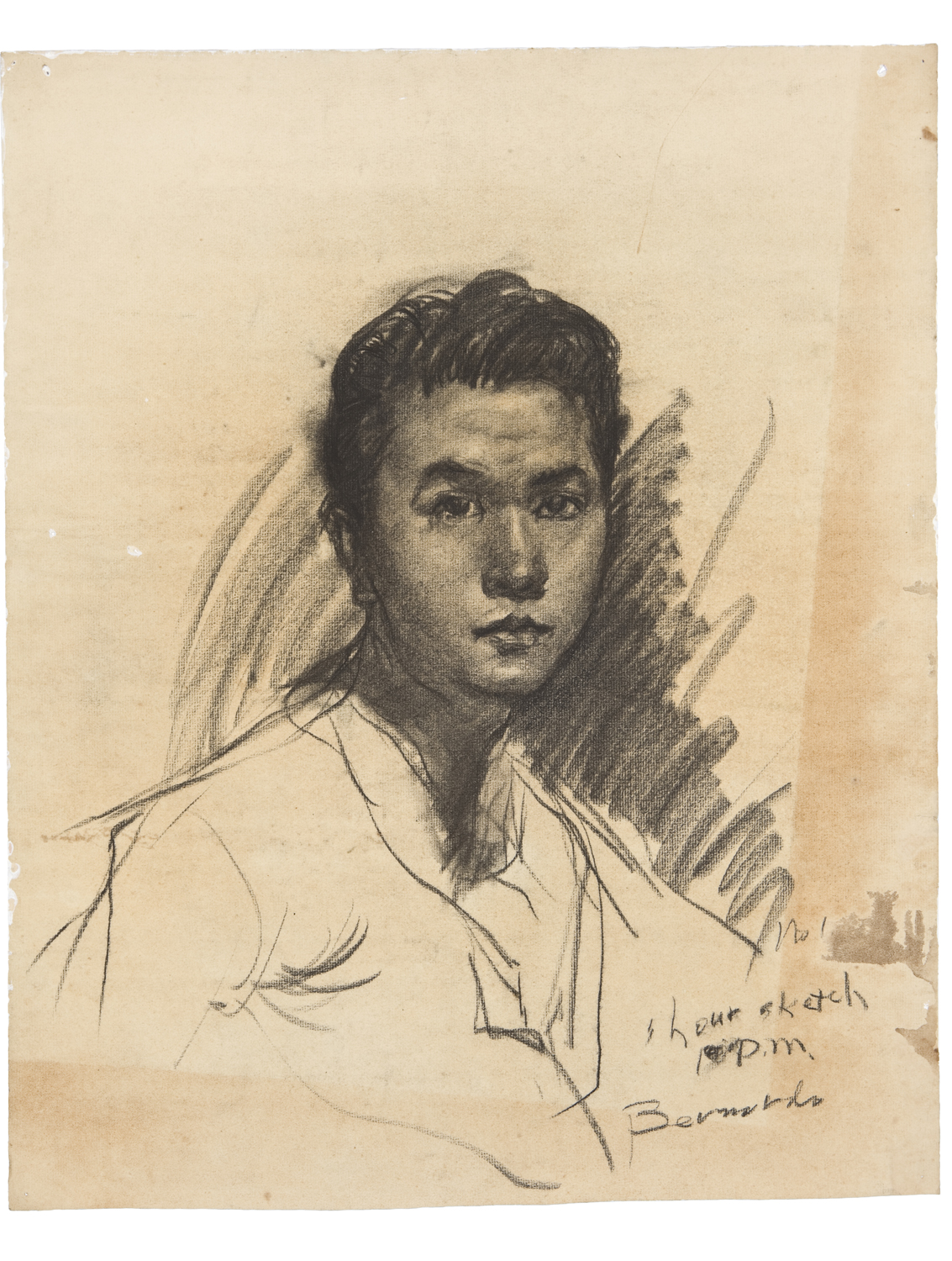
Penman No. 74: Constancio Bernardo, the Forgotten Master

AT MACULANGAN PhotographyPenman for Monday, November 25, 2013

THE STORY goes that when the noted abstractionist Josef Albers met Constancio Bernardo at Yale, where the young Filipino had gone to study on a Fulbright grant, he hailed the Filipino “not as a student, but as a peer.” Albers went on to predict that Bernardo—who completed both a second bachelor’s and an MFA degree at Yale—would become a resounding success upon his return to the Philippines in the early 1950s, given his abounding talent.

Indeed, Bernardo had left for the US with high hopes and with his mentor Fernando Amorsolo’s blessings; Amorsolo had reportedly singled out Bernardo as the student most likely to surpass him, especially since Constancio was then working in the same traditional figurative style of which Amorsolo was the acknowledged master.

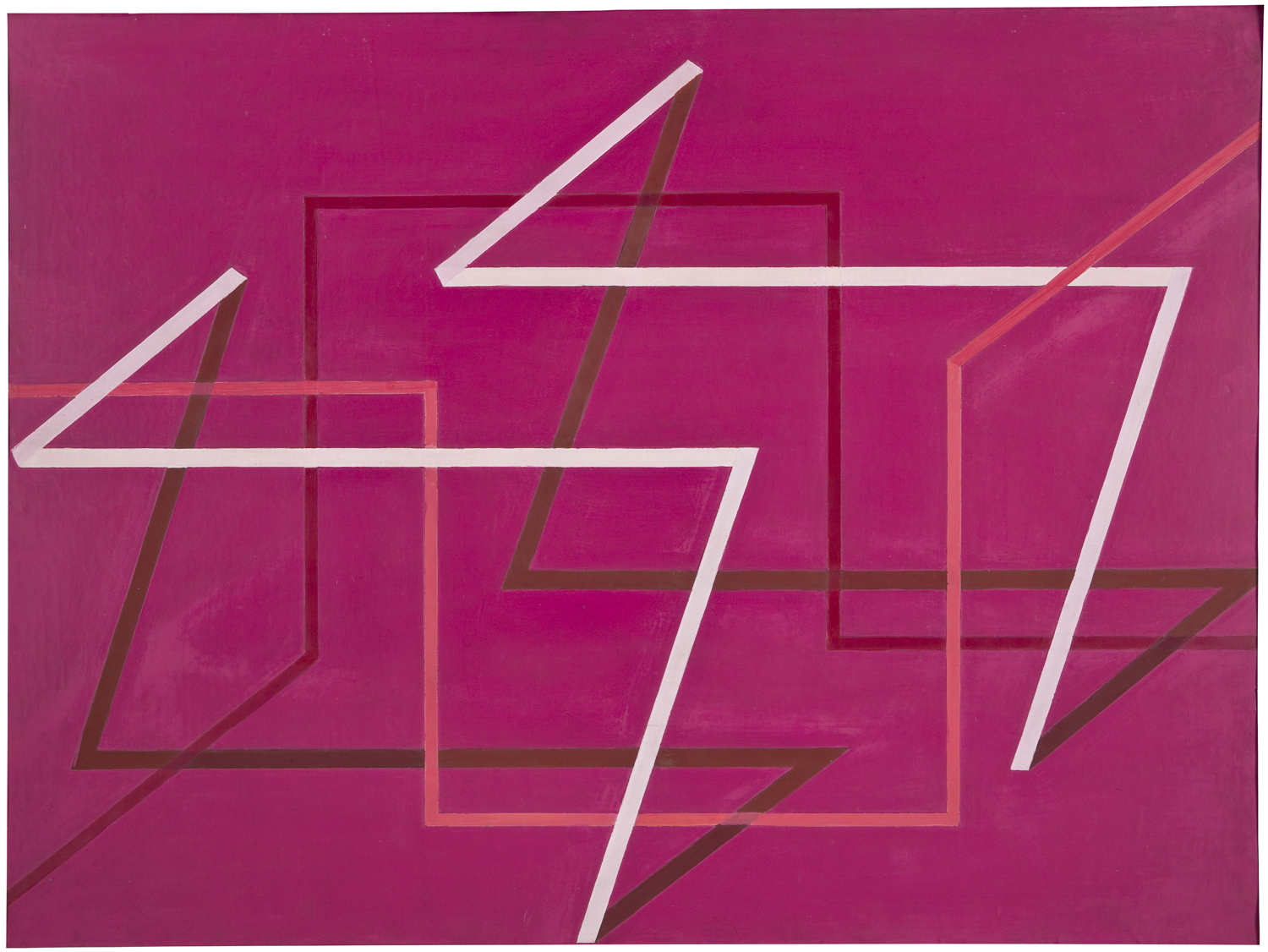
Sadly and surprisingly, Albers’ rosy prediction would fail to materialize. Bernardo did come home after his Fulbright, but instead of being welcomed warmly by Amorsolo et al, Bernardo—now an accomplished and committed abstractionist—was shunned. He would continue to serve UP, teaching in the School (and later College) of Fine Arts as a teacher and administrator, and his body of work would continue to, establishing him firmly—in the words of art critic Leonidas Benesa—as “second to none in this country” in the field of abstraction, “particularly of the geometric-planar, optical-painting variety.”

For all that, Bernardo would never achieve the celebrity and commercial success enjoyed by his peers like H. R. Ocampo, Vicente Manansala, Carlos “Botong” Francisco, who—despite whatever vicissitudes they may have encountered in their own careers and lives—went on to be named National Artists. As trailblazing and as influential as Bernardo’s work was, he would be cited (again by Benesa, in 1978) as “the most underrated of the exponents of modern art in the Philippines.”

When he died ten years ago, in 2003, Constancio Bernardo was, effectively, a forgotten master, a luminary of Philippine painting whose star burned fiercely but in a dark and distant corner of the galaxy. (As it happened, I was UP’s Vice President for Public Affairs at the time, and attended Bernardo’s wake in my official capacity. Despite my own abiding interest in the visual arts, it was my first albeit belated encounter with Bernardo and his work, leading eventually to an invitation from the family for me to sit on the board of the Constancio Ma. A. Bernardo Foundation, which I accepted.)

It’s high time, then, that Filipinos rediscover and appreciate this lost master in their midst, a need that will be addressed starting this Wednesday the 27th, when a comprehensive retrospective exhibition of Constancio Bernardo’s work opens at the Ayala Museum in Makati. Including about a hundred representative works, the retrospective also coincides with the centenary of Bernardo’s birth, and will be on view until February 28th next year.

According to the exhibition notes penned by the art critic Carina Evangelista, “the exhibition provides the first opportunity to view the full range of Bernardo’s œuvre from a career span of more than sixty years and highlights his canvases of abstraction, lauded by a number of critics from the 1950s onward as among the most important examples of Philippine modernist painting but increasingly overlooked as the decades passed. While included in a number of group exhibitions and the subject of 22 solo exhibitions including retrospectives at U.P. Baguio in 1969, at the Museum of Philippine Art in 1978, and at the Cultural Center of the Philippines in 1990, Bernardo remains to be on the margins of the annals of Philippine art history. Dedicated to his lifelong art practice and his teaching career at the University of the Philippines, Bernardo staunchly resisted the limelight, eschewing the social scene of the art world and opting to work tirelessly in his studio.

“Within abstraction, his paintings ranged from geometric abstraction to Op art and abstract expressionism—each series structured with a formal mastery and infused with a depth of feeling singularly his. Obdurate in his self-effacing silence in his lifetime, his body of work preserved by the Museo Bernardo Foundation Inc., and CMa Bernardo Foundation for Fine Arts, proves to be the clearest evidence of enduring artistic expression.”
AT MACULANGAN Photography

To writer Francine Medina, “Constancio Ma. Bernardo has an indispensable place in Philippine art history. A prolific artist, he painted every day till his last breath, producing an impressive range of works from self-portraits that chronicled his quiet yet intense life; uncannily realistic still life paintings and nudes; to his highly praised fields of color in his ‘Perpetual Motion’ series. It was just that art was a necessary almost organic function that he needed to accomplish everyday.

“There was a palpable sense of completeness in the way he approached his works, a proof of his great involvement in each piece. He mixed his own paints, diligently worked in his studio, and made his handiwork complete by creating the frames for his art works.

“His quest for the ultimate painting was such that when he felt a work was not at par with his self-subscribed standards, he would paint over it or, as his closest peers would attest, throw it away, never to be seen or worked on again.”

It’s too bad that I never got to know the man when he was alive. I’ve made friends of many artists, and while they generally and understandably aren’t as voluble or as articulate as my writer-friends, many have led very interesting lives that deserve to be known and written about, quite apart from their creations. My wife Beng was a Fine Arts student at UP when Bernardo taught there, but being a Visual Communication major, she never got to study with him, unlike her contemporary, the former Fine Arts dean and modernist Nestor Vinluan, whose paintings clearly show Bernardo’s influence. She remembers him, however, as a quiet and kindly man, with a rather formal demeanor, someone who spoke only when he had to and who chose his words well.

In this restrospective exhibit, Constancio Bernardo’s works will speak for themselves, and hopefully lift him and his legacy out of the obscurity they don’t deserve.

(Let me acknowledge and thank Constancio’s son, the retired anthropologist Angelo Bernardo, for providing additional source material on the painter.)
Penman No. 37: The Rebirth of Joly Benitez

Jana and Joly

Penman for Monday, March 11, 2013

UNTIL VERY recently, the first and the only time I met Dr. Jose Conrado Benitez—better known to many by his nickname “Joly” (yes, with the single L)—was almost 40 years ago, when he visited and spoke to our class in Development Economics at the University of the Philippines.

I was working as a writer then for the National Economic and Development Authority, and my boss—the very supportive Gerry Sicat—had sent me, a college dropout, as a special student to UP to learn some economics quickly. I had been imprisoned under martial law and still carried my leftist sentiments with me, but there being few other options and being newly married, I decided to take my studies as seriously as I could.

There was something of a rivalry between NEDA on the one hand and the Ministry of Human Settlements and the Development Academy of the Philippines on the other, and Joly Benitez was associated with both latter agencies, so when the young Deputy Minister of the MHS came to our class, I can’t say that I was in a very welcoming mood, his ministry (and its chief, the First Lady Imelda Marcos) being seen then to be the source of some of the strangest ideas to have come out of martial law. Still, I was impressed by Benitez’s energy and enthusiasm, and while I remained a skeptic, I found myself opening up to the heretical notion that—with the right leadership and intentions—martial law was an unprecedented opportunity to get some things done right. (Of course, by and large, that didn’t happen, and I was out of NEDA in 1983 and on the street at EDSA in 1986.)

Flash forward to a few weeks ago, on February 21: that evening, a crowd began to gather at the newly established Erehwon Center for the Arts in Old Balara, Quezon City for the opening of “Apple by the Tree,” an exhibition of paintings by the father-and-daughter tandem of Joly and Jana Benitez. I had been invited to the opening by my old friend, kumpare, and Erehwon founder Raffy Benitez, a cousin of Joly. Perhaps ironically, Raffy and I had become friends in martial-law prison; when he later opened a printing press, Raffy drew on some unused paper stock and became the publisher of my first book, Oldtimer and Other Stories, in 1984. In other words, he’s a guy I can’t say no to, and when he invited me to the Benitez exhibit, despite having other plans for the evening, comradeship and curiosity prevailed, and I went.

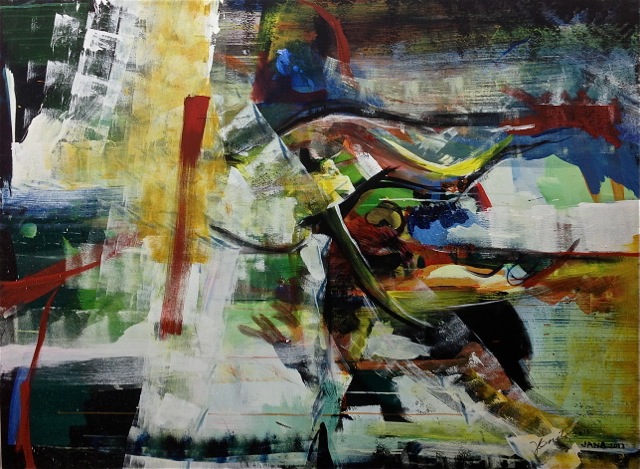
I came in for a pleasant surprise. Joly’s daughter Jana was already an established New York-based painter, a magna cum laude Fine Arts graduate of Brown University with wide international exposure. Her work, noted the critic Alice Guillermo, “probed the secrets of both the abstract and the figurative, [creating] an art that is young, vital, integral to life and being.” I saw bold splashes of color in the abstract-expressionist style: you step back and translate form and color into thought and emotion.

Joly Benitez was the revelation. The Stanford-trained technocrat may be more at home with economics, but he stood his ground alongside Jana, working in the same style but mainly in black and white. What was even more remarkable was that, six months earlier, he had been close to death, with a debilitating kidney disease that required dialysis four times a week. “People were already calling me a widow,” said his wife, the banker Joanne de Asis. A timely transplant gave him a new lease on life—but it was the return from New York of Jana and their painting sessions that gave Joly a fresh reason to hang on.

Intrigued by this turnabout, I interviewed Joly—who was still visibly weakened by his ordeal but fit enough to climb four flights of stairs—and asked him about his new avocation. It turns out that painting wasn’t all that new to him.

“I had painted before,” he said, “from the time I was a high school teenager, hanging around and going to the PWU School of Fine Arts, after classes from La Salle high school. Even during my stint in government, I did some ten large canvases which I then displayed in the Technology Resource Center. At my home in Cubao, I hosted the Philippine Association of Printmakers, and we had weekly figure drawing sessions. I have painted in brief but intense spurts over various intervals for the last five decades. At this point of my life, I feel more confident and comfortable about displaying my paintings in public, and to continue to explore various modes of abstract self-expression.”

His new work is concerned with perspective, such as how one might see Earth from space. “Sometime ago, I did a series of over ten ‘Earth-scape’ prints and paintings, reflective of my preoccupation with ‘cosmic space’ abstract images.  The predominance of black and white in some of my paintings is the challenge of depicting movement, perspective, texture and expression with a highly and consciously limited palette,” he says.

Working with Jana was “intense and fruitful—a deep conversation in art. We talked continuously and began to appreciate our artistic differences. We sought to elevate our collaborative work to a different threshold. While painting, when she or I would perform brush strokes, or compositional elements, or color hues reflective of our differences, we would consciously attempt to integrate and reconcile them. We had our differences—but in art as in life, mutual respect and appreciation of each other’s idiosyncrasies and differences are paramount.”

After the Marcos years, Benitez served for over a decade as president of the family-owned Philippine Women’s University (his son Kiko now serves in that capacity), where he introduced various ladderized-curricular innovations, including pioneering programs for on-line distance education and continuing education.

The older Benitez is far more mellowed and subdued than the gung-ho guy I recall from the mid-1970s, but he retains a sharp critical edge. I asked him about his views on Philippine development today. “We are highly dependent on the remittances of our OFWs, we don’t have significant industries or manufacturing, our agriculture is in need of major structural changes, and our service sector relies heavily on call centers for employment,” he observes. “We still have to see a national eco-sustainable development strategy that addresses a basic needs approach, with structural changes reflected in locational and spatial dimensions.”

As the architect of many of the Marcoses’ social infrastructure programs, Benitez sees some evidence of a useful legacy left behind from his tenure at the MHS: “Some of our initiatives remain as relevant as ever. They include the establishment and organization of a mass housing system, involving a financial saving system (PAGIBIG), the Home Guaranty Corporation (HGC), the National Home Mortgage Finance Corporation, (NHMFC), and so on, although one would wish that the various housing agencies would operate like a symphony rather than competing and sometimes working at cross-purposes. We also made efforts to promote small- and medium-scale industries, especially focusing on livelihood projects, entrepreneurship, adaptive technology and countryside community organization and development. We sought to introduce a locational and spatial dimension in national, regional, and provincial comprehensive development plans—through the national and regional framework plans, the preparation of provincial atlases and municipal level town plans, and zoning ordinances. We used to say that ‘True structural development should have a face and an address.’ An abstract strategy or a mere compilation of various infrastructure projects do not make for national development.”

At this point of his extended life, Joly Benitez says he’d like “to focus on a few income-generating projects for myself and my family, but most of all I would like to explore and pioneer some ecologically sustainable projects, especially on village level.”

And, of course, produce more art, by himself or alongside Jana. The historians, political scientists, and Filipinos on the street will have their own assessment of the Marcos years and of the role that Jose Conrado Benitez played in it—and I suspect he will not be hopeful enough to imagine that that assessment, given what has happened since, will be largely benign—but the rebirth and refuge offered by art can only sustain this complex man.

Penman No. 5: Encounters with History

Library

Penman for Monday, July 23, 2012

I HAD an unusual encounter with history last week, by way of two sorties to two different exhibits that turned out to have a bit more to do with each other than I might’ve initially thought.

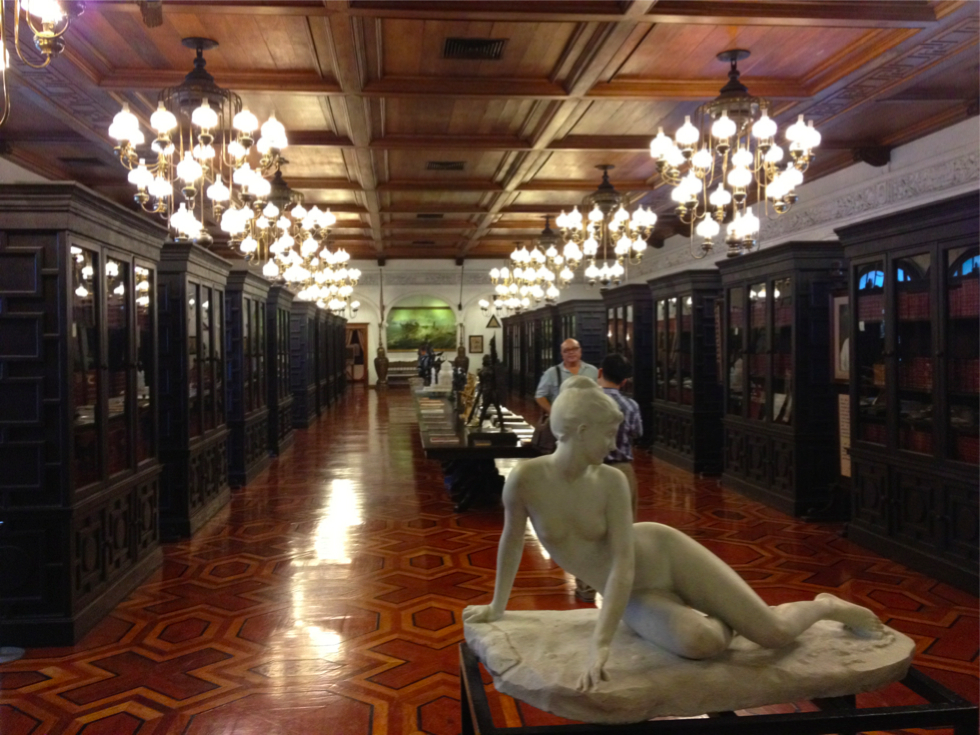
The first trip was something I’d been meaning to do for years but just never came around to doing—a visit to the Presidential Museum and Library at Malacañan Palace. (Our tour guide took pains to point out that “Malacañan” referred specifically to the presidential seat of power and the more popular “Malacañang” to the entire place itself; I think we’ll go with Malacañang for the rest of this piece.)

It’s one of those sad ironies that we footloose Filipinos can make elaborate and expensive plans to visit the White House and Buckingham Palace without ever setting foot on our own presidential abode. It could be that for far too long—particularly all those years of martial law—Malacañang didn’t lend itself to friendly visitations by ordinary citizens. That, plus the fact that we Pinoys have never had much of a sense of history, beyond routine celebrations of Independence Day and tired if not tiresome commemorations of Edsa 1. We’ve been schooled to think of history as high drama, as a calendar of big events, forgetting that those events were forged in offices, classrooms, factories, and the shade of mango trees.

Malacañang is, of course, the perfect theater for high drama—one of the balconies in the museum was the setting for that famous picture of Ferdinand Marcos and his family vowing defiantly to stay and to fight on, shortly before decamping to America in February 1986—but it was also, and remains, home and office to a long succession of men and women who led the country, people doing nothing more earth-shattering on most days than signing letters of condolences and felicitations and proclamations declaring this or that period to be National Fire Prevention Week.

As a museum rat, I’ve always been fascinated by presidential and royal regalia, and by the mementoes left behind by the high and mighty—not to be awed by them, but to appreciate their humanity behind the pomp and the poses. George Washington’s signature blue coat is on display at the Smithsonian, but so are his dentures, which must have hurt far worse than mine, and I don’t even have to worry about putting a country together; the mock pockets on Jose Rizal’s jacket in Dapitan betray a sharp fashion sense even in exile (and the smallness of his body size—a surprise to many Filipinos expecting a titan of a hero—merely accentuates his real stature).

Last week, thanks to the invitation of Ronnie Geron—an undersecretary in the palace and an avid member of Fountain Pen Network-Philippines—our group of over 30 fountain-pen enthusiasts got to visit and tour the Presidential Museum and Library. Since fountain pens themselves are something of an anachronism, stepping back into presidential history was a treat for all of us, and we can’t be blamed for feeling that the highlight of the tour was staring at Emilio Aguinaldo’s pen, or what remained of it—a piece we quickly identified as being very likely a Waterman 52 in mottled red hard rubber (a sorry shell of a pen, in exchange for which I offered to provide a near-mint example from my collection—but no one seemed to be too interested).

There were no other pens to be found that day in the museum and library, but there were roomfuls of other memorabilia, from the time of the Spanish and American governors-general to the prewar, postwar, and recent presidents: photographs, paintings, clothes, books, furniture, documents, and campaign materials. Every president had either a room or a corner devoted to materials from his or her presidency, and our very knowledgeable guide—a young man named Louie—walked us through the history of every room, mindful that the building itself was historic, quite apart from its residents.

The museum and library are located in what is now known as Kalayaan Hall, a 1921 structure used by the Americans as their Executive Building; the Marcoses called it Maharlika Hall, but Cory Aquino gave it its present name. Aside from the Main Hall and Library (or the Gallery of Presidents), the building also contains the Old Waiting Room Gallery, with materials from the Spanish era; the Old Executive Secretary’s Office, with rare Rizaliana; the Old Governor-General’s Office, the Osmeña Cabinet Room, the West and East Staircases, the Quezon Executive Office, the Quirino Council of State Room, the Roxas Cabinet Room, and the Northeast and Southeast Galleries. Plan on spending at least an hour to see and imbibe everything.

What most Filipinos (including many of us) don’t know is that tours of the Presidential Museum and Library are available for a minimal fee to individuals or groups who make the necessary arrangements beforehand. (Call 784-4286 local 4945 or email pml@malacanang.gov.ph for details.) The entrance is through Gate 6, and parking can be had at the Freedom Park just outside the gates.

Another exhibit that I made a point of looking into was one at the Cultural Center of the Philippines Main Gallery, titled “ReCollection 1081: Clear and Present Danger (Visual Dissent on Martial Rule),” co-curated by Marika Constantino and Ruel Caasi, and staged by the CCP in cooperation with the Liongoren Gallery. ReCollection 1081 brings together a selection of artworks produced by Filipino artists during and after martial law, as well as publications produced by both the underground and alternative press.

Those who lived through martial law can’t possibly miss the irony of the exhibition venue—much hated and derided in Imelda Marcos’ time as the domain of the elite, but long since reclaimed by more ordinary folk.

This show was already written about by Constantino herself a few days ago here in the Star, so I’ll just have a few points to add—chiefly, that the artist’s protest against oppression, injustice, and exploitation both preceded and continued after martial law (see Jaime de Guzman’s Sabbath of the Witches, 1970, and Nunelucio Alvarado’s Tunok sa Dahon, 1986).

It was martial law, of course, that provoked both the most explicit and subtlest forms of protest, demanding both courage and wit of the artist, and this range of responses is on full display in the exhibit. Assembling these works was already a feat in itself, considering how many more such works (and their creators) have been lost in the crossfire. Their survival into another century and their installation in the cultural bastion of the dictatorship is sweet poetic justice.

ReCollection 1081 runs until September 30.

Penman No. 2: Three Malaysian Artists

Penman for Monday, July 2, 2012

I REPORTED last week on our visit to Malaysia for the launch of the 1Malaysia Mega Sale Carnival—which is running until September 2—and on how impressed I was by Malaysia’s strides in its economy, particularly its infrastructure and tourism. The shopping aside, another part of that visit that I looked forward to was a chat with several Malaysian artists, feeling that, wherever you go, you can come closest to the earthly truth (and to visions of heaven and hell) by talking to the artists.

I’d arranged a meeting with a personal friend, Datuk Mohammad Nor Khalid, known to all Malaysians simply as Lat, the cartoonist behind the iconic Kampung Boy, published in 1979. His artistic talent was discovered at age 13, and Lat gained quick and enduring fame, endearing himself to his countrymen for his affectionate but also often mordant depictions of rural Malaysian life. Born in the village or kampung of Kota Bharu in Perak in 1951, Lat (short for bulat or round, which he was as a boy) worked briefly as a police reporter for the New Straits Times (serving under a colorful Filipino named Rudy Beltran who also played piano at night with a band called Rudy and the Gypsies, but that’s another story) before returning to his true vocation, cartooning.

I met and became friends with Lat when we were both Civitella Ranieri fellows in Italy a year ago. As the only Southeast Asians in the program, we bonded naturally; since neither of us had been to Venice before, we traveled there together, sharing a tiny room just outside the city center to save our euros. I was mightily impressed when, promenading along the canals, Lat was recognized and pounced upon by Malaysian tourists who asked him to pose with them for a souvenir shot taken by, of course, yours truly.

A simple, easygoing guy, Lat picked me up at our KL hotel in a cab—and again, our tour guides rushed across the lobby to greet him reverentially—and took me for coffee to the posh Royal Selangor Club, where he ruminated on how Malaysian life had changed since he left the kampung (having sworn not to live in KL, he now stays with his wife in Ipoh, about two hours away). Like his cartoons, his speech is laced by much laughter and more than a tinge of sadness.

“Many people have moved out of the kampung,” Lat said. “In my village there are only six houses left. My dad sold the house in the 1960s, but I bought it back in the 1990s. I would love to see the young sons and daughters of the kampung people do something about the places they left behind. The cement factories are taking over the countryside…. There used to be hundreds of us in Kota Bharu, but now, you can hold a feast for 70 people at most. Today we have roads, but all you see are lorries that carry sand, but no people.”

He adds: “Many Malaysians are rich with money, yes, but that’s all. You go to the fish market, most of the sellers there are millionaires—they earn more than one million ringgit (about P14 million) a year—but being a millionaire doesn’t mean much anymore. Even the poor can expect their basic needs to be met. Basic education is free, and students can get loans for college. But now we’re producing too many graduates and not enough good jobs.” His four children are all artistically inclined, working in media, theater, and communications, although none of them draw.

Lat acknowledges that a new generation of artists has taken over. “Young cartoonists today are mostly into manga. They should make their work more Malaysian. I don’t do much political commentary anymore, but new talent is emerging. There’s a young cartoonist named Zunar, who draws for the opposition newspaper—always controversial, but he’s very sharp and very steady.” Lat is, however, a firm supporter of former PM Mahathir, and later in his life became a devout Muslim, even as he idolizes Elvis Presley and can sing a mean tune. Important commissions still come his way, but, he says sagely, “The successful person is the one who can say ‘I don’t feel like doing it, I just want to relax.’”

My next interviewee was the world-renowned shoe designer Jimmy Choo, born in Penang, Malaysia in 1961 but a resident of the UK since the early 1980s. Our Philippine media group had been told that we would have ten minutes with the fashion icon, and since this was way out of my league, I prepared by reading everything I could about the man, poring over scores of shoe pictures, preparing half a dozen questions (including brilliant ones that never got asked like, “Is one shoe just a mirror of the other? Do you begin by designing the right shoe, or the left?”) and not the least by bringing along black leather loafers to supplant my scruffy Sanuks on interview day.

Jimmy Choo turned out to be a slim, avuncular figure, nattily dressed in an almost businesslike way. I made a point of taking a picture of his shoes—which he made himself, for himself—black, wingtip loafers. I popped my first question about the story or the narrative behind the shoe, any shoe.

Jimmy said: “When I design a shoe, the first thing I think of is the season—spring, summer, fall, winter. This year being the Year of the Dragon, I think of different dragons, and of the stories that can come out of them that can be linked to the shoe shape, the motion, the material, the story that could be presented to the press and the buyers that could answer the question of ‘Why was the shoe designed this way?’… The shape is very important. When I designed my first collection in 1988 for London Fashion Week, I had to think about how to catch the attention of the press. My designs are feminine—elegant, pretty.”

But the most important point that Jimmy made in those allotted minutes had to do less with the designer’s vision than the craftsman’s skills: “My father was a shoe designer. Forty years ago there were no computer games, so when I finished school and finished my homework, I watched my father make shoes. When I was eleven, I made shoes for my mum for her birthday. Designers are great and I respect them, but designers need skills as well. Not all of them can cut the patterns for the shoes they want. I’m very lucky to have this skill. When I went to the UK and I entered the Cordwainers College, I learned how to draw a shoe. I knew how to make them on the mold, but I couldn’t draw them. So it’s important to have all these skills…. It’s no different designing for men or women. My father did that for both men and women, so I learned to do that myself. I wear my own men’s shoes.”

A final, funny factoid came up when someone asked him about bags: “I carry my own bag. I’m a funny guy—I travel with four, five phones. I’ve got two SIM cards from HK, two from China, two from the UK, and so on, plus two or three cameras.”

And lastly, there was Charles Cham in Malacca. I can’t help assuming, when I’m about to meet an artist I don’t know, that the guy is going to be rock-star surly, especially at nine in the morning, when even I don’t want to be bothered by pesky questions about my work. That’s when we were scheduled to meet Charles in his shop, and it didn’t help that the bearded picture in his press handout and the impressive credentials that accompanied it—stints in France, New York, and Budapest, a write-up in the International Herald Tribune—suggested a formidable talent.

As it turned out, Charles—smiling Charles—was the gentlest, most congenial artist anyone could expect to meet, and it didn’t bother him to have to open his shop, called The Orangutan House, an hour early just to entertain us. The shop displayed some of his witty, whimsical paintings—he likes African masks, animal figures, and bright colors—and also served as a gallery of T-shirts, all of them for sale at very reasonable prices. The T-shirts are marked by his characteristic humor: one says—in Malacca’s heavily touristic context—“No pictures, please!” and another, showing the unmistakable profile of a condom, says “Play safe—Use Malaysian Rubber!”, an endorsement of Malaysia’s most traditional export and also of safe sex.

When I asked him about how he saw himself in relation to the contemporary Malaysian art scene, Charles said, without losing his wry smile, that he was definitely “an outsider.” His reported brushes with Malaysian officialdom may have caused him, not to mention his targets, some grief, but these, he said, were “unintentional.” Here, clearly, was a clever talent seeking to survive while pushing the limits of the possible in a society still bound by the rules in many ways. In his IHT interview, Charles Cham committed himself to “staying here and fighting.” From what I saw of his country, it was certainly worth staying in and fighting for.

(Lat’s cartoon above courtesy of etawau.com)