Qwertyman No. 178: A Christmas Scam Story

Qwertyman for Monday, December 29, 2025

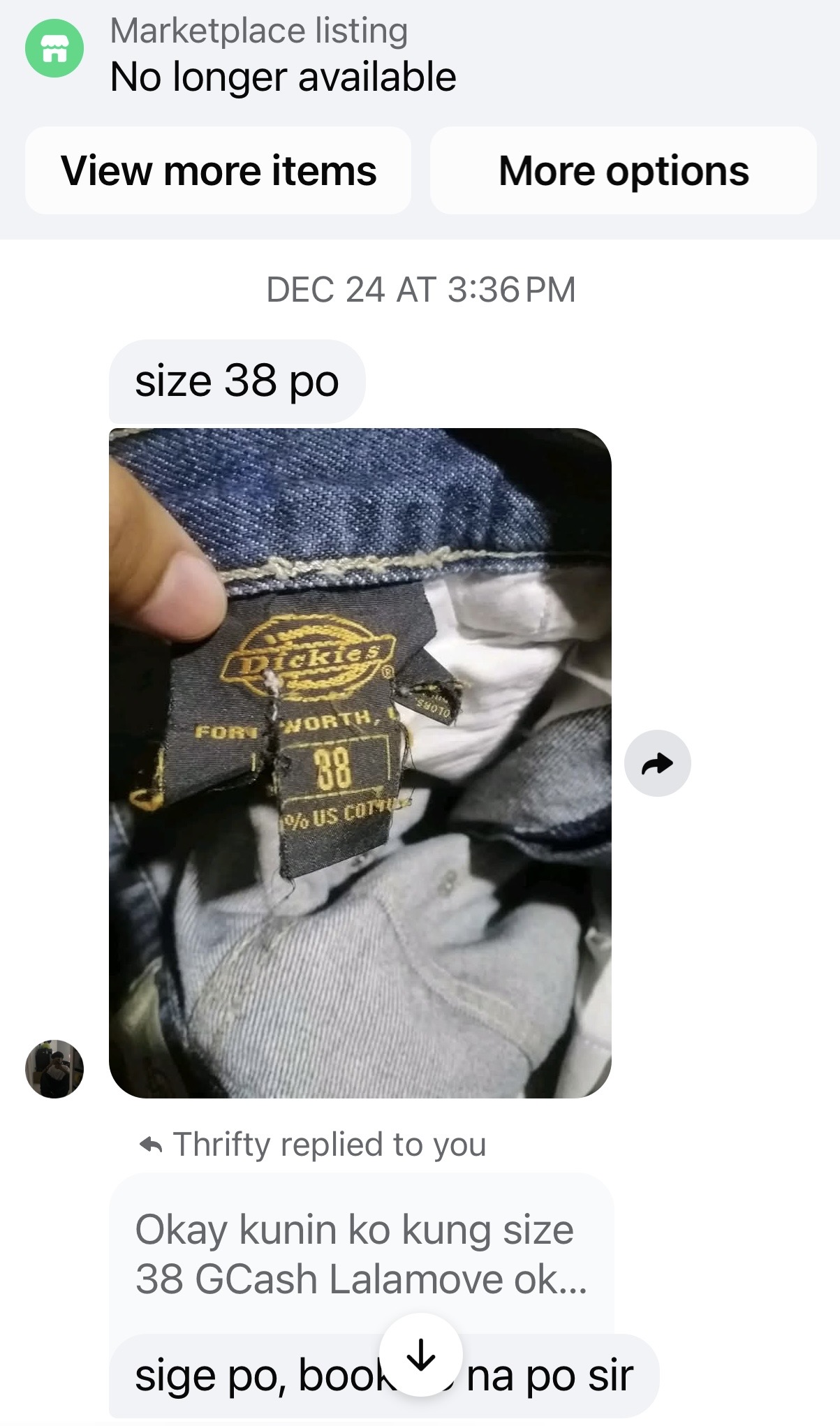
Screenshot

ONE OF the great regrets of my college life was that, for some reason or other, I never got to take a formal course in Philosophy, which might have helped me make sense of the moral sordidness permeating our lives today. Like many of you I’ve been particularly captivated by the question of why a presumably all-good and just God would allow so much evil in a divinely created world, and let good people go bad, from petty thievery to massive corruption in the flood-control billions.

I’ll get back to the billions later (I think you know where this is headed), but let me start with me getting scammed, albeit small-scale, on Christmas Eve.

It started with an ad on Facebook Marketplace, where I spend more time than I probably should in search of old pens, books, and the kind of odds and ends that bring joy to old men trying to buy their childhoods back. The item I saw was none of the above, but rather a decent-looking pair of second-hand jeans that I thought would fit me. 

(Yes, because I’m larger than most Filipino males, and because threads today cost a fortune in the shops, almost all my clothes come used from the ukay-ukay, eBay, and FB. I’m a great believer in recycling—my mom used to dress us in B-Meg feedbag cotton, if you remember that—and at my age I have no qualms about wearing some dead man’s shirt, after a good wash.) 

So I messaged the seller, whom we’ll call Mr. T, confirming the price in the mid-hundreds and more importantly the waist size. He promptly replied with a picture of the size tag, which delighted me, and he asked for and got my shipping details, offering to do the booking himself and send me the Lalamove cost, to my great relief.  About fifteen minutes later he said he was having problems finding a rider—entirely plausible, since it was probably the busiest shipping day of the year—and so I offered to add a tip, which he offered to split with me. How nice. 

Mr. T got a rider, I got the total price, and paid him without second thought. He sent me a picture of a rider bearing packages, one of which would have been my jeans, and I waited. I normally ask for the tracking, but this was pretty close and the amount was small so I didn’t bother, and besides Mr. T. very helpfully sent me updates (“He’s just five minutes away”) and even sent me a number to call. Fifteen minutes later, figuring the rider had lost his way, I called the number, and got an “out of reach” message. Holiday congestion, I figured. Thirty minutes, I called again; same reply. I messaged Mr. T on FB; messaged bounced, “Couldn’t send.” Our lively, Christmas-y conversation was over. I’d been scammed.

That wasn’t the first time it had happened to me, online or in real life. I’m no dupe, and know my way around the digital darkness, often warning friends myself about phishing scams and hoaxes, but the problem is, I’m a gambler at heart, and when it comes to small amounts, small bets, I gamble quite freely on the goodness of human nature, even in the knowledge that, at some point, I’m bound to lose. (To be fair, 95% of my online transactions have been problem-free and even profitable, so no, I’m not going back to writing checks and visiting bank tellers like some of my Boomer friends have.) 

Of course, from the scammer’s point of view, those hundreds that trickle in from suckers like me soon turn into streams of thousands. And someone like me, familiar with loss, might afford to shrug it off, but there are kids out there who would be devastated if their P500 toy never came.

What fascinates me here is the tender, loving care with which Mr. T executed his plan, and kept me hoping until the very end. He could’ve shut me off the second he got his money, but no; he kept me hanging on, then dropped me at the very last minute. I can imagine him doing this with practiced efficiency, and I suspect not a little pleasure at being proven right about the gullibility of people. 

Now the fictionist in me imagines that Mr. T wasn’t born with scamming in mind, and didn’t take Scamming 101 at Evil U. He might have studied Accounting or Pharmacy or even Philosophy, and even gotten good grades, until something clicked in his head one morning to try something different, putting self-love at the fore.

This is where I go back to wishing I’d read more of Immanuel Kant and his idea of the “radical evil” rooted in every individual no matter how good, just waiting to be activated. That resonates with me, because I couldn’t possibly do the fiction I do if I didn’t believe that the germ of evil resides in every good person, and vice versa. (In a sense I have to admire Mr. T for being the better fictionist, having put one over the pro.)

And this brings me in a roundabout way to something I’d been thinking deeply about these past two weeks, as I’m sure many of you have—that image of Cathy Cabral on the lip of that ravine, running her life through her head, mesmerized by the ribbon of light in the stream below. She knew what stood behind and ahead of her; only what lay below was unknowable and perhaps comforting. She was here to confront something greater than her fear of heights.

Never much of a conspiracist, even in my fiction, I have often found that the simplest truths and explanations are also the most difficult to accept. One of them is that there slithers a Mr. T and a Cathy C. in each of us, seeking a way out.

Qwertyman No. 165: Conspicuous Corruption

Qwertyman for Monday, September 29, 2025

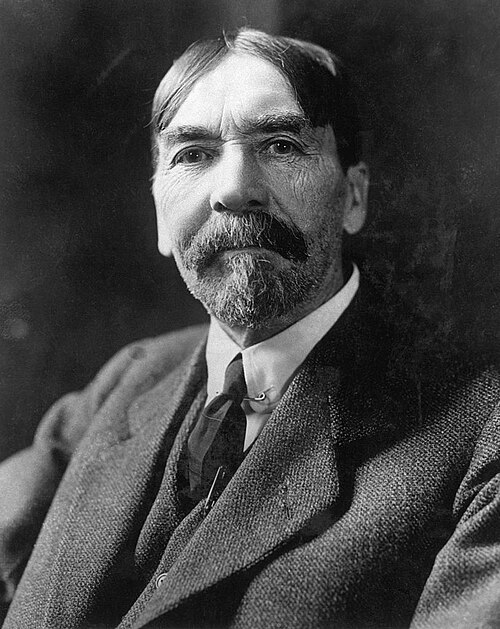
IT WAS during America’s “Gilded Age”—a period that many (not just them Yankees, but also us Pinoys) look back on with borrowed nostalgia—that an economist named Thorstein Veblen wrote a book titled The Theory of the Leisure Class: An Economic Study in the Evolution of Institutions (1899). 

Drawing on Marx, Darwin, and Adam Smith, Veblen went against the grain of neoclassical economics and its presumption of people as rational economic beings seeking utility and happiness from their labors; instead, Veblen argued, they were irrational agents who amassed wealth for social status and prestige. Writing in a scathingly satirical and literary style, Veblen roasted America’s nouveau riche—the robber barons who had built their business empires on coal, steel, and railroads (think Rockefeller, Carnegie, and Vanderbilt), and who then splurged on mansions, yachts, and such other luxurious testaments to their success.

We don’t remember Veblen much, although he cut a sharp impression among his admirers and critics alike as a dour Midwestern misanthrope, a killjoy who saw little economic value in churchgoing, in etiquette, and even in sports (of course, this was way before the MLB, NBA, and NFL). 

What we do remember are some terms that his book bequeathed to our century, most notably “the leisure class” and “conspicuous consumption,” the latter being the purchase and display of goods beyond their practical value for the purpose of manifesting one’s power and prestige—which in itself became a form of social capital, facilitating the accumulation of even more of the same. (Veblen also theorized about “conspicuous compassion” and “conspicuous waste.”)

Dr. Veblen was writing at and about the turn of the 20th century, but his observations were preceded by a history of ostentation as old as, well, Jesus. (And here, being no historian, I’ll acknowledge some help from AI.) The ancient Romans held lavish feasts and circuses to entertain the masses. Their Greek counterparts passed sumptuary laws to curb excess, limiting the gold a person could possess and the number of servants a woman could bring to a public event—which tells us exactly what they were doing. In both feudal Japan and medieval Europe, laws were imposed regulating what people could wear—to preserve social stratification, and visibly distinguish the rich from the poor. 

It didn’t always work—empowered by trade, Italy’s growing merchant class brazenly copied what the old nobility wore. Things got so showy that the Dominican friar Girolamo Savonarola led an anti-ostentation movement in Florence, culminating in the public burning of luxury goods, cosmetics, and elaborate clothing, a.k.a. the “bonfire of the vanities.”

I’m sure you can see by now what I’m getting at, which is the Philippines’ ripeness for its own version of “Bling Empire” and “Dubai Bling,” Netflix shows both devoured and skewered for their “grotesque opulence” and hermetic imperviousness to such inconvenient topics as Gaza, Ukraine, and Donald Trump. I have to admit to binge-watching both series, fascinated and revolted at the same time—fascinated by my revulsion, and revolted by my fascination.

This is how ostentation holds us in its thrall—by indulging our fantasies while providing extravagant proof and reason to cluck our tongues in disapproval. The logical response should be to switch channels, exit YouTube, or just turn the damned TV off. But no, we watch on, bewildered by our inability to comprehend how a Birkin bag could cost $500,000, and further, how someone could afford them, and even further, how someone could own not just one but five of them, and yet even further, how that someone could be a Filipino senator’s wife (last heard opining, with admirable sensitivity to the public temper, that “Now is not the time to attend Paris Fashion Week.”)

Unlike Veblen, who employed sardonic humor to prove his point, this is no longer even satire or damnation by exaggeration, but outsize reality. The gargantuan figures emerging from the infrastructure corruption scandal now transfixing the nation—almost a billion pesos of public money lost in the casinos, P4.7 billion worth of aircraft in one congressman’s hangar, and so on—not only boggle the mind and churn the stomach, but impoverish the imagination. We are too poor to contemplate these sums. 

And so to Veblen’s terminology, we must now add “conspicuous corruption,” as it seems that even among the corrupt—who are not anonymous to one another, needing to operate as a cozy network of thieves if they are to mutually succeed—there exists a virtual competition over who can get away with more. This doesn’t even involve or require the building of real assets such as trains, skyscrapers, and power plants, like the industrial dynasts did. Why bother, when ghost accounting will achieve as much if not more for one’s bottom line?

For now, the public outrage over the flood-control scandal may have dimmed the lights for the accused and their accomplices and beneficiaries. Facebook and Instagram accounts that once flaunted luxury limousines, exotic getaways, and designer labels have been shut down or turned private, their owners gone mute after sulky disclaimers to the effect that “We worked hard for our billions!” (But not everyone, as that high-flying congressman’s wife was reported shopping with impunity in Paris last week, oblivious to the brouhaha.)

Not incidentally, there’s more than a tinge of sexism to the recent backlash against so-called “nepo princesses”—the daughters of rich, powerful, and presumably corrupt politicians and their business cohorts. Privileged indolence, after all, is an equal-opportunity affectation, and doubtlessly their brothers aren’t wasting their time volunteering for NGOs and teaching catechism.

When they will reappear is anybody’s guess. The EDSA 4 brewing in the streets should hopefully result in decisive action against the guilty parties in this mess, and if only to appease the mob, I’m sure a few heads will roll. But I’m under no illusion that human nature will reverse course and that Thorstein Veblen’s leisure class and its blingy profligacy will vanish into oblivion anytime soon.

Me, I’m in the mood for a bonfire, and it’ll be more than croc-skin handbags I’ll want to toss into it.

Qwertyman No. 163: Redemption and Reversal

Qwertyman for Monday, September 15, 2025

“Enormity” is a word I rarely use in my writing, because I still take it in its traditional, original meaning, which is that of “a great evil, a grave crime or sin.” I would use it in the sense of “the enormity of the Holocaust, in which Adolf Hitler exterminated six million Jews” as well as in “the enormity of Israel’s genocidal assault on the people of Gaza, employing bombing and starvation to bend Palestinians to its will.”

But it has so often been misused as an alternative to “enormousness,” to mean “very large” or “very big” in relation to size, that most modern dictionaries have relented and accepted that secondary definition.

Last week, listening to Sen. Ping Lacson’s revelations about gargantuan sums of money changing hands and being blown at the casinos not by business magnates or heirs to billions but by subalterns at the Department of Public Works and Highways, I saw no inconsistency whatsoever between the word’s two meanings. It was both one and the other, wrongdoing on such a scale that made you wonder if this was still our country, if we still had laws to fall back on, and for how much longer our people would be willing to endure this kind of abuse before the dam breaks and a biblical flood of justice bursts forth to sweep away the evil in our midst.

The quoted sums were mindboggling enough: five DPWH district and assistant engineers in Bulacan accounted for almost P1 billion in casino losses, as reported by Pagcor to Lacson. A district engineer—there were 186 of them at the DPWH last year, according to the Department of Budget and Management—earns a monthly salary of almost P230,000. It’s nothing to sneeze at (my salary as a Full Professor 12 in UP was half that when I retired in 2019, and Filipino minimum wage earners still make less than P20,000 a month), and you could live very comfortably on it if you lead a prudent existence. But who needs prudence when you have tens of millions of pesos in kickbacks to play with at baccarat or roulette?

The theft isn’t even the real crime, the true enormity here; it’s what that money should have been used for, but wasn’t—the prevention of human suffering through public works projects that have instead remained unfinished or grossly substandard. Those engineers weren’t playing with cash and chips—they were playing with lives and futures, the fortunes of entire families and communities gone with a wrong turn of the dice, followed by a casual shrug and a reach for more of the endless chips. 

Forgive these murderous thoughts, but for this alone, once proven guilty, those miscreants deserve to be hanged, or banished to a prison that floods at high tide. One might add that if Digong Duterte had launched a tokhang campaign against the corrupt—but we all know why he couldn’t have—perhaps he wouldn’t be watching windmills from his window now.

Our righteous indignation aside, it’s clear that the buck should and will stop with no other than President Bongbong Marcos, who after all began all this with his surprising and explosive public revelation of the top contractors’ names. Whatever his initial or ulterior motive may have been, that’s practically been rendered moot by the massive outrage and political drama arising over the past few weeks as a result of his action and of the continuing Senate and Congressional investigations. 

In the immediate future, much will hinge on the independent commission that BBM is organizing to probe the issue and on its efficacy. In an ironic turn of history, its credibility will have to match that of the Agrava Commission, whose conclusion that Ninoy’s assassination was the result of a military conspiracy helped to eventually bring his father’s regime down.

But since irony seems to be a strong and inescapable feature of our political life, it may be the perfect time and opportunity for the dictator’s son to become his own man, to redeem his part of the family name, and to prove his doubters and detractors (this martial-law ex-prisoner among them) wrong. He can do that by finding the courage and resolve to pursue this business of weeding out systemic corruption—just beginning with our public works—to its farthest possible conclusion, no matter who or what gets in the way.

Surely PBBM would not have trumpeted this initiative against corruption if he did not expect the money trail to lead back to some of his closest associates and supporters, and even to his family—who, as no one will or should forget, have long stood accused of plunder in the billions, well before the Discayas and their company discovered the short road to riches. The Marcoses may have dodged payment for those debts through favorable court rulings predictably secured upon BBM’s presidential victory, but he cannot escape this responsibility now.

Any attempt to pause or to mute the investigations into this ugly mess will only backfire on BBM and his presidency and invite suspicions of his complicity in these scandals. His only real option is to seize the moment, press on, and do the right thing even if and until it hurts.

I can see many of my liberal cohorts grimacing at the notion that a man we once derided for his profligacy and lack of discipline could lead such a brave and sweeping reform of our society and government, and I have to admit that I too shall remain a skeptic until I see solid results coming out of these investigations. Dismissals and bans won’t be enough for the erring officials and contractors; we want jail time for the guilty and adequate restitution, we want the big fish to fry.

But I’m a great believer in the possibility and the power of redemption (think Saul of Tarsus and Ignatius of Loyola). Even in this seemingly quixotic mission of reforming government, very few people will come to the table with perfectly clean hands—or remain unsullied to the grave. Ultimately less important than their private faults is their public performance—what they did, over the course of their lifetime, to serve the public good and/or to make amends for their past misdeeds and shortcomings.

BBM may be far from the path to sainthood, but he can still employ the vast powers of his office to strengthen constitutional governance in this country, in dramatic reversal of his father’s legacy. If he fails to do that, then he will merely confirm what we have suspected all along. I pray, for once, that we were wrong.

Qwertyman No. 162: Honor Among Thieves

Qwertyman for Monday, September 8, 2025

A FRATERNITY brother—even older than I am and a longtime emigrant—asked in our group chat, “Didn’t we have corruption before? Why all this outrage now?” So I had to bring him up to speed. “It’s the scale, brother. We’re talking billions, possibly even trillions of public funds being pocketed by contractors who don’t deliver the goods and put people’s lives at risk, in cahoots with politicians they’ve bought or are related to.”

I told him the story of Rudy Cuenca, the self-confessed Marcos crony and boss of the Construction and Development Corporation of the Philippines, which built some of the largest infrastructure projects under martial law, including the North and South Expressways and San Juanico Bridge, and made Rudy a very rich man. 

I happened to co-write Cuenca’s biography (Builder of Bridges: The Rudy Cuenca Story, Anvil Publishing, 2010, unfortunately long out of print), after initially refusing to do so. “Why should I write your book,” I told him at our first meeting, “when your boss put me in prison?” “I have stories to tell,” he said, and did he. It wasn’t the money—which ironically was a pittance—but the curiosity that got me on board. And just to show it wasn’t a hack job on my part, the book became a finalist for the National Book Awards for that year.

Rudy—who died two years ago—wasn’t an engineer and didn’t even finish college, but he learned the ropes of contracting doing small bridge projects under the watchful eye of US Army engineers who had him redo the job at a loss if it was substandard. Because American reparations money was involved, the Americans made sure it was well spent. 

Cuenca soon learned the other, non-technical aspects of the business. To move up, you had to pay up. I interviewed him in 2009-2010 in his modest office along EDSA near Guadalupe—any aura of big wealth and power had long been dimmed by years of exile and dealing with lawsuits—and at that time, he lamented the fact that corruption had gone over the top. A cool and down-to-earth kind of guy, he told me in so many words that (and I paraphrase) “In my time, nobody asked, but you gave. The amount was reasonable, and you dealt with just one person. Today, you’re told up front how much to pay, an outrageous sum, and you keep paying up the ladder.” 

While his statements may be self-serving and certainly liable to be interrogated, they should and do raise eyebrows:

“In the late ‘60s, we were looking for funding and supplies for the food terminal. We talked to a bunch of German suppliers, and during our discussion they asked us, why is it that the Japanese get called to work with Philippine projects? I said, you know, the Japanese have a style of business that you don’t understand—they know how to give gifts. And they don’t give gifts before, they give gifts after. But you guys are so decent, that’s why you don’t get jobs here. 

“There was already corruption at that time, but it was not rampant and as grossly done as it is done now. If before people would overprice by about 5 or 10 percent, now it’s about 30 percent. 

“You know, construction is the best source of graft. What Imelda did were seven-day wonders. I didn’t want to have anything to do with those. I was only involved with the reclamation of the area for the Cultural Center. They paid us, but her manager wanted his kickback. Imelda had her own group of contractors, and that’s where they all made money.

“But it wasn’t just then. Do you remember when Pinatubo erupted? The job then was to clear lahar. Now there’s a place in Daly City, San Francisco, that’s known as Lahar City. The people who live there are Pampangueños who earned lots of money because of the lahar. 

“Also during Ramos’ time, Ambuklao Dam was silting. As the dam silts, the ground level goes up, and the water gets smaller, so you have to desilt it. Here comes the contractor with a dredger. But instead of doing a proper sounding first, they raised everything, so that difference got factored into the job. 

“I don’t have any concrete proof of corruption in the current administration, but I think it’s safe to say that graft and corruption will always be present, especially in our government. I have heard that contractors—my brother is still a contractor himself—supposedly deliver money to a Cabinet member, who then turns it over to someone in the Palace. But nobody can say that. If you’re at the top, you have a fence, and only the closest people should be able to touch you so that you’re isolated. 

“I once told Secretary Vigilar that to reduce corruption in Public Works, they should follow a 10-year plan for big projects, meaning that you will pay the contractor 10 years after the project has been completed to your satisfaction and has been transferred to you. That way the contractor will not be as willing to pay off anyone while the project is ongoing because if he does, he’ll be liable for the quality of the work that he has done.”

When I asked him why the roads in places like Malaysia seem much better than ours, he said: “It’s simply a matter of greed. In Malaysia there’s also corruption—I’ve lived there, I should know—but the thieves there make their money by overpricing the materials. Here in the Philippines people are extraordinarily greedy. Not only do they overprice, they also steal the materials. The cement’s deficient, the gravel’s deficient. So the thing crumbles that easily.” In other words, there was honor among thieves; sure, they stole, but at least they built up to spec.

That was 15 years ago, back when the Discayas and their like were probably driving around in Toyota Corollas and buying microwaveable meals at the 7-11. 

One day Rudy got up from our interview and said he was going somewhere—to meet up with the new DPWH secretary, Rogelio “Babes” Singson, to offer some unsolicited advice on how to reduce corruption in his department. I don’t know if that meeting or that chat ever happened, but barely a month ago, in a TV interview, Singson was quoted as saying that “In my full six years at the DPWH, I spent only P182 billion for flood control. Look at the 2025 budget with this insertion—where did the P350 billion go?” 

I never thought I’d miss a Marcos crony, but I’m missing Rudy Cuenca now, as an expert witness to help us sort out this sordid mess. 

Qwertyman No. 161: Torre for Senator

Qwertyman for Monday, September 1, 2025

CAN THERE be any question that the logical next step for cashiered PNP Chief Gen. Nicolas Torre is to run for senator?

The next elections are still three years away; the newly sworn-in senators haven’t even warmed their seats. But the public disgust with the current crop—coupled with Torre’s elevation to hero status—just might create enough momentum and leave enough time for a new wave of Torre-type do-gooders to emerge and coalesce for 2028. The ongoing swell of public outrage against massive corruption in our public works could well become the trigger for a broader and more enduring coalition for good government. 

Many remain skeptical of President Bongbong Marcos’ resolve to pursue this drive to its politically torturous conclusion, but such a coalition—which can tap moderate elements from within the administration’s ranks—could force BBM’s hand, being the only viable option to a DDS resurgence in 2028. 

Let’s get this clear: BBM may not be our idea of a progressive democrat, and he’s been making the right noises not because he found religion, but because a Duterte comeback will threaten the Marcoses with more vicious punishment than they ever got from Cory Aquino. 

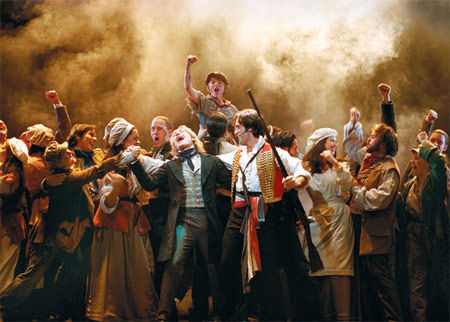
Still, it can only be a boon for the middle forces if he helps rather than hinders this brewing tsunami he was at least partially responsible for initiating when he publicly called out those divinely blessed contractors by name. We still don’t know what impelled him to take that extraordinary step, but now that the cat is out of the bag, there’s no pushing it back in, and the people won’t take anything less than decisive action against the greedy rich. You can feel the anger forming out there, the mob right out of Les Miserables taking to the streets, prepared to lynch the next billionaire who flaunts his or her Rolls-Royce umbrella while the poor drown in the floods. 

And the message is getting through: ostentation is in retreat, the Birkins and the Bentleys vanishing from Instagram beneath temporary covers until the wave subsides. But will it? How can it, when, trembling and fuming in their fortresses, the objects of our attention continue to manifest consternation rather than contrition? I love it when one of these clueless ingenues, in the midst of the uproar, protests that her family “owes nothing to the Filipino people, because the government paid for services (they) delivered.” 

The pretty miss obviously never heard Lady Thatcher, or even saw her meme reminding us that “The government has no money. It’s all your money.” (The full quotation, from a Conservative Party conference in Blackpool in 1983, goes thus: “Let us never forget this fundamental truth: the State has no source of money other than money which people earn themselves. If the State wishes to spend more it can do so only by borrowing your savings or by taxing you more. It is no good thinking that someone else will pay—that ‘someone else’ is you. There is no such thing as public money; there is only taxpayers’ money.”)

This brings us back to Gen. Torre, who showed the kind of resolve we’ve long hoped to see in our leaders by attempting to clean up and straighten out a national police force badly begrimed by President Duterte’s tokhang campaign and by its continuing involvement in such nefarious cases as the apparent murder and disappearance of at least 34 sabungeros

It seems odd that we civil libertarians should be supporting a general—and one who was ostensibly fired for ignoring his civilian superiors—but this was a man who went against the grain, who employed his authority for the tangible public good in ways that his predecessors (and yes, those civilian superiors) never did. Can people be blamed for thinking that one Torre is worth more than two or three Remullas when it comes to the delivery of public service?

And Torre was right in rejecting the notion of being designated an “anti-corruption czar” in charge of prosecuting corrupt contractors and their cohorts in government. It’s a trap and a setup, for the inevitable failure of which Torre will once again be the fall guy. Does anyone really believe that yet another toothless commission—on top of all the anti-graft and anti-corruption agencies we’ve seen come and go, and all the laws we already have in place—will solve this mess? 

The Senate could and should have been that commission, but it’s too laughably compromised to investigate its own, and their brethren in the Lower House. Perhaps we should begin by driving the crooks out of both Houses of Congress, and replacing them with men and women of fundamental virtue, honor, and decency: our Vico Sottos and Heidi Mendozas, among others. And yes, I would even include Baguio Mayor Benjamin Magalong in this list, despite his professed and unapologetic gratitude for President Duterte’s assistance to his city during the pandemic. His loyalty, he says, is to the people of Baguio, and I would rather believe him than all those jokers and poseurs in power who speak of corruption and even of establishing “Scam Prevention Centers” when they should be holding up a mirror to their own faces.

Hmmm, maybe that’s a good idea for our next rally against corruption—let’s bring hand mirrors, the way Hong Kong protesters carried yellow umbrellas to fight for their rights in 2014 and South Koreans lit candles to demand President Park Geun-hye’s resignation in 2016—the “Mirror Movement” to shame public officials and the filthy rich. Mga kapal-mukha, mga walanghiya. Not that we truly expect them to change, but that we expect to change them. Torre for senator!

Qwertyman No. 160: Not More Ampao

Qwertyman for Monday, August 25, 2025

IT MAY be too soon if not downright foolish to believe that President Bongbong Marcos’ recent focus on massive corruption in public works projects represents a turning point in his presidency, and is more than another political stunt designed to shore up his popularity after the disastrous results of the recent midterm election. Critics have been quick to point out the irony of a man from a family accused of shamelessly plundering the nation’s coffers and winning back the presidency to avoid restitution now manifesting his “anger” over the billions lost to crooked contractors from the same rapacious elite—even singling out a flimsy dam project in Bulacan as just so much air-filled ampao.

And yet, despite all the predictable and understandable skepticism, I’m willing to bet my low-budget house that many millions of Filipinos of all political stripes would grudgingly if not happily forgive BBM for all his perceived debts and shortcomings if he were to follow through on this initiative with unflinching resolve. Let’s not even talk about sincerity, of which only concrete action and results will bear ample proof. 

What we need and want to see is BBM employing all the powers of his office to bring the massively corrupt to justice, to ensure the full delivery of what the public paid for with its hard-earned money, and to redeem himself and the Marcos name with acts of virtue redounding to the public good. Those acts could be worth more than the many billions his parents were charged with spiriting away—some of which has been recovered, and the rest of which the courts have effectively condoned and we will never see. With three years left on his presidency, BBM might as well use the time to attempt to do what all of his predecessors miserably failed at—go against the grain of the political culture that brought him to power and, for once, uphold the public over personal interest.

As even his detractors concede, BBM has already scored highly on two counts: his departure from Rodrigo Duterte’s catastrophic “war on drugs” that claimed thousands of innocent lives, and also from Duterte’s craven submission to China’s takeover of our territory in the West Philippine Sea. Whatever his ulterior motives may have been, his banishment of former President Duterte to the International Criminal Court at the Hague was widely applauded as a definitive step forward for human rights albeit a major political risk and a clear severance of ties to his “Uniteam” running mate, VP Sara Duterte. 

These measures—and the government’s dismissal of POGOs—were enough to make self-avowed “Kakampink” influencers such as the writer behind the Juan Luna Blog declare that “So here I am—a Kakampink still rooted in my principles—saying this with guarded optimism: This version of Bongbong Marcos is not the Marcos we feared. And if he keeps choosing accountability over loyalty, and stability over revenge, then maybe—just maybe—the Philippines has a chance to move forward.” 

Even among the moderates and indeed the Left, there seems to have arisen the general consensus that for all his problematic pedigree and personal flaws, Bongbong Marcos remains infinitely better and more “presidential” than his predecessor. And I’m sure he knows it, well enough to cultivate the image of a reasonable and well-spoken leader, the kind we porma-prone Pinoys find reassuring, at ease in the company of the world’s A-listers, in crisp barongs and smart gray suits, and most recently wearing glasses that make him look more thoughtful than ever. In short, pretty much everything the old man Digong was not (which, it should be noted, may have been the very same bugoy traits that sent the Davaoeño to the Palace and continue to endear him to the DDS faithful). Whoever his stylist is, she’s earned her keep. 

That said, his administration has been far from stellar in its performance. BBM has had the benefit of good Cabinet members such as Defense Secretary Gilberto Teodoro and Transportation Secretary Vince Dizon, as well as a capable and adept spokesperson in Atty. Claire Castro. (Let’s not forget that, on paper, his father had some of the best-educated Cabinet members ever—none of whom proved strong enough to bridle that regime’s excesses.) But Filipinos cannot and should not easily forget the fiscal folly of the Maharlika Fund with which Marcos II began (and about which we have since heard almost nothing), as well as our runaway debt, the dismal state of our primary education, the lack of housing and basic social services for our poor, and yes, those infernal floods that brought up all the corruption in our infrastructure programs to the surface, so starkly that BBM had no choice but to name names and point fingers.

The question now is where all that finger-pointing will lead. Some fingers will be pointing back at the President’s own political entourage as the enablers behind the billion-peso scams that he now seems so outraged by, as if they had been hatched just yesterday behind his back. Observers have noted that Congress can’t even investigate these scams, with so many of its own members likely to be implicated as either the contractors or beneficiaries in question. And for the cherry on top of the icing, consider the absurdity of a sitting senator—whose family business profited vastly from road diversions and who himself did nothing as a Cabinet member to staunch the outflow of public money into private pockets—now filing a bill to establish the Philippine Scam Prevention Center. Good Lord. Did I just hear someone say “Regulatory capture?”

Whatever we may like or dislike him for, right now, only Bongbong Marcos can sort out this mess and let the axe fall where it may—if he’s really serious about righting historic wrongs and leaving a positive legacy behind him. There’s time enough to do it—but is the will there? In his message acknowledging Ninoy Aquino Day last week—something we didn’t really expect—BBM called the occasion “an invitation to govern with sobriety, conscience, and foresight. Our commemoration achieves meaning when the lessons of the past are reflected in our actions and in the moral architecture of (our) institutions.” I hope that lofty rhetoric has real substance to it, and not just more ampao.

Qwertyman No. 141: Purity and Perfection

Qwertyman for Monday, April 14, 2025

LAST WEEK, former Commission on Audit Commissioner and senatorial candidate Heidi Mendoza—a staunch exponent of good governance and nemesis of crooks—drew flak from some people who would have been her natural allies on the liberal side of the political spectrum: the LGBTQ community. At issue was her expressed disagreement with same-sex marriage, as a personal belief she did not seek to impose on anyone else. That still wasn’t enough for some same-sex marriage advocates, who announced their withdrawal of their support for her candidacy.

Of course both Heidi and her detractors have a right to their opinions, but I can’t help thinking that the only people chuckling at this situation are avatars of neither good governance nor gender rights, but the enemies of both.

Heidi Mendoza hasn’t been alone in this position of being seen to have been right on many things but wrong on—well, something, but something big enough to destroy and erase whatever good they’d done before. “Being seen” is important here, because it’s a matter of perception; like beauty, “wrongness” is in the eyes of the beholder. 

Today’s social media is populated by such beholders who can’t wait to see personalities make what they deem to be mistakes, and often to point those out with all the hawkish attentiveness of dancesport judges and the ruthless certitude of Pharisees. 

I’m sure you’ve come across many more such instances of people whom you thought you knew and whose ideas you had largely agreed with, only to find them—suddenly one morning—the object of the nastiest vitriol the Internet can be capable of dishing. Once blood is spotted in the water, the sharks start circling and a feeding frenzy follows. Many comments simply echo the previous one, seeking to be even louder and crueler; little attention is paid to context and nuance.

Witness what has happened just these past few weeks:

A political scientist and commentator who had grown a substantial following for his liberal positions got skewered for comparing Mindanao to sub-Saharan Africa. Never mind his explanatory reference to a scholarly study which made that comparison based on certain criteria. In the verbal shorthand of a TV interview, the soundbite was all that mattered to many.

An expert on infectious diseases—globally recognized in that field—was savaged for opining that former President Rodrigo Duterte should have been tried by a Philippine court instead of being bundled off to The Hague. Never mind that the good doctor made it clear that he was against EJK and all the wrongs that the old man is now in the dock for. Netizens seemed to take it against him that he tried to explain how many Mindanawons felt about Duterte, and that he had worked under that administration to help stop Covid during the pandemic.

A prominent journalist and exponent of ethical journalism—also a fervent convert to evangelical Christianity—upset and lost many friends when he declared his disagreement with the idea of transgender athletes competing with their biological counterparts. (It was a view shared by a former student of mine, a lawyer and legal scholar of the same religious persuasion.) This man’s longstanding commitment to the truth and to justice seemed trivial compared to what he had to say on this one issue.

No doubt these issues are centrally important to some, the litmus test by which they judge people’s character and their “true colors.” But which color is truly “true”—the mass of blue or the spot of yellow? And what effect does single-issue politics have on the big picture?

I wonder what all those Arab-Americans who withheld their vote for Kamala Harris because she didn’t sound pro-Palestinian enough are thinking now that the man they effectively helped return to power is speaking unabashedly about Gaza as “an incredible piece of real estate.” I know that some continue to insist that they did the right thing in holding on to the one issue that mattered to them, and of course it was their right to do so. But I can’t help thinking of all those Fil-Ams who trumpeted the Orange Guy’s alleged support for the rights of the unborn, in disregard of all the pain and misery he’s causing to the born. 

Me, I’m as liberal as they come, with all of that word’s pitfalls and contradictions. I believe in civil liberties and human rights, in free speech, in freedom from censorship, in the equal application of the law for all. I also support divorce, same-sex marriage, abortion rights, transgender rights, and gun control. I stand neither with Zionists nor Hamas but for peace for the people of Israel and Palestine. I believe in and pray to God—a God who is good and just—but mistrust organized religion and both extreme Right and Left (indeed, anyone who claims to know how life should be lived) and resist doctrine of any kind, whether Church, State, or Party. If you’re my FB friend and you find any of these too reprehensible for comfort, feel free to unfriend me, or to stop reading this column. 

I have to admit that, following major upheavals like the 2022 election and the Duterte arrest, I’ve lightened my roster of Facebook friends by offloading a number of characters whose preferences I loathed. I didn’t have any qualms about that, because they were “friends” only in the shallowest Facebook sense of the word. (I find Facebook useful, but blame it for its degradation and devaluation of “friendship.”) Most had never interacted with me, and neither of us would miss the other.

But there are friends you have in real life who are arguably worth more than their politics or religion. By this I don’t mean that they fatten your bank account or make your life easier (although some might); if anything, they remind us how much more complicated people and life can be, and how ideological purity or moral perfection may ultimately be less important (and certainly more boring) than the challenge of finding some common ground and surviving together. In continuing to talk with them, we talk with ourselves and those parts of us still capable of doubt and wonder. 

So disagree as I may with her on this particular point, I’m voting for Heidi Mendoza. I suspect I stand a better chance of convincing her to support same-sex marriage than of straightening out the crooks and dimwits eager to take her place in our already benighted Senate.

Qwertyman No. 31: A Homecoming for Anwar

Qwertyman for Monday, March 6, 2023

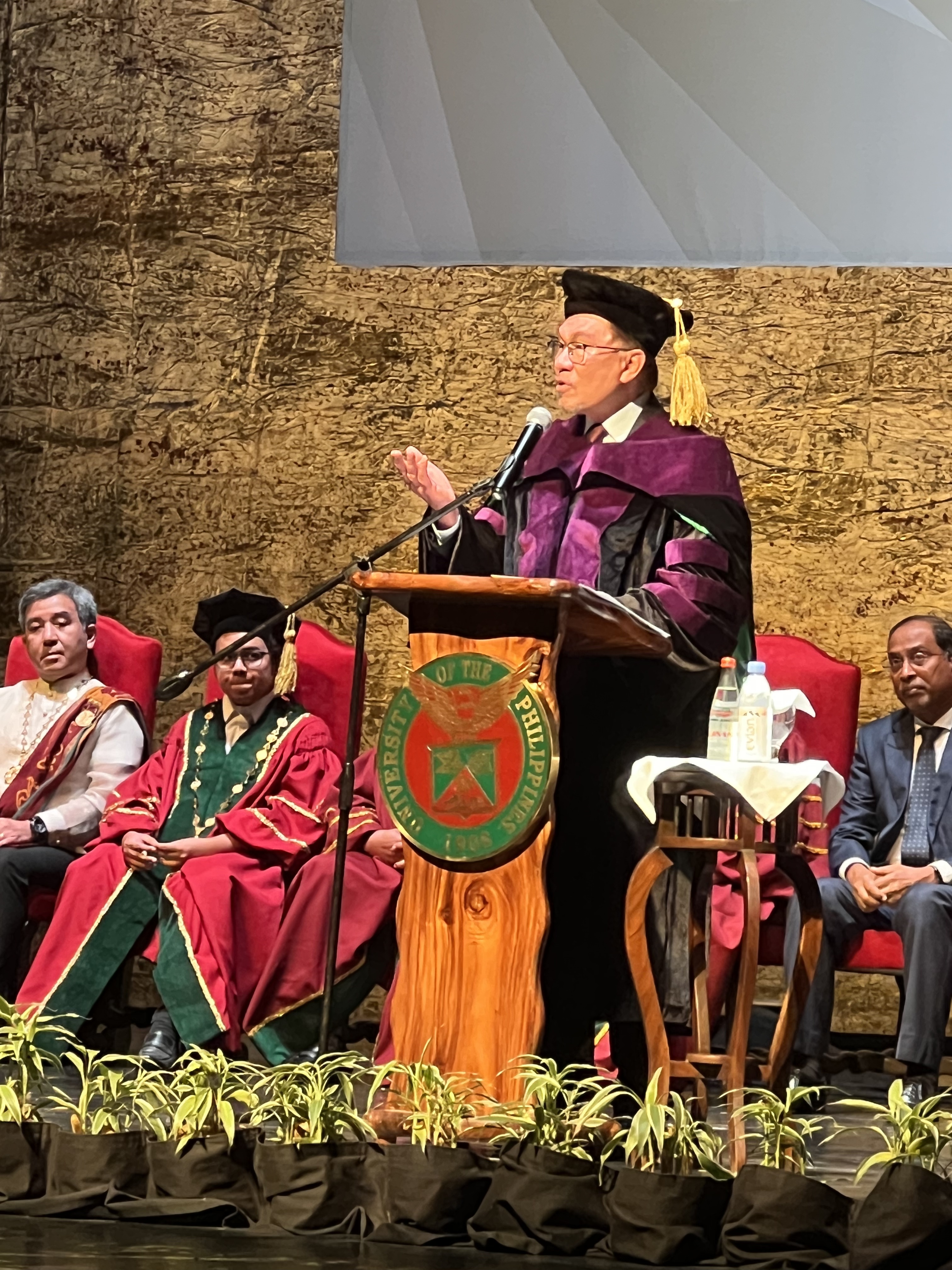
TODAY WE pause our fictional forays to focus on some happily factual news—the visit last Thursday of Malaysian Prime Minister Anwar Ibrahim to the University of the Philippines, which conferred on him an honorary Doctor of Laws degree.

I’ve been missing many university events especially since I retired four years ago, but I made it a point to attend this one because I’ve long been intrigued by Anwar’s colorful if mercurial political career—one that witnessed his meteoric rise from a student leader (who majored, at one point, in Malaysian literature) to minister of culture, youth, and sports, then of agriculture, and then of education, before being named Finance Minister and Deputy Minister in the 1990s.

As Finance Minister during the Asian financial crisis of 1997, Anwar imposed very strict measures to keep the Malaysian economy afloat—denying government bailouts, cutting spending, curbing corruption and calling for greater accountability in governance. His zeal and effectiveness gained him international recognition—Newsweek named him Asian of the Year in 1998—and put him on track to succeed his mentor Mahathir Mohamad as Prime Minister. 

However, his growing popularity came at a steep personal price. In what he and his supporters denounced as political persecution, he was imprisoned twice following a fallout with Mahathir. In the meanwhile, Malaysia sank into a morass of corruption under the since-disgraced Najib Razak, making possible the brief return to power of Mahathir, who enabled the release of his sometime protégé Anwar. Anwar’s eventual accession to the prime ministership in December 2022 was for many a just culmination of decades of near-misses (in our lingo, naunsyami).

His visit to Diliman last week was actually a homecoming. Anwar had visited UP more than once as a young student being mentored by the late Dr. Cesar Adib Majul, our leading specialist in Islamic studies. Like other Malaysian scholars, Anwar has also had a deep and lifelong appreciation for the life and work of Jose Rizal, with whom he shared the notion of a pan-Asian community of interests.

Most instructive was the new UP President Angelo Jimenez’s summation of Anwar’s political philosophy, in his remarks welcoming and introducing the PM:

“Beneath Anwar Ibrahim’s sharp sense of financial management lies a deep well of moral rectitude, a belief in right and wrong that seems to have deserted many of today’s political pragmatists. Much of that derives from his strong religious faith—which, unlike the West, he does not see as being incompatible with the needs and priorities of modern society. To him, this is a native strength that can be harnessed toward an Asian Renaissance.

“Like Jose Rizal, who self-identified as ‘Malayo-Tagalog’ and who was a keen student of the cultural and linguistic connections between Malays and his own countrymen, Anwar appreciates the West as a source of knowledge but cautions against neglecting or yielding our cultural specificity.

“At the same time, he has championed a more inclusive and pluralistic Malaysia, arguing—and here I quote from his book on The Asian Renaissance—’not for mere tolerance, but rather for the active nurturing of alternative views. This would necessarily include lending a receptive ear to the voices of the politically oppressed, the socially marginalized, and the economically disadvantaged. Ultimately, the legitimacy of a leadership rests as much on moral uprightness as it does on popular support.’”

In his talk accepting the honorary degree, Anwar argued strongly and eloquently for the restoration of justice, compassion, and moral righteousness to ASEAN’s hierarchy of concerns, beyond the usual economic and political considerations. He was particularly critical of ASEAN’s blind adherence to its longstanding policy of non-interference in its members’ internal affairs, noting that “ASEAN should not remain silent in the face of blatant human rights violations” and that “non-interference cannot be a license to disregard the rule of law.” 

Extensively quoting Rizal, whom he had studied and lectured often about, Anwar urged his audience to free themselves from the self-doubt engendered by being colonized, while at the same time remaining vigilant against subjugation by their “homegrown masters.” I found myself applauding his speech at many turns, less out of politeness than a realization that I was in the presence of a real thinker and doer whose heart was in the right place. (And Anwar was not without wry humor, remarking that as a student leader visiting UP, “I was under surveillance by both Malaysian and Philippine intelligence. Now I have the Minister of Intelligence with me.”)

Speaking of honorary doctorates, I recall that UP has had a longstanding tradition of inviting newly elected presidents of the Republic, whoever they may be, to receive one, as a form of institutional courtesy. As soon as I say that, I realize that many readers will instantly recoil at the idea for reasons I need not elaborate upon. But let me add quickly that not all Malacañang tenants have accepted the honor. Some have had the good sense to find a reason to decline, knowing the kind of reception they will likely get from Diliman’s insubordinate natives, beyond the barricades that will have to be set up for their security. For everyone’s peace of mind, I humbly suggest that it may be time to retire this tradition, which agitates all but satisfies no one. 

For the record, UP has given honorary doctorates to less than stellar recipients, including the Romanian dictator Nicolae Ceaucescu and the martial-law First Lady Imelda R. Marcos. Even some recent choices have stirred controversy and dismay. 

As a former university official, a part of me understands why and when a state university dependent on government funding employs one of the few tools at its disposal for making friends and influencing people. But as a retired professor who has devoted most of his life to UP and its code of honor and excellence, I find the practice unfortunate if not deplorable. 

I don’t make the rules, but if I did, I would automatically exclude incumbent Filipino politicians, Cabinet members, and serving military officers from consideration. This is not to say that they cannot be deserving, as some surely are, but that they can be properly recognized for their accomplishments upon leaving office. This will also leave much more room for the university to hail truer and worthier achievers of the mind and spirit—scientists, artists, scholars, civil society leaders, entrepreneurs, other outstanding alumni, and fighters for truth, freedom, and justice in our society.