Qwertyman No. 103: Surviving the Survivor

Qwertyman for Monday, July 22, 2024
WHEN THAT rifle bullet grazed Donald Trump’s ear last week, I’m sure I wasn’t alone in having an equally nasty thought whiz through my brain—and I’ll put this as delicately as I can: would it be un-Christian to wish misfortune on Satan and his minions? And less delicately, why does a God who allows bombs to drop on innocent children in Ukraine and Gaza spare a man who seems the very embodiment of the Seven Deadly Sins—pride, greed, wrath, envy, lust, gluttony and sloth to those who’ve forgotten—and who will most certainly destroy as much of humanity as we know it before he mercifully expires?

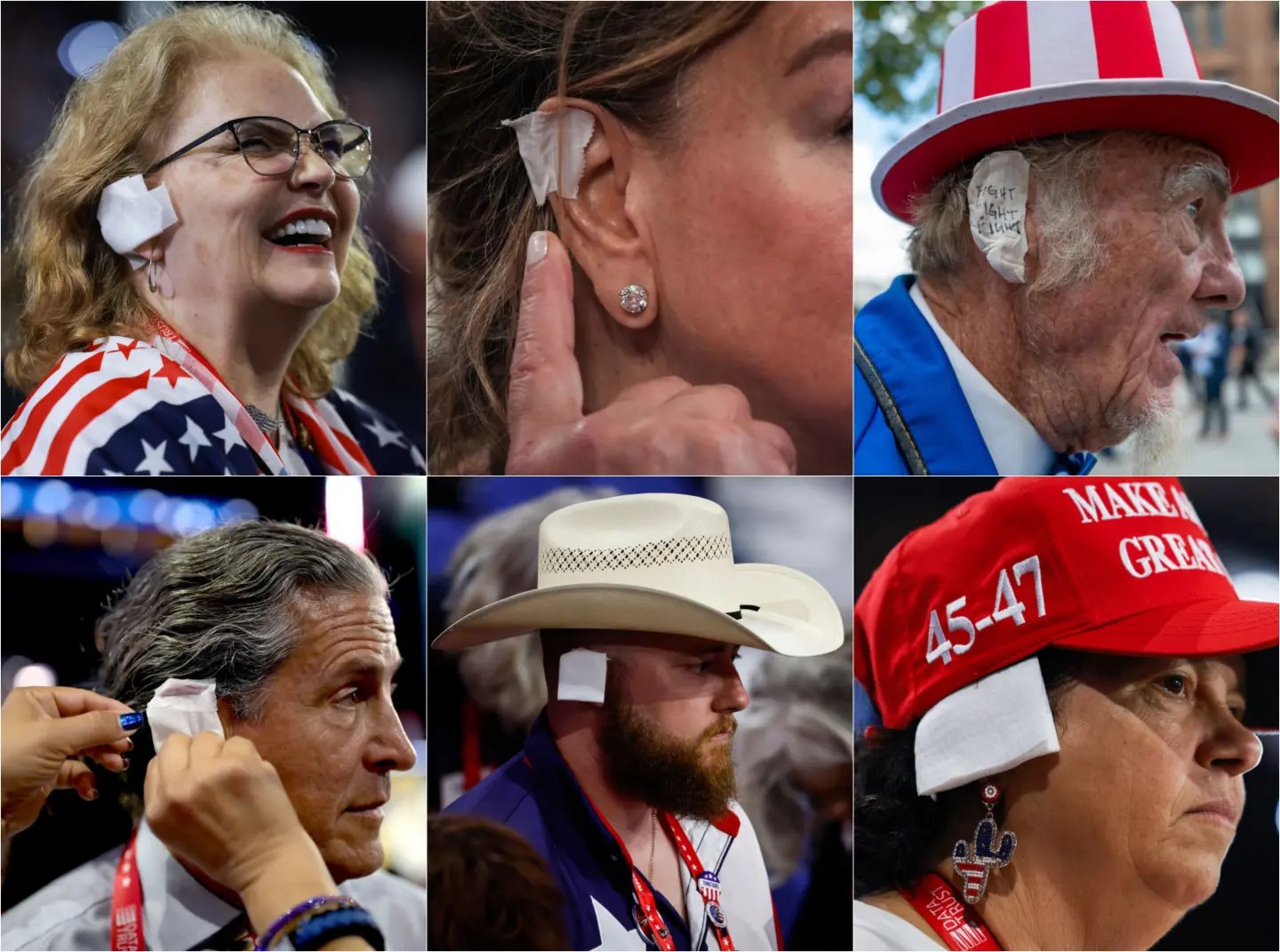
To the MAGA faithful, Trump’s salvation could have been nothing less than divine intervention, a virtual endorsement of his worthiness and indeed his destiny to rule. In one of the many ironies to be found in American politics today, Trump was shot at by a registered Republican using an AR-15-type rifle—the serial shooter’s weapon of choice, and the National Rifle Association’s darling—despite which Republican leaders like Marjorie Taylor Greene were quick to denounce the attempt as a plot instigated by the “evil” Democratic Party. The Democrats are now the war freaks, with Joe Biden liable to be charged for “inciting an assassination,” according to Georgia Rep. Mike Collins (the same fellow who has called for the release and pardon of the rioters who attacked the US Capitol on January 6, 2021). Trump marched into the Republican convention with a bandage on his ear and a halo around his head. “He just won the election,” a Wisconsin congressman told the media.

Given the polls, he was probably going to do that, anyway, facing an anemic and increasingly isolated Biden, who was really the one in need of something so theatrical to happen to jolt his campaign. In an environment shaped by media coverage and social-media shares, that picture of a bloodied Trump raising his fist in front of the Stars and Stripes couldn’t have been better produced. Let’s add to the script his big Supreme Court win on immunity and the dismissal of his classified documents case, and the Orange Man is clearly on a roll and on a path back to the White House, no matter what. The stars are aligning, albeit in the wrong direction.

That bodes ill not only for Americans—whose sole business it is to elect their presidents, so there’s nothing we can do if they prove as suggestible as our own electorate has been—but for the rest of the world, where democracies have struggled under a rising class of demagogues and tyrants with whom another Trump administration will only be too happy to do business. The Russian invasion of Ukraine will end quickly, as Trump promised, because he will pull back the aid that allows Ukrainians to fight, force them to yield territory to his pal Putin, and declare himself a peacemaker. (His policy on Israel and Gaza has been consistently inconsistent, defined as much by what Biden does as by what he really thinks, which no one seems to know. “He’s just delusional at this point,” said his former NSA John Bolton. “He doesn’t have any idea what to do in the Middle East.”) So Trump survived; but can the world survive him?

For us Filipinos and the Taiwanese, almost 14,000 kilometers away from Washington, DC, Trump II will likely mean “non-intervention,” i.e., a re-embrace of neighborhood bullies like Xi Jinping and Kim Jong-un at the expense of even the semblance of covering for us in the West Philippine Sea. (A US withdrawal will delight our progressives and nationalists—both the real and the newly-minted—and ironically align them with the most reactionary and despotic American president ever.)

But back to that shooting. I’m not particularly religious nor philosophical, but that failed assassination attempt and its likely aftermath sent me into a deep dive, asking questions I knew had no easy answers. Maybe because of the company I keep, no one I knew, whether here or in the States, dropped to his or her knees in gratitude and relief over Trump’s deliverance. Of course we all muttered in polite agreement with the obligatory PR statements, the kind I could have written myself: “We eschew and deplore all political violence. Violence has no place in a democracy, and our thoughts and prayers are with former President Trump as we reaffirm our commitment to peace, freedom, and justice for all, regardless of their political beliefs or affiliations.” 

But to be perfectly honest, my thoughts and prayers were going another way, which is perhaps the sorriest thing about all this: we begin to entertain brutish notions and expedient solutions. Just as one trigger-happy and foul-mouthed president let out the worst in the Filipino and made it okay to laugh at rape jokes and take murder with a shrug, Trump has conventionalized a movement that will certainly survive him, founded on people’s basest instincts: fear, suspicion, selfishness, and lying to survive. (His VP pick, Sen. J.D. Vance, is said to be even worse—Trump with military chops, just as opportunistic and with much more mileage in him.) Trumpism will not die with Trump, even now a living martyr and saint in his own religion. It’s become too big to kill off with one shot, so it’s probably just as well that that rooftop shooter missed. 

Why? Because if and when Trump wins, then perhaps Americans, and especially Trumpers, will better understand themselves in the man they elected. When I teach literature, I sometimes go back to Aeschylus and Agamemnon to raise the same question I opened this piece with: Why does God (or Zeus) bring suffering upon his people? And the answer in the play is, “Man suffers, so he will learn.” And then again, do we ever? The Germans elected Hitler, only to later realize they had made a grievous mistake, but now Hitler is loose upon the world in his many reincarnations.

The expat Trumpers and MAGA Fil-Ams who regularly excoriate me for meddling in US affairs—but who won’t think twice or even know about America meddling in ours—are probably turning all shades of red and purple as they read this, but do I care? I care for our daughter in California; I hope she follows my sister who moved to Canada after Trump I, before she gets accused of “poisoning the blood” of America. (Both are legal, tax-paying US citizens.)

At least we Pinoys can say we’ve been through all of that, and more—assassinations (our assassins were better marksmen), restorations (our politicos have more patience, and can wait a generation), and Netflix-worthy political drama (next episode: SONA fashions and SONA absentees). Having survived martial law and having our own demons to contend with, we’ll survive Trump II and whatever he does in the sandbox of the White House. The question is, will America?
Qwertyman No. 101: The Truth Sometimes Stutters

Qwertyman for Monday, July 8, 2024

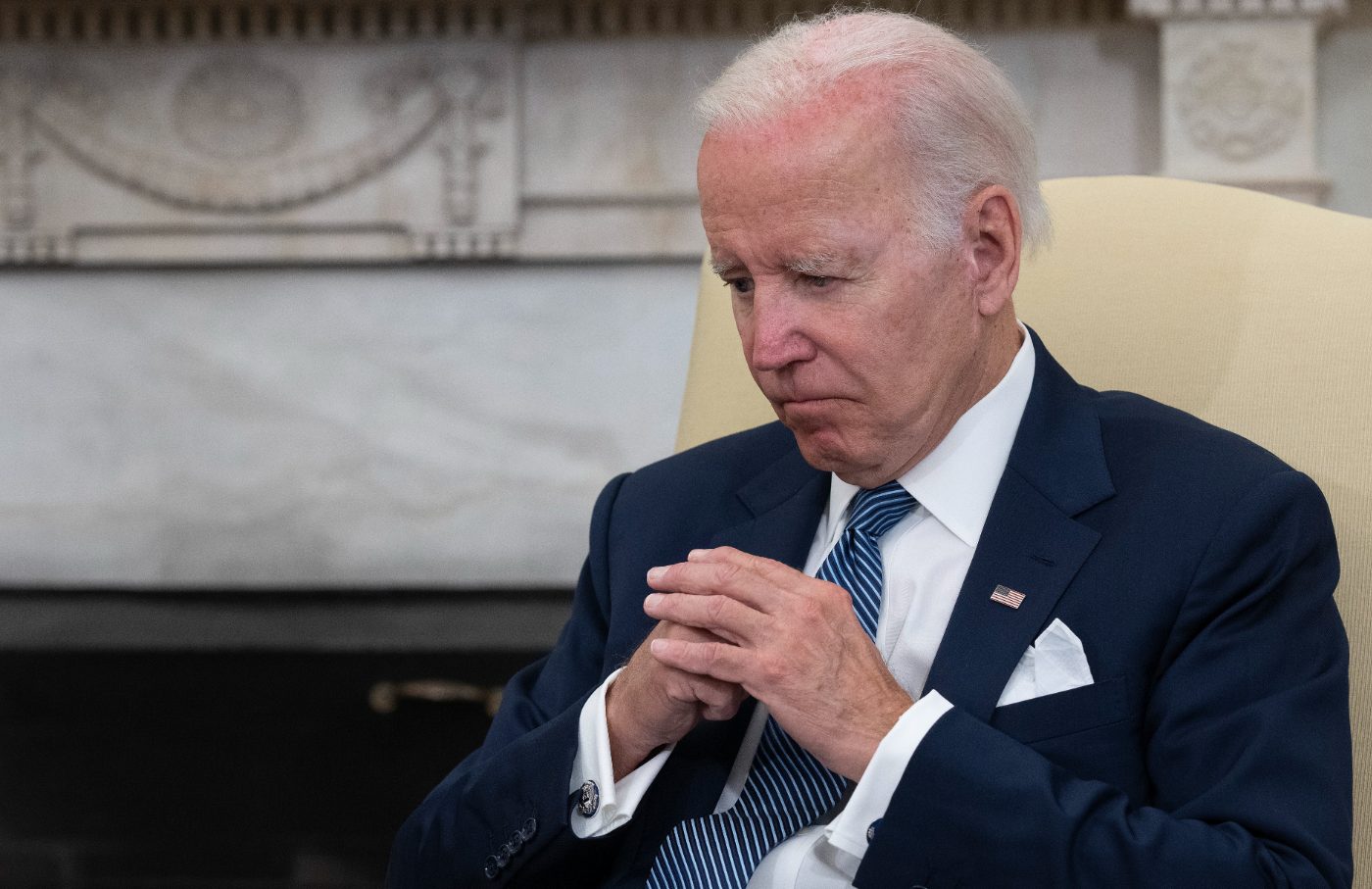
LIKE MANY other global citizens with an interest in American politics, I watched the recent presidential debate between President Joe Biden and former President Donald Trump with alarm and dismay, emerging profoundly depressed by Biden’s lackluster performance. His rousing State of the Union speech last March, which I also watched, had raised my expectations, as it surely did the Democratic Party’s, that he would come out swinging and send Trump flying out of that arena with the punch to end all punches. 

He managed to throw a few good ones—I especially liked “You have the morals of an alley cat!” But in the end—or should I say, pretty much throughout the debate–he lost steam, stuttered, and strayed. Fighting Joe stayed home; Soporific Joe turned up. Even Trump, who lied his way through the debate with his customary sneer and swagger, seemed surprised by the win being handed to him by his opponent and by all the media commentators looking on. 

Those commentators would later do the math and conclude that Trump had told about 30 lies and misrepresentations over the 90-minute bout, while agreeing that Biden had also made some false assertions, though none as outrageous as Trump’s charge that Democratic policy included killing babies even after they were born. None of this post-mortem will matter to Trump’s base, used to swallowing whatever comes out of The Donald’s mouth as God’s own truth. It mattered to Biden’s, because it seemed to confirm their deepest fears—and what had until then been a nasty snicker from the other side—that the incumbent was mentally and physically inadequate to the task of leading America for four more years, let alone beating Trump in November. 

When I reviewed the transcript of that debate—which I suspect will rank near the bottom in the history of presidential debates for quality of thought and expression—I had to conclude that the truth was poorly told and the lies came through loud and clear. Biden ran through the numbers with professorial precision: “40 percent fewer people coming across the border illegally… billionaires pay 8.2 percent in taxes… $8,000 per family written off under the Affordable Care Act… everybody making under $170,000 pays 6 percent of their income,” and so on. But Trump’s strategy was much simpler—just repeat the same incendiary claim, over and over again, and don’t bother with the details: “the worst president we ever had, the worst administration in history, we’re no longer respected, they think we’re stupid, we opened our borders to people from mental institutions, insane asylums, terrorists, people are dying all over the place….” 

In rhetorical heaven, the truth would ring like a bell and be heard from sea to shining sea, while falsehood would seethe and slither in whispery incoherence. Instead, what we saw confirmed the opposite—that in today’s media, prone to hyperbole and uncritical amplification, the brazen lie will travel farther than the complicated truth, which can be messy, inconvenient (as Al Gore pointed out), and unpopular. 

Furthermore, and even worse, the truth all by itself won’t win elections. We’ve seen that happen many times, and we don’t even need to cross the Pacific for proof. 

In the second op-ed column I wrote for this corner more than two years ago titled “Myth over matter,” I said that “The most daring kind of fiction today is out of the hands of creative writers like me. It is being created by political propagandists who are spinning their own versions of the truth, and who expect the people to believe them. The short story and the novel are no longer the best media for this type of fiction, but the tweet, the Facebook feed, the YouTube video, and even the press conference.”

“Today’s savviest political operators know this: spin a tale, make it sound appealing, trust ignorance over knowledge, and make them feel part of the story. ‘Babangon muli?’ Well, who the heck who dropped us into this pit? It doesn’t matter. Burnish the past as some lost Eden, when streets were clean, people were disciplined, and hair was cut short—or else. Never mind the cost—’P175 billion in ill-gotten wealth’ is incomprehensible; “a mountain of gold to solve your problems” sparkles like magic.”

Biden isn’t just fighting Trump, but a growing global disdain for intellectual acuity, in favor of populist platitudes and despotic bombast. Sadly none of this analysis, of which Joe Biden surely must be aware more than anyone else, is going to help him and his party defend democracy in America if he sticks to his dated notion of an idealist America that clearly no longer exists. To buy time and opportunity for that hope, he may have to do what he has never done, and yield his place to a fitter champion. (Biden famously labored to overcome a childhood stutter and being bullied for it by reciting Yeats and Emerson in front of a mirror.)

Both the New York Times and the Washington Post have called for Biden to stand down, a rising chorus that has been joined by important leaders and donors of the Democratic Party. There’s wishful speculation that—despite the obligatory public display of bravado and strong familial support—the more sensible Joe will prevail and see the election as being more than a personal Rubicon but indeed, as he himself puts it, an existential battle for democracy itself. If Biden goes down, the chances are he won’t be alone; the Republicans will win both the House and the Senate, giving Trump virtual carte blanche to reshape the rest of America in his own sour image. (And for us Filipinos, a Trump win will mean even less leverage in the West Philippine Sea, not that the US under any president will likely go to war on our behalf for a pot of soil at high tide; but isolationist Trump will be far more willing to bargain our rights away with China for economic and political gain.)

As distant onlookers with a strategic investment in November’s outcome, let’s pray that Sensible Joe will get the better of Fighting Joe, and give the stuttering truth a chance.

Qwertyman No. 75: Trump 2.0

Qwertyman for Monday, January 8, 2024

IN MY column last week, I mentioned the “Trumpian dystopia” threatening to take over the United States and many other rightward-leaning societies and governments around the world. 

A “dystopia” is, of course, a place or a situation where everything has been turned on its head, where the bad has become good and the wrong has become right, and where the things we most feared or abhorred have become the norm. You find this in George Orwell’s 1984, where the government controls everything; younger readers and viewers will relate to Suzanne Collins’ The Hunger Games, where citizens are sacrificed for the Capitol’s entertainment. In other words, it’s social and political hell for those reared in the kind of postwar liberalism that eschews racial discrimination, authoritarianism, gender inequality, and religious intolerance, among other shibboleths.

It’s hard to believe that much of America seems to be marching in lockstep toward that dystopia under a revived Donald Trump, wh0m nearly all polls see as leading the race for the US presidency, which will be at stake in November this year. On this date three years ago, he was squarely in the doghouse in the aftermath of the shockingly violent assault on Congress on January 6 by Trump partisans unwilling to accept that he had lost to Joe Biden in the election. Even his closest allies at that time distanced themselves from his apparent captaincy of that bloody caper, although many of them have returned to his kennel. 

Nearly a full presidential cycle later, he’s back in the Republican saddle, way ahead of a pack of rivals who, save one, have refused to denounce Trump for what he is: the greatest single threat to American democracy because of what he represents (leaving aside foreign tyrants like Vladimir Putin and Kim Jong-un). That, not surprisingly, is President Joe Biden’s exact description of him, so some might say it’s biased, but to remain unbiased against Donald Trump is to lie prostrate in front of a steamroller, begging to be annihilated.

It doesn’t help that the incumbent is 81 years old, palpably slow, avuncular, and whispery where Trump screams into people’s ears (to the delight of many). Their age difference—just four years—isn’t actually all that much, but beyond personalities, it’s a difference in cultures, and perhaps of understanding how politics works in this post-Facebook age, where obnoxiousness has become a virtue and regularity a liability.

Trump thrives on notoriety, parlaying the four indictments involving 91 criminal charges against him—plus the two disqualifications from state ballots—into a kind of a badge of courage, flipping prosecution into persecution. Rather than fracture his base, any attack on Trump (and any attack by him) only seems to consolidate the estimated 30-40% of hardcore Trumpers who now effectively define the Republican party, the tail wagging the dog.

Among the most repugnant (and, by Trumpian logic, among the most attractive) of his recent statements has been his denunciation of undocumented migrants as “poisoning the blood of our country,” specifically mentioning Latin America, Africa, and Asia as the sources of what in other speeches he has called rapists, terrorists, and Covid carriers.

You would think that that kind of Hitlerian rhetoric would galvanize the Hispanic and Asian-American—not to mention the African-American—communities in America against Trump, but no. If anything, his support among these groups seems to be rising, driven ironically enough by his hardline position on immigration, the very same factor that made these minorities possible to begin with.

What I’m interested in is how the Filipino-American community will respond to Trump 2.0, and what that will say of us as a people, albeit as one of many minorities in America’s multiracial society.

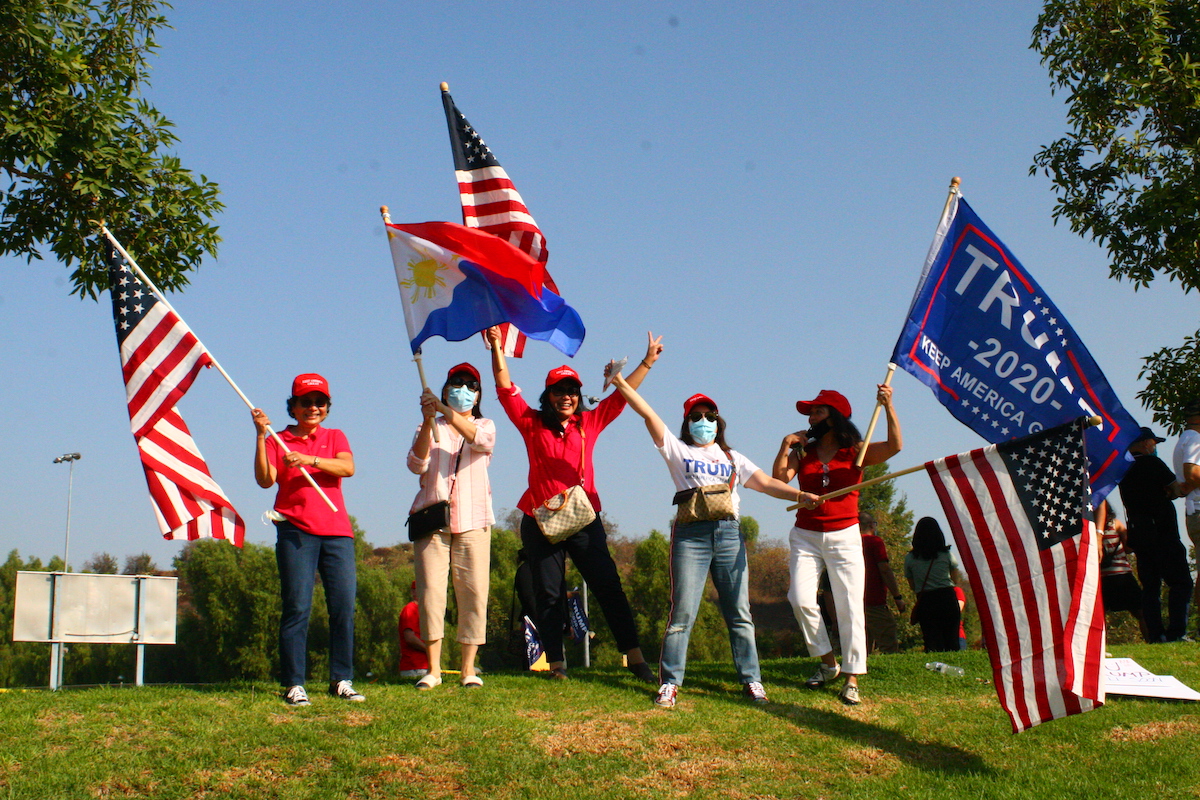
There are now about 4 million Filipino-Americans; half of them, 2 million, are voters. (To put this in context, the US population now stands at 336 million, of whom 170 million are voters.) Historically, Filipino-American voters have leaned Democrat, with a majority of them voting for Hillary Clinton and Joe Biden in 2016 and 2020. But a very vocal (though perhaps somewhat less visible, as many people tend to reveal their preferences only in the voting booth) “Filipinos for Trump” movement exists, and if trends persist will likely gain more traction this time around.

In 2020, Filipino pro-Trumpers cited “family, religion, and faith” as the main reasons they were backing him, like many American evangelicals, despite all the evidence to the contrary in Trump’s personal behavior and speech. For many, it all came down to one issue—abortion—the right to which has now been successfully rolled back by the Supreme Court’s conservative majority. This time around, the flashpoint will likely be immigration, a global problem abetted by collapsing economies and repressive regimes. Well-settled minorities such as Filipino-Americans derive a strong sense of entitlement from all the personal sacrifices and legal processes they went through to acquire their citizenship, and feel cheated by migrants scrambling across the border. This kind of single-issue vote—a gross simplification and reduction of values into one criterion—favors demagogues like Trump, who work through two-dimensional posterization.

A more interesting—and more sinister—reading of Trump’s popularity came up in a recent guest essay in the New York Times by Matthew Schmitz, arguing in his title that “The Secret to Trump’s Appeal Isn’t Authoritarianism,” but rather that “Mr. Trump enjoys enduring support because he is perceived by many voters—often with good reason—as a pragmatic if unpredictable kind of moderate” and “a flexible-minded businessman who favors negotiation and compromise.” That logic, while fetching, predictably drew quick rebukes. One reader said: “Thanks, Mr. Schmitz, but we’re already well aware of this. Italians liked Mussolini because he ‘made the trains run on time.’ This is exactly our point. This is how dictatorships happen.”

That brought me back to our own long and continuing affair with despotism, and how sharply simplified populist sloganeering can cut through and cut down on complex reasoning—with devastating consequences for democracy, here and across the Pacific. 

(Photo from colorlines.com)

Hindsight No. 7: Disinformation and Democracy

Hindsight for Monday, February 28, 2022

(Image from designtaxi.com)

LAST FRIDAY—the 36th anniversary of EDSA 1—I spoke to a group of university students who wanted to know what I thought of Filipino democracy. 

I told them that at EDSA, along with millions of other Filipinos, I jumped for joy at the news that Ferdinand Marcos had fled with his family. We did not know—and might not have cared too much then—that they had brought two planeloads of gold and cash with them to Hawaii. All we wanted to hear was that they were gone, presumably for good, and that we were off to a fresh start at peace, freedom, justice, and prosperity. The darkness of the past twenty years would lift, and a new Philippines would emerge, truly democratic and firmly opposed to any form of despotism.

Today we realize what a fantasy that was, what a temporary reprieve. Under Rodrigo Duterte, if the polls are right, most of our people have once again embraced authoritarian rule, implicitly accepting its attendant excesses. The dictator’s son is back, and may even become our next President—to the delight of his supporters for whom martial law never happened; or if it did, then it was a golden age to which we will soon be returning, an age of new roads and bridges, clean streets, industrial peace, Miss Universe pageants, and eternal sunshine. 

Indeed it would be as if the past half-century between 1972 and 2022 were a confused and hazy dream, and now we were waking up where we had left off yesterday, when Ferdinand E. Marcos was poised to “save the Republic and build a New Society.” His son is making sure that we don’t miss the connection by heralding his entrance at his campaign rallies with the anthem of martial law, “May Bagong Silang.” Most of his followers today have never heard that song, or understand its chilling context, or the price we paid—in blood and in billion-dollar loans—for that “new dawn.” To them, it is a catchy jingle, in marching tempo. It comes with the smell of money and power in the air, the promise of a shower of gold for the hopeful masses. 

This, of course, is also a fantasy, but a powerful one—and I think I will be correct to surmise that many of the students I addressed, and even their teachers, fully believe it. And why not? They were never taught in school about the horrors of martial law. Instead, they were told that those were good times, that the Marcoses were good leaders who were deposed by their enemies and the CIA, that rich people don’t steal, and that the Marcos billions came from the gods, Yamashita, and anywhere but the Philippine treasury. That diet of lies has now become a catered banquet. 

The biggest enemy of democracy today—more than at any other time in our or even the world’s history—is disinformation: the willful distortion or fabrication of information to create false beliefs or impressions in the minds of people, turning bad to good, wrong to right, and vice versa. 

This is happening not only here in the Philippines, but in many other places around the world—including America, where Donald Trump has been pushing the “Big Lie” of a stolen election, despite the lack of any credible evidence. Even earlier, in what has by now become a cliché, Josef Goebbels thundered that if you repeat a lie a thousand times, it becomes the truth. 

During and after WWII, military experts engaged in what was called “psywar” or psychological warfare to weaken the enemy’s mental defenses, lower morale, and make people switch sides. This was done through radio, leaflets, newspapers, and other media available at the time.

Today the prevalence of the Internet and social media has magnified the means for disinformation by a magnitude of millions. And this is scary, because according to a recent survey, every other Pinoy can’t tell real news from fake. How can a society so prone to disinformation—to fake news—function well as a democracy?

Last month, the Akademyang Filipino (on whose Board of Trustees I serve) sponsored a forum on the topic of “Can Democracy Win in May 2022?” Most such questions are meant to be rhetorical, with obvious answers. But this time, the more I thought about it, the more I was bothered by its actual complexity. The problem, I realized, is that we no longer have a clear and common idea of what “democracy” means.

There are as many definitions of democracy as there are politicians eager to appropriate it. “Democracy” has to have been one of the most ambiguous and most abused words of the 20th century, going into the 21st. When a brutal totalitarian state like North Korea styles itself as the “Democratic People’s Republic of Korea,” you know something somewhere has gone awfully wrong. Dictators will call their actions democratic—as Ferdinand Marcos and Muammar Ghaddafi did—by asserting that they are acting on behalf of the people, a responsibility that presumably entitles them to extraordinary powers and compensations.

In my layman’s understanding, democracy is the rule and exercise of power by the people through representatives they choose by a free and fair election. It seems simple, but immediately we can see how vulnerable this definition of democracy is to interpretation and manipulation. What is a “free and fair” election? Does it simply mean an election free of vote-buying, coercion, and fraud?

If a candidate wins more than 51% of the vote without obvious coercion or cheating, then will that candidate have won a democratic election? But what if those voters had been fed provably false information? What if they willingly believed that information to be true, and voted on the basis of it? Would this still be democracy at work? 

Arguably, yes, because democracy never promised only intelligent outcomes. Elections are emotional, not rational, exercises. This disturbs me deeply, but again I have to ask myself, am I idealizing democracy as something that can be perfected? Or should I just accept that democracy, like society itself, is inherently messy, mercurial, and manipulable? 

What kind of democracy do we Filipinos have, and what kind of democracy do we want? The vote this May will help provide the answer. 

Penman No. 135: Democracy and Cultural Expression

DSC_0024Penman for Monday, February 9, 2015


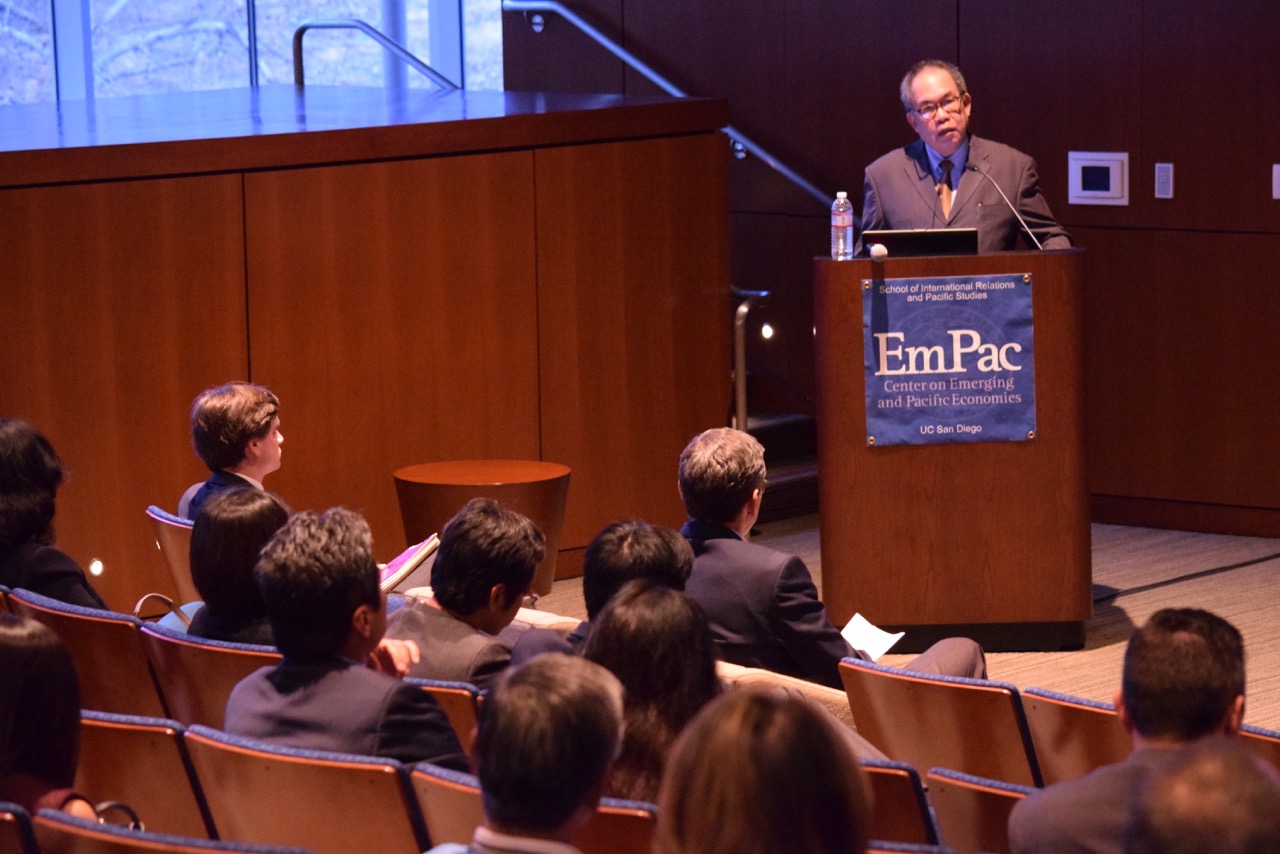
I SPENT the past two weeks as a Pacific Leadership Fellow at the School of International and Pacific Relations of the University of California, San Diego, and the highlight of my fellowship was a 40-minute talk I gave on the general topic of “Democracy and Cultural Expression: Confronting Modernization in the Philippines.” The PLF—usually a government or business leader from the Asia-Pacific region—is asked to make a public presentation to a large audience composed of academic and community representatives, to introduce and discuss major issues facing his or her society.

I felt it safer to presume that the non-Filipino members of my audience last January 28 knew very little about Philippine history and politics, so I began with a broad overview of that history, bringing things to the present and the medium-term horizon, considering both our strengths and resources—noting the robustness of our recent economic growth—but also the longstanding inequalities and structural weaknesses that continue to hold us back. Here’s a slightly edited excerpt from the rest of my talk:

We have to pause and wonder exactly what kind of democracy we have in the Philippines, and what needs to be done—particularly on the cultural front—to achieve a fuller sense of the word.

I wouldn’t go so far as to call Philippine democracy a sham, because most Filipinos enjoy fundamental rights and freedoms absent in patently undemocratic societies—freedom of expression, of association, of mobility, of enterprise; the right to vote, and a presumptive equality under the law. But that presumption is also the weakest leg our democracy stands on, undermined by gross economic and social inequalities in our society showing Philippine democracy as more a democracy of style and spirit than one of substance.

Indeed, economically and politically, the Philippines has been ruled for more than a century by an elite, a roomful of families from the landed gentry and comprador capitalists who developed their wealth and power as agents and executors of colonization, and have taken turns at governing the country well into the present.

We cannot have true democracy without achieving a better balance in our economic and social structure, and its best hope in the Philippines could be in our enlarging middle class. They may not yet have the economic and political clout of the elite, but coming from the poor and aspiring in their own way to become more prosperous, they have the most at stake in creating a new regime of opportunity and fairness.

It is the middle class that has served as the voice of Philippine democracy, primed by its education to value freedom of thought and expression. It is the middle class that stands at the vanguard of modernization, having not just the desire but also the means—through education and entrepreneurship—to change the future.

… One out of every ten Filipinos now lives and works abroad in a decades-long diaspora that has kept the Philippine economy afloat through remittances amounting to more than $25 billion in 2013. But they bring home not only money but new ideas, and I feel confident that, in the long run and for all its social costs, this diaspora will have salutary effects because that domestic helper in Milan or plumber in Bahrain will no longer be simply a domestic helper or plumber when they come home. Tourists bring home snapshots of pretty places and exotic food; foreign workers bring home real learning, lessons in survival and getting ahead, and raised expectations of their local and national leaders.

This exposure to global culture and its elevation of local aspirations will be a major force in reshaping the Filipino future. And again, it is the middle class—the dwellers of the Internet and the Ulysses of this new century—that will lead in this transformation, just as they have led the most important movements for political and social reform in our history.

… One of the bright spots of Philippine society today is the fact that civil society is very much alive, constantly on guard against governmental or corporate abuse and wrongdoing, ever ready to uphold the rights of ordinary citizens and communities, and firmly rooted in those communities. It has stood at the forefront of the movement to fight corruption, which recently came to a new climax with the explosive revelation of a billion-peso pork-barrel scam going all the way to the Senate and even possibly higher.

One of the greatest challenges of our modernization may be that of electoral reform—not just a reform of the electoral process, but a reform of the voter’s mind—not to vote for popular candidates, but to vote wisely, to see the vote as a chance to short-circuit a historical process and to lay claim to one’s equality and patrimony.

And this is where culture comes in, as an instrument of social and political reform and modernization. If we look at culture more proactively not just as a way of living but a way of thinking, then there is much room for the promotion of true democracy through cultural expression.

By cultural expression I don’t mean simply the writing of stories, poems, plays, and essays, which is what I do most days, partly as my civic duty. I mean the use of all media at our disposal—the arts, the press, the Internet, whatever can influence the Filipino mind—to forge and sustain a set of core values, of national interests that cut across family, class, and region.

Of course, we can take “cultural expression” in its more popular and familiar forms—stories, poems, plays, music, painting, and dance, among others—as gestures toward the idea of a larger, national culture. After all, with every poem or painting, the artist seeks to palpate, from an audience of citizens, a sense of what is common and what is important—or to put it both ways, what is commonly important and what is importantly common. This has always been the social value and the political mission of art—not just as a means of self-expression, but of establishing, affirming, and promoting certain commonalities of thought and feeling.

… We need nothing less than a new cultural revolution—focused on the assertion of the ordinary citizen’s rights over power and privilege, on the importance of the rule of law, and on our understanding and acceptance of what it means to be a Filipino in this globalized world. Forging that sense of national identity is crucial to securing our future, again in a world and in a part of the world where the Chinese, the Japanese, the Koreans, and the Americans seem to have very clear ideas about their roles and capabilities. In this ocean of resurgent nationalisms, we Filipinos need to redefine ourselves as more than America’s students and surrogates.

In sum, much remains to be done to lend more substance to Philippine democracy in terms of addressing age-old economic and social inequalities. But the first field of battle exists in the mind and spirit, and the first campaign in this battle, the first declaration of freedom, has to be an act of the imagination.

I prefer to see democracy as a process rather than a product; the aspiration can be as powerful as its actualization. This democracy is first formed by its assertion: by seeking democracy, we begin to achieve it, and this assertion is the task of our artists, writers, thinkers, and opinion makers, the imaginative shapers of our national identity.