
Qwertyman No. 201: Insenaty

Qwertyman for Monday, June 8, 2026

YES, YOU read that right—it’s not a misspelling, just a new word I coined to describe the recent goings-on in the Philippine Senate, with the 13-person majority refusing to show up for work for the second straight day as of this writing. Anyone watching this charade from a foreign perspective—someone without any knowledge of or interest in Philippine politics, like the proverbial Martian—would scratch his/her/its head at this latest turn of events that began with Alan Peter Cayetano and his gang hijacking the Senate leadership on May 11 with the obvious intention of thwarting the impeachment of VP Sara Duterte and saving their own hides. (Update: Sen. Sherwin Gatchalian just got elected Senate President pro tempore on the third day of the majority “boycott,” after Sen. Chiz Escudero showed up and enabled a quorum to resume business. It’s entirely possible that by the time this piece comes out, the “majority” and “minority” I refer to here will have been reversed.)

I had been hoping to move on to another, less inflammatory topic, as much for my relief as yours, but Philippine politics is the gift (at least to opinion writers) that keeps on giving. It’s a sign of the times that my wife Beng—normally a quiet and placid spirit in whom the finest virtues of Buddhist kindness and Christian charity converge—has been spouting forth colorful expletives this past week, even marching to the Senate floor to hold up placards with the likes of Dean Winnie Monsod to demand service with integrity from our senators. That was the first day the majority decided (without telling anyone else) to do a no-show, leaving Beng even more infuriated at the thought of these people being paid P300,000 a month (or P10,000 for that day) on top of multiple perks to do—well, nothing, while impoverished seniors die of exhaustion at the ayuda line.

Indeed not a day goes by without some new cause for aggravation, some insistent reminder of how warped our values have become that many Filipinos can no longer tell right from wrong, and good from bad. Glaring examples are DDS memes equating Sen. Jinggoy Estrada—booked for plunder involving P573 million in kickbacks—with the late Sen. Ninoy Aquino, jailed under martial law for subversion. “We Are All Jinggoy!” proclaims one meme, echoing what we said for Ninoy, “Hindi Ka Nag-Iisa.” 

For his part, the Senate majority’s resident antidote to wisdom, Robin Padilla, opines that the cases of Leila de Lima and Bato de la Rosa were different, because the former was linked to drugs, and the latter to their extermination, conveniently forgetting the charges laid out against Bato by the International Criminal Court. In the latest episode of “The World According to DDS,” Senate President and Duterte running mate Alan Peter Cayetano characterizes his patron’s murderous tokhang “war on drugs” as “pro-life.” Duterte stalwart Rodante Marcoleta promises a blockbuster of a hearing by their bogus Blue Ribbon Committee featuring game-changing revelations by 18 “ex-Marines” who then make claims so preposterous that they should each be meted out 5,000 push-ups for poor storytelling. (They can always take it out on their sponsor, who put them up to it.)

That’s how topsy-turvy things have become in our society, of which our senators and their behavior are but representative. They come in tailored suits and ties, in barongs and native dress, in heavy make-up and botox for the cameras, but at their best and sadly also their worst they are not much different from the rest of us who put them there in the first place.

We’re not asking for or even dreaming about a happily unified Senate here, which is both impossible and frankly a danger to democracy. We just want a working and serving one, governed by reason, civility, and the law. If integrity, intelligence, and performance are too much to ask for, can they at least keep quiet, take their paychecks and emoluments, and pose for the media, but otherwise let their colleagues do their job?

Over the next couple of weeks until the impeachment trial begins on July 6, we expect the Senate to come to its senses and to set itself aright, very likely with a new majority formally elected by at least 13 members, to put it beyond all dispute. That will be a relief for a people who may initially have found some entertainment value in the Senate show, but are losing their patience with a dysfunctional institution their taxes are fattening, without getting much in return.

And let’s not delude ourselves into thinking that our problems will vanish with the installation of a new and more reasonable Senate majority, and not even with the impeachment of VP Sara. That’s the big mistake we made at EDSA; in our euphoria, we forgot that changes in leadership are far easier to pull off and to manage than changes in society and in the people themselves. We’ll be happy if and when the level-headed Sen. Sotto wrests back the Senate presidency or the apparent compromise candidate, Sen. Gatchalian, so the old Blue Ribbon Committee can pick up where it left off and resume its hearings on corruption in government, which has been bleeding us dry and which, come to think of it, has been at the root of all this drama.

I earlier said that in its division and divisiveness, the Senate is really us. Those rifts are real, and maybe they can’t be helped. But for what we’re paying them, we can demand of our senators that they not only represent us but be better than us, and show a better and working model of a functioning if divided democracy. Bring sanity back to the Senate, and maybe then we’ll survive.
Qwertyman No. 113: My Lessons from Martial Law

Qwertyman for Monday, September 30, 2024

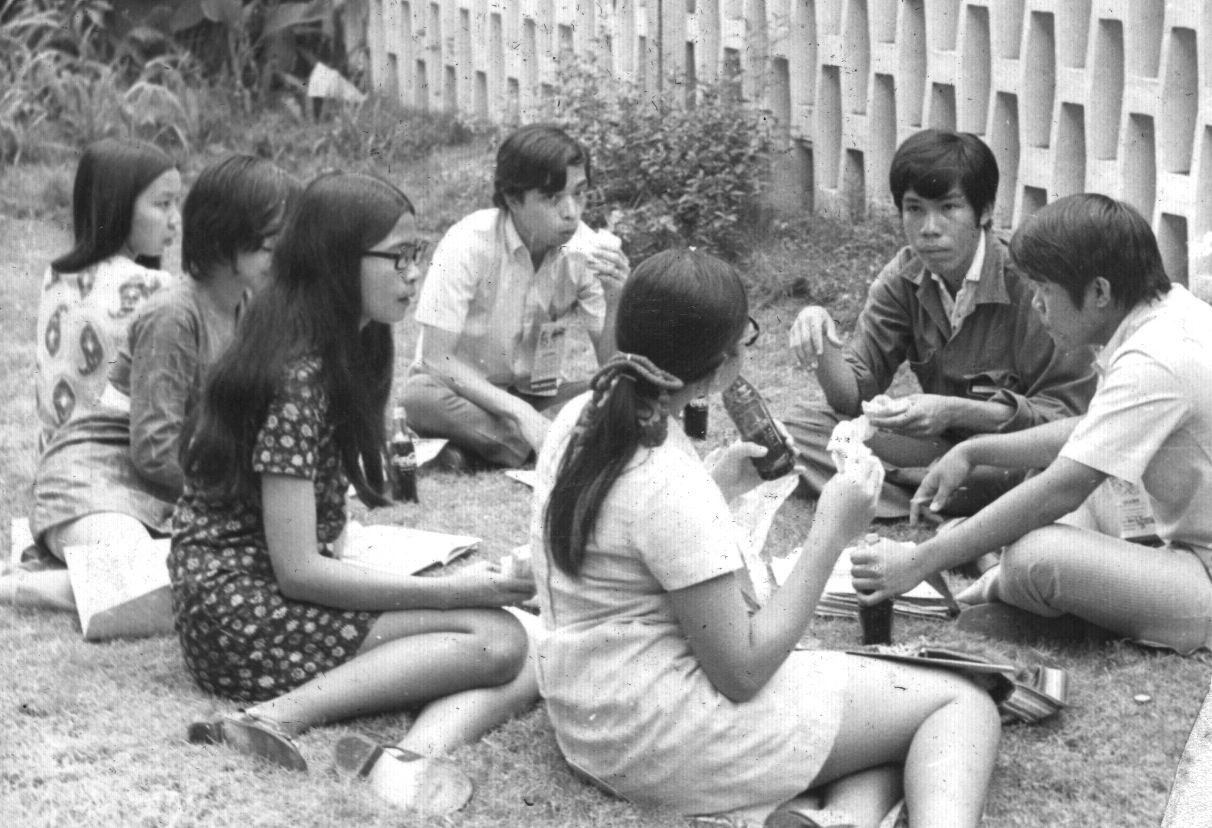
I WAS recently invited by a student organization at the University of the Philippines to speak to them about my martial-law experience, given that I had been a student activist in UP during what we called the First Quarter Storm, had been imprisoned, and had, against all odds, survived into a reasonably comfortable old age. It occurred to me, as I entered the SOLAIR building in Diliman where the event was going to be held, that I had last stepped into that place as a 17-year-old activist back in 1971 (that’s me in the picture, second from right, in that building). What had I learned since then? Here are some points I raised with my young audience:

1. We were always in the minority. Even at the height of student activism in UP and in other universities, those of us whom you might call truly militant or at least progressive were far smaller in numbers than the majority who dutifully went on with their studies and their lives and saw us as little more than a rowdy, noisy bunch of troublemakers. And the fact is, we were still in the minority in 2022, which is why Leni lost (yes, even in Barangay UP Campus). This bears emphasizing and thinking about, because sometimes we fall into the trap of believing that since we think we’re so right, surely others must think the same way. Which brings us to my next point.

2. We have to learn to communicate with other people with different views. The phrase “echo chamber” often came up in the last election, and with 2025 looming, it’s even more vital that we master modern propaganda as well as the other side does. This means sharper and more effective messaging. Enough of those two-page, single-spaced manifestoes written in the Marxist jargon of the 1970s and 1980s and ending with a string of slogans. Learn how to fight the meme war, how to navigate and employ Tiktok, Twitter/X, Facebook, Instagram, Youtube, and all the arenas now open in digital space.

3. When talking about martial law, don’t just dwell on it as the horror movie that it was for some of us. True, many thousands of people were killed, tortured, raped, imprisoned, and harassed. True, the trauma of that experience has lasted a lifetime for those involved. But most Filipinos never went through that experience, adjusting quickly to the new authoritarianism; many even look back to that period with nostalgic longing. That’s proof of martial law’s more widespread and insidious damage—the capture of the passive mind, and its acceptance or denial of the massive scale of theft and State terror taking place behind the scenes. Martial law imprisoned our minds.

3. People change; you could, too. One pointed question I was asked at the forum was, “Why is it that some very prominent student activists turned their backs on the movement and went over to the dark side?” It’s true—many of the shrillest Red-taggers we’ve seen these past few years were reportedly once high-ranking Reds themselves. So why the 180-degree turn? Well, it’s perfectly human, I said, trying to be as kind as I could, despite being at the receiving end of some of that calumny. People can hardly be expected to stay the same after twenty or forty years. Even if many if not most of my generation of activists have remained steadfast in our quest of the truth, freedom, and justice, one’s definition of exactly what is true, free, and just can change. Some people change their stripes out of conviction; some others do it for the oldest of reasons—money and power, or sheer survival. I’m saddened but no longer surprised by brazen betrayal. I learned from martial-law prison that people have breaking points, and some thresholds are much lower than others. 

4. We have to admit we were wrong about some things. This will vary from person to person, and there’s a line that could even constitute the “betrayal” I mentioned above. Some fellow activists will probably disagree with me on one of these key points: armed struggle didn’t work, and it won’t, not in the Philippines nor anytime soon. However we feel about the subject, the fact is, one armed Filipino revolutionary force or other has been at it for more than 80 years now—“the world’s longest running insurgency” as it’s often been referred to—with little gain to show for it. I don’t mean to denigrate the noble and heroic sacrifice of the thousands who gave up their lives fighting what they believed was a brutal dictatorship—many were personal friends—but how many more lives will it take to prove the efficacy of revolutionary violence, one way or another?

5. That leads me to the last point I made to my young listeners: live, don’t die, for your country. We can and will die for it if we absolutely have to (especially us seniors who have little more to lose), but today’s youth have options we never did. In the 1970s, if you were young, idealistic, politically aware, and daring if not brave, you could not but conclude that something was terribly wrong with Philippine society, and that change was badly and urgently needed. You chose between reform and revolution—and it was only a matter of time before you became convinced that the latter was the only way forward. 

Agreed, the basic problems of Philippine society may not have changed much—but one’s ways and means of addressing them have. The growth of civil society—the proliferation of NGOs covering a broad range of causes and concerns—offers practical, focused, peaceful, and professional alternatives to young people seeking social and economic change. One need not embrace the burdens of the entire nation, only to feel inadequate or ineffectual; one can do much if not enough by improving the lives of families and communities. Beyond feeling sorry or guilty for those who fought and died as martyrs, do what you can as a living, intelligent, and capable citizen to create a better Filipino future to the best of your ability.

If this sounds like the voice of a tired old man, it is. I’m tired of death and despair; I choose to fight for life and hope. 

Qwertyman No. 75: Trump 2.0

Qwertyman for Monday, January 8, 2024

IN MY column last week, I mentioned the “Trumpian dystopia” threatening to take over the United States and many other rightward-leaning societies and governments around the world. 

A “dystopia” is, of course, a place or a situation where everything has been turned on its head, where the bad has become good and the wrong has become right, and where the things we most feared or abhorred have become the norm. You find this in George Orwell’s 1984, where the government controls everything; younger readers and viewers will relate to Suzanne Collins’ The Hunger Games, where citizens are sacrificed for the Capitol’s entertainment. In other words, it’s social and political hell for those reared in the kind of postwar liberalism that eschews racial discrimination, authoritarianism, gender inequality, and religious intolerance, among other shibboleths.

It’s hard to believe that much of America seems to be marching in lockstep toward that dystopia under a revived Donald Trump, wh0m nearly all polls see as leading the race for the US presidency, which will be at stake in November this year. On this date three years ago, he was squarely in the doghouse in the aftermath of the shockingly violent assault on Congress on January 6 by Trump partisans unwilling to accept that he had lost to Joe Biden in the election. Even his closest allies at that time distanced themselves from his apparent captaincy of that bloody caper, although many of them have returned to his kennel. 

Nearly a full presidential cycle later, he’s back in the Republican saddle, way ahead of a pack of rivals who, save one, have refused to denounce Trump for what he is: the greatest single threat to American democracy because of what he represents (leaving aside foreign tyrants like Vladimir Putin and Kim Jong-un). That, not surprisingly, is President Joe Biden’s exact description of him, so some might say it’s biased, but to remain unbiased against Donald Trump is to lie prostrate in front of a steamroller, begging to be annihilated.

It doesn’t help that the incumbent is 81 years old, palpably slow, avuncular, and whispery where Trump screams into people’s ears (to the delight of many). Their age difference—just four years—isn’t actually all that much, but beyond personalities, it’s a difference in cultures, and perhaps of understanding how politics works in this post-Facebook age, where obnoxiousness has become a virtue and regularity a liability.

Trump thrives on notoriety, parlaying the four indictments involving 91 criminal charges against him—plus the two disqualifications from state ballots—into a kind of a badge of courage, flipping prosecution into persecution. Rather than fracture his base, any attack on Trump (and any attack by him) only seems to consolidate the estimated 30-40% of hardcore Trumpers who now effectively define the Republican party, the tail wagging the dog.

Among the most repugnant (and, by Trumpian logic, among the most attractive) of his recent statements has been his denunciation of undocumented migrants as “poisoning the blood of our country,” specifically mentioning Latin America, Africa, and Asia as the sources of what in other speeches he has called rapists, terrorists, and Covid carriers.

You would think that that kind of Hitlerian rhetoric would galvanize the Hispanic and Asian-American—not to mention the African-American—communities in America against Trump, but no. If anything, his support among these groups seems to be rising, driven ironically enough by his hardline position on immigration, the very same factor that made these minorities possible to begin with.

What I’m interested in is how the Filipino-American community will respond to Trump 2.0, and what that will say of us as a people, albeit as one of many minorities in America’s multiracial society.

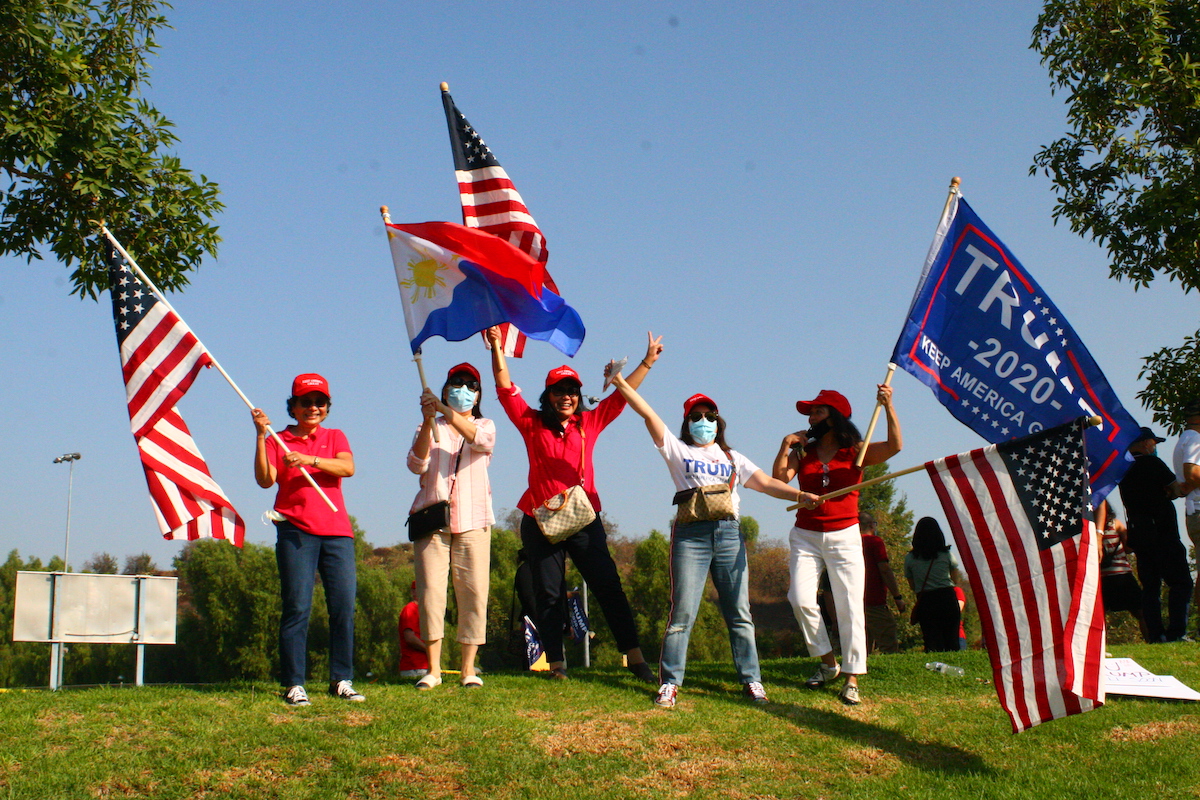
There are now about 4 million Filipino-Americans; half of them, 2 million, are voters. (To put this in context, the US population now stands at 336 million, of whom 170 million are voters.) Historically, Filipino-American voters have leaned Democrat, with a majority of them voting for Hillary Clinton and Joe Biden in 2016 and 2020. But a very vocal (though perhaps somewhat less visible, as many people tend to reveal their preferences only in the voting booth) “Filipinos for Trump” movement exists, and if trends persist will likely gain more traction this time around.

In 2020, Filipino pro-Trumpers cited “family, religion, and faith” as the main reasons they were backing him, like many American evangelicals, despite all the evidence to the contrary in Trump’s personal behavior and speech. For many, it all came down to one issue—abortion—the right to which has now been successfully rolled back by the Supreme Court’s conservative majority. This time around, the flashpoint will likely be immigration, a global problem abetted by collapsing economies and repressive regimes. Well-settled minorities such as Filipino-Americans derive a strong sense of entitlement from all the personal sacrifices and legal processes they went through to acquire their citizenship, and feel cheated by migrants scrambling across the border. This kind of single-issue vote—a gross simplification and reduction of values into one criterion—favors demagogues like Trump, who work through two-dimensional posterization.

A more interesting—and more sinister—reading of Trump’s popularity came up in a recent guest essay in the New York Times by Matthew Schmitz, arguing in his title that “The Secret to Trump’s Appeal Isn’t Authoritarianism,” but rather that “Mr. Trump enjoys enduring support because he is perceived by many voters—often with good reason—as a pragmatic if unpredictable kind of moderate” and “a flexible-minded businessman who favors negotiation and compromise.” That logic, while fetching, predictably drew quick rebukes. One reader said: “Thanks, Mr. Schmitz, but we’re already well aware of this. Italians liked Mussolini because he ‘made the trains run on time.’ This is exactly our point. This is how dictatorships happen.”

That brought me back to our own long and continuing affair with despotism, and how sharply simplified populist sloganeering can cut through and cut down on complex reasoning—with devastating consequences for democracy, here and across the Pacific. 

(Photo from colorlines.com)