
Qwertyman No. 224: On “disdain” and decorum

Qwertyman for Monday, November 16, 2026

FOR OVER thirty years now, I’ve been teaching a course in UP—Creative Writing 198, Special Topics: Professional Writing—which I myself designed to give undergraduates a foretaste of what it’s like to write for a living. They may know enough Shakespeare, or Villa, or Woolf, and some might even be writing prodigious fiction or poetry. But many don’t have the foggiest idea of writing neither for school nor for literary fame, but for a client or an employer like an ad agency promoting a bar of soap, a newspaper with daily deadlines, or an NGO needing a script on vasectomy (yes, I did that once). My first-day lecture begins with this dictum: “There’s writing that you do for yourself, and writing that you do for others. Don’t ever get the two mixed up.”

While I’ve been retired for seven years now, I’ve exercised my privilege as professor emeritus to continue teaching a class a semester. And while I’ve focused on teaching graduate courses, I’ve occasionally made an exception for CW 198, so I can keep in touch with our young students and hopefully give them the benefit of my half a century of experience of writing to put food on the table and gas in the tank. I did that again this semester, and with barely a month left for classes, we moved last Thursday to what will likely be our last major project: the speech.

In this exercise, I want my students to assume another person’s voice, know him or her inside out well enough to anticipate his or her thinking on a given topic, and to produce a draft speech that will project his or her ideas clearly, positively, and sympathetically—all this, regardless of what you yourself may feel about your client and that person’s principles (or lack thereof). In other words, in a professional setting, you could find yourself working for someone dubious or even spiteful, but short of resigning (an option I’ve taken more than once), your professional obligation remains to serve your client or principal to the best of your ability, like a good lawyer might.

So our speech assignment runs this way: I write down our current senators’ names on 23 slips of paper, and have my 12 students pick one out of a hat, and then I write down 12 themes or topics—education, national security, arts and culture, the environment, the economy, etc.—and have them choose one as well. If you pick Robin Padilla to speak on science and technology, tough luck, but it’s not entirely inconceivable—heck, the guy was on top of constitutional reforms, right?—and you’d still have to give it your best shot. Whoever they get to write for, I tell my students to empathize, to pick their words carefully, and not to condescend. The client might decide at the last minute to toss your draft aside and to extemporize, but you’ve done your job.

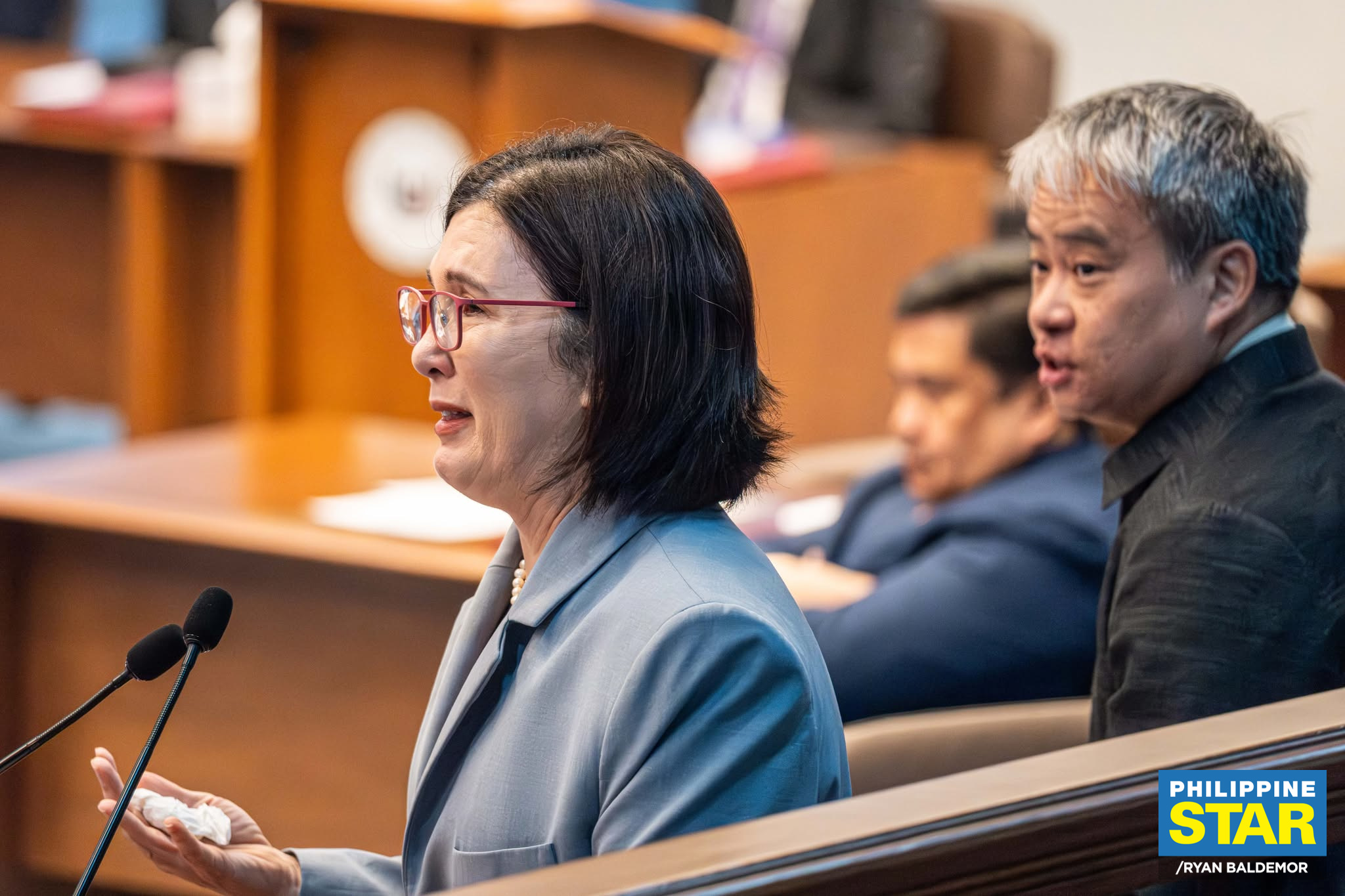
This was on my mind when I heard Sen. Pia Cayetano’s pained lament at the Senate impeachment hearing last week, accusing the prosecution of indifference to the idea of supporting young athletes, because it had questioned Atty. Mans Carpio’s purchase of over P250,000 worth of Nike shoes for Filipino players competing in Kuala Lumpur. These were her exact words:

“Prosecution, I’m warning you. I will not hide my disdain. I will not. I cannot, I cannot. I don’t even know where to begin…. Is it the prosecution’s intention to make a parent relinquish their parental duty in terms of rearing their child in the manner they feel is the best to promote character, leadership, teamwork, just because one of the parents becomes a public official?”

What caught my ear was the word “disdain”—an emotionally laden word, one not used carelessly or casually, and I’m sure the good senadora didn’t mean for it to be taken lightly. Although I wasn’t certain what exactly the word was aimed at—disdain for the prosecutors, disdain for their alleged intention?—it piqued my attention enough for the English professor in me to look up the word’s provenance, because it seemed to me to be, shall we say, out of place?

With a little help from AI, I found this: “Disdain is the feeling that someone or something is beneath your notice. It differs from plain dislike in that it carries a claim of superiority, and Merriam-Webster glosses it as an arrogant or supercilious aversion to what is regarded as unworthy. The word is built on worthiness. It came into Middle English from Old French desdeign, based on Latin dedignari, from de- (reversal) plus dignari, ‘consider worthy’ (from dignus). That makes it the mirror image of deign: to deign is to consider worthy, and to disdain is to consider unworthy.”

The chase led me back to Chapter 2 of El Filibusterismo, where on the steamship Tabo, Isagani says that Doña Victorina “gazed at me with (a) disdain” when she learned he was a lower-deck passenger.

Now, Sen. Pia is, of course, no Doña Victorina, shall we agree? But her outrage, presumably on behalf of all unshod student athletes and the parents and generous sponsors seeking to give them proper shoes, does imply a certain moral superiority. How dare the prosecution question such a well-intentioned expense, as if charity were immoral and in this case possibly even criminal?

Never mind that the outburst was, in the context of the proceedings, entirely tangential if not irrelevant. I should tell my CW 198 students that “Sometimes, your client will deal with an issue by not dealing with it—by changing the subject, indeed by making oneself the subject.” But maybe I should reserve that for the advanced, graduate-school version of the course, on evasive argumentation.

I had to rewatch the video to make sure Sen. Pia wasn’t reading off some notes; she was not. Her remarks were unscripted, apparently heartfelt—and therefore even worse, because this was instinct at work, and her “disdain” reveals how detached she feels from the substance of the trial, picking up only on the parts that sound like prompts for another stage entrance, another aria.

I offer my students lifetime technical support, so if some of them ever make it to the Senate staff and get to write speeches for their bosses (some have), I might be able to give them some advice on how to make their clients sound more likeable and or at least less annoying. Sometimes you do that just by shutting up when you have nothing pertinent and sensible to say—to use another big word, by observing decorum. Otherwise, disdain goes both ways.

Qwertyman No. 201: Insenaty

Qwertyman for Monday, June 8, 2026

YES, YOU read that right—it’s not a misspelling, just a new word I coined to describe the recent goings-on in the Philippine Senate, with the 13-person majority refusing to show up for work for the second straight day as of this writing. Anyone watching this charade from a foreign perspective—someone without any knowledge of or interest in Philippine politics, like the proverbial Martian—would scratch his/her/its head at this latest turn of events that began with Alan Peter Cayetano and his gang hijacking the Senate leadership on May 11 with the obvious intention of thwarting the impeachment of VP Sara Duterte and saving their own hides. (Update: Sen. Sherwin Gatchalian just got elected Senate President pro tempore on the third day of the majority “boycott,” after Sen. Chiz Escudero showed up and enabled a quorum to resume business. It’s entirely possible that by the time this piece comes out, the “majority” and “minority” I refer to here will have been reversed.)

I had been hoping to move on to another, less inflammatory topic, as much for my relief as yours, but Philippine politics is the gift (at least to opinion writers) that keeps on giving. It’s a sign of the times that my wife Beng—normally a quiet and placid spirit in whom the finest virtues of Buddhist kindness and Christian charity converge—has been spouting forth colorful expletives this past week, even marching to the Senate floor to hold up placards with the likes of Dean Winnie Monsod to demand service with integrity from our senators. That was the first day the majority decided (without telling anyone else) to do a no-show, leaving Beng even more infuriated at the thought of these people being paid P300,000 a month (or P10,000 for that day) on top of multiple perks to do—well, nothing, while impoverished seniors die of exhaustion at the ayuda line.

Indeed not a day goes by without some new cause for aggravation, some insistent reminder of how warped our values have become that many Filipinos can no longer tell right from wrong, and good from bad. Glaring examples are DDS memes equating Sen. Jinggoy Estrada—booked for plunder involving P573 million in kickbacks—with the late Sen. Ninoy Aquino, jailed under martial law for subversion. “We Are All Jinggoy!” proclaims one meme, echoing what we said for Ninoy, “Hindi Ka Nag-Iisa.” 

For his part, the Senate majority’s resident antidote to wisdom, Robin Padilla, opines that the cases of Leila de Lima and Bato de la Rosa were different, because the former was linked to drugs, and the latter to their extermination, conveniently forgetting the charges laid out against Bato by the International Criminal Court. In the latest episode of “The World According to DDS,” Senate President and Duterte running mate Alan Peter Cayetano characterizes his patron’s murderous tokhang “war on drugs” as “pro-life.” Duterte stalwart Rodante Marcoleta promises a blockbuster of a hearing by their bogus Blue Ribbon Committee featuring game-changing revelations by 18 “ex-Marines” who then make claims so preposterous that they should each be meted out 5,000 push-ups for poor storytelling. (They can always take it out on their sponsor, who put them up to it.)

That’s how topsy-turvy things have become in our society, of which our senators and their behavior are but representative. They come in tailored suits and ties, in barongs and native dress, in heavy make-up and botox for the cameras, but at their best and sadly also their worst they are not much different from the rest of us who put them there in the first place.

We’re not asking for or even dreaming about a happily unified Senate here, which is both impossible and frankly a danger to democracy. We just want a working and serving one, governed by reason, civility, and the law. If integrity, intelligence, and performance are too much to ask for, can they at least keep quiet, take their paychecks and emoluments, and pose for the media, but otherwise let their colleagues do their job?

Over the next couple of weeks until the impeachment trial begins on July 6, we expect the Senate to come to its senses and to set itself aright, very likely with a new majority formally elected by at least 13 members, to put it beyond all dispute. That will be a relief for a people who may initially have found some entertainment value in the Senate show, but are losing their patience with a dysfunctional institution their taxes are fattening, without getting much in return.

And let’s not delude ourselves into thinking that our problems will vanish with the installation of a new and more reasonable Senate majority, and not even with the impeachment of VP Sara. That’s the big mistake we made at EDSA; in our euphoria, we forgot that changes in leadership are far easier to pull off and to manage than changes in society and in the people themselves. We’ll be happy if and when the level-headed Sen. Sotto wrests back the Senate presidency or the apparent compromise candidate, Sen. Gatchalian, so the old Blue Ribbon Committee can pick up where it left off and resume its hearings on corruption in government, which has been bleeding us dry and which, come to think of it, has been at the root of all this drama.

I earlier said that in its division and divisiveness, the Senate is really us. Those rifts are real, and maybe they can’t be helped. But for what we’re paying them, we can demand of our senators that they not only represent us but be better than us, and show a better and working model of a functioning if divided democracy. Bring sanity back to the Senate, and maybe then we’ll survive.

Qwertyman No. 199: Making It about Themselves

Qwertyman for Monday, May 25, 2026

NEVER IN our political history has a sitting Senate been held in such disrepute, been so reviled in public opinion than over the past two weeks. You’d think that the outrage over the leadership coup couldn’t be topped, but then came the obviously staged shooting and a fugitive’s escape—and then a lady senator’s histrionics over that fake attack.

What sticks in the craw—at least in mine—isn’t even the leadership turnover, or the assisted escape. We saw those coming, and even if we didn’t, they make cynical sense; of course they would do it. What’s extremely galling was having to listen to Pia Cayetano’s pained depiction of herself as a victim in the whole affair, terror-stricken and forlorn. 

Even accepting that her fear may have been genuine, she sounded shrill and shallow, peevish and petulant, completely unmindful of the deeper and more harrowing terrors ordinary Filipinos—people without staff, security, bulletproof SUVs, and generous salaries—have suffered, with far more courage and even grace. 

Terror and fear are givens in this country. Like many others of my age, I was shot at during the First Quarter Storm—at the Diliman Commune and at any number of rallies disrupted by the police and military. During martial law, I was beaten up as a political prisoner. Later, our home was raided early one morning by military agents hunting down “subversives” they thought were there, and our four-year-old daughter was interrogated by them. They were traumatic at the time, but they were nothing compared to the unspeakable torture my friends and comrades went through, the horrible deaths others suffered, the grief and loss sustained by those left behind. 

Multiply that by many thousands, not just under Marcos Sr. but under Rodrigo Duterte, and you’ll know what true terror feels like. Heard shots two doors down the hallway? Scary, yes, but Sen. Pia’s histrionics should have been directed at her mates who failed to warn her of the plan to spring Bato, which evidently at least some of them knew.

Pia Cayetano’s outburst, Robin Padilla’s posturing, Bato de la Rosa’s pop-up show, even Allan Cayetano’s propensity to fall on his knees and raise his arms to heaven—all gestures they had to know would only raise the political temperature—display a skill mastered by politicians, usually those with skeletons to hide: making it all about themselves, employing theatrics and embracing notoriety, effectively deflecting attention from the larger issues at hand.

What we’ve seen is but a preview of the spectacle to come. We can expect even more drama at the impeachment trial itself, on and off the Senate floor. More tears, more swearing, more gnashing of teeth, maybe even a scuffle or two. The public expects it, the theater of the Senate will provide it. 

It will become obvious at some point that it will no longer be Sara Duterte on trial, but the Senate itself—its credibility, its viability, and ultimately its utility and necessity as a political institution.

It should probably be clear by now that if we just go by the present numbers, VP Sara Duterte’s impeachment is dead in the Senate, was dead before it even started. More optimistic observers have opined that a conviction remains possible if some senators are persuaded—whether by the evidence or the pressure of public opinion—to change their minds, or even somehow vanish. 

I myself think that while a few conversions can be secured, the nine votes needed to keep Sara free and happy are locked in place. The shamelessness with which the current majority pulled off their coup on the eve of the impeachment court’s convening shows that these people are prepared to do anything—to run the country to the ground if necessary—to save their skins and even prosper again under a Sara administration. 

We Pinoys have hurtful words for this—walanghiya, kapal-mukha—and they’ve made the rounds of social media many times over, but these people are beyond hurting, impervious to all injury but to their power and their pockets.

These are the robed jurors who will sit through VP Sara’s trial and listen stoically to the litany of evidence detailing her crimes, none of which will matter to them. They will brazen it out to the end, confident that a resurgent Sara will rescue their political fortunes, and that a forgetful people will restore their reputations. They have no respect for the people’s intelligence, expecting us to swallow the preposterousness of these claims:

1. That the timing of the Senate leadership coup had nothing to do with the impeachment trial of VP Sara Duterte;

2. That Allan Peter Cayetano and Co. had no foreknowledge of Bato de la Rosa’s appearance at that key Senate session;

3. That the shooting incident had nothing to do with the escape of de la Rosa from the Senate with the assistance of Robin Padilla;

4. That no one in the Senate majority knew or knows of fugitive de la Rosa’s whereabouts.

And that’s why I can safely predict that no matter what they throw at her at the approaching trial, VP Sara’s hardcore Group of Nine—which will likely remain intact regardless of whether Sen. Sotto et al regain leadership of the Senate, as some expect to happen before too long—will guarantee her acquittal. If they think we can believe these fictions—or worse, don’t give a damn about what we think—then they’ll give Sara (and thereby themselves) a pass. That’s impunity on another level. 

Sen. Pia’s flare-up was reportedly provoked by Sen. Risa Hontiveros’ remark that it seemed that “nothing happened”—“walang nangyari”—in the wake of the Senate shooting. “But something did!” Pia insisted. 

I hope we can say the same at the end of the impeachment trial, but I’m not holding my breath. Against all my hopes, I’m afraid that walang mangyayari, and there’ll be at least nine senators who won’t be the least bit bothered.

Qwertyman No. 167: Stranger Than Fiction

Qwertyman for Monday, October 13, 2025

IF SEN. Alan Peter Cayetano and his cohorts in the Senate minority wanted to rile the people even more, they couldn’t have done it better than by having Cayetano challenge Sen. Tito Sotto for the Senate presidency, at the same time that he was floating his supposedly heroic idea of having all elective officials resign because the public was fed up with them.

He had to know that that was exactly the kind of antic that made people throw up at the mention of certain names—a dubious pantheon of the corrupt, the bought, and the compromised. But he did it anyway, employing his imagination to yank public attention away from the burning issue of the hour—the massive flood control scam and its ties to many lawmakers—in the direction of Mars, and the possibility of honest (never mind intelligent) politicians inhabiting that planet.

Why he did that is anyone’s guess, but mine would be that anything to stop the momentum building up at the Blue Ribbon Committee under Sen. Ping Lacson was good for the minority, many of whom were increasingly being threatened by the exposure. If Cayetano had resigned first (and forthwith!) to provide proof positive of his noble intentions, the distraction would have been worth our time, but of course that was never part of the plan. 

The plot to unseat Sotto—brazen and shameless in its purpose—was more credible and worrisome. It fizzled out but remains potent, simmering just beneath the surface. Lacson’s resignation as BRC chair was probably a concession to forestall Sotto’s, but the situation in the Senate is so volatile that it can’t take much for the leadership to switch while we’re brushing our teeth. 

All we seem to be waiting for is that point of utter desperation when the beleaguered, fighting for their political lives and possibly even their personal freedom, ignore all considerations of decency and public sensitivity, weasel their way back into the majority, and deliver the Senate to its most famous watcher from the gallery: Vice President Sara Duterte, whose fate still hangs in the balance of an impeachment vote that has yet to happen.

That vote and its implications, let’s all remember, was what triggered all of this. Premised on rampant corruption within her office, her impeachment, had it passed the Senate, would have barred her from running for the presidency in 2028 (and, for PBBM, from the resurgent Dutertes wreaking retribution on their erstwhile allies). But this isn’t really just about Sara—it’s about all those other trapos who’ve cast their lot with her, whose fortunes depend on her absolution in the Senate and ascension to the Palace. 

Former Senate President Chiz Escudero, who dragged his and the Senate’s feet in that process, has now dropped all pretensions to impartiality, calling the impeachment “unconstitutional” in a speech that would only have pleased the Vice President, a title he himself might be auditioning for. He did his part well, with what many saw to be the ill-considered assistance of the Supreme Court, to freeze the impeachment complaint. 

And there that matter sat, until PBBM—whether unwittingly or presciently—(and here we’ll go fast and loose with the idioms) shook the tree, opened a can of worms, threw mud at the wall, and unleashed the kraken by exposing the trillion-peso infrastructure scandal now rocking the country. He might have done this to suggest a link between the alleged corruption in the VP’s office and even larger acts of plunder emanating from her father’s time in Malacañang, a deft political move. But reality overtook his imagination, and now the issue’s grown far beyond that into his own administration, his own responsibilities, his own accountability. 

That said, and however we may have felt about him, PBBM has done us all a service by drawing the curtain on the systemic rot in our society and governance, for which he, Sara, and their cohorts have all been culpable, directly or administratively. By doing so he rendered himself vulnerable as well, and the VP’s forces are now zeroing in on that vulnerability to deflect attention from their own predicament. 

Thus the barrage of “Marcos resign!” calls (as opposed to the Left’s “Marcos and Duterte resign!”), which has become shorthand for BBM out, Sara in. (It was on that key point that the rumored September 21 coup plot reportedly first stumbled, with the plotters balking at the alternative.) It also explains the slew of professionally produced reels on Facebook and other social media calling for the military to depose the President—ironically, something so openly seditious that Digong Duterte’s NTF-ELCAC would have instantly pounced on them, but which BBM and his crew seem to be shrugging off, at least for now. 

What tempts our imagination in this fraught situation—where public trust in our politicians and even in the courts is hitting critical lows, and where no clear and short path to change seems visible until 2028—is the possibility of military intervention, whether by martial law or on its own volition. I’ve been assured by friends who know better that this military of ours today is much more professional in its mindset than its predecessors, and that it will abide by the Constitution. I sincerely hope they’re right, because if there’s anything that all the parties in this mess can probably agree on, it’s that boots in the streets won’t bring us any closer to a functioning democracy. 

I’m reminded in this instance of one of my favorite literary quotations, from Mark Twain who said (in so many words) that “Of course fact is stranger than fiction. Fiction, after all, has to make sense.” If you had told me three years ago that we are now relying on a dictator’s son to save us from an even worse alternative, and in the process—if almost by accident—expose corruption so foul that we are back on EDSA demanding not regime change but the rule of law, I would have called you a lousy fictionist with a runaway imagination. Yet here we are.