Qwertyman No. 97: The City That Works

Qwertyman for Monday, June 10, 2024
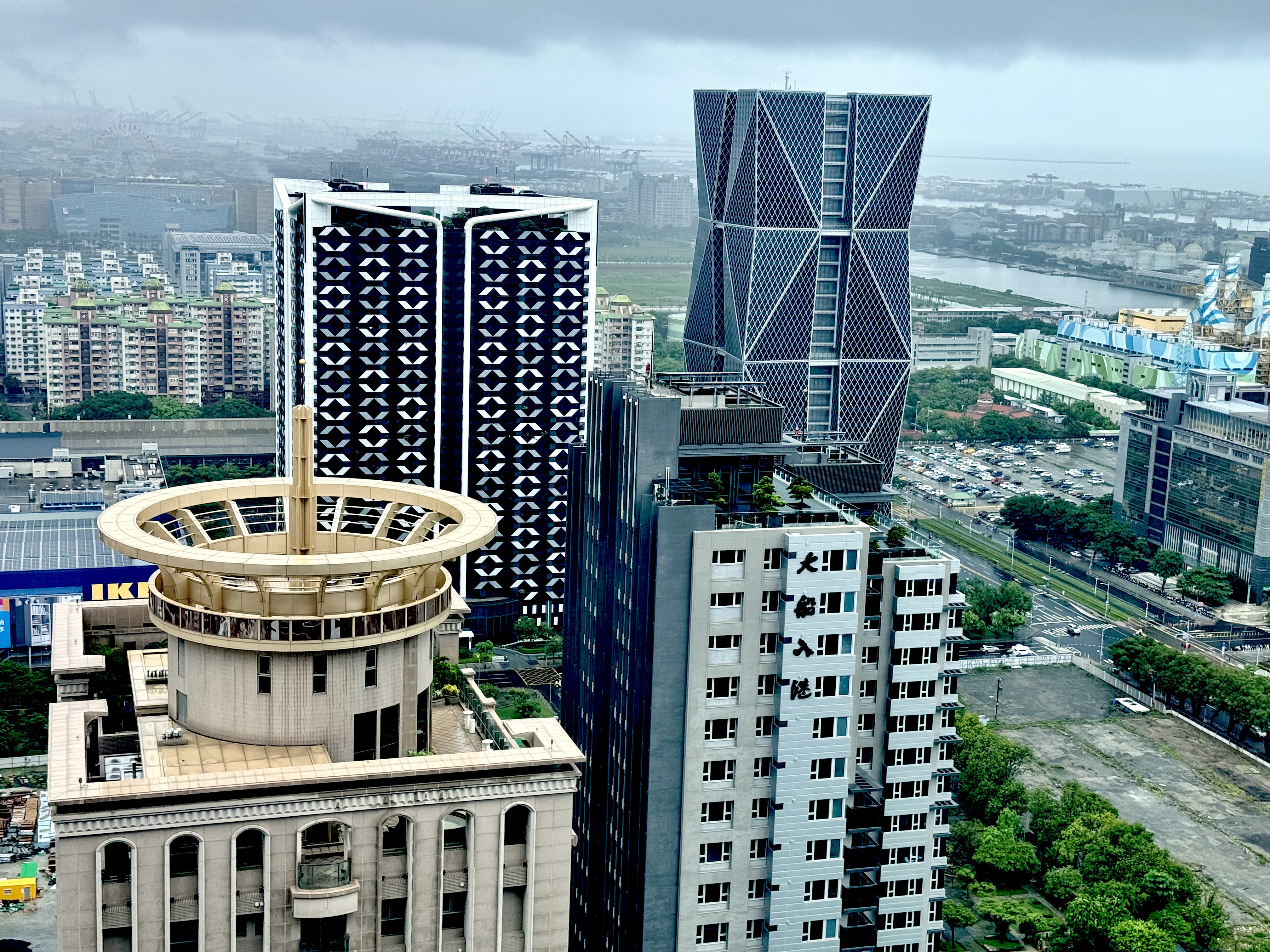
I WAS back last week in the city of Kaohsiung in Taiwan with a group of writers from the University of the Philippines Institute of Creative Writing, at the invitation of Dr. Eing Ming Wu of the Edu-Connect Southeast Asia Association, an education NGO seeking to establish stronger ties between Taiwanese universities and their counterparts south of Taiwan. We were there to meet with our literary and academic counterparts, but also to acquaint ourselves with contemporary Taiwanese society and culture. What we found along the way was a city and a government that works—a model we have much to learn from.

It was my second time in Kaohsiung and my sixth in Taiwan since my first visit in 2010, but those earlier sorties were either for tourism or for attending meetings and conferences, so we never really got to immerse ourselves in the place and its people. This time, Dr. Wu made sure that we went beyond casual handshakes and pleasantries with city and university officials to engage our hosts in in-depth conversations.

The first thing that usually strikes visitors about Taiwan is how modern it looks, especially when flying in through Taipei—the High Speed Rail (HSR), the wide roads, the skyscrapers (think Taipei 101, once the world’s tallest), the late-model cars. For quick comparisons, consider this: Taiwan’s population, at 24 million, is about a fifth of ours; in terms of land area, we are almost ten times larger; its nominal per capita GDP, however, is almost ten times larger than ours at US$35,000. Not surprisingly, Taiwan now ranks around 20th in the world in terms of its economic power.
That power came out of decades of dramatic transformation from an agricultural to a highly industrialized economy, starting with massive land reform and the adoption of policies that spurred export-driven growth. Industrialization itself went through key phases from the production of small, labor-intensive goods to heavy industry, electronics, software, and now AR/VR and AI tools and applications.

At a briefing at the Linhai Industrial Park by Dr. Paul Chung, a US-trained engineer who was one of the architects of this economic miracle, we learned how Taiwan built up the right environment for economic growth through such strategies as the creation of industrial parks (there are now 67 of them covering more than 32,000 hectares, with 13,000 companies employing 730,000 people and generating annual revenues of more than US$260 billion—almost eight times what all our OFWs contribute to the economy). The Taiwanese government has also implemented a one-stop-shop approach to investments, bringing together the approvals of many ministries and local governments under one roof.

Consistently, in modern times, the private sector has led the way forward, with the government acting as facilitator. This was much in evidence in Kaohsiung, Taiwan’s southern industrial hub that was, until relatively recently, a virtual cesspool, the prime exemplar of industrialization gone amuck. A strategic seaport, Kaohsiung grew out of the need to export Taiwanese sugar during the Japanese occupation (1895-1945); the sugar industry gave rise to railways that went far up north to Keelung and became the backbone of the country’s transport system. After the war, the Kuomintang who displaced the Japanese did little to improve things until a visionary mayor undertook reforms that cleaned up the place. Industry also achieved important synergies by adopting policies toward carbon neutrality and reducing waste—for example, one company’s blast furnace slag is being used to pave roads, and harmful carbon monoxide emissions have been rerouted as inputs to chemical companies.

Kaohsiung today is a city of 2.8 million people, a showcase of how runaway industrialization and urban blight can be reversed through good governance and political will. “People need responsible, responsive, and accountable government,” says Dr. Wu, a public-administration expert who worked for 15 years with five Kaohsiung mayors and who now serves as a visiting professor at UP’s National College of Public Administration and Governance (NCPAG). 

A longtime visitor to the Philippines, Dr. Wu has made it his personal mission to promote Philippine-Taiwanese people-to-people relations—a concept he calls “taiwanihan”—in the conviction that the two countries have much to learn from each other and form a natural geographical, economic, and cultural partnership. “We are each other’s closest neighbor,” Wu says. “Taipei is 96 minutes away by train from Kaohsiung, but Kaohsiung is only 90 minutes away by air from the Philippines.” 

Wu and his colleagues at NCPAG have been exploring the possibilities of developing a corridor of cooperation between Southern Taiwan and Northern Philippines, given their proximity. “We have the technology, you have the resources like biomass,” he adds, pointing out as well that taiwanihan doesn’t just mean a one-way relationship, but that the Philippines can also assist Taiwan with its growing needs, such as engineering talent and manpower. Some 8,000 Filipinos now work in Taiwanese factories, but Taiwan’s demand for highly skilled workers will only get higher as it moves into the next phase of its development, which will be heavily dependent on AI.

Artificial intelligence already takes care of many of Kaohsiung’s more mundane needs such as remote traffic monitoring and even the paid parking of vehicles, which has been outsourced by the government to a private entity. “We buy services, not things,” explains Dr. Wu. “The government provides the land for the parking, the private sector supplies the technology and the hardware. This is our version of public-private partnership: the government listens to the private sector, which can use the city as its lab.” 

E-governance and decentralization led us to an unusual sight: we visited City Hall on a weekday and saw very few people in the lobby, unlike its Philippine counterparts. That doesn’t mean that government is distant from the citizens, as a “1999” complaints center receives and fields calls online or in person, employing the disabled to man its booths. 

And even as AI has taken the forefront, it was abundantly clear that human intelligence and human priorities remained important. Good community governance, for one thing, was key to clean and peaceful neighborhoods (their village officials are appointed rather than elected, eliminating vote-buying). Their libraries alone show how and why the Taiwanese are succeeding: they not only have hundreds of thousands of books available to their citizens, but they have innovations such as the “Adopt-a-Book” program by which you borrow a book just based on a previous reader’s recommendation, and books in both Braille and regular text, so that sighted readers can read along with the blind and enjoy a story together. A city that goes that far to meet its people’s needs can’t fail.

Penman No. 278: The Wealth Within Us (2)

Lantern

Penman for Monday, November 20, 2017


THE ARTS are the tangible and creative expressions of our culture, and this is where our strength as Filipinos lie—a strength, however, that we should first recognize, recover, and sustain.

We Filipinos have distinct natural cultural advantages. We are a naturally and irrepressibly expressive people, with strong artistic and creative talents and impulses. We think and speak freely, no matter the cost or the consequences. We reject and resist tyranny; we have no taboos, no sacred cows. We sing of love and death in the same breath, we laugh and weep without shame, we create and light up lanterns even in the most difficult and darkest of Christmases.

That freedom and that courage is our strongest cultural resource, the wellspring of innovation and productivity. This is why we have such great artists, writers, musicians, singers, dancers, filmmakers, designers, and artisans.

This brings me to the economic argument, which is that culture is not just an expenditure, but a valuable resource that, properly managed and supported, can reap substantial material benefits for our people, in the form of what have been called “creative industries.”

In 2009, when the Joint Foreign Chambers of the Philippines initiated a focus group discussion on creative industries in the Philippines, they defined the sector as embracing “a wide array of subsectors including advertising, animation, architecture, broadcast arts, crafts, culinary arts, cultural/heritage activities, design, film, literature, music, new media, performing arts, publishing, and visual arts.”

I won’t go into great detail here, but there are many studies—a recent report commissioned by the British Council, among others—that show how vital these creative industries are. According to that report, and citing UNCTAD figures, “Depending on how they are defined, the Creative Industries are estimated to represent anywhere from 3% to 12% of global GDP.”

I noted in a previous forum that in 2010—the last year for which I have solid figures—copyright-based industries or CBIs contributed more than P660 billion to the economy, according to the Intellectual Property Organization of the Philippines. In GDP terms, the economic contribution of CBIs climbed from less than 5 percent in 2006 to more than 7 percent in 2010. Core CBIs comprising companies in the arts, media, and advertising largely accounted for this surge. A corresponding rise in employment occurred in the sector, from 11 percent of the total number of jobs in 2006 to over 14 percent four years later.

In 2014, the DTI and BOI held a series of Trade and Industry Development Updates to present six industry roadmaps, one of which concerned creative industries. In that particular forum, the DTI’s presenter noted that Singapore and Thailand led ASEAN in creative exports, and while our creative industries have grown, we were a net importer of creative goods as of 2008, with books and movies apparently accounting for the bulk.

This reminds me that in that conference of Asian writers and translators that I attended a couple of weeks ago in Bali, it was reported that Asia is now the world’s biggest producer of books, movies, and games. But that’s an Asia dominated by China, Japan, Korea, and India. The question is, how can we Filipinos and Southeast Asians partake of that boom? First, of course, by strengthening those industries in our countries.

There seems to be a greater awareness on the Philippine government’s part of the economic utility of our artistic talent. In 2012, for example, RA 10557 was passed to promote a “national design policy” highlighting “the use of design as a strategic tool for economic competitiveness and social innovation.”

It’s heartening to note that Chapter 7 of the Philippine Development Plan for 2017-2022 is devoted to “Promoting Philippine Culture and Values,” in which it is acknowledged that “The current governance framework for cultural development has been inadequate in addressing the concerns of the sector.” The plan contains salient proposals for using and promoting cultural values to promote the common good and identifies key legislative measures to achieve full cultural development, including the long-overdue establishment of a full-scale Department of Culture that will not be a mere adjunct of education, sports, or tourism.

But we remain a long way from translating policy into action. As with most things cultural, the first transformation has to take place in the mind—more specifically, in the mindsets of our leaders.

Only now, in preparation for this talk, did I become aware of the ASEAN Socio-Cultural Community and of its noble concerns which include human development, social welfare and protection, social justice, and so on. But only at the very end of its “scorecard” report does it deal with “Building ASEAN Identity” and promoting cultural creativity and industry—talking, for example, about networking among small and medium-sized cultural enterprises of SMCEs around the region.

It’s rather sad in a way to speak of culture as a business, but if that’s what it takes to wake people up to the wealth within them, then by all means, let’s draw on our hearts and imaginations to showcase the best of what we can be, and inspire ourselves in the process toward a stronger sense of nationhood and of regional community.

Penman No. 40: Some Things Fishy in New GenSan

Microtel

Penman for Monday, April 1, 2013

THE FIRST thing I realized when I flew down to GenSan last weekend was how big the plane was—a wide-bodied Airbus A340 that seated eight people across—and how the plane was almost full for our early morning flight. This wasn’t going to be some spit of land under a clump of coconut trees.

Oddly enough, in my nearly 60 years, I’ve been to almost all corners of this country and about two dozen others, but had never visited General Santos City, not even back when it was still called Dadiangas. I simply had no reason to, which explained why I was there this time—to help tell the story of the city and of its entrepreneurial spirit through a biography of one of its business pioneers and of his family. I had told my client that his story had to be the story of the city as well, and that my sheer ignorance of it—beyond a few touristic slogans and clichés I’d heard about the place being the country’s tuna capital and the home of boxing champs both faded and fabled—was a good thing, because I was going to be interested in everything about the city, as I always am especially on a first visit.

So I read as much as I could, online, about GenSan before coming over. I came across the story of how, back in the days of President Quezon, a group of 62 Christian settlers led by Gen. Paulino Santos arrived on a steamship on the shores of Sarangani Bay. They were the spearhead of thousands more who followed them from Luzon and the Visayas, displacing the native B’laan, who called the place Dadiangas, after a tree. Dadiangas was then just part of the municipality of Buayan. In 1954, Buayan was renamed General Santos, which became a city in 1968, and was reclassified into a highly urbanized city in 1988.

“Highly urbanized” might suggest something like Cebu or Davao, with sprawling suburbs, heavy traffic, and crowded malls, but GenSan clearly—and perhaps thankfully—isn’t in that same category yet. As your plane prepares to land at the new international airport in Bgy. Tambler—built with significant and some say suspicious American support, its runway is big enough to take Boeing jumbo jets and even the new Airbus A380—the view at the window is that of rolling hills and even of mountains in the distance. That tall, cone-shaped mountain looming almost 2,300 meters over the plains is an active volcano called Mt. Matutum, South Cotabato’s highest point. (On the flight home at dusk, these mountains would turn velvet, laced by low-hanging clouds.)

GenSan’s city center is about a 20-minute drive from the airport, and the businesses along the tree-lined highway still suggest the old frontier: rough-hewn lumber, hardware, heavy machinery. A familiar face pops out of a billboard beside a shop selling bottled water—but this isn’t just any water, it’s “PacMan H2O, Ang Pambansang Tubig.” This is Manny Pacquiao country—or would have been, more convincingly, if he hadn’t lost in that congressional bid some years ago to Darlene Custodio, now GenSan’s incumbent mayor. Congressman Pacquiao of course now represents neighboring Sarangani just across the river, but he remains very much a presence in GenSan, maintaining two big houses there (“Mansion 1” and “Mansion 2,” as the locals called them), plus a gym.

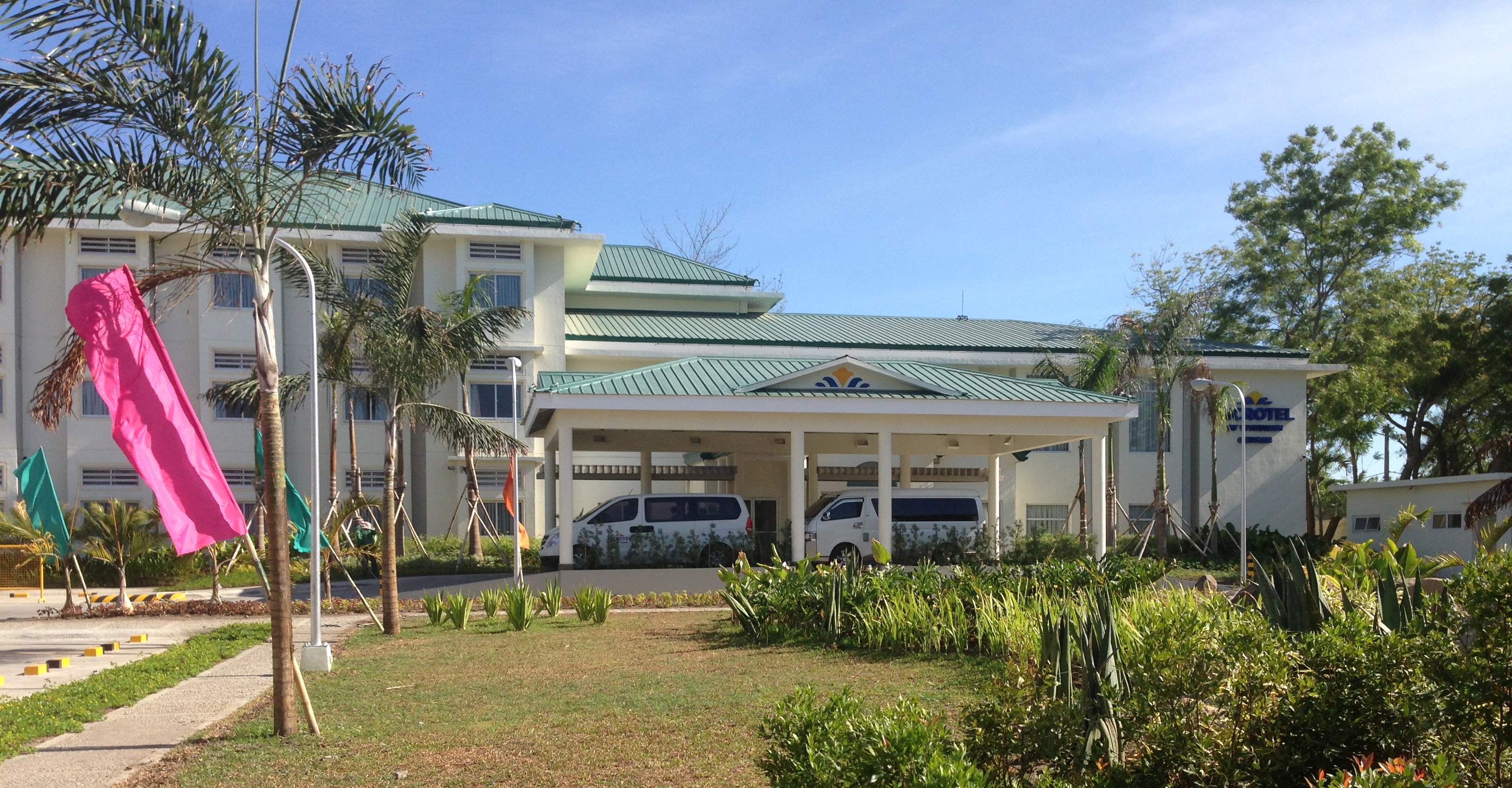
I was billeted at the Floirendo-owned Microtel, GenSan’s newest landmark along the national highway, not too far from the East Asia Royale Hotel, the city’s grandest. The Microtel was neat and comfortable, as a business hotel should be, and was flanked by an equally new strip of restaurants, culminating in a big McDonald’s fronting the highway (across, inevitably, a Jollibee). This sense of newness in this city of more than 500,000 people and almost 500 square kilometers was pervasive—down Santiago Boulevard off the main highway was GenSan’s own SM (what’s a Pinoy city without an SM?), which opened just last August and was already drawing crowds from the older Robinson’s, Gaisano, and the homegrown KCC mall. Not surprisingly, the vehicle of choice hereabouts was the SUV or its pickup variant, especially in white, with rows of them lining the parking lots.

Gen. Santos

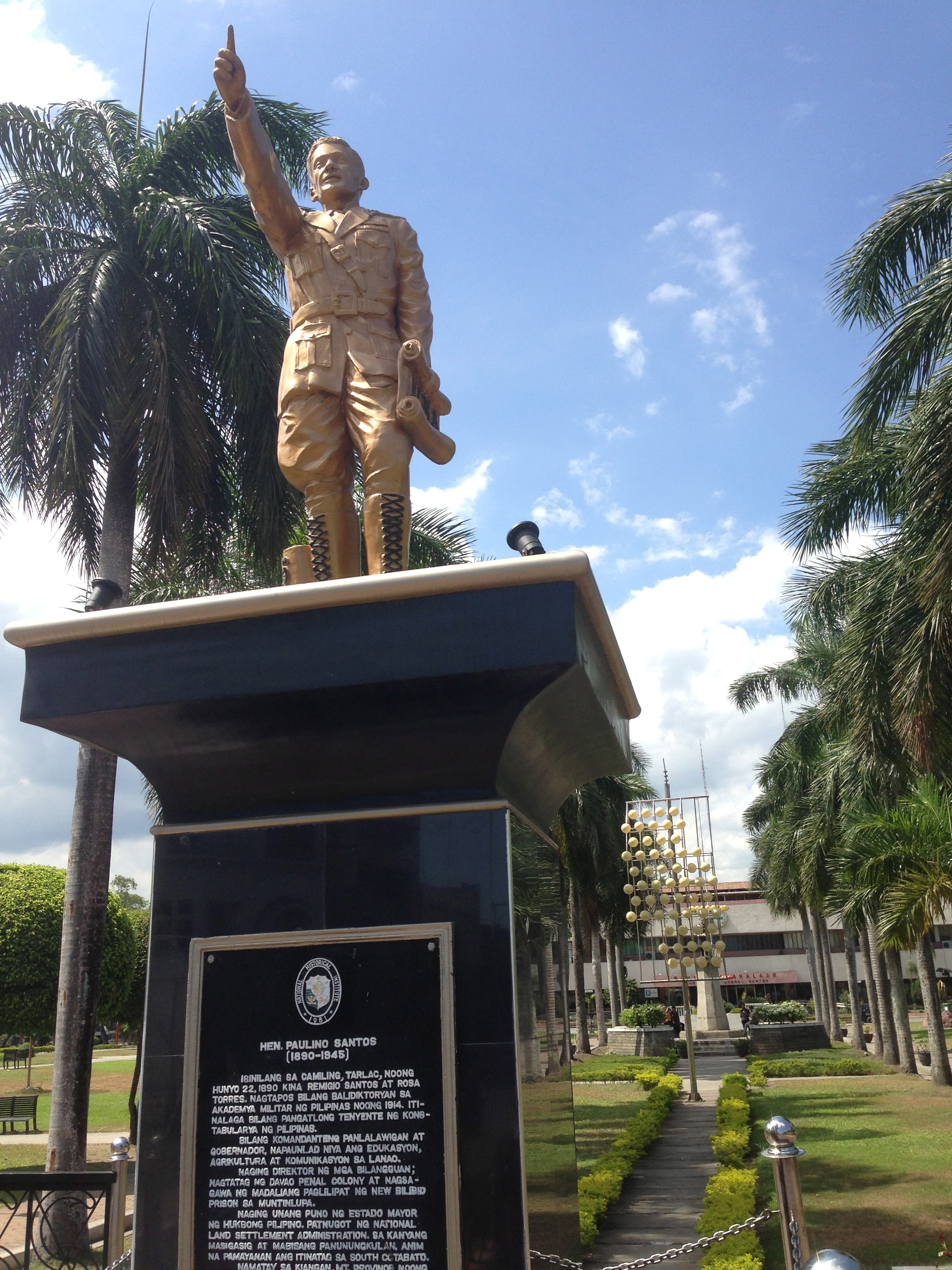
So what happened to the old GenSan? The former Buayan airport had been converted to an Air Force station, with goats and cows grazing beside the runway. I asked my guide to bring me to the older and poorer part of town, near the wharf and up Pioneer Avenue, towards City Hall. Now and then a house from the 1940s turned up, its paint long scoured and blistered by time and by the swirling dust that Gensan oldtimers remember. But even later structures looked forlorn or boarded up. “Everyone’s moved to SM,” said my guide. We got off a the park in front of City Hall to visit the statue of Gen. Santos, who headed Quezon’s land settlement program, and also to look for a living specimen of the dadiangas tree; surprisingly, we couldn’t find any, even when we went to a nearby plant nursery. “It has thorns and has yellow blossoms” was all the older people could tell us. There was no museum we could visit to look up the tree or a history of GenSan for that matter (and I’d be grateful for any leads from readers to a good history of Dadiangas or GenSan).

Most of my three-day visit went to work—interviews with my subjects and tours of plants and facilities—but it was very pleasurably punctuated by sorties to the local restaurants, and as a seafood addict, I found that I’d gone to heaven. I had to arm-wrestle the gargantuan crabs at Gusteau in the newish Sun City Suites complex (another popular local restaurant was Grab a Crab) and, of course, we were served schools of luscious tuna in all manner of preparation.

The sea being the source (excluding PacMan) of much of GenSan’s present wealth, I asked to see the city’s fish port in operation, and even as we arrived too late to observe the day’s tuna catch being unloaded for auction at 5:30 in the morning, the port was still abuzz with activity an hour later, with batches of tuna being graded, weighed and sorted out for resale to various end-buyers. I got a fascinating crash course in what we archipelagic Pinoys should know by heart but barely do—Tuna 101, or some things fishy in our economy and culture.

IMG_0925

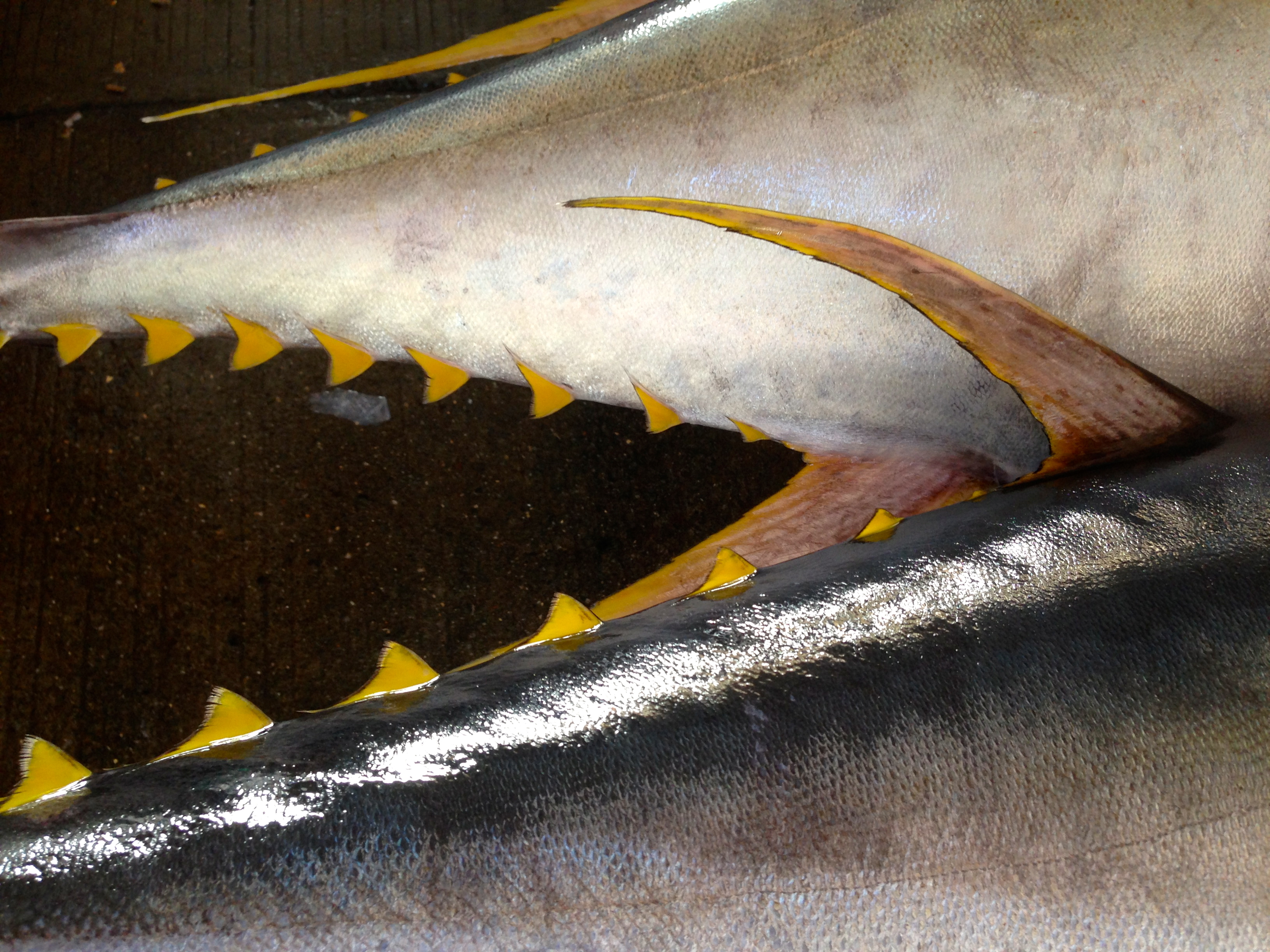
I learned how tuna came in three basic varieties—bluefin (the premium kind that gets sold for record prices in Tokyo’s famous Tsukiji market—a 222-kg fish recently brought in US$1.78 million, or almost $8,000 per kilo); the more common yellowfin, which was what I saw that morning; and skipjack, the much smaller tuna that goes into canning and eventually onto your sliced bread. A Class A yellowfin could fetch P400 per kilo at the fish port, while its Class C brother could go for P180; the fish traders have to know which is which by sight and by an instinct honed through years of experience, although they could—only after buying their fish—take core samples from a natural slit under the dorsal fin to confirm their judgments.

I learned how the wooden boats that brought them in ventured out for weeks as far as the edge of the Indonesian border, the smaller ones returning with about 200 fish in their bellies, the larger with about 500. (The modern and large steel-hulled catchers of my hosts, the RD Corporation, remain at sea—with licenses to fish in Indonesia and Papua New Guinea—for as long as two years, employing helicopters to help track the migratory tuna; the “master fishermen” directing these operations on every vessel could earn as much as P200,000 a month—so get out of that call center, and learn to catch tuna!)

That afternoon, I visited a canning plant—the frustrated engineer in me would rather tour a factory than linger at a boutique—and saw how a skipjack gets thawed, pre-cooked, and stripped to its most useful parts by hand before it gets sterilized and canned for shipment in containers to the US, Europe, and Japan, among others. (The tuna that gets used in a Subway sandwich in New York and comes in a Subway-labeled can might have come from GenSan.)

Such was the energy fueling the new General Santos—but alas, it was more to be found in people than in the power lines, as the city remains plagued by chronic brownouts occurring twice a day in 3.5-hour stretches. Beyond another mall, GenSan needs more juice for its ice plants, its canneries, and its factories—in other words, for its future—and it can’t hurt to have even a small museum with a dadiangas tree in front to let weekend visitors like me know a little more about its past.