Qwertyman No. 145: The Devil on My Shoulder

Qwertyman for Monday, May 12, 2025

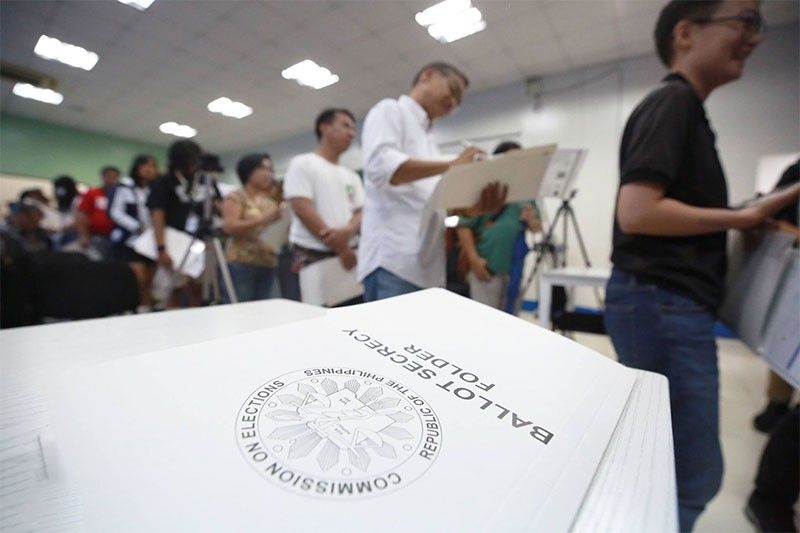
TODAY, ONCE again, we troop to the polling booths in the hope of making our votes matter—votes that, if the cynics are to be believed, might as well be dust in the wind. The surveys have spoken, the winners named. All that remains is for this day to be over, for the formalities to be done with, for the supposedly inevitable to play itself out. And then we’ll watch the new-old Senators of the Republic proclaimed in a ceremony that will showcase the state of our electoral mind. 

As absurd as it may seem, many Pinoys will actually be happy with the outcome—that’s what the surveys are all about, aren’t they? These are the senators we wanted—or most of us, anyway. “Most of them” is probably what you’re thinking, if you’re a regular reader of this column and agree with most of my views.

I can’t think of a more complicated election in recent times, in terms of an answer to the question of “What’s in our best interest as Filipinos, and how do we make that happen?”

The idealist in me has the simplest and probably the morally most unambiguous response: vote for the best candidates, period: the intelligent, the progressive, the principled, the proven, the humane, the hardworking, the uncompromised. Whether they win or lose, it shouldn’t matter—you’ve done your best as a responsible citizen; in a sense, you’ve won. I sorely want to believe this, and to do this today.

But persistently, impishly, like a little devil perched on my shoulder, a contrarian spirit urges me to temper my idealism with some consideration of its practical costs.

Last week in California, a Fil-Am friend asked me to explain the significance of these elections. In the US, midterms usually mean a referendum on the incumbent President’s performance, and next year will most definitely be one for the Orange Pope and his systematic dismantling of American democracy.

For us Filipinos, May 2025 isn’t that clear-cut—although it should have been, if the armies of May 2022 had remained in place, leaving us with a stark choice between the good and the bad.

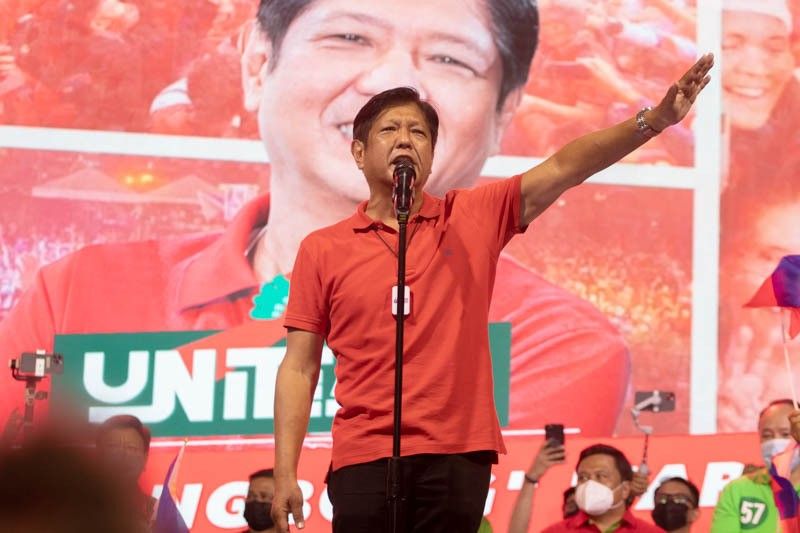
But the ruling “Uniteam” alliance has since collapsed, with each side fielding its own troubled slate of aspirants, all seething with the most primal of motives: survival, revenge, profit, and opportunity.

The opposition seems to be a loose coalition of liberal, Left, and anti-administration forces. Among these, four names have consistently surged to the top in the kind of social media neighborhood I inhabit. I’ll call them my Triple A candidates, the ones I won’t have any second thoughts about, leaving me with eight more spots to fill.

It’s those eight that give me pause—not for any lack of qualified and virtuous prospects, but because there could be dire consequences for not filling up the rest of my ballot, as some have suggested, or voting for names without a prayer of winning, as a matter of principle (or, by this time, by force of habit).

It’s interesting to observe how, unlike in previous elections where voting straight for a party’s slate was the norm, various formulas and menus have emerged on social media—cafeteria or halo-halo style—to reflect this urge for some balance between the ideal and the practical in this three-cornered fight. Even opposition stalwarts, including Leni Robredo herself, have been excoriated for their previously unthinkable endorsements of certain candidates from the other side. Whatever happened to ideological purity? (It was always an illusion: note the Left’s earlier alliances with a notoriously bloodthirsty Digong Duterte and an unabashedly capitalist Manny Villar.)

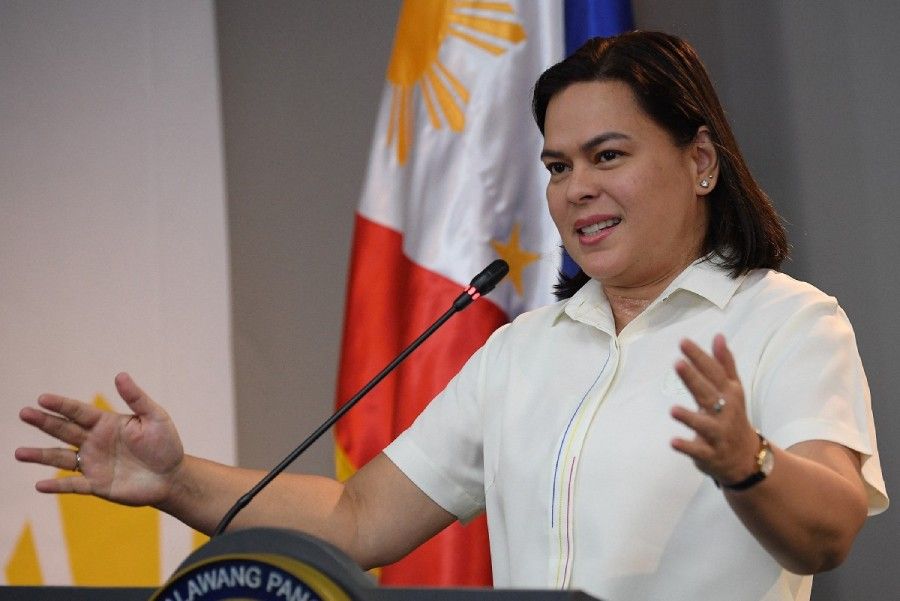
I think many Filipinos understand what’s at stake in this election—not just who will compose the next Senate, but what that composition will mean. As I told my Fil-Am friend, Rodrigo Duterte may be safely imprisoned in the Netherlands, but his specter looms large and heavy over these midterms, through his proxies led by his daughter, VP Sara and their “DuterTEN” team (now more like DuterTWELVE, if you add one Marcos and one Villar). Sara was all set to be impeached for grave threats against the First Family and grand theft Piattos—which would not only have taken her out as VP but disqualified her from running for President in 2028. But that procedure—needing at least 16 votes in the Senate—got kicked down the road, after the election, leaving Sara’s fate up to the newly reconstituted Senate to seal.

So again, I told my friend, presuming that the BBM administration’s game plan here is to freeze Sara out of the presidency so it can install its own man, 2025 is really all about 2028. It’s a referendum, sure—not so much about the present President, but rather the past and maybe the future one. We’re not just—or not even—voting necessarily for the best candidates, but for senators who will push Sara out, or keep her in. Daddy Digong’s summary extradition to the ICC, while a relief for many, merely intensified that drama, raising the stakes to a matter of survival for the Dutertes.

It’s another sad and sorry spot to be in, for these elections to come down to choosing among the lesser or the least of 8, or 16, or 24 evils, against the statistical near-certainty of another wipeout for the truly good. Should I support this fairly familiar trapo, the devil I know, over that manifest idiot, just to help ensure that the latter stays out? Or, again, should I simply disregard all the surveys and scenarios, and vote from my purest and most innocent of hearts for the best people on that ballot? (Was this how the cardinals chose Pope Leo XIV, or did more pragmatic considerations come into play?)

By the time you read this, I shall have cast an early vote as a senior in my barangay. Like we often say, we are whom we vote for, and there’s a part of me that fears what I’ve become or may have to be. I need some of that Holy Spirit with me today—we all will.

Qwertyman No. 128: Been There, Done That

Qwertyman for Monday, January 13, 2025

I WAS trying my best to sound sober and diplomatic in last week’s column about Donald Trump’s impending return to the presidency of the world’s most powerful country, the United States of America, due to happen next Monday. I was still vacationing with family in California then, and didn’t want to get into an argument with some Americans (and Fil-Ams) who would’ve sent me packing home the moment they heard me raising a stink about their Chosen One.

The fact is—whether out of deference to my liberalism or just because of fatigue—few people I spoke with, whether from the left or right, seemed eager to talk about Trump, and it’s something I fully understand, and even appreciate. You can only hear and make so much commentary, most or all of which, at day’s end, will amount to nothing, except for more bruised or broken friendships.

Typical was a friend’s reaction from San Francisco: “Shrinking my world in the next four years to just my family and like-minded friends. (Just text me when the war has started!)”

I remembered what it was like in 2022 when our presidential candidate—who seemed (and was) superior to the alternative on all counts except financial capability—lost, and how distraught and upset we were, convinced that, surely, massive fraud accounted for her defeat. Even then, I opined—unpopularly, for sure—that despite the ever-present likelihood as in all Philippine elections that some electoral sleight-of-hand had taken place, more Filipino voters preferred the winner for their own reasons, disinformation and all. 

We’ve been living with and under that winner for almost three years now—and, perhaps surprisingly, we’ve all survived so far; the sky hasn’t fallen—yet. I did say then, like many other observers, that BBM was facing a fork in the road: to continue down the path to perdition that his parents took, or to boldly go up the hill of redemption. “Redemption” might not necessarily mean a full-blown admission of guilt in exchange for forgiveness of sins, or even the restitution of ill-gotten wealth, although all of the above would have been ideal if well-nigh impossible. I think most of us would have been pleasantly surprised if he simply led an honest, just, and competent administration, which is what all of us have been praying for.

Almost halfway through his term, has any of that happened? Which path did BBM choose? Is it possible that he has been straddling both, or hopping from one to the other? Very interestingly, both in the US and here at home, I’ve been asked a lot of questions about BBM, and what I’ve told people is this: 

He’s made some very popular decisions, which has raised his acceptance if not approval among many; but he continues to run fast and loose with the way public money is used, seriously undermining whatever credibility he’s been building up. His positions on tokhang, China, and POGOs have generally gone over well (although criticisms persist that extrajudicial killings and political imprisonment have continued). Perhaps above all, he has politically profited immensely from his war with the Dutertes, deftly positioning himself as sober and presidential versus the theatrics and the crudity of the Dutertes, who have done themselves no favors. 

On the other hand, neither has the Marcos administration endeared itself to the people by brazenly abusing its fiscal authority with the problematic Maharlika Fund and its diversion of key departmental budgets into an election-year pork barrel for lawmakers. Just when you thought it had miraculously gotten its ethical notions right, the old wolf bares a greedy fang or two and reminds us that old habits die hard.

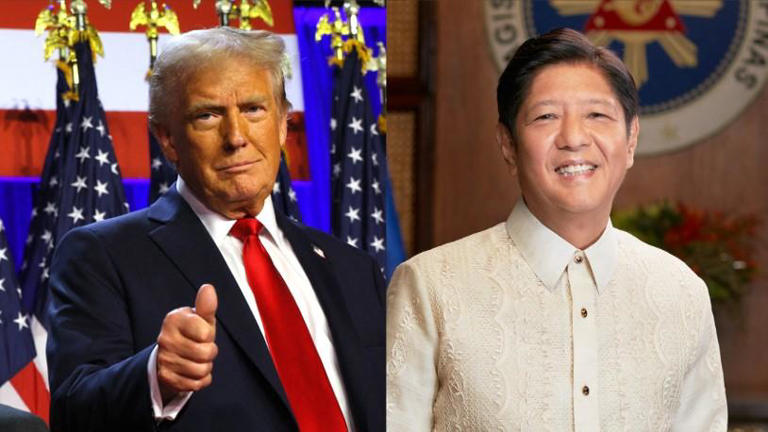
Which brings me back to America and its expectations of Trump 2.0. Unlike BBM who can at least claim a generation’s distance from his father, Donald Trump has only himself to be compared with, and anyone hoping to see a more sensible, more contemplative, and more compassionate Trump enter the White House after he won over the truly sensible, contemplative, and compassionate Kamala Harris is in for a rude reminder of the man America spat out in 2020. 

In the weeks before his second inauguration, the President-elect has already threatened to pressure Denmark into selling Greenland to the US, punish its closest neighbors Canada and Mexico with crippling tariffs, rename the Gulf of Mexico into the Gulf of America, and repossess the Panama Canal. As a Fil-Am friend of mine in Georgia says, “It’s like hiring a CEO to turn our ailing and cash-strapped business around, and on his first week he tells us his strategy is to buy three companies and rename our firm.” An old Turkish proverb puts it more colorfully: “When a clown moves into the palace, he doesn’t become a king. The palace becomes a circus.”

The lunacy of Trump’s ideas would be hilarious if he weren’t who he is, a man whose every fart is now taken as God’s own wisdom by his retinue of quaking sycophants. As a man incapable of accepting criticism and prone to doubling down on the certifiably wrong, President Trump will run his government as he is ruled by his ego, and for the sake of our relatives and friends in that country, we can only pray that America emerges whole and healthy enough in 2028 to find its way back to sanity and decency.

On Monday next, when the inmates officially take over the asylum in Washington, DC, we Pinoys will be watching with the smugness of people who’ve been there and done that. We have our own pot of troubles to worry about, our own idiots and idiocies to deal with—like our propensity to force people with the same surnames, grade-school diplomas, and missing morals to become Senators of the Republic. So help us God.

(Photo from msn.com)

Qwertyman No. 119: The MAGAverse

Qwertyman for Monday, November 11, 2024

IT’S NEVER good to write out of rage, no matter how righteous you think your rage might be; the anger clouds your reasoning and could reduce you to incoherence. So as I’m writing this—on the afternoon of November 6, our time, and early morning in America where Donald Trump has already claimed victory in a bitterly fought election—I’m taking deep breaths and thinking of happy and pleasant things, far away from politics, before returning to the task at hand.

After the initial sting, it isn’t so much anger as sadness and consternation that stay with me, a deep sense of regret over what could have been, had the outcome been different. There are at least 15 million Filipinos who know what I’m feeling, having gone through a similar shock that May two years ago, when what we most dreaded happened.

Of course, to many Filipinos, a Trump return won’t make one bit of difference, and why should it? We have enough of our own problems to worry about. But for those like me who see the world today as a widening battleground between good and evil, November 5 was a loss not only for American Democrats, but for freedom-loving and truth-seeking people all over the planet, whose lives will eventually be affected by whatever comes out of Washington, like it or not.

On the eve of November 5, perplexed and dismayed by the statistical closeness of a fight that good sense should have blown wide open, I sent a message to friends saying that “My inner cynic almost wants Trump to win so Americans will see for themselves exactly what MAGA means over the next four years.” So I guess I got my cruel wish, except that to “America” we can now add “the rest of us.” Welcome to the MAGAverse.

But before this moment passes, let me just put this out there to those whom we should hold responsible for trusting a felon with the White House and for whatever he may do hereon.

If you didn’t vote for Harris and stayed home because of what you saw to be her lack of support for the Palestinian cause, just wait until Trump dances with Netanyahu over the graves of Palestinians in Gaza and the West Bank.

If you thought that voting for Trump was a vote for the precious life forming in an unborn fetus, start counting the bodies of the living that will pile up in Ukraine when Trump greenlights Putin to take what he wants, with America looking on.

If you’re a legal immigrant from Asia, Africa, and Latin America (one of those “garbage” countries, in Trump-speak) who went for Trump because you think he knows and cares about how hard you worked for your citizenship and sees you as his co-equal American, let’s see how well his Justice Department defends you at your next run-in with the police or with a gun-toting redneck.

If you didn’t vote for Harris because you made a fine point of her waffling on the fracking issue, wait till Trump puts climate-change deniers in charge of the Environmental Protection Agency—which he did, by the way, in 2016, when he appointed a lawyer who led 28 states in a fight against the EPA’s Clean Power Plan.

If you’re a normally bright and decent person who chose to overlook Trump’s moral flaws and lack of character because you thought he would stabilize and grow the economy, and appoint geniuses to manage the store, wait until the likes of Elon Musk play with government like he did with Twitter. 

(And never mind national security, with Trump being chummy with Putin, Kim Jong Un, and the Hungarian tyrant Orban, who just congratulated Trump for “the biggest comeback in US political history…. A much-needed victory for the world!” Who needs counterintelligence when these guys have direct access to the White House? Worry about tooth decay, when RFK Jr. pulls fluoride out of your tap water, because it was supposedly part of a Cold War communist plot to poison America.)

If you took pity on Trump because you felt that Joe Biden had “weaponized” the Department of Justice against him (on cases he had only himself to blame for, like sleeping with a porn star and paying her to shut up), wait until Trump unleashes the DOJ on his political opponents, as he has sworn to do, and anything and anyone else that gets in his way—including you. (I thought that the best endorsement for Kamala was the one from Harrison Ford: “Vote for Harris if you want to protect your right to disagree with her.”)

If this is nothing but doomsaying, what do you think Donald Trump did all throughout his campaign? He is doom, and doom won. This round goes to Darth Vader and the Dark Side.

Excepting Ukraine and Gaza, much of the world will move on like it always has, and so will we. America itself already had a foretaste of Trump in his first incarnation; they survived him and the pandemic as well. We Filipinos survived martial law, right? 

The question is, what did people learn? Or, since those who learn anything eventually die, are people fated to make the same mistakes all over again from generation to generation? There hasn’t even been enough time for the generations to roll over in America since Trump 1.0—didn’t those voters learn anything?

With our own midterm elections coming up next year, we could be telling each other the same things. I better keep my inner cynic in check.

Qwertyman No. 118: A Flickering Flame

Qwertyman for Monday, November 4, 2024

TOMORROW, NOVEMBER 5 (or Wednesday, November 6, our time), American voters will choose who between Republican Donald J. Trump and Democrat Kamala Harris will lead them from the White House over the next four years.

For more than four million Filipino-Americans, the outcome will bear a direct impact on their daily lives, their choices, their standing in society, their future. For the rest of the world, including those of us here in the Philippines, the result will shape not only how we see America, but also how America sees us in the global scheme of things.

Only the foolish will think that we have no stake in this election, and that America’s position in the world will be the same regardless of who wins. For the people of Ukraine, a Trump victory might as well be his friend Putin’s; for the Taiwanese, the Filipinos, and others dependent on at least the deterrence if not the active deployment of American military power vis-à-vis Chinese expansionism in Asia, Trumpian isolationism can only invite more unbridled aggressiveness from the region’s bullies.

As I’ve often said here before, like many millions of Filipinos, my stake is more personal than that: our daughter lives and works in California, and my sister is also a US citizen, both of them contributing productively to that country’s economic and social well-being. Both are proudly voting and campaigning for the only candidate who offers real hope for the future of America and the world: Kamala Harris. To them, she represents not just the right political but also and even perhaps more importantly the right moral choice.

Of course, I totally agree. Why anyone would vote for a man who even many of his supporters admit is a convicted felon, a habitual liar, a womanizer, a pervert, a racist, a chauvinist, and a would-be dictator is beyond me. But apparently enough Americans will, enough to make all polls point to a dead heat between the two candidates, with the outcome likely to be decided by voters in a handful of so-called “battleground” states.

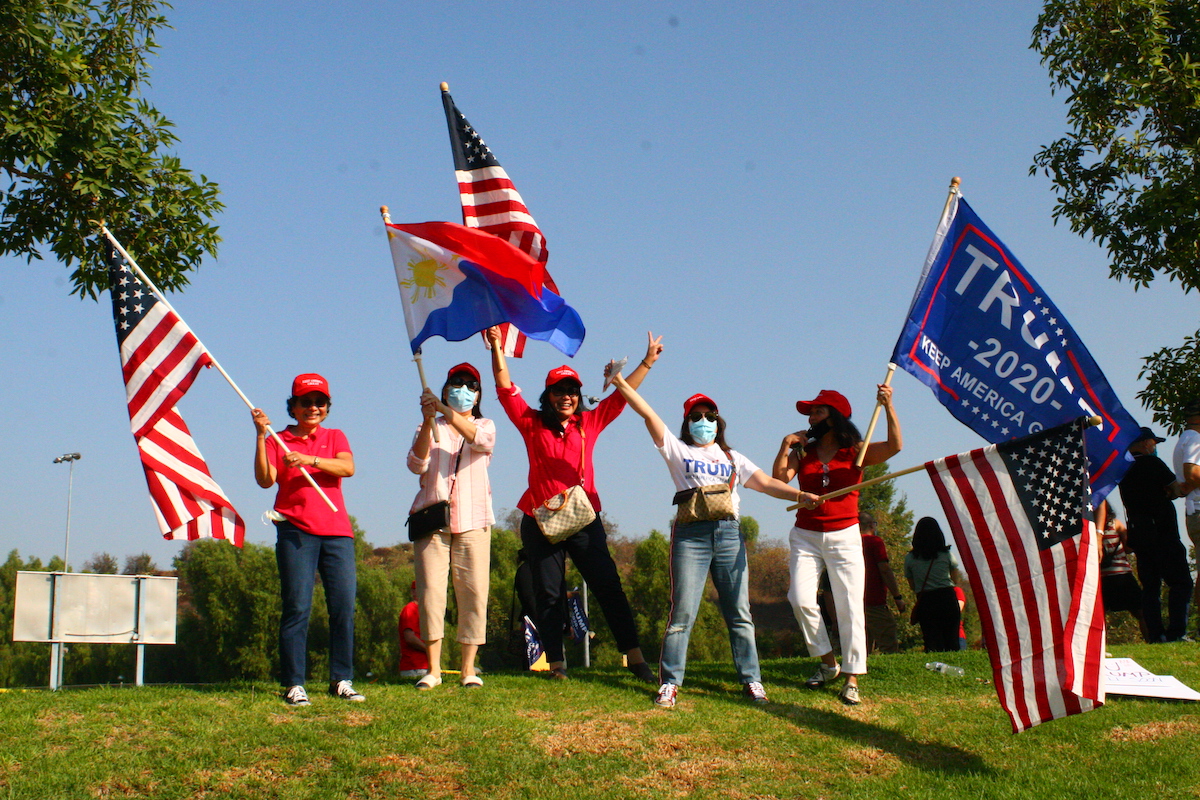
Among those many millions of Trumpists willing to overlook his not-insubstantial shortcomings are legions of Fil-Ams who—despite having historically voted Democrat as an ethnic minority—now find common cause with Trump’s blatantly racist anti-immigrant rhetoric (it isn’t even about illegal immigration anymore, but about immigrants from “garbage” countries in Asia, Africa, and Latin America) and his supposed “anti-abortion” stance (since diluted for political expediency). Among other single-issue MAGA voters, “the economy” remains their strongest reason for choosing Trump, despite 23 Nobel-prizewinning economists writing that Trump’s tariff-based economic plans will be disastrous for the US.

Eighty-two Nobel laureates, in fact, are on record supporting Harris, but that clearly matters little in an election driven more by primal fear than by truth and reason. As astrophysicist Neil deGrasse Tyson lamented, “How sad it must be—believing that scientists, scholars, historians, economists, and journalists have devoted their entire lives to deceiving you, while a reality TV star with decades of fraud and exhaustively documented lying is your only beacon of truth and honesty.”

My own sense is that many Trump voters won’t be voting for Trump the man, whom his sharper and more hidebound supporters—many of whom, like Sen. Ted Cruz, he has savagely maligned but who have masochistically endured his insults to ensure their own survival—will admit before God to be the lowest of the execrably low. They will be voting for the deep grievances and resentments that Trump has so craftily stoked in them, and against the idea of an “elite” and a “swamp” that Trump and his new acolyte Elon Musk, strangely enough, represent more visibly than most Democrats.

Thus the very real possibility remains that we may wake up Friday morning to the specter of Trump 2.0 and whatever it will bring. Should that happen, we can imagine the global wave of consternation and dismay that will ensue among liberals and progressives everywhere. On the other front will resound the triumphant cheers and chuckles of global despots and their minions.

All this brings me to what I suspect has been my real worry all along—not the US election, about which we can do nothing, but our own political horizon, on which familiar dangers are looming large.

At least one online pundit with an unusual point of view has lauded the recent performances of Vice President Sara Duterte and her father former President Rodrigo Duterte at their Senate hearings as a kind of resurrection—in the very least, an affirmation of their continuing political viability, if not resurgent power. 

The Dutertes mastered their fumbling inquisitors, this commentator crowed, reporting that the gallery even clapped for the senior Duterte at the end of a raucous session at which he virtually confessed to willfully causing the summary execution of suspects without ever being prosecuted. The Dutertes, he seemed to imply, remain above and beyond the law; with their cohorts in office, they are the law, or shall soon be again.

Indeed Philippine politics has become a theater where bravado, bluster, and buffoonery matter. We cannot even tell the actors from the characters any longer. Lies resound louder than the truth, and the audience rewards the best “hugot line” with wild applause.

The upcoming midterm election already promises to showcase the worst of our political predilections, with family dynasties and patently unfit candidates crowding the top of the poll rankings.

So if the Americans choose Trump over Harris, why should we be surprised? Where character, reason, and talent no longer matter, the tyrants rule with fools at their feet to keep the populace amused.

But if Kamala Harris wins, whatever it brings to America, it will mean for me that, however fragile, hope remains for good sense to prevail even in extremely fraught situations such as ours. If only for that flickering flame, I pray she wins.

(Image from newsweek.com)

Qwertyman No. 75: Trump 2.0

Qwertyman for Monday, January 8, 2024

IN MY column last week, I mentioned the “Trumpian dystopia” threatening to take over the United States and many other rightward-leaning societies and governments around the world. 

A “dystopia” is, of course, a place or a situation where everything has been turned on its head, where the bad has become good and the wrong has become right, and where the things we most feared or abhorred have become the norm. You find this in George Orwell’s 1984, where the government controls everything; younger readers and viewers will relate to Suzanne Collins’ The Hunger Games, where citizens are sacrificed for the Capitol’s entertainment. In other words, it’s social and political hell for those reared in the kind of postwar liberalism that eschews racial discrimination, authoritarianism, gender inequality, and religious intolerance, among other shibboleths.

It’s hard to believe that much of America seems to be marching in lockstep toward that dystopia under a revived Donald Trump, wh0m nearly all polls see as leading the race for the US presidency, which will be at stake in November this year. On this date three years ago, he was squarely in the doghouse in the aftermath of the shockingly violent assault on Congress on January 6 by Trump partisans unwilling to accept that he had lost to Joe Biden in the election. Even his closest allies at that time distanced themselves from his apparent captaincy of that bloody caper, although many of them have returned to his kennel. 

Nearly a full presidential cycle later, he’s back in the Republican saddle, way ahead of a pack of rivals who, save one, have refused to denounce Trump for what he is: the greatest single threat to American democracy because of what he represents (leaving aside foreign tyrants like Vladimir Putin and Kim Jong-un). That, not surprisingly, is President Joe Biden’s exact description of him, so some might say it’s biased, but to remain unbiased against Donald Trump is to lie prostrate in front of a steamroller, begging to be annihilated.

It doesn’t help that the incumbent is 81 years old, palpably slow, avuncular, and whispery where Trump screams into people’s ears (to the delight of many). Their age difference—just four years—isn’t actually all that much, but beyond personalities, it’s a difference in cultures, and perhaps of understanding how politics works in this post-Facebook age, where obnoxiousness has become a virtue and regularity a liability.

Trump thrives on notoriety, parlaying the four indictments involving 91 criminal charges against him—plus the two disqualifications from state ballots—into a kind of a badge of courage, flipping prosecution into persecution. Rather than fracture his base, any attack on Trump (and any attack by him) only seems to consolidate the estimated 30-40% of hardcore Trumpers who now effectively define the Republican party, the tail wagging the dog.

Among the most repugnant (and, by Trumpian logic, among the most attractive) of his recent statements has been his denunciation of undocumented migrants as “poisoning the blood of our country,” specifically mentioning Latin America, Africa, and Asia as the sources of what in other speeches he has called rapists, terrorists, and Covid carriers.

You would think that that kind of Hitlerian rhetoric would galvanize the Hispanic and Asian-American—not to mention the African-American—communities in America against Trump, but no. If anything, his support among these groups seems to be rising, driven ironically enough by his hardline position on immigration, the very same factor that made these minorities possible to begin with.

What I’m interested in is how the Filipino-American community will respond to Trump 2.0, and what that will say of us as a people, albeit as one of many minorities in America’s multiracial society.

There are now about 4 million Filipino-Americans; half of them, 2 million, are voters. (To put this in context, the US population now stands at 336 million, of whom 170 million are voters.) Historically, Filipino-American voters have leaned Democrat, with a majority of them voting for Hillary Clinton and Joe Biden in 2016 and 2020. But a very vocal (though perhaps somewhat less visible, as many people tend to reveal their preferences only in the voting booth) “Filipinos for Trump” movement exists, and if trends persist will likely gain more traction this time around.

In 2020, Filipino pro-Trumpers cited “family, religion, and faith” as the main reasons they were backing him, like many American evangelicals, despite all the evidence to the contrary in Trump’s personal behavior and speech. For many, it all came down to one issue—abortion—the right to which has now been successfully rolled back by the Supreme Court’s conservative majority. This time around, the flashpoint will likely be immigration, a global problem abetted by collapsing economies and repressive regimes. Well-settled minorities such as Filipino-Americans derive a strong sense of entitlement from all the personal sacrifices and legal processes they went through to acquire their citizenship, and feel cheated by migrants scrambling across the border. This kind of single-issue vote—a gross simplification and reduction of values into one criterion—favors demagogues like Trump, who work through two-dimensional posterization.

A more interesting—and more sinister—reading of Trump’s popularity came up in a recent guest essay in the New York Times by Matthew Schmitz, arguing in his title that “The Secret to Trump’s Appeal Isn’t Authoritarianism,” but rather that “Mr. Trump enjoys enduring support because he is perceived by many voters—often with good reason—as a pragmatic if unpredictable kind of moderate” and “a flexible-minded businessman who favors negotiation and compromise.” That logic, while fetching, predictably drew quick rebukes. One reader said: “Thanks, Mr. Schmitz, but we’re already well aware of this. Italians liked Mussolini because he ‘made the trains run on time.’ This is exactly our point. This is how dictatorships happen.”

That brought me back to our own long and continuing affair with despotism, and how sharply simplified populist sloganeering can cut through and cut down on complex reasoning—with devastating consequences for democracy, here and across the Pacific. 

(Photo from colorlines.com)

Hindsight No. 19: Plot and Character

Hindsight for Monday, May 23, 2022

(Photo from philtstar.com)

WITH THE counting all but over—setting aside some issues not likely to change the outcome—it’s clear that our people have spoken, and that, by a 2-to-1 majority, they have chosen Ferdinand Marcos Jr. to lead this country for the next six years. 

It’s no huge secret that I, among many others, voted for somebody else. Of course I’m unhappy, but what I feel doesn’t really matter much in the scheme of things. Given that the life expectancy of the Filipino male is 67.26 years, I’m already on borrowed time at 68 and would be lucky to see the end of this next administration, let alone the one after that. I’ve told my mom Emy—who voted at age 94 and who shed tears of dismay and disbelief when the results rolled in—that living for six more years to vote one more time should now be her goal. Just surviving will be her best revenge.

I wonder how it is, however, for the young people who took to the streets for Leni and Kiko, believing that they would make a difference. They did, although not in the way they expected, to ride a pink wave all the way to Malacañang. They realized, as we ourselves did ages ago, that money and machinery are always heavy favorites over hope and idealism, and that issues, ideas, and the truth itself can be made to look far less important than image and message, if you can buy the right PR consultant.

They will also have learned, as has been pointed out by other commentators from both sides, that it wasn’t all disinformation—that Marcos Jr. appealed to the genuine desperation of the poor with a promise of relief, however illusory. Since most of Leni’s young supporters were visibly middle-class, first-time voters, it was a rude but necessary awakening to the realities of class politics in this country, which politicians of all kinds—none of whom have to worry about where their next litson baka is coming from—have learned to negotiate and manipulate. 

Defeat, it’s been said, can offer more lessons than victory, and while we may have metaphorically won in some significant respects—chiefly the aggregation of “middle” forces not tied to any traditional political party into a burgeoning progressive movement—there will be much to review and refine in the years ahead. This very dissociation of the Kakampinks from the old parties and their command structures, for example, was a blast of fresh air for many volunteers, but also a liability for operators used to the old ways.

Understandably there’s been much wringing of hands and gnashing of teeth in the trenches, in the desire to meld seething resistance with grudging acceptance. I see it in both young and old activists—the young, because they’re heartbroken for the first time, and the old, because they didn’t expect to find themselves facing a Marcos all over again. The bashing and taunting they’re getting online from galleries of screeching monkeys doesn’t help. 

Being one of those old fogeys, I tend to be more subdued in my reaction to Marcos Jr.’s victory, and advise my young friends to cool down, ignore the bashers, and steel themselves for a complicated and challenging future. As someone who went through and survived martial law—I was eighteen when I was arrested and imprisoned for alleged subversion (although I was never charged or tried in court, just locked up for the state’s peace of mind)—I can offer them living proof that we can survive dictators and despots, with faith, resourcefulness, and courage. My parents survived the Second World War, and many other people have gone through worse.

I’m neither predicting nor wishing that a Marcos presidency will be bound to fail. I’d hate for the country to suffer just to prove a point. Besides, whatever I think today won’t matter one bit to what will happen. Whatever Marcos does, he will do so of his own will, by his own nature, out of his own character. What that character really is will emerge in the crucible of crisis—and crisis is the only thing the future guarantees, whoever the president happens to be. Beyond and regardless of the propaganda for and against him, Mr. Marcos Jr. will have ample opportunity to display what he would not have us glimpse in a public debate, and that revelation will do more than a million tweets calling him a thief or praising his acumen.

Speaking of character, I had an interesting discussion last week with an old friend, a renowned professor of Business Administration, who brought up the possibility of “luck or destiny” to account for the Marcos victory. He added that luck was an important factor in business, and that he would flunk a student who thought otherwise. 

I disagreed; as a teacher of creative writing, I said that I wouldn’t accept “luck or destiny” as a resolution for a student story. We’d call it deus ex machina—a helping hand—which thwarts the logic of the narrative with an artificial and improbable ending. I know: it happens in real life, but not in good fiction. As Mark Twain says in one of my favorite quotations, “Of course fact is stranger than fiction. Fiction, after all, has to make sense.” 

Whether factual or fictional, stories are really less about events—the plot—than character. The plot is simply there to enable character development. Things happen for a reason: to test and reveal our character, to show ourselves and others what kind of people we really are, with dramatic clarity and inevitability.

If you’re wondering why I strayed from the May 9 election to a mini-lecture on writing, it’s because we can look at that election and its aftermath as a long and continuing narrative that will establish our character as citizens, and as leaders. The next crises—the post-pandemic economy, China’s ambitions, a crackdown on civil liberties, getting deeper in debt—will come to try us. That’s the plot. And when that happens, Bongbong will be Bongbong, and all Filipinos—31 million of them, especially—will see exactly what they bargained for.

So if you’re still smarting, just chill, recuperate, get back to something you enjoy doing, and let this drama take its course. Like my mom Emy, endure and survive. Give Marcos Jr. a chance to achieve his “destiny,” which could yet be everyone’s best education.

Hindsight No. 18: Wisdom from Suffering

Hindsight for Monday, May 16, 2022

(Image from tunedinparents.com)

THERE’S A line I remember from a college course in Greek drama—specifically the play Agamemnon by Aeschylus—where Zeus memorably explains why the gods bring pain and torment to humans, when they could just as easily shower them with joyful blessings: “Justice inclines her scales so that wisdom comes at the price of suffering.” Man suffers, so he will learn.

I kept going back to that line this past week as I tried to comprehend the enormity of what had just happened: by what appeared to be a huge majority, our people had chosen a dictator’s son to lead this country for the next six years. Despite reports of massive vote-buying and irregularities at the polling stations, I wasn’t even contesting the overall results—I was never much of a conspiracist—but asking myself how and why the masses of our people keep making poor choices at the ballot box, voting against their own strategic interests. (Am I being presumptuous to sit in judgment of our average voter? Yes, and I make no apologies, having lived through martial law, all three EDSAs, Garci, tokhang, and Covid.)

Did we not suffer enough over the Marcos years and from the plunder and repression enabled by martial law to have learned that unbridled authoritarianism is a curse on everyone, both despot and citizen alike? Clearly not, or we would not be here today, facing the restoration of that rapacious regime. And it will be because—going by the moral logic that informed the Athenian stage—we have brought it upon ourselves, by casting more votes for the very same people whose greed we continue to pay for, and will pay yet more for, all over again.

In that case, should we flog ourselves over that seeming poverty of collective wisdom? Shall we call ourselves stupid and even hopeless, to have gained the freedom to vote, only to squander it for the benefit of those who took it away in the first place?

Of course, the right to vote never came with any assurance of voting wisely and responsibly, with democratic values foremostly in mind. For those whose lives have never changed regardless of administration, it can simply be another source of easy income. For others, it can be a form of personal revenge for injustices suffered daily, for the sharp tongues and heavy hands of otherwise pious employers. Still others might simply want, for once in their lives, to be part of what they think is the winning side. 

From these “winners,” we can expect a barrage of gloating and taunting, which has already begun. The cynical will remind us that we were wrong to have even hoped and tried; this was all foreordained by the numbers, which are the only thing elections are ever about. Some will even trot out that hoary quote, “Vox populi, vox Dei,” to stamp divine approval upon this outcome. In other words, we were all just exercising our free will, our freedom of choice, which after all is central to democracy. Only sore losers cry.

But then again, free will has never guaranteed critical intelligence. Which leads me—not being a political scientist—to ask these questions of those who might know better:

What if that “freedom” had been subverted and compromised by massive and deliberate disinformation? Was it still a free citizen who willfully cast a ballot for someone provably inimical to democracy, or a wound-up robot executing a series of plotted motions? Can we blame the desperate and the misled? Can we still call it a “free, fair, and clean election” if the fraud already started many years before, in the distortion of history and the rehabilitation of unpunished convicts? 

If and when voters elect a buffoon and a bully president—like they did with Donald Trump, among other such demagogues we know—does that validate buffoonery and bullying, and make them acceptable? Does it wipe the slate clean, erase all liabilities, and establish a new norm for political behavior? Most simply—as millions of us must have been thinking these past few months—if the president refuses to pay his lawful taxes, can we be morally compelled to pay ours? 

Vox populi, vox Dei—if this was God speaking, what was he saying? This is what I’m hearing: “By your own choice, I am giving you this man to be your president—so you will learn.”

I wonder how much more suffering we shall have to endure for our people—especially the generations post-martial law—to learn that voting has personal consequences, that the Marcoses do not represent “moving on” but sliding back into the dismal past, and that this election was their best chance in ages of creating a true “golden era” of humane, honest, and progressive governance, instead of the tinsel fantasy they’d been sold. How and when can we value the truth once more?

Again, Aeschylus—writing half a millennium before Christ—throws us a line from Prometheus Bound, spoken by the hapless girl-turned-cow Io. Hounded by a gadfly, Io is in constant pain, and tells Prometheus her tale of woe; but she insists, at the end of her story, that she wants to know her future, however difficult it might be: “If you can say what still remains to be endured, tell me; and do not out of pity comfort me with lies. I count false words the foulest plague of all.” This campaign saw innumerable “false words” rain down on our electorate, not just words of spite but also of artificial sweetness. 

I am angry and dismayed, but not without hope. In Io’s case, despite her terrible travails, she learns that her future is much brighter than she would have expected—she will be restored to human form, and would count among her descendants the great hero Hercules. 

We can yet be the progenitors of our best selves as Filipinos. We just need to endure, to learn, and to endure some more.

Hindsight No. 17: The True Winner

Hindsight for Monday, May 9, 2022

(Photo from lumina.com.ph)

I HAD another column all lined up for today—Monday, the 9th of May, arguably the most important Monday of this year if not the next six years. But I’d forgotten that the ban on electioneering, which started yesterday, won’t end until midnight tonight, so I’ll shelve that piece for another time—with major revisions likely, depending on the outcome of today’s vote.

Maybe it’s just as well that that happened. It forced me to pause and simmer down for a while, just when emotions and tempers were rising to a boiling point and nothing else seemed to matter but politics and the colors of our T-shirts.

I’m sure I’ll be speaking for many of us—and even across the political divide—when I recall that just a year ago, we all led what seemed to be normal lives, or at least as normal as lives could get under a crippling pandemic. We were in deathly fear of a virus we couldn’t see, of getting infected by some pasaway neighbor or relative, and of dying by our lonesome in a strange hospital ward with a tube stuck down our throat. Our chief concern was survival—as individuals, as families, as communities. We walked around like inter-galactic travelers in face shields and face masks, soaked in 70-percent alcohol, hands raw from constant washing. We felt lucky to be alive, never mind that the cinemas were closed, restaurant food was takeout-only, and we all became talking heads in little Zoom boxes. Today we can afford to chuckle a bit at the memory of those days, even if we know—or have to be reminded—that those days are far from over. 

But just as the influx of vaccines brought a steep drop in Covid rates, another contagion appeared on the horizon—election fever. Its symptoms included not only indifference to other diseases like Covid, manifest in the sudden and universal disregard for “social distancing.” They also showed in an increased propensity for loudness and even bellicosity in public discourse—especially online, where sticks and stones came free by the ton. The emergence of candidates and choices meant the emergence, as well, of our long-cherished biases and preferences. 

Our candidate defined who we were, and because of that, we took everything personally, responding to every swipe and gibe as though not only civilization itself were under attack, but also our gut, the precious and tender core of our very being. We felt hot under the collar every time our champion was maligned, and often returned the gesture with equal vehemence, thankfully with a dash of Pinoy humor. Whichever side we were on, we believed that nothing less than the nation’s survival was at stake, something larger than ourselves. We could survive Covid, but the loss of one’s candidate seemed like an even graver existential threat. 

Many years from now, the drama of this election will be remembered for its intensity and divisiveness, for the rancorous fervor with which many partisans fought for their beliefs, or for their scripted spiels. Some operators showed us just how low and how nasty a campaign could go, with the leanest of morals and the fattest of budgets. Never has so much been spent on promoting falsehood and obscuring the truth. Never was the public’s intelligence valued less by candidates expecting to coast to victory without having to be asked difficult questions and to account for their liabilities. Never did surveys, scientific and otherwise, seem so opaque and perplexing, like hazy oracles supposed to convey some prophetic message. 

But it will also be remembered for its creativity, its outbursts of spicy wit, its spontaneity of generosity and the communal spirit. Never have we witnessed a campaign so heavily reliant on the kindness of strangers, who ceased to be strangers in an instant of mutual recognition. Never have we seen crowds so huge—wait, yes, we have seen multitudes mourning a martyr’s death, or forming a human tidal wave to sweep a dictatorship away—but not hundreds of thousands massed for the sheer joy of congregating for the good. Never have rallies—once gatherings devoted singularly to the expression of popular anger and dismay—been so uplifting and flush with hope, like a cathedral without a roof raising its prayers to the sky.

And whatever happens today and in the weeks and months to follow, those rival strains will remain in the air—the noxious fumes of the devil’s workshop and the cool and cleansing breezes coming down summits too high for us to see. I think we will realize and understand that this election, as titanic a clash of values as it was, is but another episode in the larger and longer story of our continuing quest for nationhood, another tentative answer to the question of who and what it is we want to be. That story and the conflict at its heart will go on for generations more, and every six years our people will have a chance to choose between right and wrong, between redemption and damnation, between wisdom and ignorance.

Those of us who feel that they chose rightly today have no cause to regret their action, regardless of the outcome. You voted not just for your candidate, but for the best Filipino in you, which can never be a loss; you have passed the test of faith in the good and just. It may take longer for others to reach that point of peace with oneself. The results might suggest that there are more of them right now than you—which only means that there is more patient work to do, and also more time to do it, beyond the frenzied crush of the past few weeks.

On a personal note, today my mother Emy turns 94. She is eager to cast her vote, knowing that it could be the last time she will choose a president to lead our people. She cares about who will win, for our sake. More importantly, she cares about choosing wisely, for the sake of her soul. She knows something many of us have forgotten in the flood of surveys and fake news: that the only true winner in these elections is the one who can show God his or her ballot with honest pride and joy.

Hindsight No. 16: The Long Game

Hindsight for Monday, May 2, 2022

(Photo from philstar.com)

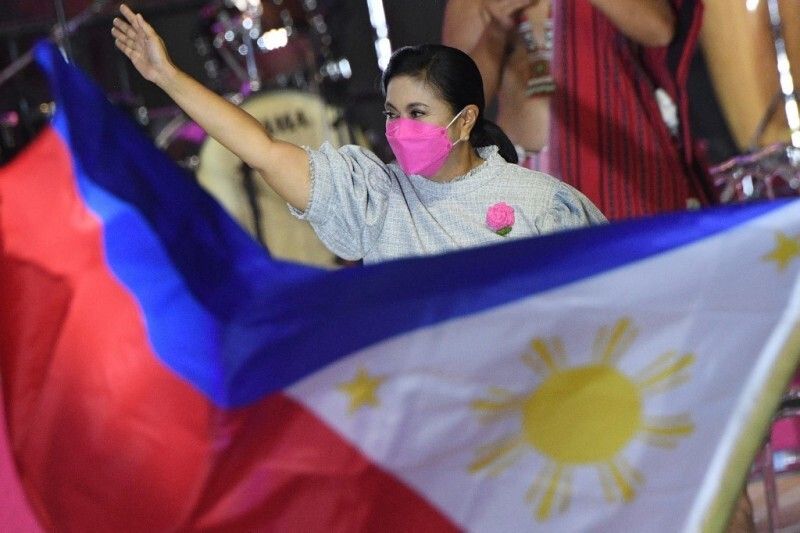
NOT SO long ago, before the groundswell of popular support grew into a towering pink wave behind the presidential candidacy of Vice President Leni Robredo, it seemed like she had embarked on a quixotic quest. For a moment back there, even her running was in doubt, spurred on only by the encouragement and faith of a coalition of upright citizens seeking a way out of the darkness of the past six years. 

In front of her was ranged a phalanx of formidable and even monstrous adversaries, flush with money, dizzy with power, armed with the most sophisticated weaponry on the market—data science and mass communications in the service of disinformation. The surveys declared her candidacy dead from the get-go, her campaign futile; her ceiling was this low, and she was bumping her head against it. For her enemies, it was enough to brand her a “woman” to render her incapable: “As a woman,” said the trolls, “she cannot be trusted with the responsibilities of the presidency. She is weak, and she cannot think for herself. She will always be subject to manipulation.”

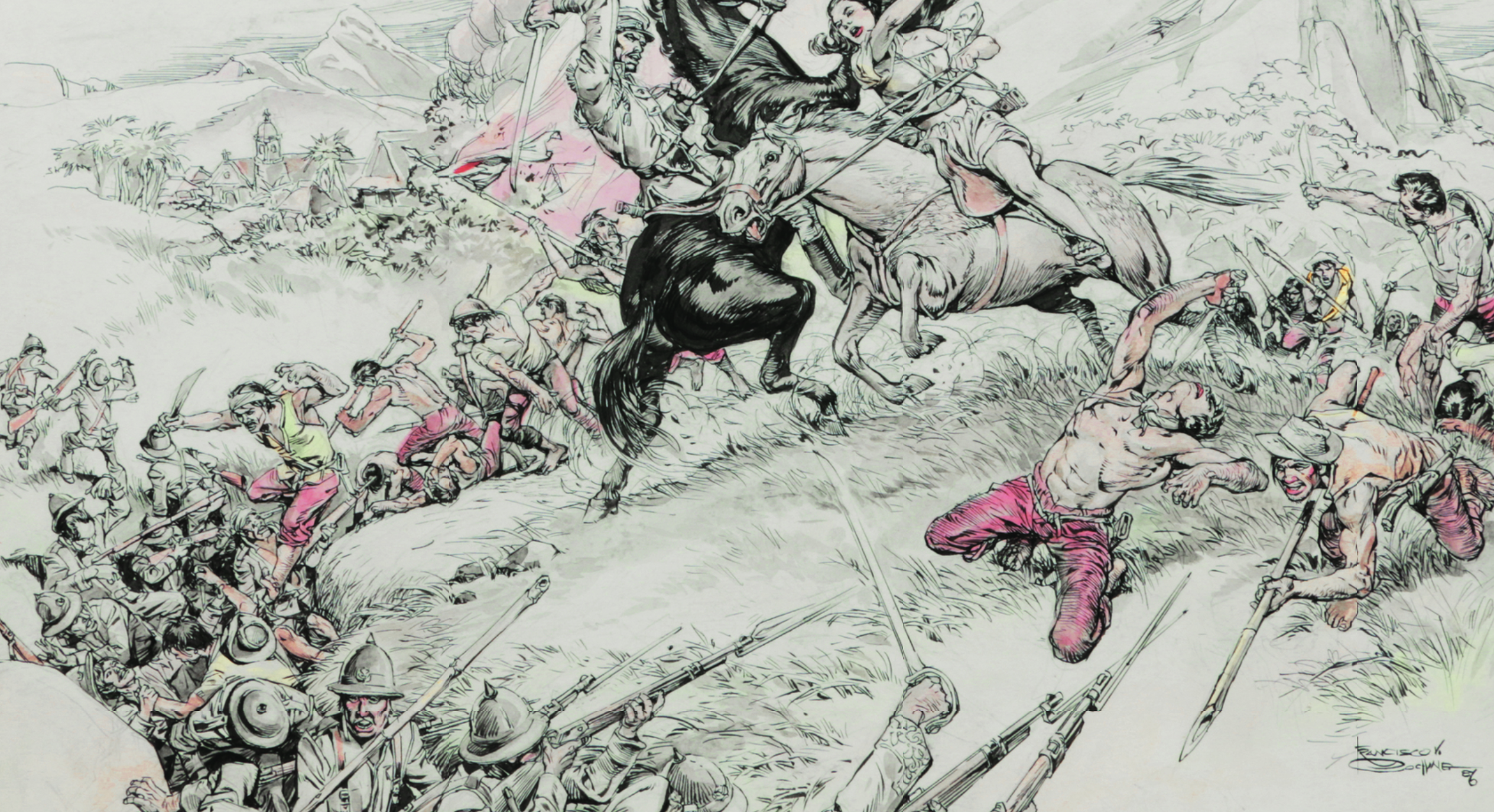
It is not difficult to find parallels in history and myth for Robredo’s crusade. The foremost image that comes to mind is that of an armor-clad Joan of Arc, riding off to battle against those who had turned their backs on France to support the English. There is a long, long list of women who took up the sword to fight for freedom and justice. In 1521, after her husband fell in combat, Maria Pacheco took charge of the defense of the Spanish city of Toledo in a popular uprising against the monarchy; later that century, Guaitipan or La Gaitana led Colombia’s indigenous people against the invading Spanish; the 17th century is replete with accounts of women going into battle dressed as a man, so they could join the armies. And of course we cannot forget our own La Generala, Gabriela Silang, who fought the Spanish after her husband Diego was assassinated in 1763.

(Illustration by Francisco V. Coching)

But many if not most of these stories end with defeat and death for the heroine, as it did for Joan of Arc and Gabriela Silang. They are immolated, hung, imprisoned, abused, punished in the most horrific ways for the temerity to rise above their lot as mothers, wives, daughters, and servants. It would seem as though the lesson after all is not to rebel or resist, or otherwise be punished.

But martyr or not, the effect has only been to inspire emulation all the more. That Joan of Arc died at the stake at age 19 makes us, in our senior years, ask if we have achieved something even barely comparable—to live, and live on after death, as a symbol of resistance to tyranny.

If Leni wins on May 9, it will be a historic and hard-won triumph, but one that will be immediately fraught with danger, as she will now have to fend off a spiteful and tenacious many-headed hydra that will not slink into the shadows. Her enemies will hound her every day of her presidency, bark at every move she makes, make it extremely difficult for her to govern properly, so they can substantiate their portrayal of her alleged inefficacy.

If her adversary musters more votes, she will have lost a battle, but not the war this has become. Mind that just having celebrated her 57th birthday, Leni Robredo will only be 63 in 2028—younger than even Marcos Jr. is today. If she loses this election, it will not be the end, but only the start of the next stage of a protracted campaign to bring us back to good and honest governance. 

Six years may seem a long time, but it doesn’t feel like it was that long ago when Rodrigo R. Duterte came to power. These past six years have been among the most difficult and dismaying we have had to endure, not only because of the pandemic but also because of an equally devastating malignancy at the heart of government—leadership by fear, terror, and impunity; the patronage and enrichment of friends; the repression of dissent; and the subornation and corruption of the uniformed and civil service. 

In another six years, should the Marcos forces now prevail and if they stay true to form, they will have unraveled and self-destructed. We will not be surprised, but their followers will be, when the promised manna never rains, when the Palace is ruled by incompetence, indecision, and intrigue, when No. 2 chafes at her humble station, when China attacks and the First Family rushes off to Paraguay with half the treasury (nothing is too absurd in politics today), when citizens cry out for simple answers to urgent questions and are told, “The President is busy,” in a dull echo of his excuses for avoiding the debates. 

But guess what—here we are; we endured, we survived, and we fight on. The ones behind us are even much younger and stronger, and more knowledgeable about the intricacies of digital and house-to-house persuasion. “Pink” is already being demonized as some mutation of the Reds and Yellows, but it will not fade away. Unless they are outlawed, or painted over by the newly reconstituted Kabataang Barangay, the “Kulay Rosas ang Bukas” murals will stay on as reminders of what could have been and could yet be. There may not be an EDSA IV—having once lost to peaceful protest, they will not hesitate to arrest and fire at the slightest signs of a new uprising—but the Internet will not be muted, nor will the mounting clamor of the disappointed poor.

The Marcos forces have waited almost forty years for this moment. What would six more years be to a resurgent opposition? We can play the long game.

And then again, we Filipinos just might surprise ourselves next Monday, and decide that the opportunity for change, for a real “moving on,” is not to be delayed but to be claimed at once. That will be sweet victory for the woman they made the mistake of calling “incapable.”

Hindsight No. 15: The Also-Rans

Hindsight for April 25, 2022

(Photo from philstar.com)

I USED to hold Isko Moreno in high esteem when he was the new mayor of Manila and seemed intent on cleaning it up, figuratively and literally. My wife Beng and I were once on one of our regular sorties to the Japan-surplus shops along Avenida Rizal when we heard a great commotion outside, and when we looked, a team from the mayor’s office was spraying the street with jets of water and making sure the sidewalks were clear of obstructions. 

When he announced his bid for the presidency and came out with that beautifully produced “Ako si Isko” commercial—before Leni Robredo entered the race—I thought he was a viable prospect. I even told Beng and my mother, who had their misgivings, that I would vote for Isko if Leni didn’t run because he checked all the boxes: coming out of poverty, visibly on the job, willing to stand up to presidential bullying, good-looking, and passably articulate. Even his sometimes broken English was no problem and might even have been endearing, proof positive of his struggle to learn the language of another class. 

I was similarly impressed by Ping Lacson’s command of governmental matters and his coolness under fire, and especially by his refusal to avail himself of his pork-barrel allocations. I might even have been willing to give him the benefit of the doubt—a huge doubt bordering on certainty—on the Kuratong Baleleng murder case if it came down to that. I recall having been in the Senate gallery in 2003—the UP Charter was also up for deliberation then—when Lacson took to the floor, put up a screen, and with devastating efficiency and cutting sarcasm laid a trail of dashes connecting the First Gentleman to the mythical “Jose Pidal.” After the presidential debates—and as Isko’s sheen began to dull and darken—I began to think, like many others, that he would have been a great No. 2 (whether as vice president, or second choice). 

But whatever remaining palatability Isko Moreno had—dragging Ping Lacson along (Norberto Gonzales we can kindly ignore)—vanished with that Easter Sunday gripe session masquerading as a press conference that only revealed their pettiness of mind and character. It wasn’t even just what they said—for which they would’ve already been raked over the coals hundreds of times before this column comes out—but the way Isko in particular handled the post-presscon flak that sticks in the craw. 

Given a chance to refocus his sights on Ferdinand Marcos Jr. instead of yapping at Leni’s heels, Isko doubled down on his silly dare for Leni to stand aside and let him take on Marcos Jr. one on one, claiming that he owned the “everyone-who-can’t stand-Leni” vote, next to the frontrunner. And no, said his manager, it wasn’t some impulsive remark brought on by the summer heat. It was all thought out; they’d made their calculations—Leni had hit her ceiling, and Isko, well, his ceiling was higher. 

Which has to make one wonder: how did he think he was going to get there? Did he imagine he’d inherit a suddenly headless Pink Army, and merge that with a gazillion Leni haters defecting from the Marcos camp (and his bottomless war chest)? What about the “everyone-who-can’t-stand-Isko” vote, which can only have ballooned after his stunt? And no, Leni Robredo isn’t some sidewalk obstruction to shove out of the way.

Dissociating himself from Isko’s call, Ping Lacson said that he “didn’t see it coming,” which of course was possible, but troubling for someone supposed to be a consummate tactician. Should he have been bothered that Isko upstaged him, or even more, insulted that Isko didn’t even care to ask him to withdraw as well, given his deep-frozen standing in the polls?

Manny Pacquiao dodged a bullet by what his manager called “divine intervention”—a congested airport—and so was able to land and perch on a square foot of moral high ground. Giving the Almighty more work to do (after all the “acts of God” recently being attributed to Him), Pacquiao also explained that only God could change his mind about running.

Leody de Guzman did the smart thing and enjoyed his halo-halo in South Cotabato. Whatever happens, I think history will salute Ka Leody’s albeit largely symbolic candidacy, as an example of pushing principles over percentages. 

Leni Robredo ignored the press conference and asked her Kakampinks to do so as well, training their attention on the remaining weeks of the campaign—and on the frontrunner.

Frontrunner Marcos Jr. may have had the best time of all, laughing his head off at the Easter show. (When a Facebook friend asked if he might have paid for the presscon bill, I told her that those fellows couldn’t have come that cheaply.)

It’s a sad turn of events—and I’m not being facetious here in any way—because it would have been good for our democracy and for our people to have had truly worthy and viable candidates to choose from, to offer hope beyond May 9 in a new breed of political leaders willing to stand up to despots, kleptocrats, bullies, monsters, and crooks—and children thereof. Instead we see politicians willing to do and say anything to win—even if they won’t, which only makes it doubly sad and puzzling. By holding that pointless presscon—the more expensive equivalent of an email blast announcing “I’m alive!”—the three men merely highlighted the singular fitness of Mrs. Robredo to take on Marcos Jr. for the presidency.

Come May 10, either Marcos Jr. or Robredo will have won. That will leave all the others as also-rans, some of whom will take their loss with grace and dignity, some of whom will protest to high heaven, some of whom will count their net income, and some of whom will look for someone else to blame. 

You can be an also-ran and hold your head high, prepared to fight for the people again not six years down the road, but all the years in between. You can also be an also-ran whom people will be happy to consign to oblivion, having revealed how desperate, how foolish, and how nasty you can get just to be called “Mr. President.”