
Qwertyman for Monday, December 15, 2025
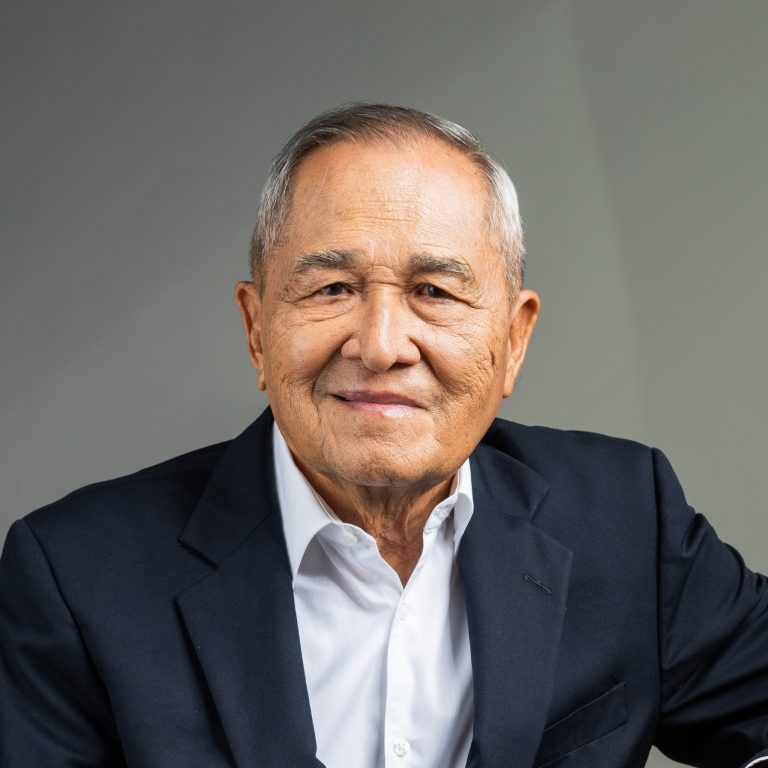
THE DEATH last week at the age of 95 of Cesar Augusto Buenaventura—known to his friends and associates as CAB—marked the passing of yet another member of that golden generation of Filipinos who lived through the Second World War and almost literally built and shaped Philippine industry and society in its aftermath. An engineer by training, CAB was also a management pioneer, a business leader, a civil libertarian, and a valued adviser to presidents. (As a former member of the UP Board of Regents, CAB would often text me for news about goings-on in Diliman, concerned as ever with the state of Philippine higher education and of UP’s role in it.)
I had the privilege of writing a yet-unpublished biography of the Buenaventura siblings (Cesar was followed by social worker Elisa, lawyer Chito, and banker Paeng). And while Cesar chose to self-publish his own three-volume biography a few years ago (I Have a Story to Tell), the original draft has many interesting anecdotes worth sharing with young Filipinos who barely know their economic history. Let me pull up this except you can keep in mind the next time you gas up at a Shell station, visit the UP Chapel, or see a DMCI building.
As soon as he graduated from UP in 1950, Cesar started looking for a job, and almost immediately found one with a man who would become an important influence in his life and a titan in the Philippine construction industry, David M. Consunji. Right after the war, Consunji began building houses—a skill then in high demand in the war-ravaged city—competing on the principle of “price plus quality.” David also made sure that he got the best people and paid them the best wages. And so a strapping 21-year-old named Cesar Buenaventura, fresh out of college, strode into Consunji’s office and got his first job, as Consunji himself recounts:
“In 1951, I hired my very first engineer, Cesar Buenaventura. He was then a young civil engineering graduate from UP who was waiting for the results of the board exams he had just taken. It was my brother Raul, his classmate in UP, who told him to see me because I was starting my own construction company. I thought he was very capable so I hired Cesar.
“Soon after, we started doing our own projects, and among Cesar’s first assignments were three houses we were building in Forbes Park. Forbes was not yet a posh village then; land there was selling at just P4.00 to P6.00 per square meter. After that, Cesar and I did some more houses. I made Cesar the cost engineer and field engineer for our various other projects. He also took care of the payroll, which amounted to P15,000 to P20,000 a week.
“It was in the Laguna College project that Cesar took on greater responsibilities. While we were doing the plans, Cesar said, ‘Don’t bother hiring a structural engineer, I’ll do it. I asked him if he was sure he could do it and he said ‘Yes.’ Every time I would see him, long after the building was finished, I would tell him that it was still standing intact, even after several earthquakes, without a single crack on a wall.
“Cesar was my very first assistant, and even then, I could see that he would go far. I wanted him to stay with us, but he decided to go to the United States for graduate studies in 1952.”
(Upon returning from Lehigh University with his MS in Civil Engineering), Cesar rejoined Consunji for some work on the UP Chapel, which had been designed by a young architect named Leandro Locsin. Locsin had impressed Fr. Delaney with a small church he had designed in Victorias, and now he took on what would become one of his signature pieces, the UP Chapel. Fred Juinio served as structural engineer, with Dave Consunji as the builder.
But armed with his Lehigh degree and eager to make full use of his new learning, Cesar could now consider more options. And the offers came. UP, for one, wanted him to teach, and was willing to pay him P400 a month. But a big petroleum company offered him P300 more, with his salary to be raised upon completing probation as an executive trainee. In 1956, Cesar went with Shell—a decision that would define the rest of his professional life.
In 1975, Cesar Buenaventura achieved what no other Filipino had up to that point by becoming president of Shell Philippines and Chief Executive Officer of the Shell Group of Companies.
Cesar’s rise to the helmsmanship of Shell also got the attention of someone in great need of executive talent: Ferdinand E. Marcos, president of the Philippines and, at that time, the country’s martial-law ruler. With the global oil crisis still hurting the Philippines in the wake of the Arab-Israeli war, Marcos put up the Philippine National Oil Company to explore for oil and develop alternative energy sources, and was scouting for the right man to head it. His eye fell on Cesar, who had just stepped up to the Shell presidency; surely such a man had the skills and the vision to head the new PNOC. Marcos had Buenaventura called to Malacañang.
While he may have been honored to be offered the position, Cesar remembered his father’s admonition against serving in government. He went to see Marcos in the Palace. Luckily, before Marcos could make his pitch and demand Cesar’s commitment, a phone call from the First Lady, who was in New York, interrupted the conversation. Cesar used that break to gather his wits and to come up with the argument that such a move to government would be premature, coming so soon after his appointment as the first Filipino head of a major multinational company. Cesar suggested that he could serve the country’s interests better if he were able to persuade Shell to search for oil in the Philippines—which they eventually did. Marcos did not press the point, and Cesar was spared.
Yet more of Cesar’s friends would join Marcos’s Cabinet: David Consunji, as Secretary and later Minister of Public Works, Transportation, and Communication, then by Dean Fred Juinio in the same post, followed much later by Totoy Dans, when the Cabinet post was divided into two departments—Public Works, and Transportation and Communications. Consunji labored mightily to fight corruption in that notoriously graft-ridden department, only to find himself unceremoniously removed for refusing to play along. Dans followed the same straight and narrow path when took on the job in 1979, but he would later be, in Cesar’s eyes, unjustly vilified for his association with Marcos, even if he hadn’t enriched himself.
So instead of taking what could have been a personally and politically costly detour into the Marcos government, Cesar Buenaventura managed to stay on at his beloved Shell, in a position he would hold with distinction for the next 14 years.
 Pinoy Penman 3.0