Penman No. 452: A Cultural Treasure Chest

Penman for July 9, 2023
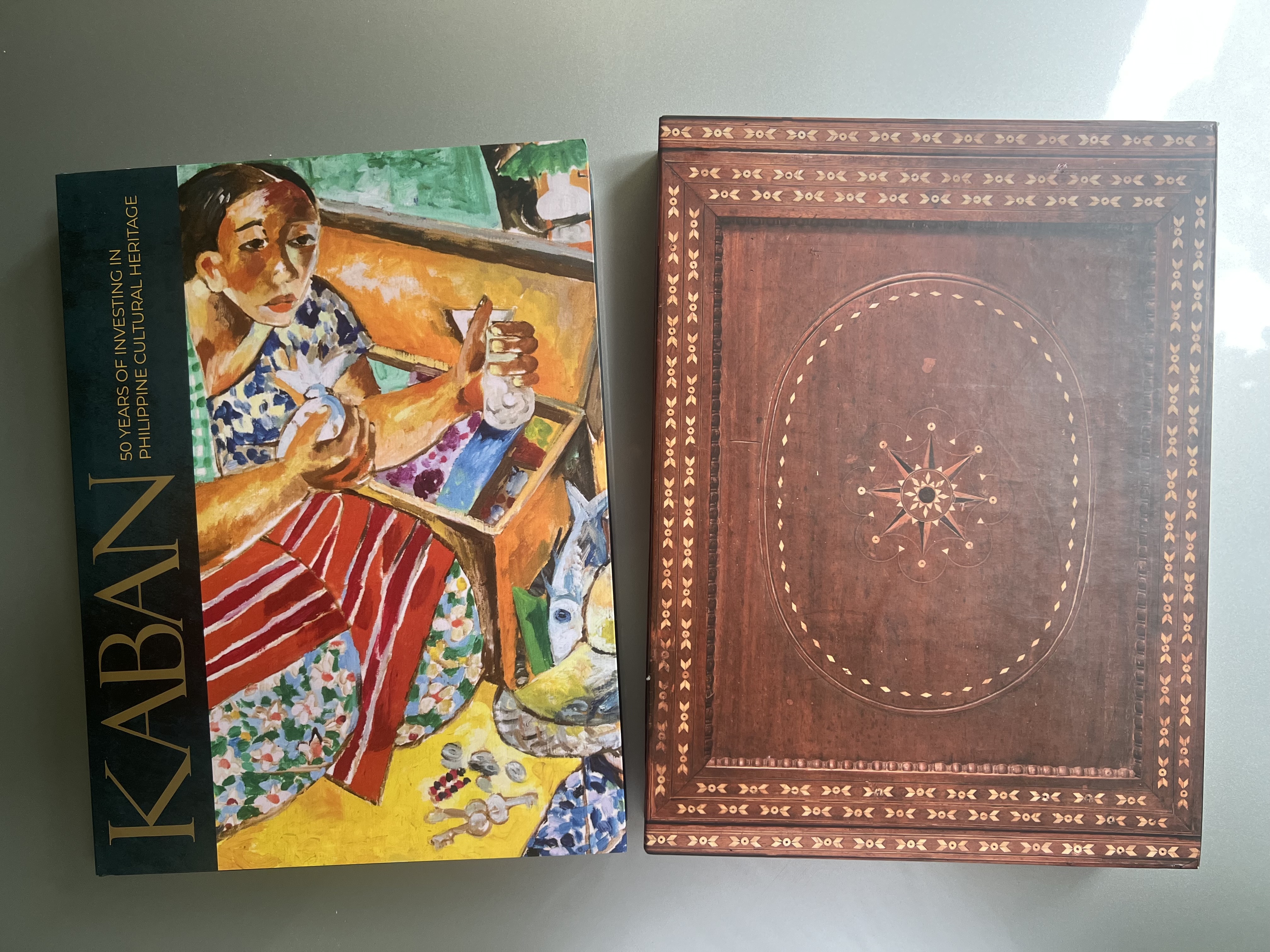
A NEW book launched last month by the Bangko Sentral ng Pilipinas once again brings up how unlikely—and yet in a way also how logical—it is for a nation’s central bank to be the repository and protector of the country’s cultural heritage. 

Simply titled Kaban (treasure chest), the sumptuous 340-page book offers a guided tour of the BSP’s fabled cultural collections, from pre-Hispanic gold to contemporary art, with each section curated by experts in the field. The book’s writers include Portia Placino, Victor Paz, Dino Carlo Santos, Clarissa Chikiamco, Tessa Ma. Guazon, and Patrick Flores; I contributed a preface, from which I quote some excerpts below. 

Banks represent resources, stability, and continuity, and central banks even more so, for the financial sector. They will often purchase art for décor, and perhaps even for investment; but they will not routinely spend vast amounts on the acquisition, storage, and exhibition of valuable cultural artifacts, as the BSP (and its predecessor, the Central Bank) has done.

Only inspired and visionary leadership can achieve this fusion between the seeming banality of money and the transcendence of art. The Central Bank and BSP have had the good fortune of being led at various times by men who embodied this integration—among them, the CB’s founding father Miguel Cuaderno, a lawyer with a passion for history, culture, and art.

Decades later, Cuaderno was followed at the Central Bank by Jaime Laya—a banker, accountant, writer, collector, and cultural administrator. It was under Gov. Laya that the Central Bank embarked on its most ambitious acquisitions and began to be known for minding more than the nation’s money, but its cultural heritage as well.

Cuaderno and Laya were supported by the likes of Benito Legarda, at one time the Central Bank’s head of research, who was not only an economist but also an avid numismatist and historian who initiated the Money Museum, which became the base for the bank’s later forays into other areas of culture.

The release of Kaban—following a series of other beautifully produced books about the precious objects in its collection—highlights the value accorded by the BSP to the idea of wealth: its generation, propagation, and preservation, which is, after all, the core business of banks. But this isn’t just flaunting wealth for wealth’s sake, an exercise in ostentation and in investment by the numbers. 
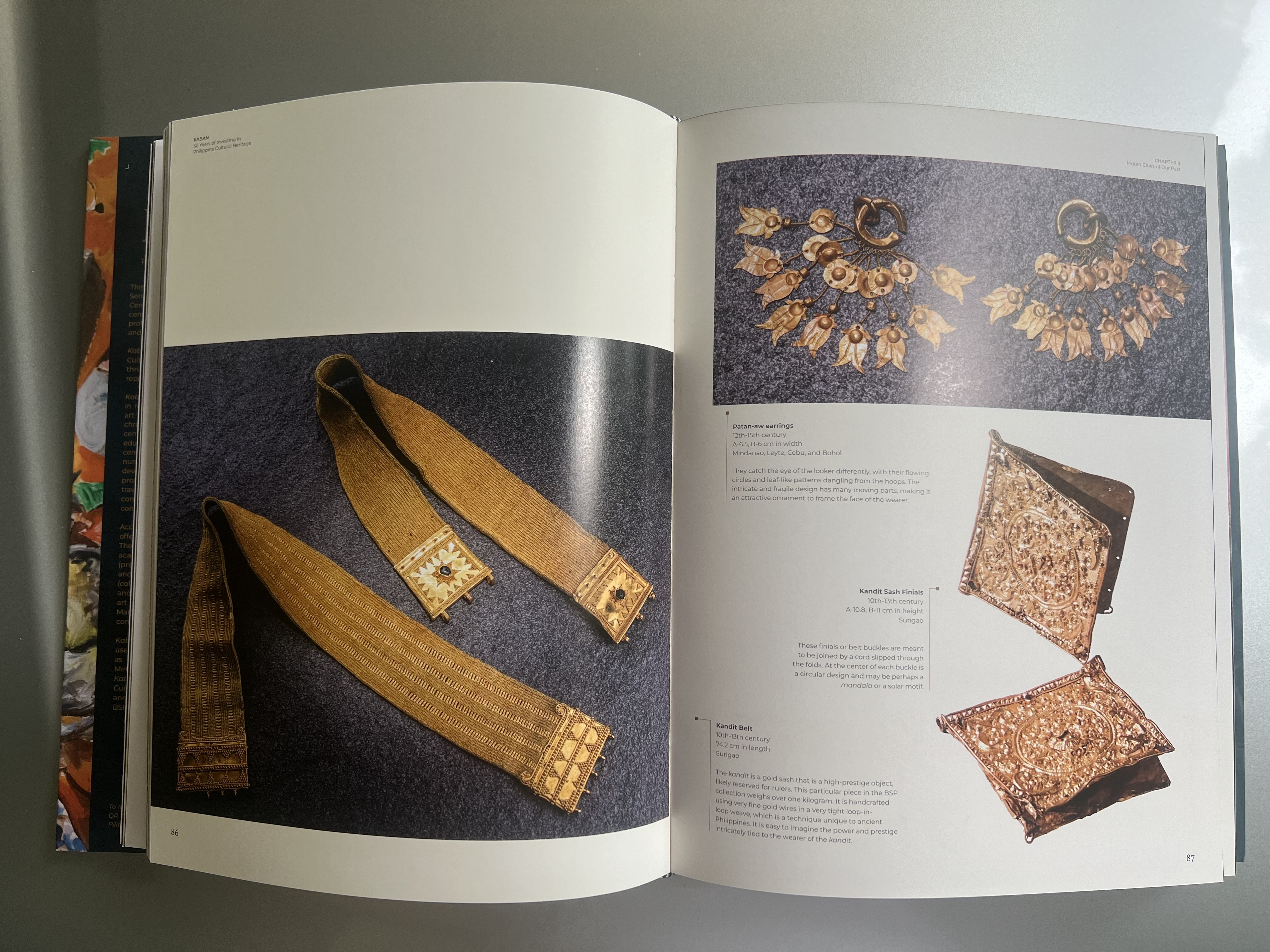
The BSP collection is imbued with historical and cultural value, and the objects in its catalogues—from ancient coinage and currency to contemporary art and furniture—are physical embodiments of the things and notions we hold dear, our sensibilities and aspirations as a people, the heritage and the legacy we want to pass on down the generations. It is another bank, a cultural bank, but one whose elements have been carefully chosen and curated to reflect our finest traditions and brightest memories.

It’s interesting and important to note that the BSP is not alone in this extracurricular preoccupation. Beyond the Philippines—where many other banks and financial institutions have been known for their impressive art collections and generous support for culture—banks around the world have associated themselves with art, amassing stupendous collections and employing art to project a positive and more humane image of what most people might otherwise see as cold and soulless financial corporations. Indeed, Professor Arnold Witte of the University of Amsterdam calls banks “the new Medici,” referring to the Renaissance’s most important patron of the arts, Lorenzo de Medici, not incidentally himself a banker. 

Among the world’s most important art collections held by banks, that of the Banco de España in Madrid goes back to the late 15th century and forward all the way to contemporary sculpture and photography. The Swiss UBS holds 35,000 pieces of modern art. JP Morgan Chase, the Bank of America, the Royal Bank of Canada, the European Central Bank, and the Societe Generale have also been leaders in the field. 

Central banks have also been known for their art collections, although their origins, sourcing, and contents vary. According to a report by the Official Monetary and Financial Institutions Forum, “In the US, the Federal Reserve’s fine arts program was established in 1975 by Chair Arthur Burns in response to a White House directive encouraging federal partnership with the arts. Unlike other collections, the Fed relies on donations of artwork or outside funds to purchase works of art. 

“Most European central banks’ art collections consist mainly of paintings, but this is not a global trend. In Colombia, Costa Rica and the Philippines for example, the central banks are also home to museums with exhibits ranging from archaeological treasures to medieval goldwork and pottery.

“The central banks of Colombia, Austria and South Africa, among others, host catalogues of their collections on their websites. The Central Bank of Iran’s website hosts a video documentary on the Crown Jewels collection. Many other central banks including Greece, Hungary, the Netherlands and the Philippines have physical catalogues of their collections, though these have not been digitalized.” It quoted then Governor Amando Tetangco as saying that “The BSP ensures that outstanding examples of Filipino genius in its gold, art, and numismatic collections are shared with the people through exhibits, books, CDs, social media, and provincial lectures.”
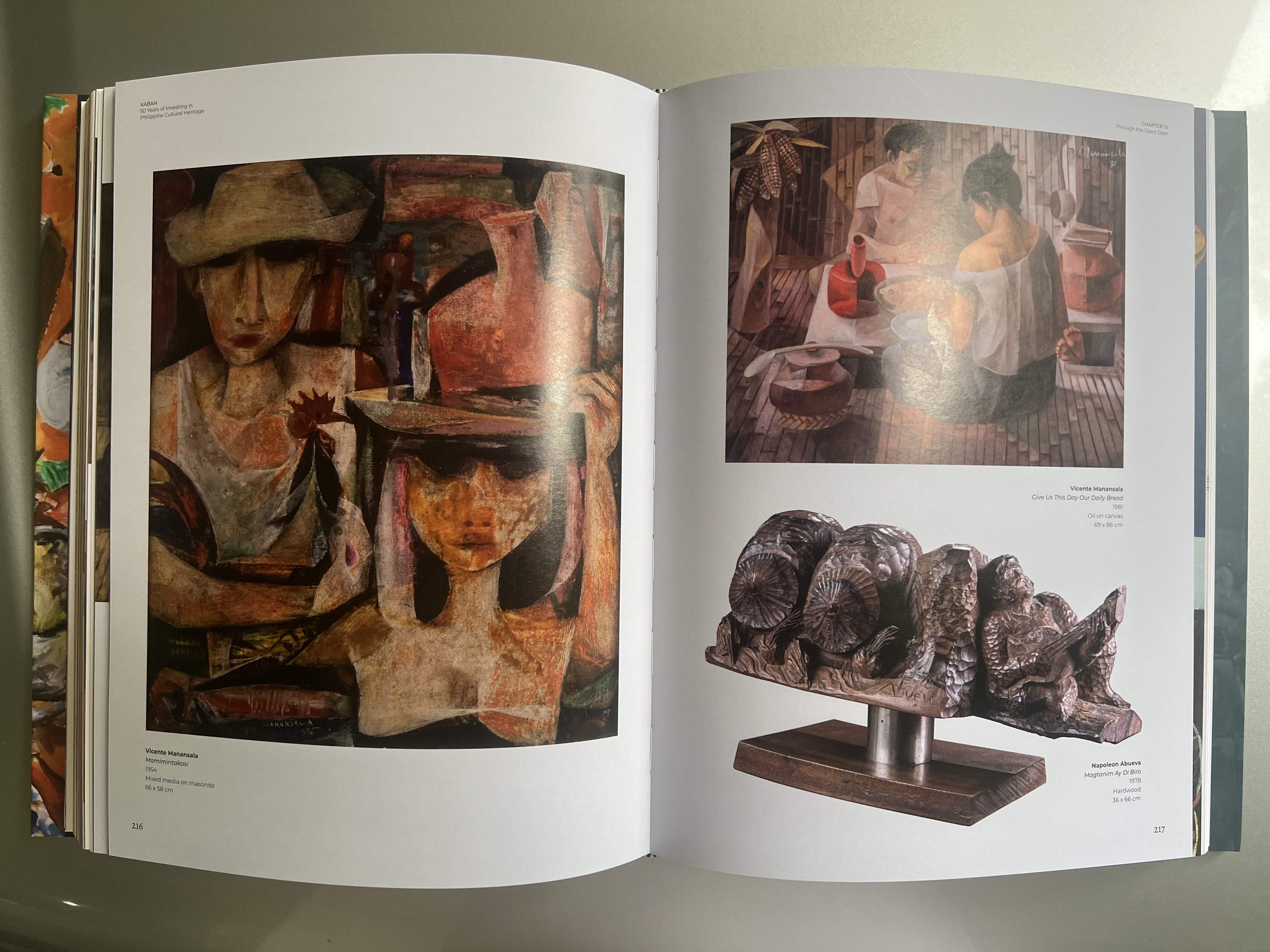
This puts the BSP in the fine company of other central banks that have recognized the special relationship between monetary and cultural wealth, and the importance of preserving heritage for the future. If, as Benjamin Franklin once said, “An investment in knowledge yields the best interest,” then an investment in cultural heritage cannot yield any less, as it shows us at our best, for all time.

The arts, indeed, are another treasure trove of spiritual resources needing constant care and replenishment. This long, historic, and mutually beneficial partnership between our central bank and the arts sector makes that reality physically manifest, and we can only hope that it will continue even more strongly in the decades to come.

Tastefully photographed and designed by Willie de Vera and produced by Bloombooks (the publishing arm of Erehwon Arts Corporation), Kaban is a treasure on its own, and is available for sale to the public at the BSP.
Penman No. 431: Restoring a Binondo Landmark

Penman for Monday, January 3, 2021

THERE’S A charm and a mystery to old Manila’s Binondo district that even casual passersby can’t miss, an appeal compounded of centuries of history, commerce, and the daily lives of one of the country’s most industrious and yet also least understood communities, the Chinese Filipinos (the usage Teresita Ang See advocates over “Filipino Chinese,” given that the second term denotes their political and geographical home). 

Having been established in 1594 by the Spanish as a settlement for Catholic Chinese, Binondo (among other contiguous districts) became the world’s oldest Chinatown, evolving down the centuries into one of Manila’s most thriving business centers and choicest real estate locations. Here, all within hailing distance of the 425-year-old Binondo Church, hardware shops selling everything from portable generators and electrical equipment to automotive spare parts and screws of all sizes stand cheek-by-jowl with seafood restaurants and, inevitably, banks.

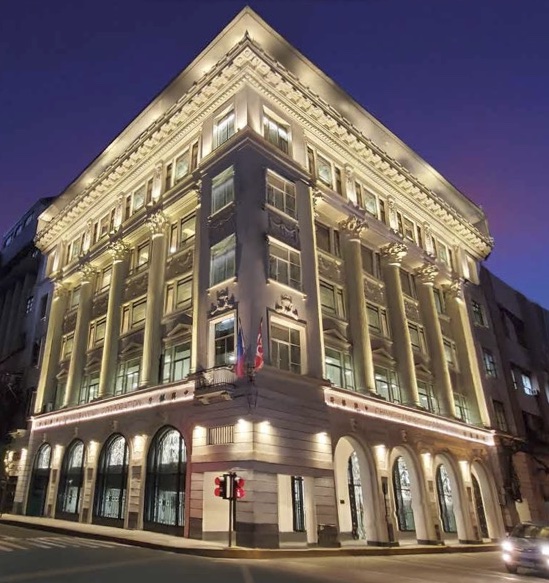
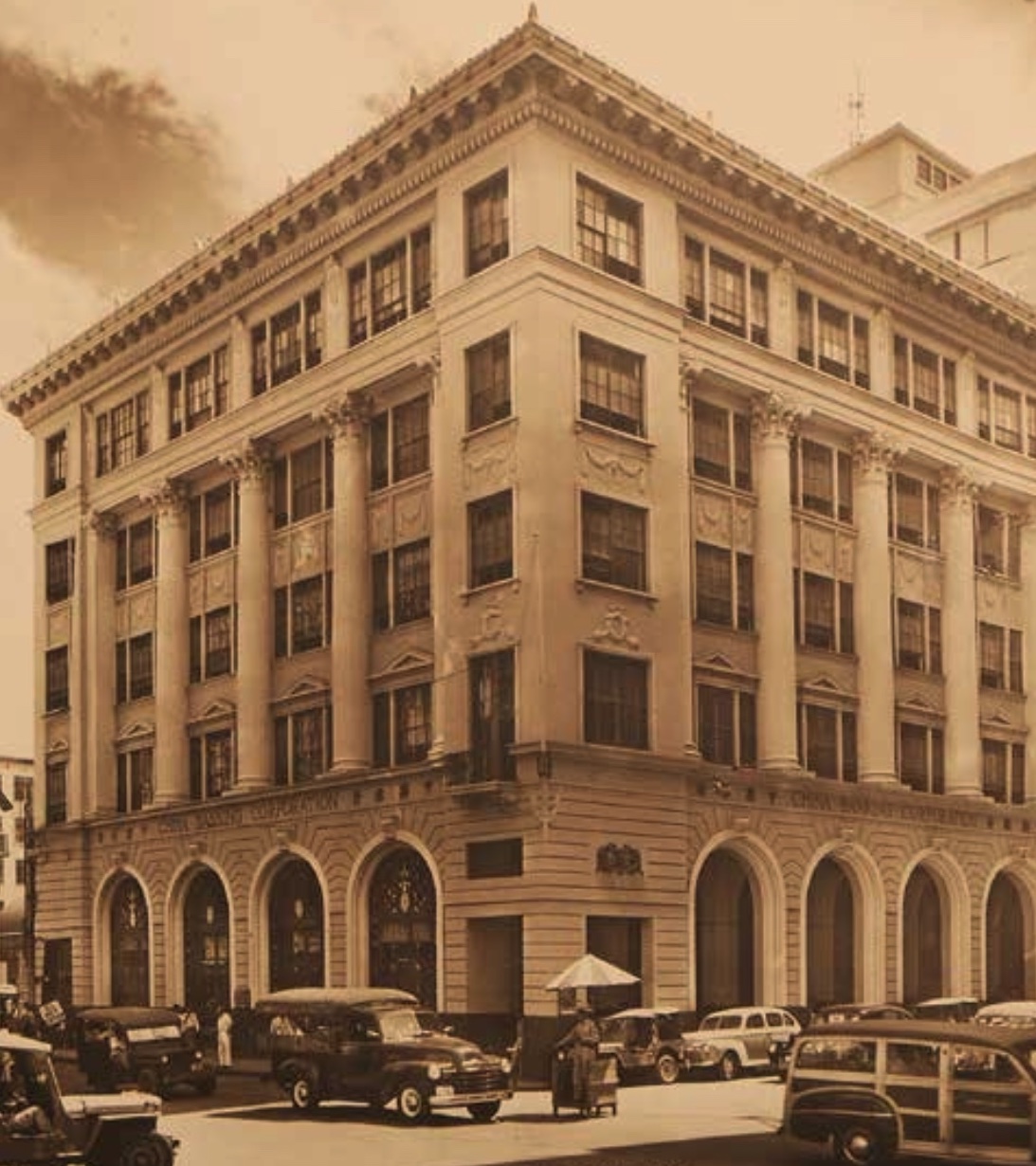
One of those banks has been an economic and cultural landmark not just in Chinatown but in the country’s history for a century now, and the restoration of its old Binondo headquarters is a fitting capstone to the bank’s centennial celebration.

The bank is none other than China Bank, which set up shop in 1920 in the same general neighborhood—at No. 90 Calle Rosario (now Quintin Paredes St.). It didn’t take too long before the bank realized that it needed more space for its growing business, and by 1924, it had moved into its newly built, five-story (later extended to seven) building at the corner of Juan Luna and Dasmariñas streets. It had been designed by the German architect Arthur Julius Niclaus Gabler Gumbert in the Neoclassical style then in vogue, with Beaux-Arts touches. Later known as the Binondo Business Center, the building served as the bank’s head office until 1969, when China Bank moved its key operations to Makati.

No one could have walked up to that building pre-war and remained unimpressed. It was the physical manifestation of China Bank’s high ambitions, but grounded in the realities and challenges of operating in an environment that in some ways remained suspicious of if not hostile to Chinese businessmen. The young visionary Dee C. Chuan, already a lumber magnate in his twenties, was quoted to have said around 1911 that “Many Chinese known by their countrymen to be worth half a million pesos are unable to get credit from the present banks.” 

The answer was to form China Bank, with the help of such highly respected co-founders as Guillermo Cu Unjieng, Carlos Palanca, and Albino SyCip; it was to be a bank that would combine Eastern values with Western banking know-how and cater to the underserved community of Chinese businessmen and entrepreneurs in the Philippines, many of whom would move on to be become taipans in their own right. And from early on, through the Depression and the Second World War, the bank relied on its close relationship with its clients—among whom xinyong or word of honor was paramountly important—to retain their business, paying off its obligations even when other banks had defaulted on theirs. A century later, China Bank has moved far beyond its Chinese-Filipino niche market to serve a much broader public, achieving its target milestones of P1 trillion in assets and P100 billion in capital by the end of 2020. 

But the bank didn’t want to celebrate its centennial just by counting its money. According to China Bank SVP and Centennial Committee chairman Alex C. Escucha, as early as 2016, the bank’s leadership under its chairman Hans Sy had already decided that the restoration of the old Binondo headquarters would be the centerpiece of their centennial. 

Not only would the building undergo a thorough and historically authentic renovation led by Architect Manuel Noche, former secretary of the Heritage Conservation Society; a bank museum would also be built, curated by Marian Pastor Roces, for the public to appreciate the business and culture of banking through memorabilia, art, and mementoes. Sonia Olivares Santiago & Associates and Maja Olivares-Co would work on the contemporary design aspects of the Binondo branch. This was realized last December 21 with the unveiling of two historical markers for the restored Binondo Heritage Center and the China Bank Museum by the National Museum and the National Historical Commission of the Philippines.

The bank also published a comprehensive coffee table book, 100 Years of Trust: The China Bank Story, a substantially new version of its 90th-anniversary book written by the late Raul Rodrigo, updated by his wife Nancy Pe Rodrigo; edited by me, with the invaluable assistance of Alex Escucha (the bank’s encyclopedic institutional memory), Ann Ducanes, and Hershey Villegas, among others; and handsomely designed and produced by Perez NuMedia. 

But it’s the Binondo Heritage and Restoration Project that the general public will likely appreciate the most, because it visibly connects past with present and shows the way forward for institutions with similar forms of heritage to protect. At a time when cultural treasures and landmarks are being demolished wholesale to make way for new malls and condos, China Bank proves that history can be a continuing concern (in all its decades of operation, the Binondo office never stopped being a bank). What’s needed is vision and commitment, which China Bank Chairman Hans Sy and President William Whang have proven to have in abundance.

Penman No. 329: Focus on the Intangible

IMG_8334.jpeg

Penman for Monday, November 26, 2018


THIS TOOK place last month, but it can’t be too late to congratulate the University of the Philippine Visayas for organizing and hosting the 2ndInternational Conference on Intangible Cultural Heritage (ICH) in Iloilo City last October 25-26. This gathering brought together participants from all over the country and from around the world to focus on an aspect of our cultural, social, and even economic life that we literally don’t see—our intangible heritage, meaning our beliefs, customs, and practices that form a deep spiritual and intellectual resource that we should be tapping into, but have neglected in favor of Facebook and such other attractions of this digital age.

One paper, for example, by Sashah B. Dioso of the Center for West Visayan Studies of UP Visayas, dealt with the role of indigenous beliefs in resource conservation and sustainability in Pandan, Antique. The paper cites how an old man was walking home one day when it suddenly rained. He then “cut two banana leaves to serve as umbrellas for both of them. The latter was heard speaking to the banana that he needed the leaves for them not to get wet and then thanking the plant including ‘kon sin-o man ang rugyan’ or whoever was there (referring to the taglugar). In that situation, the value given to a plant and the respect accorded to the taglugar were evident.

In general, the indigenous beliefs discussed contribute to the communities’ collective sense of protecting their environment and helping sustain natural resources. The practices mentioned share a common characteristic which is to use natural resources and the environment sustainably. Failure to observe due care in using natural resources may earn the ire of the spirits dwelling in the environment. The taglugar, considered guardians of the environment, are portrayed by these beliefs as active protectors of the environment that constantly watch and give the due punishment to transgressors (while also giving) rewards to people who use natural resources in a manner that is acceptable to the spirits (in terms of) a good catch and bountiful harvest.”

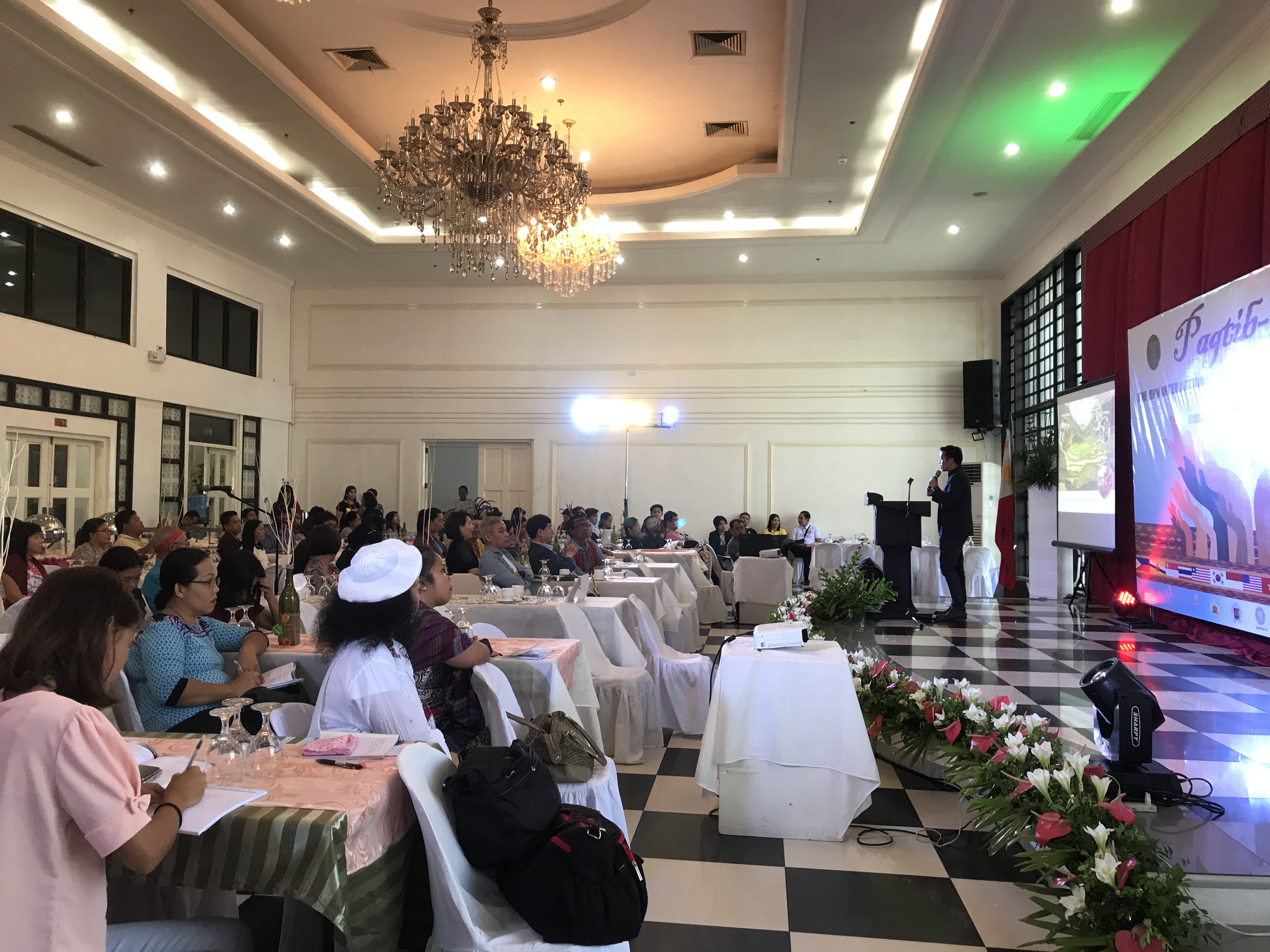
There were dozens of these fascinating reports and presentations on offer at Pagtib-ong (Hiligaynon for “to lift up”), and I was sorry that I couldn’t stay for the two full days, after giving a brief talk at the opening.

I had the privilege of attending the first conference last year and found it extremely informative, provocative, disturbing in some ways at it should be, but also giving reason for hope, in that we clearly have not forgotten the importance of those parts of our cultures and societies—parts far removed from the limelight of entertainment and social media—that define who we are.

Those engaged in ICH know that the life of a cultural scholar and researcher can be a very lonely, thankless, and sometimes even dangerous one. They sometimes wonder if their hard work matters to anyone else, or if it will bring real change to people’s lives. They forego more lucrative pursuits chasing after obscure languages and songs that will never make the Top Ten, or even the Top 1,000. The agencies they apply to for funding ask if their work has any practical economic benefits.

This conference was a welcome and warm reminder that they were not alone, that they all belonged to a community of people who understand, almost intuitively, what many others choose to ignore.

Studies like theirs go into the nerves and the bones—indeed, the DNA—of our culture, of what holds us together as peoples deep beneath the skin. The intangible heritage they are retrieving and preserving is an invaluable resource that we can all draw upon in our respective countries and communities around the ASEAN regionNo one else can do this but universities like UP and UPV, and their counterparts around the region, and scholars and cultural workers who believe fervently in needs other than the physical and the economic, those immediately tangible and measurable bottomline concerns that governments and administrations typically prefer to support.

But there is a cultural bottomline as well that we have barely plumbed, that very few people seem to be interested in, forgetting the fact that many of our national and regional problems are cultural in nature, stemming from our ignorance of who our people truly are and what they truly need and want.

This conference happened at a time when truth and human rights have been devalued all around the world. The delegates met in the face of a creeping train of anti-intellectualism, of suspicion and outright hostility towards teachers, students, and universities who dare to speak to power and to challenge falsehood.

This was all the more reason for ICH workers to persevere in what they do—in recovering the threads of our nationhood and weaving them into a coherent narrative that not even the fractiousness of our politics today can tear asunder.


Penman No. 253: Wealth You Can’t Buy

IMG_1773Penman for Monday June 5, 2017


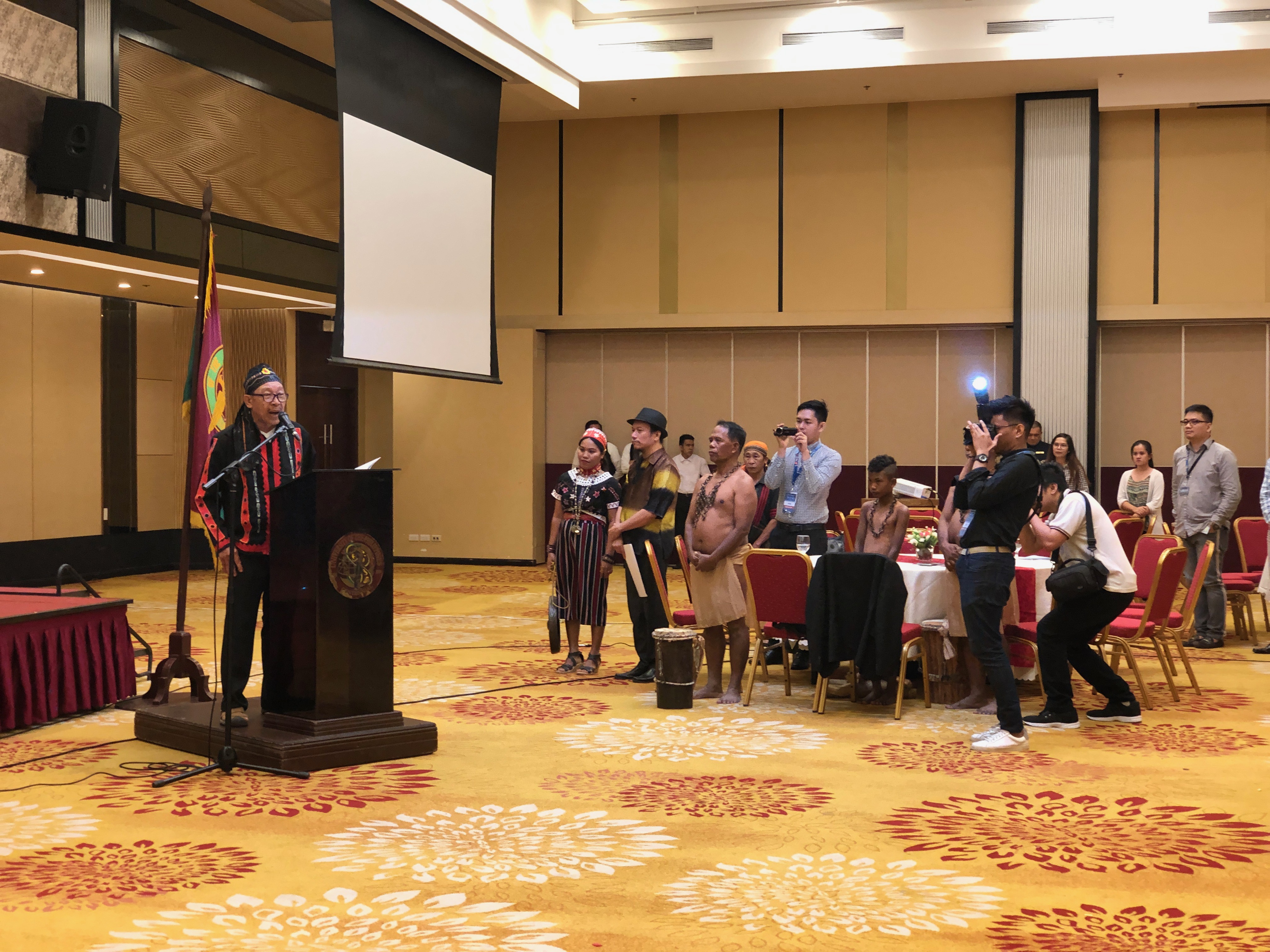
BENG AND I flew down to Iloilo City two weeks ago—she to hold a workshop on art restoration at the University of San Agustin, and I to attend Pagtib-ong, an International Conference on Intangible Heritage organized by the University of the Philippines Visayas at Casa Real—so it was a culture-heavy weekend, but happily so.

And what, exactly, is “intangible heritage”? Simply put, it’s wealth you can’t buy, of the cultural kind—the songs, stories, dances, traditions, practices, and beliefs of people, especially of those outside the increasingly homogenized and globalized mainstream. At a time when we’re all watching (and paying for) the same shows on Netflix and having the same Americano at Starbucks, younger Filipinos are fast losing touch with their own cultural roots. “Pagtib-ong” means “putting on a pedestal,” so this time and for a change, it’s our intangible heritage taking center stage.

UP President Danilo Concepcion framed the context well in his message that I read for him: “As nations and societies modernize and move deeper into the 21st century, the emphasis on material growth becomes even more pronounced, often obscuring all other considerations. Those considerations include intangible heritage—the cultural threads that bind not just people together but the past and the present, and indeed the present to the future. Our intangible heritage speaks to the very soul of our cultural community. It may not have much monetary value, if at all, but it is priceless in terms of containing, preserving, and propagating the values we seek to transmit from one generation to the next.”

Politicians will wonder how studying folk songs, kitchen practices, and the vocabulary of obscure languages can be important to national development, and it will be for us—both as scholars and cultural advocates—to show them how and why. Gatherings of scholars such as Pagtib-ong are rare and valuable, but we should also learn how to translate and communicate the significance of these events and their implications for our societies to a larger audience.

Just to give you an idea of what went on at Pagtib-ong, I’ll give you a sampler from the talks of the scholars who presented their research at the conference, and note the Asian and Filipino values and practices that I culled from their work.

Harmony. Pham Thai Tulinh of Lu TuTrong Technical College in Vietnam, the granddaughter of a general and a poet, had this to say about “QuanhoBac Folk Songs”: “The women traditionally wear distinctive round hats and scarves, while the men wear turbans, umbrellas and tunics. The Quanho folk songs are always performed voluntarily in groups of male or female (singers)…. A group of females from one village sings with a group of males from another village with similar melodies, but different lyrics, and always with alternating tunes. In each group, one person sings the leading tune and another sings a secondary part, but the two should be in perfect harmony at the same timbre.”

IMG_0920

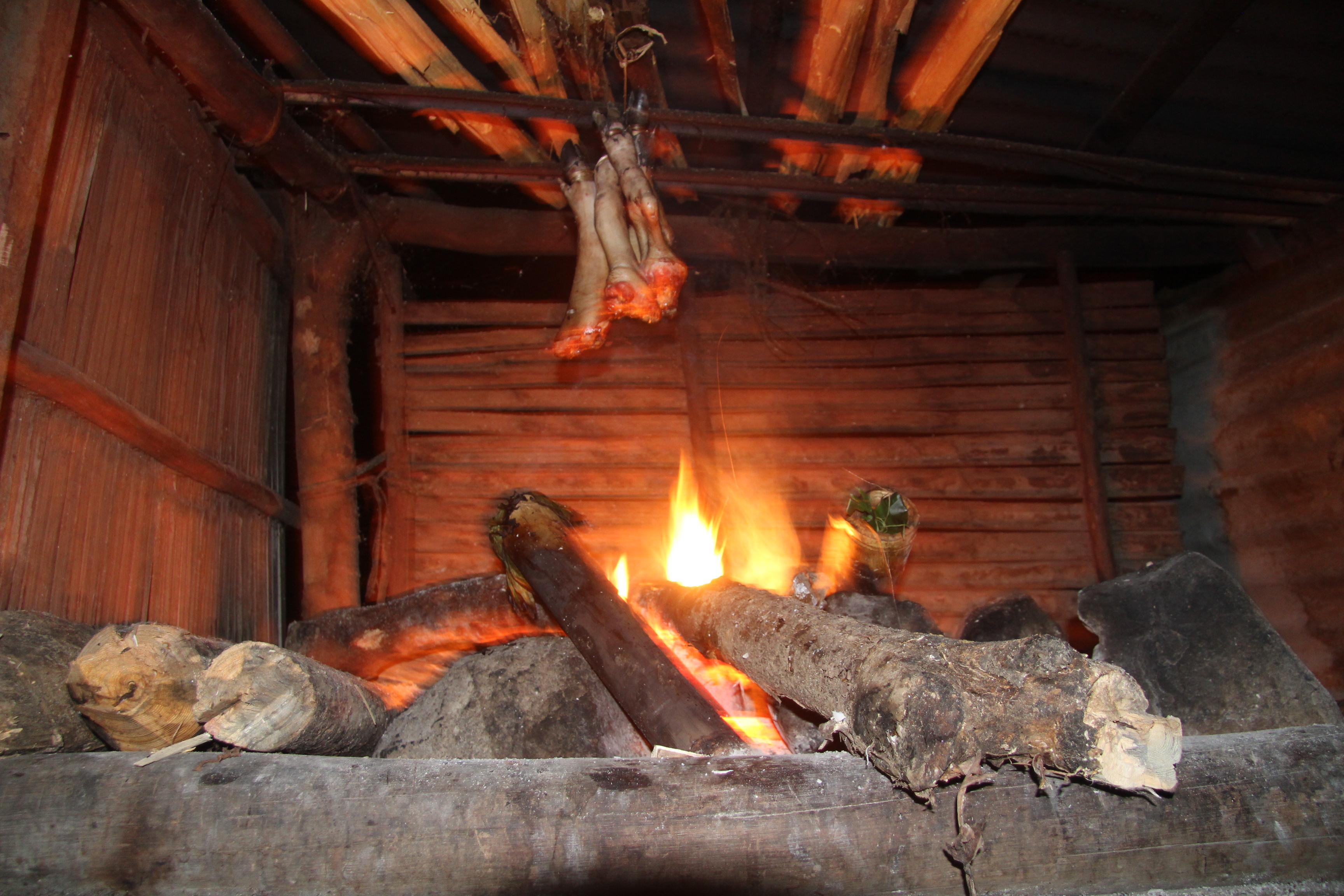
Continuity. Anna Razel L. Ramirez of the University of the Philippines Visayas reported on “Dungkulan: The Eternal Fire”: “A dungkulan is a large piece of wood that provides kitchen fire and ensures that an ember is always available to start a fire in the absence of matchsticks…. More than a fire starter for food, dungkulans are significant in the lives of people in the countryside and in the mountain areas. It is the source of warmth at nighttime, a reliable source of coffee on cold mornings; a steady source of warm water for health emergencies; and what many others need from that slow burning log that sustains the dapug and the lives of the people attached to the dungkulan.”

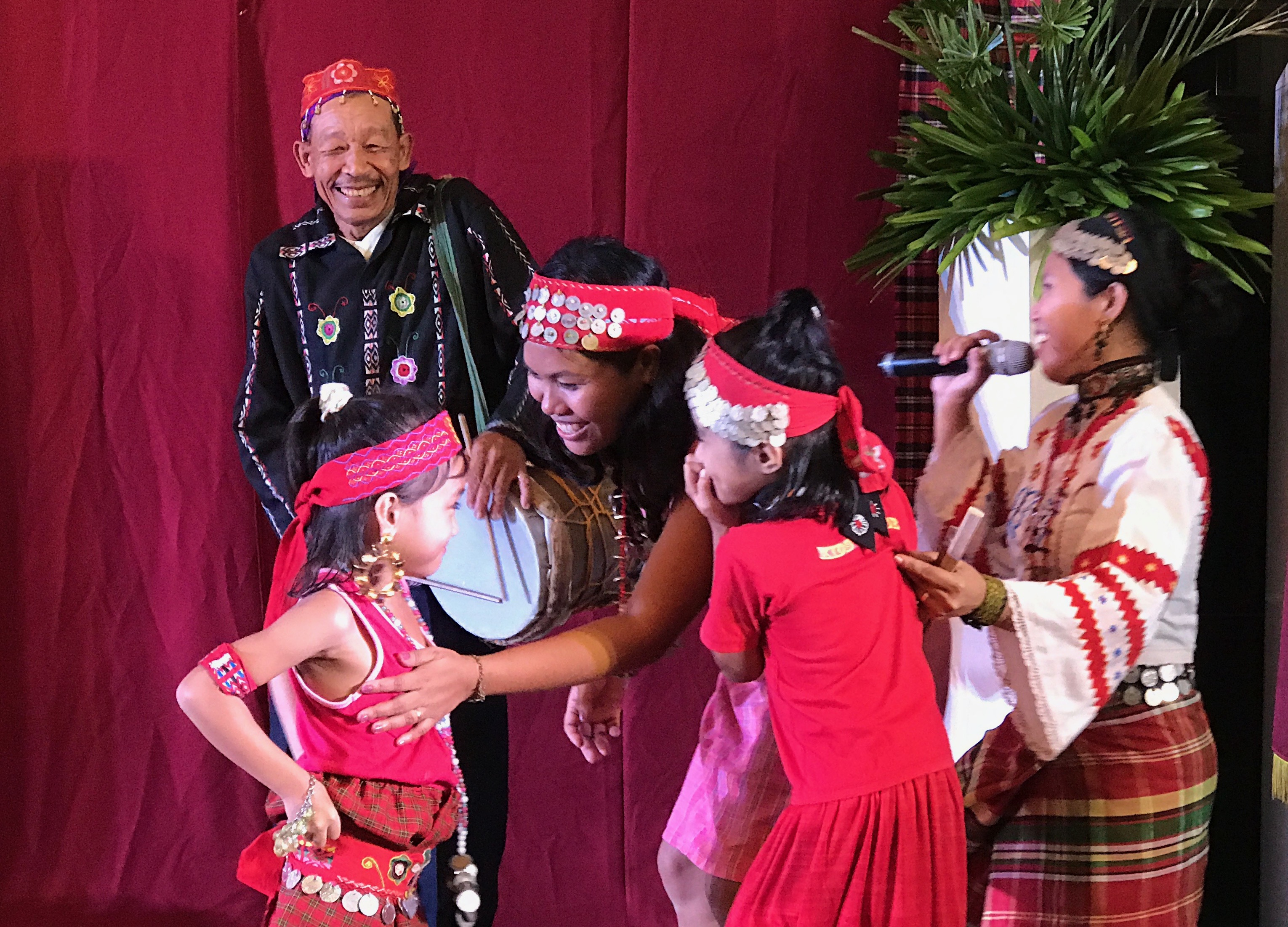
Conversation. Jose R. Taton Jr. of the Philippine Women’s University spoked on “Talda for Mixed Chorus”: “The talda is one of the various forms of musical repartee practiced by the Panay Bukidnon of Central Panay. Considered as a tukod-tukod (creative invention) tradition, it involves a dynamic altercation of deep sentiments of longing and love from singers who actively and spontaneously stream words (gina-gato) using metaphorical and figurative language. It is sung at leisure at any occasion, and the length of the musical conversation varies depending on the conscious and willful response of both parties.”

There were dozens more of these fascinating talks on the menu—I was especially taken by a lecture on Panay’s fabled golden boats by Dr. Alicia Magos, herself a legend in folklore studies, because it reminded me of the golden boat with my grandfather’s name emblazoned on it, reported to have been seen in Romblon off Calatong, our own enchanted mountain—but alas, we all had to return to our more tangible existences.

Many thanks and congratulations to UPV Chancellor Dr. Rommel Espinosa and Conference Chair Prof. Martin Genodepa for reaffirming the position of both the Visayas and intangible heritage in our cultural and social maps.

IMG_1758