
Qwertyman for Monday, March 30, 2026

I HAVE a dear friend in America named Julie Hill whom I have written about before, an old friend of our country and people. She turned ninety this past week, amid a host of personal challenges that come with age and with living alone. A prolific and published author whose books I edited, Julie was born in Alexandria, Egypt, and moved to the US for graduate school. She traveled and lived around the world, including Manila, with her late husband Arthur, and served as a multinational executive before retiring to Southern California. She has returned to the Philippines many times to visit with her old friends and quietly supports some private charities.
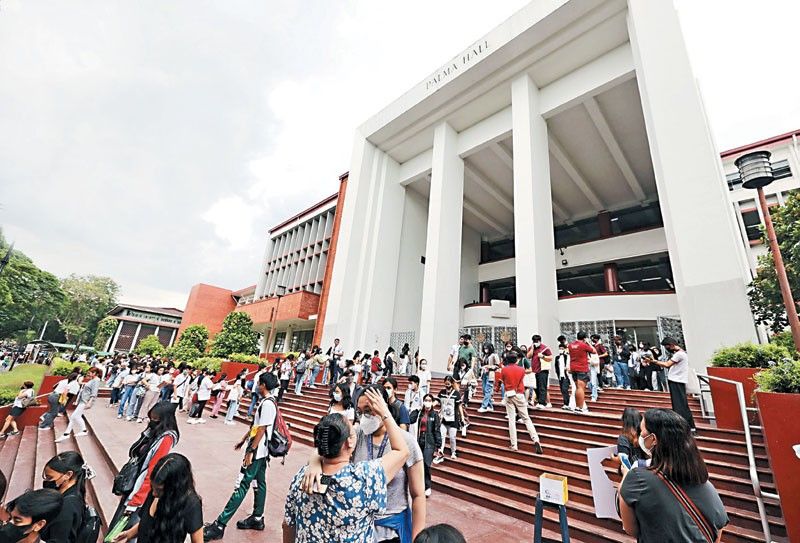
When I last came to see her last year, despite her own mounting needs, she graciously donated a substantial amount to the University of the Philippines in aid of UP’s poorest students. Despite the entreaties of concerned friends, she refuses to be confined to a nursing home, preferring the company of her memories to the chatter of strangers. She can sometimes be lonely and fearful, but she is proud and brave, and the horizon she gazes at stretches far longer than we can imagine. I thought of writing her this birthday letter to cheer her on.
Dear Julie,
With your ninetieth birthday coming up in a few days, a lot must be going through your mind. I don’t know if your roses are blooming and your oranges fruiting outside your window, but I hope they are, because they always bring you joy and delight, of which our world is desperately short these days.
You have been around that world and have seen both the best and the worst of it. Over the five travel books and memoirs I have edited for you, you found kindness and humanity in the earth’s farthest reaches, and you singled out the Philippines for your warmest affections. Even before we met, you established lifelong friendships with many Filipinos, and continued to visit them and to maintain a special relationship with this place.
And thus you would have seen that the Philippines you knew half a century ago is far different today in many ways, yet unchanged in others. You came here with your husband Arthur, when the Ford Foundation sought to help Philippine education and rural development—priorities which remain unmet. Our population and our cities have grown far beyond their capacity to sustain a decent living. Manila now teems with tall buildings and sleek condominiums, at the literal feet of which the hovels of the poor abound, a cliche we’ve become inured to, and accept as God’s design. We breed children we can barely feed, who can’t read, who seemed doomed to servitude.
Your generous donation to the University of the Philippines, meant to help the poorest of UP students complete their studies, will provide some much-needed hope and relief. While intervention at the college level is often too late for these children, your support, and that of others, gives them a fighting chance. Beyond external assistance, we need massive educational reform, which will require a singular and strategic will on the part of our government to invest in our natural intelligence, before we even speak of AI and other shortcuts. Sometimes I think we need to love ourselves enough.
And so is America changed as well—no longer the welcoming sanctuary you found when you fled Nasser’s Egypt to study in Minnesota, but a paranoid society, hostile to foreign faces, accents, and ideas. You know this yourself, living in an affluent community whose manicured lawns are dotted with MAGA flags. I’ve met some of your neighbors over lunches in your home, and they’re very nice people, except for their politics, now explainable only in terms of mass hypnosis or idolatry.
For how else could otherwise well-educated and upright citizens condone and even applaud a mad megalomaniac who starts a war without knowing why, delivering death and suffering the world over? What does it say of people happy to be led by a man utterly without morals, without conscience, and without compassion? Not long ago, with appalling but typical coarseness of spirit, this draft dodger publicly celebrated the passing of a combat veteran he saw as his enemy—an act of crass cowardice to which his followers turned a blind eye.
I’m reminded of those science-fiction movies from the 1950s, where your smiling, all-American neighbors turn out to be aliens beneath the skin, except that, ironically, today we are the aliens, to be excluded and exterminated by ICE, the American Gestapo.
I told you that I’ve sworn not to revisit the US until after Trump and his kind are banished from office, which makes me feel sorry that Beng and I might not see you again for some time, if ever again. The fare situation seems to have made that moot. The way things are going, we can’t even afford a flight down south, let alone across the Pacific. To all those MAGAs and Fil-Ams who tell us to butt out of US politics because it’s none of our business, well, here’s the g—d—n proof: never mind my bellyaching about plane tickets and all the nice beaches I’m missing out on; our jeepney drivers are plying the streets for 12 hours a day with tears in their eyes because they can’t even make enough to cover the gas they’re consuming, let alone pay their operator their “boundary” or daily minimum. When our oil supplies drain out in a few weeks, the agony will worsen. Beng and I will get past this—we’ve been through worse—but the suffering for many poor Filipinos will be incalculable.
I know that you, too, are suffering the aches and pains of old age, and that my periodic bouts with sciatica are nothing compared to yours. Twenty years ago when we first met we were still flush with energy and optimism, full of ideas about books to write and places to go. We wrote most of those books and followed our respective itineraries. When you come to think of it, we’ve led far fuller lives than most people can even dream of.
We can be thankful for the past and for the life partners we have been blessed to share this journey with. We could not have been more fortunate than for you to have had Arthur for half your life and for me to have Beng for most of mine. But we are not quite done yet.
We cannot let the bastards win. Our mission is to survive—and to survive them. If only for that, you have to live to 95, or even beyond that, and I have to do the same, so that we might, before finally exiting, regain our cheer, enjoy humor without irony, feel unmitigated joy. Be strong, be safe, and bask in the afternoon sun.
Affectionately,
B.
 Pinoy Penman 3.0