
Qwertyman for Monday, January 26, 2026
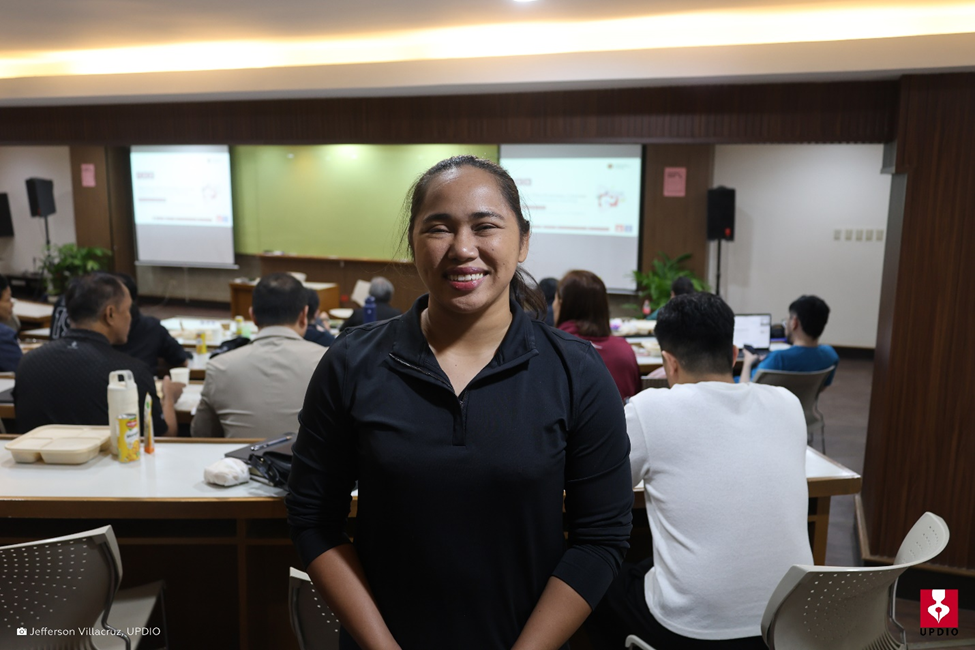
SOCIAL MEDIA was abuzz last week with mainly praises for but also some questions about Hidilyn Diaz’s appointment to teach weightlifting at the University of the Philippines in Diliman.
I don’t think anyone doubted the Olympic gold medalist’s mastery of her subject. One post that went viral, however, wondered whether the athlete had what it took to teach at UP, considering that all the preparation she would have received was a four-day orientation the university gives all new faculty members.
To be fair to the questioner, her concern was legitimate, taking Hidilyn the sports celebrity out of the picture for a minute. As I’ll discuss later, proficiency in a talent or profession doesn’t necessarily translate to good teaching.
To be fair to Hidilyn, unlike many Filipino athletes, she’s no stranger to the classroom, having graduated in 2023 with a bachelor’s degree in business management from St. Benilde, after several interruptions because of her training and the pandemic.
I have no doubt myself that despite her lack of teaching experience, Hidilyn will be a fine, welcome, and indeed a prize addition to the UP faculty roster. Her presence alone will galvanize student interest in her sport, and in UP athletics in general.
Her teaching, I’m pretty sure, will take care of itself. Having trained with some of the world’s best coaches, she will not lack for topics and techniques. What will probably challenge her the most will be her transition from star to student—as the learner of teaching that she will have to be. Her students will have to get over their awe of her celebrity to imbibe her lessons.
Her first year will be fraught with both exhilaration and frustration, as the enthusiasm and even the ecstasy of teaching are weighed down by the drudgery of academic bureaucracy—particularly in UP which, despite its leadership in many fields, remains a laggard in the prompt payment of salaries for new hires.
The fact that we’re even talking about this shows how far we’ve come from the past, when a good reputation was enough to get you in front of the blackboard.
The problem here isn’t Hidilyn, and not even just UP itself, but a global academic culture that seems to have been taken over by the accountants and professional managers from the dreamers.
I have nothing per se against the numbers crunchers, who are central and vital to every modern university’s survival. But the seemingly ceaseless demand for performance metrics to justify budgets, promotions, and bonuses—a mind-numbing exercise for staff already exhausted from their regular chores—can produce a false dazzle that favors consistency of delivery and even of mediocrity over originality, non-conformity, and inspiration.
As a writer and also a professor and former university administrator myself, I can appreciate the peculiar challenges of recruiting and sustaining what we might call non-traditional academics like creatives and athletes in this kind of environment. You need them to identify and develop their successors among their students; conversely, many of them also need the security of a job.
But teaching is its own art, its own sport, its own discipline—and I know, from sad experience, that not all artists and athletes, no matter how gifted they may be in their fields, can teach. Some lack the people skills and the empathy the classroom requires; the most expressive artists can be woefully inarticulate, the lithest athlete inexplicably clumsy.
Those who do connect—performers who know their audiences and who value contact and feedback and continuous learning—become the best teachers.
Many of them might not even meet today’s stringent entrance standards. UP’s College of Science, for example and for good reason, now requires a PhD of its teaching applicants. The humanities and athletics obviously can’t enforce that rule, given that there are Literature PhDs who can’t write a decent poem and SportsEd PhDs who can’t swim.
On the other hand, some very fine writers have taught at UP without even a bachelor’s degree because of their extraordinary talent, notably NVM Gonzalez, IP Soliongco, Jose Lacaba, and Ricky Lee.
This will be self-serving, but no better example of that kind of avatar exists at UP today than my wife June, who has been teaching the very first course in Art Conservation at the College of Fine Arts as a senior lecturer for the past three years.
Now 75, June came into teaching late in life, after a long career in the arts as a graphic designer, watercolorist, and for the past quarter-century as an art restorer and conservator running her own studio. Few people in this country (excuse the proud husband speaking) have her skill and experience, having worked on all the Filipino masters from Luna, Hidalgo, and Amorsolo onward, including the Spoliarium. She had always dreamt of teaching, knowing how few authentic and scientific conservators there are in the Philippines, and the need to train the young.
The only problem was, as a student activist, she had left UP under martial law a few units short of completing her Fine Arts degree. She married me, worked, became a mother, and never went back to school.
But she did train long and hard in conservation and restoration with the Agencia Internacional of the Spanish government, practically every day for a full year, in a program more rigorous than a master’s. On the strength of that training and her experience—she and her team have restored the collections of the Central Bank, the Philippine National Bank, and the GSIS, among others—she was taken in by UP to advise the administration on conserving the university’s vast art collections, leading to her appointment as lecturer (for a subject that, frankly, no one else in UP can teach right now). Aside from her classes, June has been advocating for UP to set up its degree program in conservation and an Arts Conservation Center to serve as both a teaching and service facility. She still runs her own Artemis Art Restoration company for private clients. For a 75-year-old dropout, that can’t be too bad. She complains of fatigue and of being perplexed by the world of AI, and says she wants to stop before dementia sets in, but I know her students love her and wish she would teach forever (because they tell her so).
I myself was a dropout for a decade and had worked as a journalist and screenwriter before returning to UP to finish my degree so I could teach—which I ended up doing for 35 years and still do long after retirement.
When I think of Hidilyn Diaz coming in to UP amid all the fuss, I want to tell her to just relax, and to enjoy the campus and her students. Teaching in UP will be full of joys and aggravations, but the heaviest lifting will be within her—of doubts, fears, and the catcalls of the rabble in the bleachers. Welcome to the home of Honor, Excellence, and Service—and never mind that it also happens to be a hornets’ nest.
 Pinoy Penman 3.0