
Qwertyman No. 181: Another FQS?

Qwertyman for Monday, January 19, 2026
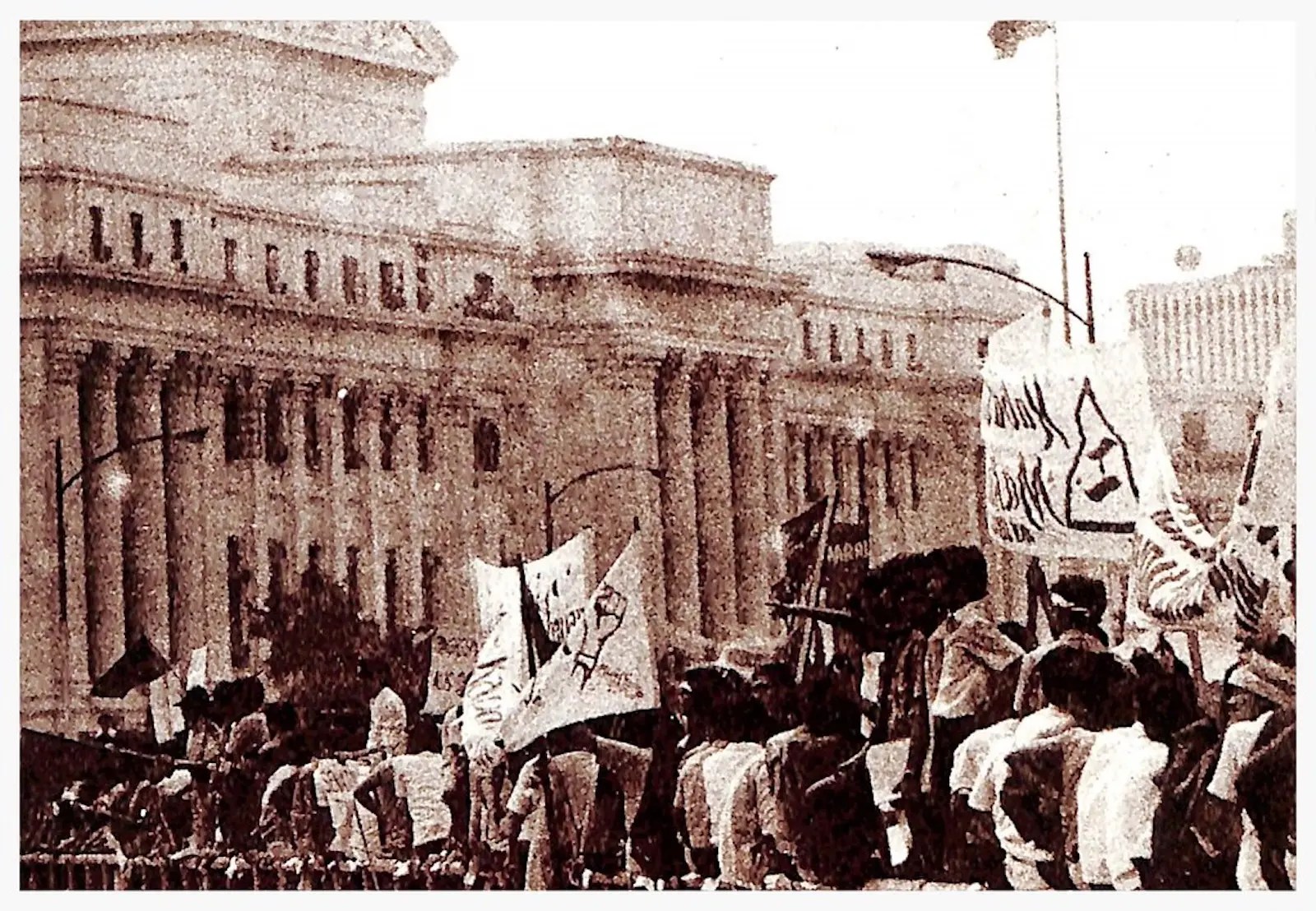
I’M WRITING this piece on my 72nd birthday, so I hope you’ll indulge me if I revert to the memory of another January 56 years ago. On the afternoon of January 26, 1970, I milled with thousands of other young students on the campus of the University of Sto. Tomas, the staging ground for a large contingent of demonstrators marching to the Legislative Building near the Luneta (now the National Museum). President Ferdinand Marcos was going to deliver his State of the Nation Address, and a mass action had been called to protest a host of issues, from Marcos’ increasingly authoritarian rule to rising prices, militarization, corruption, and Philippine subservience to American interests.

I had just turned 16, and was a senior and an activist at the Philippine Science High School. But I was no radical—not yet; I stood under the banner of the National Union of Students of the Philippines (NUSP), among so-called “moderates” led by Edgar Jopson, derided by FM as the “grocer’s son” and later to become a revolutionary martyr. Unlike the far-Left Kabataang Makabayan (KM) and the Samahang Demokratiko ng Kabataan (SDK, which I would soon join) who were railing against “imperialism, feudalism, and bureaucrat capitalism,” the NUSP’s cause sounded much more tangible albeit modest: a non-partisan 1971 Constitutional Convention.

What happened next that afternoon, when both groups of protesters converged at the Senate, would change Philippine political history. The moderates had paid for the rental of the protest mikes and loudspeakers, and wanted to pack up early, but the radicals literally seized the paraphernalia—and figuratively seized the day—launching into a verbal offensive that soon turned physical. Then a young journalist covering the event, Jose “Pete” Lacaba provides the reportage:

“Where the demonstration leaders stood, emblems of the enemy were prominently displayed: a cardboard coffin representing the death of democracy at the hands of the goonstabulary in the last elections; a cardboard crocodile, painted green, symbolizing congressmen greedy for allowances; a paper effigy of Ferdinand Marcos. When the President stepped out of Congress, the effigy was set on fire and, according to report, the coffin was pushed toward him, the crocodile hurled at him. From my position down on the street, I saw only the burning of the effigy—a singularly undramatic incident, since it took the effigy so long to catch fire. I could not even see the President and could only deduce the fact of his coming out of Congress from the commotion at the doors, the sudden radiance created by dozens of flashbulbs bursting simultaneously, and the rise in the streets of the cry: “MARcos PUPpet! MARcos PUPpet! MARcos PUPpet!”

“Things got so confused at this point that I cannot honestly say which came first: the pebbles flying or the cops charging. I remember only the cops rushing down the steps of Congress, pushing aside the demonstration leaders, and jumping down to the streets, straight into the mass of demonstrators. The cops flailed away, the demonstrators scattered. The cops gave chase to anything that moved, clubbed anyone who resisted, and hauled off those they caught up with. The demonstrators who got as far as the sidewalk that led to the Muni golf links started to pick up pebbles and rocks with which they pelted the police. Very soon, placards had turned into missiles, and the sound of broken glass punctuated the yelling: soft-drink bottles were flying, too. The effigy was down on the ground, still burning.”

The January 26 rally and the trouble that erupted would lead to the January 30-31 demos that would prove even more violent, and what would become the First Quarter Storm or the FQS was born. “First quarter” would turn out to describe not only the beginning of 1970 but of the decade itself, as the start of 1971 would prove just as incendiary, with the establishment of the Diliman Commune (and of course, now as a UP freshman, I was there). It seemed that the entire country was politically on fire, with protests mounting by the week, and it would all culminate in what everyone predicted: the declaration of martial law in September 1972. 

It took another 14 years and another “first quarter storm”—the tumultuous months of January and February 1986, following the snap election—to depose Marcos. Fifteen years later in 2001, on another January, yet another president, Joseph Estrada, would be hounded out of office over issues of corruption.

What is it about these first quarters that provoke such firestorms? And do we still have it in us to begin the year on a note of political resolve?

I’ve been worried, like many of us, that the Christmas break, the congressional recess, and intervening issues may have sucked the steam out of the public outrage that boiled over the flood-control scam last year, and lulled the government into thinking that the worst was over and that we could all just settle back into the old routine: let the Ombudsman and the courts do their job, etc. 

What’s worse is if we fall into that mindset, too. The budget deliberations, the Cabral death mystery, the Leviste files, the Barzaga antics, and even a traffic violation episode have all seemed to be distractions from our laser-sharp focus on bringing the crooks to justice. But in fact, they’re all of one piece: demanding better and honest government, the overarching issue we need to press.

And just as the radicals seized the initiative from the moderates 56 years ago, FM’s son, PBBM, can still seize the day by going against all expectations, even against his own nature, and finishing what he may have inadvertently begun: weeding out corruption in government. Never mind the motive—reviving his sagging poll numbers, saving his skin, redeeming the Marcos name, or leaving a worthy legacy behind. He has little choice, if he and his family are to survive. 

There are immediate and concrete steps he can take to achieve this:

1. Activate the Independent People’s Commission. The people are waiting for his next move in this respect; get the enabling law passed and the job done.

2. Impeach VP Sara Duterte. The grounds haven’t changed, and the urgency can only increase as 2028 approaches.

3. Revamp the Cabinet, but replace the non-performers. PBBM knows who they are as well as the public—especially the publicity-seekers whose departments haven’t delivered.

4. Find Atong Ang, Zaldy Co, Harry Roque, etc. and jail the big fish—including political allies. It’s hard to believe that with billions in intelligence funds, the administration can’t track and nail these highly visible fugitives down. Justice is perception.

Do these, and maybe we’ll avoid the generational kind of flare-up and meltdown that followed January 26, 1970.
Qwertyman No. 46: The Writer as Liberator

Qwertyman for Monday, June 19, 2023

AS PART of its Independence Day celebration, the J. Amado Araneta Foundation asked me to give a talk on “The Writer as Liberator” last Saturday, and today being Jose Rizal’s birthday, I’m very happy to share that talk in full (a shorter version appeared as my Qwertyman column in the Star):

When I was first asked to talk about “The Writer as Liberator,” the first thought that went through my mind was probably the thought that’s now going through yours, which was that of the writer as political revolutionary or dissident, in the mold of Jose Rizal, Marcelo H. del Pilar, Lorraine Hansberry, Alexander Solzhenitsyn, Nadine Gordimer, Wole Soyinka, and so many others of their caliber and stature.

That presumption, of course, is certainly valid and reasonable. Indeed, human history is fraught with examples of writers who fought colonialism, slavery, racial prejudice, and feudal and capitalist oppression and exploitation in India, South Africa, and the United States, particularly the American South, among many if not most other countries in the world. Wherever evil has reared its head, writers have arisen to call it out by name in all its forms—overweening pride among the ancient Greeks, blind ambition in Shakespeare’s time, lust and greed everywhere down the ages. 

The Philippines has been no exception. Decades before Rizal, Francisco Baltazar or Balagtas employed allegory in Florante at Laura to depict suffering and denounce injustice. Rizal and the whole Propaganda Movement followed, in a story of resistance and revolution that many of us already know. It’s a high climactic point that we could talk about all day but I won’t, because I’d rather talk about other things that most of us don’t know about writers and liberation. 

Again, to deal with the obvious, writers of all kinds have been at the forefront of political and social change. They included poets, playwrights, novelists, journalists, screenwriters, and today we would have to count bloggers and comic book script writers.

Our heroes and champions of freedom were poets—Rizal’s Mi Ultimo Adios and Bonifacio’s Pag-Ibig sa Tinubuang Lupa spring to mind, but they were also followed by the likes of Claro M. Recto, Francisco “Soc” Rodrigo, Carlos P. Garcia, and Diosdado Macapagal. These men—sadly, our political and even our cultural life was dominated then by the patriarchy—came from a generation when there was a very thin line between journalism and creative writing, when an opinion column could appear in verse, and when senators were expected to be literate and eloquent.

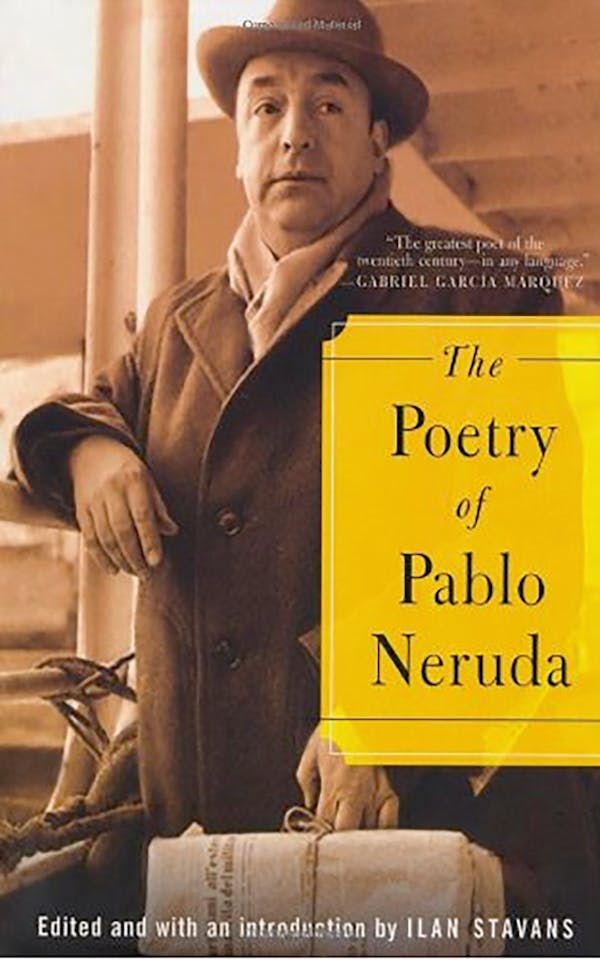
As I mentioned earlier, this was true of many countries around the world where people were fighting for freedom and justice. In South America, Simon Bolivar—who was known as The Liberator or El Libertador—led the fight for independence from Spain of what are now his native Venezuela, Colombia, Bolivia, Peru, Ecuador, and Panama, but he was also a poet, alongside the Cuban Jose Marti, among others. The Chilean poet and Nobel Prize winner Pablo Neruda wrote a poem in tribute to Bolivar, titled “A Song for Bolivar,” which I will read to you:

Our Father thou art in Heaven,
in water, in air
in all our silent and broad latitude
everything bears your name, Father in our dwelling:
your name raises sweetness in sugar cane
Bolívar tin has a Bolívar gleam
the Bolívar bird flies over the Bolívar volcano
the potato, the saltpeter, the special shadows,
the brooks, the phosphorous stone veins
everything comes from your extinguished life
your legacy was rivers, plains, bell towers
your legacy is our daily bread, oh Father.

The line “everything comes from your extinguished life” might as well have applied go Neruda himself, who was murdered by the fascist Pinochet government he opposed. Many writers have died for what they have written—and again we go back to Rizal—but others fought, lived on, and even succeeded in their struggles for national liberation. Two of the most prominent were Ho Chi Minh and Mao Zedong, who led long and ferocious wars against both local and foreign oppressors.

Imprisoned in China during the war, Ho Chi Minh wrote this poem in 1943 upon reading a book called the Anthology of a Thousand Poets:

The ancients liked to sing about natural beauty:
Snow and flowers, moon and wind, mists, mountains and rivers.
Today we should make poems including iron and steel,
And the poet should also know how to lead an attack.

In 1950, shortly after the Communists took over in China, Mao wrote this poem in reply to another poet named Liu Yazi:

The night was long and dawn came slow to the Crimson Land.

For a century demons and monsters whirled in a wild dance,

And the five hundred million people were disunited.

Now the rooster has crowed and all under heaven is bright,

Here is music from all our peoples, even from Yutian,

And the poet is inspired as never before. 

Note how, in these two poems, Ho and Mao locate the poet at the center of a collective struggle. This idea is developed even more strongly by Jose Ma. Sison—who by the way was an English major in UP—in his poem from the 196os titled “The Guerilla is Like a Poet”:

The guerilla is like a poet 
Keen to the rustle of leaves 
The break of twigs 
The ripples of the river 
The smell of fire 
And the ashes of departure. 

The guerilla is like a poet. 
He has merged with the trees 
The bushes and the rocks 
Ambiguous but precise 
Well-versed on the law of motion 
And master of myriad images. 

The guerilla is like a poet. 
Enrhymed with nature 
The subtle rhythm of the greenery 
The inner silence, the outer innocence 
The steel tensile in-grace 
That ensnares the enemy. 

The guerilla is like a poet. 
He moves with the green brown multitude 
In bush burning with red flowers 
That crown and hearten all 
Swarming the terrain as a flood 
Marching at last against the stronghold. 

An endless movement of strength 
Behold the protracted theme: 
The people’s epic, the people’s war. 

Given the aesthetics of the Philippine Left at that time, you could actually reverse this proposition to read “The poet is like a guerilla,” which Emman Lacaba certainly was, as was Ma. Lorena Barros, whose poem “Sampaguita” follows:

This morning Little Comrade

gave me a flower’s bud

I look at it now

remembering you, Felix,

dear friend and comrade

and all the brave sons and daughters

of our suffering land

whose death

makes our blades sharper

gives our bullets

surer aim.

How like this pure white bud

are our martyrs

fiercely fragrant with love

for our country and people!

With what radiance they should still have unfolded!

But sadness should not be

their monument.  

Whipped and lashed desperately

by bombed-raised storms

has not our Asian land

continued to bloom?

Look how bravely our ranks

bloom into each gap.

With the same intense purity and fragrance

we are learning to overcome.

Decades later, her namesake Kerima Lorena Tariman would write “Pagkilos,” a poem that celebrates motion in both nature and society:

Ang lahat ng bagay ay tila kitikiti,
Palagiang kumikilos at hindi mapakali.
Ang paggalaw ay kakambal ng bawat bagay,
Likas na kaugnay at hindi maihihiwalay.

Ang mga bagay-bagay ay kay hirap isipin,
Kung walang paggalaw, kung kaya, gayundin,
Ang paggalaw mismo ay di natin matatanto,
Kung wala ang mga bagay dito sa mundo.

Sa daigdig, halimbawa, nagpapahinga man ang pagod,
Matikas man ang estatwa at patay-malisya ang tuod,
Sila’y hindi naliligtas sa paggalaw ng planeta,
Ang pag-ikid at pag-inog ang palagiang sistema.

Kung kaya ang masa na akala mo’y walang imik,
Kapag natutong lumaban ay nagiging matinik!
May mga kasama man na natitigil sa pagkilos,
Ang rebolusyon sa daigdig ay hindi natatapos!

A, lahat ng bagay ay saklaw ng ating kilusan,
Katotohanan ito na di maaaring iwasan.
Kung kaya’t habang tayo ay may lakas at talino,
Sa pagkilos natin ialay ang ating bawat segundo!

Tragically, both Lorenas—and Emman Lacaba before them—would be killed in the struggle that they took on, and be hallowed as revolutionary martyrs.

Now, all this may sound like an open invitation for our favorite red-taggers to call all poets rebels, and all rebels communists. That would be ridiculous. Most poets are still happy and perfectly within their rights to write about the moon and the stars and undying love. Some rebel-poets were proud and self-admitted communists, at a time when the word was invested with a sheen of holiness. But the abject failure of communism to set up a truly free and egalitarian society and its appropriation in both China and Russia by new and autocratic elites has shed much of that romantic mystique, and it is supremely ironic that those writers and artists now fighting for civil liberties in both countries are considered enemies of the state.

“The Writer as Liberator” was an easier concept to deal with when we had a foreign occupier like Spain, America, or Japan. Today, our oppressors are internal, lodged within our society, and within our hearts and minds. The liberation we need today is from our worst selves, which is often the hardest enemy to face. Bad leadership has enabled and encouraged that side of us that accepts extrajudicial killing and unjust imprisonment as normal. 

The minds of so many of our people remain shackled by ignorance, falsehood, prejudice, superstition, fear, and a crippling dependency on the old and familiar, however self-destructive they may be. In an increasingly polarized and intolerant world, people everywhere face racial violence and discrimination, gender inequality, economic exploitation, and political repression.

The writers who will battle this chimera have many weapons at their disposal—not just books and the traditional press but social media, a universe of communication unto itself that Rizal and his contemporaries never dreamed of. Journalists fight with the truth, creative writers fight with the truth dressed up as artistic lies. 

I have often said that the best antidote to fake news is true fiction. By this I mean that it often takes artistry and good storytelling, more than a mere recitation of facts, to show people what is true.

Long before there were newspapers, writers gave voice to their people’s hopes and fears through what today would be called fiction: through myths, legends, tales, epics. These stories transported people from the crushing routine of their everyday lives to the realm of the gods, to a romantic past cloaked in the mists of fable and fancy. Indeed, these stories came even earlier than literacy itself, transmitted orally from one generation to the next. Creation myths validated and gave meaning to a tribe’s or a people’s existence; tragic drama reminded them of the consequences of our moral choices. 

When I started my Qwertyman column in the Philippine Star and began writing what I called “editorial fiction,” a columnist in another newspaper immediately cried “Foul!”, claiming that fiction cannot possibly be taken as opinion. I responded that all fiction is opinion, if you know how to read it closely enough. Like the mirror Perseus used to kill Medusa, we employ fiction to deal with truths we cannot bear to face.


I am under no illusion that the next revolution, whatever it may be against or when, will be sparked by a novel or a poem. Very likely, it will be a viral video that will ignite that flame. I pray it will not be violent, but rather a comprehensive conversion of our people’s minds and spirits for the good. But there will always be a place for the writer in the offices, kitchens, and workshops of democracy, on the bunkbeds where we lie dreaming of justice and prosperity for all. 

Let me close with a short poem that I wrote last year, titled “Freedom Is When”:

Freedom is when 

We don’t think about it

But it’s there like air

We seek only in its absence

When we’re gasping for breath.

Freedom is when

We can choose whom to love

Or whom or what to believe 

Without any fear

Of punishment or death.

Freedom is when

We can sleep without guilt

And dream without ghosts

Waking up to the aroma

Of steaming rice and stewed fish.

Ang kalayaan ay kung

Hindi natin ito iniisip

Tulad ng hangin

Hanggat ito’y mawala

At tayo’y maghingalo.

Ang kalayaan ay kung

Malaya tayong pumili

Ng iibigin, o paniniwalaan

Nang walang katatakutang

Parusa o kamatayan.

Ang kalayaan ay kung

Mahimbing tayong makakatulog

At managinip nang di minimulto

Hanggang tayo’y pukawin ng halimuyak

Ng bagong saing na kanin at pinangat.