Penman No. 478: Best Foot Forward in Frankfurt

Penman for Sunday, October 5, 2025

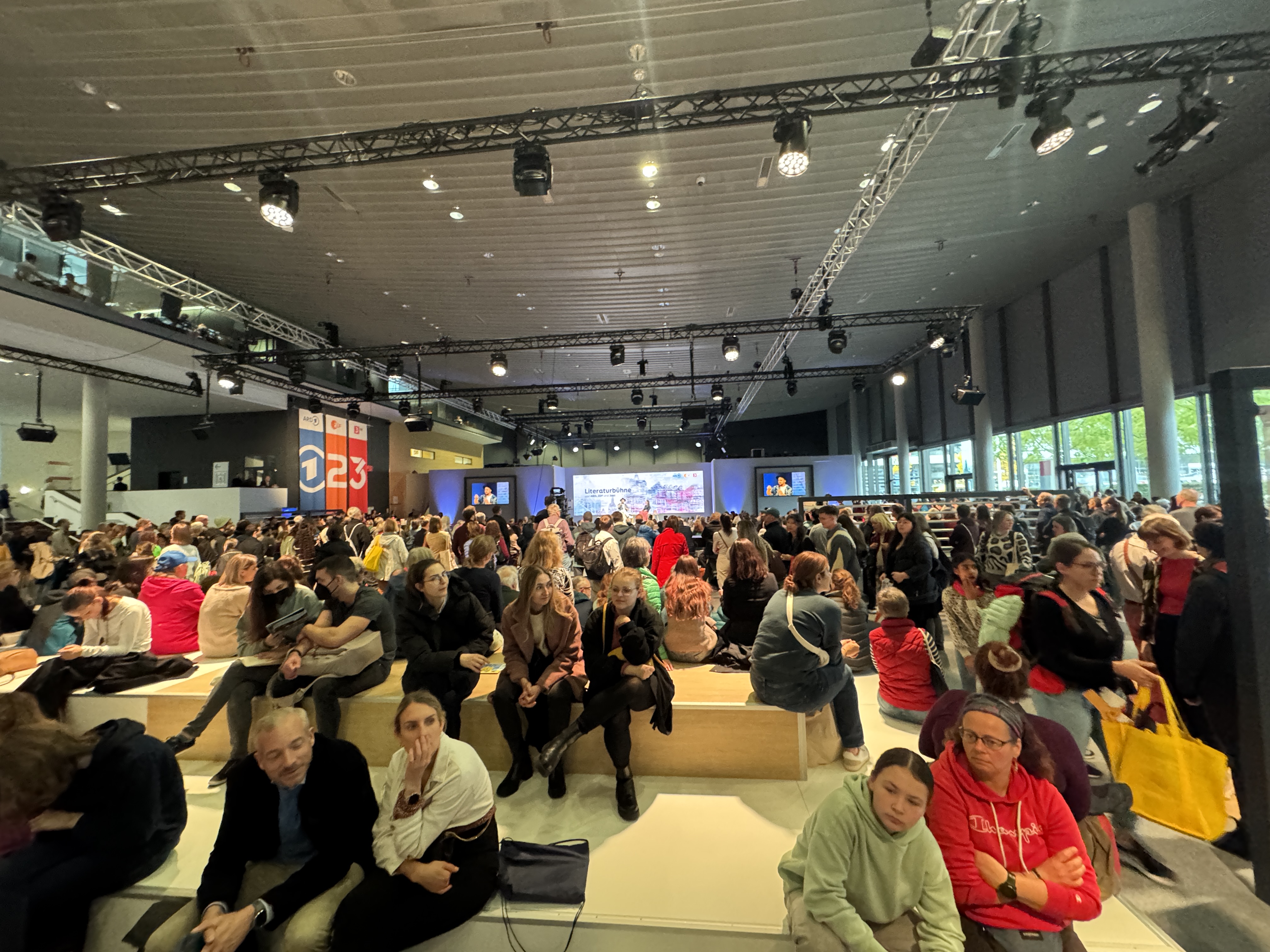
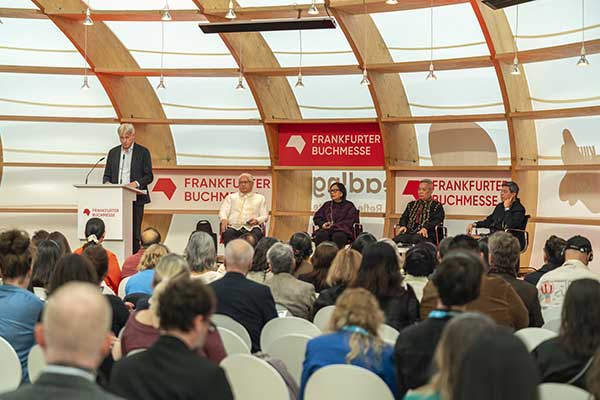
ON MONDAY next week, several hundred Filipino writers, publishers, artists, journalists and other workers in the book trade will be flying off to Germany for the Frankfurter Buchmesse (FBM), better known as the Frankfurt Book Fair, running this year until October 19.

Led mainly by the National Book Development Board (NBDB) and the National Commission for Culture and the Arts (NCCA), it will probably be the largest cultural mission ever sent out by the country to an international event—the equivalent of an Olympic delegation—and for good reason. This year, the Philippines is the FBM’s Guest of Honor (GOH), an annual distinction designed to draw attention to that particular country’s literature and culture, chiefly through its books. 

As GOH, the Philippines will have its own pavilion of curated exhibits highlighting our literary history and production, as well as the diversity of our works from historical novels and crime fiction to children’s stories and comic books.

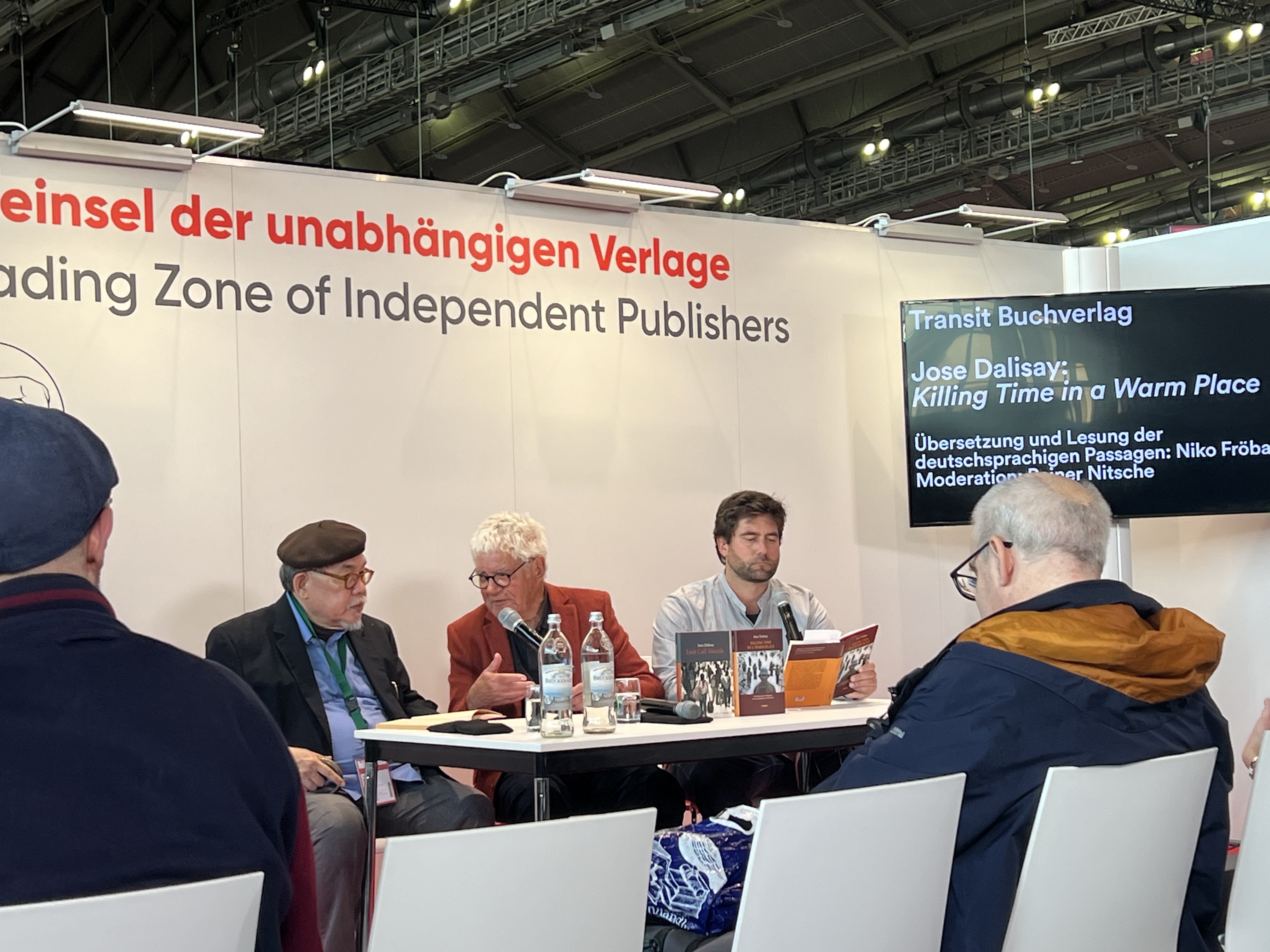
Going back over 500 years, the Frankfurt book fair is the world’s largest gathering of publishers, authors, and booksellers, drawing thousands of attendees from all over the world to what is essentially a marketplace for publishing and translation rights. For countries like the Philippines, far away from the global publishing centers in New York and London, it is a matchless opportunity to showcase the best of one’s work. 

Looming largely over our GOH presence will be the work and legacy of Jose Rizal, whose deep personal ties to Germany—where he studied ophthalmology and completed Noli Me Tangere—continue to inform our relationship with that country. Indeed, our GOH slogan—“The imagination peoples the air”—is drawn from Rizal’s Fili, turning Sisa’s frantic search for her missing sons into a metaphor for the power of words to create moving realities.

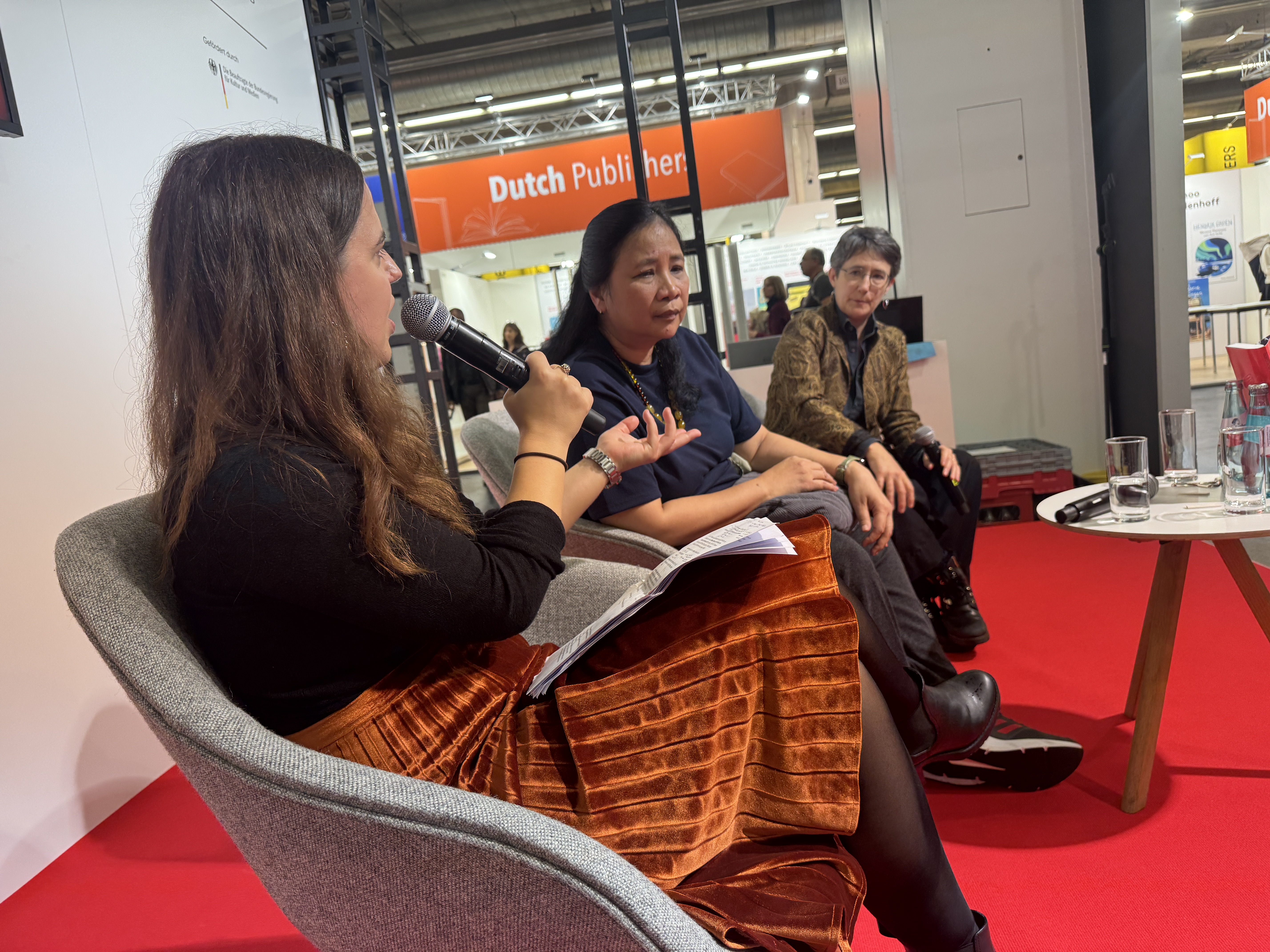
There are hundreds of events on the Philippines’ official FBM schedule, both onsite and off-site. They range from panel discussions on “Our National Literature: Filipino Spirit and Imagination” with Merlie Alunan and Kristian Cordero, “Women’s Fiction from the Global South” with Cecilia Manguerra Brainard, Jessica Zafra, and Ayu Utami, and “Dismantling Imperial Narratives” with Filomeno Aguilar Jr., Lisandro Claudio, and Patricia May Jurilla to performances by National Artist for Music Ramon Santos and the Philippine Madrigal Singers, a demonstration of Baybayin by Howie Severino, and a book launch of the German editions of the Noli and Fili with historian Ambeth Ocampo. (For the full program, see https://philippinesfrankfurt2025.com/events/)
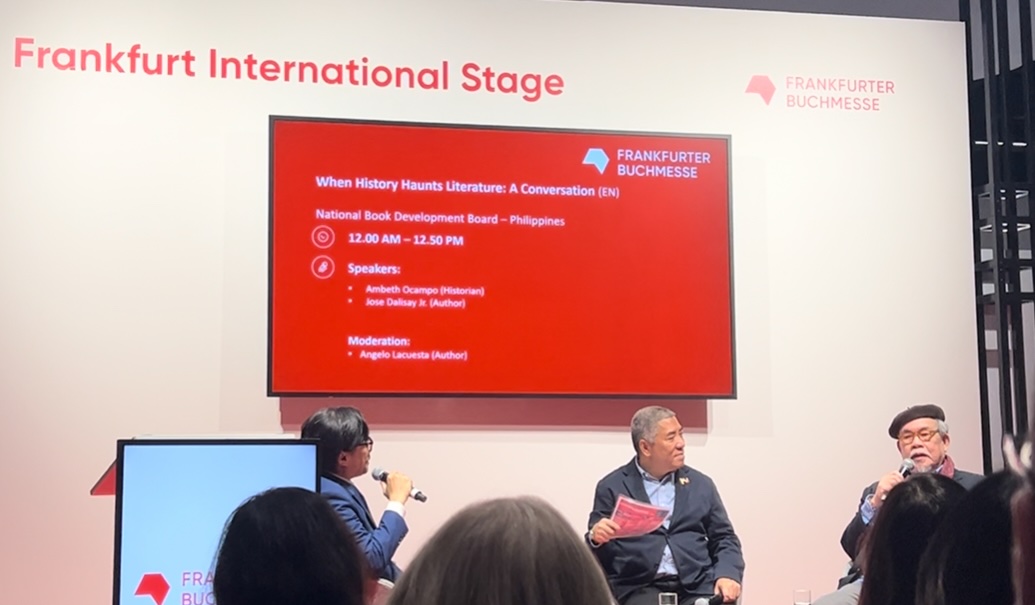
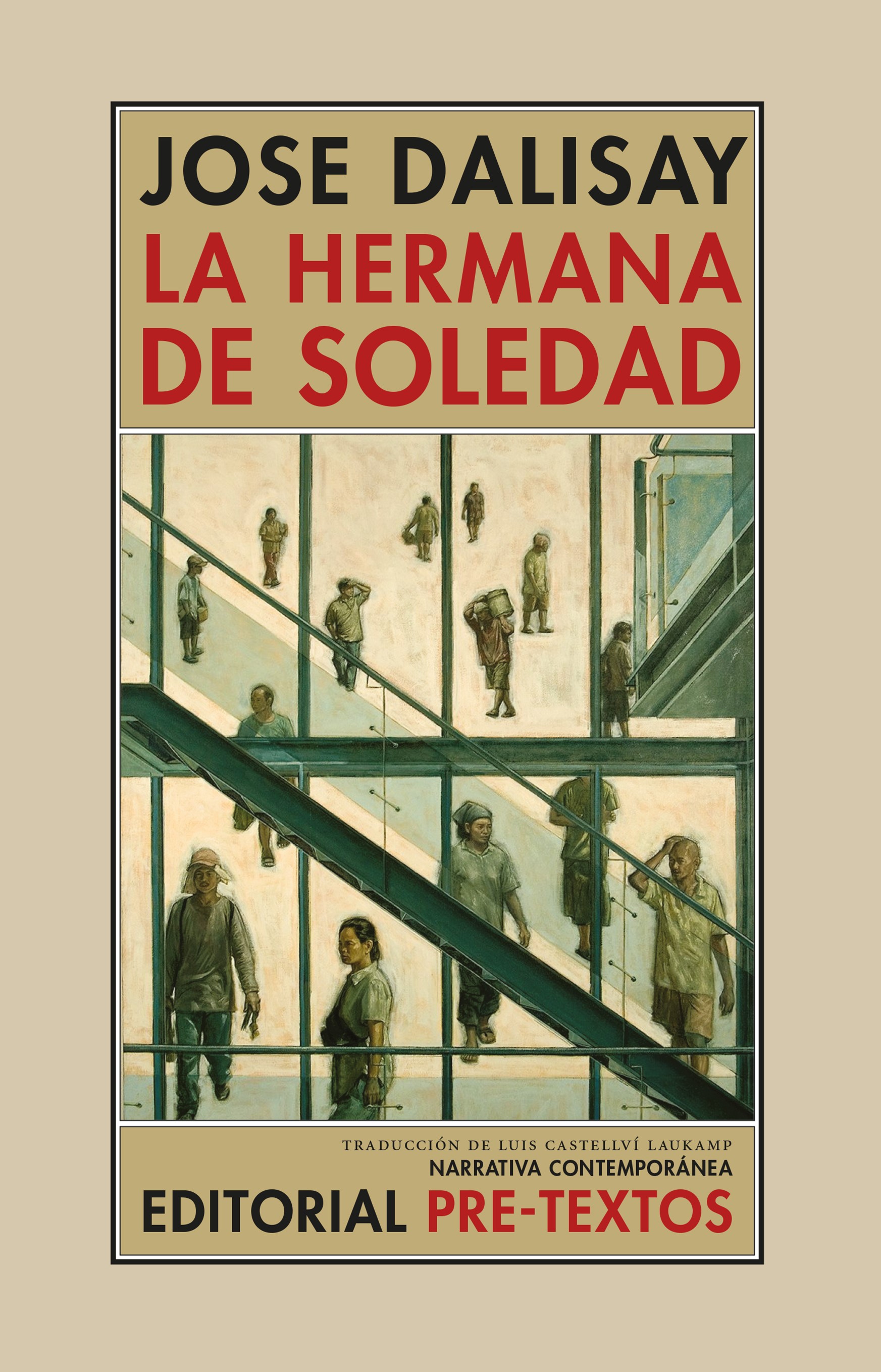
I have eight events on my personal calendar, ranging from the launch of the Spanish edition of my novel Soledad’s Sister to readings at the Union International Club and Bad Bergleburg, so it’s going to be a hectic time for this septuagenarian. This will be my third and likely my last sortie into the FBM, and I know how punishing those long walks down the hangar-sized halls can get. 
Practically all aspects of Philippine art and culture will be on display in Frankfurt, going well beyond books and literature into theater, film, music, dance, food, and fashion. In short, we will be putting our best foot forward on this global stage, although there will be no papering-over of our political and social fractures and crises. (Journalists Maria Ressa and Patricia Evangelista will be there to make sure of that.)

As with any large-scale national enterprise, our GOH effort has not been without controversy. A campaign by cultural activists to boycott the FBM—premised on Germany’s and the book fair’s perceived support for Israel in its genocidal war on Gaza—took off earlier this year and gained some traction, leading to the withdrawal of some authors from the delegation. There was spirited and largely respectful debate over this issue, but it was clear to both sides from the outset that a complete disengagement from the FBM—for which we had planned for many years running—was not going to happen. (I argued, like many others, for our critical participation, minding Gaza as one of the foremost issues facing humanity today. Not incidentally, on the Philippine program is a panel on “Writing Through the Wounds: Filipino and Palestinian Literatures in Relational Solidarity” with Nikki Carsi Cruz, Dorian Merina, Tarik Hamdan, Atef Abu Saif, and Genevieve Asenjo, among other initiatives in support of Palestinian freedom.)

Another criticism raised was the cost of our GOH participation—an effort bannered and sustained by Sen. Loren Legarda, the chief and most consistent supporter of the arts and culture in the Senate. Why not just pour all that money, some have said, into publishing and printing more books for Filipinos? There’s no argument that Philippine education needs more support (the trillion-peso infrastructure scam tells us the money was always there) but the targeted exposure that the GOH opportunity provides comes once in a lifetime, and Sen. Legarda wasn’t about to let it pass. 

As she noted in recent remarks, “When I first envisioned the Philippines as the Guest of Honor at the Frankfurter Buchmesse, some felt that it was far too ambitious, that we were too diverse and too complex for the world’s largest book fair to embrace. But I believed then, as I believe now, that our diversity is our greatest advantage, a gift and never a hurdle.

“The Philippines is more than an archipelago of 7,641 islands. It is a vast constellation of ideas and innovation, of ingenuity and distinct cultures and traditions joined together by the tides of hope and resilience. The 135 languages identified and described by the Komisyon sa Wikang Filipino turn into the voices and stories of Filipinos resonating around the world, reaching across cultures, transcending borders, challenging assumptions, and expanding the boundaries of human empathy.”

Let those voices and stories fill the air in Frankfurt, and spread around the planet.
Qwertyman N0. 117: Our Best Books Forward

Qwertyman for Monday, October 28, 2024

NOW ON its 76th year, the Frankfurter Buchmesse (FBM)—better known outside Germany as the Frankfurt Book Fair, the world’s oldest and largest such event—ended successfully last October 20 with a significant representation from the Philippines, which sent scores of authors, publishers, and book industry officials to the fair. All that was in preparation for FBM 2025, when the Philippines will be Guest of Honor (GOH), the country whose literature will be the focus of the fair’s attention.

You can think of the Frankfurt Book Fair as the Olympics of the global book industry, with over 200,000 participants (book industry persons and the public) representing over 100 countries. However, there are no prizes for Best Novel, Best Nonfiction Book, Best Children’s Book, and so on. Everyone is effectively in competition with everyone else, but the real rewards are in the professional and personal connections made between and among authors, publishers, agents, editors, and translators at the fair, connections that materialize into deals for translation and publication rights. Although exhibited books can be sold at the close of the fair, the FBM isn’t meant to sell books, but rights to books, for which it has become the world’s oldest and largest marketplace. This means that, through the right contacts, Filipino books can be translated into and sold in French, Turkish, Spanish, and Urdu editions, etc. and vice versa. 

Becoming GOH is a signal distinction—but it doesn’t come free. Nations vie and pay for the honor, which this year went to Italy and in 2026 will go to the Czech Republic. I’m sure that there have been and will be more criticisms of our participation in Frankfurt, chiefly of the costs of our foreign exposure vs. the local promotion of our literature, but it’s not a zero-sum game. We need both kinds of investments. We have impressive literary production from all over the country—much of it unknown even to ourselves—but we also need to share the best of it with the world, to raise their understanding of the Filipino above the stereotypes they know (Imelda’s shoes, Manny Pacquiao, DHs, cruise ship crewmen, etc.—not all of them bad, for sure, especially our OFWs, but in need of context).

If FBM 2024 was any indication, FBM 2025 will be an even more resounding success for the Philippines. All literary genres were represented this year in terms of books and panel discussions, and valuable connections were made with European publishers, translators, and agents. Philippine literature will never be the same after this. (This year’s upshot for me is that my novel Soledad’s Sister will be coming out soon in Spanish, after its versions in Italian, French, and German.)

Having followed trends in international publishing for some time, I’m particularly impressed by the way the FBM has helped to promote our new writing by young authors in literary categories that have traditionally received less attention compared to what I’ve called “the big white whale” of publishing, the novel. Approach most publishers and agents at the FBM, and what they’ll ask you is, “Where’s your novel?” For primarily commercial reasons, the novel remains the most saleable and traded commodity at book fairs. (I know many who will wince at my reference to books as commodities, but let’s be absolutely clear about this: the bottom line of book publishing and book fairs is business, not “Kumbaya”-type international peace and understanding.) 

Sadly, however, Filipinos have historically not been a novel-writing, novel-buying, and novel-reading people. In this respect, Rizal’s Noli and Fili are aberrations, familiar to us only and thankfully because of the law requiring their study. That said, our writers are masters of the short literary forms—poetry and the short story in particular. I’ve often remarked that we Pinoys are world-class sprinters, not marathoners; our world-view is not Olympian, but pedestrian, formed close-quarters at street level. 

This year, I’m told that over 70 deals were made between Filipino authors and foreign agents and publishers for the translation and publication of works that went well beyond the traditional novel, including children’s stories (another of our strongest suits) and genre and graphic fiction. These authors were young, and some had their works translated from languages other than English. If anything, this surge in translations, long overdue, is one strategic benefit that our FBM participation has enabled, and our GOH status next year should boost it even further.

According to FBM Director Juergen Boos, “I am very excited about the Philippines’ Guest of Honor presentation in 2025. The motto ‘The imagination peoples the air’ resonates with the universality of storytelling. Even though the Philippines is the world’s thirteenth largest nation with more than 109 million citizens, I believe for many of us in Europe, Philippine literature is currently still rather unknown territory. As the country steps into its role as Guest of Honor, we will learn a lot about the importance of storytelling and today’s cultural scene for Philippine civil society. With an incredible 183 different languages spoken on its 7,641 islands, the country’s diverse influences are one of the aspects I am looking forward to seeing in Frankfurt in 2025.”

I did say that there are no prizes awarded at the FBM, but I have to correct that to acknowledge the Diagram Group Prize for the Oddest Title at the FBM, given since 1978 and now voted upon by the public, and won by such books as Proceedings of the Second International Workshop on Nude Mice, The Joy of Chickens, How to Shit in the Woods: An Environmentally Sound Approach to a Lost Art, and If You Want Closure in Your Relationship, Start with Your Legs. This is not a prize to which Filipino writers have so far aspired, but who knows? Pinoy wackiness (alongside wisdom) knows no bounds.

Many thanks to the National Book Development Board, the National Commission for Culture and the Arts, the German literary organization LitProm, culture champion Sen. Loren Legarda, and our other sponsors and supporters for this great opportunity to put our best books forward on the global stage. Mabuhay!

Qwertyman No. 90: Postscript to Masungi

Qwertyman for Monday, April 22, 2024

SENATE PRESIDENT Pro Tempore and environmental champion Loren Legarda did the right and necessary thing last week when she called on the Bureau of Corrections to desist from building prisons or offices on land it supposedly owns in the Masungi Georeserve in Tanay, Rizal. 

For unfathomable reasons, former President Gloria Macapagal Arroyo awarded BuCor 270 hectares in 2006 for new headquarters and a New Bilibid Prison in the heart of Masungi, a protected area that has become an internationally recognized showcase of nature conservation. Following Legarda’s statement, Bucor officials have assured the public that it will not push through with its plans, and will instead just build facilities for a detachment of forest rangers who will protect Bucor’s lot.

That’s still not the best solution—which would be the revocation of the land grant, given that prisons have no place in Masungi or any protected area for that matter. But even a reprieve is welcome, as it buys time for the national government to take a long, hard look at what’s happening in Masungi, where the threat of new construction pales in comparison to what’s already been built there.

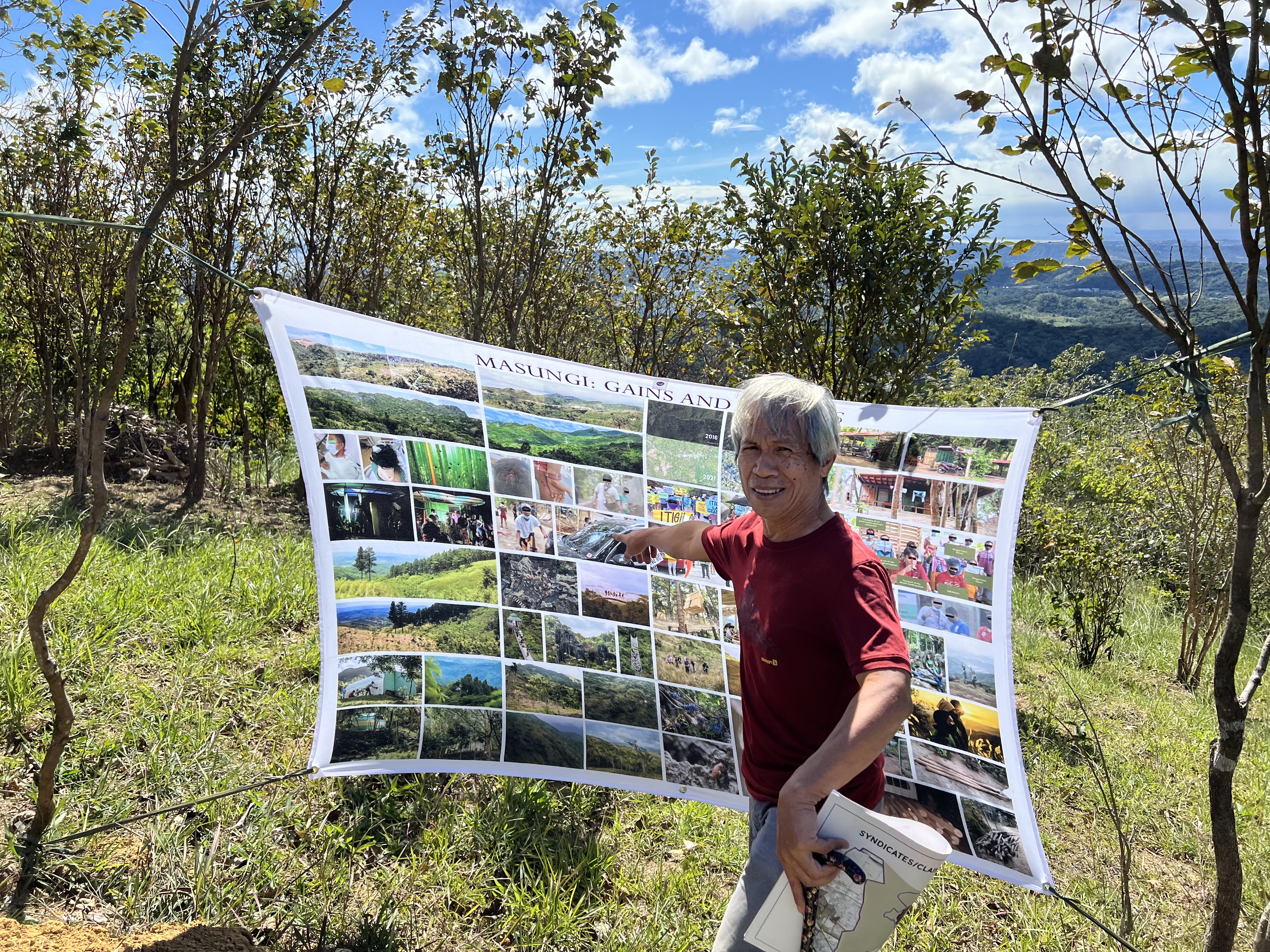
I first wrote about Masungi last January, when I visited the 3,000-hectare georeserve along the border of Tanay and Baras, Rizal. It’s a critical stretch of land that’s not only home to some of the country’s rarest and most threatened species such as the purple jade vine and Masungi microsnail—as well as 72 kinds of birds—but also helps protect Metro Manila from catastrophic flooding because of the watershed it sits on. 

The place has had a long and complicated history, from the time the Department of Environment and Natural Resources (DENR) tried to use it for employee housing in the early 1990s to 2017 when its care and supervision was entrusted to the Masungi Georeserve Foundation, Inc. (MGFI) by then DENR Secretary Gina Lopez. Well before and since then, Masungi’s caretakers have battled a host of threats, including landgrabbing by syndicates reportedly backed up by powerful people connected to the government. Aside from the BuCor’s plan to make a prison out of a natural Eden, a wind farm is being built on Masungi by a Singapore-owned company.

But beyond the quarries, resorts, and private houses that have sprung up on the reserve, MGFI president Ben Dumaliang’s main source of worry is the government itself—specifically, the DENR, or what he sees as its inexplicable indifference or even hostility to the foundation and its efforts to preserve and protect Masungi from parties hungry for its land.

I met with Ben recently and he explained to me how many times he had tried to approach DENR officials to get their support for the foundation’s work on the georeserve—an achievement that the United Nations Sustainable Development Goals Action Awards recognized in 2022—but how he has been repeatedly rebuffed, and even threatened with the cancellation of their management contract. “The secretary didn’t even congratulate us for our UN award,” he told me in a voice tinged with sadness and dismay. 

It isn’t really the accolades that Ben and his team—which includes his two daughters and a corps of bright, young forest rangers and volunteers—are after. While they can bank on a deep wellspring of support from the public and most of the media—you can’t go to Masungi without being impressed by the extent and the inescapable beauty of the foundation’s reforestation efforts—they need resolute action from the DENR to enforce its own laws and rules. The cold-shoulder treatment he’s been getting has driven Ben to suspect that “rogue DENR officials” are behind the landgrabbing syndicates plaguing the reserve. 

“They see our foundation as the only hindrance to quarries, resorts, real estate, and many other deals in the protected area. Unfortunately for the environment and the public, these deals cause irreparable harm. Our presence, vigilance, and conservation work in the area have stalled, stopped, and derailed countless syndicates from pillaging the frontline forest that is being swallowed up by creeping urbanization and development,” says Ben.

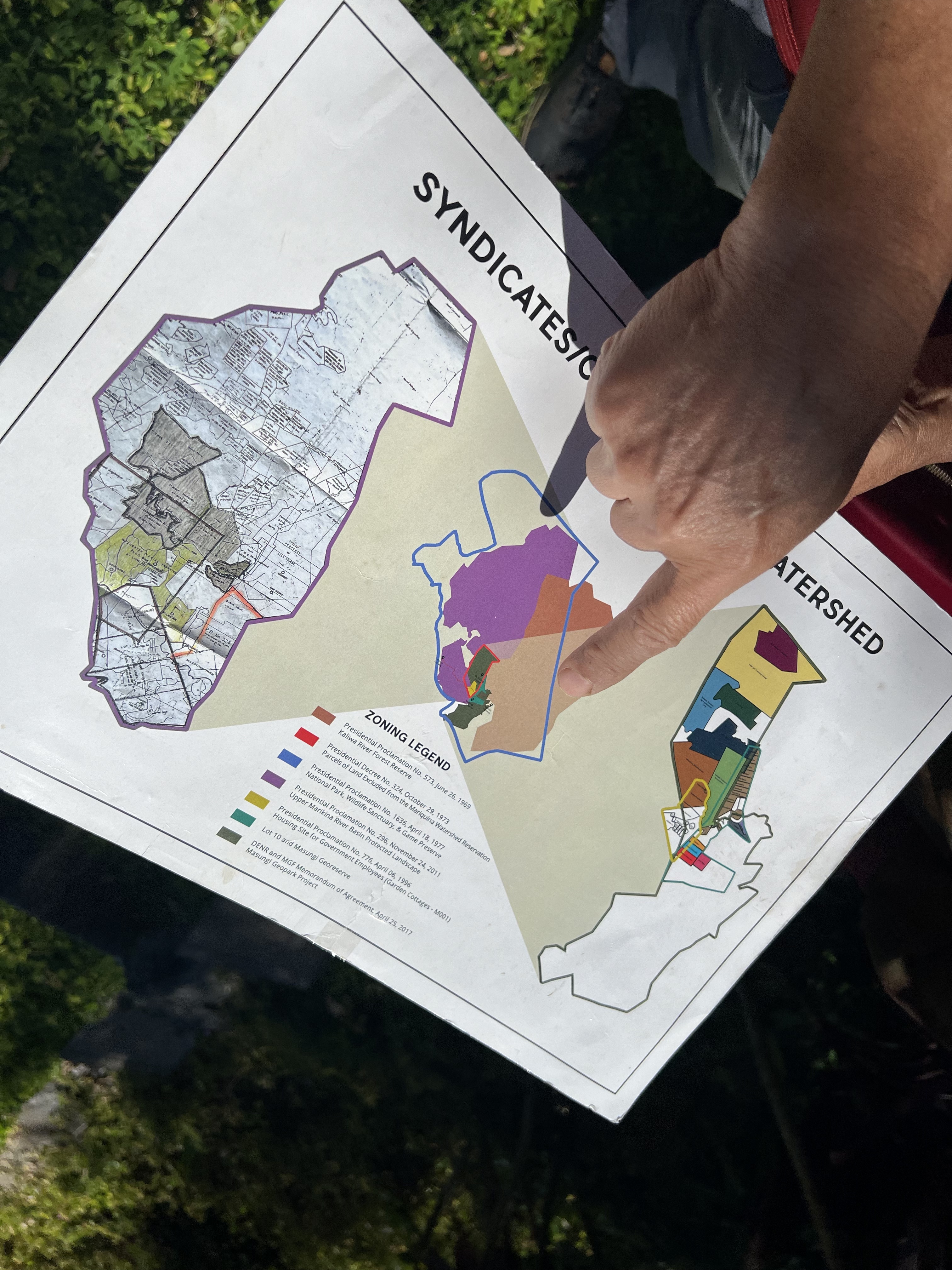
I saw the irrefutable evidence of this massive encroachment myself on my visit there last January. A whole village—Sitio San Roque in Baras—sits and thrives where a forest should have been (and probably was). I saw a pool resort, mansion-like homes, shops, etc., all on land claimed by the residents to have been legally acquired under the Marcos-era PD 324, which granted free patents to land that it designated alienable and disposable. Ben points out that this is fraudulent, because PD 324 had long since been superseded and nullified by PD 705 and Proclamation 1636, which withdrew the land given out under PD 324 and protected it from settlement, disposition, and development. 

“The three big-time quarries totaling some 1,300 hectares misplaced in Masungi trace their roots also to the PD 324 scam,” Ben alleges. “The quarry owners justify their contracts with claims of private rights derived from PD 324. They were also fooled. They brazenly violate the prohibition against mining in protected areas of at least three laws—Proclamation 1636, the NIPAS Law, and the Mining Act.”

Ben wonders why, in the face of these strong legal arguments, the DENR hasn’t moved against the presumptive squatters in Masungi and has instead refused to meet with the foundation and work with it to defend and protect the georeserve. When I saw him recently, he brought up the same question I raised at the end of my previous column, which I’m asking again: “What do they have against us?” I think that deserves a clear, fair, and not incidentally overdue answer.

Penman No. 297: A Witness Speaks

MarchToIndependence2jap.jpg

Penman for Monday, April 9, 2018


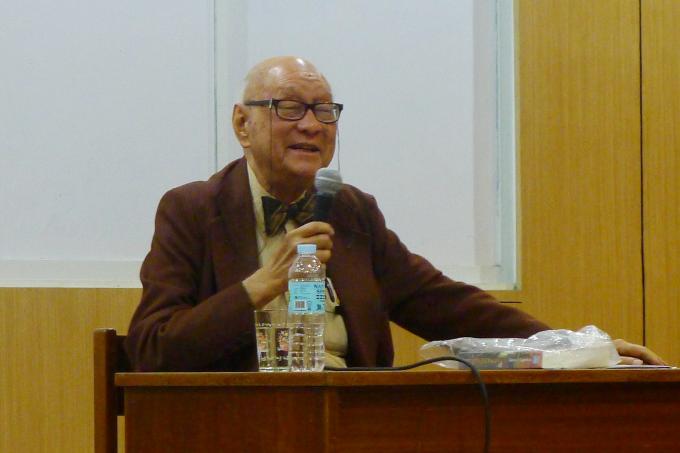
I WAS very honored to receive a response to my recent column-piece on “Writers in Wartime” from no less than Dr. Benito Legarda Jr., the eminent economist-historian perhaps best known by contemporary readers for his harrowing accounts of the atrocities committed by the retreating Japanese forces in Manila at the closing days of the Second World War. Titling his message “Writers Under Compulsion,” Dr. Legarda pretty much confirms what I observed, but with the kind of authority I couldn’t possibly lay claim to. A teenager during the war, he also adds a couple of personal vignettes. (Previously, Dr. Legarda and I had corresponded on another topic of mutual interest, the French adventurer Paul P. de la Gironiere, whose very colorful account of his Philippine sojourn Legarda had introduced in a 1972 edition.)

This may sound like an academic discussion, especially to young readers who know or care little about what came before them, but the question of how writers respond to the challenges (and opportunities) of authoritarian regimes is actually a very timely and practical one. Dr. Legarda ends his comments with a pointed reference to martial law, but we all know that authoritarianism didn’t end with Marcos or martial law. And it’s one thing when you’re writing at the point of a Japanese bayonet—but is it much different when you take the bayonet away and replace it with a balled fist? Here’s what a witness to war had to say:

The predicament of writers working under an authoritarian regime is brought out by Jose “Butch” Dalisay in an article, “Writers in Wartime” (Philippine Star, March 26, 2018). In this column Dalisay describes the conditions under which writers worked during the Japanese occupation.

They had to toe the Japanese propaganda line of Japan as the liberator of Asian people from Western imperialism, the exemplar of nationalist governance.

Dalisay examines the December 1943 issue of the Philippine Review. How did writers comport themselves at the time? Were they cultural collaborators?

Dalisay did not know those writers himself and did not know their inner convictions but as one who lived through those times, I can say that the editor, F.B. Icasiano or “Mang Kiko,” was reportedly a collaborator and disappeared after the battle for Manila.

Other editors, all working for the Manila Shimbun Sha (the only publisher permitted), were Vicente Albano Pacis, Angel  Anden, and Jose Luna Castro—all respectable journalists who had to make a living.

It was not difficult for fiction writers like Ligaya Victorio Reyes and Estrella Alfon Rivera to avoid the propaganda line by writing Christmas stories. This was also easy with Juan Collas’ translation of Rizal’s Mi Ultimo Adiosand Jovito Salonga’s commentary on the language of the Constitution.

A friend of my youth, Isagani A. Cruz, in a different issue wrote a poem in praise of Rizal. Later, as an Associate Justice of the Supreme Court he  would be known as the most elegant prose stylist in the Court.

For the fictionists Dalisay notes the sharp and painful transition to the darkening of the times.

Not so the essayists who could not avoid mouthing the Japanese propaganda line. One was educator Camilo Osias, author of the prewar Philippine Readersseries and future Senate president, who argued for a sound eclectic choice as Japan had done in its cultural borrowings and emphasizing the precedence of the State, of social interests over the individual.

CrushAngloAmericans.jpg

Osias once escorted my mother home from a civic meeting, and at  our front steps asked my father if he was willing to send me to Japan on a scholarship. My father flatly turned him down. “I see I’m barking up the wrong tree,” he said.

Osias’ ideas were general enough to avoid being tagged propaganda; at most they might be qualified as political adjustment. Not so Luis Montilla, national librarian, who wrote fatuous praises for Japan as a guide and regenerator of true Orientalism, realizing Rizal’s supposed dream of re-Orientalizing his people.

Dalisay withholds judgment on this matter considering that it was possible for some Filipinos to regard the invading Japanese as liberators, after centuries of the white man’s rule.

But as one who lived through that time, I remember the Filipinos regarding themselves as better than the Japanese, who had cruelly ravaged Manchuria and China. They were certainly not looked on as liberators by a people who were already on the eve of full independence.

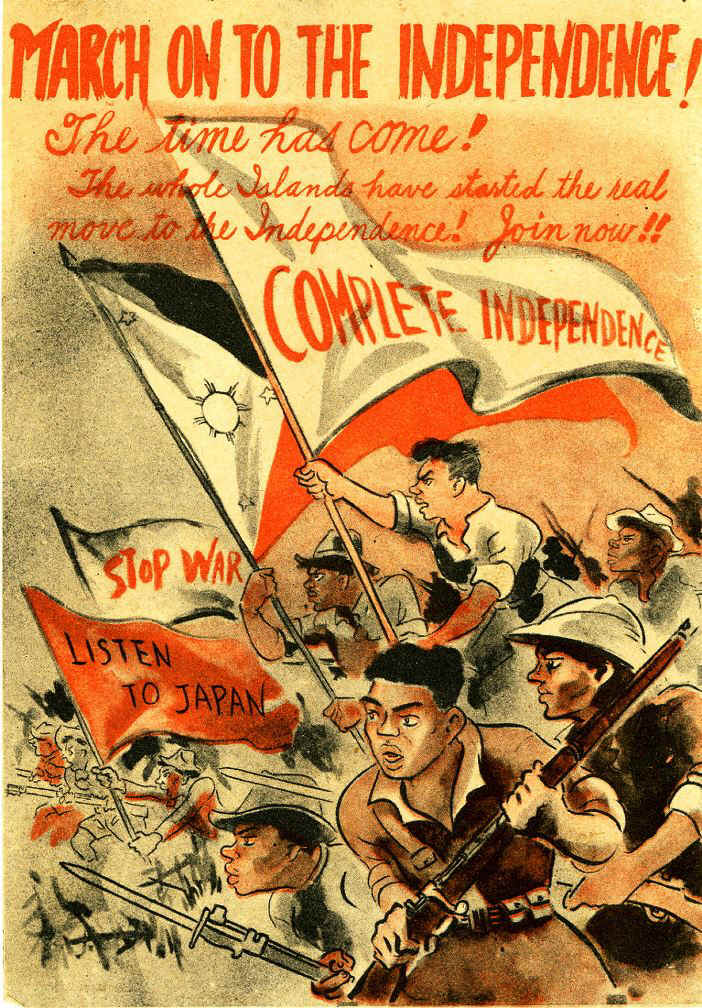
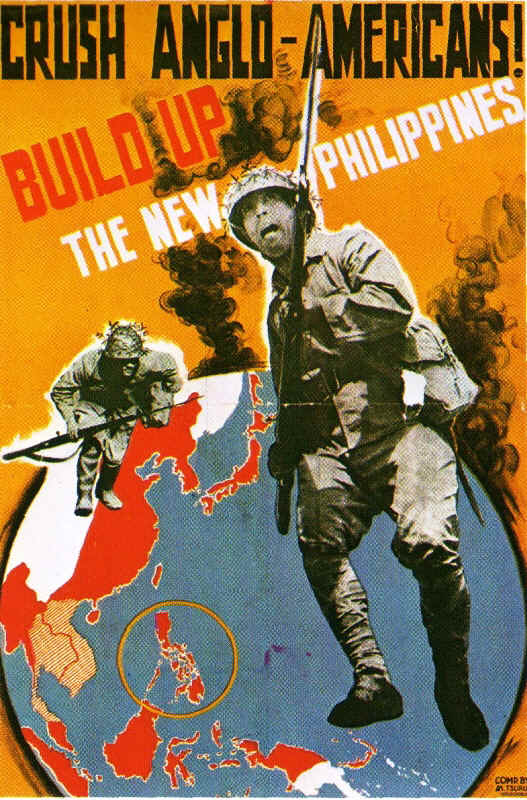
Perhaps the writer’s dilemma of the time was best expressed by a leading Filipino writer   in Spanish, Don Pedro Aunario, who told my uncle Jose “Pepito” Legarda who worked at the Shimbun Sha with him, “How fortunate you are that you don’t have to write for a living.” Yes, writing for a living under an authoritarian regime meant suppressing one’s own opinions and parroting those of the rulers. Writers would experience this again under the Marcos dictatorship. (Images above from pyswarrior.com, photo of Dr. Legarda below from ateneo.edu)

P1080143.JPG