Qwertyman No. 187: No Better Time for Philippine Publishing

Qwertyman for Monday, March 2, 2026
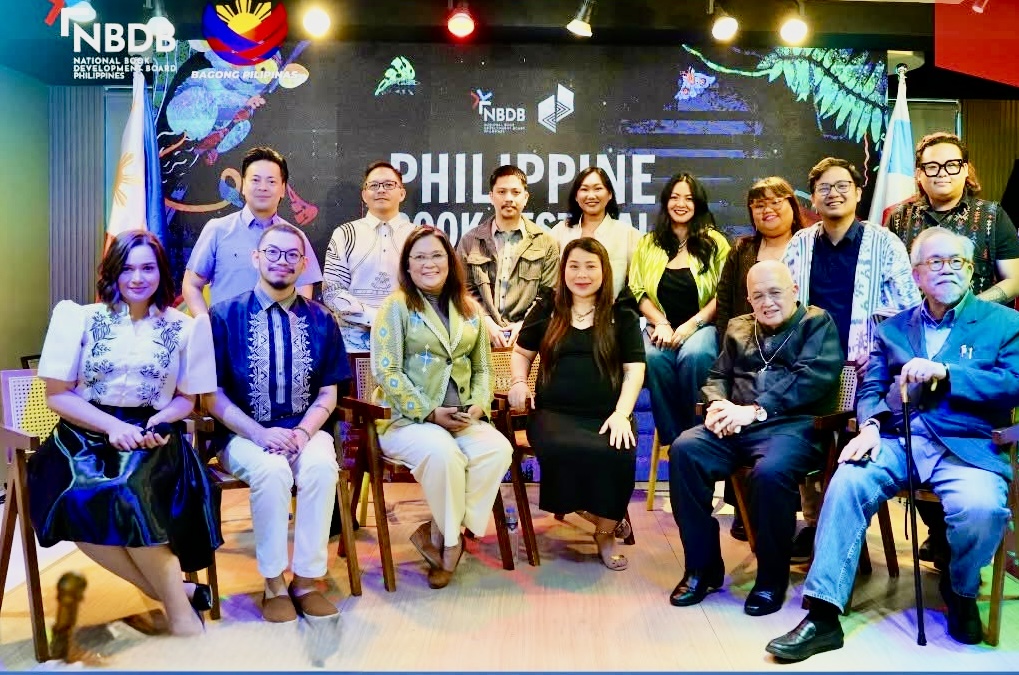
I WAS asked by the National Book Development Board to give brief remarks last week at the media launch of this year’s Philippine Book Fair, which will take place from March 12 to 15 at the SM Megamall’s Megatrade Hall. I spoke alongside publishing stalwart Atty. Dominador Buhain of Rex Book Store, who laid out a legislative road map for the book industry in the Philippines.

For my part, I addressed myself to the young Filipino writer, speaking as a senior often accused of being a capo in our so-called “literary Mafia”—my tongue-in-cheek acceptance of which has been taken in dead seriousness by some parties intent on proving that a conspiracy exists out there to rob of them of their literary fame and fortune.

It was a happy coincidence that we were launching the PBF on the 40th anniversary of EDSA 1, because it provided a natural frame within which to appreciate the growth and progress of Philippine writing and publishing, from martial law to where we are today.

Forty years ago, in 1986, I had exactly one book, my first collection of stories. Today I can count more than 45, both fiction and nonfiction, so I guess I’ve been pretty busy (in fact I have another book deadline to meet over the weekend, after I turn in this column). But what many people don’t know is that it took me about a decade to come up with that first book, which was launched in December 1984, and I might have waited longer had it not been for a bet I had made with a dear friend, the late playwright Bienvenido “Boy” Noriega, that we would both come out with our first books by our 30th year (we did).

Having dropped out of college as a student activist after my freshman year, I had very little literary training beyond my own reading. I knew no one and no one knew me; no literary network, no doting mentor or sponsor. I sent out stories to the very few publications open under martial law, like Focus and the Manila Review. I joined all the literary competitions in sight, and lost as many times as I won. I never attended the UP Writers Workshop as a fellow, although I did get invited to the Silliman Writers Workshop in 1981 after the Tiempos came across a published story of mine, after which I felt fired up enough to resume my studies in UP and graduate with my AB in 1984 at age 30. 

My biggest stroke of luck was having a friend from martial-law prison, Raffy Benitez (who would found the Erehwon Arts Center), who ran a small printing press in Quezon City, and who offered to publish my first book from the scrap paper left over at his press. And so Oldtimer and Other Stories (Asphodel Books, 1984) was born. We had no marketing, no bookstore access. Somehow, the books got sold. 

I told this story—which wasn’t mine alone, but my generation’s—to emphasize that there has never been a better time for Philippine writing and publishing than the present. The PBF, now on its fourth year, is the best proof that hundreds of publishers exist out there for all manner of material, from ghost stories, romances, and comic books to big novels, biographies, and collections of essays. Add to that the support network that writers get from writers’ workshops, writing programs, book festivals like the PBF and Frankfurt, literary contests, and of course social media, print-on-demand, and online marketing.

What every writer needs to do to get published is what all writers have done from the very beginning: persevere, get those words on the page, and find a publisher (who will also hopefully provide good editing and marketing). 

There are, of course, writers who believe that “gatekeepers” like me (professors, editors, publishers, reviewers, etc.) merely stand in the way and spoil what should be a great literary experience accessible to everyone. To them I say that if you want complete control over your work and not have to engage in mainstream publishing, you can always publish yourself online, for free, without having to worry about contracts, royalties, launches, and such. 

Otherwise, if you want your book published and put out there, do your homework, find a publisher or agent, and prepare to compromise and negotiate. At its core, publishing remains a business, which has both its good and bad aspects, so learn to navigate the territory, because for the professional writer, it doesn’t end with that final period on the screen—you’re just halfway to your reader. If you think this is too sordid for you, too much of a sellout, then stay away and again, publish yourself (or look for an academic publisher, if your book is worthy enough) and be happy with your reading circle Contrariness can be a virtue; just don’t preach like you’re the only virtuous soul left on the planet.

I may sound like another hard-hearted Boomer, but I won’t echo what one senator said about Gen Z’ers being “weak”; they just deal differently with their realities. Still, there are realities that cut across generations. No one in the world owes you a reading, a publishing contract, a positive review, a spot on the syllabus, and a fistful of money. The demands that matter most are those you make on yourself. Sure, as in any business, contacts and networks count in publishing—but only to a point; again as in any business, no publisher will invest in something too poorly conceived or executed to connect with an audience.

Just write, and don’t let yourself get too distracted by the politics of writing or even of everyday life. If you believe strongly enough, the politics will find its way into your poem or story in the best ways possible—organically, without the shrillness or snarkiness of those who can’t make themselves heard otherwise. If it resonates with others, it will find its way to publication. The usual critics will pile on me for this, but I think there’s too much noise, too much drama, too much flag-waving out there; indulge in it if you will, but I’m too old to care, and I’d rather hole up in my home office with a cup of coffee and peck away at my next novel than prove that I’m more, uhm, Polynesian than thou.

Write your heart out, but with craft and composure; write something moving and memorable, and get that book out with your name on the spine. Me, I’ll be at the PBF to sign books all day on March 15.

Qwertyman No. 28: Catching Fluffy

Qwertyman for Monday, February 13, 2023

(Disclaimer: Our story today has nothing to do with the recent capture and deportation of the Japanese criminal mastermind known as “Luffy,” for which we congratulate our brave and vigilant law enforcers, although I have to admit to being inspired by that diabolically fearsome alias.)

HIS PHONE rang at the worst possible time. The chief of the Metropolitan Investigation Division was just about to reach the climax of his story—the ladies around him all open-mouthed and wide-eyed in anticipation—when the Tiktok “Moonlight” song, which he had been using as his ringtone, broke the spell, instantly sending some of the girls into their habitual gyrations.

“Chief!” exclaimed Melanie, his special girl in the club, “I didn’t know you liked that song! You’re so cool! Come, let’s dance!” She took his free hand and tried to drag him to the dancefloor, but he resisted. It was unusual for Chief Tiny (short for “Agustin”) to resist Melanie’s persuasions, but she could see from his look that this was something serious.

Chief Tiny had spotted the name on the call—Bungi, his lead investigator—and he knew that Bungi knew not to call him at this hour for any reason less than to report the mysterious sighting of a bearded man walking on the waters of Manila Bay. If this was just to tell him that his wife was at the station looking for him again, for which Bungi was supposed to have had a dozen excuses at his disposal, why, he was going to make sure Bungi was demoted to jail guard in charge of sanitation. Tiny was especially annoyed because he had been trying to impress the girls with his story of how he had found and captured Don Waldo—the country’s most notorious drug and gambling lord, compadre to this senator and that congressman, master of a reputed harem of 100 women, and ruthless widow-maker dozens of times over. Tiny had geo-located him through the Facebook feeds of his then girlfriend, the previous year’s Ms. Matabungkay, and had negotiated his peaceful surrender, much to everyone’s relief. Of course, he wasn’t going to tell them that Don Waldo posted bail one hour after he was arrested, and that the two men had exchanged winks at the station after the media photographers had had their fill. It was all part of his standard MO: catch the bad guy, work out a deal, and let him off the hook on some technicality. 

“Boss,” said Bungi in a whisper over the phone, “we found him—Fluffy.”

“Fluffy!” Tiny screamed with all his 250 pounds, jolting everyone. “Are you sure it’s him, the Fluffy, ourFluffy?”

“Yes, sir. Of course they call him ‘Fruffy’ in Japanese, but I saw him myself—absolutely no doubt he’s our man.”

As Chief Tiny continued to chat with his caller, Melanie shrank back into her seat beside the chief, trying to catch as much of the conversation as she could while collecting her own thoughts. She knew this man called “Fluffy”—personally, professionally, biblically, in all kinds of ways. When the chief wasn’t around, Fluffy took his place in her private quarters, in a condo overlooking the Pasig River, from the other side of which she had triumphantly risen. Initially there had been a language problem—his vocabulary would have been considered coarse even in Japan—but what they needed to communicate did not require too many hand-signs. What didn’t need explaining was his nickname, made obvious by the two clumps of steel-woolly hair on his head, like a poodle.

From his Pinoy bodyguard, Melanie learned that Fluffy ran an extensive Japanese mafia in the Philippines, which controlled the distribution of everything from fake Japanese car parts, Ebisu dolls, Voltes V figurines, and ramen noodles. They competed with an equally vicious Korean mafia engaged in pushing fake Korean car parts, BTS coffee mugs, CLOY T-shirts, and kimchi, as well as a Chinese mafia flooding the market with fake American, European, and everyone-else’s car parts, imported galunggong, POGO workers, and tikoy. Sometimes the rivalry got too hot and blood was spilled on Manila’s streets, giving Chief Tiny unnecessary headaches that required a few hours with Melanie to cure. But now Melanie herself felt the onset of a massive migraine: if her two patrons found out about the other and their common interest, then all hell would break loose.

“Sorry, girls, but I have to go,” Chief Tiny announced, getting to his feet. “I have to catch a master criminal.” With that, he gave Melanie a quick hug, and hurried off.

Melanie had to think fast. Chief Tiny made her feel protected—not only when he encircled her in his ham-like arms, but more importantly when she or her friends ran into trouble or needed a big favor like a police escort for a relative’s funeral. Fluffy was strange but sweet, gifting her with exotic desserts like green tea cookies and mochi; she was scared but also thrilled by his insistence that she take on his tattoos. Whom would she choose? She thought of sending Chief Tiny an anonymous text message telling him where Fluffy was, but then they already knew that. She thought of sending Fluffy another message to tell him that Chief Tiny was on his way to get him, but if he ran away then that would only prolong her own predicament. She decided to let fate take its course and to stick by whoever survived. Meanwhile, she wasn’t going to waste her time, and moved on to the next cubicle to make the acquaintance of a Korean gentleman who reminded her of that oppa Gong Yoo.

Two hours later, Melanie and her new partner were happily warbling BTS’ “Butter” on the videoke: Smooth like butter, like a criminal undercover / Gon’ pop like trouble breaking into your heart like that, ooh!”Suddenly she heard two all-too-familiar voices from the other side.

“You’re very hard to catch, Mr. Fluffy! You’re very good!”

“No, Mr. Tiny, you’re better because you caught me, haha!”

“Next time, don’t hide under the table, haha! That’s the first place we look!”

“Thank you for not shooting me, haha!”

“How can we be friends if I shoot you, haha! Now, let’s have a good time—I will introduce you to my very pretty girlfriend!”

“You also have a very pretty girlfriend, also here? Me, too! But my girlfriend is prettier, haha!”

The Korean gentleman in the next cubicle was perplexed. “Melanie! Where you go? Why you hiding under the table?”

(Photo from bbc.com)