Qwertyman No. 154: Politics as Melodrama

Qwertyman for Monday, July 14, 2025

I’VE OFTEN argued that our most popular literary form isn’t lyric poetry, the short story, and certainly not the novel—it’s theater, and more specifically melodrama. Born in the West in the 18th century, melodrama weaves its spell on a suggestible audience through sensational and often ridiculous plots, exaggerated action, overblown emotion, and contrived solutions—all of which viewers happily lap up, and come back looking for more. When you think about it, it also happens to describe our politics, but more on that later.

I used to bring up melodrama when I taught playwriting and screenwriting, by way of analyzing how our Filipino sense of drama works. You don’t have to be a theater scholar or critic to observe that we Pinoys love drama, which to us really means melodrama, whether onstage, onscreen, or in real life.

Subtlety and silence have never been our strongest suit. We like to shout, to scream, to declare, to explain—and to explain some more. Take, for example, our preferred methods of murder. In Hamlet, the villainous Claudius pours poison into the king’s, his brother’s, ear. In The Seventh Seal, a knight faces Death on the chessboard. That may have been thrilling for fans of Shakespeare and Ingmar Bergman—but terribly dull and anesthetic for our kind of crowd.

No, sir, we Pinoys like our killings obvious, loud, and emphatic. Poison in the ear is for sissies. We prefer knives because they mean business, are as personal as personal can get, and they produce a lot of cinematic blood. And it’s never enough to stab someone, certainly not from behind, which would be a complete waste of dramatic possibilities. We like to announce that we’re killing someone, and to explain the reasons why: “Hudas ka, Raymundo, niyurakan mo ang karangalan ng aming angkan, kaya’t tanggapin mo ngayon ang mariing higanti ng hustisya—heto’ng sa iyo!” But of course Raymundo has to have his moment, and must raise that inevitable question: “Ano’ng ibig mong sabihin?” Whereupon our hero launches into another lengthy explanation, to which Raymundo offers an impassioned rebuttal, all to no avail, as he is stabbed repeatedly to the accompaniment of further oaths and recriminations.

I used to think that this kind of talkativeness and effusive gesturing was invented by us, until I went to graduate school and realized that it was all over the place in Restoration drama, where the likes of John Dryden had his characters indulge in copious speechifying in the name of love and honor before killing everyone onstage. I suppose a similar trend seized the French and Spanish theater, and thereby later ours, in the zarzuelasmoromoros, and komedyas that provided us with both entertainment and education. The noisiness carried over to radio, and then to our movies, which never quite shook off the “Ano’ng ibig mong sabihin?” habit. 

And this brings us to our politics, which is not only full of sound and fury, of unbridled verbosity, but of plot twists that strain credulity and yet which manage to keep the audience on the edge of their seats, either roaring in rage, applauding in delight, laughing deliriously, or weeping in sorrow, depending on their persuasions.

The Duterte Saga, our biggest ongoing drama, is now in its fourth act—the Sara impeachment—after the Uniteam victory, the fallout, and the Digong arrest and banishment. A professional scriptwriter could not have done better than giving the VP lines like Sara’s vengeful vows, as the media reported: “I have talked to a person. I said, if I get killed, go kill BBM (Marcos), (First Lady) Liza Araneta, and (Speaker) Martin Romualdez. No joke. No joke,” Duterte said in the profanity-laden briefing. “I said, do not stop until you kill them and then he said yes.” Threatened with impeachment for that statement and for corruption, she said, “I truly want a trial because I want a bloodbath.”

To the uninitiated listener, a madwoman was merely frothing at the mouth, but to the theater-goer, she’s puffing up her feathers, going larger than life, saying outrageous things to define her character and stake out her space like a Maori dancing the haka. Her adversary, PBBM, is playing cool and coy, pretending to be occupied with work and a disinterested party in Sara’s undoing. And yet he whisks off her precious papa in the night to Scheveningen, provoking even more outbursts from the DDS faithful.

Now comes the tearful part. Melodrama moves from Olympian thunder to cloying tenderness, so our next scene, naturally, has Sara’s mom Elizabeth declaring that her estranged husband has been reduced in detention to “skin and bones.” But it’s all right, she says bravely. “And how is my son, acting Mayor Baste?” the Davao City mayor-in-exile asks in a dry croak. “He’s okay, too,” Elizabeth assures him. “His vice mayor is your grandson!” So but for the absent patriarch, all’s well in Duterteland—sort of.

Melodramas love subplots, so let’s introduce one: selling the Duterte house. Common-law wife Honeylet puts up a sign announcing the place for sale (“It’s too painful to sleep there all by myself,” she claims), but son Baste reportedly has the sign removed. Not so fast, VP Sara chimes in; Honeylet could sell her half of it but not her dad’s. Besides, where would Digong live when he returns from the Hague, if Honeylet sold the house? (Cue for hopeful, uplifting music, which tapers off into a melancholic minor key.) “Perhaps he could live with Mama Elizabeth again,” Sara muses. 

Ah, such poignant moments. No one’s been stabbed yet—expect a lot of that to happen, metaphorically, if and when the Senate finds its balls and starts the impeachment trial of VP Sara. What’s theater without traitors? Sen. Migz Zubiri has already thrown down the gauntlet by declaring the trial “a witch-hunt.” But Senator Migz, ano’ng ibig mong sabihin?

Qwertyman No. 66: Beyond Reportage

Qwertyman for Monday, November 6, 2023

IT WAS probably fitting that I finished reading Patricia Evangelista’s highly acclaimed account of “murder in my country,” Some People Need Killing (Random House, 2023), over a holiday devoted to remembering the souls of the departed. I had received a pre-publication review copy from the publisher months ago under a strict embargo not to talk about it until its formal launch. As it happened, it lay under a pile of other books to be read until a flurry of posts and reviews reminded me that it was out in the open, and that the secret—not just the book, but also what it contained—could now be shared.

I can still recall the day—May 15, 2004—while we were celebrating Pahiyas in Lucban when I got the news on my phone that our representative to the English Speaking Union’s annual public speaking competition in London—a bright and pretty wisp of a teenager named Patricia Evangelista—had won the top prize. We were new to the ESU—subsequently we would produce two more global champions—and it was a grand way to announce to the world that we Filipinos could produce more than boxing heroes and beauty queens. Here was 18-year-old Patricia who could think on her feet and speak to issues of international importance, the poster child of Filipino intelligence and audacity, whose command of the English language led her to meeting no less than Prince Philip, the Duke of Edinburgh, in what amounted to a mini-coronation in recognition of her talent.

As magical as that moment was, I can only imagine how, in the months and years following, it must have begun to grate on the young Patricia to be asked to deliver her prizewinning speech in public forums over and over again, like a wind-up doll, and suffer the fate of prodigies who peak too soon. Surely that was just a beginning; surely there was more she could do—had to do—to outlive her Cinderella-like debut in London. 

I would see some of that when she enrolled in my undergraduate Fiction Writing class in UP. I knew who she was and made sure to give her no special treatment—indeed to lean even a little harder on her, knowing she had what it took—but she got a “1.0” all the same, one of the few I ever gave. I can’t claim to have taught her much how to write imaginatively—her own reading had likely primed her for that—but I can’t pretend not to be proud of what she turned out to be, my pride tempered only by fatherly concern.

Today, almost 20 years later, the sometime ingénue returns to the global stage as a hard-bitten, chain-smoking investigative reporter—a “trauma journalist,” in her own words, very possibly one of the world’s best yet again. But there is no real prize, no princely reward, for this kind of distinction, only pain and sorrow which—subdued too many times as a matter of professional discipline—exact their toll on the body and spirit. Patricia has had to suffer that to be able to tell her story as clearly as she could, unimpeded by the hand-wringing and the preachiness that often accompany such exposés of grave misconduct. 

This is not a review of the book’s explosive investigation into the thousands of extrajudicial killings that happened under the Duterte regime—that’s been done very capably by others, and is already the subject of international inquiry. The book will deserve all the journalistic accolades coming its way as an exemplar of excellent reportage. 

I will not even quote from the book, as there are simply too many quotable paragraphs to choose from. Rather, I want to note, from my privileged perspective and for the benefit of younger writers, how Patricia works with language to best serve the truth. Quite apart from its journalistic merits, Some People Need Killing is one of the best textbooks out there for what we now call “creative nonfiction,” a compound of reportage, memoir, history, and fictional technique. Indeed, beyond reportage, the book is a long personal essay in which the author is inextricably part of the story, a significant step away from the impersonal and largely mythic “objectivity” that we associate with traditional journalism.

Probing murder after ghastly murder—sometimes even coming on-scene to prevent one—Patricia is both chronicler and agent, witness perhaps not to the killing itself but to the larger crime of its planning and the exoneration of its perpetrators. Handling the most sensitive and dangerous of material, she draws on more than skill to tell her story; she demonstrates raw courage, an increasingly rare quality among journalists easily seduced and silenced by pragmatism. She names names, which surely will bear consequences both ways. 

I’ve often remarked in my lectures that the most endangered writers in this country are neither the poets nor the novelists, but the journalists who cannot hide behind metaphor and simile to tell the truth. We fictionists make artful lies which governments rarely have the intelligence or the patience to grapple with. Journalists live in the literal world inhabited as well by cops and crooks; what’s interesting is how the flimsy but oft-repeated fictions of “killed while resisting arrest,” so pervasive in this book, emerge from that reality.

Evangelista’s overarching technique is one of narrative restraint, informed by an English major’s awareness of how language and reality shape each other. She constantly parses the perversions of language—how words like disappearsalvageencounterverification, and even her own name assume different uses and meanings over time, in specific contexts. She knows—as I remind my students—that for dramatic effect, less is often more, that short sentences and blunt, single-syllable Anglo-Saxon words rather than the long, Latinate ones favored by lawyers hit closer to the gut and heart.

She is keenly aware of the power of irony—of professed liberals supporting EJK, of a morally ascendant Noynoy Aquino showing little empathy for ordinary folk, of her own journalist-grandfather affixing his signature to a petition supporting the older Marcos, and of communal complicity in the reign of terror. She uses people’s own words against them, quoting from the record. She avoids direct editorializing, or speaking in lofty generalizations like “justice” and “civil liberties,” and instead, in the best noir tradition, sees “sagging two-story tenement buildings (that) opened into dirt roads layered with garbage and last week’s rotten Happy Meal.”

After I had finished the book, I woke up at 4 am from a nightmare about running shirtless down a wet, earthen road. I was lucky. Patricia Evangelista lived through it, and I don’t even know if she’s woken up yet. Have we?

(Image from Rappler.com)

Qwertyman No. 48: Beauty and Horror

Qwertyman for July 3, 2023

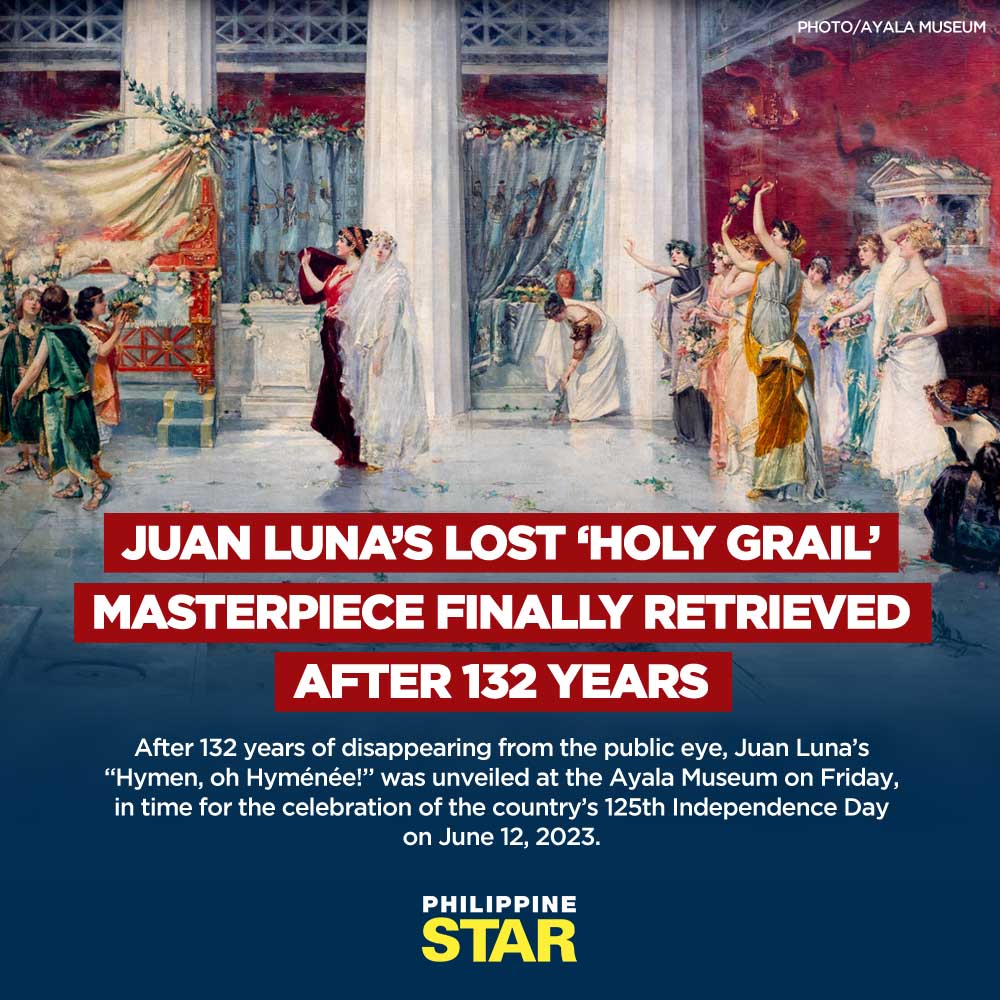
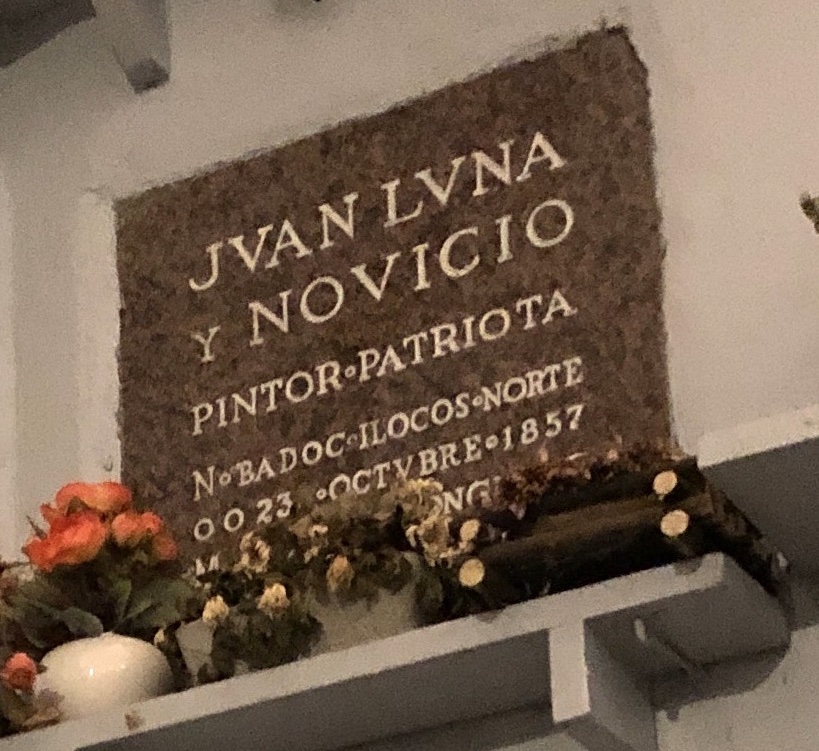
I WAS surprised, a bit amused, but also deeply bothered by the reactions of Filipino netizens to an event that hogged the headlines two weeks ago—the special exhibit of Juan Luna’s painting “Hymen, O Hyménée.” 

The painting, said to have been lost for over 130 years, was put on display in all its solitary glory at the Ayala Museum, evidently a prize catch and worthy of public attention. The attention came—not all of it positive. Quickly a thread developed online scoring the artist, the painting, the museum, and the curious who trooped to Makati to see the painting. Why, posters asked, was praise being heaped on a deranged man who murdered his wife and mother-in-law? Where was our outrage? Speaking of the painting, why, technically it wasn’t even that good. 

They were, of course, all fair points to raise, designed to provoke some serious re-evaluation of why we like the things (and the people) we do. While there was some quibbling about the aesthetic merits and demerits of the painting, most of the negative reaction was clearly aimed at Juan Luna’s homicidal and presumably misogynistic streak. Just to be clear, he did admit to killing the two women (he suspected his wife of having an affair with a Mr. Dussaq), but was later acquitted on grounds that merely prove how partial to men the old judicial system was.

This brings up the inevitable question—not about Luna’s guilt, which seems to have been settled in the court of public opinion, but about that of those professing to admire Luna’s talent as a painter: knowing what we know now about an artist, should his or her work be judged by his or her character? Can or should we put our blinders on when gazing at a painting or reading a book, and savor the work in denial of its creator’s evil history? Should we resist Google, adopt or feign ignorance, and leave moral judgments to others?

I know that some esteemed writers and artists, like the late F. Sionil Jose who preceded me in this space, were severe and unforgiving in their application of a moral frame to creative work. To Manong Frankie, if you supported the Marcos dictatorship and profited from it, your credentials as an artist were forever compromised. Today we would call this “cancel culture,” which has been appropriated by right-wingers to complain about being punished for being, well, right-wingers.

It seems like a logical proposition: if you don’t like someone for good reason, then reject his or her work, which could be tainted by all manner of subliminal malice. You can stand proud in your clarity of mind and emotion, in your spirited defense of the good and just.

But this also raises a very practical problem: entering a museum or a library, how am I to know which artists or authors led upright lives, and which ones flourished in depravity? If I enjoy a work, only to discover later that its creator attempted to rape a teenage girl (as the Nobel prizewinner William Golding did, and even wrote about it privately) or tortured animals and adored Hitler (like Salvador Dali did), am I supposed to regurgitate my admiration and pronounce the work worthless?

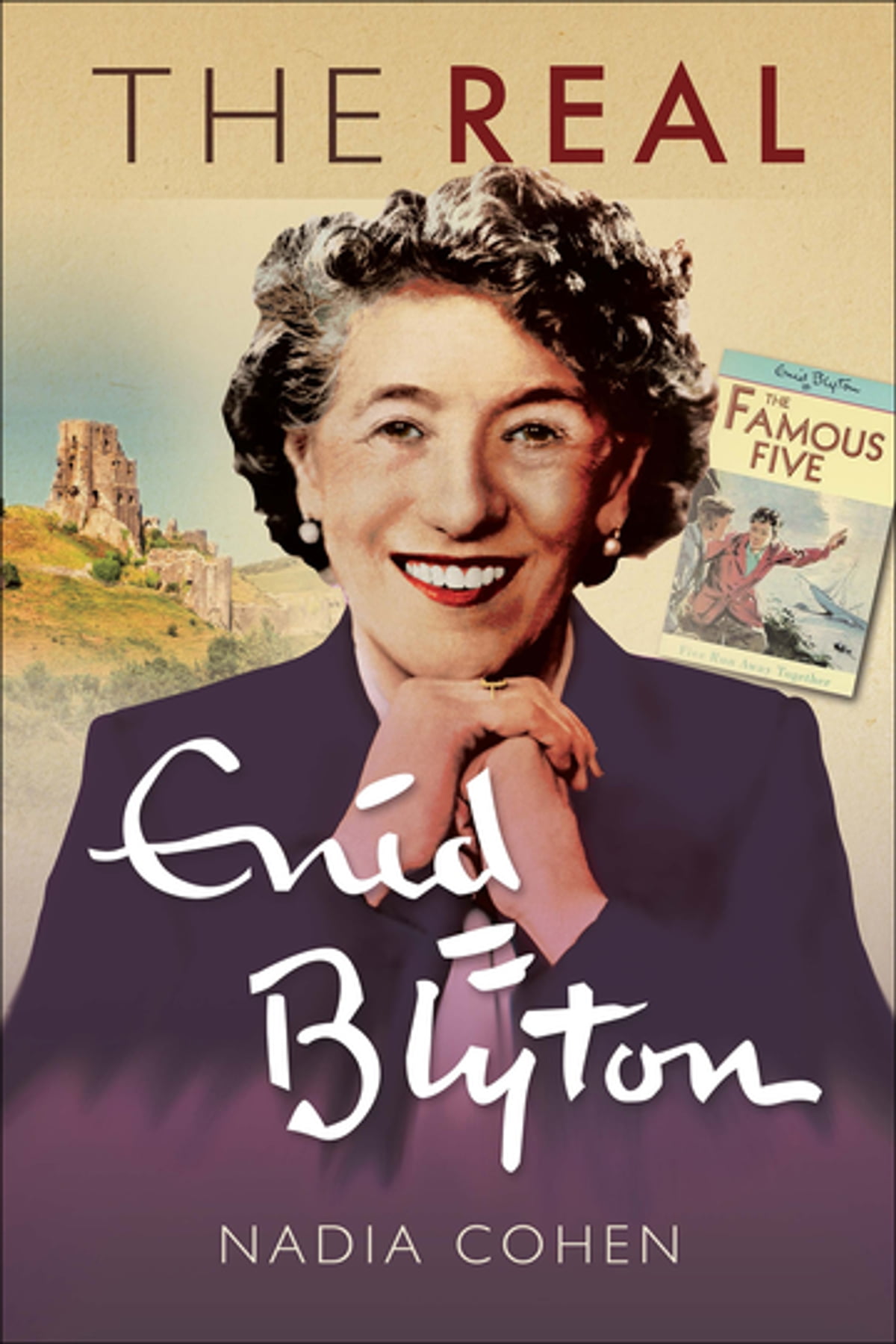
The list of artists and writers who were less than paragons of moral virtue is a long and (dis)honorable one. For this we go to Google, which has been asked the question so often that so-called “listicles” exist of the answers, which inevitably throw up the same names. Paul Gauguin abandoned his family and fled to Tahiti where he took on three child brides, infecting them all with syphilis. TS Eliot and Ezra Pound were Jew haters, as were, for that matter, Richard Wagner, Edgar Degas, and Roald Dahl. Picasso abused his women and drove them mad, calling them “machines for suffering.” Beloved writer of children’s stories Enid Blyton was a terrible mother, neglectful and vindictive, described by her own daughter as “without a trace of maternal instinct.” What am I to tell our daughter Demi, now 49, who grew up on Enid Blyton and who carefully rounded up all her Blyton books and tied them up in a ribbon during her last visit, for passing on to another child?

I recall when, years ago, a renowned actress (whom I need not name, as you can surely guess who she is) was denied the National Artist Award by Malacañang because of her reported use of drugs at some point in her troubled life. (I know, because the Palace official who recommended the disapproval told me the story.) Thankfully this was later rectified.

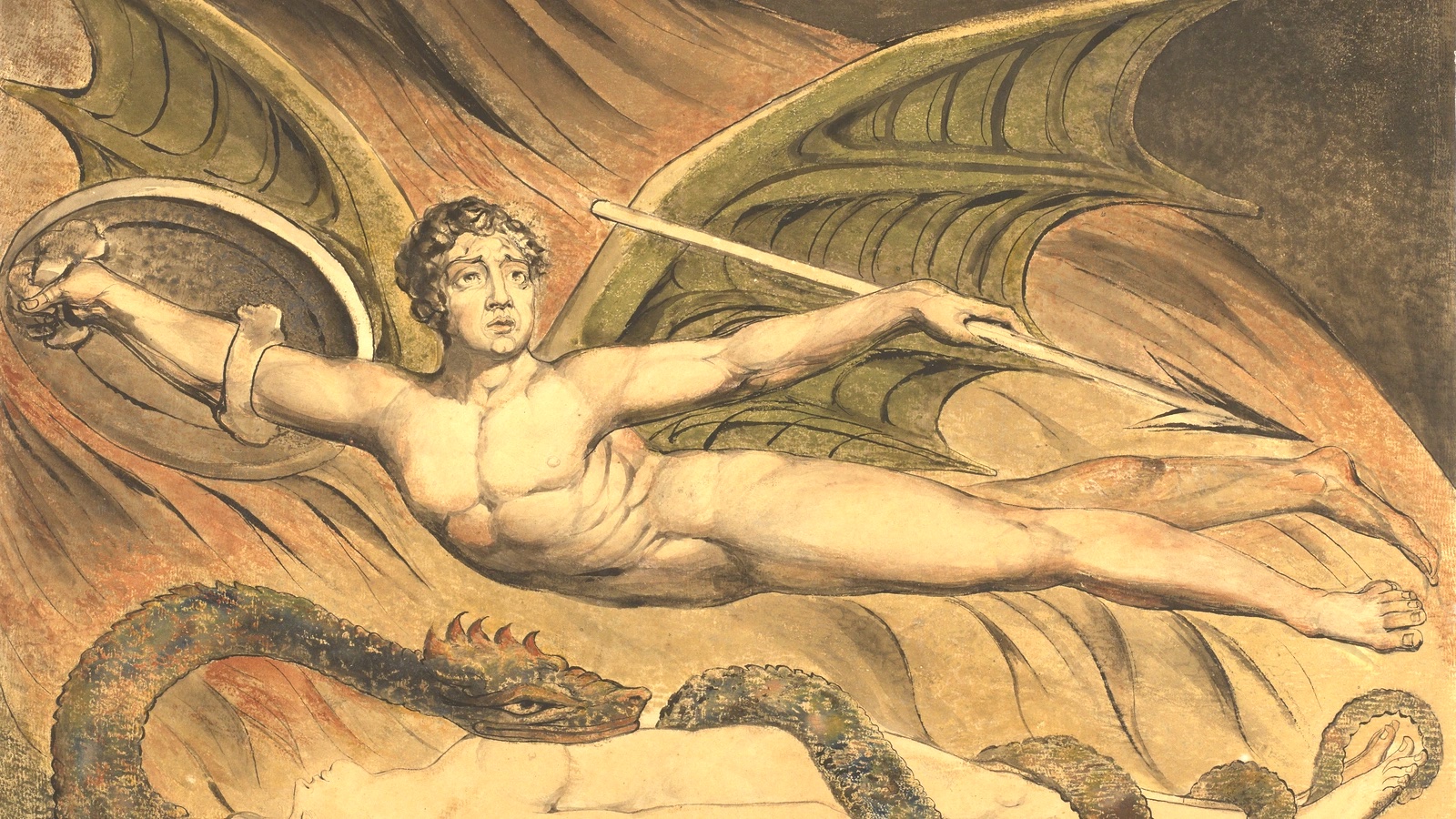
And as soon as I say that, you can see where I incline in this debate. I hate evil as much as any sane person would, but also recognize and accept that some of that is always latent within me and within others, and that it is my awareness of it—or my guilt when I give in to it—that grounds and deepens my art. I’m not saying evil is a prerequisite for artmaking, as surely saintly folk have produced great art (although I still have to find that listicle); it’s just there, like a shadow in the forest, the Lucifer without which the aura of our angels would dim. 

And what about the deplorable if not detestable excess of it in these aforementioned geniuses? Do we excuse or absolve their failings by accepting their art? I think not. What we are accepting is not their wrongdoing, but rather the fact of how one of art’s and indeed of life’s great mysteries is how often beauty and horror cohabit. Thus we can come to an informed appreciation of a work and its maker, wonder at how so much darkness could produce so much light, and begin to understand our complexity as humans, which artists give form and voice to.

Myself, I like to think of art as a personal act of redemption, or at least of restitution. It will never excuse one’s bad behavior, or repair the damage done. But it will show how capable we are of refined and abstract expression, despite our brutish selves.

The greater problem for me is that, today, we inhabit a moral minefield where art itself has been conscripted to disguise falsehood and deception. Artificial intelligence has neither heart nor conscience, but its manipulators can produce breathtakingly attractive lies. Much more than a long-interred Juan Luna, this worries me.

Qwertyman No. 16: Prisoner Y

Qwertyman for Monday, November 21, 2022

PRISONER Y was still chewing on a tasty strip of cartilage that clung to the meatless rib he had fished out of the soup when he felt Cortes’ breath on his nape and heard his wheezing voice: “The warden wants to see you. Now.” He stood up, tossed the rib back onto his tray—a hand quickly grabbed it from nowhere—and turned to follow the guard. He wondered what the warden wanted this time. 

Nearly all the fans in the mess hall were out of commission and the inmates’ sweat mixed in the air with the fat curdling in the lukewarm broth, and Prisoner Y looked forward to the air-conditioning in the warden’s office, although he was sure the warden didn’t call him in for a conversation. The last couple of times, in fact, it was the warden’s secretary who had spoken to him, and he barely glimpsed the warden through the half-open door. 

The first time, he was picked up just outside the service gate by three men in an SUV, who brought him to a warehouse in Parañaque, where a man was trussed up, his head in a sack, screaming in a language Prisoner Y couldn’t make out. One of the men handed Prisoner Y a .45 and nodded; another man pointed another .45 at him; the third man held up his phone and recorded everything. Prisoner Y aimed at the victim’s head and fired; the body spasmed and stopped writhing. They drove him back to the prison, where Cortes met him at the gate and ushered him back to his cell. 

When his cellmates asked where he had been—now and then one of them would be gone like that for a day—Prisoner Y said that the warden had asked him to do some carpentry at his home; he had been a handyman in his past life, before the debts piled up and he learned to do other things with his hands. When someone asked him why he didn’t make a break for it while he could, and someone else remarked how all he wanted was an hour at the mall to savor the cool air and watch the salesgirls bending over, Prisoner Y said—truthfully, recalling how humid that warehouse was and how it reeked of stale oil and some shapeless menace—that he felt safer inside.

On his wife’s next visit that Sunday, she was deliriously happy. A man had come by their house, she said, and had dropped off some money in an envelope, saying that it was something owed her husband for a job he had done inside the prison. What did you do, she asked, did you build a house for the warden? It was enough to buy a new stove and a smartphone for Carmela, who needed it for school. I worked on the prison chapel, he lied, knowing it would make her happy; the old roof was leaking and you know the chapel is the warden’s pet project.

The second time it was different, because he had to ride on the back of a motorcycle that one of his handlers drove, and shoot his target on the run. The man, he realized to his horror, was the prison chaplain, walking the street in a Hawaiian shirt and slacks, as though on his day off, in search of a special meal or a movie to watch. Instantly Prisoner Y understood—the chaplain had spoken to the media about how prisoners complained to him about their food, how the prison officials skimmed a percentage off every sack of rice and kilo of stringy pork that entered the kitchen; there was talk of an investigation, although the inmates doubted anything would come out of it. He was there to make sure. It should have been easier to do with the priest in common garb, shorn of his soutane, but then the priest turned toward him as he fired and he could see the man’s terminal expression, one more of resigned acceptance than anything else. Despite himself, Prisoner Y muttered a prayer for forgiveness as they sped away.

Today Cortes led him past the secretary straight into the warden’s office and closed the door behind them. The warden was on his cellphone, a cigarette in his other hand; some ashes drifted onto his barong and he shot up from his seat to stub the cigarette into an ashtray and flick the ashes off without any change of voice in his phone conversation. “Of course, pañero, you don’t even need to ask, send my love to Mercy and the girls.” He shut his phone off and turned to Prisoner Y, who remained standing with his hands behind him. “How’s your wife? Is she happy? You know what they say—happy wife, happy life!” Prisoner Y murmured something like “Yes she is, thanks,” but the warden was already coming over to his side of the table. “Let’s take a walk,” he said. “I want to talk about your future.” What was there to talk about? The future was his life sentence for murder.

In his six years in the penitentiary, Prisoner Y thought he had seen everything, every grimy corner of it, even the luxury suites inhabited by the drug lords and out-of-power politicians, but now the warden led him past the kitchen down a corridor he had assumed led to cold storage, and he was right; when Cortes unlocked the doors and pulled them open, a blast of cold air stung his nose, along with an acrid curl of some potent chemical. 

The warden flicked the light switch on and Prisoner Y saw them: a swarm of cadavers—some on raised platforms, many just on the floor, under browning blankets that could not cover everything. He could see fingers withered dry. “Stabbings, cancer, TB, chokings—they all end up here, the ones without family, the ones no one will miss. We should just burn these but there’s a budget for their maintenance. I’ve made sure of that.” 

“Why did you bring me here?” 

The warden nudged the edge of one blanket with his foot. “Your next job will be so important that it will have to be done by someone who might as well be dead.” Prisoner Y rubbed his arm and said, “I still have a family.” The warden looked at him calmly and said, “I know. You do. That’s why we’re here.” Prisoner Y shivered from a chill colder than bare ice.

Qwertyman No. 13: Something Good

Qwertyman for October 31, 2022

MINISTER QUAQUA was having a bad day—a very bad day, probably the worst since he was appointed to his post by President Ongong after they had finished two bottles of Balvenie Portwood, with boiled peanuts and chicharon bituka on the side. Quaqua had brought the chicharon bituka to the Palace as a gift to the President, ostensibly as a sample of his company’s latest R&D. A self-professed man of science, the President was known to be interested in cutting-edge research. 

Pork was highly coveted by Kawefans, but was now considered contraband, because of a longstanding ban on pork and pork products forced by the great swine flu epidemic of 1986. Some Kawefan families, including the Quaquas, had made fortunes by creating and marketing fake pork—veggie-based substitutes for adobo, barbecue, and sisig. Pork smuggling was therefore big business, and naturally the Quaquas had a finger in that pie, too. The anti-pork law allowed for a tiny sample of real pork to be imported for research purposes, for producers of the fake stuff to run taste tests of their bogus bolognas against. The rumor was that pork was coming into Kawefo by the ton, and even more alarmingly, that the Quaquas kept a top-secret pig farm in the distant province of Suluk-sulukan under armed guard, producing Chinese ham, chicharon bituka, and tocinofor the most select clients, including the First Family. 

Quaqua had come to the Palace not just to share some pulutan with an old friend, but to advise him against yielding to the strong pro-pork lobby, which argued for the legalization of pork, so every Kawefan could enjoy his or her rightful taste of inihaw na baboy. It was a popular initiative, certain to gain the ruling party more votes in the next election. But Quaqua had a strong counter-argument: legalizing banned substances not only negated decades of established jurisprudence (he was a lawyer, after all), but would put legitimate producers of healthy substitutes out of business—and, he didn’t need to add, abolish the black market in pork altogether. 

“Just look at what those fools in Bukolandia did with drugs,” he told Ongong as he poured the Balvenie. “To take care of the drug problem, they legalized drugs, so not only is the whole country now on a high, but the economy is down because there’s no business to be made, with people planting weed and cooking up meth in their own backyards. We can’t allow that to happen—imagine, if people bred their own pigs, how common the taste of lechon and chicharon would be. Fake pork can take care of that demand without turning our country into a stinking pigsty. True pork has to remain—” and here he munched on a morsel of bituka—“a restricted commodity.”

There must have been something more than MSG in what Quaqua fed the President, because he was appointed Minister of Justice on the spot, as he had been praying novenas for. Now, he could tell the Kawefan Bureau of Investigation (KBI) to spend its time on worthier pursuits like chasing after subversive authors and professors instead of bothering with peripheral issues like pork smuggling.

But barely had he warmed his seat when his first crisis exploded. One of the President’s peskiest critics, Dr. Fofo, a radio broadcaster from way down south, had been shot dead by two men on a motorcycle. That wasn’t the problem—after all, presidential critics died all the time. They should’ve read the news and shut up if they knew what was good for them. The problem was that Dr. Fofo’s killers stupidly got caught when a piglet sprang from out of nowhere—likely an escapee from an illegal farm—and enticed the duo to chase it, until their motorcycle hit a post. In police custody, the two boasted of their connections and were threatening to out their mastermind if they weren’t released soon. Social media was on their case.

“We can’t let these idiots cause a fuss,” Quaqua told his assistant, Vice Minister for Public Affairs Zhuzhu. “They screw up, they pay the consequences. That’s justice!… Hoy, are you listening? I just said—”

“Sir, Mr. Minister, we have a bigger problem!” The assistant was on his mobile phone and looked deeply worried.

“Why? What happened?”

“Sir—your wife—Mrs. Quaqua was just arrested!”

“What? Where? Why?”

“At the airport. They booked her for—uhm—stealing the silverware in business class. They say they found several pairs of spoons and forks in her handbag.”

“Are they crazy? Does that airline want its landing rights revoked? Taking home spoons and forks from airplanes is an old Kawefan custom! Get me the airport manager—”

“Uh, it wasn’t in our airport, sir,” said Zhuzhu. “Your wife just landed in Paris, to attend Fashion Week—”

Oooh, that’s right, said Quaqua to himself—they’d had a spat over his latest mistress Gigi, and he’d given her the usual blank check to placate her. Still, it was embarrassing.

“Then get me the French ambassador! Let’s see if they’ll risk diplomatic relations on account of some—some stupid cutlery!”

“Uhm, the spoons and forks are innocent, sir—they’re not sentient beings,” said Zhuzhu, his eyes downcast. “I learned that in our Employee Development Seminar on Eastern Philosophy, sir.”

“Tell them to have seminars on gun cleaning and pest control!” Quaqua made a note to himself: “I swear, Zhuzhu, as soon as this blows over, I’m going to get me a retired general to take your place.”

Zhuzhu held up his phone to show his boss a news clip from CNN. “It’s on CNN now, sir. They’ve even posted a mug shot of Mrs. Quaqua holding up the forks and spoons.”

“What?!” The justice minister fell back into his chair and looked out the window. “They didn’t even blur her face? The inhumanity, the incivility…. What has mankind come to? Where’s understanding and tolerance when you need them? Whatever did my dear wife do to deserve this?”

“According to the great masters, sir, we sow what we reap, our past actions affect our present ones, so Mrs. Quaqua did something, like for example, she married you—”

Just then Zhuzhu’s phone rang again and Quaqua couldn’t wait to hear the news. “Did they release her? Did they come to their senses? What’s up?”

Zhuzhu looked sad. “I’m afraid it’s about something else, sir. About those two suspects in the murder of Dr. Fofo? I’ve just been told that they’re both dead. They had an argument and—well, they strangled each other to death in their cell.”

Quaqua’s eyes lit up. There was a God. “Then I must have done something good in my past life, Zhuzhu!”

“What about the madame, sir?”

“Alas, it’s beyond our jurisdiction,” Quaqua sighed, thinking of Gigi’s perfume. “Let French justice take its course.”

(Image from eatlikepinoy.com)