Qwertyman No. 182: Artists, Athletes, and Avatars

Qwertyman for Monday, January 26, 2026
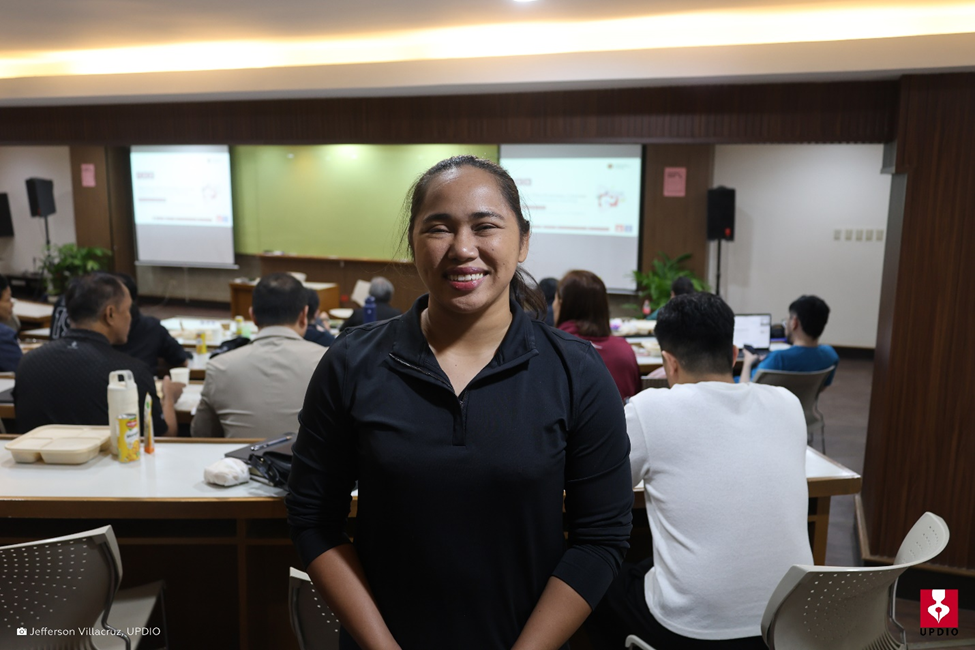
SOCIAL MEDIA was abuzz last week with mainly praises for but also some questions about Hidilyn Diaz’s appointment to teach weightlifting at the University of the Philippines in Diliman. 

I don’t think anyone doubted the Olympic gold medalist’s mastery of her subject. One post that went viral, however, wondered whether the athlete had what it took to teach at UP, considering that all the preparation she would have received was a four-day orientation the university gives all new faculty members. 

To be fair to the questioner, her concern was legitimate, taking Hidilyn the sports celebrity out of the picture for a minute. As I’ll discuss later, proficiency in a talent or profession doesn’t necessarily translate to good teaching. 

To be fair to Hidilyn, unlike many Filipino athletes, she’s no stranger to the classroom, having graduated in 2023 with a bachelor’s degree in business management from St. Benilde, after several interruptions because of her training and the pandemic.

I have no doubt myself that despite her lack of teaching experience, Hidilyn will be a fine, welcome, and indeed a prize addition to the UP faculty roster. Her presence alone will galvanize student interest in her sport, and in UP athletics in general. 

Her teaching, I’m pretty sure, will take care of itself. Having trained with some of the world’s best coaches, she will not lack for topics and techniques. What will probably challenge her the most will be her transition from star to student—as the learner of teaching that she will have to be. Her students will have to get over their awe of her celebrity to imbibe her lessons. 

Her first year will be fraught with both exhilaration and frustration, as the enthusiasm and even the ecstasy of teaching are weighed down by the drudgery of academic bureaucracy—particularly in UP which, despite its leadership in many fields, remains a laggard in the prompt payment of salaries for new hires.

The fact that we’re even talking about this shows how far we’ve come from the past, when a good reputation was enough to get you in front of the blackboard.

The problem here isn’t Hidilyn, and not even just UP itself, but a global academic culture that seems to have been taken over by the accountants and professional managers from the dreamers. 

I have nothing per se against the numbers crunchers, who are central and vital to every modern university’s survival. But the seemingly ceaseless demand for performance metrics to justify budgets, promotions, and bonuses—a mind-numbing exercise for staff already exhausted from their regular chores—can produce a false dazzle that favors consistency of delivery and even of mediocrity over originality, non-conformity, and inspiration.

As a writer and also a professor and former university administrator myself, I can appreciate the peculiar challenges of recruiting and sustaining what we might call non-traditional academics like creatives and athletes in this kind of environment. You need them to identify and develop their successors among their students; conversely, many of them also need the security of a job. 

But teaching is its own art, its own sport, its own discipline—and I know, from sad experience, that not all artists and athletes, no matter how gifted they may be in their fields, can teach. Some lack the people skills and the empathy the classroom requires; the most expressive artists can be woefully inarticulate, the lithest athlete inexplicably clumsy. 

Those who do connect—performers who know their audiences and who value contact and feedback and continuous learning—become the best teachers.

Many of them might not even meet today’s stringent entrance standards. UP’s College of Science, for example and for good reason, now requires a PhD of its teaching applicants. The humanities and athletics obviously can’t enforce that rule, given that there are Literature PhDs who can’t write a decent poem and SportsEd PhDs who can’t swim.

On the other hand, some very fine writers have taught at UP without even a bachelor’s degree because of their extraordinary talent, notably NVM Gonzalez, IP Soliongco, Jose Lacaba, and Ricky Lee. 

This will be self-serving, but no better example of that kind of avatar exists at UP today than my wife June, who has been teaching the very first course in Art Conservation at the College of Fine Arts as a senior lecturer for the past three years.

Now 75, June came into teaching late in life, after a long career in the arts as a graphic designer, watercolorist, and for the past quarter-century as an art restorer and conservator running her own studio. Few people in this country (excuse the proud husband speaking) have her skill and experience, having worked on all the Filipino masters from Luna, Hidalgo, and Amorsolo onward, including the Spoliarium. She had always dreamt of teaching, knowing how few authentic and scientific conservators there are in the Philippines, and the need to train the young.

The only problem was, as a student activist, she had left UP under martial law a few units short of completing her Fine Arts degree. She married me, worked, became a mother, and never went back to school.

But she did train long and hard in conservation and restoration with the Agencia Internacional of the Spanish government, practically every day for a full year, in a program more rigorous than a master’s. On the strength of that training and her experience—she and her team have restored the collections of the Central Bank, the Philippine National Bank, and the GSIS, among others—she was taken in by UP to advise the administration on conserving the university’s vast art collections, leading to her appointment as lecturer (for a subject that, frankly, no one else in UP can teach right now). Aside from her classes, June has been advocating for UP to set up its degree program in conservation and an Arts Conservation Center to serve as both a teaching and service facility. She still runs her own Artemis Art Restoration company for private clients. For a 75-year-old dropout, that can’t be too bad. She complains of fatigue and of being perplexed by the world of AI, and says she wants to stop before dementia sets in, but I know her students love her and wish she would teach forever (because they tell her so).

I myself was a dropout for a decade and had worked as a journalist and screenwriter before returning to UP to finish my degree so I could teach—which I ended up doing for 35 years and still do long after retirement. 

When I think of Hidilyn Diaz coming in to UP amid all the fuss, I want to tell her to just relax, and to enjoy the campus and her students. Teaching in UP will be full of joys and aggravations, but the heaviest lifting will be within her—of doubts, fears, and the catcalls of the rabble in the bleachers. Welcome to the home of Honor, Excellence, and Service—and never mind that it also happens to be a hornets’ nest.


Qwertyman No. 107: The Epalympics

Qwertyman for Monday, August 19, 2024

FIRST OF all, a definition of terms, particularly for the benefit of our foreign friends: “epal” is a Filipino word that has nothing to do with friendship over the Internet, although it does presume on some (unearned and likely bogus) level of familiarity between two people—one an achiever (e.g., an Olympic champion) and the other, a politician. The term is rooted in the Filipino word “kapal” or “thickness,” the complete phrase being “kapal mukha” (aka “kapalmuks”) or “thick-faced,” referring to the utter shamelessness some people can be capable of. (EDIT: I’ve been told that “epal” more likely derives from “papel” or “pumapapel” to mean “promoting oneself,” which makes even better sense.)

In the case of “epal,” the specific context is credit-grabbing or publicity-seeking, such as when a politician plasters his or her name all over a civil works project to suggest that it wouldn’t have happened without him or her—or, in recent weeks, when a politician posts a meme supposedly congratulating an Olympic champion, as if he or she had anything to do with that person’s sterling achievement. 

Closely related to “epal” in the Pinoy political vocabulary is “trapo,” which started out as “tradpol” for “traditional politician” but which quickly and sensibly devolved into the Filipino word for “rag”—yes, that piece of cloth you mop up the dirty and yucky stuff with. Trapos will find nothing wrong with being epal—it’s central to their trapo-ness—as they are pathologically incapable of modesty or self-awareness, and equate anything that promotes their well-being with the public good, the people being privileged to be served by them rather than the other way around.

We witnessed this in abundance in the wake of the Paris Olympics, from which the Philippines came home with two golds and two bronzes. In what Netizens quickly dubbed the “Epalympics,” our medalists, especially gymnast Carlos Yulo, were showered not just with congratulatory memes from the usual politicos but with tons of cash and other goodies from both public and private donors. 

There’s nothing, of course, preventing our distinguished and hardworking public officials—and even those seeking to replace them—from sharing in the post-victory jubilation. Lord knows we needed that boost to our spirits, even if our national fantasies still revolve around basketball like nothing’s happened since Berlin 1936 (there’s something to be said here about our propensity for self-punishment and martyrdom, but we’ll leave that for another time). 

It’s possible that Caloy was looking forward to the chorus of fulsome praise from his favorite senators and congressmen, if only as a relief from all the messages urging him to either disown his mother or to find another girlfriend shaped more like, well, a gymnast. A politician, after all, represents a constituency and presumes to speak for them, so it has to be extra comforting to realize that it’s not only Cong. X speaking for himself, but all 250,000 voters in the third district of his province, even if none of the appear in the meme; heck, even Caloy himself may not be in the picture, but does it matter? He has all the glory he needs; let him share it with the less fortunate.

As a writer, however—and speaking on behalf of my fellow artists—I must register my complaint over the apparent partiality of our esteemed epals, who have never congratulated me or my colleagues despite our considerable achievements on both a national and global scale. Not even my local councilor or barangay captain greeted me when my novel was shortlisted for the Man Asian Literary Prize, nor did the UP Singing Ambassadors and UP Madrigal Singers receive online hosannas for their triumphs in Arezzo. (This list can go on and on to include our prizewinners in film, painting, sculpture, etc.) No, sir—our epals are staunchly and singularly sports-minded, perhaps in commiseration with athletes who have to run, vault, gyrate, box, and even shoot their way to victory; politics, after all, is an ancient blood sport, at which not necessarily the best but the strongest survive.

Come to think of it, I can’t recall a senator or congressman congratulating journalist Maria Ressa (save for a few brave souls in the opposition like VP Leni)—let alone give her a million-peso bonus—for winning the Nobel Prize, which will probably take another century for another Pinoy to get. 

Yes, let’s talk about those bonuses—which all of us are happy our sports heroes are receiving and frankly envy them for, there being no such generous windfalls in our line of work. It’s another sure sign of ka-epalan when the “incentive” is given after the fact of victory, and not before when it might have mattered more, and not just to one champion but to an entire program in dire need of such basics as food, uniforms, shoes, and transportation money. (One deathless politico even offered Yulo an extra P5 million if he were to reconcile with his estranged mom—awww, so touching! You can bet he’ll be there with an outsize check when the tearful moment happens.)

Yes, Yulo & Co. did receive government and private help on their way to the Olympics, for which they’ve been properly thankful, and yes, those investments clearly paid off. But where were all these mega-millions for the grassroots sports programs that could have produced a dozen more Caloys? Yulo himself has nobly announced that he will share his bounty with up-and-coming gymnasts, and bless him for that, but that’s not even his job. 

The most cringeworthy prospect yet lies ahead: who among our Epalympians will succeed in getting Caloy Yulo on his or her campaign poster come the elections in 2025? And God forbid, will Yulo himself do a Manny Pacquiao and tumble his way into the political arena down the road? As we say in these drama-dizzy islands, “Abangan.”

Qwertyman No. 106: For Our National Peace of Mind

Qwertyman for Monday, August 12, 2024

FOR A country starved for heroes, Carlos Yulo’s double-gold performance at the Olympics provided a sumptuous feast—a bacchanalian one, to use probably the newest and most notorious word in many people’s vocabulary. In one YouTube replay after another, we marveled at his seemingly magical flips and tumbles, and our eyes welled with tears when the Philippine anthem played over the stadium’s loudspeakers.

The euphoria effectively drowned out the previous week’s near-manic howls over the controversial Dionysian tableau of the opening ceremonies and the chorus proclaiming Paris as the most evil and corrupt city on the planet. Suddenly Paris acquired a golden halo; Yulo was beatified on social media as the exemplar of perseverance and tough-mindedness, and rightly so. His feat—sterling victories achieved despite overwhelming odds—was unprecedented and not likely to be equaled by another non-hyphenated Pinoy anytime soon.

But no sooner had Filipinos united in that moment of jubilation than they, almost by instinct, found cause to divide once again, this time over one’s choice of villainess in poor Caloy’s life: the bitter mother or the sexy girlfriend, behind either one of whom platoons of supporters rallied. Team Nanay exalted motherhood and filial piety above all else; Team GF cheered for the pursuit of happiness. Who will get to the podium remains to be seen.

I’m sure Caloy Yulo isn’t alone in his predicament. An assiduous journalist just has to comb through the life stories of all the 400+ gold medalists in the Paris Olympics to discover that 87.93 percent of them have problems with mothers, fathers, girlfriends, boyfriends, siblings, in-laws, best friends, neighbors, and pets. (For these, I would look most closely into places like Uzbekistan, Uganda, and, yes, Italy, where families seem to be big and noisy.) Statistically speaking, there has to be a champion shotputter or a synchronized swimmer somewhere whose miserable mama hates his shapely squeeze. (I’ve even heard someone posit over breakfast coffee that maybe EJ Obiena needed a mother/girlfriend problem to clear the bar at 6.0 meters.)

The big difference is that no one goes to town with family dramas quite like us Pinoys, especially Pinoys with social-media accounts normally given to showing off what they just ate or their OOTD. To show, at least once in a while, that there’s actually a thinking and feeling person behind the avatar (and online, feeling equals thinking), we post a strong opinion—never mind that it’s the millionth repost of someone else’s meme. We find it important—nay, obligatory—to take sides on vital issues (that do not include PISA scores, ICC probes, or jeepney modernization). We have to decide if the mother or the girlfriend is at fault; our national peace of mind depends on it. Never mind what Caloy Yulo himself thinks—this is bigger than him (like most things are).

And this is just the beginning, although it’s inextricably tied in with the next big question that 115 million Filipinos have to grapple with: what should Caloy do with all his money? (I don’t even want to think about whether he should go into showbiz or politics next—my friend Ige Ramos’ post on those prospects was probably the sanest of the past week, and one Caloy would do well to heed.)

In addition to all the lifetime supplies of ramen, litson manok, and colonoscopies that come with being a Pinoy Olympic laureate, will it be too much to offer Caloy Yulo a lifetime supply of peace? It costs nothing but our willful silence.

Seriously now, silence is a virtue, and withholding opinion can be as valuable and as helpful as giving one. It doesn’t mean you’re dumb or uncaring. On the contrary, it might mean that you know enough to understand that staying out of the fray and keeping your thoughts to yourself is the more sensible if not kinder option. But we Pinoys, the reigning world usisero and pakialamero champions, have never been known for excessive self-restraint, which manifests only when the neighbor’s wife is being beaten senseless by her husband (“Wala tayong kinalaman diyan”) or when witnesses are called to testify to their boss’ or their congressman’s misdeeds.

Sadly, social media has empowered everyone from nitwits to geniuses (and of course, everyone thinks of himself or herself as a genius, especially the nitwit) to hold forth on every conceivable subject, even and especially if the issue at hand is none of one’s bloody business. 

I say that with the ironic awareness that we opinion writers do pretty much the same thing, with some sort of official license; we even get paid for it. Indeed we may even be the ultimate pakialamero, poking our noses into all manner of secrets and scandals, particularly the government variety (or maybe not me, because I don’t hobnob with politicians or their secretaries, and so am useless when it comes to the saucy stuff). But the difference is that having to write 1,000 words instead of a ten-word tweet, we actually have to stop to think about how we feel, to contextualize, and perhaps even to decide that we have nothing truly important or useful or even amusing to say about the matter, and so should move on to something else.

At least Caloy can rest assured that given the nature of the beast, this tempest will blow over soon. (Is anyone still posting about the Last Supper? That’s so last-week!) And before too long, he can rightfully enjoy the pommel horse in his P32-million condo. Wait—it does have a pommel horse, right? If not, it should! What do you think?

(Photo from rappler.com)

Qwertyman No. 105: Pronouns and Parodies

Qwertyman for Monday, August 5, 2024

SOME DAYS, I swear, when I open my Facebook feed, I’m met by a flood of vexatious opinion certain to trigger my worst reflexes. Much as I’m tempted to respond, I rarely do, knowing that FB comments don’t really soften hearts and minds, but only make them harder. Also, I’m not the witty sort with one-liners that will go viral; my thoughts and words like to ramble and even lose their way, but at least you know it’s not AI or the “Forward” button at work.

Two topics did get me worked up a bit last week, and I’m going to use this column to write the kind of longish social-media comment no one will read. You’ll recognize both issues instantly if you haven’t been living under a rock.

The first was that picture of a seated gay “personality” (I’m never quite sure how persons become “personalities”) lecturing a waiter standing at parade-rest, reportedly for two hours, on gender sensitivity, all because he called her “Sir.” 

There’s a part of me that understands how and why that happened. Some will call this silly wokeness, but in UP, we take our students’ preferred pronouns and names seriously as a sign of respect for the person. 

But what I also know is, when I teach, I stand and my students sit. That’s not to emphasize my authority, but so they can relax, listen, and hopefully imbibe what I’m telling them. I realize that the lady said she invited the waiter to sit down, but I also understand why he declined. Staff don’t sit for a chummy chat with customers. And imagine this: if I (an old man, dirty or not) were the customer and I felt poorly served by a female employee, and I asked her to sit at my table for two hours while I educated her on the finer points of etiquette, would or should she oblige? And I hate listening to or giving long lectures. If I can’t get something across in twenty minutes max, then I’m a lousy teacher.

There’s politics which can be good and right—and people who may not be. Some of the most politically savvy people I’ve met have also been, as some would say, that part of you where the sun don’t shine. 

The other hot topic, of course, was the “Last Supper” tableau at the opening ceremonies of the Olympics in Paris, which allegedly mocked the Lord and Christianity itself by replacing Jesus and his apostles at the long table with a raft of drag queens and other presumably degenerate characters. 

I never saw so many Christians and especially Catholics (some of them my good friends) come out of the woodwork to profess their outrage at what they took to be willful sacrilege. And predictably, like wolves sniffing out red meat, many more friends from the other side piled on the “offendees” with mini-treatises on Bacchus and bacchanals, pagan elements in Christian ritual, art criticism, the French mentality and sensibility, and such other topics worthy of dissertations.

Now, as I’ve often confessed in this column (maybe losing five readers and FB friends every time I bring it up; in this context, maybe more), I’m not much of a churchgoer, and have continuing issues with the religion I was born into—and with all of organized religion for that matter, despite growing up in Catholic school. I prefer to pray on my own. I have nothing against people who stay in the fold, go to Mass regularly, post daily proverbs on Viber, and believe in the Bible as the one and only true source of, well, the truth. If their faith keeps them whole and happy—and I can see in many cases that it does—then well and good. Some may be hypocrites, but I’m sure many or most aren’t—and there are hypocrites as well (and worse) among apostates like me.

But back to Paris. What I’m not going to say is, “You shouldn’t have been offended.” If you were, you were. Even if you later changed your mind after listening to all the learned explanations (to some, I’m sure, excuses), the fact is, you saw something you didn’t like. (I just have to wonder—how many people responded directly to the tableau itself, and how many were nudged into seeing it and later objecting by another post screaming, “Hey, you have to see this! Look what they’ve done to Jesus!”? It works the same way on the right and on the left: a meme cascades swiftly down the Internet, and people react viscerally even before they can think.) 

Sure, the “Last Supper” is only a painting by one Leonardo da Vinci, that smart Italian fellow who also imagined flying machines, tanks, and other wonderful contraptions—so why not Jesus’ last meal? (I don’t think there’s an exact record in any of the four Gospels about how the scene was blocked for thirteen characters, except that Christ very likely sat in the middle for better reach, and certainly nobody knows who sat next to whom and leaned over whom. Some depictions down the centuries don’t even use a straight table but an inverted U, or have everyone reclining on mats and pillows, or sitting in a circle.) But even images and objects have symbolic meaning and power, so it’s easy to get hopping mad if someone, say, spits on a painting of your grandmother, or turns it into an unflattering cartoon. 

I do share the consternation over why a hyper-expensive and PR-conscious global enterprise like the Olympics would risk alienating half of France and a third of the world (presuming all Christians took umbrage at the Blue Guy) by—according to the charge sheet—deliberately, premeditatedly, and maliciously mounting a patently anti-Christian production for the whole planet to see. I know the French eat strange things like sheep testicles and have a law requiring skimpy trunks and head caps (yes, even if you’re bald) in public pools, but really now, mock the Last SupperSacré Dieu! (Or, excuse me, let’s use the milder sacré bleu!)

Given all of that, my only question is, where was all the outrage when that President was joking about raping captive nuns and cursing the Pope? And speaking of the Renaissance and the power of representation, remember that Pieta-like photograph of a grieving mother cradling her murdered son at the height of that same President’s tokhang campaign, that President who called Catholic bishops “gay SOBs”? Where was all the righteousness? But maybe we’re just getting started. There’ll be FB accounts I’ll be checking in on, the next time something wildly repulsive happens.

(Image from arnoldzwicky.org–Please condemn him. not me!)