Qwertyman No. 106: For Our National Peace of Mind

Qwertyman for Monday, August 12, 2024

FOR A country starved for heroes, Carlos Yulo’s double-gold performance at the Olympics provided a sumptuous feast—a bacchanalian one, to use probably the newest and most notorious word in many people’s vocabulary. In one YouTube replay after another, we marveled at his seemingly magical flips and tumbles, and our eyes welled with tears when the Philippine anthem played over the stadium’s loudspeakers.

The euphoria effectively drowned out the previous week’s near-manic howls over the controversial Dionysian tableau of the opening ceremonies and the chorus proclaiming Paris as the most evil and corrupt city on the planet. Suddenly Paris acquired a golden halo; Yulo was beatified on social media as the exemplar of perseverance and tough-mindedness, and rightly so. His feat—sterling victories achieved despite overwhelming odds—was unprecedented and not likely to be equaled by another non-hyphenated Pinoy anytime soon.

But no sooner had Filipinos united in that moment of jubilation than they, almost by instinct, found cause to divide once again, this time over one’s choice of villainess in poor Caloy’s life: the bitter mother or the sexy girlfriend, behind either one of whom platoons of supporters rallied. Team Nanay exalted motherhood and filial piety above all else; Team GF cheered for the pursuit of happiness. Who will get to the podium remains to be seen.

I’m sure Caloy Yulo isn’t alone in his predicament. An assiduous journalist just has to comb through the life stories of all the 400+ gold medalists in the Paris Olympics to discover that 87.93 percent of them have problems with mothers, fathers, girlfriends, boyfriends, siblings, in-laws, best friends, neighbors, and pets. (For these, I would look most closely into places like Uzbekistan, Uganda, and, yes, Italy, where families seem to be big and noisy.) Statistically speaking, there has to be a champion shotputter or a synchronized swimmer somewhere whose miserable mama hates his shapely squeeze. (I’ve even heard someone posit over breakfast coffee that maybe EJ Obiena needed a mother/girlfriend problem to clear the bar at 6.0 meters.)

The big difference is that no one goes to town with family dramas quite like us Pinoys, especially Pinoys with social-media accounts normally given to showing off what they just ate or their OOTD. To show, at least once in a while, that there’s actually a thinking and feeling person behind the avatar (and online, feeling equals thinking), we post a strong opinion—never mind that it’s the millionth repost of someone else’s meme. We find it important—nay, obligatory—to take sides on vital issues (that do not include PISA scores, ICC probes, or jeepney modernization). We have to decide if the mother or the girlfriend is at fault; our national peace of mind depends on it. Never mind what Caloy Yulo himself thinks—this is bigger than him (like most things are).

And this is just the beginning, although it’s inextricably tied in with the next big question that 115 million Filipinos have to grapple with: what should Caloy do with all his money? (I don’t even want to think about whether he should go into showbiz or politics next—my friend Ige Ramos’ post on those prospects was probably the sanest of the past week, and one Caloy would do well to heed.)

In addition to all the lifetime supplies of ramen, litson manok, and colonoscopies that come with being a Pinoy Olympic laureate, will it be too much to offer Caloy Yulo a lifetime supply of peace? It costs nothing but our willful silence.

Seriously now, silence is a virtue, and withholding opinion can be as valuable and as helpful as giving one. It doesn’t mean you’re dumb or uncaring. On the contrary, it might mean that you know enough to understand that staying out of the fray and keeping your thoughts to yourself is the more sensible if not kinder option. But we Pinoys, the reigning world usisero and pakialamero champions, have never been known for excessive self-restraint, which manifests only when the neighbor’s wife is being beaten senseless by her husband (“Wala tayong kinalaman diyan”) or when witnesses are called to testify to their boss’ or their congressman’s misdeeds.

Sadly, social media has empowered everyone from nitwits to geniuses (and of course, everyone thinks of himself or herself as a genius, especially the nitwit) to hold forth on every conceivable subject, even and especially if the issue at hand is none of one’s bloody business. 

I say that with the ironic awareness that we opinion writers do pretty much the same thing, with some sort of official license; we even get paid for it. Indeed we may even be the ultimate pakialamero, poking our noses into all manner of secrets and scandals, particularly the government variety (or maybe not me, because I don’t hobnob with politicians or their secretaries, and so am useless when it comes to the saucy stuff). But the difference is that having to write 1,000 words instead of a ten-word tweet, we actually have to stop to think about how we feel, to contextualize, and perhaps even to decide that we have nothing truly important or useful or even amusing to say about the matter, and so should move on to something else.

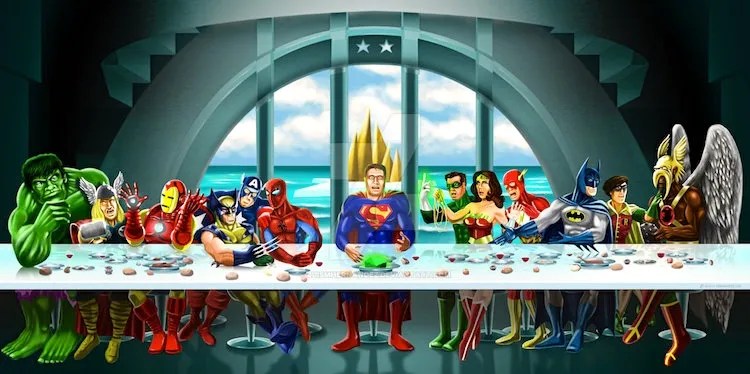
At least Caloy can rest assured that given the nature of the beast, this tempest will blow over soon. (Is anyone still posting about the Last Supper? That’s so last-week!) And before too long, he can rightfully enjoy the pommel horse in his P32-million condo. Wait—it does have a pommel horse, right? If not, it should! What do you think?

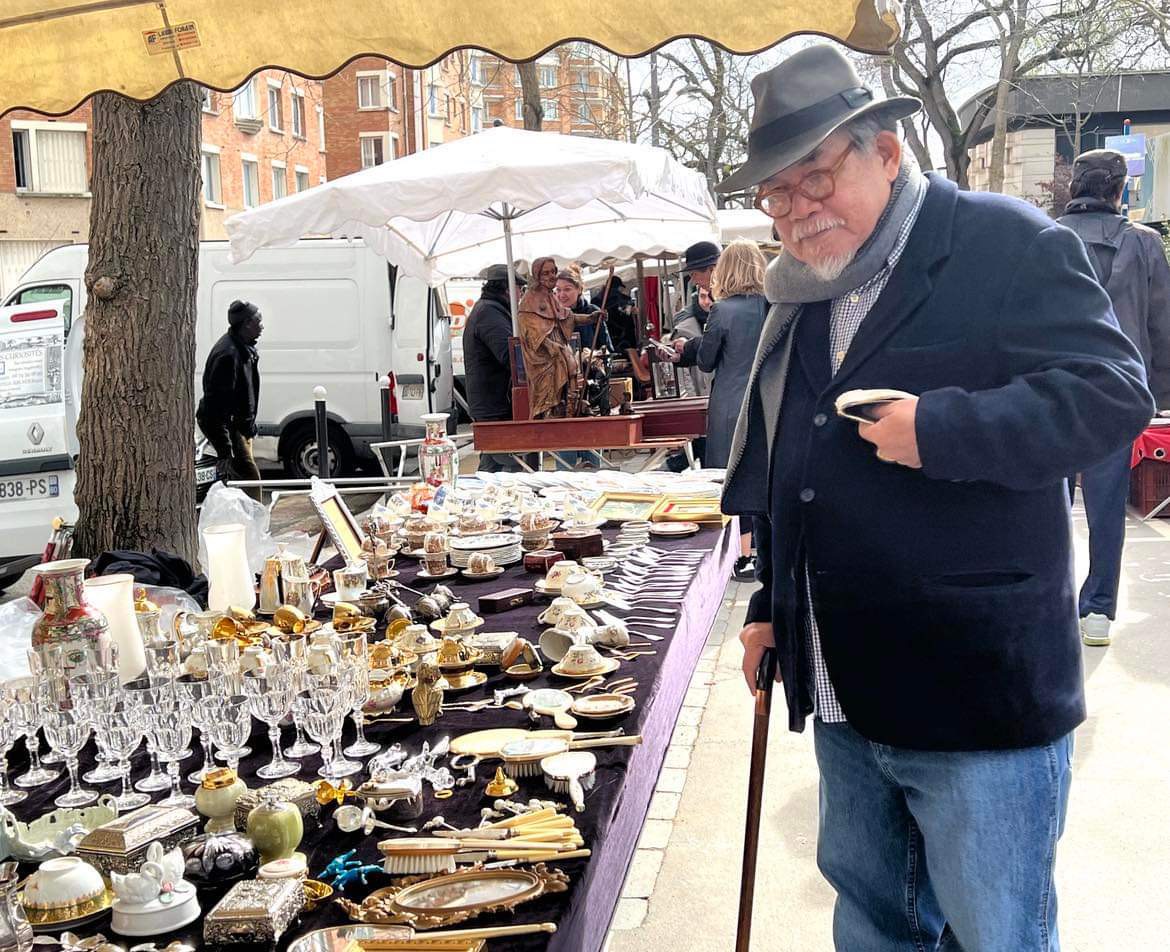
(Photo from rappler.com)
Qwertyman No. 105: Pronouns and Parodies

Qwertyman for Monday, August 5, 2024

SOME DAYS, I swear, when I open my Facebook feed, I’m met by a flood of vexatious opinion certain to trigger my worst reflexes. Much as I’m tempted to respond, I rarely do, knowing that FB comments don’t really soften hearts and minds, but only make them harder. Also, I’m not the witty sort with one-liners that will go viral; my thoughts and words like to ramble and even lose their way, but at least you know it’s not AI or the “Forward” button at work.

Two topics did get me worked up a bit last week, and I’m going to use this column to write the kind of longish social-media comment no one will read. You’ll recognize both issues instantly if you haven’t been living under a rock.

The first was that picture of a seated gay “personality” (I’m never quite sure how persons become “personalities”) lecturing a waiter standing at parade-rest, reportedly for two hours, on gender sensitivity, all because he called her “Sir.” 

There’s a part of me that understands how and why that happened. Some will call this silly wokeness, but in UP, we take our students’ preferred pronouns and names seriously as a sign of respect for the person. 

But what I also know is, when I teach, I stand and my students sit. That’s not to emphasize my authority, but so they can relax, listen, and hopefully imbibe what I’m telling them. I realize that the lady said she invited the waiter to sit down, but I also understand why he declined. Staff don’t sit for a chummy chat with customers. And imagine this: if I (an old man, dirty or not) were the customer and I felt poorly served by a female employee, and I asked her to sit at my table for two hours while I educated her on the finer points of etiquette, would or should she oblige? And I hate listening to or giving long lectures. If I can’t get something across in twenty minutes max, then I’m a lousy teacher.

There’s politics which can be good and right—and people who may not be. Some of the most politically savvy people I’ve met have also been, as some would say, that part of you where the sun don’t shine. 

The other hot topic, of course, was the “Last Supper” tableau at the opening ceremonies of the Olympics in Paris, which allegedly mocked the Lord and Christianity itself by replacing Jesus and his apostles at the long table with a raft of drag queens and other presumably degenerate characters. 

I never saw so many Christians and especially Catholics (some of them my good friends) come out of the woodwork to profess their outrage at what they took to be willful sacrilege. And predictably, like wolves sniffing out red meat, many more friends from the other side piled on the “offendees” with mini-treatises on Bacchus and bacchanals, pagan elements in Christian ritual, art criticism, the French mentality and sensibility, and such other topics worthy of dissertations.

Now, as I’ve often confessed in this column (maybe losing five readers and FB friends every time I bring it up; in this context, maybe more), I’m not much of a churchgoer, and have continuing issues with the religion I was born into—and with all of organized religion for that matter, despite growing up in Catholic school. I prefer to pray on my own. I have nothing against people who stay in the fold, go to Mass regularly, post daily proverbs on Viber, and believe in the Bible as the one and only true source of, well, the truth. If their faith keeps them whole and happy—and I can see in many cases that it does—then well and good. Some may be hypocrites, but I’m sure many or most aren’t—and there are hypocrites as well (and worse) among apostates like me.

But back to Paris. What I’m not going to say is, “You shouldn’t have been offended.” If you were, you were. Even if you later changed your mind after listening to all the learned explanations (to some, I’m sure, excuses), the fact is, you saw something you didn’t like. (I just have to wonder—how many people responded directly to the tableau itself, and how many were nudged into seeing it and later objecting by another post screaming, “Hey, you have to see this! Look what they’ve done to Jesus!”? It works the same way on the right and on the left: a meme cascades swiftly down the Internet, and people react viscerally even before they can think.) 

Sure, the “Last Supper” is only a painting by one Leonardo da Vinci, that smart Italian fellow who also imagined flying machines, tanks, and other wonderful contraptions—so why not Jesus’ last meal? (I don’t think there’s an exact record in any of the four Gospels about how the scene was blocked for thirteen characters, except that Christ very likely sat in the middle for better reach, and certainly nobody knows who sat next to whom and leaned over whom. Some depictions down the centuries don’t even use a straight table but an inverted U, or have everyone reclining on mats and pillows, or sitting in a circle.) But even images and objects have symbolic meaning and power, so it’s easy to get hopping mad if someone, say, spits on a painting of your grandmother, or turns it into an unflattering cartoon. 

I do share the consternation over why a hyper-expensive and PR-conscious global enterprise like the Olympics would risk alienating half of France and a third of the world (presuming all Christians took umbrage at the Blue Guy) by—according to the charge sheet—deliberately, premeditatedly, and maliciously mounting a patently anti-Christian production for the whole planet to see. I know the French eat strange things like sheep testicles and have a law requiring skimpy trunks and head caps (yes, even if you’re bald) in public pools, but really now, mock the Last SupperSacré Dieu! (Or, excuse me, let’s use the milder sacré bleu!)

Given all of that, my only question is, where was all the outrage when that President was joking about raping captive nuns and cursing the Pope? And speaking of the Renaissance and the power of representation, remember that Pieta-like photograph of a grieving mother cradling her murdered son at the height of that same President’s tokhang campaign, that President who called Catholic bishops “gay SOBs”? Where was all the righteousness? But maybe we’re just getting started. There’ll be FB accounts I’ll be checking in on, the next time something wildly repulsive happens.

(Image from arnoldzwicky.org–Please condemn him. not me!)

Penman No. 461: A Parisian Interlude

Penman for Sunday, April 7, 2024

WHY IS it that just when you think you’ve begun to figure out a foreign city’s transport system, it’s time to come home? That happened again barely two weeks ago when my wife Beng and I flew to France for some speaking engagements in Paris and Le Havre. We were there for work, not tourism, and more work waited for us as well back home, so we couldn’t stay for as long as we would have wanted to. We’d been to Paris three times before and had done the obligatory Louvre and Eiffel Tower visits, but it almost seems criminal not to linger and loiter around such a beautiful city.

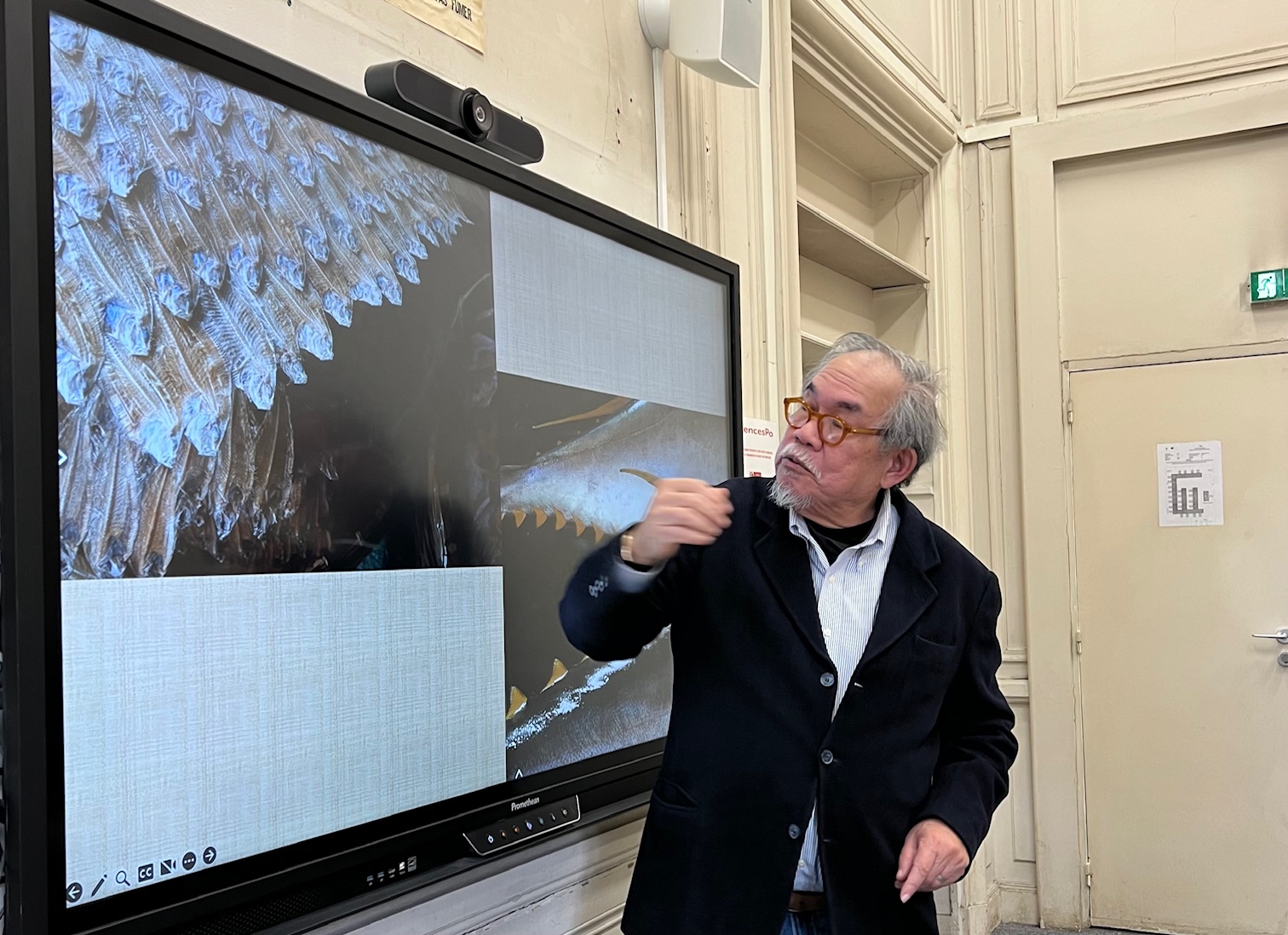
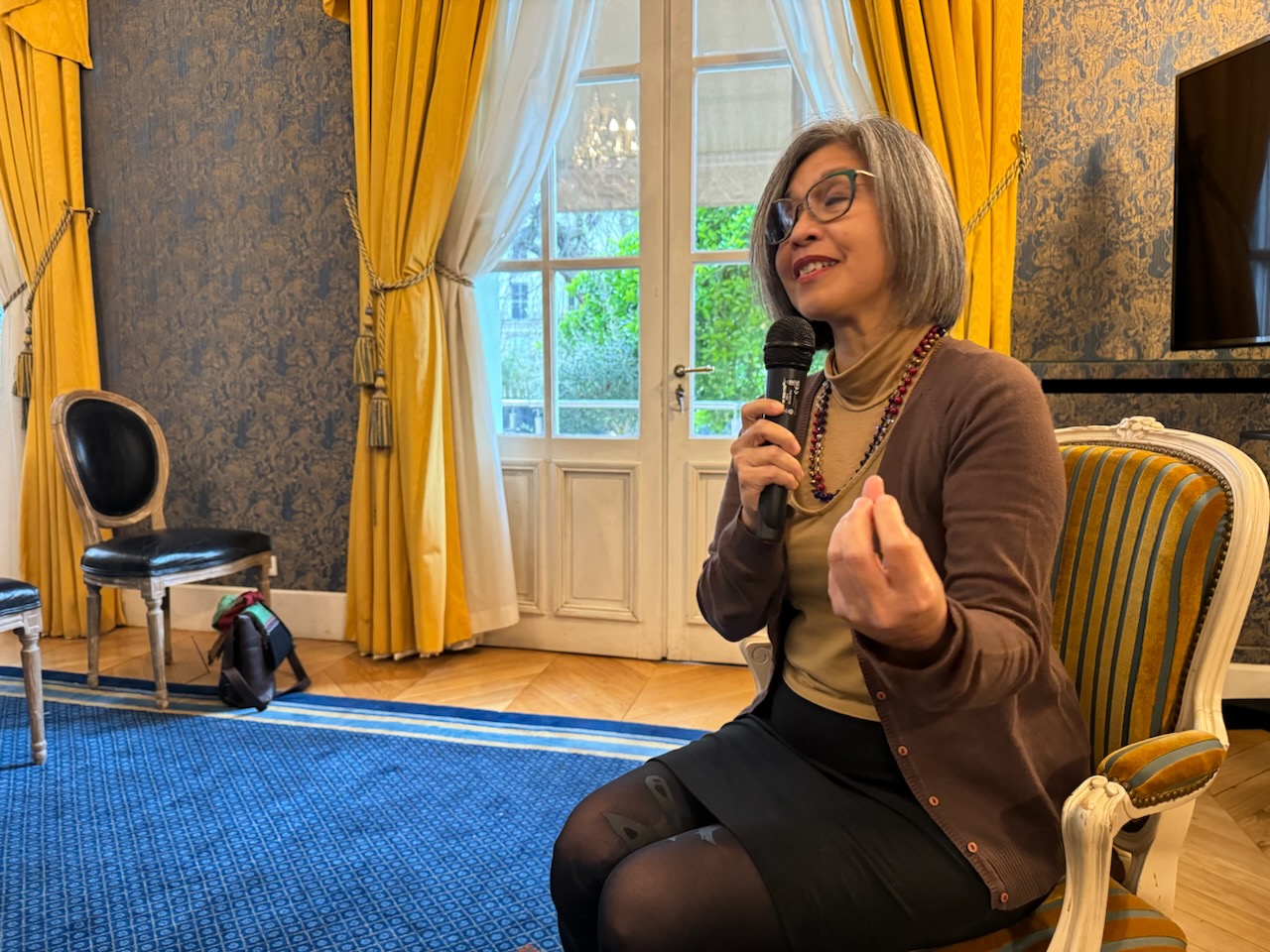
We were there at the invitation of SciencesPo, France’s leading social sciences university, for a series of talks on Philippine literature and art. Along with France-based writer Criselda Yabes, I gave a reading as well at the Philippine embassy in Paris at the behest of our most gracious ambassador, Mme. Junever “Jones” Mahilum-West, an avid amateur painter and supporter of Philippine culture. Our host at SciencesPo, Dr. Pauline Couteau, also arranged some events for us at their campus in Le Havre and sponsored a special screening of Lino Brocka’s classic “Maynila sa mga Kuko ng Liwanag” at the Entrepot Theater in Paris.

It was a hectic week that left these footloose septuagenarians exhausted but exhilarated at the same time, warmed up in France’s unseasonably chilly weather (often falling below 10C) by the enthusiasm of our new friends, both French and fellow Filipinos. 

Again, however, we had a sweet problem to deal with even before we flew to Paris: with such little time left on our schedule for more casual diversions, what places or experiences would we put on top of our list for our relaxation and amusement, given Paris’ almost inexhaustible offerings of wonder and delight?

Anthony Bourdain, bless his soul, famously advised short-term visitors to Paris not to make a mad dash to try and see everything all at once, but to just relax, have coffee, imbibe the neighborhood culture, stay in bed (and for those able and inclined, make love). Beng and I recalled, with both fondness and regret, how we had first seen Paris a quarter-century earlier from the back of a bus on a 99-pound budget tour from our base then in Norwich, England. The bus went by the city’s landmarks so fast that Beng missed Rodin because she was in the on-board restroom then. Subsequent visits afforded us a bit more time to see the Mona Lisa (of course) and to go up the Eiffel Tower (of course) but our happiest memories came, as Bourdain suggested, from just walking in the city gardens and along the Seine.

This time, we decided to do just two things with our limited free time: visit one museum, and hit the flea markets. This follows a pattern that Beng and I have observed over decades of traveling together, from Amsterdam, Barcelona, and London to New York, Tokyo, and Shanghai. The museums capture and preserve the glory of the past, and if you’re lucky, rather than pay for made-in-China miniatures at the museum gift shop, you can find some genuine article from that past in the flea market. 

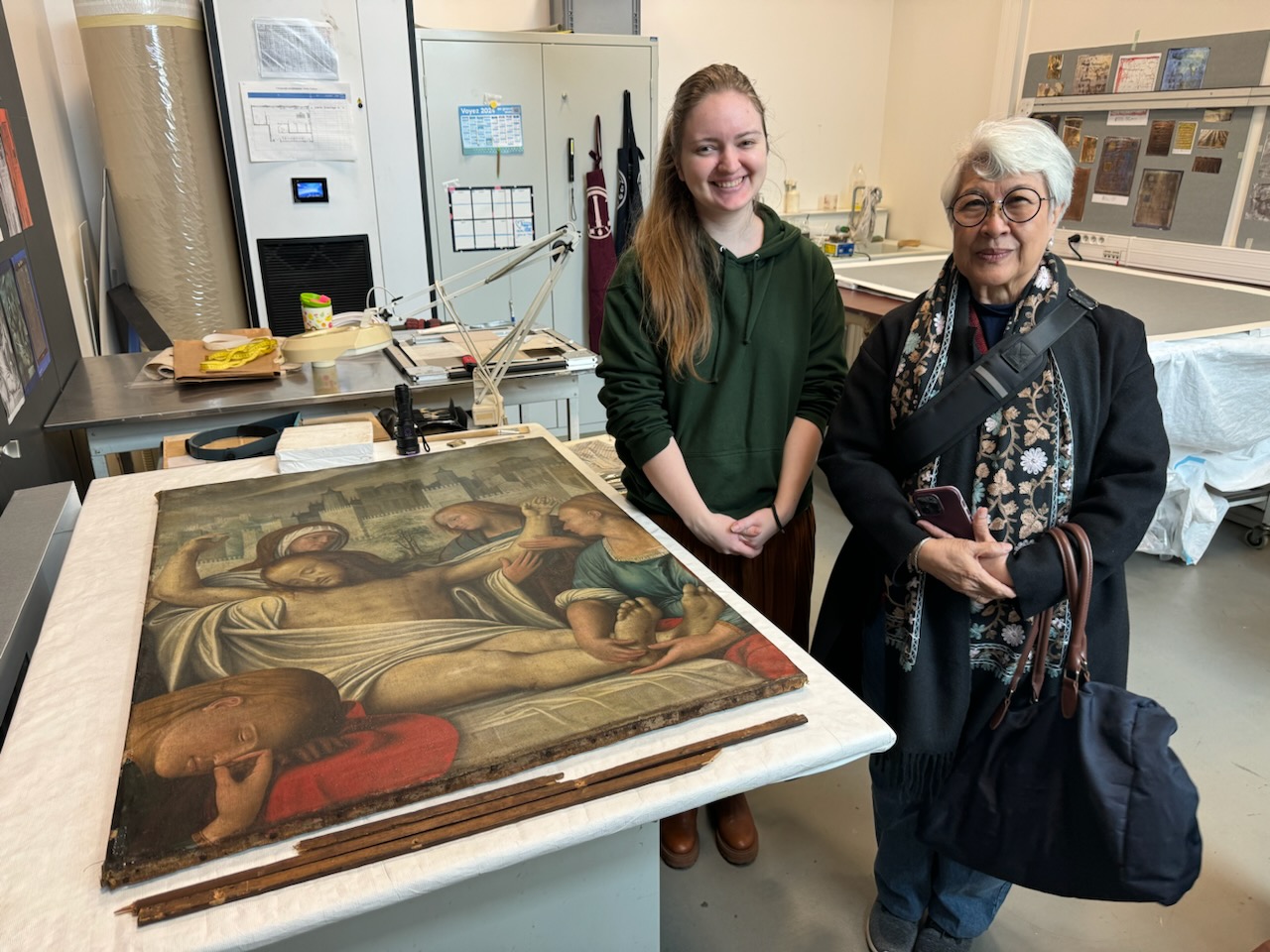
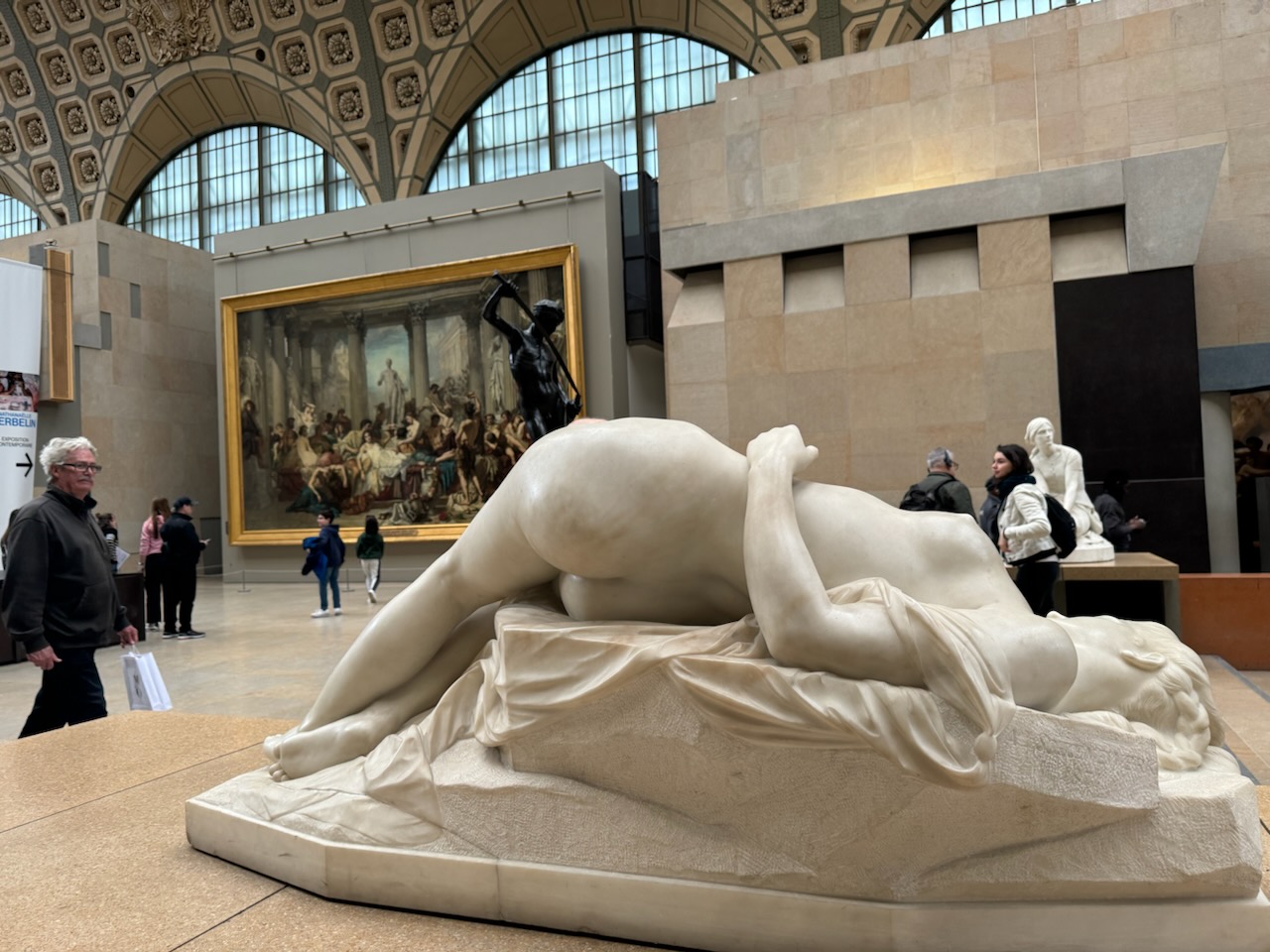
Our choice of museum was easy: Paris has dozens of fantastic museums—and you’ll never, ever finish the entire Louvre in one visit—but the great one we’d never been to was the Musée d’Orsay, the former train station that’s become France’s cathedral of Impressionism. Finally, this time, in the few hours we had just before boarding the train to Le Havre, we managed to step into the Musée d’Orsay, and what a divine experience e that was, to find room after room filled by the masterworks of Renoir, Monet, Manet, Seurat, Degas, Redon, Courbet, and so on, like walking into a book of pictures. 

Understandably, hundreds of other people had the same idea, so the best time to visit may have been after 6 pm—the museum closes at 9:45—when admission rates are also cheaper. Not a few friends have remarked that they found the Musée d’Orsay much better than the Louvre, perhaps because of its relative compactness and its delivery of proven crowd-pleasers in its collection.

Our flea-market sorties proved just as wondrous, with the additional thrill of unpredictability, as each table will be different from the one before it and you need a quick, trained eye to spot the jewel in the junkyard. As flea-market addicts from decades back when we used to scour the yard sales and antique barns of the American Midwest for things we could drag home, Beng and I have developed a routine of scan-and-scrutinize, looking for our respective grails (old fountain pens for me, old bottles and costume jewelry for her).

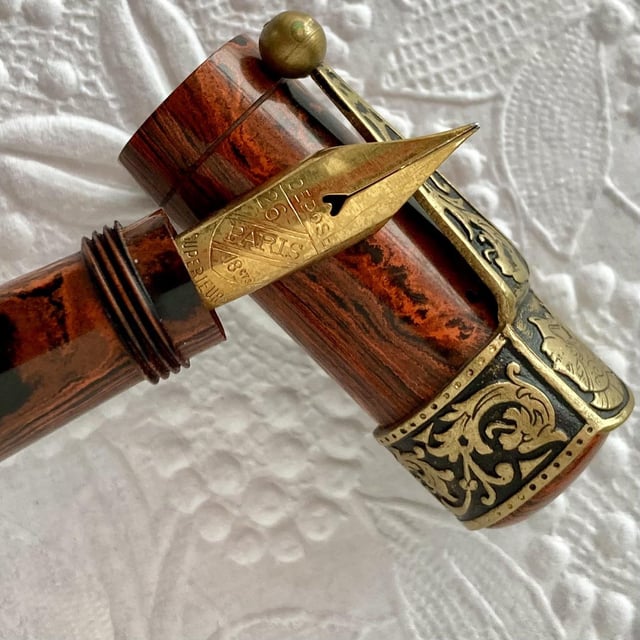
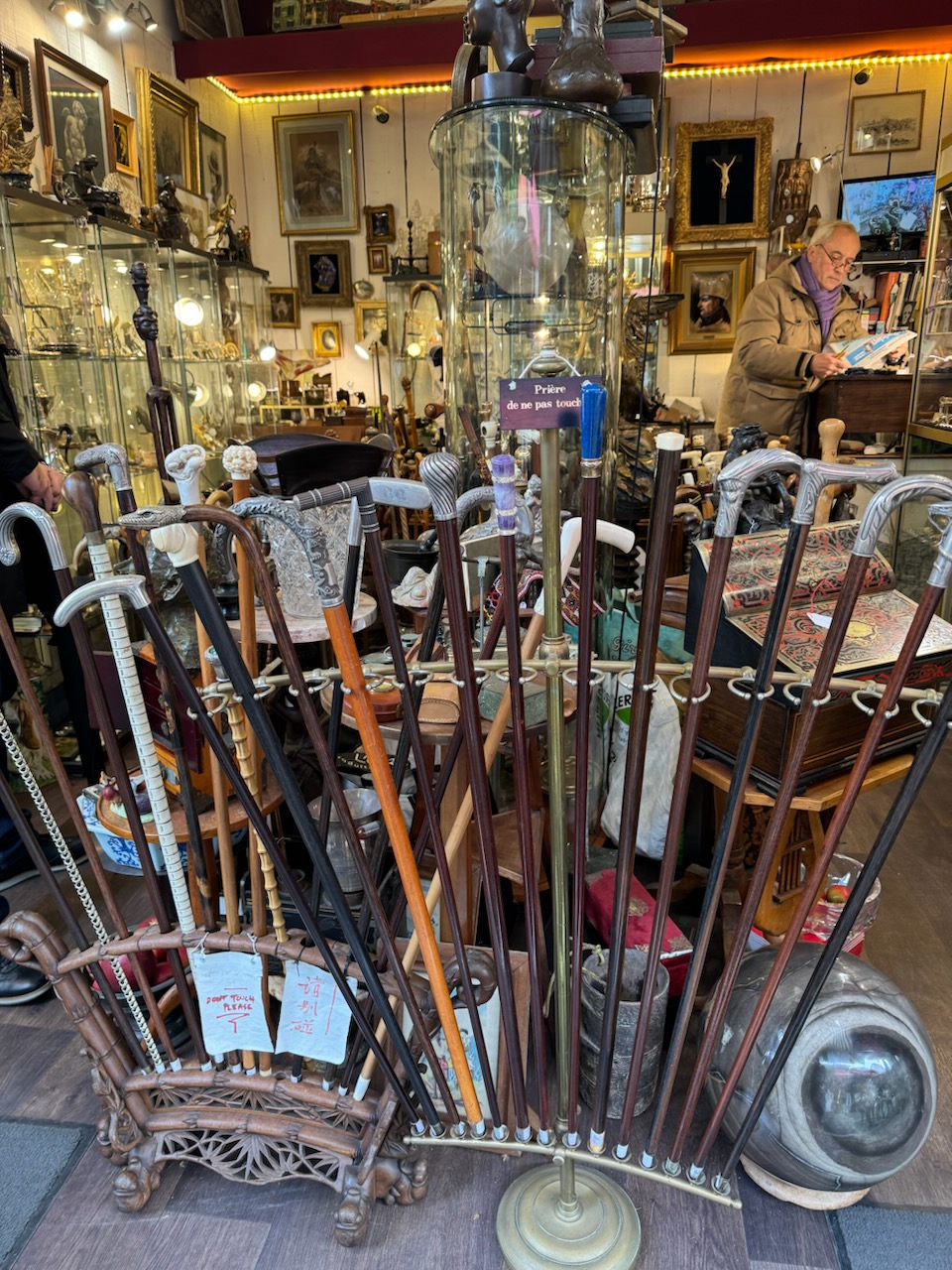
We were lucky to be billeted near our first flea market, the one at Porte de Vanves, which has about a hundred dealers strung along a large city block selling all manner of goodies from 18th-century books and Christofle silverware to walking sticks and paintings. I searched in vain for that lost Juan Luna and that stray copy of the Fili (which Rizal finished in Paris), but the flea-market gods blessed me instead with an early 1900s “safety” fountain pen sheathed in gold, perfect in every way, lying all by its lonesome on a table of bric-a-brac. “Combien, madame?” I asked in my schoolboy French, my throat dry with anticipation. “Cinquante euros,” she said; it was easily worth five times that, but I gathered up all my courage and countered, “Quarante?” “Okay,” she said, “A quick “Merci!” and 40 euros later, I was a happy boy with a new toy—what could be a better memento of this short trip than a gorgeous century-old pen with the word “Paris” on its 18-carat nib?

Of course, this luck was not to be repeated on our visit to the big flea market of St. Ouen in Clignancourt—reputedly the largest of its kind in the world—a few hours before boarding the plane back for home, but we rewarded our labors with a late lunch in a Chinese restaurant. After a week of French cuisine, immersed in the grandeur of French art and culture, huge platefuls of Cantonese fried rice sounded just about right. It was as if we were being told, “You’ve had your Parisian interlude and your souvenirs, it’s time to go home.” Au revoir!

Hindsight No. 25: The Museum of Suffering

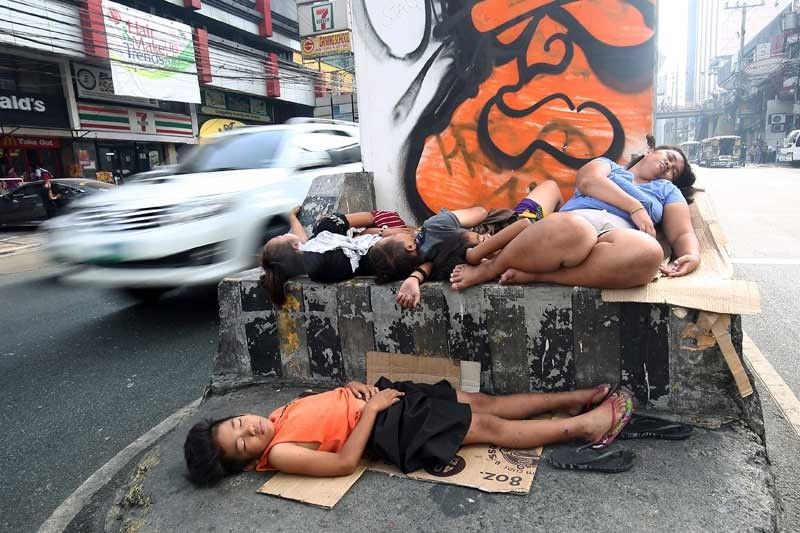
(Photo from philstar.com)

Hindsight for July 4, 2022

PEPITO FANCIED himself a museophile, a lover of places where old and fascinating objects were exhibited for the public’s delectation. Having achieved a certain level of leisure in his life, he had been able to indulge in a bit of travel, the highlights of which were invariably visits to local museums and galleries. While other tourists spent time posing before the Eiffel Tower or throwing coins into the Fontana di Trevi, Pepito preferred to wander the hallways of more obscure attractions such as the Musée de la Magie, where golden swans and painted ballerinas moved as if of their own accord, or the Museo Nazionale delle Paste Alimentari, where he could follow eight centuries of pasta-making across the globe. 

He was an omnivore, as far as interests were concerned. He could spend hours poring over Etruscan vases, Masamune katanas, deep-sea organisms, and Calder mobiles. Being something of a self-taught snob (he had a degree in civil engineering, but had never built a bridge or even a bungalow after he married into his late wife’s family), he liked to play guessing games—observing objects without reading their captions, making inspired surmises about their origins or back stories. 

Once, staring at a death mask from the Lambayeque culture of Peru, he voiced his suspicion to the docent beside him that “The red paint on this mask could have been human blood,” to which the docent replied, rather dismissively, “A lot of people say that, but there’s no proof, so it’s likely just cinnabar.” Years later, he was overjoyed to find vindication in a scientific report on analyticalscience.wiley.com that “The blood proteins serum albumin, immunoglobulin G, and immunoglobulin kappa constant were all identified, strongly indicating the presence of human blood in the red coating of the mask….” Pepito wanted to print out that page and mail it to the docent—in a real, stamped envelope, so the poor fellow could appreciate the materiality of the truth.

He could have been a docent himself, of course—one of those doddering retirees with nothing better to do than recite memorized scripts to glaze-eyed visitors about patinated silver and the importance of ruffles to Elizabethan gentlemen—but he found more pleasure in trailing them and the tour groups they shepherded around museums to pounce on an overheard mistake or to add his own little flourish. “There’s no proof that Jesus was born on the 25th of December,” he told some Japanese tourists examining an 18th-century belen. “Scholars calculate that he was actually born between 3 and 6 BC—before himself!” He expected them to chuckle with him, but their interpreter seemed annoyed at his intrusion and kept quiet.

No matter; truly, he didn’t care what others thought. They were all opinions, from small, provincial minds. He declared the present uninteresting, a jiggly kind of frame for the past, and politics the folly of idealists who kept hoping that communal inventions like government would get better, against obvious evidence to the contrary. He had long resigned himself to accepting whatever came, keeping his head low, vanishing into the woodwork, luxuriating in his connoisseurship of the strange and wonderful. People came and went, but things survived, and the most interesting of them were to be found in museums.

When he received the hand-lettered invitation to attend the soft opening of the new Museum of Suffering in San Miguel, Manila, Pepito wondered if they had made a mistake. Although he had posted his museum sorties on Facebook and had amassed 31,629 followers (he accepted no friends), he did not think of himself as a social media celebrity. But with vloggers now covering the President in the Palace, he figured he had been found out and finally recognized for his expertise on—well, anything and everything.

He took a cab to the address indicated on the card—about 45 minutes through the traffic, according to Waze—and tried to guess what the Museum of Suffering might feature. Pepito had to admit to a special attraction to the grotesque—to medieval instruments of torture (Prague, Toledo, Amsterdam), medical curiosities (Philadelphia, Boston), and even cannibalism (San Diego, Onnekop). This new museum had to be something of the sort, in a Philippine setting—exhibits of massacres, famines, imprisonment, floods, volcanic eruptions, locust infestations…. He looked at his driver and saw the crusty scab on the man’s neck, which probably began as an insect bite. 

He was met at the door of the refurbished mansion by—of course—a docent, but a woman not a year older than he was, wearing a pink dress with a Chinese collar to go with her dimpled smile. “Mr. Tanglaw? I’m so glad you could come. My name is Winnie, and I’ll be your guide for this tour…. Oh, don’t be surprised, we arranged this just for you, given your followership. This way, please.” Pepito looked around, expecting to be led to a roomful of specimens under glass, but instead an apple-green Vios appeared at the driveway and Winnie led him to the back seat before sitting in front. “Tikoy, let’s go,” she told the driver.

“Where are we going?” Pepito asked as the Vios eased into the traffic. 

“To the Museum of Suffering,” Winnie said. “That was just our meeting point.”

“Is it far?” Pepito asked after they had crossed three traffic lights, headed south.

“We’re low on gas,” Tikoy butted in, and slid behind a long queue of cars and jeepneys at a gas station. “Prices go up tomorrow, so everyone’s here. It was on the radio.” He turned the radio on and settled on a program where the hosts discussed tax evasion. 

Pepito looked at the prices per liter and saw nothing but numbers. He watched a truck driver wiping his face with a soiled towel. Winnie was explaining something about rice importation, but all he could think of was the olfactory testing game he played at the end of his tour of the Musée du Parfum Fragonard. He struggled to recall the scent of Belle de Nuit. He wanted out of this place. “Is it far?” he asked, gasping. “Is it far?”