Qwertyman No. 149: American Idiocracy

Qwertyman for Monday, June 9, 2025
IN HIS controversial but surprisingly popular 1987 book The Closing of the American Mind, the philosopher Allan Bloom lamented what he saw to be the decline of intellectual inquiry in America, indicting its universities for failing their students by promoting “relativism” over the time-honored values embodied by the “Great Books” of Western thought. “The consequences of the abandonment of the quest for the best are far-reaching and destructive,” Bloom intoned. 

Bloom was no flaming liberal; in fact, he was anything but—a true conservative who disdained rock music for its overtly sexual messages and its narcotic effects on the young (imagine what he would have said about TikTok). But his book and its arguments struck a responsive chord in many Americans—half a million of them bought hardcover copies—who were worried that the counterculture that had crept across American society since the tumultuous 196os had weakened it from within and had dulled the blade of American exceptionalism—the rock-solid article of faith that America was, or had to be, No. 1 in everything, because of its unique history and attributes.

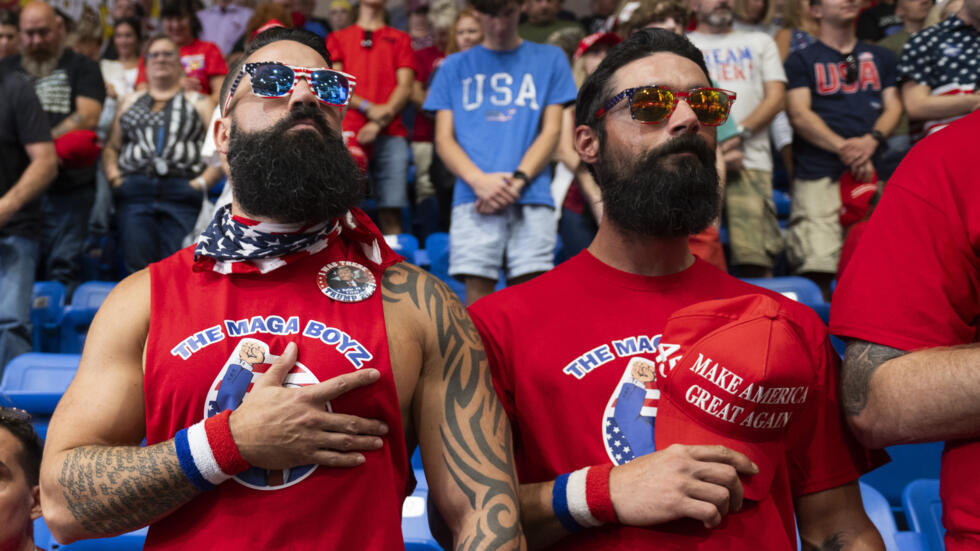
That sounds a lot like “Make America Great Again,” although MAGA wasn’t driven by a longing to study Plato, but by deep-seated, grassroots-level grievances and prejudices. One wonders how Allan Bloom, who died in 1992, would respond to the political situation today, which on the surface mirrors some of his concerns, but only just so: a conservative President has declared war on America’s liberal universities, for all the wrong reasons, leading up to the “far-reaching and destructive consequences” that Bloom bewailed. 

Of course, Donald Trump is no Bloomian or even Reaganite conservative; all he seems to be about is unbridled power and money, and testing the limits to where they can go. “Trumpism” has been described as a mash of nationalism, populism, and industrialism, with a generous dollop of pettiness and egotism. 

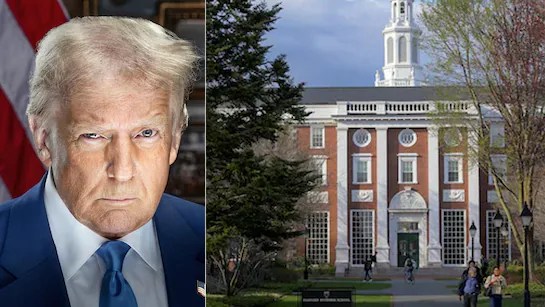
Sometime last April, messaging on Truth Social (with a shift key typically gone berserk), Trump attacked Harvard University, claiming that “Harvard is an Anti-Semitic, Far Left Institution, as are numerous others, with students being accepted from all over the World that want to rip our Country apart. The place is a Liberal mess, allowing a certain group of crazed lunatics to enter and exit the classroom and spew fake ANGER AND HATE.” 

Shortly after, he ordered the federal government to withdraw more than $2 billion in funding for research grants to Harvard, and sought to cancel its ability to enroll international students. Trump wasn’t alone in declaring war on American academia. Years earlier, his VP-to-be JD Vance had told the National Conservatism Convention that “Universities in our country are fundamentally corrupt and dedicated to deceit and lies, not to the truth…. We have to honestly and aggressively attack (them).”

Not surprisingly, Harvard and a cohort of other leading universities have fought back, taking the administration’s tack as a frontal assault on academic freedom—and, more strategically, on America’s albeit waning intellectual leadership.

MAGAworld’s anti-intellectualism is interesting, because it draws on a long and dark tradition of tyrants from Franco’s Spain to Pol Pot’s Cambodia waging war on scholars—to cite only the most visibly horrifying examples under which hundreds of thousands of intellectuals were massacred. Mass murder makes the withdrawal of grants and visas seem benign, but they come from the same deep mistrust of critical thinking, contrary opinion, and the alien element. Dictatorships thrive on herd mentality and unquestioning obedience, both anathema to academia.

It’s not as if Trump and Vance never went to good schools. Trump went to Wharton and Vance to Yale Law; whether they learned something worth their tuition is another matter. Political instinct, not intellect, drives these men. 

Right now, that instinct is telling them that culture (or its reversal) is more important than anything else—specifically “woke” culture, the greatest threat to the hegemony of straight white men: civil rights, women’s empowerment, abortion rights, gay and gender rights, minority representation, affirmative action, Black heritage, environmental protection, and internationalism, among other values espoused by the liberal Establishment and its bastions like Harvard. 
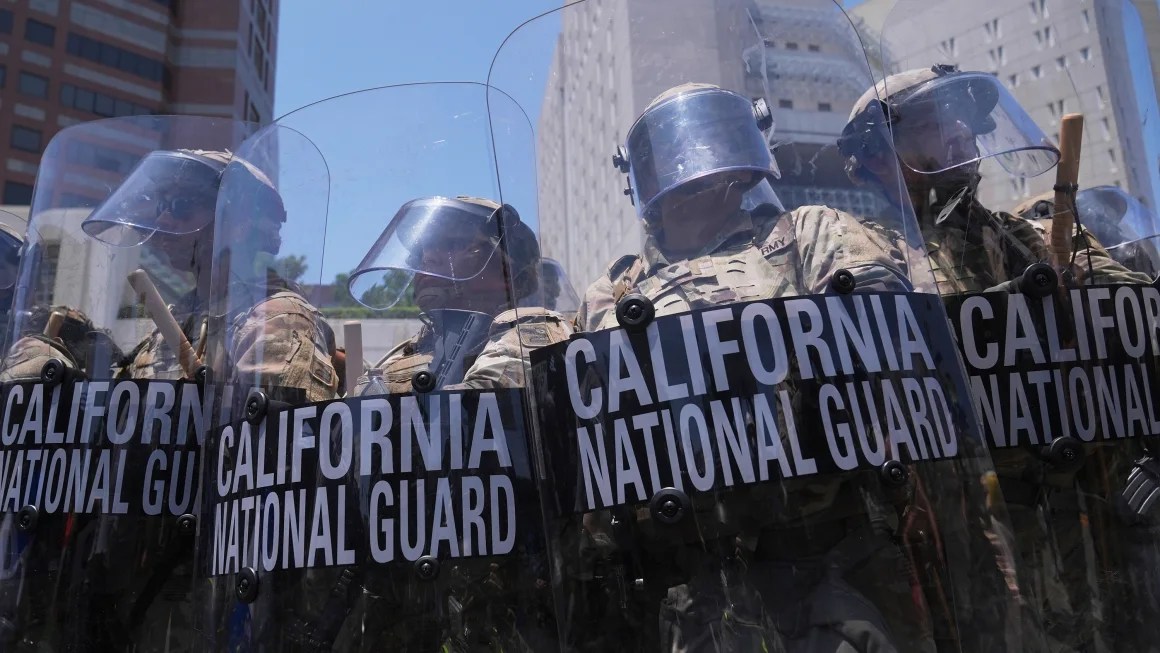
The collateral damage of this insane and reckless urge to reshape America in Trump’s own image has included truthfulness, justice, accountability, sound science, and, ironically, America’s own long-term economic and academic well-being. MAGA’s success will be America’s diminution from the intellectual powerhouse that has accounted for more than 70 percent of all Nobel Prize winners (about 30 percent of them immigrants to the US) to the fools’ paradise contemplated in the 2006 movie Idiocracy—a comedy that won’t be so funny when it materializes.

Trump’s insistence on characterizing foreign students as potential terrorists and troublemakers will be particularly counterproductive, as it will banish many of the world’s best young minds to more receptive climates, and erode America’s influence on global thinking. 

That may not necessarily be a bad thing, as it reminds everyone that the US has no monopoly on excellence, and never really did. But as a two-time Fulbrighter who, like thousands of other pensionados to America, look back with gratitude and not a little pride on that opportunity to imbibe not just new knowledge but America at its welcoming best, I cannot imagine anything stupider than this willful squandering of American goodwill and soft power for the price of a few missiles. 

It will not even be Donald Trump & Co. who will pay that price, but generations of Americans down the road who will recall this period of infectious lunacy with bewilderment and regret. They will have no one to blame but their red-capped grandparents, who thought that trusting a despotic dunce with all that power was a bright idea. (And I know how much that statement smacks of the elitism that Trumpers hate, but tell me it isn’t true.)
Qwertyman No. 105: Pronouns and Parodies

Qwertyman for Monday, August 5, 2024

SOME DAYS, I swear, when I open my Facebook feed, I’m met by a flood of vexatious opinion certain to trigger my worst reflexes. Much as I’m tempted to respond, I rarely do, knowing that FB comments don’t really soften hearts and minds, but only make them harder. Also, I’m not the witty sort with one-liners that will go viral; my thoughts and words like to ramble and even lose their way, but at least you know it’s not AI or the “Forward” button at work.

Two topics did get me worked up a bit last week, and I’m going to use this column to write the kind of longish social-media comment no one will read. You’ll recognize both issues instantly if you haven’t been living under a rock.

The first was that picture of a seated gay “personality” (I’m never quite sure how persons become “personalities”) lecturing a waiter standing at parade-rest, reportedly for two hours, on gender sensitivity, all because he called her “Sir.” 

There’s a part of me that understands how and why that happened. Some will call this silly wokeness, but in UP, we take our students’ preferred pronouns and names seriously as a sign of respect for the person. 

But what I also know is, when I teach, I stand and my students sit. That’s not to emphasize my authority, but so they can relax, listen, and hopefully imbibe what I’m telling them. I realize that the lady said she invited the waiter to sit down, but I also understand why he declined. Staff don’t sit for a chummy chat with customers. And imagine this: if I (an old man, dirty or not) were the customer and I felt poorly served by a female employee, and I asked her to sit at my table for two hours while I educated her on the finer points of etiquette, would or should she oblige? And I hate listening to or giving long lectures. If I can’t get something across in twenty minutes max, then I’m a lousy teacher.

There’s politics which can be good and right—and people who may not be. Some of the most politically savvy people I’ve met have also been, as some would say, that part of you where the sun don’t shine. 

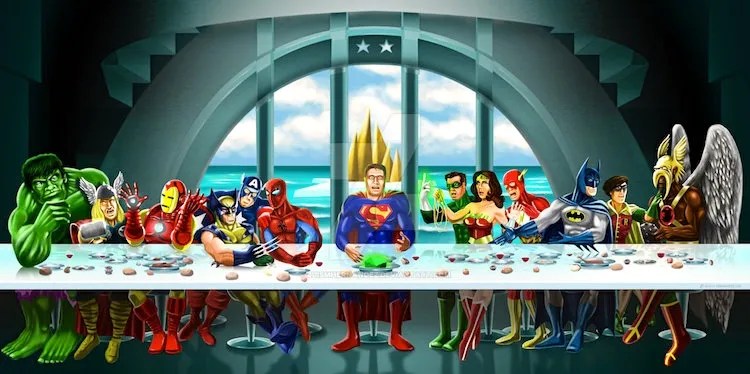
The other hot topic, of course, was the “Last Supper” tableau at the opening ceremonies of the Olympics in Paris, which allegedly mocked the Lord and Christianity itself by replacing Jesus and his apostles at the long table with a raft of drag queens and other presumably degenerate characters. 

I never saw so many Christians and especially Catholics (some of them my good friends) come out of the woodwork to profess their outrage at what they took to be willful sacrilege. And predictably, like wolves sniffing out red meat, many more friends from the other side piled on the “offendees” with mini-treatises on Bacchus and bacchanals, pagan elements in Christian ritual, art criticism, the French mentality and sensibility, and such other topics worthy of dissertations.

Now, as I’ve often confessed in this column (maybe losing five readers and FB friends every time I bring it up; in this context, maybe more), I’m not much of a churchgoer, and have continuing issues with the religion I was born into—and with all of organized religion for that matter, despite growing up in Catholic school. I prefer to pray on my own. I have nothing against people who stay in the fold, go to Mass regularly, post daily proverbs on Viber, and believe in the Bible as the one and only true source of, well, the truth. If their faith keeps them whole and happy—and I can see in many cases that it does—then well and good. Some may be hypocrites, but I’m sure many or most aren’t—and there are hypocrites as well (and worse) among apostates like me.

But back to Paris. What I’m not going to say is, “You shouldn’t have been offended.” If you were, you were. Even if you later changed your mind after listening to all the learned explanations (to some, I’m sure, excuses), the fact is, you saw something you didn’t like. (I just have to wonder—how many people responded directly to the tableau itself, and how many were nudged into seeing it and later objecting by another post screaming, “Hey, you have to see this! Look what they’ve done to Jesus!”? It works the same way on the right and on the left: a meme cascades swiftly down the Internet, and people react viscerally even before they can think.) 

Sure, the “Last Supper” is only a painting by one Leonardo da Vinci, that smart Italian fellow who also imagined flying machines, tanks, and other wonderful contraptions—so why not Jesus’ last meal? (I don’t think there’s an exact record in any of the four Gospels about how the scene was blocked for thirteen characters, except that Christ very likely sat in the middle for better reach, and certainly nobody knows who sat next to whom and leaned over whom. Some depictions down the centuries don’t even use a straight table but an inverted U, or have everyone reclining on mats and pillows, or sitting in a circle.) But even images and objects have symbolic meaning and power, so it’s easy to get hopping mad if someone, say, spits on a painting of your grandmother, or turns it into an unflattering cartoon. 

I do share the consternation over why a hyper-expensive and PR-conscious global enterprise like the Olympics would risk alienating half of France and a third of the world (presuming all Christians took umbrage at the Blue Guy) by—according to the charge sheet—deliberately, premeditatedly, and maliciously mounting a patently anti-Christian production for the whole planet to see. I know the French eat strange things like sheep testicles and have a law requiring skimpy trunks and head caps (yes, even if you’re bald) in public pools, but really now, mock the Last SupperSacré Dieu! (Or, excuse me, let’s use the milder sacré bleu!)

Given all of that, my only question is, where was all the outrage when that President was joking about raping captive nuns and cursing the Pope? And speaking of the Renaissance and the power of representation, remember that Pieta-like photograph of a grieving mother cradling her murdered son at the height of that same President’s tokhang campaign, that President who called Catholic bishops “gay SOBs”? Where was all the righteousness? But maybe we’re just getting started. There’ll be FB accounts I’ll be checking in on, the next time something wildly repulsive happens.

(Image from arnoldzwicky.org–Please condemn him. not me!)

Qwertyman No: 40: Teaching History

Qwertyman for Monday, May 8, 2023

I HAVE a subscription to the New York Times, which I enjoy for its features and commentary as much as its news coverage, and the other day my attention was piqued by a small headline: “It’s Not Just Math and Reading: US History Scores for 8th Graders Plunge.”

According to the article, recent test scores reveal that young Americans (about 13-14 years old for eighth-graders) have become much less knowledgeable about their history and civics over the past decade—with 40 percent scoring “below basic” and only 13 percent ranked as “proficient.” 

I immediately wondered how our students would score given similar tests. Would they be able to answer even simple questions about why Ferdinand Magellan sailed to the Philippines, what prompted Filipinos to revolt against Spain, why the Americans occupied us, what led to our involvement in the Second World War, and what martial law and EDSA were all about? I’ll probably be safe in my prediction that they would score dismally, from what I’ve seen in my own classes in UP (yes, in UP), where I’ve been dismayed to find a yawning ignorance of history and literature among my students, supposedly among the best in the country. 

Don’t get me wrong: these are bright, idealistic kids, desirous of all things good for their people and their families. They perform well in class and will likely succeed in whatever career lies ahead of them. But when I ask a roomful of English majors if they know or have read NVM Gonzalez and only a couple of hands go up, I get worried. When I ask when or what year the Americans arrived to conquer us and I get strange answers like “1945,” I get worried. 

However shocked we may profess to be, we can’t blame the students. In 2014, following the passage of the Enhanced Education Act of 2013 or the K-12 Law, the Department of Education issued Order No. 20, Series of 2014, effectively removing Philippine History as a high school subject and subsuming it as an “integrated subtopic” under “Asian Studies,” supposedly to provide students with a wider global perspective. The idea sounds nifty, but as many educators have since pointed out, its practical effect has been to dilute the teaching of Philippine history to the point of oblivion. The result is that we have young Filipinos with no knowledge of the most basic facts and issues of their past, and no appreciation of how that past brought us to where we are today.

That vacuum has been an open invitation to misinformation and historical distortion, the stock-in-trade of political propagandists, trolls, and spinmeisters. It’s become much easier to sell myths like a golden age under martial law to impressionable youngsters who were never told or taught the truth. Not surprisingly, Order No. 20 has been attacked by its critics as a means to lobotomize the youth and to render them more susceptible to alternative narratives (aka fake news) concerning our history. 

And yes, I have to acknowledge that all this began under the late President Noynoy Aquino, a champion of K-12, whom I prefer to believe had no such nefarious motives in mind, as he and his family would have had little to gain by erasing history. But the policy was upheld and sustained by the following administration, with DepEd Secretary Leonor Briones arguing strenuously that History (including our martial-law experience) was being taught in Grade 6 under Araling Panlipunan, and again in high school as a component of Asian and World History.

Given the current DepEd’s expressed desire to review K-12, it might be a good time to test how effective that policy has been: just how much Philippine History are our high school students learning and retaining? How much should they know by the time they get to college, where thornier issues such as nationalism, agrarian reform, and foreign policy will be threshed out in all their nuances?

Long before these questions arose, it was a common complaint among students and even teachers that our problem with History was how badly it was taught, often as a collection of names and dates rather than a coherent narrative (which I must say I sometimes wonder about, fact often being stranger and messier than fiction). We generally agree that History should involve more reasoning than rote memorization. But as the New York Times reports, “That emphasis can contribute to a troubling lack of background knowledge,” with experts observing a “rapid and very significant decline in what students know about history and geography—like the fact that Africa is a continent, not a country.” So the basics of names, dates, and places remain important—getting the facts straight before getting into more complicated arguments.

It’s even more troubling to note that on top of this decline in historical knowledge and awareness among young Americans, there’s now a ham-fisted effort from conservative politicians to purge school curricula of what they see as “woke” content—subjects that have challenged the longstanding impression of America as a nation forged by whites. Governors like Florida’s Ron DeSantis—eager to present themselves as the flag-bearers of political and moral rectitude—have supported moves to eliminate African-American and LGBTQ studies from the curriculum. Others have called for banning books that threaten their view of traditional America, including books titled “The Infinite Moment of Us” (a young adult novel about love and sex) and “How to Be an Antiracist” (a nonfiction book about racism and ethnicity). This reminded me of how some Philippine state universities, not too long ago, went on their own book-banning spree, on some silly suspicion that books by such authors as National Artist Bienvenido Lumbera were “subversive.”

The New York Times piece came with an irresistible teaser: a brief five-question, multiple-choice history quiz for readers to test themselves on how well they know American history. I scored four out of five (failing a question about post-Civil War reconstruction)—not too bad, I thought, for a guy living seven thousand miles away. But then I come from a generation schooled on American textbooks, who know American history and geography better than many Americans. That’s a topic for another column.

In the meanwhile, let’s ask ourselves: how well do we know our history, and how important is that knowledge to understanding our present and shaping our future? Is “Maria Clara and Ibarra” pointing the way forward?