
Qwertyman for Monday, December 9, 2024
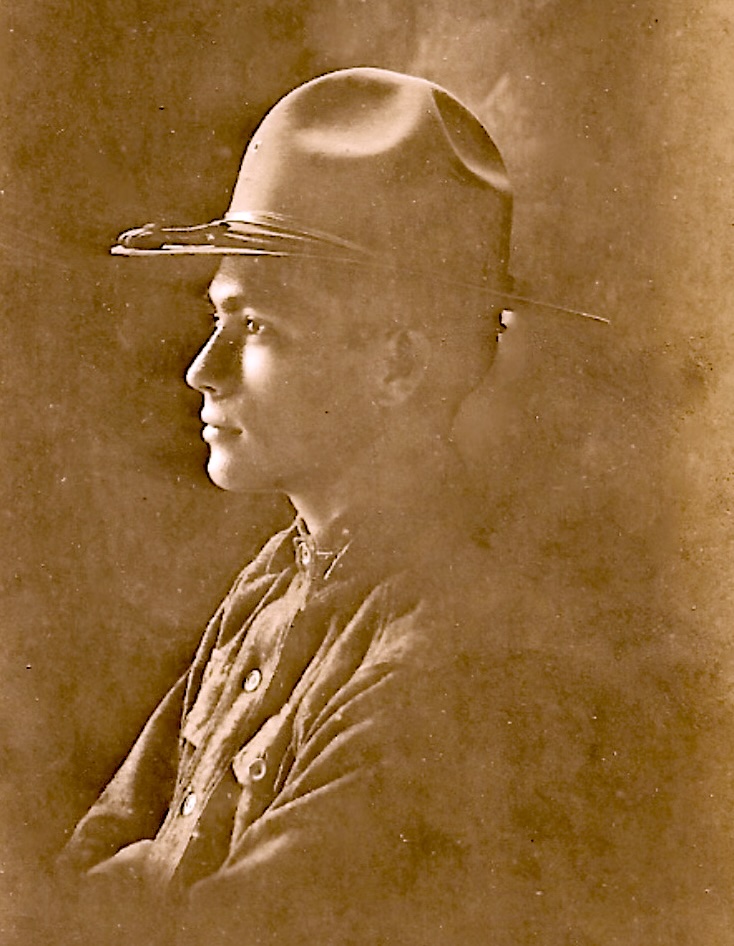
A HANDSOME book—as handsome as its subject—was launched last week by the Ateneo University Press, a biography of another unsung Filipino hero who would have faded into oblivion had it not been for the efforts of an American expat in the Philippines with a deep sense of history.
The hero was Col. Narciso L. Manzano, the highest-ranking Filipino in the US Army during the Second World War, and the man who rescued his memory is Craig Scharlin, a former English teacher, gallery owner, and biographer who served for some time as Manzano’s personal secretary fifty years ago. I had met and known Craig earlier as the author, with his wife Lilia Villanueva, of the biography of Filipino-American labor leader Philip Vera Cruz; when he asked me to help him put together what eventually became The Manzano Memoirs: The Life and Military Career of Colonel Narciso L. Manzano, I agreed, especially after hearing his story of the life of this remarkable man.
Craig had learned that the MacArthur Library in Virginia had a 260-page handwritten autobiographical manuscript that had been written by Col. Manzano in 1948, to which were later added another memoir written in 1983 for his grandchildren; his son Jaime had also written a family history. Craig acquired copies of all these and the necessary permissions to publish them; I helped stitch the manuscripts together into a more coherent whole and edit the text.
Though born in Manila in 1899, Manzano grew up in Atimonan, Quezon before leaving at age ten for Spain where his family hailed from. He was a mestizo through and through: Filipino by birth and allegiance, Spanish by blood, and American by military service and later citizenship. After returning to Manila and studying Engineering at UST, he signed up to join the US Army, hoping to fight in the First World War, which ended too soon for him. He went to the US for further military training, and served back home as a Philippine Scout, and then as a colonel in the US Army Corps of Engineers under Gen. Douglas MacArthur.
It had been one of Manzano’s pre-war missions to map out the Bataan peninsula carefully in preparation for War Plan Orange 3, which MacArthur eventually discarded. It was in this zone that Manzano would first earn praise for his bravery. As Craig’s introduction tells it, “It was Manzano, along with his American co-commander, Lt. Col. Skerry, who led their engineers in setting the explosives to blow the bridge at Calumpit, the last and most vital bridge in Central Luzon…. When Gen. Wainwright decided the bridge had to be destroyed to halt the rapidly advancing Japanese invading forces, the Army engineers assigned this task led by Manzano were on the wrong side of the bridge, the Japanese side. Manzano requested that Skerry wait to blow it until he and his men could get across… but Wainwright had no choice: the bridge had to be blown as the Japanese were advancing too fast in order to save the entire American and Filipino forces and allow them time to retreat to Bataan…. Somehow Manzano, along with another of his American officers was able to evade the Japanese on their own and made their way with all their men to Bataan.”
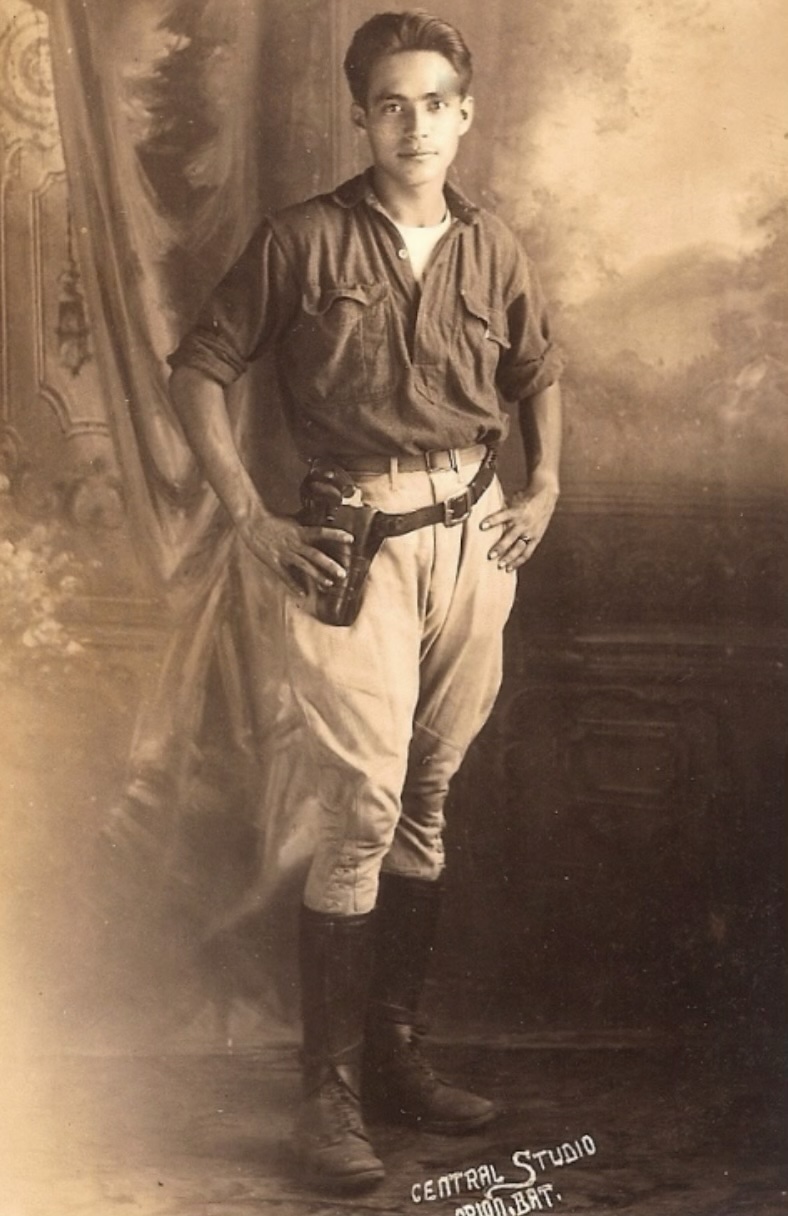
Working in intelligence in Bataan, he was later captured and imprisoned in Camp O’Donnell; upon release, he was quickly assigned to develop an intelligence network in Luzon, at which he proved exceptionally capable. His wife Charo was arrested and imprisoned by the Japanese. But he pressed on, and when his network was exposed, he moved to Mindanao from where he hoped to be taken by submarine to Australia so he could properly advise MacArthur, who was getting poor intelligence. MacArthur’s lackeys scotched that plan, forcing Manzano to improvise as a guerrilla until MacArthur returned. He later moved to the US with his family, where he died in 1986, proud of his life’s work despite being embittered by the betrayals he had to suffer, and disappointed at being passed over for the generalship he had expected.
That’s not even half of the story; brimming with the candor of a man with nothing to lose, Manzano’s memoirs are full of vignettes and reflections about people at war, and Manzano can be painfully scathing in his estimations of those he felt had betrayed his country. He whittles down MacArthur and his aides for what he saw to be their foolish and costly unwillingness to listen to lifesaving intelligence (an opinion shared by historians such as Hampton Sides, who wrote that “MacArthur’s judgement, clouded by his gargantuan ego, was sometimes deeply, dangerously flawed. The men who fought under him, and the civilians who happened to get in his way, often paid a terrible price.”) Manzano was highly critical of MacArthur’s abandonment of War Plan Orange 3, and even said that he would have testified in support of Japanese Gen. Masaharu Homma had he been asked.
He not only believed President Jose P. Laurel to be a collaborator, but plotted the failed operation to assassinate him on the golf course at Wack Wack. For this alone, the book should be well worth reading; I among others have a contrary view of Laurel, but Manzano was there and we were not. Manzano has spicy opinions of other wartime and postwar personalities whom we have named streets after—again, quite an eye-opener. He reserved some of his choicest words for Ferdinand Marcos, whom he called “a poser, a phony, a fake, a war profiteer.”
In his introduction to the book, Craig Scharlin recalls his first meeting with Col. Manzano in San Francisco in 1975: The movie “Scent of a Woman” with Al Pacino had not yet come out. However, the character Pacino played in that movie, Frank, was a retired lieutenant colonel in the United States Army. As portrayed by Pacino, the character had Old-World charm, dressed impeccably, and even in his older age had ramrod-straight posture, showed strength of character and conviction, and the demeanor of an officer who had commanded other men and led them into battle. But he also carried scars of resentment and a certain sadness, a lament of unfulfilled destinies, of real battles won and others lost. And of course it was all Al Pacino—short, dark, brooding, yet still incredibly charismatic.
“That was the man I met in 1975 in a well-appointed penthouse apartment on Nob Hill in San Francisco. The only difference was that this wasn’t Al Pacino nor a fictional movie character, but the real deal—a retired US Army colonel named Narciso L. Manzano.”
Meet the rest of the man in the book, which you can order here: https://unipress.ateneo.edu/product/manzano-memoirs-life-and-military-career-colonel-narcisco-l-manzano.
 Pinoy Penman 3.0