Qwertyman No. 82: How Young Filipinos See Their Future

Qwertyman for Monday, February 26, 2024

THIS SEMESTER, I’m teaching an undergraduate class in UP called “Professional Writing,” a course I designed more than twenty years ago to help English and Creative Writing majors (and other seniors in search of interesting electives) get a handle on what the “real world” out there expects of them, in the kind of everyday jobs they’re likely to land. Not Shakespeare, not Jose Garcia Villa, not lyric poetry and neither the full-length play, but rather the more mundane assignments you get paid a salary for: business letters, press releases, feature articles, AVP scripts, brochures, and speeches. 

I find myself telling my students that, in a way, what I’ll be teaching them—which is basically how to conform to organizational or institutional standards and norms—is counter-intuitive to what’s been thought of as the UP way of asserting oneself and even questioning authority. This mythified UP “yabang” or “angas” could be one reason why UP graduates don’t rank at the top of employable prospects for corporations. 

So I feel like I have to teach my students the virtues of humility and sufferance, of sticking with a job and doing it well even if it’s not the coziest or smartest thing in the world to do, and of the importance of execution and delivery with no excuses, no (audible) complaints, on time, and against all odds. Before they break the rules, they should know the rules, so they’ll know exactly what they’re breaking and why (I bring up how Picasso was a realist before he turned to Cubism).

Of course, I also tell them that the door swings both ways—they can also walk out of a job they can no longer take (like I’ve done a few times in my own career), but not before thinking through the consequences and figuring out one’s options. Innovation and initiative are great to show on the job—but they can also backfire if not handled well, given people’s (and many managers’) ingrained resistance to change. In other words, prepare for and learn how to deal with adversity, which can be a better teacher than I’ll ever be.

It’s going to be an interesting semester, seeing how the students are responding to my provocations. One of those provocations was our first in-class writing exercise, which was a “visioning” of sorts, where I asked them to look 20 years ahead (preparatory to their next task, which is to write a job application letter). I’m sharing some of their responses below (excerpted here with their authors’ permission) to give readers an idea of how young Filipinos see themselves in their own future. There’s a palpable strain of pessimism in these responses—and that’s understandable, but it worries me. We shouldn’t saddle our successors with the notion that things can only get worse. So I’m making a note to myself: teach reality, teach adversity, but above all, teach hope. Having survived this long, despite everything we had to go through, should yield a useful lesson or two.

Student A: I remember telling myself upon entering college, “If I end up becoming one of those people I despise—a heartless doctor, a vain lawyer, all in the name of shameless success—I’d rather not enter UP.” Twenty years from now, the Philippines—and by extension, me included—will probably still be trying to heal from all the abuse that accumulated through time. In my dejection, I see the country still having a hard time distinguishing the morally right from wrong. Yet I hope that it would be otherwise. My hope sees differently from my rational musings, my hope sees the tide calming, a time I no longer have to convince my father of a reality so transparent it bites us in the face like a serpent.

Student B: I struggle to think of what the future holds for me. Truth be told, I struggle to think of a future with me in it at all. I find that thinking of the future brings with it a wave of dread, because even if the state of the country miraculously improves, there will always be a bigger power that inevitably ruins things for everyone else. However, if I somehow manage to be present still, (through either sheer luck or spite), I will likely be working at an office or a school somewhere. I’ll have a cat or two if the landlord allows it. Who knows if I’ll ever get married. The only thing I’m sure of is that I won’t have children—I can’t, in good conscience, bring someone else into this mess of a world.

This all sounds pessimistic, but in reality, I would actually call myself an optimist in day-to-day life. I want to think the best of people, and I believe that people are inherently kind. There is still a chance for things to improve, for everything to work out, but I can’t ignore the sinking feeling that it’ll only get worse from here. It might seem like we’ve already hit rock bottom, but somewhere, some world leader has brought a shovel and they’re ready to dig.

Student C: In many ways the country is a better place. People are more free to be who they are and love who they love, without fear. We have made leaps and bounds of progress in research and development. Science creates new technology, and we artists learn new ways to create, adapt, and keep toe-to-toe. Because I’ll be damned before I let the machines win. Yes, life is better. For those who can afford it. I want to afford it. But those braver than me fight for a future where everyone need not to. Because that’s the thing about human nature. Fighting is instinctual. Through war, poverty, and inequality, there will always be people fighting for something better. Many because they have no choice but to fight or die—fight to survive. Others because they owe it to someone, maybe themselves, to be the source of hope they want to see or have seen before. 

The country is far from perfect in 2044. Those selfish, like myself, have found a good life amidst a rotten core. We have survived. I have survived. Now it’s time to finally be brave. In 20 years, I know I’ve learned so much. Let me teach what I can. 

Qwertyman No. 81: An F for Philippine Education

Qwertyman for Monday, February 19, 2024

AN IMPORTANT document that’s been showing up in the inboxes and on the desks of both government and private-sector policymakers these past couple of weeks leaves no room in its title for misinterpretation: “Miseducation: The Failed System of Philippine Eduation.” Released last month by the Second Congressional Commission on Education or Edcom II, the report covers just the first year of the commission’s comprehensive review of the state of Philippine education. But the scenario it presents is so grim that, in the words of one of its crafters, “If this were Singapore, they would be declaring a national emergency.”

But then again, that may be the whole point. We are no Singapore—and indeed one of the report’s most damning and embarrassing findings is that “Our best learners are comparable only to the average student in Malaysia, Thailand, Brunei and Vietnam, and correspond to the worst performers in Singapore.”

Edcom II picks up from where its predecessor left off more than three decades ago, when Edcom I was set up under the leadership of then Sen. Edgardo J. Angara to undertake a similar review. In July 2022, RA 11899 created Edcom II to find ways of harnessing the educational sector “with the end in view of making the Philippines globally competitive in both education and labor markets” over the next three years. Edcom II was also charged with drafting the necessary laws to make this happen. It’s just begun its work, with in-depth studies and assessments of our educational system from the ground up, but its early findings already show how difficult the road ahead will be toward the global competitiveness the commission was set up for.

I’ll just quote a few observations from a summary of the highlights of the nearly 400-page full report: 

In terms of the Program for International Student Assessment (PISA) undertaken by the Organization for Economic Cooperation and Development (OECD) in 2018 and 2002, “Grade 10 Filipinos scored lowest among all ASEAN countries in Math, Reading, and Science, besting only Cambodia, with more than 75% of our learners scoring lower than Level 2, or the minimum level of proficiency in Math, Reading, and Science…. Grade 10 Filipinos scored lowest among all ASEAN countries in Math, Reading, and Science, besting only Cambodia, with more than 75% of our learners scoring lower than Level 2, or the minimum level of proficiency in Math, Reading, and Science.” This was the same survey that showed our best learners barely catching up with Singapore’s laggards.

“The proficiency level of our children across social class, rural and urban residence, gender, language at home, type of school, and early childhood center attendance is dismally low.” This means that our deficiencies cut across the social and economic spectrum and can’t be put down to just a question of money.

To underscore the global crisis in education (yes, it isn’t just us), the World Bank and UNESCO have come up with the concept of “learning poverty,” which they define as a child’s inability to read and understand a simple text by age 10. Among some Asian countries recently surveyed for learning poverty, Singapore and South Korea scored the lowest at 3; China came in at 18, India at 56, and the Philippines was highest at 91.

And for those who insistently argue that the problem with our education is that we don’t use English enough, and early enough, Vietnam, which uses Vietnamese as its medium of instruction in the primary grades, has consistently outscored us in nearly all indices, as have Malaysia and other countries that rely on their own languages to move ahead.

A good part of the report dwells on how important it is for government to intervene as early as possible in our children’s growth and development, to prime them for a proper education. Edcom II looked into the problem of “stunting,” a measure of childhood maldevelopment, most easily seen when children are too short for their age, because of malnutrition or poor health. This has implications for the child’s ability to learn.

“The Philippines has one of the highest prevalence of stunting under-five in the world at 26.7%, greater than the global average of 22.3%. Policies are in place, but implementation has been fragmented, coverage remains low, and targeting of interventions has been weak.” (For example, more than 98% or 4.5 million children 2-3 years old are not covered by the DSWD’s supplementary feeding program.)

Here’s another eye-popping revelation: “Since 2012, only 27 textbooks have been procured for Grade 1 to Grade 10, despite  substantial budget allocations. DepEd’s budget utilization data shows that from 2018 to 2022 alone, a total of P12.6 billion has been allocated to textbooks and other instructional materials, but only P4.5 billion (35.3%) has been obligated and P952 million (7.5%) has been disbursed.” Not to mention the fact that many of these textbooks are riddled with errors!

Higher education presents its own host of problems and challenges. “Higher education participation is high given our income level,” the report notes. However, “Access to ‘quality’ higher education narrowed in the last decade…. Most beneficiaries of the tertiary education subsidy were not the poorest…. Between 2018 and 2022, the proportion of the poorest of the poor [in higher education] declined markedly, from 74% to 31%.”

A key part of the problem is the quality of our teachers, who themselves are poorly educated. “Between 2009 and 2023, the average passing rate in the licensure examinations for elementary (33%) and secondary (40%) has been dismally low, when compared to passing rates in other professions. Worse, between 2012 and 2022, 77 HEIs offering BEEd and 105 HEIs offering BSEd continued operations despite having consistently zero passing rates in the LET.”

Our supervisory agencies themselves need to be properly staffed. “The staffing levels in CHED and TESDA have not kept pace with the growing responsibilities of the agencies and the increased investments in education from both the public and private sectors. 

CHED’s budget increased by 633% from 2013 to 2023, but the agency’s staffing complement only increased by 22.7%, from 543 to 666 within the same period.”

The money’s clearly there, but it’s not being spent where it should be. “Budget allocated to education is increasing, but there is a tertiary tilt despite profound gaps in basic education….While government investments have increased substantially, the bulk of the additional resources went to higher education–which is typically regressive. From 2015 to 2019 per capita spending surged from P13,206 to P29,507. Meanwhile profound gaps remain in Early Childhood Care and Development and basic education…. 30–70% of the school MOOE budget is spent on utility bills alone, which leaves meager funds available for improvement projects and initiatives that could address local needs and support better learning.”

We could go on and on—and the full report (downloadable at https://edcom2.gov.ph/) does. But you get the picture: Philippine education gets an F. The question is, will our national leadership recognize this as the national emergency that it clearly is, and respond accordingly?

Qwertyman No. 80: Bringing UP to the People

Qwertyman for Monday, February 12, 2024

SINCE IT was established in 1908 as a “university for Filipinos,” the University of the Philippines has grown into a system of eight “constituent universities,” each with a certain degree of autonomy but all of them unified by a common vision, shared practices, and high academic standards. UP began in Manila, followed by Los Baños and then Diliman, which became UP’s flagship campus after the war. 

Of course, as the country’s premier public university and with its relatively hefty budget, there was pressure on UP to go out even farther, especially beyond Luzon, to become truly more representative of the Filipino people. In the past, that form of democratization was achieved to some extent by UP’s old policy of accepting valedictorians and salutatorians from high schools all over the country; once in UP, these provincianos did well, and many went on to positions of national leadership. 

But the general decline in public education and UP’s more stringent admissions policy have changed all that, so that the majority of successful UPCAT applicants now come from private high schools in the big cities. As nearly everyone agrees, that’s not what a presumably “national” university is supposed to do—meaning, giving quality education to the children of the affluent at the expense of ordinary taxpayers (I say “nearly,” because there are a few on the “excellence” side of this “excellence vs. equity” argument who also argue that the State’s best strategy going forward is simply to fund and support the country’s best minds, no matter where they come from—kind of Singapore-style, but then we’re no Singapore). 

Also, a UP education doesn’t happen just with a student’s admission. Even now that the law has made public university education free (ironically, again, subsidizing rich metro kids), many UPCAT passers from the regions never show up, or drop out early on, because of the prohibitive costs of living and studying in Manila, especially. They could have gone to UP if it were closer to where they were, pointing to the continuing need for more UP units to be opened in our far-flung regions. (To this day, for example, no UP has been established in Bicol, although to be fair, that region is already being served by many excellent universities.)

The traditional reluctance by the UP Board of Regents to open UPs here and there has been based on sound academic reasoning: building and opening a physical school is easy, but establishing academic programs with qualified faculty is much harder, especially in so-called “hardship” posts, to which presumably Manila-based faculty will have to be enticed to relocate until enough local capability is built up. A UP education should come with a guarantee that a degree earned, say ,in Baguio or Iloilo is equivalent in quality and efficacy to one earned in Diliman or Manila. 

There were early attempts to “democratize” UP by setting up teaching outposts as far north as Vigan, where a UP Northern Luzon Junior College was opened in 1930, complementing a similar Junior College in Cebu. (That college in Cebu, interestingly enough, was almost shut down shortly after it opened for lack of funding. Then UP President Jorge Bocobo was too proud and proper to accept a P5,000 donation from Cebuano UP alumni, because it had been raised from sweepstakes. Politicians jumped into the fray, with some arguing that Cebu needed support as a “moral alternative” to Manila, only to be reminded that Cebu was no prelapsarian paradise, with at least “three cabarets and five moviehouses,” according to an unofficial history of UP. The day was saved only when Gov. Mariano Cuenco threw P8,000 into the pot.)

In the late 1950s, President Vicente Sinco set up a Department of Extramural Studies to undertake extension classes in Iloilo, Davao, Zamboanga, San Pablo, Subic, and Clark Airforce Base. 

Thus were the seeds sown for today’s full-blown UP System, which has Diliman, Los Baños, Manila, Visayas, Mindanao, Cebu, Baguio, and the Open University among its constituents.

Each of these CUs has its own specific strengths, history, and traditions—Manila is also UP’s and the country’s health sciences center, with the Philippine General Hospital as its crown jewel; Los Baños celebrates Loyalty Day, which began in honor of faculty and students who took part in World War I (yes, I). UPOU is a regional leader in distance learning, providing a UP education even to OFWs abroad.

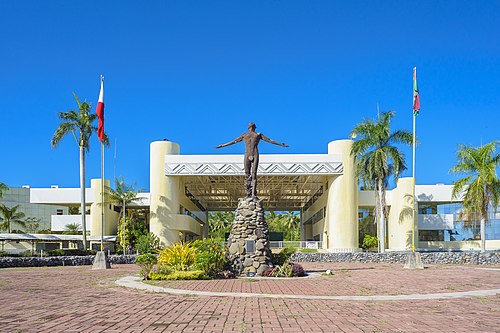
A particularly bright spot in this stellar array is UP Mindanao, which is marking its 29th anniversary later this month. When it was established by RA 7889 on February 20, 1995 under President Fidel V. Ramos, it was met with much skepticism even from within UP, and there were dire predictions that it would fail within a few years. The indifference was caused by the fact that UPMin was the first CU to come into being through legislative fiat, rather than the usual process of study and approval by the Board of Regents. What had happened was that UP alumni from Mindanao had banded together to demand a UP on their island, given its economic and political importance. Mindanao’s political leaders led by Reps. Prospero Nograles and Elias B. Lopez rallied to their cause, and UPMin was born.

Almost three decades later, it’s clear that that decision was the right one to make. Despite many teething problems—the path to UPMin’s hilly campus in Mintal was so rough that people took to calling it “Abortion Road”—UP Min has gone on to become an educational powerhouse in the region, particularly in such specializations as Agribusiness Economics. On the cultural front, UPMin leads in such studies as “Mindanao epics as pre-colonial roots of Philippine nationalism” and “Planning and architecture from the vernacular dwellings of Mindanao.” Its writers such as poet and former Chancellor Ricardo M. de Ungria and fictionist and Dean Jhoanna Lynn Cruz are nationally renowned. 

It was no accident that, when he was choosing a site for his investiture last September as UP’s 22nd president, Atty. Angelo A. Jimenez—UP’s first Mindanawon and lumad president, having been born a Manobo in Butuan City—chose UP Mindanao. Keenly conscious of his opportunity to make historic changes, Jimenez has pledged to improve access to a UP education even further, especially for the poor and the underrepresented. 

We look forward to a time when the children of farmers, fisherfolk , and factory workers can walk UP’s hallways again with their heads held high—if not in Diliman, then in a capital city closer to home. It will go a long way toward making UP a truly “national university,” and help build a stronger and more cohesive nation.

.

Penman No. 459: Spartan but Splendorous

Penman for Sunday, February 11, 2024

WE OFTEN think of ecotourism in terms of swimming with whale sharks or encountering rare species of flora and fauna in some faraway forest. But not too far from Metro Manila lies a natural haven that will satisfy adventurers and conservationists alike—and the ecotourists who are both.

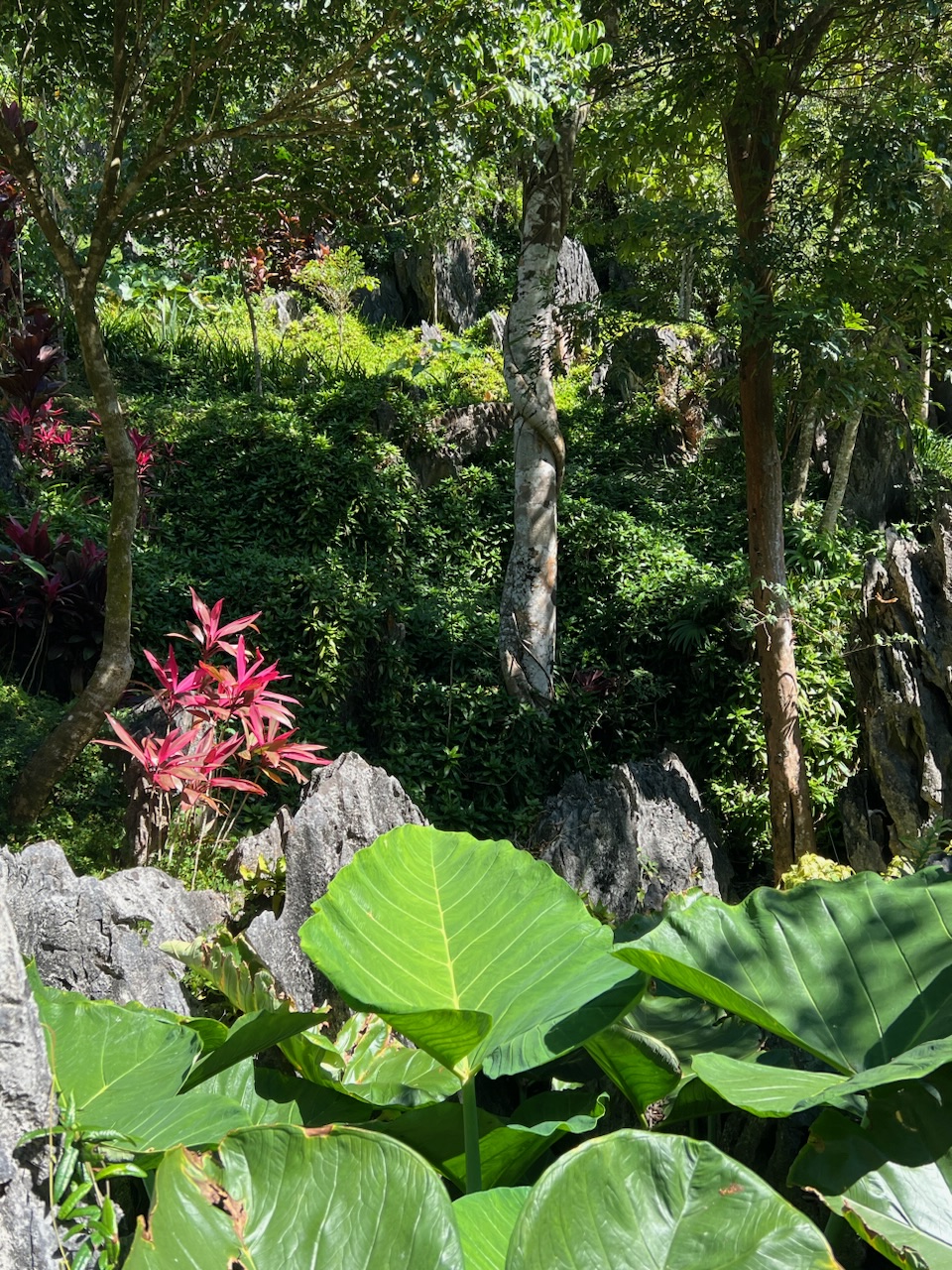
That haven is the Masungi Georeserve, a 3,000-hectare tract of largely reforested land marked by sharp karst or limestone shards jutting out into the sky amid bamboo groves, exotic orchids, and Benguet pine.

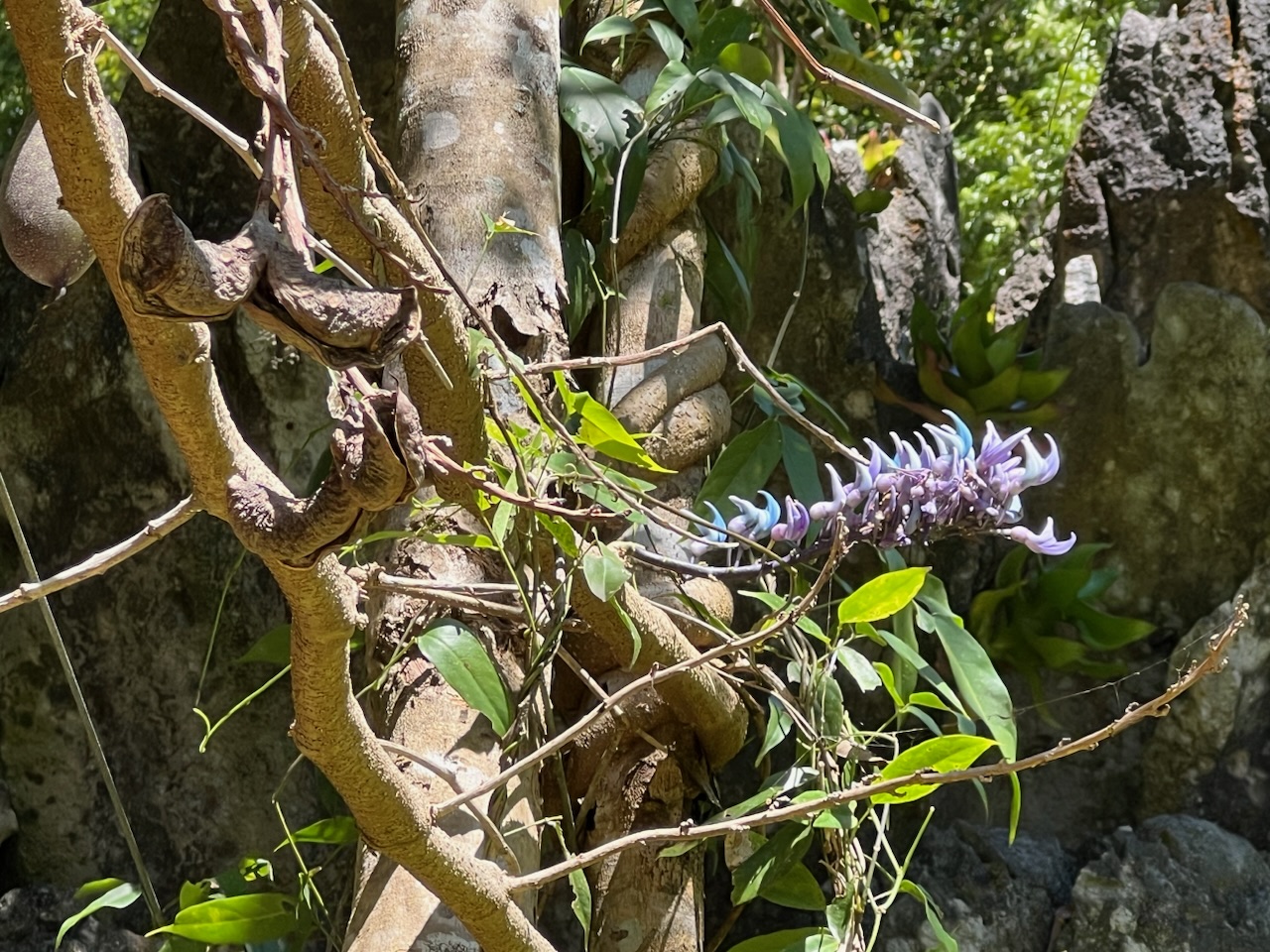
The unlikely remainder of an aborted housing project for DENR employees, Masungi now serves as home to hundreds of species, many of them rare and some even unique, such as the purple jade vine and the Masungi microsnail.

These sightings alone would be well worth the trip—a pleasant 30-kilometer drive from Quezon City through Masinag and Antipolo on the Marikina-Infanta or Marilaque Highway, on some of the country’s best and widest roads. (On the weekday morning we went there, it took us just a little over an hour from UP Diliman.) 

Masungi straddles the Sierra Madre boundary between Baras and Tanay, Rizal, much of which is occupied by the Upper Marikina Watershed, across the Kaliwa Watershed on the northern side. Its name comes from the Tagalog sungi, meaning sharp, a reference to the profusion of limestone outcrops looking like sharp teeth across the mountainous landscape.

The georeserve—now being managed by the Masungi Georeserve Foundation—wasn’t set up as any kind of pleasure park. Indeed “pleasure”—except the visual kind—was the last thing this septuagenarian thought of when he went up the steep trails to a vantage point that afforded a spectacular view of Laguna de Bay and the surrounding metropolis far below. Younger and fitter visitors, however, will surely find the challenge pleasurable and even exhilarating.

When the housing project with the DENR failed to materialize—the DENR couldn’t evict the squatters already there and the land, in truth, was simply too steep and inhospitable to permanent human habitation—engineer Ben Dumaliang and his Blue Star company (the housing project contractor) took it upon themselves to rehabilitate what land they could and regrow the forest that would have been lost forever. In 2015, Ben’s daughters established the Masungi Georeserve Foundation to oversee the place, and in 2017, the MGF entered into a contract with the DENR under then Sec. Gina Lopez for the georeserve’s replanting and conservation.

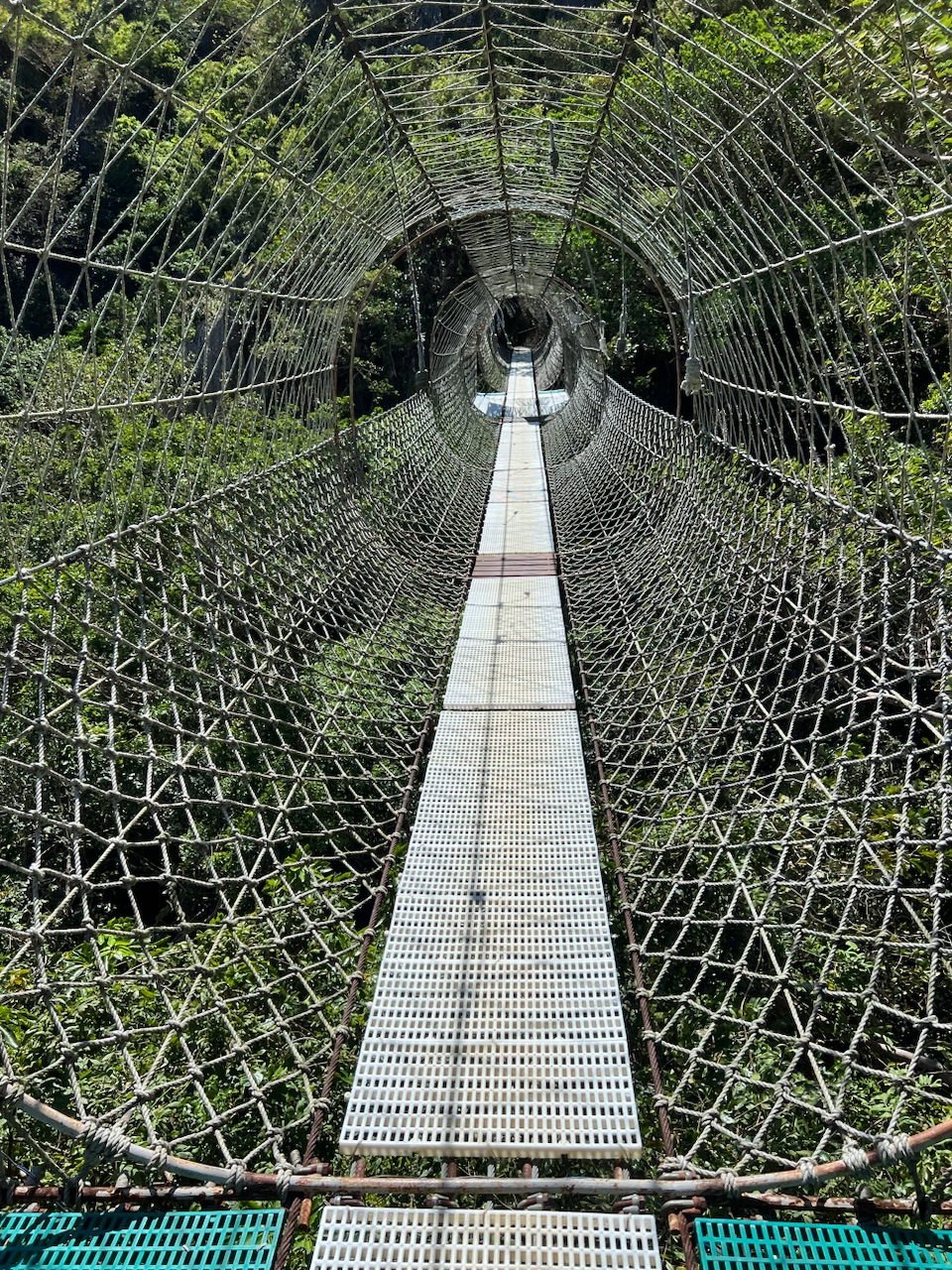
Masungi now features a Discovery Trail for hikers aged 13 and up that takes about three to four hours to complete, although it can be shortened depending on the hikers’ preference. The challenging trails feature hanging bridges, a giant spiderweb, rope walls, caves, and other points of interest (or maybe not, for acrophobes like me). Protective headgear is provided.

Typical reviews on Tripadvisor include comments like this one, from a Singaporean visitor: “Perfect day at Masungi Georeserve. The hike was well-organized and well-paced with sufficient rest stops. Our guide was knowledgeable and friendly, allowing us to take our time and helping to take our photos. You do need a certain level of fitness and daring to tackle the ropes, steps, and hanging bridges, but you will be rewarded with stunning views of the limestone karst formations. There are alternative paths to take for those who have a fear of heights but these detours may take longer. Best not to rush and go with people who won’t judge you if you feel like dropping out! Well done to the Foundation and for educating the public on biodiversity and sustainable tourism. Book ahead and pray for great weather.”

This one came from a repeat visitor, Ronald R: “Had the privilege of visiting Masungi Georeserve for the ninth time (six times on the Legacy Trail, thrice at side trails and once on the Discovery Trail) and every visit was a memorable learning and life-changing experience. All dedicated forest rangers are well versed in the changing landscape and diversity of flora and fauna. The experience differs depending on the weather. I prefer windy, cloudy weather when going up there. The Sierra Madre is more dramatic with rain clouds. Beyond the transformations, the team behind Masungi Georeserve is focused on restoring the lost and abused part of the Upper Marikina Watershed Area. Masungi Georeserve is a platform to make anyone fall in love with nature in a much deeper level. The Masungi Georeserve experience should be in every nature lover’s bucket list.”

Experienced rangers—most of them recruited from the local community, including indigenous Dumagats—serve as guides for these treks. To support the place’s upkeep—it gets no funding from the government—the georeserve charges guests P1,500 each on weekdays and P1,800 on weekends, covering the tour and simple but satisfying snacks (including a refreshingly minty tea made from the kayumanis, a native plant; a set lunch buffet is also available at the hilltop Silayan restaurant). The number of daily visitors is strictly controlled to minimize wear and tear to the area, and groups are kept manageably small. (For more helpful and detailed instructions, as well as photos of the various features along the trail, visit willflyforfood.com and look for “The Masungi Georeserve Survival Guide.”)

It’s a spartan but bracing experience, minus the spa, the massage, the gourmet menu, the uniformed attendants, and all the other amenities we associate with more genteel and patrician hideaways. This is nature in your face—but what a splendorous sight it is to behold, a painterly tableau of rock, tree, bird, and flower set against a radiant blue sky, 640 meters up and far removed from the smog and sludge of the metropolis. 

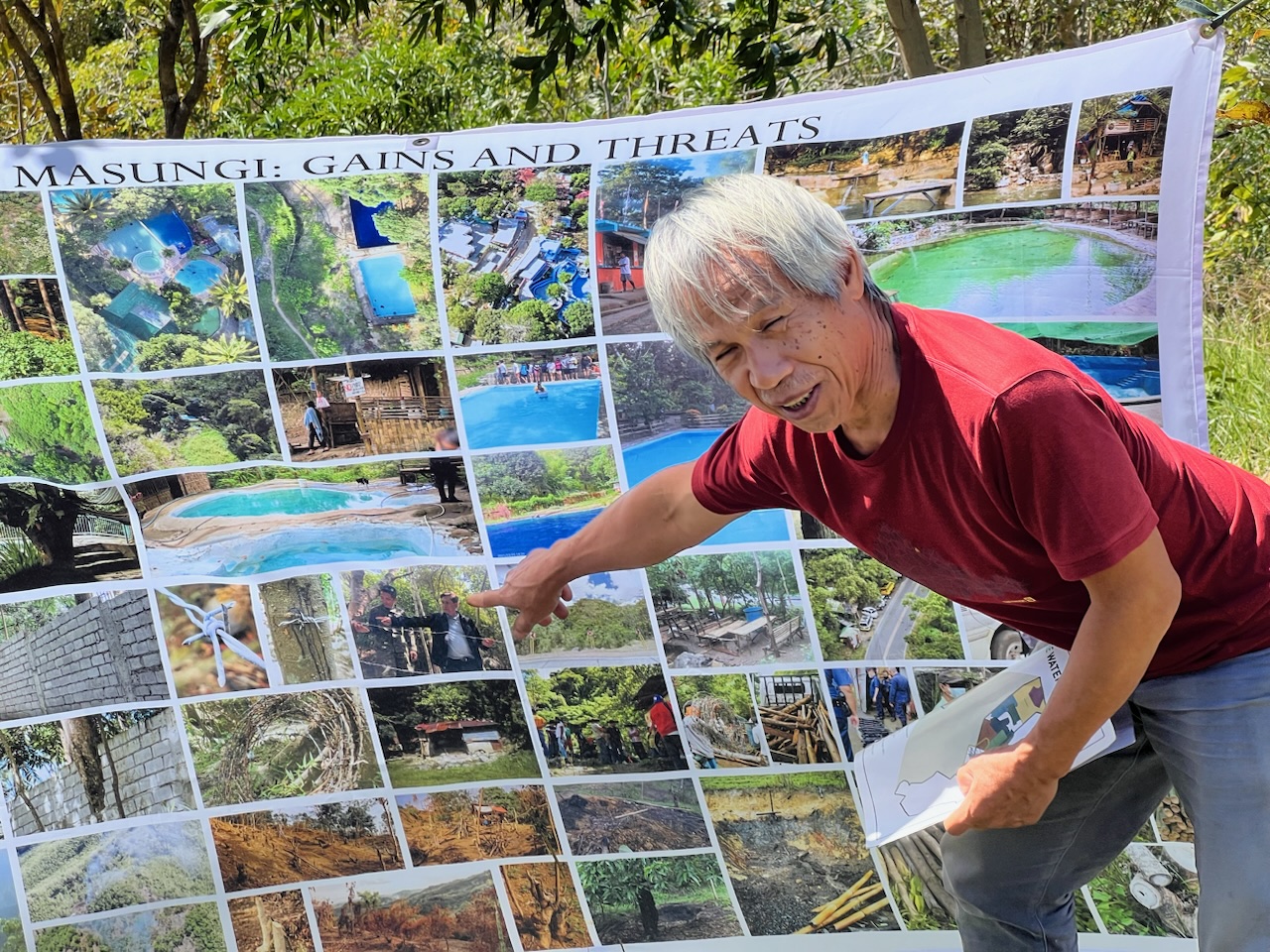
It’s sad and alarming that Masungi continues to be threatened by powerful landgrabbing syndicates as well as by the indifference if not hostility of the government people who should be supporting it, but that’s another story (check out my Qwertyman column last January 29, “Fighting Windmills at Masungi”). In the meanwhile, avail yourself of this chance to encounter nature like you never have before, and enjoy Masungi while it lasts.

Qwertyman No. 79: Hymns of Repentance

Qwertyman for Monday, February 5, 2024

A CERTAIN senator was quoted some time ago as saying that Filipinos supporting the intentions of the International Criminal Court to probe the Duterte administration’s bloody tokhang campaign should be made to sing the national anthem 1,000 times to regain their sense of patriotism. The clear message was that, if you were in favor of an international body looking into local crimes and liabilities, you were being anti-Filipino. 

It wasn’t surprising, of course, given that the good senator was among those prominently mentioned as possible defendants in the case. In jest, he said that if he were found guilty, he would miss his grandchildren if he were incarcerated in the Hague. And just to be sure, he added that not all people in jail are guilty—he certainly wasn’t.

Without commenting on the merits or demerits of a hypothetical ICC case against officials of the previous administration—something we have enough lawyers on both sides to perorate upon—I’ll just observe that the quality of justice the senator and his likely dock mates can expect from the ICC will surely be far better than that received by the victims of summary and extrajudicial executions under the regime of tokhang. In the very least, guilty or not, they will be alive and reasonably comfortable, although they might temporarily miss the company of family and friends, as those bereaved by tokhang have come to experience for all eternity.

I was intrigued by the suggestion that repeated singing of “Lupang Hinirang” would make a better Filipino out of me, or at least make me think of the ICC as some kind of fire-breathing Godzilla threatening to incinerate the Filipino race off the face of the earth.

There are far more effective songs  for instilling love of country. Yoyoy Villame’s “Philippine Geography” will teach us more about the country we say we’re dying for than our anthem, which must have been sung hundreds of times in the halls of Congress without much palpable effect on the patriotism of some occupants. At least I’m assuming it’s regularly sung there; if not, then perhaps our senator can start a little closer to home.

(As for professing one’s innocence, oldtimers will remember Diomedes Maturan’s “Huwag Kang Manalig sa Bulong-Bulungan” (remade by Victor Wood). Even Billy Joel warbled that “Although this is a fight I can lose, the accused is an innocent man!”)

On a more serious tangent, let me swipe a page from a recent talk given by UP President Angelo A. Jimenez, himself a lawyer, at a seminar of police officials on the thorny topic of national security and human rights:

“Our police officers should be commended for the seizure of a total of P6.2 billion worth of illegal drugs in the first half of 2023. The PNP’s Intensified Cleanliness Program, aligned with the Philippine Anti-Illegal Drugs Strategy, has employed a coordinated approach among government agencies to create drug-free communities. This shows that a serious and successful war on drugs can be undertaken without any needless loss of life, for as long as we observe the law, fight corruption, and remember the need for compassion in a just society. Even drug suspects have rights—indeed, even convicted prisoners—and we maintain our moral superiority by respecting those rights, even as we dispense justice. Only then and only thus can we regain our people’s trust.

“Ours is a society that operates on leadership by example. If people see their public officials and law enforcers doing the right thing, they will follow suit. If they see the law being flouted by these very same people—such as unauthorized government SUVs using the bus lanes along EDSA—they feel entitled and emboldened to do wrong themselves. Exemplary behavior at the top will create and strengthen the moral foundation for a responsible and law-abiding citizenry. We cannot demand what we ourselves cannot supply or enforce.”

Frankly, I myself doubt that a full-blown ICC investigation will prosper under the present dispensation, which reportedly promised the senator that not a hair of his (but then, where’s the hair?) would be touched by the ICC, back when the two camps were—just to use an idiomatic expression, and meaning no malice—as thick as thieves.

Now that the knives are out between the erstwhile allies, the ICC card seems to be in play again, teasing us with the possibility of justice being done, but I’m not holding my breath. It’s just too big a risk for those in power to take, too wide a door to open—like Cha-cha for ostensibly just economic provisions. Who knows what other crimes the ICC will unearth, who else they will indict, and how far back they will go? Once you give people a taste of respect for human rights, why, they’d be at it like potato chips—they’ll keep wanting more. There’d be chaos in the streets and no, sir, we can’t have any of that, just when we need law and order.

For this reason alone, I don’t think our good-humored senator has anything to worry about, neither from the Palace nor from the Hague. He can finish his term, retire to his farm in peace, shoot the breeze (or something else) with his old boss, and have his memoirs ghost-written. Unless, of course, a certain lady succeeds in clawing her way to the top, in which case the senator—still fairly young as senior politicos go—can expect a new lease on his public life and serve afresh, perhaps in the Cabinet, where men and women of action belong, rather than in the Senate, where they’re reduced to preening and tweaking their moustaches.

Someone with far greater and indisputable jurisdiction will take over this case and pronounce ultimate judgment; he will need no rapporteur, no investigating party, no authorization, no earthly prison; his verdict will be unappealable. His brand of justice will make the ICC look like talent-show judges by comparison. Those found guilty will be killing lots of time in a very warm place. Some people better start learning and singing hymns of repentance.