Qwertyman No. 104: The Knowing Is in the Living

Qwertyman for Monday, July 29, 2024
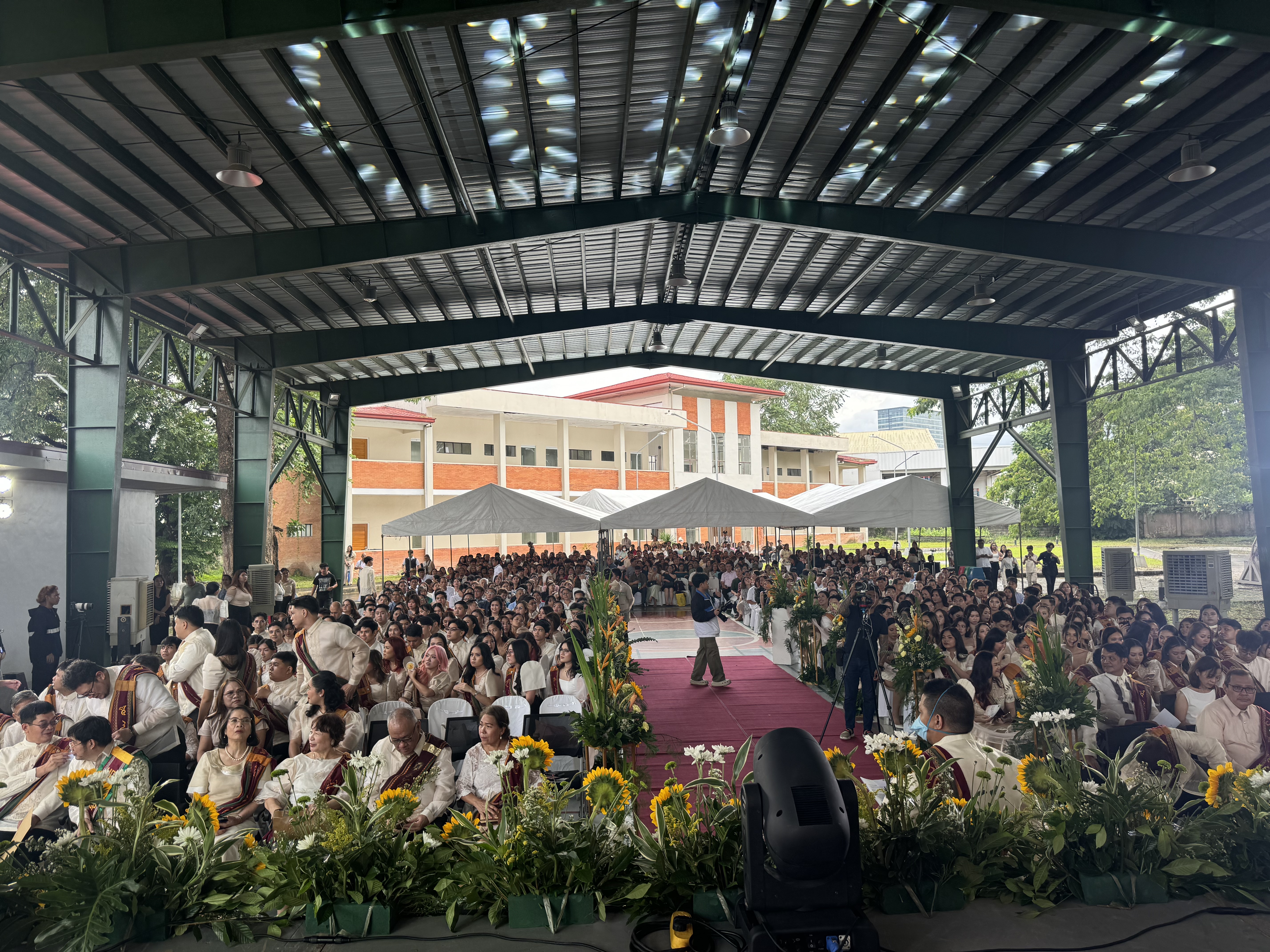
(This is the full text of the shortened version published in my column for today of my commencement address to the graduating class of the University of the Philippines Diliman Extension Program in Olongapo and Pampanga on July 26, 2024.)

A VERY pleasant afternoon, and my warmest congratulations first of all to our graduates and their parents today. Thank you for inviting me to come over today to share some of this old man’s thoughts with you.

I have given commencement speeches at UP graduations before—twice at UP Baguio, once at the UPD College of Science, and then at UPM’s College of Medicine—so you would think that I would take this assignment in stride and just repeat what I told the others, but no. 

This is probably the smallest and most intimate of all UP graduations I have attended, for which reason I thought I would do something different, something special, and write something new, this short talk I’ve titled “The Knowing Is in the Living.”

Now, as nice as our young graduates are, they’re probably thinking, “Oh, no, they invited another of those tiresome old Boomers who’ll be telling us things that we already have coming out of our ears. Things like, how hard and difficult life was for them, walking to school in the sun or taking notes by hand and we have it easy, so we should stop bitching about slow wi-fi and weak aircon and toughen up. 

“He’ll talk about how socially aware and politically committed they were, how they cut classes to march in the streets and fight the dictatorship, going underground, getting caught and tortured in martial-law prison while watching friends die in heroic battles with fascist forces—while we argue about the characters in House of the Dragon over cappuccino at Starbucks. 

“He’ll wax nostalgic about fountain pens and typewriters, index cards and pencil sharpeners, about inhaling the dust in the library stacks and paying fines for overdue books, while we’ve become overly dependent on Google and that new monster, AI, which can do in seconds what took him weeks to produce. He’ll talk about integrity like he invented the word, about refusing to compromise no matter what. 

“He’ll tell us to learn to live in monastic simplicity, in denial of today’s comforts and conveniences and the allure of the coming iPhone 16. In other words, he’ll do his best to make us feel like we were born in the wrong decade, that we missed out on the great defining and character-building struggles of the past—World War II, martial law, EDSA (and no, Covid doesn’t count)—and that we’re lost souls floating in some kind of existential limbo, with little substance and without purpose.”

Well—did I tell you any of that? Do I look like the kind of commencement speaker who would inflict his wisdom—otherwise known as pain and anguish—on his captive audience for the next half-hour, in revenge for all the predictable and long-winded speeches he himself had to listen to all his life?

Before you smile too broadly, let me remind you that I’m still in command of this podium and could do just that, just for the fun of it—but I probably won’t. And I won’t, because the opportunity is just too great and too inviting to be different, to say something you will actually remember and maybe even cherish for the rest of your life.

Ordinarily, on an occasion like this, I would have spoken to you about the topics I usually take up in my columns for the Star—about how important it is to match intelligence with values, about the need to seek out the truth in this age of fake news and AI, about how deftly but resolutely we should navigate the murky political waters ahead of us; in other words, about how we must develop a strong and clear moral core, whatever profession we choose, and live for the good of others.

But again that’s the kind of message that AI itself could have written, fed with the prompt “Write me a graduation speech for the University of the Philippines.”

I will trust that you already know these things. I will not speak about your degrees and what they will mean to the nation, which surely will be substantial. I will not even say how important UP is to the Filipino people; you already knew that when you took the UPCAT, which was why you took the UPCAT.

Instead, today I will talk to you about time—yes, that fourth dimension which, according to science and philosophy, is really a function or a measure of change. Without change, there is no time. 

Why time? Because it’s been on my mind a lot lately. Last January, I celebrated my 70th birthday and my 50thwedding anniversary with my wife June. I was deeply grateful for those milestones, which I honestly never expected to reach, having been a young activist who went to martial-law prison and who saw many of his friends die too soon. So for me, anything beyond 20 was what you would call in music a “grace note,” an unexpected bonus that has just kept on giving and giving. 

To be sure, it hasn’t always been an easy life, and I won’t bother you with the details, but I can tell you what a huge surprise and relief it is to be here, alive and reasonably well, at 70. I am now older than my professors were when I was your age, and the reversal is both fascinating and, for you on the other end of it now, a mystery yet to be written.

For most of us, life has a fairly predictable plot, and it goes this way:

In your twenties you will want to know who you are, what you stand for. You will choose a course and a profession, get a job, dress up like an adult.

In your thirties you will think more seriously about companionship, maybe marriage, maybe children. You will want your heart to make up its dizzy mind, and settle on someone, or get used to being alone.

In your forties you will fret about finances, your position in your company, maybe have an affair, lose your faith, and then again if you’re lucky maybe gain everything back.

In your fifties you will be expert at many things, sit on boards and manage this and that. You will begin to think about words like “stability,” “reputation,” and “legacy.”

In your sixties your steps will become shorter and slower, and you will want comfort most of all—a soft bed, an easy chair, good food and wine—and indulge your bucket list.

In your seventies and eighties, you will just want and fight to be alive.

In your nineties, with most of your friends gone, and with your eyesight and hearing going, you may well just want to be dead.

That’s the basic plot—but like time itself, it’s not a fixed one. Time is strangely flexible.

In my writing classes, I often say that a well-written story, even if it’s twenty pages long, feels like it ended too swiftly, but a badly written one, no matter how short, feels like forever. And we all know but don’t understand why happiness always seems to be fleeting, while grief and pain endure. That’s how time is bent by whatever we fill it up with—how it holds meaning, or loses it.

How will you fill up that space with change, and make your time worthwhile? What kind of story will your life be? 


As one of my book titles go, “The Knowing Is in the Writing.” By this I mean that we writers think that we know our characters from the beginning—but in fact, we only really know them as we write about them, and subject them to the kind of intense pressure that life will bring to bear on each one of you.

Let’s say, for example, that Tony is a young lawyer, smart and idealistic, determined to seek justice and freedom for his people, destined for professional success. He works for an NGO for not much money. He is engaged to Marie, a PGH nurse who’s also supporting her family, and who has been offered a job in the UK. Tony doesn’t want Marie to go, because she will be away for many years and he wants them to marry, but he can’t support them both and their families as well on his salary. Tony is then recruited by a big real estate firm to work in its legal division, where he will help in the removal of squatters from company property and the conversion of farms into subdivisions. What will Tony do?

How well do we know Tony, until he actually makes a moral choice that could possibly run against the character we thought we knew?

In fiction and in playwriting, I often point out to my students that characters become most interesting when they go out of character—not whimsically, but out of dramatic necessity and inevitability, the kind of tortured inner logic that drives us to do things we never thought we could, in our imagination of ourselves as good people: to lie, to cheat, to steal, to support extrajudicial killing, to laugh at rape jokes, and to think that someone who habitually lies and brings out the worst in people can be fit to be president. But conversely, that turn of character can also lead us to perform amazing acts of nobility and charity, of heroism.

In your case, the knowing will be in the living. You think you know yourself today, what you want, where you want to go, and how to get there—and it’s important that even now, you have this game plan and this compass to lead you forward. But you will never know and discover your true self until your most vulnerable moment, at which your soul will be revealed in utter transparency. 

For some of us, the sad truth is that life will be short. But that’s no reason to say it will be worth little, because you can still make it meaningful and memorable. Remember Achilles, who in the Iliad was given a choice of living a short but glorious life, as opposed to a long but boring one; he chose the former, and thereby became a legend. And there was the brilliant modernist writer Djuna Barnes, who lived to be 90. Taking off from that famous quotation from Thomas Hobbes, she said that “For others, life can be nasty, brutish, and short. For me, it has simply been nasty and brutish.”

But again, how your lives turn out will be your story to write, although you will have many co-authors, including the Divine. Some say life is predestined, which would make for bad fiction; I prefer to believe in at least the illusion of free will, of human agency, because then we and our fictional characters have moral responsibility; and in such stories of inner struggle, there will be lessons to be learned, like the Greeks learned from the plays they watched over and over again.

Life will be a challenge, as soon as you step out of this campus into the world at large. But what I can tell you is that, with grit and a little luck, you will survive. To do that, you may have to learn to forgive yourself for your mistakes, to change your mind, and to compromise if you must, because the ideal you will always be a work in progress. Whoever sits in Malacañang or the White House, you can still find ways to serve the people, for which you will and must survive. We survived martial law; you survived the pandemic. Surely we can give purpose to our good fortune. In my case, I have found that purpose in my writing, in my search for truth and beauty, and in my more modest and focused commitments to my family and community. 

So, again, how shall we fill up the time ahead of us? Of course we’re running on different clocks or even calendars. If your life is at brunch, mine has just been called to dinner. I don’t know about you, but I will have that dinner with my wife on the beach, with a glass of wine, imagining what it must be like over the deepening horizon.

That horizon will always be ahead of us. We think we are forging ahead into the future, but in fact, with every breath we take, we are becoming part of the past, of what happened, of what was. When I hold and look at the silly old things I collect—three-hundred year-old books, and old fountain pens and typewriters from when Jose Rizal was still alive—I am comforted by the certainty that the past survives in artifacts and memories, so that it is important that we leave images and signatures that will bring smiles to those who see them.

There is an afterlife. In the very least, it is the life of those we leave behind. You will now be part of my afterlife. Through this speech, through my words, I will live in you.

Let me end with a quote from a favorite source—me—and share something that I have said to every UP graduating class I have been honored to address:

To be a UP student, faculty member, and alumnus is to be burdened but also ennobled by a unique mission—not just the mission of serving the people, which is in itself not unique, and which is also reflected, for example, in the Atenean concept of being a “man for others.” Rather, to my mind, our mission is to lead and to be led by reason—by independent, scientific, and secular reason, rather than by politicians, priests, shamans, bankers, or generals. 

You are UP because you can think and speak for yourselves, by your own wits and on your own two feet, and you can do so no matter what the rest of the people in the room may be thinking. You are UP because no one can tell you to shut up, if you have something sensible and vital to say. You are UP because you dread not the poverty of material comforts but the poverty of the mind. And you are UP because you care about something as abstract and sometimes as treacherous as the idea of “nation”, even if it kills you.

Sometimes, long after UP, we forget these things and become just like everybody else; I certainly have. Even so, I suspect that that forgetfulness is laced with guilt—the guilt of knowing that you were, and could yet become, somebody better. And you cannot even argue that you did not know, because today, I just told you so.

Qwertyman No. 103: Surviving the Survivor

Qwertyman for Monday, July 22, 2024

WHEN THAT rifle bullet grazed Donald Trump’s ear last week, I’m sure I wasn’t alone in having an equally nasty thought whiz through my brain—and I’ll put this as delicately as I can: would it be un-Christian to wish misfortune on Satan and his minions? And less delicately, why does a God who allows bombs to drop on innocent children in Ukraine and Gaza spare a man who seems the very embodiment of the Seven Deadly Sins—pride, greed, wrath, envy, lust, gluttony and sloth to those who’ve forgotten—and who will most certainly destroy as much of humanity as we know it before he mercifully expires?

To the MAGA faithful, Trump’s salvation could have been nothing less than divine intervention, a virtual endorsement of his worthiness and indeed his destiny to rule. In one of the many ironies to be found in American politics today, Trump was shot at by a registered Republican using an AR-15-type rifle—the serial shooter’s weapon of choice, and the National Rifle Association’s darling—despite which Republican leaders like Marjorie Taylor Greene were quick to denounce the attempt as a plot instigated by the “evil” Democratic Party. The Democrats are now the war freaks, with Joe Biden liable to be charged for “inciting an assassination,” according to Georgia Rep. Mike Collins (the same fellow who has called for the release and pardon of the rioters who attacked the US Capitol on January 6, 2021). Trump marched into the Republican convention with a bandage on his ear and a halo around his head. “He just won the election,” a Wisconsin congressman told the media.

Given the polls, he was probably going to do that, anyway, facing an anemic and increasingly isolated Biden, who was really the one in need of something so theatrical to happen to jolt his campaign. In an environment shaped by media coverage and social-media shares, that picture of a bloodied Trump raising his fist in front of the Stars and Stripes couldn’t have been better produced. Let’s add to the script his big Supreme Court win on immunity and the dismissal of his classified documents case, and the Orange Man is clearly on a roll and on a path back to the White House, no matter what. The stars are aligning, albeit in the wrong direction.

That bodes ill not only for Americans—whose sole business it is to elect their presidents, so there’s nothing we can do if they prove as suggestible as our own electorate has been—but for the rest of the world, where democracies have struggled under a rising class of demagogues and tyrants with whom another Trump administration will only be too happy to do business. The Russian invasion of Ukraine will end quickly, as Trump promised, because he will pull back the aid that allows Ukrainians to fight, force them to yield territory to his pal Putin, and declare himself a peacemaker. (His policy on Israel and Gaza has been consistently inconsistent, defined as much by what Biden does as by what he really thinks, which no one seems to know. “He’s just delusional at this point,” said his former NSA John Bolton. “He doesn’t have any idea what to do in the Middle East.”) So Trump survived; but can the world survive him?

For us Filipinos and the Taiwanese, almost 14,000 kilometers away from Washington, DC, Trump II will likely mean “non-intervention,” i.e., a re-embrace of neighborhood bullies like Xi Jinping and Kim Jong-un at the expense of even the semblance of covering for us in the West Philippine Sea. (A US withdrawal will delight our progressives and nationalists—both the real and the newly-minted—and ironically align them with the most reactionary and despotic American president ever.)

But back to that shooting. I’m not particularly religious nor philosophical, but that failed assassination attempt and its likely aftermath sent me into a deep dive, asking questions I knew had no easy answers. Maybe because of the company I keep, no one I knew, whether here or in the States, dropped to his or her knees in gratitude and relief over Trump’s deliverance. Of course we all muttered in polite agreement with the obligatory PR statements, the kind I could have written myself: “We eschew and deplore all political violence. Violence has no place in a democracy, and our thoughts and prayers are with former President Trump as we reaffirm our commitment to peace, freedom, and justice for all, regardless of their political beliefs or affiliations.” 

But to be perfectly honest, my thoughts and prayers were going another way, which is perhaps the sorriest thing about all this: we begin to entertain brutish notions and expedient solutions. Just as one trigger-happy and foul-mouthed president let out the worst in the Filipino and made it okay to laugh at rape jokes and take murder with a shrug, Trump has conventionalized a movement that will certainly survive him, founded on people’s basest instincts: fear, suspicion, selfishness, and lying to survive. (His VP pick, Sen. J.D. Vance, is said to be even worse—Trump with military chops, just as opportunistic and with much more mileage in him.) Trumpism will not die with Trump, even now a living martyr and saint in his own religion. It’s become too big to kill off with one shot, so it’s probably just as well that that rooftop shooter missed. 

Why? Because if and when Trump wins, then perhaps Americans, and especially Trumpers, will better understand themselves in the man they elected. When I teach literature, I sometimes go back to Aeschylus and Agamemnon to raise the same question I opened this piece with: Why does God (or Zeus) bring suffering upon his people? And the answer in the play is, “Man suffers, so he will learn.” And then again, do we ever? The Germans elected Hitler, only to later realize they had made a grievous mistake, but now Hitler is loose upon the world in his many reincarnations.

The expat Trumpers and MAGA Fil-Ams who regularly excoriate me for meddling in US affairs—but who won’t think twice or even know about America meddling in ours—are probably turning all shades of red and purple as they read this, but do I care? I care for our daughter in California; I hope she follows my sister who moved to Canada after Trump I, before she gets accused of “poisoning the blood” of America. (Both are legal, tax-paying US citizens.)

At least we Pinoys can say we’ve been through all of that, and more—assassinations (our assassins were better marksmen), restorations (our politicos have more patience, and can wait a generation), and Netflix-worthy political drama (next episode: SONA fashions and SONA absentees). Having survived martial law and having our own demons to contend with, we’ll survive Trump II and whatever he does in the sandbox of the White House. The question is, will America?

Qwertyman No. 102: Retaining the Fools

Qwertyman for Monday, July 15, 2024

A RECENT Rappler report on “The Philippine Senate: From statesmen to showmen” by James Patrick Cruz told us much of what we already knew, but didn’t have the exact numbers for—that political families dominate that institution, that most of them come from the big cities, that most of them are men, that older senators (above 50) outnumber young ones, and that many come from the glitzy world of entertainment and media.

Surprisingly (and why am I even using this word?), most senators are highly educated and even have advanced degrees, mostly in law. However, the study says, “the high educational background of senators has not produced ‘evidence-based policymaking.’…  Some lawmakers, for example, have used the Bible to argue against the reproductive health law in a secular setting and have relied on personal experiences in discussions on divorce.”

And not surprisingly, the academics consulted for the study concluded that “If you want better policy, we should go for better inclusion, better representation, and not just be dominated by political families.” Indeed, from the very beginning, it notes that “Political analysts have observed a decline in the quality of the Philippine Senate over the years. The shift from a chamber filled with statesmen to one dominated by entertainers and political dynasties has become evident.”

And then again we already knew all that. What the Rappler study does is provide a historical overview—quantitatively and qualitatively—of how the Philippine Senate has morphed as an institution over the decades, reflecting changes in the electorate and in Philippine society itself. It opens with resonant passages from the speeches of political leaders from a time when the word “senator” bestowed an aura of respectability and consequence upon its bearer. 

It quotes the luminous Jose W. Diokno: “There is one dream that we all Filipinos share: that our children may have a better life than we have had. To make this country, our country, a nation for our children.” Sen. Jovito R. Salonga, another legendary figure and war hero, follows with “Independence, like freedom, is never granted. It is always asserted and affirmed. Its defense is an everyday endeavor—sometimes in the field of battle, oftentimes in the contest of conflicting wills and ideas. It is a daily struggle that may never end—for as long as we live.”

It’s entirely possible—and why not?—that this kind of elevated prose can be uttered today by a senator or congressman backed up by a capable speechwriter, if not AI. The question is, will they be believed? Will the words ring true coming out of their speaker’s mouth—especially if that speaker were one of today’s, shall we say, non-traditional senators, reared more in showbiz and social media than in Demosthenes? 

“Non-traditional” applies as well to political families, which notion we can expand beyond DNA matches to communities of convenience, of shared geographical, economic, and cultural origins—the entertainers, the media stars, business moguls, the Davao boys, and so on. (There’s probably no better guide to how traditional families have ruled the Philippines than An Anarchy of Families: State and Family in the Philippines, edited by Alfred W. McCoy and published by the University of Wisconsin Press in 2009.)

It might also be that the problem lies not so much or not only in the dynastic nature of Philippine politics, as in the fact that the quality of these families has badly deteriorated. And by “quality” I don’t mean anything by way of economic or social candlepower—none of that “de buena familia” silliness. (To be sure, no family—however celebrated—has ever been perfect, coming with its fair share of black sheep, eccentrics, and outliers. Our social lore abounds with barely whispered stories of the abusive father, the spendthrift mother, the gay son—yes, in Pinoy archetype, gay is wayward—and the mad daughter.) 

I suppose we keep looking for some defining virtue, a reputation founded on academic excellence, intellectual prowess, philanthropy, moral ascendancy, and the like. How many families in the Senate and Congress today can lay claim to that kind of legacy? Today, prominent families achieve and maintain their status through their economic and political clout, through popularity or even notoriety, and even through sheer staying power, thanks to the muscle memory of many Pinoys in the voting booths.

In 1998, in my biography of the accomplished, fascinating, and resolutely revolutionary Lava brothers, I noted that “For anyone familiar with the history of the Philippines over these past one hundred years, it will not tax the truth to suggest that so much of that history has been family history. In many ways, modern Philippine history is an extended family picture album in which a few names and facial features keep recurring, with only the characters’ ages, expressions, poses, and costumes changing from page to page. Most ordinary Filipinos have lived in the shadow and by the sufferance of such dynasties as the Marcoses, the Lopezes, the Aquinos, the Laurels, and the Cojuangcos, among others—families which have ritually sired presidents and kingmakers, tycoons, rakes, sportsmen, and society belles. But none of them were like—and there may never be another Filipino family like—the Lavas.”

For those who never knew them, over the mid-20th century, five Lava brothers—Vicente, Francisco, Horacio, Jose, and Jesus—emerged from a moderately affluent landowning family from the heartland of Bulacan to become progressive intellectuals, some of them even leading the Partido Komunista ng Pilipinas. Ironically, these were no workers or peasants. Vicente, a government pensionado, held a PhD in chemistry from Columbia University; Horacio and Francisco also held advanced degrees in economics and law from Berkeley and Stanford, respectively; Jose was a lawyer-CPA whose University of the Philippines thesis was adjudged the best of his class; Jesus was a medical doctor, also graduating from UP.

Just so we know, the Lavas and their comrades were operating legally and openly right after the War, and were even elected to Congress under the Democratic Alliance in 1946—only to be expelled on trumped-up charges of fraud and terrorism, with their votes on the key parity rights issue discounted. Under threat of extermination, they went underground, followed by two decades of bloody struggle.

That’s what happened to one family with real brains and convictions, even pre-NTF-ELCAC; we expel the thinkers and retain the fools.

(Image from constitutionnet.org)

Qwertyman No. 101: The Truth Sometimes Stutters

Qwertyman for Monday, July 8, 2024

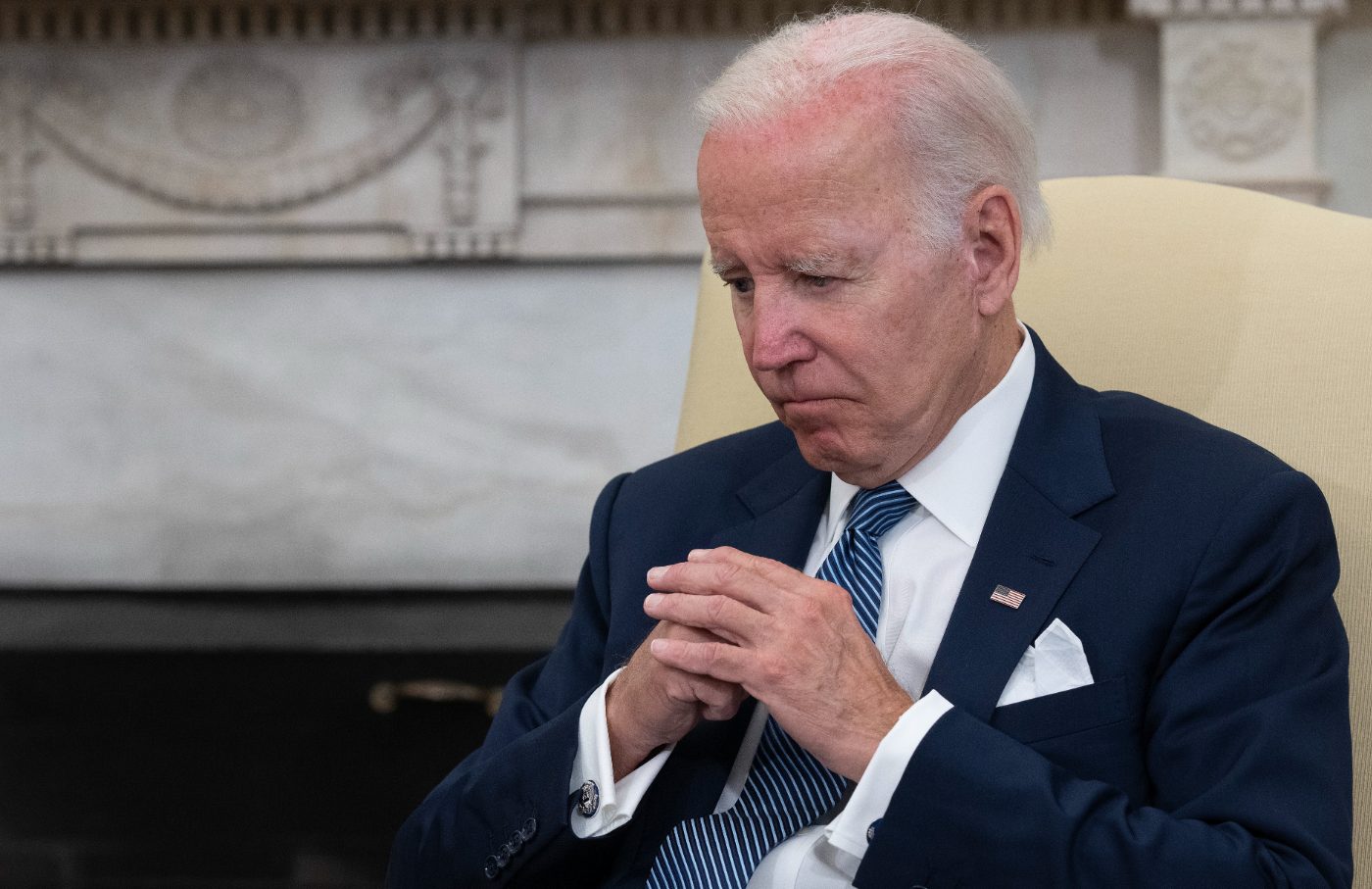
LIKE MANY other global citizens with an interest in American politics, I watched the recent presidential debate between President Joe Biden and former President Donald Trump with alarm and dismay, emerging profoundly depressed by Biden’s lackluster performance. His rousing State of the Union speech last March, which I also watched, had raised my expectations, as it surely did the Democratic Party’s, that he would come out swinging and send Trump flying out of that arena with the punch to end all punches. 

He managed to throw a few good ones—I especially liked “You have the morals of an alley cat!” But in the end—or should I say, pretty much throughout the debate–he lost steam, stuttered, and strayed. Fighting Joe stayed home; Soporific Joe turned up. Even Trump, who lied his way through the debate with his customary sneer and swagger, seemed surprised by the win being handed to him by his opponent and by all the media commentators looking on. 

Those commentators would later do the math and conclude that Trump had told about 30 lies and misrepresentations over the 90-minute bout, while agreeing that Biden had also made some false assertions, though none as outrageous as Trump’s charge that Democratic policy included killing babies even after they were born. None of this post-mortem will matter to Trump’s base, used to swallowing whatever comes out of The Donald’s mouth as God’s own truth. It mattered to Biden’s, because it seemed to confirm their deepest fears—and what had until then been a nasty snicker from the other side—that the incumbent was mentally and physically inadequate to the task of leading America for four more years, let alone beating Trump in November. 

When I reviewed the transcript of that debate—which I suspect will rank near the bottom in the history of presidential debates for quality of thought and expression—I had to conclude that the truth was poorly told and the lies came through loud and clear. Biden ran through the numbers with professorial precision: “40 percent fewer people coming across the border illegally… billionaires pay 8.2 percent in taxes… $8,000 per family written off under the Affordable Care Act… everybody making under $170,000 pays 6 percent of their income,” and so on. But Trump’s strategy was much simpler—just repeat the same incendiary claim, over and over again, and don’t bother with the details: “the worst president we ever had, the worst administration in history, we’re no longer respected, they think we’re stupid, we opened our borders to people from mental institutions, insane asylums, terrorists, people are dying all over the place….” 

In rhetorical heaven, the truth would ring like a bell and be heard from sea to shining sea, while falsehood would seethe and slither in whispery incoherence. Instead, what we saw confirmed the opposite—that in today’s media, prone to hyperbole and uncritical amplification, the brazen lie will travel farther than the complicated truth, which can be messy, inconvenient (as Al Gore pointed out), and unpopular. 

Furthermore, and even worse, the truth all by itself won’t win elections. We’ve seen that happen many times, and we don’t even need to cross the Pacific for proof. 

In the second op-ed column I wrote for this corner more than two years ago titled “Myth over matter,” I said that “The most daring kind of fiction today is out of the hands of creative writers like me. It is being created by political propagandists who are spinning their own versions of the truth, and who expect the people to believe them. The short story and the novel are no longer the best media for this type of fiction, but the tweet, the Facebook feed, the YouTube video, and even the press conference.”

“Today’s savviest political operators know this: spin a tale, make it sound appealing, trust ignorance over knowledge, and make them feel part of the story. ‘Babangon muli?’ Well, who the heck who dropped us into this pit? It doesn’t matter. Burnish the past as some lost Eden, when streets were clean, people were disciplined, and hair was cut short—or else. Never mind the cost—’P175 billion in ill-gotten wealth’ is incomprehensible; “a mountain of gold to solve your problems” sparkles like magic.”

Biden isn’t just fighting Trump, but a growing global disdain for intellectual acuity, in favor of populist platitudes and despotic bombast. Sadly none of this analysis, of which Joe Biden surely must be aware more than anyone else, is going to help him and his party defend democracy in America if he sticks to his dated notion of an idealist America that clearly no longer exists. To buy time and opportunity for that hope, he may have to do what he has never done, and yield his place to a fitter champion. (Biden famously labored to overcome a childhood stutter and being bullied for it by reciting Yeats and Emerson in front of a mirror.)

Both the New York Times and the Washington Post have called for Biden to stand down, a rising chorus that has been joined by important leaders and donors of the Democratic Party. There’s wishful speculation that—despite the obligatory public display of bravado and strong familial support—the more sensible Joe will prevail and see the election as being more than a personal Rubicon but indeed, as he himself puts it, an existential battle for democracy itself. If Biden goes down, the chances are he won’t be alone; the Republicans will win both the House and the Senate, giving Trump virtual carte blanche to reshape the rest of America in his own sour image. (And for us Filipinos, a Trump win will mean even less leverage in the West Philippine Sea, not that the US under any president will likely go to war on our behalf for a pot of soil at high tide; but isolationist Trump will be far more willing to bargain our rights away with China for economic and political gain.)

As distant onlookers with a strategic investment in November’s outcome, let’s pray that Sensible Joe will get the better of Fighting Joe, and give the stuttering truth a chance.

Penman No. 464: A Fantasy Memoir

Penman for Sunday, July 7, 2024

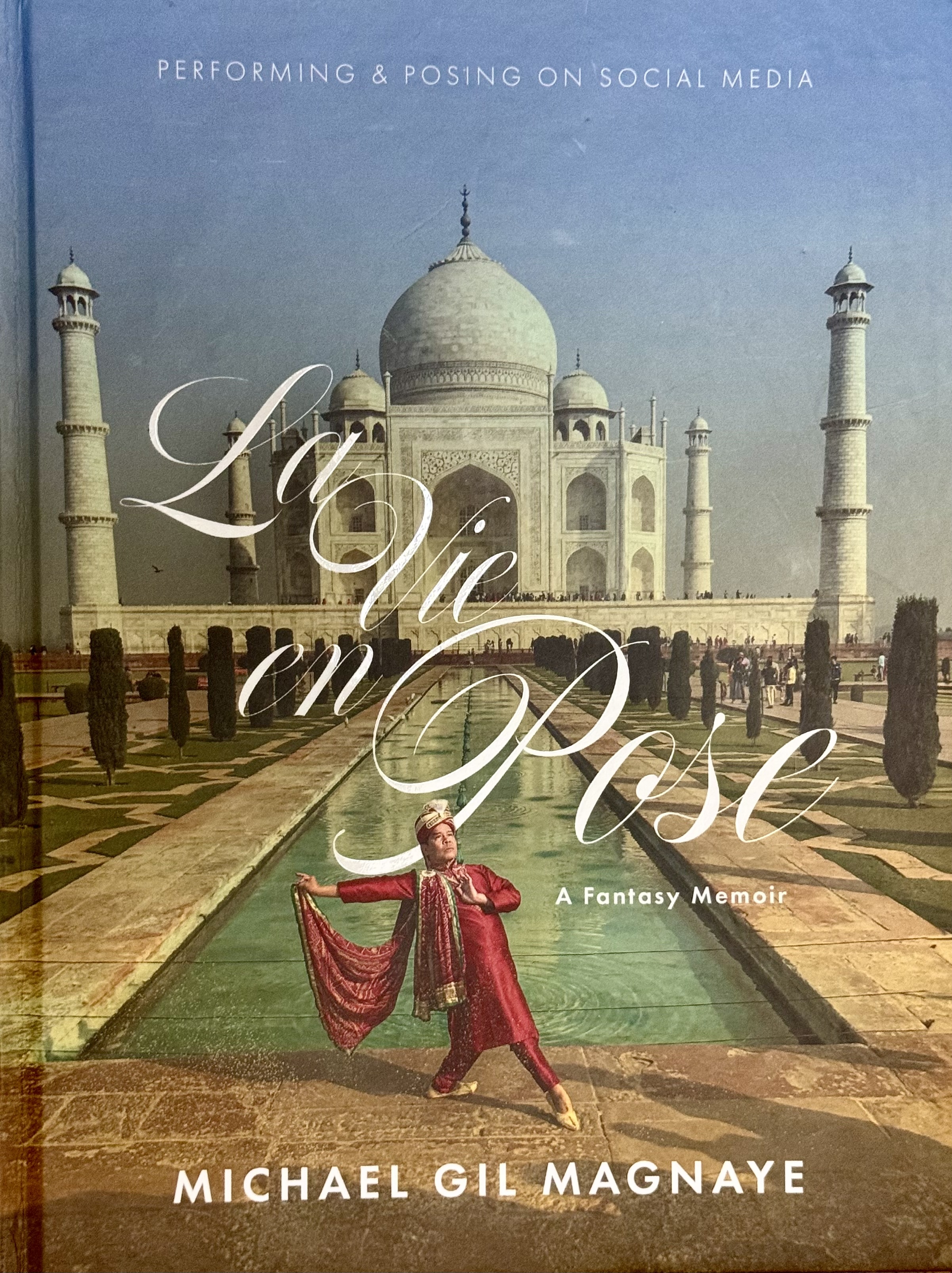
THE AUTHOR calls his book a “fantasy memoir,” and if it’s a genre you’re not familiar with, you wouldn’t be alone. Or maybe that’s just because you’re a dour and straight septuagenarian like me who doesn’t go out too much, watches true-crime shows to relax, and presses his pants and shines his shoes because, well, that’s the way it should be. I later googled the term, just to see what’s out there, and much to my surprise, it does exist—a genre defined by “imagination, escapism, and dreams,” with the stipulation that these fantasies, or products of the mind, are just as valid as memory in recreating one’s life.

Thankfully, from the cover onward, Michael Gil Magnaye’s La Vie en Pose makes it purpose clear to the most casual and non-literary of readers: to have fun—while raising some very serious questions on the side about who and what we are (or pretend to be), what poses we ourselves assume, consciously or not, in our everyday lives, and how our identities are constructed by something so simple as what we wear.

La Vie en Pose is one of those rare books one can truly call “inspired,” resulting from the kind of half-crazy “What if?” lightbulb moment that strikes you over your tenth bottle of beer at 3 in the morning. Unlike many such flashes, this one stayed with Gil, took firmer shape, and turned into a virtual obsession—a first book to be completed by his 60th birthday, not just any book, not one of dry prose between the covers, but one certain to make a personal statement for the ages.

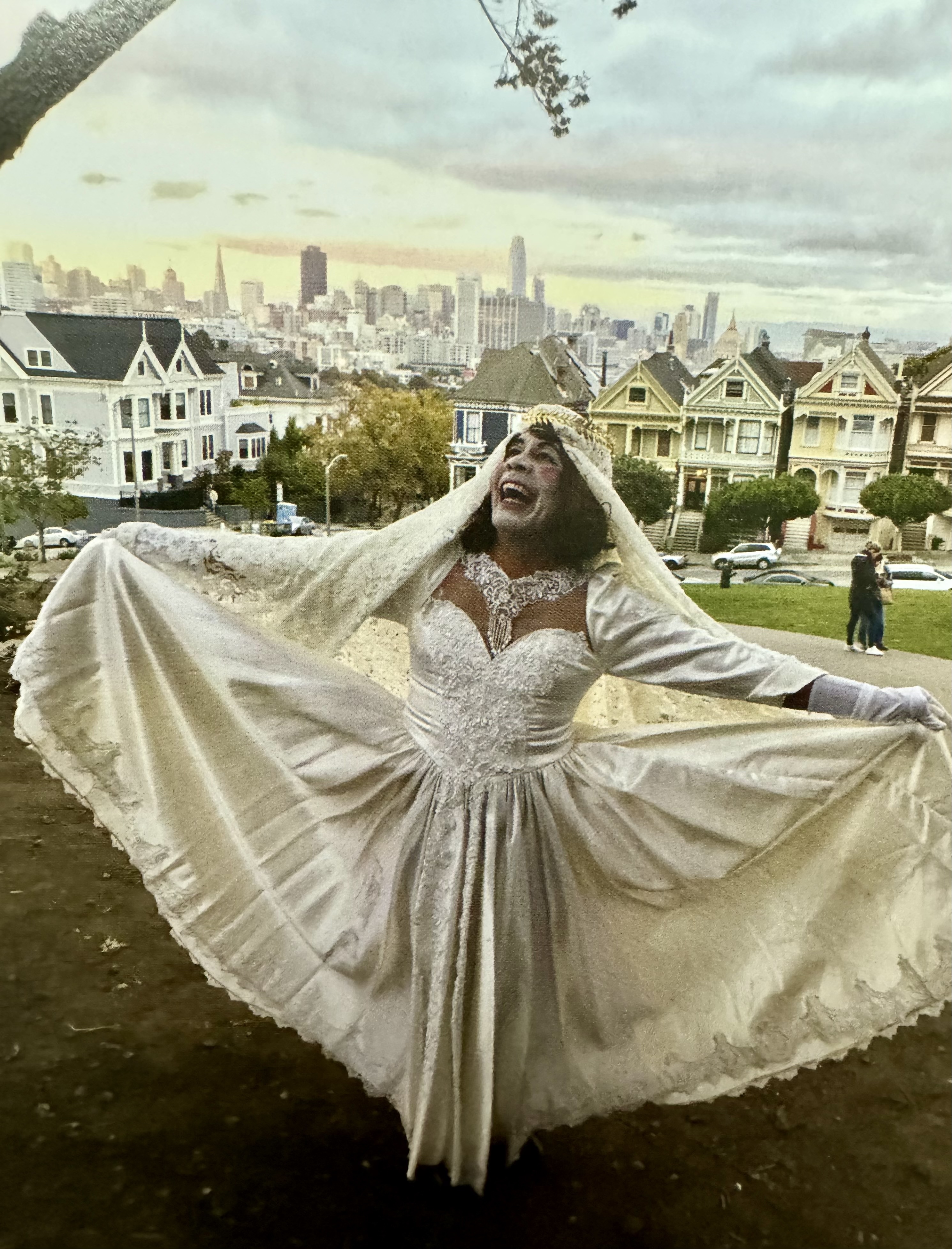
Magnaye, who works as an advisor to an international NGO, describes the book as “a fantasy memoir told in a hundred photographs of the author in costume, striking a pose around the world. Designed and photographed over a decade, these vignettes depict media celebrities, politicians, literary characters and wholly fictitious figures drawn from Magnaye’s fertile imagination. The collection offers satirical, often hilarious commentary on noteworthy personalities in pop culture, politics and history, from Game of Thrones to Bridgerton, from Jackie Onassis to Ruth Bader Ginsburg.”

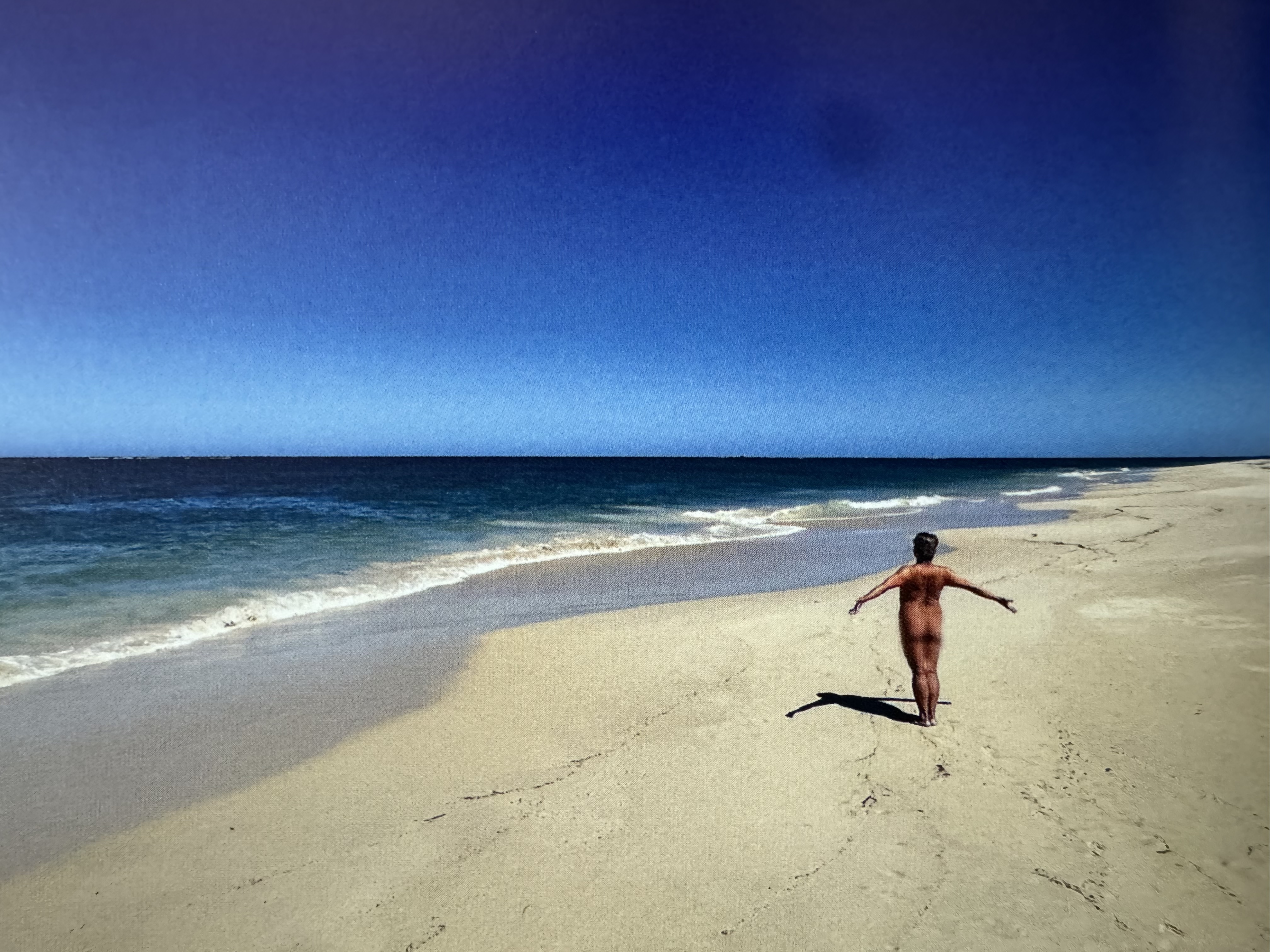
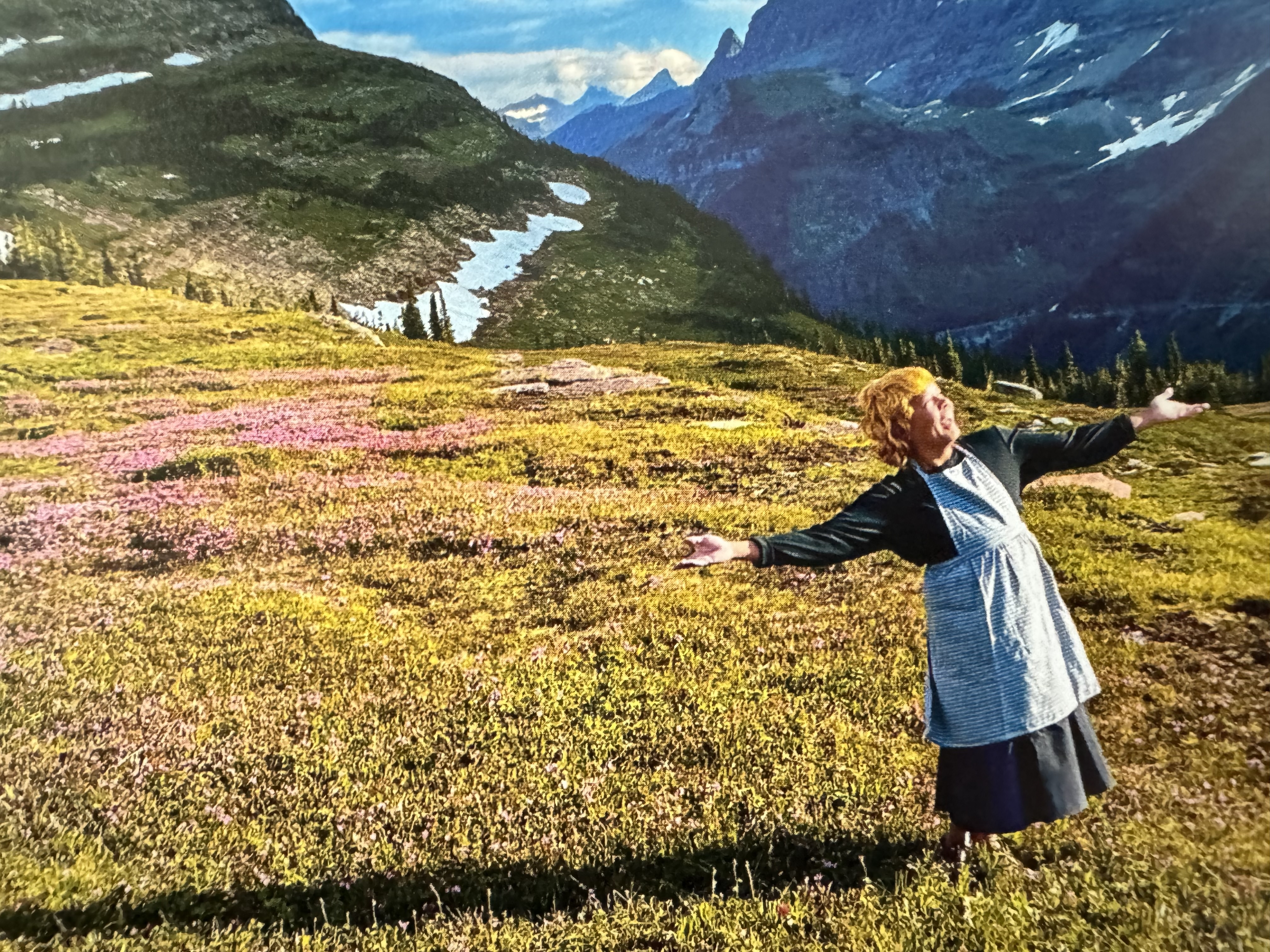
Divided into eight chapters and edited by the celebrated Fil-Am writer Marivi Soliven, the book takes Gil around the world (none of this is AI—the photography took many years and plane flights to complete), posing in various locales and contexts, often in costume, to mimic or to pay homage to familiar figures and situations. The pop-culture setups will likely elicit the most laughs and smiles—Tina Turner, Maria von Trapp, and of course Barbie all get their comeuppance—and the UP Oblation poses (thankfully just backsides) show the malayong lupain that our iskolars ng bayan have reached (Gil studied and taught Humanities in UP before going to Stanford for his master’s). The levity aside, he strikes thoughtful, almost architectural, poses against spare backdrops. He draws his husband Roy, a normally reticent software engineer, into take-offs on couples (Ari and Jackie, Ennis and Jack). The effect is both riotous and reflective, a visual essay on how pop and political culture have overwhelmed us, but also how we have appropriated and domesticated them for our own purposes, if only to say, “Hey, I can be as good that!”

The poet and queer theorist J. Neil Garcia explains it better in this note he posted online about the 30thanniversary of the landmark Ladlad anthology he co-edited with Danton Remoto: “Queer creativity is itself an integral component of the equality message, and not simply a means to an end. Since the freedom of the imagination is perhaps where all freedom begins, it is clear that giving the queer artist the power or the ability to create their own texts and art works needs to be seen as a vital objective of the equality movement, one of whose primary interests must be in securing this imaginative and/or cognitive ability above all. Hence, we need to insist on the truth that queer creativity isn’t simply a tool to promote the equality message and other activist agendas; rather, queer creativity itself is part of the agenda—is part of the equality message itself (and so, queer creativity is not just a means to an end; quite crucially, as the best evidence and enactment we have of individual and collective agency, even against the harshest of odds, it is an end, in itself).”

For Gil—whom I was friends with back when he still had a girlfriend and confronting his sexuality—the book is more than a personal celebration (he launched it in UP last June 23 to mark his 60th birthday); it’s also an assertion of his rights as a queer (the preferred term these days to “gay”) person—and by extension, of all other LGBTQ+ people as well—to express themselves creatively. In his introduction, he notes that “This book is born at a fraught moment in gender politics. Some states in the US have passed legislation that attacks transgender youth for their chosen wardrobe or preferred pronouns. A drag artist in the Philippines has been jailed for performing an irreverent dance interpretation of a Catholic hymn. Such adverse events would seem to suggest that cross-dressing is an act of subversion. I would argue that cross-dressing and mimicry are strategies that drag queens, drag kings, non-binary performers, and gender benders employ to resist, challenge, navigate, and extricate themselves from systems imposed by traditional constructs. And it’s a lot of fun.”

La Vie en Pose most surely is. Copies might still be available at the UP Center for Women’s and Gender Studies.

Qwertyman No. 100: The Political Doghouse

Qwertyman for Monday, July 1, 2024


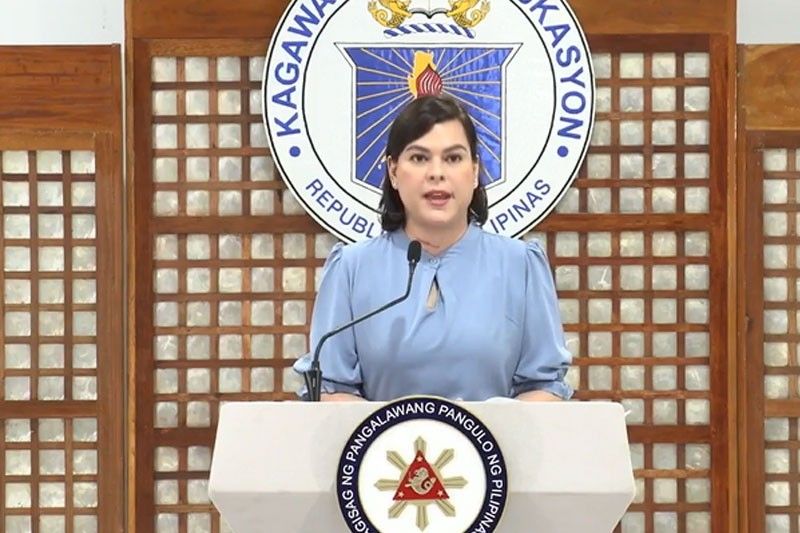
TO NO one’s great surprise, Vice President Sara Duterte resigned from her concurrent posts as Secretary of Education and vice-chair of that long-named (short name: red-tagging) council. Maybe because I was far away from Davao when the news came in, I heard no wailing and gnashing of teeth. A tree fell in the forest. The world moved on.

Inday Sara promised to continue to be a mother to the country’s teachers—the same people she had ordered to strip their walls bare of teaching aids. She was back in the news a week later after reportedly announcing that her father and two brothers were going to run for senator in next year’s elections. Her name was brought up as a possible “leader of the opposition.” None of these silly propositions generated the kind of groundswell she may have been hoping for, as someone once touted to be a shoo-in for the presidency who just got suckered into sliding down to No. 2 (to her Papa Digong’s boundless dismay) in a deal craftily brokered by former President Gloria Macapagal Arroyo.

To Duterte diehards—and let’s face it, there are still quite a few, although being out of office tends to lose people by the day—Sara will always be their golden girl, the victim of craven betrayal by their erstwhile “Uniteam” ally. To her non-fans, she will always be the bratty bureaucrat who demanded P650 million in confidential funds and who bragged about spending P125 million of DepEd money in the time it takes you to say “low PISA scores.”

Where she goes from here is the big question. In a touch of supreme irony, she now finds herself in almost exactly the same position as her predecessor, Leni Robredo, who was boxed out of Digong Duterte’s Cabinet and pretty much left on her own.

And there the inevitable and (for Sara) unfortunate parallels arise, because VP Leni shunned privilege, turned her exclusion into a challenge, and made the OVP a model of what a government office with meager funds could do, with honest, visionary and purpose-driven leadership. Leni became, and continues to be, beloved, as close to a saintlike figure as any elected official could aspire to be. That this quality failed to propel Robredo to the presidency says more about our electorate and political culture than about her—the dark, mutable, and serpentine side of Philippine politics that the Dutertes thrive in.

I have no doubt whatsoever that Sara Duterte will continue to be politically engaged and even run for the presidency in 2028, no matter what. In that, she will have less to worry about from Leni Robredo, who has expressed her desire to return to local politics in Naga, than from the likes of the eminent Sen. Raffy Tulfo, who topped Pulse Asia’s latest survey of presidential contenders at 35 percent against Sara’s 34 and Leni’s 11. Yes, that’s the kind of electorate we have, which can’t tell between meritocracy and mediocrity, so Sara will prosper in that environment and may even win against BBM’s anointed (Speaker Martin Romualdez scored a dismal 1 percent in the same survey).

Still, 2028 is four long years down the road, a lot of time for things to congeal and to unravel. Familia Duterte will close in and consolidate behind the name and the tough-guy brand, and in the event that all three Duterte boys make it to the Senate—an absurdity moderated only by the presence today of so many DNA matches in that august body—then Sara’s path to the Palace will have been cleared by a bulldozer. 

Of some minor interest is the fate of the two Digong acolytes in the Senate—Sens. Bong and Bato—who seem to be feeling orphaned. Both have been making the requisite pledges of fealty to the Dutertes, despite Bong Go being slammed by Davao Mayor Baste Duterte for not defending their home turf loudly enough from the lofty positions to which their patron raised them. Chastised, the two said they would support a Senate inquiry into the “excessive use of force” in the police raid against fugitive pastor Apollo Quiboloy, whom Sen. Bato had vowed to guard with his life should he appear in the Senate under subpoena—a degree of sensitivity and solicitude profoundly absent from the murderous “tokhang” campaign that both men supported.

So the Dutertes are far from dead and gone, but BBM—and let’s not forget the Kakampink forces simmering below the surface—has four more years to vaporize the Uniteam that never really was. (And then again, BBM claims that the Uniteam remains intact—nothing to worry about, folks!—because the Dutertes’ political party, the PDP, was never part of the coalition. Say that again?)

More important than preserving the fiction of the Uniteam, the opening provides Marcos with yet another opportunity to shore up his political capital—already boosted by his turnaround from his predecessor’s policies on Chinese aggression and on the war on drugs—by selecting a qualified, full-time professional for the post. Several names have been mentioned in a hypothetical shortlist, none of them apparently an expert in basic education, where most of our problems begin. And while it may be true, as Inday Sara herself noted, that you don’t have to be a teacher to be DepEd secretary, you have to understand that Philippine education needs more than mandatory toothbrushing to brighten up.

Ultimately, Sara Duterte’s resignation from her DepEd post may yet be her most valuable service to the nation, by opening the door to someone vastly more qualified to take on that critical job—unless, again, the DepEd is made to serve its other purpose as a doghouse for political strays.