Qwertyman No. 130: A Family Business

Qwertyman for Monday, January 27, 2025
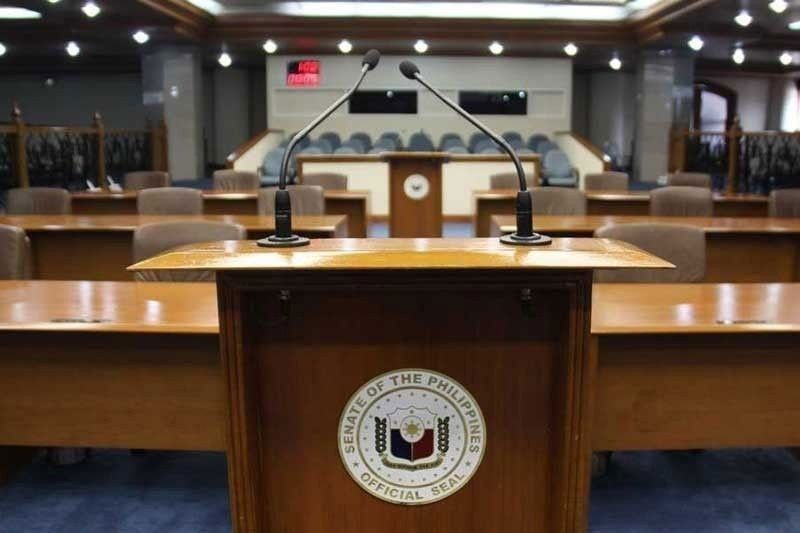
“The Senate is not a family business,” posted my friend R. on Facebook, and I found myself nodding at what sounded like the patently obvious truth, which somehow seems to still elude our family-oriented countrymen.

Among the loudest alarms raised by the forthcoming midterm election is the likelihood that, once again, Filipino voters will be choosing people with the same surnames to add to what has become, over the decades, a cozy nest of clans. 

It isn’t just the Senate, of course, which is infected with dynastisis. From Congress down to the Sangguniang Kabataan where fledgling politicos learn to tweet, our entire political system has been one big and long-running Family Feud. Husbands, wives, and their kids serve as senator, congressman, governor, mayor, and councilor with utter shamelessness, claiming a form of manifest destiny contestable only by another family.

It’s gotten so bad that—surprise, surprise—Sen. Robinhood Padilla, last accused of doing little on the job but preening his mustache, filed SB 2730 last July against political dynasties (already in our Constitution, but lacking an enabling law). Citing a Harvard study (which always seems to bear more weight than common sense), Padilla said that political dynasties “persist and reproduce their power over time, undermining the effectiveness of institutional reforms in the process.” 

More informatively, Padilla noted that “A dataset of Philippine local elections from 1988 to 2019 showed the number of governors with at least one relative in office (dynasty) increased by almost 39 percentage points, from 41% in 1988 to 80% in 2019. The dynasty proportion of vice governors rose from 18% in 1988 to 68% in 2019. The percentage of mayors in the dynasty increased gradually from 26% in 1988 to 53% in 2019…. Political dynasties, in effect, have exhausted resources to attain economic and political dominance while at the same time compromising political competition and undermining accountability…. It is time to break the barriers preventing the best and the brightest from serving the Filipino people.”

Tell that to the Philippine Senate which, because it has only 24 members, magnifies the prevalence and persistence of dynastisis even more. 

One of the ways the US Senate differs from ours is the way it’s composed, with two senators from each of the 50 US states, which, in their federal system, gives equal weight to giant Texas and tiny Vermont. That should make it highly unlikely for two related people to be in the Senate at the same time, right? Well, sort of. As it turns out, in US history, two pairs of brothers actually served in the Senate together. One pair I’m pretty sure you never heard of—Theodore and Dwight Foster, who simultaneously represented Rhode Island and Massachusetts at the start of the 1800s. The next pairing didn’t happen until more than 150 years later—with Edward and Robert Kennedy representing Massachusetts and New York in the 1960s. 

Our Senate puts America’s to shame in that department. 

It helps, of course, to be related to a President, or to prepare oneself to be one. By my count, there have been five Aquinos in the Senate—Ninoy, Butz, Tessie, Noynoy, and Bam; four Marcoses—Ferdinand, Imelda, Bongbong, and Imee; four Estradas—Joseph, Loi, JV, and Jinggoy; three Roxases—Manuel, Gerry, and Mar; three Osmeñas—Serging, John, and Serge; three Laurels—Jose, Sotero, and Doy; and two Magsaysays—Gene and Jun. “Cong Dadong” Macapagal never became a senator, but his daughter Gloria did. Fidel Ramos’ contribution to the Senate was his sister Letty.

To these presidential surnames we have to add those of other political families such as the Dioknos, Tañadas, Kalaws, Angaras, Guingonas, Antoninos, Rectos, Pimentels, Revillas, Villars, Cayetanos, and possibly Tulfos. The Cebu Osmeñas—John and Sergio, Jr.—once served together in the Seventh Congress in the early 1970s; the Cayetanos—Pia and Alan—followed suit in the Fourteenth, in the late 2000s, and the Villars—Cynthia and Mark—in the current Nineteenth. 

That’s not to say that some members of these political clans were not deserving or distinguished. Many certainly were—in the right hands, a family tradition of public service sets high standards and expectations. Never mind the ancient Fosters, but I don’t think America minded having Ted and Bobby Kennedy in the Senate, with Ted serving continuously for an astounding 47 years until he died.

They have no term limits in America. We imposed ours in the 1987 Constitution—a well-meaning gesture meant to democratize our legislature, but which backfired and produced exactly what it wanted to avoid. Our political families quickly learned to adjust and do a merry-go-round, ensuring further that one member or other would occupy all spots in the wheel. What developed over the years was less a revitalization of the institution with bright new talents than a pooling and coagulation of old blood. 

So rather than an anti-dynasty law which seems to have little chance of passing a House full of dynasties anyway, perhaps we should revisit term limits, so we can retain the services of truly outstanding senators (like Franklin Drilon, for example) for life, rather than punish ourselves by replacing them with inferior siblings and cousins. 

There are and have been high-performing senators whom we don’t and shouldn’t mind serving over and over again, politicians with genuine and critical advocacies they have devoted their lives to. Our political history has been fortunate to have seen the likes of such men and women as Senators Claro M. Recto, Jose Diokno, Lorenzo Tañada, Raul Manglapus, Emmanuel Pelaez, Helena Benitez, Eva Estrada Kalaw, Juan Flavier, Rene Saguisag, Miriam Defensor Santiago, and Edgardo Angara, just to speak of the departed.

Sadly our political realities preclude the truly poor from winning a Senate seat, and only extraordinary circumstances like EDSA can lift up capable and virtuous candidates of modest means such as Dr. Juan Flavier and Atty. Rene Saguisag to that exalted position. But their interests can be articulated and defended by men and women with the capacity and quality of mind and spirit to see beyond themselves. These are senators whom we expect to make laws that build a nation, rather than empower and enrich themselves and their progeny even further.

Qwertyman No. 129: The Punishment Theory

Qwertyman for Monday, January 20, 2025

LOS ANGELES is burning as we speak, with raging fires consuming an area larger than the whole of San Francisco—or, in our terms, about seven times the size of Makati. I’m sure you’ve been just as horrified—and, let’s admit it, mesmerized—by the TV coverage showing huge swaths of what used to be thriving California communities crumbling in flames. 

Particularly compelling for onlookers is the awareness that many of those homes belong to Hollywood’s elite—people with millions of followers on social media but who, in their moments of personal distress (as in their divorces and run-ins with the law), often find it difficult to generate genuine sympathy. Not necessarily meaning to be unkind, pedestrians like us like to see the mighty (or their houses) falling; misery is a great democratizer. Even as the mansions of the rich go up in smoke, our first urge is to think that (a) they can always afford to build a new one, followed by (b) they’re just being punished for something they did wrong.

Indeed the “punishment theory” for the Great LA Fire has gained a lot of traction in social media, both within and outside the US. In Middle Eastern media, the fire was quickly seen as divine retribution for America’s support to Israel’s destruction of Gaza. As one Qatari journalist wrote, “The American aid squandered by the occupation [i.e., by Israel] in its Gaza war amounted to about $60 billion. The damage caused by the recent US fires has reached about $150 billion. Trump said a few days ago that he will bring hell upon the region, yet hell has arrived in the heart of the US, with hundreds of thousands of Americans displaced and thousands of homes and mansions lost. I trust in the vengeance and in the victory of the One and Only Almighty God.”

Not at all, said others—the fire had nothing to do with Israel but with Los Angeles, indeed California, itself. Again invoking the Almighty, Christian evangelicals rushed to proclaim the disaster “God’s punishment” for liberal licentiousness and its adherence to the false religion of “wokeness.” For being the land of hippies, Democrats, legalized marijuana, and Hollywood, California was now being chastised by an angry God. (Don’t believe it? Check Genesis 19:24-25Amos 4:6-11—sayeth the FB and Reddit faithful. I myself suspect that if God was fair and a keen follower of American politics, he would’ve swept Mar-a-Lago away in a tsunami or a hurricane. But then I believe in an indifferent God who doesn’t take sides in wars or football games.)

Whatever, there seems to be a palpable compulsion here to go and punish the wicked, who have only themselves to blame for their calamities. Never mind that the fire has ravaged both Democrats and Republicans, blacks and whites, Christians and Muslims, Asians and Europeans, rich and poor. To those outside looking in, it’s the “other” whose tragedy we celebrate, with the innocents as collateral damage.

The word often trotted out in these situations is that old German standby, “Schadenfreude,” meaning the delight we take in the misfortunes of others. It’s all over social media when you read about the LA fires, almost to the point of gleefulness over a kind of divine justice befalling the deserving (most notably, that of a fellow named Keith Wasserman—an Elon Musk fan and Cybertruck owner who had railed against paying higher taxes, and was now begging for private firemen to save his home). 

Of course, there’s nothing like crisis to bring out both the best and the worst in people, from heroes to heels. Harder to read and more difficult to assess than these extremes is the slow and steady burn—rather than the raging inferno—in our societies.

All this talk of retribution leads me to an odd and totally unscientific theory about people. I wonder if, in fact, there’s a more proactive form of Schadenfreude that goes well beyond a smug snicker at the missteps of the perceived elite to an active courtship of their downfall.

I’m speaking not as a political scientist or sociologist, neither of which I am, but as a sometime playwright who likes to look into the darkest and strangest of human motivations. That’s normally the job of psychologists, for whom I have a healthy respect, but if psychologists could put all their patients together in a room and find a way to make sense of their nightlong chatter, then we playwrights and fictionists would be out of business.

Here’s how it goes: 

We get bad laws like the pork-laden GAA because we elect bad lawmakers. And we elect bad lawmakers because we fancy that voting for people we think we know (like entertainers and dynasts) makes us matter. With the vote being the only utterance left to the voiceless citizen, choosing the familiar becomes an act of assertion, of participation in national affairs. “He may be a lousy leader, but I put him there.” Call it the revenge of the bobotante, a term we Pinoys coined for supposedly ignorant or forgetful voters. My theory is, they’re more cunning and deliberate than we think.

Many MAGA voters didn’t so much vote for Trump the man as for the grievances they bore that he had the smarts to amplify and articulate. A convicted felon, habitual liar, bully, and egomaniac, Trump was after all the very antithesis of the righteous and virtuous leadership that evangelicals especially like to uphold (not that they don’t have their own crooks and pervs in their uppermost echelons). If they were true to themselves, even his most ardent supporters would have acknowledged—and looked past—his monstrously obvious character flaws.

They voted for him nonetheless, because—on top of the price of gas and groceries—he embraced and legitimized their consternation and disgust with a world gone far beyond their comfort zone, peopled by neighbors who don’t speak English, who have sex with the same pronouns, who kill their babies, and who run races against runners with different genitals (and go to their bathrooms). How could Donald J. Trump be worse than these? 

Today DJT takes his oath as America’s 47th, as Los Angeles continues to burn. I wonder who is being punished for what.

Qwertyman No. 128: Been There, Done That

Qwertyman for Monday, January 13, 2025

I WAS trying my best to sound sober and diplomatic in last week’s column about Donald Trump’s impending return to the presidency of the world’s most powerful country, the United States of America, due to happen next Monday. I was still vacationing with family in California then, and didn’t want to get into an argument with some Americans (and Fil-Ams) who would’ve sent me packing home the moment they heard me raising a stink about their Chosen One.

The fact is—whether out of deference to my liberalism or just because of fatigue—few people I spoke with, whether from the left or right, seemed eager to talk about Trump, and it’s something I fully understand, and even appreciate. You can only hear and make so much commentary, most or all of which, at day’s end, will amount to nothing, except for more bruised or broken friendships.

Typical was a friend’s reaction from San Francisco: “Shrinking my world in the next four years to just my family and like-minded friends. (Just text me when the war has started!)”

I remembered what it was like in 2022 when our presidential candidate—who seemed (and was) superior to the alternative on all counts except financial capability—lost, and how distraught and upset we were, convinced that, surely, massive fraud accounted for her defeat. Even then, I opined—unpopularly, for sure—that despite the ever-present likelihood as in all Philippine elections that some electoral sleight-of-hand had taken place, more Filipino voters preferred the winner for their own reasons, disinformation and all. 

We’ve been living with and under that winner for almost three years now—and, perhaps surprisingly, we’ve all survived so far; the sky hasn’t fallen—yet. I did say then, like many other observers, that BBM was facing a fork in the road: to continue down the path to perdition that his parents took, or to boldly go up the hill of redemption. “Redemption” might not necessarily mean a full-blown admission of guilt in exchange for forgiveness of sins, or even the restitution of ill-gotten wealth, although all of the above would have been ideal if well-nigh impossible. I think most of us would have been pleasantly surprised if he simply led an honest, just, and competent administration, which is what all of us have been praying for.

Almost halfway through his term, has any of that happened? Which path did BBM choose? Is it possible that he has been straddling both, or hopping from one to the other? Very interestingly, both in the US and here at home, I’ve been asked a lot of questions about BBM, and what I’ve told people is this: 

He’s made some very popular decisions, which has raised his acceptance if not approval among many; but he continues to run fast and loose with the way public money is used, seriously undermining whatever credibility he’s been building up. His positions on tokhang, China, and POGOs have generally gone over well (although criticisms persist that extrajudicial killings and political imprisonment have continued). Perhaps above all, he has politically profited immensely from his war with the Dutertes, deftly positioning himself as sober and presidential versus the theatrics and the crudity of the Dutertes, who have done themselves no favors. 

On the other hand, neither has the Marcos administration endeared itself to the people by brazenly abusing its fiscal authority with the problematic Maharlika Fund and its diversion of key departmental budgets into an election-year pork barrel for lawmakers. Just when you thought it had miraculously gotten its ethical notions right, the old wolf bares a greedy fang or two and reminds us that old habits die hard.

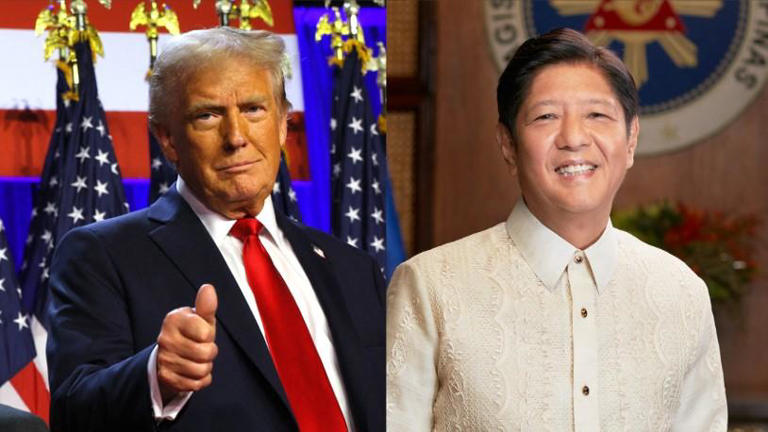
Which brings me back to America and its expectations of Trump 2.0. Unlike BBM who can at least claim a generation’s distance from his father, Donald Trump has only himself to be compared with, and anyone hoping to see a more sensible, more contemplative, and more compassionate Trump enter the White House after he won over the truly sensible, contemplative, and compassionate Kamala Harris is in for a rude reminder of the man America spat out in 2020. 

In the weeks before his second inauguration, the President-elect has already threatened to pressure Denmark into selling Greenland to the US, punish its closest neighbors Canada and Mexico with crippling tariffs, rename the Gulf of Mexico into the Gulf of America, and repossess the Panama Canal. As a Fil-Am friend of mine in Georgia says, “It’s like hiring a CEO to turn our ailing and cash-strapped business around, and on his first week he tells us his strategy is to buy three companies and rename our firm.” An old Turkish proverb puts it more colorfully: “When a clown moves into the palace, he doesn’t become a king. The palace becomes a circus.”

The lunacy of Trump’s ideas would be hilarious if he weren’t who he is, a man whose every fart is now taken as God’s own wisdom by his retinue of quaking sycophants. As a man incapable of accepting criticism and prone to doubling down on the certifiably wrong, President Trump will run his government as he is ruled by his ego, and for the sake of our relatives and friends in that country, we can only pray that America emerges whole and healthy enough in 2028 to find its way back to sanity and decency.

On Monday next, when the inmates officially take over the asylum in Washington, DC, we Pinoys will be watching with the smugness of people who’ve been there and done that. We have our own pot of troubles to worry about, our own idiots and idiocies to deal with—like our propensity to force people with the same surnames, grade-school diplomas, and missing morals to become Senators of the Republic. So help us God.

(Photo from msn.com)

Qwertyman No. 127: From St. Louis to San Diego

Qwertyman for Monday, January 6, 2025

I’M WRITING this on New Year’s Day in San Diego, California, where we’ve been visiting our married daughter Demi, who’s been living and working here for the past seventeen years. It was our first Christmas in America in ten years, and our second visit since the pandemic ended. 

Last night, just before midnight on New Year’s Eve, I watched a long and fascinating documentary on cable TV on the 1904 St. Louis World’s Fair, also known as the Louisiana Purchase Exposition, which ran from April to December that year. We Filipinos recall that event for its importation of over 1,000 of our countrymen to demonstrate what “savagery” meant—specifically, through the public butchering and eating of dogs. 

That bloody sideshow raised an outcry even then among both Filipinos and Americans, a pain we still feel more than 120 years after. Lost to many of us as a result of that diversion was the magnificence of the fair in many other respects, especially in terms of advances in science and technology. Many necessities and amenities we associate with the 20th century—electrical lighting, wireless telegraphy, the X-ray machine, baby incubators, and tabletop stoves, among others—were first shown to the public at the fair. 

But the fair, above all, was meant to showcase American ascendancy in politics and culture and in military and industrial might. America had just defeated Spain and had become a global maritime power, and was eager to flex its muscle, so this triumphalism underscored the great urge at St. Louis to introduce the world to America, and America to the world.

Just a few days earlier, we came out to San Diego’s famous waterfront to watch a parade to celebrate the Holiday Bowl, a football game scheduled for the Christmas break, with floats, balloons, marching bands, and military vehicles. It was a moment of pure Americana, brimming with Christmas cheer. I did my best to keep politics out of my mind for that golden hour, but of course it was never far away—especially in San Diego, a border city that could soon find itself caught in the mass-deportation drama promised by the incoming Trump administration, which takes office in less than three weeks.

This morning we woke up to the news of at least ten people being killed and dozens more injured on the street in New Orleans by an ISIS sympathizer plowing into a crowd of New Year revelers. That could very easily have been us at the parade, and again I had to wonder if—despite all the bad press the Philippines gets, with some reason—the US was truly a safer place, given its new realities of normalized and often racist violence. 

It doesn’t even take a bearded terrorist to wreak havoc in American life; as of December 17 last year, 488 mass shootings had been recorded in the US, so often that they’ve become a news staple eliciting just about as much outrage and action as another mugging at Central Park. Anti-Asian violence—to include both physical assaults and verbal or online abuse—has been on the rise, with Southeast Asians reporting the highest number of threats, despite polls showing most Americans believing that anti-Asian-American attitudes are on the wane, post-pandemic. 

That’s not going to deter the hundreds of thousands of Pinoys who, like us, still need or want to visit America each year—mostly as tourists who just want to see Disneyland, the Golden Gate Bridge, and the Empire State Building, aside from picking apples in Michigan, tasting wine in Napa Valley, and skiing in Colorado. The magic of an America we fantasized about—growing up watching Hollywood movies, listening to American songs, reading American books, and following American idols—remains powerfully attractive, enhanced by an image we retain of America as an innocent, benign, and giving place. This might be especially true of us Boomers who learned about snow and white Christmases long before we came across the real thing.

I doubt, of course, that our forebears who stood half-naked in their tribal garb for the delectation of the crowd in St. Louis saw anything so warm and fuzzy about America. Instead they saw curiosity, pity, and revulsion. American “innocence” was always a romantic illusion; America the Beautiful can turn on a dime to become America the Ugly.

When I put all these things together in my mind, I wonder if we 21st-century Filipinos identify more ourselves today with those “savages” on exhibit or with their onlookers, particularly those Pinoys who have crossed over to become Americans—in some cases, even “more American than the Americans,” as I’ve heard it said, proud of their assimilation into a mainstream moving farther than ever to the political right. 

As a teacher of American literature and society—who also studied, taught, and worked in the Midwestern heartland for many years—one thing I always remind my Filipino students is that there’s no such thing as a single, monolithic America, and that, whatever its current majorities might say, American society is diverse and ever more diversifying. To the American right, that’s the “great replacement theory” at work, the horrifying possibility that non-whites—the carnival freaks—are taking over the country, prompting the Trumpist turnaround from “diversity, equity, and inclusion” or DEI policies. To me, diversity offers both challenge and hope.

Out of respect for my hosts and friends here in San Diego—some of whom, for their own reasons, voted for Donald Trump—I’ve held my tongue for the time being, telling myself that it’s their country and their choice, although that choice will inevitably affect our lives halfway around the world. 

Among my liberal American friends, I sense an urge to disconnect at least temporarily from political reality and to go into passive resistance while they regroup. It’s a position that I can identify and sympathize with, as we sort out our options in the Philippines of 2025. We survived martial law; you’ll survive Donald Trump, I tell them. To survive may well be our best New Year’s resolution: against the aggravations and vexations of the world we’ve come into, survival is the best revenge.

Penman No. 470: A Collector’s Christmas

Penman for Sunday, January 5, 2025

MY WIFE Beng and I in San Diego, California for our first Christmas in the US in ten years, visiting our daughter Demi and her husband Jerry. San Diego’s one of those perennially pleasant places where the weather seems to be perfect almost all year round. You don’t come here for a white Christmas—although there’s snow up in the mountains not too far from town. It’s still sunny and warm enough in late December for people to be going around in T-shirts and shorts in the daytime, but for us Pinoys who love to freeze, sweaters and jackets are de rigueur.

We’ve been coming here for twenty years now, and while San Diego is chockfull of attractions—this is, after all, where Comic-Con happens every July (been there, done that twice) and where the waterfront boasts a flotilla of historic ships from a life-size Spanish galleon to the USS Midway—I have to admit that the collector in me loves San Diego for its antique malls, flea markets, and thrift shops, of which scores can be found in the city and its suburbs. I’ve found many a prize piece in these places—such as a working gold-plated 1930s Hamilton “Curvex” watch in a basket marked “Any item $5”—which, for me, beats walking into a boutique and plunking down your credit card to pay full price.

I guess I’m a cheapskate at heart, which is why everywhere Beng and I have gone around the world, flea markets and thrift shops—aside from museums—are at the top of our to-do list. The thrill is even less in the purchase itself than in finding something old, beautiful, potentially valuable—and at a bargain. 

Collectors everywhere know the feeling—that tingle in your bones and at your fingertips when you step into a shop and scan the territory, and notice something in the hazy distance that seems to look like your obscure object of desire. As a collector of vintage fountain pens, I naturally gravitate toward small tubular shapes in black, silver, or gold—which was how, last March, I spotted and bagged a gold “safety” French-made pen from the early 1900s, sitting all by its lonesome at a table at the Porte de Vanves flea market in Paris, a 40-euro find for something easily worth five times as much. 

Everyone has his or her strategy, but mine has always been to do a quick march down and around the street or aisle, just to see what’s out there and to catch obvious standouts, before taking a more leisurely and more probing walk back, peering into corners and at the details of particular pieces. It pays to come early—flea markets open as early as 5 am—and we’ve been lucky to bag early-bird bargains at cock’s crow in a barn in Ohio and the flea market at Covent Garden in London.

Unfortunately, flea markets of this sort have yet to become a regular feature of Filipino life, unless we count the Bangkal used-goods market in Makati and the plethora of Japan-surplus stores that have sprung up around the country. 

Fortunately, there’s a global flea market that’s accessible to nearly everyone and which doesn’t even require you to fly overseas and deal with visas, airfares, and airports. That market is eBay, which I like to call the great equalizer, since anyone with an Internet connection and a bank account can tap into the millions of items that eBay has online at any given second.

To my great wonderment and not a little horror, I realized as I was writing this that I’ve been on eBay for 27 years now, having signed up with the website just three months after it changed its name to eBay from Auction Web in September 1997. My first buy was a 1950s Pelikan 140 fountain pen from Germany, and since then I’ve made almost 2,000 purchases covering all my collecting passions, from pens, typewriters, and Apple computers to antiquarian books, paintings, and clothes. (Clothes? Yes! If you’re a rather large man like me who has difficulty finding his size in local stores, you’ll have lots more choices on eBay for less as long as you’re sure of your shirt, blazer, pants, shoe, and hat sizes.) 

Shipping each item to Manila directly from the US or the UK (another eBay paradise) will be too costly, so what I and other experienced collectors do is to open an account with a forwarder like ShippingCart or Johnny Air Cargo, which gives you a local address, wait until the items pile up, and then ship them in a box to Manila. (Check with each shipper’s website for their specific insurance and customs policies.) I generally get my goods within two weeks of shipping them out.

I began by mentioning that we were in San Diego because this ties in with another twist to the Pinoy collector’s and shopper’s strategy: if you know you’re going to be in the US and will be staying with a relative or friend, you can have your eBay or Amazon items shipped to that address over, say, the preceding month, and bring everything home with you in the second suitcase you’re entitled to, saving a ton on air freight costs. 

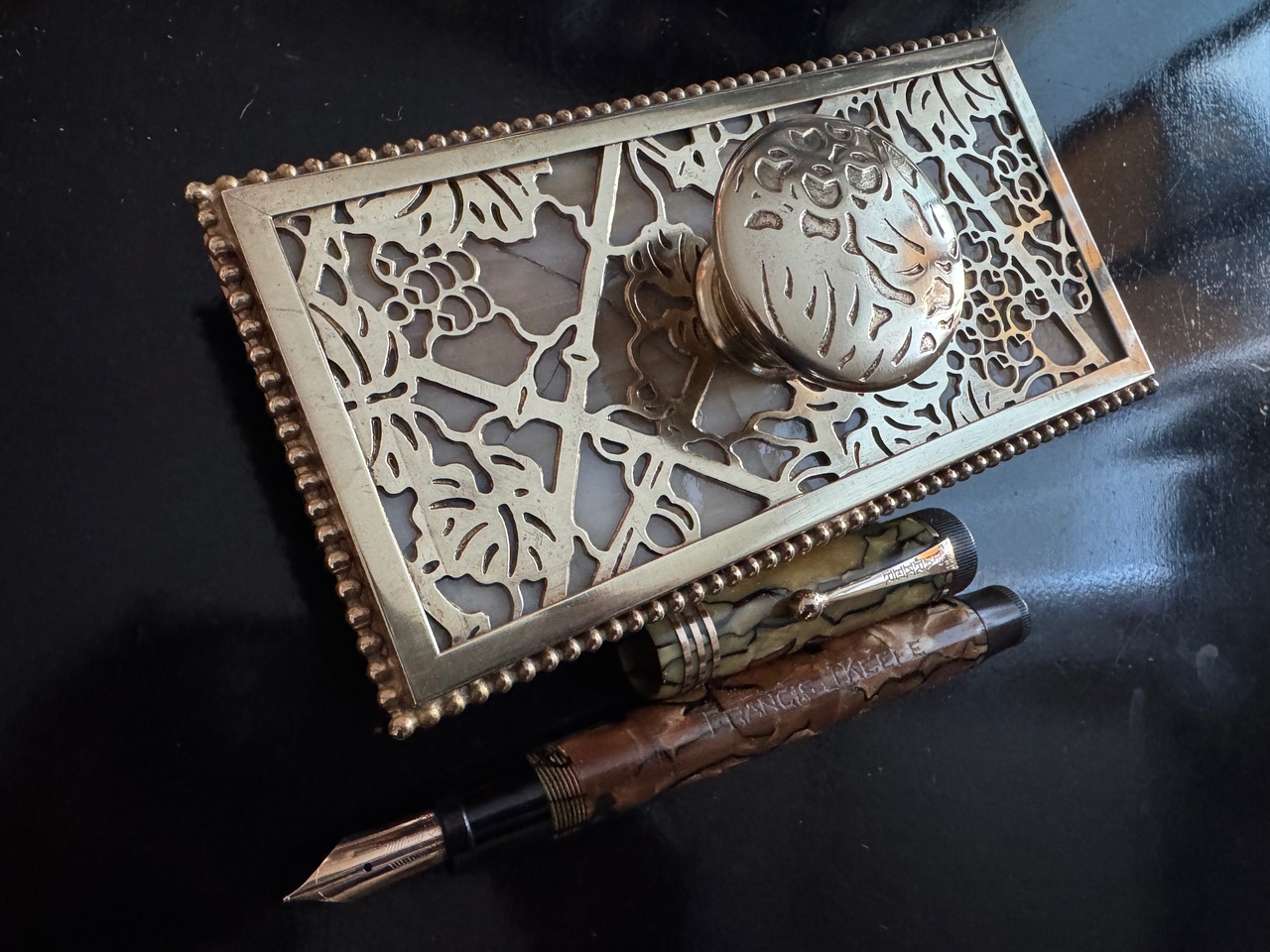
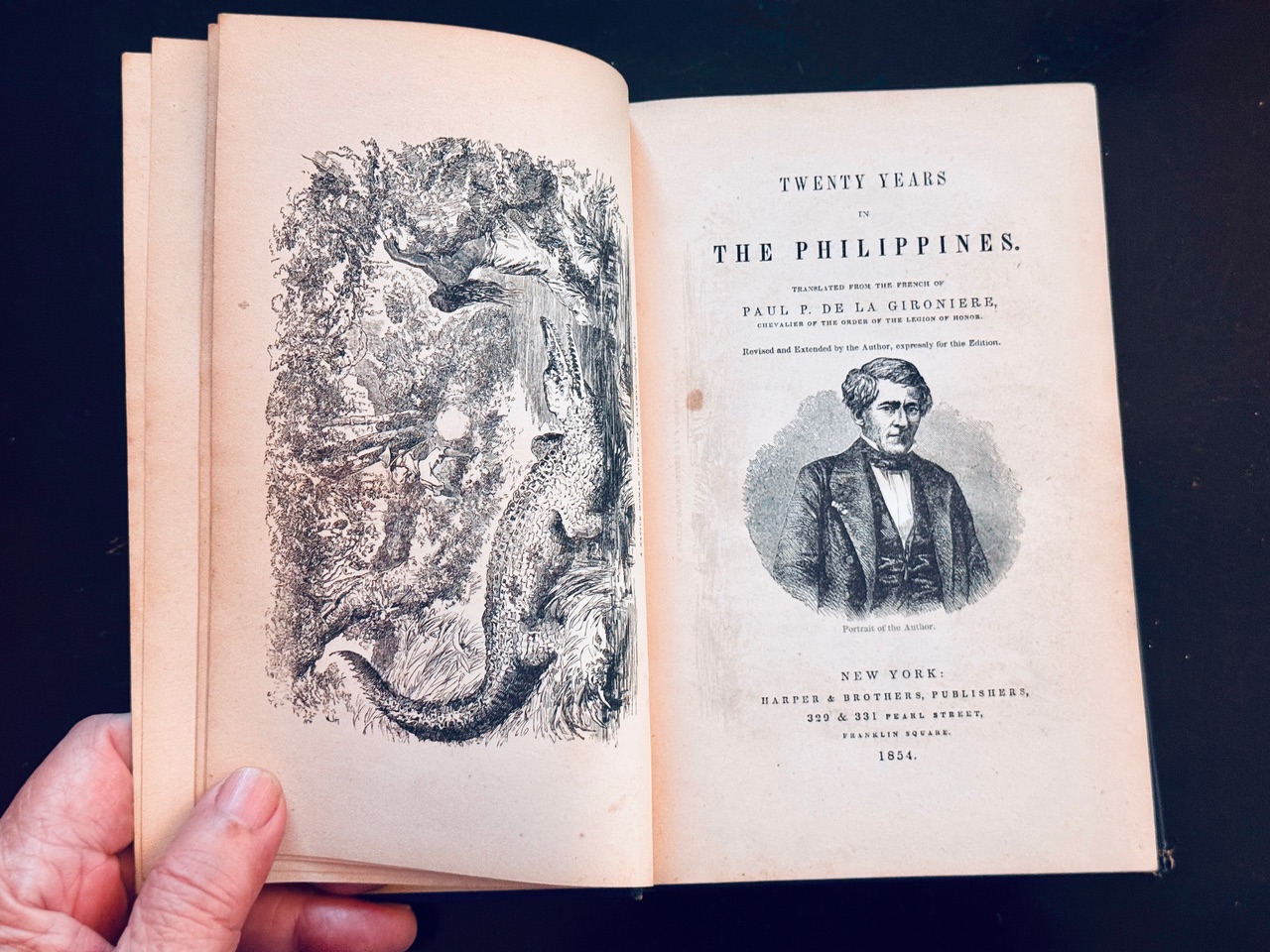
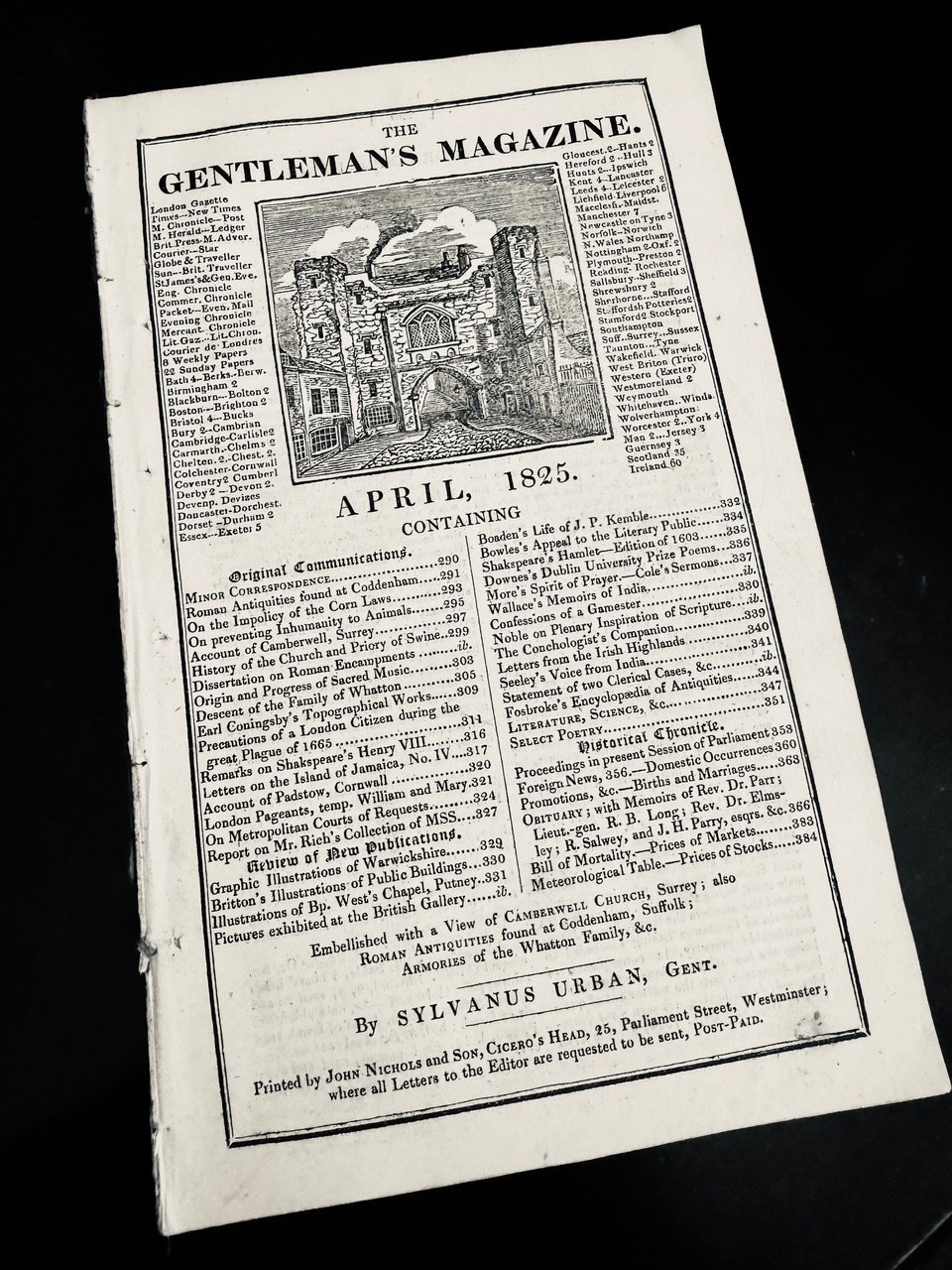
This time around, to give you an idea of what my Christmas loot has been, I’ll be filling up a suitcase (or more likely my carry-on) with some small things of little commercial value but of great interest to hopeless hoarders like me. They’ll include:

– A copy of The Gentleman’s Magazine from April 1825, in which an article predicts that “It appears that Spain is likely to lose her possessions in the Eastern, as well as the Western world” because of rebellions and crimes in the Philippines as well as at home, including “ravages committed (in Catalonia) by wolves within the last twelve or fifteen months…. The last was a young girl who, on the 18th instant, was almost entirely devoured by the wolves” (which, according to the monks, were “animated by the souls of defunct Constitutionalists”);

– A first American edition of Paul Proust de la Gironiere’s Twenty Years in the Philippine Islands, published in New York in 1854;

– A lovely Art Nouveau rocker ink blotter from around 1915, once used to mop up excess ink from fountain pens; and

– A Parker Duofold Senior fountain pen in pearl and black from around 1929, once owned by a “Francis J. Keefe” whose identity will be another mystery to explore.

If Christmas was this bountiful, I can only imagine what the New Year will be like.

Penman No. 469: Seniors and Their Stories

Penman for Sunday, December 8, 2024

I HAD the privilege of attending the private launch of a book in Makati recently, a book titled Bridges of Memory produced by a group of seniors who had each contributed their poems, stories, and essays to the collection. None of them was a professional writer; I gathered that they came from distinguished backgrounds in banking, law, public service, and other pursuits. 

Prior to publishing the book, they had been mentored by an accomplished and experienced writer, the San Francisco-based poet Oscar Peñaranda, who just happened to be an old friend of mine. Oscar was in the US when the launch took place, so he sent a congratulatory video. I was pleasantly surprised to learn that this was already the “Sunshine” group’s (so named because they meet at the Sunshine Place for seniors in Makati) second such book.

As you might expect, the book contains the authors’ musings on life, love, and loss, the funny with the sad, the joyful with the tragic. The styles and the quality of the writing predictably varied, but the enthusiasm was palpably even, with all the contributors present eager to share their work.

At that very same moment, way across town, another mass book launch was being held at a major university, where one of the featured books was a long and distinguished biography that had partly been edited by me. I had also been invited to that event, but chose to attend the Makati one despite the Christmas traffic, because I had the feeling that it would somehow be a more enjoyable occasion, at least for me, as it would put me in touch with writers of a gentler disposition.

Having been caught in a whirlwind of literary activities over the past two months—from the Frankfurt Book Fair to the Palanca Awards to the PEN Congress—you’d think that I’d shy away from a small book launch, but aside from the fact that some of the authords were friends, I wanted to show my support for this kind of more personal writing and publishing that we too often take for granted as self-indulgence.

I’d seen books like this before, the output of writing groups, barkadas, high-school chums, and fellow alumni. They’re often triggered by an impending milestone, like a 50th anniversary or a grand reunion and homecoming.

The professional crowd might think of such volumes as vanity projects published by people who could never put out their own books. But then that’s the whole point: one person’s vanity is another person’s self-empowerment, and such private publishing reclaims the right to self-expression from the academic and commercial gatekeepers. The works they contain may not win any literary prizes, but they are as honest and heartfelt as writing can get, and satisfy the most basic urge that impels all good writers: to use words to give shape to one’s thought and feeling, and to share those words with others so they might think and feel the same way. They’re written neither for fame nor fortune, but to leave some precious memories behind for a very specific audience—although some pieces may be of such merit as to be more widely appreciated.

I’ve always said, even in my own creative writing classes at the university, that I believe that every person has at least one good story in him or her—and that it’s my job as a teacher to bring that story out. And people know this, too—many of them are dying to tell their story, but don’t know where and how, and who will listen. That’s particularly true for digitally-challenged seniors, who don’t have access to blogging, and who use Facebook for little more than “Happy Birthday!”

I’m particularly taken by the fact that these books are produced by seniors, who are increasingly being left out of a social world ruled by schemes and products for young people. Even within families—let’s admit it—very few grandchildren now have the time nor the patience to listen to their elders’ stories, much less to ply them with questions; they’d rather scroll through their social media than ask what a typical summer vacation was like half a century ago, or what people did before there were cellphones, computers, and satellite TV.

Years ago, fearing we would lose her soon because of her illness, I’d asked my mother to write down her memoirs in notebooks which I still keep. As it happened, she recovered magnificently, miraculously, and is approaching 97, still strong and alert, albeit a little slow. She walks every day, plays games on her iPad, and navigates Netflix on her own. When she’s staying with us (we siblings share her company), Beng and I pepper her with questions about her childhood in their village in Romblon, where she rode a horse and scooped fish out of the plentiful sea. The youngest of a dozen children, she was the apple of her father’s eye, and the only girl he sent to Manila for high school and college at UP. They had a rice mill, and snakes roosted in the large straw bins that kept the unhusked rice. But the snakes were to be feared much less than the beautiful encantos that came down from Kalatong on fiestas and lured their victims to join them with offerings of black rice. How could you not like and want to retell stories like that?

Our seniors are a treasury of stories to be told. They just need to be asked, encouraged to write, and published.

(For your copy of Bridges of Memory, email marketing@sunshineplaceph.com.)