Qwertyman No. 169: Chatting with Apo Lakay

Qwertyman for Monday, October 27, 2025
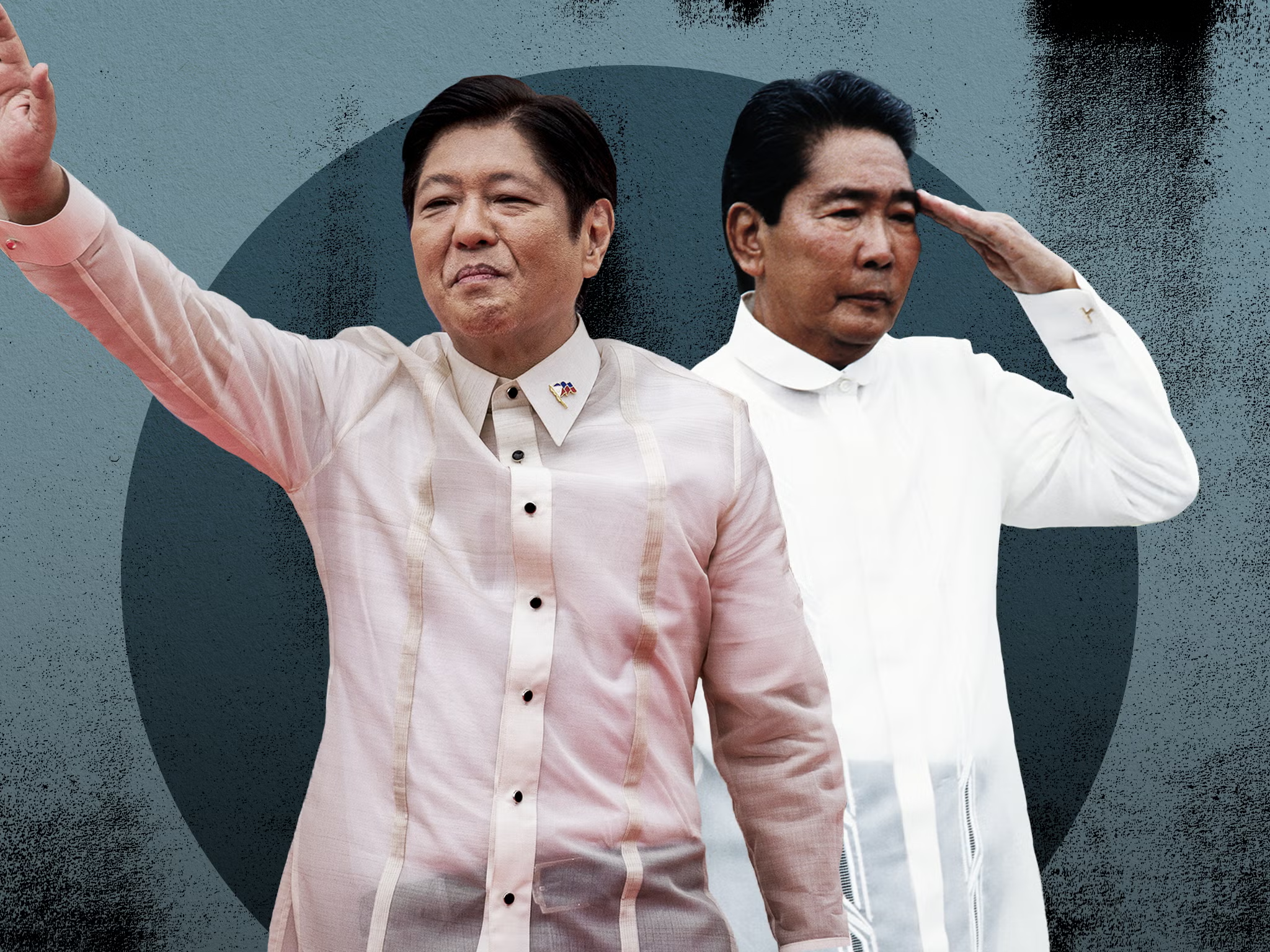
I’VE BEEN going out on a limb for the past few weeks, touting the possibility that President Bongbong Marcos—yes, the son of our martial-law dictator—might be considering doing the right thing and leaving behind his own legacy, one notably different from Apo Lakay’s. 

Comes now the news that his spokesperson Atty. Claire Castro—who can usually be counted on for ripostes that elevate the reasonableness of her boss—has been quoted as saying that BBM has been losing sleep conversing with his father (who, let’s not forget, passed on 36 years ago), presumably in search of some advice from the afterlife on contentious current events.

My first reaction was to wonder why their otherworldly tete-a-tete had to take so long, if father and son agreed on the same things. Could they possibly have been arguing? What about? Bank accounts? Sibling rivalry? Forks in the road? And if their encounters leave him sleepless, could BBM be that bothered by FM’s post-mortem perorations on statecraft and, well, craftiness?

This is where VP Sara Duterte enjoys the slight advantage, her father being at least alive and still capable of earthly conversation with Sara on such timely topics as “Your stepmother wants to sell the house in Davao” and “Now where did Pulong’s P51 billion in flood-control funds go?” The Hague may be almost 12,000 kilometers away from Manila, but flying there (on her own dime, she’s careful to insist) beats telepathy or telephony, and creates photo ops with the DDS faithful that nocturnal chit-chats with the departed can’t. (There’s a really nasty and cruel rumor going around, I have to note, that the VP actually wants PRRD to remain and rot away in the Netherlands until he expires—don’t ask me how—just before the May 2028 election, gifting her, like Cory Aquino did on Noynoy’s behalf in 2010, with a wave of sympathy votes. I don’t know if I should applaud or deplore the Pinoy’s political imagination, but there it is.)

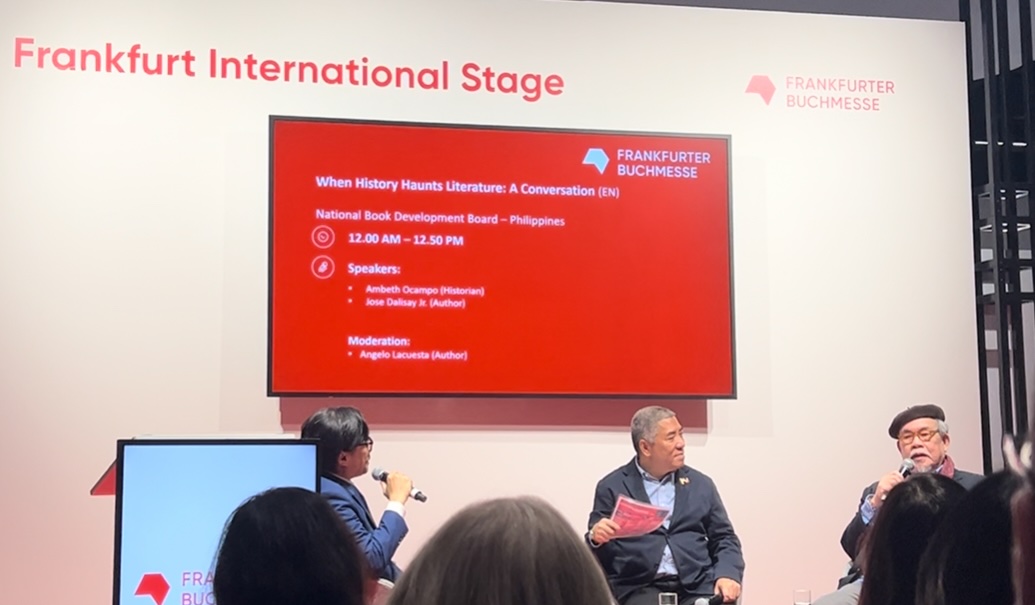
Here in Germany, where I’ve just attended the 77th Frankfurt Book Fair where the Philippines was this year’s Guest of Honor and therefore the exotic insect under the microscope, the one inevitable question raised in my many reading and speaking events was “What do you think of the current political situation in your country, and of the fact that another Marcos is now leading it?”

It’s a question I’ve thought about a lot, with or without Frankfurt, and you’ve seen some elements of my answer to it right here in Qwertyman. Pitching these ideas to a foreign audience is a bit more challenging because you don’t have the time to present and explain the details of the context, and you certainly don’t want to lie. 

I’m not the Philippine ambassador, I said to them, so I can and will be frank, but if I seem to equivocate then it’s because the situation isn’t as simple as it looks. Yes, BBM is the dictator’s son and yes, I went to prison as a teenager for seven months—many stayed in far longer—under martial law. Yes, I campaigned for his presidential opponent, Leni Robredo, whom I still believe would have made a better president—and yet could.

But very recently, I noted, PBBM has been making moves that have surprised many, for their effects if not their intentions. Whatever he was thinking at the time, his public disclosure of the bigtime contractors likely tied to multibillion-peso scams that some politicians aided and profited from has shaken the country to its core. The public outrage and demand for justice has been so loud and widespread that it has gone far beyond infrastructure into a searing re-examination of corruption in every aspect and at every level of our government and society.

I brought in the Duterte factor, the continuing threat from his own Vice President and former ally, for whom BBM’s surrender of her father to the International Criminal Court could only be unforgivable. The flood-control scandal and its connection with the Dutertistas was, therefore, a bomb set off by BBM for his own political and personal survival, but one with many unintended consequences and casualties, including some of Marcos’ own soldiers, and still possibly he himself, should the stain reach into the Palace as it has been threatening to (with gleeful encouragement from the DDS).

I don’t know how well the Germans understood or accepted my reading—heck, I’m sure many Filipinos don’t—but when you put over a hundred Filipino creative writers and journalists together for a week, some points of consensus are bound to emerge over the breakfasts and endless cups of coffee. Among them: (1) 2028 can’t come soon enough; (2) BBM should double down on the kind of confidence-building measures that will shore up the rest of his presidency, like pursuing the anti-corruption campaign to the fullest, no matter what; (3) only an alliance between idealist (but sufficiently grounded) moderates and BBM’s best people (not to forget his resources) can hope to stop a Duterte restoration.

I’d tell that to my dad, who died almost 30 years ago and who, to be honest and as close as we were, I haven’t seen much of in my dreams. But like BBM and his papa, we’d likely be up all night. Having passed away while the country was still in the capable hands of “Steady Eddie,” when it seemed that Ramos’ vision of “Philippines 2000” was going to deliver us into a new millennium of political stability and economic growth, Tatay would probably crawl right back into his grave were he to be given a day off to witness what we’ve done since.

(Image from The Independentˆ)

Qwertyman No. 168: A Vote at the Vatican

Qwertyman for Monday, October 20, 2025

iN GERMANY right now attending the 77th Frankfurter Buchmesse or Frankfurt Book Fair as a member of the Philippine delegation, I’ve been fortunate to engage in many interesting discussions with German journalists and fellow writers from all over. But one of the most important and frankly troubling conversations was one I had with a Filipino writer now based in Italy, someone with a deep knowledge and understanding of the political situation in his home country and particularly in Mindanao.

“There are two Philippine embassies in what most of us simply call Italy,” my source explained to me. “One is in Rome, and the other, called the Philippine embassy to the Holy See, is in Vatican City, which is a sovereign city-state. Most overseas Filipinos in Italy—over 100,000 of them, mostly domestic helpers and nurses—cast their votes for Philippine elections in our embassy in Rome. Those in the Vatican—priests, nuns, and other religious workers—vote there.”

“And so?”

“This is where it gets interesting. During the most recent midterm elections, where OFWs could vote for senator, there were 23 votes cast at the Vatican for Apollo Quiboloy.”

I had to let that sink in for a moment. “Wait a minute—you’re telling me that two dozen Catholic priests, nuns, and whoever at the Vatican voted for a disgraced and now imprisoned cult leader who calls himself the Appointed Son of God and New Owner of the Universe? Are you sure?”

“I couldn’t believe it myself,” he answered, “so I double-checked that with our embassy there, and they confirmed that it was true: Pastor Quiboloy got 23 votes in the Vatican. Now, I can try to understand if some Filipino Catholics would still vote for Duterte despite everything, but Quiboloy?” He shuddered. “That shows how far we have to go, and how we can’t assume that the Dutertes are spent as a political force.”

I had to laugh at his story, but it was laughter of the nervous kind, born out of irony than mirth. “Here we are in Frankfurt,” I said, “attending the world’s largest and oldest fair devoted to books and literature, to novels and fiction of the most imaginative variety, with many of us having a hard time selling our stories, and then comes along this Quiboloy tale that seems to show that people will believe the craziest things. This is fiction, popular fiction!”

You had to see the humor in the situation—I can easily imagine a cartoon depicting a soutaned priest receiving absolution from Quiboloy garbed in, well, shiny robes befitting a New Owner of the Universe—but its implications were anything but comic. It meant that presumably sane deeply spiritual men and women, living and working at the very heart of the Catholic faith that defined their lives, had found common cause with an accused sex trafficker and abuser of minors. Sure, the accusations remain just that until they’re proven, and sure, these Vatican voters were merely exercising their democratic rights. 

But really? Quiboloy? Might the pastor’s claim of bearing “the exact DNA of the Almighty Father and the New Jerusalem” and of being “the bodily manifestation of the unseen God” have resonated with them? Could they have been enticed by his devotion to “enthroning prosperity and abundance, and (being) a trustworthy steward of the Father’s financial business on earth”? 

Whatever the reason, it’s clear that the Pinoy’s political imagination is capacious enough to combine disparate perspectives and philosophies into one noggin. Pope Leo? Sure, obey. Senator Quiboloy? Sure, support. 

All throughout my talks here in Frankfurt, I’ve been asked who and what the modern Filipino is, and my best response has been to assert that the Filipino (and the Filipino nation) continues to be a work-in-progress, a compound of various historical and cultural influences contending for primacy. An example I conveniently cite is that of a New People’s Army cadre, presumably Marxist, who remains a practicing Christian and prays to Jesus, but who also begs the indulgence of resident spirits when he passes an anthill in the forest. We’re seguristas, investing in alternative fortunes. 

That’s not to say we don’t have people who think only one way and not the other—thankfully many if not most of us still stand on some kind of principle—but the exceptions make more interesting subjects of study. In this regard, Quiboloy’s Vatican voters may have been DDS who saw no contradiction between their Catholic faith and Dutertismo (something we’ve seen and continue to see among the religious, especially in Mindanao). 

I suddenly recalled an article published on Rappler in July 2020 by Fr. Amado Picardal, CSSR, who wondered aloud why so many of his colleagues, including a university president, openly rallied behind a man who cursed God and the Pope. He wrote: “In the religious community where I was living, most supported his candidacy, and I felt like a lonely voice warning them about the dire consequences…. One confrere proudly told me to my face that he was voting for Duterte, knowing my stance. A seminarian wore a Du30 bracelet. There were three confreres who posted their photos on Facebook doing a fist bump. A contemplative nun campaigned on Facebook for him and even made her pet dog wear a Du30 collar.” Fr. Amado offered some explanations: regionalism, the Left’s deluded belief in Duterte’s progressive pretensions, his strongman appeal. 

Given these, the Vatican result makes more sense, without offering any comfort to those of us who might have been under the illusion that proximity to the Vicar of Christ and Successor to the Prince of the Apostles induced enlightenment. Being the New Owner of the Universe apparently exerts more power, even from prison, and we should be afraid, be very afraid.

(Image from aleteia.org)

Qwertyman No. 167: Stranger Than Fiction

Qwertyman for Monday, October 13, 2025

IF SEN. Alan Peter Cayetano and his cohorts in the Senate minority wanted to rile the people even more, they couldn’t have done it better than by having Cayetano challenge Sen. Tito Sotto for the Senate presidency, at the same time that he was floating his supposedly heroic idea of having all elective officials resign because the public was fed up with them.

He had to know that that was exactly the kind of antic that made people throw up at the mention of certain names—a dubious pantheon of the corrupt, the bought, and the compromised. But he did it anyway, employing his imagination to yank public attention away from the burning issue of the hour—the massive flood control scam and its ties to many lawmakers—in the direction of Mars, and the possibility of honest (never mind intelligent) politicians inhabiting that planet.

Why he did that is anyone’s guess, but mine would be that anything to stop the momentum building up at the Blue Ribbon Committee under Sen. Ping Lacson was good for the minority, many of whom were increasingly being threatened by the exposure. If Cayetano had resigned first (and forthwith!) to provide proof positive of his noble intentions, the distraction would have been worth our time, but of course that was never part of the plan. 

The plot to unseat Sotto—brazen and shameless in its purpose—was more credible and worrisome. It fizzled out but remains potent, simmering just beneath the surface. Lacson’s resignation as BRC chair was probably a concession to forestall Sotto’s, but the situation in the Senate is so volatile that it can’t take much for the leadership to switch while we’re brushing our teeth. 

All we seem to be waiting for is that point of utter desperation when the beleaguered, fighting for their political lives and possibly even their personal freedom, ignore all considerations of decency and public sensitivity, weasel their way back into the majority, and deliver the Senate to its most famous watcher from the gallery: Vice President Sara Duterte, whose fate still hangs in the balance of an impeachment vote that has yet to happen.

That vote and its implications, let’s all remember, was what triggered all of this. Premised on rampant corruption within her office, her impeachment, had it passed the Senate, would have barred her from running for the presidency in 2028 (and, for PBBM, from the resurgent Dutertes wreaking retribution on their erstwhile allies). But this isn’t really just about Sara—it’s about all those other trapos who’ve cast their lot with her, whose fortunes depend on her absolution in the Senate and ascension to the Palace. 

Former Senate President Chiz Escudero, who dragged his and the Senate’s feet in that process, has now dropped all pretensions to impartiality, calling the impeachment “unconstitutional” in a speech that would only have pleased the Vice President, a title he himself might be auditioning for. He did his part well, with what many saw to be the ill-considered assistance of the Supreme Court, to freeze the impeachment complaint. 

And there that matter sat, until PBBM—whether unwittingly or presciently—(and here we’ll go fast and loose with the idioms) shook the tree, opened a can of worms, threw mud at the wall, and unleashed the kraken by exposing the trillion-peso infrastructure scandal now rocking the country. He might have done this to suggest a link between the alleged corruption in the VP’s office and even larger acts of plunder emanating from her father’s time in Malacañang, a deft political move. But reality overtook his imagination, and now the issue’s grown far beyond that into his own administration, his own responsibilities, his own accountability. 

That said, and however we may have felt about him, PBBM has done us all a service by drawing the curtain on the systemic rot in our society and governance, for which he, Sara, and their cohorts have all been culpable, directly or administratively. By doing so he rendered himself vulnerable as well, and the VP’s forces are now zeroing in on that vulnerability to deflect attention from their own predicament. 

Thus the barrage of “Marcos resign!” calls (as opposed to the Left’s “Marcos and Duterte resign!”), which has become shorthand for BBM out, Sara in. (It was on that key point that the rumored September 21 coup plot reportedly first stumbled, with the plotters balking at the alternative.) It also explains the slew of professionally produced reels on Facebook and other social media calling for the military to depose the President—ironically, something so openly seditious that Digong Duterte’s NTF-ELCAC would have instantly pounced on them, but which BBM and his crew seem to be shrugging off, at least for now. 

What tempts our imagination in this fraught situation—where public trust in our politicians and even in the courts is hitting critical lows, and where no clear and short path to change seems visible until 2028—is the possibility of military intervention, whether by martial law or on its own volition. I’ve been assured by friends who know better that this military of ours today is much more professional in its mindset than its predecessors, and that it will abide by the Constitution. I sincerely hope they’re right, because if there’s anything that all the parties in this mess can probably agree on, it’s that boots in the streets won’t bring us any closer to a functioning democracy. 

I’m reminded in this instance of one of my favorite literary quotations, from Mark Twain who said (in so many words) that “Of course fact is stranger than fiction. Fiction, after all, has to make sense.” If you had told me three years ago that we are now relying on a dictator’s son to save us from an even worse alternative, and in the process—if almost by accident—expose corruption so foul that we are back on EDSA demanding not regime change but the rule of law, I would have called you a lousy fictionist with a runaway imagination. Yet here we are.

Qwertyman No. 166: Though the Heavens Fall

Qwertyman for Monday, October 6, 2025

IT’S BEEN the rising refrain of some friends in media, academia, and the coffeeshop crowd—mostly somewhat to my left—to insist (and, I believe, arguably so) that there is nothing fundamentally different between BBM and Sara, between the families and factions of the ruling class they represent, and between their lust for power and money. Therefore, the correct call to the people in this situation, regardless of the consequences, can only be “Down with both of them! BBM and Sara, resign!” Those Latinate lawyers had a term for it: “fiat justitia, ruat caelum”—let justice be done, though the heavens may fall. 

For the plotters of a recently rumored coup, the heavens falling would have meant the replacement of both Marcos and Duterte with a 30-person junta that would include, as juntas go, retired military generals, civilian leaders, and a couple of clergymen. (What, no writers and artists? Thumbs down!) That plot was dead even before it got off the ground, and perhaps thankfully so—a 30-person junta already sounds worse than a 24-person Senate, and something in me resists the idea of having Catholic priests (or Protestant pastors, or Muslim imams, etc.) in any kind of executive capacity in government.

Yes, the people are marching in the streets and are in the mood for the public execution of their plunderers. Our trust and confidence in our leaders has been so badly abused and misplaced that we are now drowning in cynicism and disbelief, certain only in the fact that we are being stolen from by someone, somewhere, somehow.

Nevertheless I sense no great appetite for a revolutionary regime change that will only unsettle things even more. If anything, what we want is certainty and predictability—that the law will be applied and take its course, that the wrongdoers will be identified, prosecuted, and punished, and that proper and ample restitution will be made for their crimes, so that we can all move along as a reasonably functioning society. 

Not to say that everything will be just peachy once the robber-contractors and their patrons are exposed and put in chains, but that the alert will have been sounded, the people awakened, and the bar raised much higher for aspirants to public office in 2028 and beyond. The progressives and middle forces couldn’t have been handed a greater gift: corruption has to be the top election issue, because it affects the poor more visibly now than any other, especially those who can’t escape the floodwaters while their congressman jets off to France.

It’s a problem and a crisis big enough for another EDSA (not to mention all the coup attempts that followed EDSA), but the first EDSA taught us that a sudden change of people at the top, no matter how good the replacements are, doesn’t guarantee deep and lasting change; it merely opens the door for a new set of crooks to come in, and for some old ones to return. EDSA 1 wasn’t a waste; aside from the relief it brought, it was a lesson we needed badly to learn. But have we?

Until our electorate learns to recognize and to vote for its own best interests, no amount of EDSAs short of the bloody revolution and the mass guillotining we’re all trying to avoid will change the composition of the Congress, the Senate, and the executives they work with. The current crisis is the best and also the most painful teaching point to have come along to show Filipinos who and what exactly they’ve been voting for, and who’s been paying for all those dole-outs come Election Day—no other than themselves, from the money that should have been spent on keeping them alive and well. Vote for the corrupt, and you kill yourself and your family. You are being bribed today to be stolen from tomorrow.

The challenge now is to get that message through, make it stick, and not allow it to be muddled by clever counter-propaganda and by possibly well-meant but adventurous calls for regime change. 

Coup or resignation, neither nor both of these will happen. The coup was stillborn and could have led to worse. If the Marcoses and Dutertes are as thick-skinned as their critics make them out to be, then they will brazen it out, ruat caelum

The way forward can be lit up by the facts that will emerge out of the many parallel investigations now taking place into the infrastructure scam and wheresoever it may lead—not just at the Independent Commission on Infrastructure, but also in the even more independent media.

The enemies of the truth know how easy it is not just to distort the truth, but to destroy the truth-sayers. They did it to Leila de Lima with the sordid expose of a private relationship that, even if it were true, was her own business. They put NBN-ZTE whistleblower Jun Lozada behind bars.

Unlike many others, I am willing to let the albeit imperfectly constituted ICI do its work—but quickly and transparently, please—and to judge it by its results. We can expect that no one facing the ICI will come clean with the truth, the whole truth, and nothing but the truth. We will be dealing instead with a complex puzzle, putting it together piece by irregular piece until the broad and inescapable picture of systemic corruption emerges, with every part and element detailed—from delivery boys and drivers to district engineers to Cabinet-level officials to congressmen, senators, and ultimately to the highest offices of the land. 

The Vice President is already involved—it was the corruption in her office, after all, that led to her impeachment in Congress. Inevitably this circuit of corruption will come around to the Office of the President and to its signing power over whatever budget proposal it receives and presumably reviews; the only question will be that of BBM’s personal culpability and what of it, if any, can be proven.

That could yet be the ultimate test of BBM himself, of our democracy, and of whether, after all’s been said and done, it may time for another regime change outside of the ballot box; fiat justitia, ruat caelum.

Penman No. 478: Best Foot Forward in Frankfurt

Penman for Sunday, October 5, 2025

ON MONDAY next week, several hundred Filipino writers, publishers, artists, journalists and other workers in the book trade will be flying off to Germany for the Frankfurter Buchmesse (FBM), better known as the Frankfurt Book Fair, running this year until October 19.

Led mainly by the National Book Development Board (NBDB) and the National Commission for Culture and the Arts (NCCA), it will probably be the largest cultural mission ever sent out by the country to an international event—the equivalent of an Olympic delegation—and for good reason. This year, the Philippines is the FBM’s Guest of Honor (GOH), an annual distinction designed to draw attention to that particular country’s literature and culture, chiefly through its books. 

As GOH, the Philippines will have its own pavilion of curated exhibits highlighting our literary history and production, as well as the diversity of our works from historical novels and crime fiction to children’s stories and comic books.

Going back over 500 years, the Frankfurt book fair is the world’s largest gathering of publishers, authors, and booksellers, drawing thousands of attendees from all over the world to what is essentially a marketplace for publishing and translation rights. For countries like the Philippines, far away from the global publishing centers in New York and London, it is a matchless opportunity to showcase the best of one’s work. 

Looming largely over our GOH presence will be the work and legacy of Jose Rizal, whose deep personal ties to Germany—where he studied ophthalmology and completed Noli Me Tangere—continue to inform our relationship with that country. Indeed, our GOH slogan—“The imagination peoples the air”—is drawn from Rizal’s Fili, turning Sisa’s frantic search for her missing sons into a metaphor for the power of words to create moving realities.

There are hundreds of events on the Philippines’ official FBM schedule, both onsite and off-site. They range from panel discussions on “Our National Literature: Filipino Spirit and Imagination” with Merlie Alunan and Kristian Cordero, “Women’s Fiction from the Global South” with Cecilia Manguerra Brainard, Jessica Zafra, and Ayu Utami, and “Dismantling Imperial Narratives” with Filomeno Aguilar Jr., Lisandro Claudio, and Patricia May Jurilla to performances by National Artist for Music Ramon Santos and the Philippine Madrigal Singers, a demonstration of Baybayin by Howie Severino, and a book launch of the German editions of the Noli and Fili with historian Ambeth Ocampo. (For the full program, see https://philippinesfrankfurt2025.com/events/)

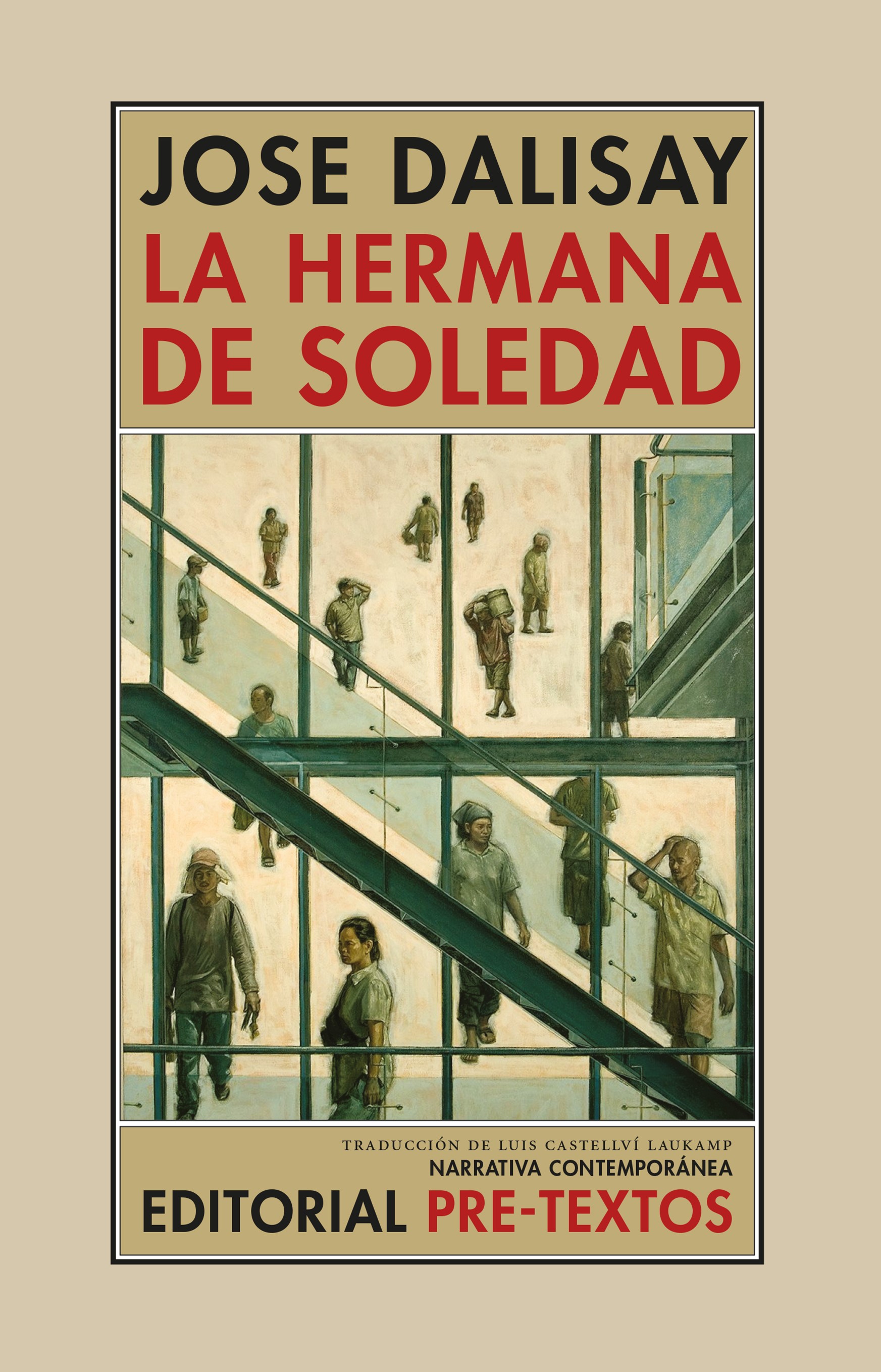
I have eight events on my personal calendar, ranging from the launch of the Spanish edition of my novel Soledad’s Sister to readings at the Union International Club and Bad Bergleburg, so it’s going to be a hectic time for this septuagenarian. This will be my third and likely my last sortie into the FBM, and I know how punishing those long walks down the hangar-sized halls can get. 

Practically all aspects of Philippine art and culture will be on display in Frankfurt, going well beyond books and literature into theater, film, music, dance, food, and fashion. In short, we will be putting our best foot forward on this global stage, although there will be no papering-over of our political and social fractures and crises. (Journalists Maria Ressa and Patricia Evangelista will be there to make sure of that.)

As with any large-scale national enterprise, our GOH effort has not been without controversy. A campaign by cultural activists to boycott the FBM—premised on Germany’s and the book fair’s perceived support for Israel in its genocidal war on Gaza—took off earlier this year and gained some traction, leading to the withdrawal of some authors from the delegation. There was spirited and largely respectful debate over this issue, but it was clear to both sides from the outset that a complete disengagement from the FBM—for which we had planned for many years running—was not going to happen. (I argued, like many others, for our critical participation, minding Gaza as one of the foremost issues facing humanity today. Not incidentally, on the Philippine program is a panel on “Writing Through the Wounds: Filipino and Palestinian Literatures in Relational Solidarity” with Nikki Carsi Cruz, Dorian Merina, Tarik Hamdan, Atef Abu Saif, and Genevieve Asenjo, among other initiatives in support of Palestinian freedom.)

Another criticism raised was the cost of our GOH participation—an effort bannered and sustained by Sen. Loren Legarda, the chief and most consistent supporter of the arts and culture in the Senate. Why not just pour all that money, some have said, into publishing and printing more books for Filipinos? There’s no argument that Philippine education needs more support (the trillion-peso infrastructure scam tells us the money was always there) but the targeted exposure that the GOH opportunity provides comes once in a lifetime, and Sen. Legarda wasn’t about to let it pass. 

As she noted in recent remarks, “When I first envisioned the Philippines as the Guest of Honor at the Frankfurter Buchmesse, some felt that it was far too ambitious, that we were too diverse and too complex for the world’s largest book fair to embrace. But I believed then, as I believe now, that our diversity is our greatest advantage, a gift and never a hurdle.

“The Philippines is more than an archipelago of 7,641 islands. It is a vast constellation of ideas and innovation, of ingenuity and distinct cultures and traditions joined together by the tides of hope and resilience. The 135 languages identified and described by the Komisyon sa Wikang Filipino turn into the voices and stories of Filipinos resonating around the world, reaching across cultures, transcending borders, challenging assumptions, and expanding the boundaries of human empathy.”

Let those voices and stories fill the air in Frankfurt, and spread around the planet.