Qwertyman No. 208: Now and Forever

Qwertyman for Monday, July 27, 2026
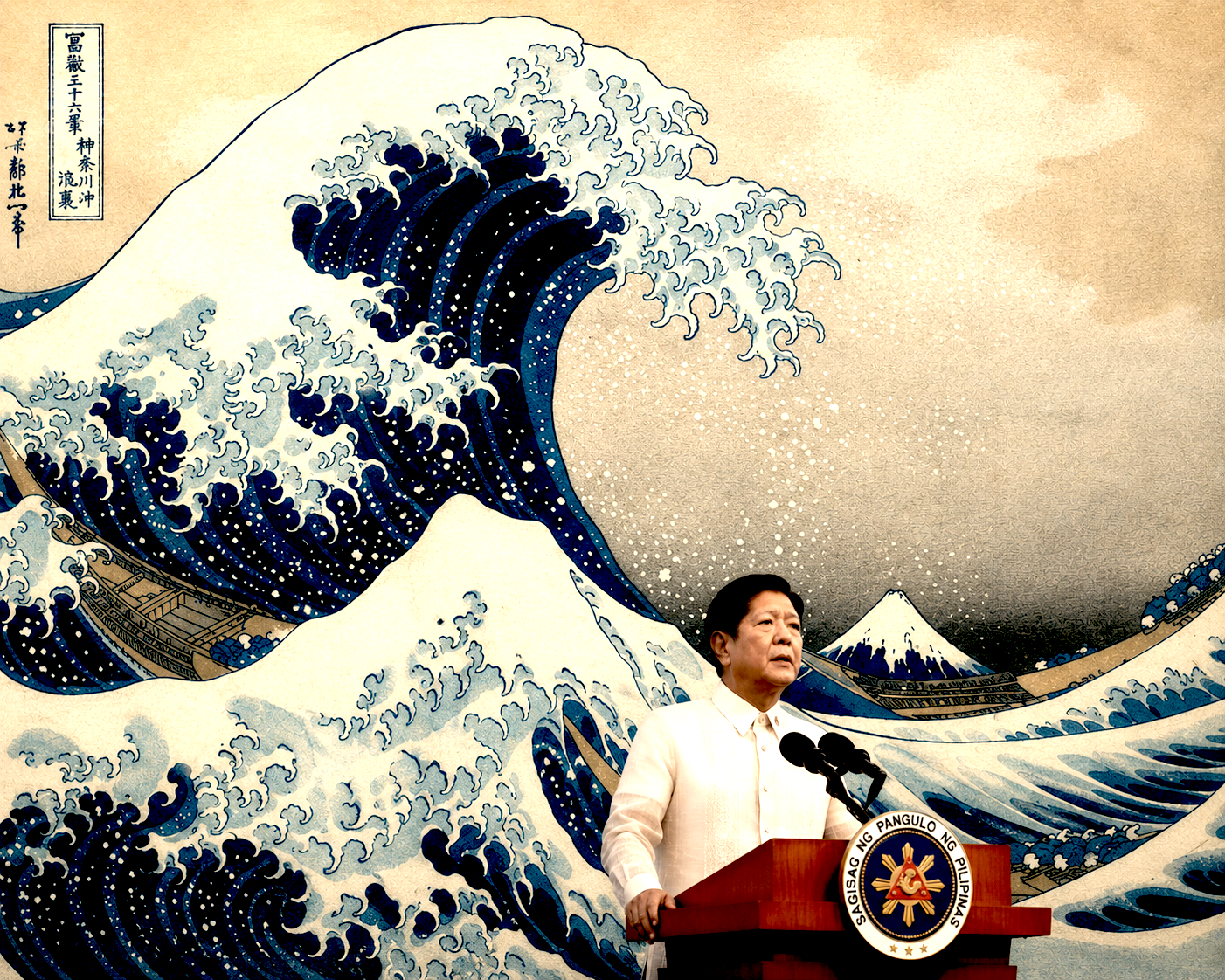
 

LATER TODAY, President Ferdinand Marcos Jr. will be delivering his fifth—and second-to-the-last—State of the Nation Address (SONA). In anticipation of that event, I got invitations from several media networks last week to talk about how SONAs get made, and what I expected BBM to say today.

The invitations were likely prompted by someone’s discovery that I used to be a presidential speechwriter—a title that sounds grander than the job itself, which of course is a privilege in some respects (and presuming your principal isn’t a crook, perhaps more honored in the breach) but also in others a crushing chore.

As I must’ve noted in this corner at some point, in a past life, I wrote or drafted speeches for five presidents since my early twenties—for Marcos Sr., Cory Aquino, Fidel V. Ramos, Joseph Estrada, and Gloria Macapagal-Arroyo—but it was FVR whom I served the longest, and frankly with the greatest satisfaction.

I wrote more than 600 speeches for him as part of a small crew of speechwriters that worked quietly off-site—the so-called West Avenue outfit headed by the late Johnny Gatbonton, my model and mentor in the craft. We operated all those years far from Malacañang—a deliberate choice, to isolate and insulate ourselves from Palace intrigue.

We produced tons of material on demand—there were days when I would write four speeches for occasions as diverse as a bridge inauguration, the Famas awards, a peace agreement signing, and a vin d’honneur, with little to go on—not even Google in those pre-Internet days—but my own wits. And yes, my training as a writer of fiction surely helped, along with a diploma in Development Economics that I picked up along the way. We learned quickly, and we delivered. (I never met FVR as a client when I was writing for him, although ironically, as I’ve related before, he was the guest speaker at the TOYM and Palanca awards when I was an awardee—and yes, bizarrely, I got assigned to write his speeches for those events. I never introduced myself to him as his speechwriter until we met again for a book interview shortly before he died. We had a good laugh then.)

The year’s biggest job, of course, was the SONA. Like I told my interviewers, at least in my experience, no single writer writes the SONA. It takes a bureaucratic barangay to produce one, which probably explains the chop-suey character of certain SONAs you’ve heard. Normally, presidential speeches are produced by the Presidential Management Staff, and the executive departments submit their list of accomplishments to the PMS for consolidation and construction into a SONA. (Under FVR, these inputs ended up with us, although of course the President literally always had the last word.) The President—or his or her chief advisers—might come up with a central theme or slogan, around which the rest of the address could be organized. In 1993, for example, it was “a level playing field” for FVR; ten years later, GMA trumpeted her “strong republic.”

My own sense of a good or ideal SONA is one that’s focused, clear, easy to understand, sincere, and above all hopeful and inspiring. It’s a tall order amidst uncertainty and despair, but it’s precisely when times are bad that people need to hear a message of hope—one they can believe in or at least hold the President to, despite their doubts and misgivings. But that’s just me, as a writer looking for stylistic coherence and a Churchillian sort of impact and memorability, rather than a laundry list of X number of bridges built and Y number of tourists brought in. Leave that to a technical appendix.

The fact is that SONAs are constitutionally mandated documents, a report of an administration’s accomplishments provided as a matter of public accountability. It began in America with George Washington and now continues as the State of the Union (SOTU). For over a century from Jefferson onward, the SOTU became just a written report submitted to Congress; Woodrow Wilson revived it as a speech, thinking that a president had to be seen and heard by the people. We Filipinos took up the practice—and also constitutionalized it—in 1935, with President Quezon focusing presciently on national defense. (Interestingly, he spoke before a unicameral assembly—no senators to complicate life then for a brief interlude.)

It used to be that no one seemed really that interested in SONAs. Even on January 26, 1970, when as a sixteener I marched with thousands of other students outside the Legislative Building to protest Ferdinand Marcos’ SONA and thereby unwittingly helped trigger the tumultuous First Quarter Storm, we neither knew nor cared what FM was saying inside. Today people watch SONAs for the fashion show and for the inevitable mayhem outside the Batasan.

But last year, BBM dropped a bomb at the SONA that I suspect even he didn’t realize was going to be that big. His “Mahiya naman kayo!” broadside against corruption set off a further and indeed continuing series of explosions, all the way to the impeachment trial of VP Sara Duterte, as well as a Kanagawa-sized wave of expectations that now hovers over the last two years of his administration.

So what will or should BBM talk about this afternoon? My short list:

1. An acknowledgment of the economic crisis our people are suffering, and an announcement of meaningful measures to bring some relief. Talk about horrendous power bills, jeepney drivers pulling 16-hour days, seniors collapsing at ayuda lines: this is reality for most Filipinos today.

           2. An update on his professed campaign against corruption; what next after the ill-conceived and underpowered Independent Commission on Infrastructure? Corruption bridges economics and politics, with public money being used by and for political power. I doubt that BBM will directly address Sara’s impeachment—best for him to stay above it and let the prosecution do its job—but it remains a corruption and accountability issue, and should be taken in that context.

            3. A resolve to pursue these priorities over his last two years. He won’t and can’t use the word “redemption”—a mountain of skepticism still stands in his way there—but I’m sure he’s aware that people are watching what he’ll do next. In the end, it won’t be speeches but deeds that will make the difference—but as he learned last year, a few words can make big things happen. If I were the President—which every presidential speechwriter has to fearlessly assume for a few hours—the best way to think of the next two years is to think of forever.


              Qwertyman No. 169: Chatting with Apo Lakay

              Qwertyman for Monday, October 27, 2025

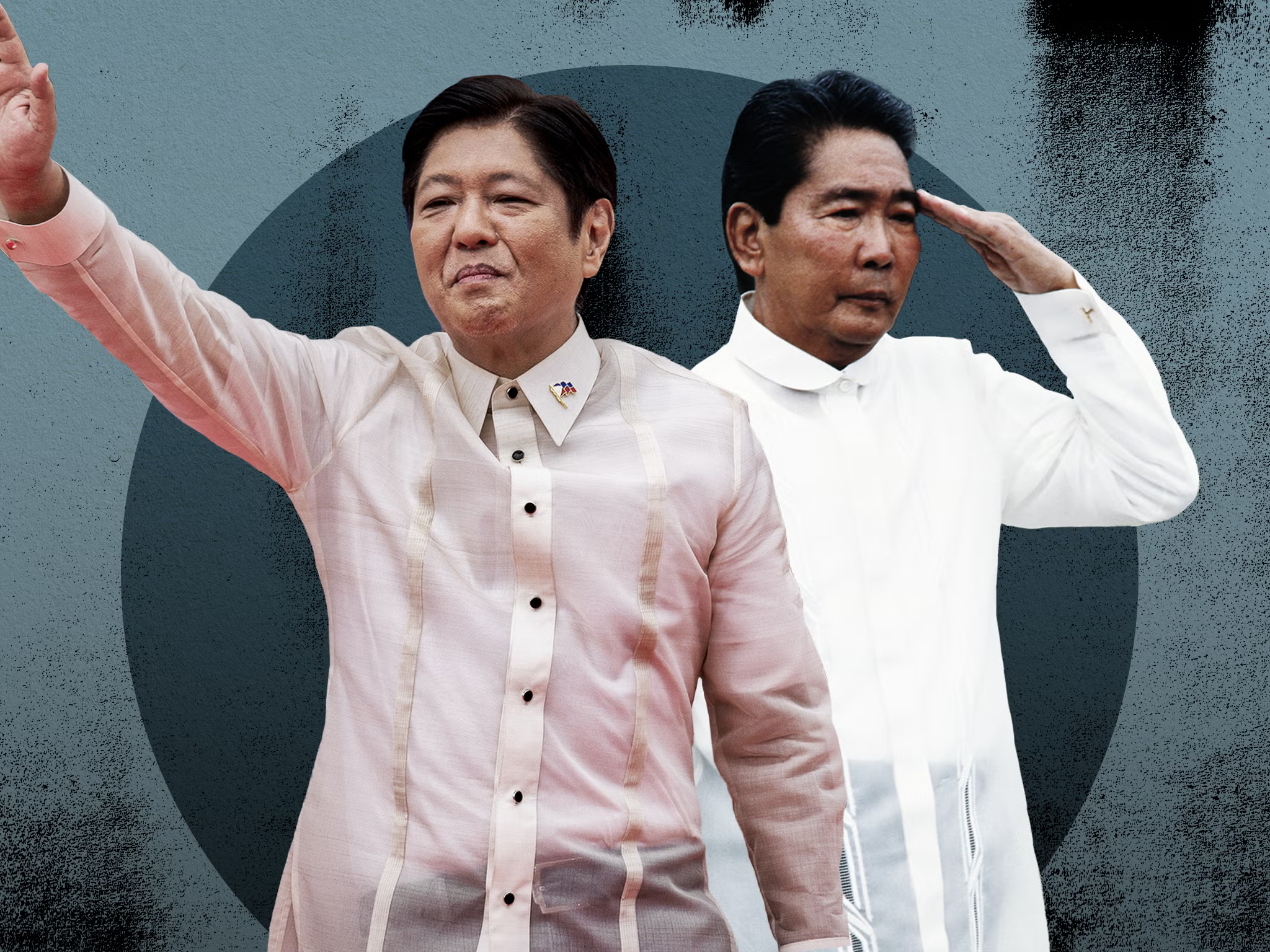
              I’VE BEEN going out on a limb for the past few weeks, touting the possibility that President Bongbong Marcos—yes, the son of our martial-law dictator—might be considering doing the right thing and leaving behind his own legacy, one notably different from Apo Lakay’s. 

              Comes now the news that his spokesperson Atty. Claire Castro—who can usually be counted on for ripostes that elevate the reasonableness of her boss—has been quoted as saying that BBM has been losing sleep conversing with his father (who, let’s not forget, passed on 36 years ago), presumably in search of some advice from the afterlife on contentious current events.

              My first reaction was to wonder why their otherworldly tete-a-tete had to take so long, if father and son agreed on the same things. Could they possibly have been arguing? What about? Bank accounts? Sibling rivalry? Forks in the road? And if their encounters leave him sleepless, could BBM be that bothered by FM’s post-mortem perorations on statecraft and, well, craftiness?

              This is where VP Sara Duterte enjoys the slight advantage, her father being at least alive and still capable of earthly conversation with Sara on such timely topics as “Your stepmother wants to sell the house in Davao” and “Now where did Pulong’s P51 billion in flood-control funds go?” The Hague may be almost 12,000 kilometers away from Manila, but flying there (on her own dime, she’s careful to insist) beats telepathy or telephony, and creates photo ops with the DDS faithful that nocturnal chit-chats with the departed can’t. (There’s a really nasty and cruel rumor going around, I have to note, that the VP actually wants PRRD to remain and rot away in the Netherlands until he expires—don’t ask me how—just before the May 2028 election, gifting her, like Cory Aquino did on Noynoy’s behalf in 2010, with a wave of sympathy votes. I don’t know if I should applaud or deplore the Pinoy’s political imagination, but there it is.)

              Here in Germany, where I’ve just attended the 77th Frankfurt Book Fair where the Philippines was this year’s Guest of Honor and therefore the exotic insect under the microscope, the one inevitable question raised in my many reading and speaking events was “What do you think of the current political situation in your country, and of the fact that another Marcos is now leading it?”

              It’s a question I’ve thought about a lot, with or without Frankfurt, and you’ve seen some elements of my answer to it right here in Qwertyman. Pitching these ideas to a foreign audience is a bit more challenging because you don’t have the time to present and explain the details of the context, and you certainly don’t want to lie. 

              I’m not the Philippine ambassador, I said to them, so I can and will be frank, but if I seem to equivocate then it’s because the situation isn’t as simple as it looks. Yes, BBM is the dictator’s son and yes, I went to prison as a teenager for seven months—many stayed in far longer—under martial law. Yes, I campaigned for his presidential opponent, Leni Robredo, whom I still believe would have made a better president—and yet could.

              But very recently, I noted, PBBM has been making moves that have surprised many, for their effects if not their intentions. Whatever he was thinking at the time, his public disclosure of the bigtime contractors likely tied to multibillion-peso scams that some politicians aided and profited from has shaken the country to its core. The public outrage and demand for justice has been so loud and widespread that it has gone far beyond infrastructure into a searing re-examination of corruption in every aspect and at every level of our government and society.

              I brought in the Duterte factor, the continuing threat from his own Vice President and former ally, for whom BBM’s surrender of her father to the International Criminal Court could only be unforgivable. The flood-control scandal and its connection with the Dutertistas was, therefore, a bomb set off by BBM for his own political and personal survival, but one with many unintended consequences and casualties, including some of Marcos’ own soldiers, and still possibly he himself, should the stain reach into the Palace as it has been threatening to (with gleeful encouragement from the DDS).

              I don’t know how well the Germans understood or accepted my reading—heck, I’m sure many Filipinos don’t—but when you put over a hundred Filipino creative writers and journalists together for a week, some points of consensus are bound to emerge over the breakfasts and endless cups of coffee. Among them: (1) 2028 can’t come soon enough; (2) BBM should double down on the kind of confidence-building measures that will shore up the rest of his presidency, like pursuing the anti-corruption campaign to the fullest, no matter what; (3) only an alliance between idealist (but sufficiently grounded) moderates and BBM’s best people (not to forget his resources) can hope to stop a Duterte restoration.

              I’d tell that to my dad, who died almost 30 years ago and who, to be honest and as close as we were, I haven’t seen much of in my dreams. But like BBM and his papa, we’d likely be up all night. Having passed away while the country was still in the capable hands of “Steady Eddie,” when it seemed that Ramos’ vision of “Philippines 2000” was going to deliver us into a new millennium of political stability and economic growth, Tatay would probably crawl right back into his grave were he to be given a day off to witness what we’ve done since.

              (Image from The Independentˆ)

              Penman No. 268: What This Prize Should Mean to You (2)

              IMG_2927.jpg

              Penman for Monday, September 11, 2017


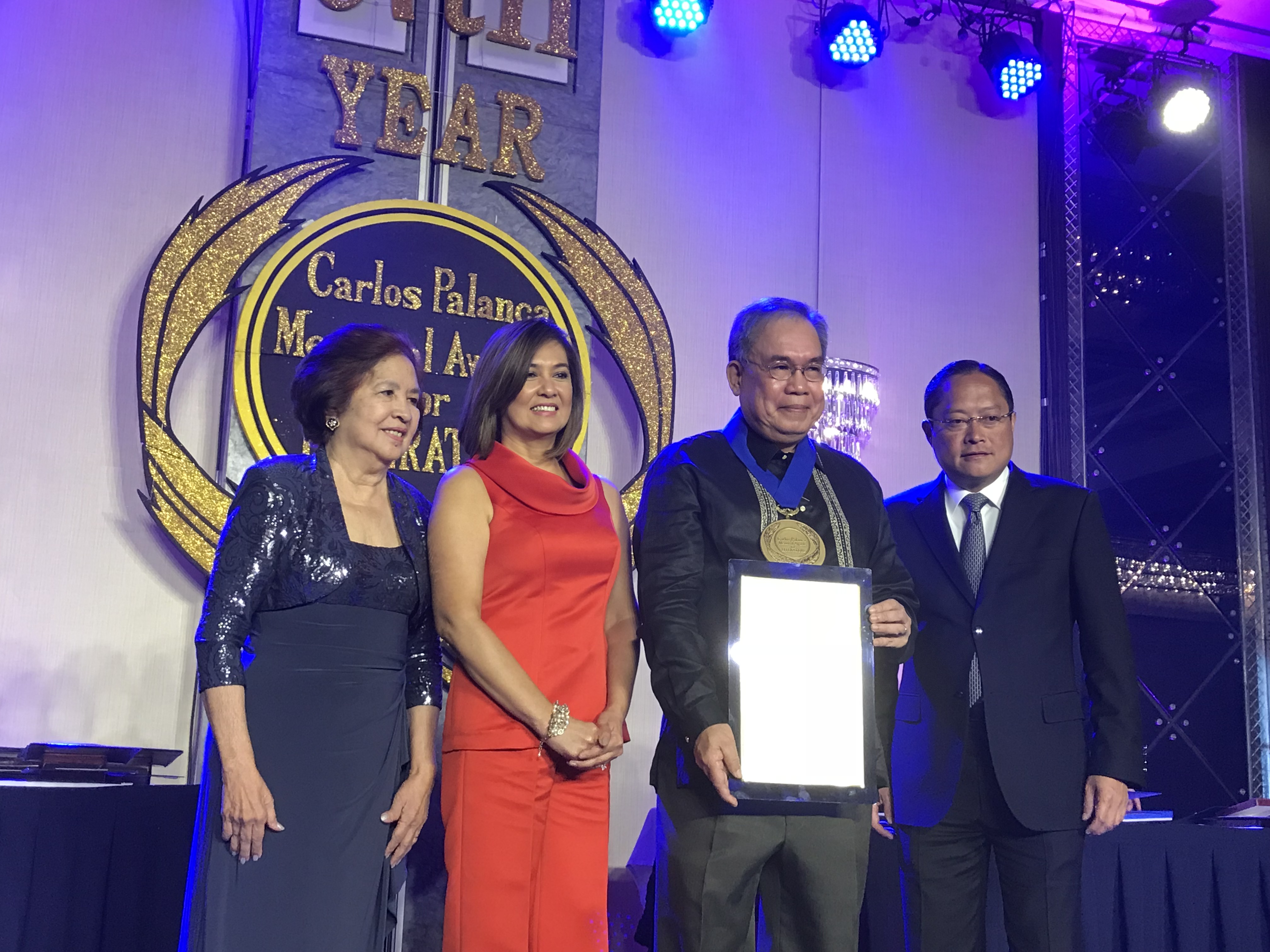
              ONE OF the strangest moments of my life happened in 1993, when my first novel, “Killing Time in a Warm Place,” shared the grand prize with the late, great Tony Enriquez’s “Subanons.” The guest of honor then was none other than President Fidel V. Ramos, among whose speechwriters was none other than me.

              There were four or five of us doing his speeches then, and the assignments were farmed out at random, and I can’t remember now if I accepted that Palanca Awards night job with delight or dismay. I suppose I could have swapped assignments with somebody else, but I had to think deeply about the situation. I was one of the awardees, so the young novelist in me wanted to sit back and hear my President’s sincerest thoughts about literature.

              But the speechwriter in me also knew that those sincerest thoughts were just going to be written by somebody else in the room, so I figured, it might as well be me, to make sure that he would say nothing terribly wrong, and that he would say something very nice. And of course he did.

              Incredibly enough, the same situation happened a year later, when I received a TOYM Award for Literature at Malacañang Palace, again from FVR. In both instances—because we ghostwriters preferred to remain spectral and worked far out of his sight—he had no idea that the hand he was shaking had also crafted his speech. In fact, it wasn’t until a few months ago, when I interviewed him for another book, that I finally introduced myself as the writer of 500 of his speeches, which remain on my hard drive. We had a good laugh.

              I’ve written speeches for five Presidents and innumerable senators and CEOs, as well as the biographies of such diverse figures as Communist guerrillas, capitalist icons, and Marcos cronies. At any given time, I’m working on three or four book projects. I teach, write a weekly column, and peck away at stories, essays, poems, my third novel, and my unfinished oral history of the First Quarter Storm. And, oh, I also get to dress up and play the part of an academic bureaucrat.

              I say this neither as a boast nor a lament, but simply to show that it’s all in a writing life. I’m happy and fortunate to have all of these writing jobs—although I must confess to being happier with some than others—because, despite all the challenges and compromises I have to face, this was what I signed up for.

              Many other writers in this room have done the same thing, in varying degrees, both out of necessity and desire. Quite a few have approached me and said, “I want to do what you do,” but I wonder if they realize what they are asking for. I remember, early on, typing away at a commercial film script I had to complete, with tears streaming down my face, because what I really wanted to do was to join the Palancas, and I was out of time. That’s my greatest anxiety—to run out of time.

              There will always be those who will scoff at what I do and who will insist that every word you write should be God’s own truth, as if that were humanly possible. God might as well smite all lawyers, copywriters, and PR professionals—and let’s throw in all politicians—with his righteous hand.

              In a course I designed called Professional Writing, which I’ve been teaching for the past 20 years in UP, I begin every semester with this admonition: “There’s writing that you do for yourself, and writing that you do for others. And don’t ever get those two mixed up, or you’ll come to grief.” I also remind them that they can always say no, as I’ve done many times without regret.

              If you embrace writing as a lifelong and life-sustaining profession rather than a weekend hobby, then you will not be writing every piece as if it were destined for the Palancas, although, as a professional, I do every job I accept as if it were my first, last, and only job, no matter how big or small.

              But that again is exactly why we should value the Palancas. Too often, we lend our words to others. With these prizewinning pieces, we reclaim our words to ourselves, for ourselves, for whatever it was that first impelled us to write.

              You remind me of that 21-year-old who, even as he had to write speeches, scripts, and stories for others, burned with the desire to write for himself and for his people at large—as this 63-year-old still does, awaiting blessed retirement 16 months hence so I can write the best of what remains in me to write.

              Writing for the truth, writing for honor and glory, writing for the love of language—these are what your being here is all about, what the Palancas have existed for these past 67 years. While the generous cash awards are nothing to sneeze at—as the Foundation’s accountants will certainly attest to—the Palancas have always been about more than money. Your certificate tells you, this is how good you are; you look around you and you realize, that is how much better you can be.

              This is our real reward, our hope, and our redemption. Whatever else you may have had to write or had to do, what you submit to these awards is your finest self, your truest words, your ineradicable proof of citizenship in the community of letters.

              Let me quote President Ramos—well, in fact, let me quote myself: “It is both literature’s virtue and responsibility to reaffirm our fundamental humanity, and the unity of our interests and aspirations as a people. Every act of writing rehumanizes us, both writer and reader.” This is especially important in these darkening times, when megalomaniacal and murderous despotism threatens societies across the ocean, debases the truth, and cheapens human life. The best antidote to fake news is true fiction.

              You and I have much to write about. You will not even need to wait until the next Palanca deadline to do what only you can do, and to say what only you can say. If you write for truth, freedom, and justice, and for the beauty and value of life itself, you will always be a first-prize winner in my book.