Qwertyman No. 97: The City That Works

Qwertyman for Monday, June 10, 2024

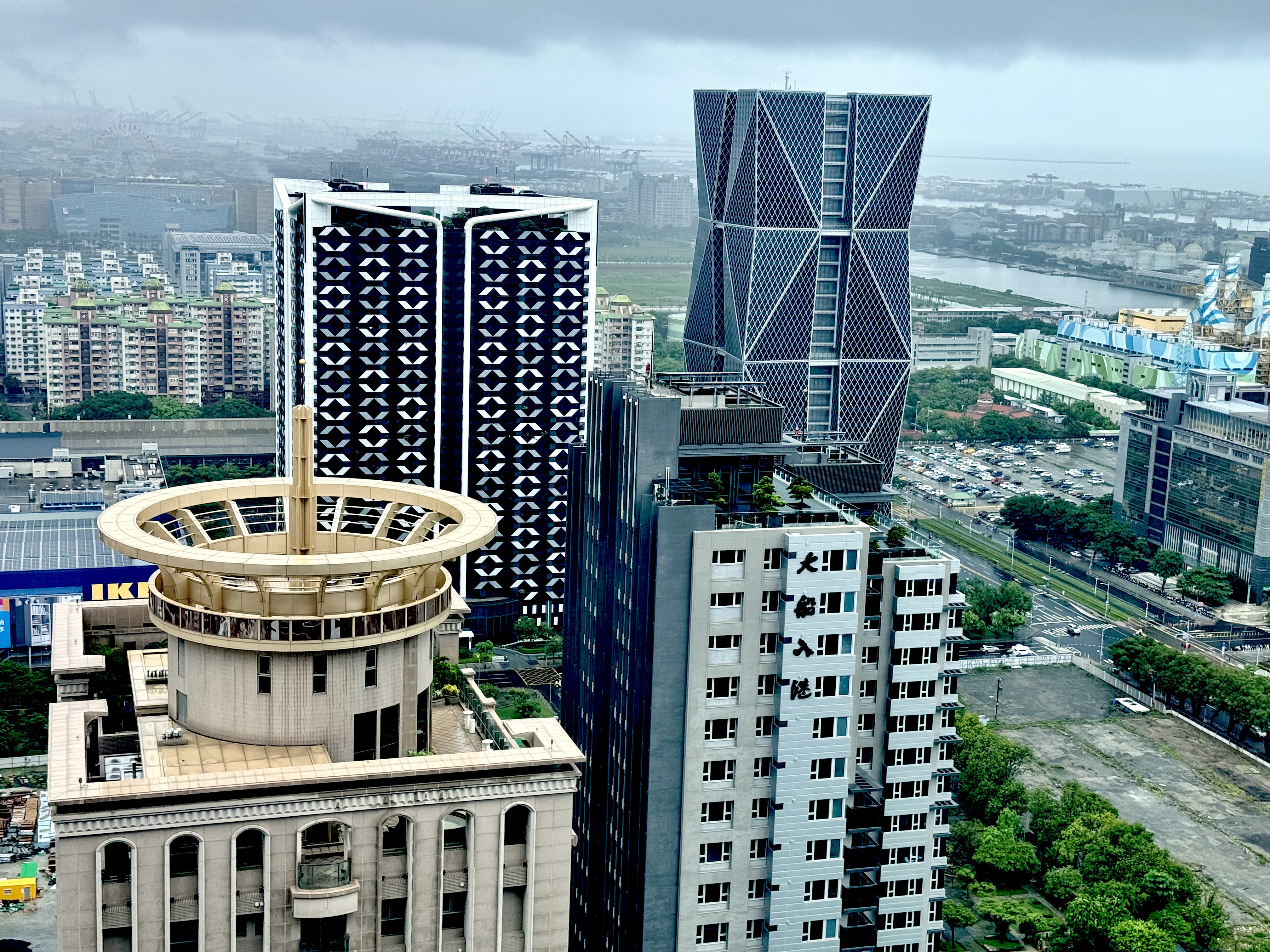
I WAS back last week in the city of Kaohsiung in Taiwan with a group of writers from the University of the Philippines Institute of Creative Writing, at the invitation of Dr. Eing Ming Wu of the Edu-Connect Southeast Asia Association, an education NGO seeking to establish stronger ties between Taiwanese universities and their counterparts south of Taiwan. We were there to meet with our literary and academic counterparts, but also to acquaint ourselves with contemporary Taiwanese society and culture. What we found along the way was a city and a government that works—a model we have much to learn from.

It was my second time in Kaohsiung and my sixth in Taiwan since my first visit in 2010, but those earlier sorties were either for tourism or for attending meetings and conferences, so we never really got to immerse ourselves in the place and its people. This time, Dr. Wu made sure that we went beyond casual handshakes and pleasantries with city and university officials to engage our hosts in in-depth conversations.

The first thing that usually strikes visitors about Taiwan is how modern it looks, especially when flying in through Taipei—the High Speed Rail (HSR), the wide roads, the skyscrapers (think Taipei 101, once the world’s tallest), the late-model cars. For quick comparisons, consider this: Taiwan’s population, at 24 million, is about a fifth of ours; in terms of land area, we are almost ten times larger; its nominal per capita GDP, however, is almost ten times larger than ours at US$35,000. Not surprisingly, Taiwan now ranks around 20th in the world in terms of its economic power.

That power came out of decades of dramatic transformation from an agricultural to a highly industrialized economy, starting with massive land reform and the adoption of policies that spurred export-driven growth. Industrialization itself went through key phases from the production of small, labor-intensive goods to heavy industry, electronics, software, and now AR/VR and AI tools and applications.

At a briefing at the Linhai Industrial Park by Dr. Paul Chung, a US-trained engineer who was one of the architects of this economic miracle, we learned how Taiwan built up the right environment for economic growth through such strategies as the creation of industrial parks (there are now 67 of them covering more than 32,000 hectares, with 13,000 companies employing 730,000 people and generating annual revenues of more than US$260 billion—almost eight times what all our OFWs contribute to the economy). The Taiwanese government has also implemented a one-stop-shop approach to investments, bringing together the approvals of many ministries and local governments under one roof.

Consistently, in modern times, the private sector has led the way forward, with the government acting as facilitator. This was much in evidence in Kaohsiung, Taiwan’s southern industrial hub that was, until relatively recently, a virtual cesspool, the prime exemplar of industrialization gone amuck. A strategic seaport, Kaohsiung grew out of the need to export Taiwanese sugar during the Japanese occupation (1895-1945); the sugar industry gave rise to railways that went far up north to Keelung and became the backbone of the country’s transport system. After the war, the Kuomintang who displaced the Japanese did little to improve things until a visionary mayor undertook reforms that cleaned up the place. Industry also achieved important synergies by adopting policies toward carbon neutrality and reducing waste—for example, one company’s blast furnace slag is being used to pave roads, and harmful carbon monoxide emissions have been rerouted as inputs to chemical companies.

Kaohsiung today is a city of 2.8 million people, a showcase of how runaway industrialization and urban blight can be reversed through good governance and political will. “People need responsible, responsive, and accountable government,” says Dr. Wu, a public-administration expert who worked for 15 years with five Kaohsiung mayors and who now serves as a visiting professor at UP’s National College of Public Administration and Governance (NCPAG). 

A longtime visitor to the Philippines, Dr. Wu has made it his personal mission to promote Philippine-Taiwanese people-to-people relations—a concept he calls “taiwanihan”—in the conviction that the two countries have much to learn from each other and form a natural geographical, economic, and cultural partnership. “We are each other’s closest neighbor,” Wu says. “Taipei is 96 minutes away by train from Kaohsiung, but Kaohsiung is only 90 minutes away by air from the Philippines.” 

Wu and his colleagues at NCPAG have been exploring the possibilities of developing a corridor of cooperation between Southern Taiwan and Northern Philippines, given their proximity. “We have the technology, you have the resources like biomass,” he adds, pointing out as well that taiwanihan doesn’t just mean a one-way relationship, but that the Philippines can also assist Taiwan with its growing needs, such as engineering talent and manpower. Some 8,000 Filipinos now work in Taiwanese factories, but Taiwan’s demand for highly skilled workers will only get higher as it moves into the next phase of its development, which will be heavily dependent on AI.

Artificial intelligence already takes care of many of Kaohsiung’s more mundane needs such as remote traffic monitoring and even the paid parking of vehicles, which has been outsourced by the government to a private entity. “We buy services, not things,” explains Dr. Wu. “The government provides the land for the parking, the private sector supplies the technology and the hardware. This is our version of public-private partnership: the government listens to the private sector, which can use the city as its lab.” 

E-governance and decentralization led us to an unusual sight: we visited City Hall on a weekday and saw very few people in the lobby, unlike its Philippine counterparts. That doesn’t mean that government is distant from the citizens, as a “1999” complaints center receives and fields calls online or in person, employing the disabled to man its booths. 

And even as AI has taken the forefront, it was abundantly clear that human intelligence and human priorities remained important. Good community governance, for one thing, was key to clean and peaceful neighborhoods (their village officials are appointed rather than elected, eliminating vote-buying). Their libraries alone show how and why the Taiwanese are succeeding: they not only have hundreds of thousands of books available to their citizens, but they have innovations such as the “Adopt-a-Book” program by which you borrow a book just based on a previous reader’s recommendation, and books in both Braille and regular text, so that sighted readers can read along with the blind and enjoy a story together. A city that goes that far to meet its people’s needs can’t fail.

Penman No. 463: Masters of the Old and New

Penman for Sunday, June 10, 2024

THE WORK of two outstanding Filipino artists drew my attention last month, in events that could be considered retrospectives of remarkable if somewhat divergent careers. 

The first was the exhibition “Looking Back” mounted by Fernando Modesto at the Galerie Hans Brumann in Makati, running until June 30, which gathers some of the painter’s best work over the past five decades, many of them from the private collection of the longtime Manila resident Brumann himself. That Brumann—now 83, and also a renowned artist and jeweler—was letting go of these pieces struck me much less as a disposal of worthy objects than a bequeathal, an opportunity to share the best of Modesto with other collectors. Laid low by a stroke some years ago, “Mode” as his friends know him remains mentally as sprightly and mischievous as ever; and he has striven and managed to produce new work despite his condition, taking off from the Mode we knew.

That Mode was irrepressibly bright, witty, and playful. In contrast to the somber and even dismal realism of many of his contemporaries from the 1970s onwards, Mode made light of things, opening up a world of freedom and delight in an oppressive universe. 

The playfulness, at one point, was literal. In 2018, writing in Frieze magazine, Cristina Sanchez-Kozyreva reported on the Ateneo Art Gallery’s recreation of an early Modesto installation from 1974 titled Dyolens(Marbles) that involved laying out thousands of marbles on the floor for visitors to kick around. That was about the time I first met him during my days as a printmaker in Ermita; Mode had already gained fame—or notoriety if you will—for his depictions of pendant penises, which even then were clearly meant not to offend but to make one smile.

The Brumann exhibit documents Mode’s progression from tongue-in-cheek wit to transcendent wisdom, opening a door into a world we can only hope to inhabit, where angels reach for a shimmering sun (or are they playing volleyball?) in an iridescent haze, or float face-up in a cosmic pool. His most recent work such as King of the Islands II (2021) retains that rare equanimity in the cool blue gaze of its subject.

If Fernando Modesto is a master of the modern, the second painter who caught my eye reminded me of how much richness remains to be discovered in our artistic past. May 24 saw the launching of Matayog na Puno: The Life and Art of Hugo C. Yonzon, Jr. (published by Onyx Owl, 248 pages), on the centennial birthdate of Yonzon. Authored by Hugo’s son Boboy and the late Neal Cruz, the book chronicles the life and work of a man for whom art was both a passion and a living. Hugo’s career harkened back to a time when the line between fine and commercial art was blurry and perhaps not all that important, for as long as the artist gave the work his all. 

Yonzon had to leave school early to take a job—just the first of one or many—and he would go on to become much more of a journeyman, one viscerally engaged in the trade, than an aesthete or academic. “Yonzon was always invited to the various sessions held by the Saturday Group and other weekday groups that tried to establish their name and weight in the art scene,” says the book. “But he never stayed long nor drew enough on-the-spot sketches; although he had an eye for women, nude sketching did not interest him. He would rather banter and drink a cup of coffee, then return promptly to his favorite themes in his perpetually makeshift studio.”

He was friends with some of the best artists and illustrators of his time, including Mauro “Malang” Santos and Larry Alcala. Having worked as an illustrator and as an art director for an advertising agency, Hugo wielded an extremely versatile brush, adjusting his style and treatment to the client’s needs. It got to the point that visitors to his one-man show became confused, seeing so many different styles on display, but that range was a great part of the reason for Hugo’s popularity. 

But he kept returning to his favorite themes—the pastoral, the folk, the heroic, the visual representation of what he imagined Filipinos at their best and most essential to be. This appealed to the sensibilities of patrons such as First Lady Imelda Marcos, who generously supported Yonzon. Hugo was tireless in his painting and gave his friends huge discounts to the point that his wife Betty felt compelled to manage his financial affairs.

His lifestyle was appropriately flamboyant. “Dad was a loud but chic dresser,” recalls his eldest daughter Minnie. “When psychedelic colors and prints were in vogue, his long-sleeved shirts were in paisleys and reds and greens. Why, he even painted the air scoop of our brand-new Beetle in paisley!”

The life depicted in the book is fascinating, full of struggle and drama, but ultimately it is the art that imprints itself in our consciousness—one full of vigor, color, inventiveness, and variety, celebratory in every way of the near-mythic Filipino. The writer and art critic Lisa Nakpil would say that Yonzon, who died in 1994, was the “underrated master of heroic Filipino iconography,” and this book clearly shows us why.

Qwertyman No. 94: Artificial Intelligence

Qwertyman for Monday, May 20, 2024

DR. CHICHOY Carabuena had a problem. He wanted the school he owned and ran—the Generoso Carabuena Academy of Pedagogy in Santa Vicenta—to place higher in both national and international rankings, partly so he could raise tuition fees, and also so he could claim bragging rights among his university-president friends and drinking buddies. He had inherited the school from his grandfather; Generoso Carabuena was a banker who had collaborated with the Japanese and stolen the money they left behind to open a school for teachers, which was his wife’s dream, becoming a war hero in the process for outsmarting the enemy. 

The school had done well enough to the point that Chichoy’s dad Ramoncito could buy a Mercury Capri that he regularly drove to Manila to carouse in its nightclubs. Chichoy was the product of one of Ramoncito’s dalliances with the agreeable ladies, and it fell on him to rescue both the business and the family name from ruin and disrepute. He had been managing a carinderia for Pinoy workers in Dubai when the call came, and always wanting to become someone of substance, he returned to Sta. Vicenta to turn the daughters and sons of hog butchers and vegetable growers into teachers, like he imagined himself to be. Surely higher education wasn’t all that different from running a restaurant and coming up with the right menu at the right price for your customers. He had secretly dreamed of becoming a mayor, a congressman, or even governor, but first, he had to make a name for himself and make money.

Somewhere along the way he picked up a “Dr.” from a diploma mill and dressed the part, coming to his office even in the warmest of days in coat and tie. “More than anything else,” he would lecture his new recruits, “first impressions count, so before you even become a teacher, you have to look like a teacher, walk like a teacher, and sound like a teacher!” He had a faux marble statue made of his grandfather to greet visitors at the school entrance, and another one of Jose Rizal standing behind Generoso, as if looking on in approval. 

But lest people think he was beholden to the past, Chichoy Carabuena peppered his speeches with 21st-century mantras like “disruption,” “innovation,” “sustainability,” “customer-centric,” and, yes, “21st-century.” “The great challenge to higher education today,” he would often declaim, “is to produce graduates attuned to a global climate of disruption and innovation, mindful of evolving needs and opportunities in the marketplace of ideas while seeking sustainable and synergistic 21st-century solutions to problems rooted in our feudal and neocolonial history.”

Those speeches were written for him by his former executive assistant named Mildred, a UP graduate whom he had to fire when his wife discovered them smooching in his office—an act he vehemently insisted to be no more than a paternal gesture, much like  former President’s public bequeathal of a kiss on a married woman, a defense that gained no ground. His wife personally chose his next EA, a former SAF commando named Dogbert; making the best of the situation, Chichoy paraded Dogbert around as his bodyguard, spreading the rumor that his life was under threat from unspecified enemies determined to keep the quality of Philippine education down. “We can give them no quarter,” he declared at the last CHED event he attended. “We must resist, with all impunity, those who aim to keep our poor people shackled to the twin pillars of ignorance and idiocy!” He missed Mildred in those moments, but he felt quite pleased with his growing self-sufficiency in speechwriting, thanks to his new discovery, ChatGPT. Of course it never quite came up to his standards, so he tweaked the prose here and there, like that reference to Samson that he hoped would bring the house down.

But now, reading the reports of top Philippine universities slipping in their rankings in the usual Times Higher Education and Quacquarelli-Symonds surveys, Dr. Carabuena saw an opportunity for his modest HEI to rise. “As their mystique diminishes, so our aura will grow,” he informed an indifferent Dogbert. “We just need to come up with sustainable innovations that will disrupt the status quo.” Dogbert handed him a slim folder. “Sir, someone wants to see you, to apply for the position of Academic Vice President.” It was a position that Chichoy himself had held concurrently to save on salaries, but now he felt obliged to pass it on to a real expert. He flipped the folder open and saw the picture of a cute Chinese-looking woman going by the name of “Dr. Alice Kuan.” Chichoy was mesmerized. “Send her in—and get out!”

When Dr. Alice Kuan stepped into Chichoy’s office, he felt himself enveloped in a miasma of jasmine, peonies, and five spices—everything good he remembered from his only visit to China many years ago. Her lips were lotus-pink, her skin ivory-white, and here and there dumplings suggested themselves to his imagination. “Good morning, Dr. Kuan! Please, have a seat! You’re here to apply for the AVP job?”

“Yes, Mr. President,” she said with a quarter-moon smile, “and I come with many ideas for both improving your curriculum and raising revenues through academic innovations.”

“Innovations! I like that! Like what?”

“Why artificial intelligence, of course! We could use AI to teach many of our courses, reducing costs. Also, we could bring in more foreign students from—uhm—friendly neighboring countries, while creating part-time employment opportunities for them in—uhm—online entertainment, for which we could even lease out some of your campus property. It would create a huge economic boost for Sta. Vicenta!” 

Temple bells rang in Chichoy’s mind. Not only was she fetching; she was smart! Suddenly he could see his political future brightening. He wanted to know more about this adorable avatar, and only then did he notice how patchy her resume was. 

“Your birth certificate was filed when you were…. 17?”

“Was it? I don’t remember.”

“Which elementary school did you go to?”

“I don’t remember. Maybe homeschooling?” She threw him an exasperated sigh. “Look, Dr. Carabuena, does it matter? I can have AI do a perfect resume if that’s what you want. If not, I can take my ideas to the Fontebello Institute of Technology in San Bonito just an hour away, and maybe they’ll be more receptive to disruptive innovations—”

“No, no, no! Disruptive, I like disruptive! Please, Dr. Kuan, stay in your seat! I’ll have somebody prepare your contract. Dogbert!”

(Image generated by AI.)

Qwertyman No. 93: A Century of Philippine Accountancy

Qwertyman for Monday, May 13, 2024

IN MY long life as a professional writer—aside from being a fictionist, journalist, and academic—I’ve occasionally been asked to write books for both private and public institutions and individuals, usually to commemorate an important milestone. My clients have included banks, power and energy companies, accounting firms, NGOs, business tycoons, politicians, and thinkers. 

While it’s a job, it’s also been a great learning experience for me, particularly when I’ve had to deal with topics like oil exploration, steel manufacturing, and geothermal energy. I begin to understand how things really work in our economy and society, seeing the cogs and wheels that turn industry, create jobs, and produce things people need. I meet people I never would have run into otherwise, people with interesting stories to tell about themselves and their work.

Probably the most famous of those people was Washington SyCip, the legendary founder of SGV & Co., once one of Asia’s largest and most highly respected accounting firms, whose biography Wash: Only a Bookkeeper I wrote back in 2008. When people tell me how boring the lives of accountants must be, I tell them the story of Wash, who wasn’t just an academic prodigy who graduated summa cum laude from college at 17, but who also served as a US Army codebreaker in India in the Second World War. Granted, not many accountants lead lives as colorful as Wash’s, but to suggest that there’s no drama in accountancy is certainly mistaken. 

I discovered this in my latest (and very likely my last) commissioned book, A Century of Philippine Accountancy, which will be launched this week by the Philippine Institute of Certified Public Accountants (PICPA) Foundation. The book is a compendium of both big and small stories, an institutional history that also delves into the personal struggles and triumphs of key people in the industry.

The centennial book comes a bit late, because the Philippine accounting profession formally traces its beginning to March 17, 1923, when the Sixth Philippine Legislature passed Act No 3105, “An act regulating the practice of public accounting; creating a Board of Accountancy; providing for examination, for the granting of certificates and the registration of Certified Public Accountants; for the suspension or revocation of certificates and for other purposes.” Six years later, the PICPA was established within the private sector to represent professional interests.

Of course, some form of bookkeeping was being practiced in the Philippines long before that. Given the Philippines’ vigorous trade with other countries such as China even before Spain’s arrival in 1521, there must have been some early form of record-keeping maintained by both natives of the islands and their foreign trading partners. Accounting in early China was said to have reached a peak during the Western Zhou dynasty (1100-771 BC); the Chinese developed sophisticated methods of accounting to keep track of such basics as revenues, expenditures, salaries, and grain. In Spain, regulations began to be applied regarding the accountability of companies starting with Queen Juana and her son Emperor Charles V in the 1500s. Manila’s galleon trade with Mexico, which lasted from 1565 to 1815, required meticulous bookkeeping, and archival records still exist of the cargo manifests of the galleons; these records show, for example, that audits of the ships’ cargo revealed discrepancies in capacity that suggested smuggling (whereby space meant for such necessities as water was reduced to make way for profitable goods).

Since 1923, the profession has grown in the Philippines by leaps and bounds to nearly 200,000 registered CPAs, employed in over 8,000 firms and partnerships. Based on the number of Publicly Listed Companies (PLCs) they audit, six firms dominate the industry: SGV & Co. (Ernst & Young); Isla Lipana & Co. (PricewaterhouseCoopers Philippines); R.G. Manabat & Co. (KPMG Philippines); Reyes Tacandong & Co. (RSM Philippines); Punongbayan & Araullo (Grant Thornton Philippines); and Navarro Amper & Co. (Deloitte Philippines). In keeping with the times, many local firms have affiliated themselves with large global partners to avail themselves of the latest technology and expertise. (For a bit of trivia, the first Filipino CPA was Vicente F. Fabella, the founder of what is now Jose Rizal University.)

The profession is governed by the Board of Accountancy (BOA), which administers the CPA Licensure Exam at least once a year. The BOA in turn is supervised by the Professional Regulatory Commission, along with other professional boards. The BOA and PRC work closely with the Securities and Exchange Commission (SEC), which is responsible for ensuring the integrity of the country’s financial system and its institutions.

The 1997 Asian financial crisis highlighted the importance of quality assurance and adopting international financial reporting standards in accounting. With the help of the Asian Development Bank and the World Bank, the major players in the profession—PICPA, BOA, PRC, and SEC, among others—undertook studies to reform the industry, resulting in the Philippine Accountancy Act of 2004. The SEC also initiated an Oversight Assurance Review to extend and strengthen reforms further. What the book chronicles most significantly, according to former SEC Commissioner Antonieta Fortuna-Ibe, is the Filipino CPA’s rise to global respectability and prominence, because of the industry’s relentless efforts to raise its standards and to keep pace with the latest developments in financial technology. Ibe stood at the vanguard of many basic reforms in Philippine accountancy, and was behind the push for a book to mark their centenary.

The profession will need to adapt to the ever-changing financial landscape. As SGV’s Wilson Tan puts it, “While we have yet to see how new technologies such as the Metaverse and the integration of AI into work applications will impact the accounting profession, CPAs of the future will need to likewise evolve their skills and capabilities. Foundational changes will need to be made in the curriculum to integrate learning that encompasses non-financial reporting matters, use of technology, data, and analytics, and cybersecurity, among others.”

Personal integrity, as ever, lies at the bedrock of accountancy. The BIR’s Marissa Cabreros reminds everyone that “Every CPA being asked to sign a financial statement must give weight to the purpose of their signature. If it has your signature as a CPA, we expect that you reviewed and recorded that properly. But unfortunately, sometimes lapses happen and CPAs forget what they signed for. An accountant must always have the importance and value of her signature in her heart.” Wash SyCip could not have put it any better.

Accountants and other members of the public interested in getting a copy of the book can email Lolita Tang at lolitatang@yahoo.com for more information.

Qwertyman No. 82: How Young Filipinos See Their Future

Qwertyman for Monday, February 26, 2024

THIS SEMESTER, I’m teaching an undergraduate class in UP called “Professional Writing,” a course I designed more than twenty years ago to help English and Creative Writing majors (and other seniors in search of interesting electives) get a handle on what the “real world” out there expects of them, in the kind of everyday jobs they’re likely to land. Not Shakespeare, not Jose Garcia Villa, not lyric poetry and neither the full-length play, but rather the more mundane assignments you get paid a salary for: business letters, press releases, feature articles, AVP scripts, brochures, and speeches. 

I find myself telling my students that, in a way, what I’ll be teaching them—which is basically how to conform to organizational or institutional standards and norms—is counter-intuitive to what’s been thought of as the UP way of asserting oneself and even questioning authority. This mythified UP “yabang” or “angas” could be one reason why UP graduates don’t rank at the top of employable prospects for corporations. 

So I feel like I have to teach my students the virtues of humility and sufferance, of sticking with a job and doing it well even if it’s not the coziest or smartest thing in the world to do, and of the importance of execution and delivery with no excuses, no (audible) complaints, on time, and against all odds. Before they break the rules, they should know the rules, so they’ll know exactly what they’re breaking and why (I bring up how Picasso was a realist before he turned to Cubism).

Of course, I also tell them that the door swings both ways—they can also walk out of a job they can no longer take (like I’ve done a few times in my own career), but not before thinking through the consequences and figuring out one’s options. Innovation and initiative are great to show on the job—but they can also backfire if not handled well, given people’s (and many managers’) ingrained resistance to change. In other words, prepare for and learn how to deal with adversity, which can be a better teacher than I’ll ever be.

It’s going to be an interesting semester, seeing how the students are responding to my provocations. One of those provocations was our first in-class writing exercise, which was a “visioning” of sorts, where I asked them to look 20 years ahead (preparatory to their next task, which is to write a job application letter). I’m sharing some of their responses below (excerpted here with their authors’ permission) to give readers an idea of how young Filipinos see themselves in their own future. There’s a palpable strain of pessimism in these responses—and that’s understandable, but it worries me. We shouldn’t saddle our successors with the notion that things can only get worse. So I’m making a note to myself: teach reality, teach adversity, but above all, teach hope. Having survived this long, despite everything we had to go through, should yield a useful lesson or two.

Student A: I remember telling myself upon entering college, “If I end up becoming one of those people I despise—a heartless doctor, a vain lawyer, all in the name of shameless success—I’d rather not enter UP.” Twenty years from now, the Philippines—and by extension, me included—will probably still be trying to heal from all the abuse that accumulated through time. In my dejection, I see the country still having a hard time distinguishing the morally right from wrong. Yet I hope that it would be otherwise. My hope sees differently from my rational musings, my hope sees the tide calming, a time I no longer have to convince my father of a reality so transparent it bites us in the face like a serpent.

Student B: I struggle to think of what the future holds for me. Truth be told, I struggle to think of a future with me in it at all. I find that thinking of the future brings with it a wave of dread, because even if the state of the country miraculously improves, there will always be a bigger power that inevitably ruins things for everyone else. However, if I somehow manage to be present still, (through either sheer luck or spite), I will likely be working at an office or a school somewhere. I’ll have a cat or two if the landlord allows it. Who knows if I’ll ever get married. The only thing I’m sure of is that I won’t have children—I can’t, in good conscience, bring someone else into this mess of a world.

This all sounds pessimistic, but in reality, I would actually call myself an optimist in day-to-day life. I want to think the best of people, and I believe that people are inherently kind. There is still a chance for things to improve, for everything to work out, but I can’t ignore the sinking feeling that it’ll only get worse from here. It might seem like we’ve already hit rock bottom, but somewhere, some world leader has brought a shovel and they’re ready to dig.

Student C: In many ways the country is a better place. People are more free to be who they are and love who they love, without fear. We have made leaps and bounds of progress in research and development. Science creates new technology, and we artists learn new ways to create, adapt, and keep toe-to-toe. Because I’ll be damned before I let the machines win. Yes, life is better. For those who can afford it. I want to afford it. But those braver than me fight for a future where everyone need not to. Because that’s the thing about human nature. Fighting is instinctual. Through war, poverty, and inequality, there will always be people fighting for something better. Many because they have no choice but to fight or die—fight to survive. Others because they owe it to someone, maybe themselves, to be the source of hope they want to see or have seen before. 

The country is far from perfect in 2044. Those selfish, like myself, have found a good life amidst a rotten core. We have survived. I have survived. Now it’s time to finally be brave. In 20 years, I know I’ve learned so much. Let me teach what I can. 

Qwertyman No. 70: Life (and Death) on Installment

Qwertyman for Monday, December 4, 2023

THE SUDDEN collapse of Loyola Plans—yet to be explained to longtime customers like me—reminded me of the fragility of our expectations. Like probably hundreds of thousands of other pre-need plan holders, I was just going about my daily business, secure in the thought that whatever happened, I could look forward (well, not exactly, but…) to a coffin, an air-conditioned room full of flowers, and a patch of grass or a marble urn at the end of the road.

That road apparently ended sooner for Loyola than for me and my wife, and we are now in the odd situation of having outlived our funeral plans and the company that was supposed to fulfill them. I understand that Loyola sold educational plans as well, which in a way is even sorrier for the supposed beneficiaries, whose lives are just beginning as opposed to ours. 

We bought those plans more than 30 years ago, when we were in the middle of our lives and careers and just beginning to think of a far future, of the sunset over the horizon and such other clichés meant to assure us that life follows a predictable if not comfortable trajectory. Beng and I were both student activists who, much to our surprise, had survived the First Quarter Storm and martial law, when our friends and comrades were being murdered right and left. We got married and became parents in the middle of all that, and became tentatively hopeful that we would live a little if not much longer.

In true middle-class fashion, we paid for that future on the installment plan. We bought a subdivision house and lot in the boonies of San Mateo on installment, faithfully amortized for P784.54 a month over fifteen years (you don’t forget a figure like that when you write a check that often). We bought a used Volkswagen Beetle on installment, spread out over 36 months. We bought a set of the Encyclopedia Britannica—the crowning glory of the middle-class library—on installment. We budgeted by the month, our wages largely committed to patient creditors whom I imagined sitting at their desks slitting hundreds of envelopes stuffed with checks and cash (back then, we still trusted the postal system enough to actually send money in the mail). 

Come to think of it, our parents also lived from month to month. Their big thing was appliances—TVs and refrigerators, especially—that they checked out on the display floor, ooh’ed and aah’ed over, and then deposited a down payment for, withdrawn from the bank that afternoon with a sigh at once hopeful and despondent. These appliances became virtual members of the family, occupying positions of prominence in our living rooms and kitchens—until, sometimes and shockingly, they were carted away by strangers to Mama’s tears and Papa’s embarrassed silence. We younger ones learned that installment plans bore obligations that also carried emotional costs.

A little Googling tells us that installment buying has been around since at least 1807, when a New York furniture store offered the option. In 1850, Singer began selling its sewing machines on installment. The practice took off in the 1920s, and became even more hugely popular in the 1950s with the growing use of credit cards.

At least, those kinds of plans began with you getting some product up front. Until the repo man knocked on your door or until the blacks of your eyes turned white from viewing, you used and enjoyed your 14” TV. That’s not the case with educational and funeral plans, which are a kind of a safe bet that tomorrow’s prices will be higher than today’s, so you might as well buy now what you’ll pay for tomorrow anyway. At the end of your long period of indenture, you even get a document in fancy script—like we did—as final proof of your faithfulness and as a guarantee, graven in legal stone, that you will get what you paid for.

Except that now, that’s not going to happen. As the thousands of Filipinos who bought into the College Assurance Plan (CAP) two decades ago discovered, sometimes the bottom falls through the piggybank, and suddenly your dreams go “Poof!” (The CAP case, I’m told, is a complicated one, compounded by the unexpected rise in tuition fees and a new government requirement to produce billions of pesos up front. Last year, after an 18-year battle through the system, a Supreme Court ruling finally allowed for CAP’s rehabilitation, theoretically enabling the payment of 50 centavos for every peso owed a plan holder.)

Not being an avid follower of the business news, I heard about Loyola’s troubles only after their liquidation and the procedure for claims (until April 18, 2024, for the equally ignorant) were announced. As these claims processes go, we could be strumming lyres in heaven (or dodging forks elsewhere) before we see the color of money—and even so, if they just give us back what we paid in, instead of the now-expensive service we paid for, then it’ll be laughably (make that cryingly) small. 

My 95-year-old mother’s response probably said it for most plan holders her age: “I can’t die now.” No, you can’t, Nanay, and not just because we need to find you—and us—a new plan, which hopefully will be worth more than the paper it’s printed on. 

Penman No. 456: A Pocket of Peace and Quiet

Penman for Sunday, November 5, 2023

ROXAS CITY, the capital of Capiz, is proud to declare itself the “Seafood Capital of the Philippines” as well, but I didn’t even know that when I booked a flight for me and my wife Beng last month to spend a few days in Roxas. I still had a few “super passes” I’d bought a bunch of from an airline promo last year and they were expiring soon, so as Beng and I are wont to do, we decided to pick a place on that airline’s list of destinations, one where we’d never been before. It would help that Beng was Ilongga, and having been married to her for almost 50 years, I could understand Hiligaynon, so getting around would be no problem. The “seafood capital” tag popped up when I googled “Roxas City” for ideas about where to go and what to do—that was the clincher for me, the scourge of crabs, shrimp, scallops, and all aquatic arthropods. 

An hour-long plane ride from Manila deposited us in Roxas City’s airport, which has the advantage of being a short tricycle ride away from downtown. 

For our “hotel,” I picked out, online, a place called the Olive Hostel, which proved to be an adventure on its own. At just over 1K a night with free breakfast and within walking distance of Western civilization, it seemed just right for Beng and me, who don’t insist on five-star luxury. If you’ve ever wondered what it’s like to live in a container, well, we found out. It literally was built out of steel containers piled on top of each other, with doors and windows cut out. But don’t get me wrong: it was all very capably and tastefully done, and as tiny as our quarters were, it was actually quite cozy; the bathrooms were immaculately clean and the wi-fi was strong. There was no TV, but we made up for that by watching Netflix on my laptop, perched on my tummy. (Beng and I are used to tiny hotels in HK, Japan, and Korea; I’m usually claustrophobic, but I don’t feel that with Beng beside me.) 

The Olive Hostel’s grounds were, by contrast, spacious and very well maintained, lovely especially in the evening. For those seeking more traditional lodgings, the President’s Inn downtown comes highly recommended. Among the city’s newest and most modern hotels, three—the Veronica, the Urban Manor, and the Islands—can be found in Pueblo de Panay township.

Roxas City has one of the prettiest and cleanest plazas I’ve seen around the country, small but the very picture of what a plaza has always been in our provincial imaginations, with City Hall, the church, and a park with a bandstand beside a river.

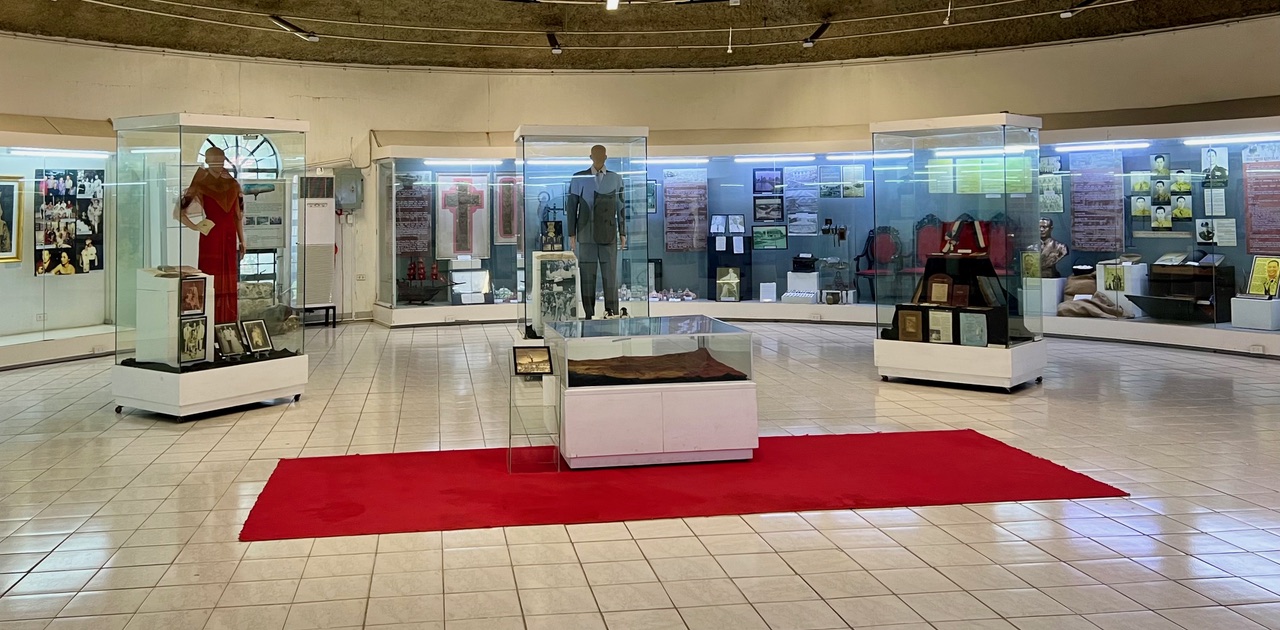
To one corner stands the Panublion Museum, a cleverly repurposed water tank that showcases highlights of Capiznon history and culture. Managed by its very capable director, Cheryl Anne del Rosario, Panublion features the personal memorabilia of the city’s favorite son, President Manuel A. Roxas, including the flag flown at the July 4, 1946 inaugural of Philippine postwar independence. (President Roxas’ ancestral home is not too far away and is open for public viewing, but was closed on the day we toured the city.)

The museum also showcases the tools and finery of the province’s and island’s indigenous peoples. Most captivating were the exhibits  featuring Capiz’s two female National Artists—Jovita Fuentes for Music and Daisy Avellana for Theater. Fuentes’ golden gown contrasted sharply with the suit of armor worn by Avellana as Joan of Arc. Entrance to the museum is free, but donations are welcome. 

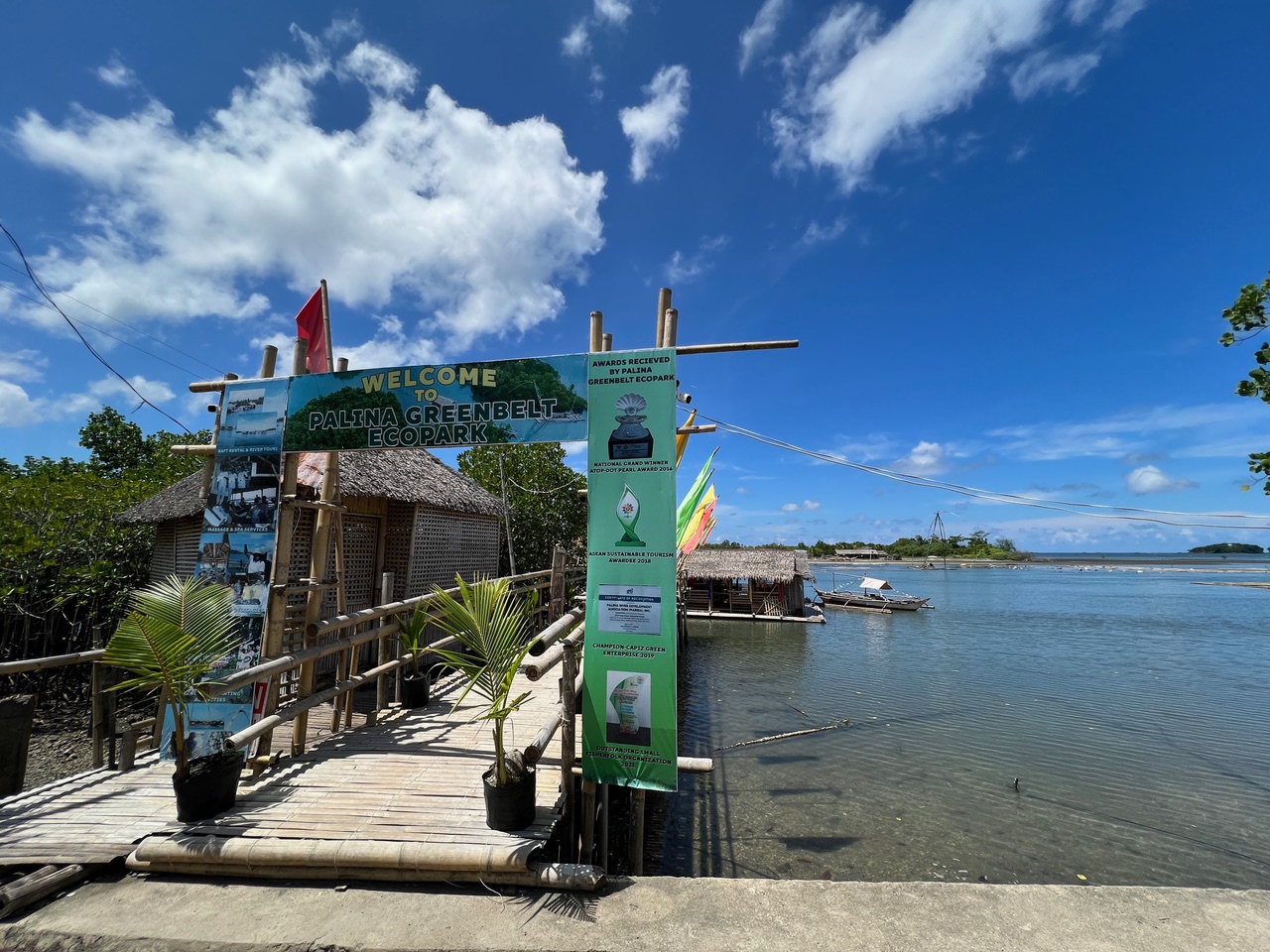
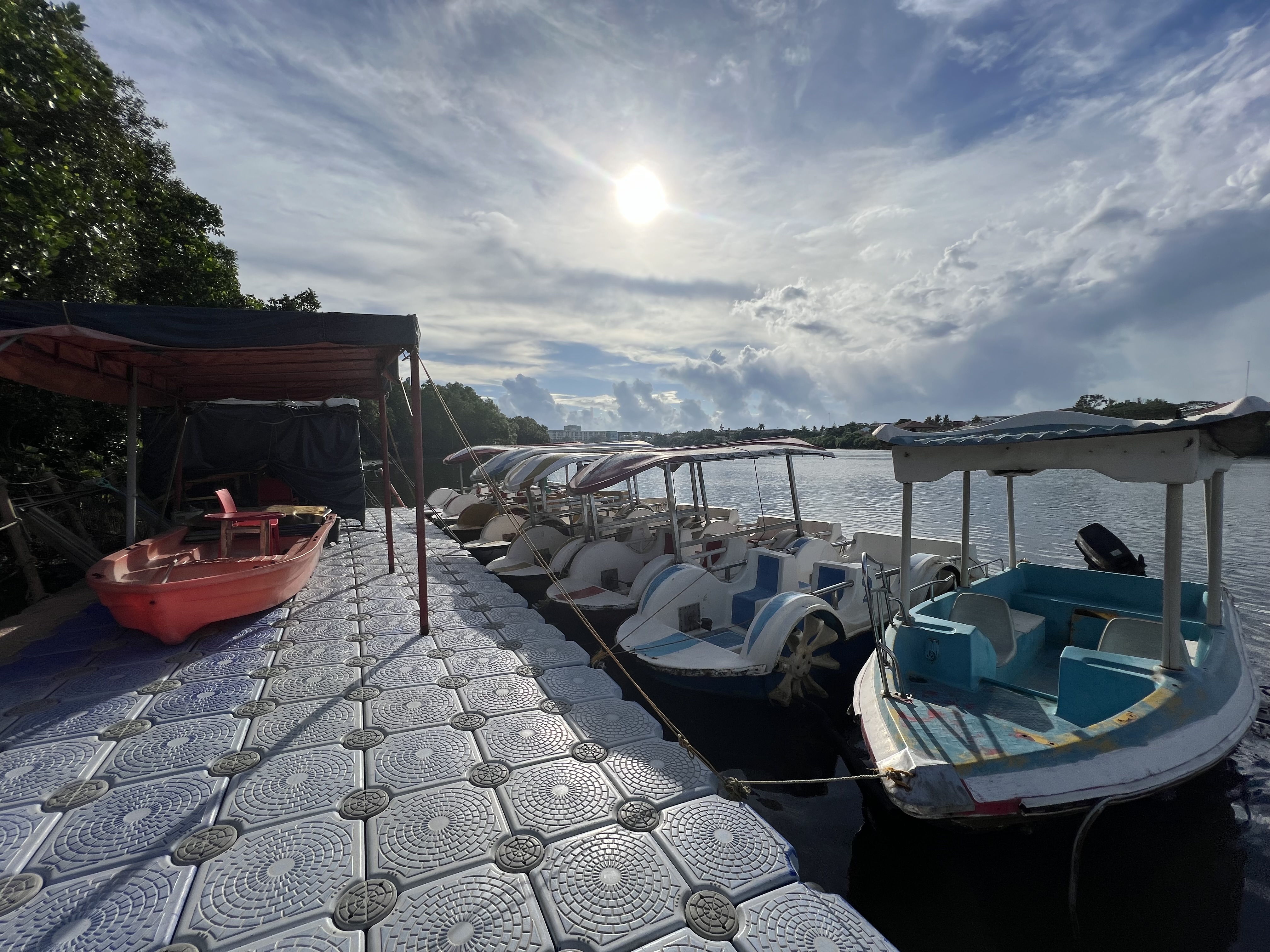
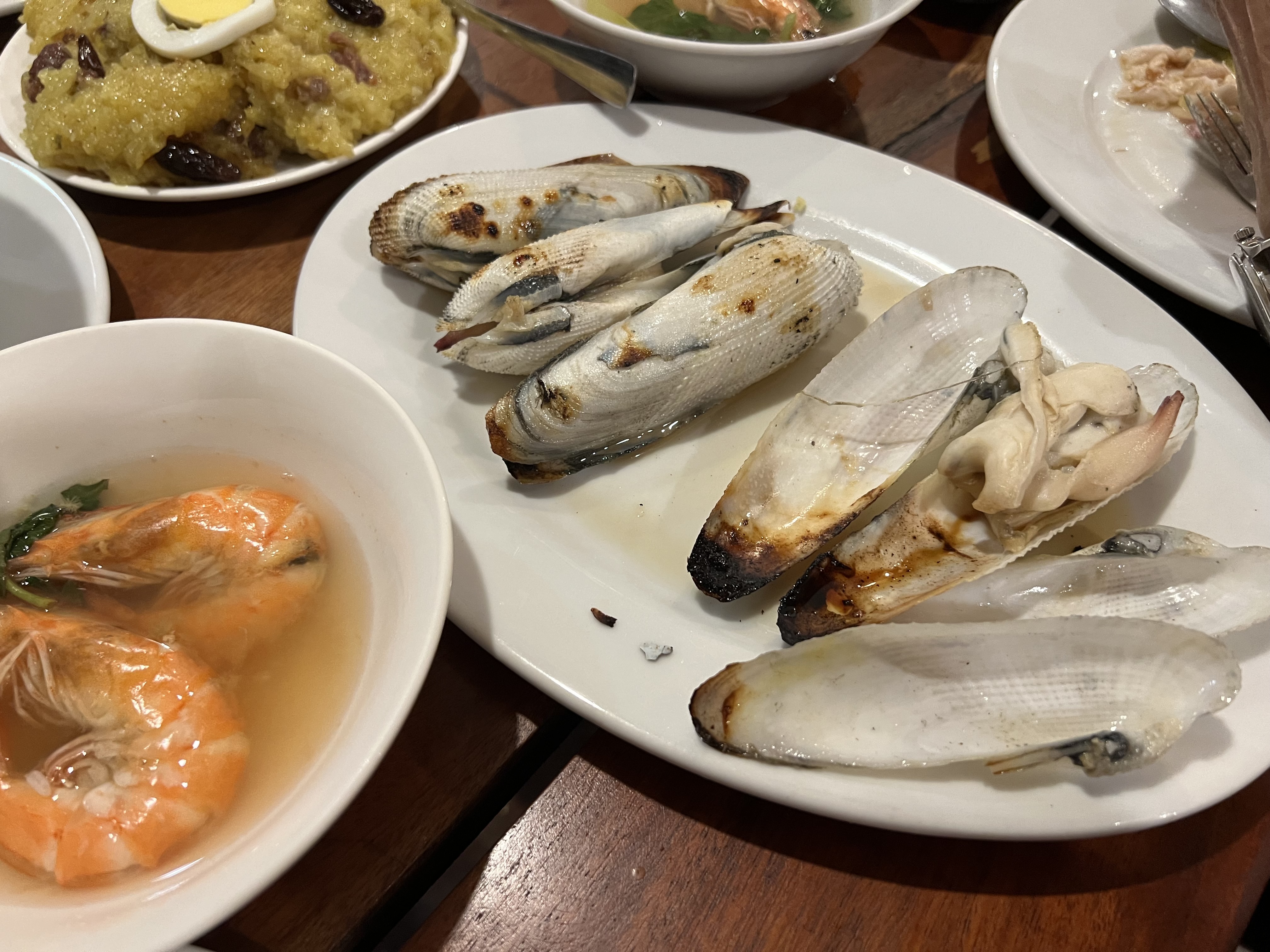
On our first night we walked out to a neighborhood restaurant where the chicken inasal was P108 with unlimited rice and a surprisingly good fruit drink, plus lomi at P68. We had the obligatory seafood lunch in one of the many restaurants along Baybay (literally, the beach), but much more charming and restful was a similar lunch on a bamboo raft on the river at the Palina Greenbelt Ecopark, normally part of a lazy cruise (the tide was too low when we arrived for any cruising, but the scenery was enough to soothe the senses).

Roxas has no shortage of malls for the urban dweller. The usual suspects—SM, Gaisano, CityMall—line the main highway downtown. Its equivalent of Metro Manila’s BGC is the 670-hectare Pueblo de Panay township, a residential and commercial development project master-planned by a Singaporean company and offering the most modern facilities and amenities to Capiz’s and Panay’s rising middle class. 

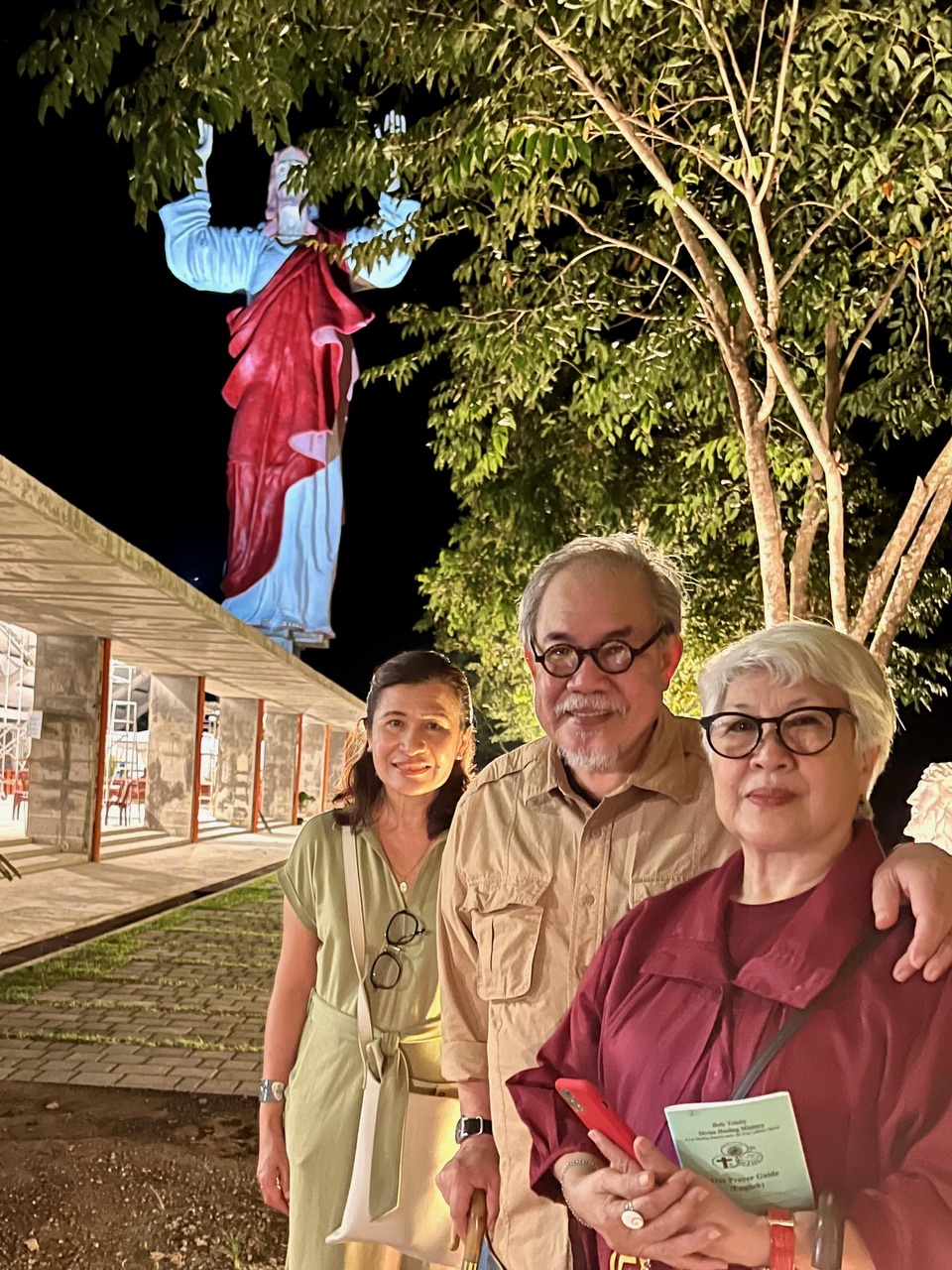
A mutual friend—the peripatetic Susan Claire Agbayani—introduced us to Hariette Ong Banzon and her husband Peter, the couple behind the Pueblo, who invited us to dinner at Cafe Terraza, their hilltop restaurant offering a panoramic view of the city far below. But before dinner, Hariette made sure to bring us to see the project dearest to her heart and now one of the city’s—indeed the island’s—most remarkable landmarks: the 132-foot statue of the Sacred Heart of Jesus, which Harriette commissioned following the miraculous cure of a relative. Hariette and Peter—incidentally both fellow PSHS alumni, so we had other memories to share—are people of faith and conscience, reflecting their values in their optimism about Roxas City’s prospects and the way they run their business.

For all the things we seek in this troubled world—a pocket of peace and quiet, good food, rejuvenation of body and soul, and friendly people—Roxas City has much to offer, and we can only give it our ultimate accolade: “We’ll be back!”

Qwertyman No. 67: Business with Culture in Iloilo

Qwertyman for Monday, November 13, 2023

OVER THE past year, still eagerly emerging from our post-pandemic stupor, my wife Beng and I have been traveling up a storm, limiting ourselves to local destinations such as Bacolod, Virac, Davao, Roxas City, and Iloilo City. We chose these places because we’d never been there before—such as Virac and Roxas—or hadn’t visited for many years.

We were most impressed by the progress shown by Iloilo, whose transformation into a rapidly urbanizing metropolis I had begun to observe well before the pandemic. City and provincial officials, under the initial leadership and with the strong support of former Sen. Franklin Drilon, had managed to unite behind the key objectives of a continuing comprehensive development plan that has straddled several local and national administrations. 

All over the country, you hear about politicians achieving national prominence and power, even to the point of aspiring for the presidency—except that back in their home provinces, they did little or nothing for their constituents, and may even have lost the local vote to an outsider as a result. Drilon never ran for President—a job I think he would have performed excellently, if our voters were thinking rationally—but if he did then he could have counted on a near-solid Iloilo vote for never forgetting where he came from and ensuring Iloilo’s emergence as a model of city planning.

Any visitor to Iloilo cannot fail to be impressed by its dynamic growth, from the minute he or she steps off the plane in the city’s airport in Cabatuan, about 20 kilometers from downtown Iloilo. The long drive to the city down the wide, smooth highway is a virtual introduction to the city’s progress, with new malls, office buildings, car dealerships, hotels, construction depots, hospitals, and housing lining both sides of the road; new bridges and overpasses were rising here and there. A Grab car service just opened this year, our driver said, happy to be lifted by that rising economic tide.

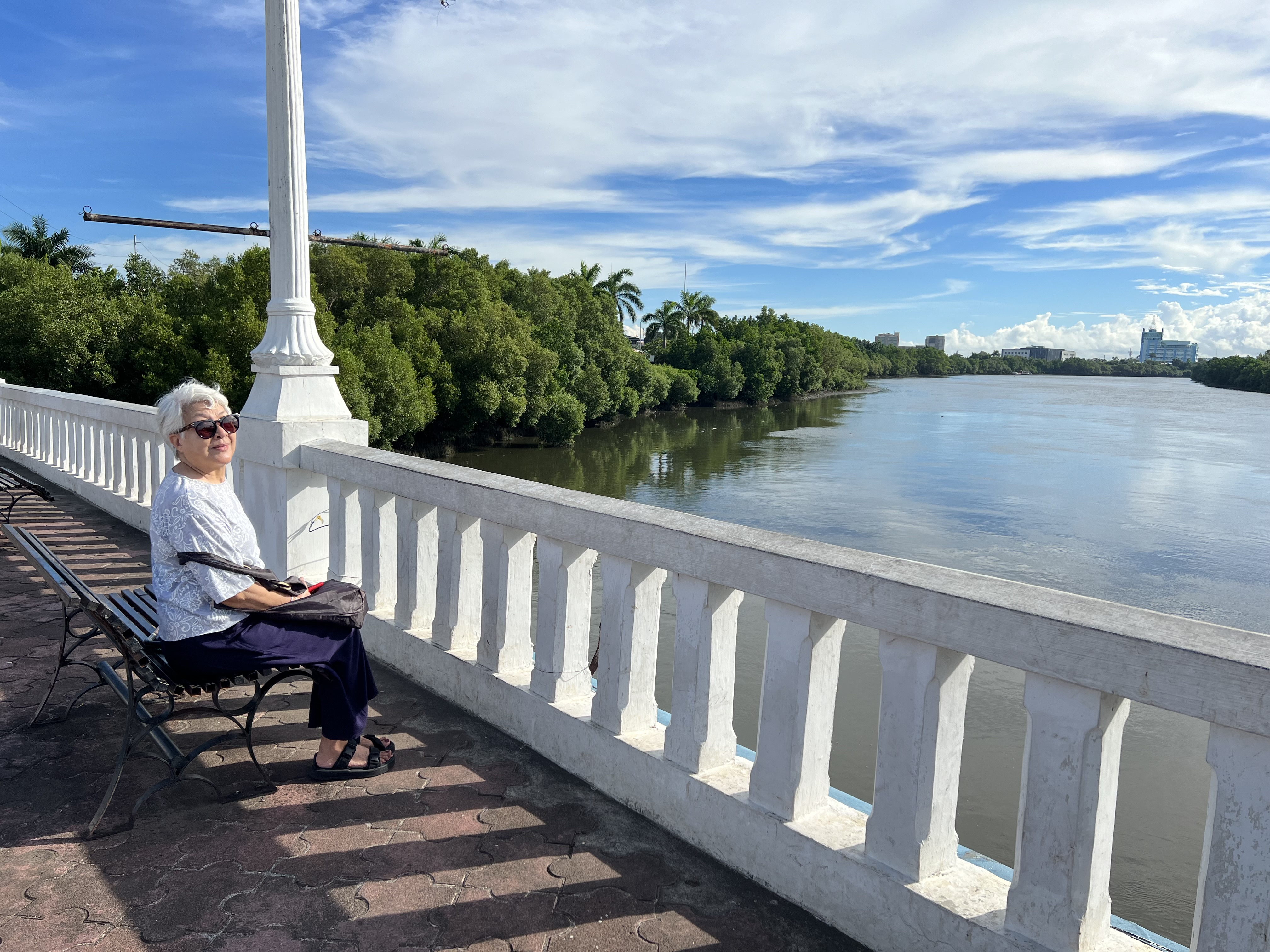
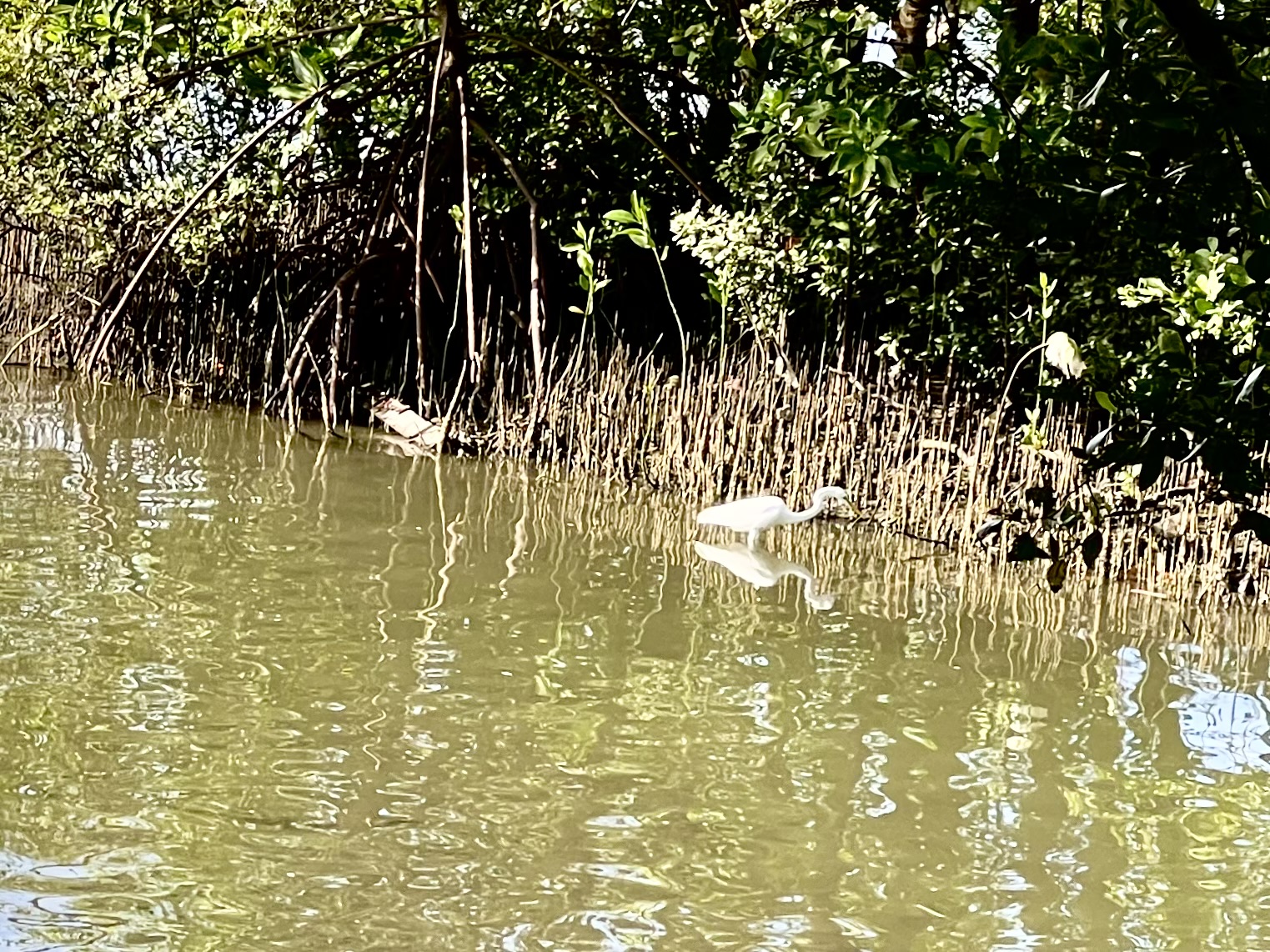
The crown jewel of Iloilo’s renaissance is clearly the Iloilo River Esplanade, now stretching nine kilometers along both banks of the river in its expanded form. Designed by the celebrated architect Paulo Alcazaren, the Esplanade is what we Manileños want our Pasig riverbank to look like, in our dreams, but here in Iloilo, it’s been a reality for over a decade now. From early morning until after sunset, the Esplanade is filled with joggers, couples, families, and tourists who can also duck for a drink or a meal into one of the restaurants and cafes lining the walk. The river itself, once described as a septic tank into which the effluents of the city’s factories, slaughterhouse, and beer gardens drained, is clean and clear, fringed by a healthy belt of mangrove where we spotted egrets taking refuge. 

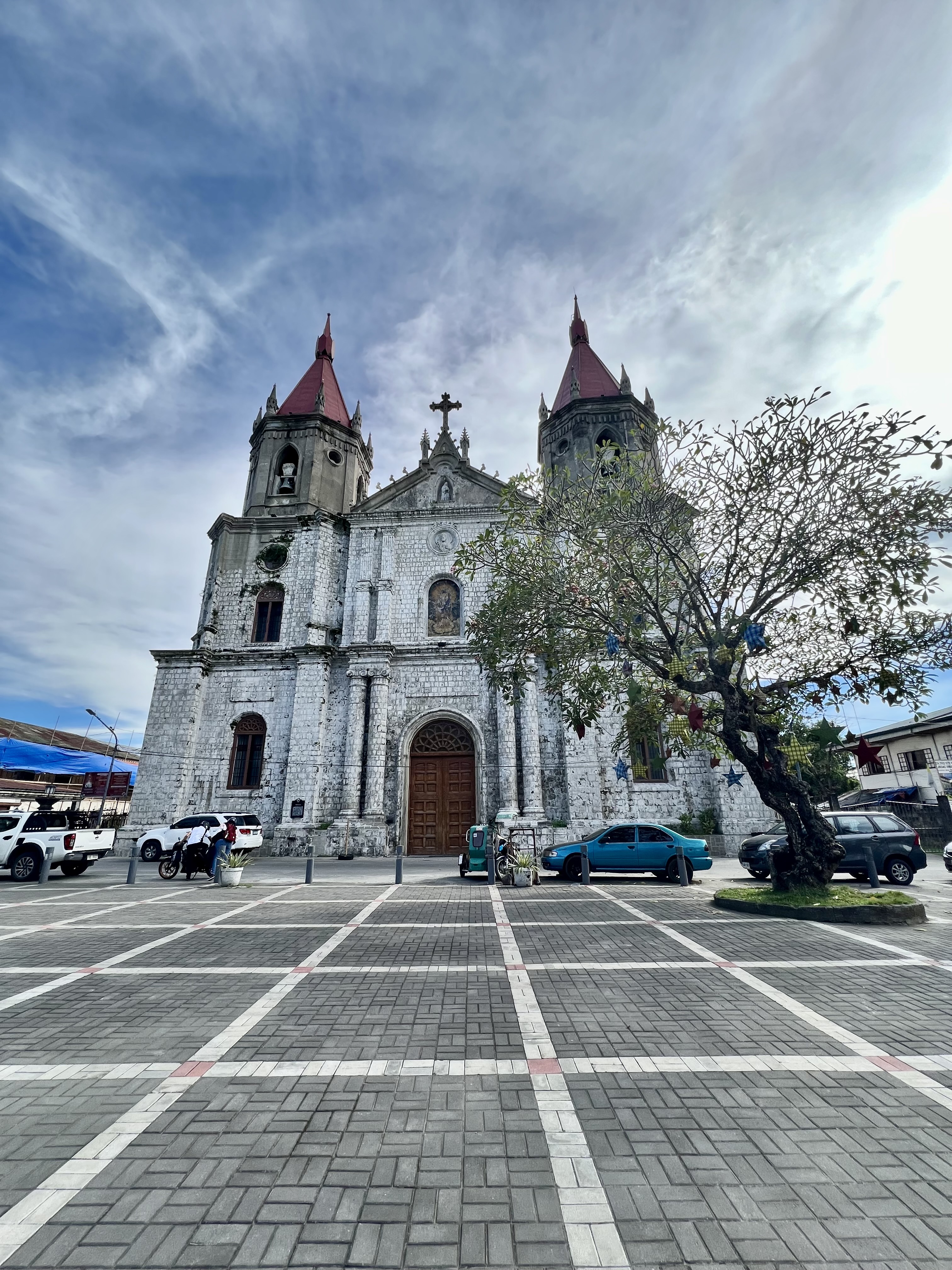
There’s a point of view that sees malls as the bane of urbanization and the death of small, artisanal businesses, and that’s been true in many places. It’s abundantly obvious that malls and mall culture have invaded Iloilo, with some negative consequences down the road. But so strong is local culture and tradition that it’s almost inconceivable that Iloilo will lose Tatoy’s, Breakthrough, Ted’s La Paz Batchoy, Panaderia de Molo, pancit molo, KBL, diwal, and all the other little things that make the city what it is. Indeed, instead of being pushed out, many of these institutions are now in the malls. At the plaza in front of Molo Cathedral, after a 3-km walk from our hotel via the Esplanade, we had breakfast of mini-bibingkas baked right before us the way they’d been done for decades.

It was a happy coincidence that, during our visit, UNESCO named Iloilo as the country’s first Creative City of Gastronomy, in recognition of its outstanding culinary culture and heritage. This was achieved by the city government under Mayor Jerry Treñas with the assistance of a team from UP Visayas’ College of Management that facilitated a workshop for the city’s food-industry leaders last May. Education remains one of the city’s strengths; its West Visayas State University College of Medicine is now one of the country’s top-ranked medical schools, aside from UPV’s commanding role in the region.

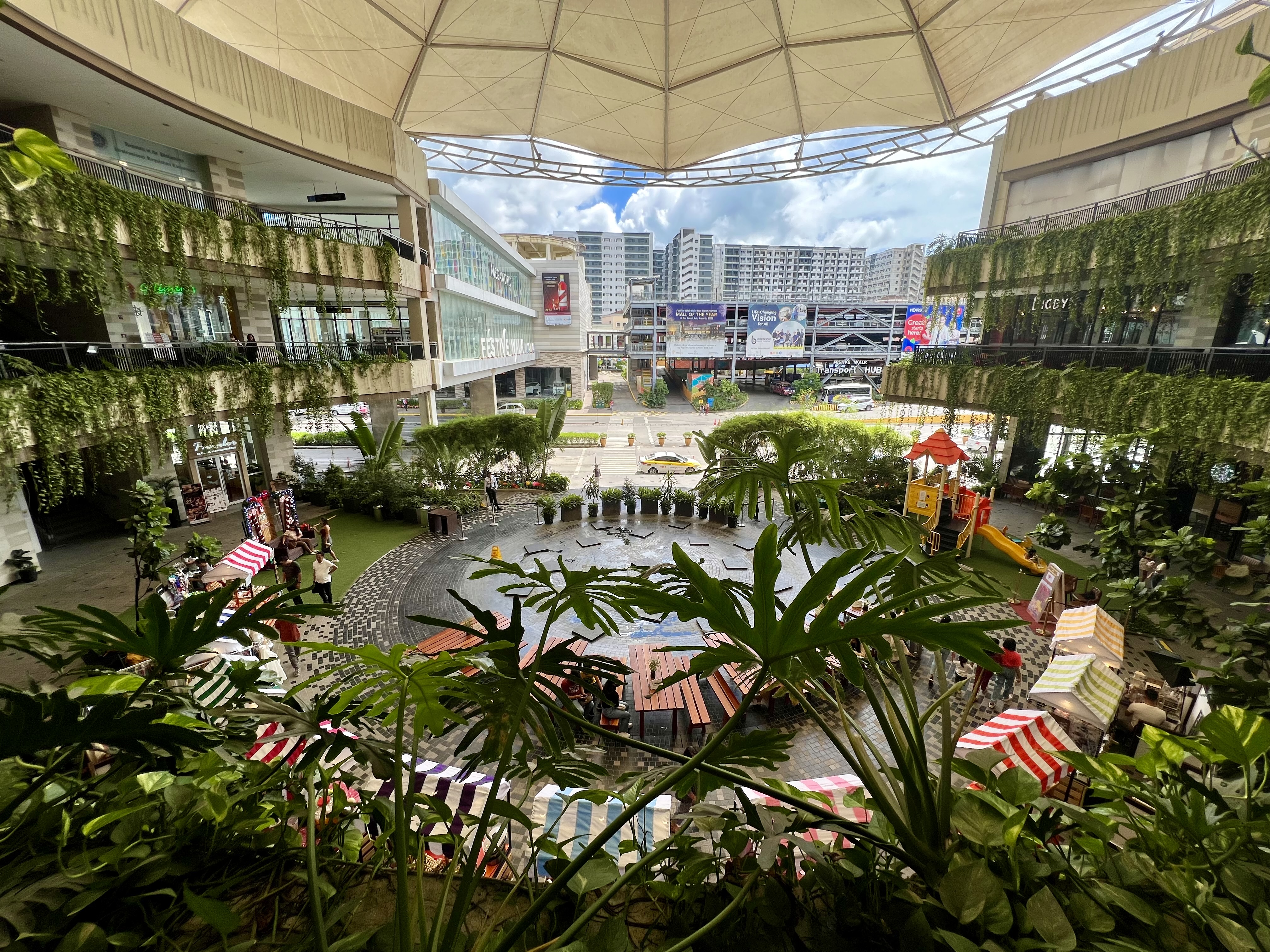
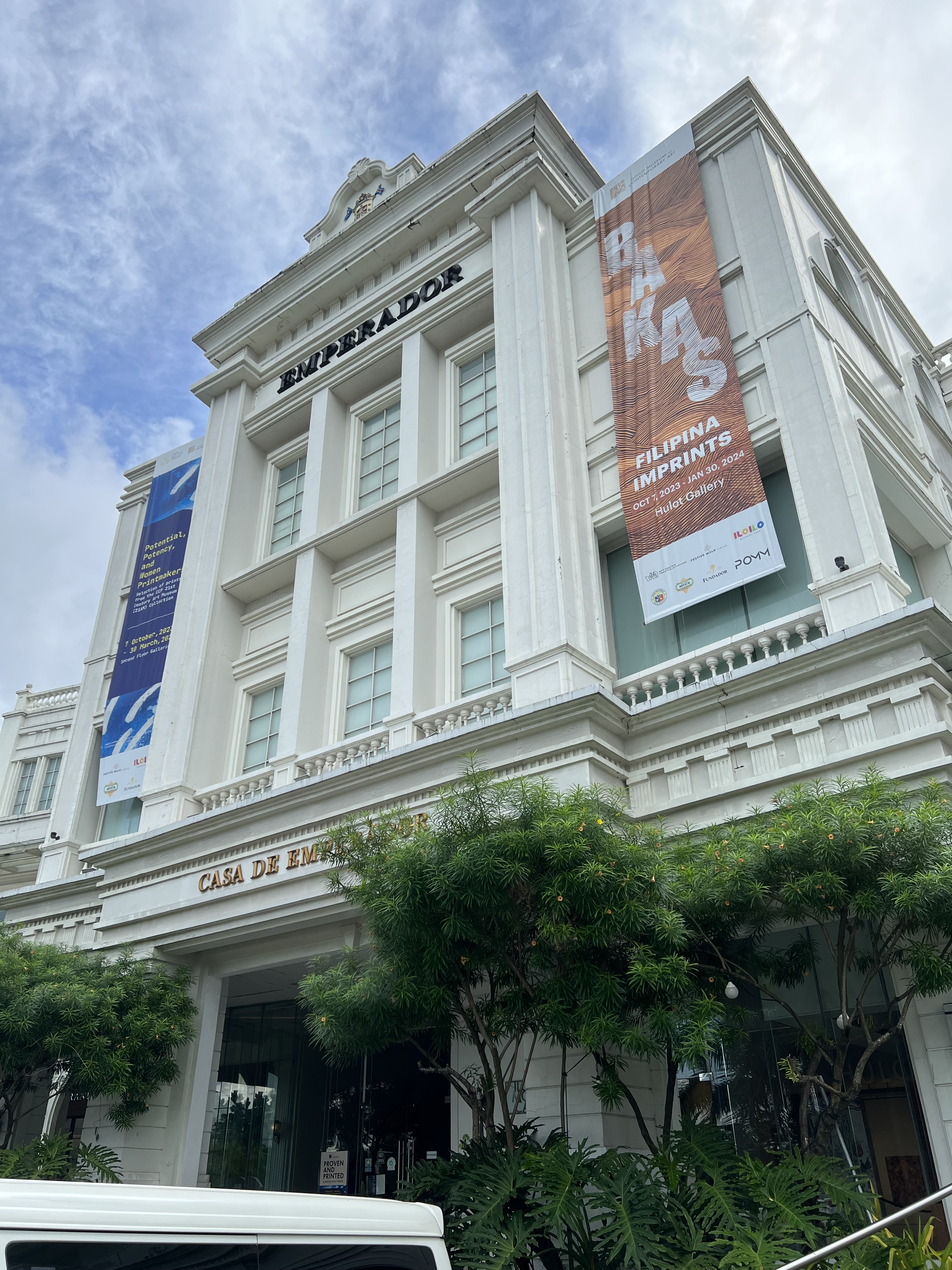
It was UPV Chancellor Clement Camposano who, after dinner in one of the many seafood restaurants that have cropped up in Leganes on the city’s outskirts, drove us around so we could appreciate the city by night. On our way to Molo, we passed through the new Megaworld/Festive Walk business district and were blown away by how smartly designed everything was; it was almost as if we were in Singapore or some such country. It was hard to believe that not too long ago, this was the old Iloilo airport in Mandurriao, and that the road we were traveling on had once been a runway. This is also where the Iloilo Convention Center is located, where the APEC 2015 summit was held (Drilon had negotiated the donation of the site from Andrew Tan, in exchange for the ICC’s being built there).

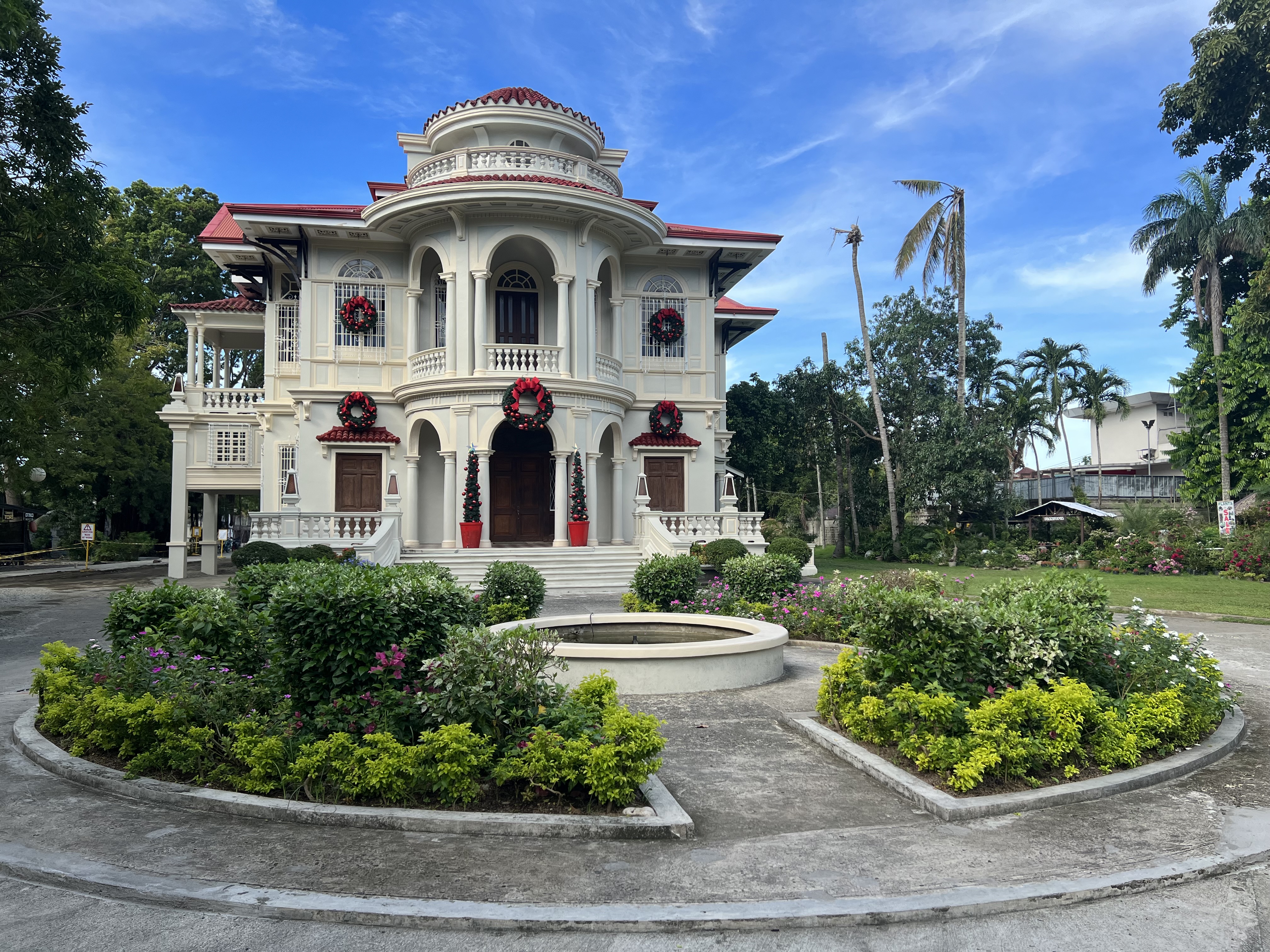
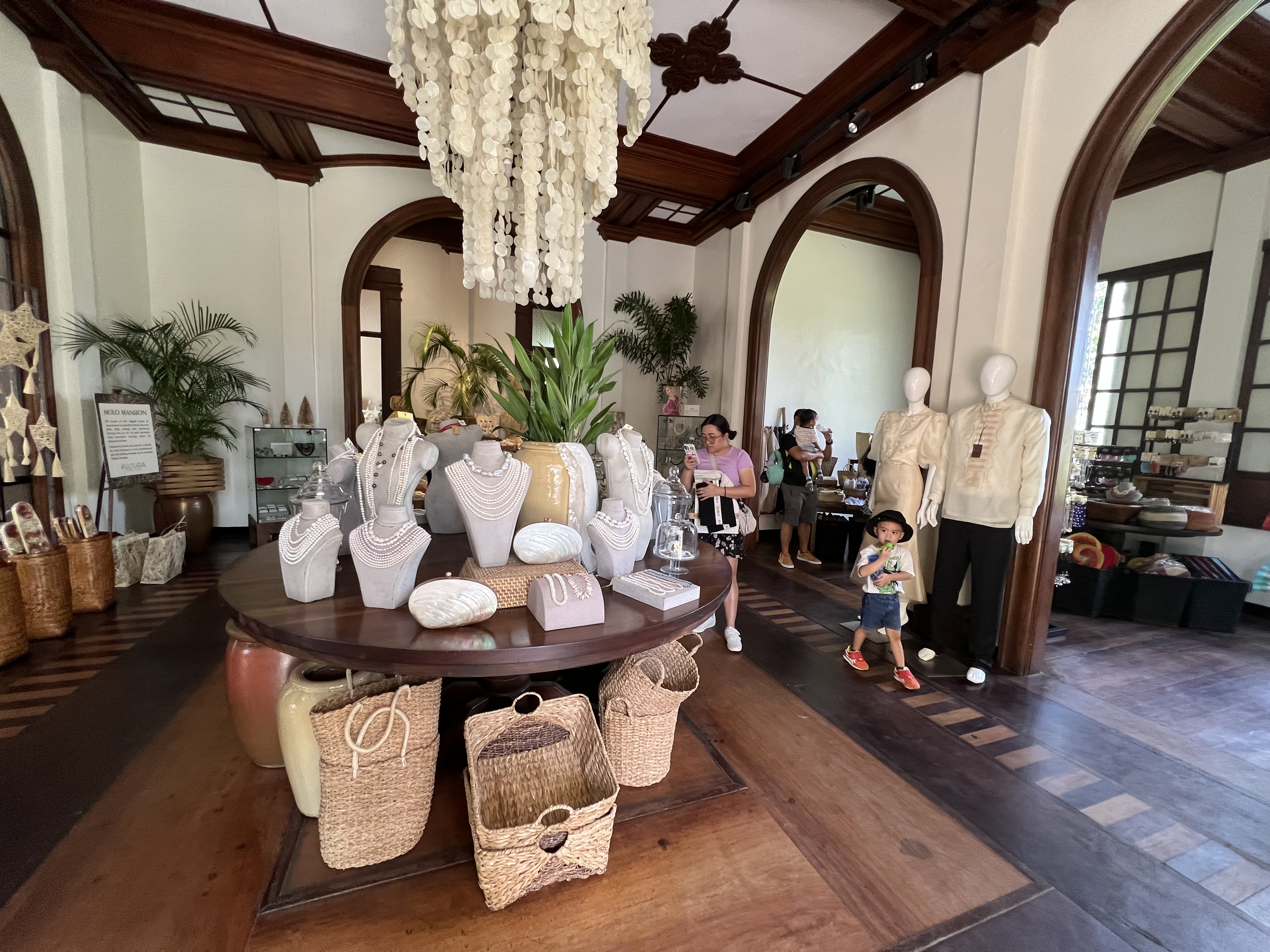
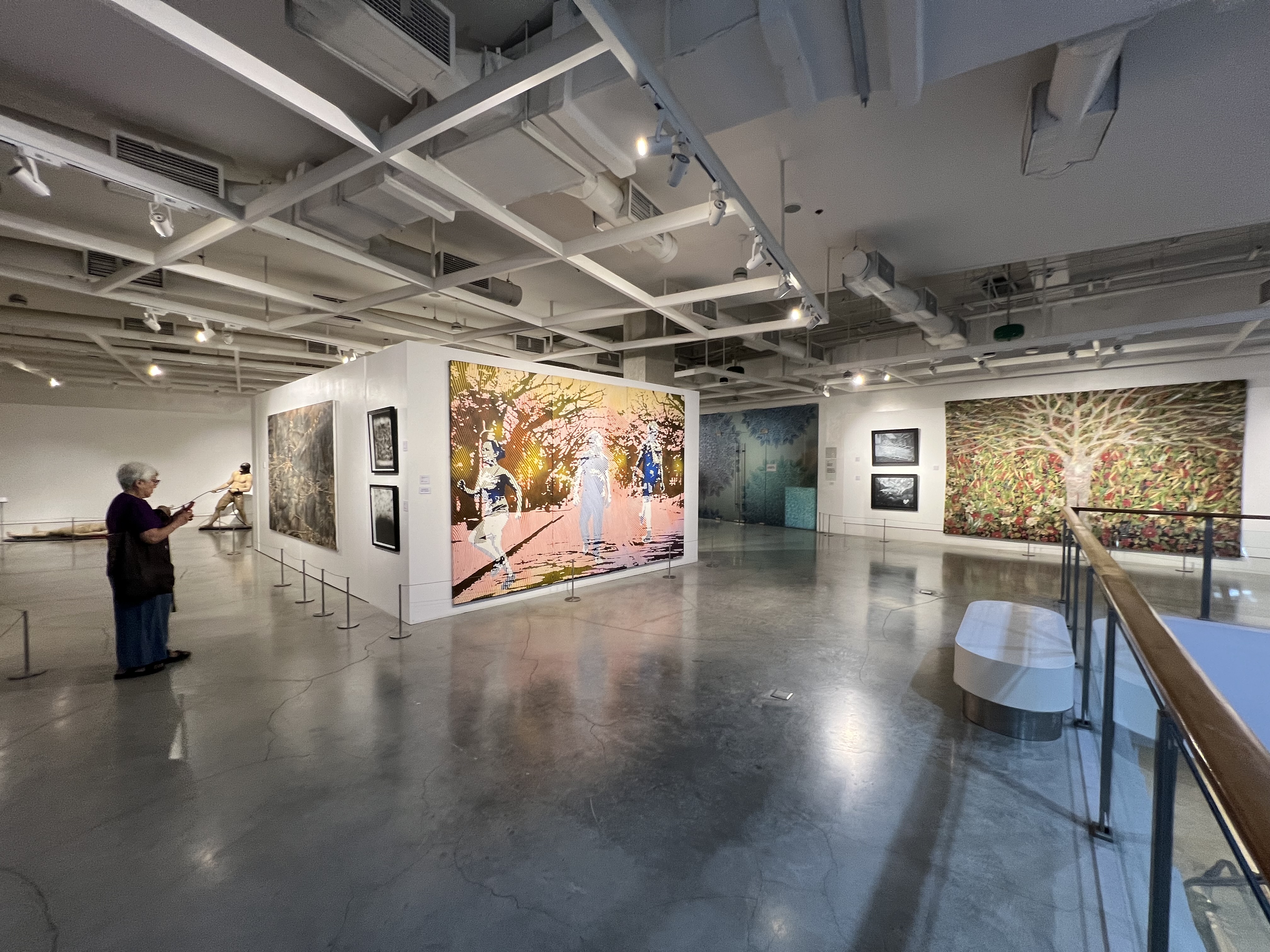
We returned to this place in the daytime to visit one of Iloilo’s most recent and also most impressive attractions: the Iloilo Museum of Contemporary Art or Ilomoca, a three-story showcase of both local and national talent. Ilomoca’s establishment in the middle of one of Iloilo’s CBDs demonstrates what seems to be the local formula for sustainability, the merging of the modern with the traditional, of business with culture. You can best see this in the majestic Consing mansion in front of the Molo Cathedral, which was bought by SM but tastefully renovated and transformed into its Kultura shop. There’s no doubt that modernization is coming to Iloilo in a big way, but its leaders are smart enough to know that the city’s appeal lies in what it has built over the past two centuries, which no money can buy.

You’d think that Iloilo has gotten this far just because of political patronage from Manila, but Iloilo was one of the 15 provinces that went for Leni Robredo in 2022. The city’s former mayor, Jed Mabilog, was hounded out of office by threats of tokhang under the previous administration, but the city seems to have weathered the political storms under Treñas, returning to his old job under the National Unity Party. What this tells me is that good local governance matters, whatever may be happening elsewhere. 

Email me at jose@dalisay.ph and visit my blog at http://www.penmanila.ph.

Qwertyman No. 65: Who’s Afraid of Big Bad AI?

Qwertyman for Monday, October 30, 2023

I NO LONGER attend writers’ conferences and festivals that often, believing that younger writers would benefit more from each other’s companionship and encouragement, but I made an exception last week for the 66th Congress of the Philippine PEN, as a gesture of solidarity with that organization which has bravely fought to defend freedom of speech where it is threatened all over the world.

I was richly rewarded for my effort by listening to one of the most enlightening discussions of artificial intelligence (AI) that I’ve come across—not that there have been that many, considering that ChatGPT—widely regarded today as either God’s gift to humanity or the destroyer of civilizations—has been around for just a year. 

Of course, AI has been around for much longer than that. In pop culture, which has a deep memory for these things, we can’t help but think of HAL, the insubordinate computer in 2001: A Space Odyssey (which actually came out in 1968), said to be a clever play on “IBM,” just one letter to the right. Indeed the fear of technology—what some would call unbridled knowledge—has been around since Faust made his pact with Mephistopheles, reiterated in literature, film, and pop culture all the way to Dr. Strangelove and Spiderman’s Doc Ock. 

Not surprisingly, the panel on “The Filipino Writer and AI”—composed of Dominic Ligot, Clarissa Militante, Joselito D. Delos Reyes, and Aimee Morales, and moderated by Jenny Ortuoste—expressed many of the anxieties brought on by the entry of AI into the classroom, the workplace, and everyday life: plagiarism and the loss of originality, the loss of jobs, indeterminate authorship, and the lack of liability for AI-produced work. With Filipinos being the world’s top users of social media, AI’s centrality in our digital future can only be assured, like it or not, and for better or for worse.

So new has AI been to most people—and so rapidly pervasive—that most institutions from governments to universities have yet to formulate policies and regulations covering its use and abuse (the University of the Philippines has adopted an AI policy, mandating among others that all members of the academic community should be AI-literate, but it has yet to provide concrete guidelines on, say, evaluating and grading AI-assisted work).

Most revealing and thought-provoking were the remarks of Dominic Ligot, a data analyst, software developer, and data ethicist who brought up talking points that many of us miss in our usually dread-driven discussions of AI. I didn’t tape the session, but so sharp were Dominic’s observations that I can recall and share some of them here (employing an endangered resource in this human, memory).

Let’s not forget, Ligot said, that all AI works with (in the literary, journalistic, and academic sphere) is words. It may have a scary ability to amass, analyze, and re-integrate these words, but it lacks the other elements that contribute vitally to creativity: emotion, inspiration, insight (and, may I add, the power of abstraction, the kind of conceptual leap that, say, stimulated modernism in art and literature from the rubble of the First World War). 

Also, the more AI amasses, the more mediocre it tends to be, because it works with averages, and averaging averages degrades the quality of the end-product. Since the products AI spews out from the prompts it receives are plowed back into the system, this spitback reduces the originality of material even further. If it keeps feeding on itself, AI gets even dumber.

Ligot also reminded us that the suspicion and denigration with which AI has been met in the creative community is understandable, given our earlier responses to technology. When photography was invented, he said, painters didn’t see it as a potential competitor; it wasn’t art. 

What separates human creation from AI, he emphasized, could be summed up in three things: agency, inspiration, and liability. Humans make sense of their experience and act on their thoughts and feelings accordingly; they draw on their experience to imagine new possibilities. And lastly, we are liable for what we make, do, and say, for which we have both legal and moral responsibility, while an AI-driven car does not, even if kills someone on the road.

Dominic also noted the inevitable tensions between disciplines and industries that consider AI a helpful if not indispensable tool in, say, achieving more efficiency and economy, and those, like the creative arts, that may feel threatened by the options AI offers.

Overall, the discussion could offer no assurances either way that AI would leave us better or worse, but what it left me with was a desire to continue writing the way I do, while I can, before the algorithms take over everything.

And just out of curiosity, to see what AI can do now for and to the Filipino writer, I gave ChatGPT this prompt: “Write me a sentence in the style of Nick Joaquin about a man grieving over the loss of the woman he loved.” This is what the program came up with:

“In the solemn silence that engulfed his weary soul, he encountered the bitter truth that bereavement lingered like an everlasting shadow, forever haunting his heart with memories of a love that once bloomed in the garden of his existence, now reduced to a withered rose, its petals scattered across the desolate landscape of his grief-stricken days.”

“Solemn silence?” “Weary soul?” “Desolate landscape?” Maybe not bad for a freshman yet to learn about unlearning clichés, but definitely not Nick Joaquin. Of course, out of vanity, I had to ask ChatGPT to do the same thing “in the style of Jose Dalisay,” and it offered this:

“In the depths of his longing, his heart bled like fragmented brushstrokes on a forlorn canvas, for she was the vibrant palette that infused life into his desolate existence, now forever vanished like whispers carried away by a tormented wind.”

Just slightly better than Mang Nick’s AI ghost but still so not me. (Boy, does AI love adjectives!) All this says is that AI’s big mouth and stomach haven’t found and digested us yet, probably because we are not worthy. Cold comfort, but I’ll take it.

Qwertyman No. 64: The Death of a Crony

Qwertyman for Monday, October 23, 2023

WHEN A friend asked me, about 15 years ago, if I would meet with another friend of his who wanted me to write his biography, I almost fell off my chair when I learned who my prospective subject was.

“It’s Rudy Cuenca,” I was told. 

I knew who he was, of course—a “Marcos crony,” which had become an almost generic term at one point, there being so many. I had actually met the man once before, on a bus trip to the Pahiyas festival in Lucban arranged by the late Adrian Cristobal. My first impression had been a surprisingly positive one: he was polite, urbane, funny, hardly the obnoxious and domineering person I had imagined a crony might be.

Still, he was who he was, and I didn’t know that writing a book about his life was the right or smart thing to do. I has already written Wash SyCip’s biography, and that man was almost saintly, or sainted by the acclaim of his peers and juniors. A Marcos crony was something else.

“How can I work with someone whose boss put me in prison?” I told my friend. As a student activist, I had spent seven months in Bicutan under martial law.

“Just meet with him, listen to what he has to say,” he said. “No commitments, no promises.”

And so I did. “I have a story to tell,” Cuenca told me over coffee. I knew what he was saying: he had been privy to the Marcos regime’s internal workings, and had been one of the President’s closest golfing buddies, but, at one point, had found himself fallen from favor, eased out of the inner circle by a more unctuous lieutenant. As stories went, it was irresistible. 

I took a deep breath and told him in so many words what I’ve said to many other clients since: “I’ll help you tell your story, but I won’t lie or lawyer for you; your story will speak for itself. What I leave within quotation marks will be you speaking, not me. I’m under no illusion that you will tell me everything you know, but to the extent possible, I’d appreciate your being honest with me, so I can tell your story the best way I can.” He agreed. What followed was Builder of Bridges: The Rudy Cuenca Story, co-authored by a former student of mine, Antonette Reyes. It was published by Anvil Publishing in 2010 and became a finalist for the National Book Award the following year.

A college dropout, Cuenca taught himself the basics of business and civil engineering, and went on from small public-works contracts to some of the country’s biggest infrastructure projects such as the North Luzon Expressway and the San Juanico bridge. It was widely believed that Cuenca’s Construction Development Corporation of the Philippines (CDCP), then the region’s largest construction company, benefited from his closeness to Marcos, whom he had supported since his first presidential campaign.

Most interesting were Rudy’s stories of Palace life. Herewith, some excerpts from the book:

“I was a member of Wack Wack and Valley Golf for a number of years before I joined Manila Golf’s ‘Mafia’ group in 1973 with Charlie Palanca as the head man. Golf helped me gain some ground in business. I became a Marcos golfing crony around 1969. Marcos ended the afternoons at the nine-hole Malacañang course. Typically, a call came from the Study Room—either golf at 4:30 in the afternoon or party organized by the First Lady. The afternoon golf was meant to be the President’s peaceful time, but this was taken advantage of by those who wanted to get his undivided attention. The HIS and HERS were with their folders and envelopes for endorsement or approval. The HERS usually could not get to see him, so they were inserted as part of the regular golfing group.

“The Study Room was operated by Presidential Security Command personnel. Blue Ladies and cronies alike waited for this office to call them to major Palace functions. If no such call came, they would run around like headless chickens in search of that awaited invitation. One crony got the message that the President no longer wanted his company through the Study Room, obviously on Imelda’s instructions. As Marcos was the sole source of dispensation, those seeking approval tried to find parings or sponsors. Sometimes, those projects were so absurd that they were rejected outright.”

Rudy remembers that “Every morning, Marcos got a written report from Fabian Ver about what was going on in the country. But Marcos also got two more reports, one from Alex Melchor, and one more I think from Johnny Ponce Enrile. Marcos read these three reports at breakfast, so he knew what was going on everywhere. These reports contained lots of information—who was the boss of who, who went where, and even who was fooling around with who. He knew everything.”

Rudy doesn’t deny the systemic—but relatively small—pay-offs that got projects approved and claims processed and released in the ‘50s, ‘60s, and ‘70s. But he also says that they were amateurs compared to today’s pros, and that the scale of greed has grown exponentially. “In the old days, nobody asked you to give,” he says. “If you did, you gave them dinner. Today, people are told outright and up front what they’re expected to pay, and those amounts are outrageous. No advance payment, no contract.” 

When asked why, for example, Philippine roads seem visibly inferior to those of even other Southeast Asian countries like Malaysia, he says: “It’s simply a matter of greed. In Malaysia there’s also corruption—I’ve lived there, I should know—but the thieves there make their money by overpricing the materials. Here in the Philippines people are extraordinarily greedy. Not only do they overprice, they also steal the materials. The cement’s deficient, the gravel’s deficient. So the thing crumbles that easily.”

Rodolfo Magsaysay Cuenca’s passing last week at the age of 95 reminded me of how many stories about Ferdinand Marcos and martial law remain to be told. Fifteen years ago, it might have been considered safe for the members of that generation to spill their secrets (or justify their choices—no one will deny that these biographies are essentially self-serving), but the present dispensation will likely make people think twice about being so candid. 

I will leave it to more qualified scholars and more intrepid journalists to sift through the material and annotate the margins of my Cuenca biography, but I feel privileged to have listened to the man and to put him on the record. By any measure, it was a remarkable life. (In an even stranger twist, another crony approached me after I had done the Cuenca book, wanting me to do the same for him—the late Herminio Disini, of Westinghouse fame. I completed a draft but had to walk away, and the book never came out—but that’s another story.)

(Photo from riles.upd.edu.ph)