Qwertyman No. 56: The Rule of Rules

Qwertyman for Monday, August 28, 2023

HAVE A problem? No worries—the Philippine government will make a rule to fix it (maybe). Don’t have a problem? No matter—the Philippine government will make a rule to give you one.

Some days it feels like all that government exists for is to make new rules, because, well, it’s the government, and so it has to look and sound like one. Never mind what the preamble to our Constitution states, imploring the aid of Almighty God to “establish a Government that shall embody our ideals and aspirations, promote the common good, conserve and develop our patrimony, and secure to ourselves and our posterity, the blessings of independence and democracy under the rule of law and a regime of truth, justice, freedom, love, equality, and peace.” Forget the rule of law and all that jazz; all hail the rule of rules.

Two pronouncements by our hallowed poohbahs caught our attention in recent weeks. 

The first was an order from the Vice President and Secretary of Education, DepEd Order No. 21,  directing in its implementing guidelines that all public schools must ensure that “school grounds, classrooms and all their walls and other school facilities are clean and free from unnecessary artwork, decorations, tarpaulins, and posters at all times…. Classroom walls shall remain bare and devoid of posters, decorations, or other posted materials. Classrooms should not be used to stockpile materials and should be clear of other unused items or items for disposal.”

Why? Because these were distractions to learning, explained the good secretary, presumably including in her edict the pictures of past presidents, national heroes, posters of Philippine birds and plants, TV-movie idols, Mama Mary, cellphone and softdrink advertisements, half-naked women, CPP-NPA recruitment posters, the periodic table of elements, weapons of Moroland, and the winking Jesus. 

I actually found myself agreeing with the removal of some of these popular items of wall décor, especially the pictures of politicians, which doubtlessly produce anxiety and despair in those who might contemplate them seriously. The good presidents will make you ask, “Where did all that goodness go?” The bad ones will invite only dismay and even self-loathing: “How did these jokers even make it to Malacañang? So you can still be that kind of person and become President? What on earth were we thinking?” This leads to even more profound and troublesome questions about the nature and practice of democracy, which a poorly trained and underpaid sixth-grade teacher will be hard put to answer, undermining whatever little authority she still exerts over her students. (To her credit, Sec. Sara reportedly removed her own picture from a classroom she visited.)

But Rizal, Bonifacio, Mabini, Tandang Sora, and the usual pantheon of Philippine heroes decking our classroom walls? Will removing their visages encourage students to think more deeply about their Science or Math problems, or will young minds simply drift off to Roblox, Taylor Swift, and Spongebob Squarepants? Will making our classrooms look as bare as prisons (and even prisons have calendars and pinups) lead to a spike in student attentiveness and performance? What does it say of DepEd—with all the academic resources and intelligence funds at its disposal—that directives like this are issued apparently on a whim and without prior and proper study? Where was the attention to science and education that the secretary was aiming for?

The other new rule that sent us screaming to our group chats was the imposition of new guidelines for foreign travel by the Inter-Agency Council Against Trafficking, announced by the Department of Justice, supposedly to curb the incidence of human trafficking, which we all acknowledge t0 be a serious problem. But is this a serious solution?

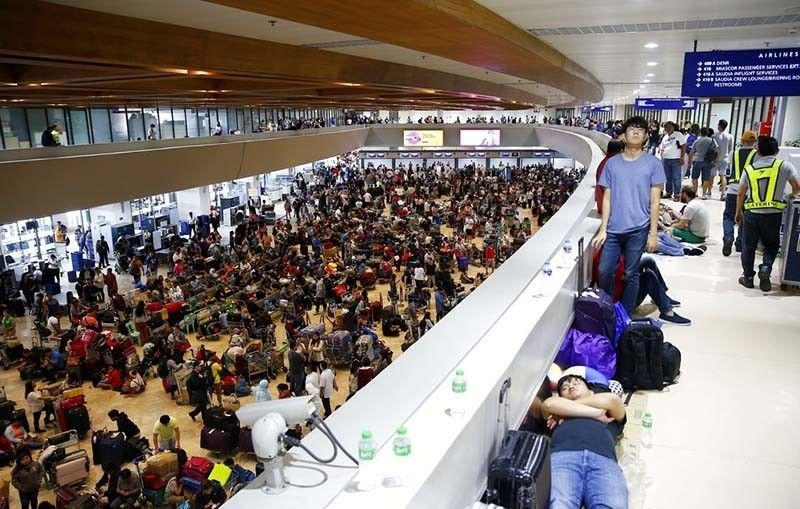
Under the new guidelines, Pinoys going abroad to see the sakura in Tokyo or to watch the New Year’s Eve ball drop in Manhattan won’t get past NAIA immigration without showing their flight and hotel bookings, proof of their financial capacity to afford their trip, and proof of employment. That’s a lot of paperwork to bring along, and if you’ve seen how long the queues can get at NAIA even without these papers in the way, you can imagine what they’re going to be like with each single document having to be scrutinized by an immigration officer. There’s an even longer list of additional requirements for people traveling under sponsorship and for OFWs—including a requirement for a child traveling with his or her parents to present a PSA-issued birth certificate, which was already a requirement for that child to have been issued a passport.

Exactly what this rigmarole adds to the reduction of trafficking is unclear to my muddled mind, because it seems to me that any good trafficker worth his or her illegal fees will be smart enough to produce the fake documents their wards will need to slip through airport security. As experience has shown, it isn’t even fake documentation but corruption and connivance that have greased the wheels of trafficking. 

Which reminds me, I received a letter some time ago from an expat Briton and a longtime Philippine resident named Thomas O’Donnell, complaining about such unnecessary requirements as the filing of annual reports by foreigners in this country. The Philippines has a reciprocity agreement with other countries such as the UK, Thomas says, but the UK doesn’t require Philippine residents there to do the same thing. So was it—like many of our other rules—just something to keep our bureaucrats occupied (or possibly, profitably occupied)? Where was the fun in the Philippines, Thomas lamented, and how was a fellow like him supposed to love it? 

Having lived here for 23 years, Thomas clearly has found other, countervailing reasons for staying on, but he has a point. Despite an anti-red tape law in the books, we still invent ways to complicate the simplest things. And answer me this: if the DepEd chief thinks that bare walls can lead to clearer thinking, shouldn’t we declutter our travel processes as well, so we can all sit in the departure lounge in peace with an hour to spare, waiting for our flight (that will likely be delayed, but that’s another story)?

Qwertyman No. 49: The Best We Can Do?

Qwertyman for Monday, July 10, 2023

“IS THIS the best we can do?” That question has been ringing in my mind since a couple of weeks ago when two issues came up that, for me and apparently many others, define the level of mediocrity to which governance and decision-making in this country has sunk. Both concerns have already been well ventilated in social media, which is far more scathing and cruel than a Monday column like mine can afford to be—I hate to start my readers’ week with something likely to leave them with an upset stomach—but let’s just think of this as a gargle to relieve our mouths and throats of unpleasant flavors.

First, ex-Atty. Larry Gadon. I don’t know the guy; I’ve yet to meet him and frankly I hope I never have to. I’ve heard the diatribe for which he was rightfully disbarred by the Supreme Court. It’s an awful slurry of verbal excrement that no one but its own source deserves to experience, and there’s doubtlessly more where it came from, disbarment or not. I can live with that, because I know that there’s an even higher court that will render judgment on this fellow and his kind, and it will come with a harshness commensurate to the totality of one’s character. 

What I find more odious is what came after: the Palace’s affirmation of its trust in its appointee as Presidential Adviser on Poverty Alleviation, and Gadon’s own vague reference to certain corporate managerial skills that supposedly qualified him for the job. I had been chatting with a lawyer the day after the disbarment, wondering what Malacañang would do next. “Oh, that won’t get past Justice Bersamin,” he said, adverting to the Executive Secretary. “Just you wait, they’ll take him down.” The next day Bersamin issued a lame press release echoing Gadon’s argument that he didn’t need to be a lawyer, anyway, to take on the Cabinet-level, Salary Grade 31 post, alleviating at least one person’s shortage of cash. (As Full Professor 12 in UP, after more than 30 years of teaching, I retired at Salary Grade 29. Am I envious? Of course I am—shouldn’t anyone be?)

At this point I was pulling hairs off my balding head. So, okay, he doesn’t need to be a lawyer to lead poverty alleviation. But what else does he bring to the job? Is choosing him the best BBM can do? Or does his selection merely confirm what Palace critics believe to be the lack of any genuine commitment to effective and legitimate governance, to give way to the dispensation of favors to political allies? Just when even skeptics were beginning to give their grudging approval to some appointments that made sense—Jimi FlorCruz as ambassador to China and Gibo Teodoro to Defense being two of them—we slid right back into the muck of patronage politics.

Does BBM think so poorly of the poor that he would entrust their fortunes to a man who, using the Supreme Court’s own words, was booted out of lawyering for his “misogynistic, sexist, abusive, and repeated intemperate language”? How will Presidential Adviser Gadon deal with the hundreds of poor women who will be flocking to his office seeking relief for their plaints? Now that he’s beyond the pale of the Supreme Court, will Gadon feel suitably chastened, or will he be emboldened to spread even more nightsoil around the yard? (The dramatist in me is whispering that true character will assert itself, and bring on its own downfall.)

Issue No. 2, the new “Love the Philippines” tourism slogan and the plagiarism mess that followed with its video. I never liked the word or expression “Meh,” which seems a lazy way to express dissatisfaction, but as 99% of social media seems to agree, “Love the Philippines” was triple-meh, totally uninspiring and unimaginative, and visually cluttered. I’m not even complaining about the P49 million reported to have been paid by the government to the ad agency that conceptualized the slogan; we know that the right few words, properly chosen, could make a world of difference in sales, many times more than the investment. (Nike’s “Just Do It” campaign, credited to the American Wieden+Kennedy agency, reportedly boosted Nike’s worldwide sales from $877 million in 1988 to $9.2 billion ten years later. We don’t know how much Nike paid for those three words, but its trademark and stunningly simple “swoosh” was drawn by a female college student who was paid $2 per hour in 1971.)

I also understand that we seem to be too self-critical and terribly hard to please when it comes to tourism slogans, maybe because they’re supposed to encapsulate and project our national identity—on which we have yet to arrive at a consensus, a century and a quarter onward. 

Dick Gordon’s “WOW Philippines” and the subsequent “It’s More Fun in the Philippines” earned their share of brickbats. But whatever those criticisms were, I’d have to agree that either one of them is infinitely better than “Love the Philippines,” whose imperative voice sounds tonally off. (Not to mention its susceptibility to parody, which the Palace’s PR watchdogs should have caught—a “Rob the Philippines” meme has been making the rounds, a tamer verb choice than others I’ve seen.) 

Social media is abuzz with what reportedly happened behind the scenes and what a Palace-favored director supposedly did to screw things up—but again, I’m not even going there, and will limit my dismay to the poor result that often emerges when money, politics, and egos get the better of creatives. The use of video clips from foreign sources to prop up a campaign for Philippine tourism was almost absurdly hilarious and totally inexcusable, and it’s hard to believe that a company as experienced and reputable as the contracted ad agency would have done that knowingly, although it owned up to it. 

At any rate, these missteps don’t do any good for any administration trying to earn the people’s trust, and the ultimate question is, what are they going to do about it? The answer will tell more about those in charge than the minor figures in these scandals.

Qwertyman No. 45: Onward to Frankfurt?

Qwertyman for Monday, June 12, 2023

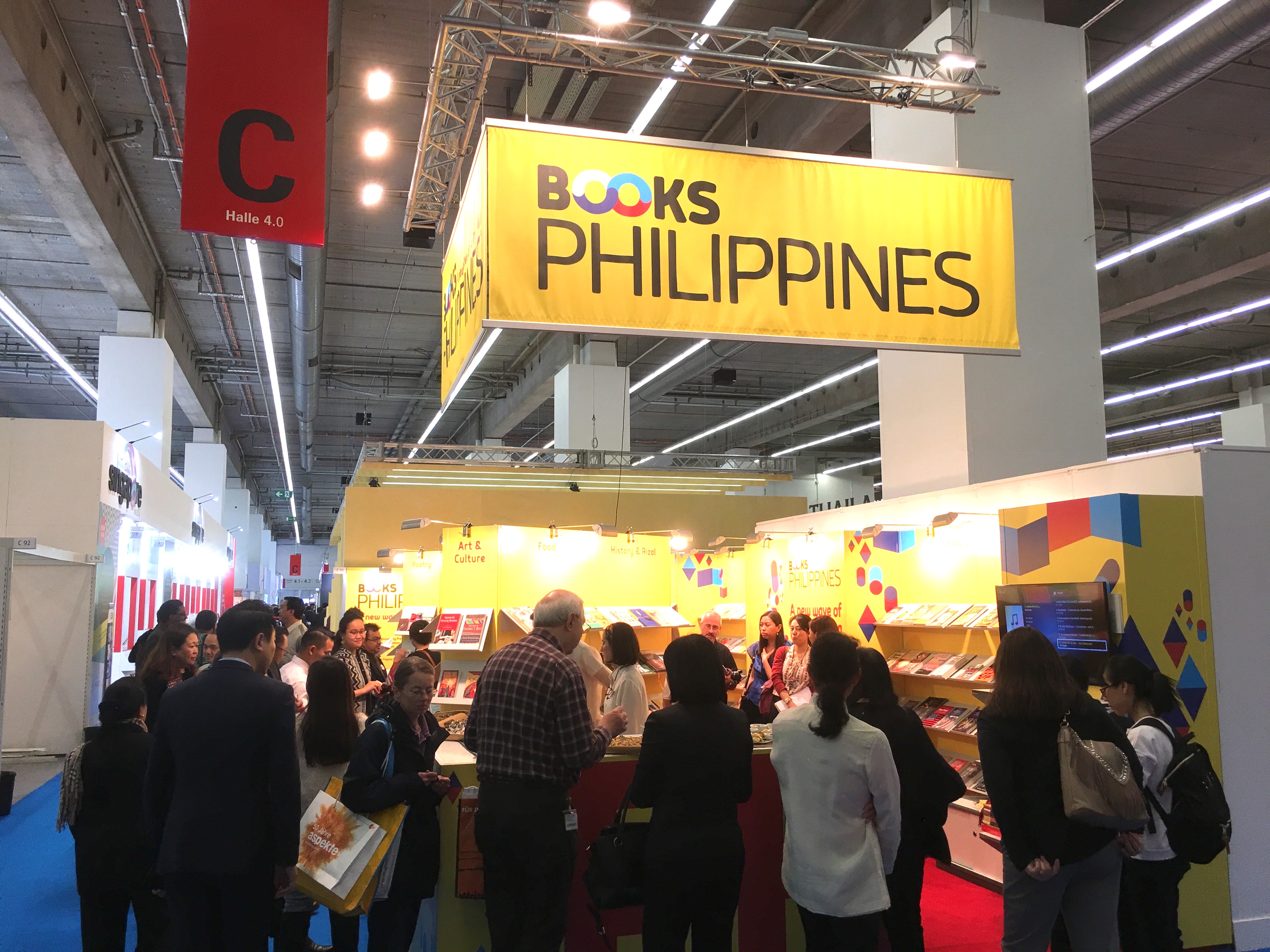
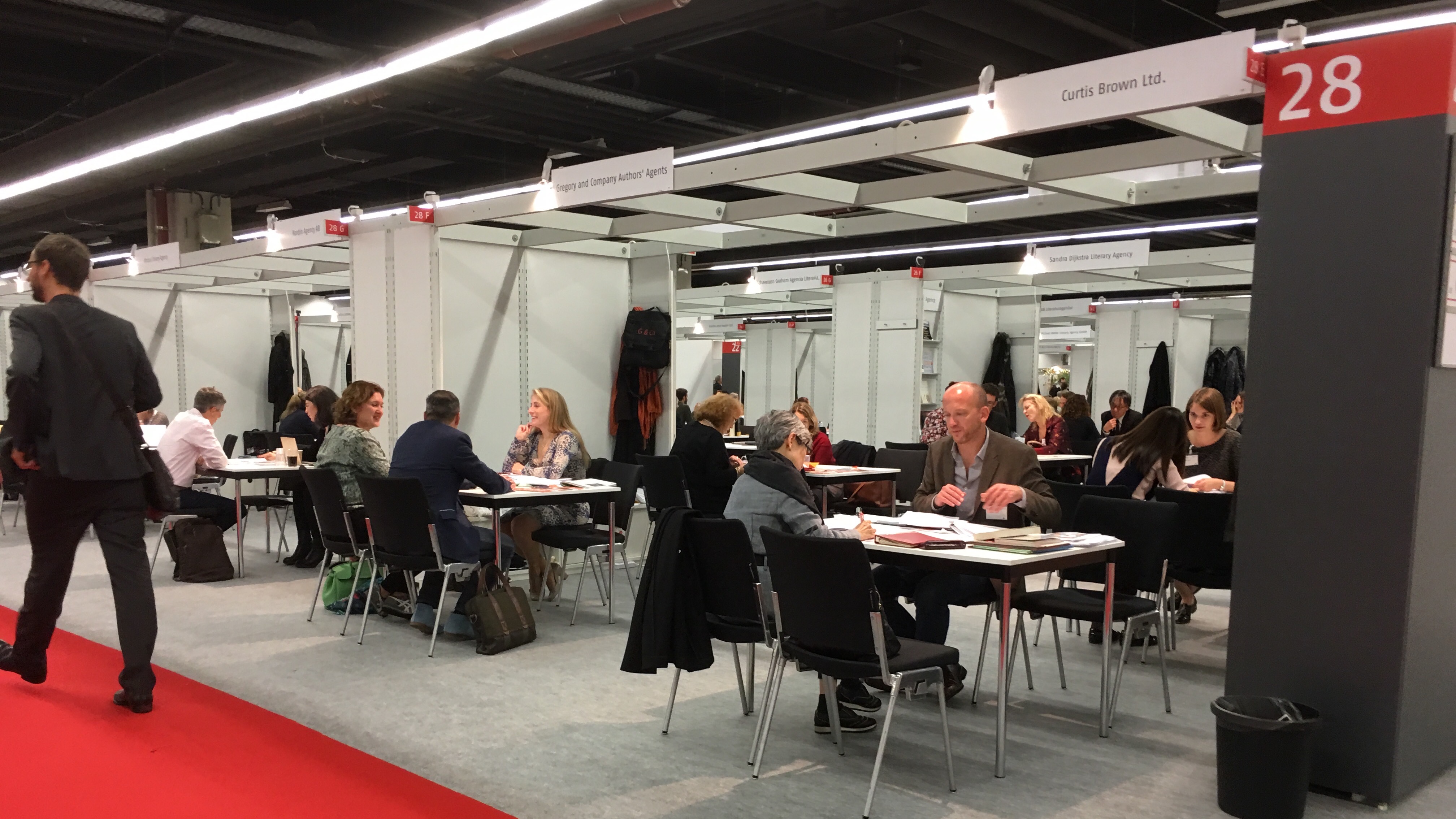
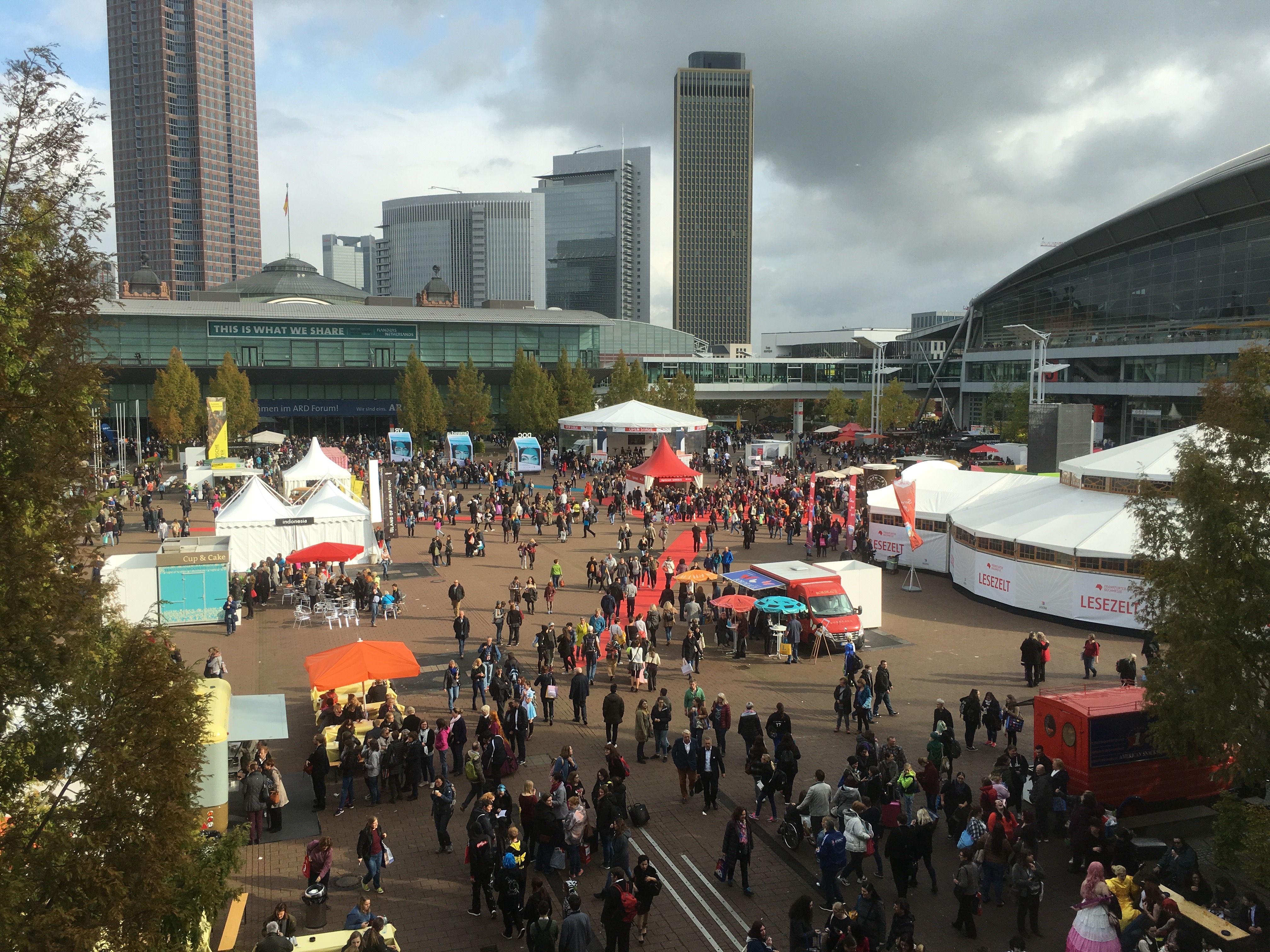
IF YOU were at the Philippine Book Festival (PBF) that took place at the World Trade Center earlier this month, you would have been surprised to find how many Filipinos were writing, publishing, selling, buying, and reading books. A project of the National Book Development Board (NBDB), the PBF was the first such event devoted solely to locally produced books—as opposed to, say, the Manila International Book Fair (MIBF) in September, which is open to books and publications from overseas. The NBDB wisely decided to showcase our homegrown literary talents—not only from Manila, and not only from my generation of old fogeys, but from all over the country, and writers of all persuasions and ages (as young as fourteen!).

We Pinoys have become so immersed in Netflix, YouTube, and social media that many of us have forgotten about reading, and what a good book can do for one’s mind and soul. We want everything delivered to us in short sentences—even in acronyms or, if possible, in memes—because long paragraphs (and, God forbid, pages) can only mean a waste of our precious time (which is, of course, best spent posting what we last ate on Instagram, and critiquing someone’s OOTD). Whether fiction or nonfiction, books challenge us to carry ideas through to the limits of our reason and imagination. The difference between a good meme and a good book can be that between wit and wisdom—between the bubbles that rise to the top of your champagne and the notes that linger on your tongue and senses long after you’ve put your drink down.

And despite the death knells that have been tolled for publishing and reading in this country, the droves of people who flocked to the PBF and the MIBF show otherwise; as I’ve noted elsewhere, more new authors and publishers are emerging across various genres and languages than ever before, spurred by writing programs and workshops, new technologies, and more exposure for Filipino writers in international markets.

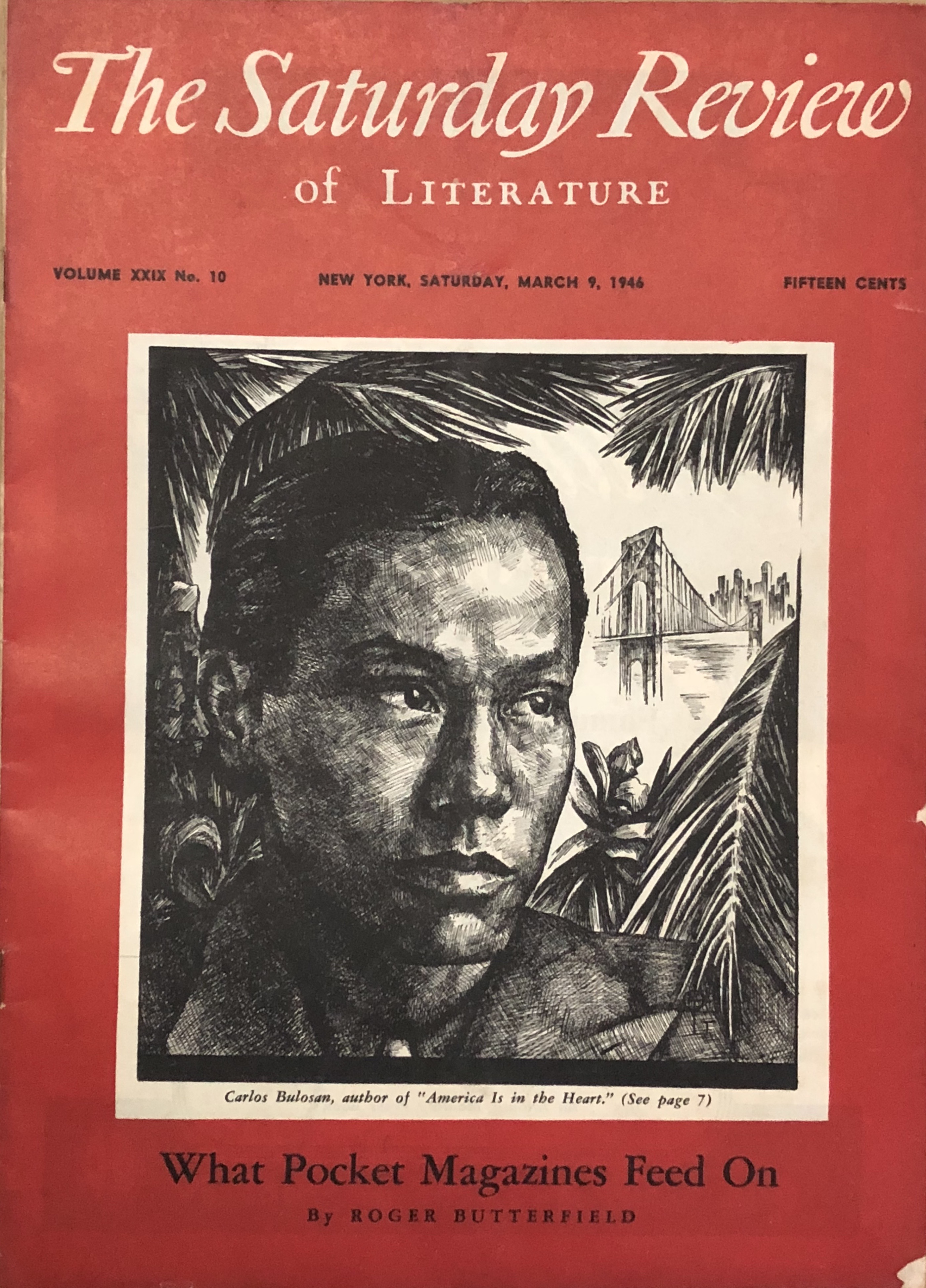
That last note—the emergence of Philippine writing in the global consciousness—has been a long time coming. We’ve had, of course, writers who’ve been published abroad, most notably Jose Rizal and the late National Artist F. Sionil Jose. In America, both expatriate and US-born writers such as Gina Apostol, Ninotchka Rosca, Jessica Hagedorn, Eric Gamalinda, Zach Linmark, and Brian Ascalon Roley have made important inroads into publishing, some with mainstream publishers. Of course, they were preceded by the likes of Carlos Bulosan, Jose Garcia Villa, NVM Gonzalez, and Bienvenido Santos, in a time when getting published in America seemed to be the apex of a literary career. We’re way past that now, having found our own voice and our own readers right here at home. 

I’ve often remarked that I’d rather be read by 10,000 Filipinos than 100,000 Americans, but I may have spoken too soon, as even those 10,000 Pinoys willing to buy and read a serious novel can be hard to round up. Therein lies the irony: we’re happy to write and publishers seem happy to publish, and the high attendance at the PBF could be a sign that things are changing, but creating a critical mass of local readers for literature remains a struggle. 

Even in America, where we imagine that almost four million Filipinos should be able to clear out an edition of 5,000 books without any trouble, that simply doesn’t happen. I suspect that that’s because we’ve never really been a book-reading culture, unlike the Japanese and the Indians, and the easy availability of entertainment on Netflix and Tiktok just aggravates the situation. (A more disturbing possibility is that our writers still haven’t learned to write the kind of stories with the kind of treatment that Filipino readers—and there are also many kinds of them—expect, without sacrificing literary “quality,” whatever that means. In my old age, this is what I’m aiming for—to give my readers stories that they’d want to see turned into movies.) 

There’s no doubt that we’re producing materials of high literary value—in English, Filipino, and our regional languages; we saw that in the PBF and we see it in our classes and workshops all the time. These works deserve to be shared with a broad audience—not just here, but overseas, where the Chinese, the Japanese, the Koreans, the Indonesians, and the Vietnamese have already made a name for themselves in the publishing world. 

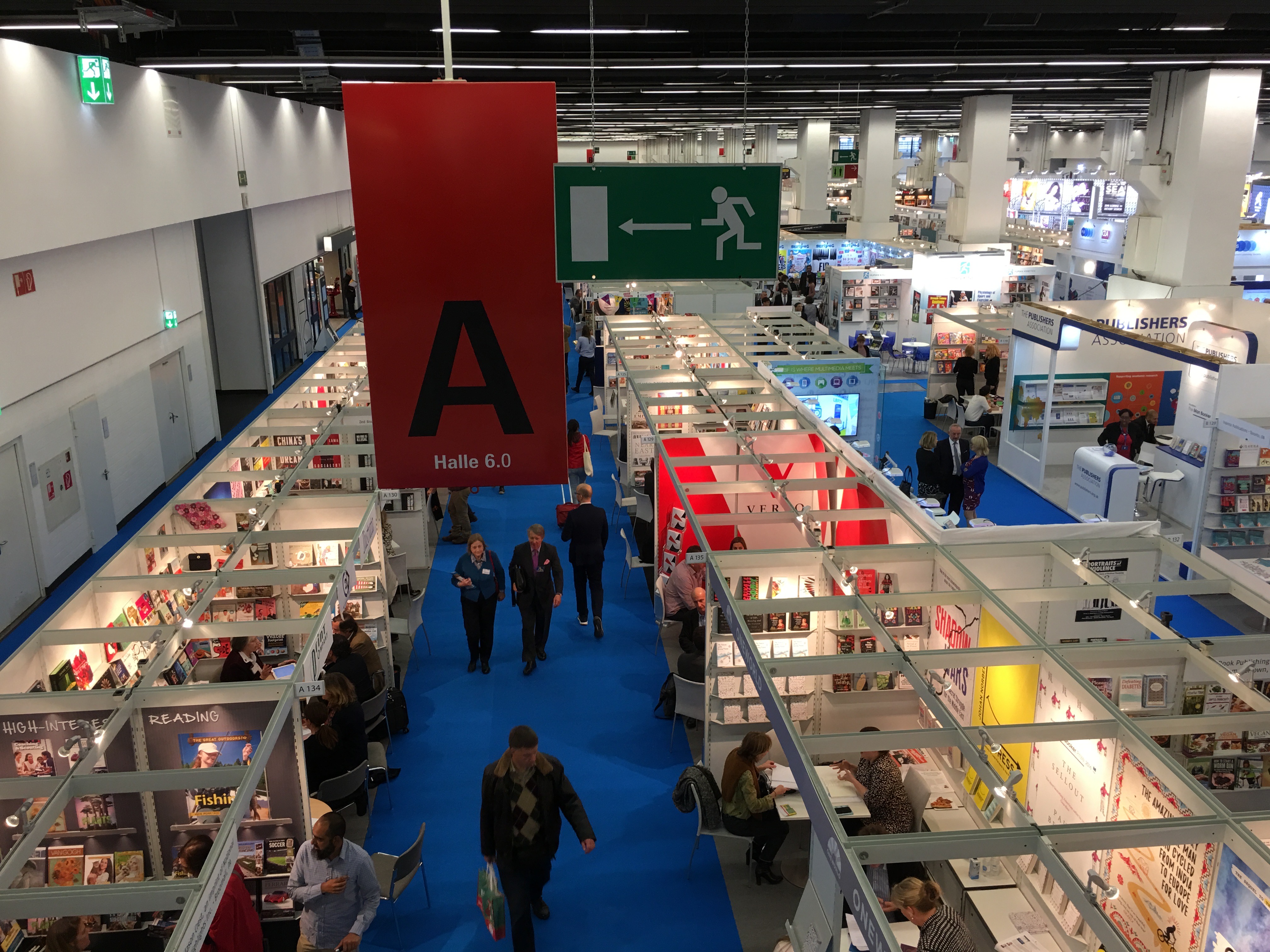
But that takes a network we still have to familiarize ourselves with and learn how to navigate—a network of translators, literary agents, editors, publishers, and booksellers largely unknown and therefore closed to us. We’re not totally clueless. Through the NBDB and local publishing stalwarts such as Karina Bolasco (just recently retired from the Ateneo Press and the founder of Anvil Publishing before that) and Andrea Pasion-Flores (our very first international literary agent, now owner of Milflores Publishing and president of the Book Development Association of the Philippines), the Philippines has been represented over the past few years in such major events as the annual Frankfurt Book Fair, the world’s largest such market of authors, publishers, and agents.

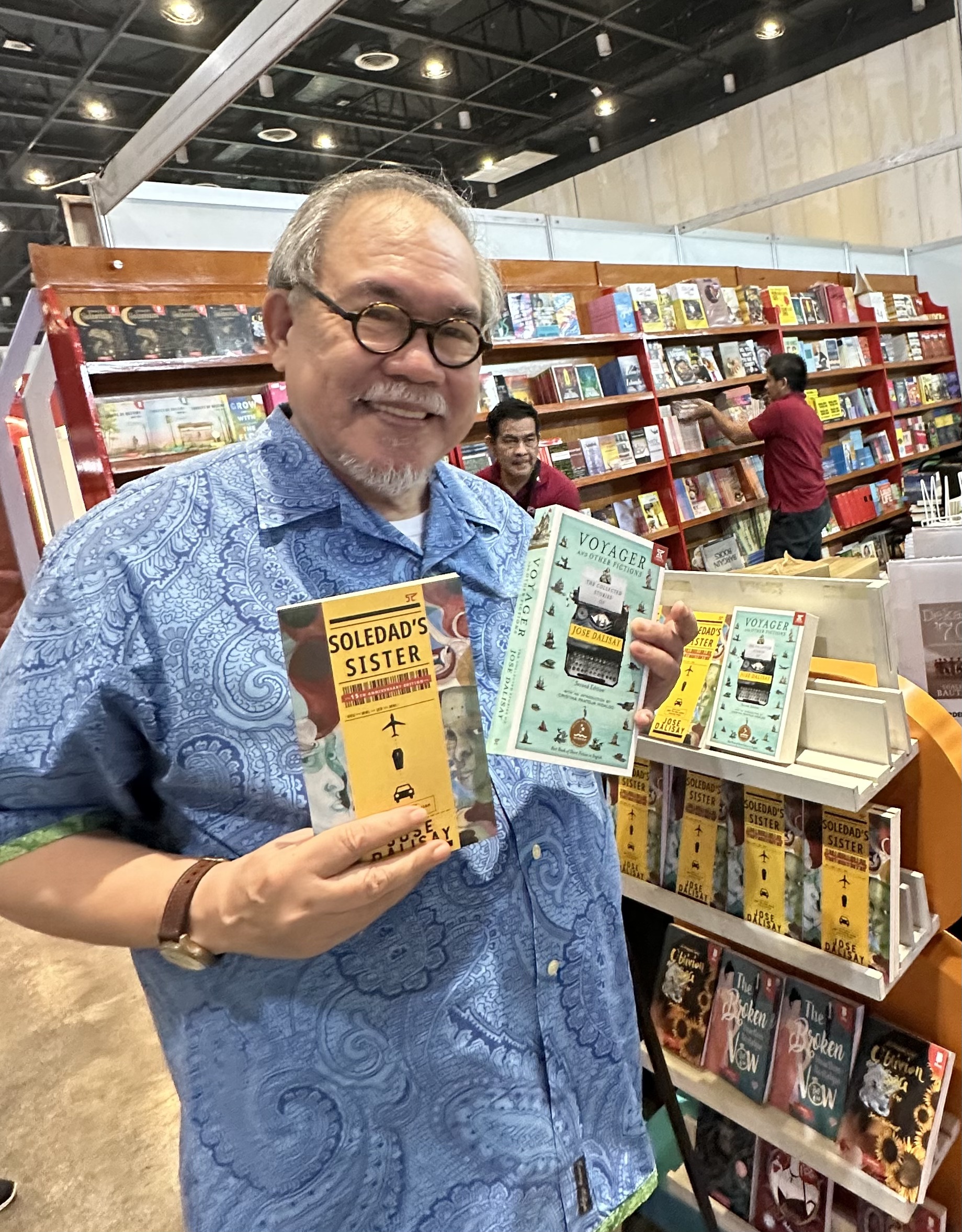
Not meaning to be immodest, thanks to my agents and publishers, I myself have benefited from this kind of exposure, having sold my second novel Soledad’s Sister in last year’s FBF into a German translation and edition, which just came out; before that, it had already been translated into and published in Italian and French, aside from an American edition. Imagine what that network could do for the rest of our writers.

This brings me to an idea whose time, I strongly believe, has come: focal representation in a forthcoming Frankfurt Book Fair as a “guest of honor,” a position reserved for a country wishing to showcase the best of its literary talent across all genres (two years ago it was Canada, followed by Slovenia). This has to be accompanied by a strong effort in translation—from the regional languages to English, and from English to other international languages like Spanish and French, perhaps even Chinese. It will take much planning and a sizeable budget, but as our recent forays into the Venice Biennale have shown on behalf of our leading artists, with the right cultural leadership and vision, it can be done.

Penman No. 451: A Harvest of Books

Penman for Sunday, June 4, 2023

IF YOU’RE reading this on this Sunday morning, then it’s not yet too late for you to find a cab and get yourself over to the World Trade Center in Pasay City to catch the last day of the Philippine Book Festival, and have your favorite Filipino authors sign their books for you.

Organized by the National Book Development Board (NBDB) in partnership with the National Library and other agencies and organizations, the PBF will showcase the best of new Philippine writing and publishing, with the bonus of having most of the authors around for signings, chats, and the now-obligatory selfies.

Since the Internet took off thirty years ago, people have been declaring that “Books are dead!” (And even before that, “The Author is dead!”—although, of course, not quite in that almost literal sense). Well, guess what—both are very much alive, whole new generations of them, as if the Internet never happened. I don’t have the hard figures to show—I’m sure the NBDB has them—but just from what I’ve seen at the past Manila International Book Fairs (the next one of which will be held in September), there’s much more new writing and publishing happening now than there was before the Internet. 

There are many drivers for that, one of which has to be the proliferation of writing programs and workshops, whose graduates really succeed only when they come out with books. (Like I often remind Creative Writing grad students who take forever to “perfect” their thesis projects, “You’re writing for no more than five readers—your dissertation committee—and when you’re done, your thesis will be sitting on a solitary shelf. Just do what you need to pass the damned defense and focus on producing your first book out of that draft! Your real examiners will be your readers.”) 

Another factor is the growth of the publishing industry, which has become much more diversified in terms of ownership, material, and audience. The long years of martial law drove much creative output underground, so to speak, with few available venues for literary publishing and only competitions like the Palancas providing incentives for continued production. (On the other hand, the government presses kept churning out books on the First Couple’s abounding wisdom.) Post-EDSA, the pent-up dam broke, and literature flourished, but still hardly on the scale we’re seeing today.

I suspect that’s because many new players have gone into publishing, finding niche markets for everything from religious and self-help books to graphic novels and high-end coffee-table books. Among these, I’d count Milflores Publishing, founded by the late Tony Hidalgo and now in the hands of the very capable Andrea Pasion-Flores. Balangay Books, focused on local literature, has been opening doors for new young authors, and belongs to the Indie Pub Collab PH, a group of independent publishers. Down south, Savage Mind Bookshop and the Ateneo de Naga University Press have made great strides in literary publishing not just in the Bicol region but well beyond. Emerging in the wake of the Pink Revolution, San Anselmo Publications has made a name for itself as a purveyor of progressive thought. A recent visit to OMF Literature’s bookshop and office along Boni Avenue showed me how Christian literature is flourishing, attracting both new authors and readers. 

Let’s not forget self-publishing, which with such new technologies as print-on-demand and e-books has outgrown the stigma of “vanity” publishing and has produced both commercial and critical successes. While overall quality remains highly variable, the free Internet has empowered and enabled a new generation of young people to feel like they can become “writers” by posting on such sites as Wattpad—and some of them will be. (The irony here is that, as on Amazon, writers who succeed in their e-book debuts then get picked up by publishers of physical books.) Professional design and editorial outfits such as Studio 5 and Perez NuMedia also exist to help individuals and institutions turn their ideas into prizewinning books.

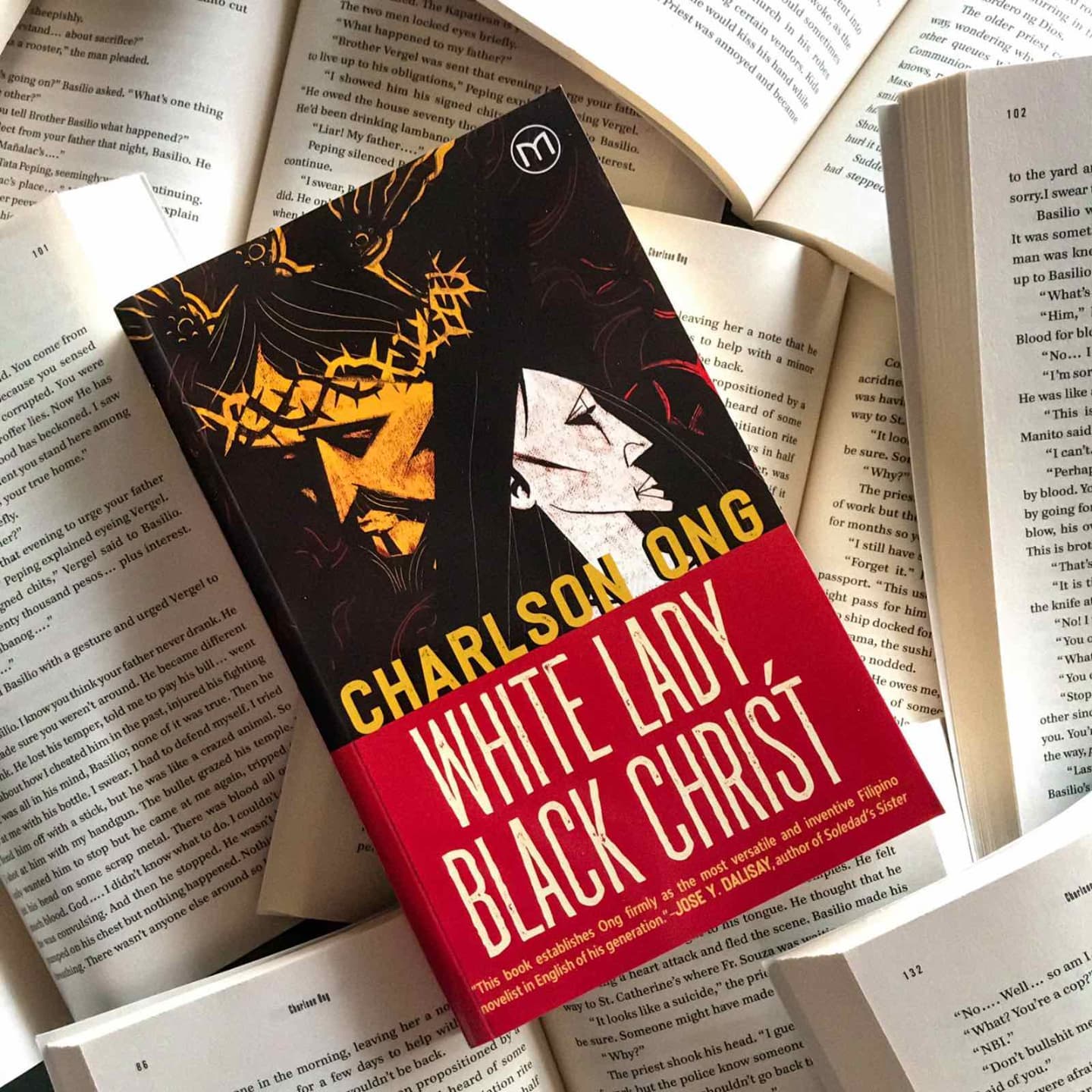
And then of course the long-established big-name publishers and academic publishers are still around: Anvil Publishing, UP Press, Ateneo de Manila University Press, UST Publishing House, and the University of San Carlos Press, among others. Vibal Publishing has produced impressive and sumptuously printed historical books—as has, let’s not forget, the National Historical Commission. They remain the publishers of choice for what might generally be considered prestigious but non-commercial projects, although their marketing savvy has vastly improved, from book design to distribution (much of the bookselling has moved online, to Shopee and Lazada). But since the wait at these publishing houses tends to be long, even established Filipino authors like novelist Charlson Ong (White Lady, Black Christ) have gone with such alternatives as Milflores (as did I, in its previous incarnation), which can often provide speedier results with no sacrifice of quality.

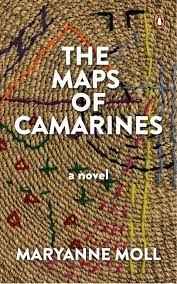
One more thing: more Filipino authors have begun to get published and noticed abroad, beyond America. Note the recent publication of Ulirát: The Best Contemporary Stories in Translation from the Philippines, edited by Tilde Acuña et al., and the South Africa-based Jim Pascual Agustin’s Waking Up to the Pattern Left by a Snail Overnight, both by Gaudy Boy in Singapore. Singapore is also where Penguin Random House SEA is based, and from where it published Danton Remoto’s novel Riverrun and his book of stories The Heart of Summer(aside from his translations of our classic works in Filipino), and Maryanne Moll’s novel The Maps of Camarines. I’m also happy to report that my novel Soledad’s Sister just came out in a German hardcover edition (as Last Call Manila) from Transit Buchverlag, following earlier editions in Italy, France, and the US. A 15th-anniversary edition of the novel, along with a new edition of my Voyager collected stories, are on sale at PFB—as are almost all of the books I mentioned here, with their authors on hand to sign them.

So wait no further and grab that ride to the WTC, for your share of this bountiful harvest of Filipino books. (Did I say that entrance is free?)

Penman No. 450: A Hillside Haven

Penman for Sunday, May 7, 2023

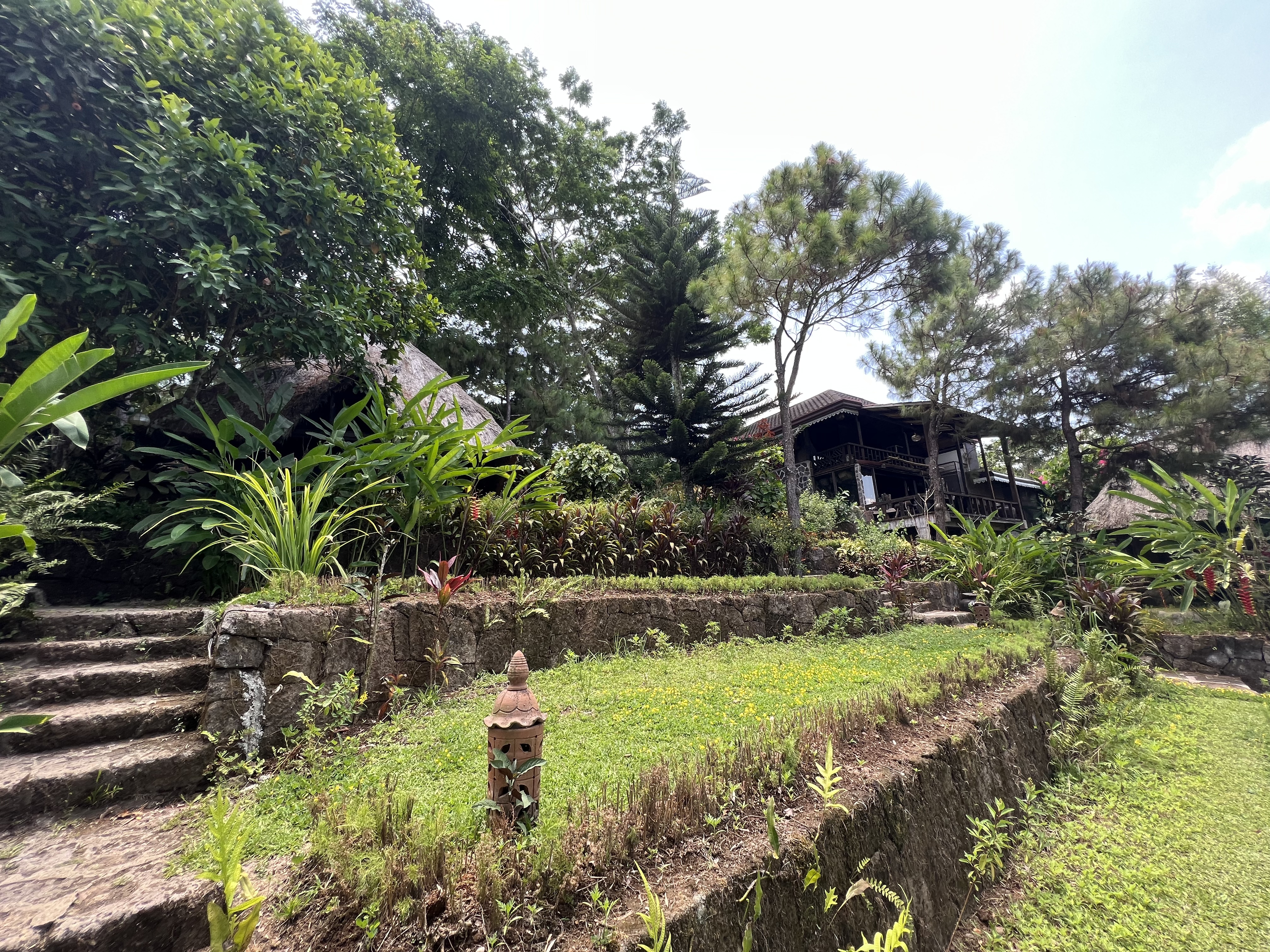
“SHAMBALA’ IN Tibetan Buddhism is a mythical kingdom where, according to lore, resides a community devoted to good deeds. But there’s a real version of it, aligned with the same beneficent principle, and it’s just two hours from Manila on a good day.

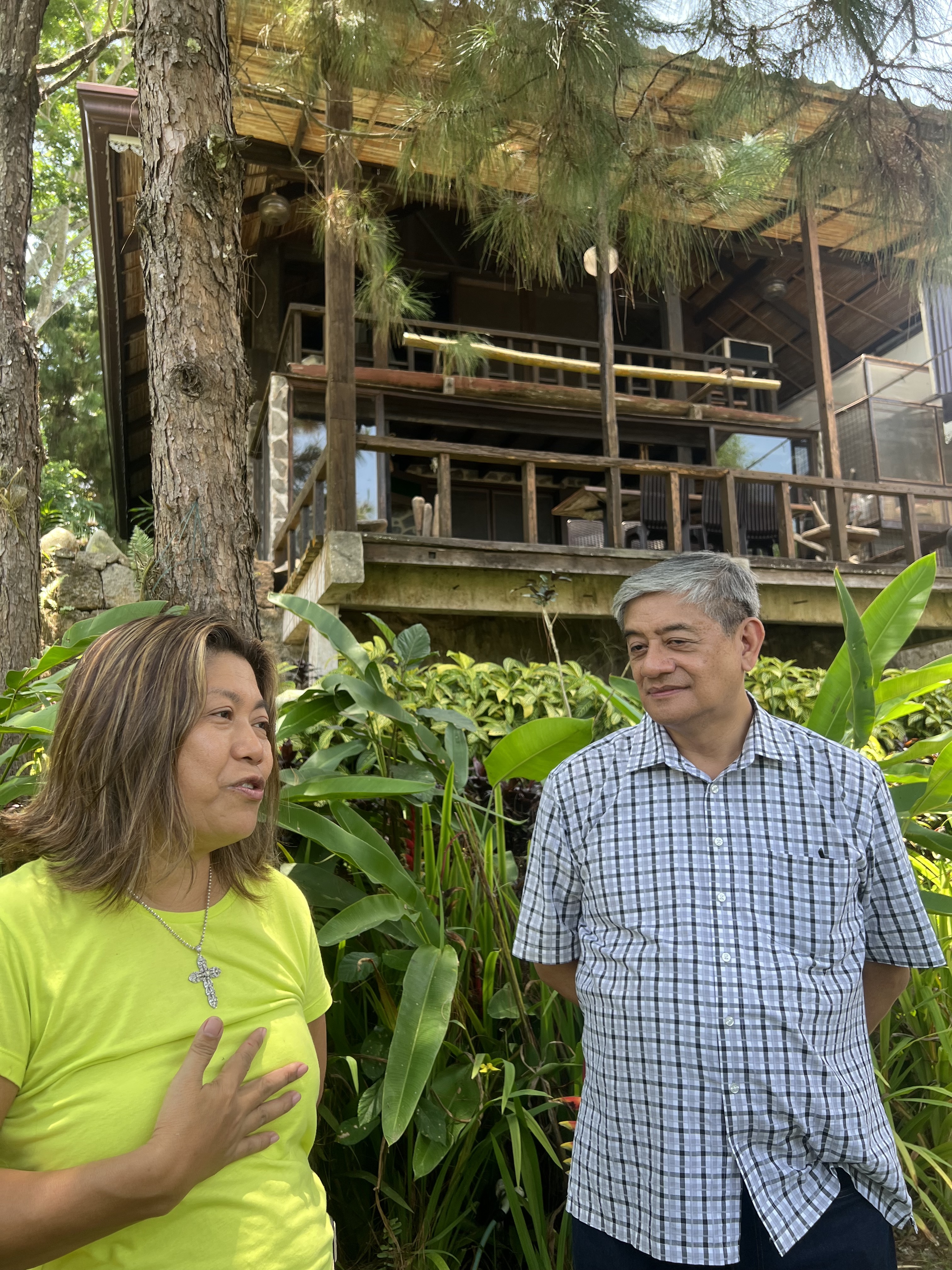
Thanks to the herculean efforts of the wife-and-husband team of Riza and Albert Muyot, a place called Shambala Silang now exists to welcome city folk fleeing stress, pollution, and stop-and-go traffic for a day or two of blissful living.


The two-hectare hillside resort seems larger than it is, magnified by the panorama that opens behind it—the green sprawl of a provincial landscape under a bright blue bowl of sky. But “resort” seems a misnomer, because Shambala doesn’t have a swimming pool, a karaoke bar, a disco, or a zipline. Except for short walks around the property, you don’t come to Shambala to work up a sweat, but rather to relax, meditate, and celebrate life, whether by yourself or better yet, in the company of loved ones and friends.

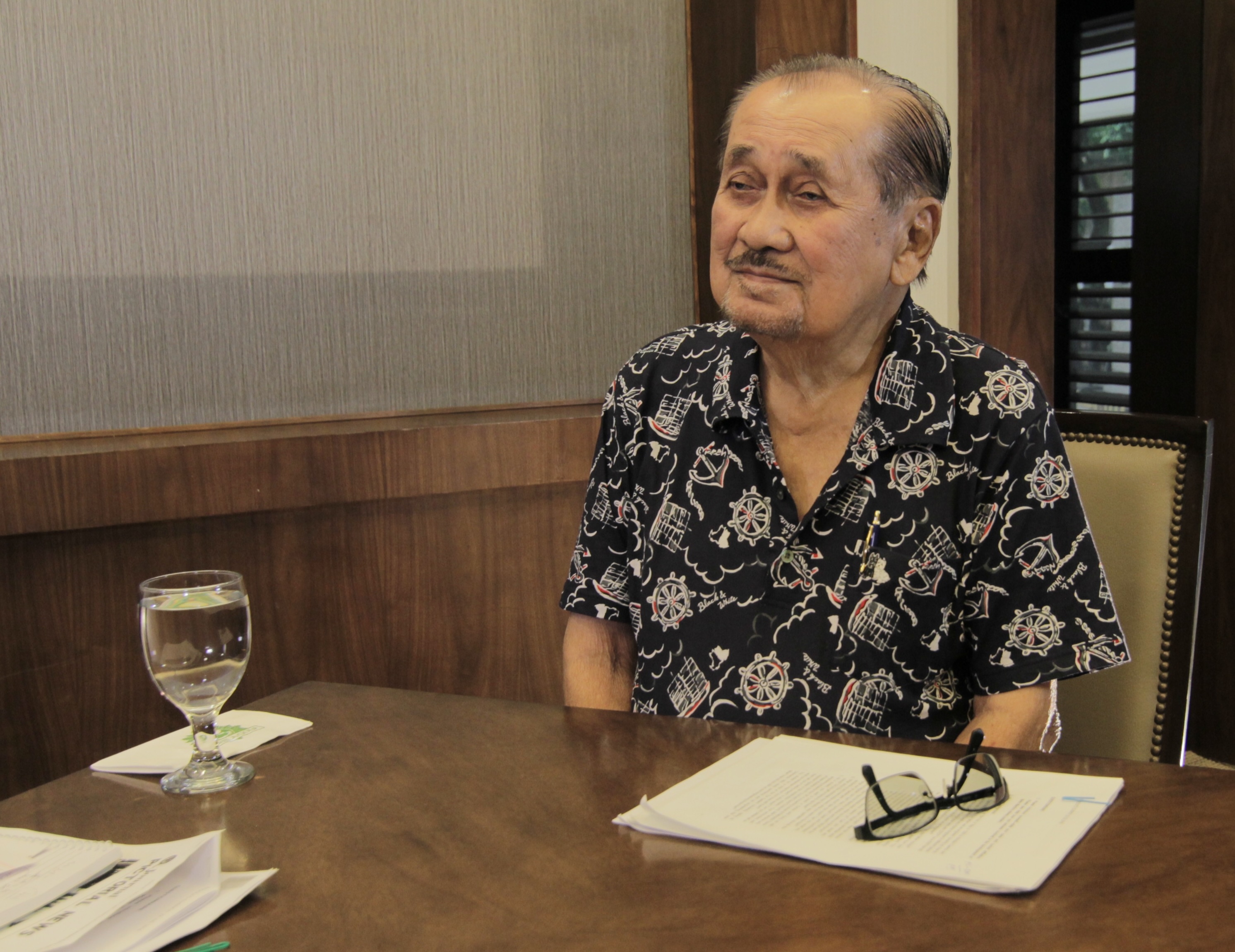
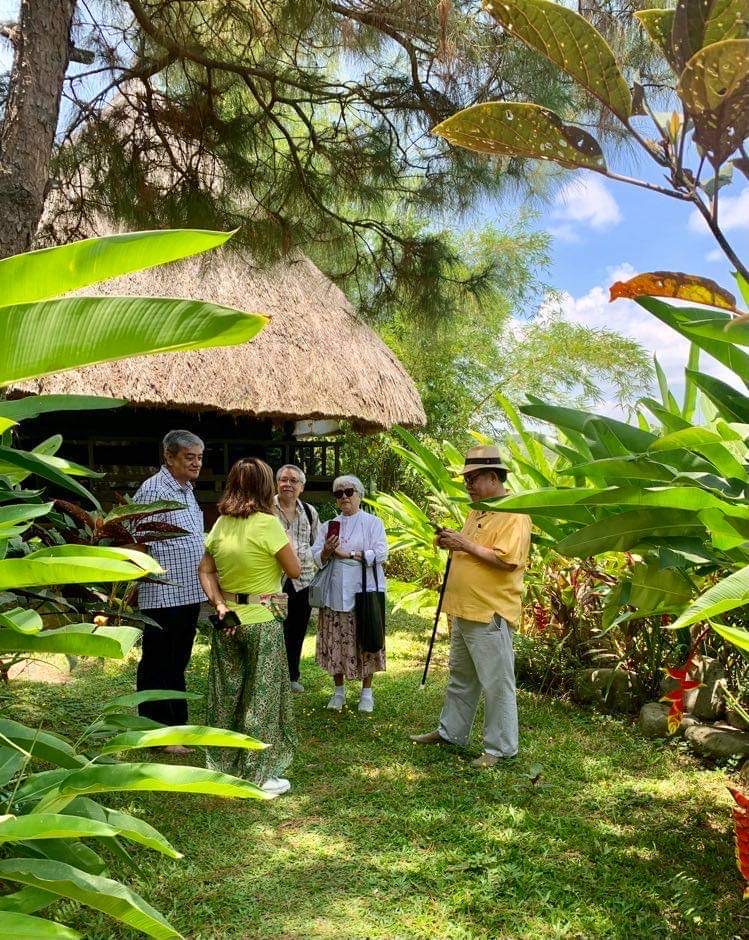
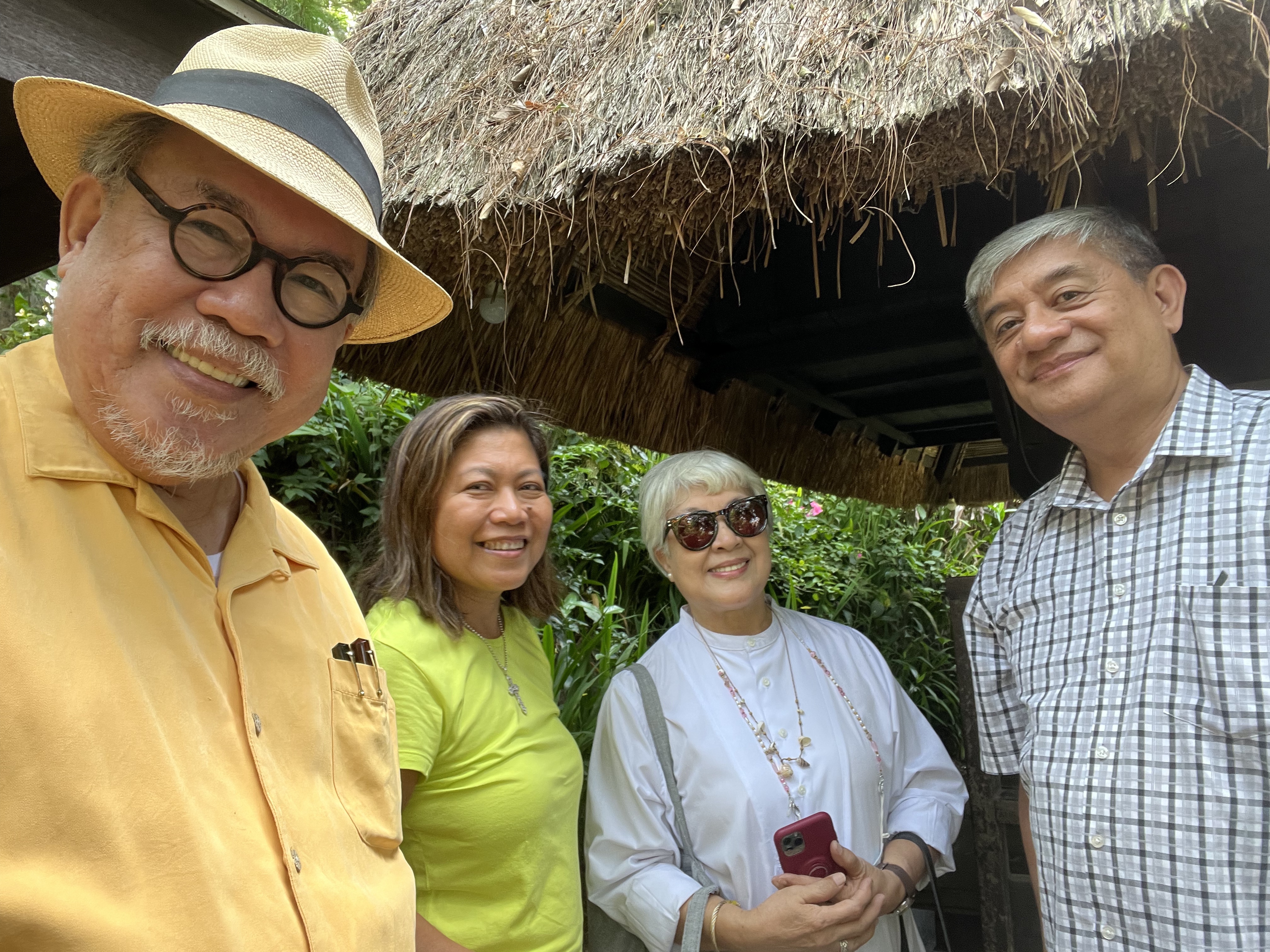
That’s what we did on a recent day trip organized by fellow writer and academic and dear friend Edna Manlapaz, at the gracious invitation of the Muyots. (Albert—a lawyer and former Undersecretary of Education—is another old friend, a fellow fountain-pen enthusiast and Michigan alumnus.) The main invitee and guest of honor was actually National Artist for Literature Jimmy Abad who came with his wife Mercy, and we roped in novelist Charlson Ong to complete the party.

From Quezon City, Shambala is best reached by the Skyway, then CALAX, then a series of backroads winding through Silang. We have friends who have chosen to relocate here, and passing through groves of mango and other fruit trees, we can understand why. If you want to disengage from city life, Silang is an easy option, where you can vanish into the woods while still being a short drive away from modern necessities. A narrow dirt trail leads uphill to Shambala, and I have to admit that I wasn’t expecting much from what I could (or couldn’t) see on the road, but then it appears at the very end, and the magic begins.

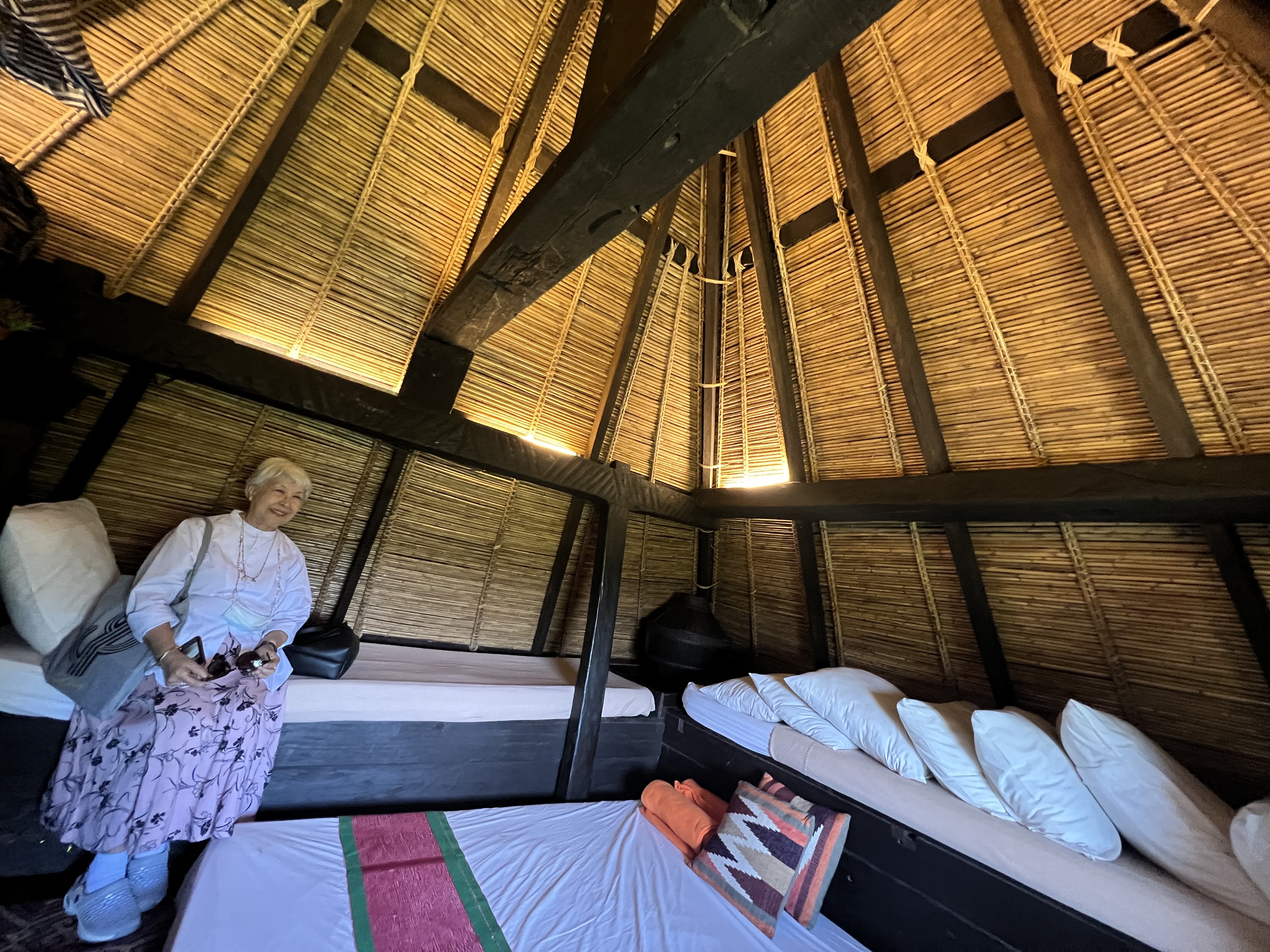
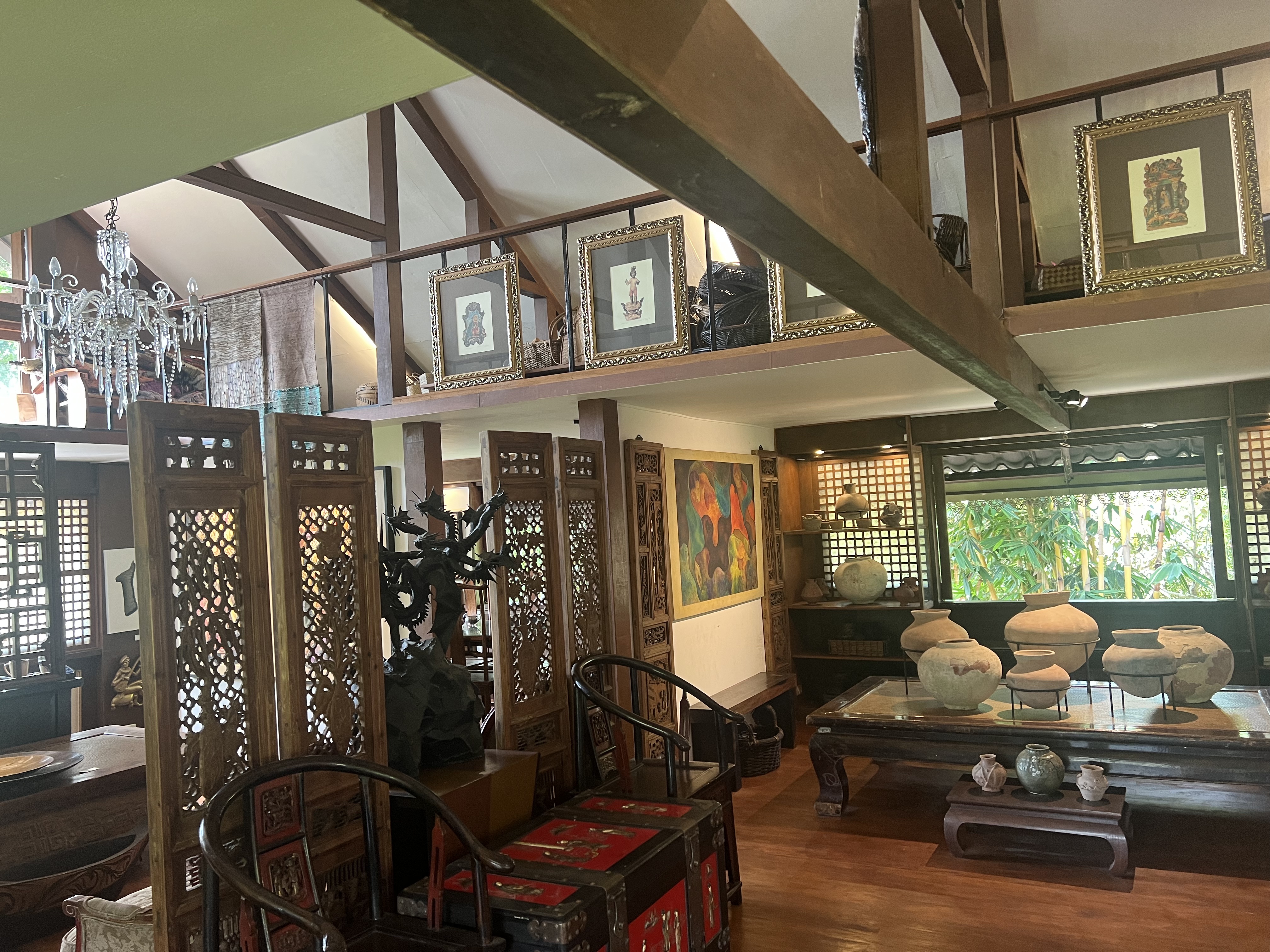
Shambala is a cluster of several buildings containing art galleries, collections of Philippine tribal art and culture, halls for meetings and celebrations, restaurants, gardens, and the Muyots’ private residence. It has six tribal houses open for overnight (or longer) stays, operating as a B-and-B. The houses are authentic structures brought down from the north when their owners no longer needed them, and rebuilt piece by piece. “They were originally constructed without nails, but we had to reinforce them and to introduce some modern touches and conveniences to make them more comfortable for our guests,” said Riza. “For example, we expanded the space beneath the houses , which was traditionally used for farm animals like chickens, so we could put a platform around which people could sit and meet. We also added friendlier stairs.” The one-room houses are spacious and airy, and a modern bathroom stands outside each of them.

Below the houses, down the hillside, is a circle of stones with a fireplace at its center—a dap-ay traditionally used for meetings of tribal elders and for religious functions, but now serving as a virtual theater or arena for post-prandial get-togethers under the moonlight.

And everywhere you look, there are trees—about a thousand of them, according to the Muyots, a hundred of which are Benguet and Norfolk pine, specially brought in. “There was nothing here when we bought the place around 2000 but pineapples and coffee,” said Albert. The Muyots were then looking for a sylvan hideaway to run to from their workplaces in Manila. They found the property and fell in love with it, although today’s Shambala wasn’t necessarily what they had in mind. “This is all Riza’s doing,” Albert explained. “She’s the one with the vision, the one who saw the possibilities and brought them to reality.” Now the CEO of Save the Children Philippines, Albert is happy enough to work on his laptop from his home office on the property (yes, there’s wi-fi all around).

A CPA who once worked with SGV, Riza comes from a corporate background. She’s also a gifted poet whose works subtly appear among the art on the walls. “Culture, heritage, art, and nature—that’s what we devote ourselves to here in Shambala,” Riza said. “We have an ongoing exhibit of soil painting featuring artists from the Talaandig tribe in Bukidnon. Do you know that there are 21 colors of soil in Bukidnon? They add water to those soils and use them in their painting. “ Shambala brought over Mindanao artists such as Kublai Millan and Datu Waway Saway to share their experiences and insights in the TIBOK Community Art Fair last month.

“People discovered us during the pandemic,” said Albert. “They went to Tagaytay, only to be turned away because of local restrictions on visitors from out-of-town, like seniors who couldn’t be let in. They came here and liked it, and spread the word.” It’s no surprise that on busy weekends, as many as 200 people pass through Shambala’s gates. Shambala has consistently ranked No. 1 in TripAdvisor surveys of such resorts in the area.

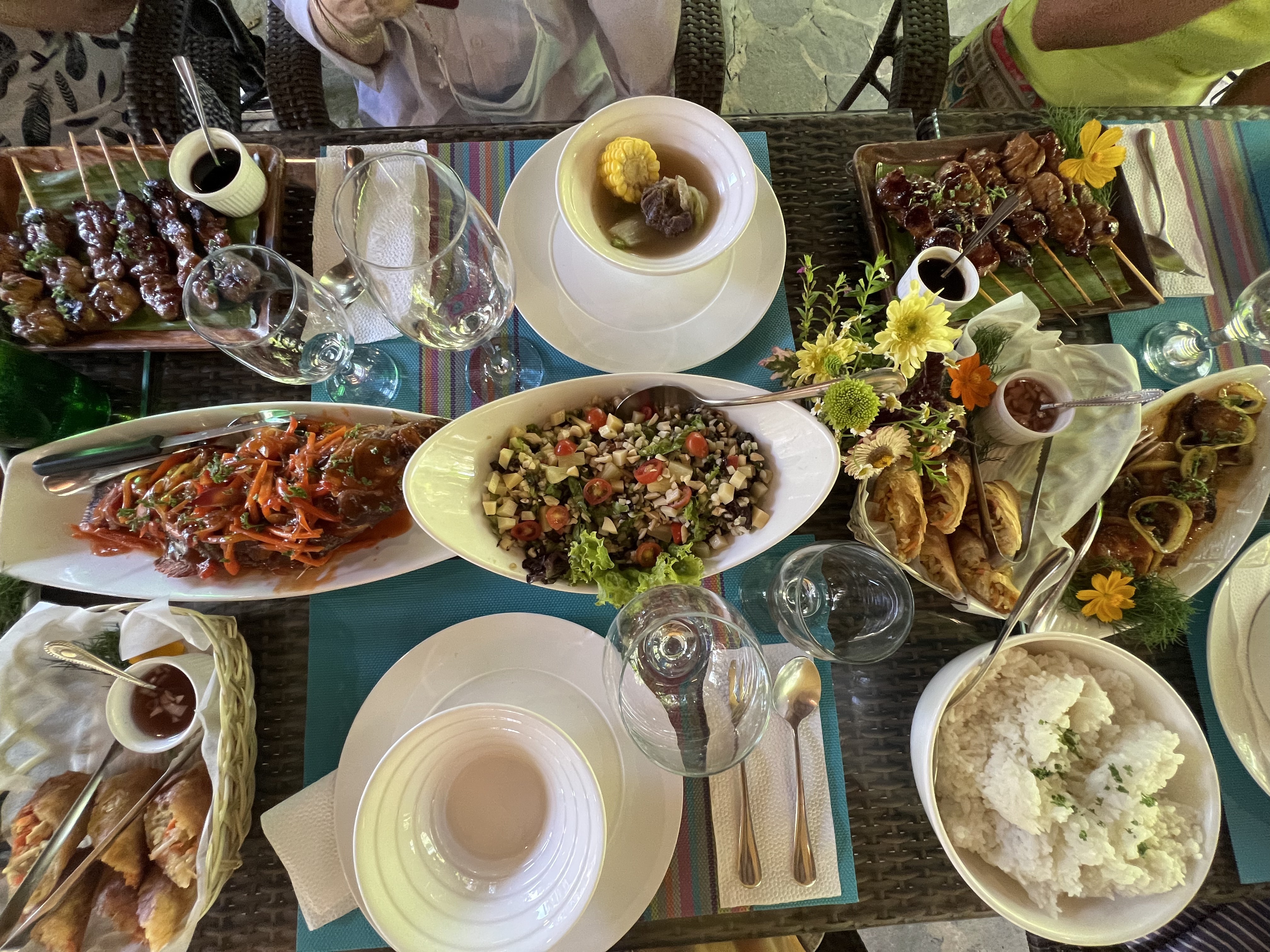
So if you want to try something exquisitely different—like their signature welcome drink made from malunggay, luya, and calamansi—drive off the beaten track to Tagaytay and try Shambala one of these days. The food’s as heavenly as the place itself, and you’ll wonder why you didn’t come here sooner. You can find out more about Shambala and their rates on their Facebook page here: https://www.facebook.com/ShambalainSilang/.

Penman No. 449: Sharing the Joy of Pens

Penman for April 2, 2023

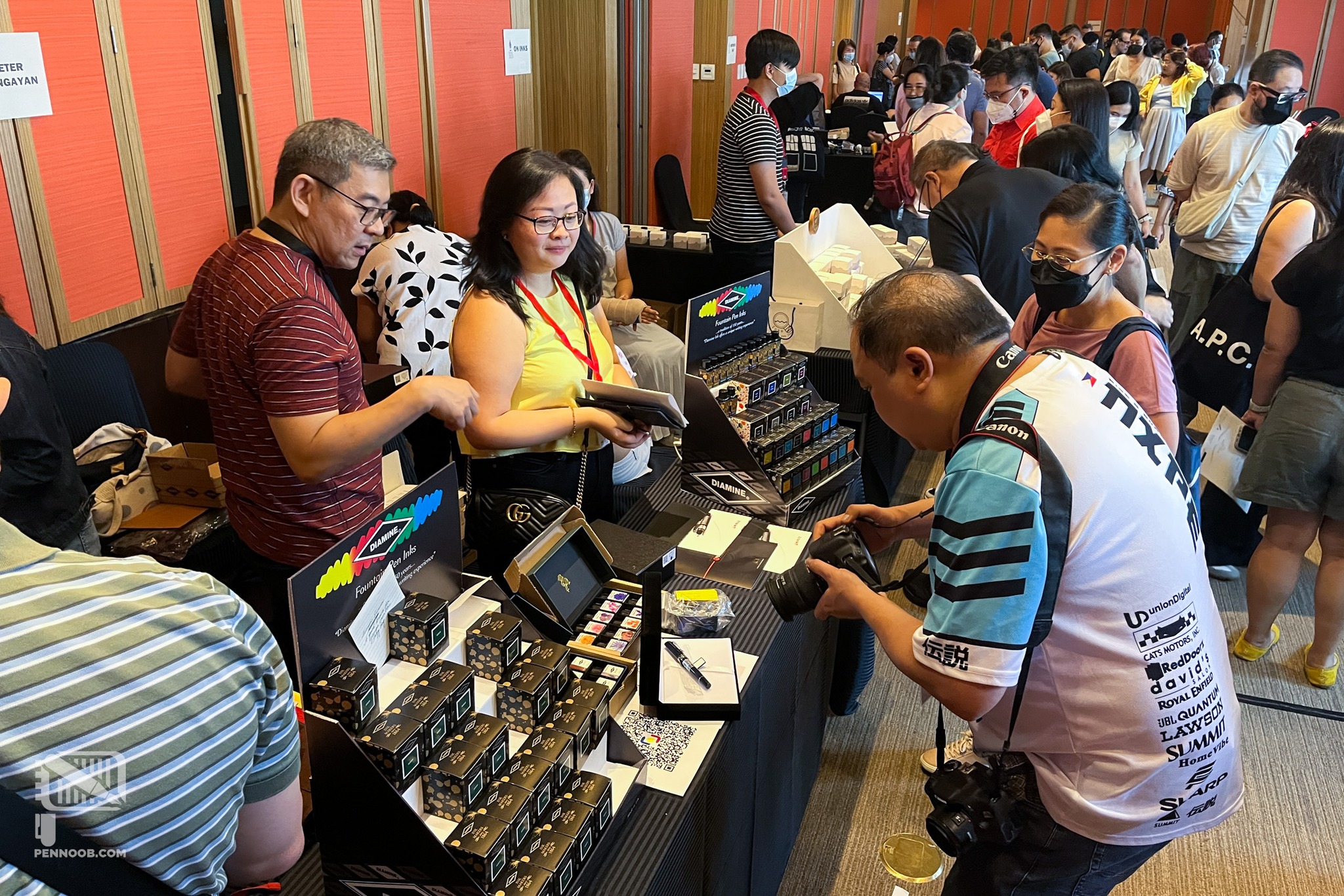
With the successful holding of the 2023 Manila Pen Show last March 18 and 19 at the Holiday Inn Makati, the Philippines firmly established itself as Southeast Asia’s Pen Central—the largest and liveliest marketplace of items and ideas related to one of the world’s fastest-growing hobbies: collecting fountain pens and other writing peripherals (inks, papers, and cases). 

The last MPS in 2019, just before the pandemic, had brought in 700 visitors. This year, that number was eclipsed on just the first day, and by closing time Sunday, over 2,000 pen lovers—from hardcore and advanced collectors picking up $2,000 Nakayas to eager newbies thrilled to get sub-P200 Wing Sungs—had showed up. The turnout wasn’t totally surprising, considering that Fountain Pen Network-Philippines (FPN-P), the pen show hosts and organizers, now counts more than 12,000 members on its Facebook page.

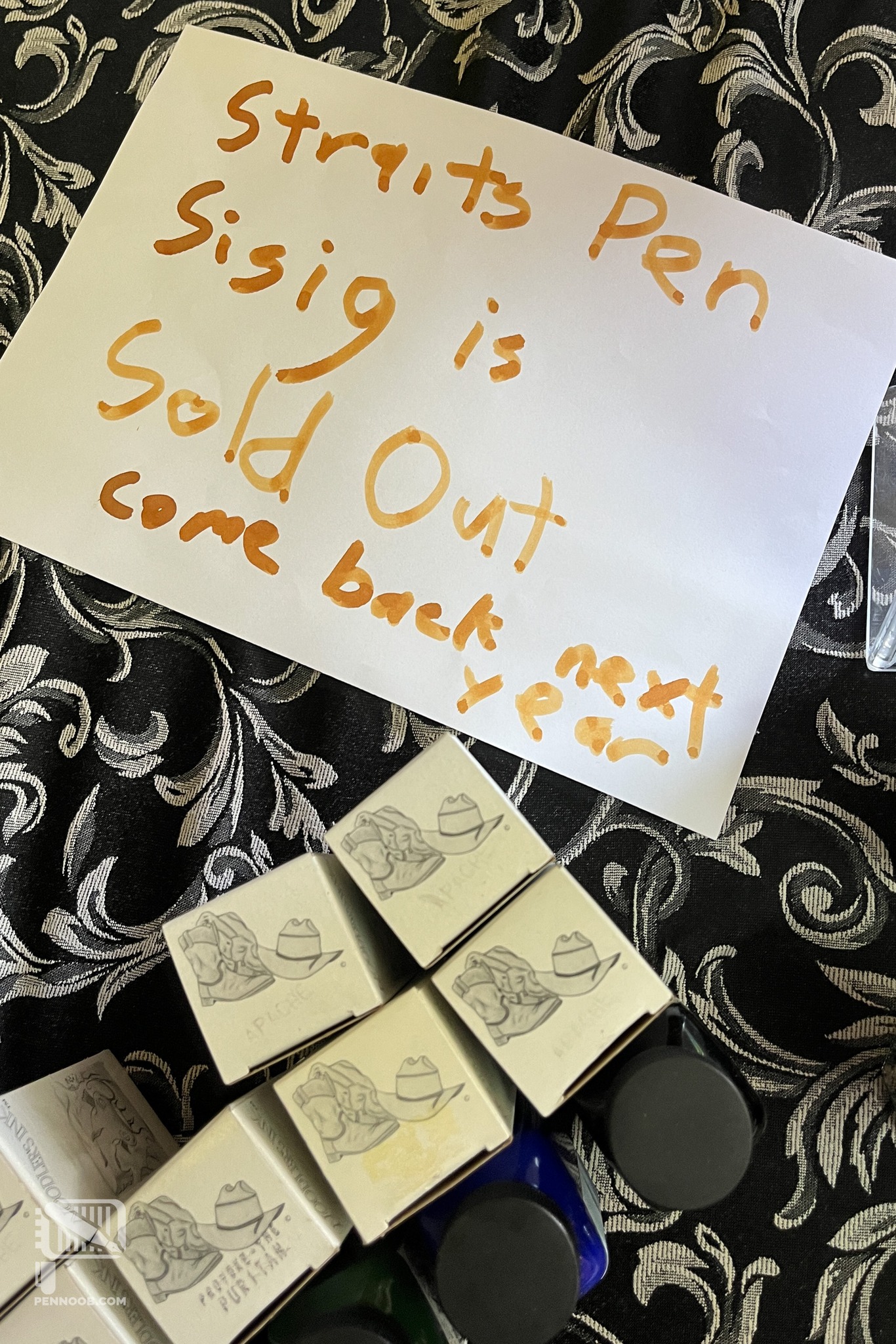
Aside from the country’s leading purveyors of writing paraphernalia—familiar names such as Scribe, Everything Calligraphy, Pengrafik, Stationer Extraordinaire, Leather Library, Leather Luxe, Shibui, Gav N Sav, JumpBid, and Kasama—foreign sellers from Singapore, Malaysia, and Japan such as Aesthetic Bay, Pen Gallery, Straits Pens, Musubi, and Toyooka Craft flew in just for the show. Nearly all the sellers reported robust sales at all price points.

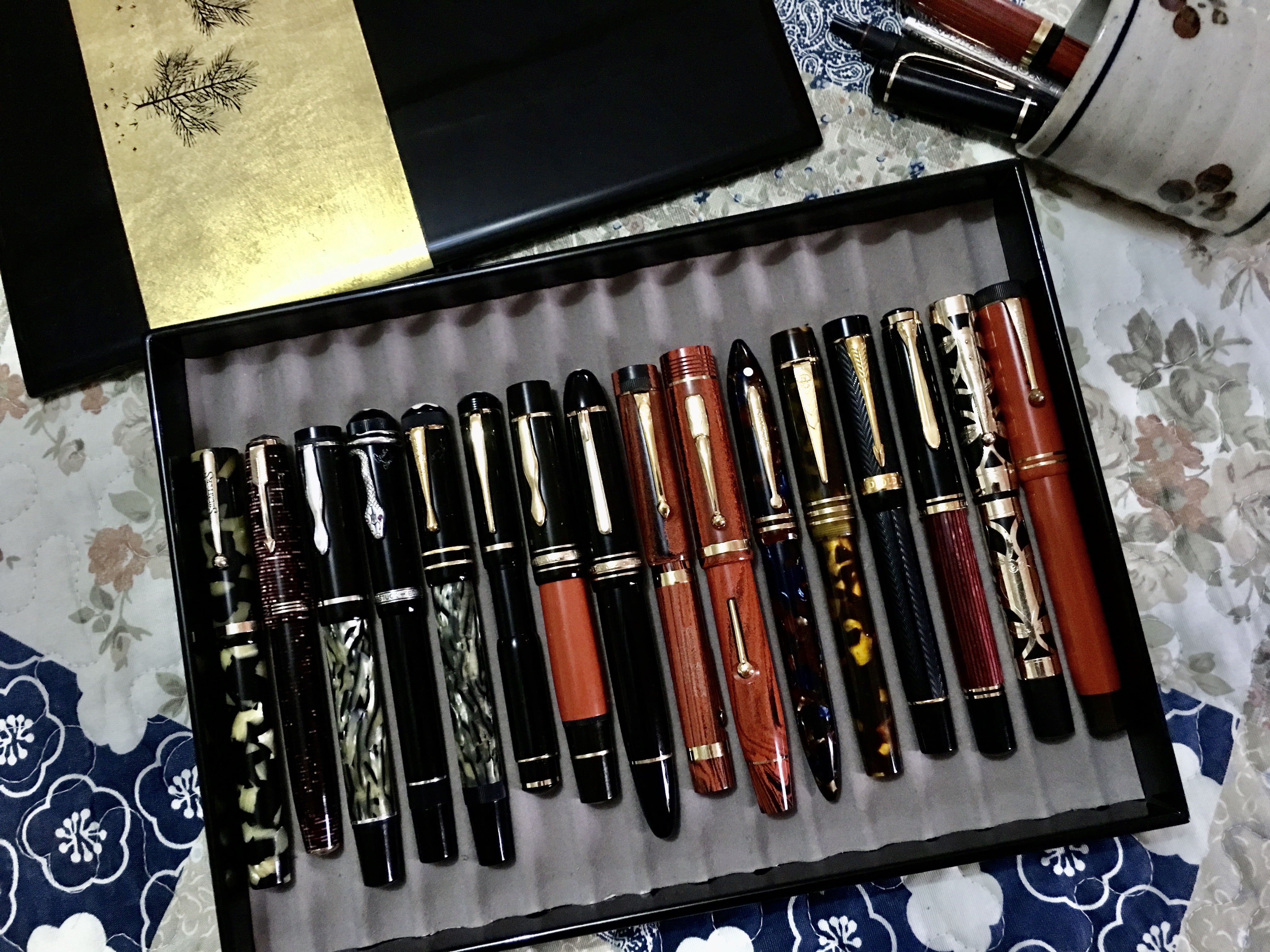
As a longtime pen collector and co-founder of FPN-P, I’m proud of how the hobby has taken off in this country over the past decade, and also frankly amazed by how different our demographics are from the rest of the world. Fountain pen collecting, especially in the West, has long been the domain of predominantly old white men, inclined like I am toward vintage pens and high-end, limited-edition modern pens. 

FPN-P’s profile is distinctly different: mostly young professionals between 20 and 40, with far more women than men, happy to purchase the entire color range of inexpensive Chinese-made Jinhao 82s (and inks to match) but just as savvy about the latest Montblanc release, keen on using and enjoying their pens rather than keeping them in boxes. As the MPS attendance showed, ours is an exuberant, generous, and democratic community, with little sense of entitlement or competition, dedicated to sharing the joy of pens, of expressing your individuality and artistry with the ink on your nib, of doing something personal and authentic in this age of artificial intelligence.

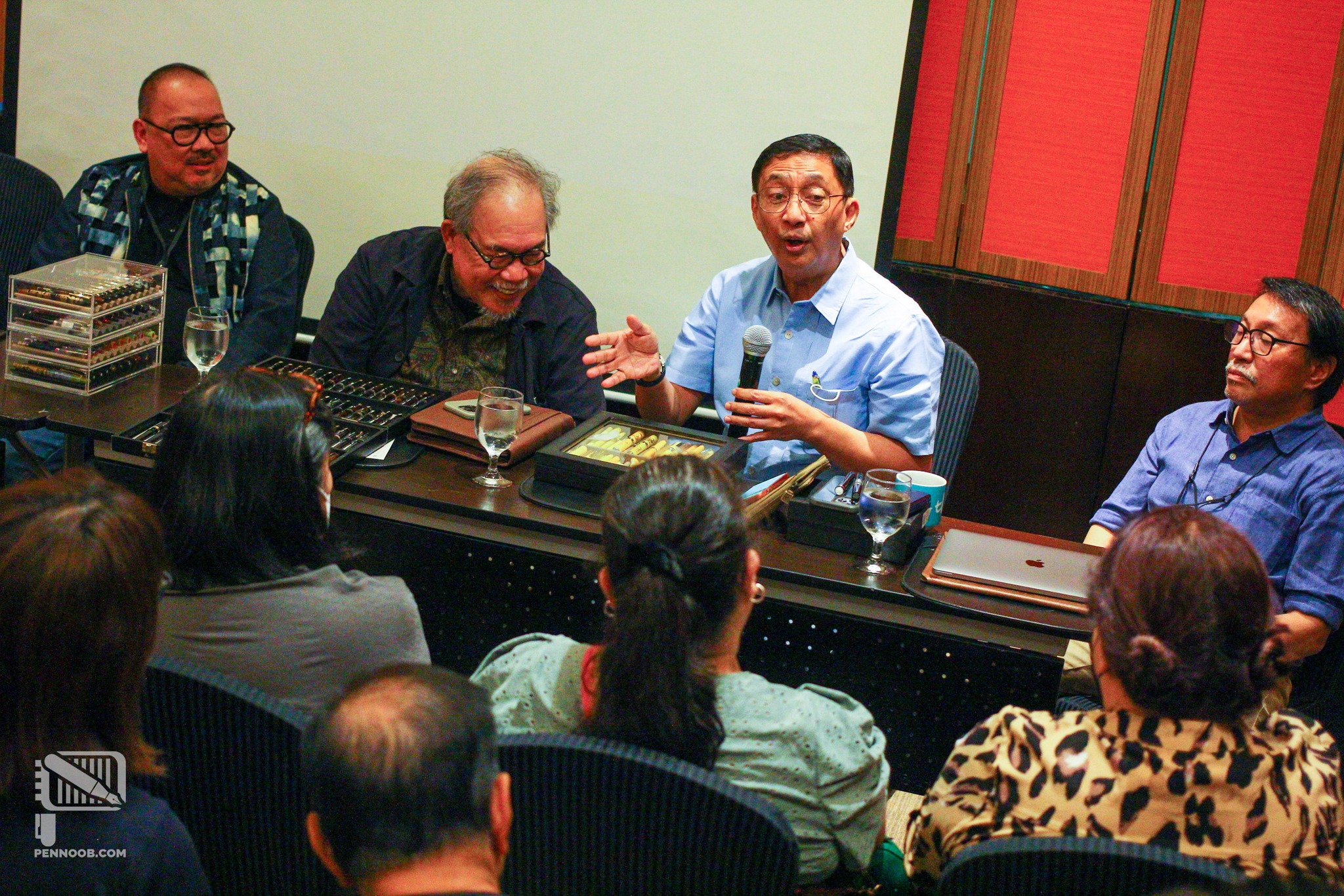
A highlight of MPS 2023 was a panel discussion devoted to the topic of “Curating a Fountain Pen Collection,” and I was privileged to share the table with fellow collectors Reggie Reginaldo, Amanda Gorospe, Jun Castro, Ronnie Geron, and Raffy Aquino. Each of us said a few words about how and why we put our collections together, given that each of us had a different focus: inexpensive pens, high-end pens, vintage pens, yellow pens, and so on.

Before talking about my passion for vintage pens (i.e., pens at least 50 years old, in many cases a hundred years old), I tried to explain what “curation” was all about. Here’s part of what I said:

Every collection begins as most love affairs do—with fleeting glimpses of the loved one, then seemingly chance encounters, then long chats over coffee before the steep and blissful freefall into a dizzying madness. 

For a moment, happiness and contentment reign. And then sadly follow the inevitable regrets, the disaffections, the “It’s not you, it’s me’s,” the parting with the old object of desire and its replacement by a new flame.

Today we’ll try to introduce some sense into this seeming cycle of bliss and despair. Curation means bringing some method into the madness, finding the inner logic that threads many disparate elements together.

The word “curation” is rooted in the Latin curare, “to take care of,” or to treat an illness, and here clearly the illness is in the collector, whom curation treats by providing guideposts to follow and guardrails against excess.

There are several kinds of collectors:

  1. Those who want anything and everything, although they might be more properly called accumulators (this describes 90 percent of us at the beginning);
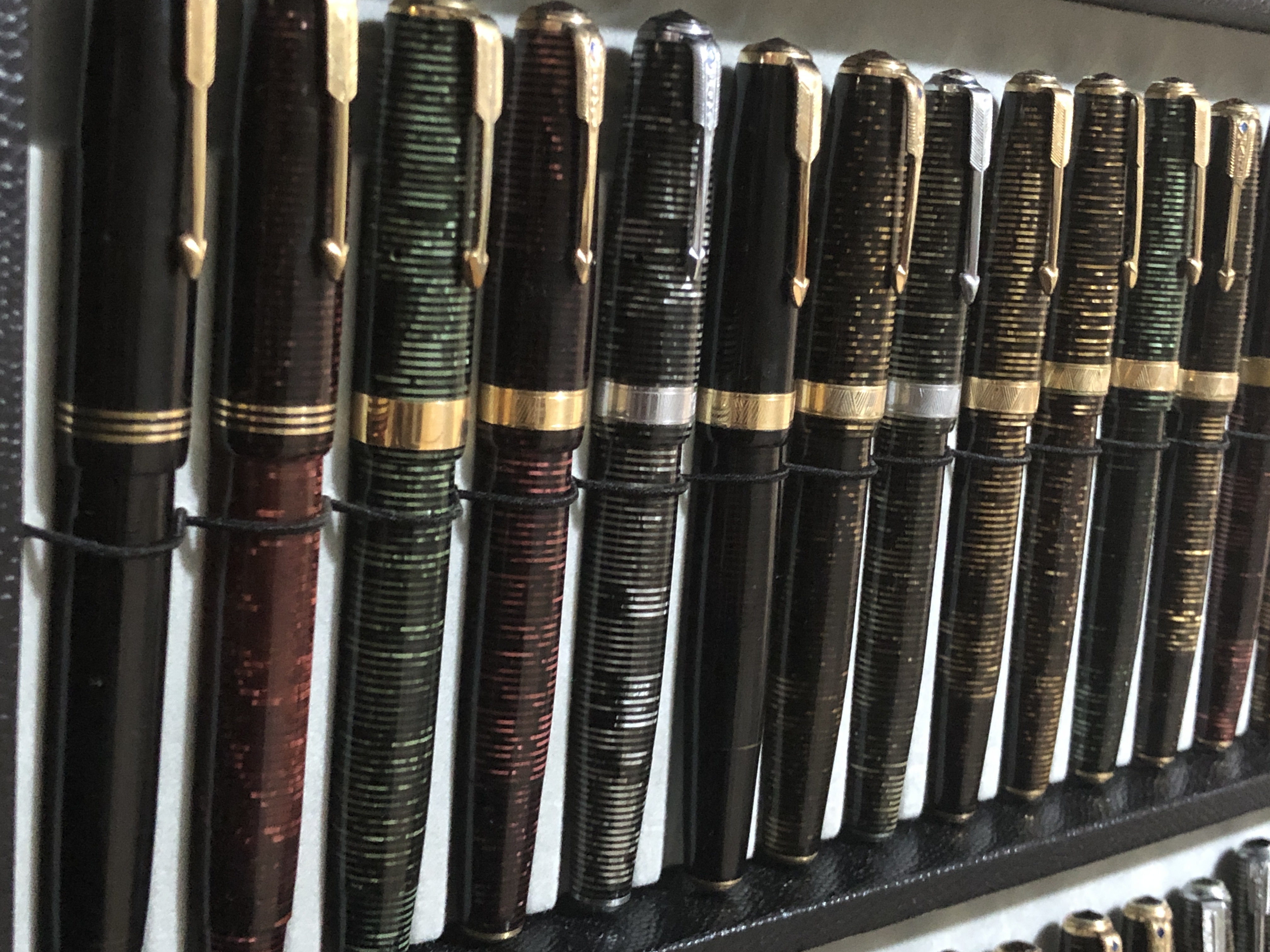
  2. Those who want everything of a kind (this applies to my fetish for Parker Vacumatics);
  3. Those who want the best or the most impressive of everything (this implies having the budget to go with your taste);
  4. Those who want some very specific things, for personal or even idiosyncratic reasons; and
  5. Those who get only what they need or can afford—perhaps the rarest of all collectors, the practical and disciplined kind.

Vintage collecting relies heavily on connoisseurship—on knowing the field and knowing what to look for. Surprisingly, it often involves less money than buying new pens. Of course there’s a cost to factor in for restoration and repairs, but even so few vintage pens reach the stratosphere of the thousands of dollars you would pay for a shiny new Montblanc.

You can collect based on brand, material, filling system, size, and of course price. For vintage you can add age and scarcity. Good working or repairable condition is presumed, although vintage collectors should always be on the lookout for cheap parts pens. 

Every quest for collectibles also involves what we might call “unicorns”—ultra-rare or one-of-a-kind pieces that exhibit some distinguishing hallmark of quality or technical innovation. These could be prototypes, custom jobs, or things in almost mint condition despite their age.

It also helps to know what you don’t like, or no longer like. For example, I generally don’t go for small and light pens, nor for blingy or too colorful pens. My pens are “lolo” pens—staid, conservative, almost severe, corny to most young collectors today.

Culling or cutting down is a good exercise, financially and mentally. I built up my collection over the years by selling five good pens to get one better pen. I have also sold very good pens that I once lusted after, but no longer spoke to me.

Curation, ultimately, is about knowing yourself. At a certain point in your collecting life, you have to take stock of your collection and ask yourself, “What do these objects say about me?” Is this the self-image I want to project, the one I’m happiest with? 

My answer to my own question is, I’m an old guy who likes old things, because they offer physical proof of life after death. We die, but our words—and the wording—go on. A vintage pen is an old guy lucky enough to find a new home. I’m happy to give him a shower and a warm bed, and all the ink he wants to drink.

Qwertyman No. 33: The Gunman

Qwertyman for Monday, March 20, 2023

(This story may seem inspired by recent events, but it has nothing to do with the facts of specific cases.)

CPL. ELMER Kabigting heard the hornbill minutes before he spotted it on his PVAR, a kind of a honk followed by a murmur. He knew the sound from the long days and nights he had spent in forests, an almost hourly reminder of time passing, until human footfalls and gunfire broke the spell and sent the birds and monkeys scattering overhead. Through his gunsight, Kabigting watched the hornbill hop from branch to branch until it found just the right one to perch on, peering down at the landscape over its bright red mouth. 

He tried to imagine what the bird could see. A scientist he had befriended in Bukidnon once told him that birds saw colors that humans could not, and that their eyes worked well in the low light of dawn and dusk, enabling them to hunt while other animals stumbled around or waited for things to clarify. The corporal wondered if a gunsight could be made that could see like a bird. The sun was beginning to drop on the horizon, and in an hour it would be hard to tell one van from another, especially if they came in a convoy—not that it mattered, given what he had to do, but something in him revolted at the thought of unnecessary waste. There were things he did not care to see in sharp detail.

Even without pulling the trigger, Kabigting felt the power of the weapon in his hand. The Pneumatic Valve and Rod Rifle was almost new, and if he had had it in Marawi, he might not have lost so many friends. It was supposed to be superior in so many ways—less recoil, less muzzle rise, better accuracy, lower maintenance—and he had heard that it was favored by the Special Forces, which made him feel like he had been promoted, using it today. He didn’t ask Sgt. Galicia where the cache had come from; even while in service, the sergeant had been remarkably resourceful, finding extra rations, gin, and cigarettes for the men, bringing tears even to Capt. Reyes’ eyes. Reyes was an academy graduate who was honest to the core and whose men rolled their eyes when he spoke of “courage, integrity, loyalty” and had them kneel in prayer, but even he could not and did not ask Galicia to stop what he was doing.

Kabigting turned his eye from the hornbill to the road. He knew that, a kilometer up, where the road ascended from a deep valley, a spotter was waiting to let him—let them—know by radio that the convoy was coming. There were six of them, three on either side, two with grenade launchers, the last men a couple of hundred meters down, a gauntlet through which no one would pass alive. Elmer knew three of those men, Marawi veterans like himself whom Sgt. Galicia had located in the bars and slums of Ozamis and Dipolog, people who no longer had much to lose but everything to gain for themselves and their families. 

“What if we get caught—or if we die?” asked one of the six, when they had gathered together to discuss the operation in a carinderia in Dapitan.

“Then your families get everything. They’ll be set for life. If you don’t talk,” said Sgt. Galicia.

“We might be better off dead,” said another, with a chuckle. “If we die, we can’t talk.”

“I don’t have a family,” said yet another man, stubbing his cigarette onto his plate and burning a scar onto the cheap plastic. 

“Then we’ll divide your share among the others,” said the sergeant. “They’re your family now.” The other men laughed but the ex-soldier remained glum. He was one of those whom Elmer knew, and Elmer knew as well that the man’s wife had left with their children after he had broken her nose once too often. 

Elmer thought about his own family—his mother, his wife, and their five children back in Kabankalan, the youngest not even six, the eldest a high school senior who wanted to be a doctor. His daughter’s ambition made him laugh—they couldn’t possibly afford to send her to medical school—but he stopped laughing when she told him that it was for her to cure him if he ever got shot. He did come home once with a bandaged head, telling the children he had been grazed in a firefight with rebels, but he had been roundly bashed in a brawl with fellow soldiers over a card game debt. It wasn’t long after that incident that he found himself on the street and out of uniform, along with the sergeant and several of his buddies, after a local merchant complained to the governor—who happened to be his cousin—that a group of soldiers had broken into his warehouse and had carted away two truckloads of rice.

Yes—Elmer had admitted to his superiors—they had taken the rice, but everyone knew that it had been smuggled in from overseas, so who was the bigger thief? But nobody heard him, Elmer thought, they weren’t even listening.

So when Sgt. Galicia called for a gang of the boys to get together for some jobs, it was easy for Elmer to convince himself that they were still at war, except that this time the enemy was whoever Galicia said was as bad as the rice merchant, whose children went to private schools in Manila and whose wife served as the hermana mayor in the town fiesta. Their first target was the merchant himself, for no money but just to exercise their trigger fingers and feel good about themselves. This was followed by hits on a couple of rural banks, a vice-mayor, a radio commentator, and a regional bureau director, and despite some touch-and-go moments, it all became more routine, especially as the money flowed in and they began buying motorcycles, fishing boats, flat-screen TVs, and smartphones for the kids. Even Elmer’s daughter began to think he was serious when he teased her about taking up plastic surgery, so she could fix his cauliflower ears. 

But those targets were easy and never shot back. Today was going to be different—an armed convoy of a van and two SUVs, including a police escort. They said the vice-governor was going to be in the van in the middle. They knew he preferred to ride the HiAce instead of his armored Montero when he was with his family. Elmer had seen them in church once, at a friend’s wedding. The older boy had a cowlick in his hair. He heard the hornbill’s call again. His radio crackled. The corporal did not want to see whatever the bird could.

Qwertyman No. 27: The Maalikaya Health Fund

Qwertyman for February 6, 2023

THE HON. Victor M. Dooley, once again, was in a quandary. At the end of his trip to the World Economic Forum in Davos, he was brimming all over with enthusiasm, eager to prove to his constituents that the money spent for his first-class ticket (and for his Chief Political Officer and rumored girlfriend, Yvonne Macahiya) had not been wasted. 

There was a long list of sessions he had planned on attending, identified for him by Yvonne as strategically important, with titles like “What’s Next for Monetary Policy?”, “How to Turbocharge Development Finance”, “Living With Risk,” and “Mapping Russia’s Trajectories.” She had prepared briefs for him, along with a list of intelligent questions he could raise in the open forum, so they could take a picture of him, in his bespoke Senszio suit that he had ordered during his last junket in Brussels, on the floor. But as it happened, strolling up the Promenade on his way to the forum, Sen. Dooley found himself staring at a new Omega Seamaster 300 Co-Axial Master Chronometer at the window of a watch shop. He must have stood there for a very long time, because an unusually friendly salesman stepped out of the shop to invite him in. 

Guten Tag! Bonjour! Buongiorno!” the man said in the city’s three languages. “Good morning! Are you Indonesian?” This year, the Indonesians had put up a large national pavilion along the Promenade. 

“No, no!” cried Victor. “I’m Filipino!” 

“Ah, Filipino! Magandang umaga!” said the salesman. “We love Filipinos! Many of them come to Davos! Many of them come to my store. Come in, come in!”

Victor allowed himself to be ushered into the boutique, which, he had to admit, was warm and pleasant compared to the bitter cold outside. Last night, as he cuddled in bed with the snoring Yvonne, he had wondered why the WEF (which he would often misquote as “WTF,” to Yvonne’s dismay) insisted on holding the forum in the dead of winter rather than in some nice summery spot, like that lakeside place he had seen on “Crash Landing on You.” Why would people even want to talk about something as boring as economics in all that snow? Davos was meant for cuddling—which, sadly, was all he could now do with Yvonne, much to the latter’s dismay, unless he took an overdose of the little blue pills, which dismayed Yvonne even more.

But of course the Hon. Victor M. Dooley couldn’t refuse the President’s invitation. As chairman of the Senate Committee on Basic Education, Culture, and the Arts, he frankly had no idea why he was going to an economic forum in Switzerland, except that he was sure the President’s appointments secretary had a crush on him, and added his name to the list, as she had done for him in Belgium; surely his movie-star looks couldn’t hurt the delegation. 

Naturally, Yvonne found and crafted a plausible reason for him: “Education, culture, and the arts are indispensable in shaping the new post-pandemic economy, especially given the global transition to online instruction and the response of creative industries to new opportunities created by this expanded platform. We cannot underestimate the importance of human creativity to economic growth. If traditional economics concerns itself with supply and demand, then creative industries can exert a powerful influence at both ends—creating new needs, new producers, and new resources that can only spur economic development, especially among sectors often marginalized by industrial homogenization. I would urge all our leaders here in the WTF—most notably those from the developed West—to look to the Philippines for new ideas, particularly in the fields of design, fashion, animation, music, indie filmmaking, food, and graphic arts. These are the growth industries of the 21st century, endeavors that our predominantly young populations can relate to with vigor and enthusiasm.”

Victor had to admit that it sounded good, although he had to have Yvonne explain “industrial homogenization” to him by pointing out that his Lexus looked like Congressman Tungkod’s Genesis G70, which also looked like Mayor Lanzones’ Audi A5, at which point Victor felt deeply depressed. But Yvonne pulled him out of his funk by having him memorize his spiel before a mirror—warning him, like a good coach, not to count off “design, fashion, animation, etc.” on his hand starting with his pinky finger, as Filipinos were wont to do. Victor felt energized; he couldn’t wait to fly to Davos and spring his little speech on the unsuspecting WTF’ers.

But now he was staring at the Omega Seamaster, glowing like a hypnotic planet. The salesman had taken it off the display shelf to cuff him with, and he felt locked to it for life, as if it belonged to him and he belonged to it forever. Why, it was James Bond’s watch, it went to the moon, and the price—well, surely Yvonne could free up half a million from his intelligence fund in the name of cultural diplomacy, which a little Filipino-Swiss transaction promoted. 

“It’s worthy of a president,” the salesman whispered in his ear. 

“I’m only a senator—yet,” said Victor. His throat felt dry. 

“Then it will lead you to your destiny.”

That evening, at the dinner for the delegation, Sen. Dooley was chagrined to find that two other senators and even the president’s third cousin sported the same new watch. And everyone around the table was talking about some “sovereign wealth fund” that was going to save the country, which Victor, sans Yvonne who was consigned to dine with the secretaries, was clueless about.

“I know all about it,” she told him later at the hotel, as they packed for the flight home. “The secretaries told me. It’s big, and it’s as good as done.”

“And I’m not part of it? I have to announce something when we get home!”

“Are you sure you want to? According to ChatGPT, sovereign wealth funds are subject to risk tolerances, liability matches, and liquidity concerns. As it’s my job to protect you, let’s think of something else.”

As they cuddled on their last night in Davos, and as he watched the seconds tick by on his Seamaster, Victor felt an old stirring under the blanket, going back to his misspent youth, that revived long-dormant memories of simpler pleasures. 

“I think I have it!” he told Yvonne. “This will be for everyone’s physical and mental health. We will train hundreds of thousands of masseurs and masseuses. Every Filipino, man or woman, will get a free massage after a hard day’s work.”

Yvonne seemed genuinely surprised. “Hmmm, that’s original!”

“We’ll call it the Maalikaya Health Fund. Our slogan will be ‘Every Filipino deserves a happy ending!”

Qwertyman No. 24: Barangay Magulang

Qwertyman for January 16, 2023

(“Smishing: the fraudulent practice of sending text messages purporting to be from reputable companies in order to induce individuals to reveal personal information, such as passwords or credit card numbers; a form of phishing.”)

MANG KANOR had a problem. He was a contractor for a scamming operation that involved using 50 burner phones to ferret out people’s personal details with, which he ran from the basement of his house in Bgy. Magulang. It was all going well, thanks to his wife Fely, who also happened to be the barangay kapitana, and who could guarantee the peace and quiet his business needed. No one really understood exactly what the boys and girls hired by Kanor were doing—and to be honest, neither did Kanor, who could barely text a message to Fely, let alone spell “phishing” or explain what it meant. But the barangay loved them, because they employed Mang Tining’s son and Tita Ruby’s daughter, and even Sgt. Choy’s handicapped nephew.

It was their teenage son Boogie who had everything figured out, who had introduced the scheme to his parents for them to finance. He had dropped out of the novitiate, realizing that his true calling lay elsewhere, in the world of Dota, Tiktok, and Instagram. When Mr. X offered him a smishing franchise after seeing how adept he was at computers, he jumped at the opportunity. He would harvest personal data and turn it over to Mr. X, who mined it for money.

But he needed capital, and only his mother—who had a steady revenue stream from jueteng—could provide that. She bankrolled him for the 50 phones, three computers, and the ten high-school graduates he needed to man them, plus their snacks of bottomless iced tea and banana cue. His father Kanor provided the muscle—building the cubicles, laying out the wiring, and fronting as the shop’s manager.

The money poured in—Mama Fely was immensely proud of her baby’s entrepreneurial bent—until Kanor ran in one way, panting and waving a newspaper in Fely’s face.. “Boogie! Fely! Have you heard? They’re now requiring all SIM cards to be registered! They want the names and addresses of all SIM card owners. No registration, no activation!”

“Whatever for?” cried Fely. 

“It says here that they want to weed out scammers—people who use prepaid phones to get into other users’ accounts and take their money—I think they mean us!”

“But we just get their information, someone else takes their money, it’s not fair! We’re not subversives, we have privacy rights—”

Boogie didn’t seem bothered. “I’ve been telling you, if we expanded, we could do both, end-to-end—get data and make money. Then we wouldn’t need Mr. X anymore.”

“Are you crazy?” shrieked Fely. “That’s asking for trouble! You’d need protection all the way to the top, which we can’t afford. We’re only good for this barangay.”

“That’s the problem with us, Ma! We think too small. If we go bigger, you could become the mayor!”

“Wait, let’s solve this SIM problem first!” said Kanor, who was easily rattled by things he couldn’t understand.

“Leave it to me, Pa. I’ll look into it. From what I’ve seen on TV, there isn’t a law in this country without a loophole! You can even get away with murder if what they call the ‘chain of evidence’ is broken!”

“Oh, you’re such a smart boy,” gushed Fely. “If you’d gone on to become a priest you could be the Pope! But I’m glad you didn’t because we need grandchildren to continue the proud family tradition—”

“Ma, how many times do I have to tell you, I’m gay!”

“Oh, you’ll get over it, don’t worry. I’m setting you up next week with Mareng Siony’s daughter Olive. She’s sweet and sexy.”

“Wait, what will we do with this SIM law?” Mang Kanor screamed.

A few days later, Boogie had an answer. “I tried the system, and it’s pretty simple. You go to your provider’s website, and they ask for your name, address, official ID, and photo. That’s it, your SIM is registered to you.”

“So they’ll know it’s us who are running this racket? That’s not a solution, that’s the end of our business! Son, you have to do something. I don’t want to have to go back to chopping up cars—this is my first decent job!”

“Don’t worry, Pa, I have it all figured out. We can get around the system.”

“Really? How?” asked Fely.

“What else? By registering.”

“You mean, we go honest?” Kanor couldn’t believe it.

“Of course not, Pa. If they want names, addresses, IDs, and photos, we’ll give it to them.”

“And risk being caught? I’m a respected and responsible public official, son, I can’t afford the scandal!” said Fely.

“They’d be chasing ghosts. Can’t you see, Ma, Pa? All we need to do is to fake everything! There’s nothing in the system that checks to see if what you’re saying is true. So we just fill in the blanks, and we’re done.”

Kanor tried to wrap his head around the plan. “Do you mean we cheat the system?”

Boogie laughed. “Is it cheating if we give it what it’s asking for?”

“But how and where do we get the names and the pictures and so on? What about the IDs?” asked Fely.

“Ma! We’ll make up the names of people. Who was that councilor who called you a crook? We’ll use his family’s names. And which barangay was it that dumped their garbage here? We’ll use addresses there.”

“Oooh, that sounds like fun! But what about the IDs and the selfies?”

“What’s the computer for? We can copy any school, office, or senior ID you want. As for pictures, we can scan yearbooks, wedding albums, Facebook profiles—we can even create a whole new person through artificial intelligence! We can do anything, Ma!”

Doubts persisted in Kanor’s mind. “Surely they’ll verify the entries? What if they find out?”

“Find out when, Pa? Let me ask you—you and Ma applied for your National IDs, right?”

“Yes. Three months ago.”

“Well, do you have them?”

“No, not yet.”

“There you go. Everything in this place takes at least three months to happen. In three months, we buy new SIMs, and do the same thing all over again.”

“Why, if we can do this for ourselves, we can do it for others, for a fee—tell Mr. X!” said Kanor.

“You’re a genius, son! Oh, I love this family. I can’t wait for you to meet Olive! She’s studying accounting—your kids will be so cute and so smart!”