
Penman No. 180: Escapade in Bohol

IMG_7630.jpeg

Penman for Monday, December 28, 2015


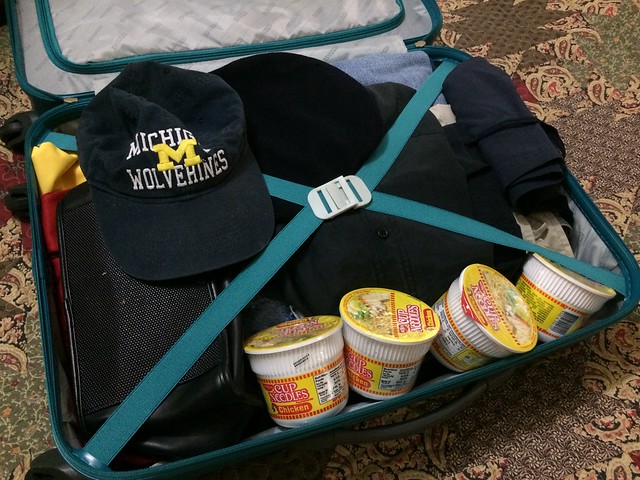
YEARS AGO I made a promise to take my wife Beng to all the beautiful places in the world I’ve been, so we’ve been traveling up a storm, flying off to whatever destination our aging knees and limited budget can still afford. The pre- and post-Christmas break is a great time for escapades like this, and we’ve run off to Shanghai and Beijing in Decembers past, availing ourselves of budget fares we’d booked months ahead for the privilege of slurping hot noodles in the freezing cold.

This year—encouraged by another irresistible combo deal on airfare and a good hotel—we chose to go down to Bohol. I’d been there a couple of times before on business and Beng and I actually found ourselves stranded there once, overnight, because our Dumaguete-bound ferry couldn’t make it through a frightful storm, so this time we decided to do a proper tour of the place, mixed in with a bit of work we both had to catch up on.

IMG_7627.jpg

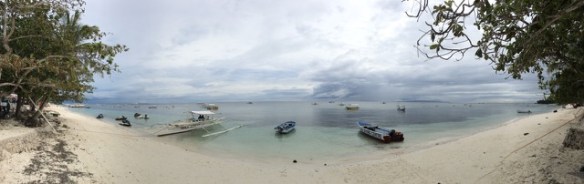
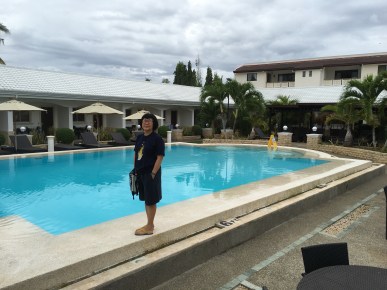
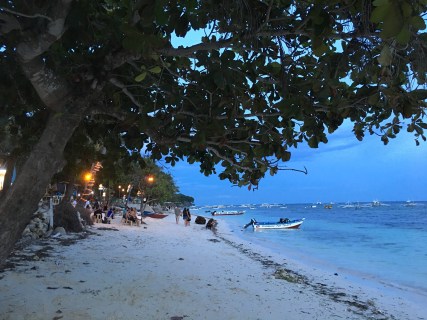
We were lodged at the mid-range Panglao Regents Park Resort, about a 30-minute ride from the airport and a short walk to Alona Beach, a focal point not just for swimming and food but also for the innumerable dive shops that cater to showcasing Panglao’s top attraction, its underwater life. Being sedate and sedentary seniors, Beng and I contented ourselves with sipping cool mango shakes and watching the scenery, but there’s never a dearth of interesting things to look at in Bohol, whether beneath the sea or aboveground.

IMG_7618.jpg

We signed up for two tours: the “Chocolate Hills” tour, which takes you on a daylong ride around the island for an eyeful of its most scenic spots, and the “island-hopping” tour, which promises an early-morning rendezvous with dolphins, snorkeling and lunch at Balicasag Island, then a short detour to Virgin Island. Seasoned travelers may disdain these one-size-fits-all tours, but Beng and I never do, knowing that they’re pretty efficient and often good value for money for first-time tourists, and that ultimately it all depends on knowing what to look for, and knowing how to appreciate what you’re looking at.

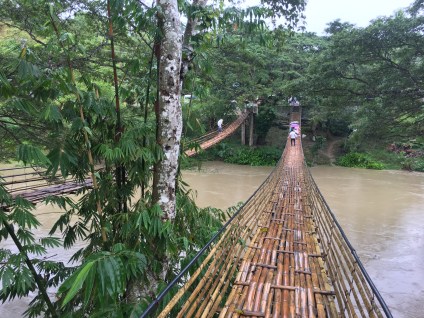
It was a rainy day when we headed out for the Chocolate Hills, so the tarsiers were huddled under the branches and the hills themselves were shrouded in mist, but I took the rain in stride, seeing how it lent a certain freshness and vividness to things, and I could sense the earth exhaling after a long dry spell. The tour guide at the butterfly farm led us along with deft humor, making even dead insects come alive, and we gamely crossed the Hanging Bridge, to and fro, like schoolkids on a dare.

IMG_7658.jpg

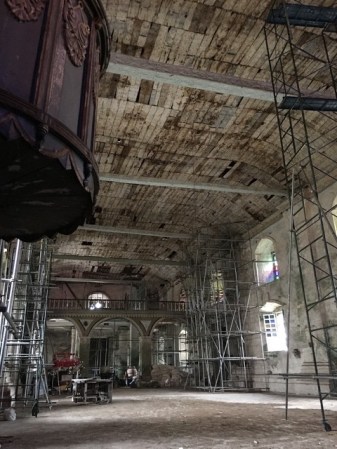
I had visited the old Loboc Church before an earthquake devastated it a few years ago, so I was sad to see it covered in scaffolding, awaiting restoration. What I didn’t expect to be more deeply moved by—not being a regular churchgoer (I pray every night, but have quarrels with dogma)—was stepping into the Baclayon Church, which I had missed on my first visit. Its altar—a main retablo framed by two smaller ones—stood intact and as majestic as ever, and washed in orange, green, and blue light seemed ethereal. But behind a red cloth curtain and the yellow “Caution” warnings gaped what used to be the nave, a cavity that in the 1800s must have throbbed with pious energy, as well as with the flutter of fans and the murmur of courtships, disapprovals, and ungodly gossip.

IMG_7667.jpeg

IMG_7674.jpg

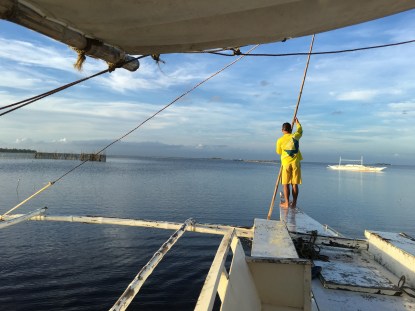
We set out for our island cruise at 6 am the following morning, and much to Beng’s relief the sky was clear and the water was silvery smooth. We shared our large banca with two women from Canada and another from Germany, our banter laced with the anticipation of meeting our goal for the morning: finding dolphins in the open water. I knew from previous reading that several species of dolphin and whale could be found in the Bohol Sea, but I would have been happy to spot any one of them. Dolphins feed in the morning, until about eight, so it was important that we head out quickly enough, also given that about half a dozen other boats were in the same area for the same reason.

IMG_7692.jpg

Our boatman, whom we’ll call Dencio, was an experienced spotter (more on his story later), and soon enough, about 30 minutes out of port, he pointed to our right, where two gray and shiny heads bobbed in and out of the water—our first of several sightings. Dolphin and whale watching is the sort of thing a CIA analyst would be good at—discerning, from the seemingly immutable pattern of cresting waves and foamy wavelets, the odd leap of a creature into the air. The Risso’s dolphins we saw (the Flipper of TV fame was a bottlenose) broke out out in pairs and trios, but for every one of them that surfaced, we were told, there were many more underwater. Dencio pushed out his boat much farther than the others did, and for a long while it felt like we were simply drifting toward Siquijor, but just as I was about to give up, I noticed a commotion in the distance—a pod of maybe a dozen spinner dolphins frolicking in the air. The whole boat came alive with glee and Dencio tried to give chase, but we were going against the waves, which had become too choppy, and the shiny caravan of fins and flippers vanished into the horizon.

IMG_7721.jpg

Balicasag Island is where the divers go, and was our midday stop. While our companions snorkeled in the fish sanctuary and watched giant turtles feeding on the sea grass, Beng and I ordered lunch (fresh fish, of course, broiled and kinilaw) and listened to Dencio’s story: “We used to hunt whale sharks,” he said, “and would kill two of them a day, baiting them and catching them with large hooks.” (This hook called the pamilac lent its name to Pamilacan Island nearby.) “We sold them very cheaply, not knowing that in Japan, a whale shark could sell for about half a million pesos. We could have been millionaires! We did this until a TV crew filmed what we were doing, and then a ban was imposed, so now we don’t catch whales anymore. Today you can find very large ones swimming under your boat. They’re very smart, and can sense danger. Sometimes they look straight at you with their eyes.”

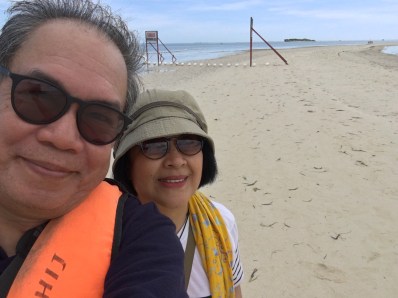
On the ride back to Panglao, we stopped by Virgin Island (renamed Isola di Francesco by its private owner, who has turned the island into a religious shrine)—little more than a long curling strip of white sand with a clump of trees on one end, but serene and restful, a fine ending to a colorful day. Or rather, make that ending a Thai massage, a grilled seafood dinner, and a cold beer.

IMG_7733.jpg

“They’ll burn in the sun,” Beng had remarked of our European companions, who took every opportunity to swim and to laze in the tropic heat. “That’s because they’ll be flying home in a few days to an icy winter,” I said, “while we just have Manila’s traffic and pollution to deal with.” Sounds like a good reason for another escapade.

Penman No. 179: Pedestrian Pleasures

IMG_7589.jpg

Penman for Monday, December 21, 2015


THERE’S NOTHING better we’d like to do on a weekend—unless we’re running off to some southern island or parts beyond—than to have a foot massage from our suki Tonton branch on West Avenue before taking in a movie and a Chinese or ramen dinner at Trinoma. In fact, we don’t even wait for the weekend to indulge ourselves in these pedestrian pleasures, but do this routine on a Tuesday and then again on a Thursday, whenever the spirit moves us.

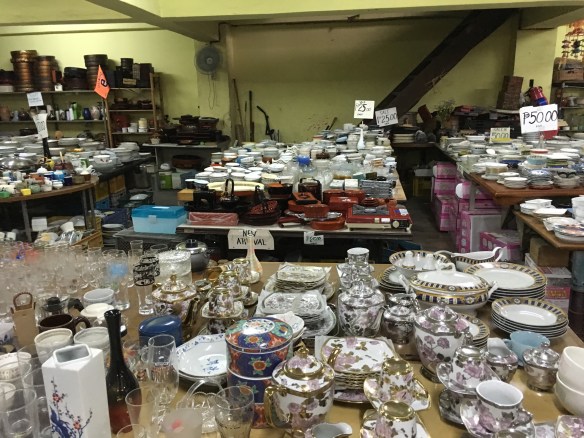
Every other month or so, we do something special—we go down to Sta. Cruz (my students no longer have any idea where these districts and streets around Quiapo are), have a fried-chicken lunch at Ramon Lee’s, then check out our favorite ukay-ukay and Japanese-surplus shops on Avenida Rizal, happily carting home several bagfuls of glorious junk, with as much pleasure as we would’ve gotten from the flea markets of New York or Paris.

Beng and I cheerfully acknowledge that this must be one of the signs of aging—settling into a fairly small and thoroughly familiar comfort zone, and stepping out of it just often enough to keep things lively and to refresh the horizon. Or maybe I’m mainly speaking for myself, because Beng’s always been far more adventurous than me, especially culinarily speaking, and now and then exhales a wistful longing for some Indian food (which flusters me, because I can’t stand curry, recognizing only salt, pepper, garlic, onion, and soy sauce in the kingdom of spices and flavors).

The simple explanation is, ours is a generation used to walking a lot. And it wasn’t as if we had a choice. We grew up without cars—the richer kids had them, but not us—and even getting to the jeepney or bus stop meant walking. I remember, as a boy of nine or ten, walking from our rented place on Halcon Street along Boni Avenue in Mandaluyong to what was then Highway 54 (EDSA to you younger ones), crossing the highway, and then taking the bus to Gilmore Avenue, crossing the highway again, and walking several blocks to La Salle Green Hills (“Greenhills” was spelled as two words then)—lugging my heavy bag of books and notebooks, whose cheap unpadded leather cut into my hands. In the afternoon, I would do the same thing all over again, in reverse, unless a chauffeured classmate took pity on me and gave me a ride.

But as torturous as that routine was, it was nothing compared to the literally kilometric walks that our elders took. One of my favorite walking stories is that of the late NVM Gonzalez, who walked many kilometers from their barrio in Mindoro to the poblacion, where he could type his manuscripts in the municipio, making the long trek back in the afternoon (and when his contributions returned months later, rejected by some editor, his father would kid him and say, “Your stories are like homing pigeons!”). That’s a story I like to tell my writing students, who—with the fanciest computers and the Internet at their fingertips—will still sometimes complain about not having “enough material” or “enough time” to produce their first drafts.

Another story I recall having read somewhere involves Bienvenido Santos and Diosdado Macagapagal, who—as students of the University of the Philippines back when it was just on Padre Faura Street in Manila—walked to school together from their lodgings in Tondo. And until his death some years ago, my uncle Juan, who must have been in his nineties, thought nothing of walking the seven kilometers of mountain road between his home in Guinbirayan to the poblacion of Sta. Fe in Romblon, just to deposit the cash in his pocket to his savings account.

I myself took to walking for my health a few years ago when I was diagnosed with diabetes, and had to undergo a radical lifestyle change. Three or four laps around the UP Oval every day, Broadway blaring in my ears, quickly took care of the problem; I lost 45 pounds in five months (some of which I’ve regained since then, but my blood stats still look good).

But walking, of course, is never just a chore and never just exercise to the willful and the observant. I’ve used my long walks around campus as thinking time, composing paragraphs in my head, mulling over turns of phrase and gentler ways of expressing unpleasant truths (the sad corollaries of holding an administrative post). I enjoy the scenery—both natural and human—and store striking details, scenes, and vignettes in my head that I can use for my stories. Once, walking towards the Carbon market in Cebu, I found myself on a street full of sellers of cut flowers, in the midst of which emerged a dark, wiry man, bare from the waist up, heaving over his head a huge basket full of red roses—a veritable Charles Atlas, bearing the weight of all that beauty. That haunting image became the germ of a story I would title “Delivery,” the tale of a lie and its terrible if unintended consequences.

And many of my sharpest memories of my foreign sorties are from long walks taken on fabled boulevards and strange alleyways, very often leading to unexpected discoveries off the tourist guidebooks: a pen shop in Edinburgh, a Filipina hotel worker taking a quick puff from a balcony in Como, a pair of fierce guard dogs prowling the perimeter of a mansion in Johannesburg, beneath a copious spray of jacaranda blossoms.

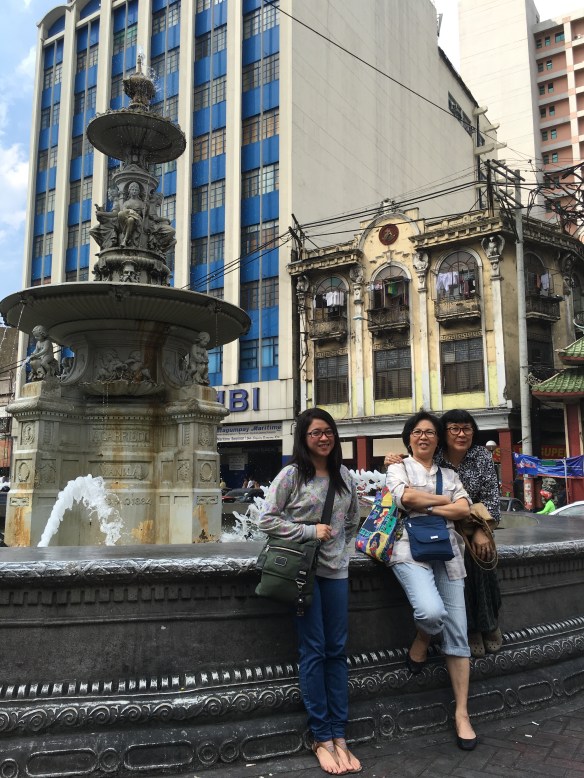
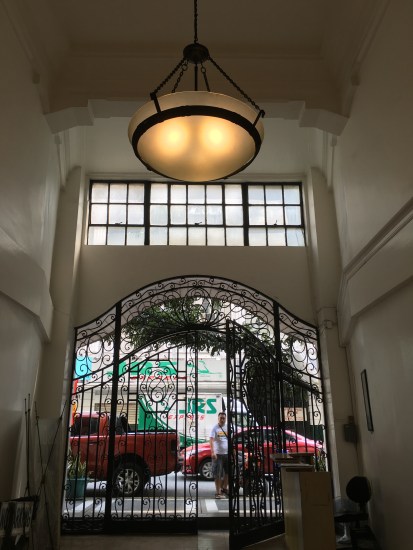
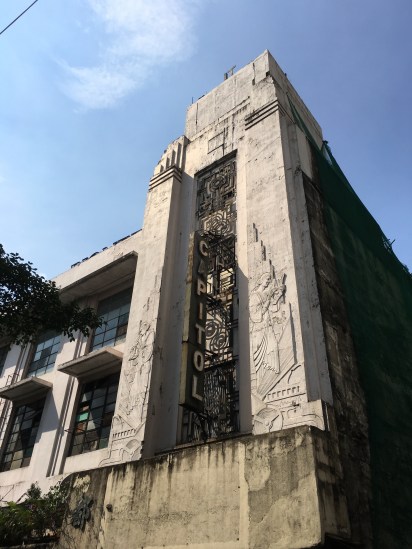
So it was in this quest of adventure that Beng and I took her sister Jana and our niece Eia on a walking tour of downtown Manila a couple of weeks ago (a zone my friend Krip Yuson affectionately calls “the armpit of the city”), to reacquaint them—newly returned from many years in New York—with home, in all of its bewildering, exasperating, ammoniac intensity. We took them to our Japanese-surplus suki on Avenida and then to lunch at Ramon Lee, before essaying Escolta and the Art-Deco innards of the First United Building; we lamented the loss by fire of the old Savory Restaurant, but pressed on to Chinatown for bagfuls of hopia and ma chang (sampling the goodies both at Polland and Eng Bee Tin) before turning into Ongpin and re-emerging into Sta. Cruz and its amalgam of gold and grime.

It was a day well spent, much of it on foot, and while our soles may have complained, our spirits tingled with reawakened excitement.

IMG_7583.jpg

IMG_7591.jpg

IMG_7596.jpg

Penman No. 177: Compress, One More, Wacky!

IMG_6071.jpg

Penman for Monday, December 7, 2015


GET SEVEN or more Pinoys together for a group photo and you’ll invariably hear this mantra: “Compress! One more! Wacky!” To the uninitiated foreigner—already surprised by our propensity to grab them by the arm for a quick and giggly shot—they’re orders that demand translation, so here goes:

“Compress!” technically means that not everyone can fit into the shot and that everyone should therefore squeeze together, at which point people will take a deep breath and turn sideways, turning a 40” midsection into what they imagine is a svelter 38”. This process can morph into a quick trip-to-Jerusalem rearrangement of the subjects, if the hold-your-breath trick doesn’t work. “Small ones in front!” or “Kneel! Kneel!” will be the next order of business, followed by a flurry of to-ing and fro-ing, and split-second negotiations over who’s taller than the other by half an inch, or whose knees can take the bending.

“Compress!” can also mean some young swain’s opportunity to snuggle up to an unsuspecting loved one. But even without the side benefit of romance, “Compress!” manifests the Pinoy’s sense of personal space, which is to say, ”I’ll let you dig your elbow into my rib cage, or touch your knee against mine—but I warn you, go no further, lest you think me immodest!”

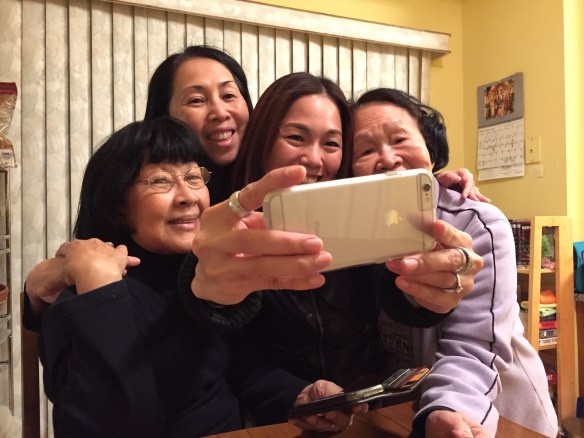
The coming of the selfie—or more precisely, that new word I picked up from a book launch last week, the “groufie”—has made compression even more necessary than ever—which, let’s admit it, is a lot more fun than the scientific solution, which is to get a wider-angle lens.

“One more!” reaffirms the Pinoy’s fatalistic conviction that something will surely go wrong and that the first shot taken will prove to be a bad one, or will mysteriously vanish into some dark photographic abyss, from which no memorable snapshot ever returneth. This seems to have been more likely to happen in the bygone days of film, when everything from a faulty sprocket to invasive sunlight could spoil the most carefully posed portrait. But the onset of digital photography has clearly offered no measure of assurance to the Pinoy, who remains deathly suspicious of solitary shots, and who will scream, from the back of the pack, “One more!,” as if the course of history depended on the preservation of that instant.

And so the photographer dutifully fires off a few more shots, giving the subjects a chance to modulate and modify their poses and expressions—more often for naught, because the Pinoy’s fatalistic conviction that something will surely go wrong just happens to be correct, and the camera almost always takes the shot at the worst possible millisecond, when one’s mouth is half-open or one’s eyes are half-closed. This foreknowledge, seared by experience into the Pinoy’s subconscious, likely accounts for the multiplicity of shots taken at every occasion, and “One more!” is never meant to be taken literally, but rather to resound like an echo.

Let’s not forget the equally inevitable complication to this phase. Just when it seems all the angles have been exhausted and the smiles have dried on people’s incisors, some latecomer—who had been blithely chatting away on her cellphone across the grounds, in full view of the pictorial entourage—just has to make a mad dash across the grass, yelling, “Wait! Me, too!” And being the world’s most hospitable people, Pinoys will invariably accommodate the catcher-upper with a frozen smile, even as their eyes glare at her like live coals. And having wedged herself into the frame with a cheery sigh, Ms. Latecomer, of course, will have every right to demand “One more!”

“Wacky!” is probably the most perplexing word in the vocabulary of Pinoy photography for the foreign observer. “Compress!” and “One more!” at least make practical sense, but the command to go “Wacky!”—sometimes given in dead seriousness by some phlegmatic photographer—taxes Occidental logic. To visitors who’ve never witnessed it—meaning, you haven’t been here for more than 24 hours—“Wacky!” means assuming some ridiculous stance, or putting on a clownish face, the permutations of which are theoretically endless, but which typically reduce themselves to tongues stuck out, googly eyes, hands like Mickey Mouse ears, and poses like zombies or broken marionettes.

It isn’t all that strange when the subjects of the “Wacky!” shot are fifteen years old and younger—after all, it’s second nature to juveniles, who don’t need to be asked to act like they were, well, kids. It approaches the bizarre when—say at the closing of the 16th Annual Meeting of the Southeast Asian Society of Gerontology or of the National Consultative Assembly of Tripartite Wage Boards—grown men and women in shiny barongs and power suits are exhorted to do their “Wacky!” best, and deliver on demand.

Professional anthropologists and sociologists (who do the same thing at their conventions, for certain) will have a proper explanation for this behavior, but it can’t be too far-fetched to surmise that the photographic display of Pinoy wackiness is meant to be a healthy release of our inhibitions, even a democratizing gesture of self-effacement and bonhomie. It’s good to look and feel silly once in a while. Never mind that, given our itch to socialize, to see and be seen, “once in a while” happens three times a week on average.

As Paul Anka put it, “the times of your life” will always be worth remembering, and always worth compressing for, one more time, the wackier the better.


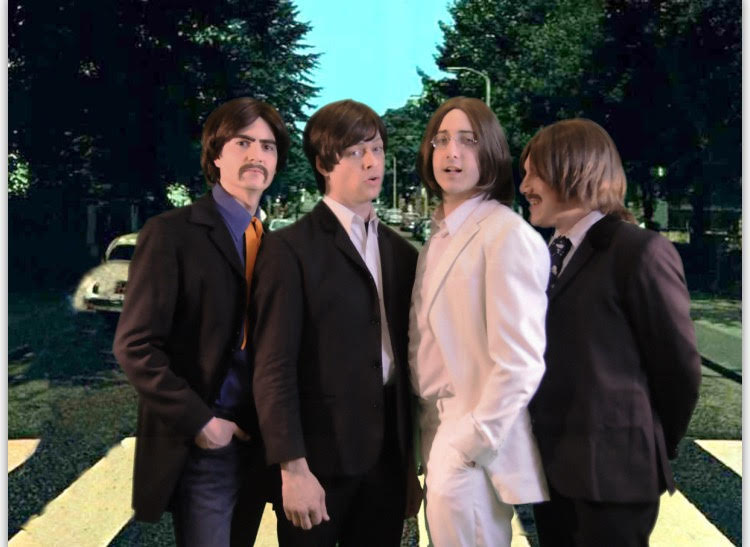
Penman No. 169: I Saw Them Standing There (Almost)

Beatles

Penman for Monday, October 5, 2015

I WAS playing Texas Hold ‘Em with a bunch of younger guys a couple of weeks ago in my favorite poker joint and one of them was delivering a spirited rendition of Bruno Mars’ “Nothing on You” (yes, this old fogey knows the singer and the song)—probably to disguise a pair of Kings—and the table talk came around to our preferences in music.

“I can tell where this is going,” I thought. But then they call me “Daddy Butch” in the place—everyone above 50 is a “daddy” or a “mommy,” which is better than the monikers some other regulars sport, such as “Itlog,” “Daga,” “Paos,” and “Payat”—so my age wasn’t the issue. The young ‘uns were really interested in knowing what kind of music my generation listened to, so after everyone else had spoken in praise of pop, hip-hop, grunge, and metal, I yielded the one and only answer any soul born in 1954 can truthfully produce: “The Beatles.”

Some nodded, smiling, and then our dealer—a sweet girl in her mid- to late 20s—shuffled the cards and said, “Were they really big?”

I have to say, I almost lost it at that point.

I pride myself at the table on my poker face, a point my adversaries readily concede—“You can never tell what hand Daddy Butch is holding!”, I’d often hear. But that fearsome inscrutability more likely comes from the fact that, at the freewheeling 10-20 cash game, I’ll bet on anything from a pocket pair of Jacks to a 7-deuce off-suit. In others words, I’m what they call a “loose and aggressive player,” possibly mad, possibly idiotic, possibly serious. I lose a lot of money playing this way (I behave much better in tournaments) but it’s worth the sight of my tablemates guessing and squirming.

But again, I almost lost that carefully crafted coolness when I heard (with better emphasis) “Were THE BEATLES really big???” It was worse, to me, than those schoolkids who asked why Mabini was chairbound throughout that whole “Heneral Luna” movie. I felt a vile sourness welling up from my gut and bubbling out of my ears and nostrils. You might forget the Philippine Revolution of 1896 and I won’t even bother you with trivia like the Tydings-McDuffie Act and the Military Bases Agreement, but THE BEATLES????? (Let’s add a couple more question marks for real emphasis.)

I was too apoplectic to answer, but eventually someone on my left, a forty-something fellow who just might have been old enough to be rocked to sleep to the strains of “Ob-la-di, Ob-la-da,” said “Yes, they were big.”

“Bigger than Nirvana?” someone else chimed in.

“Yes, bigger than Nirvana.”

“Bigger than One Direction?”

“Yes, bigger than One Direction.”

“Bigger than Michael Jackson?”

“Well, maybe MJ came closest to the Beatles in popularity.”

“Actually, they even claimed to be more popular than Jesus Christ,” I finally said, “and depending on the number of Muslims and Buddhists in the world at that time, it just might have been true.”

“Really, they said that? When?

“In 1966—just before they came to the Philippines.”

“They CAME to the Philippines?”

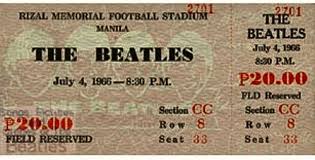
“Sure—they had a big concert here on July 4, 1966—and I ALMOST saw them!” The bile had snuck down my throat now, and I was feeling much better, given a rapt audience for one of my favorite stories.

With full relish, I recounted how the Fab Four flew into Manila, were met by screaming, fishnet-stockinged girls, offended Bongbong Marcos, and were practically chased out of the old MIA by Liberace fans who clearly believed that—at least in the Philippines—the Beatles couldn’t possibly be bigger than the Marcoses.

Somewhere in there I interjected the story of how my mother had promised a 12-year-old named Butch that they were going to see the Beatles at the Rizal Coliseum. The indulgent mother and her eager son get as far as Quiapo Boulevard from their humble abode in Pasig, whereupon she sees a new moviehouse trumpeting the wonders of Cinerama. “Let’s watch this movie instead!” the lady says, and the boy’s once-in-a-lifetime chance of seeing John, Paul, George, and Ringo standing on the stage—albeit from 1,674 feet away in the bleachers—vanish into the gutter. That afternoon, as luckier fans swoon to “Please, Please Me” and “I Wanna Hold Your Hand,” tank fire and bazookas echo in the boy’s ears, all throughout the two hours of “The Battle of the Bulge.”

My poker playmates look at me with wide-eyed wonder—I try to read their faces, like a a poker player ought to be be able to do—but I can’t tell if they can’t believe that I’m that old, or if they’re just awed to be sitting at the same table with someone who actually breathed the same jeepney-flavored air in the same politician-infested city as the lads from Liverpool.

They got nothing on you, Beatles!

Picture-'Britain's Finest' Beatles tribute band

AND IF these memories make you feel like suiting up in your collarless jackets and zippered boots and swaying to “Eight Days a Week,” you’ll get a chance to relive the Beatles experience when one of Britain’s finest Beatles tribute bands—called, well, Britain’s Finest—come to Manila for a concert on October 14, Wednesday, at the tent of the Midas Hotel and Casino on Roxas Boulevard in Pasay City.

You can get your tickets (P3,800 for the VIP and P2,800 for the gold section at all SM Tickets (470-222) and TicketWorld (891-9999) outlets or via www.ticketworld.com.ph.

I’m planning to go, but I think I’ll leave my mom at home this time.

Penman No. 162: To Be a Journalist (2)

Byline

Penman for Monday, August 17, 2015

LAST WEEK’S look back at my early days as a journalist brought back a flood of memories that hadn’t crossed my mind in ages, so I’ll beg my reader’s indulgence with this extended reminiscence of what it was like to be a young newspaper reporter just before martial law was declared in September 1972.

Come to think of it, that first stint in journalism didn’t last too long, from April to September of that fateful year. (I keep saying “first” because I would return to newspapering more than 20 years later in 1993, as an editorial writer and then Lifestyle columnist for the late, lamented newspaper TODAY.) To recap, I was 18, and my bosses at the Philippines Herald had taken a chance on a college dropout who barely knew a thing about professional newspapering but who seemed to be able to string sentences together decently enough—and fast.

Man, was I fast—I was so eager to impress my editors that I jumped at assignments the way a dog goes after a ball, and when my editors found out about the new boy in the room, they assigned me to fill up half of Page 5—the features page—every day. The topic was up to me. That sounded like the most wonderful thing in the world—imagine, my own corner of the newspaper, all mine to fill up!—for about three days. I took stories out of history books and turned them into features; I wrote about the latest crazes like fun houses and pool halls; and when, inevitably, I ran out of ideas, I took a bus out to Tagaytay, got off, and looked around for anything that I could weave a feature story from (I saw a drug rehab center in the distance and got a story out of that; I did the same thing in Muntinlupa another day and interviewed a Death Row convict).

Thankfully my editors pulled me out of Page 5 and designated me a general assignments reporter—meaning, I would report for work every morning and take on whatever odd assignment they tossed me. But before I could do that, and to give me some training, they had me spend a few weeks each on a specific beat—police, sports, and City Hall. On each beat, a senior Herald reporter took me under his wing, and while they may not have been too happy to babysit me, I soaked up their streetsmarts and tried not to be a nuisance (not always successfully—we were covering a MICAA basketball game when Jun Pantig saw that I was cheering for one team at courtside. “Stop cheering!” he shushed me. “You’re a reporter, you shouldn’t be taking sides!”)

Of all the beats I was assigned to, the most exciting and instructive was police. I took the graveyard shift at the old Manila Police Department headquarters and from there covered mayhem at its worst—an 18-year-old American girl who shot herself in the mouth at the Dutch Inn; a nighttime fire that razed a hospital in Dapitan (I can still recall the sickening thud of falling patients who jumped off the roof in desperation; my specific task, early that morning, was to count all the bodies in the morgues); demonstrations at the US Embassy where I could see the police preparing for an assault on the rallyists, many of whom happened to be my friends (prompting me, again, to break journalistic protocol by picking up the injured in our service jeep and bringing them to the hospital).

I grew inured to the sight and smell of blood, and I can say, today, that I had no better preparation for the kind of realist fiction that I would come to write than those weeks on the police beat, confronting death by the day (which didn’t make me feel any braver, but rather more aware and respectful of the finitude of life).

It was all very exhilarating, even in the most difficult and trying of moments; sometimes the toughest tests took place in the newsroom itself—once, for example, I was driven close to tears by having to rewrite a story half a dozen times to please an editor who, I now realize, was teaching me a valuable lesson in verbal economy.

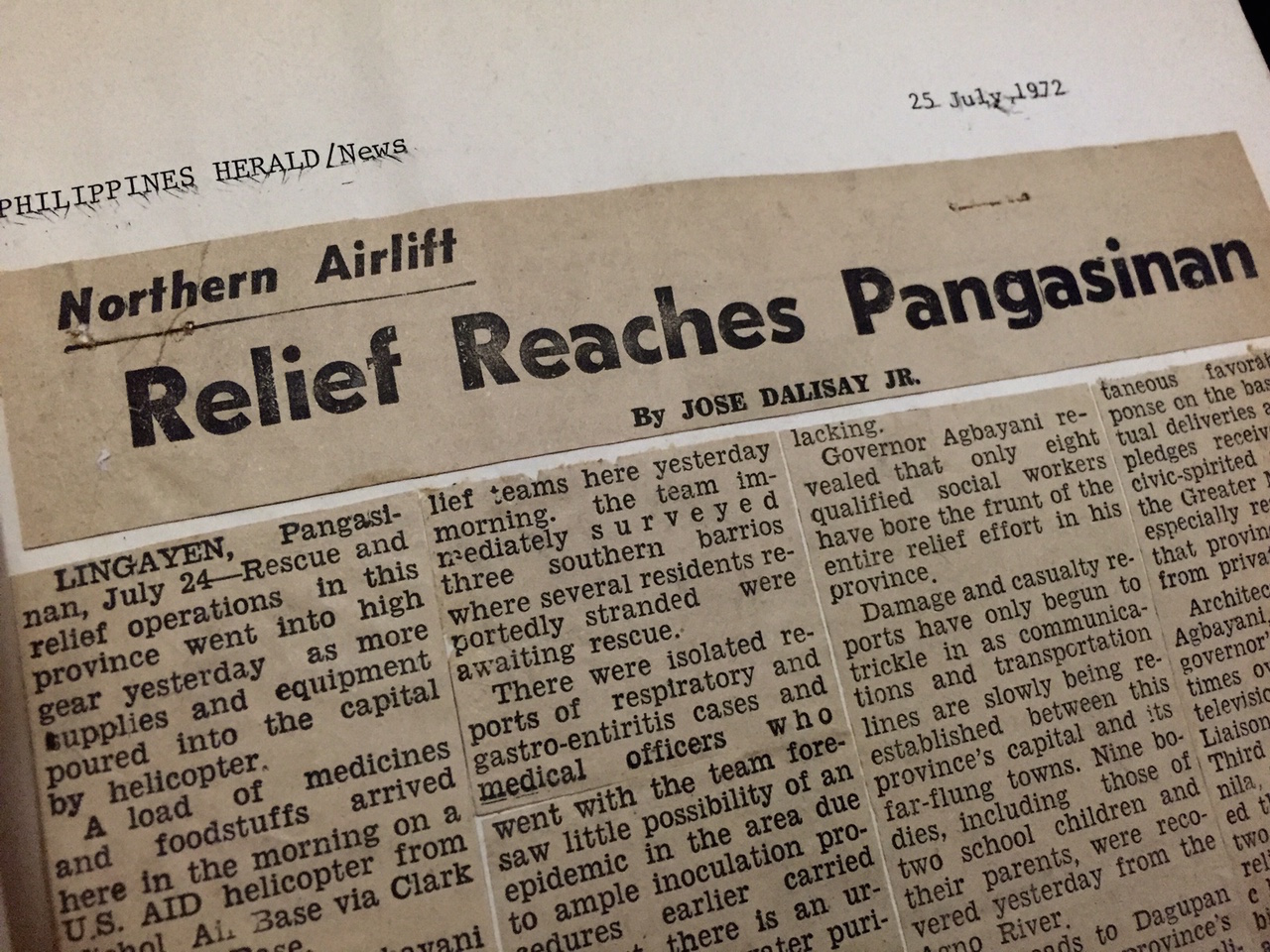
Coming off the beats as a general assignments reporter, I looked forward to and did get some assignments that no other teenager would have experienced. At the onset of the biblically catastrophic July-August floods of 1972, I was put on board an amphibious ship that sailed in the night from Manila to Lingayen Gulf, and I covered rescue operations in Pangasinan, riding rubber rafts and flying out in a US Army helicopter that dropped us off at Clark Air Base, then still busy with the Vietnam War. Also at about that time, I volunteered to go to Isabela to cover the reported landing of a shipload of arms by the CPP-NPA, convinced (wrongly—it turned out to be the MV Karagatan episode) that it was a military hoax that I could heroically unmask; sensibly, my bosses told me that I was too young—they didn’t say too foolish—to undertake the mission. Instead, I stayed in Manila, and interviewed Mrs. Marcos in Malacañang about her relief efforts in front of a mountain of Nutribuns.

Like I said last week, I soon resigned in solidarity with a union strike at the Herald, and was half-surprised when management accepted my resignation. I finagled my way to a spot at Taliba (in the Manila Times organization that it had been my dream to join one way or the other) as suburban correspondent, and it was in that capacity—albeit outside my assigned zone in Makati—that I filed, or at least called in, the last story of my brief reportorial career. It was the night of September 22, 1972, and I was on the UP campus, not as a journalist but as an off-hours activist hanging out with comrades and fraternity brothers to denounce the imminence of martial law.

I should’ve sensed something when I saw my brod Bobby Crisol, son of the Defense Undersecretary, suddenly being spirited away by his dad’s security men. Shortly after, we heard gunshots in the distance. I ran for the nearest phone and called the night desk: “I have a scoop!” I said breathlessly. “I can hear gunfire—UP is under attack!” (It later turned out that the Iglesia ni Cristo radio station was being taken over by the military.) What should have been the biggest story of my young life fizzled out with a laconic reply on the other end of the line. “So are we,” said the fellow I spoke to. “There are soldiers in the office. It’s martial law!”

Within four months, I would be in prison, still aged 18. Another year later, I would get married, on my 20th birthday. Life seemed terribly short, and I was in an awful hurry, hardly imagining I would last on to seniorhood.

Today, I tell my Creative Writing majors that they may think of themselves as God’s gift to literature, but until they’ve spent a week or two as a reporter, sniffing out a story, they should shut up and be happy they can write odes to the moonlight without an editor screaming at them for a tighter rewrite.

Penman No. 161: To Be a Journalist

Image-1

Penman for Monday, August 10, 2015

I WAS very sad to hear of the recent passing of an old colleague from my first foray into journalism—Nemesio Dacanay, who was then the City Editor of the Philippines Herald, one of the pre-martial law period’s smaller but pre-eminent newspapers. A relative of his texted me about his death and interment, but I was out of town and felt bad that I couldn’t even pay my respects in person, so I’ll do it here.

Five years ago, in this column, I had to issue an apology—and I was happy to do so—having inadvertently suggested in a previous piece that “Dac” had passed on to the hereafter. As it turned out, he was still very much alive, as his daughter Christine reminded me. This time, unfortunately, the news was real.

The story of my connection to Dac and of how I got into the newspapers is something I may have told before in bits and pieces, but here it is in full. The time was early 1972, and I had just turned 18. I was already a full-time activist, having dropped out of my classes in UP, a lanky, chain-smoking lad who was already a veteran of many a Plaza Miranda march and of the Diliman Commune.

In UP, I hung out with a group of older Journalism majors who were close to graduating and who would, very shortly after, begin to make a name for themselves as reporters—people like Wilson Bailon, Rolly Fernandez, Jun Engracia, Efren Cabrera, Rod Cabrera, and Val Abelgas, among others. I had great respect and admiration for these guys, but at the same time, it annoyed me to know that they were soon going to find and land jobs, while I—technically still a freshman, with but 21 completed units to my name (3 of them good for a “5.0” in Math, the consequence of absenteeism)—was going to be left behind.

I should explain that at 18, I had no greater ambition than to become a journalist. I’d written some stories, poems, and plays, but I had no plans of becoming a creative writer, and might even have thought journalism superior to poetry (and why not?). I had been editor in chief of the school paper at Philippine Science High (following in the gargantuan footsteps of Rey Vea, Mario Taguiwalo, and Rodel Rodis), and I found that I savored the romance of printers’ ink and hot lead (that’s “lead” with a short E for you young ones, the molten metal that magically turned into letters in reverse).

As soon as I stepped into UP, at 16, I did the three things I’d put on my agenda, after enrollment: join the Nationalist Corps (and later the Samahang Demokratiko ng Kabataan, or SDK), join the Alpha Sigma Fraternity (to which high school heroes like my Physics teacher Vic Manarang and firebrand Gary Olivar belonged), and join the staff of the Philippine Collegian.

It was in the nationalist movement and those long nights of proofreading at Liwayway Press that my desire to become a reporter flourished. Never mind poetry and fiction; I wanted to feel and to record the ground shaking beneath my feet from the steps of a thousand marchers, to trace the arc of tear gas canisters flying across the plaza, to bear witness to what we were all convinced was the forging of a bright new future, with all the sparks and all the smoke that came with the process. To be a reporter at that time was to be in the very womb of history, and I thought nothing was more thrilling and more important than to be there on the frontlines, notebook and ballpoint in hand and a barely stifled battle cry rising up my throat: “Pierce the enemy with your pens!” (That was the slogan silkscreened on my jacket.)

As you can see, as a teenage Maoist, I had no idea of and no patience for “objective” and “dispassionate” journalism. I hadn’t even taken one formal unit of Journalism in UP (I was an Industrial Engineering major, and still plowing through my GE subjects) and had embraced the notion that journalism was and had to be a partisan activity, convinced that Malacañang had bought 90% of the Philippine press, with the notable exception of progressives like Tony Zumel, Satur Ocampo, and Rolly Fadul, and young blood like Roz Galang and Millet Martinez. We were going to be the vanguard of what we called the Second Propaganda Movement.

But I didn’t want to be stuck on campus; it was a wide-open arena beyond Diliman, so when my friends began applying for jobs with the newspapers shortly before graduation in early 1972, I tagged along, hoping to land something, anything. (I’d already written and sold a teleplay to the TV drama anthology Balintataw in 1970, when I was 16, so I didn’t lack in self-esteem.) I remember walking up to the editor of the Manila Chronicle, Amando Doronila, and boldly announcing that I wanted to apply as a reporter. “How old are you?” the man asked in all reasonableness. “Eighteen,” I said. “Come back in a few years,” he suggested, not unkindly.

It was like that, one prospect after another, until my path led to the old Philippines Herald office in Intramuros, sometime in March or April. It was must have been around one in the afternoon, because the only person in the newsroom was Nemesio “Dac” Dacanay, whose name I didn’t even know at that point. He had a groovy look about him: dark shades, a colorful, open-necked shirt, and an impish grin. I told him what I was there for, and I can’t recall how long I begged to be given a chance, but finally, if only to get rid of the pesky walk-in, he said: “Where do you live?” I said, “Quezon City.” He said, “Okay. Go back to Quezon City, then come back in three days with a story. Understood?”

I stepped out of the Herald on a floating cloud—I was positive I would deliver as directed. Over the next three days, not knowing anything about real newswriting, I walked around the Quezon Memorial, waiting for some dreadful accident to happen that I could breathlessly report on. The world remained blissfully peaceful, and the only thing that came crashing down was my dream of becoming a journalist. On the third day, I was so tired and depressed that I took a jeepney to the Delta Theater, and decided to cool off in the moviehouse. I watched the screen. The movie was so awful I can’t even remember its title. When it was over, I went home, collected my thoughts, and pulled out my typewriter.

Then I took a bus to Intramuros, and handed Dac my story—a movie review. Damn—I could hear him mutter, and I could see him sizing me up through his shades—okay ka, kid. “I’ll pass this on to Nestor,” he said, referring to the venerable Nestor Mata, who handled the features page. “He’ll take care of you.”

And so I was hired at 18 as a general assignments reporter, the greenest of greenhorns in a roomful of veterans that included editor in chief Oscar Villadolid, news editor Joe Pavia, reporter Lito Catapusan (who took me under his wing), and a deskman who moonlighted as a songwriter named George Canseco. Over the next few months, I would make the rounds of the police, sports, and City Hall beats, cramming three more years of college into a semester. Thanks to a guy who humored me named Dac, I had achieved my ambition of becoming a journalist. (By July, in a flash of activist fervor, I would resign in solidarity with striking workers, and move over to Taliba as a correspondent right up to martial law, when we all lost our jobs and the press as we knew it vanished overnight. But that’s another story.)

Penman No. 156: Why I’ll Never Become Ambassador

Penman for Monday, July 6, 2015

IN MY early middle age, around 40, I nursed an ambition of becoming an ambassador, an official representative of the Republic of the Philippines. Some of my friends and schoolmates were on their way to becoming one—Vicky Bataclan, now in Belgium, and Libran Cabactulan, now at the UN, were just two of them—and I imagined that I might carve out a new career in my seniorhood in the grand tradition of writer-diplomats such as Pablo Neruda, Octavio Paz, and our own Manuel Viray and S. P. Lopez. I’ve met a few real and truly worthy ambassadors and have been much impressed by their demeanor—Cesar Bautista, Delia Albert, and Joey Cuisia, for example.

With a background in literature and economics, and having written a slew of speeches for Presidents, senators, and CEOs, I thought that I had acquired enough political savvy and possessed the language to be able to craft an intelligent and suitably tart or nuanced response to any issue from island-grabbing in the West Philippine Sea to the Chinese in all of us. I also happen to like wearing suits and to be driven around, and I can say “Good morning” in six languages, so I have the externals covered. If I were serious about my ambassadorial plans two decades ago, all I needed to do (if I didn’t want to go the career route and take the FSO exams) was to hitch my wagon to some political star, which is apparently how one too many stragglers like me get to be called “Ambassador” for life, their diplomatic skills be damned.

But I suppose I’ve always had at least two strikes going against my being posted to some swanky European capital: my incipient misanthropy, and my culinary incorrectness.

The older I get, the more reclusive I tend to be, shying even farther away from the frenzy of Facebook and the emoji-enabled spontaneity of many online “friendships.” It’s not that I actively dislike people; I think most strangers will find me friendly, and I warm up easily once we get a real conversation going. (With the exception, I must say, of telephone conversations; having grown up without a phone, I have always disliked—loathed would be the better word—talking on the phone, especially for anything longer than three minutes.)

It’s just that, past 60, I’ve come to seek out human company less and less, preferring to keep to myself and family, and a few close friends who wouldn’t mind not hearing from me for months or years and picking up where we left off, which is my gauge of a true friendship. Over the past five years or so, I’ve become such a homebody (my poker nights excepted) that Beng feels like she has to ask me now and then, “Don’t you have any friends?” She means, of course, people other than herself, because she knows that I’ve been perfectly happy to just have her for company, at home or on the road, and that, in our sixties, our need and desire to socialize as a couple has diminished considerably.

Beng compensates for this by being a Facebook fiend, and aside from her snoring bedmate, Facebook’s the first thing she sees in the morning and the last thing she sees at night. Like I wrote here not too long ago, I’m not even on FB, and obstinately stay out of it, because I think it’s cheapened the meaning of “friend.”

Diplomacy, of course, requires not only meeting with a lot of people, but people you hate, and who very likely feel likewise—sort of like the online world, only it’s face to face. Now, I can fake pleasantness as well as anyone else—except maybe Beng, who’d lose our house and car at poker within five minutes—but I know, from practice, that while they say it takes just 17 muscles to smile and 42 to frown, smiling can be a lot more tiring than frowning, especially if you don’t mean it.

The more important reason I’ll never head an embassy is the mess I would likely make of our foreign relations by my equally boneheaded refusal to acquire a more catholic or at least a more cosmopolitan palate, despite Beng’s entreaties for us to try menus more complicated than Chow King’s. Nothing flusters me more than the prospect of “fine dining.” (I recall how, many years ago, I begged off from joining a very exclusive and epic feast prepared by ten of Manila’s top chefs—much to the dismay of a fellow professor who had wangled the invitation—precisely because all that good food would have been wasted on me.)

That’s also why I’ve declined dinner invitations, especially from people I don’t know or who don’t know me and my curious preferences, to spare us the mutual embarrassment of my shying away from anything with cheese, or oregano (I can sniff out one part in a million), or the aforementioned curry, which effectively leaves out much of Italian, French, Greek, Indian, and Mexican cuisine. No pizzas, thank you! But I’ll take pancit, lechon, adobong pusit, Ligo sardines, chicken mami, and KFC anytime—I’m actually easy to please.

Ambassadors should be able to eat anything with anyone, and not just gorge like a hungry peon (someone called my rice-and-pancit combo “pagkaing obrero”) but dine intelligently, knowledgeably, with the ability to make off-the-cuff remarks like “Don’t you just love the tanginess and the fruitiness of this Dréan d’Auvergne? It’s a bit more complex than the St. Nectaire, don’t you agree?” (Thanks to cheesenotes.com for the technical details.)

The only place I can imagine not having this culinary quandary would be China—where I’ve gone pretty often because, as I told Beng, I was sure to find a lot of yummy Chinese food there—but I’d hate to tell my Chinese hosts what I really thought of the nine-dash line, and I’d hate to have to explain, on the rebound, why bright kids with Chinese names can create such a fuss on Pinoy Facebook.

Penman No. 150: Looking Eastward in Toronto

IMG_7573 (1)Penman for Monday, May 25, 2015

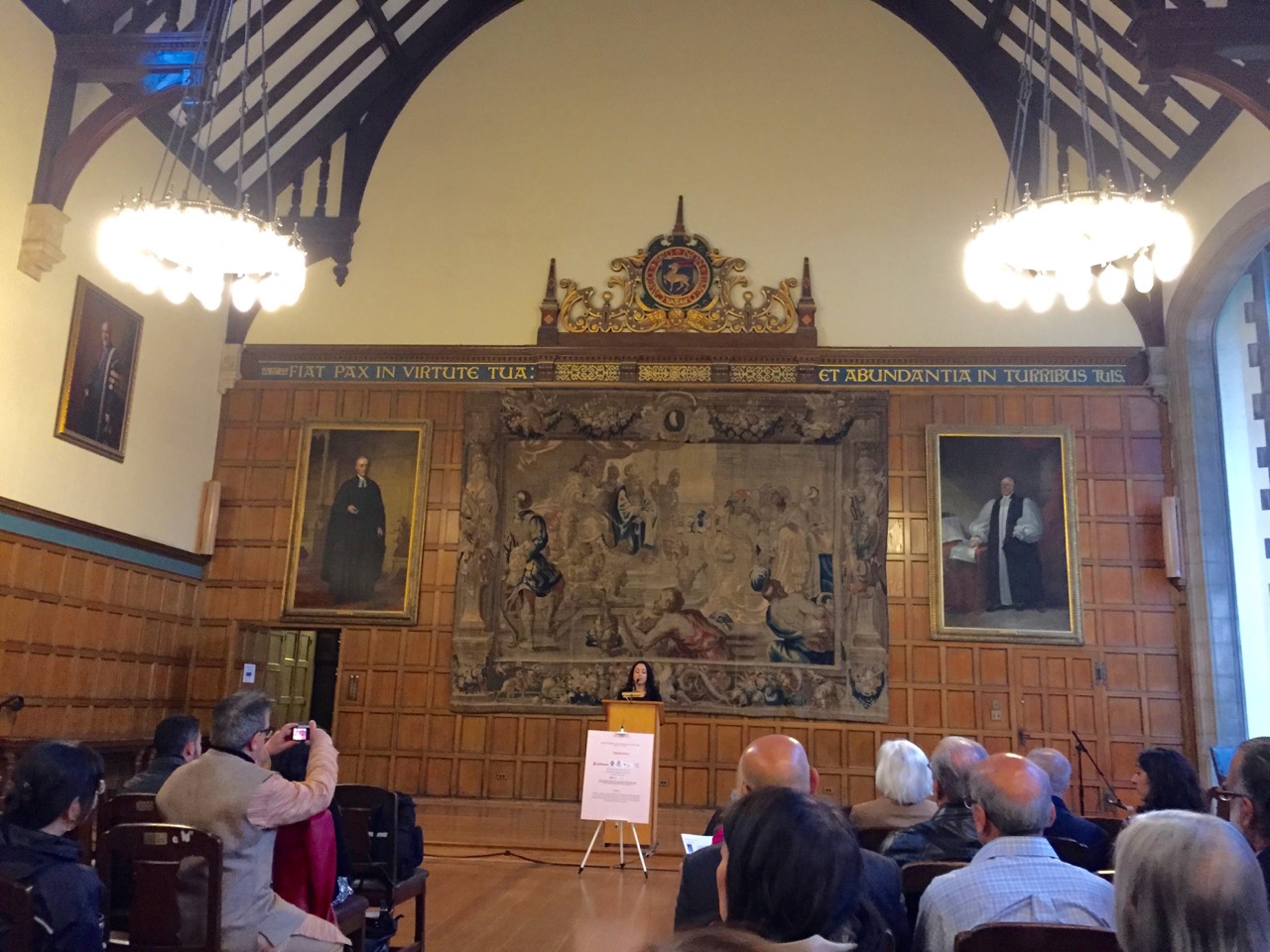
I FLEW out to Toronto in Canada a little over a week ago to take part in that city’s Festival of Literary Arts, possibly the first Filipino author to join that long-running festival, now on its 15th year. Previously, the festival had focused on South Asia (India, Pakistan, Bangladesh, Sri Lanka), but has recently opened itself up to more representation from East Asia, Africa, and the Caribbean, thus my inclusion in this year’s roster of invited writers and speakers.

Over a weekend, from Friday to Sunday (May 15-17), several dozen representatives from these regions and from Canada met in various venues on the scenic campus of the University of Toronto and its environs to tackle issues and problems besetting writers and publishers from outside the global centers. How does a writer from the periphery break through to the center? Or is that “periphery” its own legitimate center? Is yearning for publication and validation in the West a vestige of the colonial mindset, an experience shared by all the countries represented in Toronto?

Aside from these seminal discussions, of course, the meeting was first and foremost a festival, a sharing of the artists’ finest work, and I felt privileged to be introduced to authors and creations I would otherwise have totally missed or blithely ignored. With many of the authors coming from expatriate and postcolonial backgrounds, the offerings were rich and deeply nuanced, the talents outstanding.

Among others, I discovered a major international writer in the festival director, the novelist M. G. Vassanji, who had been born in Tanzania in East Africa, and whose account of his pilgrimage to his ancestral roots across the ocean (A Place Within: Rediscovering India) is a modern classic of creative nonfiction—a sympathetic but unsentimental and often searingly critical chronicle of his encounter with the sprawling reality of India today.

The visit also allowed me to reconnect with some old Filipino friends who had migrated to Toronto and had built new lives there. I was very graciously taken out to a scrumptious dimsum lunch in Toronto’s fabled Chinatown by Patty Rivera and her husband Joe. Patty and I worked together 40 years ago as writers and editors at the National Economic and Development Authority (an unlikely Camelot for young writers and artists under the patronage and protection of then-Sec. Gerry Sicat).

Though trained and still active as an editor and journalist, Patty has since developed into an accomplished and prizewinning poet, with three volumes to her name. Her first collection, Puti/White, was shortlisted for the 2006 Trillium Book Award for Poetry. Patty’s husband Joe, a former Ford executive who also wrote plays in the Philippines, became a lawyer in Canada and then, upon his recent retirement, turned to painting, an avocation in which he demonstrates a most unlawyerly exuberance. I also met and was happy to engage with some Alpha Sigma fraternity brothers led by Amiel “Bavie” de la Cruz, who now runs his own accounting firm in Toronto. IMG_7597 (1) Patty and Joe arranged a reading for me with a large and lively group of Toronto-based Pinoys (including Hermie and Mila Garcia, the moving spirits behind Canada’s longest-running Filipino newspaper, the Philippine Reporter, and expat poet Naya Valdellon); this was held in the very stylish apartment of writer-artist Socky Pitargue, and a great time was had by all as we threshed out the travails of Philippine literature and politics, two deathless topics that occupy me on every one of these overseas sorties. DALISAY_HMG_8056-300x168 Yet another meaningful encounter I had, thanks to the festival organizers, was with two classes of high school students at the Mother Teresa Catholic School in Scarborough, a Toronto suburb with a high concentration of Asian students, including Filipinos. These teenagers had very likely never met a living writer before, let alone a Filipino one, and I was glad to try and show them that we do exist, and that we have something to say. I, too, learned something from their teacher Kathy Katarzyna, who ended our session with a terrific quote from the Canadian poet Leonard Cohen: “There’s a crack in everything…. That’s how the light gets in.”

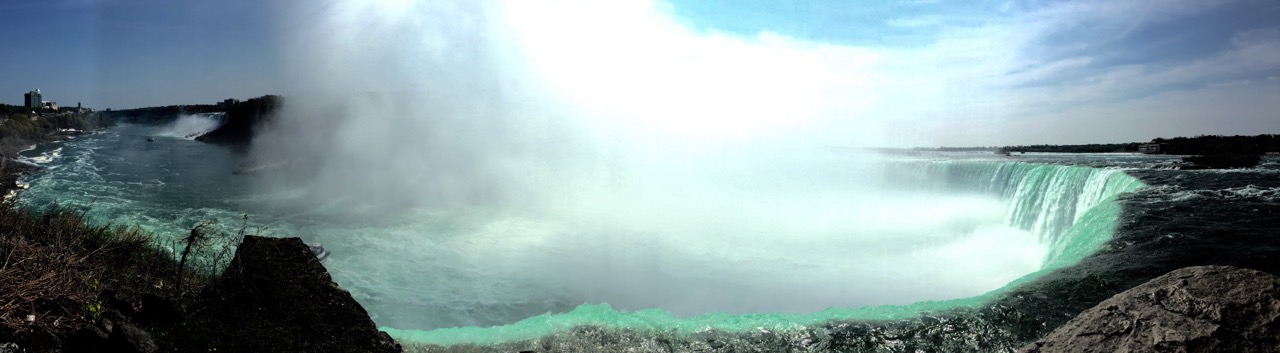
Many thanks to the Sri Lankan poet Aparna Halpe for taking me to the school. Of course, my thanks wouldn’t be complete without acknowledging the help and support of my sister Elaine Sudeikis and her husband Eddie, who flew in from Washington, DC to join me at the festival and to show me Toronto and a bit of Ontario (most notably Niagara Falls—we walked over to the US side as well for my shortest visit to the US, ever). Ed’s dad Al—all of 92 but still feisty—also gave me a little taste of Lithuania in Toronto.

And the visit would never have happened for me without the recommendation of Prof. Chelva Kanagayakam, an eminent scholar and festival founder whom I’d met in Manila, who tragically died of a heart attack a few months before the festival, on the very day he was inducted into the Royal Society of Canada. I found Toronto itself to be a highly livable and largely safe city (guns are under strict control in Canada), with a vibrant ethnic mix.

One out of every two Torontonians comes from somewhere else, and Vietnamese, Tibetan, and Puerto Rican restaurants stand cheek-by-jowl beside each other, not to mention a Chinatown noted to be among North America’s best culinary havens. (A Pinoy food store aptly named “Butchokoy” stood a block away from my lovely B&B—a three-storey house from 1853—on Dunn Street.) Victorian structures still in use by the university and the city government contrast sharply with ultramodern architecture in an eclectically energetic skyline. Seekers of the funky and the quirky can have their fill in the city’s counterculture-inspired Kensington Market. IMG_7691 (1) For someone schooled in Americana, this exposure to things Canadian was an interesting re-education—to think, for example, in terms of “Tim Hortons” instead of Starbucks or Seattle’s Best; of “Roots” instead of Gap; of “Hudson Bay” instead of Sears or JC Penney, etc.

But the most useful re-orientation took place for me at the festival itself, in reminding me that we have a lot to learn from South Asia as far as developing readerships in local languages is concerned, among other issues. We Filipinos think we’re well traveled and globally savvy, but we actually don’t get around enough in terms of mixing with our fellow Asians, let alone Africans. We seek out Western—specifically American—tutelage and patronage, often to our own deep disappointment.

It seems ironic that I had to learn this in Toronto—a true cosmopolis like New York—but sometimes you have to stand in the West for a better view eastward.

[Group photo from philippinereporter.com]

Penman No. 149: Advice to Freshmen

Penman for Monday, May 18, 2015

AFTER LAST week’s piece on “Why I’m not on Facebook,” I thought I should add or clarify that I’m not entirely off the grid, Web-wise. I do choose the websites or forums I frequent (and in case you’re wondering, I’ll explain the difference between forums and fora one of these days), to make sure that I deal only with things and people I’m truly interested in. For over a decade now, I’ve moderated the Philippine Macintosh Users Group (www.philmug.ph), and more recently the Fountain Pen Network-Philippines (www.fpn-p.org); now and then you’ll also find me at the Philippine Watch Club (www.philippinewatchclub.org). I keep a blog at www.penmanila.ph, and send out an occasional tweet, usually about my poker fortunes and misfortunes, from @penmanila.

It was on one of these sites—Philmug, which has grown to become one of the world’s most active Apple user groups—that I came across a thread I’m tapping for my topic today. While Philmug is the place to talk about anything and everything Apple, it’s also a community that can spark very lively discussions about such motley topics as Manny Pacquiao, Manila traffic, where to stay in Hanoi, and what SIM cards to get in Europe. One such “offline” thread that perked my interest last week was one titled “College freshman tips,” started by a young member about to enter college. Was there anything, he asked, that his elders could tell him about college life?

It’s a thread that’s grown to ten pages long the last time I looked, and predictably, many Muggers (as Philmug members call themselves) recited that age-old mantra that all college freshmen know by heart (and sophomores even better): “Party hard, study harder!”

Other suggestions were more specific:

  1. Join student organizations and socialize, but choose which ones you’ll be joining wisely. These “orgs” could become networks for life, for both friendships and professional contacts.
  2. Avoid fraternities and such groups that employ physical initiation and advocate violence. You’re in college to study—not to maim or be maimed by other people.
  3. Get out of your comfort zone, and be a little more adventurous. Make friends with people who may be totally unlike you. That’s where a lot of learning happens—in knowing about how other people live and think.
  4. Manage your resources well—your budget and time, most especially. Learn how to take care of yourself, and consider taking a student job, both to earn and to learn some professional working habits.
  5. Master the freshman basics: the campus map, how to take notes, who the best (not necessarily the easiest) teachers are.
  6. Don’t confuse a college diploma with education. A lot of learning takes place outside the classroom.
  7. Don’t believe everything you hear, even from your professors. Learn how to argue, and argue well.
  8. Never plagiarize. It’ll never be worth it.
  9. Don’t be afraid to fail. Go ask a girl out if you really like her. Failure is part of learning.
  10. Don’t try to do everything in your freshman year. You’ll find yourself being pulled in so many directions that it’s easy to lose focus. Map out a clear and unimpeded path to your sophomore year.

Some other suggestions were a bit more unusual, although no less practical. “Always sit beside a female classmate and you will never regret college life, because they are lifesavers (and your immediate supply of pens, paper, books, assignments, and exams),” proposed one member (who now just happens to be one of our smartest cops in the PNP). “They smell better than boys,” another member, a retired pharmaceuticals executive, agreed.

And what did I say? Quite a bit, but among them was, “Don’t bother playing mind games with your professor (as in ‘I’m smarter than this guy, and I’m going to prove it’). You will lose; even if you are smarter than your prof, you will lose… Learn how to argue and come across as being smart without being snarky. I’m a very gentle prof myself, but nothing makes me happier some days than to give some smartypants a dose of his own medicine.”

Now, of course, like many 16- and 17-year-olds, I didn’t follow all this sound and sage advice I’m giving and hearing.

In my freshman year in UP in 1970-71, I (1) joined a frat and got beaten black and blue; (2) joined a militant student organization and went to dozens of rallies, many of them violent; (3) joined the staff of the Philippine Collegian, the student newspaper; (3) met (and lost) my first girlfriend, and did what boys and girls do; (4) got a 1.0 in English and a 5.0 in Math (for absenteeism—I was a Philippine Science high grad and arrogantly thought that Math 17 was beneath me); (5) shifted courses, from Industrial Engineering to Journalism, I think; and (6) went up to the mountains of Quezon and Bulacan to do “mass work.” It was, to say the least, an interesting year.

Within another year or so, I would drop out and divide my time between my activism and a job as a newspaper reporter (I may have been the youngest regularly-employed newspaper reporter of my time, at 18); also at 18, I was in martial law prison; by my 20th birthday, I was married, and became a father before I turned 21.

Not surprisingly, it took me forever to get back to school and finish. I resumed my undergrad studies at age 27, and graduated with my AB in English, cum laude (you could still get honors then even with a failing mark if it wasn’t in your major—I had shifted to English by then—and if your GWA could sustain it) at age 30. I made up for lost time by finishing my Master’s by 34, and my PhD by 37. Some of us like to hurry… and then to take our time… and then to hurry again.

I suppose my ultimate advice to freshmen is just to hang in there and don’t do anything stupid like get killed before turning 20, unless you’re doing it for God and country. But don’t stay too safe, either, because the best things you’ll be learning from will be your most grievous mistakes. One of the wisest things I ever heard came from a friend, now departed, spoken over beer and stale cigarettes at 2 in the morning: “Everyone should be entitled to one big mistake.” Or, as my professor in German once put it, “Ein Fehler ist kein Fehler”—one mistake is no mistake.

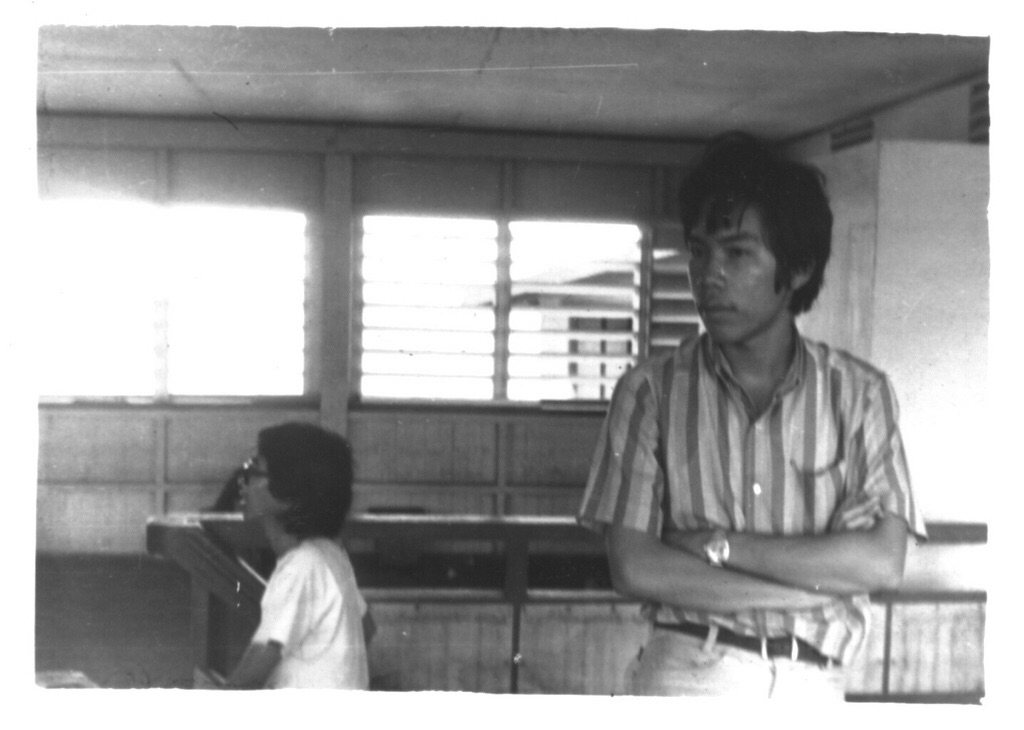
We made a few, and have survived and maybe even prospered despite and because of them. For a Thursday throwback, I posted a picture in that thread of myself as a lanky freshman, beside activist leader and fellow PSHSer Rey Vea (now president of Mapua University), on a boat to a CEGP convention in Dumaguete ca. 1970. My only question was, where did all that hair and leanness go?

1971