Penman No. 355: Loverly London (1)

IMG_0319.jpeg

Penman for Monday, May 27, 2019


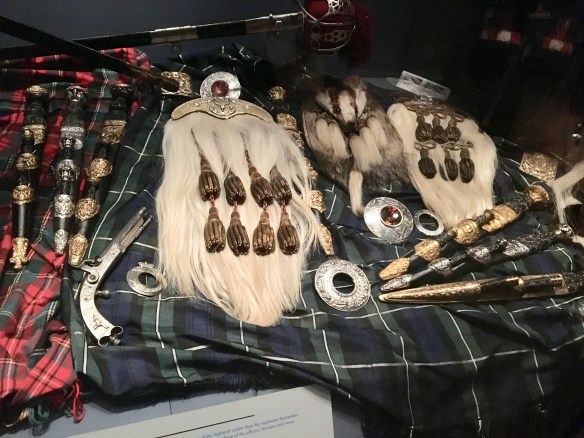
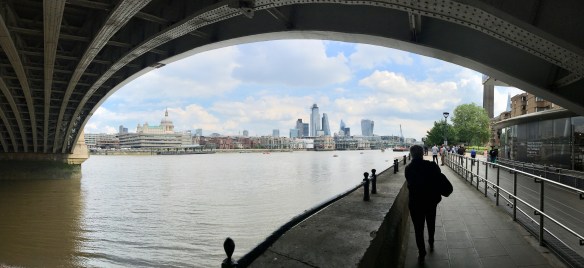
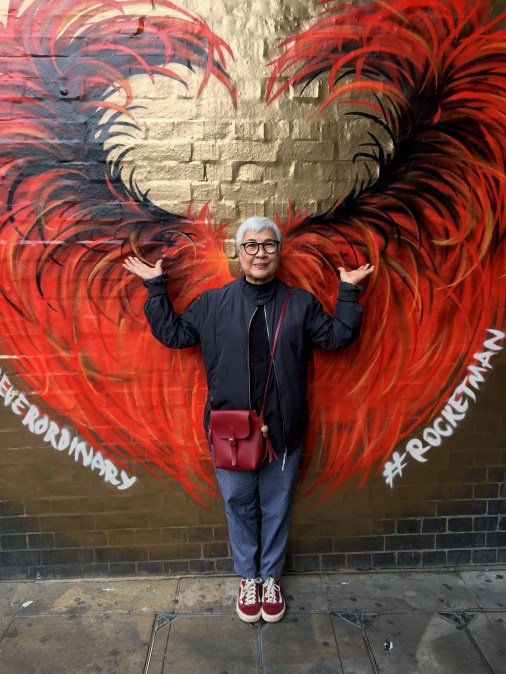
I FIRST visited London 25 years ago, on my way to Scotland to take up residence at Hawthornden Castle on the fellowship that led to Penmanship and Other Stories. Since then I’ve been back a few times—very often in 1999-2000, when again I was a writing fellow at Norwich. It’s easily my favorite city in the world to visit, given its cultural vitality and the accessibility of the things that matter most to me—museums, galleries, and flea markets—and for the past two decades, Beng and I had been dreaming of returning to London to step back into our old haunts.

That finally came true on the heels of our recent Scotland trip with our daughter Demi and her husband Jerry; they flew back to home and work in California, so Beng and I had a full week to ourselves, and wisely we decided to just spend almost all of that time in London, except for an overnighter in nearby Chelmsford and Norwich. As with 20 years ago, we did everything by train and by Oyster card (“contactless” is a new English word you’ll learn quickly just out of Heathrow). There’s nothing like a train ride into the English countryside and its undulating greens awakened now and then by brilliant yellow swathes of rapeseed to make one understand Wordsworth and Romanticism, in the same way that Glasgow’s sooty masonry and steel sinews recall a darker, Dickensian industrial past.
9101e10824ce12963ec78a189abcd3c22e091785.jpg

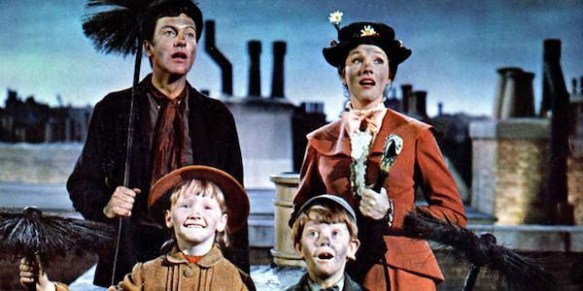
Speaking of Dickens, and like many Pinoys my age, my first impression of London was shaped by Broadway’s and Hollywood’s renditions of its Victorian upside and downside, in such confections as “Oliver Twist” and “Mary Poppins” (from which the screech of my schoolboy crush, Julie Andrews, still resonates, appealing for “a room somewhere, far a-wigh from the cold night air…. Awww, wouldn’t it be loverly?”).

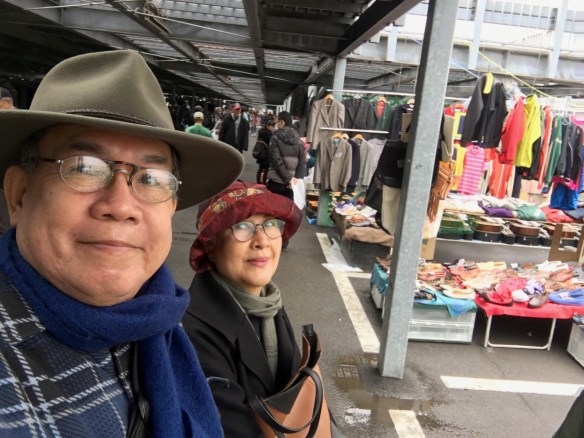
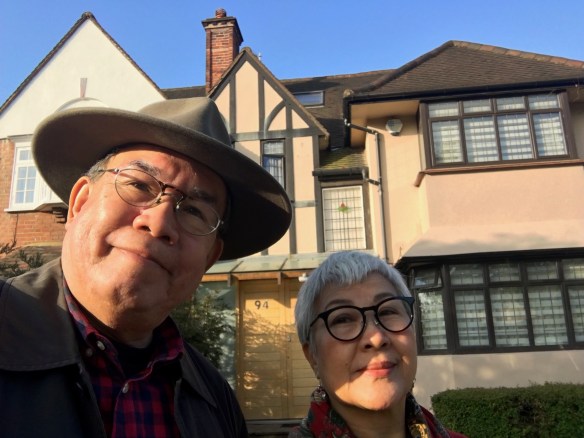
Well, thanks to Booking.com, Beng and I found ourselves a loverly, affordable room in a large house in the northwestern London suburb of Golders Green—a neat and quiet, multicultural neighborhood on the Tube’s Northern Line, historically Jewish but with many Turkish, Iranian, and Japanese restaurants and groceries lining the streets. And, of course, there were Filipinos everywhere, not tourists like us (you’ll find them at Harrods) but off-duty caregivers and housekeepers enjoying time together at the local KFC.
IMG_0329.jpeg

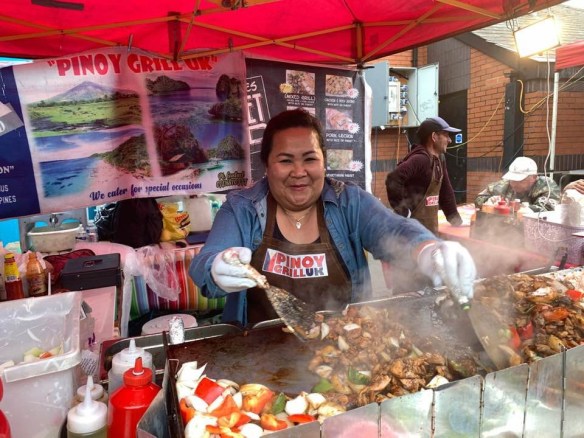
That’s where we met someone we’ll call Thelma, who has worked for the same Jewish employer for the past ten years. It just so happened that she and Beng had some mutual friends from Iloilo, where Thelma went to college. “I’m treated very well here,” Thelma said. “Every year I get a paid vacation to go home.” We spotted another unmistakably Pinay girl at the streetcorner selling suman, which we had for our next breakfast. And at the end of a long Sunday walk down Portobello Road, in a cluster of street-food stalls offering everything from vegan paella to Jamaican patties, we found Eva Caparanga’s Pinoy Grill UK, which instantly answered the question we had been asking all day, “What are we having for dinner tonight?” As she heaped our chicken adobo into a large takeout cup, Eva told us that she had been in the UK for more than 30 years, and was still working in health care, but that for the past three years she had used her days off to run her stall at the far end of the popular Portobello Market. “People ask me why I do this, and I tell them it’s so I can help family back home in Bicol. And again they ask me why I do that, and I say, well, that’s just how we Filipinos are!”
IMG_0618.JPG

The story of Filipinos in the UK and London is a long and colorful one, and I can’t count the many times they came to my succor during my tenure at Norwich and my weekend sorties to London years ago. When my feet acquired a horrible infection in Norwich, I ran to the National Health Service, only to find it staffed by kindly Pinoy nurses who got me back to walking in no time. In London, my host was the late, beloved Ed Maranan, who had ushered at the National Theatre and could sneak me into plays for free; in return, I made sure to wash the dishes at his flat on Goldhawk Road. The writer Jun Terra also brought me around once to marvel at the late Dr. Teyet Pascual’s art pieces in his Chelsea apartment.

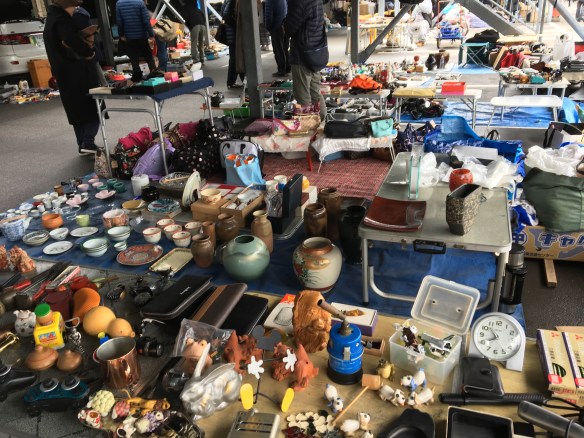
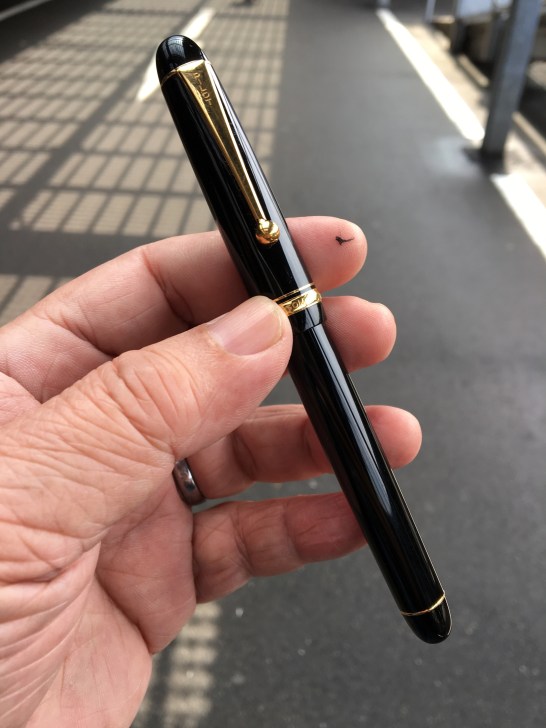
This time, Beng and I were resolved to stay close to ground level, having neither the budget nor the inclination to splurge on the timelesss luxury that puts British-made things—whether they be suits, shoes, bags, or fountain pens—in a class all by themselves. This time, we said, we would go straight for the two things that we enjoy most in our sorties to foreign cities: flea markets and museums.

More on these next week.
IMG_0269.jpeg

Penman No. 354: A Scottish Sortie

IMG_0415.jpegPenman for Monday, May 20, 2019
 

AS UNLIKELY as it may seem, many Filipino writers have a special affinity for Scotland, that northern country (yes, it is one) bound up into the United Kingdom with England, Wales, and Northern Ireland. That’s not only because of our passing familiarity with the likes of Robert Burns and Walter Scott, but because, over the past three decades, more than a dozen Filipino writers—among them Krip Yuson, Eric Gamalinda, Ricky de Ungria, Marj Evasco, Rofel Brion, Danton Remoto, Mia Gonzalez, and myself—have been fellows at the Hawthornden Castle International Retreat for Writers, about half an hour by bus in Midlothian, just outside of Edinburgh.

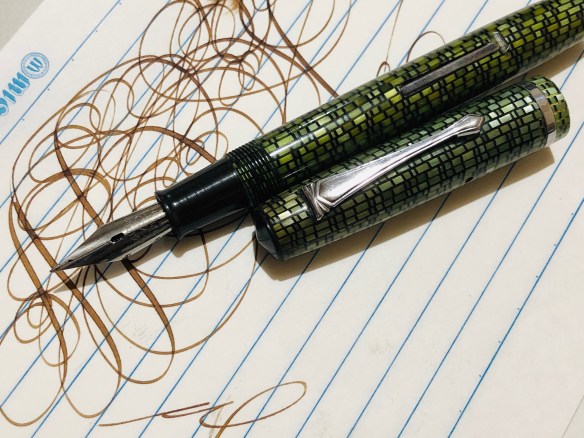
That was where, in 1994, I wrote much of what became Penmanship and Other Stories, including the title story, which came out of a serendipitous purchase of a 1938 Parker Vacumatic at the Thistle Pen Shop in Edinburgh. Indeed, two literary anthologies have emerged from the Pinoy-Scottish connection: Luna Caledonia, a poetry collection edited by Ricky de Ungria and published in 1992, and Latitude, a fiction collection co-edited by Sarge Lacuesta and Toni Davidson and published in 2005.

IMG_0369.jpeg

I returned to Scotland in 2000 with my wife Beng and daughter Demi in tow; I was a writing fellow then at the University of East Anglia in Norwich, and Demi was visiting us from Manila. As it happened, a local radio station was offering free train tickets to Scotland to whoever could dial in and answer some simple questions at 5 am, so for three consecutive mornings, I woke up early and did just that, and soon we three were rolling away to Glasgow, taking the scenic route along the western coast (and being feted on the train by a kindly Pinoy attendant).

That was 20 years ago, and since then Beng and I have expressed a more than idle longing to revisit Scotland—especially Beng, an unabashed fan of Braveheart and Outlander. In the meantime, Demi got married to bright young fellow from California named Jerry, and in 2014 Demi and Jerry treated us, on our 40thwedding anniversary, to a tour of Spain, following Rizal’s footsteps in Madrid and Barcelona, and Anthony Bourdain’s in San Sebastian.

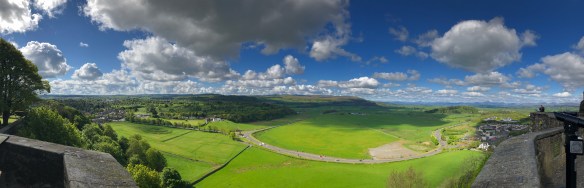
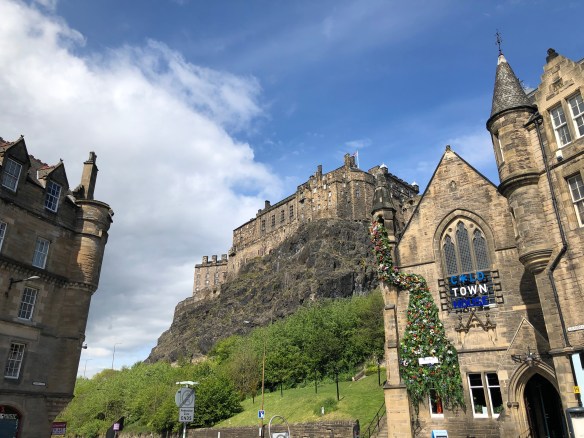
We wanted to repeat that this year to mark our 45th, so it was no huge surprise that we settled on Scotland where Jerry—who likes his single malts—had never been. After meeting up in London, we took a train to Edinburgh and lodged in the shadow of its imposing castle, to which we paid the obligatory visit. I treated our small party next to a day tour of Stirling Castle, Loch Lomond, Deanston Distillery, and Doune Castle, before moving on the next day to Glasgow and its more down-to-earth, industrial vibe.

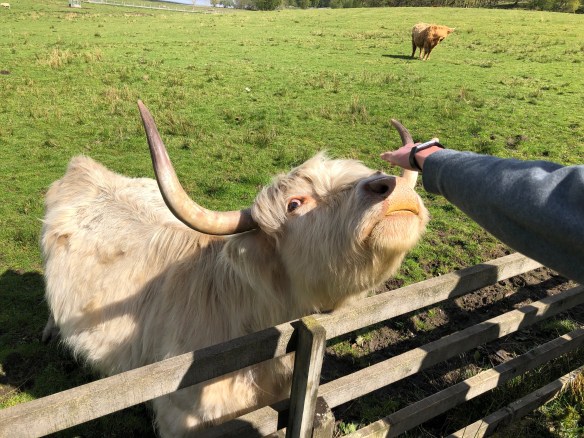
I wanted to record this not to bore you with the details of another family sortie, but to remark on what impressed us most, outside of the often desolate beauty of the Scottish highlands and our comic encounters with the “hairy coos” (the Highland cattle probably fattened by tourist feedings).

IMG_0434.jpeg

For me, a retired professor who can’t help being interested in a country’s educational and cultural infrastructure, the question was, how could the Scots have done so much with seemingly so little?

Pop stars like Sean Connery, Arthur Conan Doyle, Robert Louis Stevenson, JK Rowling, and Annie Lennox aside, Scotland has produced engineer James Watt, inventor Alexander Graham Bell, penicillin discoverer Alexander Fleming, social philosopher Adam Smith, and explorer David Livingstone. A book by the historian Arthur Herman titled How the Scots Invented the Modern World asks: “Who formed the first literate society? Who invented our modern ideas of democracy and free market capitalism? The Scots…. In the eighteenth and nineteenth centuries Scotland made crucial contributions to science, philosophy, literature, education, medicine, commerce, and politics—contributions that have formed and nurtured the modern West ever since…. John Knox and the Church of Scotland laid the foundation for our modern idea of democracy; the Scottish Enlightenment helped to inspire both the American Revolution and the U.S. Constitution; and thousands of Scottish immigrants left their homes to create the American frontier, the Australian outback, and the British Empire in India and Hong Kong.”

IMG_0387.jpeg

This from a country of less than 6 million people (that’s right, six), whose influence extends far beyond their shores. While wives and widows everywhere may bemoan the loss of their husbands to golf and whisky, both industries annually contribute £1 billion and £6 billion, respectively—about P500 billion combined—to the Scottish economy, which is also driven by oil and gas, a £12-billion industry. (To put things in perspective, you can add up those three for a total contribution of £19 billion or about US$25 billion, which is what Philippine BPOs generate, as well as OFWs—but with a much smaller denominator.)

What was most telling to me was how Scotland, despite its plethora of warriors, politicians, engineers, and industrialists, valued its writers, who in turn valued Scottish national pride. The 200-foot statue of Walter Scott in Edinburgh is the largest in the world of any writer’s, and in Glasgow, Scott’s monument also towers over those of others in George Square.

Of course we can argue that we venerate Jose Rizal—only to elect his intellectual and moral opposites. As the Scots might put it, “A nod’s as guid as a wink tae a blind horse.”

IMG_0123.jpeg


Penman No. 352: My Sweet Engraveable You

JayWorks.png

Penman for Monday, May 6, 2019
 

THAT’S PROBABLY what Jay del Fierro, who goes by the handle “Jay the Engraver” online, hums whenever he sees a gun, a knife, a lighter, a pen, or pretty much anything with a smooth metal side or surface.

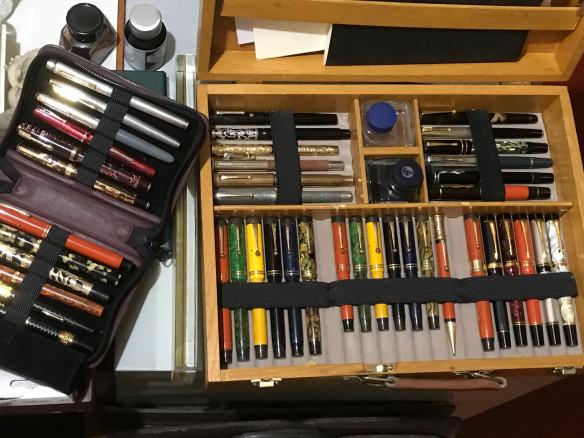
There aren’t too many other people in this country who can do what he does, to the degree of skill and dedication that he has. I met Jay in an online forum a year ago, when he offered his services to anyone brave enough to entrust their pens to him. I had a 40-year-old Sheaffer Targa in stainless steel that I thought I could sacrifice to the gravure gods, just to see what this Jay the Engraver could do.

We met up in a mall down South—he had come all the way from Bicol, where he hails from and is now based—and I was pleased to see a modest, middle-aged man who was clearly imbued with an uncommon passion. It’s a spark I’ve seen in other excellent craftsmen (see my column-piece a few weeks ago on “The Master of Commandante Street,” Gerald Cha, who repairs and restores vintage typewriters in his shop in downtown Quiapo), the likes of whom I’m always glad to meet and to draw some well-deserved attention to. (Note to self: do writeups on book and paper restorers Loreto Apilado and Josephine Francisco, and fountain pen nibmeisters JP Reinoso and John Raymond Lim.)

I turned over the Sheaffer to him, and we worked out my preferred design—I asked for bamboo stalks and leaves, for a distinctly Asian appeal—and about a month later, I received the finished work with much delight.

Our connection went beyond that job, because Jay knew that I, too, did a kind of engraving a long time ago, when I was active as a printmaker with the Printmakers Association of the Philippines. The PAP had a studio and workshop on Jorge Bocobo Street in Ermita, and in the early 1970s, I learned and practiced printmaking there, which became an important source of income for me then, fresh out of martial-law prison. (Not incidentally, that’s where I met my wife-to-be Beng.)

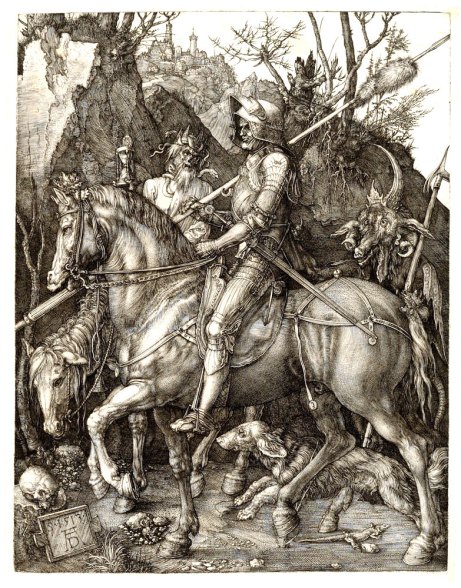
I was practicing mainly two kinds of printmaking: etching and drypoint. Etching involves the use of acid to cut lines into the metal to produce the design, while drypoint comes closer to engraving, with the artist employing a pointed tool or burin to scratch out fine lines directly on the plate. With engraving, the artist uses an even sharper and harder graver to cut deep grooves into the metal. For a printmaker, these grooves serve merely to hold ink to transfer onto paper, but for an engraver, the patterns he or she cuts into the metal could be the artwork itself—unless, of course, one is engraving plates for banknotes, or for art prints such as those produced by the German master Albrecht Durer (1471-1528). Indeed, for centuries, engravers did by hand what photographers and graphic designers would do in the 20thcentury for practically anything in print: illustrations, maps, social cards.

2.3_durer_02.jpg

The skill requires a clear eye, a steady hand, loads of energy and persistence, and the right tools. And the medium is unforgiving; if your hand slips, not only could you cut yourself badly, but a mistake on metal won’t be that easy to mend. (Today, automation has taken over much of the menial labor, with computers and printers doing the cutting, but some traditionalist holdouts still do things entirely by hand.)

Which leads one to ask, why would anyone—especially in this digital age—want to undertake anything so arduously analog? Jay studied mechanical engineering, and worked at his profession for a few years after graduation. He seemed to be on track to succeed at what he had signed up for, landing jobs with leading companies. But something was missing, and Jay realized what he was when he chanced upon an engraver at work on YouTube. “I’d always liked to draw,” he says, “and Fine Arts would have been my second choice in college.” He felt drawn to engraving like a moth to a flame, and soon he was watching as many instructional videos as he could, and trying out what he saw.

Shotgunlife.png

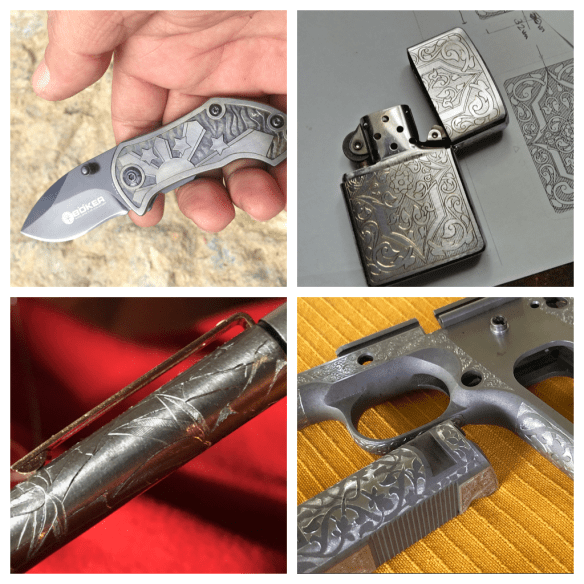
He soon became an entirely self-taught engraver, and began taking on jobs from clients looking for a more personalized flourish on their “everyday carries” or EDCs and their trophies. For some clients, those trophies could include fearsome .45s (there’s a huge market for firearms engraving in America—not surprising given their gun culture—and “master engraver” titles are bestowed by the industry for gunwork; see pic above from shotgunlife.com). For others, Zippo lighters, knives, and even spoons could fit the bill. “The most challenging job I’ve done so far,” Jay says, “is a Series 80 Colt .45, featuring English scrolls with arabesque relief on bead-blasted areas. Mind you, I insist that every gun I work on has to have full legal papers.”

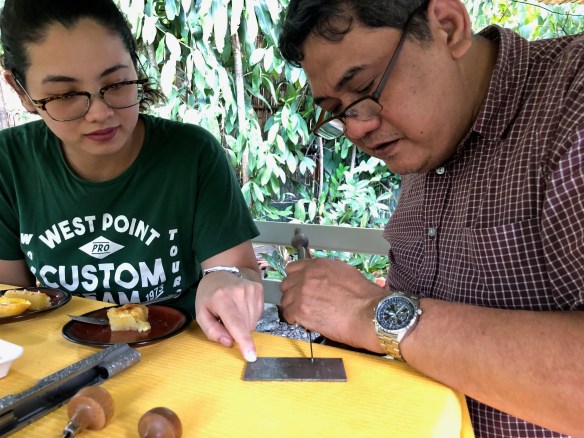
Preferring pens to pistols, I show Jay a 1970s Sheaffer with a machine-pressed grapes-and-vines motif that I’ve admired for the past 30 years. “I can do that,” he tells me, and I believe him. (You can get in touch with Jay directly at jay.engraver@gmail.com. That’s him below with his daughter Ella.)

IMG_0149.jpeg


Penman No. 349: Pen Hunting in Japan

JapPens.png

Penman for Monday, April 15, 2019
 

MOST TOURISTS visit Japan, sensibly enough, for the sushi, the sakura, and the swords. I like all of the above, and chased after all of them during our recent trip to Tokyo (a highlight was seeing a 13th-c. Masamune katana at the Tokyo National Museum). But I had one more item on my personal agenda that I couldn’t possibly leave Japan without—or at least, without looking for it.

That desideratum, of course, was the fountain pen, and there’s a very good reason why fountain pens should be on the discriminating tourist’s Japanese shopping list. Just as they’ve excelled in practically all the arts and crafts, the Japanese have made some of the world’s best fountain pens, many with uniquely Japanese materials and production processes, and some very special nibs.

With fountain pens undergoing a global resurgence in both the corporate and personal spheres as instruments of individuation—a means by which you can literally leave your own signature on a stack of digitized documents, and set yourself apart from the ballpoint-clicking herd—many Filipinos now know familiar American brands like Parker, Sheaffer, and Waterman. Lawyers and doctors typically want German-made Montblancs, and might even try Pelikans, Lamys, and Faber-Castells. But a growing number of mostly young professionals have discovered the Japanese Big Three—Pilot, Sailor, and Platinum—as well as newer brands like the Taiwanese TWSBI. They’ve been helped along by the emergence of local fountain pen, ink, and stationery specialists like Scribe Writing Essentials, Everything Calligraphy, Noteworthy, and PenGrafik.

The Japanese pens I was looking for in Tokyo exist in a whole other realm of connoisseurship. These are artisanal masterpieces, the culmination of centuries of fine workmanship. I’ve often said that pens fascinate me as the perfect fusion of art and engineering, and nothing exemplifies that more than the best Japanese pens. You’d think that the Japanese would be more inclined toward brushes—and they still may be—but a fine pen is considered a personal treasure, as distinct as the swords carried by the samurai of old.

In 2002, Pilot Pen Company—one of Japan’s pen pioneers—opened a pen museum at its headquarters in Kyobashi. Beng and I made a beeline for it, walking the couple of kilometers from the Tsukiji Fish Market, only to discover to our dismay that it had closed a few years earlier. But Tokyo’s fabled pen shops are in themselves museums, and more, so armed with a 72-hour subway pass, we made the rounds of the usual suspects. (Earlier, at the Tokyo City Flea Market in Shinagawa, I had treated myself to a defective but repairable Pelikan M805, a Pilot Custom 74, and a prewar Pilot with a flexible shiro steel nib.)

IMG_9994.jpeg

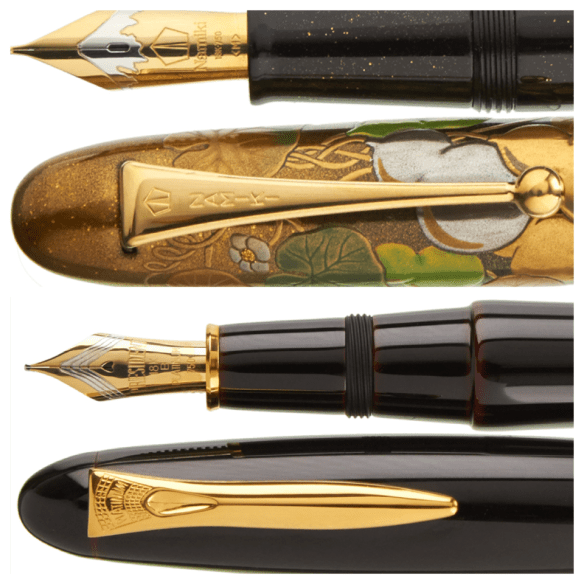
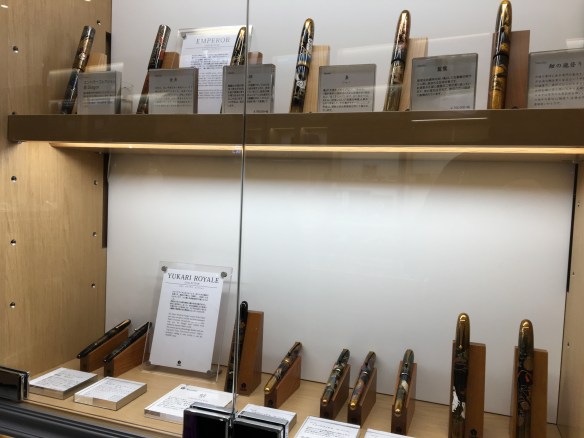
A fountain pen tourist’s first stop in Tokyo should be Itoya in Ginza. Japan’s oldest stationery store, Itoya has a whole floor devoted just to fountain pens, and not just your everyday Sheaffer either but the very finest examples of Japanese penmaking. The Japanese pride themselves in the art of maki-e (literally, “sprinkled picture”), which involves creating intricate designs with gold dust and hand painting on ebonite or hard-rubber barrels and caps, on which many layers of hard urushi lacquer are applied. In the 1920s, Pilot—then known as Namiki—partnered with Dunhill to create exquisite examples of urushi/maki-e pens, which have since sold for over $250,000. These urushi and maki-e pens—now also produced by such makers as Nakaya, Danitrio, and Hakase, aside from the Big Three—are hand-made by master craftsmen in small shops, and are typically ordered months ahead. Or you can go to Itoya (or online, to www.nibs.com or www.penchalet.com, among others) to find yours.

IMG_0039 2.jpeg

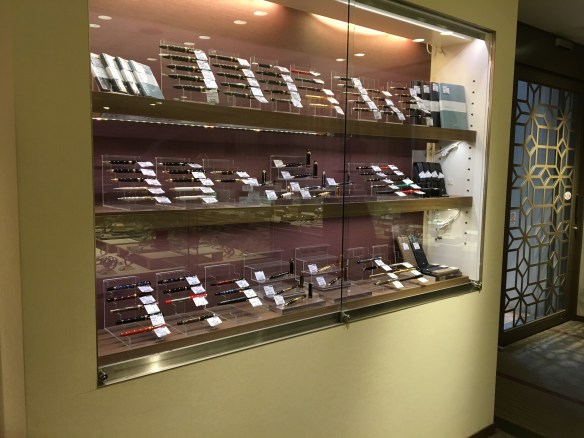
A couple of blocks away from Itoya is Eurobox, a small room on the fourth floor of an old building stocked full of vintage pens, mainly Western, very well chosen and sold at competitive prices. Another must-see is Maruzen’s large pen section at the basement of its Nihonbashi store. And no Tokyo pen visit would be complete without stepping into Kingdom Note in Shinjuku, which specializes in used but top-tier pens, both Japanese and Western. One pen store that takes and ships orders for Pilot urushi pens with special nibs like the so-called Waverley and Falcon nibs is Tokyo Pen Shop Quill in Kugahara, which unfortunately we missed because we took an express instead of a local train on our last full day in Tokyo.

That diversion turned out to be serendipitous, because Beng and I got off on a whim at Sengakuji Station, only to realize that we were within walking distance of the graves of the famous 47 ronin who had attacked and beheaded a despotic ruler in 1702, paying for their deed with their own lives. As we paid our respects to these noble warriors under the cherry blossoms, I seemed to hear voices urging me to “Buy a big Japanese pen to fight evil overlords!”

IMG_0066.jpeg

So off we went to our last pen stop, Komehyo Ginza. Komehyo is a resale chain that sells mostly high-end used goods but also some new items, including fountain pens, and this was where I found my “grail” pen, by which I was going to remember Japan this time around—a large, new, and thankfully affordable urushi Platinum Izumo pen, its deep red undertone sheening through the rich lacquer. As with many things Japanese, it’s simplicity itself, but breathtakingly elegant. Unlike some places we know, Japanese stores accord their customers extraordinarily solicitous service—you can hold and try out any pen you want for as long as you want without any dagger looks from the staff—and even Komehyo lived up to that standard, processing my 8 percent tourist rebate without any fuss (a few stores ignore it, or require you to collect it at the airport).

IMG_9988 2.jpg

As we flew home with the Izumo sitting smartly in my pocket, I munched on my 100-yen rice crackers from Daiso, and dreamed about whipping out my pen and slashing a few bile-filled throats in the name of truth, beauty, and justice.

(Top pen images from http://www.nibs.com)


Penman No. 348: Transience in Tokyo


IMG_9918.jpeg

Penman for Monday, April 8, 2019
 

MY WIFE Beng and I have been to Japan—on our own and together—a few times, but not until last week did we go there just to immerse ourselves for seven days in one place, not trying too hard to see or do or buy too many things. The place was Tokyo, which Beng and I last visited as a couple almost 20 years ago, a depressingly downscale sortie from which Beng can only remember living off the nearby 7-11 and slurping rice gruel with construction workers beneath a bridge. With my retirement then looming, I booked this trip last year, well in advance of the 2019 cherry-blossom season, which Beng had expressed a longing to catch. I thought it was a chance to make up for that sorry first outing and for making new memories.
Wherever we travel, Beng and I always have two sure targets in mind: museums and flea markets. The museums provide an intimate feel of the history of the place, and the flea markets—well, they a have a bit of the museum in them, bits you can actually buy and bring home. (Indeed, we often remember cities—London, Paris, Amsterdam, Barcelona, Beijing, Seoul—less for their landmarks than for their flea markets.) For this Tokyo trip, we also resolved to enjoy the cherry blossoms and to look into as many fountain-pen shops as we could.

IMG_0011.jpeg

The Japanese fascination with cherry blossoms—that perennial signal and reminder of the transience of beauty and of life itself—is well known. As our friend Julie Hill puts it in her book Privileged Witness, “Cherry blossoms are a punctual miracle, a well-rehearsed event in the annual Japanese calendar. They first appear in the southern part of the archipelago, around the subtropical islands of Okinawa. As the weather gets warmer, cherry trees flower in central Japan; and in two weeks, depending on the weather, they will make their presence in Tokyo, achieving their full glory in the parks—Ueno park is a famous spot—and the gardens bordering the Imperial Palace.

“For weeks preparations have been underway in Kyoto; paper blossoms have been fluttering off lampposts and major downtown stores; newspapers and television channels have run elaborate charts of the sakura zensen—the cherry blossom—as part of the daily weather forecast. There are many varieties of trees, some occurring in the wilds of Japan, featured in gardens and parks as a cultivated tree. Others are bred as flowering trees with over-large, over-pink and over-endowed petals. The most popular are those with small pink flowers held in compact clusters.”

IMG_9876.jpeg

IMG_9971.jpeg

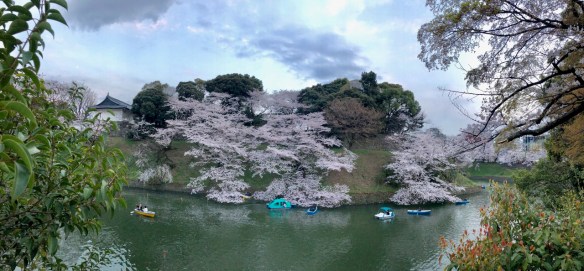
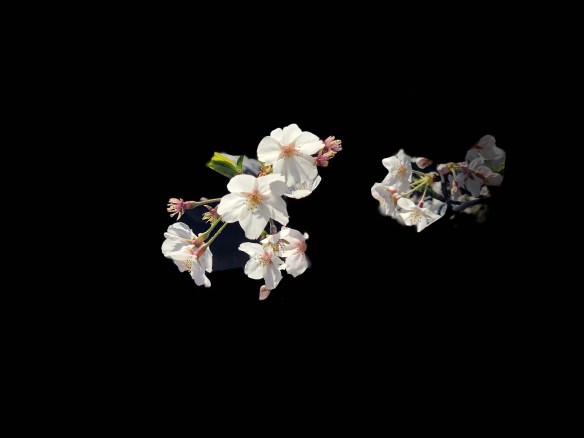
The sakura bloomed early this year—the weather in Tokyo was nippy to almost chilly—but we caught showers of them in pink and white around the Imperial Palace, along the Meguro River, and in Ueno Park. Most fortunately, we stumbled into a bank of them in Chidorigafuchi Park just as it darkened, and suddenly the trees were lit up, lending ethereal magic to the scene. The only downer with these hanami or flower-viewing walks is that you’re doing them with several hundred other people looking for exactly the same thing—that perfect pose or shot under the same trees.

IMG_9937.jpeg

A quieter time can be had exploring the sakura in context, such as you might do at the Tokyo National Museum on the far edge of Ueno Park, fittingly at the end of a long walk under the flowering cherry trees. There the blossoms figure in everything from Hiroshige’s Edo Road prints to exquisite kimono and lacquered boxes and bowls—indeed, a recurring theme that can only resonate more poignantly in these times of fleeting joys and affections.

IMG_0010 2.jpeg

Speaking of fleeting joys, we had our fill of them at the Tokyo City Flea Market beside the Ohi Racecourse in Shinagawa, where we spent most of our Sunday morning. Beng and I are Japan surplus-shop regulars, and this was the mother of all of them, hawking everything from used clothes and vintage electronics to ceramics and scientific instruments. We walked away with a handsome thermometer/hygrometer, which Beng needs for her art restoration studio, for 100 yen (50 pesos) and a big leather bag to carry our stuff for 300 yen. My big find—adrift in a sea of bags and blouses—was a newish Pilot Custom 74 fountain pen, which normally retails for between $100 and $150, for less than P2,000.

IMG_0018.jpeg

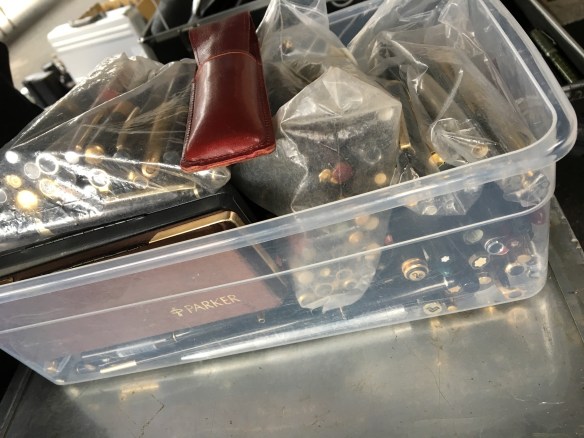
That was before I ran into the mother lode of vintage pens at one stall, where the owner had kept them in translucent plastic boxes, not thinking that anyone would be interested in them, and not thinking that a persistent Pinoy with X-ray vision would spot Montblanc stars in a galaxy of caps. It was a real treasure trove that I would have gladly sold a car for were I a younger and hungrier collector, but after much dickering, I picked out just two prize pens, about which you’ll hear more in another report on pen hunting in Tokyo.

IMG_0022.jpeg

This time around, we had chosen a better hotel, well located near the Imperial Palace, small and rather expensive but impeccably clean as Japanese hotels go. We still found ourselves subsisting on the prepackaged rice-and-fish dinners at 7-11 (actually, they’re good and cheap!), so Beng and I celebrated the day (and yes, the transience of money) with a grand dinner at a steakhouse in our neighborhood in Chiyoda. A good time was had by all.

IMG_9968.jpeg


Penman No. 347: The Master of Commandante Street


IMG_9726.jpeg

Penman for Monday, April 1, 2019
 

COMMANDANTE STREET branches off Evangelista in Manila’s Quiapo—a downtown district a poet-friend endearingly described as “the armpit of the city.” It’s an area teeming with shops selling generators, compressors, engine parts, filing cabinets, and cheap guitars and stereos, not too far from soft-porn moviehouses and restaurants offering Chinese noodles and dumplings. You wouldn’t know it, but on one side of a hole-in-the wall along Commandante works one of the world’s most highly regarded craftsmen, known to his clients and admirers only as “Gerald Cha.”

Gerald repairs and restores typewriters—yes, those noisy machines your grandparents used to write letters and fill out forms with—catering to a small but fiercely dedicated community of typewriter collectors and users, not only in the Philippines but worldwide. He’s not alone—there are still many master repairmen out there who can make a 1912 Blickensderfer or a 1955 Smith Corona Silent Super work for you (check out Duane Jensen’s Phoenix Typewriter videos on YouTube, for instance)—but Gerald has acquired near-mythical status in the online community, as much perhaps for his skills as for his mystery.

As one member of our Antique Typewriter Collectors group puts it, “Gerald Cha was a quiet man. He lived among the pines in seclusion. His family and friends knew him as a gentle soul, but the typewriters feared his name. Legend has it that Gerald Cha once carried 16 desktop typewriters, using 8 fingers and 8 toes, crawling on his elbows and knees. He stood 5.6 meters tall, weighed 10 stone, and could throw a VW Beetle 270 feet. His shoes could hold 23 gallons of water, each. Gerald did not seek attention, but attention found him.”

IMG_9701.jpeg

IMG_9702.jpeg

IMG_9706.jpeg

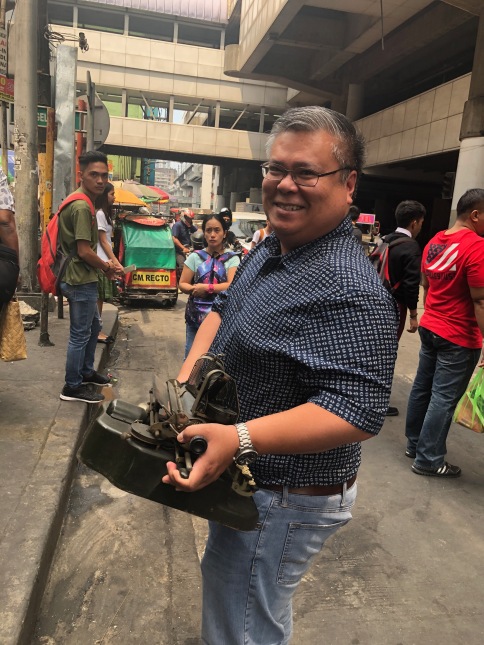
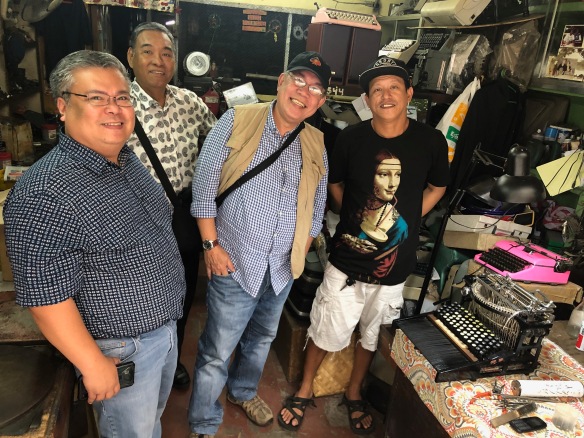
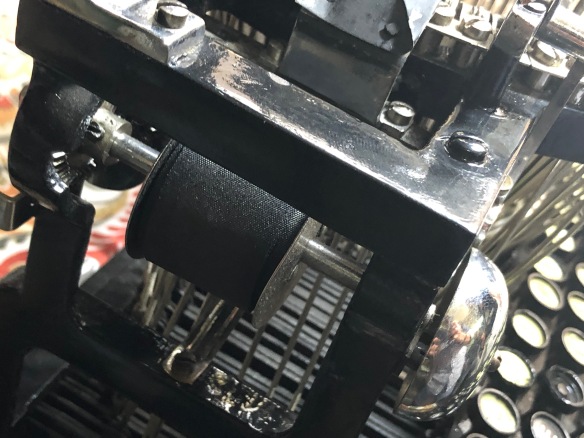
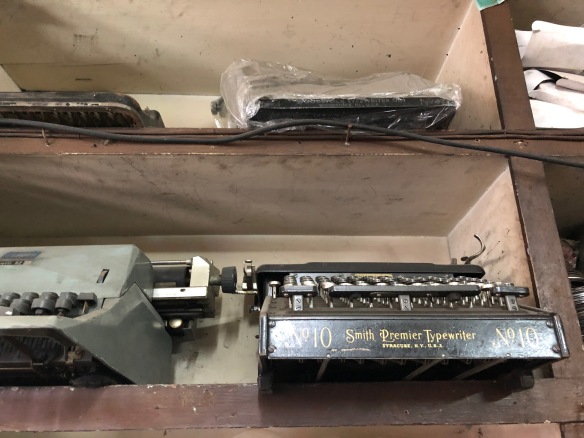
On the day that I and two other collector-friends—Toastmaster Dennis Pinpin and lawyer Javi Flores—visit Gerald at his shop, he’s poring over an 1880s Caligraph shipped in from the States. The Caligraph is a large, black Rube-Goldbergian contraption with a plethora of screws and bars. Like many early models, it’s an upstrike typewriter—meaning, the keys strike the platen (the rubber cylinder on which the paper is rolled) from under, instead of from the front, as in normal typewriters. In other words, you’re typing blind, not seeing what you wrote.

Gerald’s job is to see how everything hangs together, and to fabricate parts that no longer exist. He does this with the help of local artisans, including someone who custom-made the one-inch-wide ribbons used by the Caligraph (the standard size is half an inch). Most of the Caligraph’s key caps were gone, so he had to have a whole period-correct set of letters, numbers, and assorted characters printed out, along with the machine’s emblem—normally a decal, “but for now I’ll have to do with a sticker” that he had made. Gerald’s in the right place for any kind of copying—C. M. Recto Avenue, just around the corner, has a decades-old reputation, predating the Xerox, for being Manila’s Forgery Row, where you can order anything from a birth certificate to a diploma from the university of your choice.

IMG_9708.jpeg

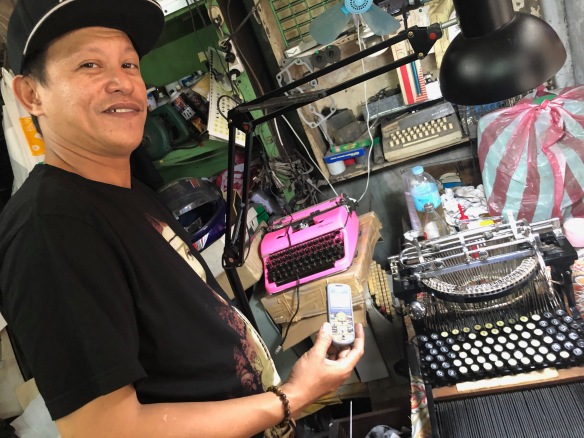
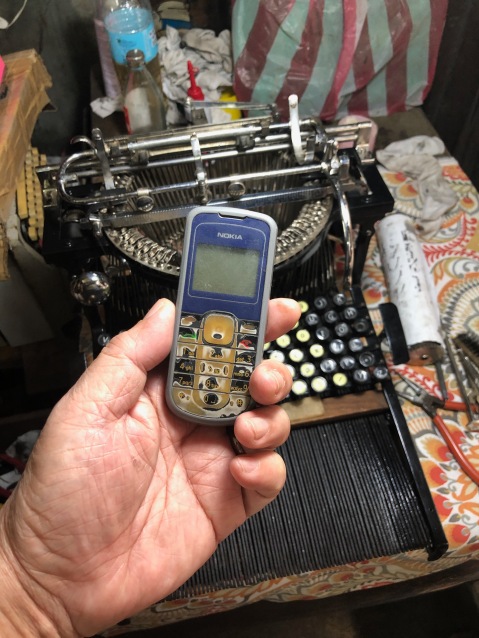
Our requests seem easy by comparison—Javi is having a ca. 1910 Oliver No. 5 restored, I need new rubber feet for my 1938 Royal O, and Dennis (he with the 90 typewriters) always has something or other for Gerald to mind. The man who attends to all these is no bearded guru, but a slightly built, soft-spoken guy in his early 40s. “Cha” is really his wife’s nickname. “There were too many other people with my name, so I had to find something different,” he says. Another signature is his impossibly weathered Nokia, as if to suggest how far behind the times he is, like his machines. But you can find him as “Gerald Cha” on Facebook, Instagram, and Messenger, urged by the likes of Dennis to share his uncommon expertise not just with fellow Filipinos but with the world. He’s been online for only a few years, but in that short time he’s risen to legendary status among the typerati (yes, I just made up that word).

IMG_9727.jpeg

Incredibly enough, he was born on the same street where he now works. “I was a helper in an office machines shop in my teens,” he explains as he looks over Javi’s Oliver. “That’s how I learned to do this. I never went to college because I was already earning good money!” That was then, of course, and while he still rules the roost, he’s had to make concessions to changing tastes to make ends meet. Aside from the tough specialist jobs he does for collectors, he refurbishes and repaints typewriters for an online outfit that sells the spiffed-up machines to millennials angling for a taste of vintage, including set and fashion designers looking for props. “They like their Olympias in hot pink.” His top sellers include chromed Royal QDLs and Olympia SMs.

Sadly, Gerald says, kids these days are more interested in computers, and no one will be taking over from him. “You can still find quite a few typewriter repairmen in Metro Manila,” Dennis tells me, “but Gerald is different. He loves his machines, loves to figure out how they work and how to get them back up to speed.”

IMG_9705.jpeg

If you need Gerald, you can text him at 0916-7761268, landline 733-4896—unless you want to take an interesting trip out to 1691 Commandante Street, in the armpit of Manila.


Penman No. 346: Cubao’s Ephemeral Treasures

IMG_9768.jpg

Penman for Monday, March 25, 2018


MY RECENTLY renewed interest in rescuing old mechanical writing machines from oblivion and providing them shelter in my home (aka collecting typewriters) has led to me to some interesting sidestreets—you’ll read a story about Manila’s Typewriter Row here soon—but it also reminded me that sometimes the best finds lie in plain sight, if you know where to look.

For this Quezon City guy, that means Cubao, a district for which I’ve had a special affinity since the earliest days of the Araneta Coliseum and all throughout high school, when we played hooky to shoot billiards at the Fun Center and slurp noodles at Ma Mon Luk. In 1978, I found a pair of new-old-stock Parker Vacumatic fountain pens in a stall along Aurora Boulevard, triggering a lifelong passion. Fifteen years ago, Beng and I dragged a splendorously comfortable Schweiger sofa out of a Cubao resale shop, and we’re having it reupholstered again for its third incarnation. On Christmas Eve in 2017, I found and bought the oldest volume in my collection—an English book printed in 1551—from a seller in Cubao, who had received it from his mother working as a caregiver in Paris.

In other words, unlikely as it may seem, Cubao has always held wondrous things for me, quite apart from the sikad-sikad, the arosep, and the fresh tangingue in Farmer’s Market. A few weeks ago, I picked up two coveted Swiss-made 1960s typewriters—a Hermes 3000 and a Hermes Baby—from two different shops in Cubao Expo, that refreshingly downscale shopping zone which has managed to retain its old-school appeal and integrity. (Let’s give a shout out to the Grand Thrift House and the UVLA Store, both well worth the walk.)

Being in the neighborhood, I recalled reading a post somewhere that a corner of the now-venerable Ali Mall was now devoted to antiques and collectibles, so I crossed the street and paid it a visit, and was pleasantly surprised to discover a series of shops on the second floor selling everything from Beatles records and memorabilia to vintage pottery and Coke bottles.

No pens or typewriters for me this time, but my eyes wandered, in one shop, to stacks of old papers and documents. This is a class of collecting generally called “ephemera”—comprising, by one definition, documents, letters, booklets, brochures, pamphlets, billheads, ledgers, scrapbooks, photographs, and maps. You can’t collect old books, pens, and typewriters without running into ephemera, and I’ve picked up some choice pieces—including beautifully handwritten letters that date back to the 1500s and 1600s—to illustrate both the practice and the culture of writing, or what people wrote and how they wrote.

Ephemera, by the word itself, is inherently transient and easily lost—to trash bins, fires, and forgetfulness—but thankfully, there are quite a few other pack rats like me who save such things as Love Bus tickets and receipts from long-shuttered restaurants and hotels for no grander reason than to be reminded 40 years later of a fun evening (which I must have had on May 16, 1979, according to a receipt from a place called “For the Boys,” charging me P4.00 for food, P5.50 for cigarettes, and P48.50 for drinks).

I plowed through the piles of neatly wrapped papers and came away with a bundle that shows what’s out there—and perhaps just as interestingly, what’s in here, in that part of ourselves that responds with a clutch in the heart to words on a page. My takeaways—all for about P1,000, or a shirt at Uniqlo—included the following:

– A legal document dated June 10, 1897 and signed by Luis XXXX, Valeriana XXXX (I couldn’t decipher the signatures) and Satorneno Antolin, written in Ilocano. I don’t know Ilocano, but couldn’t resist the vivid purple ink. (My friend Frank Cimatu would later tweet from Baguio that it concerned a couple in Sta. Maria who were selling their plot of land which produced three cavans of rice.)

– A carbon copy of an exchange of letters from January 1929 between Senate President Manuel Quezon and Sen. Elpidio Quirino over the appointment of a Mr. Llanes. Quirino’s letter begins thus: “I owe you my most humble apology for having expressed myself too bluntly in my letter of 11th instant. God knows, and you know too, that I am not capable of insulting you, not for a thousand Llaneses and judgeships.” (I wonder how their modern counterparts write today.)
– A printed invitation to the 13th Annual Oratorical Contest of the UP College of Law on January 31, 1931, to be held (oddly enough) at the auditorium of the Philippine Normal School.

– An undated typescript, probably from the 1960s, of a storyline for a “Drama-Comedy-Musical” titled “Little Darling” by Johnny de Leon and Mario Mijares Lopez, about a provinciano named Ikeng who loved his carabao he called, yes, “Little Darling.” (Ikeng later becomes a famous broadcaster in Manila and forgets his pet, who never forgets him.)

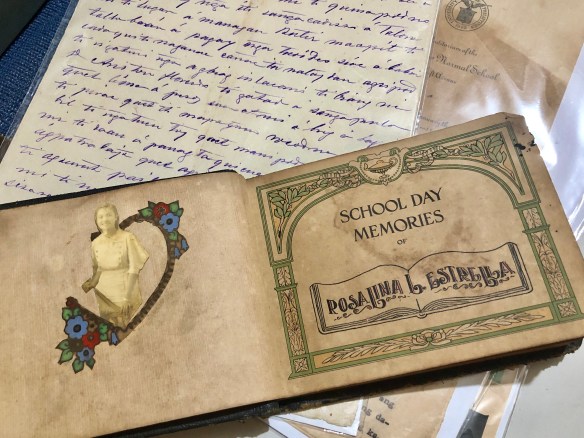
Most poignantly, the trove also included a small book of autographs (a slam book, or in Pinoy usage, a “slum” book) once owned by Rosalina “Rely” L. Estrella, from the Provincial High School of Nueva Ecija, replete with good wishes ca. 1935. We learn from later entries that she was enrolled at the National Teachers College in 1940. And then the war comes, and we hear no more from or about “the Rose of Gapan.”

And so we are reminded of how open-ended the past often and truly is, instead of the closed book we imagine it to be. No wonder I keep coming back to it.


Penman No. 345: Sheening, Shimmering, Splendid

Inks.png
Penman for Monday, March 18, 2019


I’VE BEEN writing in this column about the recent resurgence of fountain pens, a phenomenon well documented by mainstream, social, and business media like the BBC, the Chicago Tribune, and the Advertising Specialty Institute, which have noted that a whole new generation is turning on to the vintage vibe, of which pens are a part. That vibe, in turn, comes from the need—especially among the young—for more self-expression in an increasingly homogenized and digitized world.

There are few things more personal and more personalized than writing with a pen—and not just with any pen but a fountain pen. Ballpoints and rollerballs will yield the same F, M, or B line, with the same black or blue inks. But with fountain pens, you have a wide range of nibs—the writing point of pens—to produce different results and experiences, from extra-fine to triple-broad, from stiff and stingy to flexible and flowy. In the end, the pen you choose and use, both in terms of form and function, will be distinctly and distinctively you.

And it doesn’t stop with the pen itself, which is popular enough (on any given day, on eBay, you will find more than 100,000 fountain pens listed). To customize the writing experience further, you can now choose from hundreds of inks on the market, a sub-industry also re-energized by the fountain pen revival.

46673693611_1dafa07e34_o.jpg

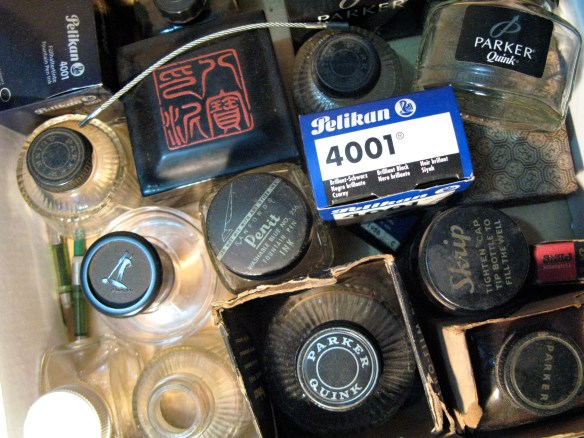
We seniors will remember that, when we were growing up and working on our first jobs, we never had much of a choice in inks—it was either Parker Quink or Sheaffer Skrip (both of which are still being produced, by the way), in black or blue-black, and occasionally green, red, or royal blue. Pens and inks were meant for use at work, in school, and at home, not really to be enjoyed or collected, although some esoteric inks, like Sheaffer’s gorgeously vivid Persian Rose from the 1950s, are now regarded like rare fine wines.

With fountain pens becoming more of a lifestyle choice or fashion statement than everyday tools, inks have acquired designer status as well, and more than a dozen companies now manufacture and distribute their inks worldwide to cater to users looking for ever more unique swatches and signatures. Brands like Noodler’s, Diamine, Rohrer & Klingner, Akkerman, Private Reserve, J. Herbin, Iroshizuku, Organics Studio, de Atramentis, and Robert Oster compete with the more familiar in-house inks of major pen companies like Parker, Sheaffer, Montblanc, Pelikan, Waterman, Aurora, Pilot, and Sailor, among others.

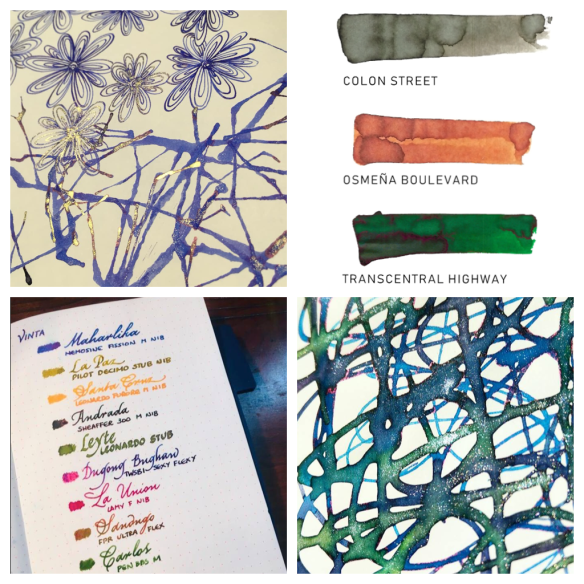
Color is, of course, the most important determinant of choice. Fogies like me tend to stick to the old black, blue-black, and brown, but millennials prizing individuality won’t think twice about—and will even seek out—splashy hues and special effects. Where we just wanted our inks to be either washable or indelible, the new inks offer add-on qualities and properties previously unheard of. Two of those most popular features are sheen and shimmer—sheen (as in Robert Oster Fire and Ice) being the presence of more than one color in the same bottle of ink, with one color serving as the base and another as a shiny highlight, and shimmer (as in J. Herbin’s Rouge Hematite) being the addition of glittery metallic particles to the ink. These two can even be combined in some inks. The result will often be more art than penmanship, an enjoyment of colored ink almost for its own sake above anything else. (You’ll also note that ink names have gone far beyond “Permanent Blue” to something as flamboyant as Noodler’s purplish Black Swan in Australian Roses and J. Herbin’s orangey 1798 Cornaline d’Egypte.)


IMG_9684.JPG

It’s liberating, in a way, because people—especially young students and professionals who have yet to get their first Montblanc—can indulge themselves in ink-play without splurging on high-ticket pens. For a thousand pesos, you could get a fistful of entry-level pens (easily available on Lazada and Shopee, among other sources online, aside from local retailers like Scribe Writing Essentials, Pen Grafik, and NBS) and focus your spending on a menagerie of inks. Do note that milliliter for milliliter, a bottle of specialty ink could cost much more than an equivalent volume of quality wine or scotch.

Color aside, other factors come into play in ink selection. How “wet” or “dry” is the ink? Will it “feather” or “bleed through” on cheap paper? (Paper deserves its own column, being another key factor in the writing experience; happily, inexpensive but fountain-pen-friendly paper can be found in local bookstores). Even bottle design matters—you might buy Iroshizuku and Akkerman inks as much for their iconic bottles as for their contents.

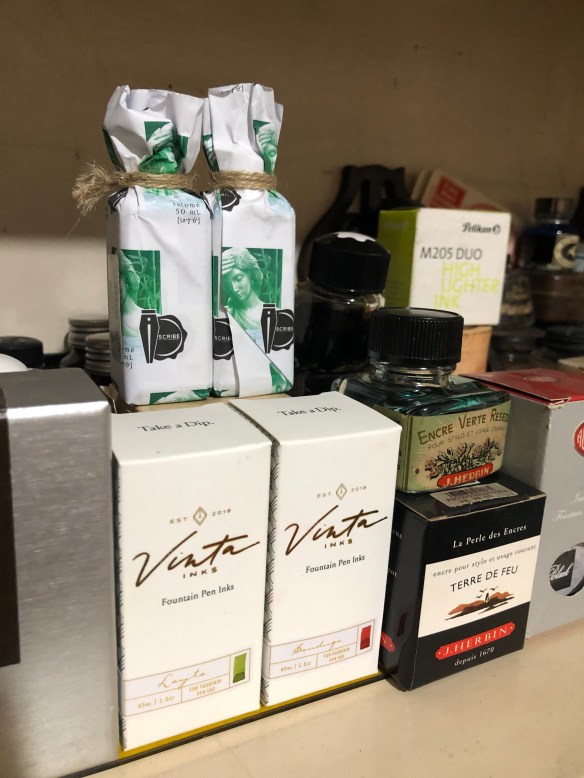
The best news of all is that some pretty fantastic (and fantastically pretty) inks are now being made locally—designed, blended, manufactured, and distributed by Filipinos. Two brands in particular stand out: Troublemaker Inks (troublemakerinks.com), concocted by two young Cebu-based guys and bearing such names as Bantayan Turquoise and Luneta Twilight Pink, and Vinta Inks (inksbyvinta.com), launched just last week by Everything Calligraphy, in such varieties as Sandugo 1565 and Leyte 1944. “We hope to export our proudly Philippine-made inks soon,” says EC’s Jillian Joyce Tan.

And well we should. Pinoys love color, and short of carrying and wielding a brush, we can’t have more fun with color on paper than with these new inks—sheening, shimmering, splendid. (With many thanks to Chiyo-chan Sakamoto, Nicole Angelique Sanchez, Lorraine Marie Nepomuceno, and Troublemaker Inks for the images.)


Penman No. 344: Into the Typosphere

4Typers.png

Penman for Monday, March 11, 2019


THE LAST time I wrote in this corner about typewriters, back in mid-August last year, I had just four of these machines in my stable, and primly announced that I really wasn’t a typewriter collector—yet. Since then, for some strange reason only equally strange people can understand, that quartet has grown to about 17, by my latest count. They breed! I was actually happy to sell off one typewriter one morning last week—to free up space, I told myself—only to find and buy another one that same afternoon.

I’ve long acknowledged an addiction to old fountain pens, old books, and midcentury paintings—all of them jostling for accommodation and attention in my shrinking man-cave—but I’m still reluctant to face the fact that a taste for typewriters has been creeping up on me. (And if you think 17 is a lot, I have a lawyer-friend—who shall go unnamed for now—who has about 70; we have interesting conversations, having nothing to do with politics and everything to do with platens.)

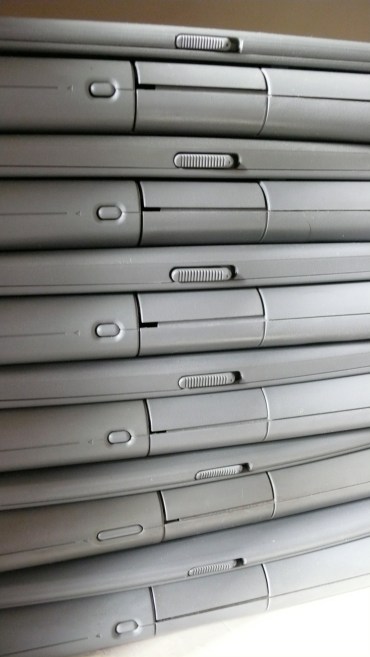
As a writer with soft, warm feelings for the tools of his trade (aside from fountain pens, I also collected old Apple Macintosh laptops, about a dozen of which I finally gave away last month), I suppose it was only a matter of time before I returned to the machine on which, after all, I wrote my early stories, plays, and screenplays. I remember pecking away on a rusty Royal back in the 1970s, later replaced by my father-in-law’s battleship Olympia and then a handier Olympia Traveller that I ported with me to grad school in the US, to the amusement of my computer-savvy friends.

35808325815_2b417c9f18_k.jpg

2214237192_5f5270a04f_o.jpg

But there are still hundreds if not thousands of people out there—you’ll find the most ardent dozens on the Antique Typewriter Collectors group online—who may never have written more than business letters and birthday greetings on their Remingtons and Underwoods, and yet hold on to them with the sometimes scary passion of the true believer.

Typewriter collectors and users—they call themselves “typospherians” just as pen collectors might respond to “stylophiles” when they’re feeling fancy—don’t necessarily eschew computers, and may even lament the absence of the @ sign on some keyboard layouts. But they’re fiercely protective of their “typers,” and no crime could be worse than the sacrilege committed by “keychoppers” who playfully pull out and convert old typewriter keys into something resembling jewelry.

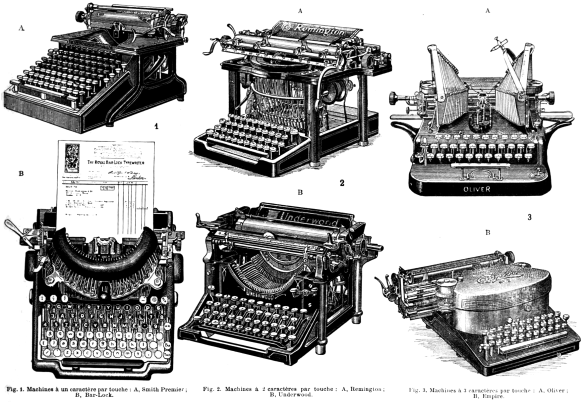
Comparison_of_Full-Keyboard,_Single-Shift,_and_Double-Shift_Typerwriters_in_1911.png

(Image from Wikipedia)

For the serious and practicing typist (in olden times, secretaries and clerks were themselves called “typewriters”), the allure of the clackety-clack is in the total concentration it forces upon you—with no screens or pop-up messages to distract you from the message or the novel you’re composing.

Just like car or watch or pen collectors, typospherians have their “holy grails” (you can find one such list here of the Ten Most Wanted), but short of the near-impossible to find, crowd favorites include the curvy Hermes 3000 in seafoam green, the iconic 1960s-pop Olivetti Valentine in red, and the 1920s foldable Corona 3, among other classics (and yes, I must sheepishly confess to having all three).

As with all collectibles, celebrity ownership helps (Sylvia Plath’s 1959 machine, on which she wrote The Bell Jar, sold a year ago at Bonham’s for £32,500, or over P2.2 million, while David Bowie’s Valentine sold at Sotheby’s in 2016 for £45,000), but it’s probably the least important factor in typewriter collecting, given that you can find near-mint examples at resale shops and garage sales in the US for well below $50, and online for below $200.

Typewriters4.png

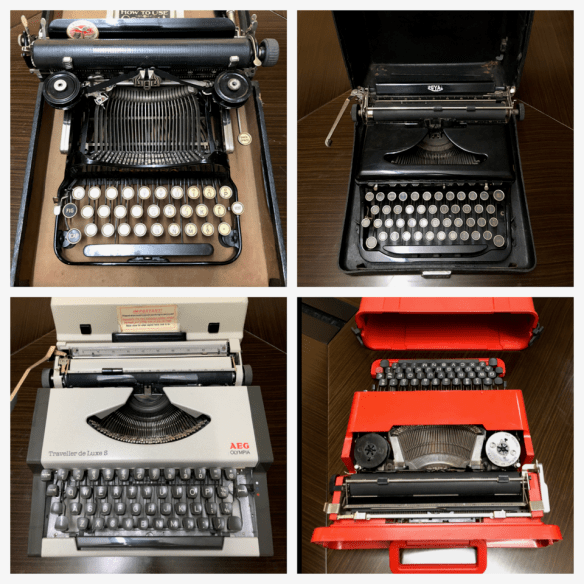
Last August, I trotted out my 1922 Corona 3, my 1930s Royal O, my 1970s Olivetti Valentine, and my 1980s Olympia Traveller de Luxe. This week, let me introduce a new quartet—all but one of them, incredibly enough, local pickups either posted online or sold in such specialty places as Cubao Expo.

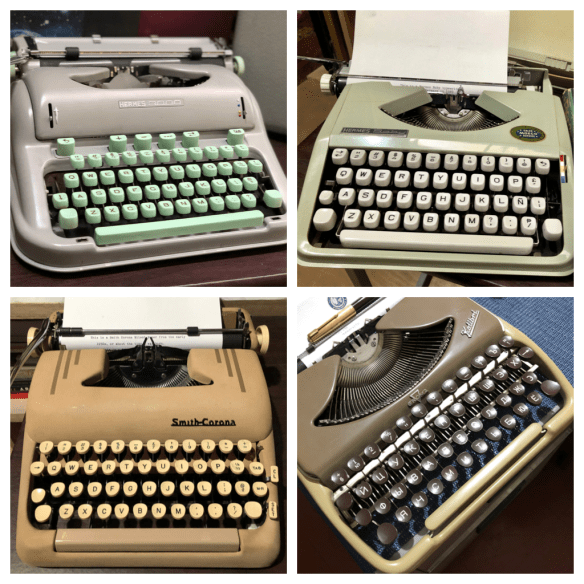
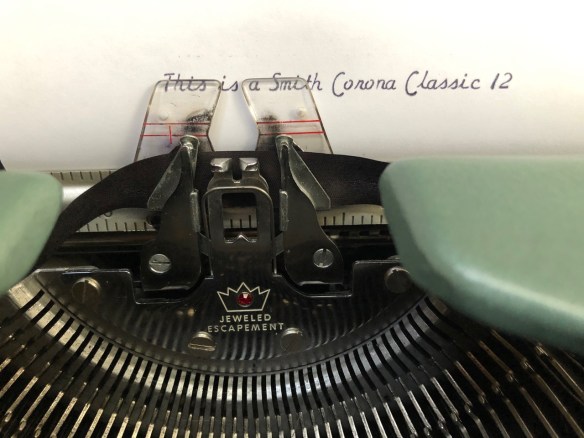
Let’s say hello to (clockwise in the pic) a Hermes 3000 from 1961, a Hermes Baby also from the 1960s still sporting its decal from the Manila Office Equipment Co., a 1950s Groma Kolibri from East Germany, with a Cyrillic keyboard (I don’t imagine writing any novels on this one), and a 1955 Smith Corona Silent Super (to add to the euphony, it’s super-smooth). I’m particularly elated by the Swiss-made Hermes 3000, finding just one of which—especially in this condition—could take years in this country; as luck would have it, I found two in great shape, at bargain prices, on the same day a couple of weeks ago (and passed one on to my lawyer-friend, at cost plus a nice bottle of shiraz or merlot, to celebrate the find). And sometimes it isn’t so much the machine itself but what it comes with that’s the surprise, like this fancy script I found on a 1970s Smith Corona Classic 12.

IMG_9518.jpeg

I should add that one of the great gurus of the typewriting world, Gerald Cha, lives right here in Manila, and does amazing work restoring old machines coming from as far away as the US. Right now he’s working on an 1886 Caligraph—check him and his projects out on Instagram.

I do my own hunting, but if you’re craving a pink or fire-red Olympia right now, visit https://typewritersmanila.com. Quick, brown fox—jump over the lazy dog!


Penman No. 342: Have Beng, Will Travel

IMG_8757.jpeg

Penman for Monday, February 18, 2019


MOST MILLENNIALS will probably miss the title’s reference to that 1960s TV show “Have Gun, Will Travel” starring Richard Boone as the soft-hearted gun-for-hire Paladin, but I’m happily appropriating it for this week’s piece on travel, given that summer is practically here and many of us are packing our bags for the year’s big sortie to parts unknown.

Global travel has become such a big part of the Filipino lifestyle that it’s changed our culture in all kinds of ways, from our food and fashion preferences to our outlook and attitudes. Of course we can’t forget that most Pinoys still travel for work—for back-breaking jobs far away from home and family—rather than for leisure.

Indeed my wife Beng and I were too poor when we got married 45 years ago to go anywhere farther than Baguio, and come to think of it I can’t even remember when we sat side by side on a plane for the first time to see a bit of the world together—it certainly wasn’t on our honeymoon, because we never had one. But we’ve since made up for lost time by traveling up a storm, especially since I made a vow a decade ago to bring Beng to every place I’d ever been, having had more opportunities to get around as a writer and academic. Except for Myanmar and Brunei, we’ve now been all over Southeast Asia, parts of Europe, Australia, and of course the US.

I was filling up our visa application forms for the UK a week ago—I love the UK, where Beng and I lived for almost a year in 1990-2000 when I was a writing fellow at Norwich, but Christ Almighty, their forms are a pain to fill up, being 12 pages long and asking for your travel history for the past 10 years. That’s when I realized that I’d traveled more than 50 times since 2009—most often in 2012, when I took nine trips, mainly to conferences.

I know people will ask, how could we afford all this on a professor’s salary? Well, more than half the time, it’s someone else paying when I’m invited to conferences (I pay Beng’s way, of course, when she tags along). Also, we’ve been empty nesters for the past ten years since our daughter Demi got married in California (another good reason to save up for a US visit every year). We never had much by way of savings, except for emergencies, because Beng and I decided long ago that money was better spent on having fun together now.

And when we travel on our own, it’s strictly on a budget—meaning boutique hotels, 7-11s, and local buses and subways all the way. I plan out our flights months in advance on Skyscanner.com.ph, and find our hotels on Booking.com. No room service, no Michelin restaurants, no High Street shopping, just museums, flea markets, and hawker stalls. That’s why I love traveling with Beng, because she’s easy, and between the two of us, I’m the picky one, in an odd way—she’s adventurous and will try anything, but I’m a creature of habit and insist on having my noodles and canned sardines, even in the middle of Europe.

Beng’s going to be a septuagenarian soon (though she doesn’t look 60, but for the white hair), but she still clambers up scaffoldings to restore huge murals (most recently a 36-foot-long one by Manansala owned by a big bank). I’m beginning to feel the aches of age and have to stop and even take short naps on our museum tours. But the fact that we’re seniors, and that we could be on canes and wheelchairs not too long from now, only intensifies our desire to go see places together while our knees and feet can take it.

Some young people going out on their first trips recently asked for travel tips on a forum, and this was what I shared with them from all those years of gallivanting. I may be an old guy, but I’ve been a big fan of digital travel since the world went online.

  • I take pictures of all important documents—passports, visas, prescriptions—and store them on my phone. I take pics as well of hotel addresses and vicinity maps, just in case I can’t make a live online connection.
  • I always carry a spare unlocked phone and buy a local SIM at the airport.
  • Since 1999, I’ve been using a free app called Metro (regularly updated) for using the subway or metro in any city I visit. Mastering the local transport system saves on Uber, Grab, and taxis.
  • I usually just withdraw cash from the local ATM and forget about money changers—there’s a surcharge, of course, but it’s safer, more convenient, and easier to track. At the end of a trip, I don’t convert foreign currency back to dollars or pesos, but keep it for my next trip. It’s always good to land with taxi fare in local money, and small bills for hotel staff. I always check Google about local tipping practices.
  •  I always take out travel insurance (online) for long trips. I’ve thankfully never had to use it, but you never know.
  • Like I mentioned earlier, I always look for cheap or good flights on Skyscanner.com.ph and book my hotels on Booking.com. Remember that in booking flights or hotels, cheapest doesn’t always mean the best bargain. Times and locations matter. That said, happy trails and safe travels!