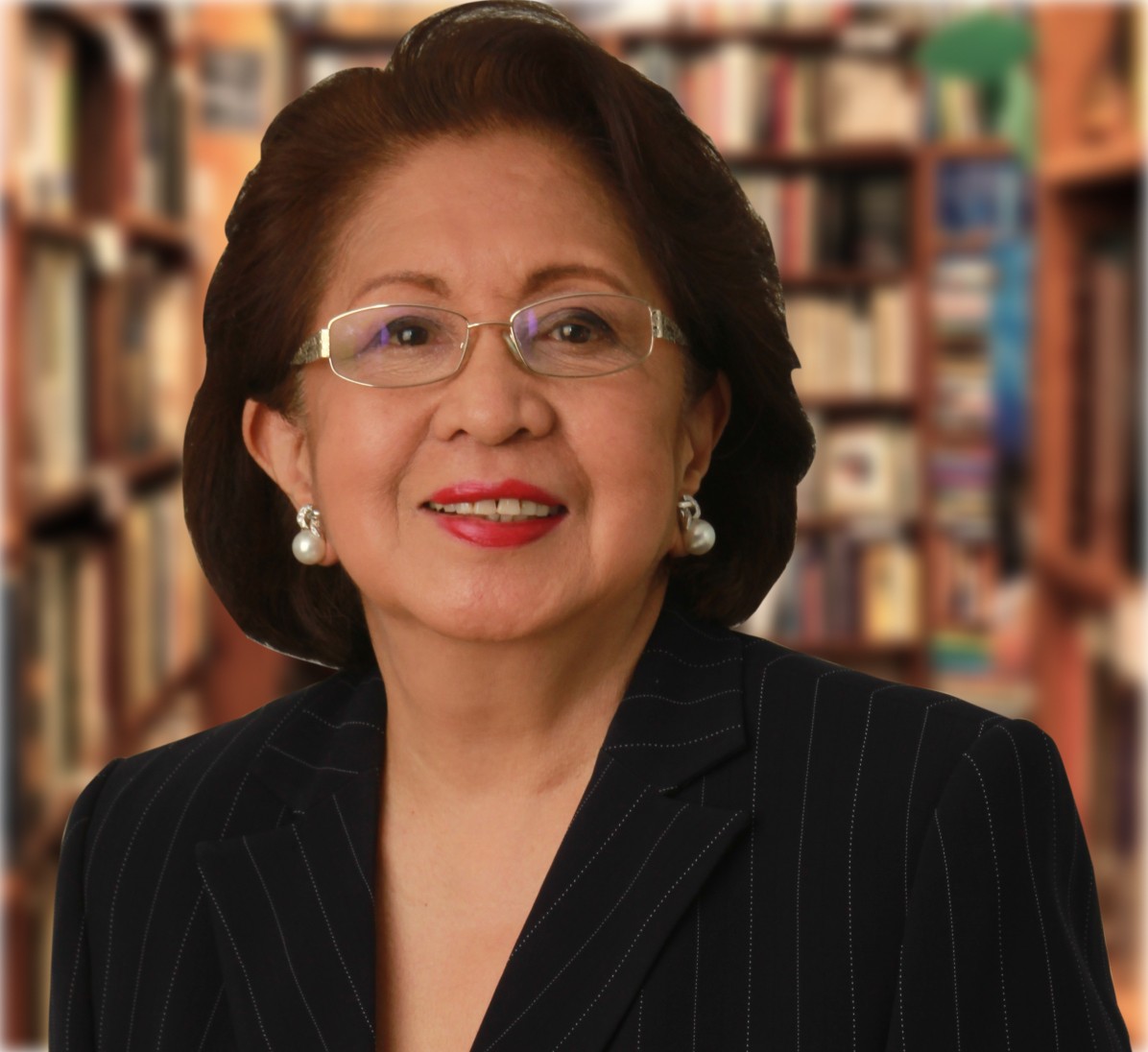
Penman No. 472: Manila Pen Show at Manila Pen

Penman for Sunday, March 9, 2025

FOR A group that began in our Diliman front yard with less than 20 people almost 17 years ago, the Fountain Pen Network-Philippines (FPN-P) has come an awfully long way. With over 14,000 members online, meeting physically by the dozens in regular “pen meets” held in hapless cafes and restaurants, and thousands more informal recruits among families and friends, FPN-P should really register soon as a partylist devoted to “spreading the joy of handwriting with fountain pens.” We have active chapters in Baguio, Bacolod, and Davao, among other places; quite a few members even reside abroad but keep in regular touch through the group’s FB page.

As I’ve often written here before, the allure of fountain pens lies in their rediscovery by digital natives as a means of self-expression—of recovering one’s uniqueness in a universe homogenized and anonymized by computer code. Our ranks include Supreme Court judges, Cabinet undersecretaries, artists, professors, doctors, and lawyers, but most of our members are young professionals in their twenties and thirties for whom writing in cursive is itself an adventure. There are probably hundreds of thousands of pen fanciers (as they used to be called) around the world, mainly in the US and Europe, but what distinguishes FPN-P is its youthful vibe and the infectious fanaticism of its members.

Some fall in love not just with the pens but with penmanship itself, and become calligraphers. Others grow enamored of inks and papers of a bewildering assortment—inks that shimmer and sheen, combining lustrous gold with a deep oceanic blue, and papers that range from silken smoothness to almost parchment-like toughness.

Next weekend, hundreds of these penfolk (and the general public) will converge at the 5th Manila Pen Show that will be taking place March 15 and 16 at—fittingly enough—the Peninsula Manila. 

Top pen makers and dealers from Japan, Hong Kong, Singapore, and Malaysia have been coming to the MPS, attracted and impressed by the level of sophistication—and the deep pockets—of Filipino pen collectors. While the MPS has pens for everyone at every price point—from the low hundreds for students to six figures for the big guns—Filipino pen collectors and users at any level have been known for their deep knowledge and obsessive familiarity with all aspects of the hobby. 

They can tell you how Japanese artisans produce the various kinds and textures of urushi resin that renders pen surfaces impermeable to even acid. They can discuss minuscule but hundred-dollar differences in Parker Vacumatics from the 1930s, or argue passionately for vintage Pilot Myus and exotic inks like the perfume-scented De Atramentis.

This year’s MPS will not only bring sellers of pens and assorted writing paraphernalia, but also feature workshops and panel discussions on topics ranging from nature journaling and nib care to Art Nouveau and Deco pens (and, most intriguingly, “Your Pen and Your Brain: A Love Story,” to be conducted by Gang Badoy Capati). A group of advanced collectors will discuss the finer points of pen connoisseurship (including that point when pens stop just being writing instruments but become jewelry or even art). 

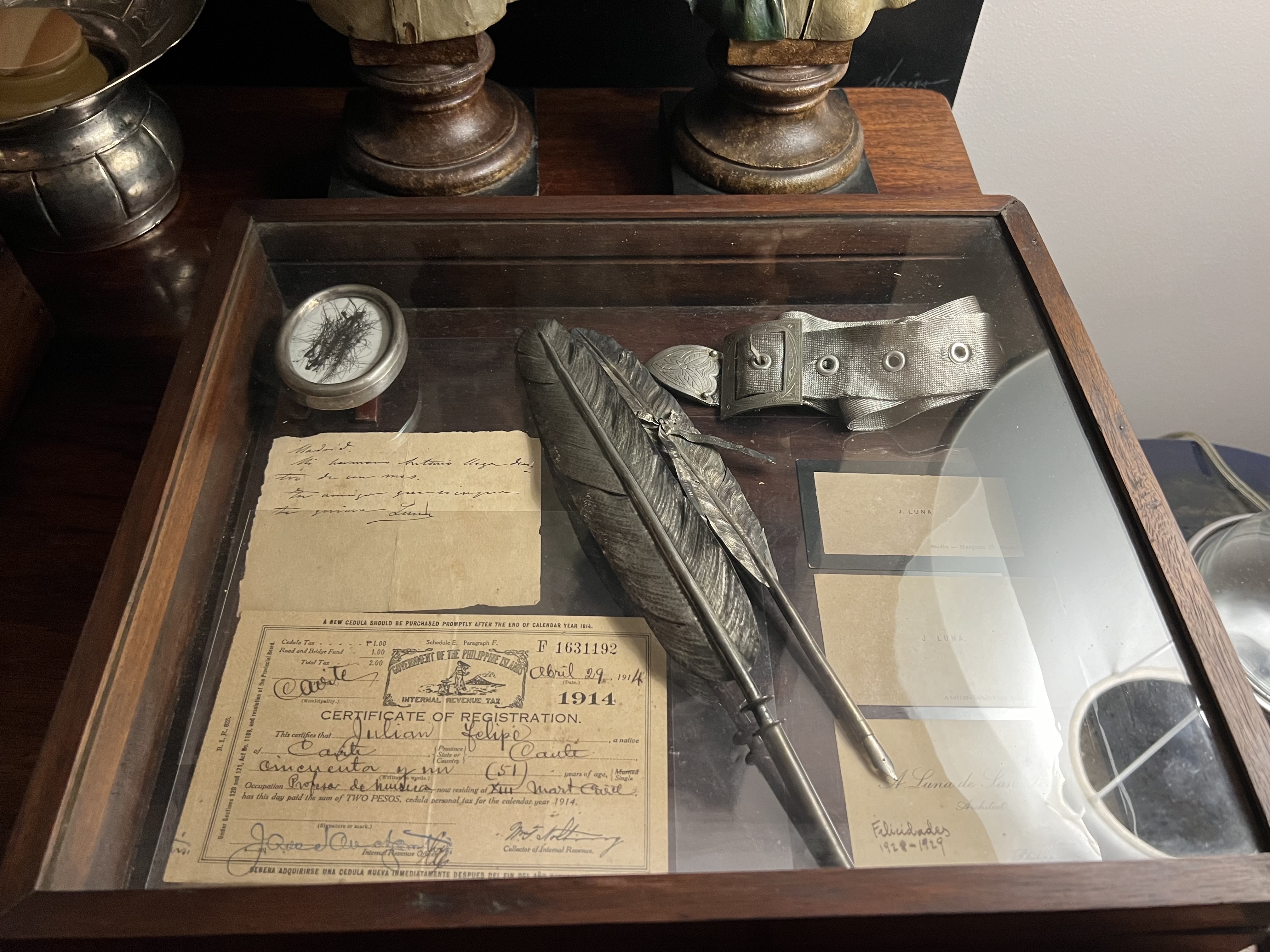
I’ll be on the Art Nouveau and Deco panel, but this time, instead of discussing pens (which others will do this time, all of them experts at particular models and periods), I’ll talk about the peripherals and accessories of the writing trade—the desk pen sets, inkwells, and ink blotters of the kind you would have seen in a typical office desk of the 1930s. 

As with past Manila Pen Shows, nibmeisters or professional pen repairmen will be around to fix that Montblanc nib you dropped on the kitchen floor or your Lolo’s gunked-up Sheaffer that’s been lying in a drawer since he died. One thing most people don’t realize is that most pens, no matter how old, can be fixed (I myself routinely revive 100-year-old Parker Duofolds among other vintage pens in my workshop—you’ll need some special skills and parts, but it’s not rocket science).

You don’t have to be an FPN-P member or even a current fountain pen user to come and enjoy the show. Indulge your curiosity and feel free to see, touch, and test the pens on display (with the exhibitor’s permission, of course, as some pens may require very careful handling). Most sellers will take credit cards or online payment. There will be a modest charge for entry and for the presentations, but all funds raised will be donated after expenses to the Save the Children Philippines, FPN-P’s sponsored charity for the past MPSes. You can find more details about the show at https://manilapenshow.helixpay.ph.

(Image thanks to Raph Camposagrado)

Qwertyman No. 135: Fighting the Truth

Qwertyman for Monday, March 3, 2025

BEAR WITH me as I begin this Monday’s piece with a quotation about last week’s celebration (or non-celebration, from another point of view) of the 1986 EDSA People Power uprising. It really doesn’t say anything we haven’t heard before, but I want you to read it slowly, giving it the full benefit of its sincerity and passion. If you were at EDSA as I and my family were, and no matter how distant a memory those four days in February may seem to be now, these words should still provoke even a flutter of patriotic fervor, and a wistful thought that, perhaps, the EDSA spirit does live on in these troubled times. 

“Martial law, declared by Ferdinand Marcos Sr. in 1972, left a dark legacy; countless lives were lost, freedoms were stripped away, and power was concentrated in the hands of a few. As we remember those who suffered and fought for our liberties, we must remain vigilant, especially now, when the threat of authoritarian rule once again looms over our nation. People Power was more than just a revolution; it was a testament to the collective strength of the Filipino people in demanding truth, justice, and accountability. It is also a reminder that we must remain united against any form of oppression…. Let us honor its legacy by ensuring that history is never distorted, our rights are never trampled upon, and our democracy remains intact for future generations. May the darkest times in our history never happen again.”

Just the kind of resonant exhortation you’d expect from a staunch defender of civil liberties and human rights, right? 

But would your appreciation of these words change just a bit if you knew that they were spoken not by the likes of a Leila de Lima or a Kiko Pangilinan, but by Davao City Mayor Sebastian “Baste” Duterte, whose EDSA Day message this just happened to be?

Truth? Justice? Accountability? “United against any form of oppression?” Where were these noble words when the good mayor’s dad was president, and announcing blatantly on various occasions that ““My order is shoot to kill you. I don’t care about human rights…. Let’s kill another 32 every day. Maybe we can reduce what ails this country…. I will assume full legal responsibility…. My mouth has no due process.”

That “legal responsibility,” of course, has yet to be assumed, full or otherwise. Instead, once he fell out of power, that man (and, last we heard, lawyer) who flaunted his wanton disregard of the law suddenly found religion, and the gumption to say this when his buddy Apollo Quiboloy and his cult followers were raided by the police:

“Our country has never been in a more tragic state as it is today. Rights have been trampled upon and our laws, derided…. We call on the remaining decent and patriotic members of our government not to allow themselves to be used and to be abusive and violent in enforcing illegal orders…. We call on all Filipinos, regardless of political persuasion, to offer prayers for peace and justice, and to spare our people of the unwarranted tension brought about by the reign of fear and terror by people sworn to uphold the law and protect the citizens of this country.”

It makes sense that this statement was published rather than spoken, because I can’t for the life of me imagine how The Great Punisher could say “unwarranted tension brought about by the reign of fear and terror” with a straight face and not burst out laughing—or maybe his listeners would, if they weren’t seized by, well, fear and terror.

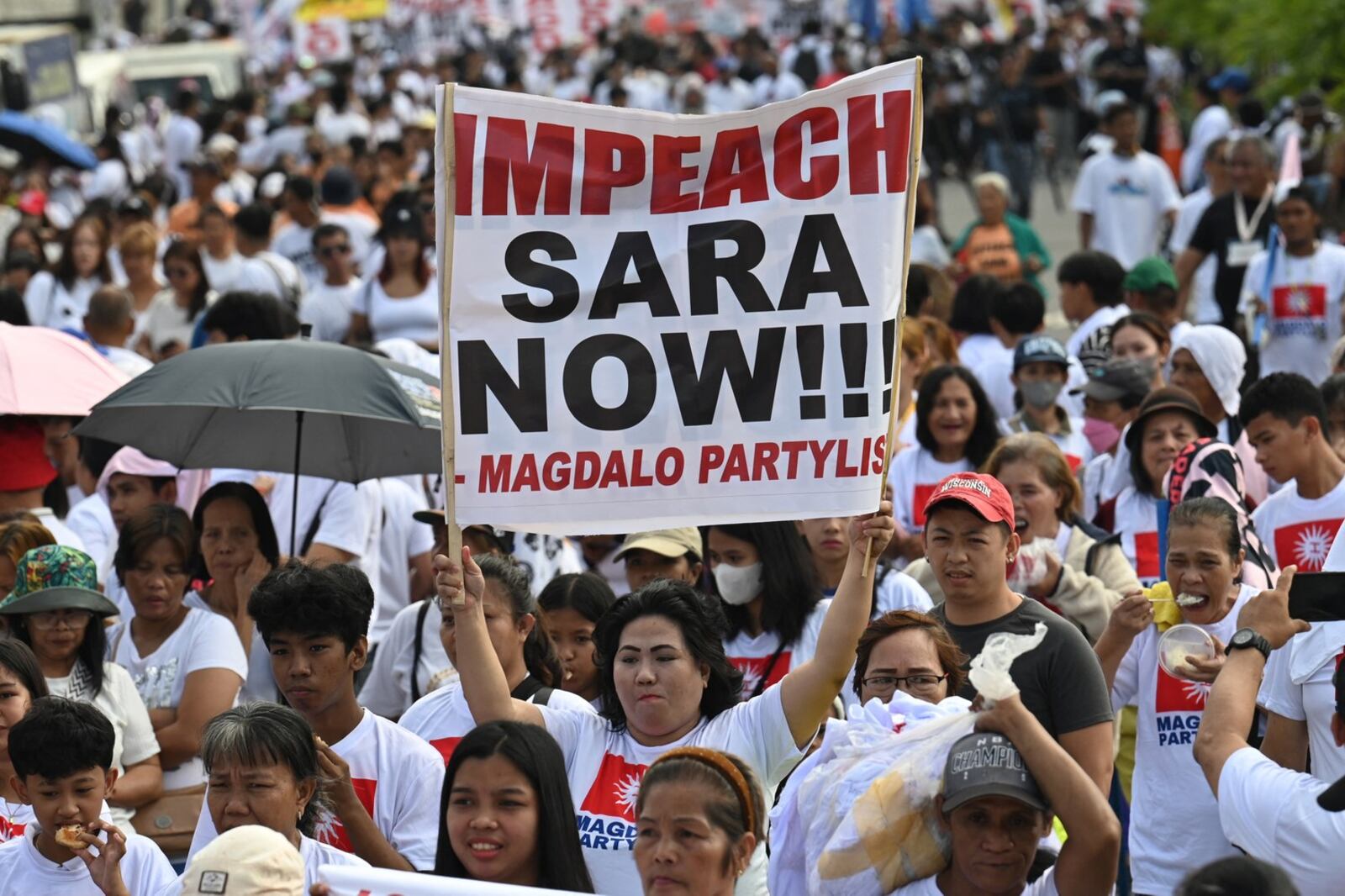
Not to be outdone, on a recent sortie to Cebu, embattled Vice President Sara Duterte reportedly declined to answer questions about her impending impeachment trial in the Senate, preferring to leave the matter to her lawyers, but was quoted as saying that she was banking on her “loyalty to truth” to see her through. Ummm, okay…. Now can we please hear the truth, and nothing but the truth, about Mary Grace Piattos?

I suppose it’s a sign of how low the value of words like “truth,” “freedom,” and “justice’ have fallen when the very people accused of spitting them into the garbage now spout them like nobody’s business. Perhaps we shouldn’t be surprised that they’re doing this, given the success of Donald Trump at doing the very thing he says he hates, e.g. weaponizing the justice system. There must be pages of advice in the 21st century edition of Playbook for Politicians for just this kind of brazenness, maybe under the Chapter “Reversals of Fortune.” What’s surprising—and scary—is how they continue to be believed by followers such as “Ging C.” whose fervor led her to gush, on PRRD’s FB page, “By God’s favor VP Sara you will win this fight. God of truth is on your side and those people who fight the truth!” (Ooops….there’s a “for” missing there somewhere, but really, does it matter anymore?)

And lest we think only the Dutertes have mastered the art of dissimulation, let me leave you to guess who the character implicated in the following quotes is.

On Independence Day in 2018, someone posted on Facebook that “Freedom is every human being’s birthright. But to claim that right, the time always comes when we are called to fight for and defend that freedom. The Philippines and her people fought long and hard, sacrificed life, limb, treasure and more to achieve our independence 120 years ago. The call for liberty and sovereignty was answered by our heroic ancestors, sacrificing their all at the altar of honor and freedom and country.

“Today we remember, and in remembering, we consecrate that memory of all the courageous and selfless Filipino patriots—our heroes—who gave their lives for that freedom, and to whom we forever owe our status as a free, independent and sovereign nation in the community of nations. Let them long live in our minds, our hearts, in our very souls, the heroes of our great country, our beloved Philippines.”

In a speech before the Kapisanan ng mga Brodkaster sa Pilipinas last November, the guest of honor declared that “Now, more than ever, our democracy depends on an informed and vigilant citizenry…. With the 2025 elections ahead, I am committed to protecting our journalists in championing fearless and credible reporting. Together with KBP and our partners in media, we will stand firm against disinformation, ensuring that every Filipino has access to voices of truth.”

I would love to cry “Amen!” Wouldn’t you?

Qwertyman No. 134: “Forthwith” and Other Adverbs

Qwertyman for Monday, February 24, 2025

NEVER IN our modern political history has so much seemed to depend on the meaning and interpretation of one word. For the past week, politicians, lawyers, and columnists like me have weighed in with their sense of “forthwith,” as it appears in Article XI, Section 3, paragraph 1 of our 1987 Constitution, which states that “In case the verified complaint or resolution of impeachment is filed by at least one-third of all the members of the House, the same shall constitute the Articles of impeachment, and trial by the Senate shall forthwith proceed.”

At bar is the impeachment of Vice President Sara Duterte, which is hanging in the balance with the complaint signed by more than enough congressmen and forwarded to the Senate for action “forthwith.” That happened just before the Senate adjourned, whereupon Senate President Chiz Escudero announced that, hold your horses, we’re on break here with seven of our members trying to get their jobs back, and there’s a bunch of other things we need to do before the trial even starts like getting properly fitted for our judicial robes, so we’ll see you in June after the SONA. As an aside to the House, Escudero also wondered aloud why Congress was rushing him, when they had two months to get the damn thing signed and sent over. No, he insisted, “forthwith” doesn’t mean “right now”; it means “when we’re ready.”

This flew in the face of opinions by such as retired Supreme Court Associate Justice Adolf Azcuna, who argued that an impeachment wasn’t tied to the legislative calendar, and that the Senate was constitutionally bound to convene on the complaint. Minority Leader Sen. Koko Pimentel agreed, calling on Escudero to at least convene a caucus to discuss the trial.

English-major nerds like me should live for moments like this. I can fantasize about being called as an expert witness to speak to the etymology and meaning of “forthwith,” whereupon I would have sagely advised Their Honors that “Round the middle of the twelfth century, the phrase forth mid appeared (mid being essentially the same as the modern German word mit, with), later forth with, to go somewhere in the company of other people. Necessarily, if you go forth with others, you go at the same time as they do. It seems this sense of time eventually took over, though the process of transition isn’t very clear, and it’s mixed up with other phrases that also referred to time. Certainly, by about 1450 the phrase had condensed to a single adverb with the modern meaning of immediately, without delay.” Did I know that all along? Of course not. I googled it and lifted it from a source only named “Hugo.”

It does point to an interesting fact about language, however—meanings change over time, and, depending on the context, can be bent to suit one’s purposes and perceptions. While all modern dictionaries will say that “forthwith” means “immediately,” lawyers and judges (yes, that sneaky lot, with all due respect to my lawyer-friends) have opined that “surrounding circumstances” could loosen things up a bit. One Canadian commentator has noted that “Some courts have determined that the word ‘forthwith’ requires vigorous action, without any delay, and have suggested that whether there has been such action is a question of fact, having regard to the circumstances of the particular case. Others have suggested it means the action must be taken without pause or delay, or done at once, while some judges have commented that the nature of the act to be done is to be taken into consideration when determining the required immediacy…. The term ‘as soon as possible’ has been defined as meaning no more than ‘without reasonable delay’ or ‘within a reasonable time.’ Some cases have suggested that the length of the period of time involved for performance is subject to a reasonableness standard rather than a sense of urgency, and may be influenced by trade practice, custom and other circumstances.

So if this “reasonableness standard” were to apply in the matter of Sara Duterte, would SP Chiz’s reluctance to convene the Senate now as an impeachment court be reasonable? Not being a lawyer, I’ll leave the legality or constitutionality of it to those who know better—even if, as we can see, it’s lawyer vs. lawyer in this case. I did learn from another retired SC Justice (not Azcuna) that the impeachment process does require many preliminaries before the actual trial, including reviewing the rules of the Senate—and let’s not forget the robes, which the SP emphasizes (at P6,000-P8,000 each) will have to be dry-cleaned by the senator-judges themselves, to save the Senate money (a laudable show of thriftiness, given that the new Senate building in Taguig is now expected to cost over P30 billion). 

What’s apparent to this pedestrian observer is that whatever “forthwith” means, it didn’t happen, at least not the way our framers probably intended it. We’ll be in for a few more months of what Henry Kissinger creatively called “constructive ambiguity” aka fudging, while the senatorial candidates (at least those not identified with the Dutertes) avoid the issue.

“I’ve yet to see and consider the complaint,” at least one reelectionist senator has said, likely echoing others. “If I’m going to sit as a senator-judge, then I wouldn’t want to prejudge the issue” has been another refrain. It’s a reasonable—and highly convenient—stance to take, especially during this election season.

By kicking the impeachment down the road, the Senate avoids making it an election issue for those candidates who need to straddle the fence for their survival. While the House complaint signed by 215 out of 316 congressmen might suggest that the VP’s goose is cooked, the Senate is a different arena altogether, with the present numbers inclined toward Sara’s acquittal. How the administration will tip that balance in its favor will be the game to watch (an AKAP-laden budget can’t hurt). The Dutertes don’t help themselves any with their proclivity to “kill” their enemies, but any assumption that they’re politically done for will be very foolish.

We’re told that impeachments are political more than anything, which means there should be political consequences for all involved. We wish the process had begun much earlier, a month or two ahead of the campaign period, so we could have partly based our senatorial choices on their performance as jurors, and their quality of mind.

Since “forthwith” didn’t happen, let’s hope that the trial, whenever it takes place, involves two other adverbs:

“Expeditiously,” so we can all return to our normal lives (at least until the next scandal—or, God forfend, the next impeachable official, comes along); and

“Fairly,” with incontrovertible evidence, so there will be no question afterward that the right thing was done. 

Qwertyman No. 133: The Finest of the Filipino

Qwertyman for Monday, February 17, 2025

FOLLOWING THROUGH on my recent piece about our Senate becoming a family show, our constitutionalists probably had the right idea when they decided to amend the Charter in 1940 to provide for a Senate that would draw its members not from provinces or regions but from the country at large. (Under the Americans, Filipino senators were elected based on senatorial districts or groupings of provinces corresponding roughly to our regions today.)

It would have been a way to diminish regionalism and promote the sense of a nation in whose interest these senators would serve. With a countrywide electorate to woo, senatorial candidates would presumably address a broad range of national and even international concerns beyond the parochial claims of their native communities. It was a call to greatness. 

Time was when we had a Senate like that, when men and women with deep intellect, a sense of history, and the gift of articulation spoke to the issues that mattered to the Filipino people and their future. 

One such senator was Jose W. Diokno, who later in his life could speak inspiring words like these:

“There is one dream that all Filipinos share: that our children may have a better life than we have had. So there is one vision that is distinctly Filipino: the vision to make this country, our country, a nation for our children.

“A noble nation, where homage is paid not to who a man is or what he owns, but to what he is and what he does.

“A proud nation, where poverty chains no man to the plow, forces no woman to prostitute herself and condemns no child to scrounge among garbage.

“A free nation, where men and women and children from all regions and with all kinds of talents may find truth and play and sing and laugh and dance and love without fear.”

And then there was Sen. Jovito R. Salonga, who broke the 11-11 tie in the Senate to expel the US military bases from the Philippines in 1991 with these musings:

“I think all of us are engaged in a search—a search for the soul of the nation, a quest for the best in the Filipino character, a search for the true Filipino spirit.

“We summon the memories of those we honor, from Jose Rizal to Andres Bonifacio, from Jose Abad Santos to Ninoy Aquino.

“Their collective message, even on the eve of their death, was one of hope, not of fear; of faith, not of doubt; of confidence in the capacity of the Filipino to suffer and overcome, not of his unwillingness to stand the rigors of freedom and independence.

“In our history as a nation, our best years were when we took our destiny in our own hands and faced the uncertain future with boldness and faith. Those were the times when we experienced a sense of national renewal and self-respect…. 

“Therefore, I vote no to this treaty, and if it were only possible, I would vote 203 million times no.”

There are those who will say that these are just words, and that we don’t elect senators to make fancy speeches, that the Senate should be more than a debate society. I would agree—except that these senators were far more than orators; they worked hard to craft and pass important laws, many of which we still benefit from today.

A genius who topped both the CPA and bar exams, Diokno was behind pro-Filipino laws such as the Investment Incentives Act of 1967 that empowered local businessmen so we could move out of import substitution and the Oil Industry Commission Act of 1971 regulated the oil industry. Named Outstanding Senator many times over, he later set up the Free Legal Assistance Group.

Another bar topnotcher and a genuine war hero tortured by the Japanese, Salonga authored the Code of Conduct and Ethical Standards for Government Employees and the Anti-Plunder Law. He was staunch defender of freedom and civil liberties all his life.

When I look at the list of candidates running for the Senate this year, and at the surveys predicting the seemingly inevitable victory of a number of them, I deeply doubt that the likes of Pepe Diokno and Jovy Salonga would stand a chance of winning today. Their old-man looks, dated rhetoric, and inflexible principles amount to little in our media-centric culture, where popularity and notoriety drive political success, with factors like “integrity” and “capability” hardly figuring in the equation. 

Among the most potent of images being peddled by current aspirants is that of the “action” star or “action” person who promises to deliver everything from instant justice, barangay roads, and hospital beds to basketball courts, photo ops, and fiesta lechon. “Action” means looking good and making smart-alecky comments for social-media consumption at Senate hearings; “action” means talking the language of the streets, being everyone’s kumpare or kumare.

There’s nothing wrong with these per se, as we do need politicians to be in touch with the everyday realities our people face. The loftiest oratory isn’t going to banish corruption, traffic, high prices, red tape, and abusive officials—unless it’s accompanied by well-crafted and enforceable laws that are the Senate’s proper business. 

And that’s where we should ask: what have these candidates actually done to deserve their seat? And never mind the rhetoric; some of our best senators were no barnburners when it came to speechifying, but—like late Edgardo J. Angara—they delivered where it mattered: in SEJA’s case, no less than the Free High School Act, Commission on Higher Education, Technical Education and Skill Development Authority, the National Health Insurance Act (Philhealth), Senior Citizens Act, the Agriculture and Fisheries Modernization Act, the Renewable Energy Act and the Procurement Reform Act.

The Senate wasn’t meant to be a Department of Quick Fixes. The true senator’s sphere of action is in his or her mind. We should be choosing, electing, and paying senators based on how they think we should act and move ahead as a nation. 

The Senate is not a welfare agency. It is not a medical clinic or dispensary. It is not an action center or complaints hotline. It is not a job placement bureau. It is not a police precinct. It shouldn’t even be a representative body in the sense of having one senator represent intelligence and another represent ignorance so everyone can say it’s a body of equals. 

It should represent the finest of the Filipino—in intellect, character, and sensibility. Do our chart-toppers meet that standard?

Qwertyman No. 132: A False Horizon

Qwertyman for Monday, February 10, 2025

I DON’T know why, but like the proverbial bad penny that keeps turning up (English teachers: note the British idiom), every few years, some Filipino school announces its adoption of an “English-only” language policy on its campus, ostensibly in the service of a sublime objective such as “global competitiveness” or “global competence.”

This time around, it’s the Pamantasan ng Cabuyao that’s enforcing the rule. PNC president Librado Dimaunahan has issued a memo declaring that “In line with our vision of developing globally competitive and world class students, the Pamantasan ng Cabuyao (University of Cabuyao) is now an English-speaking campus starting Feb. 03, 2025…. All transactions and engagements with officers, students, employees, and workers should be communicated in English, whether written or otherwise. For strict compliance.” What he wanted to create was no less than “a strong English-speaking environment.” 

A few years ago, it was Cavite State University which required its students, teachers and staff to speak exclusively in English or face punishments like getting your ID confiscated and having to sing the CvSU hymn (in English, of course). Filipino could be used only by maintenance workers—and by others, but only in the restrooms and cafeteria.

I’m not going to add to the brickbats that these ideas have already received, not unreasonably. But I will add my two cents’ worth (my, where do these “brickbats” and “two cents” come from?) to the conversation, as a lifelong user and teacher of the language.

I have a PhD in English—something I don’t often bring up because it sounds so pompous and presumptuous—earned in America where, to my smug satisfaction and my classmates’ consternation, my professor would single out my prose for, among others, its perfect punctuation. I was the only one in our graduate literature class who could explain the difference between parataxis and hypotaxis (no, nothing to do with Yellow Cabs and Uber). Was that global competitiveness? I guess so. Was I proud of my English language skills? Of course. Did it make me or the Philippines any richer? Not a dollar more. Is this what a national language policy should be about? Heck, no.

I’ve done well in English not because I was forced to, but because I love the language, and languages in general. I should have loved Spanish—discovering its beauty too late, when I had to read and translate Federico Garcia Lorca for a grad-school exam—but I didn’t, because we had been forced by our curriculum to take so many units of it (24, in my mother’s time). I started on German and French in high school and college and am picking German up again on Duolingo, in preparation for the forthcoming Frankfurt Book Fair. (I write plays and screenplays in Filipino, despite being born in Romblon.)

What I’ve realized from studying these languages and from a lifetime of writing, speaking, and using English is that in our country of over a hundred languages, English can’t be taught and learned well by exclusively using English. I’m learning German on Duolingo using English.

I don’t mind saying that when I teach creative writing or literature in English, I pause when my students can’t seem to understand what the text is saying—and then we pursue the same line of inquiry in Filipino, and everybody goes “Ah!” It makes simple teaching sense. You can’t get more out of a student—in English—if he or she can’t understand or even recognize the problem, in English. 

And just to be clear, these are questions of comprehension and interpretation that even native speakers of English would have a hard time with. (How do I know? I taught the American short story to American undergraduates in Wisconsin.) These are questions like “So what’s John Updike saying about the position of the rebel or nonconformist in society at the end of his story ‘A&P’?” That’s best answerable if you also discuss as we do what America was like in the 1960s, with Vietnam, Woodstock, the civil rights movement, and the moon landing in the background. (I always tell my students that we’re not studying American literature and history to become Americans, but to become better and wiser Filipinos.) 

Boomers like me like to recall that in many private schools of our time, students were fined five centavos for every instance they were caught using Filipino. Some may find that quaint or even charming, but if you think anyone learned and loved English because of these stupid rules, think again. Students learn good English from good teachers who don’t teach English as a grammar rulebook but as a road map or even a cheat sheet to an adventure.

English is best learned along the way of learning something else—like how the world works, in science and literature—as a key to unlocking knowledge and meaning. English proficiency all by itself is a non-goal, a false horizon that can delude people into believing that they’ve arrived. Arrived where? What for?

All the English in the world isn’t going to turn the Philippines into an economic powerhouse—which Japan, China, Russia, and Germany managed to become without a mandatory word of English in their curricula from decades back. Better English could make us become more employable as waiters, domestic helpers, and seamen—and I’m not downplaying this, because the language does give us an advantage in those markets—but these jobs, noble as they are, aren’t what universities were made for.

All the English in the world isn’t going to drive a moral spine up the backs of our leaders. Intolerable as it was, one president’s foul mouth and boorish manners may not be far worse than a General Appropriations Act legitimizing the wholesale thievery of people’s money in perfectly edited English. 

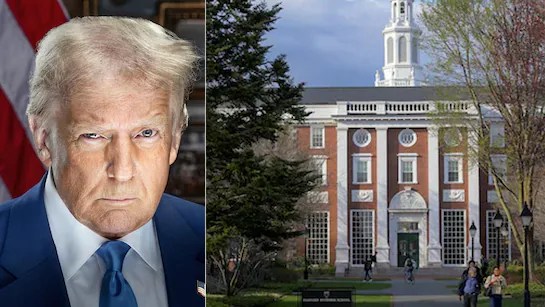
We can speak all we want with an American accent—only to realize that, in Trump’s America, where one of his appointees has declared pointblank that “It takes a competent white man to get things done right,” the color of your skin still matters more than whether you can pronounce “Adirondack” or “tortoise” correctly. Trump’s maniacal edicts and pronouncements—cutting foreign aid, expelling Palestinians so he can turn Gaza into an American beach resort, and turning the FBI and the DOJ into his personal security force and loyalty police—have all been made in his lazy, slurring English, each word delivering chaos and disaster with as much consequence as Hitler’s Nuremberg rants.

More shameful than lack of proficiency in English is lack of proficiency in one’s own language, which I see in the children of parents anxious to “globalize” their kids without mooring them first in their own culture. Those children will be maimed for life, insulated from and unable to communicate with or relate to their common countrymen. We need our own languages to understand ourselves.

Teach good values and good citizenship. Even if that student’s English turns out less than stellar, our country can’t be worse off.

Penman No. 471: A Promise to Keep

Penman for Sunday, February 9, 2025

Now and then we come across stories of foreigners who fall under the spell of the Philippines so completely that wherever else they go, the Philippines and its panoply of wonders—its mangoes, its waters, its sunsets, and above all its smiling people—stay with them, urging them to return, in spirit if not in person.

One such visitor was my good friend Julie Hill, who with her late husband Arthur first came to Manila in 1968 on a mission to help improve Philippine education, among other concerns. Almost six decades later, after having traveled the world and settled in America, Julie’s thoughts and affections remain bonded to this country and to its future. In the twilight of her life, she has decided to gift poor but bright young Filipinos with a life-changing opportunity to study at the University of the Philippines, from the forthcoming sale at auction of two paintings by National Artists HR Ocampo and Ang Kiukok.

Born in Alexandria, Egypt to Greek parents, Julie Hill went on to a fulfilling life in the United States and around the world with Arthur, who represented the Ford Foundation in the Philippines. Forced to leave Egypt when Nasser took over, Julie found a scholarship for her master’s degree in chemistry at the University of Minnesota. There she met Arthur, an Australian taking his PhD in Education and Mathematical Statistics. 

The two fell in love, married, and embarked on a lifelong adventure around the world—to Western Samoa, Thailand, Indonesia, and Afghanistan, where Arthur’s expertise in education and agricultural development was much sought after. Arthur passed away in 2002, but Julie went on to her own career as an international marketing executive for Lucent and later AT&T. Since retiring at their home in Rancho Sta. Fe, California, she has written and published five books of travel and memoirs—all of which I edited after being introduced to her by our mutual friend Jimmy Laya, turning our business connection into a long and dear friendship.

From the first of those books, A Promise to Keep (2003), come many vivid impressions of a country and society transitioning to modernity, troubled but brimming with energy and promise. Arthur got busy working with UP and the International Rice Research Institute, among others, and the Hills became good friends with the rising technocrats of the time—Cesar Virata, Gerry Sicat, and Jimmy Laya. It was Laya—who remains close to Julie—who introduced her to the local art community.

“The art scene was vibrant,” Julie would write. “Manila, a centuries-old entrepot, was rich in art and culture, and we were privileged to visit many private art collections….

“Art galleries flourished. A self-exiled painter stormed into town and set new price ceilings. The audience increased. So did the column inches devoted to art in the newspapers and magazines….

“The Luz Gallery in Makati was run by Arturo Luz, a leading painter, known for his high standards of professionalism. His gallery gained the trust of the public and the artists. The Solidaridad gallery and bookshop was located in Ermita, run by novelist Frankie Sionil Jose. Solidaridad was the middle ground between the established artists exhibiting at Luz and smaller galleries where new talent was championed. You could find superb examples of prints, drawings, miniatures, relief metal sculptures, collage, photographs, and paintings all over Manila.

“We were interested in meeting the artists and visiting their studios, but were reluctant to pay the gallery prices. If we liked the work of a particular artist, why not buy directly from him or her? This was how we searched for and found the home of Hernando Ocampo.”

“Hernando Ocampo was a pure abstract expressionist with a daring originality in his paintings. His work was unmistakably Filipino, ascribing this national character to his unique, tropical colors. A typical Ocampo painting is not unlike a honeycomb, a complex weave of color and tone with each individual cell suggesting a large, more real life form. His work is tropical and warm and suggestive of symmetry. The colors and shapes seem to dance before the eyes. His home in Maypajo was a mecca for friends, admirers, and collectors. He had an open house on Sundays. Good food and hard and soft drinks were ready for guests. Visiting Ocampo, we felt welcomed not only by the artist but also by his family. We commissioned a painting. Sketches were drawn; we followed the progress of our painting with our weekly Sunday visits, and sampled the wonderful pancit, that ubiquitous Filipino noodle dish, that was offered. We photographed the progress of his work. He completed the ‘Song of Summer’, a mastery of color in 17 different shades of red. It would hang proudly in our home in California, and continue to provide intense, pleasurable excitement, another reminder of our times in the Philippines.” (Note: Ocampo’s sketch and color guide for the painting will go with the artwork at auction.)

The Hills left Manila for Indonesia shortly after martial law, but on a return visit in the early 1980s, their old friends at the Ford Foundation presented them with another painting by another Filipino master, Ang Kiukok.Julie recalls seeing several works by accomplished Filipino painters in the foundation office, purchased back when they were far more affordable, and this may have been one of them. Like the Ocampo, it traveled with the Hills around the world all the way to Rancho Sta. Fe, where I have been visiting Julie over the years (our daughter Demi conveniently lives nearby in San Diego).

It was during our most recent visit there that Julie brought up the idea of donating her two paintings for the benefit of poor UP students. A lifelong but quiet supporter of students as far away as Mindanao and a staunch believer in the transformative power of education, Julie also honored me by anonymously (but no more) endowing the Jose Y. Dalisay Jr. Professorial Chair in Creative Writing at UP, over my embarrassed pleas to put it in her name.

This time, she wants the money to go to UP’s poorest—specifically, those exceptionally bright and mainly provincial students who, against all odds, pass the UPCAT but fail to enroll, lacking the means to afford the cost of living on a UP campus. We’ll need to work out the mechanics, but this will go much farther than professorial chairs in changing Filipino lives.

“I had a privileged education in Alexandria and was fortunate to receive a scholarship for my graduate education in America,” Julie says. “During our years in Manila, Arthur and I developed a deep affection for the people of the Philippines, and I am hoping that this donation will contribute to creating a generation of talented and hopeful Filipinos who will serve their country well.”

The Ocampo and Ang Kiukok paintings will be sold at auction by Leon Gallery on February 22. I pray that generous buyers will help Julie keep her promise to the Filipino people.

Qwertyman No. 131: A Relentless Questioner

Qwertyman for Monday, February 3, 2025

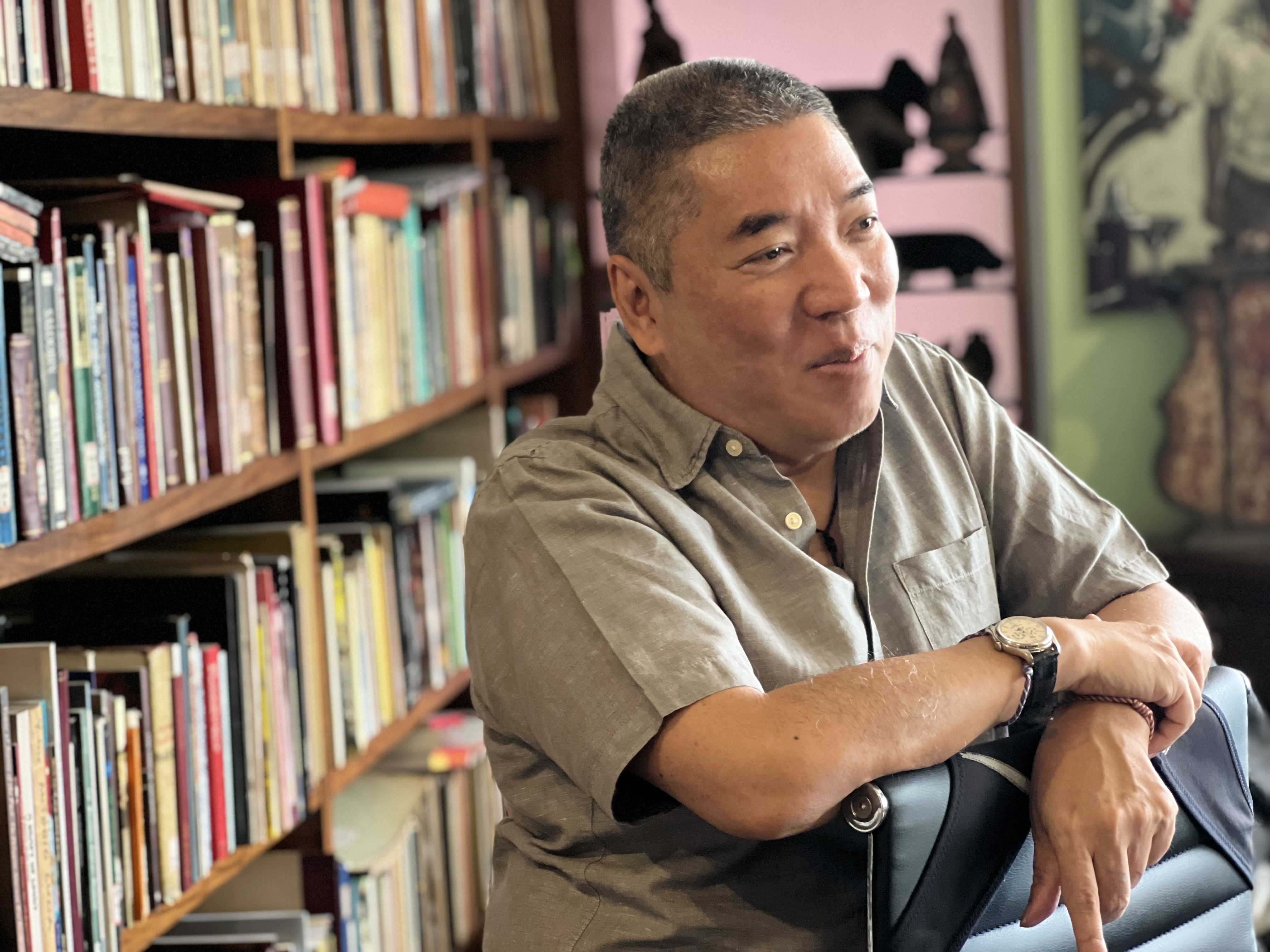
I DON’T know if there’s a Marxist heaven, but if there is, then Dr. Francisco “Dodong” Nemenzo, who passed away recently, must be smiling up there because of the forthcoming launch of his book Notes from the Philippine Underground (UP Press, 2025).

It’s too bad that Dodong won’t be around to see the book and sign copies for his legions of friends and comrades—many of them like my wife Beng, who remember him as a dashing and persuasively articulate professor of Western Thought, despite the Cebuano-accented English he was sometimes laughed at for by the ignorant. He never became my teacher in college, and oddly enough—because I was out of UP Diliman for most of the time he was teaching there—I never really got to know him closely as an activist and ideologue.

I did know him as a boss—he took me in as his Vice President for Public Affairs when he was UP President—and in that capacity I learned to respect and admire him as a man who held firm to his principles while finding practical and effective solutions to UP’s problems. This was especially true of our campaign to revise the outdated UP Charter, which eventually succeeded under President Emerlinda Roman, but which he tenaciously pursued despite the insults of spiteful politicians. 

Throughout his adult life and to the last, Nemenzo remained a professed and unapologetic Marxist—a word that would seem Jurassic in these post-Soviet and Trumpian times, but which he saw and lived in a different light. 

As the preface to his book by Prof. Patricio “Jojo Abinales” explains, “Dodong’s engagement with Marxist theory wasn’t an academic exercise. For him, Marxism was a living, breathing framework—a summons to connect theory to the existing conditions of everyday life. He wasn’t content to theorize from a distance; with a scientific mind, he dug into the realities of Philippine society, always interrogating its dominant ideas, structures, and contradictions. His writings speak to this dual commitment: the rigor of his analysis is matched by an acute sensitivity to the concrete lives of real people whose struggles he sought to illuminate. He distrusted all dogma, and sought to validate all received knowledge.

“Francisco ‘Dodong’ Nemenzo’s life and work resist easy categorization. He was a Marxist thinker, a revolutionary activist, an inspiring academic leader, and a mentor to generations of scholars and radicals. But more than any of these roles, he was a relentless questioner of the world as he found it—and a passionate believer in its potential to be different, if not better.”

Indeed the book shows how sharp, even scathing, Dodong could be in his opinions of how his idea of Marxism remains relevant and useful despite how it has been misused by many of its adherents and misunderstood by its opponents. 

He writes: “We must struggle against their misconception of Marxist theory and practice (e.g., equating Marxism with Stalinism and totalitarianism) and point out that humanism is inherent in the Marxist worldview. Going through the basic documents of Filipino social democratic groups, it is obvious that, even as they try to distance themselves from Marxism, their analysis of present conditions and their historical roots is almost entirely based on a Marxist framework.” 

He acknowledges the flaws and failures of Marxist parties caught up in internal conflicts (Dodong himself was once ordered to be executed by the party he belonged to, ostensibly for treason): “Can people be blamed for suspecting that communists are motivated by cynical calculations of what would bring them tactical advantages? Their loud and monotonous protestations ring hollow in the absence of inner-party democracy. The authoritarian and repressive character of the regimes their comrades established wherever they gained the upper hand reinforced this impression. This stigma they must shake off; otherwise they would remain at the periphery in the continuing struggle for democracy.”

He is not without wry humor. Reflecting on the ultimate folly of a revolution being led by a highly secretive, centralized, and “conspiratorial” party, he notes: “This is difficult to implement in the Philippine cultural milieu. A code of silence—what the Russians call konspiratsiya and the Mafiosi call omerta—is impossible among people who take rumor-mongering as a favorite sport. Our irrepressible transparency is a weakness from one point of view but a virtue from another. Our legendary incapacity to keep secrets is probably the best guarantee that no conspiratorial group can stay in power long enough to consolidate a dictatorship.”

Even for those disinclined or even hostile toward the Left, Notes from the Philippine Underground offers many valuable insights from one of that movement’s “OGs,” in today’s youth-speak. Nemenzo may be highly critical but he remains ultimately hopeful that positive and deep social change will happen, if the Left learns from its mistakes and finds new ways to engage society. Listen:

“There have been many pseudo-united fronts put up by the vanguard party. They consist of party-led mass organizations that simply echo the party line. None ever grew into a genuine united front, although they did attract a few prominent individuals who had no organizational base whatsoever. Other organized groups are often suspicious of the party and wary of being reduced into instruments for policies they do not accept.

“But I know of only three attempts at seriously establishing a real united front in this country: in the immediate postwar period, in the late 1960s, and very recently. They all collapsed because of sectarian methods of work. Sectarianism is the blight of all united front efforts everywhere….

“The Philippine movement has never been able to solve this dilemma. At the very moment when united front structures are set up, rivalries emerged. And intoxicated by short-term successes in expanding their mass organizations, the sectarians eventually prevailed.”

Pluralism, he suggests, is key: “Pluralism is a bourgeois liberal doctrine that ought to be preserved and enriched in the socialist revolution. It is not incompatible with socialism. The tension that arises through political competition would serve as a constant reminder that the party must earn the allegiance of the masses. Of course, no state would tolerate an opposition party that resorts to violent methods and solicits support from foreign powers. But this should never be an excuse for suppressing any opposition.”

Surely there will be blowback from those holding different views; expect the usual howl from UP bashers and red-taggers. But when that happens, even from the grave—or Marxist heaven—Dodong Nemenzo will have sparked the kind of discussion we direly need to find our way forward as a nation.

Qwertyman No. 130: A Family Business

Qwertyman for Monday, January 27, 2025

“The Senate is not a family business,” posted my friend R. on Facebook, and I found myself nodding at what sounded like the patently obvious truth, which somehow seems to still elude our family-oriented countrymen.

Among the loudest alarms raised by the forthcoming midterm election is the likelihood that, once again, Filipino voters will be choosing people with the same surnames to add to what has become, over the decades, a cozy nest of clans. 

It isn’t just the Senate, of course, which is infected with dynastisis. From Congress down to the Sangguniang Kabataan where fledgling politicos learn to tweet, our entire political system has been one big and long-running Family Feud. Husbands, wives, and their kids serve as senator, congressman, governor, mayor, and councilor with utter shamelessness, claiming a form of manifest destiny contestable only by another family.

It’s gotten so bad that—surprise, surprise—Sen. Robinhood Padilla, last accused of doing little on the job but preening his mustache, filed SB 2730 last July against political dynasties (already in our Constitution, but lacking an enabling law). Citing a Harvard study (which always seems to bear more weight than common sense), Padilla said that political dynasties “persist and reproduce their power over time, undermining the effectiveness of institutional reforms in the process.” 

More informatively, Padilla noted that “A dataset of Philippine local elections from 1988 to 2019 showed the number of governors with at least one relative in office (dynasty) increased by almost 39 percentage points, from 41% in 1988 to 80% in 2019. The dynasty proportion of vice governors rose from 18% in 1988 to 68% in 2019. The percentage of mayors in the dynasty increased gradually from 26% in 1988 to 53% in 2019…. Political dynasties, in effect, have exhausted resources to attain economic and political dominance while at the same time compromising political competition and undermining accountability…. It is time to break the barriers preventing the best and the brightest from serving the Filipino people.”

Tell that to the Philippine Senate which, because it has only 24 members, magnifies the prevalence and persistence of dynastisis even more. 

One of the ways the US Senate differs from ours is the way it’s composed, with two senators from each of the 50 US states, which, in their federal system, gives equal weight to giant Texas and tiny Vermont. That should make it highly unlikely for two related people to be in the Senate at the same time, right? Well, sort of. As it turns out, in US history, two pairs of brothers actually served in the Senate together. One pair I’m pretty sure you never heard of—Theodore and Dwight Foster, who simultaneously represented Rhode Island and Massachusetts at the start of the 1800s. The next pairing didn’t happen until more than 150 years later—with Edward and Robert Kennedy representing Massachusetts and New York in the 1960s. 

Our Senate puts America’s to shame in that department. 

It helps, of course, to be related to a President, or to prepare oneself to be one. By my count, there have been five Aquinos in the Senate—Ninoy, Butz, Tessie, Noynoy, and Bam; four Marcoses—Ferdinand, Imelda, Bongbong, and Imee; four Estradas—Joseph, Loi, JV, and Jinggoy; three Roxases—Manuel, Gerry, and Mar; three Osmeñas—Serging, John, and Serge; three Laurels—Jose, Sotero, and Doy; and two Magsaysays—Gene and Jun. “Cong Dadong” Macapagal never became a senator, but his daughter Gloria did. Fidel Ramos’ contribution to the Senate was his sister Letty.

To these presidential surnames we have to add those of other political families such as the Dioknos, Tañadas, Kalaws, Angaras, Guingonas, Antoninos, Rectos, Pimentels, Revillas, Villars, Cayetanos, and possibly Tulfos. The Cebu Osmeñas—John and Sergio, Jr.—once served together in the Seventh Congress in the early 1970s; the Cayetanos—Pia and Alan—followed suit in the Fourteenth, in the late 2000s, and the Villars—Cynthia and Mark—in the current Nineteenth. 

That’s not to say that some members of these political clans were not deserving or distinguished. Many certainly were—in the right hands, a family tradition of public service sets high standards and expectations. Never mind the ancient Fosters, but I don’t think America minded having Ted and Bobby Kennedy in the Senate, with Ted serving continuously for an astounding 47 years until he died.

They have no term limits in America. We imposed ours in the 1987 Constitution—a well-meaning gesture meant to democratize our legislature, but which backfired and produced exactly what it wanted to avoid. Our political families quickly learned to adjust and do a merry-go-round, ensuring further that one member or other would occupy all spots in the wheel. What developed over the years was less a revitalization of the institution with bright new talents than a pooling and coagulation of old blood. 

So rather than an anti-dynasty law which seems to have little chance of passing a House full of dynasties anyway, perhaps we should revisit term limits, so we can retain the services of truly outstanding senators (like Franklin Drilon, for example) for life, rather than punish ourselves by replacing them with inferior siblings and cousins. 

There are and have been high-performing senators whom we don’t and shouldn’t mind serving over and over again, politicians with genuine and critical advocacies they have devoted their lives to. Our political history has been fortunate to have seen the likes of such men and women as Senators Claro M. Recto, Jose Diokno, Lorenzo Tañada, Raul Manglapus, Emmanuel Pelaez, Helena Benitez, Eva Estrada Kalaw, Juan Flavier, Rene Saguisag, Miriam Defensor Santiago, and Edgardo Angara, just to speak of the departed.

Sadly our political realities preclude the truly poor from winning a Senate seat, and only extraordinary circumstances like EDSA can lift up capable and virtuous candidates of modest means such as Dr. Juan Flavier and Atty. Rene Saguisag to that exalted position. But their interests can be articulated and defended by men and women with the capacity and quality of mind and spirit to see beyond themselves. These are senators whom we expect to make laws that build a nation, rather than empower and enrich themselves and their progeny even further.

Qwertyman No. 129: The Punishment Theory

Qwertyman for Monday, January 20, 2025

LOS ANGELES is burning as we speak, with raging fires consuming an area larger than the whole of San Francisco—or, in our terms, about seven times the size of Makati. I’m sure you’ve been just as horrified—and, let’s admit it, mesmerized—by the TV coverage showing huge swaths of what used to be thriving California communities crumbling in flames. 

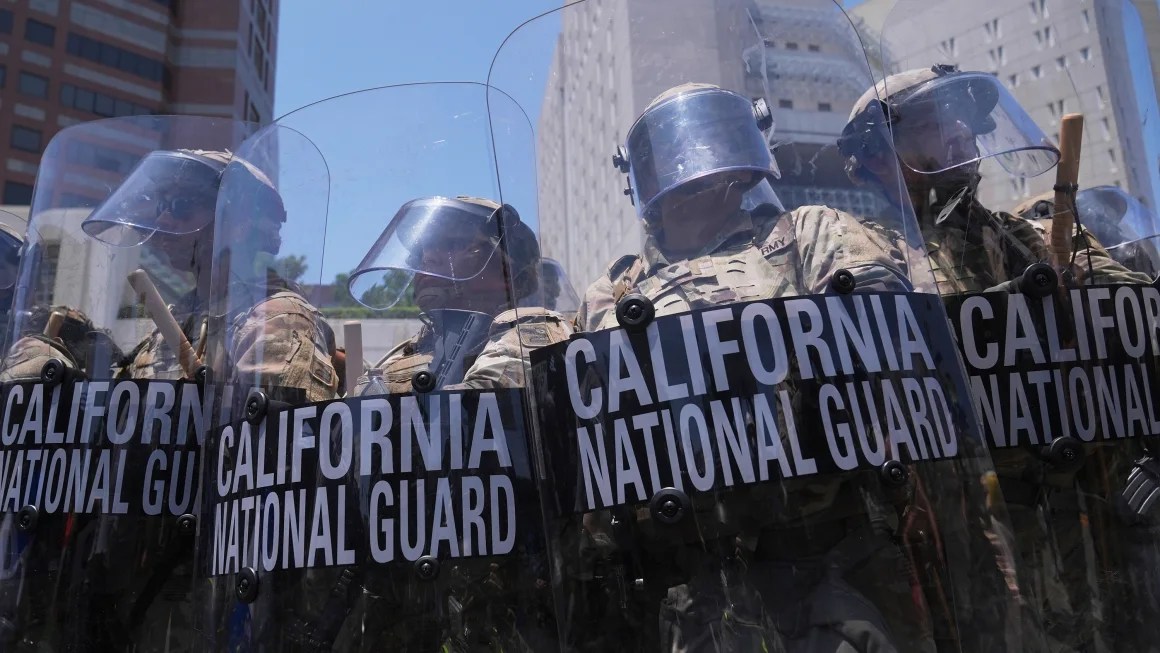
Particularly compelling for onlookers is the awareness that many of those homes belong to Hollywood’s elite—people with millions of followers on social media but who, in their moments of personal distress (as in their divorces and run-ins with the law), often find it difficult to generate genuine sympathy. Not necessarily meaning to be unkind, pedestrians like us like to see the mighty (or their houses) falling; misery is a great democratizer. Even as the mansions of the rich go up in smoke, our first urge is to think that (a) they can always afford to build a new one, followed by (b) they’re just being punished for something they did wrong.

Indeed the “punishment theory” for the Great LA Fire has gained a lot of traction in social media, both within and outside the US. In Middle Eastern media, the fire was quickly seen as divine retribution for America’s support to Israel’s destruction of Gaza. As one Qatari journalist wrote, “The American aid squandered by the occupation [i.e., by Israel] in its Gaza war amounted to about $60 billion. The damage caused by the recent US fires has reached about $150 billion. Trump said a few days ago that he will bring hell upon the region, yet hell has arrived in the heart of the US, with hundreds of thousands of Americans displaced and thousands of homes and mansions lost. I trust in the vengeance and in the victory of the One and Only Almighty God.”

Not at all, said others—the fire had nothing to do with Israel but with Los Angeles, indeed California, itself. Again invoking the Almighty, Christian evangelicals rushed to proclaim the disaster “God’s punishment” for liberal licentiousness and its adherence to the false religion of “wokeness.” For being the land of hippies, Democrats, legalized marijuana, and Hollywood, California was now being chastised by an angry God. (Don’t believe it? Check Genesis 19:24-25Amos 4:6-11—sayeth the FB and Reddit faithful. I myself suspect that if God was fair and a keen follower of American politics, he would’ve swept Mar-a-Lago away in a tsunami or a hurricane. But then I believe in an indifferent God who doesn’t take sides in wars or football games.)

Whatever, there seems to be a palpable compulsion here to go and punish the wicked, who have only themselves to blame for their calamities. Never mind that the fire has ravaged both Democrats and Republicans, blacks and whites, Christians and Muslims, Asians and Europeans, rich and poor. To those outside looking in, it’s the “other” whose tragedy we celebrate, with the innocents as collateral damage.

The word often trotted out in these situations is that old German standby, “Schadenfreude,” meaning the delight we take in the misfortunes of others. It’s all over social media when you read about the LA fires, almost to the point of gleefulness over a kind of divine justice befalling the deserving (most notably, that of a fellow named Keith Wasserman—an Elon Musk fan and Cybertruck owner who had railed against paying higher taxes, and was now begging for private firemen to save his home). 

Of course, there’s nothing like crisis to bring out both the best and the worst in people, from heroes to heels. Harder to read and more difficult to assess than these extremes is the slow and steady burn—rather than the raging inferno—in our societies.

All this talk of retribution leads me to an odd and totally unscientific theory about people. I wonder if, in fact, there’s a more proactive form of Schadenfreude that goes well beyond a smug snicker at the missteps of the perceived elite to an active courtship of their downfall.

I’m speaking not as a political scientist or sociologist, neither of which I am, but as a sometime playwright who likes to look into the darkest and strangest of human motivations. That’s normally the job of psychologists, for whom I have a healthy respect, but if psychologists could put all their patients together in a room and find a way to make sense of their nightlong chatter, then we playwrights and fictionists would be out of business.

Here’s how it goes: 

We get bad laws like the pork-laden GAA because we elect bad lawmakers. And we elect bad lawmakers because we fancy that voting for people we think we know (like entertainers and dynasts) makes us matter. With the vote being the only utterance left to the voiceless citizen, choosing the familiar becomes an act of assertion, of participation in national affairs. “He may be a lousy leader, but I put him there.” Call it the revenge of the bobotante, a term we Pinoys coined for supposedly ignorant or forgetful voters. My theory is, they’re more cunning and deliberate than we think.

Many MAGA voters didn’t so much vote for Trump the man as for the grievances they bore that he had the smarts to amplify and articulate. A convicted felon, habitual liar, bully, and egomaniac, Trump was after all the very antithesis of the righteous and virtuous leadership that evangelicals especially like to uphold (not that they don’t have their own crooks and pervs in their uppermost echelons). If they were true to themselves, even his most ardent supporters would have acknowledged—and looked past—his monstrously obvious character flaws.

They voted for him nonetheless, because—on top of the price of gas and groceries—he embraced and legitimized their consternation and disgust with a world gone far beyond their comfort zone, peopled by neighbors who don’t speak English, who have sex with the same pronouns, who kill their babies, and who run races against runners with different genitals (and go to their bathrooms). How could Donald J. Trump be worse than these? 

Today DJT takes his oath as America’s 47th, as Los Angeles continues to burn. I wonder who is being punished for what.

Qwertyman No. 128: Been There, Done That

Qwertyman for Monday, January 13, 2025

I WAS trying my best to sound sober and diplomatic in last week’s column about Donald Trump’s impending return to the presidency of the world’s most powerful country, the United States of America, due to happen next Monday. I was still vacationing with family in California then, and didn’t want to get into an argument with some Americans (and Fil-Ams) who would’ve sent me packing home the moment they heard me raising a stink about their Chosen One.

The fact is—whether out of deference to my liberalism or just because of fatigue—few people I spoke with, whether from the left or right, seemed eager to talk about Trump, and it’s something I fully understand, and even appreciate. You can only hear and make so much commentary, most or all of which, at day’s end, will amount to nothing, except for more bruised or broken friendships.

Typical was a friend’s reaction from San Francisco: “Shrinking my world in the next four years to just my family and like-minded friends. (Just text me when the war has started!)”

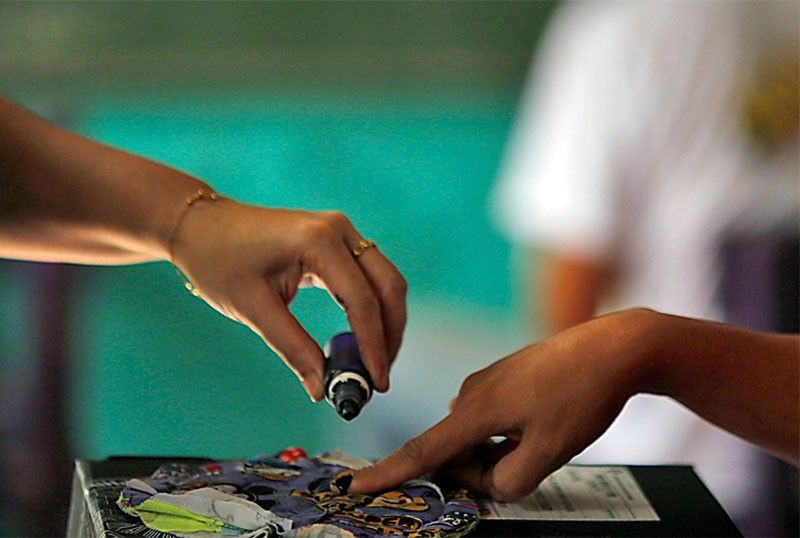
I remembered what it was like in 2022 when our presidential candidate—who seemed (and was) superior to the alternative on all counts except financial capability—lost, and how distraught and upset we were, convinced that, surely, massive fraud accounted for her defeat. Even then, I opined—unpopularly, for sure—that despite the ever-present likelihood as in all Philippine elections that some electoral sleight-of-hand had taken place, more Filipino voters preferred the winner for their own reasons, disinformation and all. 

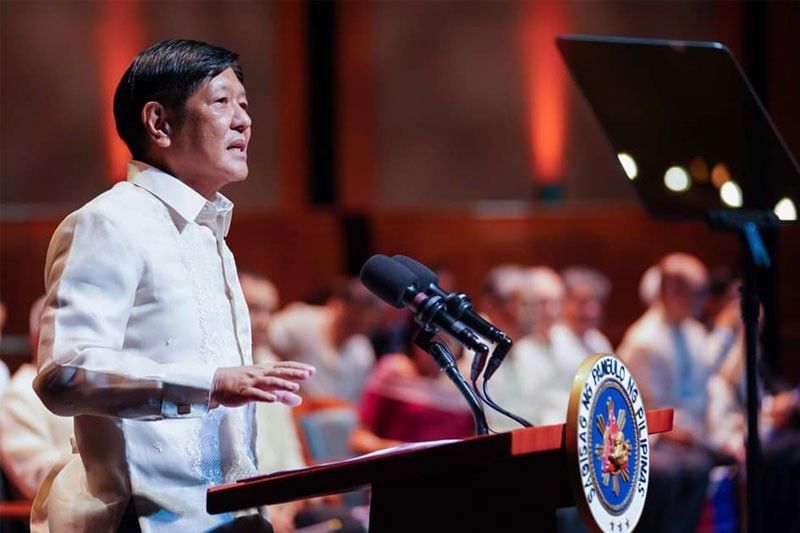
We’ve been living with and under that winner for almost three years now—and, perhaps surprisingly, we’ve all survived so far; the sky hasn’t fallen—yet. I did say then, like many other observers, that BBM was facing a fork in the road: to continue down the path to perdition that his parents took, or to boldly go up the hill of redemption. “Redemption” might not necessarily mean a full-blown admission of guilt in exchange for forgiveness of sins, or even the restitution of ill-gotten wealth, although all of the above would have been ideal if well-nigh impossible. I think most of us would have been pleasantly surprised if he simply led an honest, just, and competent administration, which is what all of us have been praying for.

Almost halfway through his term, has any of that happened? Which path did BBM choose? Is it possible that he has been straddling both, or hopping from one to the other? Very interestingly, both in the US and here at home, I’ve been asked a lot of questions about BBM, and what I’ve told people is this: 

He’s made some very popular decisions, which has raised his acceptance if not approval among many; but he continues to run fast and loose with the way public money is used, seriously undermining whatever credibility he’s been building up. His positions on tokhang, China, and POGOs have generally gone over well (although criticisms persist that extrajudicial killings and political imprisonment have continued). Perhaps above all, he has politically profited immensely from his war with the Dutertes, deftly positioning himself as sober and presidential versus the theatrics and the crudity of the Dutertes, who have done themselves no favors. 

On the other hand, neither has the Marcos administration endeared itself to the people by brazenly abusing its fiscal authority with the problematic Maharlika Fund and its diversion of key departmental budgets into an election-year pork barrel for lawmakers. Just when you thought it had miraculously gotten its ethical notions right, the old wolf bares a greedy fang or two and reminds us that old habits die hard.

Which brings me back to America and its expectations of Trump 2.0. Unlike BBM who can at least claim a generation’s distance from his father, Donald Trump has only himself to be compared with, and anyone hoping to see a more sensible, more contemplative, and more compassionate Trump enter the White House after he won over the truly sensible, contemplative, and compassionate Kamala Harris is in for a rude reminder of the man America spat out in 2020. 

In the weeks before his second inauguration, the President-elect has already threatened to pressure Denmark into selling Greenland to the US, punish its closest neighbors Canada and Mexico with crippling tariffs, rename the Gulf of Mexico into the Gulf of America, and repossess the Panama Canal. As a Fil-Am friend of mine in Georgia says, “It’s like hiring a CEO to turn our ailing and cash-strapped business around, and on his first week he tells us his strategy is to buy three companies and rename our firm.” An old Turkish proverb puts it more colorfully: “When a clown moves into the palace, he doesn’t become a king. The palace becomes a circus.”

The lunacy of Trump’s ideas would be hilarious if he weren’t who he is, a man whose every fart is now taken as God’s own wisdom by his retinue of quaking sycophants. As a man incapable of accepting criticism and prone to doubling down on the certifiably wrong, President Trump will run his government as he is ruled by his ego, and for the sake of our relatives and friends in that country, we can only pray that America emerges whole and healthy enough in 2028 to find its way back to sanity and decency.

On Monday next, when the inmates officially take over the asylum in Washington, DC, we Pinoys will be watching with the smugness of people who’ve been there and done that. We have our own pot of troubles to worry about, our own idiots and idiocies to deal with—like our propensity to force people with the same surnames, grade-school diplomas, and missing morals to become Senators of the Republic. So help us God.

(Photo from msn.com)