Penman No. 72: Martial Law in Three Filipino Novels

KillingPenman for Monday, November 11, 2013 

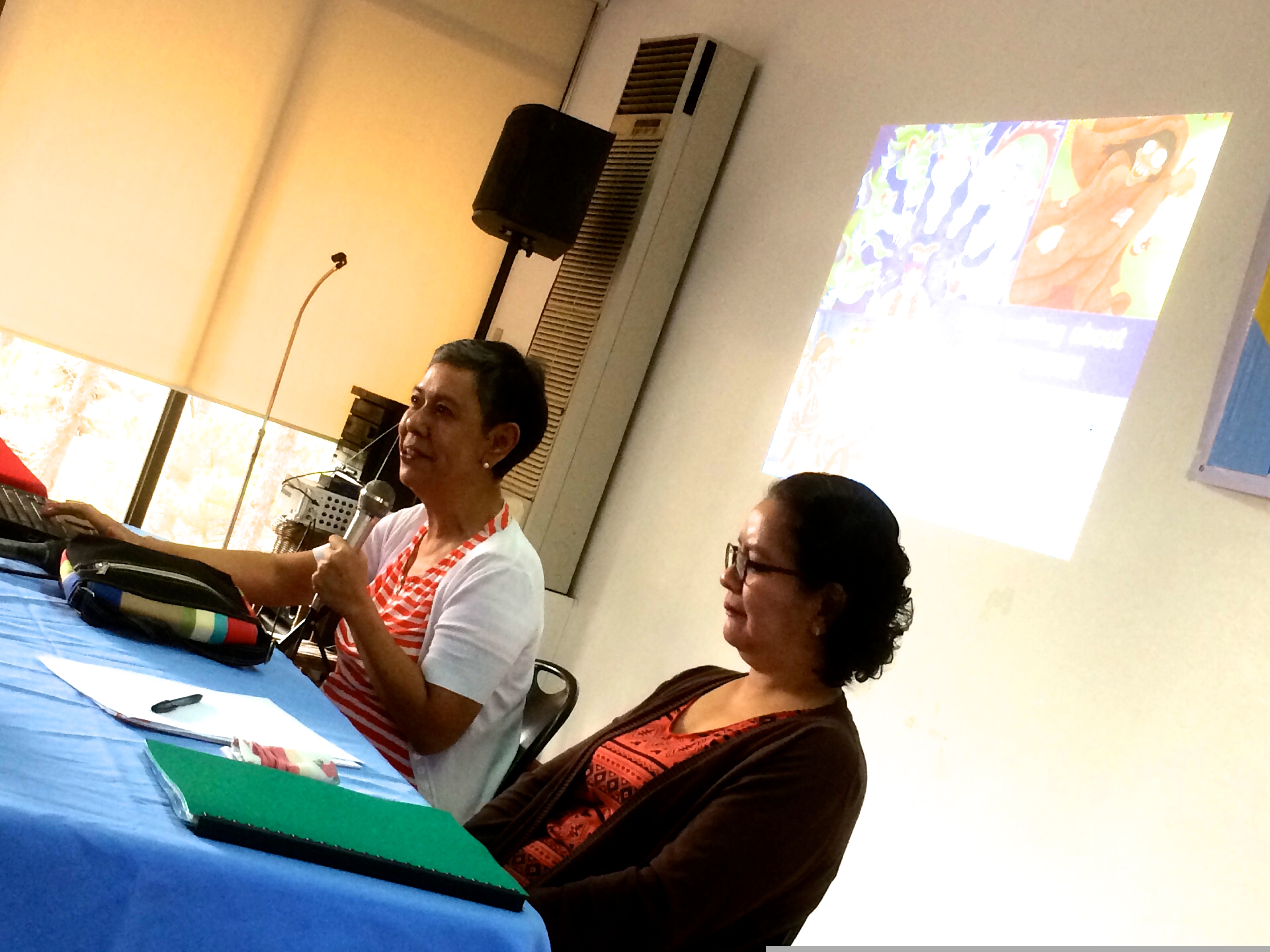
LATE LAST month, I flew down to Davao for a group organized by the chair of the National Historical Commission of the Philippines, Dr. Maris Diokno, for a roundtable discussion on narratives of martial law. The Martial Law Historical Advisory Committee, created by Administrative Order No. 30, had been tasked to collect, evaluate, and preserve documentary and other materials pertaining to the Philippine martial law experience, and this roundtable was an early but vital stage of that process, a thinking-through of basic assumptions and expectations from participants in and scholars of that period.

I was invited not only because of my activist background and imprisonment under martial law, but because I’ve written a novel and some stories about it, and will write yet more—a nonfiction oral history of the First Quarter Storm, for which I’ve been given a grant by the NHCP. I’ll say more about this project in a forthcoming column, but in the meanwhile, let me share excerpts from a brief think piece that I contributed to the Davao roundtable (which, incidentally, was both insightful and moving, attended by the likes of martial law veterans Joy Jopson Kintanar and Judge Meinrado Paredes, as well as younger scholars and writers Leloy Claudio and Roby Alampay). Here’s what I wrote:

In his review in Philippine Studies of Azucena Grajo Uranza’s Bamboo in the Wind—one of the first and few novels to have dealt with our martial-law experience—Fr. Joseph Galdon quoted another writer, Linda Ty-Casper, who wrote that:

Literature is one way [by which] history, which too often reduces life to dates and events, can animate life so that man is returned to the center of human existence. It is man, after all, not nations, who feels the hunger caused by economic recessions and market fluctuations, who suffers separations and dislocations from social upheavals, who catches the bullets and bombs of war. It is in man’s flesh and bones that the events of history are etched. Individuals die, while their country goes on. It is in literature that generations of images representing man are preserved. It is in literature that we can recover again and again the promise of our resurrection. It is the house of our flesh in which we can refresh, restore and reincarnate ourselves.

I’m beginning with this quotation because I’d like to suggest that, in some ways, the best way to remind Filipinos and to make sense of what happened to them under martial law is through fiction rather than factual narrative, because fiction requires and creates a wholeness of human experience. Young Filipinos, especially, need to see martial law as a story—a continuing story with consequences reaching into their generation and even the next.

Considering that the Marcos era lasted more than 20 years—from his first election in 1965 to his forced departure in 1986—it’s a bit surprising that not too many Filipino novels have been written about Marcos and martial law. (I should immediately qualify this statement by saying that, actually, not too many Filipino novels have been written, period. As a literary form, the novel—whether in English or Filipino—has never been our strong suit, unlike the Indians and the Chinese.) You would expect that martial law, in particular, would have left a thick scar or welt on our literary consciousness and imagination, in the same way that many survivors of martial-law prison were plagued by intense, recurring nightmares long after their incarceration. In fact, however, we have barely dealt with it in our literature, and if our children today know little if anything at all about martial law, it is because we have not written enough about it, and have left the little that we have written out of the curriculum.

Online can be found two very interesting and fairly comprehensive listings and discussions of the literature we have produced on our martial law and martial law-related experience. The first is a lecture delivered by the writer Edgardo Maranan in London’s School of Oriental and African Studies in 1999 and published by the site Our Own Voice in 2007, titled “Against the Dying of the Light: The Filipino Writer and Martial Law.” The second is a reading list compiled by a blogger and bibliophile who calls himself “rise.” Both lists contain and discuss works of fiction, poetry and nonfiction produced during and after martial law, material that now generally falls under the rubric of “protest literature.”

Understandably perhaps, it takes time, will, and bit of distance to process—with the benefit of hindsight and a freer imagination—a traumatic experience like martial law. In my case, it took nearly 20 years after my imprisonment to try and make sense of it in a novel. I’m not even sure, at the end of things, if I succeeded. But it’s important in any case to make the effort—for our creative writers to inscribe their own history of our political and social experience—because the writerly imagination is a powerfully intuitive tool for sense-making. Creative writing is integrative, rather than analytical; it puts things together, rather than taking them apart, as scholarship and criticism tend to do.

Today, I’ll focus on how three novels—I’m immodestly including mine—have represented our martial law experience in its various aspects. At least one of these three novels—two in English and one in Filipino—would be how our students today encounter, if at all, martial law and its causes and effects. The novels I am referring to are Dekada ’70 by Lualhati Bautista, first published in 1988; Bamboo in the Wind by Azucena Grajo Uranza (1990); and Killing Time in a Warm Place by myself (1992).

What the three novels share most strongly is a narrative of how martial law came about and what its immediate effects were. Of the three, Dekada ’70 offers the broadest sweep of things, covering the whole decade as it follows the individual paths that the members of the Bartolome family take. It is also the most unabashedly didactic, presenting long and detailed expositions of the political situation obtaining at that time, an approach that literary aesthetes might find too direct but which, when you think of it, is probably the only explanation young readers will have of an episode that to them might as well be ancient history.

All three novels are basically grounded in the specific experience of the middle class, taking note of its bright-eyed idealism and yet also its vulnerability to vacillation and co-optation. In this respect, Bamboo in the Wind attempts to cover the broadest ground, reaching across the social spectrum to present the plight of peasants under feudal tenancy as well as to display the clannishness of the elite. It ends just after the declaration of martial law, on the portentous note that “It was going to be a long night,” as indeed martial law would be, for the next decade.

My semi-autobiographical first novel Killing Time in a Warm Place is focused on the person and the growth of its narrator, Noel Bulaong, who has provincial roots but grows up in Manila, studies in UP, becomes an activist, is imprisoned under martial law, and then, upon his release, joins the government service as a propagandist no less; faithless, loveless, and friendless, he leaves for the United States to study and live there, coming home only for the death of his father, where the novel begins. Of the three novels, it is the most personal, although Dekada ’70 can also be read as Amanda’s story, the making of a feminist in the crucible of political and personal turmoil.

To my mind, the most important contribution these three novels make to the discourse on martial law is not even and not only their depiction of the horrors and excesses of martial law—the obligatory scenes, you might say, the arrests, the tortures, the rapes, the thievery, the brute exercise of State power over the people. It is their exploration of the element of collusion and complicity—of how we, in a sense, allowed ourselves to be ruled by a regime that promised peace and progress for the price of a little national discipline.

In Dekada ’70, Julian Bartolome Sr. gives the regime every benefit of the doubt, convincing himself of the government’s good intentions, despite Julian Jr.’s deepening involvement in the Left. In Killing Time, Noel Bulaong does a 180-degree turn and joins the dark side—an acrobatic maneuver that many former activists, including me myself, performed, caught in a bipolar world. Having left the Left, it seemed that one had little choice but to cast one’s lot with the Right, and it’s no surprise that many ex-activists became the sharpest thinkers and most active doers of Marcos, Cory Aquino, Ramos, Estrada, and Arroyo. Bamboo in the Wind delves into how martial law benefited the elite, especially those factions that sided with the regime, and how it sought to corrupt intellectuals with progressive inclinations. In other ways, these novels speak of guilt and redemption, of how we are defined by family and class, of abject betrayal and astounding heroism.

These novels are far from perfect, and we can argue all day about what they failed to say and how they may have misrepresented this and that. But writing and promoting works of fiction like them may yet be the best way we can remind our people, especially this “selfie” generation, of the fact of martial law in the Philippines, and of its continuing legacy.

Penman No. 71: Writers on Retreat

Penman for Monday, November 4, 2013

BY WHICH I don’t mean writers pulling back or running scared (for which, to be persnickety about it, the prepositional phrase should be “in retreat”), but rather writers doing something they need to do every now and then, if they are to produce more noteworthy novels, poems, and plays—recharge, rewind, recover, then write and rewrite, preferably in some form of isolation or seclusion.

As I reported last week, I went with a small group of writers and friends down to Palawan on the first Adverbum Retreat for Writers organized by the Chicago-based Almira Astudillo-Gilles. We stayed at Ambrosia, The Amazing Villa (which, as it turned out, is just past Puerto Princesa in Sitio Bubusawin in Barangay Apurawan, in the municipality of Aborlan), run by Herwig Gielen and his wife Theresa. The idea was to give writers some R&R while they worked on their current projects, and in this case it was in a place remote enough that we were out of text, email, and Internet contact for a week (except for literally a few moments, twice, when we drove out to another barangay and sailed out to a point about 30 minutes offshore to catch a weak cellular signal and a few messages).

Writers’ retreats—some private and personal, some institutional—have had a long and colorful history. The Huffington Post’s UK edition has a list of 19 of the more unique ones, including a rotating hut that George Bernard Shaw built in the bottom of his garden near Hertfordshire; Dylan Thomas had a boat house in Wales, Virginia Woolf a hut in Sussex, J. K. Rowling her Edinburgh café, and George Orwell a house on a remote Scottish island. And Henry David Thoreau, of course, had Walden Pond.

Rowling’s caffeinated sequestration aside, modern retreats have evolved into much more sociable residencies, where not just one but several writers inhabit a home together for some time, each with his or her own space to work on an individual project. This setup acknowledges the fact that, in most cases, writers need not only to write but also to talk, preferably with fellow writers who understand what the whole fuss over words and ideas is all about, if only for an hour or two each day before each one slinks back into his or her own burrow.

While they may engage groups of writers, a writers’ retreat or residency isn’t like a workshop, where the focus is on helping younger and newer writers with matters of craft and other professional concerns. A residency is a gathering of peers, and while socialization is encouraged, privacy is respected, and no detailed reports or submission of outputs is expected, on the understanding that mature artists will proceed and produce at their own pace, without need of overbearing guidance or monitoring.

I’ve been privileged to attend a few of these residencies—which, until we had Adverbum in Palawan, were all overseas. One of the most popular ones (at least among writers) was the Hawthornden International Retreat for Writers in Lasswade, Midlothian, Scotland, about 45 minutes by bus out of Edinburgh. More than a dozen Filipino writers have now gone to Hawthornden over the past 20 years, including the likes of Krip Yuson, Ricky de Ungria, Danton Remoto, Marj Evasco, Rofel Brion, and Eric Gamalinda, and, among the younger ones, Sarge Lacuesta, Mia Gonzalez, and Chingbee Cruz.

I went to Hawthornden in 1994, thanks to a British Council grant (you have to apply directly to Hawthornden for a fellowship, which covers board and lodging in the 15th-century castle, but it used to be, in pre-recessionary days, that the British Council provided funds for the round-trip fare). The castle has several rooms for residents, each named after a famous writer (I stayed, I think, in “Boswell”), and you get your name inscribed on that room’s door once you submit the published proof of your work after your residency. The fellowship lasts for about four weeks, and you share the castle over that period with three or four other writers from around the world. There may be more staff than fellows at any given time, and the only time you meet the others is at 6 pm, when you “foregather” for sherry before dinner. Breakfast is at your own time and pace, and lunch (usually a generous sandwich and lentil soup) is served on a tray at your door, as if you were in some exclusive prison. (There is, in fact, a dungeon-like prison beneath the tower, but thankfully no writers have had to stay there; another of Hawthornden’s features is its proximity to Rosslyn Chapel, recently made famous by The Da Vinci Code, which had yet to be written when we were visiting it.)

Rather more opulent were two other residencies I later attended in Italy: the Rockefeller Foundation’s Bellagio Center in northern Italy, near Como and Milan, in 2002, and Civitella Ranieri in 2011. Bellagio was a medieval palace turned into a villa and a haven for artists and scholars by the Rockefeller Foundation, and today it offers residencies to a broad range of academics, artists, and professionals. When I went there to work on Soledad’s Sister, my fellow fellows comprised an American architect, a Russian pianist, a British Bible scholar, a South African novelist, and a South African arms expert, among others. The batches in Bellagio were much bigger, at about ten to a dozen per month-long batch. Like Hawthornden, what it took was an application consisting largely of a proposal for a work-in-progress, and samples of one’s past work. (I should add that I failed on my first application, but made it on my second try, so nothing is ever guaranteed with these things.) Many Filipinos have also gone to Bellagio—among them F. Sionil Jose, and many in the Hawthornden group, the usual suspects—including non-artists such as lawyer Raul Pangalangan; next year, fictionist Menchu Sarmiento will be going there to work on a new book of stories.

Civitella Ranieri is another medieval castle in Umbria, just outside Perugia, but here admission is by invitation only, and it’s limited to artists (writers, painters, musicians, dancers, filmmakers, and so on). Among other Filipinos, poet Mark Cayanan and novelist Miguel Syjuco were Civitella fellows this year, preceded by artist Lan Tuazon (2012), writer Gina Apostol (2009), and musicians Chino Toledo (2004) and Ramon Santos (1999).

How productive can one get in these places? I suppose it depends on your own work habits and, in a sense, on the setup of the place and the fellowship itself. I hate to admit this as a digital junkie, but I produced the most work—four new stories and a short novel in a month—when I was offline in Hawthornden, having gone there in pre-digital times; I did write “Penmanship” on a 286-SX laptop and a floppy disk, but otherwise had no cellphone or wifi to distract me. Bellagio was good for a few chapters, but the villa’s intensely social schedule (and the overpowering beauty of the scenery) proved surprisingly less than ideal for sustained work. Civitella Ranieri resulted in 30,000 words of new fiction and final revisions on a book of poetry. And Palawan? I did final revisions on a biography, and edited several chapters for a friend’s book of travel essays.

Could I have gotten all this new work done at home, in the boonies of Diliman? Maybe. But distance strangely provides more clarity and urgency to things we take for granted in too-familiar surroundings, and a lake or an ocean to view outside one’s window can only help the imagination and refresh both body and spirit.

LET ME take this opportunity to acknowledge and to thank another of our Palawan sponsors, aside from Cebu Pacific—the Hotel Centro in downtown Puerto Princesa, where we stayed for the final night of our getaway. I’ve been to Puerto often, and can say that this new 111-room hotel is one of the city’s finest, located close to its most important locations. The rooms are clean and well-furnished, with free wifi (a godsend after a week’s digital dieting), and a very attentive staff who can also arrange special package tours around the city and Honda Bay and to the Underground River for you. The Sicily Bar on the fifth floor is set up for meetings and conferences. We had a sumptuous poolside dinner under a tent, a perfect point of re-entry to urban living after a week of sylvan solitude. Check them out at www.hotelcentro.ph for more details and reservations.

Flotsam & Jetsam No. 33: My Trusty Merrells

SINCE MY daughter Demi bought them for me a year ago, these trusty Merrells have now taken me everywhere, from Michigan to Manila to Melbourne. They started out feeling tight and stiff but have softened nicely without being too cushy. They’ve also taken me on hundreds of kilometers of walks that have lost me a few dozen pounds (no kidding). Here they are in a brook in Palawan (I got them wet in the ocean not too long after).

Penman No. 70: Digital Detox and Ambrosia in Puerto Princesa

Penman for Monday, October 28, 2013

AFTER MORE than 20 years of being a digital junkie—usually traveling with nothing less than a Macbook Air, an iPhone, an iPad mini, a standby dual-SIM Nokia, sometimes a Nikon DSLR, two digital voice recorders, and a boatload of spare chargers and batteries—I never thought the day (much less the week) would come when I could pretty much do away with the cellular phone and the Internet.

But very recently, it happened—thanks to a writers’ retreat organized by a tirelessly dedicated Fil-Am writer and hosted by two of the most wonderful and interesting people I’ve ever met. (If this normally reserved writer runs out of superlatives this week, it will be for good reason.)

Almira Astudillo-Gilles has two master’s degrees and a PhD in Sociology, and could have been set for life working in business or academia, but she’s chosen the prickly path of creative writing to find another form of fulfillment. Having published a prizewinning book for children and a novel set in the Philippines, among other works, Almi—whom I met last year at the Philippine Studies conference in Michigan—put her mind to establishing a restful retreat for writers in need of a little solitude to recharge and to get some new work done. Marshaling her organizational resources and with the help of some private and institutional sponsors, Almi led our group to the first Adverbum Retreat for Writers at a hillside villa in Palawan.

IMG_4458

In the group, aside from Almi and myself, were writers Edgardo Maranan, Ricardo de Ungria, and Jhoanna Lynn Cruz, and guests Joel Tan-Torres and his daughter Marjette, who had writing projects of their own; my wife Beng, of course, was with us, bringing her drawing and painting kits along.

The hillside villa is about 1 ½ hours by van from downtown Puerto Princesa, way past Iwahig and a little beyond Napsan, on a road that alternates between patches of smooth concrete and gravel the size of pomelos. (Technically speaking, the villa is just out of Puerto, in Sitio Bubusawin, Barangay Apurawan, municipality of Aborlan. You’d have to remember that Puerto Princesa is the country’s largest city in terms of land area, at almost 254,000 hectares, a bit larger than Davao.) If you’re looking for city comforts, go no farther than the new Robinson’s mall downtown.

I’d have to say that, as a certified metrophile and mall rat, I was daunted and distressed by the villa’s promise of a complete “digital detox—guaranteed NO Internet and NO cellular connection”; I hadn’t gone offline for more than a day in years. I’m not on Facebook, but I check out eBay, PhilMUG, and the news a dozen times a day, and with four book projects in the works, I felt like I was about to vanish into the dark side of the moon. I was placated only by the promise that, should the isolation prove intolerable, we could get a cellphone signal by venturing out farther into the boonies or on the water. And probably worse than the digital detox, I’m a self-described culinary philistine who hates cheese and anything vaguely Frenchy and who thrives on canned sardines and instant noodles; the prospect of being fed fresh vegetables spiced up by offerings from the backyard herb garden sent me into a panic, so I stocked up on ramen and chocolates at the grocery before boarding the van to the villa.

As it turned out, and to my own great surprise, my fears and anxieties proved largely groundless. The detox was made easier by the loveliness of the villa itself—a symphony in wood and stone, perched on a hillside overlooking a long trackless curve of beach and ocean (the silken beach alone would make you wonder why you’d need to go to crowded Boracay), under the shadow of cloud-enshrouded mountains. More than the place, we were relaxed by its owners—a Filipino-Belgian couple whose love for one another and for life itself is manifest in the way they keep their villa and feed and treat their guests.

Gielens

Theresa Juguan is a livewire, a brilliantly imaginative chef who may not have been born with a silver spoon in her mouth but who more than made up for the lack of privilege and opportunity with pluck, inspiration, and a single-minded determination to show the world just how good she could be. Theresa trained as a midwife, but discovered that she had a gift for baking, and was soon delivering fresh loaves and cupcakes instead of babies. The baking led to cooking, which she does with a liberal dash of the herbs she grows in her garden and, she says, “with emotion.”

Unlike most chefs we watch on TV, she doesn’t feel the need to taste what she’s cooking every five minutes or so; she knows in her bones, she says, how the dish will turn out. One guest remarked on the exquisiteness of her pork, which she had served him untasted; she doesn’t eat pork herself and can barely touch it. During our stay, we were served such seemingly simple but delectable creations made with crayfish, octopus, spring rolls, chapatti, and free-range chicken, most of it prepared with as little salt as possible, if any, to let the natural flavors of the ingredients pop.

Theresa also happens to be a talented and impeccably tasteful architect and interior designer, having designed and laid out the villa pretty much by herself. The very first thing that greets visitors to the villa is a striking trellis from which hair-like roots hang like a diaphanous pink curtain.

Her Belgian husband Herwig Gielen—you can call him “Gilles” (pronounced JIL)—was a businessman in the Philippines who one day found himself facing a very irate and demanding client—Theresa—and who was immediately captivated by her gutsiness, very much unlike the sweet, docile, marriageable types that expats like him tended to meet. If Theresa is an earth-goddess type, Gilles is a lanky, amiable god, indeed more shepherd than deity, in the attention he devotes not only to his wife and to the villa but to every small detail that will enhance the guest’s experience, from the virgin coconut oil and citronella concoction he prepares against insects and their bites to the ice for their cocktails and the generator that lights the place up after sundown.

As if the place needed yet another secret charm, you might get to meet Theresa’s five-year-old granddaughter Zanique (Theresa had been widowed before meeting Gilles), whom Beng and I instantly fell for like tipsy dominoes. She doesn’t talk much, preferring the company of her lola and her pet puppy Nitro, but she loves to draw and, not surprisingly, to cook, imbibing Theresa’s mastery of the kitchen.

Surprisingly, after being in operation for a couple of years, the Gielens had never really come around to finding a real name for their place—a visitor called it an “amazing villa” and the name (entirely true) stuck—but they took advantage of the presence of so many writers to cast about for another name, and my suggestion (ahem) was deemed acceptable: henceforth, this corner of Eden will be called Ambrosia, The Amazing Villa, after ambrosia, the food of the gods.

And let me thank Cebu Pacific for sponsoring the flights of the writers on this retreat (some members of the group, including Beng, paid their way through for the presumptive privilege of our company, and we think this can be a model for future workshop-retreats where aspiring or non-professional writers can spend some time and discuss their work with the pros). Since Beng and I are hopelessly footloose but can afford little more than budget fares, we’ve been traipsing all around Asia on one Cebu Pacific promo or other and I’ve been writing regularly about these trips and flights, but the Palawan trip was the first time I actually got a free ticket from CP. When our flight back to Manila was delayed for four hours by maintenance work on NAIA’s radar and runway congestion, Cebu Pac handed out packed lunches to the waiting passengers—nothing on the level of Theresa’s gourmet creations, but welcome nonetheless.

I’ll talk more about the retreat itself and about another place in Puerto well worth visiting—the new Hotel Centro downtown—in a forthcoming column. In the meanwhile, you can check out the Gielens’ place here and here (and you can write Gilles at herwiggielen@yahoo.com for more information—they have a home in downtown Puerto and attend to their email there; do give them some time to respond, as they may be away at the villa).

All I can add is, when my iPhone began chirping back to life on the road back in Iwahig, I felt a deep pang of regret; my message-less and therefore trouble-free week was over. Bon appetit!

Penman No. 69: The Girl with the Ukulele and Other Random Jottings

IMG_0021Penman for Monday, October 21, 2013

WHENEVER I travel, I jot random notes down. These notes are observations of the local scenery, things I’m likely to forget five minutes after I’ve seen them unless I find the compulsion and the patience to record them. Note-taking is a habit that anyone starting out as a writer should cultivate, whether mentally or physically. It keeps you attentive to detail, and even the most cursory image (“green umbrella”) can regenerate a whole scene and situation when you look at it again, once you have it down on paper or at least on some silicon wafer.

Ironically, I was never much of a note-taker in class, priding myself in storing whatever my professor had to say in what used to be a prodigious memory; I even found a perverse delight in walking into an open-book exam with nothing but pen and paper. Such was the foolish brashness of youth, since undone by crumbling synapses and flickering pinpricks in the brain.

When I signed up with The Philippines Herald and Taliba just before martial law, I learned how to use a notebook—the classic reporter’s notebook with the spiral top—and a Parker Jotter ballpoint. While not much of a ballpoint fan, I’m convinced that there’s still nothing more efficient than a button-operated Jotter for writing notes on the fly; the more popular because pricier Cross ballpoint—everyone’s idea of a Christmas present in the 1970s and 1980s—required two hands to put in business. The rollerball and the felt-tip pen (remember the Paper Mate Flair?) gave you a much smoother glide on the page, but they needed to be uncapped, and the ink offered the best proof of Murphy’s Law by drying out at the worst possible times.

At some point, I acquired and used a matte-black Sheaffer fountain pen—I still have it in the collection—but as dearly as I’ve come to love fountain pens, I’d be the first to admit that they’re not the best tools to carry on the road for random note-taking, as they combine all the clunky disadvantages of the other pens (two-handed operation, uncapping, sudden dryness) and usually cost more besides. Also, fountain pens need a steady supply of ink, and some of that ink will inevitably find its way to your shirt pocket in a blue-black bloom.

Another problem that often comes with fountain pens is the lack of suitable paper. Unlike ballpoints and rollerballs, fountain pens and the inks they use tend to feather and bleed through on porous paper—you’ll see the ink running into the fibers of the paper, making a thin line look fat and splotchy and the letters barely readable. Unfortunately, most of the paper used on notepads these days (including that in the iconic Moleskine) isn’t fountain-pen-friendly. I do persist in using fountain pens to write some notes with—for how else would I justify carrying two to three of them with me at any given time—but to avoid feathering and bleed-through, I use a Midori notebook, whose paper has a much tighter grain (you can find good, inexpensive paper at the bookstore, through trial and error).

Like many other human activities, note-taking changed, of course, with the advent of digital technology, and I eagerly embraced the Palm Pilot when it first came out in 1997, sticking with it through its many incarnations until the Treo in the mid-2000s. (My favorite of the lot was the sexy, blade-like Palm V.) The Palm had its own unique simplified shorthand, and I got pretty good at it, using a stylus. After the Palm came the BlackBerry, whose nifty keypad I also mastered well enough to write whole articles on.

And then came the iPhone and its total lack of a physical keypad or a built-in stylus. While I was one of the earliest adopters of the iPhone in 2007 (and yes, before you ask, I just picked up a 5s, which I’m calling my iPen), I had a hard time shifting to a virtual keypad. Indeed, if not for Apple’s FaceTime—which allows me to chat almost everyday with my daughter Demi in San Diego and my sister Elaine in Virginia for free—I might’ve stayed with the BlackBerry, which ironically has also morphed into something iPhone-like in the meanwhile.

But practice makes perfect, and I’ve trained myself to tap and peck away using the iPhone’s and iPad’s Notes app for everything from casual jottings to scenes for the novel-in-progress and paragraphs toward a column like this one. The beauty of the process is that you can simply email the note to yourself when you’re done, and thereby move it to your laptop or desktop for the final touches.

And what, pray tell, did I take note of during my recent trip to Jakarta? Herewith, my passing observations (in italics) and subsequent commentary:

Silaw. The Indonesians have the same word for “glare” or “blinding light”; also for “leech” (linta), which was brought up, not surprisingly, in a discussion about politics and politicians.

Stylish new buildings without the quirky bling of the Shanghai skyline. I was much impressed by Jakarta’s urban architecture, if only by its clean lines, with hints of native elements. Again, nothing as showy as Shanghai on the other side of the river. Like Manila, however, Jakarta could be 21st-century upscale one minute and Third-World, fish-sauce funky the next, just around the corner.

Bajaj. Pronounced bah-jay, the Indian motorcycle brand, now applied to Jakarta’s version of our tricycle and of Bangkok’s tuk-tuk.

Menteng. A district in Jakarta, where our Ibis Budget hotel was located. At the same time, said our host, “This is where Jakarta’s old rich live,” to which I replied, “Ah, we have our own Menteng, but we call it Forbes Park.” Huge, tree-shaded mansions.

Jalan Surabaya. A few blocks from our hotel, Jakarta’s antiques row, aimed at the tourist market; some real artifacts, to be sure (among them, curiously, an LP of Nora Aunor titled “Let Me Try Again”), but many items probably dodgy. Was looking for vintage pens as usual but didn’t find anything beyond a bruised Sheaffer Targa or two. Ho Chi Minh City’s Le Cong Kieu Street is vintage-pen heaven by comparison.

7-11. They were all over the place—one in front of our hotel, with knots of people forming just outside the door. Why? Ah, the free wi-fi, which you can access on your phone.

Girl with the ukulele. One of the first sights that greeted me, late at night on a street in Menteng, as my hotel-bound taxi whizzed by: a girl of about 15, carrying a baby, presumably her sister, and a ukulele. Behind her was an older man, also with a ukulele. What was going on? Likely the Jakarta version of our streetcorner seekers of alms.

Dilarang merokok. “No smoking”—but they do, anyway. Indonesian cigarettes are advertised all over, even on TV, although they never show anyone really puffing away.

No forks. The conference I attended offered packed lunches of rice, chicken, some kind of fish sauce, veggies, kropeck—all good—but only a plastic spoon and no fork. Everyone around me dug into their lunches, one-handed and fork-free.

Busway. They don’t have a subway, but they do have busways that segregate the buses on major roads from the rest of the traffic. It seemed very efficient, and I naturally wondered why we didn’t have the same thing in Metro Manila (we do, but they’re busways in the mind, eminently negotiable, not on the road; Jakarta’s busways were blocked off by a fixed concrete ridge).

Airport tax 20 USD. Or 150,000 Indonesian rupiahs, which is considerably less than $20, but which I didn’t have by the time I was leaving, because no one told me about the airport tax. I hate airports (like ours) which charge you a fee for using them, as if you had any other choice. Heck, anytime I’m in an airport, I’ve already paid someone a lot!

Penman No. 68: Towards a Regional Literary Community

Penman for Monday, Oct. 14, 2013

WE WERE back in Bangkok very recently, about the same time as last year, for another gathering of the newish Asia-Pacific Writers and Translators Association (APWriters). Around 200 participants from all around the region and from as far as Europe and the US got together from October 3 to 6 in Chulalongkorn University—also the site and host of last year’s conference—to meet on a wide range of literary concerns, most of them bearing on this year’s focus on “The Teaching of Creative Writing.”

Titled “Reaching the World 2013,” the conference was sponsored by the Bangkok Metropolitan Authority, Asia Books, and the Faculty of Arts of Chulalongkorn University. Bangkok had good reason to host us two years in a row; it had been named World Book Capital for 2013 by Unesco, and was celebrating the honor in the most appropriate way it could. It’s also at Bangkok’s historic Oriental Hotel that the annual SEAWrite Awards for the region’s best writers are given out, and we were welcomed there at dinner by the urbane and popular Governor of Bangkok, Sukhumbhand Paripatra. The son of a prince and educated at Oxford and Georgetown, the governor put everyone at ease by joking that he couldn’t greet us with rhymed couplets, as he was “only a politician” (he had, in fact, taught political science at Chula, Georgetown, and Columbia).

I was one of the organizers of the conference, and was proud to see that a total of 27 Filipino participants (not counting four who had to withdraw at the last minute for various reasons) attended “Reaching the World.” Among others, the delegation included stalwarts of the Philippine literary community such as STAR columnist and former DepEd Usec Isagani Cruz; UST and UP creative writing guru Cristina Pantoja-Hidalgo; MSU-IIT professor and poet Christine Godinez-Ortega; DLSU creative writing center head Shirley Lua; UP Press director and poet J. Neil Garcia; University of San Carlos professor Hope Sabanpan-Yu; the Bellagio-bound fictionist Menchu Sarmiento; and Davao Writers Guild president Jhoanna Lynn Cruz.

But more than seeing familiar names on the program, I was especially glad to see that many of our youngest writers on the UP faculty were able to attend as well, including Francis Quina (my deputy at the Institute of Creative Writing), Gabby Lee, Sandra Nicole Roldan, and Vyxz Vasquez. Conferences like APWriters expose writers like them to ideas and influences outside of their own local schools and networks, and sustain the continuity of our commitment to literature from one generation to the next.

APWriters grew out of the old Asia-Pacific Writing Partnership, which we expanded to include translators, in recognition of their crucial role not only in promoting the works and careers of individual authors but also of fostering international understanding through literature. On top of the transition has been the indefatigable Australian writer Jane Camens, who now serves as APWriters’ executive director (read: conference busybody) and who put the conference program together from dozens of proposals we received.

What distinguishes APWriters and its conference format is the informality of the discussions. Proposals for presentations were solicited and accepted, but no lengthy papers were actually read; instead, panelists spoke from notes or off the cuff, achieving our goal of witnessing “writers in conversation” as participants from places as diverse as Norwich and Ho Chi Minh City shed their academic robes, rolled up their sleeves, and spoke from the heart and from memory about the subjects that matter most to writers, translators, and teachers of creative writing.

We don’t mean to be unfriendly towards critics, scholars, and their important work, which after all endeavors to make sense of what we creative writers do. It’s just that there are already enough venues out there for the reading of formal papers (the annual and massively-attended conferences of the Modern Language Association and of the Associated Writing Programs come to mind) on the most obscure and abstruse of literary concerns. I took part in two panels at Chula, as a discussant in the first (which confronted the question of “cloning” in writing workshops and programs) and a moderator in the second (which dealt with how writers budget their time, and with what else they do besides writing).

Aside from Jane, I was glad to see old friends and acquaintances from around the region (or whose work and personal lives bring them regularly to Asia) such as the American writer and workshop specialist Tim Tomlinson, whose book The Portable MFA I’ve recommended to those in need of a crash course in creative writing; the Indonesian translator Eliza Vitri Handayani, who’d sponsored the translation workshop in Jakarta that I’d been a part of just the week before; Kate Griffin of the British Centre for Literary Translation; the Japanese-American fictionist Kyoko Mori, a fellow alumnus of the University of Wisconsin-Milwaukee’s PhD program; the Indonesian-Chinese-American Xu Xi, who directs the low-residency MFA program at the City University of Hong Kong; the Australian nonfiction and theater expert David Carlin; and, of course, the APWriters chairman himself, the Hong Kong-based Sri Lankan journalist and humorist Nury Vittachi, who’s been behind some of the region’s most significant literary projects, such as the Man Asian Literary Prize and the forthcoming World Readers’ Award.

There were many more, but you get the idea: this is a functioning network of writers and literary specialists from around the Asia-Pacific who’ve come to know each other as friends. And before anyone starts screaming “Another literary cabal!”, let me say, yes, why not, because right now, that’s what we need; there will be a time and an occasion for principled disagreement, but for now our emphasis is on finding and strengthening commonalities of thought, practice, and experience, thereby creating a working community of writers and translators in the region.

The commitment of these people to our emerging network was evidenced by the fact that many participants, including myself, were entirely self-funded. (It also helped, of course, that Bangkok is one of the most accessible, affordable, and tourist-friendly places on the planet.)

The large turnout from the Philippines also reflects the size and the maturity of our literary community and culture. Why shouldn’t we be able to send almost 30 writers to Bangkok? I respectfully disagree with those of us (including my friend Cirilo Bautista, whom I praised and quoted a few weeks ago) who see the Philippines as “a small country.” We’re certainly not—neither in size (at 300,000 sq. km., the same size as Italy), population (in 2005, we were 13th in the world), nor GDP (around 40th to 43rd  out of nearly 200 countries, depending on the year and who’s counting). Our grossly inequitable incomes and power relations are a real problem, but even these haven’t curbed, and may even have encouraged, our expressiveness in art and culture.

Indeed, as we look around the Asia-Pacific, we’ll find that the Philippines has one of the most robust of literary infrastructures, with formal creative writing programs in half a dozen major universities, a workshop tradition going back half a century, and the kind of democratic irrepressibility and irreverence that you can’t find anywhere else in Southeast Asia.

We’re banking on these strengths to put the Philippines more firmly on the global literary map, and we’ve taken a step in that direction by offering to host (after Singapore next year) the 2015 edition of the Asia-Pacific Writers and Translators conference. I hope to see many of our Bangkok fellows there, and more.

Flotsam & Jetsam No. 32: An Ode to My iPen 5s

I’M CALLING it my “iPen,” but yes, it’s the new iPhone 5s (the 32gb “slate gray” version) that this incorrigible Apple fanboy couldn’t resist during a recent sortie to Bangkok’s MBK shopping mall, which had loads of these gray-market goodies coming out a few days or even weeks ahead of its scheduled launch in most parts of the world. It came at a considerable premium, of course, but if you factor in US sales taxes and shipping (plus how much you would pay for that ineffable factor called instant gratification), it all evens out, or at least I convinced myself so. What does the 5s have over the 5 (mine’s not even a year old, picked up in the US last October)? Not much—they’re the exact same size, so I just slipped the new phone into the old, custom saddle-leather case—but it does have this cool fingerprint-ID technology that saves you a lot of passcode and password keystrokes, and the camera is blazingly fast and sharp. Worth all the extra bucks? I guess. Do I really need it? Very probably not. Do I really want it? Absolutely. Here’s a visual ode to what I’ll be signing with as my “iPen”:


Penman No. 67: Found in Translation (2)

IMG_2078Penman for Monday, Oct. 7, 2013

AS YOU read this, I should just be returning from Bangkok from another conference of writers and translators, and I’ll be reporting on that encounter next week.

But before anything else—and given this context of world literature in which I’ve been immersed for the past two weeks—let me voice my concern over a development I’d heard about in my absence pertaining to some contemplated changes in our high school curriculum. With our educational system shifting to the K-12 scheme—which I’m in favor of, just to be clear about that—our teachers and school administrators have had to review the curriculum to adjust it to the opportunities presented by the extra class time.

The plan being prepared by the Department of Education and the Commission on Higher Education was for high school seniors to have two semesters of literature—regional and world literature, meaning, literature by Filipinos outside of Manila and literature written by everybody else. Those of us who teach literature in college were elated to hear about this, because we see how valuable literature is to exposing young Filipino minds to the dynamic realities and challenges of the world around them—beginning with us as still a nation-in-progress, which regional literature helps to build, and with our growing engagement with Southeast Asia and the rest of the planet, which world literature makes sense of and amplifies.

Comes now the news that the DepEd has decided to compress these two semesters into one and to treat both regional and world literature as one subject, which doesn’t make sense for the teachers of these subjects and disperses the intended focus of our concerns in these areas. Makes me wonder what we added those extra semesters for, and, worse, if literature is going to continue to be treated as a disposable frill without any real bearing on national development. Have any of our government officials figured out by now that part of the reason we have a “Zamboanga hostage crisis” or a “Mindanao problem” is that we’ve never really introduced and explained ourselves to ourselves—which is what art and literature do for a people? Let’s hope that the DepEd rethinks its position on this matter, before it’s too late and before we fall farther behind our Asean neighbors in using culture as a foundation for nationbuilding.


AND NOW back to Jakarta, where I spent a few days with a large group of very enthusiastic and talented translators-in-training and with experienced translators and language specialists from as far away as the UK and Norway. As Kate Griffin of the British Centre for Literary Translation put it, the Jakarta workshops were something of a “translation boot camp,” a quick and memorable immersion for the participants into the unique challenges and wonders of translation as a bridge between cultures. (The BCLT promotes the translation of foreign authors into English, in support of what it calls “bibliodiversity,” the opening of minds and hearts through a richer and more accessible fare of reading material.)

As I reported last week, the experience of having parts of my second novel Soledad’s Sister translated into Bahasa Indonesia (where it reads as “Saudara Perambuan Soledad”) reminded me of other fruitful encounters I’d had with my previous translators: Clara Nubile, who translated Soledad into Italian for Isbn Edizioni, Marta Alcaraz, who translated Killing Time in a Warm Place into Spanish for Libros del Asteroide, and Jean-Pierre Aoustin, who translated Soledad into French for Mercure de France. I’d had lively discussions with all of them, especially Jean-Pierre who turned out to be an old Manila hand and who met with me on a recent vacation here.

I think it was Salman Rushdie who once said that “the most interesting parts of a language are the untranslatable ones.” Be that as it may, translators have to do their best to come closest to an author’s original intentions, knowing that it is an impossible and fruitless task to strive for 100% fidelity and accuracy, but creating a space for negotiation and understanding between cultures in the middle of the two languages, the source and the target.

Clara, I recall, asked me to describe what kind of a criminal operation a bukas-kotse gang was. Marta had a load of questions about juego de prenda, the tuta in “Marcos Hitler diktador tuta!”, and why I had chosen to call the ruling party under martial law the “PNR, or the Party of the Newly Risen”; I explained to her that the actual martial-law government party was called the Kilusang Bagong Lipunan, or Movement for a New Society. I used PNR as something of a private joke, as the initials also stand for Philippine National Railways (a reference to how everything was railroaded under martial law) and for the Filipino phrase “puwede na rin,” or “it will do” (a reference to mediocrity). Jean-Pierre wondered about my use of “laundry on the clothesline” and if it had any cultural resonances; I told him that we Pinoys still hang our clothes out to dry, and that you can half-expect to find your favorite jeans and shirts gone from where you left them if you don’t watch out.

In other words—literally, I guess—translation involves much more than figuring out equivalents for individual words and phrases; the translator keeps looking for similar, familiar experiences in the target culture to convey a working sense of the author’s meaning.

In Jakarta, my group and I—with the Bali-based translator and art critic Arif Prasetyo facilitating—went over words and phrases that the Indonesians had flagged. Why did I use “cloud-curtained” to describe a rainy evening instead of just “rainy”? (Because it was the novel’s opening scene and I wanted a touch of the theatrical.) Why did I say “a million gas stoves roared to life”? (Because I wanted both the sound and the image of the gas fires coming awake, mirroring the headlights of motorists and even the flowers in the plane’s cargo hold.) When I wrote that the sudden downpour “blurred glasses and windows,” did I mean “eyeglasses”? (Yes, to set up a motif having to do with seeing and perception.) We had fun with the word duhat, which I’d kept in the Filipino original, not knowing its English equivalent; some Googling with images established that, in Bahasa, it was the local jamblang, also known as the duwet or the black plum (but if I’d used “black plum” in my novel, not a single Pinoy would have known what I meant).

Just as interestingly, my translators found a couple of mistakes in my novel, which I acknowledged with equal amounts of embarrassment and gratitude. One was a small typo, the other a major boo-boo: I’d said that the flight from Jeddah to Bangkok had “stretched the daylight with it,” but an alert member of the team who had actually been to Jeddah (I never had) noted that it worked the other way around, that one flew more quickly into the darkness. I promised to correct this in the next edition.

And so my adventure with the translators went, full of surprises and revelations. I learned much from listening to Kate Griffin talk about how, in the UK, interest in translation has been drummed up through popular word games, and how the BCLT (which is based at the University of East Anglia in Norwich, where I began Soledad’s Sister as a David TK Wong Fellow in 1999) combines teaching, research and expertise with an ambitious outreach program. Eric Abrahamsen, an American who has been based in Beijing for the past 12 years, spoke about how he helped form Paper Republic to band translators of Chinese together to professionalize their trade.

John McGlynn, an American translator who works with the Lontar Foundation which translates and publishes Indonesian writing into English, brought up the painfully obvious point: translators don’t get paid enough for their work. Ideally, he suggested, translators should get at least $20 (or, to us, P1,000) per page, given that the US State Department paid professional translators like him $30 per page for contracted work. In reality, however, Indonesian translators got a tiny fraction of that suggested amount. “Factor in the cost of printing and distribution, plus royalties for the author, and you really have very little left for the translator,” said John.

Indeed, translators around the world have a long way to go to attain the same respect and consideration given to the authors whom they lend their voices to, but like the writers themselves, they have no choice but to persevere, the unacceptable alternative being silence and ignorance.