Penman No. 474: Looking Back and Letting Go

Penman for Sunday, June 1, 2025
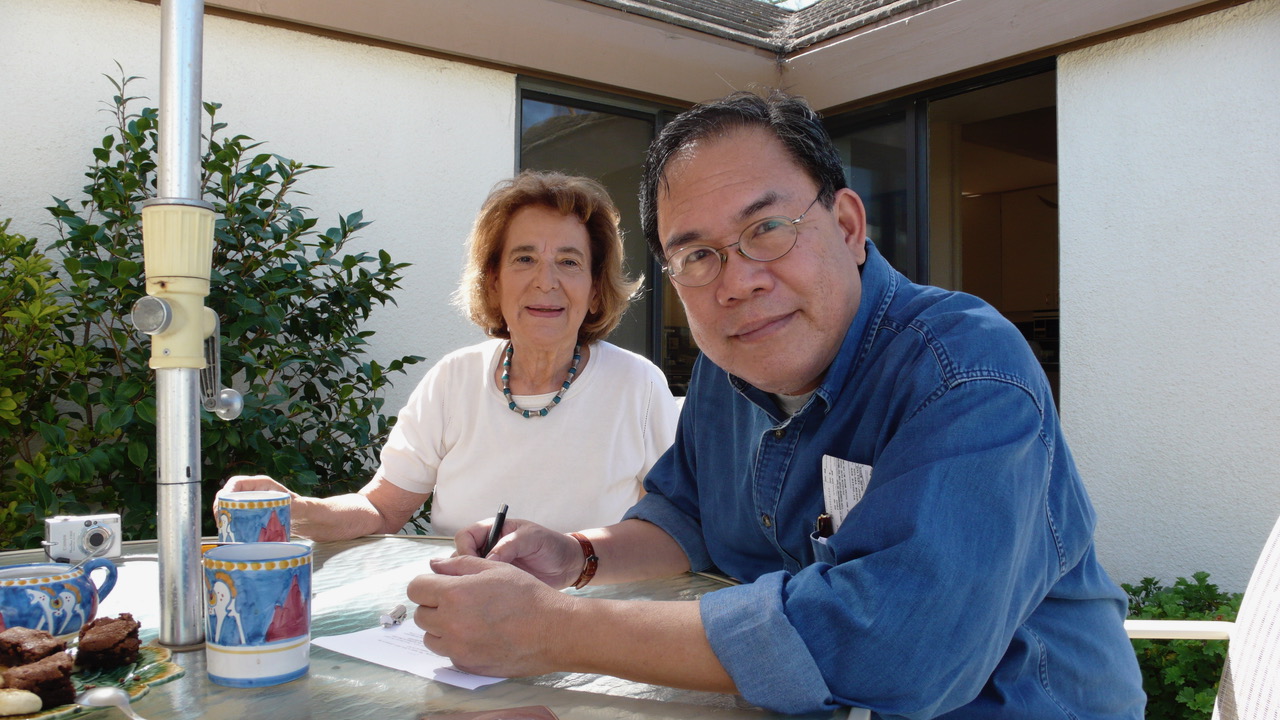
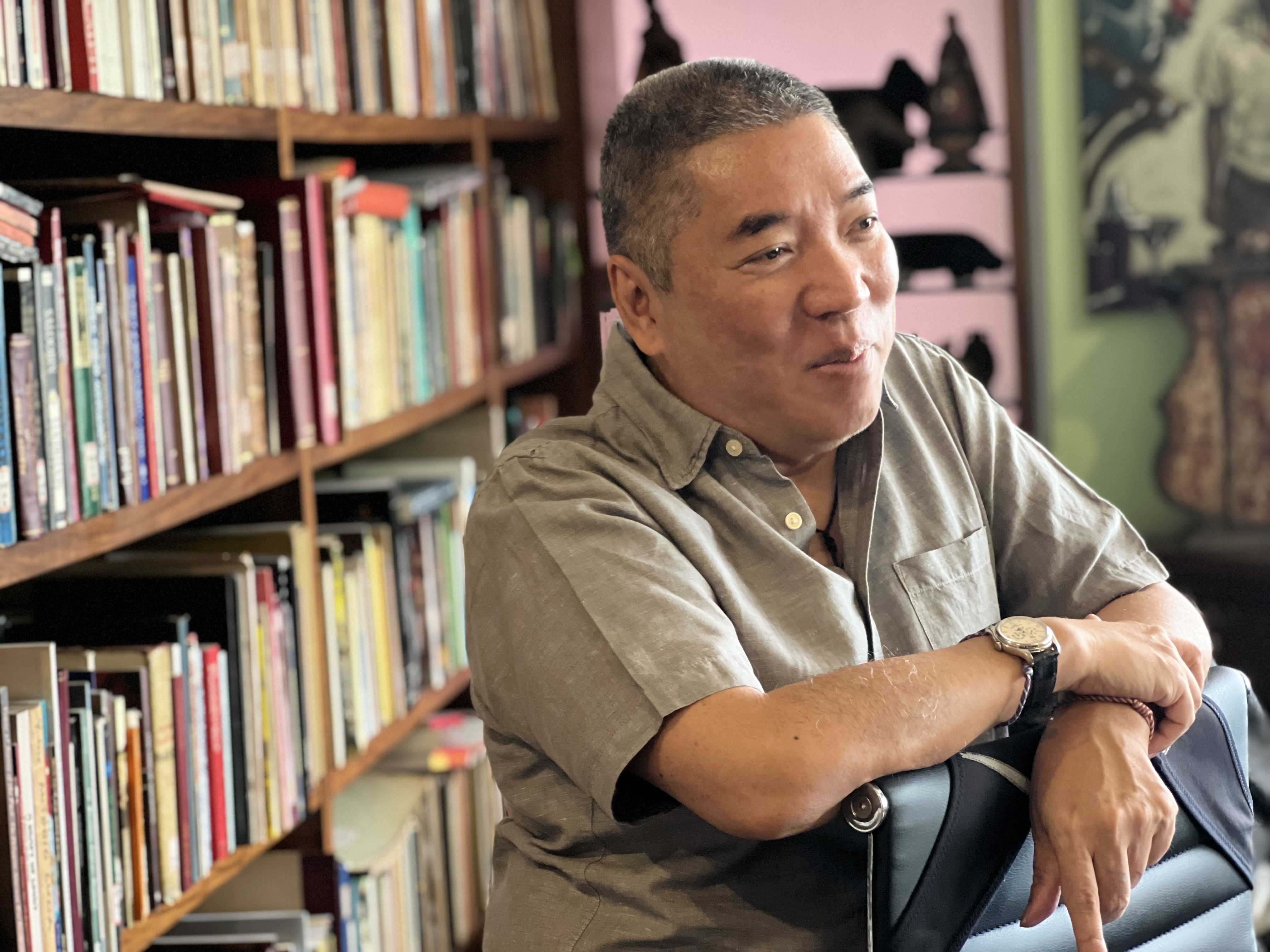
AS ANY friend who’s had the privilege of being invited to his Makati home quickly realizes, Ambeth Ocampo is more than the engaging public intellectual we all know, whose Looking Back series has made history come alive for young Filipinos. He’s also an inveterate collector of rare Filipiniana—books, ephemera, art, and historical objects—all of which come with the territory he works in. 

There have been many Filipinos of a similar bent—the legendary Alfonso Ongpin and the late Ramon Villegas come to mind, as well as the more contemporary Jimmy Laya, Melvin Lam, and Edward de los Santos, among others—but the way Ambeth has amassed his collection is noteworthy on its own, as it folds the personal almost imperceptibly into the professional. 

It comes pretty close to the classic prescription for murder—means, motive, and opportunity—all captured in his classic story of how he stumbled on and picked up Emilio Jacinto’s silver quill, a writing prize, from an antiques dealer who didn’t bother to learn what it was and let it go for its scrap value. (Having as much of Ambeth’s desire for antiquarian junk but with much less knowledge and certainly less means, I’ve often joked, between the two of us, that Ambeth’s the scholar and I’m the scavenger.)

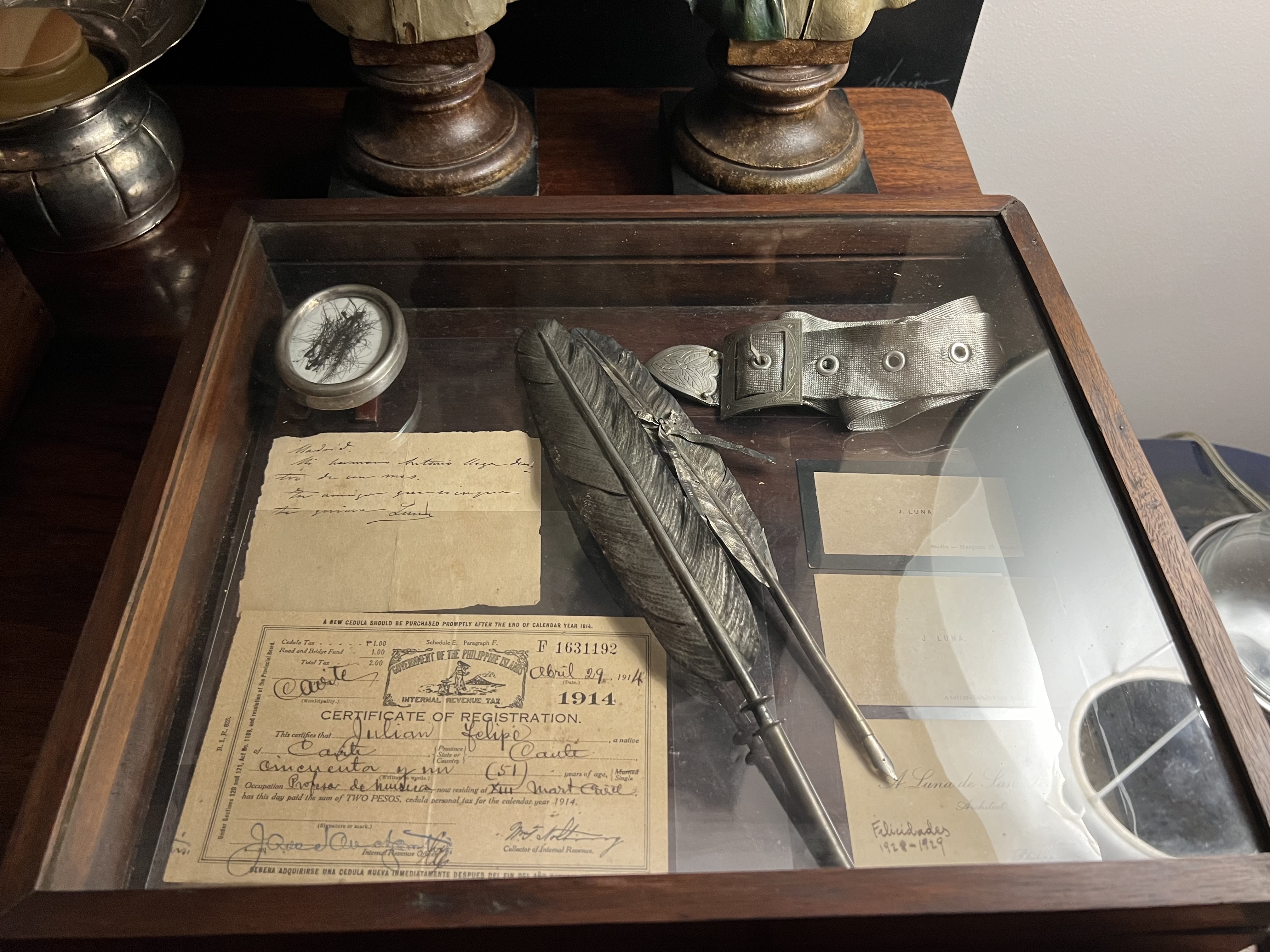
Jacinto’s quill, along with a trove of other historical treasures from Ambeth’s personal collection, will be up for auction on June 7 at Leon Gallery. They include Juan Luna’s silver belt, Felix Resurreccion Hidalgo’s walking stick, an official copy of the Malolos Constitution, Philippine maps from 1616 and 1647, and the Noceda and Sanlucar Vocabulario de la Lengua Tagala from 1860, among many others.

Knowing how precious these objects were, I had to ask Ambeth more about them, and this is what he said.

What made you think of selling these treasures now? Surely it can’t be easy letting go of them after being their caretaker all this time?

Over the years, I have come to the realization that collecting is not the hobby it used to be. As a boy I collected stamps and learned geography, history, and the culture of foreign countries in the process. I was fortunate that my father’s company had an international correspondence, so every week his secretary would send me a batch of envelopes to sort out.

I started collecting Filipiniana books in the 1980s, stocking up from the National Bookstore Quezon Boulevard branch bargain bin where I completed my Nick Joaquin essay collection because they cost one peso each. After school, I went to the Heritage Art Center in Cubao that I learned only years later was the site of the old Philippine Art Gallery. It was a ramshackle grouping of rooms upon added rooms made from old house parts that Mario Alcantara, the owner, bought from mambubulok. I had a favorite nook where I did my homework and when bored I would explore the rooms that I think gave me an eye for art and the ability to choose what I thought was good or not.

Looking back my collecting, and my life, has been the happy intersection of skill and opportunity. Napoleon once said “ability is nothing without opportunity.” I have always seen collecting as a responsibility. Collecting significant Filipiniana is not a hobby. It is not an investment. Collecting is a responsibility, the collector a steward who preserves the collection for the next generation. 

The objects I put at auction have enriched my life in many ways and I think they will enrich the life of their next steward. Some of the lots like the Malolos Republic one-peso banknote and the printed copy of the Malolos Constitution have been tucked away in a drawer. If I drop dead tomorrow these might be carelessly thrown away as trash. They should go where they are better appreciated. Collectors de-accessioning keeps the market alive and buzzing.

Let’s get this out of the way: it’s none of our business, but what will you do with the money?


Since I am not a dealer the material reward does not really factor in the equation. I have sold other things before at cost or even at a loss, just thinking that my gain was the enjoyment I got chasing after them and acquiring them. What will I do with the proceeds? When I started selling my rare Filipiniana I thought that instead of having shelves of books, maybe I should just sell and use the proceeds to buy one or two incunabula or samples of early Philippine printing from 1593-1640. Instead of caring for a whole library I will just care for half a dozen very important books.
How did you start out as a collector of historical objects? How and where did you find them? Aside from Jacinto’s pen, what was your most serendipitous find?

Collecting historical objects came naturally from my work as a historian. I would find things in used bookstores and when supply was still plentiful in the Ermita antique shops. One of the serendipitous finds was the cedula or residence certificate of a certain Julian Felipe, a musician from Cavite. It was in a heap of old papers, initially priced at one hundred pesos. I haggled it down to fifty, paid, and ran away. 

Another time my favorite antique dealer brought a “European painting” of a Virgin and Child to my home. I looked at it and knew it was Philippine. When I opened the frame to inspect the painting, hidden under the frame was the signature of the Filipino master Mariano Asuncion (1802-1855). The silver belt of Juan Luna and the bank draft in his name were acquired from Mario Alcantara. It came with the famous trove of paintings inherited by Grace Luna de San Pedro that are now in the National Museum. While everyone was going wild over the paintings, I spent many afternoons browsing the boxes of memorabilia that included the bloodied uniform Antonio Luna wore when he was assassinated, the palettes and brushes of Juan Luna, the memorabilia, some architectural plans of Andres Luna de San Pedro, and much more. I offered to buy the palettes and brushes and the painter’s smock but Mario said these were destined for the National Museum. There was also the last letter Juan Luna wrote to his son from Hong Kong, written a day before his death, not only was this letter significant, Luna did a watercolor of Hong Kong Harbor on the first page of the double-sided letter. All I could afford was the silver belt that came with Luna’s black suit that Mario said was also destined for the National Museum. Unfortunately, the Heritage Art Center burned down and with it all these memorabilia.

Do you or can you separate the collector from the scholar? Did the collecting happen naturally as a consequence of the scholarship?

The collecting grew and was enriched by my research and scholarship. If I had a PhD in Math I probably would not have recognized these odds and ends now considered treasures. I have been divesting over the years. A large part of my Filipiniana collection was donated to the Center for Kapampangan Studies, Holy Angel, Pampanga. All I keep at home are the books I need for work for teaching, lecturing, and writing, but now that I am retired from Ateneo (but still employed on a post-retirement appointment) it is easier to let go. 

The full catalog of Leon Gallery’s Spectacular Mid-Year auction can be accessed on its website at https://leon-gallery.com

Penman No. 471: A Promise to Keep

Penman for Sunday, February 9, 2025

Now and then we come across stories of foreigners who fall under the spell of the Philippines so completely that wherever else they go, the Philippines and its panoply of wonders—its mangoes, its waters, its sunsets, and above all its smiling people—stay with them, urging them to return, in spirit if not in person.

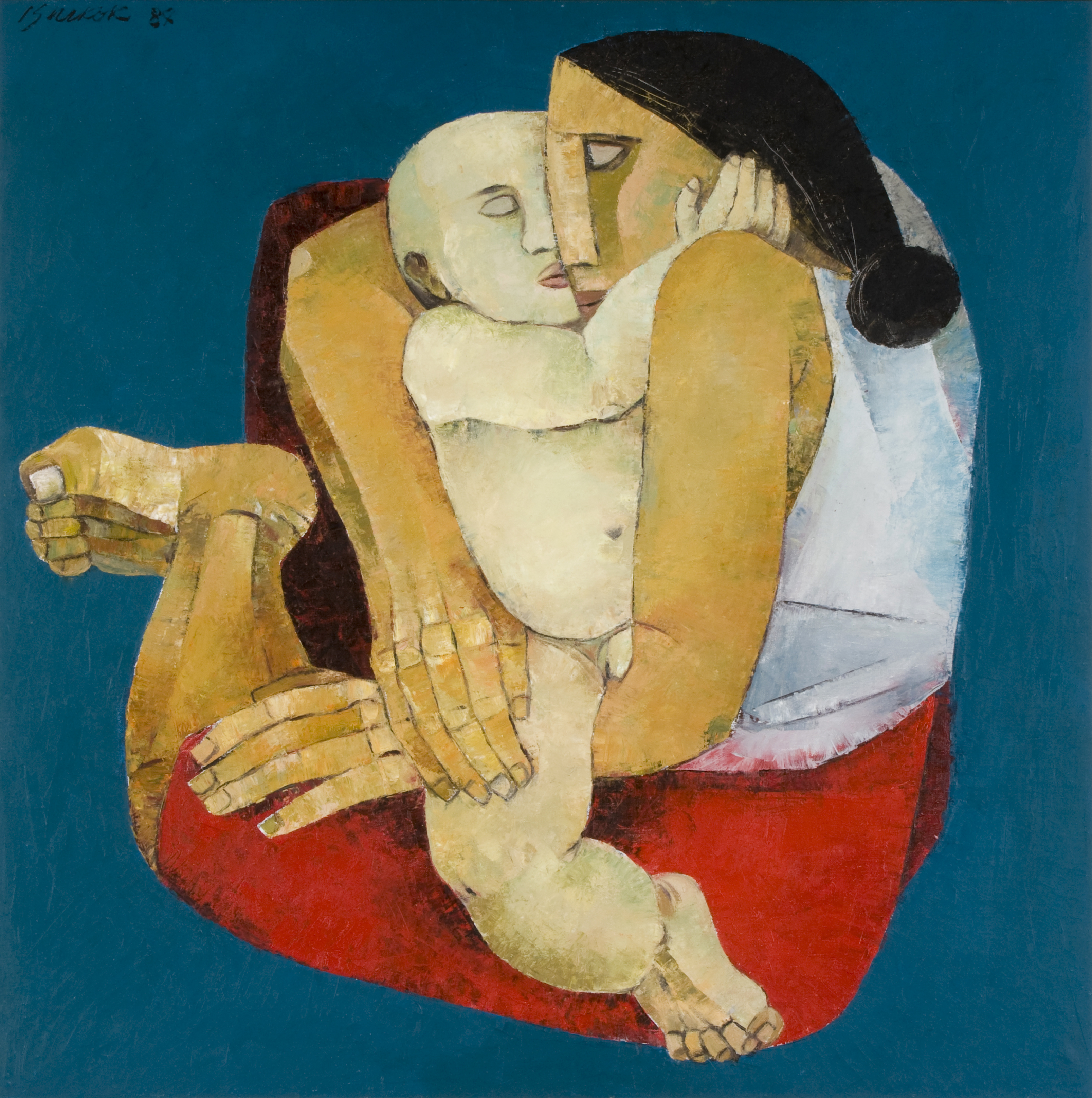
One such visitor was my good friend Julie Hill, who with her late husband Arthur first came to Manila in 1968 on a mission to help improve Philippine education, among other concerns. Almost six decades later, after having traveled the world and settled in America, Julie’s thoughts and affections remain bonded to this country and to its future. In the twilight of her life, she has decided to gift poor but bright young Filipinos with a life-changing opportunity to study at the University of the Philippines, from the forthcoming sale at auction of two paintings by National Artists HR Ocampo and Ang Kiukok.

Born in Alexandria, Egypt to Greek parents, Julie Hill went on to a fulfilling life in the United States and around the world with Arthur, who represented the Ford Foundation in the Philippines. Forced to leave Egypt when Nasser took over, Julie found a scholarship for her master’s degree in chemistry at the University of Minnesota. There she met Arthur, an Australian taking his PhD in Education and Mathematical Statistics. 

The two fell in love, married, and embarked on a lifelong adventure around the world—to Western Samoa, Thailand, Indonesia, and Afghanistan, where Arthur’s expertise in education and agricultural development was much sought after. Arthur passed away in 2002, but Julie went on to her own career as an international marketing executive for Lucent and later AT&T. Since retiring at their home in Rancho Sta. Fe, California, she has written and published five books of travel and memoirs—all of which I edited after being introduced to her by our mutual friend Jimmy Laya, turning our business connection into a long and dear friendship.

From the first of those books, A Promise to Keep (2003), come many vivid impressions of a country and society transitioning to modernity, troubled but brimming with energy and promise. Arthur got busy working with UP and the International Rice Research Institute, among others, and the Hills became good friends with the rising technocrats of the time—Cesar Virata, Gerry Sicat, and Jimmy Laya. It was Laya—who remains close to Julie—who introduced her to the local art community.

“The art scene was vibrant,” Julie would write. “Manila, a centuries-old entrepot, was rich in art and culture, and we were privileged to visit many private art collections….

“Art galleries flourished. A self-exiled painter stormed into town and set new price ceilings. The audience increased. So did the column inches devoted to art in the newspapers and magazines….

“The Luz Gallery in Makati was run by Arturo Luz, a leading painter, known for his high standards of professionalism. His gallery gained the trust of the public and the artists. The Solidaridad gallery and bookshop was located in Ermita, run by novelist Frankie Sionil Jose. Solidaridad was the middle ground between the established artists exhibiting at Luz and smaller galleries where new talent was championed. You could find superb examples of prints, drawings, miniatures, relief metal sculptures, collage, photographs, and paintings all over Manila.

“We were interested in meeting the artists and visiting their studios, but were reluctant to pay the gallery prices. If we liked the work of a particular artist, why not buy directly from him or her? This was how we searched for and found the home of Hernando Ocampo.”

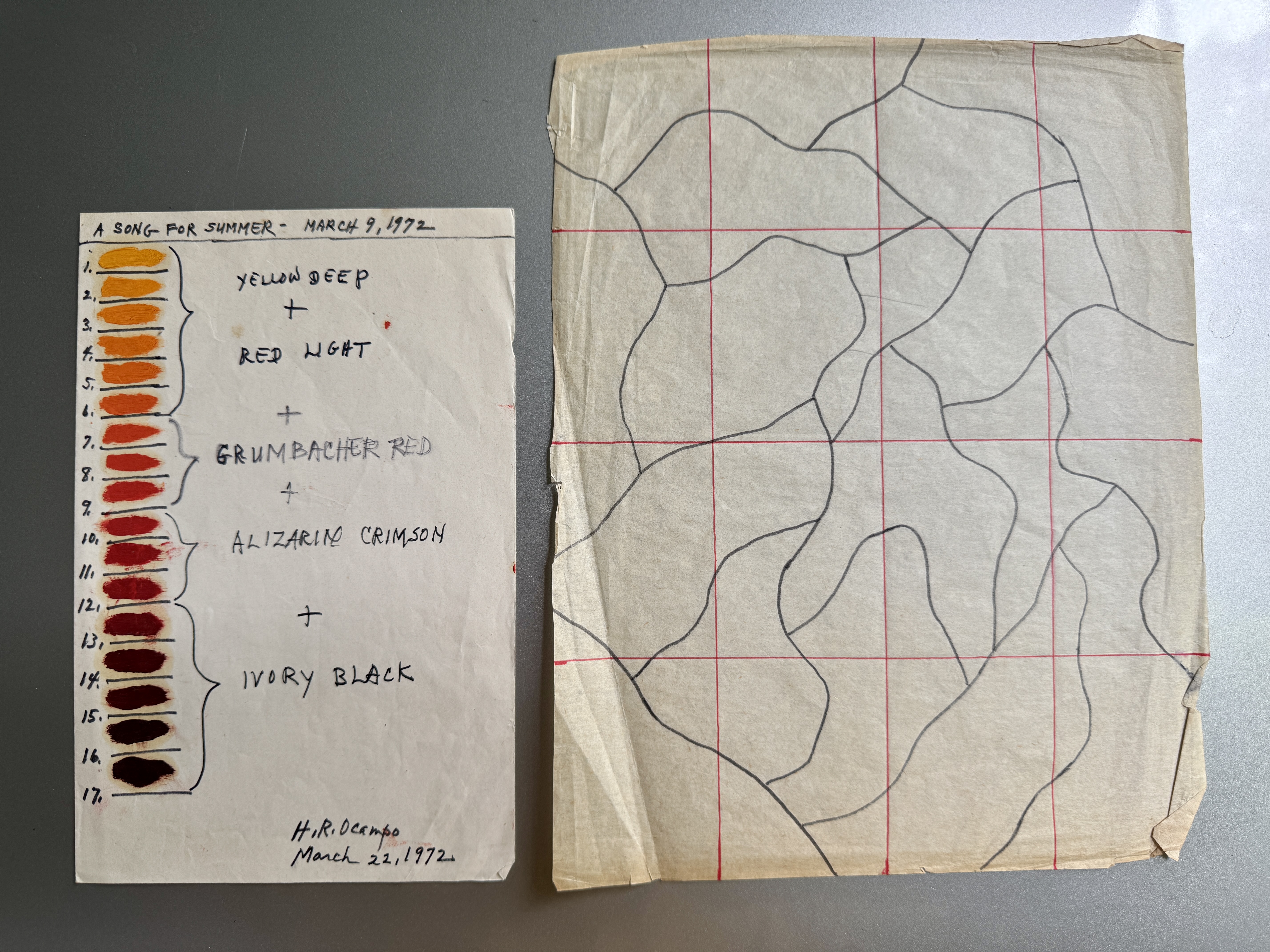
“Hernando Ocampo was a pure abstract expressionist with a daring originality in his paintings. His work was unmistakably Filipino, ascribing this national character to his unique, tropical colors. A typical Ocampo painting is not unlike a honeycomb, a complex weave of color and tone with each individual cell suggesting a large, more real life form. His work is tropical and warm and suggestive of symmetry. The colors and shapes seem to dance before the eyes. His home in Maypajo was a mecca for friends, admirers, and collectors. He had an open house on Sundays. Good food and hard and soft drinks were ready for guests. Visiting Ocampo, we felt welcomed not only by the artist but also by his family. We commissioned a painting. Sketches were drawn; we followed the progress of our painting with our weekly Sunday visits, and sampled the wonderful pancit, that ubiquitous Filipino noodle dish, that was offered. We photographed the progress of his work. He completed the ‘Song of Summer’, a mastery of color in 17 different shades of red. It would hang proudly in our home in California, and continue to provide intense, pleasurable excitement, another reminder of our times in the Philippines.” (Note: Ocampo’s sketch and color guide for the painting will go with the artwork at auction.)

The Hills left Manila for Indonesia shortly after martial law, but on a return visit in the early 1980s, their old friends at the Ford Foundation presented them with another painting by another Filipino master, Ang Kiukok.Julie recalls seeing several works by accomplished Filipino painters in the foundation office, purchased back when they were far more affordable, and this may have been one of them. Like the Ocampo, it traveled with the Hills around the world all the way to Rancho Sta. Fe, where I have been visiting Julie over the years (our daughter Demi conveniently lives nearby in San Diego).

It was during our most recent visit there that Julie brought up the idea of donating her two paintings for the benefit of poor UP students. A lifelong but quiet supporter of students as far away as Mindanao and a staunch believer in the transformative power of education, Julie also honored me by anonymously (but no more) endowing the Jose Y. Dalisay Jr. Professorial Chair in Creative Writing at UP, over my embarrassed pleas to put it in her name.

This time, she wants the money to go to UP’s poorest—specifically, those exceptionally bright and mainly provincial students who, against all odds, pass the UPCAT but fail to enroll, lacking the means to afford the cost of living on a UP campus. We’ll need to work out the mechanics, but this will go much farther than professorial chairs in changing Filipino lives.

“I had a privileged education in Alexandria and was fortunate to receive a scholarship for my graduate education in America,” Julie says. “During our years in Manila, Arthur and I developed a deep affection for the people of the Philippines, and I am hoping that this donation will contribute to creating a generation of talented and hopeful Filipinos who will serve their country well.”

The Ocampo and Ang Kiukok paintings will be sold at auction by Leon Gallery on February 22. I pray that generous buyers will help Julie keep her promise to the Filipino people.

Penman No. 364: Rediscovering Anselmo Espiritu

Espiritu print.jpg

Penman for Monday, July 29, 2019


I’M SURE I’m not alone in having some fun tracking the online art auctions held regularly by the Leon and Salcedo houses, if only to daydream about the often fascinating artworks crossing the block. Now and then I dabble in a bit of buying and selling—a chair here, a book there—but mostly I’m a kibitzer enjoying the action from the sidelines.

What I do come away with, even just by poring over the auction catalogues (which themselves will very soon become collectible), is an ongoing education in Philippine art. Going beyond the peso signs, learning about our painters and sculptors and the stories behind specific artworks is a reward unto itself, especially given how the arts media today—driven and sometimes threatened by advertising and PR—devote precious little attention and space to historical subjects.

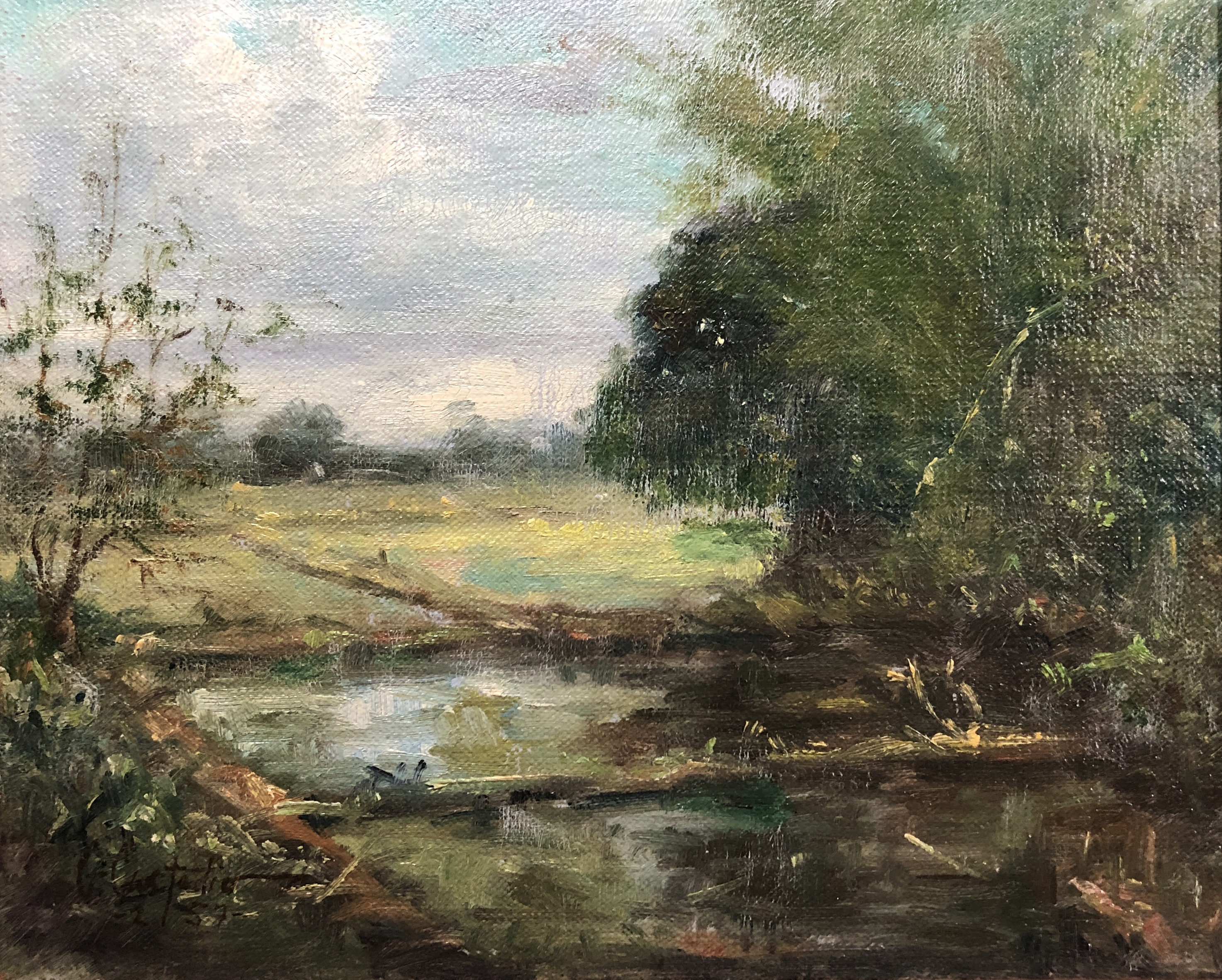
I love discovering (or rediscovering, since they were already well known to others) masters I never knew about, like Lorenzo Guerrero, Felix Martinez, Isidro Ancheta, and Jorge Pineda—most of them, not incidentally, painters of the kind of traditional, romantic Filipino landscape I personally prefer, as they give me comfort and peace of mind and spirit in my old age. Among their successors who figure prominently in my small collection are Gabriel Custodio (see below) and Elias Laxa, whose pieces I can never tire of looking at across a room.

IMG_6705.jpg

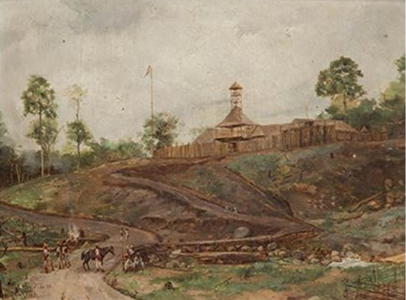
For example, just last month, a Spanish auction house featured two remarkable paintings of Marawi by the Spanish soldier and painter Jose Taviel de Andrade (1857-1910), who at one time was assigned to watch over (and perhaps spy on) Jose Rizal in 1887 but who later became his friend, and whose brother Luis served as Rizal’s defense counsel at his trial. The Andrade paintings depict Spanish fortifications and a bridge from the campaign against the Muslim resistance in Marawi—and if not for the auction brief, I would never have learned about and looked up this story of an improbable friendship, and about that campaign. (The two Andrade paintings opened at 8,000 euros and sold for 32,000—way above my pay scale!)

Andrade.png

Yet another painter I just recently came to know about was Anselmo Espiritu, whose name and work I was alerted to by an online acquaintance named Wassily Clavecillas, who shares my interest in old books and artworks. Drawing on some scant references to Espiritu from various books and sources, Wassily introduced me to the fact that Anselmo—whose birthdate remains unknown, but who reportedly died in 1918—was a student of Lorenzo Guerrero, along with his brother Manuel (among Guerrero’s other students was Juan Luna). I’ll let Wassily narrate the rest of the story, slightly paraphrased by me:

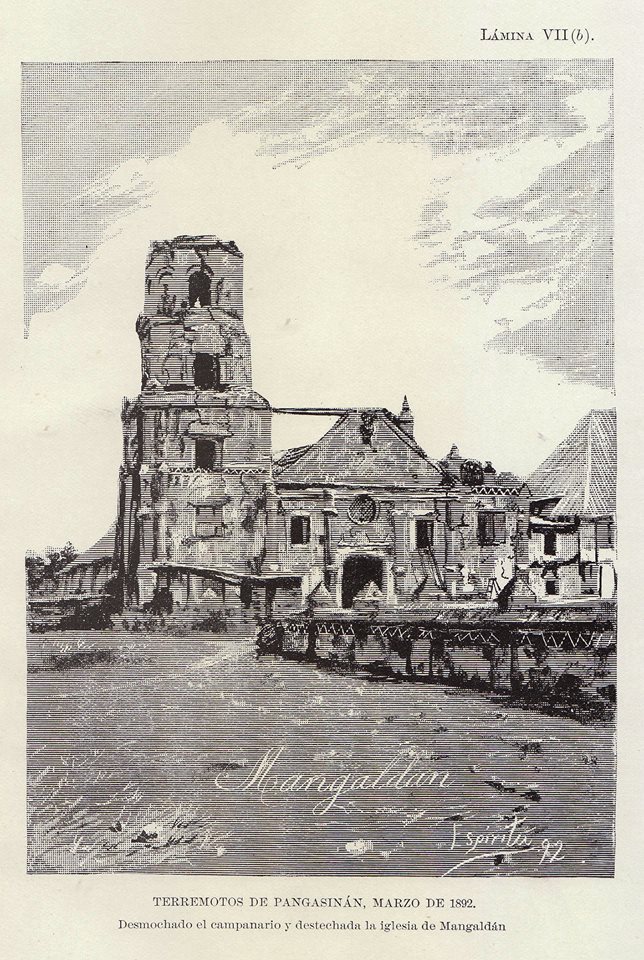
“According to my research, Anselmo Espiritu was once commissioned by the Observatorio de Manila, then managed by Padre Federico Faura, SJ. In 1892 a great earthquake struck Luzon, decimating churches in Pangasinan. The Observatorio commissioned Anselmo to make paintings of the devastated churches, after which he then made serigraphs or silkscreen prints of those same paintings. Sadly the original paintings and their silkscreen versions perished along with the observatory itself during the Second World War, and the only copies of Espiritu’s depictions of the earthquake’s ravages in Pangasinan, as far as I know, have come down to us in the form of offset prints.” (Wassily has a few of these prints, and sent me digitized copies.)

He raised another interesting question: “One also has to ask why the Observatorio and Padre Faura chose to commission Espiritu to do paintings of the devastated churches when photography was already available and even possibly affordable at that time. Why go through the effort of hiring a painter when photos were more accurate down to the minutest detail? Was it an aesthetic decision, in the way that the engravings in Alfred Marche’s book on Luzon and Palawan are prime examples of the engraver’s art?”

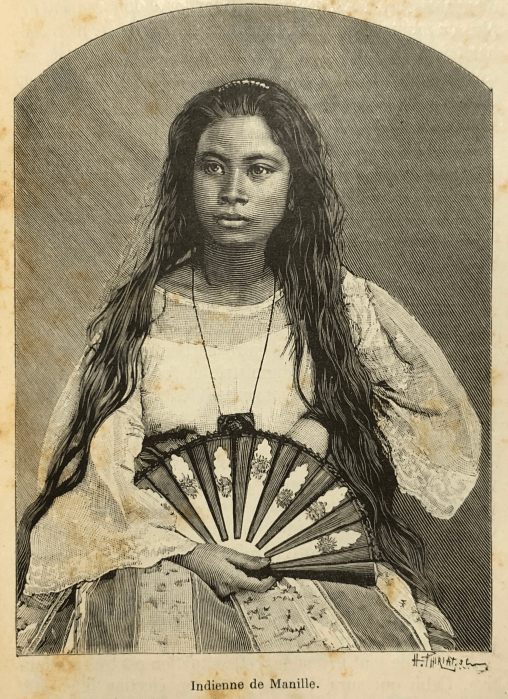
He was, of course, referring to Voyage aux Philippines, which the French naturalist and explorer published in 1887 after six years of traipsing around Tayabas, Catanduanes, Marinduque, and Palawan, among other places. I was lucky to acquire a copy of the original Hachette edition a few years ago, which will take me time to digest, as it’s in French (thankfully, an English translation is also available), but the illustrations (like the one below) are indeed exquisite, tending to support Wassily’s conjecture that an artist’s hand can often be more evocative than a photographer’s eye.

Indienne.png

Espiritu would go on from that commission to become a celebrated painter in his own right, winning medals for his works at the 1904 St. Louis World’s Fair, where the likes of Juan Luna, Felix Resurreccion Hidalgo, Fabian de la Rosa, Juan Arellano, and Isidro Ancheta also exhibited. His nephew Oscar (1895-1960) also became an established painter.

AEspiritu.png

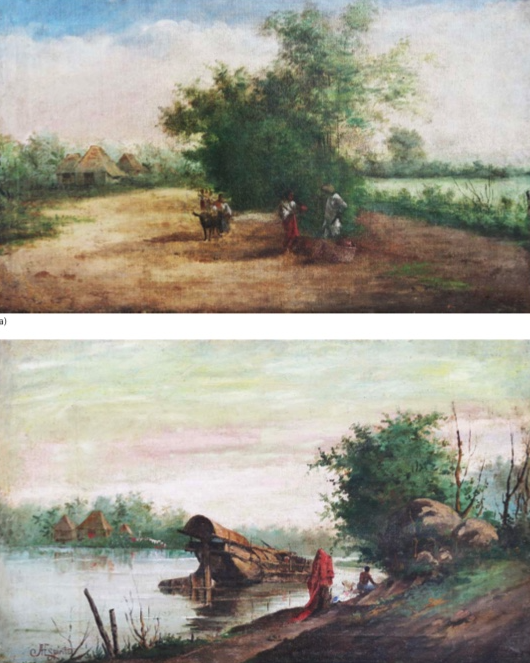
Two paintings of barrio scenes by Espiritu sold last month at a Leon Gallery auction for substantially higher than their opening bids. They came out of a private collection in Spain—or I should say, came home, which is one great service these auctions perform, even as newer Filipino artworks now cross the seas with the growing and well-deserved popularity of Philippine art. I’m happy just to watch this majestic traffic go by.

Penman No. 77: Writers at Their Best

wn13_1Penman for Monday, December 16, 2013


WRITERS’ NIGHT 2013 went off last Dec. 6 in UP Diliman with nary a hitch, thanks to tremendous support from the Philippine writing community (and, of course, from my staff at the Institute of Creative Writing). It was a night of celebration that began early, with the Filipinas Copyright Licensing Society (FILCOLS) holding its general meeting and handing out historic (and substantial!) first checks to Filipino authors whose works had been used with permission in textbooks.

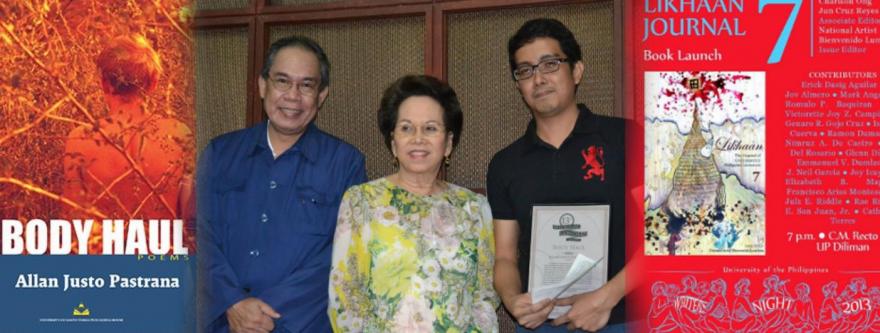
This was followed by the presentation of the 13th Madrigal-Gonzalez First Book Award, an annual recognition of the best first book by a Filipino author writing in English or Filipino (the award alternates between these two languages, so the award covers publications for the past two years in each language; it was English’s turn this year). This P50,000 prize—established and generously endowed by the Madrigal-Gonzalez family through Atty. Gizela Gonzalez-Montinola—has become another important rite of passage for Filipino writers, and over the years it has gone to such talents as Angelo Lacuesta, Luna Sicat Cleto, F.H. Batacan, Ellen Sicat, Vicente Groyon, Kristian Cordero, Rica Bolipata Santos, Zosimo Quibilan, Adam David, Lualhati Abreu, Lawrence Ypil, and Will P. Ortiz.

The actual awarding is preceded by a lively forum featuring the finalists, who remain unaware of the winner until the end of the ceremony. This year’s board of judges was chaired by prizewinning fictionist Charlson Ong, with poet Mookie Katigbak-Lacuesta and Prof. Shirley O. Lua of De La Salle University as members. It was a banner year for the University of Sto. Tomas Publishing House, whose books accounted for five of the six finalists.

The citations that the judges prepared for the finalists were little gems in themselves, so to give you an idea of what our best new writers have been producing, let me quote from those citations:

Daryll Delgado, After the Body Displaces Water (UST Publishing House, 2012): “In After the Body Displaces Water, Daryll Delgado draws upon both romantic and realistic traditions in fiction, the personal as well as the political, to deliver an outstanding debut collection. Here are tales of the post-EDSA uprising generation who navigate through the murky mire of lost certainties, failed expectations, of promise and compromise. Here, water, cleansing, life-giving yet dangerous, is prime element. Water is memory: malleable, mesmeric. It suggests the comfort of the womb and of early death, but must finally give way to the body, to present and authentic self. These stories offer up no easy answers only uneasy angles, uncanny ways of seeing as ‘through a glass darkly.’”

Marc Gaba, Have (Tupelo Press, 2011): “’Stories are about the dropped stitch,’ writes an American fictionist. The dropped stitch interrupts the pattern and disturbs an existing order. To stretch a metaphor: when this happens, a stitch falls off your needle and unravels for several rows beneath the row you are working on. At some point in your writing career, you are going to drop a stitch.
You will forsake what you know for what you don’t know.
Writers less fearless would try to reach that dropped stitch, slide a crochet hook into its loop, and mend a rent in the pattern.
But Gaba’s poems are about the dropped stitch—the one that makes the reader imagine a pattern because it has gone completely missing. His is the stitch that unravels the whole.”

Anna Maria L. Harper, Agueda:
A Ballad of Stone and Wind (UST Publishing House, 2012): “Rare is the Philippine historical novel, rarer still one with a woman main character. Agueda may be an attempt at national allegory, but its richness of detail make it a quite engaging read. Though treading familiar ground, the book visits nooks and crannies of our past usually ignored by historical texts. We catch glimpses of our forebears—rich and poor—heretofore unseen and gain further insight into who and why we are. Who knows, in time, its heroine may become as familiar to readers as the likes of Maria Clara and Salome?”

Neal Imperial, Silver Fish, Hook of Moon (UST Publishing House, 2012): This collection affirms the power of language in all its majestic simplicity and frugality, as if self-denial is a form of art. The seeming effortlessness of the poems’ cadence complements the stream of images and metaphoric turns which seek to stir the mind of the listener, such verses as ‘We hear the silence / of dead birds / combing the wind / for wings / stuffed / in the belly of a gun,’ ‘To love an older woman / is to bleed / on a bed of salt,’ or ‘You are too-much-food / too late…” This engaging work claws at our heart, like ‘the hook of moon.’”

Allan Pastrana, Body Haul (UST Publishing House, 2011): “Called at turns difficult and lyrical, Pastrana’s poetry is deeply personal (and to the casual reader, hard to inhabit). His poems pose a difficult conundrum, for despite their apparent inaccessibility, an internal music moves them. Pastrana must be credited with such precise notation. Each of his themes seem set to an appropriate time signature—nostalgia, desire, childhood, domesticity—each one is given a clipped and particular music. It is music first that draws the reader into the writer’s milieu, uncertain of what he might find there, or if he will find anything at all…. First and last is his music. First and last is music of such virtuosity that Pastrana must be one of our finest poets.”

John Jack Wigley, Falling Into the Manhole: A Memoir (UST Publishing House, 2012): “This selection of essays shows the author’s deep-reflective investigation of his identity, whether as a boy growing up in the City of Angels, as a novice traversing through the muddled metropolis of our sad republic, or as a determined man embarking on a delicate quest in the land of his white forefather, a land deemed an earthly paradise by Spanish conquistadores. The personal narratives are unabashedly candid and sensitive, infused with humor and irony, and peppered with thrilling bits of pop culture. This book is both a delightful and heart-ripping read.”

The winner was Allan Pastrana, of whose work the judges had this further to say: “Like Orpheus’ lyre, Body Haul lures us with its refreshing variations of songs, stories, and tall tales. Like a prophet’s rod, it bestows spirit to birds, forces the word ‘trap’ to speak in three different languages, and illumines a path out of Eden to a re-worlding of stars and love. Pastrana’s kingdom is nonetheless that of a sophisticated intellectual, whose appreciation for music, literature, and the visual arts obtrusively yet gracefully seeps through the many fine verses in the collection.”

The evening’s highlight was an auction of writers’ memorabilia that we held for disaster relief, particularly for writers hard-hit by supertyphoon Yolanda. Beyond their craft, here were writers at their best, donating choice items and dipping liberally into their pockets to help out their fellows.

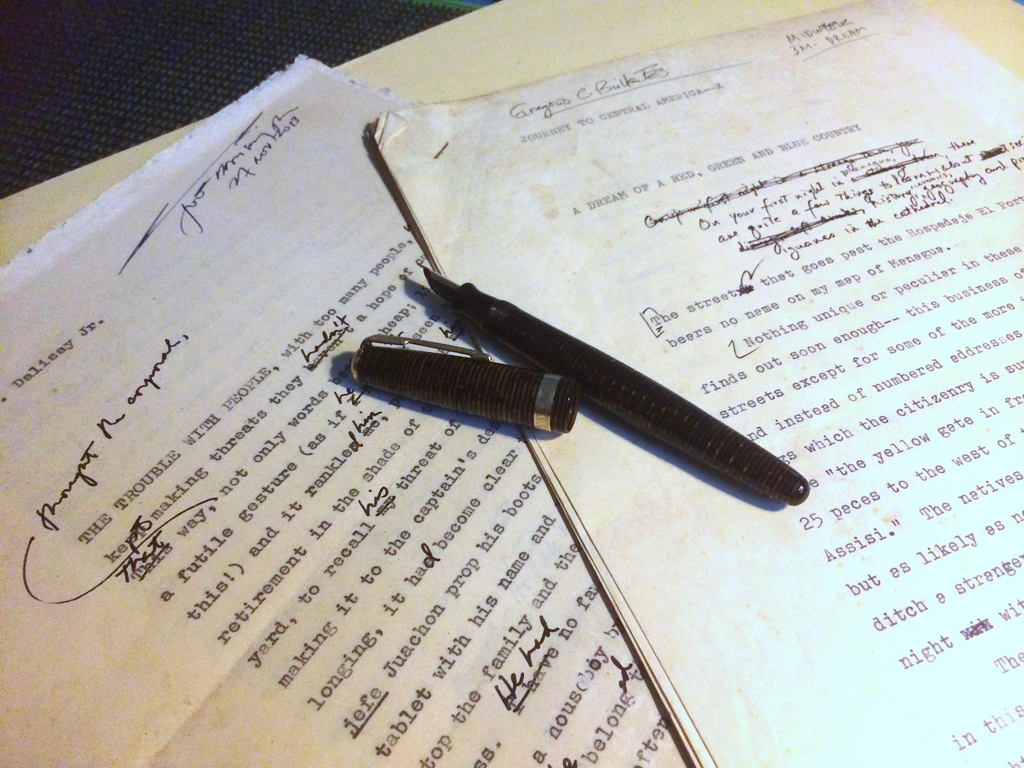
The money we raised came chiefly from a 1940s Parker Vacumatic fountain pen donated by yours truly (won by Jimmy Abad for P18,000 in spirited bidding over film director Auraeus Solito); a Smith Corona Portable Classic 12 donated by Paolo Manalo (won by a member of the Inkantada Band for P5,500); two manuscripts of works by Gregorio Brillantes and myself (won by Andrea Pasion-Flores for P4,200); and assorted manuscripts, author’s proofs (including that of Soledad’s Sister), and other memorabilia donated by Jimmy Abad and myself (won by rocker-news anchor-novelist-etc. Lourd de Veyra for P6,000). Poet Alan Popa went home with a drawing by fictionist Merlinda Bobis, donated by Chari Lucero, for P2,200. We’d also like to thank our other donors, buyers, and supporters—among them, National Artists Bien Lumbera and Rio Alma, poet Cirilo Bautista, and other writer-friends like Efren Abueg, Amelia Lapeña Bonifacio, Alma Miclat, Richard Gappi, Carlo Clemente, Dolores Mose, Francis Quina, Khavn de la Cruz, the NBDB, and the Chancellor’s Office of UP Diliman—for their generosity. We were all winners! See you all again in Writers Night 2014.


Penman No. 75: A Writers’ Auction, and Shakespeare in Asia

DalisayBrillantesPenman for Monday, December 2, 2013

THIS IS going to be a very busy and exciting week on the literary front at the University of the Philippines in Diliman. First off, the UP Institute of Creative Writing will be hosting Writers’ Night on Friday, December 6, sustaining what’s become a longstanding annual tradition. Meanwhile, on Thursday and Friday, the Department of English and Comparative Literature will also be hosting its first international conference on “Shakespeare in Asia,” bringing together leading Shakespeare scholars from around the region and the US to affirm the Bard’s continuing relevance to global literature and society.

(It should also be mentioned that Philippine PEN will be holding its annual Congress December 3-4 at the Henry Sy Sr. Hall of De La Salle University, with the theme of “Literature of Concord and Solidarity: The Writer as Peacemaker,” and that FILCOLS—the Filipinas Copyright Licensing Society, Inc., which manages copyright payments for Filipino authors—will be holding its annual general meeting at the Claro M. Recto Hall in UP Diliman at 4 pm, December 6, just before Writers’ Night proper.)

Writers’ Night will consist of three segments, after the FILCOLS meeting: the awarding of the annual Madrigal-Gonzalez Best First Book Award, which this year will go to a Filipino author writing in English, and the launch of the 7th annual edition of Likhaan: the Journal of Contemporary Philippine Literature, which the UPICW publishes. Capping the evening will be a live auction of writers’ memorabilia, featuring donations by writers—including three National Artists—for the benefit of other writers left in dire need by recent disasters in the Visayas. We’ve received word that while no one we knew died in the wake of supertyphoon Yolanda, some writer-friends were badly savaged by the storm; while lives are of course the first priority, the loss to a writer of his or her home, and books and manuscripts among one’s few belongings, can also be deeply traumatic. We hope to be able to address some of these needs through the auction.

Writers’ Night actually debuted with an auction in 1996—I can’t believe it was 17 years ago!—and it was a blast. I came away with several handwritten manuscripts donated by Greg Brillantes and Cirilo Bautista, as well as a novel (Villa Magdalena) signed by Bienvenido Santos. Gina Apostol went home with NVM Gonzalez’s chair.

This year, to spice things up, we’ve solicited donations from National Artists Virgilio Almario (a signed copy of his very first book), Bien Lumbera (two CDs of his songs, also signed), and Frankie Sionil Jose (yet to be confirmed, but hopefully a book or manuscript). Poet Jimmy Abad has very graciously given an important group of his manuscripts, including the handwritten draft of the early poem “Fugitive Emphasis,” and more than a dozen copies of various issues the trailblazing and now rare Caracoa poetry journal from the 1980s. Alma Miclat is donating a copy of the hardbound edition of her late daughter Maningning’s book Voice from the Underworld, signed with her Chinese chop.

And to acknowledge how kind the Fates have been to me this year as they have been harsh to others, I will be donating a fully-functional, like-new Parker Vacumatic fountain pen from the early 1940s, in golden-pearl finish with a smooth, fine 14K nib, a pen I’ve actually written with and written about in my story “Penmanship”; although it’s about 70 years old, the pen is ready to write, and will carry a lifetime personal service warranty from me (if it ever breaks down, I’ll fix it for free). I will also be donating the signed original 11-page typescript of my 1986 short story “The Body,” with my edits on it, and re-donating one of the three Brillantes manuscripts I got in 1996, the signed, edited 6-page typescript of the essay “A Dream of a Red, Green, and Blue Country,” chronicling a visit to Nicaragua. (I’m sure Greg won’t mind; he’s one of the most generous people I’ve known, and I wish he could join us on Friday; come to think of it, if he hadn’t donated these papers to us in 1996, they might’ve joined the soggy mess that Ondoy made of his formidable library.)

Between now and Friday, we’ll expect more donations from writers (who can also donate books for the benefit book sale—it’s been a Writers Night custom to bring and toss a book into a box as a kind of admission fee). Bring your donations over to us at the UPICW in Diliman, or contact our admin officer Ronnie Amuyot at 0922-811-4449 if you need yours to be picked up. We’ll try to be as liberal with the live auction as we can—we’ll take cash, checks, and promissory notes, and you can even leave your bids with or text them to Ronnie before the auction if you’re away. We’ll display some of the choicest items at the Faculty Center before Writers Night itself.

Writers’ Night is free and open to all Filipino writers, writing and literature students, and their friends. Do come and join us at CM Recto Hall, UP Diliman, from 6 pm up this Friday; there’ll be food and drinks, and a lot of goodwill to go around.

JUDY CELINE Ick was an 18-year-old sophomore sporting a punk hairdo when we first met in Prof. Sylvia Ventura’s Shakespeare class in the early 1980s (a returning student, I was a decade older), and sharp as she was, you wouldn’t have known then that she would go on to become UP’s and one of Asia’s top experts on Shakespeare, completing a doctoral dissertation on him at the University of Massachusetts-Amherst on a Fulbright grant. I was finishing my own PhD in Wisconsin when she came over, and Judy and I would trade notes, sharing a passion for English Renaissance drama (the over-the-top theatrics of which would put your typical Viva/Regal movie to shame); but while I was just enjoying the verbiage and the swordplay, Judy’s focus on Shakespeare was deep and intense.

That focus has logically led to Dr. Ick convening the first international conference sponsored by the UP Department of English and Comparative Literature on  “Shakespeare in Asia” this Thursday and Friday, Dec. 5-6, also at the Faculty Center.

Like the old days, Judy wrote me a long note to root for her guy: “I’d really like to see our fellow academics and literary aficionados get a taste of what is a burgeoning field on the global Shakespeare scene. Asian Shakespeare is hot!—the subject of many critical collections, journal special editions, conference panels, and now even a tenure-track specialization in some of the more prestigious universities in the world.

“And why not? Around Asia Shakespeare has been produced and reproduced in the most exciting ways. Many regional theater companies continuously stage highly-imaginative versions of Shakespeare in local theater forms like Beijing Opera, Noh, Kathakali, Kabuki, wayang kulit, etc. The Japanese have elevated the Shakespearean anime and manga into an art form. (But then, of course, they also have Shakespearean manga porn (!)—itself a distinct métier.) Bollywood has produced critically acclaimed versions of Macbeth and Othello among other Shakespearean films. Even that award-winning Chinese martial arts film, The Banquet (starring your favorite Zhang Ziyi) is an adaptation of Hamlet. [Penman’s note—I’m more of a Michelle Yeoh fellow.]

“Sadly, many Filipinos are unaware of just how exciting Asian Shakespeare is. Our ability to read Shakespeare in the original, unlike many of our Asian neighbors, has proven both a blessing and a curse. While we are able to revel in the joys of the Bard’s very words, our imagination of his work has been very limited by that Englishness. Exposure to the vibrant work of our neighbors in Asia can change all that.

“A few months back, I had the surreal privilege of spending a day in Taipei with Stephen Greenblatt. We were the only two foreign guests at the inauguration of the Taiwan Shakespeare Association. He was there because, well, he was Stephen Greenblatt—eminent Shakespeare scholar, general editor of the Norton anthologies, longtime chairperson of Harvard’s English department, and author of some of the most influential literary criticism of the twentieth century. At some point, we got to talking about Asian Shakespeare and I was very inspired by what he had to say. ‘The Anglo-American hegemony,’ he asserted, ‘has just about played itself out and Asia is really where everything is now turning. Even Shakespeare.’

“I don’t think you’ll hear a clearer voice for the ‘Anglo-American hegemony’ in our profession than Stephen Greenblatt yet even he recognizes the coming primacy of Asian Shakespeare. I don’t think we Filipinos should get left behind because we have much to contribute. The conference is an important first step as it offers a far-reaching introduction to the field. We’ll have the top Shakespeareans from Taiwan, Japan, Korea, the US and India talking about how they play out ‘Asian Shakespeare.’ We’ll also feature films and filmed performances from India, Japan and China. Of course, Filipino artists who have boldly adapted Shakespeare will join in dialogue. The whole affair is capped off with an exciting new theater piece called ‘Have Thy Will,’ a staging of the sonnets devised and directed by Ron Capinding featuring some stellar performers—Ricky Abad, Frances Makil-Ignacio, Dolly De Leon, and Teroy Guzman. More info is available at the conference website: http://conference.up.edu.ph/shakespeareinasia2013/.”

Thanks, Judy—and this, Yolanda, is our response to you: a mightier torrent of words, a stronger companionship among writers. To quote one of my favorite Shakespeare sonnets (55), “Not marble, nor the gilded monuments / Of princes, shall outlive this powerful rhyme.”