Penman No. 473: Taking Care of Emy

Penman for Friday, May 9, 2025

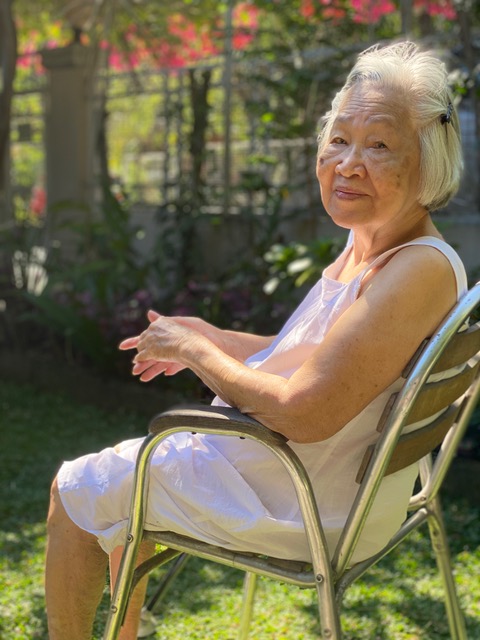
MY MOM Emy turns 97 today, May 9. Some years, her birthday coincides with Mothers’ Day, saving us a celebration. But that’s a bit deceptive, because when you have a parent this old living with you, every day is a blessing worth celebrating. 

It’s hard to believe that Mommy Emy is a lot healthier than she was a quarter-century ago, when we all feared that we were about to lose her, just a few years after our dad Joe Sr. passed away in 1996 from a ruptured aneurysm. After all, the stories usually went that way—one spouse dies, the other follows soon after, out of grief or a sense of life suddenly losing its purpose and meaning. Whatever caused it, Mom fell ill with tuberculosis, with the disease progressing so devastatingly that she was coughing blood and feeling terribly weak. Luckily, her doctor put her on a menu of cutting-edge pills that, over two years, miraculously banished the TB, well enough for her to secure a US visa to join my sister Elaine in California.

Over the next decade, she regained her strength, and even as she sorely missed our dad, indulged in a newfound zest for life—traveling with my sisters in the US, Canada, and Europe, visiting glaciers, going up the Tower of Pisa, and settling into in the quiet suburbs of Virginia just outside of DC with Elaine and her husband Eddie. She stayed there long enough to gain a green card, and we would visit her every now and then, sensing that, despite Elaine’s and Eddie’s loving care, she was pining for home. Eventually she did return to Manila, giving up her green card. “I want to die here,” she stated with finality, and that was that. 

One thing I love about my mom is her eminently practical sense. Since at least five years ago, she has written out clear instructions about what to do in case she was dying—no intubation, no extraordinary efforts to prolong her life, just as quiet and as painless a departure as could be managed. Last year we went out with her to the department store to pick out her funeral dress—a macabre chore to some, but for us, and especially for her, a cheerful excursion, with much discussion about this cut or that shade of blue (yes, she’s going in blue). 

She was born in Romblon a landlord’s youngest daughter, the apple of his eye, the only one to go to UP in Manila, from where she graduated with an Education degree. Growing up, she rode a horse on the farm and accompanied my Lolo Cosme on his trips to Manila. She remembers how easy and provident life was back then: “We would go to the beach and Papa would throw a net into the water, not far from shore, and it would come up teeming with fish, and the fish were everywhere, jumping in the air.” 

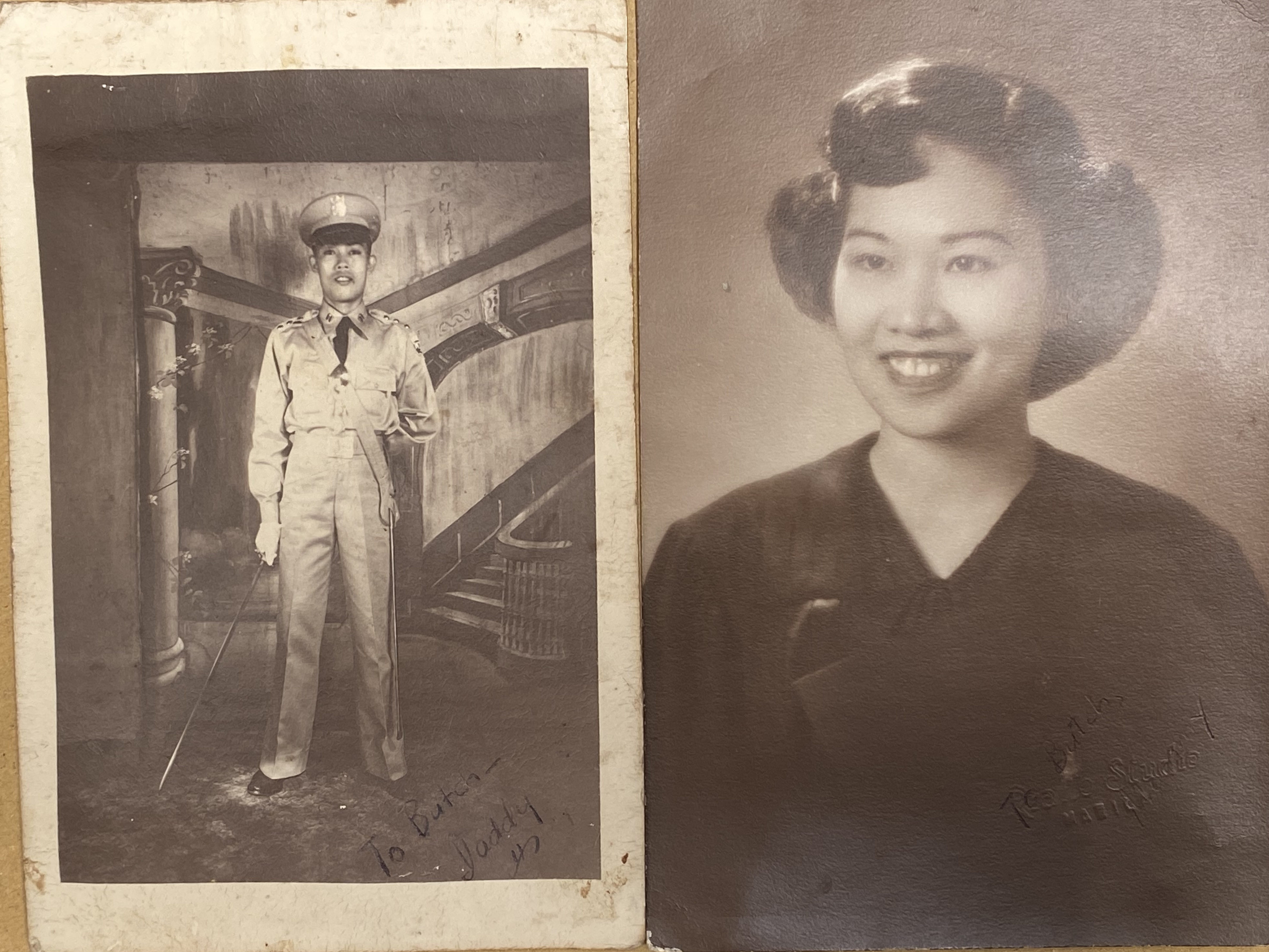
My father was a sharecropper’s grandson, too poor to finish college but with a sharp mind and a gift for words that must have swept Emy off her feet. Like many couples of their time and place, they decided to seek their fortune in Manila a few years after I was born. Their love was deep but often tested, given that there were five of us to raise. There was even a time when Dad was a barker for jeepneys, and Mom worked as postal clerk for minimum wage. Life sometimes felt like a soap opera, but we all pulled through, and often it was Emy’s internal toughness that made sure we were fed and ready for school.

Since her return from Virginia, my mom has been staying with us in UP Diliman, occasionally spending time with my three other siblings (Elaine is now in Canada). Still figure-conscious despite her age, she watches what she eats, but we indulge her every whim. It doesn’t take much to make her happy—almost daily Facetime calls from Elaine in Canada and our daughter Demi in the US, a weekly manicure, visits from her brood, and Tuesday Circle get-togethers with her group of neighborhood friends, among whom she is now most senior. 

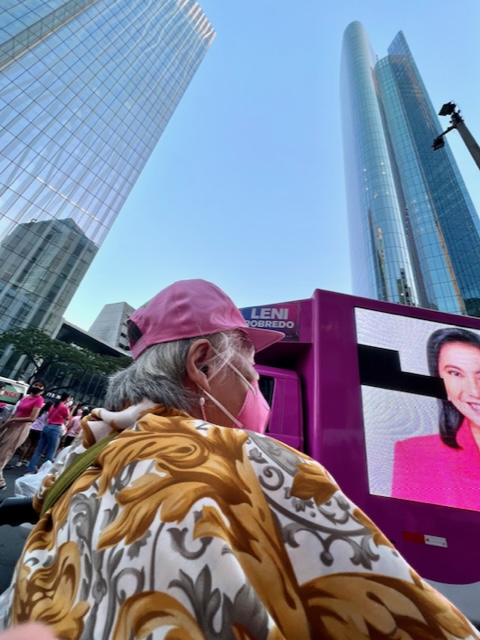
What surprises people who meet her for the first time is how strong and alert she is. She uses a cane and a walker (but only because we insist), but she takes long walks daily around the yard and just outside the house. Her steps are getting slower and harder, but she marched for Leni in 2022, in gratitude for which the VP sent her a video greeting on her 95th birthday. She reads without glasses, and plays word games on her iPad with a passion; she follows Netflix, and watches the news with tart commentary. She’s as prayerful and religious as they come, but is staunchly liberal in her politics. “All my friends are dead” is her frequent complaint, quickly balanced by “But I’m so thankful for my children!” She and Beng share long meals and laughter-filled conversations. We have no doubt that as long as she takes her maintenance meds and doesn’t suffer a bad fall, she’ll live to be a happy hundred. 

Emilia Yap Dalisay’s name will never make it to the society pages, but she’s the biggest star in our small stretch of sky, and taking care of her has been our grandest privilege. Happy birthday, Mommy Emy, and may you have as many more years to come as God’s kindness will allow.

Qwertyman No. 76: What I Have Learned

Qwertyman for Monday, January 15, 2024

PARDON ME if I wax a bit personal today, as I turn 70, much to my great surprise, coming from a generation that didn’t expect to live past 25. I’ve often noted that in your 20s, you seek purpose and direction; in your 30s, stability in terms of love, family, and work; in your 40s, professional success and serious money; in your 50s, acclaim and reputation; and in your 60s, good health and comfort. Now, on the threshold of my 70s, I find myself accepting and preparing for the inevitable, the average life expectancy of the Filipino male now hovering at 72.

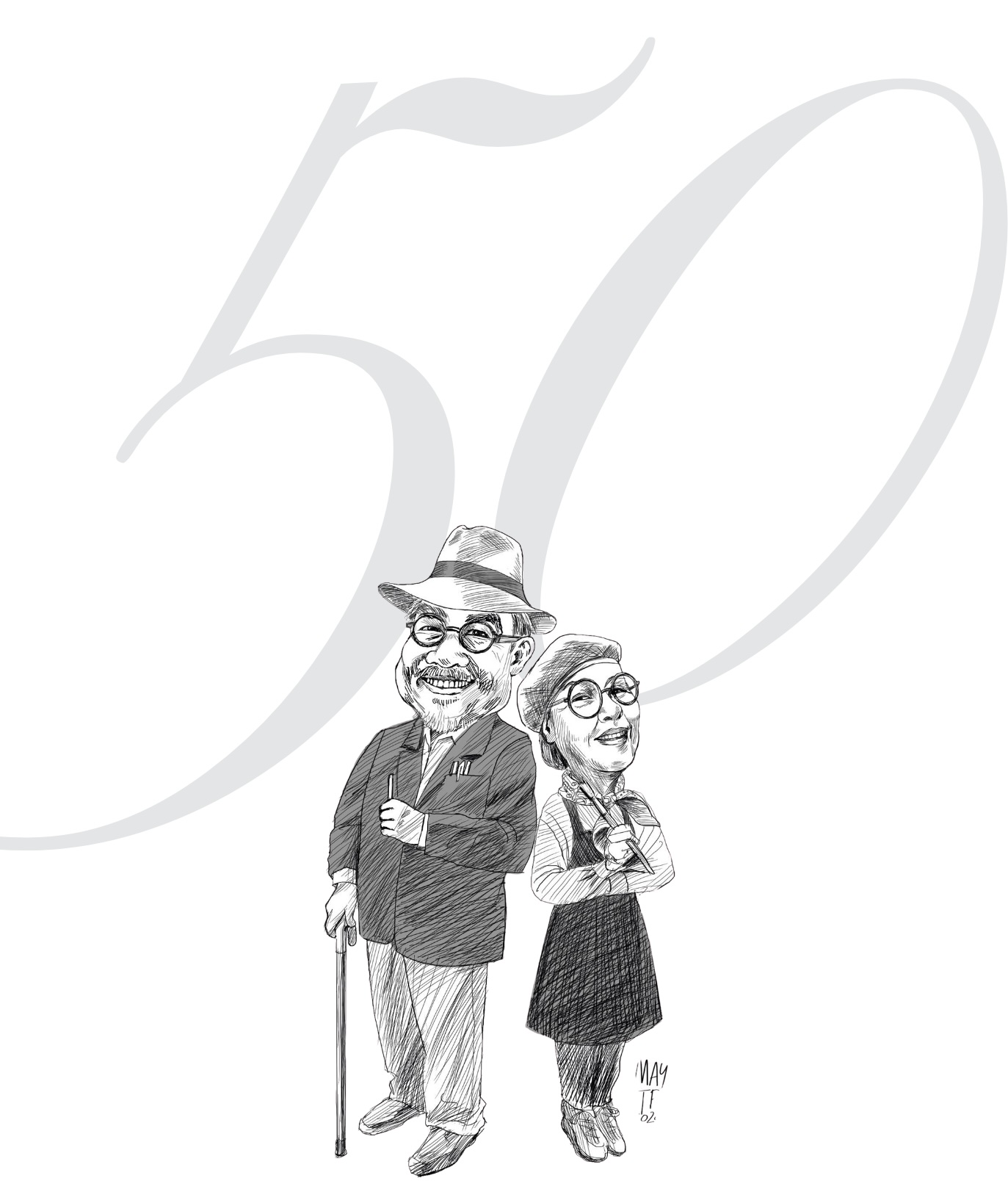
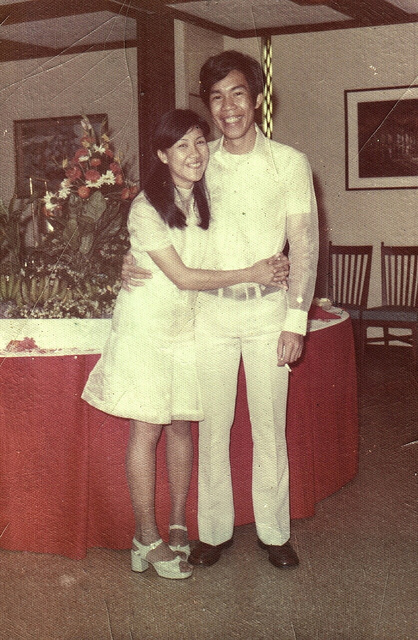
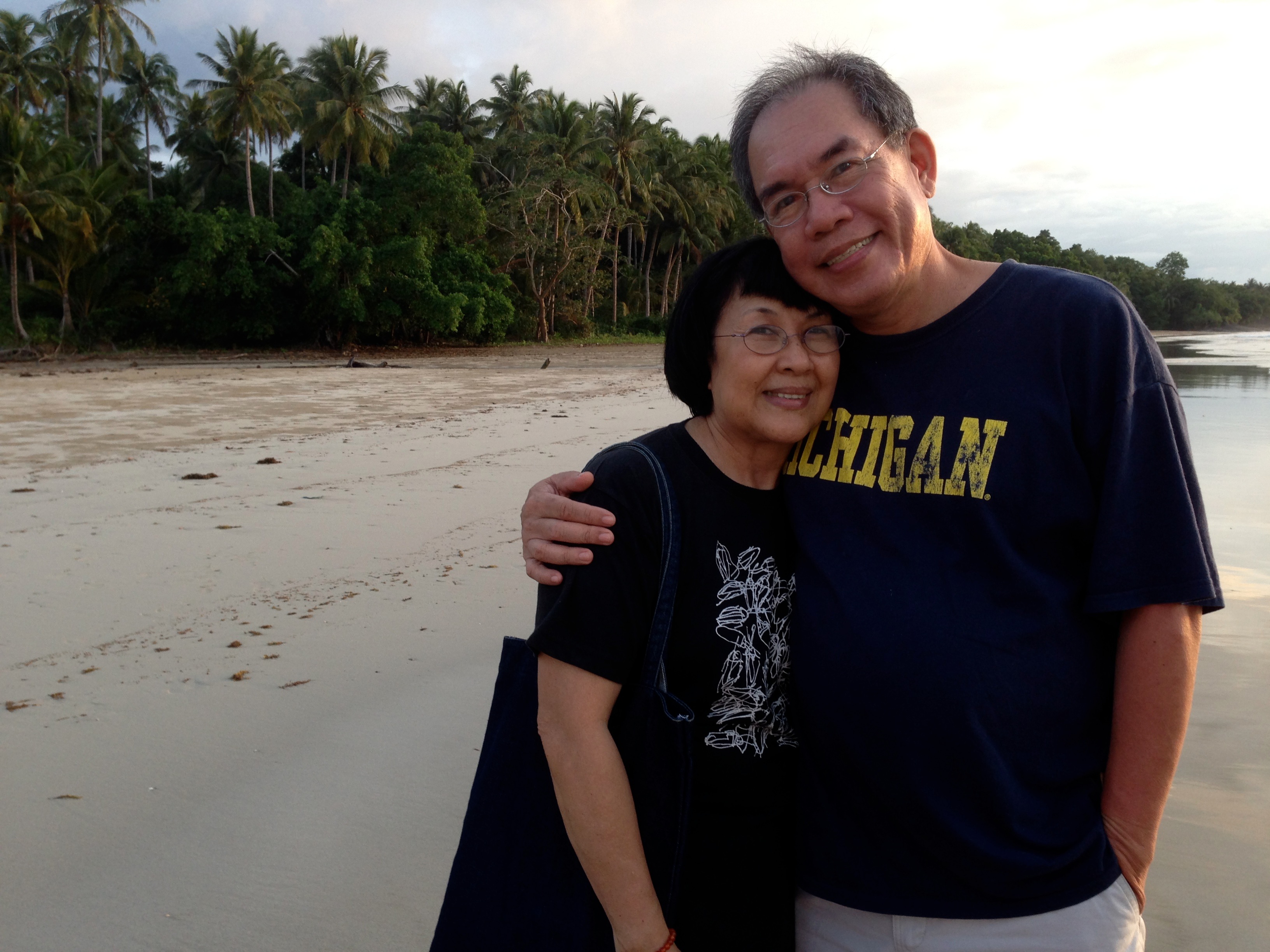
More significantly, my wife Beng and I are also celebrating our 50th anniversary. I’ve never quite resolved if it was a good idea to get married on my birthday—and just my 20th at that—but there was never any doubt that marrying Beng was the smartest decision I ever made, and that waking up beside her every January 15 is the best birthday gift I could ever ask for.

But I’ll spare you the love story, which, like all good love stories, has had its fragile moments. For now, let me share some lessons and insights I’ve learned from surviving the First Quarter Storm, martial law, EDSA, GMA, Ondoy, Yolanda, tokhang, and, for the moment, BBM. They’re by no means complete, and I still have a lot of learning to do in what I hope to be at least another decade of avoiding the lyres up there (or the pitchforks down there). But they’ll serve for now, hopefully to encourage newlyweds and young ones to hang on for the long and bumpy but also often exhilarating ride. 

First, survival matters. Fifty years ago, my comrades and I were all prepared to give up our lives for our cause, but today I’ll have to ask, “Must I?” Heroic self-sacrifice is symbolically important and can inspire others to take personal risks for the greater good, but a genuine and strategic movement for change cannot consist solely of martyrs willing to die in combat; its core must be formed of patient plodders willing and able to undertake the mundane tasks and chores of nation-building within their families and communities. For that one will need to co-exist with evil, if need be, if only to survive it and be able to do better. Co-existence does not necessarily mean surrender or acceptance, merely an affirmation of one’s right to live as well as anybody else. Resistance can take many forms, not all of them fatal; we need to be clever and resourceful in championing the truth, which is often starkly simple and clear but sometimes also just as complicated as the well-fashioned lie. 

Second, tolerance and cooperation are key to every successful relationship, whether it be a marriage or co-existence in a deeply fractured society. But also key to this idea is self-knowledge, which builds self-confidence and a greater willingness to understand and accept the other, and to educate oneself. Many early marriages falter because the protagonists are simply too young, too vulnerable, and still struggling to define themselves. Growing up on one’s own is difficult enough; growing up together is even more challenging, but necessary. I was 20 when I became a husband, and later that year, a father, and didn’t really know how to be either. Thankfully Beng and I had good role models in our own parents, and enough love to work things out and see things through. Eventually, we learned to define ourselves in terms of the other—so that today, for me, no trip is worth taking without Beng, and her joys and successes are mine as well. Forgiving oneself and accepting one’s imperfections are not only as important as acknowledging the other’s, but are prerequisites to mutual self-improvement.

Third, “compromise” is not a bad word, if we are to survive as a nation together and as individual citizens. In our 20s—much surer of our convictions than of our own squishy selves—we viewed the world in black and white, certain that the enemy was out there, was not us or within us, and had to be rejected and battled in all arenas, on all levels. I’ve since learned that life can’t be lived on an all-or-nothing, take-it-or-leave-it basis, and that one has to negotiate with oneself as well as with others to keep whole and sane. An absolutist will never find peace, nor satisfaction, and likely never happiness. Learning to take things as they are—and working from there—can be harder than to merely insist on things as they should be, and to do nothing when they are not. Just as important as highlighting our differences are finding and building on the things we can agree upon—like resistance to foreign encroachment on our territory, which helps clarify our self-image—regardless, though still mindful, of our suspicions of the other’s motives. Opportunistic politics can sometimes be the inadvertent handmaiden of good outcomes.

Fourth, I’ve learned my limitations, and to do my best within my foreshortened horizon. I’ve realized that I can be happy in not trying to do too much, living in the moment, and finding fulfillment in small achievements that bring change and hope to other people. I haven’t given up my dreams for a more just, progressive, and provident society, and will continue to fight for those ideals, but I will choose activities and means that will lead to something I can see and hold (and that others can repeat, improve upon, and grow for the future). Big ideas are great, but small deeds can be just as valuable. I want to make a difference in someone’s life today. 

And finally, there is an afterlife. I frankly don’t know if there’s a heaven or a hell as the colorful posters in my grade-school religion class depicted them, but what I’m sure of from having attended countless funerals is that an important part of that afterlife and of its very proof is the life of those you will leave behind. When you die, others live on; they’ll talk about and even shed tears for you for a few days, and then they’ll move on to more pressing matters like tax amnesties and next Tuesday’s price of gas. Now and then your name will come up over morning coffee or a late-night beer, and the smile, the laugh, the sigh, the wince, or the cuss word that your memory will provoke will say everything about who you were and what your life was all about. I’ll be happy with a smile—maybe a bit regretful, but mostly pleased to have crossed paths with and even to have learned something from me. Mabuhay!

(With many thanks to May Tobias-Papa for the illustration)

Qwertyman No. 39: My Mother Emy

Qwertyman for Monday, May 1, 2023

Pardon me if my column this week is a bit personal, because its subject is my mother Emilia, who will turn 95 next week, against all odds and through the grace of the One she prays to every night and every morning, and in the loving embrace of her five children and many grandchildren and great-grandchildren.

In this age of murderous Covid, rampant cancers, devastating disasters, and political turmoil, to reach 95 is extraordinary. To be 95 and be reasonably healthy, free of dementia (but for a few memory lapses that even I at 69 am prone to), able to walk a few hundred meters for her daily exercise, read without glasses, and comment tartly on the day’s political and entertainment news is almost superhuman. 

Like today’s children, my mom Emy can’t be removed from her iPhone and her iPad; she loves to play word games, beats my wife Beng at Scrabble, devours Netflix by the series, and has her telenovela programming graven in stone. She has daily Facetime audiences with our daughter Demi in California and my sister Elaine in Toronto. She even gave up her US green card to spend, she says, the rest of her time at home. In her “Tuesday Circle” of elderly friends, she is now the most senior, but hardly the most infirm. Best of all, she looks forward to reading my books and columns, and although I suspect that they sometimes bewilder her as much as they do my other readers, she invariably likes them because they were written by her first-born, who cannot possibly write anything badly. (This week’s surprise column, I think, will be a hit with her.)

A quarter-century ago, shortly after my father Jose Sr. died, we thought we were going to lose her as well. That’s what they say often happens—one dies, and then the other follows, in the utmost expression of devotion and sympathy. Emy was diagnosed with tuberculosis, so serious and advanced that we felt we were gathering at her deathbed, her sheets spotted with the blood she was coughing up. I had never seen her so frail and so helpless. She was missing my father terribly, and I’m sure she wouldn’t have minded leaving us to join him at that moment. 

Theirs had been a storybook, whirlwind romance. She was the youngest daughter of a landowner in Romblon, the only one in their brood of twelve whom her father had trusted to study and go to college in UP in Manila. She was her father Cosme’s pet, a girl who rode horses on his farm and who accompanied him when he took a boat to the big city to off-load his copra harvest and to buy necessities and a few baubles for his large family. It must have pained him when she decided to finish her high school in Manila (“I was walking on Padre Faura and saw UP High, and so I went in to see how I could study there,” she says) and to stay there so she could study to become a teacher.

My father Joe was the brightest boy in his school and, so the local legend goes, in the whole province. He was an eloquent writer and speaker and cut a dashing figure. The only problem was, his family was poor—his grandfather had been a sharecropper, his father a farmer. His parents had separated shortly after he was conceived—another story that deserves a telling of its own—and lived about a kilometer apart for the rest of their lives. Raised by my grandmother Crispina, Joe seemed destined for great things far beyond Romblon. He already had a girlfriend, among the town’s prettiest bachelorettes (I met her once when I was a boy, unaware of why she was looking at me a certain way.)

One day Emy and Joe met at the pier in Manila waiting for other people and other things. Some sparks must have flown, because not long after, they were together and engaged to be married. I was the first outcome of that improbable union, born in a nipa house in Alcantara, Romblon, pulled out of my mother by a midwife (whom I would meet about twenty years later, walking barefoot on the asphalt road, and whom I would rather awkwardly gift with a pack of Marlboros in token thanks for my delivery).

The decades following would be a mixture of toil and triumph, of struggle and hope. Both my parents had enrolled in law school, but the need to sustain us foiled that dream. Joe had even gone to the police academy, in the class of James Barbers. He clerked for Public Works, became a Motor Vehicles Office agent with a shiny badge, and took on all kinds of jobs to support us. My mother Emy, despite her pride as a UP Education graduate, soldiered on beside him and sold stamps as a postal clerk. We went through some very rough times, constantly moving around the city with all our worldly possessions on the back of a truck in search of more affordable lodgings. Sometimes my father would be gone for long periods, working as far away as Mindanao to be able to send us some money. 

But one thing they always held up for us was the value of education. My parents slaved and my siblings sacrificed so I could go to a private school, thinking like most Filipinos of their generation that a facility in English would be my ticket to success. It was a huge relief for all (and a good excuse to buy our first TV) when I got a full scholarship to the PSHS. So it must have felt like a stab in my mother’s heart when I announced, shortly after entering UP on the swell of activism, that not only was I not going to be a scientist (my Math grades were miserable) but that I was also dropping out of college to find work (which I did at 18, to write for the Philippines Herald). Despite everything, I wanted to follow in my father’s footsteps and gamble on my talent.

But I did come to my senses and many years later returned to school, where I remain to this day, with a lofty title my wife Beng prefers to downplay to “Chauffeur Emeritus.” Instead of following Joe to his grave, my mom Emy fought back, miraculously recovered, traveled the world, and cradled her great-grandchildren. So good things do happen to those who persevere and survive, for as long as we’re willing to give life another chance.

I honestly don’t think I’ll reach 95 myself, but I have the privilege—and the challenge—of living with someone to inspire me every day. Happy 95th, with all our love, Nanay!

Penman No. 337: A Perfect Ending

IMG_9010.jpeg

Penman for Monday, January 21, 2019


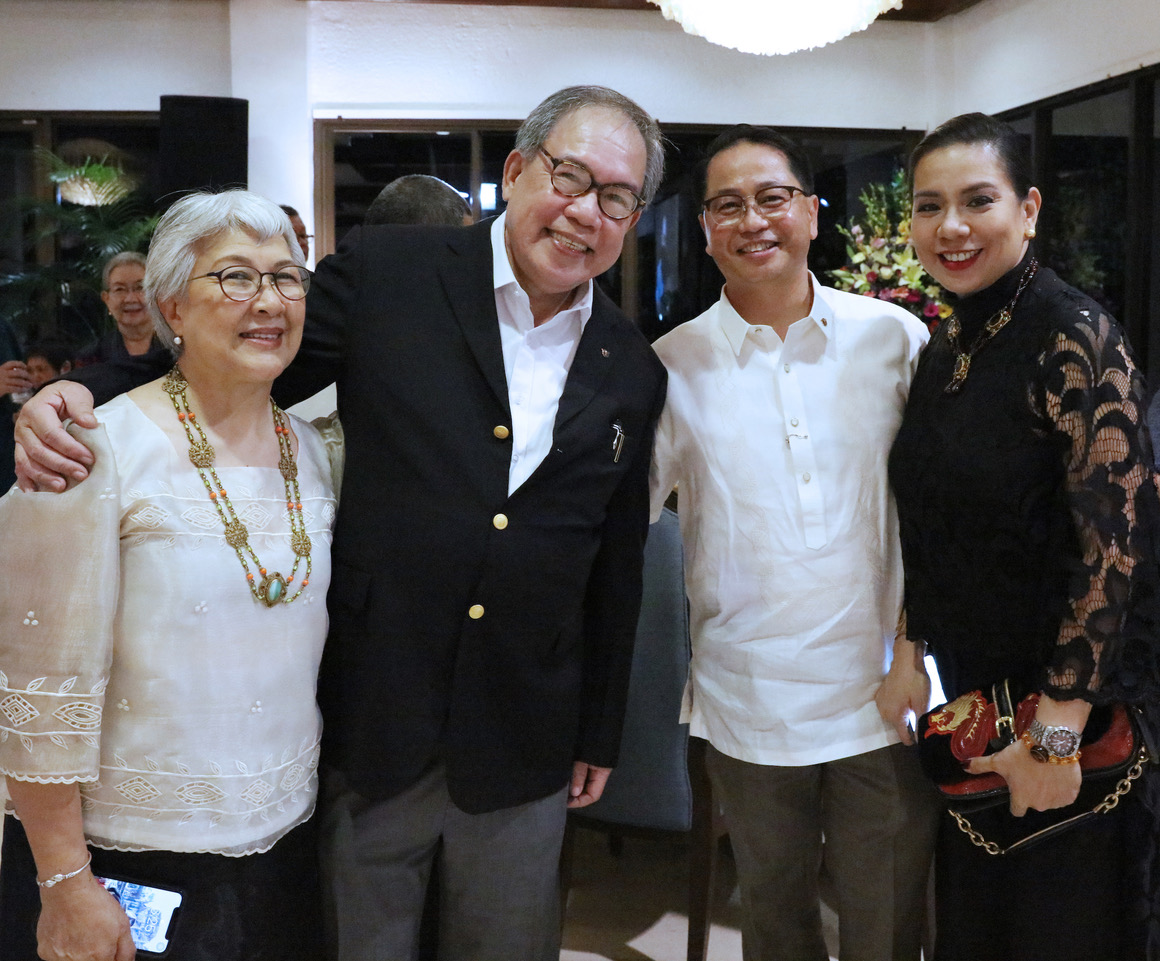
I RETIRED last week after 35 years of service at the University of the Philippines, and I celebrated the special day with UP friends at a dinner graciously hosted by UP President Danilo Concepcion at his official residence, the newly renovated Executive House.

Standing in a wooded corner of Diliman close to C. P. Garcia, the Executive House was built by President Vicente Sinco in the late 1950s, and in its early years no president really lived there, but it became the venue for lively faculty colloquia, involving such intellectual stalwarts of the time as O.D. Corpuz, Ricardo Pascual, Cesar Adib Majul, Leopoldo Yabes, and Concepcion Dadufalza. When President Salvador P. Lopez decided to move with his wife into the place in 1969, they were reportedly met, in typical UP fashion, by a posse of protesters insisting on certain demands.

These historical precedents were thronging in my mind when I stepped into the EH last Tuesday evening for an all-UP dinner which, unlike all the other big events I had attended there, was being held in my honor—it was a trifecta of sorts, being my 65thbirthday, retirement day, and our 45thwedding anniversary.

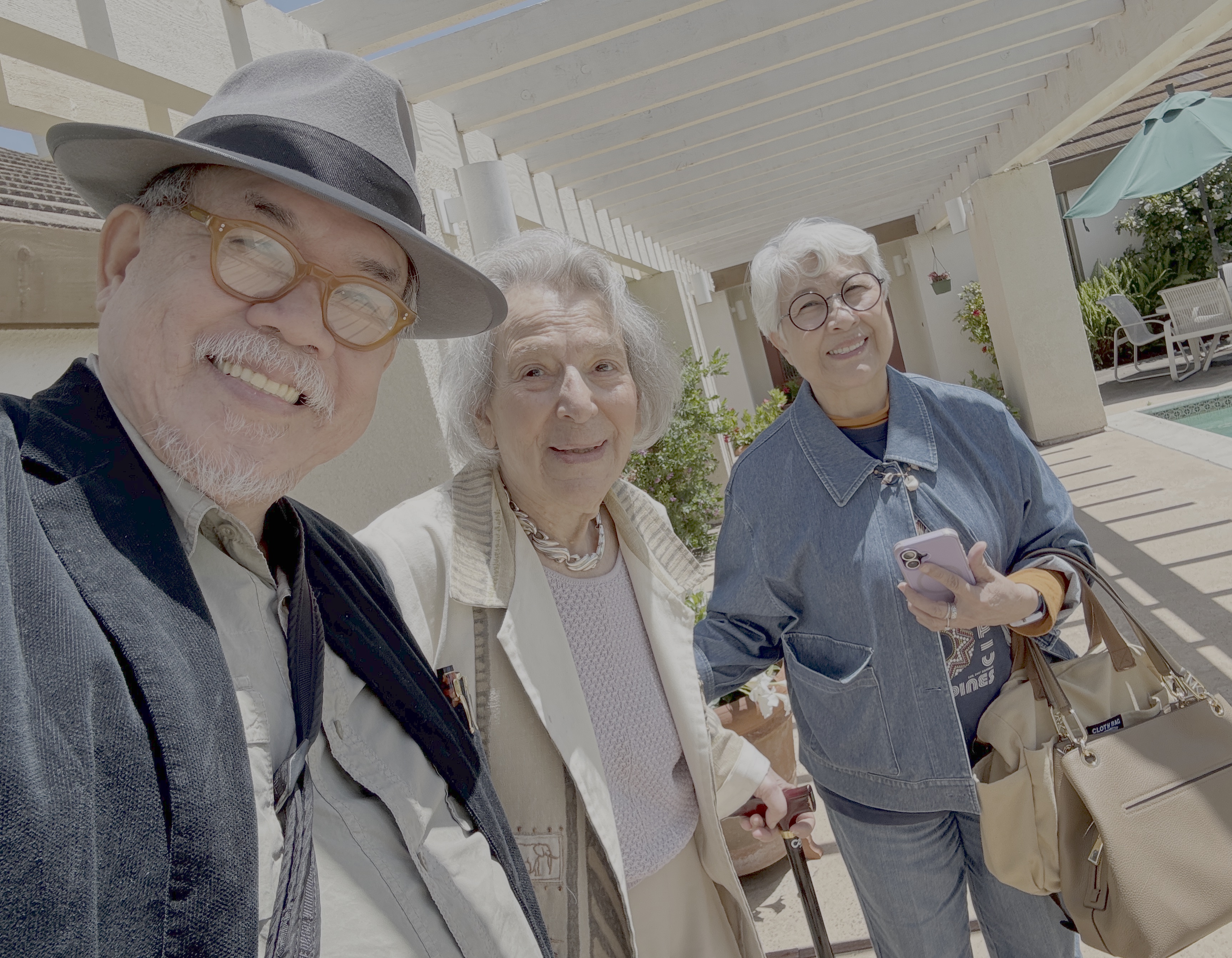
Long before I became Vice President for Public Affairs, it had been my dream to end my service in UP with a small party for my closest and dearest UP friends at the EH, and that came true. Of course that dream began with entering UP itself, and it was my mother Emilia—BSE 1956, the only UP graduate among her 12 siblings—who fired that ambition. When I was a small boy, she would play a 78 rpm record of “UP Beloved” flipsided by “Push On, UP.” I guess you could say that my future was laid out for me that early, and I grew up without any doubt whatsoever that I would enter UP someday. She was with us that evening, lovely and graceful at 90. (Our daughter Demi, BA Art Studies 1995, joined us in spirit from California.)

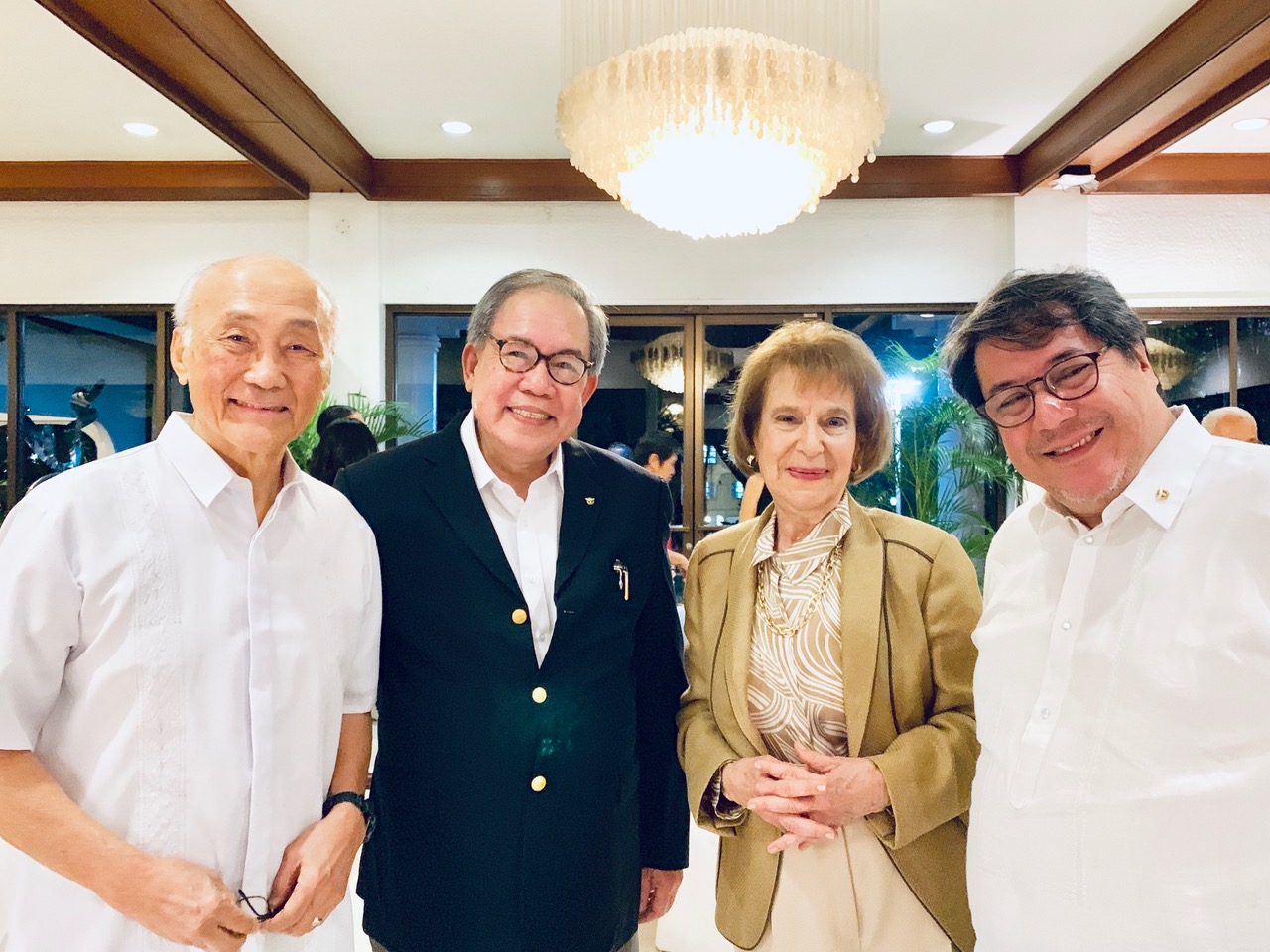
In my farewell remarks, I also thanked my sweet wife Beng, from the UP College of Fine Arts, my 45 years of togetherness with whom was for me the better reason for the festivities. Aside from my friends in administration, teaching, and writing, some seniors and mentors obliged me with their presence—Dr. Gerry Sicat, who took me in off the street and employed me as a writer at NEDA in 1973, sent me back to school to learn some Economics, and sent me to the US on my first trip abroad in 1980 to expose a young writer to the outside world; former President Dodong Nemenzo, whom I had served as VP many years ago; National Artist Amelia Lapeña Bonifacio, my professor in playwriting; Dr. Manny Alba, as debonair as ever; and dear friend Julie Hill, whose four books I have been privileged to edit, and who flew in all the way from California to be with us.

IMG_7818.jpeg

3Q2A3822.jpeg

I also noted that VPs and even presidents come and go, but UP is unique and in some ways immutable. The University is bigger than any one or even all of us. It has a life and an integrity of its own.

We need to keep fighting for a UP truly worthy of its founders’ dreams—a UP governed by merit rather than by patronage, and led by men and women of impeccable intelligence, ability, and most of all, integrity. Honor and excellence must be more than slogans to us but a way of life—honor even more so than excellence, which is easily found in a community of intellectually brilliant minds, but also easily compromised and corrupted by power.

While every day we need to recognize and to make the pragmatic decisions that keep the University afloat, every once in a while, we need to remember what makes us different from just another school, and uphold idealism over realism, principle over practical result, excellence over expediency.

I ended with a few appeals, addressed mainly to the friends I was leaving behind—foremostly, to keep the University’s liberal spirit alive. I have often argued that the true heart of UP lies neither in the authoritarian Right nor the doctrinaire Left, but in that great liberal middle, which—despite all of its confusions, contradictions, vacillations, and weaknesses—most honestly represents the search for truth, reason, freedom and justice in our society. I would much sooner trust someone who remembers and respects the value of doubt than those—like our despots and ideologues—who insist that they have the answer to everything.

I also asked the administration take special care of the UP Institute of Creative Writing, which I was privileged to serve as director for eight years. It is a truly world-class institute whose work no one else in Asia is doing. For a relatively small investment, the UPICW keeps the literary imagination and the truth itself alive in this age of fake news and demagoguery.

It was a perfect albeit bittersweet ending to my formal career. I retired saddened to miss the company of people I had come to respect and love, but gladdened by the opportunity to serve our University and people in more creative ways—in a manner, at a time, and at a pace of my own choosing.

Beng and I expect to travel much and travel far together, ngunit malayong lupain man ang aming marating, din rin magbabago ang aming damdamin.

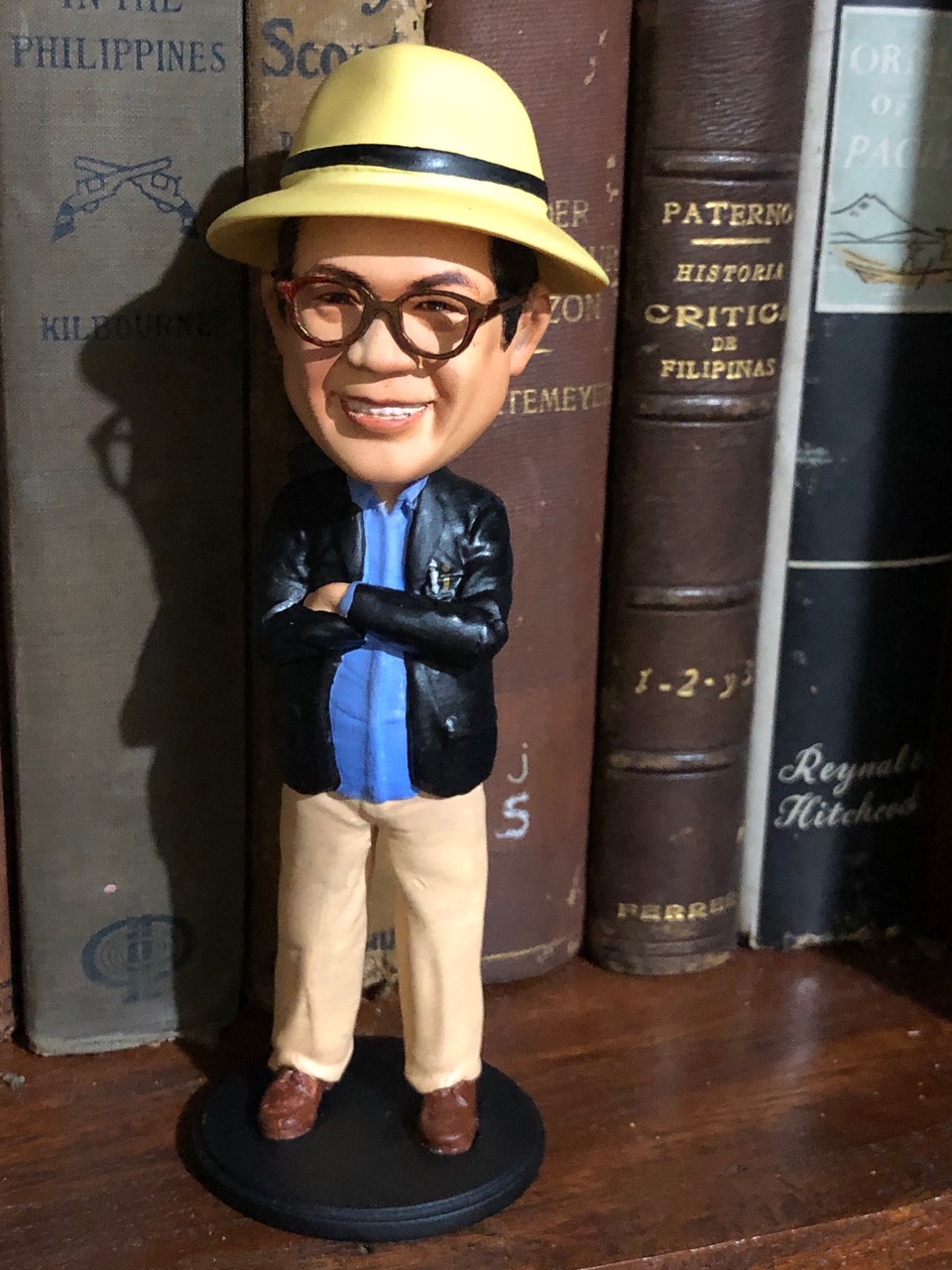
(The 3D-printed Mini-Me up there was a parting gift from my staff at the OVPPA. Many thanks, all!)

Penman No. 235: High Time at the Henry

img_0634

Penman for Monday, January 23, 2017


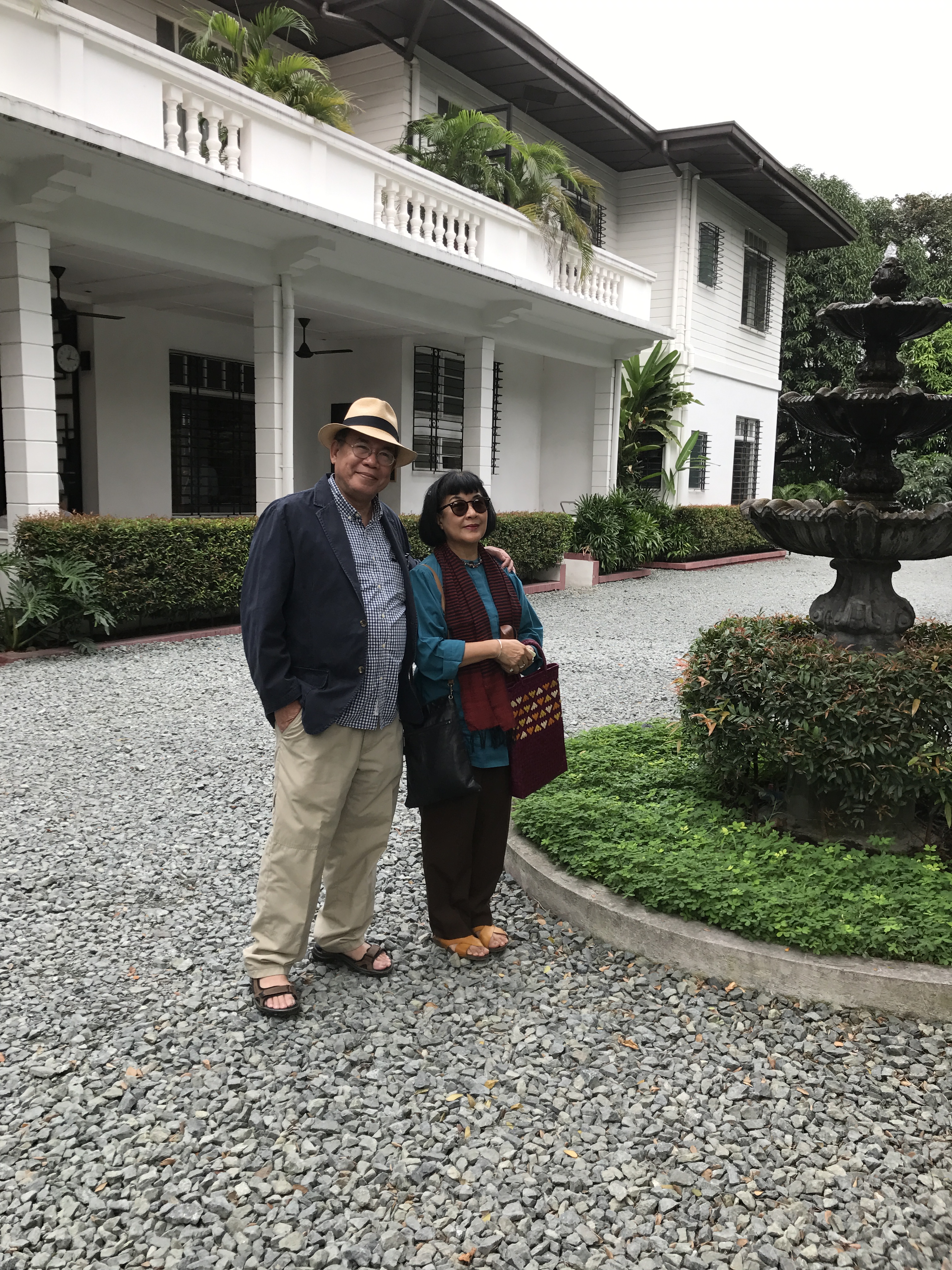
A COUPLE of weekends ago, against all odds, Beng and I celebrated our 43rd wedding anniversary and not coincidentally my 63rd birthday. It seemed like an inspired idea at the time to get hitched as I turned 20, but over the years I’ve wondered if I should have given each day its proper due, and doubled my presents that way. But I soon realized that I was never going to get or find a better gift than Beng—patient, forgiving, and gentle Beng—so January 15 has largely been a day for two.

img_0616

Around Christmas I start thinking about how and where best we can spend the day, and this year, with UP having shifted its academic calendar to begin the school term in mid-January, we could have opted, funds permitting, to fly out to some exotic destination like Penang or Pattaya (or, heck, why not Paris?).

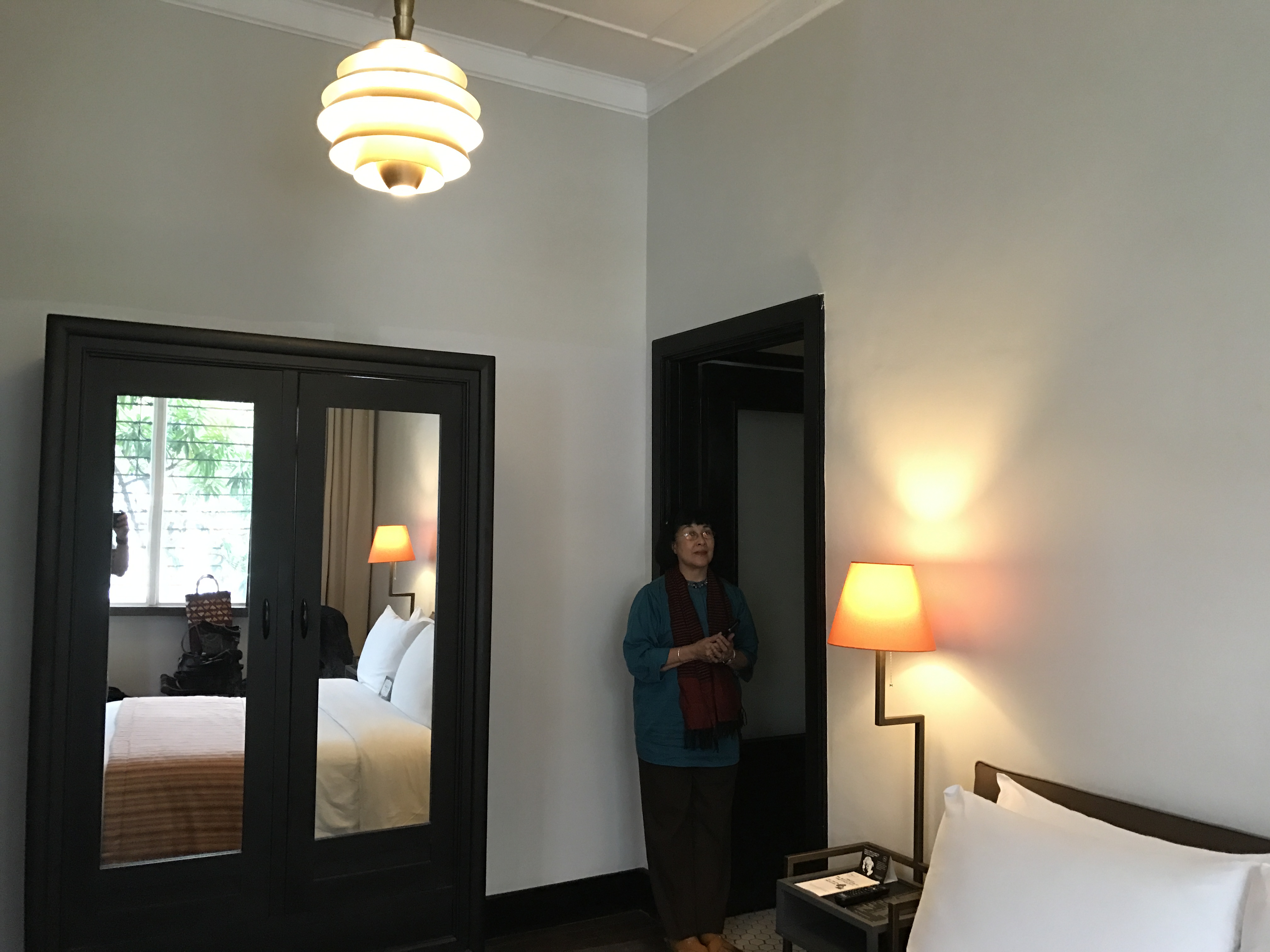
Instead, after some Googling, we ended up in the most unlikely of romantic locales—Pasay City, at the Henry Hotel along F.B. Harrison, to be more specific, where the magic begins once the gate opens.

I’d read about the Henry somewhere before and had seen pictures of the place—a visual and sentimental journey back to the 1950s, with its stately main house and sculpted gardens, and I remember being amazed even then by the fact that such a sylvan hideaway could exist in the heart (or less kindly the armpit) of the metropolis. It was high time we checked in for a weekend staycation; the saved airfare alone would answer for the room. And being staunch northerners, we barely knew the southern sector of the city, except for visits to the Cultural Center and the Luneta area. We hadn’t even reconnoitered the cavernous Mall of Asia except again for the briefest sorties.

But again that’s not entirely true, because I had actually grown up in Pasay in the late ’50s and early ’60s, in a house on P. Manahan branching off F.B. Harrison. It was a neighborhood interlaced with catwalks, off one of which I once fell into the fetid water while showing off my brand-new cowboy outfit, which I had probably received for my fifth or sixth birthday.

That bit of unpleasantness aside, I could still remember afternoons swimming in Manila Bay and lounging on the long beach chairs by the sea wall, riding the double-decker Matorco buses up and down what was still Dewey Boulevard, and munching on foot-long hotdogs at the Brown Derby.

So this weekend in Pasay was something of a homecoming for me, even if all the old landmarks were gone. What’s now the Henry was already there when I was humming the Tom Dooley song, but it wasn’t a hotel yet then but a sprawling compound of large squarish but stylish wooden houses flanking a white concrete main house, amid greenery tamed and teased by Ildefonso P. Santos, who would go on to become a National Artist for Architecture.

img_0586

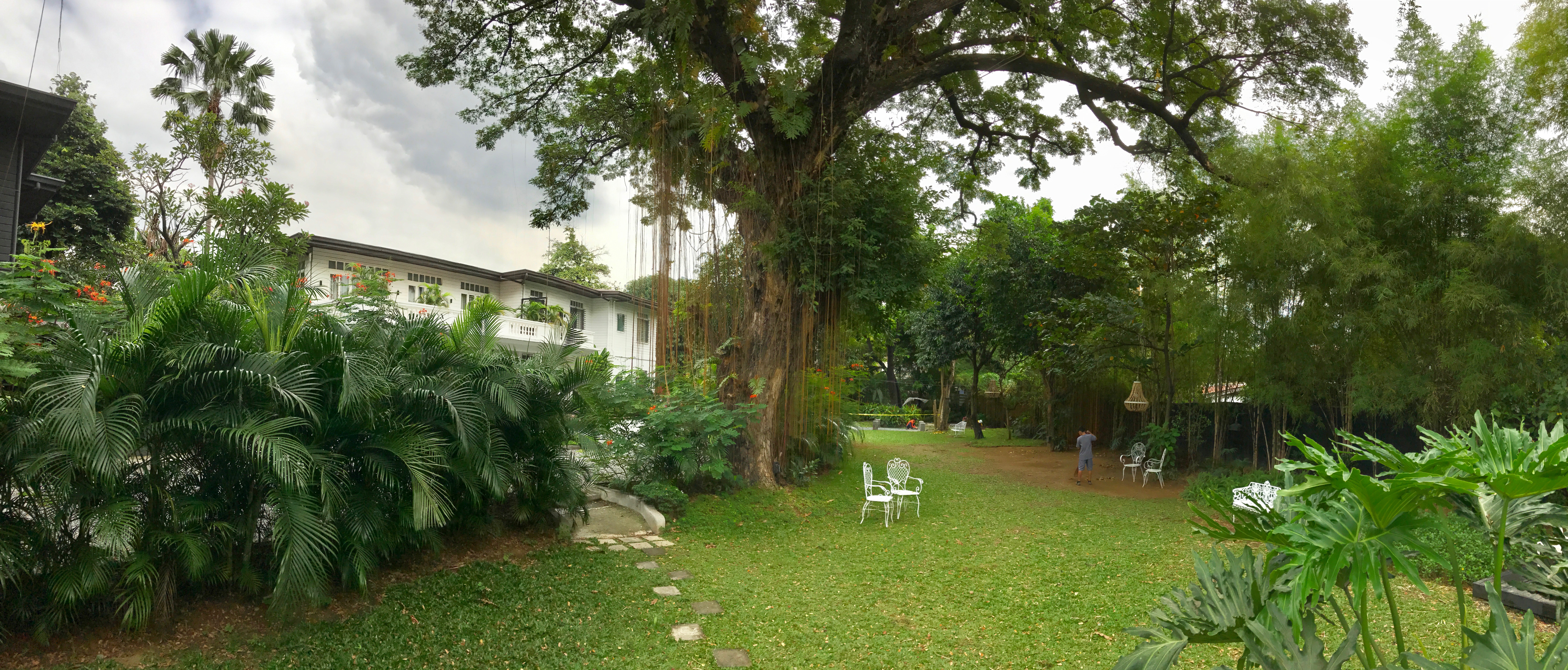
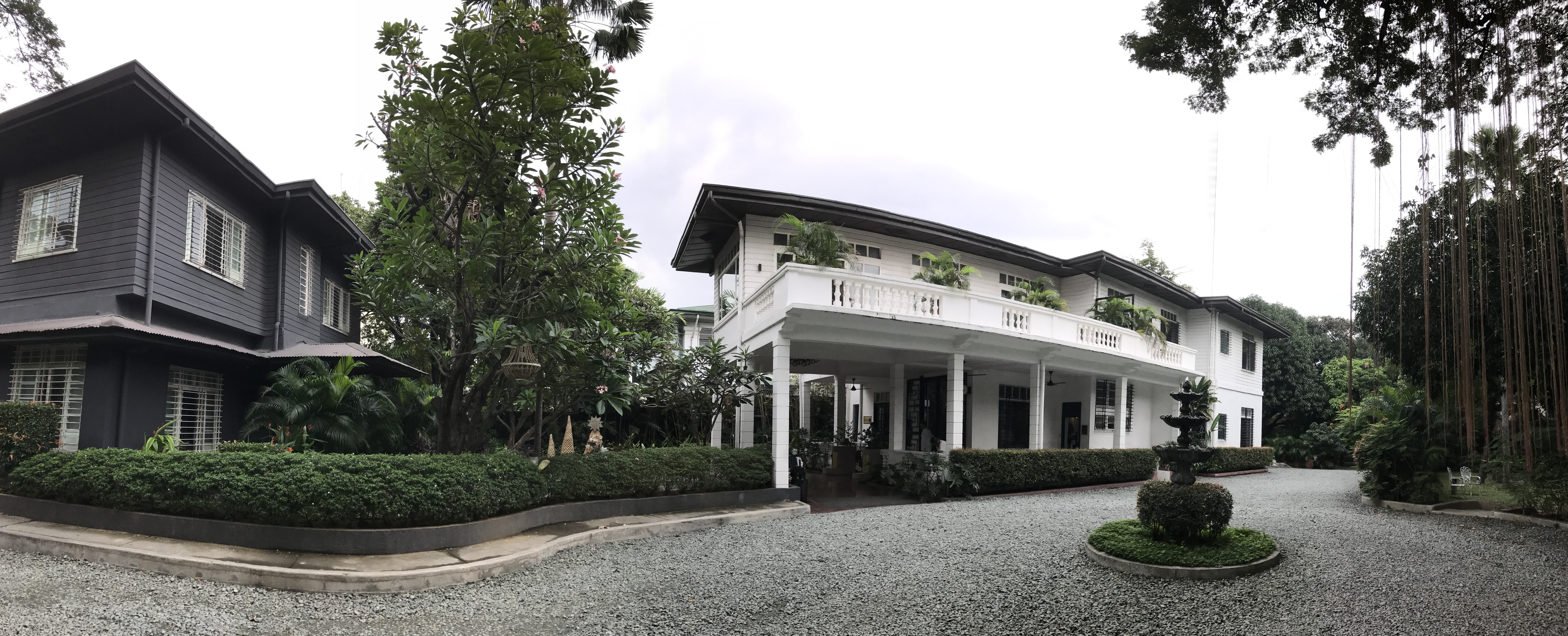
The 32-room Henry was built by its new owners out of that layout, preserving as much of the old while providing such modern amenities as wi-fi and air-conditioning. A long gravel driveway leads to a fountain and a roundabout fronting the main house, past a curtain of angel’s-hair vines; a swimming pool glows opalescent blue amid the verdure; the main house stands proud but welcoming.

I’ll report that we had a most pleasant and restful stay, helped along by an unobtrusively efficient staff. We luxuriated in the fluffy pillows and the hot shower. It was a bonus to discover that the art gallery of an acquaintance, Albert Avellana, occupied one of the houses in the compound.

img_0594

img_0593

But our anniversary weekend wasn’t meant to be spent cooped up in a room, however charming the ambience. We’ve lately been used to taking 5-7 kilometer walks as part of our seniors’ exercise regimen, so we gamely walked for our bangus and salad breakfast to a restaurant near MOA, and walked many kilometers more within the mall itself.

Staying at the chic Henry was in a way the compleat anti-mall experience, but Beng and I have never pretended to be anything but pedestrian, so that for us was the exotic treat. The mall, like all markets, was familiar territory.

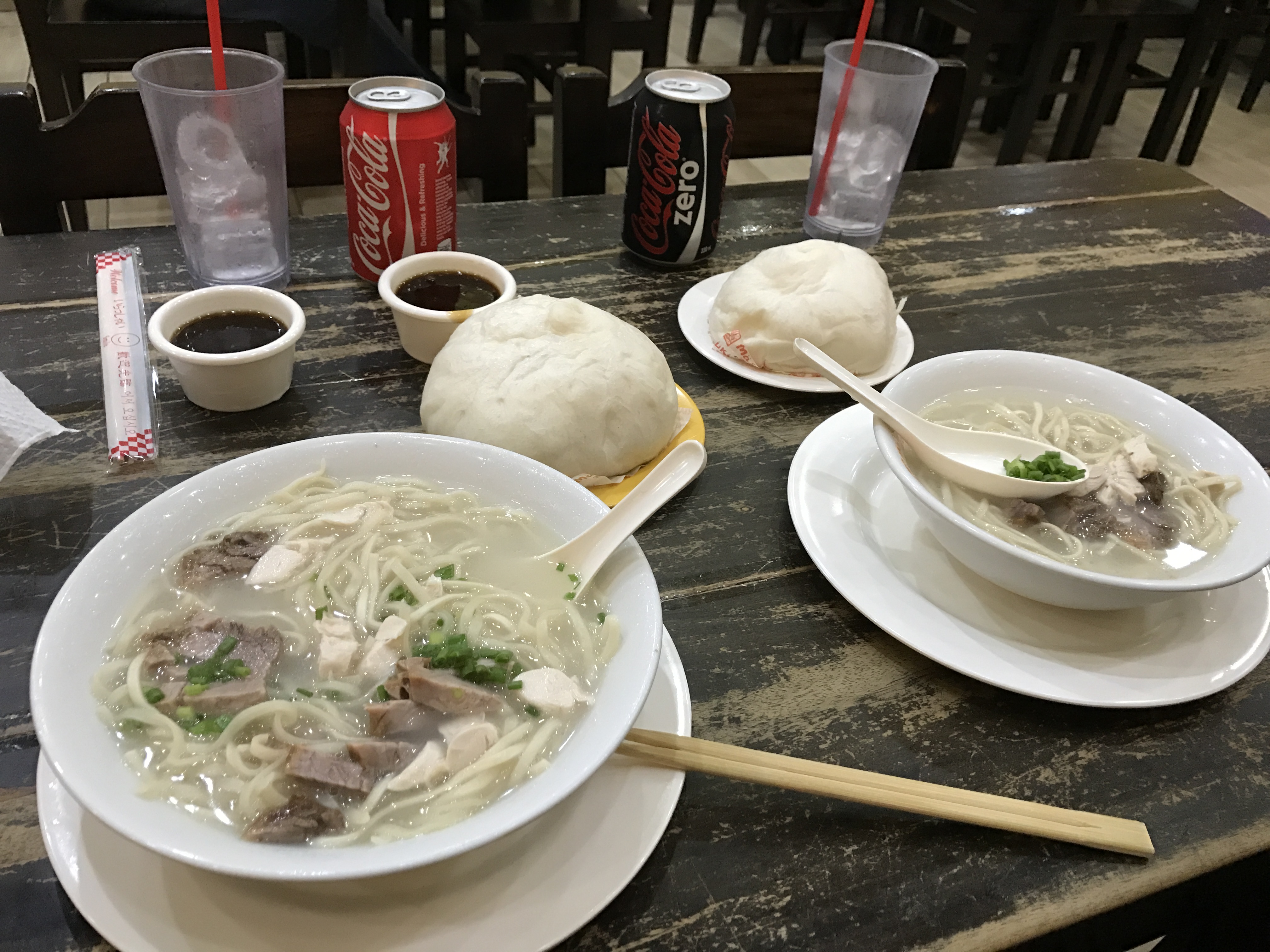
We took in a couple of action movies, buying more popcorn than we could ingest, and oohed at all the nice clothes that wouldn’t fit us. When we had lunch of ukoy and suam na halaya at the KKK restaurant, Beng loudly let the manager know that we were celebrating our 43rd, snagging us a free dessert of leche flan. Hankering for a sushi dinner, we misread Chinese for Japanese and stumbled into Masuki, which served huge bowls of my all-time favorite, Ma Mon Luk-style mami.

img_0617

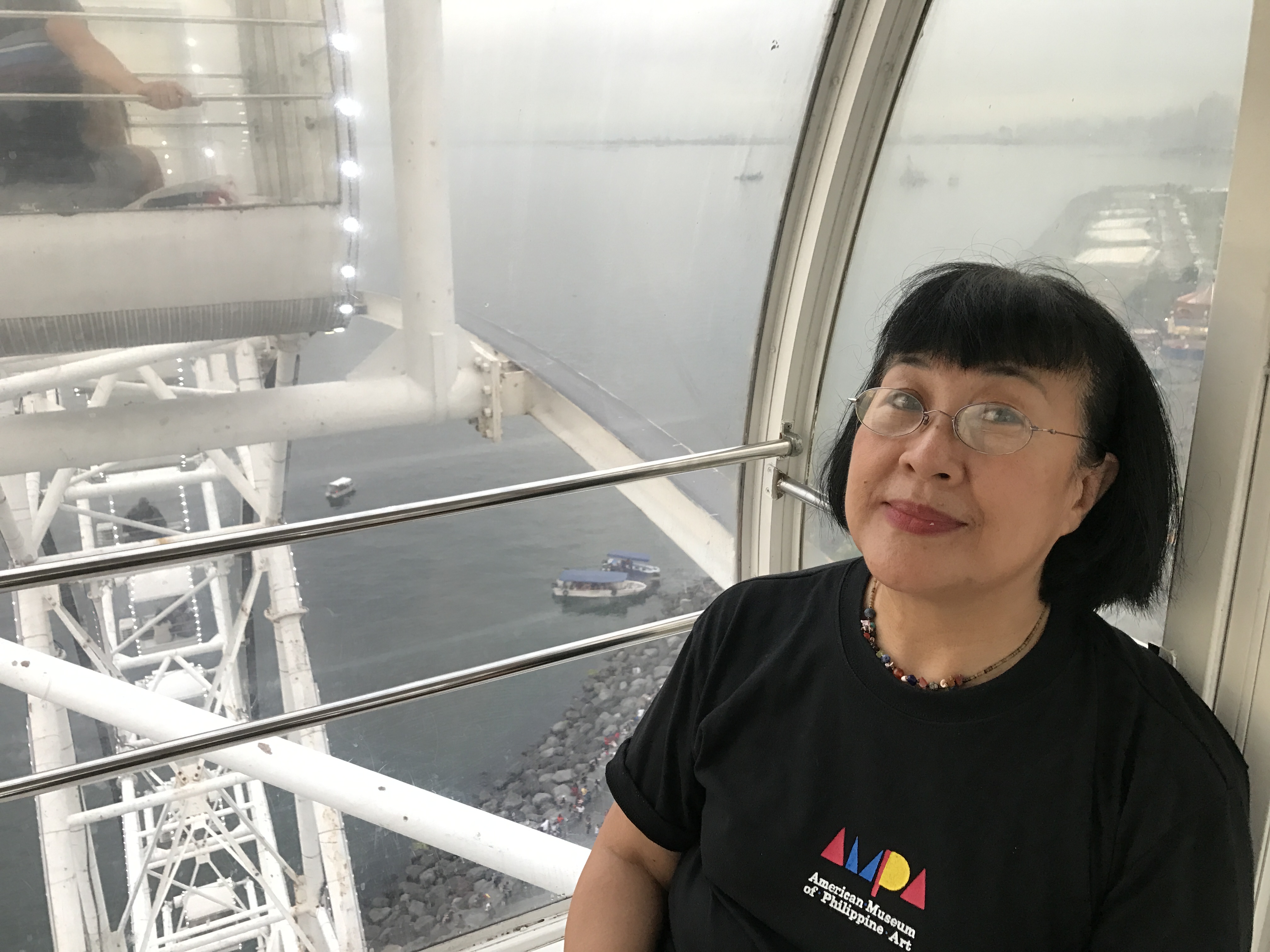
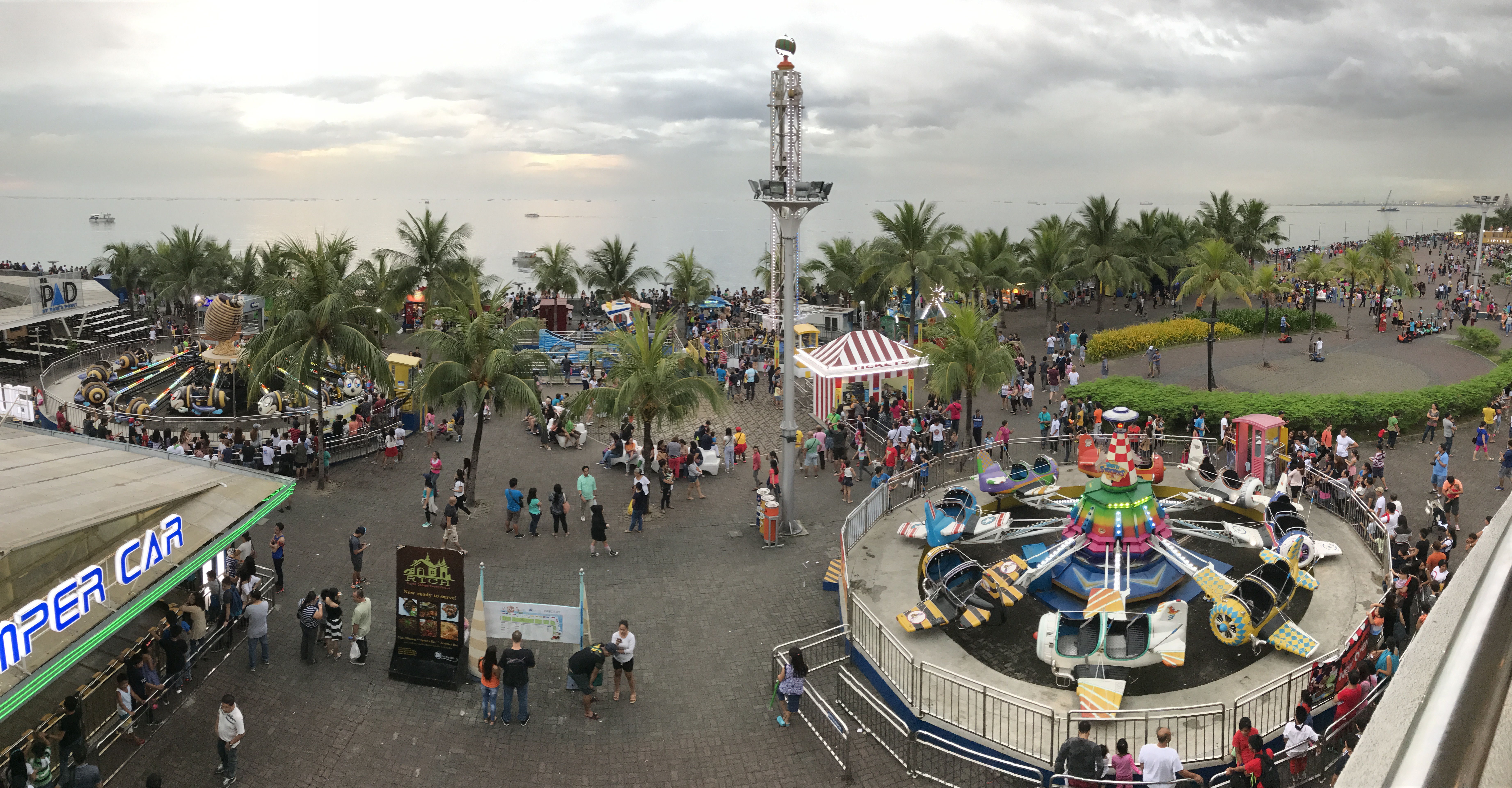
The literal highlight of our weekend had taken place earlier that afternoon. We had asked ourselves, the night before, “What kind of cheap, mindless fun haven’t we tried in a long time?” (Not that, naughty boys and girls.) We paid P150 each the next day for the answer: an eight-minute joyride up and down the MOA Eye, the big white Ferris wheel from whose apex we took selfies before tumbling out of our pod, giggling, to rejoin teeming humanity and the surefooted ordinariness of things.

img_0609

img_0612

Penman No. 81: Hello, Seniorhood

ButchBeng1974

Penman for Monday, January 13, 2014

THIS WEDNESDAY the 15th, Providence permitting, I’ll be marking two milestones I frankly never thought I’d reach: I turn 60, and Beng and I will celebrate our 40th wedding anniversary. (That’s right, we got married in Manila’s City Hall on my 20th birthday. It seemed a cool idea at the time, but I’ve regretted it ever since—the timing, not the marriage—because it deprived us of an excuse to party twice.)

I’ll admit this only now, but I’ve been looking forward to seniorhood with growing anticipation over this past year. At 57 or 58 you might still be in denial, walking with a pronounced spring in your step to convince yourself and everyone else that all you need is a new pair of Merrells to unleash the inner tiger in you, but the fact is, within six months of 60, you can’t wait to get there and have the inevitable done with.

The last time I knew I had to be a senior soon was just last month, when I stood in a long line in the unseasonably sweltering heat at the DFA to submit my expiring passport for renewal. Taking pity on me, a guard came up to me and asked, “Sir, how old are you?”, obviously thinking to bump me up to the express lane where a few imperturbable seniors sat smiling. “I’ll be 60 in three weeks!” I said. Not good enough. I waited three hours.

I know something about seniors—I live with four of them in the house; I know their moods, their ailments and medications, their favorite TV dramas, their exquisite skill at swallowing fish heads and spitting out the eyeballs.

And there’s no diplomatic way of putting this, but for the past three years, I’ve been married to one (Beng’s folks didn’t know she was marrying a young innocent until we were in the car on the way to City Hall; I had to get parental dispensation). But to her enduring credit, elfin Beng often has to be “carded” in the restaurants, as they’d put it in the States, while all the salespeople and cashiers have simply albeit solicitously assumed that I have a senior card to show for a discount.

So I’ve been mooching off Beng’s seniority, tagging along with her when she goes to the head of the line come boarding time at the airport, or when we queue up for movie tickets. That’s when you realize that the next best thing to being a senior is marrying a card-carrying one. But Beng doesn’t find it funny when I tell her what a shock I get to wake up in the morning beside a lola. Well, I guess we’re even now.

Of course, in a sense, you can never get old enough, maybe not until you hit 80. At 60, there will always be writers in their 80s or 70s who can’t wait to remind you what a bumbling tyro you are compared to their accomplished selves. That’s all right, because having older people on your shoulders could be the only thing that will keep you young, or at least younger, not counting strange potions meant to stiffen, uhm, one’s resolve.

It’s a pleasant surprise to get this far, because ours was a generation that was supposed to die before we even hit 25. After stepping out of martial law prison at age 19, I’ve taken every breathing moment since as a kind of grace note.

As it turned out, the grace note was my marriage, running four decades long, another unexpected, shamelessly undeserved blessing. When Beng and I stood before a CFI judge—my mom’s boss—that nippy January in 1974, it was after just three months of being together. We were in love, surely—truly, madly, deeply—but we were also gasping for breath, seizing happiness when and while we could, thinking that the State’s long and murderous hand could break the spell at an instant. As it turned out, too, the predictable State was hardly the enemy, but the inconstant self. Some of those forty years proved hard and lonesome, thankfully not too many nor too long.

As we start the count toward our golden 50th, Beng and I have come to realize that there are a few things we need and want to do in the years ahead.

With some regret, we will seek and keep fewer friends—the real, not the Facebook, kind. We’d like to focus on family, work, good health, our private charities, and, of course, more time together. This will mean socializing less and staying home more, which will be all right, because we both have so much work to do and always less time to do it.

On the other hand, lest our world become too small, and with whatever we can spare from our perennially meager savings, we will travel up a storm—march up headless hilltops, wind through strange alleyways, and wander down foreign boulevards while our knees can. This May, I hope to realize a longstanding dream, which is to bring Beng to Venice, where I had a magical moment three years ago but where she’s never been (of course, she’ll have to stay with me at that dinky hostel in Mestre, across the water and next to the Asian food store that was my culinary lifeline in heathen Italy).

We might not even need to go that far. One of the most enjoyable dates Beng and I had over the recent holidays was in front of the TV, watching a late-night screening of “Funny Face” with Astaire and Hepburn in Paris and singing along to the Gershwin score. And then another day we took our quarterly stroll around the Quiapo area, imbibing the Oliver-Twistian energy of the hardware and music stalls on Raon and Evangelista, cherrypicking the dustiest of Avenida’s ukay-ukays, and consoling ourselves with cheap mami and siopao at the Pinsec place on Recto, because Ramon Lee’s chicken house was still closed for the New Year break. We’ve been to dreamier places like the Grand Canyon and Bellagio (the Italian and Vegas versions) but it’s these slumdog sorties that we’ll remember for the fun.

With our only child Demi well set in her own career in Southern California and well loved and cared for by her own man, we can and will help others achieve fullness in life by putting them through school and giving them the same kind of guidance we gave our daughter (“Don’t worry too much about grades, enjoy your education! Make your own mistakes! Learn to think on your feet! And never forget where you came from.”)

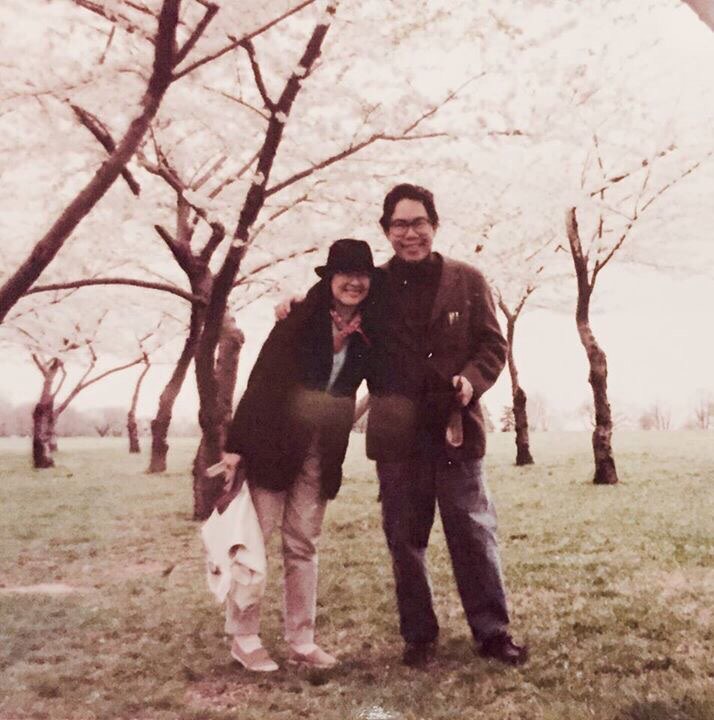
Where she came from, I think, was us. As I turn 60 and Beng and I turn 40 (which Demi, too, will be, come October), I’d like to think that beyond all the books and paintings we ever created, Beng and I did nothing better than produce Demi, whom I named—while Beng was still in a post-partum haze—Dalisay Emilia Poticar Dalisay, “Emilia” being my mother’s name. Demi loves her lola, but wasn’t too thrilled to grow up having to explain her redundant name to her classmates, with the anciently Shakespearean “Emilia” wedged in between. “Don’t worry,” I told her, “don’t you know that Demi Moore is really Dalisay Emilia Moore?” It didn’t fly. But hey, her name seemed like another cool idea at the time.

A couple of years ago, I wrote her this poem titled “To Our Unica Hija Demi, Born Dalisay Emilia Poticar Dalisay”:

It matters not if our names end with you

If no more Dalisays walk the earth

You were all we wanted in this world

Our most joyful blessing was your birth.

When at times we seem too far apart

Remember that we are your blood and breath

And that your name to us is like a distant bell

That you bore twice, and bore it well.

Here’s to the three of us, anak. We’re all growing older, but we’re doing it together. 

Butch Beng2013