Penman No. 122: A Meeting in Manhattan

IMG_5861Penman for Monday, November 10, 2014


BENG AND I were in Philadelphia and New York these past two weekends, so I could do more interviews for my martial-law book project and also get in touch with a few old friends. I normally keep a very low profile and don’t tell or call people when I travel to places where friends are living, not because I’m a snob, but because I don’t want to be a bother, knowing what it’s like when somebody drops in from the blue and throws your schedule out of whack.

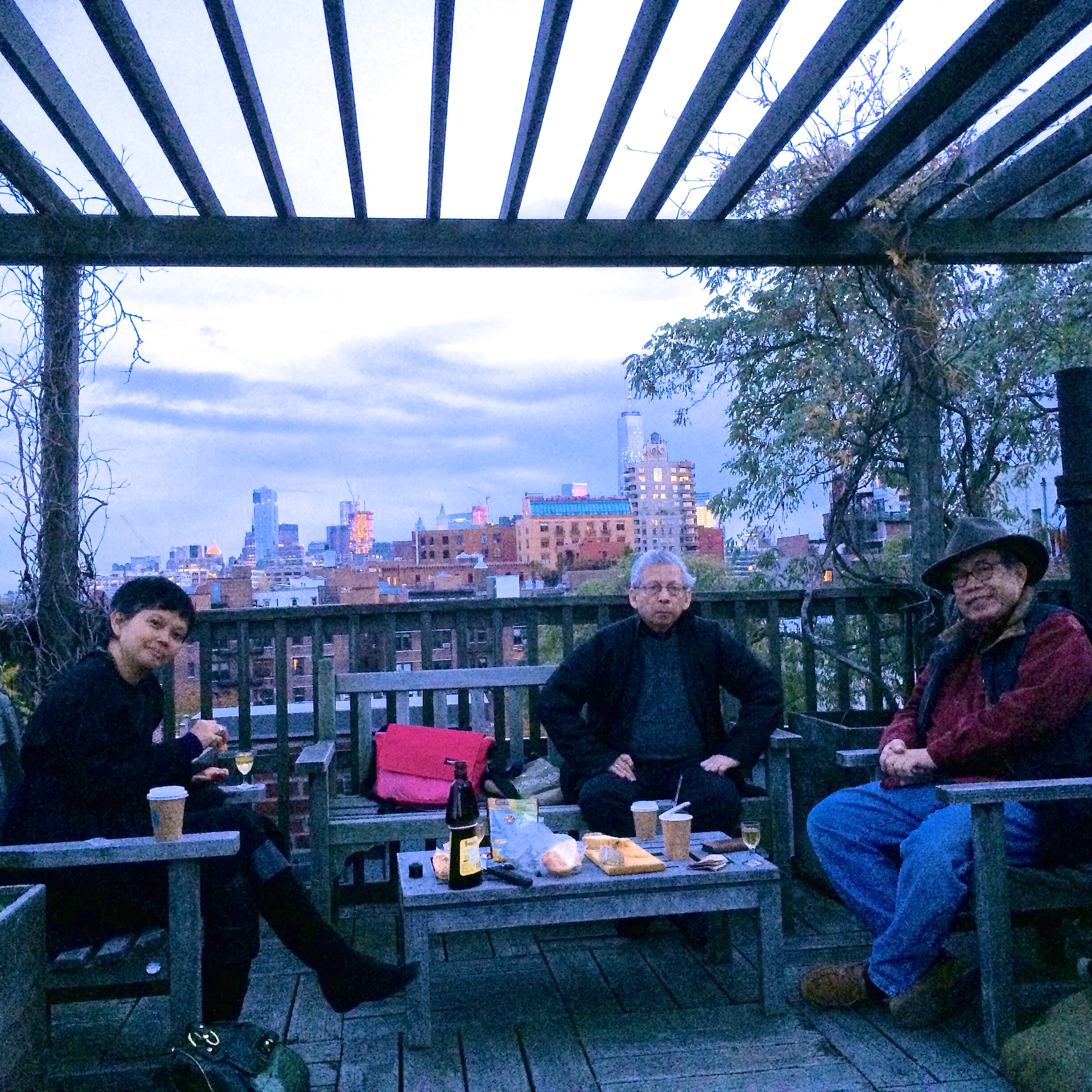
But there are always some friends you never mind breaking your routine for, and who never seem to mind, either, if you break theirs. And I was glad to meet up in Manhattan with two such writer-friends, the poet and essayist Luis “Luigi” Francia and the fictionist Gina Apostol, both of whom live and work in New York. Luigi teaches at Hunter College and Gina at the Fieldston School.

The first time I met Luigi, many years ago in a Malate bar on one of his visits home from New York where he has been living since 1970, I remember seeing his calling card, which described him thus beneath the name: “POET. EDITOR. PRINCE.” It seemed cheeky and chic, and I was deeply impressed, being none of the above. (I’ve since written some middling poetry and have done my share of editing chores, but remain utterly unprincely.)
IMG_5856

I had the recent pleasure of writing a blurb for Luigi’s forthcoming collection of essays titled RE: Reviews, Recollections, Reflections, to be published by the University of the Philippines Press, and this is what I said:

“Luis Francia knows New York and America better than many of the native-born, but he never loses his moorings, his critical awareness of what it means to be Filipino-American. But these essays are about far more than racial politics, as they chronicle the travails of that most blessed and in other ways most cursed of citizens—the artist, particularly the artist abroad, for whom alienation acts as a lens that magnifies and reshapes every little thing that crosses the eye. The most arresting and delightful reads are his portraits of the expatriate masters who preceded him in America—most notably Jose Garcia Villa, lover of martinis and hater of cheese. Despite the plaints, Francia has been clearly and distinctly privileged to be where he has been and to see what he has seen, and he shares that privilege with us in this well-wrought collection.”

Gina was my batchmate when I returned to finish my undergrad studies in UP in the early ‘80s; I was ten years older than everyone else, so I was kuya to all of them. It was a time when we were all dreaming of finding a way to take our graduate studies abroad—as English and writing majors, we wanted to become the next Gabriel Garcia Marquez, the next Sylvia Plath, the next Ian McEwan, the next Pablo Neruda, and so on; as Pinoys, we wanted to see America. Eventually, we just became our older selves, but we did get to see the States through one ticket-paying subterfuge or other—for me, a Fulbright grant; for Fidelito Cortes, a Wallace Stegner fellowship; for Ramon Bautista, an assistantship at Wichita. But we had to compete for these, while all the brilliant Gina had to do was to lick a few stamps and mail a couple of her typewritten stories off to John Barth, who directed the writing program at Johns Hopkins and who wrote her back forthwith to offer her an assistantship, smitten as he was with her talent. It was pure magic, in those pre-email days.

That brash young woman from Tacloban who flew off to Baltimore would go on to write several prizewinning novels. Gun Dealers’ Daughter, published by W. W. Norton, won the 2013 PEN Open Book Award given by the PEN American Center to outstanding works by authors of color to promote racial and ethnic diversity within the literary and publishing communities. (Luigi himself had won this prize in 2002, the first year it was given, for his nonfiction book The Eye of the Fish.)

Here’s what the judges said about that novel in their citation: “You will read Gun Dealers’ Daughter wondering where Gina Apostol novels have been all these years (in the Philippines, it turns out). You will feel sure (and you will be correct) that you have discovered a great fiction writer in the midst of making literary history. Gun Dealers’ Daughter is a story of young people who rebel against their parents, have sex with the wrong people, and betray those they should be most loyal to…. This is coming of age in the 1980s, Philippine dictatorship style, where college students are killed for their activism. The telling is fractured, as are the times…. Not only does this novel make an argument for social revolution, it makes an argument for the role of literature in revolution—the argument being that literature can be revolution.”

These then were the two literary luminaries who happened to be my friends (or should that be the other way around?) whom I was happy to set up a date with in a coffee shop in the West Village, near the High Line (an elevated garden and walkway that deserves its own story, among other New York landmarks). The coffee place was full, so we brought our steaming cups instead up to the roof deck of Gina’s apartment a few blocks away, pausing for a picture in front of the late Jose Garcia Villa’s old place on Greenwich Street. “This was where he held court,” said Luigi, one of Villa’s acolytes. “Nonoy Marcelo also lived in this area for many years, and I did, too, back when the rent was 65 dollars a month.” Then Gina added, “That white place is where John Lennon and Yoko Ono lived.” And I thought, if they’d stayed here instead of moving to the Dakota, he might still be alive.

We went up to the roof deck and Beng and I savored the scenery in all its 360-degree magnificence, as the sun set in the west and the full moon rose in the east, competing with the Empire State’s tricolor spire. We talked books, life, and loves over Frangelico, bread, and cheese; channeling Villa, I steered clear of the curd. Looking sharp and happy despite a recent illness, Gina said that her iPhone’s Siri had told her, in response to a question, “I’m just glad to be alive!” At that instant, we all were.

Penman No. 119: Bulosan in the Heart

Penman for Monday, October 20, 2014


TAKING A short break from my fellowship in Washington, DC, Beng and I flew off to the West Coast a couple of weeks ago for a weekend with our daughter Demi and her husband Jerry. Demi was celebrating her 40th birthday (can you believe it?) and had sent us tickets to join them in Seattle; they live in San Diego, but they’d loved Seattle from a previous visit and wanted to share that discovery with us.

Over three days, we did the Seattle thing, and had loads of fun: the Pike Place Market, the Space Needle, a glimpse of the Chihuly glass garden, antiquing in Snohomish, and a boys’ tour of the Boeing plant in Everett. But it was an unexpected turn in the program that made it all the more worthwhile.

On the drive into the city from the airport, I had mentioned to Jerry (who had been born in Rhode Island to parents from Bicol) that two Asian-American icons—Carlos Bulosan and Bruce Lee—were buried in Seattle. Jerry’s an engineer in the aviation industry, but like Demi, he has a keen interest in culture and in his roots.

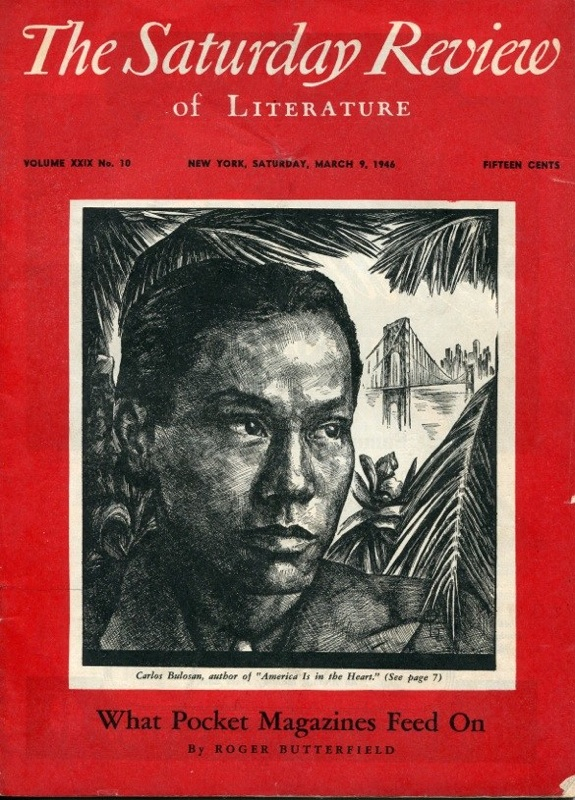
Bulosan’s name holds a special significance for our family. In high school, with some help from Beng, Demi had put together a book report on America Is in the Heart—Bulosan’s sprawling semi-autobiographical novel about the Filipino immigrant experience in America, first published by Harcourt Brace in 1946. I myself had written my undergraduate thesis at the University of the Philippines on Bulosan, fascinated by his often paradoxical appreciation of America, which he described as being at once “so kind and yet so cruel.”

Born in Pangasinan, he shipped out to Seattle in 1930, and never returned until his death from bronchopneumonia, also in Seattle, on September 11 (yes, 9/11) in 1956. (There’s some debate over the year of his birth, which has been variously listed as 1911, 1913, and 1914.) In the US, without the benefit of college, he became a voracious reader and taught himself to write, and became known both as a writer and a labor activist. Since the 1970s, many critics such as Epifanio San Juan Jr. have championed a reappreciation of Bulosan and his work; in 1973, the University of Washington Press republished America Is in the Heart, which was translated into Filipino as Nasa Puso ang Amerika by Carolina S. Malay and Paula Carolina S. Malay and published by Anvil in 2000.

When Demi and Jerry made plans to marry in 2007, I knew what I was going to give them as a wedding gift. After a long and eventful search culminating in a meeting with the seller in a Jollibee in Diliman, I had just acquired a first edition of America Is in the Heart, and carried it with me to San Diego. This copy had been inscribed by Bulosan to his friend Fred Ruiz Castro: “This story of my life will, I hope, bring me closer to you and our native land through our good friend J. C. Dionisio, with my best wishes, Carlos Bulosan, Los Angeles, 3-6-1946.”

Upon receiving the book in Manila almost a month later, Castro—who became Chief Justice in 1976—also signed it on April 4, 1946. I signed the book on a following page on April 2, 2007, and Beng and I presented it to Demi and Jerry on April 15. The book now rests proudly on their bookshelf in San Diego. (When I first wrote about this in my column—about finding that “holy grail” of a signed first edition and giving it to our only child on her wedding in America—I got a pleasant surprise upon my return: the gift of another copy of an early edition, acquired by another Filipino writer when he was in college, Greg Brillantes. That book, signed by Greg, now sits on my topmost shelf in Diliman.)

Now back to Seattle. On our last full day there, after touring the Boeing plant in the morning while our wives did their own thing downtown, Jerry and I were hit by the same brain wave in the car: why not look for Carlos Bulosan’s grave and pay our respects to our literary hero? A little Googling quickly revealed his gravesite, at the Mt. Pleasant Cemetery on Queen Anne Hill. We picked up Beng and Demi at the hotel, and located the cemetery not too far away.

GPS helped bring us there, but it couldn’t pinpoint the exact grave among the many hundreds on the site; thankfully, Google also yielded a picture of the grave itself, and the four of us spread out across the cemetery, looking for visual markers—particularly a white obelisk in the distance; it took about 20 minutes until Demi yelled “I found it!”

It was, ironically, very close to the cemetery gates, on the left side. Beng picked some flowers nearby and offered them at the foot of the marker, which read: “CARLOS BULOSAN 1914-1956 Writer Poet Activist,” followed by an epitaph that Bulosan himself had written: “Here here the tomb of Bulosan is / Here here are his words dry as the grass is.” It was a pretty spot, truth to tell, and the grass was hardly dry. After the cemetery, we visited Seattle’s International District near the waterfront, to peek at the Bulosan exhibit through the windows of the historic Eastern Hotel, where Bulosan and other Filipino cannery workers lived.

Demi and Jerry don’t know it yet, but they have another Bulosan memento coming from me: a copy of the Saturday Review of Literature from March 9, 1946, on the cover of which the famous pen-and-ink portrait of Bulosan first appeared. One of these days, I’ll pay another homage, to the Bulosan memorabilia on exhibit at the University of Eastern Pangasinan in Binalonan, where they keep copies of his letters, commemorate September 11 as Carlos Bulosan Day, and teach a 3-unit course on his life and works. There’s a trove of material on him at the University of Washington library, and perhaps on another visit to Seattle, with more time, I might look into that, too. But as every Fil-Am and indeed every Filipino should know, a pioneering voice like Carlos Bulosan’s can ring everywhere and forever, in the heart.

Bulosan

Penman No. 110: Witnessing the World

HillCoverPenman for Monday, August 18, 2014


IN MY other role as an editor rather than a writer of books, I take raw manuscripts from Iclients and friends and transform them into something publishable and popularly readable. I’ll write more about editing as a profession one of these days, because it’s an art unto itself that bears all the challenges but very little of the glamor and rewards of authorship. In the meanwhile, I’d like to talk about one of my most recent editing projects, a book about travels around the world by someone who has to be the most happily peripatetic (that’s a fancy word for “footloose”) person I know.

Julie Hill was a client before she became a friend. We were introduced to each other more than ten years ago by Jimmy Laya, who knew Julie and her late husband Arthur back from when the Hills lived in the Philippines, where Arthur represented the Ford Foundation. Then based in Southern California, Julie wanted to write a book about her life and travels with Arthur, who had just died of cancer; together, the couple had journeyed around the world, from Australia to Afghanistan, from Bangkok to Minnesota, from Samoa to China. Julie—born an Alexandrian Greek, trained in chemistry, and later a telecommunications executive—had all these stories to tell, and she needed an editor to help her tell them.

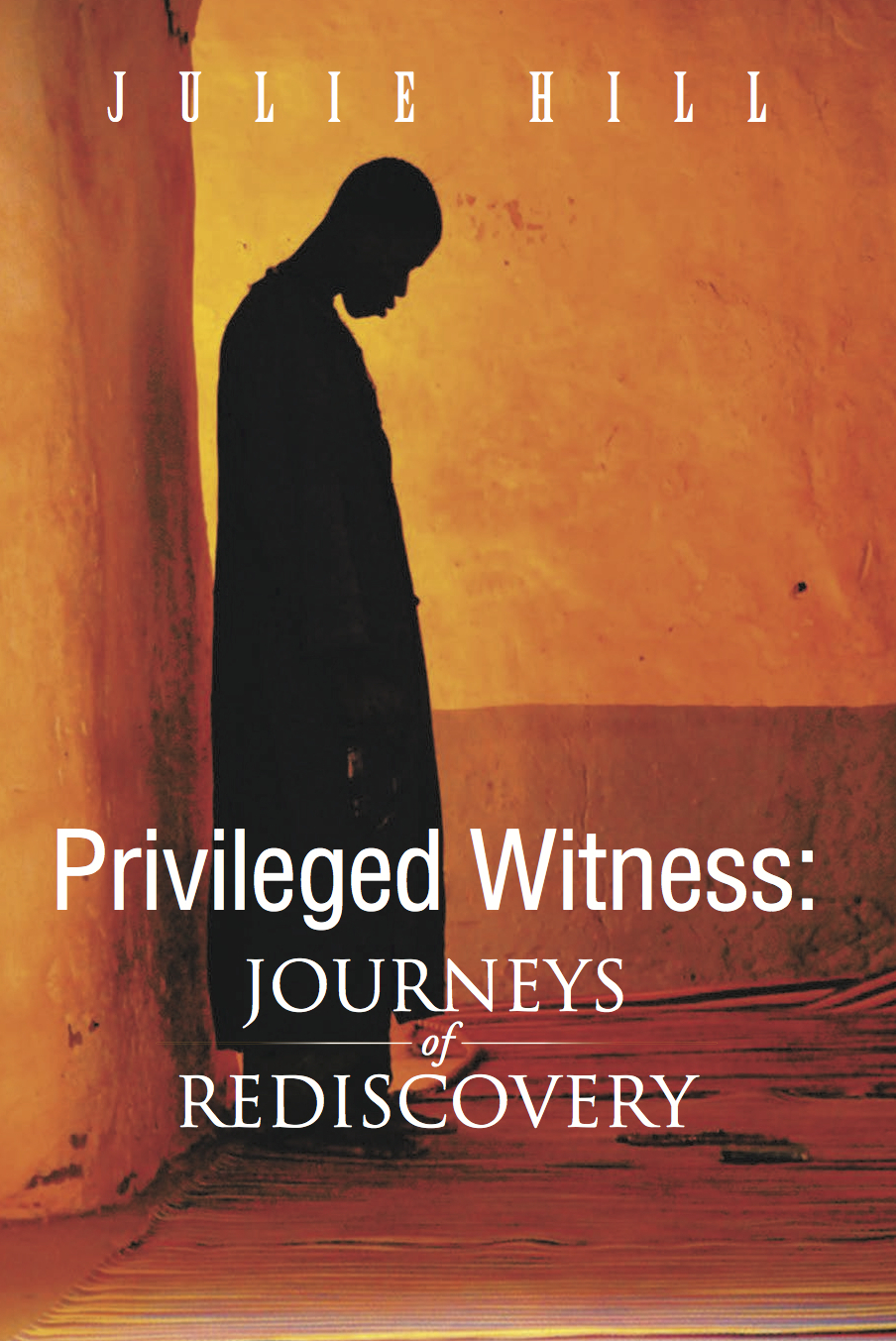
Jimmy put us together, and Julie’s first book, Promises to Keep: The Travels of Arthur and Julie Hill, came out in 2003, published by XLibris. This was followed a few years later by her second book, The Silk Road Revisited: Markets, Merchants, and Minarets (Author House, 2006). Not one to spend her widowhood moping, Julie has been actively engaged in all manner of civic pursuits, especially in her patronage of the Scripps Research Institute. Just last month, she published her third book, again with me as editor, Privileged Witness: Journeys of Rediscovery (Author House, 2014).

Julie retains a special place in her heart for the Philippines, to which she returns every now and then to visit with old friends. (In turn, Beng and I pay Julie a visit in her lovely home in Rancho Sta. Fe every time we see our daughter Demi in San Diego; Julie knows I love chocolate cake and always has a scrumptious slice of it waiting for me.)

There’s a wonderful anecdote from Julie’s first book about an encounter that she and Arthur had with then UP President Carlos P. Romulo, whom she describes as “a great raconteur.” They told each other stories about how they traveled to America, all of them being foreign graduate students, and when Julie said that she traveled by steamship, CPR asked her about, of all things, the cutlery. Julie recalls:

“’What was the cutlery like?’ asked Romulo. I was dumbfounded. Why did he take an interest in cutlery? He proceeded to tell us that he crossed the continent from Vancouver to New York on the Canadian Pacific Railway. During his journey, he systematically ‘acquired’ a set of cutlery. ‘What a better way to regale my professors at Columbia University than with cutlery embossed with my own initials: CPR!’”

In her new book, Julie takes us in hand on her journeys to around 20 countries, from Asia to Africa, to places such as Papua New Guinea, Mali, Bhutan, Botswana, and Ethiopia. She doesn’t take just the well-trodden tourist paths, but goes to the heart of the native culture, engaging with the locals to do what all good travelers (more than tourists) do: discover and reaffirm the universality of humanity. Not everyone has the ability and the resources to do the kind of traveling that Julie does, so I suggested the book title to her (taken from one of her essays), to take “privilege” in both senses of the word: as the ability to afford things, but also as the unique opportunity to see things few others could. And with that privilege comes the responsibility of witnessing and reporting.

In her introduction to the book, she writes:

“The art of adventure is the art of being bold enough to enjoy it. On a safari I must have spent hours tracking the footprints of wild animals; for other travelers the hours were too long and boring; after having seen one giraffe the others seemed all the same to them. But for me the tracking process was a fascinating adventure and locating that pride of 13 lions was an unparalleled reward, a golden joy. I could hear the muezzin in the Middle East (so much more inspiring when it is not a recording) calling the faithful to evening devotion. To me, the muezzin’s call—whether in a remote Central Asia bazaar or resounding among the tufa walls and spires of Timbuktu—is like a congregation of mountains praying.

“In my travels I have discerned a similarity among people who bear the same universal aspirations: all want their children to lead a better life and have a better future than theirs; they all cry, laugh, eat, worry, and die. We share so much, but still have to work at understanding one another…. On my travels, I have been privileged to spend time in the privacy of people’s homes and to learn of their rituals, such as the jewelry handed to the eldest daughter from generation to generation in Mali’s Djennè. An impromptu invitation at a village up in the mountains of the Caucasus brought me to a wedding, sipping vodka and dancing in a circle with other women…. Every time I was treated by my hosts as a friend, as a confessor, and I have tried to vindicate their trust by bringing their stories to life.”

In a message to her after the book was published, I told Julie that I had just watched a TV documentary about Aleppo in Syria—the subject of one of her best essays—and about the destruction that Syria’s current civil war had wrought on the ancient wonders of the place. I was almost in tears, I said, to see the Krak des Chevaliers being bombarded; without even having been there, I felt more invested in the world and in humanity, thanks to her book, for which I—in turn, as editor—was the privileged witness.

(Privileged Witness: Journeys of Rediscovery is available on Amazon.com.)


Penman No. 106: Penguins and Paranoia

Tango_Makes_3Penman for Monday, July 21, 2014


LAST WEEK, I wrote a piece extolling the emergence of dissident themes and voices in Singaporean literature, particularly in the novel The River’s Song by Suchen Christine Lim, who reminded us how much of that city-state’s wealth and power grew on the back of its underclass. I’m sure that there are many voices harsher and more strident than Suchen’s among Singapore’s younger writers, which is good. We’ve long expected this kind of literary insurgency to happen, as it is almost invariably the writers of any nation who form the spearpoint of social protest.

As I said last week, many Filipinos—whether mistakenly or not—take Singapore’s enviable prosperity as the result of a pact with the devil of authoritarianism, a compromise between getting fed well and shutting up. So we’re glad to see Singaporean society loosening up and speaking out, and to meet the humans behind the industrial facade. Surely, we’d like to think, Singapore’s economic ascendancy and its emphatic claim to full modernization deserve to be crowned by a more liberal, compassionate, and inclusive democracy. A rich nation should be able to afford more, not less, freedom.

Or so we thought. Very recently, Singapore’s government delivered another rude reminder of how deep in the dark cavern of the feudal mind its ministers remain, even as their citizens have begun to step out into the sunlight.

At issue was the decision of the National Library Board—supported by the Information Minister—to remove three children’s books from the shelves and to destroy all remaining copies, out of fear that the books, because of their unusual content, would condone and promote homosexual behavior. (Singapore still has a law criminalizing sex between men, punishable by up to two years’ imprisonment.)

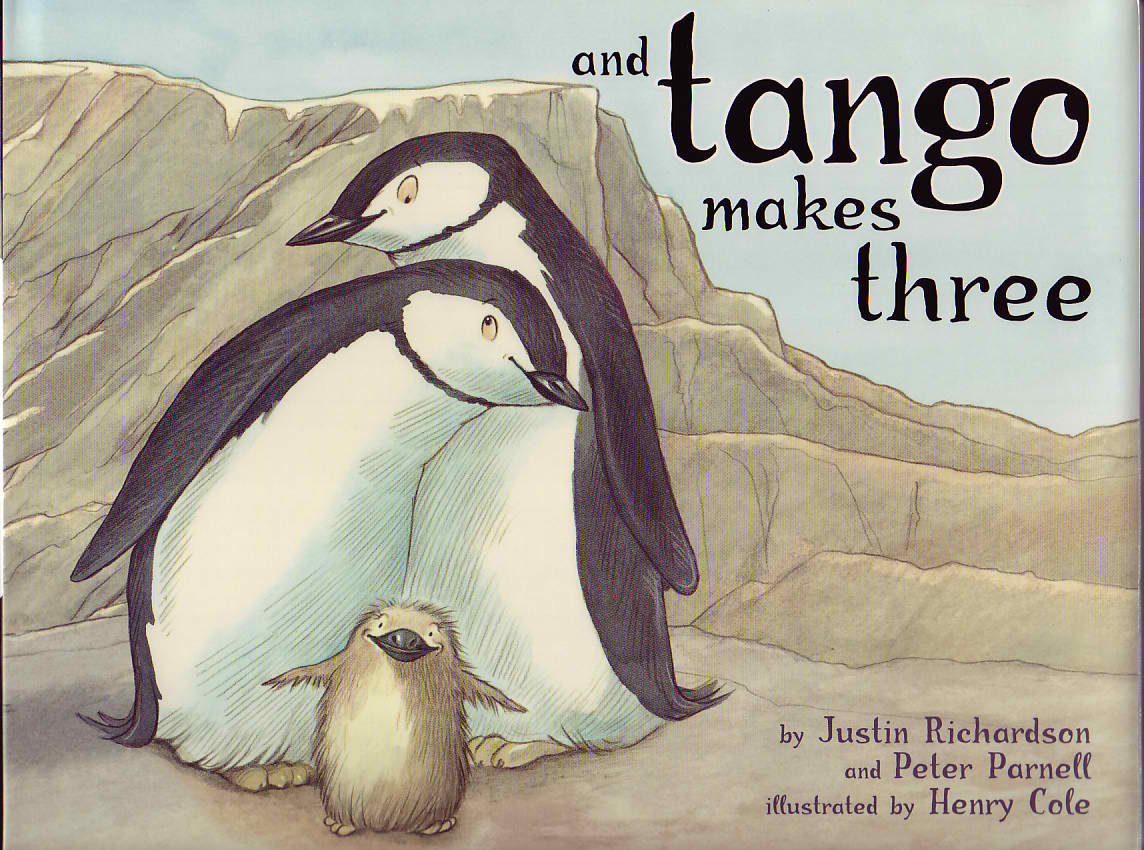
Reports say that the banned books include “And Tango Makes Three,” based on a true story about two male penguins that raised a baby penguin in a New York zoo. In “The White Swan Express,” children are adopted by straight, gay, mixed-race, and single parents. The third book, “Who’s In My Family,” includes gay couples among different types of families. Because a conservative parent complained about these books, an internal review was undertaken by the NLB, which then deemed them unsuitable and subject to removal and destruction.

Not surprisingly, Singapore’s writers, artists, and academics—the liberal types every authoritarian regime fears and detests—are up in arms over the decision. Three prominent judges have resigned from the board of the biennial Singapore Literature Prize, and writers’ and gay organizations all over the world have denounced both the homophobia and the Hitlerite evocation of bookburning that the NLB action embodies. They point out, fairly enough, that conservatives who disagree with the books have a choice not to read them, but that others should have the option and opportunity to read them should they want to.

One of the strongest voices raised against the NLB was that of Suchen Lim, who last Thursday keynoted the Asia Pacific Writers and Translators Conference at Singapore’s Arts House. (I should’ve been there, but thanks to Typhoon Glenda, my flight was canceled and I couldn’t rebook myself in time to catch my two events, so I decided to stay home and mend our typhoon-battered roof.) The Singapore Straits Times would report on Suchen’s impassioned attack on the NLB thus:

“Lim, 65, was a single parent to her two sons and was also brought up in a single parent family for a time before her mother remarried. She said the removal of these books was a disappointment.

“’In removing and pulping those books on various family structures, the National Library Board is telling these children that they and their families don’t count. In removing these books, NLB is reducing such children and their families into invisibility,’ she said.

“The audience in the Chamber of the former Parliament House stood and applauded her words, including Hong Kong writer Nury Vittachi and Singapore writers Verena Tay and Josephine Chia. Also present was writer Felix Cheong, who along with fellow authors Gwee Li Sui, Adrian Tan and Prem Anand, withdrew from an NLB panel discussion last week, to protest against the withdrawal of the picture books.

“Cheong, 49, wore a brand-new T-shirt decorated with three penguins, a logo which has been adopted by those against NLB’s removal of the books.”

Had I been there, I would’ve stood up myself and cheered Suchen on, even at the risk of being blacklisted and turned away the next time I present myself at Changi’s immigration line. The fight against prejudice and censorship knows no national boundaries, which is why I’m writing up this issue for Filipino readers who couldn’t care less about Singapore and gay penguins.

In truth, I’m a fairly frequent visitor to Singapore and have been the appreciative guest of both its government and of my fellow writers there. A couple of years ago, its tourism ministry took me, among other journalists, on a tour of Singapore’s cultural landmarks, including the National Library, and we were suitably impressed. I wrote glowing reports about Singapore’s emergence as a new cultural hotspot in Asia. Why not? The view from The Hub—a glass bubble at the top of the library—was breathtaking, and I was moved by a special exhibit their ultramodern library had of their prominent writers’ memorabilia. When, I thought, would we come around to making these investments in books and culture in the Philippines?

But as I noted last week, there are always two sides to Singapore, and this book-banning incident reminded me of (for us Filipinos) a much sadder story from almost 20 years ago, when Filipino domestic helper Flor Contemplacion, convicted of murder, was about to be hanged in Singapore’s Changi prison. As the editorial writer then of the now-defunct Today newspaper, on the eve of Flor’s execution, I looked helplessly at this painful spectacle and remarked:

“Something went terribly wrong with Flor’s dream—whether through her fault or someone else’s, as now seems highly plausible, only God for the moment knows for certain. Two people died, allegedly by Flor’s maddened hand, and that was tragic enough. Today, Flor Contemplacion will die in turn in judicial payment for those lives—and that, too, will cause untold sorrow, especially among her people who have rallied to her defense.

“But almost as saddening, perplexing, and infuriating as these losses is today’s freshest reminder of savagery in what had been held up, for all the world to see, as the very model of civilized society and behavior in our time. And this was hardly the savagery of individuals gone amuck, but the institutional primitivism of a government which, for all its claims to modernity and discipline, has finally revealed nothing but its simian brain and tom-tom heart. Flor’s execution will be a quick and convenient end; any further complications, by way of entertaining an appeal for a stay and a reinvestigation, would have strained the brutish simplemindedness of Singaporean justice.”

They were harsh words for a harsh situation, and even as I subsequently accepted and enjoyed, with not a little guilt, Singapore’s official hospitality, hoping that things had changed, I never quite lost the suspicion that beneath the First-World ease was a hair-trigger reflex that could be set off by any perceived threat to stability and security.

A government that fears that the carefully constructed and presumably robust society it has built can be unraveled by the affection between two male penguins is exhibiting not just ignorance but paranoia. One has to wonder of what use it is to tout such 21st-century marvels as the Marina Bay Sands—and, yes, a state-of-the-art National Library—when the consciousness that directs the place is stuck somewhere in the 16th century.

But before we Filipinos beat our chests and congratulate ourselves over how much more open we are to such modern concepts as tolerance and acceptance, let’s not forget that our own public officials share something with their Singaporean counterparts. When our President denied the accomplished actress but alleged drug user Nora Aunor the National Artist Award for fear that honoring her would encourage Filipinos to run out for their nearest dose of shabu, it showed that governments everywhere don’t have the foggiest idea of how art and artists work. But they do know that art works—much more effectively than government PR—and in that knowledge, perhaps, lies the source of their fear and disquietude.

Penman No. 82: A Man Called Nik

IMG_2939Penman for Monday, January 20, 2013

IT WAS with great sadness that I received the news a little over a week ago that my friend Nik Ricio had passed away. We knew that he had been ill for some time, but as these things go, you hope for the best, and never really think people could leave so soon.

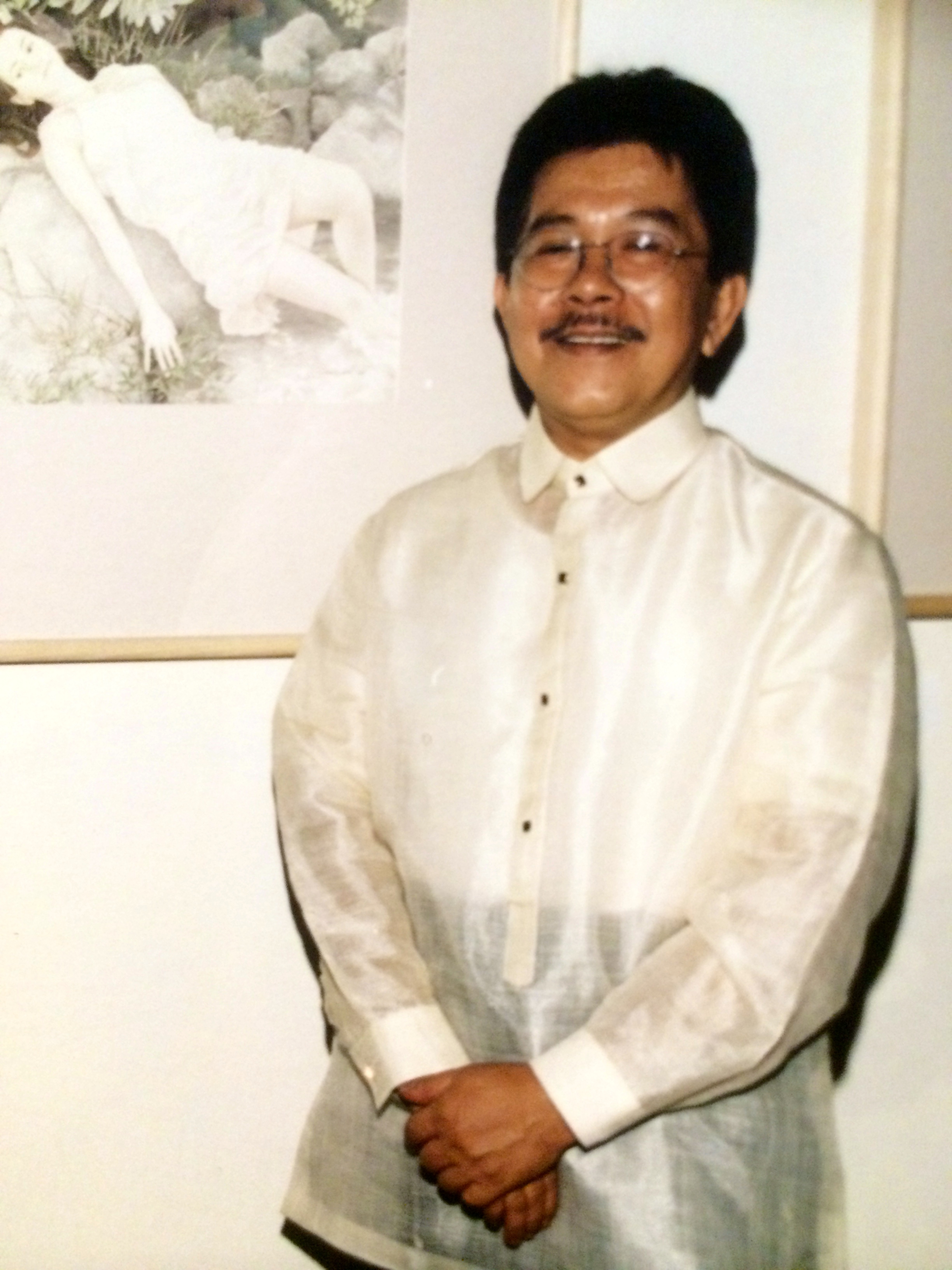
He was, to me, indisputably the best Filipino book designer of his time, and one of the finest Filipino artists to have wielded a brush or a technical pen. More than that, he was a friend to me and to many other artists and writers, the kind of friend whose company you didn’t only enjoy but whose talent you felt enriched by and actually learned from.

I got the message about Nik’s death from another old friend, Tere Custodio, with whom Nik and I had worked on the massive, 10-volume Kasaysayan project back in 1997-98. The three of us would collaborate on other book projects after that, but nothing before or since matched Kasaysayan in its scope and intensity. We had been commissioned by Reader’s Digest Asia and by A-Z Direct Marketing to come up with this anthology in time for the celebration of the Philippine Centennial in June 1998; we had our first meeting in January 1997, and in exactly 18 months, on schedule, the anthology was launched—a compendium of 3,000 pages, a million words, thousands of photographs, and the labor of around 200 writers (not just historians, but economists, poets, scientists, priests, and artists, among others) whom we tapped for various essays. Tere oversaw the logistics and execution of the gargantuan project; I edited the text, advised and assisted by the late Doreen Fernandez; but it was Nik who almost literally shaped these ten books and gave them their final look, working with what even then was already an aging pair of Macs and PageMaker.

I recall that effort because of what I learned from Nik, with whom I sat side-by-side, going over those many thousands of pages on his computer screen. I was a rookie editor, something like an infantry captain suddenly ordered to command the Battle of the Bulge; Nik already had many coffeetable books to his credit, chiefly with Gilda Cordero Fernando’s GCF Books, sumptuous productions which Beng and I coveted but could then scarcely afford. I decided early on—sagely, as it turned out—to let the design lead the text.

Happily Nik and I shared a traditionalist aesthetic—a sense of pleasing balance, squared corners, fine detail, and subtle suggestion (this was before book design got all postmodern funky, splashy, and edgy). I could see that Nik was going for a certain look; he’d tell me, “It would be nice if all the last lines on the page ended here…. Let’s get rid of all widows and orphans (lines that hung out all by their lonesome)…. I need a subhead here, to balance the subhead there…. Could you make sure that all the subheads are at least X number of characters and Y at the most?… You see this white line running down the page? That’s a ‘river’ and it doesn’t look good. Help me remove these rivers by adding a few words here and deleting some there….”

As meticulous and painstaking as he was, I never once heard Nik raise his voice, even as the rest of us were at our wits’ end doing our darnedest to make sure we hit our deadlines. Our tie-up with Reader’s Digest afforded us a substantial budget, and as art director Nik could have had his pick of hotshot photographers to help him illustrate our books (Nik insisted that there be a picture in every spread, over ten volumes). But when he had to, no-nonsense Nik—a talented photographer himself—went out with his camera to shoot, say, a rash of rust on a GI sheet or a patch of moss on a rock to use as pictorial motifs.

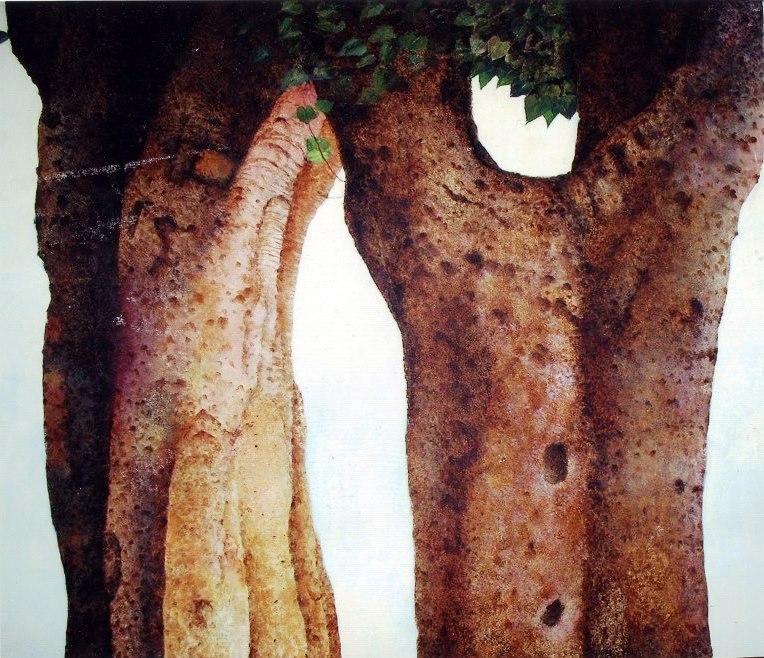
There’s an ongoing retrospective until the 27th of Nik’s work as a designer, illustrator, photographer, and painter at the Liongoren Gallery on 111 New York Avenue, Cubao, and aside from his book designs and paintings, there’s a wall of his photographs, taken on Manila’s streets in the 1960s and ‘70s: an armless man playing a guitar with his toes, a dog standing his ground in front of a Mercedes-Benz, an old woman staring out a concrete window. He had the eye of Lino Brocka, but unlike Brocka, he went past the real to the romantic, insistently seeking beauty in a decidedly un-beautiful world. He never gave up; even toward the end, no longer able to hold a brush, he used sponges to create large tree paintings.

Nik sponge painting

Flashback to another New York, the real one. In October 1999, Nik had one of his finest and happiest spells when an exhibition of his paintings opened at the Philippine Center in New York. I was happy to write the text of the brochure that introduced Nik and his works to viewers, and this is what I said then:

“After more than three decades of working as one of Manila’s leading graphic designers, photographers, and illustrators, Nik Ricio returns to an old love—painting.

“This exhibition—surprisingly enough, only the first one-man show of his long career—shows Nik returning to his artistic and spiritual roots. Those roots lie deep in romantic myth in a sense of beauty and order to the natural world, in faith and hope in the regenerative power of Art. Ricio’s works are a veritable garden of the Muses. The lushly detailed foliage that has become a virtual trademark of Ricio’s graphic design is more than pretty in these paintings; every leaf and flower is an affirmation of life, which all Art aspires to achieve and to sustain.

“Ricio made his mark early by winning first prize for two successive years, 1966 and 1967, in the prestigious Shell National Student Art Competition, before graduating in 1968 from the University of the Philippines with a BFA, majoring in commercial and editorial design.

“In Manila and around Asia, he is best known and much sought after as a book and graphic designer. His book projects include the celebrated Turn of the Century, The Streets of Manila, Being Filipino, Dances of the Emerald Isles, Rizal the Saga, Tide of Time, and, most recently, Kasaysayan: The Story of the Filipino People. He counts among his clients some of the Philippines’ largest corporations, as well as Readers’ Digest Asia, the World Bank, the Ambassador Hotel in Hong Kong, and the Manila Hotel.

“As an art director, he has been described by a critic as ‘a submarine commander, a visionary of the deep who gives out consummate orders with the minimum of tantrums.’

“Both the mastery and the modesty should come through in these paintings. They are as close as we can get to what Nik Ricio—so much of whose work has been to realize the dreams of others—really dreams of, all by himself.”

It was no great secret to those who knew him that for many of his last years, Nik was estranged from his family; there was great pain on both sides, and ironically it took his terminal illness to reunite him with his wife Tes and their children, also accomplished artists.

Beng and I went to Loyola Guadalupe for Nik’s very brief wake, to condole with Tes and the family, and with Nik’s many other friends. He lay in an open casket, like Beng’s brother had many years before, preparatory to cremation. I remarked to someone how I would probably end up the same way in the same place, having bought a funeral policy for Beng and myself there. Many tears were shed and regretful words spoken. Walking back to the car, it felt as if you had closed a well-written book full of engaging events and lavish illustrations, leaving you wishing only that it had gone on for a bit longer and had a happier ending.

Godspeed, Nik, and may you meet with all the beauty you tried to give us an early glimpse of. 

Penman No. 53: Manila, femme fatale

Manila-NoirPenman for Monday, July 1, 2013

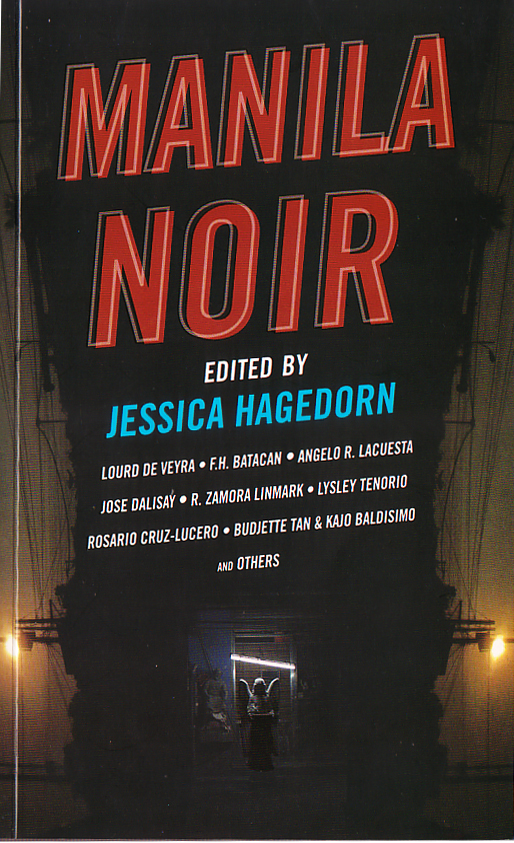
FIRST OF all, I’d like to invite my readers to the launch this coming Saturday of a unique and exciting new book, a collection of stories to which I made a modest contribution. The book’s title is Manila Noir, and it contains 14 stories written mainly by Manila-based authors, with each story focused on a specific district of the metropolis (mine, not surprisingly, was Diliman).

Edited by the accomplished Jessica Hagedorn, whose own Dogeaters made waves in international publishing in 1990, Manila Noir is the latest book in a long series published by Akashic Press—a series that includes books set in places as diverse as Chicago, Copenhagen, and Delhi. This local version (reprinted by Anvil Publishing) features pieces from Gina Apostol, Budjette Tan & Kajo Baldisimo, F.H. Batacan, Jose Dalisay Jr., Lourd de Veyra, Eric Gamalinda, Jessica Hagedorn, Angelo Lacuesta, R. Zamora Linmark, Rosario Cruz-Lucero, Sabina Murray, Jonas Vitman, Marianne Villanueva, and Lysley Tenorio.

Here’s what Publishers Weekly says about the book: “While certain cities in past Akashic volumes might appear to lack an obvious noir element, Manila (like Mexico City, which shares many of the same problems) practically defines it, as shown by the 14 selections in this excellent anthology. As Hagedorn points out in her insightful introduction, Manila is a city burdened with a violent and painful past, with a long heritage of foreign occupation. The specters of WWII (during which the city suffered from U.S. saturation bombing), and the oppressive 20-year reign of dictator Ferdinand Marcos live on in recent memory. The Filipino take on noir includes a liberal dose of the gothic and supernatural, with disappearance and loss being constants.”

As the French word for “black” suggests, noir is a mode of storytelling that dwells on the dark side of human nature, with crime as a central element or a specter hovering above the story.

In her introduction, Hagedorn herself notes that “I think of Manila as the ultimate femme fatale. Complicated and mysterious, with a tainted, painful past. She’s been invaded, plundered, raped, and pillaged, colonized for four hundred years by Spain and fifty years by the US, bombed and pretty much decimated by Japanese and American forces during an epic, month-long battle in 1945. Yet somehow, and with no thanks to the corrupt politicians, the crime syndicates, and the indifferent rich who rule the roost, Manila bounces back. The people’s ability to endure, adapt, and forgive never ceases to amaze.”

And this book, I guarantee you, will not fail to amaze. Join us—Jessica and my co-authors—for a round of brief readings, a Q&A, and a book signing session from 4 to 6 pm, July 6, at National Book Store Glorietta 1 in Makati. See you there!


IT WAS with deep sadness that I received, by text message, the news of the sudden passing of one of my dearest friends, Luverne Gueco. Luverne was also a brother in the profession, having served as foreign news editor at the Inquirer for many years. But more important to me than that, he was my kumpare, my confidante, and my partner in crime 30 years ago, when we were all in our mid-20s and romping through life like young men do. Luverne and I were part of a rather remarkable stable of writers and artists in the Economic Information Staff of the National Economic and Development Authority, a group recruited and supported by our visionary boss, Dr. Gerry Sicat.

It was a group that included former newsmen Jun Medina, Wilson Bailon, and Efren Cabrera; the now-Canada-based poet Patty Rivera; writers Fidel Rillo, Lilia Santiago, Jess Santiago, Reuel Aguila, Eric Caruncho, Joey Papa, and Minnie Quemuel; the future lawyer and now Undersecretary Rey Cruz; and let’s not forget a pretty artist named Beng, who worked with fellow artists Anna Nolasco and Herick Ventura. Not surprisingly, our immediate supervisor was himself an artist, the tenor Frankie Aseniero.

Although we were working under martial law, the NEDA then felt like a kind of Camelot, and we were all grateful for the little haven that Dr. Sicat created for long-haired, irreverent types like us (another officemate, albeit in another division, was the renowned playwright and another dear friend, the late Bienvenido “Boy” Noriega). As an ex-detainee, I failed my security clearance check, but Dr. Sicat took it upon himself to cover for me and sent me to the Development Economics program in UP to cool off for a year.

Luverne was in the thick of all this, one of the most dependable writers in the group. He had also been with the Left, and the stories he shared about what he had gone through seared themselves into my memory, so much so that I used the most painful one—about a rebel who took it upon himself to execute his wife after discovering she was an enemy spy—in my first novel, Killing Time in a Warm Place (1992).

After hours, our friendship developed in countless pool halls, beerhouses, and girlie bars (we were certainly no saints). We played pusoy, darts, and billiards with wild abandon. Luverne was a gifted pool player—this was the dawning of the age of the Pinoy pool champion, when Amang Parica was still king and young bucks like Bata Reyes and Django Bustamante were still hungry for glory. (I, on the other hand, was what the pros derisively called a “tama-bola,” a guy who could barely hit the target with the cue ball, let alone pocket it.) When Luverne married his wife Judith and became a dad, I became godfather to his son Elias. Luverne was always a motorcycle kind of guy, and had his share of bad spills, but when he went out looking for his first car, I convinced him to get the same car I already had—a VW Beetle.

Perhaps fittingly, Luverne collapsed while doing what he loved doing most—playing pool. I’m not sure if it was a stroke or a heart attack, but the end came swiftly. He was only 62.

I’m devoting all this space to the passing of someone who lived the quiet, uneventful life of a desk editor not just to mourn the loss of a friend, but also of the kind of friendship forged in the real world. Ironically, I didn’t see much of Luverne after NEDA—these past 30 years—and our last meeting was about a year ago, but there was never a moment during those decades when I wouldn’t have listed him among my six closest friends, people whom I could count on to help me in a bind, no questions asked, and to whom I would throw the same lifeline. How many people have earned your trust and affection like that?

I’m not on Facebook—one of the country’s last holdouts—for one stubborn reason: I can’t accept the Facebook definition of “friend.” To be my friend, we should have broken bread and maybe a few precious other things together; we should have rejoiced and despaired together; we should have found each other’s weakest spots, but let them be; we should have disagreed on many things, but agreed on more. On Facebook, “friendship” is a convenience, just as easily disposed of with a mouse click to “unfriend.” I’d much rather wait five years to talk to someone like Luverne and pick up where we left off as if those five years had been just yesterday.

Penman No. 13: Random Reflections on Martial Law

HBD

Penman for Monday, Sept. 24, 2012

LAST FRIDAY marked the 40th anniversary of the imposition of martial law in the Philippines by Ferdinand Marcos, and the occasion gave rise to much reminiscing among those of us who went through that dark period. I myself was interviewed by a TV station and asked to speak at a forum at the University of the Philippines about my experience with martial law, which I fictionalized in my first novel, Killing Time in a Warm Place (Anvil, 1992).

Of course I’ve never really stopped thinking about martial law all these years, but not until this anniversary did I force myself to sit down and write what martial law really meant to me and what it taught me—the “me” being no longer the 18-year-old boy who was arrested for “subversion” and detained for seven months in Fort Bonifacio, but the 58-year-old man who managed to live far longer and to see more things than he expected.

What I will write down here are entirely my own impressions and conclusions as a private citizen. I am not a political scientist or an ideologue, although I did work as a journalist, and, ironically, as a government PR man in the late 1970s, when there were few other jobs to be had, after my release from detention. I’m sure that some readers and even my friends will find something to quarrel with in these observations, which will be good, because I don’t think we ever really sat down and summed up what that period meant to us, beyond saying—as we should—“Never again!” So, herewith, my random reflections on martial law:

1. It wasn’t as bad as what the Argentines and Chileans went through in their darkest days of state terror. But that comparison’s pointless and even cruel when it’s your body or that of someone you love being laid out in the interrogation room, when it’s your family desperately seeking an abductee, running from prison to prison. The government called it “smiling martial law,” but don’t be fooled—horrific things happened to ordinary citizens in those camps and prisons. It may have been good for business—at least at first—but it was an unmitigated nightmare for designated enemies of the state.

2. An armed forces cannot be at war with its own people. Martial law irreversibly politicized if not corrupted the military, so that it has had to be re-indoctrinated to support the people rather than the ruling elite. I don’t know how far it’s come along in this respect.

3. America can be a great friend, but it will always look out for its own interests first, and those interests don’t always coincide with ours. American politics is coldly opportunistic; the rhetoric of freedom and democracy can easily be used as window dressing for American commercial policy. Ferdinand Marcos and martial law wouldn’t have lasted that long without America’s imprimatur; even though some insist that it was the Americans themselves who took him out—that EDSA was a CIA plot—it was American support that entrenched him in the first place.

4. It takes a people to build a nation—not one leader, certainly not one despot and his cohort. Martial law turned us into blind followers, trusting the leader to make crucial decisions for the rest of us. Except for those who resisted the dictatorship, the rest of us were complicit in it; we wanted it to work and gave it our tacit approval, because it seemed to offer a simple and efficient solution to age-old problems. It also takes a thorough process—not quick fixes like martial law, street revolts, or coups—to secure deep and enduring change.

5. The Church can be a potent and progressive political force when it wants to. Much as I may be dismayed by the intransigence of the Church on social issues such as the RH bill—and indeed I no longer consider myself a practicing Catholic because of this—I acknowledge the contributions and sacrifices of many religious workers to the fight for freedom.

6. We all have our weaknesses and our limits. I saw how people who spoke big words could fall silent at the merest hint of torture, and how even the toughest ones could break at the edge of the unendurable. I have since learned not to demand of others what I could not demand of myself. At the same time, I saw that ordinary people can also be capable of extraordinary courage. Their heroism has made me wonder if I who survived was worthy of it.

7. On a purely personal level, one of post-martial law life’s most awful discoveries was that, incredibly, there were worse things than martial law, worse pains that one could receive, or inflict on oneself and on other people. A government can do only so much evil; the rest you can do yourself. But redemption is always possible for the self-aware, and I suppose that’s what many of us have been striving for these past 40 years.

* * * * *

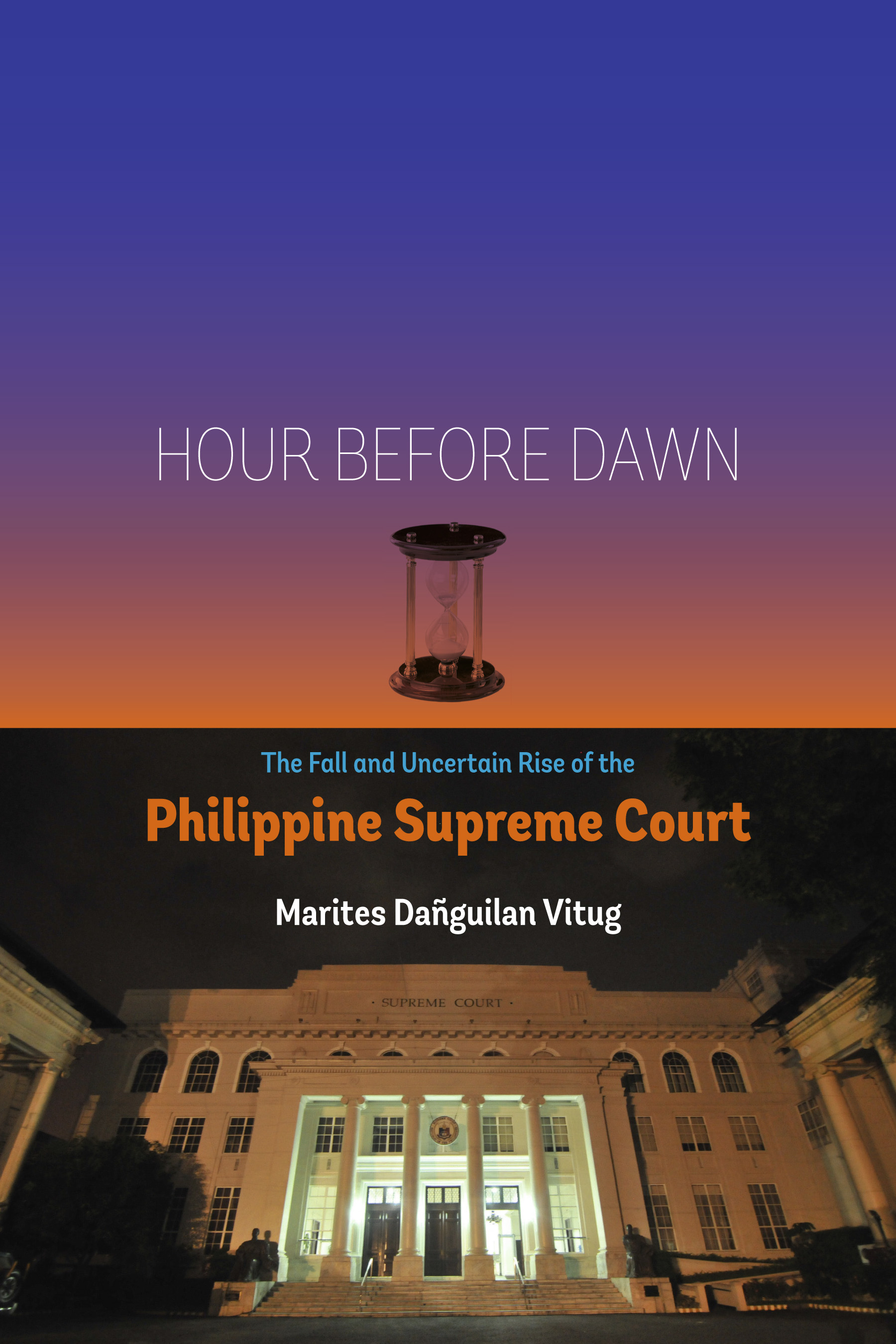
SPEAKING OF September 21, that was also the day last week when I failed to attend an important book launching in Makati because I was teaching my graduate class in Diliman at that same time. The book was Marites Danguilan Vitug’s Hour Before Dawn: The Fall and Uncertain Rise of the Philippine Supreme Court (Clever Heads Publishing, 2012), which I copyedited, along with its predecessor, the acclaimed and bestselling Shadow of Doubt: Probing the Supreme Court (Newsbreak, 2010).

It’s a copyeditor’s great privilege to read a book—and even reshape it to some extent—before anyone else does, aside from the author and the book designer. With Marites—with whom I worked for many years on Newsbreak—I always know that I’m in for a political junkie’s treat, as she will patiently go behind the scenes to reveal the inner workings of our most important yet also most inscrutable institutions, like the Supreme Court.

Without spoiling the suspense, here’s what I can say about Hour Before Dawn and why you should grab it before they run out of copies: if you’ve ever really wondered why Chief Justice Renato Corona had to be impeached and what the Supreme Court was like under his watch, read this book. If you’ve also wondered what Lourdes Sereno is really like and what kind of Chief Justice she’s going to be, read this book.

As its full title suggests, Hour Before Dawn offers both darkness and light, ample cause for both dismay and hope. It demystifies the Supreme Court and the Justices who preside over our fates, showing them to be as fallibly human as the rest of us, and yet also mindful of the higher judgment of history.

I don’t know if this book is going to earn its author another slew of death threats and libel suits, but I think it should be required reading for every law student, lawyer, and judge in this country—make that every citizen-at-large who hasn’t given up hoping for impartial justice.