Penman No. 463: Masters of the Old and New

Penman for Sunday, June 10, 2024

THE WORK of two outstanding Filipino artists drew my attention last month, in events that could be considered retrospectives of remarkable if somewhat divergent careers. 

The first was the exhibition “Looking Back” mounted by Fernando Modesto at the Galerie Hans Brumann in Makati, running until June 30, which gathers some of the painter’s best work over the past five decades, many of them from the private collection of the longtime Manila resident Brumann himself. That Brumann—now 83, and also a renowned artist and jeweler—was letting go of these pieces struck me much less as a disposal of worthy objects than a bequeathal, an opportunity to share the best of Modesto with other collectors. Laid low by a stroke some years ago, “Mode” as his friends know him remains mentally as sprightly and mischievous as ever; and he has striven and managed to produce new work despite his condition, taking off from the Mode we knew.

That Mode was irrepressibly bright, witty, and playful. In contrast to the somber and even dismal realism of many of his contemporaries from the 1970s onwards, Mode made light of things, opening up a world of freedom and delight in an oppressive universe. 

The playfulness, at one point, was literal. In 2018, writing in Frieze magazine, Cristina Sanchez-Kozyreva reported on the Ateneo Art Gallery’s recreation of an early Modesto installation from 1974 titled Dyolens(Marbles) that involved laying out thousands of marbles on the floor for visitors to kick around. That was about the time I first met him during my days as a printmaker in Ermita; Mode had already gained fame—or notoriety if you will—for his depictions of pendant penises, which even then were clearly meant not to offend but to make one smile.

The Brumann exhibit documents Mode’s progression from tongue-in-cheek wit to transcendent wisdom, opening a door into a world we can only hope to inhabit, where angels reach for a shimmering sun (or are they playing volleyball?) in an iridescent haze, or float face-up in a cosmic pool. His most recent work such as King of the Islands II (2021) retains that rare equanimity in the cool blue gaze of its subject.

If Fernando Modesto is a master of the modern, the second painter who caught my eye reminded me of how much richness remains to be discovered in our artistic past. May 24 saw the launching of Matayog na Puno: The Life and Art of Hugo C. Yonzon, Jr. (published by Onyx Owl, 248 pages), on the centennial birthdate of Yonzon. Authored by Hugo’s son Boboy and the late Neal Cruz, the book chronicles the life and work of a man for whom art was both a passion and a living. Hugo’s career harkened back to a time when the line between fine and commercial art was blurry and perhaps not all that important, for as long as the artist gave the work his all. 

Yonzon had to leave school early to take a job—just the first of one or many—and he would go on to become much more of a journeyman, one viscerally engaged in the trade, than an aesthete or academic. “Yonzon was always invited to the various sessions held by the Saturday Group and other weekday groups that tried to establish their name and weight in the art scene,” says the book. “But he never stayed long nor drew enough on-the-spot sketches; although he had an eye for women, nude sketching did not interest him. He would rather banter and drink a cup of coffee, then return promptly to his favorite themes in his perpetually makeshift studio.”

He was friends with some of the best artists and illustrators of his time, including Mauro “Malang” Santos and Larry Alcala. Having worked as an illustrator and as an art director for an advertising agency, Hugo wielded an extremely versatile brush, adjusting his style and treatment to the client’s needs. It got to the point that visitors to his one-man show became confused, seeing so many different styles on display, but that range was a great part of the reason for Hugo’s popularity. 

But he kept returning to his favorite themes—the pastoral, the folk, the heroic, the visual representation of what he imagined Filipinos at their best and most essential to be. This appealed to the sensibilities of patrons such as First Lady Imelda Marcos, who generously supported Yonzon. Hugo was tireless in his painting and gave his friends huge discounts to the point that his wife Betty felt compelled to manage his financial affairs.

His lifestyle was appropriately flamboyant. “Dad was a loud but chic dresser,” recalls his eldest daughter Minnie. “When psychedelic colors and prints were in vogue, his long-sleeved shirts were in paisleys and reds and greens. Why, he even painted the air scoop of our brand-new Beetle in paisley!”

The life depicted in the book is fascinating, full of struggle and drama, but ultimately it is the art that imprints itself in our consciousness—one full of vigor, color, inventiveness, and variety, celebratory in every way of the near-mythic Filipino. The writer and art critic Lisa Nakpil would say that Yonzon, who died in 1994, was the “underrated master of heroic Filipino iconography,” and this book clearly shows us why.

Qwertyman No. 93: A Century of Philippine Accountancy

Qwertyman for Monday, May 13, 2024

IN MY long life as a professional writer—aside from being a fictionist, journalist, and academic—I’ve occasionally been asked to write books for both private and public institutions and individuals, usually to commemorate an important milestone. My clients have included banks, power and energy companies, accounting firms, NGOs, business tycoons, politicians, and thinkers. 

While it’s a job, it’s also been a great learning experience for me, particularly when I’ve had to deal with topics like oil exploration, steel manufacturing, and geothermal energy. I begin to understand how things really work in our economy and society, seeing the cogs and wheels that turn industry, create jobs, and produce things people need. I meet people I never would have run into otherwise, people with interesting stories to tell about themselves and their work.

Probably the most famous of those people was Washington SyCip, the legendary founder of SGV & Co., once one of Asia’s largest and most highly respected accounting firms, whose biography Wash: Only a Bookkeeper I wrote back in 2008. When people tell me how boring the lives of accountants must be, I tell them the story of Wash, who wasn’t just an academic prodigy who graduated summa cum laude from college at 17, but who also served as a US Army codebreaker in India in the Second World War. Granted, not many accountants lead lives as colorful as Wash’s, but to suggest that there’s no drama in accountancy is certainly mistaken. 

I discovered this in my latest (and very likely my last) commissioned book, A Century of Philippine Accountancy, which will be launched this week by the Philippine Institute of Certified Public Accountants (PICPA) Foundation. The book is a compendium of both big and small stories, an institutional history that also delves into the personal struggles and triumphs of key people in the industry.

The centennial book comes a bit late, because the Philippine accounting profession formally traces its beginning to March 17, 1923, when the Sixth Philippine Legislature passed Act No 3105, “An act regulating the practice of public accounting; creating a Board of Accountancy; providing for examination, for the granting of certificates and the registration of Certified Public Accountants; for the suspension or revocation of certificates and for other purposes.” Six years later, the PICPA was established within the private sector to represent professional interests.

Of course, some form of bookkeeping was being practiced in the Philippines long before that. Given the Philippines’ vigorous trade with other countries such as China even before Spain’s arrival in 1521, there must have been some early form of record-keeping maintained by both natives of the islands and their foreign trading partners. Accounting in early China was said to have reached a peak during the Western Zhou dynasty (1100-771 BC); the Chinese developed sophisticated methods of accounting to keep track of such basics as revenues, expenditures, salaries, and grain. In Spain, regulations began to be applied regarding the accountability of companies starting with Queen Juana and her son Emperor Charles V in the 1500s. Manila’s galleon trade with Mexico, which lasted from 1565 to 1815, required meticulous bookkeeping, and archival records still exist of the cargo manifests of the galleons; these records show, for example, that audits of the ships’ cargo revealed discrepancies in capacity that suggested smuggling (whereby space meant for such necessities as water was reduced to make way for profitable goods).

Since 1923, the profession has grown in the Philippines by leaps and bounds to nearly 200,000 registered CPAs, employed in over 8,000 firms and partnerships. Based on the number of Publicly Listed Companies (PLCs) they audit, six firms dominate the industry: SGV & Co. (Ernst & Young); Isla Lipana & Co. (PricewaterhouseCoopers Philippines); R.G. Manabat & Co. (KPMG Philippines); Reyes Tacandong & Co. (RSM Philippines); Punongbayan & Araullo (Grant Thornton Philippines); and Navarro Amper & Co. (Deloitte Philippines). In keeping with the times, many local firms have affiliated themselves with large global partners to avail themselves of the latest technology and expertise. (For a bit of trivia, the first Filipino CPA was Vicente F. Fabella, the founder of what is now Jose Rizal University.)

The profession is governed by the Board of Accountancy (BOA), which administers the CPA Licensure Exam at least once a year. The BOA in turn is supervised by the Professional Regulatory Commission, along with other professional boards. The BOA and PRC work closely with the Securities and Exchange Commission (SEC), which is responsible for ensuring the integrity of the country’s financial system and its institutions.

The 1997 Asian financial crisis highlighted the importance of quality assurance and adopting international financial reporting standards in accounting. With the help of the Asian Development Bank and the World Bank, the major players in the profession—PICPA, BOA, PRC, and SEC, among others—undertook studies to reform the industry, resulting in the Philippine Accountancy Act of 2004. The SEC also initiated an Oversight Assurance Review to extend and strengthen reforms further. What the book chronicles most significantly, according to former SEC Commissioner Antonieta Fortuna-Ibe, is the Filipino CPA’s rise to global respectability and prominence, because of the industry’s relentless efforts to raise its standards and to keep pace with the latest developments in financial technology. Ibe stood at the vanguard of many basic reforms in Philippine accountancy, and was behind the push for a book to mark their centenary.

The profession will need to adapt to the ever-changing financial landscape. As SGV’s Wilson Tan puts it, “While we have yet to see how new technologies such as the Metaverse and the integration of AI into work applications will impact the accounting profession, CPAs of the future will need to likewise evolve their skills and capabilities. Foundational changes will need to be made in the curriculum to integrate learning that encompasses non-financial reporting matters, use of technology, data, and analytics, and cybersecurity, among others.”

Personal integrity, as ever, lies at the bedrock of accountancy. The BIR’s Marissa Cabreros reminds everyone that “Every CPA being asked to sign a financial statement must give weight to the purpose of their signature. If it has your signature as a CPA, we expect that you reviewed and recorded that properly. But unfortunately, sometimes lapses happen and CPAs forget what they signed for. An accountant must always have the importance and value of her signature in her heart.” Wash SyCip could not have put it any better.

Accountants and other members of the public interested in getting a copy of the book can email Lolita Tang at lolitatang@yahoo.com for more information.

Penman No. 255: A History Book Project Like No Other

8601068._UY630_SR1200,630_

Penman for Monday, June 19, 2017


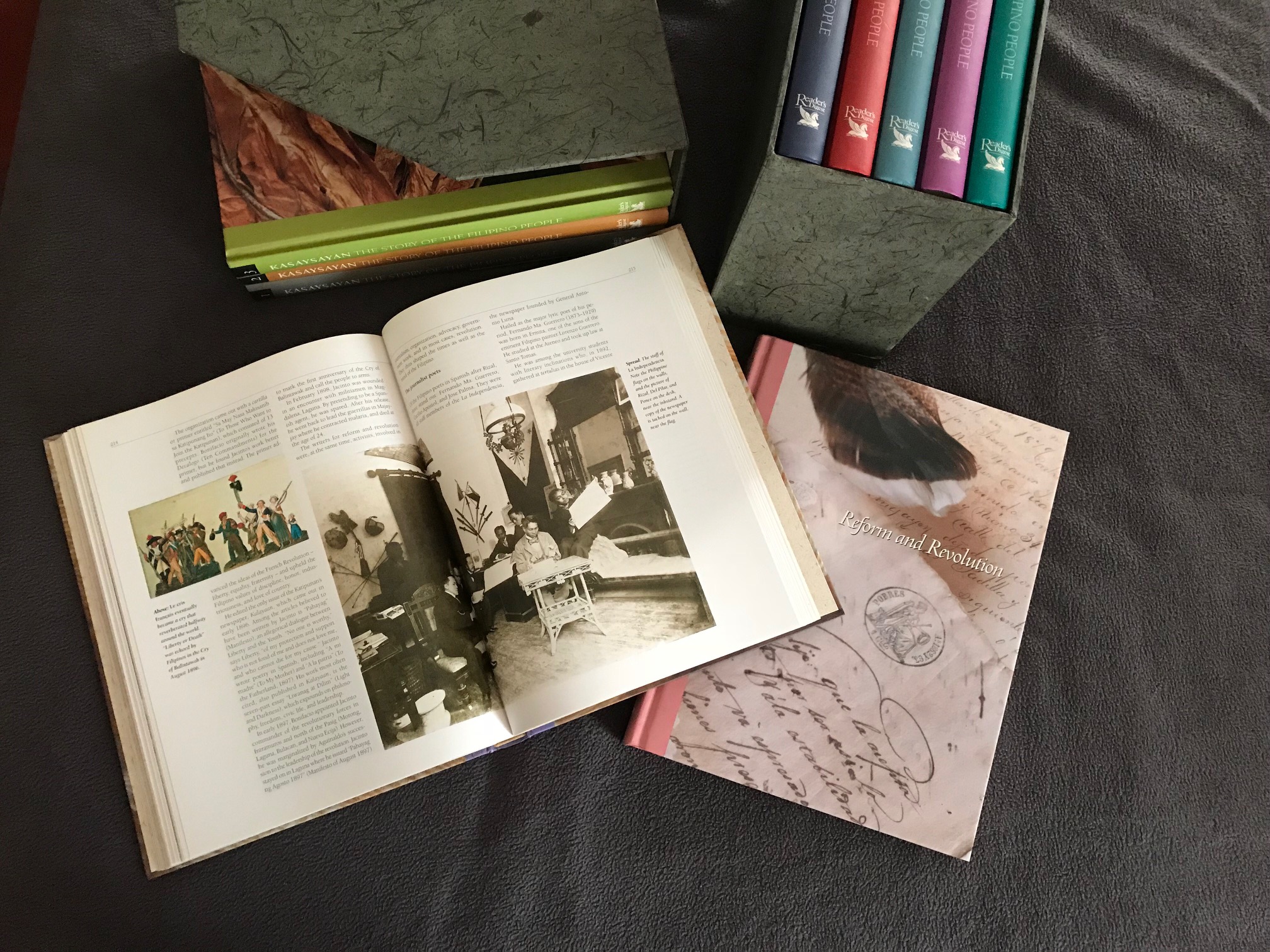
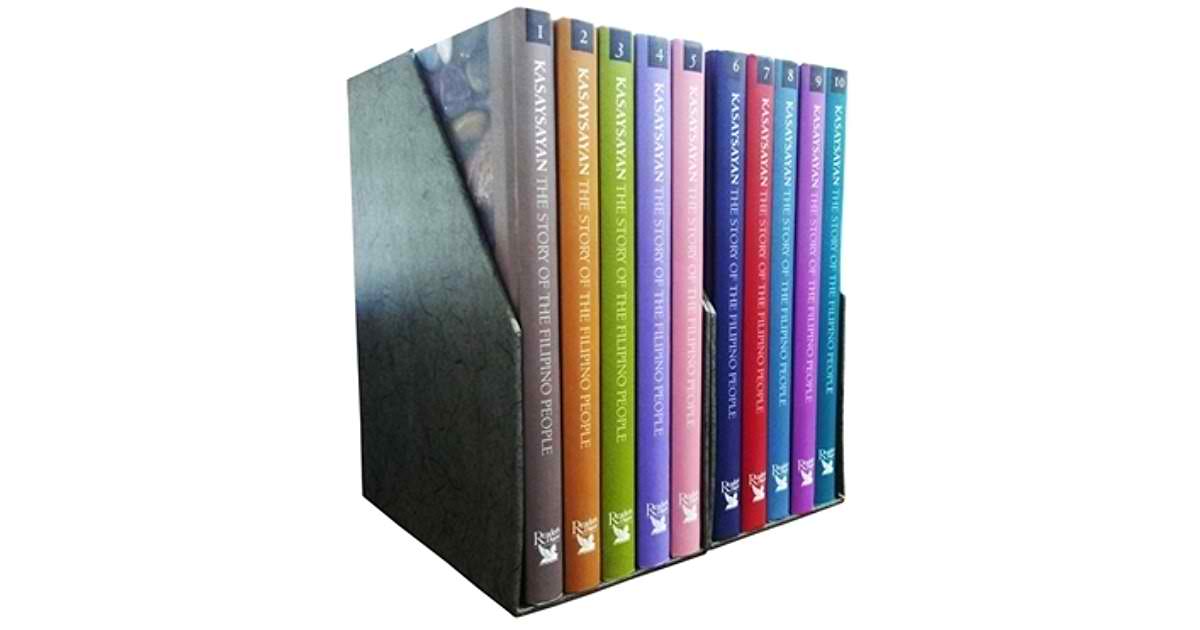
LAST MONDAY’S celebration of Independence Day reminded me of the Philippine Centennial nearly 20 years ago, when I took part in the launch of the first and still the biggest book project I’ve taken on in my professional life. I’ve edited about as many books as I’ve written—more than 30—and 10 of those were all for one massive undertaking, Kasaysayan: The Story of the Filipino People (Asia Publishing Co., 1998).

It was a 10-volume history of the Philippines like no other, put together by some of country’s foremost historians, academics, and writers, a joint project of Reader’s Digest Asia and A-Z Direct Marketing, which was then Reader’s Digest’s local distributor at a time when the family-friendly monthly was still going strong.

The idea was hatched in 1996 in anticipation of the forthcoming Centennial between A-Z’s late president Lirio Sandoval and the indefatigable Tere Custodio, who became the project director; Reader’s Digest Asia would foot most of the bill. Their idea was that while Philippine histories and encyclopedias had existed, none of them seemed comprehensive, popularly accessible, and visually compelling enough.

Tere shopped around for an executive editor, and I think it was our mutual friend Gina Apostol who suggested me (to my everlasting gratitude). We then took on two key and stellar talents, both of them sadly now gone—Doreen Fernandez as our editorial consultant and Nik Ricio as our book designer. Together, we planned out a 10-volume series, each full-sized volume no less than 300 pages, with an average of at least one picture—many of them never published before, acquired from international and private collections—on every page, 3,500 images in all.

The volume titles previewed the series’ coverage and contents: The Philippine Archipelago; The Earliest Filipinos; The Spanish Conquest; Life in the Colony; Reform and Revolution; Under Stars and Stripes; The Japanese Occupation; Up from the Ashes; A Nation Reborn; and A Timeline of Philippine History.

To write each of these volumes, we recruited our most eminent historians and experts—people like Dr. Milagros Guerrero, Fr. John Schumacher, Dr. Ricardo T. Jose, and Dr. Ma. Serena Diokno. Each volume was also supplemented by around 20 essays, contributed by the country’s top writers and cultural figures from Dr. Bienvenido Lumbera to Jessica Zafra—on topics ranging from early forms of Philippine writing and wartime “Mickey Mouse” money to 16th-century Visayan warriors and the origins of the kundiman. (My own single contribution as a writer to the series was an essay on the First Quarter Storm.)

It seemed like a gargantuan project, and indeed it was, requiring not only the production of enormous amounts of historical scholarship and pictorial research (the latter task headed by no less than Romy Gacad) but also the management of a budget hitherto unheard of in local publishing and, more dauntingly, of over 200 egos. I also organized a small team of sub-editors to help me get the job done, and sent them memos emphasizing the need for readability; every author’s brief, after all, was “to write in a style that can be understood by the Filipino high school and college student, without compromising the seriousness of the work as history.” The Internet in the Philippines was in its rudimentary stage; we had email, but still moved files around in floppies.

We gathered the editorial team for the first time one day in January 1997, setting for ourselves the formidable goal of launching 10 new, profusely illustrated books in June 1998, or 18 months hence. Against all odds, that goal was met. I would write as a promotional blurb at the end that “Here, finally, is the story of the Filipino: told from a Filipino viewpoint, but with a full appreciation of the modern Filipino’s engagement in a rapidly globalizing society.”

That priceless experience would teach me everything I needed to know as a textual editor, leaving much of the people management to the thoroughly professional and unwavering Tere. Including the essays, I read, edited, and proofread a million words; I sat side-by-side with Nik poring over the layout, adjusting the text to remove—as the perfectionist in him demanded—rivers, widows, and orphans (publishing terms you’d do well to Google), and writing and positioning subheads for visual relief.

One more task remained for me, which was to draft speeches for the two principal guests of honor at the grand book launch at the Manila Hotel on June 1—President Fidel V. Ramos and former President Corazon Aquino. I’ve sadly lost the draft I did for Cory, but I still have notes that have FVR saying:

“If the art of narrative or of storytelling is the art of making sense of seemingly random or disparate events, then Kasaysayan is our story, our understanding of ourselves, our version of the same events that other writers have used to keep us subjugated and alien unto ourselves. Written from our point of view, this version—this vision—is one that must empower us, that must make us whole, that must enable us to better ourselves and our future. We cannot change history, but history can change us.”

The handsomely boxed ten-volume set initially sold for P16,000; a few months ago I learned that surplus sets were being marketed in some Manila bookstores for as low as P2,000. That sounds to me like the bargain of the century—especially if you have a teenager in the house in need of a sense of history, or just want to see our history in a way you never did before.

IMG_2029