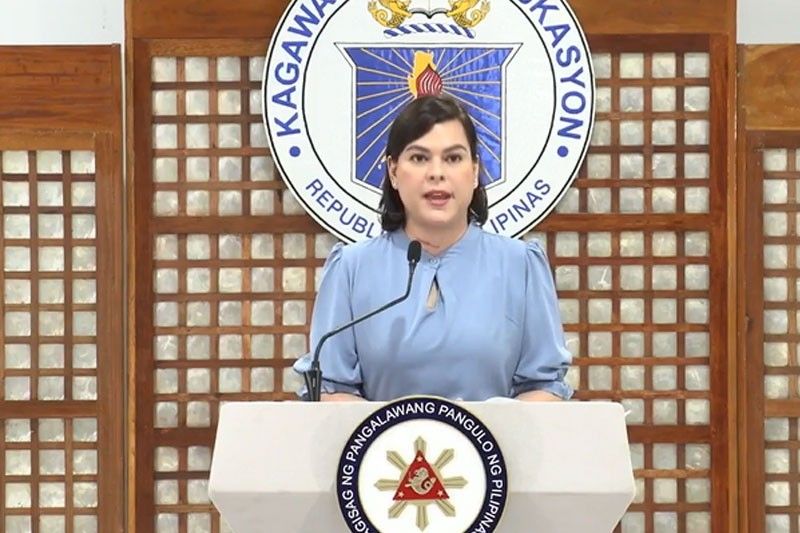
Qwertyman No. 156: That Bam-Kiko Thing

Qwertyman for Monday, July 28, 2025

RETURNING SENATORS Bam Aquino and Kiko Pangilinan have been getting roasted online for joining the majority bloc in the incoming Senate, thereby securing important committee chairmanships under the highly unpopular but tough-to-unseat Senate President Chiz Escudero. Despite sympathetic reactions from such opposition stalwarts as former VP and now Naga Mayor Leni Robredo and Sen. Risa Hontiveros, the two have been roundly scored for their decision.

Typical of the outcry was this much circulated post by a friend I deeply admire, the penal and judicial reformer Raymund Narag, who lamented that “They will join the majority. The same majority that excuses corruption as politics, power as protection, and self-interest as national interest. But what they forget is that we voted for them not to play the game. They forget that it was not just about committees, or positions, or so-called influence. It was about principle. We mourn the death of idealism in Philippine politics. But it’s a slow death. Not by assassination, not by defeat, but by compromise. And the executioners are the very people who once called themselves idealists.”

It’s a heavy to charge to lay at the feet of these two men—turncoatism, betrayal, the surrender of idealism, latent hypocrisy—and I can see where the disappointment and dismay are coming from. But with all due respect to my friend Raymund and to those who share his sentiments, I don’t see these dire reversals at all in the choices that Bam and Kiko made, but possibly an interesting and potentially significant maturing of our political culture, especially within the opposition.

It’s true that the Bam-Kiko decision came as a surprise, and that things would have been much clearer, the battle lines much more cleanly drawn, had they sat with Sen. Risa Hontiveros in a true and unflinching albeit tiny minority, duking it out with the majority at every turn, exposing wrongdoing right and left, and remaining unblemished by compromise to the end of their term. We could have remembered them for their impassioned speeches in defense of democracy and justice, tilting against the windmills of the Marcos-Duterte regime.

But I don’t think that’s all or what we elected these two senators for—or was it? As far as I can tell, we voted for them to get things done—the good, the right, and the best things—where they mattered, in their areas of expertise: Bam in education, and Kiko in agriculture. Granted, it may have been secondary to sending a message upstairs that these were the good guys, infinitely much better than the trapos being foisted on us by both the Marcos and Duterte factions, but it was their track record that gilded their credentials.

In case we’ve forgotten or weren’t listening too closely when they were campaigning, Bam Aquino authored 51 laws, including the Universal Access to Quality Tertiary Education Act, the Go Negosyo Act, and the Microfinance NGOs Act. He was also behind the Masustansyang Pagkain para sa Batang Pilipino Act and the No Shortchanging Act of 2016. Kiko Pangilinan, an even more seasoned lawmaker, produced over 150 laws, including the Sagip Saka Act, the Coconut Farmers and Industry Trust Fund Act, and the 105-Day Expanded Maternity Leave Law.

Their acceptance of the agriculture and education chairmanships should help ensure and strengthen their ability to pursue these progressive initiatives further—regardless of how they think about and vote on other issues of national consequence, such as the impeachment of VP Sara Duterte, the national budget, our foreign policy, and constitutional change. 

We have yet to see—as their critics already seem to have foretold—if they will cherish their chairmanships to the extent of abandoning their fundamental principles. Instead I foresee the greater likelihood of the reverse happening: of Bam and Kiko relinquishing their posts should their stay there prove morally untenable. If they were to perform well in their Senate positions, and they were then stripped of their chairmanships for their independent stances, then that still would be more emphatic than if they had never assumed the responsibilities that are also their entitlements, according to their competencies.

But in and of itself, joining the majority bloc—never a firm nor a politically or philosophically cohesive entity in our system of what Shakespeare called “vagabond flags”—should be less of a deal or an issue than it is being made out to be. This “majority,” in any case, seems such a ragtag band that it is almost certain to collapse before the end of the present term.

It probably says more about us as an electorate than about Bam and Kiko when we cast their decision as a “betrayal” of what they were presumably voted for. I’m no political scientist so the experts can explain this better than I can, but it seems to me that we’ve become used to seeing our legislature as a forced marriage of fundamentally incompatible forces—the ruling party (powerful but unintelligent, corrupt, opportunist, cynical, good-for-nothing) and the opposition (weak but progressive, smart, morally upright, idealistic, courageous, media-savvy, and effective). We see the Senate as an arena, a battleground (and often a circus), rather than an office where people are supposed to work, and work together (never mind that some of them are lazy and stupid), achieving results through compromise.

Bam and Kiko just need to prove themselves once more at their jobs and serve the Filipino to the best of their ability, so that when 2028 comes—and whatever their plans may be for that next milestone—they can have a good answer to the basic question that our voters have every right to ask: “So what have you done for me?” It’s a question that the elevated rhetoric of the progressive opposition has sadly often ignored and dearly paid for, almost as if it were beneath consideration. Bam and Kiko need a platform from which to connect corruption to the price of rice, to persistent flooding, to the failure of Filipino children to read at Grade 3. 

Of course, it can be said that that’s exactly what Risa Hontiveros has been doing all by her lonesome—without the benefit of patronage, and with just the chairmanship of the Senate Committee on Women, Children, Family Relations and Gender Equality to her name. She sponsored the passage of the Expanded Solo Parents Welfare Act, the Safe Spaces Act which protects Filipinos, especially women, from gender-based harassment in public spaces, and the Anti-Online Sexual Abuse or Exploitation of Children Law.

Taking another tack but manifesting the same tenacity, Sen. Loren Legarda has survived through many administrations in all kinds of political weather, drawing criticism for that ability, but has remained steadfast in her commitment to protecting the environment, mitigating climate change, and promoting Philippine arts and culture like no other senator nor President for that matter has. 

But for what they’ve already done and could yet do, I think Bam and Kiko deserve our trust. Let’s cut them some slack and give them a chance. We pinklawans aren’t the only voters they’re answerable to.

(Photo from rappler.com)

Qwertyman No. 149: American Idiocracy

Qwertyman for Monday, June 9, 2025

IN HIS controversial but surprisingly popular 1987 book The Closing of the American Mind, the philosopher Allan Bloom lamented what he saw to be the decline of intellectual inquiry in America, indicting its universities for failing their students by promoting “relativism” over the time-honored values embodied by the “Great Books” of Western thought. “The consequences of the abandonment of the quest for the best are far-reaching and destructive,” Bloom intoned. 

Bloom was no flaming liberal; in fact, he was anything but—a true conservative who disdained rock music for its overtly sexual messages and its narcotic effects on the young (imagine what he would have said about TikTok). But his book and its arguments struck a responsive chord in many Americans—half a million of them bought hardcover copies—who were worried that the counterculture that had crept across American society since the tumultuous 196os had weakened it from within and had dulled the blade of American exceptionalism—the rock-solid article of faith that America was, or had to be, No. 1 in everything, because of its unique history and attributes.

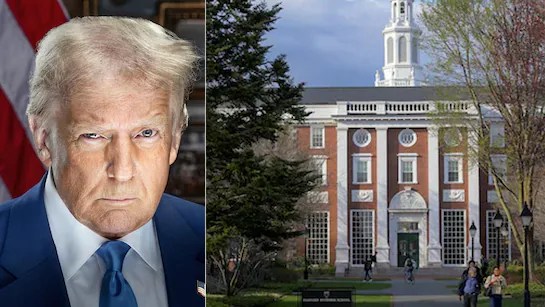
That sounds a lot like “Make America Great Again,” although MAGA wasn’t driven by a longing to study Plato, but by deep-seated, grassroots-level grievances and prejudices. One wonders how Allan Bloom, who died in 1992, would respond to the political situation today, which on the surface mirrors some of his concerns, but only just so: a conservative President has declared war on America’s liberal universities, for all the wrong reasons, leading up to the “far-reaching and destructive consequences” that Bloom bewailed. 

Of course, Donald Trump is no Bloomian or even Reaganite conservative; all he seems to be about is unbridled power and money, and testing the limits to where they can go. “Trumpism” has been described as a mash of nationalism, populism, and industrialism, with a generous dollop of pettiness and egotism. 

Sometime last April, messaging on Truth Social (with a shift key typically gone berserk), Trump attacked Harvard University, claiming that “Harvard is an Anti-Semitic, Far Left Institution, as are numerous others, with students being accepted from all over the World that want to rip our Country apart. The place is a Liberal mess, allowing a certain group of crazed lunatics to enter and exit the classroom and spew fake ANGER AND HATE.” 

Shortly after, he ordered the federal government to withdraw more than $2 billion in funding for research grants to Harvard, and sought to cancel its ability to enroll international students. Trump wasn’t alone in declaring war on American academia. Years earlier, his VP-to-be JD Vance had told the National Conservatism Convention that “Universities in our country are fundamentally corrupt and dedicated to deceit and lies, not to the truth…. We have to honestly and aggressively attack (them).”

Not surprisingly, Harvard and a cohort of other leading universities have fought back, taking the administration’s tack as a frontal assault on academic freedom—and, more strategically, on America’s albeit waning intellectual leadership.

MAGAworld’s anti-intellectualism is interesting, because it draws on a long and dark tradition of tyrants from Franco’s Spain to Pol Pot’s Cambodia waging war on scholars—to cite only the most visibly horrifying examples under which hundreds of thousands of intellectuals were massacred. Mass murder makes the withdrawal of grants and visas seem benign, but they come from the same deep mistrust of critical thinking, contrary opinion, and the alien element. Dictatorships thrive on herd mentality and unquestioning obedience, both anathema to academia.

It’s not as if Trump and Vance never went to good schools. Trump went to Wharton and Vance to Yale Law; whether they learned something worth their tuition is another matter. Political instinct, not intellect, drives these men. 

Right now, that instinct is telling them that culture (or its reversal) is more important than anything else—specifically “woke” culture, the greatest threat to the hegemony of straight white men: civil rights, women’s empowerment, abortion rights, gay and gender rights, minority representation, affirmative action, Black heritage, environmental protection, and internationalism, among other values espoused by the liberal Establishment and its bastions like Harvard. 

The collateral damage of this insane and reckless urge to reshape America in Trump’s own image has included truthfulness, justice, accountability, sound science, and, ironically, America’s own long-term economic and academic well-being. MAGA’s success will be America’s diminution from the intellectual powerhouse that has accounted for more than 70 percent of all Nobel Prize winners (about 30 percent of them immigrants to the US) to the fools’ paradise contemplated in the 2006 movie Idiocracy—a comedy that won’t be so funny when it materializes.

Trump’s insistence on characterizing foreign students as potential terrorists and troublemakers will be particularly counterproductive, as it will banish many of the world’s best young minds to more receptive climates, and erode America’s influence on global thinking. 

That may not necessarily be a bad thing, as it reminds everyone that the US has no monopoly on excellence, and never really did. But as a two-time Fulbrighter who, like thousands of other pensionados to America, look back with gratitude and not a little pride on that opportunity to imbibe not just new knowledge but America at its welcoming best, I cannot imagine anything stupider than this willful squandering of American goodwill and soft power for the price of a few missiles. 

It will not even be Donald Trump & Co. who will pay that price, but generations of Americans down the road who will recall this period of infectious lunacy with bewilderment and regret. They will have no one to blame but their red-capped grandparents, who thought that trusting a despotic dunce with all that power was a bright idea. (And I know how much that statement smacks of the elitism that Trumpers hate, but tell me it isn’t true.)

Qwertyman No. 142: A Long Learning Process

Qwertyman for Monday, April 21, 2025

I RECENTLY came across a thread on social media urging Filipinos to boycott the midterm elections next month on the expectation that they will be tainted with fraud, as the 2022 elections were believed or alleged to have been by many.

When I looked it up, as early as last October when certificates of candidacy were still being filed, a retired OFW named Ronnie Amorsolo had already protested the elections, telling aspirants to not even run and calling the May 2025 polls a waste of time, energy, and money as they were already rigged. Political dynasties were making sure they would stay in power, he said, with the connivance of the Comelec and Miru Systems, the contractor for this year’s automated vote counting.

I can understand the extreme frustration of our countrymen like Ronnie who feel that the current electoral system is hopeless and that our democracy itself is a fraud given the seemingly unbreakable grip of dynastic families on our political leadership. But I disagree with his cynicism and with his call for a boycott. I think abstention will simply play into the hands of those dynasties and be written off as a virtual surrender.

To put it another way: if Leni Robredo herself believed in the futility of seeking change through elections, then why is she running for mayor of Naga? Granted, it’s friendly territory for the Robredos, but she could have symbolically stayed away to make a point. (There are, of course, those who fault even Leni for not protesting her presidential loss loudly enough and for wishing her opponent well, but I for one admire her for her graciousness and sobriety. I suspect she must have known that whether or whatever fraud may have occurred, much more work needed to be done to move Filipinos toward the light.)

As a longtime educator, I believe in learning—sometimes, the hard way. What’s happening in America now is what tens of millions of Americans didn’t realize they had voted for—but they did, and now they’re reaping the dire results; we’ll see in the US midterms next year if they’ve learned anything (and the Democrats as well, about their messaging). I’ve always thought that it will take at least two more generations before we Pinoys start looking for real merit in our leaders like the Singaporeans (whose inclination to self-censor I have always scoffed at, but for whom governance has become a learnable science). 

In the meanwhile we will keep making mistakes and keep paying the price—until we learn from those mistakes. Experience, they say, is the best teacher, but to learn from experience, you still need someone in the room to make sense of what just happened and what’s likely to happen again, if we don’t choose wisely. That’s what a good opposition should do—tilt against windmills and prepare to lose if they must, but give voters clear choices and alternatives. And the opposition itself has much to learn in terms of communicating with the seemingly unreachable. I don’t think it’s true that the only language the poor understand at the polls is money; a moving narrative of hope could work miracles.

In a very recent study titled “Elections Under Autocracy: The Opposition’s Dilemma—Compete or Boycott,” law professors Samuel Issacharoff and Sergio Verdugo point out that “Even in extreme authoritarian situations, opposition leaders should develop a pragmatic and strategic assessment of the political landscape. In many cases, the opposition should opt for participation while simultaneously exposing and denouncing the regime’s electoral abuses. Participation does not necessarily imply endorsing the legitimacy of a rigged system—despite the risk of elections strengthening the regime in the end—but instead serves as a means to challenge the regime, mobilize supporters, maintain political visibility and denounce abuses to both the domestic and international communities. By engaging in the process, opposition forces can highlight institutional flaws, document electoral manipulation, and create pressure for reform, even in the face of near-certain defeat. While acknowledging that outright victory is unlikely, there are there are compelling reasons for opposition forces to contest elections in authoritarian settings to be considered.” 

Remember 1985? If we had boycotted the snap elections then—and what a brazen act of larceny those elections turned out to be—would February 1986 have happened? It wasn’t just the plight of the military rebels that brought us out on EDSA; it was our outrage—and yes, maybe we just don’t have enough of that today, but push us some more, and it could happen again.

At this point, let me borrow some thoughts from a group called the Global Transparency and Transformation Advocates Network (GTTAN), which recently put out a statement in response to the calls for a boycott of the May elections: 

“While GTTAN understands that the boycott aims to express dissatisfaction with the electoral system and pressure authorities for reform, the reality is that with only three months remaining, any significant changes are highly unlikely.

“The COMELEC and the current administration have demonstrated little interest in implementing reforms, making boycott rallies an ineffective protest strategy.

“Furthermore, refusing to participate will not prevent the election from taking place. 

“Instead, it may lead to a sweeping victory for the administration’s candidates, as their supporters will still cast their votes.

“An outright boycott risks further weakening opposition to the government.

“For these reasons, GTTAN firmly opposes the call to boycott the elections. Instead, GTTAN advocates a strategic approach that includes: 

  1. Deploying poll watchers to oversee the voting process, including vote counting, recording, and reporting at each precinct; 
  1. Collaborating with and supporting organizations including political parties that are actively working for electoral integrity; 
  1. Advocating for citizens’ rights to review the automated election system, ensuring it meets transparency and auditability standards;
  1. Pushing COMELEC to maintain election records for a minimum of 10 years after each election and to make such records available for inspection by the public upon request; and  
  1. Educating voters on proper voting procedures and raising awareness to prevent election fraud. 

I couldn’t have put it better: engagement, not withdrawal, remains the activist’s bravest and toughest option. Whether those twelve names you write down win or not—or even get counted or not—you’ve already won your own battle against despair.

(Image from philtstar.com)

Qwertyman No. 132: A False Horizon

Qwertyman for Monday, February 10, 2025

I DON’T know why, but like the proverbial bad penny that keeps turning up (English teachers: note the British idiom), every few years, some Filipino school announces its adoption of an “English-only” language policy on its campus, ostensibly in the service of a sublime objective such as “global competitiveness” or “global competence.”

This time around, it’s the Pamantasan ng Cabuyao that’s enforcing the rule. PNC president Librado Dimaunahan has issued a memo declaring that “In line with our vision of developing globally competitive and world class students, the Pamantasan ng Cabuyao (University of Cabuyao) is now an English-speaking campus starting Feb. 03, 2025…. All transactions and engagements with officers, students, employees, and workers should be communicated in English, whether written or otherwise. For strict compliance.” What he wanted to create was no less than “a strong English-speaking environment.” 

A few years ago, it was Cavite State University which required its students, teachers and staff to speak exclusively in English or face punishments like getting your ID confiscated and having to sing the CvSU hymn (in English, of course). Filipino could be used only by maintenance workers—and by others, but only in the restrooms and cafeteria.

I’m not going to add to the brickbats that these ideas have already received, not unreasonably. But I will add my two cents’ worth (my, where do these “brickbats” and “two cents” come from?) to the conversation, as a lifelong user and teacher of the language.

I have a PhD in English—something I don’t often bring up because it sounds so pompous and presumptuous—earned in America where, to my smug satisfaction and my classmates’ consternation, my professor would single out my prose for, among others, its perfect punctuation. I was the only one in our graduate literature class who could explain the difference between parataxis and hypotaxis (no, nothing to do with Yellow Cabs and Uber). Was that global competitiveness? I guess so. Was I proud of my English language skills? Of course. Did it make me or the Philippines any richer? Not a dollar more. Is this what a national language policy should be about? Heck, no.

I’ve done well in English not because I was forced to, but because I love the language, and languages in general. I should have loved Spanish—discovering its beauty too late, when I had to read and translate Federico Garcia Lorca for a grad-school exam—but I didn’t, because we had been forced by our curriculum to take so many units of it (24, in my mother’s time). I started on German and French in high school and college and am picking German up again on Duolingo, in preparation for the forthcoming Frankfurt Book Fair. (I write plays and screenplays in Filipino, despite being born in Romblon.)

What I’ve realized from studying these languages and from a lifetime of writing, speaking, and using English is that in our country of over a hundred languages, English can’t be taught and learned well by exclusively using English. I’m learning German on Duolingo using English.

I don’t mind saying that when I teach creative writing or literature in English, I pause when my students can’t seem to understand what the text is saying—and then we pursue the same line of inquiry in Filipino, and everybody goes “Ah!” It makes simple teaching sense. You can’t get more out of a student—in English—if he or she can’t understand or even recognize the problem, in English. 

And just to be clear, these are questions of comprehension and interpretation that even native speakers of English would have a hard time with. (How do I know? I taught the American short story to American undergraduates in Wisconsin.) These are questions like “So what’s John Updike saying about the position of the rebel or nonconformist in society at the end of his story ‘A&P’?” That’s best answerable if you also discuss as we do what America was like in the 1960s, with Vietnam, Woodstock, the civil rights movement, and the moon landing in the background. (I always tell my students that we’re not studying American literature and history to become Americans, but to become better and wiser Filipinos.) 

Boomers like me like to recall that in many private schools of our time, students were fined five centavos for every instance they were caught using Filipino. Some may find that quaint or even charming, but if you think anyone learned and loved English because of these stupid rules, think again. Students learn good English from good teachers who don’t teach English as a grammar rulebook but as a road map or even a cheat sheet to an adventure.

English is best learned along the way of learning something else—like how the world works, in science and literature—as a key to unlocking knowledge and meaning. English proficiency all by itself is a non-goal, a false horizon that can delude people into believing that they’ve arrived. Arrived where? What for?

All the English in the world isn’t going to turn the Philippines into an economic powerhouse—which Japan, China, Russia, and Germany managed to become without a mandatory word of English in their curricula from decades back. Better English could make us become more employable as waiters, domestic helpers, and seamen—and I’m not downplaying this, because the language does give us an advantage in those markets—but these jobs, noble as they are, aren’t what universities were made for.

All the English in the world isn’t going to drive a moral spine up the backs of our leaders. Intolerable as it was, one president’s foul mouth and boorish manners may not be far worse than a General Appropriations Act legitimizing the wholesale thievery of people’s money in perfectly edited English. 

We can speak all we want with an American accent—only to realize that, in Trump’s America, where one of his appointees has declared pointblank that “It takes a competent white man to get things done right,” the color of your skin still matters more than whether you can pronounce “Adirondack” or “tortoise” correctly. Trump’s maniacal edicts and pronouncements—cutting foreign aid, expelling Palestinians so he can turn Gaza into an American beach resort, and turning the FBI and the DOJ into his personal security force and loyalty police—have all been made in his lazy, slurring English, each word delivering chaos and disaster with as much consequence as Hitler’s Nuremberg rants.

More shameful than lack of proficiency in English is lack of proficiency in one’s own language, which I see in the children of parents anxious to “globalize” their kids without mooring them first in their own culture. Those children will be maimed for life, insulated from and unable to communicate with or relate to their common countrymen. We need our own languages to understand ourselves.

Teach good values and good citizenship. Even if that student’s English turns out less than stellar, our country can’t be worse off.

Qwertyman No. 115: Why I Teach

Qwertyman for Monday, October 14, 2024

LAST OCTOBER 5, we marked World Teachers Day—not one of our most popular or noisiest holidays (it isn’t even an official one), but one that gives us pause to remember some of the most important people in our young lives. I taught for 35 years before I retired in 2019, and I still teach one writing subject every semester as professor emeritus, so I suppose I wanted to be that “VIP” in someone’s life. 

When we teach writing—and not even creative writing, but composition—to freshmen, we take young people by the hand and help them make sense out of their lives and their ideas, such as they are. The term “composition” applies as much to the writer as to the text: one composes oneself, drawing out the essentials and leaving out the dross. Creative writing pushes that process one step farther, by turning to the imagination instead of one’s limited experience for material and insight. 

The creative writing teacher’s task is not only to encourage but also to guide and to train that imagination, sparing the student from having to reinvent the wheel but affording him or her the thrill of self-discovery. 

It’s an inarguably fine and noble mission. On the other hand, and in economic terms, the teaching of creative writing is brutally inefficient. In a typical workshop class of 20 people, an instructor would be fortunate to find two or three with real talent—an aptitude for language, a maturity of insight, a stylistic flair. Among those, far fewer will have the discipline and perseverance to write and write well for life.

So why should we even persist, or expend public funds to produce boatloads of people who will probably never write the kind of line you will mumble in your half-sleep, or will cry out to the heavens in your most painful or most euphoric moment?

For one, because producing good creative writers is like mining for precious stones, where a ton of ore might have to be torn out of the earth and sifted through to produce one small jewel-grade rock, which has yet to be cut and shaped by expert hands. 

We must also persist in teaching creative writing because the production of new literature reinvigorates and replenishes our imagination as a people, our imagination of ourselves. It is that imagination, however dark, that gives us hope and makes reality endurable. The truth of numbers—of GDP and ROI and per capita income and population growth rates—is important (I’ve often remarked what a terribly innumerate society we are); but it is a limited and even sometimes deceptive truth that barely begins to tell our story. History does this, but without much latitude for pure conjecture. As in painting and the other arts, creative writers have often simply done, and done first, what critics and theorists would later describe and systematize. Creative writing is a breath of intuition caught on paper.

But I also teach creative writing in the conviction that every student—no matter the person’s background—has at least one good story to tell, and that it is our task as teachers to release that story. Most of my students may come to my classes merely to pass the time, or fulfill a requirement, or satisfy a craving for some critical attention; many may never write another story in their lives. But I want them to come out appreciating and respecting the liberative and ameliorative power of art—which is a fancy way of saying that, for those of us who will never be mistaken on the street for Brad Pitt or Superman, here we can be and do anything, for as long as we make artistic sense.

As K. Patricia Cross, professor emerita of higher education at Berkeley, reminds us, “The task of the excellent teacher is to stimulate ‘apparently ordinary’ people to unusual effort. The tough problem is not in identifying winners: it is in making winners out of ordinary people.”

Anyone can write anything, but not everyone can be a writer. By the same token, not every writer can be a teacher. People who have no problems stringing seamless paragraphs of compound-complex sentences can’t give a lecture or an exercise worth an ATM receipt. It takes a different sensibility—and, yes, another set of talents (or what I call a whole bunch of P’s—preparation, perseverance, patience, and passion)—to teach well and to endure in the classroom.

I feel passionate about teaching in UP and in this country, and in giving back to them, through my students, what they have given me. But teaching is not a word I often say in the same breath as love. I cannot honestly say that I love teaching, in the sense of wanting to do it for most of my waking hours, or missing it terribly when I’m doing something else. Teaching is one of the most exhausting jobs you can get. The job doesn’t begin or end in the classroom; it just happens there.

Every time I step into a classroom, I pause at the doorway to expel a deep sigh and collect my thoughts, wondering if I have enough to sustain a 90-minute performance. As the American novelist Gail Godwin famously said, “Good teaching is one-fourth preparation and three-fourths theatre.” Indeed I spend the last ten minutes before class writing a script in my head: I will say this; I will do this; I will bring these props and use them at some point; I will ignite an argument; I will leave them with a question that will buzz in their ears for a week. Even bad stories can be turned to great lessons; where’s the teaching point? How can I say it without crushing or diminishing the person? 

It doesn’t always work—sometimes I simply collapse into my chair and count away the minutes—but we all attempt some variation of this drill. Basically, we are saying: I will do my best to make this day worth their time and mine. It’s what they expect; it’s what I promised.

It is not love but duty that drives me to teach—although duty, perhaps, can also be a form of love; a love not of the thing itself but of some larger principle. That principle to me is service—service to country, people, university, and service to the great and truly free republic of the imagination.

“How do you know that what you’re doing matters?” I was asked once. “How can you tell if you’re making a difference?” My answer was, I don’t know, I can’t tell. But for a teacher, the only distinguished achievement that counts is the quality of one’s students. You are distinguished by their achievement, and in this sense, I have been distinguished aplenty.

Qwertyman No. 100: The Political Doghouse

Qwertyman for Monday, July 1, 2024


TO NO one’s great surprise, Vice President Sara Duterte resigned from her concurrent posts as Secretary of Education and vice-chair of that long-named (short name: red-tagging) council. Maybe because I was far away from Davao when the news came in, I heard no wailing and gnashing of teeth. A tree fell in the forest. The world moved on.

Inday Sara promised to continue to be a mother to the country’s teachers—the same people she had ordered to strip their walls bare of teaching aids. She was back in the news a week later after reportedly announcing that her father and two brothers were going to run for senator in next year’s elections. Her name was brought up as a possible “leader of the opposition.” None of these silly propositions generated the kind of groundswell she may have been hoping for, as someone once touted to be a shoo-in for the presidency who just got suckered into sliding down to No. 2 (to her Papa Digong’s boundless dismay) in a deal craftily brokered by former President Gloria Macapagal Arroyo.

To Duterte diehards—and let’s face it, there are still quite a few, although being out of office tends to lose people by the day—Sara will always be their golden girl, the victim of craven betrayal by their erstwhile “Uniteam” ally. To her non-fans, she will always be the bratty bureaucrat who demanded P650 million in confidential funds and who bragged about spending P125 million of DepEd money in the time it takes you to say “low PISA scores.”

Where she goes from here is the big question. In a touch of supreme irony, she now finds herself in almost exactly the same position as her predecessor, Leni Robredo, who was boxed out of Digong Duterte’s Cabinet and pretty much left on her own.

And there the inevitable and (for Sara) unfortunate parallels arise, because VP Leni shunned privilege, turned her exclusion into a challenge, and made the OVP a model of what a government office with meager funds could do, with honest, visionary and purpose-driven leadership. Leni became, and continues to be, beloved, as close to a saintlike figure as any elected official could aspire to be. That this quality failed to propel Robredo to the presidency says more about our electorate and political culture than about her—the dark, mutable, and serpentine side of Philippine politics that the Dutertes thrive in.

I have no doubt whatsoever that Sara Duterte will continue to be politically engaged and even run for the presidency in 2028, no matter what. In that, she will have less to worry about from Leni Robredo, who has expressed her desire to return to local politics in Naga, than from the likes of the eminent Sen. Raffy Tulfo, who topped Pulse Asia’s latest survey of presidential contenders at 35 percent against Sara’s 34 and Leni’s 11. Yes, that’s the kind of electorate we have, which can’t tell between meritocracy and mediocrity, so Sara will prosper in that environment and may even win against BBM’s anointed (Speaker Martin Romualdez scored a dismal 1 percent in the same survey).

Still, 2028 is four long years down the road, a lot of time for things to congeal and to unravel. Familia Duterte will close in and consolidate behind the name and the tough-guy brand, and in the event that all three Duterte boys make it to the Senate—an absurdity moderated only by the presence today of so many DNA matches in that august body—then Sara’s path to the Palace will have been cleared by a bulldozer. 

Of some minor interest is the fate of the two Digong acolytes in the Senate—Sens. Bong and Bato—who seem to be feeling orphaned. Both have been making the requisite pledges of fealty to the Dutertes, despite Bong Go being slammed by Davao Mayor Baste Duterte for not defending their home turf loudly enough from the lofty positions to which their patron raised them. Chastised, the two said they would support a Senate inquiry into the “excessive use of force” in the police raid against fugitive pastor Apollo Quiboloy, whom Sen. Bato had vowed to guard with his life should he appear in the Senate under subpoena—a degree of sensitivity and solicitude profoundly absent from the murderous “tokhang” campaign that both men supported.

So the Dutertes are far from dead and gone, but BBM—and let’s not forget the Kakampink forces simmering below the surface—has four more years to vaporize the Uniteam that never really was. (And then again, BBM claims that the Uniteam remains intact—nothing to worry about, folks!—because the Dutertes’ political party, the PDP, was never part of the coalition. Say that again?)

More important than preserving the fiction of the Uniteam, the opening provides Marcos with yet another opportunity to shore up his political capital—already boosted by his turnaround from his predecessor’s policies on Chinese aggression and on the war on drugs—by selecting a qualified, full-time professional for the post. Several names have been mentioned in a hypothetical shortlist, none of them apparently an expert in basic education, where most of our problems begin. And while it may be true, as Inday Sara herself noted, that you don’t have to be a teacher to be DepEd secretary, you have to understand that Philippine education needs more than mandatory toothbrushing to brighten up.

Ultimately, Sara Duterte’s resignation from her DepEd post may yet be her most valuable service to the nation, by opening the door to someone vastly more qualified to take on that critical job—unless, again, the DepEd is made to serve its other purpose as a doghouse for political strays.

Qwertyman No. 86: The Real Pasaways

Qwertyman for Monday, March 25, 2024

THE LOCAL Internet came down hard last week on an anonymous teacher who was caught on livestream giving her students a scorching tongue-lashing for what she claimed was their lack of respect and discipline. Almost hysterical, Teacher X called them good-for-nothings without a future. Predictably, netizens deplored her derogatory language, which they equated with child abuse, and called on the Department of Education to investigate the incident and impose some disciplinary measure on the teacher concerned.

I agree that Ma’am seems to have gone overboard in expressing her displeasure over her students’ misbehavior, and that she could have been more circumspect in her choice of words. I’m certain that DepEd—which happens to be headed by someone who doesn’t mince words herself when it comes to court sheriffs—will use her case to remind teachers of the need for exemplary behavior, if not some sweetness and light, in classroom management. 

At the same time, having been a teacher myself for forty years, I can imagine and understand the exasperation that must have gone into a titanic diatribe like that. I’ve never taught in elementary or high school, where these aggravations come in spades on both sides of the teacher’s table, but I’ve heard and read enough to know what a cauldron of high emotions a Filipino classroom can be in the worst of circumstances. 

Let’s pack a room meant for twenty students with twice that number or even more, with the heat from a tin roof bearing down on everyone (or, in another season, rain leaking down onto desks and textbooks). The teacher recites her lesson in a funereal monotone, expecting her students (who keep themselves awake by sneaking glances at TikTok on their phones) to regurgitate what she has just said: “Class, how do you pronounce a-DO-le-scent?” 

Not that she truly cares what they say, because her mind’s on the box of chocolates she has to buy for the supervisor whose signature she needs for her salary loan. She’ll spend half that loan on a fence around her garden to keep the roaming pigs and pissing drunks away, and the other half on a new cellphone because her arch-rival Mrs. Buenafe has one that can take selfies without the blemishes. Maybe, if she took better pictures of herself, she could win back her husband Temyong from that tramp in Trece Martires.

Just then a fight breaks out at the back of the room because Etoy has dropped a ballpen to sneak a look at Corito’s underwear, in full view of Corito’s alleged boyfriend Mikmik. “Stop that, quiet, gademet, you imbecile a-DO-lescents, I order you to behave or I’ll squeeze your little balls until they pop! You have no future, you worthless pasaways! You’re going to rot in this living hell they call a classroom!”

Now, when Teacher X says “You have no future,” I take it to mean that Ma’am has read the Edcom II report on the sad state of Philippine education, which puts our young learners practically at the cellar of global achievement. Unless some systemic reforms are put in place by the same DepEd that will now trumpet the virtues of better decorum in the classroom, we might as well have cursed those kids that caused Teacher X to blow her top—and by “curse” I don’t mean the use of foul language, but rather a hex such as a witch might put on some unfortunate soul. 

Philippine education is full of pasaways, many of them more than ten or even fifteen years old. Some have been in the system for so long that they have mastered its ways and means (e.g., how to make good money off bad textbooks) to a level of proficiency worthy of a doctorate. Secretaries of Education come and go—some more lamented than others—but these pasaways remain, as they do in certain bureaus dealing with government revenues, because they ensure continuity, which everyone but the occasional and hopelessly naive reformer appreciates. They may even be well-mannered, with the nicest smiles and mildest dispositions you ever saw, because of their contentment with the world as it is and their philosophical acceptance of human frailty.

This brings to mind another kind of pasaway, a certain man of God—no, make that Son of God—who has steadfastly refused to honor a summons by a Senate committee looking into sex trafficking, of which this pastor has been accused, among other crimes and misdemeanors. Let me judged by the proper court, he has argued through his lawyers, although—if he is who he claims to be—then no one but God the Father will qualify for that privilege.

God must have been a prolific babymaker, because this prosperous preacher is but one of many around the world proclaiming themselves to be Sons of God. Nearly all have landed in some kind of trouble with the law, usually in matters of sex and money, paltry and mundane emoluments that Sons of God seem to feel especially entitled to, in partial recompense for the heavy burdens of divinity.

Someone should have assured our good pastor that the Senate is a decorous institution, exceedingly kind to its guests, as a recent hearing involving police officials being questioned by a former police official showed. A senator who walked out of that hearing out of disgust over the “babying” shown the witnesses by their inquisitor now himself stands accused of discourtesy. Notwithstanding the presence of a chairperson known for her intolerance of untruths, our Son of God can surely count on the professed and unshakeable friendship of some of her honorable colleagues to shelter him from the slings and arrows of earthly justice. We are a much kinder people than that apoplectic teacher might suggest.

Qwertyman No. 83: It Isn’t Just Money

Qwertyman for Monday, March 4, 2023

MY RECENT column titled “An F for Philippine Education” apparently struck a chord among many readers who messaged me to say how appalled they were by the findings of the Second Congressional Commission on Education or Edcom II. Released just last January, the commission’s report graphically displayed just how poorly young Filipinos are faring in their schooling, especially when compared to the Asian neighbors they’ll be competing with for jobs down the road. 

To recapitulate just one particularly distressing finding, our best high-school learners are performing at a level comparable to the worst of Singapore. I read as much as I could of the report not just to be able to write about it, but—as an educator myself—to find out how this disaster happened.

There’s clearly a lot of blame to be thrown around for this situation, but to be fair, the report makes it clear at the outset that Philippine education’s systemic failures and shortcomings go back many decades, to problems being recognized by previous studies (notably Edcom I in the early 1990s) but left unattended rather than decisively acted upon. 

“This report was not crafted to point fingers,” say the report’s framers. “Our intention, instead, was to find things out and to instill a sense of urgency, along with a sense of doability—a clear horizon, and perhaps a sketch of the map toward that horizon.”

Its noble intentions notwithstanding, the report is a 400-page indictment of what successive Philippine administrations have failed to do, and it isn’t like they didn’t know or weren’t told. There’s been a plethora of studies of Philippine education between the two Edcoms in the 30 years separating them, and they’ve identified many of the same chronic problems plaguing the system today. The report identifies 28 “priority areas” such as governance and financing, in each of which specific problems and their implied solutions are discussed. 

One aspect that drew my attention was that of funding, which many of us, including myself, have thought to be the big problem of Philippine education: throw more money at it, and maybe it will go away. It turns out to not be the case, or in the very least, not the only major issue. Our “more” still isn’t enough, and even with more, the money needs to be spent, and spent wisely.

At the time of Edcom I, the report notes that the Philippine government spent only 2.7% of GDP on education, rising to 3.6% from 2014 to 2022, and to a high of 3.9% in 2017 (do take note that these are percentages of Gross Domestic Product, not the national budget). That comes very close to the global minimum of 4.0% set by the Incheon Declaration, but still falls short of Malaysia’s 4.2% and Singapore’s incredible 25.8% in 2018. Even so, our expenditures on education are rising to an average of 16 to 17% of the national budget for 2023 and 2024, compared to 10.7% in 1987.

Nevertheless, we still spend significantly less on education than our Asian neighbors, and the PISA results show a direct correlation between levels of spending on education and national scores in math, reading, and science. It’s also possible that we’re spending our education money in the wrong places. The report notes that “Between 2015 and 2020, increased government allocations to education were actually mostly at the tertiary level, with per student expenditure rising from only P13,206 to P29,507. In contrast, during the same period, investments at the primary level modestly improved and even fluctuated.”

And it seems like in some cases, we’re not even spending it at all. As I noted in my earlier column, from 2018 to 2022 alone, the Department of Education had a total budget of P12.6 billion allocated to textbooks and other instructional materials, but only P4.5 billion or about a third of this was obligated and only P952 million or less than 8% of it was disbursed for only 27 textbooks for Grades 1 to 10, since 2012. The budget of the Commission on Higher Education grew by 633% from 2013 to 2023, but it wasn’t spent on the additional people that its expanding responsibilities required, with its staffing complement increasing by only 22.7%, from 543 to 666 within the same period. 

There’s a lot of room for reform in education, but Edcom II zeroed in on a problem even more basic than funding in trying to change things—one of institutional culture. “Scholars have criticized the sector’s inability to implement reforms due to frequent changes in leadership, resistance to change within the government, and the agency’s ‘culture of obeisance’ (Bautista et al., 2008)—a bureaucracy accustomed to jaded compliance.”

This reminded me of a point raised by a reader named Peter Traenkner, an expat who recently visited Norway where their youngest son and his family live.

“Almost everybody admires the Nordic educational system,” Peter wrote me. “Their economic growth took off just after 1870, way before their welfare states were established. What really launched the Nordic nations (Norway, Denmark, Sweden, Finland) was generations of phenomenal educational policy. The 19th-century Nordic elites realized that if their countries were to prosper they had to create truly successful ‘folk schools’ for the best educated among them. 

“They realized that they were going to have to make lifelong learning a part of the natural fabric of society. Education meant for them the complete moral, emotional, intellectual and civic transformation of the person. For them education is intended to change the way students see the world, to help them understand complex systems and see the relations between things—between self and society, between a community of relationships in a family and a town.

“The Nordic educators worked hard to cultivate each student’s sense of connection to the nation: ‘That which a person did not burn for in his young years, he will not easily burn for as a man.’ That educational push seems to have had a lasting influence on the culture. All Nordic countries have the lowest rates of corruption in the world. They have a distinctive sense of the relationship between freedom and communal responsibility.

“High social trust doesn’t just happen. It results when people are spontaneously responsible for one another in the daily interaction of life, when institutions of society function well. When you look at the Nordic educational system, you realize that the problem is not only training people with the right job skills. It’s having the right lifelong development model to instill the mode of consciousness people need to thrive in a complex pluralistic society.”

In other words, we have to remember that education is about much more than teaching people the right skills so they can become good workers and earn good money. It has to teach them good citizenship, and their stake in the success of the nation.

Qwertyman No. 81: An F for Philippine Education

Qwertyman for Monday, February 19, 2024

AN IMPORTANT document that’s been showing up in the inboxes and on the desks of both government and private-sector policymakers these past couple of weeks leaves no room in its title for misinterpretation: “Miseducation: The Failed System of Philippine Eduation.” Released last month by the Second Congressional Commission on Education or Edcom II, the report covers just the first year of the commission’s comprehensive review of the state of Philippine education. But the scenario it presents is so grim that, in the words of one of its crafters, “If this were Singapore, they would be declaring a national emergency.”

But then again, that may be the whole point. We are no Singapore—and indeed one of the report’s most damning and embarrassing findings is that “Our best learners are comparable only to the average student in Malaysia, Thailand, Brunei and Vietnam, and correspond to the worst performers in Singapore.”

Edcom II picks up from where its predecessor left off more than three decades ago, when Edcom I was set up under the leadership of then Sen. Edgardo J. Angara to undertake a similar review. In July 2022, RA 11899 created Edcom II to find ways of harnessing the educational sector “with the end in view of making the Philippines globally competitive in both education and labor markets” over the next three years. Edcom II was also charged with drafting the necessary laws to make this happen. It’s just begun its work, with in-depth studies and assessments of our educational system from the ground up, but its early findings already show how difficult the road ahead will be toward the global competitiveness the commission was set up for.

I’ll just quote a few observations from a summary of the highlights of the nearly 400-page full report: 

In terms of the Program for International Student Assessment (PISA) undertaken by the Organization for Economic Cooperation and Development (OECD) in 2018 and 2002, “Grade 10 Filipinos scored lowest among all ASEAN countries in Math, Reading, and Science, besting only Cambodia, with more than 75% of our learners scoring lower than Level 2, or the minimum level of proficiency in Math, Reading, and Science…. Grade 10 Filipinos scored lowest among all ASEAN countries in Math, Reading, and Science, besting only Cambodia, with more than 75% of our learners scoring lower than Level 2, or the minimum level of proficiency in Math, Reading, and Science.” This was the same survey that showed our best learners barely catching up with Singapore’s laggards.

“The proficiency level of our children across social class, rural and urban residence, gender, language at home, type of school, and early childhood center attendance is dismally low.” This means that our deficiencies cut across the social and economic spectrum and can’t be put down to just a question of money.

To underscore the global crisis in education (yes, it isn’t just us), the World Bank and UNESCO have come up with the concept of “learning poverty,” which they define as a child’s inability to read and understand a simple text by age 10. Among some Asian countries recently surveyed for learning poverty, Singapore and South Korea scored the lowest at 3; China came in at 18, India at 56, and the Philippines was highest at 91.

And for those who insistently argue that the problem with our education is that we don’t use English enough, and early enough, Vietnam, which uses Vietnamese as its medium of instruction in the primary grades, has consistently outscored us in nearly all indices, as have Malaysia and other countries that rely on their own languages to move ahead.

A good part of the report dwells on how important it is for government to intervene as early as possible in our children’s growth and development, to prime them for a proper education. Edcom II looked into the problem of “stunting,” a measure of childhood maldevelopment, most easily seen when children are too short for their age, because of malnutrition or poor health. This has implications for the child’s ability to learn.

“The Philippines has one of the highest prevalence of stunting under-five in the world at 26.7%, greater than the global average of 22.3%. Policies are in place, but implementation has been fragmented, coverage remains low, and targeting of interventions has been weak.” (For example, more than 98% or 4.5 million children 2-3 years old are not covered by the DSWD’s supplementary feeding program.)

Here’s another eye-popping revelation: “Since 2012, only 27 textbooks have been procured for Grade 1 to Grade 10, despite  substantial budget allocations. DepEd’s budget utilization data shows that from 2018 to 2022 alone, a total of P12.6 billion has been allocated to textbooks and other instructional materials, but only P4.5 billion (35.3%) has been obligated and P952 million (7.5%) has been disbursed.” Not to mention the fact that many of these textbooks are riddled with errors!

Higher education presents its own host of problems and challenges. “Higher education participation is high given our income level,” the report notes. However, “Access to ‘quality’ higher education narrowed in the last decade…. Most beneficiaries of the tertiary education subsidy were not the poorest…. Between 2018 and 2022, the proportion of the poorest of the poor [in higher education] declined markedly, from 74% to 31%.”

A key part of the problem is the quality of our teachers, who themselves are poorly educated. “Between 2009 and 2023, the average passing rate in the licensure examinations for elementary (33%) and secondary (40%) has been dismally low, when compared to passing rates in other professions. Worse, between 2012 and 2022, 77 HEIs offering BEEd and 105 HEIs offering BSEd continued operations despite having consistently zero passing rates in the LET.”

Our supervisory agencies themselves need to be properly staffed. “The staffing levels in CHED and TESDA have not kept pace with the growing responsibilities of the agencies and the increased investments in education from both the public and private sectors. 

CHED’s budget increased by 633% from 2013 to 2023, but the agency’s staffing complement only increased by 22.7%, from 543 to 666 within the same period.”

The money’s clearly there, but it’s not being spent where it should be. “Budget allocated to education is increasing, but there is a tertiary tilt despite profound gaps in basic education….While government investments have increased substantially, the bulk of the additional resources went to higher education–which is typically regressive. From 2015 to 2019 per capita spending surged from P13,206 to P29,507. Meanwhile profound gaps remain in Early Childhood Care and Development and basic education…. 30–70% of the school MOOE budget is spent on utility bills alone, which leaves meager funds available for improvement projects and initiatives that could address local needs and support better learning.”

We could go on and on—and the full report (downloadable at https://edcom2.gov.ph/) does. But you get the picture: Philippine education gets an F. The question is, will our national leadership recognize this as the national emergency that it clearly is, and respond accordingly?

Qwertyman No. 47: An Open Door

Qwertyman for June 26, 2023

A FEW weekends ago, the traffic was tied up in knots around the University of the Philippines campus in Diliman, where we live, and we knew why. Many thousands of high school seniors hoping to enter UP were taking the university’s UPCAT or entrance exam, which had gone back to its old physical, face-to-face format after two years of being suspended in favor of a statistical formula because of the pandemic. This year, over 100,000 applicants took the UPCAT, out of whom about a tenth will be taken in, the actual number of admissions being determined by the capacity of UP’s eight “constituent universities” like UP Los Bañ0s and UP Mindanao, aside from Diliman, to absorb new freshmen.

As a campus resident and now a retired professor who still teaches a course every semester (an option I avail myself of, just to keep my foot in the classroom and know what the young people are thinking), I witness this ritual every year, and smile every time I see those bright and eager faces, squinting at the sun and looking a little lost; the first challenge every UP freshman faces is finding out where things are and the fastest way to get from Point A to Point B. 

That’s literally thinking on your feet, which is a survival skill we inculcate in our students. If there’s a smarter way to solve a problem than brute force, we’ll find it. (I recall how, in the middle of an exam for a Shakespeare class which I usually aced, I was stumped for the right answer, and in despair just responded with a quotation from A Midsummer Night’s Dream: “So quick bright things come to confusion!” My professor let me off with a 1.25.)

Frankly or perhaps unkindly, UP people are called pilosopomagulang, or maangas by those unfamiliar or uncomfortable with the forthrightness and cleverness that our academic culture encourages. At worst, we’re called “godless communists” by those who don’t see how packed our chapels and parking lots are (although of course, today, the most successful communists are called oligarchs). On this point, I can guarantee you that no one can be more annoyed if not enraged by a UP person than another UP person; our faculty feuds are legendary. Indeed that has become a liability with some employers who prefer to hire graduates who will simply do as they’re told without asking “Why?”

“Why?” may indeed be the wrong entry-level thing to say, but it’s also what has moved science and society forward, quickly followed by “How?” If no one asked it, we’d still be chasing animals over clifftops for food and sacrificing our first-borns for bigger harvests. This urge to apply reason to the most basic of human and natural functions again can be occasionally irritating, especially when it is accompanied by the unflinching (or perhaps juvenile) certitude that one is absolutely right. 

As a teenage activist in Diliman, I was sure that the only way out of the mess we were (and continue to be) in was an armed revolution; Marxist logic said so. Approaching 70, I’m just glad that I lived long enough to reason my way out of it, but looking back at that pimply 17-year-old who carried Harry Shaw’s College English in one hand and Mao’s Little Red Book in the other, I can understand why I thought the way I did. And no, it wasn’t like my professors force-fed me with rebellious notions. I was a reasonably bright kid who read the news—murders and massacres here, extreme poverty and hunger there, corruption and scandal all around, with few of our leaders seeming to care—and I was looking for a comprehensive and compelling framework to explain all this and map out a route forward. The Left offered that.

It’s important to note that then, as now, most UP students and certainly most Filipino students didn’t feel the same way and do as I and my comrades did, which was to put activism over academics. Our protests may have hogged the headlines and typecast UP for good as a school for rebels (although it had been a hotbed of student protest since Quezon’s time), but the majority of UP students then continued attending their classes, turning in their assignments, and picking up their diplomas, as was their right. Like I often emphasize, as vocal dissidents, we were (and are) in a distinct minority. That comes with the territory of resistance—not just in a university but in society as a whole.

Given what’s happened since, were we wrong to protest and did we waste our youth (and, as some politicians and red-tag-happy trolls might say, our people’s money as well)? Some of us persisted and stayed on that path; many paid with their lives, or devoted the entirety of their lives to their cause. Some turned 180 degrees and now rabidly renounce their past, casting their lot with their former enemies. Some, like me, now see moderate liberalism as the only viable way forward—to endure and survive, gaining ground from one generation and one community to the next, instead of in one fell swoop. Somehow I understand all of these outcomes, which are all human, all fallible, and none of them assured of success. I can only be hopeful, and not certain, that my option is the best one.

As I looked at the UPCAT examinees posing for selfies in front of the Carillon and the Oblation in Diliman, I remembered that eight UP students are now facing charges for their recent attempt to storm past a closed door at Quezon Hall to protest an unpopular decision by the Board of Regents. Among the complainants’ grievances, ostensibly, was that the wooden door was part of UP’s heritage, and had to be protected at all costs.

That saddened me, because the last image that one could imagine to stand for a university like UP is that of a closed and impregnable door. UP’s true heritage doesn’t lie in its furniture but in its tradition of free speech, and even of protest, the occasional overflow of passion included. I can only pray that UP’s new and compassionate president, Jijil Jimenez, can draw on his own activist past to see that point, and to keep an open door for his constituents to his mind and heart.