Qwertyman No. 167: Stranger Than Fiction

Qwertyman for Monday, October 13, 2025

IF SEN. Alan Peter Cayetano and his cohorts in the Senate minority wanted to rile the people even more, they couldn’t have done it better than by having Cayetano challenge Sen. Tito Sotto for the Senate presidency, at the same time that he was floating his supposedly heroic idea of having all elective officials resign because the public was fed up with them.

He had to know that that was exactly the kind of antic that made people throw up at the mention of certain names—a dubious pantheon of the corrupt, the bought, and the compromised. But he did it anyway, employing his imagination to yank public attention away from the burning issue of the hour—the massive flood control scam and its ties to many lawmakers—in the direction of Mars, and the possibility of honest (never mind intelligent) politicians inhabiting that planet.

Why he did that is anyone’s guess, but mine would be that anything to stop the momentum building up at the Blue Ribbon Committee under Sen. Ping Lacson was good for the minority, many of whom were increasingly being threatened by the exposure. If Cayetano had resigned first (and forthwith!) to provide proof positive of his noble intentions, the distraction would have been worth our time, but of course that was never part of the plan. 

The plot to unseat Sotto—brazen and shameless in its purpose—was more credible and worrisome. It fizzled out but remains potent, simmering just beneath the surface. Lacson’s resignation as BRC chair was probably a concession to forestall Sotto’s, but the situation in the Senate is so volatile that it can’t take much for the leadership to switch while we’re brushing our teeth. 

All we seem to be waiting for is that point of utter desperation when the beleaguered, fighting for their political lives and possibly even their personal freedom, ignore all considerations of decency and public sensitivity, weasel their way back into the majority, and deliver the Senate to its most famous watcher from the gallery: Vice President Sara Duterte, whose fate still hangs in the balance of an impeachment vote that has yet to happen.

That vote and its implications, let’s all remember, was what triggered all of this. Premised on rampant corruption within her office, her impeachment, had it passed the Senate, would have barred her from running for the presidency in 2028 (and, for PBBM, from the resurgent Dutertes wreaking retribution on their erstwhile allies). But this isn’t really just about Sara—it’s about all those other trapos who’ve cast their lot with her, whose fortunes depend on her absolution in the Senate and ascension to the Palace. 

Former Senate President Chiz Escudero, who dragged his and the Senate’s feet in that process, has now dropped all pretensions to impartiality, calling the impeachment “unconstitutional” in a speech that would only have pleased the Vice President, a title he himself might be auditioning for. He did his part well, with what many saw to be the ill-considered assistance of the Supreme Court, to freeze the impeachment complaint. 

And there that matter sat, until PBBM—whether unwittingly or presciently—(and here we’ll go fast and loose with the idioms) shook the tree, opened a can of worms, threw mud at the wall, and unleashed the kraken by exposing the trillion-peso infrastructure scandal now rocking the country. He might have done this to suggest a link between the alleged corruption in the VP’s office and even larger acts of plunder emanating from her father’s time in Malacañang, a deft political move. But reality overtook his imagination, and now the issue’s grown far beyond that into his own administration, his own responsibilities, his own accountability. 

That said, and however we may have felt about him, PBBM has done us all a service by drawing the curtain on the systemic rot in our society and governance, for which he, Sara, and their cohorts have all been culpable, directly or administratively. By doing so he rendered himself vulnerable as well, and the VP’s forces are now zeroing in on that vulnerability to deflect attention from their own predicament. 

Thus the barrage of “Marcos resign!” calls (as opposed to the Left’s “Marcos and Duterte resign!”), which has become shorthand for BBM out, Sara in. (It was on that key point that the rumored September 21 coup plot reportedly first stumbled, with the plotters balking at the alternative.) It also explains the slew of professionally produced reels on Facebook and other social media calling for the military to depose the President—ironically, something so openly seditious that Digong Duterte’s NTF-ELCAC would have instantly pounced on them, but which BBM and his crew seem to be shrugging off, at least for now. 

What tempts our imagination in this fraught situation—where public trust in our politicians and even in the courts is hitting critical lows, and where no clear and short path to change seems visible until 2028—is the possibility of military intervention, whether by martial law or on its own volition. I’ve been assured by friends who know better that this military of ours today is much more professional in its mindset than its predecessors, and that it will abide by the Constitution. I sincerely hope they’re right, because if there’s anything that all the parties in this mess can probably agree on, it’s that boots in the streets won’t bring us any closer to a functioning democracy. 

I’m reminded in this instance of one of my favorite literary quotations, from Mark Twain who said (in so many words) that “Of course fact is stranger than fiction. Fiction, after all, has to make sense.” If you had told me three years ago that we are now relying on a dictator’s son to save us from an even worse alternative, and in the process—if almost by accident—expose corruption so foul that we are back on EDSA demanding not regime change but the rule of law, I would have called you a lousy fictionist with a runaway imagination. Yet here we are.
Penman No. 462: Exit This Gatekeeper

Penman for May 5, 2024


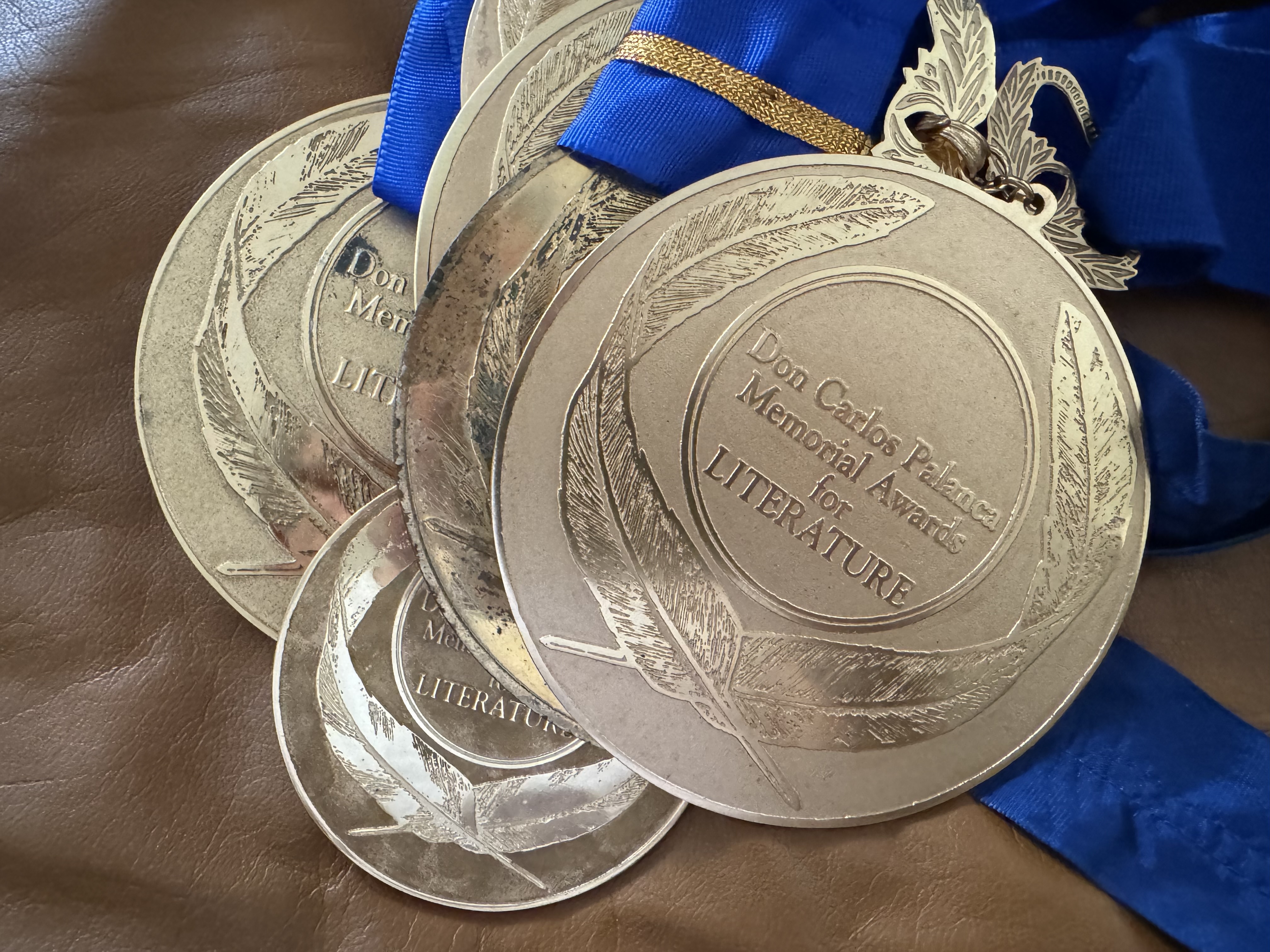
INDULGE ME this bit of self-reflection, which I suppose will also speak for many writers of my generation. After much thought, I have decided that I will no longer be judging literary competitions, having just completed my last one.

My first reason is that I’m 70, a good age at which to pause and plan out the rest of my life, however long or short that may be. (The life expectancy of a Filipino male today is 72, although actuarial science seems to think that if you’ve come this far, you’ll likely hang around for another ten years.)

There are just a few things I want to devote that time to—primarily, to write my own books (not books for others, so I’m also announcing that upon completion of my current commitments, I will desist from seeking or accepting book commissions—unless I fall into grave and sudden need.) I want to travel more with Beng and Demi while we can, look after Buboy’s growth, play poker all night twice a week, and enjoy my strange hobbies. I’ll teach for as long as I can—I’m enjoying my undergraduate class right now—but will limit my participation in workshops, conferences, festivals, seminars, etc. to the few I am committed to, like the UP Writers Workshop. 

Judging competitions doesn’t seem that much work (unless you’re a judge looking at over 100 stories) and of course it’s a signal honor to be asked to help pick the best of new writing. It remains a tremendous responsibility and privilege to be thankful for. You get to go up a stage, say some nice things about literature and writers, receive a modest fee, and feel somewhat useful and relevant. That’s all well and good.

When I transitioned from being an active literary combatant (that’s how many of us felt back then, with the likes of Rene Villanueva and Ed Maranan breathing down your neck) to a judge after getting my Palanca Hall of Fame plaque in 2000—I never joined a contest after that—I felt that I had turned a corner and found a kind of inner peace. It wasn’t that I had nothing more to prove; one illusion that local literary competitions encourage in the young is that winning them is the be-all and end-all of writing, when all they are is a formal pat on the back to get you started. The true challenge for the young or beginning writer is not to win prizes but to write and publish books that will be read and appreciated by others, that hopefully will matter, that will outlive you, that for better or worse you will be remembered for and remembered by; publication is the ultimate prize, readership the ultimate validation. So I went on to write books, teach, have fun, and discover wonderful things outside of writing and literature (yes, there are such bright and shiny marvels). 

Judging competitions seemed to be a good way of keeping a foot in  the door, so I’ve been doing a lot of that, also as a kind of payback for all the people before me who took their time to recognize and reward my efforts with a prize. At some point, I realized that the foremost reason I kept joining and judging the Palancas was because I wanted to be there on Awards Night, to enjoy the company of writers I admired (the piano-playing Greg Brillantes being one of them), and to feel good about being a writer on the one night of the year that they took center stage. The great luck of Hall of Famers is that they can now attend all the Awards Nights they want without having to work for it—so I won’t.

The most important reason is that I’ve already read enough, perhaps too much, for far too long, and it’s no longer healthy for me or for those I may be judging. Our literary community certainly doesn’t lack for younger people who can do this job as well as if not better than I can.  I’m still and always delighted to see brilliant new work emerge from the pile, but it’s getting harder—more laborious, more fatiguing, and ultimately more disheartening to be asking, “ls this the best they can do? Don’t people know what a good story is anymore?” Or have I become the problem?

The word “gatekeeping” has been going around much lately, evoking the image of a surly senior (a Boomer, for sure), out of touch and out of step, insisting that his students and young writers should write like him or like Hemingway, playing favorites, and slamming the door shut on entire genres he doesn’t like or understand. That sounds a lot like me, except that I’ve never expected or driven my students to write like me; they come to my classes with their own experiences, their own material, their own talents and insights, and  the best of them have written stories that are nothing like mine, except perhaps that they’re realist, because that’s the kind of fiction I best know and teach. I’ve always been open to other forms and genres, even if I hardly write in them (I think I’ve tried everything at least once), because the world would be a terribly boring place if we all wrote about everything the same way. Think of much of the political rhetoric going around these days, no matter which flag is being waved: labels and slogans—the shorthand of groupthink—have replaced and diminished personal narrative and reasoning. (As if people will care when you die if you were “correct” all the time; they will ask if you were good and kind.) This is also why I have long resigned from anything resembling organized ideology or religion, whose avatars often seem so, so sure of themselves and of what they’re saying to the point of arrogance. 

I value the doubt and ambiguity, the constant self-questioning (what can we be capable of, despite ourselves?) that are fiction’s domain. Fiction humbles us by exposing our infirmities, but it also exalts us by offering the possibility of redemption.

In the end, what I have always looked for in a prizewinning story, aside from being exceptionally well-written (smooth and stylish when it needs to be, tough and visceral when it needs to be) is that it be moving and memorable. It should burn a hole and leave a scar in my heart, my guts, and my memory. I can enjoy clever and inventive stories as much as anyone else, but if it’s a passing amusement, like a joke, it won’t leave much behind. Some of the most memorable stories I’ve  come across weren’t even what you’d call grand in a sonorous or elaborate way. They took place in small places within relatively short periods of time, and involved ordinary people in situations that brought out their extraordinariness (by which I don’t mean some blinding heroism, but a part of them, dark or light, they didn’t even know was there).

Too many of the thousands of stories I’ve had to read over the years have been poorly written, dull, and forgettable. That’s not even a complaint, just par for the course for any kind of open literary competition here or anywhere else. People can’t be blamed for hoping and trying with their graceless prose, and I’m sure that many have nursed precious ambitions of being published and read. Not to be snarky, but the problem here really isn’t so much a lack of writing talent than of self-awareness, the kind of honesty and humility that will tell you, in your heart of hearts, that you will never be a nuclear scientist or an F-1 driver. Unfortunately, literary self-awareness can happen only when one has a sense of what truly good writing is. 

But could it possible that I myself have fallen so far behind that I can no longer recognize the new “good,” or apply the “new standards,” whatever they may be? Could my notions of “good fiction,” however liberally applied, be standing in way of some young genius’ debut?

I’ll be holding on to those notions, but now only for myself. I’m not urging my fellow seniors to do the same; we all operate on different clocks and their patience could be longer than mine. Some might say “Good riddance” and the feeling could be mutual, but I depart this task with a light and happy heart, looking forward to producing new work that will be judged by others.

Email me at jose@dalisay.ph and visit my blog at www.penmanila.ph.

Penman No. 453: The Distance to Brillantes

Penman for Sunday, August 6, 2023

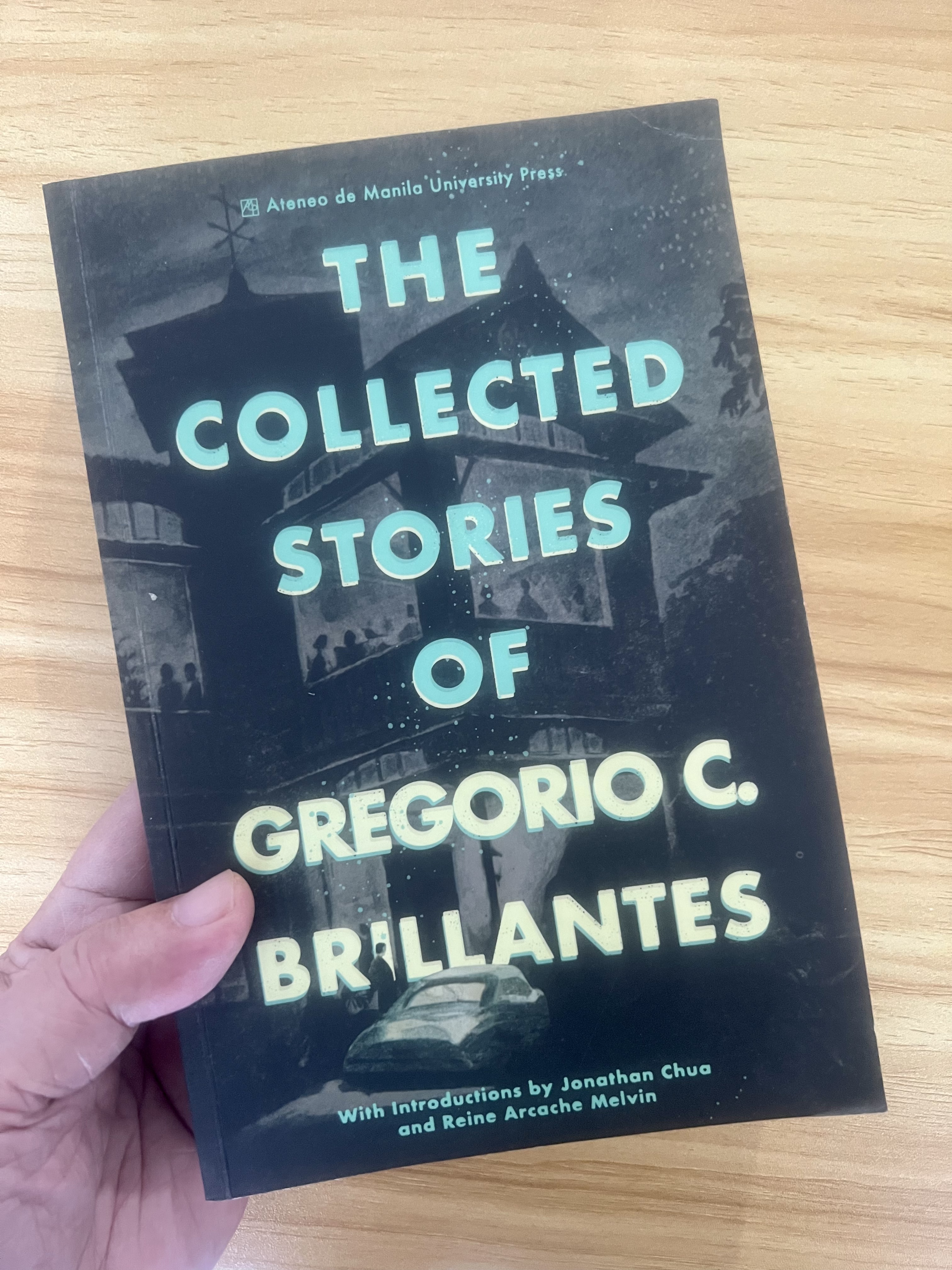
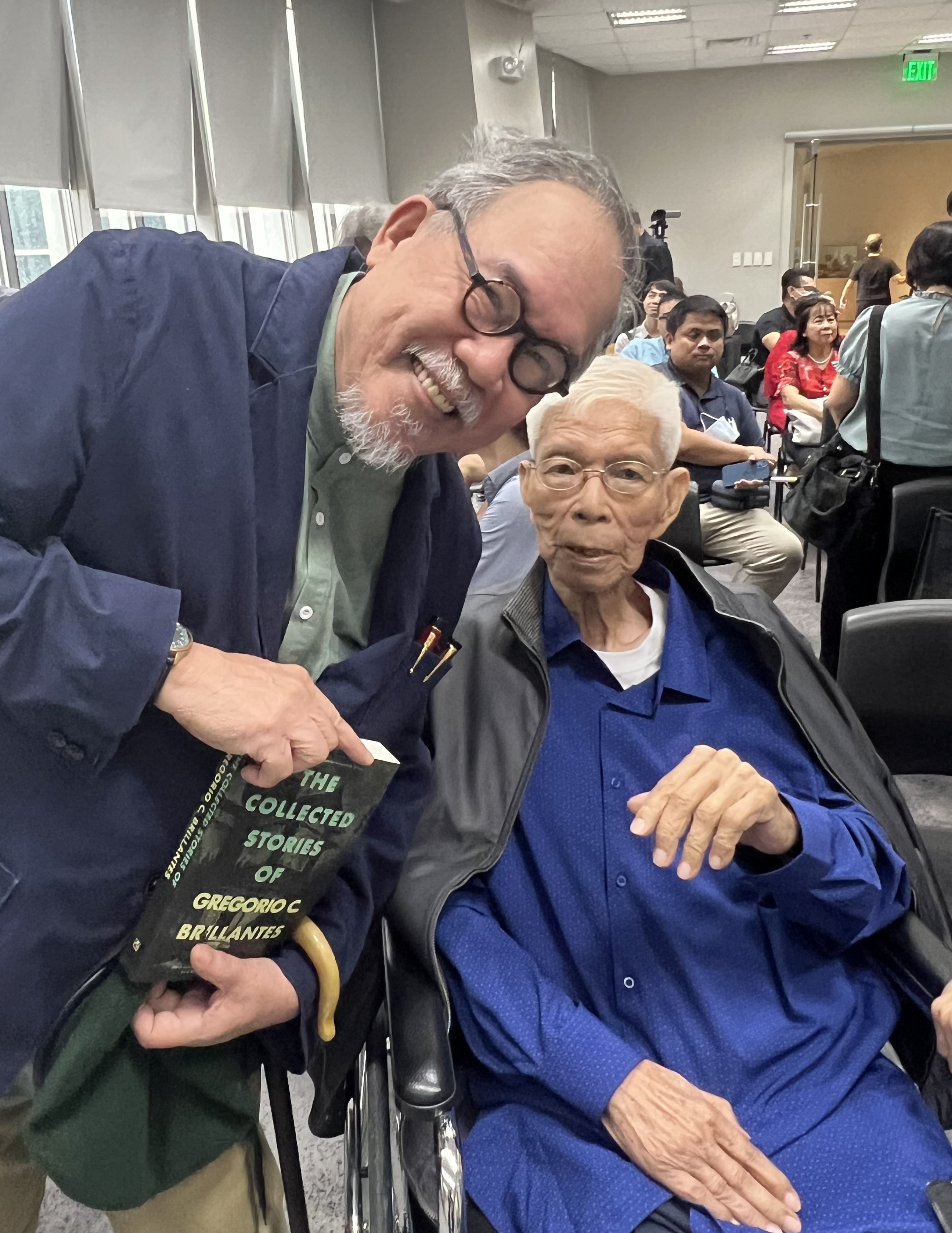
I’VE OFTEN written about how Gregorio C. Brillantes has been the bane of my writing life, a fellow short story writer and Palanca Hall of Famer whom I never had the pleasure of seeing in second place after me (the reverse has been the natural order of things). When the Ateneo Press recently launched his Collected Stories and asked me to speak at the event, I felt like a jealous juvenile again at 69, with the 90-year-old Greg in a wheelchair in front of me, and cheekily boasted that, at last, I had one over him: his collection had 39 stories while mine (Voyager and Other Fictions, 2019) had 44. 

Of course, it was a hollow boast, because any one of Greg’s stories is easily worth two or three of mine. That’s how highly I hold this man in my esteem, and why I wrote this blurb for him: “Few writers turn me into a blushing fan. Gregorio C. Brillantes is one of them. Like his papal namesake Gregory the Great, who wrote a massive 35-volume commentary on the Book of Job, Greg Brillantes has been an untiring and unsparing chronicler of his time and place…. His fiction is infused with power and luminosity; he surprises, but never screams.” 

In an art card that Ateneo Press used to promote the book, I said further: “More than a master of language, Gregorio Brillantes is a master of our Filipino sense and sensibility, particularly those parts we find hard to put into words or to recognize as our truest selves. We see life in his stories as through a gossamer screen that filters out  the harshest light; that screen is his own sensibility, suffused with a deep and tolerant understanding of pain as pleasure’s shadow.”

(The young Greg with John Updike.)

But really—putting all the fanboy talk aside—why Brillantes? What did I and my students—and what can every young writer of fiction—learn from him?

To get right down to brass tacks, I’ll take one of his best-known stories and dissect parts of it that should show what not only good but masterful writing is all about. 

“The Distance to Andromeda” has been mistakenly described by some as a science-fiction story, but it is not, although science fiction figures prominently in it. Without going into what the story means, what Brillantes demonstrates here, technically, is his acuity of observation and grasp of relevant detail, which is basic to any writer’s armamentarium. Too many young writers fuss over the elements of what their Ultrawave Galactic Terminator Machine should contain, glossing over the seemingly inconsequential gray matter of daily living that congeals into human drama. 

In “Andromeda,” the boy Ben’s post-apocalyptic fantasies are foregrounded by domestic business. See how Brillantes constructs a scene: “He dribbles an imaginary basketball toward the kitchen, skidding on the floor, feints and jackknifes a neat shot through the door. His sister-in-law Remy is giving her baby his supper of porridge from a cup. The child gurgles a vigorous greeting at the boy, and Remy laughs at the wonder of her son’s knowing the infant-accents of his language. The kitchen is bright and intimate with its rich cooking smells: Pining bustles about the old Mayon stove, and the girl with the pigtails smiles her crooked-toothed smile from the lithographed calendar on the wall.”

It doesn’t seem much and the young reader may feel bored by the lack of “action,” but note how, in fact, the scene is full of action—physical and emotional action, of the kind absent from too many stories being written today about morose characters sipping cappuccinos at Starbucks and ruminating over their wayward romances and work-life balance. “Get your characters off their butts,” I always tell my students, and Brillantes does.

A Brillantes story is an accretion of impressions, ideas, and emotions. It’s that kind of preparation that earns Brillantes the right to orchestrate this kind of paragraph later in the story: “He catches the streak of a shooting star from the corner of his eye. Instantly his waiting becomes a sharp alertness: he holds his breath and the strangeness comes into him once more, the echo of an endless vibration. But it is no longer an abstract aching for the relief of words: it speaks within him, in a language full of silence, becoming one with his breathing, his being, and the night, and the turning of the Earth: incomprehensible, a wordless thought, an unthought-of Word: like the unseen presence of One who loves him infinitely and tenderly. The fear has gone, the lonely helpless shrinking he felt on the bridge, walking home: love surrounds him, and no evil can touch him here, in his father’s house.”

For a story written in the author’s mid- to late twenties, “The Distance to Andromeda” already lays out, in full, Brillantes’ talent and vision, his familiar themes of family and love, of doubt and faith, of Rilke’s God “who holds this falling / Gently in his hands, with endless gentleness.”

It is a story that I myself could not have written, as I inhabit a more sordid and much sadder world in my fiction, with little to draw on but my characters’ residual sense of goodness for their salvation. Brillantes celebrates—consecrates—the mundane joys of the middle class, even as he underscores their fragility and transience. I write as well about these people—doctors, teachers, boys on the verge of manhood—but they tend to be more visceral in their responses. My other literary hero and model is Bienvenido Santos, who can make music of melancholy, and I try to straddle the breach between these two gentlemen, although again my characters prefer the low life.

But young writers: read Gregorio Brillantes. Understand what truly breathtaking means by reading two of my favorite stories of his: “The Cries of Children on an April Afternoon in the Year 1957” and “The Flood in Tarlac.” If you read them and still wonder what good fiction is, then you might as well be looking up at the sky to find Andromeda, because that’s how far you have to go.

Qwertyman No. 19: The Real Maria Ressa

Qwertyman for Monday, December 12, 2022

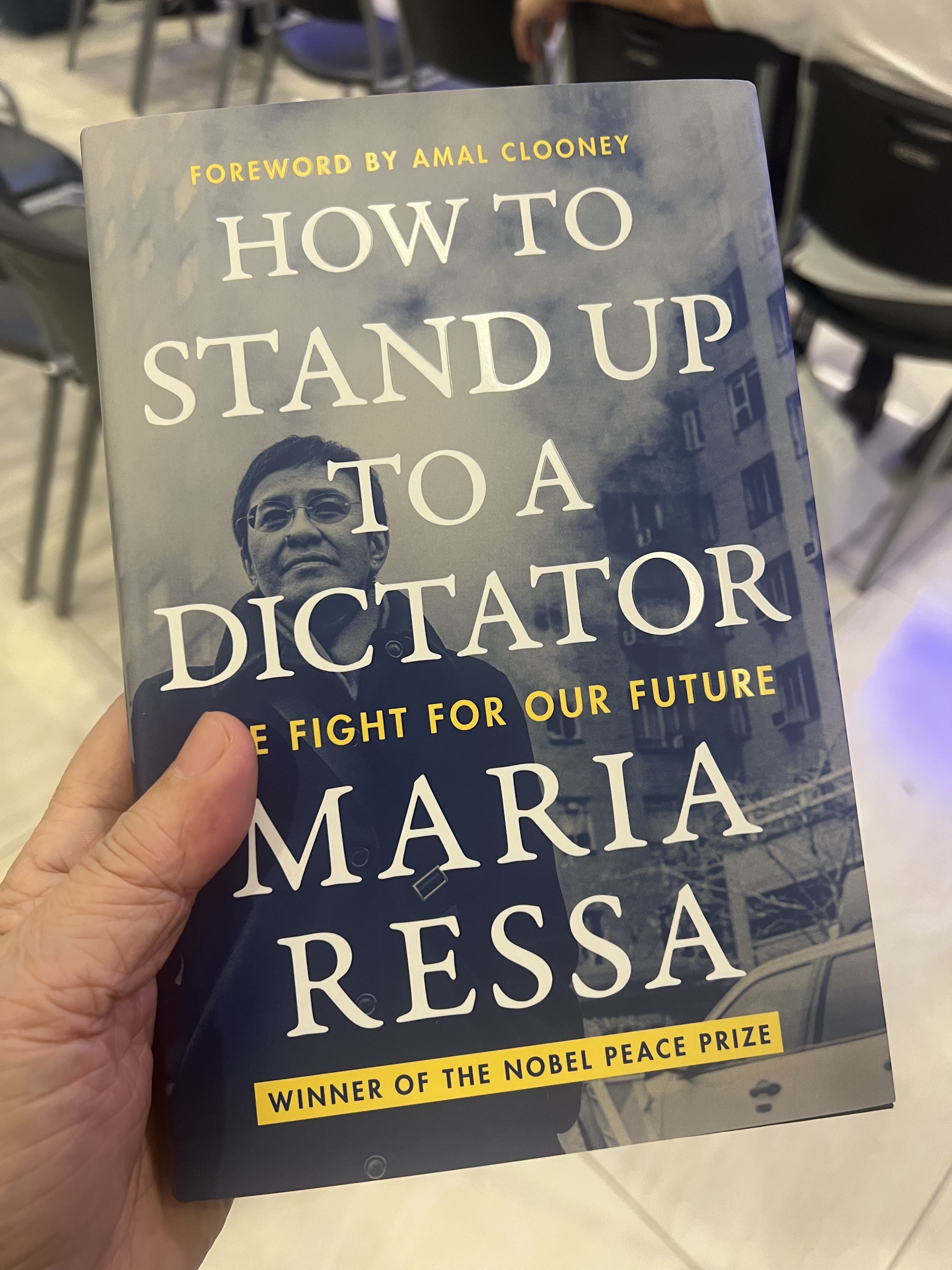
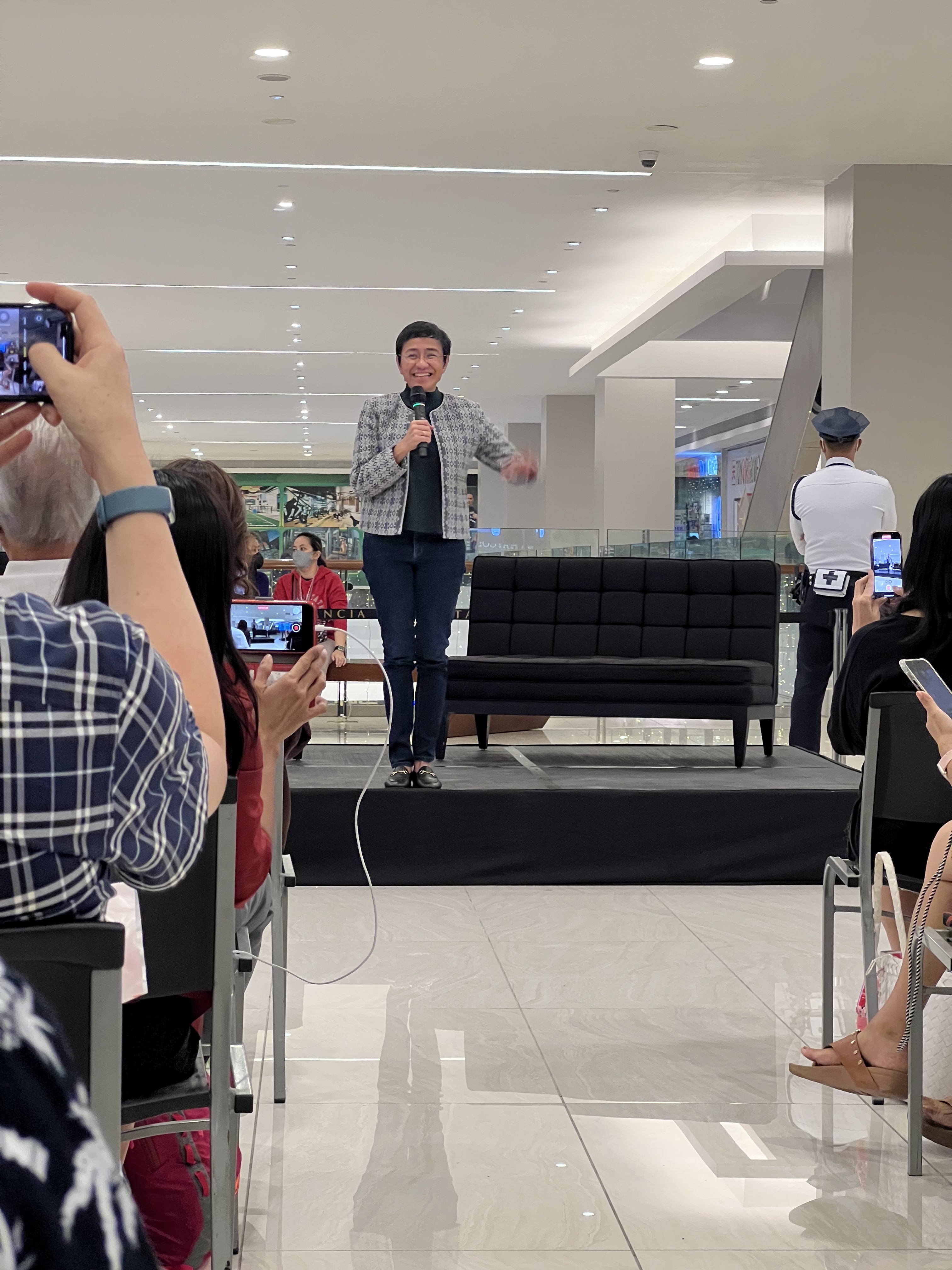
I WAS very honored to speak last Saturday at the launch of Maria Ressa’s new book, How to Stand up to a Dictator: The Fight for Our Future (Harper, 2022). I’d read an advance copy of it a couple of weeks ago, and to cut to the chase, if you’re thinking of buying a book to read for the holidays or to gift to friends, look no further. This book, for me, is among the year’s best in nonfiction.

I have to emphasize that word—nonfiction. As we all know we live in times when fiction has taken over as the most influential form of human discourse, particularly in the political arena. As a practicing fictionist, I should be happy about that, but I’m not and I can’t be, because so much of it is bad fiction, crudely written—and surprisingly, infuriatingly effective, at least with a certain kind of reader. 

Maria’s book cuts through all that. It’s undisguised, old-fashioned, in-your-face truth-telling, told in the same voice and tone we’ve become familiar with over the years of listening to her reportage over CNN. I’m sure that, like me, many of you wondered the first time you heard her: “Who was this little brown-complexioned woman speaking with an American accent?” She looked Filipino, but how come we’d never seen her before?

This was all before she rose to prominence—some would say notoriety—as the moving spirit behind Rappler, and subsequently to global fame as a Nobel Prize winner for Peace. We identified with her travails, shared her anger and sadness at the abuse she has received, and rejoiced in her victories, whether in the courts or in the larger sphere of public opinion. 

But how well do we really know Maria Ressa, and whatever drives her to be who and what she is? This book takes us to the person behind the phenomenon, and answers many questions we may have had about her and her stubborn advocacies.

The book’s title sounds like that of an instruction manual—which it is, and also is not, being part autobiography, part journalism, and part testimonial. As a manual for freedom fighters, it emphasizes the need for collaborative and collective action against seemingly insurmountable forces. Those forces now include the Internet, which, as Maria documents with both precision and profound dismay, has morphed from a medium that once held all kinds of liberative promises into a medium for mass deception and targeted assault. She draws her counsel not from some esoteric guru or academic paradigm, but from some very basic values that have informed her own life—the Honor Code she followed in school, and the Golden Rule.

“That’s what I lay out in this book,” she says, “an exploration into the values and principles not just of journalism and technology but of the collective action we need to take to win this battle for facts. This journey of discovery is intensely personal. That’s why every chapter has a micro and a macro: a personal lesson and the larger picture. You will see the simple ideas I hold on to in order to make what have—over time—become instinctive but thoughtful decisions.”

It’s this constant back-and-forth between the personal and the political—and at some point they become inextricably fused—that forms the fiber of Maria’s narrative and gives it strength. Her convictions are grounded in personal experience; they have not been paid for—as the hacks in the journalistic trade will allege, seeking to bring her down to their own level—except in the coin of personal suffering under the constant threat of imprisonment and violence.

But we learn from this book that trauma is nothing new to Maria. (We also learn that Maria Ressa wasn’t the name she was born into, but to find out her birth name, you’ll have to buy the book.) From her abrupt relocation from Manila to America at the age of ten, to her journalistic immersion in the horrors of conflict and disaster in Indonesia and Ormoc, the book chronicles Maria’s quest for truth, meaning, and purpose in her life, and that of others. She stresses the importance of remembering the past to make sense of the present, quoting TS Eliot’s phrase, “the present moment of the past.”

And so can we, she seems to suggest, even in these times of high anxiety, when we can see the vultures hovering over such once-sacrosanct treasures as our pension funds, while billions more go to feed the dogs of an increasingly untenable counter-insurgent war. The big words we have become used to tossing around—truth, freedom, reason, justice, democracy—they all come down to a personal choice to do the right thing, and the courage to do it. 

Nowhere is this matter of choice more evident than in the fact that Maria is here in the Philippines, having willfully subjected herself to our brand of justice, however imperfect it may be, instead of escaping to the safety of America or another haven, which her dual citizenship if not her celebrity can certainly afford her. She will see her own story through to the end, in the locale where it matters, among the people to whom it matters most.

I’ve often remarked, as a creative writer and professor of literature, that in this country, the writers most in danger of political persecution and retribution are really not fictionists or poets like me. Not since Rizal has a Filipino novelist been shot dead for what he wrote. For sure, we have lost many brilliant writers to the struggle for freedom and democracy—Emman Lacaba, and most recently Lorena Tariman and her husband Ericson Acosta. But they were killed by the State not for what they wrote—the State is illiterate when it comes to metaphor—but for what they allegedly did.

Rather, the most imperiled writers in the Philippines as in many other places are the journalists who speak the language of the people and of their plaints in terms too clear to ignore. They could be radio announcers like Percy Lapid, or the victims of wholesale murder in Maguindanao, or high-profile and exemplary targets such as Maria Ressa. It would have been easy for her to lash back at her critics and tormentors with the same viciousness. But, she says, “I will not become a criminal to fight a criminal. I will not become a monster to fight a monster.”

That, too, is a difficult choice, and one I am sure we are often tempted to cast aside. But Maria’s equanimity in the face of savagery shames us back into our better selves. It will be that kind of quiet resolve that we will need to survive and prevail. After all, we survived martial law. We can survive this regime—with agility, patience, and courage. But don’t take my word for it. Read Maria’s book to know that we can, and why we must.

Qwertyman No. 15: The Next UP President

Qwertyman for Monday, November 14, 2022

AFTER FOURTEEN straight Mondays of producing what I’ve called “editorial fiction”—make-believe vignettes meant to poke fun at the issues of the day, the prose version of editorial cartoons—I’ll take what will be the occasional break to engage more frontally with a concern of deep personal and professional interest.

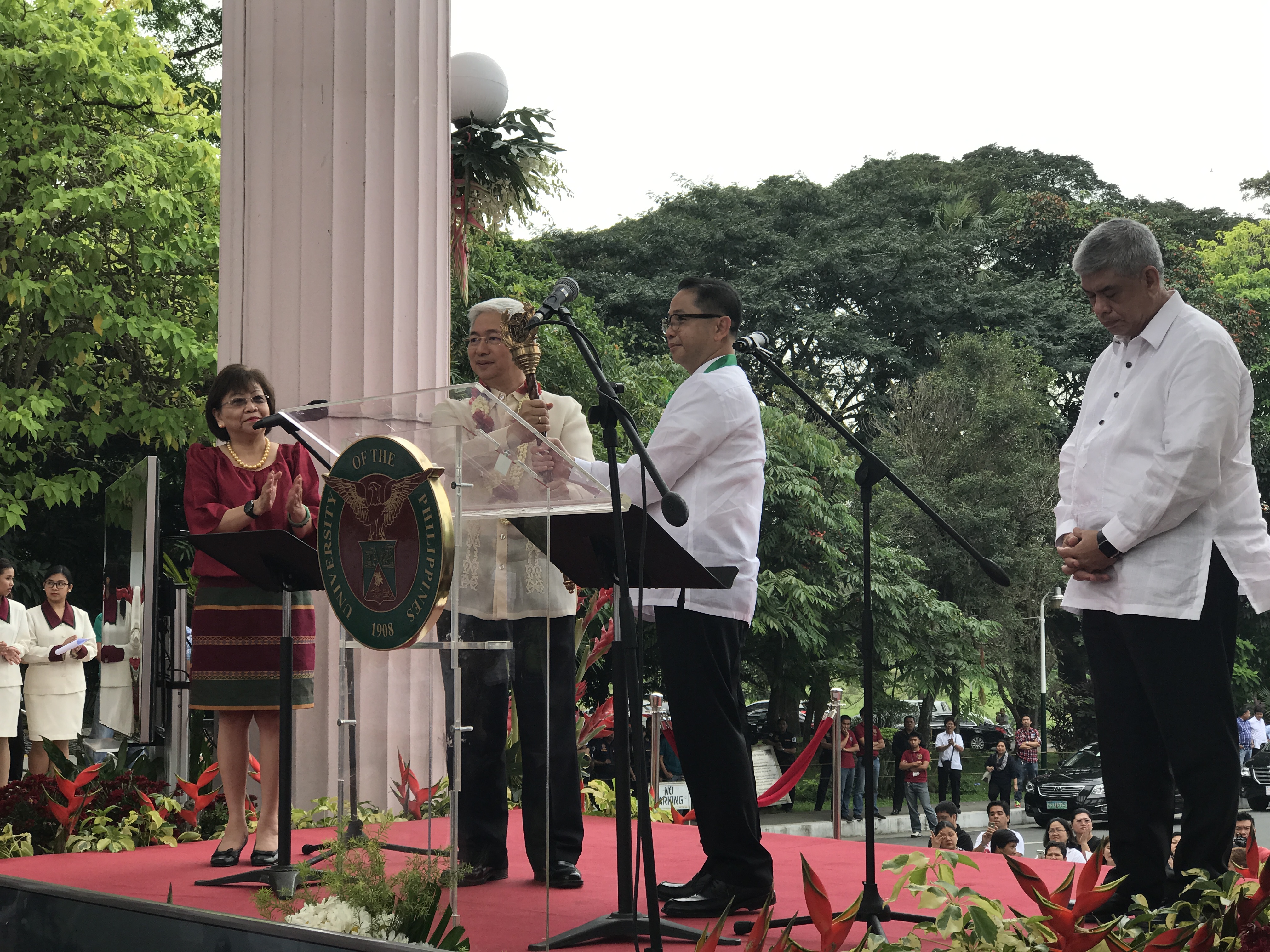
Over the next few weeks, the Board of Regents of the University of the Philippines will select the 22nd president of our national university to succeed President Danilo L. Concepcion, whose six-year term ends in February next year. (Let me add quickly, for full disclosure, that I was President Concepcion’s Vice President for Public Affairs until I retired in 2019, and held the same position under former President Francisco Nemenzo in the early 2000s.)

Whether or not you graduated from UP or have a child or a relative there, this is important for every Filipino, because—like it or not—UP produces an immoderate majority of the people who make up our political, economic, and social elite. Its leadership, therefore, is a matter of national consequence. Since its birth in 1908, UP’s alumni roster has counted presidents, senators, congressmen, CEOs, community leaders, artists, writers, scientists, and, yes, rebels and reformers of all persuasions. 

There are six candidates on the BOR’s ballot, some of them, to my mind, more qualified—beyond what their CVs say—than others. The Board of Regents has eleven members—the CHED chairman, the incumbent president, the chairs of the Senate and House committees on higher education, the alumni regent, three Malacañang appointees, and three so-called sectoral (faculty, student, and staff) regents; it will take six of them to elect the next president. 

Whoever that choice is, he will be certain to have a challenging six years ahead, especially considering the present political regime, which he will have to contend and to some significant extent work with. UP remains dependent on the national government for its budget, for which it has to make its case before Congress every year, like any other agency. 

Prickly issues will face No. 22. There’s been a lot of loose talk lately about UP’s standards supposedly falling, with too many cum laudes graduating even as its international ranking has reportedly dropped. Indeed these should give rise to public concern, but there’s more to it than meets the eye, and UP’s level of service to the nation (think PGH in the pandemic) hasn’t flagged.

Historically, the relationship between the Philippine president and the UP president has been a testy if not an acrimonious one—most notably that between Quezon and Palma—because of the university’s role as social critic. But Malacañang now has much to do with choosing the latter through the power wielded by administration representatives on the BOR. What the Marcoses will do with UP remains to be seen; will the next UP president, for example, be given free rein to pursue the martial law museum project that’s already been approved for construction? It may not be the most important item on the agenda—more support for research and faculty development should be, if we want to shore up our ratings—but it will be strongly indicative of how the Palace will deal with Diliman.

What I’ve observed is that the role of the UP president has greatly evolved since Palma’s time. While many of us would like to see an ideological firebrand at the helm, UP is a broad and diverse community whose survival and growth will require keen diplomatic skills to negotiate between the university’s external and internal publics. (And yes, even firebrands can do that, against all expectations; Dodong Nemenzo did.) University presidents worldwide have increasingly been more of resource generators and managers than thought leaders—perhaps boring, but they deliver the goods. What’s important is for them to be able to practice and defend the academic freedom that also allows the university to become the best it can be. I pray our regents will bear that balance in mind in its deliberations.

ALSO, A word on my chosen approach to editorial commentary. I know that some of you can’t make heads or tails of my fictionalized renditions of our political and social culture, but I think you will, with just a little more effort. Maybe it’s the literature professor in me, but I believe readers should be challenged to figure out the sense of things, and not just have it served to them on a platter. 

We’ve fallen into the groove of letting others reach our conclusions for us, so all we need to do is nod affirmatively. Whichever side of the political fence you’re on, that only contributes to sloppy, second-hand, copy-paste thinking. In my pieces, I try not focus on just one person or one target—other and sharper columnists can do that. I’m more interested in the culture of our politics—in the way groups of us think and feel about what’s in our best interests—and in our complicity in bad governance. Sure, we have rotten eggs in high public office—every administration has had them. At this point, I’m much less bothered by the fact that we live in a world of despots than by the fact that we (or many of us) put them there, we keep them there, and we just pinch our noses when they stink.  

Another columnist (who actually writes wilder fiction than me and my feverishly imaginative friends) even complained that fiction has no place in the op-ed page. Excuse me? All fiction is opinion, and always has been; the critical commentary of fiction even preceded journalism. In earlier times, our op-ed pages even offered poetry—political commentary in verse—at a time when our poets were patriots, and our patriots were poets. Sadly those times and those exceptional commentators are gone, replaced by hacks producing not only dishonest and soulless but dishwater prose. 

I’m not a poet, so the closest I can get to that is fiction, which pretends that some things happened that didn’t (but then again, in another sense, really did—and that’s what some readers find confusing). One thing I must confess I do like about fiction is that, unlike factual commentary that readers today tend to forget after a week, a good story sticks around. Sadly for its implicit targets, fiction is forever. You can shoot me dead, but my work will survive me—and, for that matter, you.

Qwertyman No. 9: Fiction Counter-Fiction

Qwertyman for October 3, 2022

(Photo from pond5.com)

“LADIES AND gentlemen, we have a problem.” Ma’am Ventura, no less than the Queen of Trolls herself, looked down the long table through her oversize Versace shades at her social media managers, who were nervously fixing their ties and tapping their Jinhao pens in anticipation of what she had to say. Their managers’ meetings usually didn’t start until ten p.m.—when the day’s news would have aired and they had the whole night to prepare for the next day’s barrage of posts—but today she had messaged them to come in at eight, apparently at the request of the mystery guest who sat to her left. He was, they were told, an important man, an opinion-maker like they were, only more visible.

He seemed fidgety himself, his eyes somewhat crossed and unfocused, as if he had had laser surgery in the belief that he would look better without glasses, but the operation had gone awfully wrong. Now he simply looked stunned and misplaced, and the others couldn’t be sure if he was smiling or grimacing. Ma’am Ventura had lit up one of her Dunhill Lights and the smoke was drifting past her visitor’s face but she wasn’t apologizing for it, which told her staff that she didn’t think he was that special after all, despite what she would say.

“We have a special guest with us tonight who’ll explain why. This is Mr. Rutherford or Rudy Tuklaw, and he comes from the Bureau.” Her mention of “the Bureau” drew some gasps. It was rumored to be a top-secret, off-the-books grouping of some of the President’s most rabid supporters and enforcers. Some brought money; some were paid. To Ma’am Ventura, Rudy looked like the paid kind. 

“Thank you all for being here,” Tuklaw said after clearing his throat, as if they had a choice. “In fact, we have more than one problem.” He brought out some folded newspapers from his bag and tossed them on the table to be handed around. “Look at these columnists—this one, and this one. There might be more I don’t know about yet. These people are a disgrace to journalism and should be weeded out!”

One of the managers, Nico, read one of the columns and began giggling, showing it to his seatmate Bruce. “You should read this piece about nuns playing poker,” he whispered. “It’s hilarious!”

“You think that’s funny?” Tuklaw said, becoming even more cross-eyed. “That’s fiction! These are supposed to be serious Op-Ed columns, but these guys are writing fiction!”

A young woman named Ms. Morales raised her hand and Ma’am Ventura nodded to acknowledge her. “May I ask—sir—exactly what’s wrong with that?” Ms. Morales liked fiction—not the boring Hemingway or Faulkner stuff her English teacher had force-fed them with, but real, honest fiction like Fifty Shades of Gray.

“Why? Because it’s not fair! These people are making fun of the President, of democracy, of sensible reform measures like the ‘report-your-subversive-sister’ law and the ‘no-car, no-garage’ law, and they’re getting away with it! You and I—all of you here—we’re engaged in a war of words with these low-life misfits. Granted, some of our methods are, uhm, unconventional—but even among combatants, there are rules of engagement. Like should beget like! If I write a column attacking you, well, then write a column attacking me—don’t hide behind this cowardly contrivance called fiction, which is all made up and contains not one smidgen of fact!”

“But if it’s all made up and totally without factual basis, then—why should we be worried—sir?” Ms. Morales pursued.

“That’s exactly it!” Tuklaw responded, sputtering. “They make no clear assertions, no claims to truth, so we can’t pin them down for anything.”

Another manager named Bruce had been staring at the piece before him for minutes. “I don’t get it. I’ve been trying to make sense of it, but—I don’t see anything funny here. I just don’t get it.”

Nico leapt at the chance to score a point. “Well, there you go! If Bruce can’t make heads or tails of it, then so will most people. People are stupid.” Bruce’s eyebrows shot up. “That’s why we use short posts like Twitter. That’s all most people can deal with. Nobody reads these—these novels!”

“Maybe you can do the same thing!” Ms. Morales said. “Give them a dose of their own medicine. Fiction counter-fiction!”

Rudy was about to say “I can’t” but pursed his lips and said instead, “I won’t. I refuse to dignify the form.” It rankled him that the column-stories, written in a breezy style, seemed like they had been done in fifteen minutes while he labored into the night on his own diatribes against the enemy, especially when he had to be more creative with his scenarios, which his principals expected. 

“So what do you want us to do, Mr. Tuklaw?” Ma’am Ventura mopped some of her ashes off the table with a wet napkin. She saw herself as the professional who produced the deliverables with cool and bankable efficiency for a specified sum, not a seething hack like her visitor who kept hoping to parlay his influence into some cushy appointment with a four-syllable title. She was receiving him out of sheer courtesy, and because she had always been curious to see what Rutherford Tuklaw was like in person. Now she knew. She blew more smoke into his face.

“I want you to destroy them—these—these jokers!” 

“Isn’t that the Bureau’s department, Mr. Tuklaw? They can make people go away.”

“I don’t mean that—yet—although it’s not a bad idea, at least to scare them. I mean, we could say, if I killed these idiots, emphasize IF, then show me some leniency, something like that.”

“So destroy them in words? On Facebook? And Twitter? Maybe even longer blog posts? Go after their families, their reputations, their sexuality, their food preferences—”

“Whatever, whatever—invent what you need. I just want them to squirm like—like the worms they are!” His legs were twisted around each other beneath the table.

Ms. Morales felt chirpy. “So we can use fiction, Mr. Tuklaw? I took up six units of Fiction Writing in UP!”

Tuklaw stared grimly at his knotted fingers on the table. “Like I said. Whatever!”

Hindsight No. 21: Mr. Secretary

Hindsight for Monday, June 6, 2022

(Note: This could be the strangest thing you will ever see on an Op-Ed page, a new genre I’m going to call “editorial fiction,” observations of the current scene rendered as short stories. No direct references are intended.)

THE CALL came at a little past one in the morning, well after bedtime for George and his wife Trina. Trina stirred in their bed and pulled the blanket over her shoulder in a gesture of irritation, but as soon as she gathered whom George was speaking with, she froze and tried to capture every word that was being said, over the hum of the aircon and the occasional screech of late-night traffic along the boulevard twelve floors below. She had wanted a unit as close to the penthouse as they could get, but the price was just beyond their reach, so they settled for a 14th-floor corner suite—the 13th floor, of course, was non-existent for superstition’s sake—with a broad view of the bay on one side and a long thread of highway on the other, fading into the southern suburbs.

George should have been annoyed as well to have been called so late, but he was not. He had not even been asleep, having watched an episode of The Blacklist without paying too much attention to what Raymond Reddington was whispering into Elizabeth’s ear. He had been swilling his Cragganmore, not bothering with his usual routine of adding a few drops of water to unravel its complexity; his taste buds felt dull and flat. Life itself suddenly seemed tentative and purposeless. He had been staring at his phone for an hour, checking its battery status, thumbing through his messages to make sure he had not missed anything important. 

When the phone rang he had to gulp down the whisky with which he was simply wetting his throat, utterly without pleasure, but instantly he straightened up in bed and took the call, curling a conspiratorial palm over his mouth, as if a spy lived on the 15th floor.

“Good evening—good morning—sir!… Oh, no sir—I was still awake—I mean, I read the newspaper and was surprised to see my name there, but…. Yes, of course, I mean, I wasn’t expecting anything, since you know how I feel about—well, about… things, things that happened in the past…. The future, of course, the future, I agree…. I appreciate that, I honestly never imagined that I would be talking to—oh, no, sir, no ‘doctor’ or ‘professor,’ please, just call me George, George is fine, everybody calls me George…. Haha, yes, I’m older than you by four years, but you’re the president! Or will be—I mean, in a few weeks…. I’m deeply, deeply honored, sir, of course I am….Uhhh…. Sir, could you maybe give me some time, a couple of days, just to talk it over with Trina?”

At this point, Trina had dropped all pretenses of trying to sleep and was watching George intently, making words with her mouth that George couldn’t be bothered to read. But George looked in her direction and continued talking as if she wasn’t there. In the background, at the other end of the line, he could hear people laughing and shouting, and the pounding rhythm of a Village People tune. His friend Estoy who had texted him earlier to expect a call was probably there; Estoy had been a consistent flunker in college, but now he seemed unusually adept, even prescient. 

“Yes, sir, Trina, Katrina Palileo, the sorority sister of your cousin Angie…. Our two children are both in the States…. She’s retired now but still consults for—oh, no, no, I don’t think it will be a problem…. 48 hours, thank you, sir, I’ll talk to her and get back to you…. Many thanks again, sir, and good morning!”

George slumped into his bedside chair, threw his phone on the bed, and poured himself a fresh shot. He grinned at the hapless Trina, waiting for her to pop the question.

“So? So what did he say? Did you get the position?”

George tried to put on a straight face, without much success. “I said I would think about it—I said I would ask you first.”

“Idiot!” Trina said, laughing, and threw a pillow at him, almost hitting his shot glass. “You call him right back, right now, and tell him I approve! Of course I approve, 110 percent!” She picked up his phone and held it out to him. “Call him now, while he’s still awake, and before he changes his mind!”

George brushed the suggestion away, turning pensive. “No, no, I shouldn’t look too eager, like I really, really want it—”

“But you do, right? I mean—a week ago I never would have thought this would happen, but when your name came up in the news, I thought, oh my God, really?”

“That’s what I’m asking—why. Why me?”

“And why the hell not? Nobody knows the field more than you, you’ve published zillions of academic papers, people hold you in enormous respect, you’re better appreciated in London and Geneva than you are here, and you were never known to be his flunkey!”

“No,” said George, “I never was. That’s why I think he wants me. Maybe I could change things.” He looked at Trina, who was about forty pounds heavier than when they first met, across a barbed wire fence in martial-law prison. He himself had been thin as a rake, having had very little to eat in their Marikina safehouse. He took it as a blessing to have been arrested in a raid; there was more food in prison, and he would have died within a week of scaling the mountains. And there was Trina, whose pageboy bob had been replaced by shoulder-length curls dyed some shade of sunset. He couldn’t blame her for wanting to forget what she had gone through, and he never brought it up. To survive and to live well—that alone was sweet revenge.

“We used to talk a lot about the future—is this it? How did this happen?”

She put her arms around him and pulled him back to bed. “You think too much,” Trina said, and planted a wet kiss on his cheek. “Congratulations and good night, Mr. Secretary! Let’s call the kids in the morning!”

Out the window, the lights of a tanker flickered on the pitch-black bay, the only way to tell that there was a horizon.

Hindsight No. 19: Plot and Character

Hindsight for Monday, May 23, 2022

(Photo from philtstar.com)

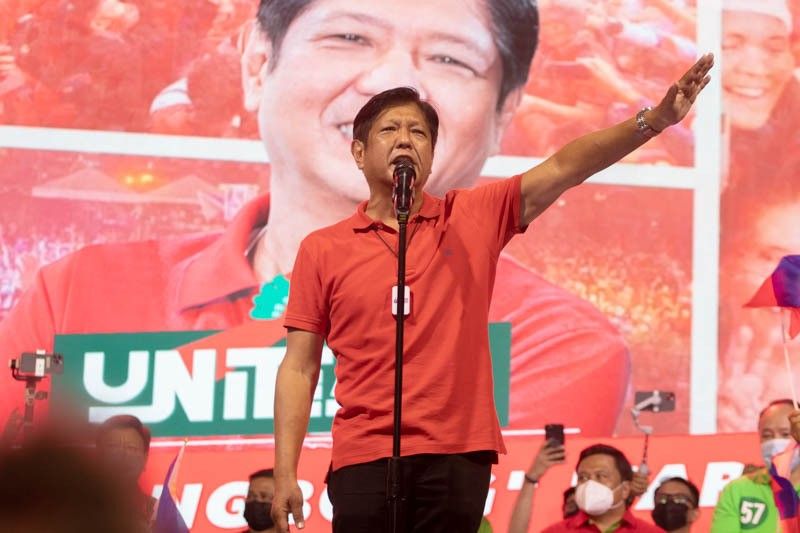
WITH THE counting all but over—setting aside some issues not likely to change the outcome—it’s clear that our people have spoken, and that, by a 2-to-1 majority, they have chosen Ferdinand Marcos Jr. to lead this country for the next six years. 

It’s no huge secret that I, among many others, voted for somebody else. Of course I’m unhappy, but what I feel doesn’t really matter much in the scheme of things. Given that the life expectancy of the Filipino male is 67.26 years, I’m already on borrowed time at 68 and would be lucky to see the end of this next administration, let alone the one after that. I’ve told my mom Emy—who voted at age 94 and who shed tears of dismay and disbelief when the results rolled in—that living for six more years to vote one more time should now be her goal. Just surviving will be her best revenge.

I wonder how it is, however, for the young people who took to the streets for Leni and Kiko, believing that they would make a difference. They did, although not in the way they expected, to ride a pink wave all the way to Malacañang. They realized, as we ourselves did ages ago, that money and machinery are always heavy favorites over hope and idealism, and that issues, ideas, and the truth itself can be made to look far less important than image and message, if you can buy the right PR consultant.

They will also have learned, as has been pointed out by other commentators from both sides, that it wasn’t all disinformation—that Marcos Jr. appealed to the genuine desperation of the poor with a promise of relief, however illusory. Since most of Leni’s young supporters were visibly middle-class, first-time voters, it was a rude but necessary awakening to the realities of class politics in this country, which politicians of all kinds—none of whom have to worry about where their next litson baka is coming from—have learned to negotiate and manipulate. 

Defeat, it’s been said, can offer more lessons than victory, and while we may have metaphorically won in some significant respects—chiefly the aggregation of “middle” forces not tied to any traditional political party into a burgeoning progressive movement—there will be much to review and refine in the years ahead. This very dissociation of the Kakampinks from the old parties and their command structures, for example, was a blast of fresh air for many volunteers, but also a liability for operators used to the old ways.

Understandably there’s been much wringing of hands and gnashing of teeth in the trenches, in the desire to meld seething resistance with grudging acceptance. I see it in both young and old activists—the young, because they’re heartbroken for the first time, and the old, because they didn’t expect to find themselves facing a Marcos all over again. The bashing and taunting they’re getting online from galleries of screeching monkeys doesn’t help. 

Being one of those old fogeys, I tend to be more subdued in my reaction to Marcos Jr.’s victory, and advise my young friends to cool down, ignore the bashers, and steel themselves for a complicated and challenging future. As someone who went through and survived martial law—I was eighteen when I was arrested and imprisoned for alleged subversion (although I was never charged or tried in court, just locked up for the state’s peace of mind)—I can offer them living proof that we can survive dictators and despots, with faith, resourcefulness, and courage. My parents survived the Second World War, and many other people have gone through worse.

I’m neither predicting nor wishing that a Marcos presidency will be bound to fail. I’d hate for the country to suffer just to prove a point. Besides, whatever I think today won’t matter one bit to what will happen. Whatever Marcos does, he will do so of his own will, by his own nature, out of his own character. What that character really is will emerge in the crucible of crisis—and crisis is the only thing the future guarantees, whoever the president happens to be. Beyond and regardless of the propaganda for and against him, Mr. Marcos Jr. will have ample opportunity to display what he would not have us glimpse in a public debate, and that revelation will do more than a million tweets calling him a thief or praising his acumen.

Speaking of character, I had an interesting discussion last week with an old friend, a renowned professor of Business Administration, who brought up the possibility of “luck or destiny” to account for the Marcos victory. He added that luck was an important factor in business, and that he would flunk a student who thought otherwise. 

I disagreed; as a teacher of creative writing, I said that I wouldn’t accept “luck or destiny” as a resolution for a student story. We’d call it deus ex machina—a helping hand—which thwarts the logic of the narrative with an artificial and improbable ending. I know: it happens in real life, but not in good fiction. As Mark Twain says in one of my favorite quotations, “Of course fact is stranger than fiction. Fiction, after all, has to make sense.” 

Whether factual or fictional, stories are really less about events—the plot—than character. The plot is simply there to enable character development. Things happen for a reason: to test and reveal our character, to show ourselves and others what kind of people we really are, with dramatic clarity and inevitability.

If you’re wondering why I strayed from the May 9 election to a mini-lecture on writing, it’s because we can look at that election and its aftermath as a long and continuing narrative that will establish our character as citizens, and as leaders. The next crises—the post-pandemic economy, China’s ambitions, a crackdown on civil liberties, getting deeper in debt—will come to try us. That’s the plot. And when that happens, Bongbong will be Bongbong, and all Filipinos—31 million of them, especially—will see exactly what they bargained for.

So if you’re still smarting, just chill, recuperate, get back to something you enjoy doing, and let this drama take its course. Like my mom Emy, endure and survive. Give Marcos Jr. a chance to achieve his “destiny,” which could yet be everyone’s best education.

Hindsight No. 2: Myth over Matter

Hindsight for Monday, January 24, 2022

(Image from indiatimes.com)

THERE’S HARDLY a week that goes by without me receiving a Viber notice from a friend warning me about another incoming message containing some innocuous line like “Let’s go to Latvia” or “Your mother will love this,” clicking which will trigger a dizzying spiral into digital damnation: your phone will freeze, all your passwords will be stolen, your half-naked selfies will be posted to your Village Association chat group, and whatever gender you declared will be reversed in all your official records. 

It’s all well-meant, of course; some friends will even add “Sharing, just in case”—meaning, they also suspect it’s fake, but meaning further, they’ll pass final judgment on to you, a privilege you should be thankful for—on the one-percent chance that it’s true.

I’ve taken it as my civic duty to look up the particular hoax online (easy: just add “hoax” or “scam” to whatever the key words are, and Google away) and to inform the senders of their mistake. Many will reply with a terse “Thank you.” Some will protest: “It wasn’t me—it was my silly sister-in-law who swore it was true, so I passed it on!” A few (some of these senders have PhDs) will even argue back: “Now, how sure are you that snopes.com is a real fact-checker? Who’s funding them? What’s their angle?” (Makes you wonder: if they were going to be that investigative, why didn’t they ask it about the hoaxer in the first place?)

Living in the age of fake news (or “alternative truths” as Donald Trump’s aide so nicely put it), we can’t be surprised any longer by the seemingly infinite pliability of the truth, which can be warped and twisted to the point of being barely recognizable. But as it turns out, that “barely recognizable” element is key. 

An article in WIRED from 2019 on “Why People Keep Falling for Viral Hoaxes” points this out: “The narrative that Big Bad Instagram is going to take all of your most intimate personal data points and use them for nefarious secret purposes is the sort of story that is primed to appeal to the average person… because it contains a kernel of truth: You have all this data out there on the internet, and God knows who has access to it.”

We sort of knew that already—the best lies have a little truth in them, encouraging our gullibility. When Ferdinand Marcos claimed to be a war hero with 33 medals to his name—only two of which were actually given in 1945, and both contested by his superiors—all the fellow basically had to show for proof was his picture in a uniform, surrounded by pretty hardware that you can buy today on eBay, and that was enough to make many believe that he had to be a hero.

What’s more breath-taking—and possibly more dangerous—are the outright fabrications, the brazen claims to this and that outrageous deed or achievement. You’d think that they’re too absurd to be swallowed by even the most credulous, but think again.

The story of the Tallano gold, now being trotted out on social media as the source of the Marcos fortune, is a case in point. The story that went around on Facebook is that the Tallano family—the descendants of the rulers of a pre-Hispanic, pan-Pacific kingdom called Maharlika—had paid the young lawyer Marcos 192,000 tons of gold. With one kilo of gold today at around P3 million, I don’t have enough zeroes on this line to tell you what that’s worth. And for what lawyerly labor, one wonders—a gazillion affidavits and deeds of sale? 

Never mind that Imee Marcos herself has denied this story, and even the “Yamashita gold” that her mother claimed in 1992 to have found its way to Ferdie. The late Bob Couttie had been exposing the Tallano claims as a fraud even in 2018. But the story has legs. You just have to go online to find testimonials like this from a “BQ”: “It’s true but they’re burying the truth. I myself held those documents—three reams of A4-sized paper, including the mother title of all the land here in the Philippines, which came from Great Britain!”

Never mind, too, that it’s clearly a minority of believers. It’s how and why they believe kooky fantasies like this that’s more intriguing. The WIRED article again points to a reason: that, for many people, mythmaking provides a coherent narrative, a story easier and more convenient to believe than the truth, which is often too messy and complicated to figure out.

In my fiction writing class, I often bring up my favorite quote from Mark Twain, paraphrased: “Of course fact is stranger than fiction; fiction, after all, has to make sense.” Like myth, traditional fiction has a familiar beginning, middle, and end—and even a “lesson” to clarify the haze in which we stagger through daily life.

As I said in a lecture sometime ago, “The most daring kind of fiction today is out of the hands of creative writers like me. It is being created by political propagandists who are spinning their own versions of the truth, and who expect the people to believe them. The short story and the novel are no longer the best media for this type of fiction, but the tweet, the Facebook feed, the YouTube video, and even the press conference.”

Today’s savviest political operators know this: spin a tale, make it sound appealing, trust ignorance over knowledge, and make them feel part of the story. “Babangon muli?” Well, who the heck who dropped us into this pit? It doesn’t matter. Burnish the past as some lost Eden, when streets were clean, people were disciplined, and hair was cut short—or else. Never mind the cost—“P175 billion recovered in ill-gotten wealth” is incomprehensible; “a mountain of gold to solve your problems” sparkles like magic.

Imagination is more powerful than reason—myth over matter. I hope the forces of the good and right can work with that.

Hindsight No. 1: A Time for Telling

Hindsight for Monday, January 17, 2022

IT WAS with great shock and sadness that I received the news of Manong Frankie Sionil Jose’s passing two Fridays ago; my recollections of him appeared online later that day. But just as jarring a surprise was a call I later received from Millet Mananquil, my editor in the Lifestyle section, and then from Doreen Yu, our Op-Ed editor, informing me that I had been chosen to take over FSJ’s column-space on this page.

It was a great privilege, of course, and I accepted it gratefully. But it also carried with it an awesome responsibility—to be honest, to be fair, to know enough about an issue to speak with some legitimacy about it, and also to be modest and open-minded enough to remember one’s inescapable fallibility. I don’t think that last one’s going to be a problem, because I’ve made mistakes often enough to know that—well, I make mistakes, some of which may have hurt people badly.

But last Saturday I turned 68, and with that age comes a keener sense of doing right, of accountability for one’s choices and judgments, as well as a greater tolerance for the shortcomings of others, though not of evil or of wrong itself. I intend to maintain those bearings in this new capacity.

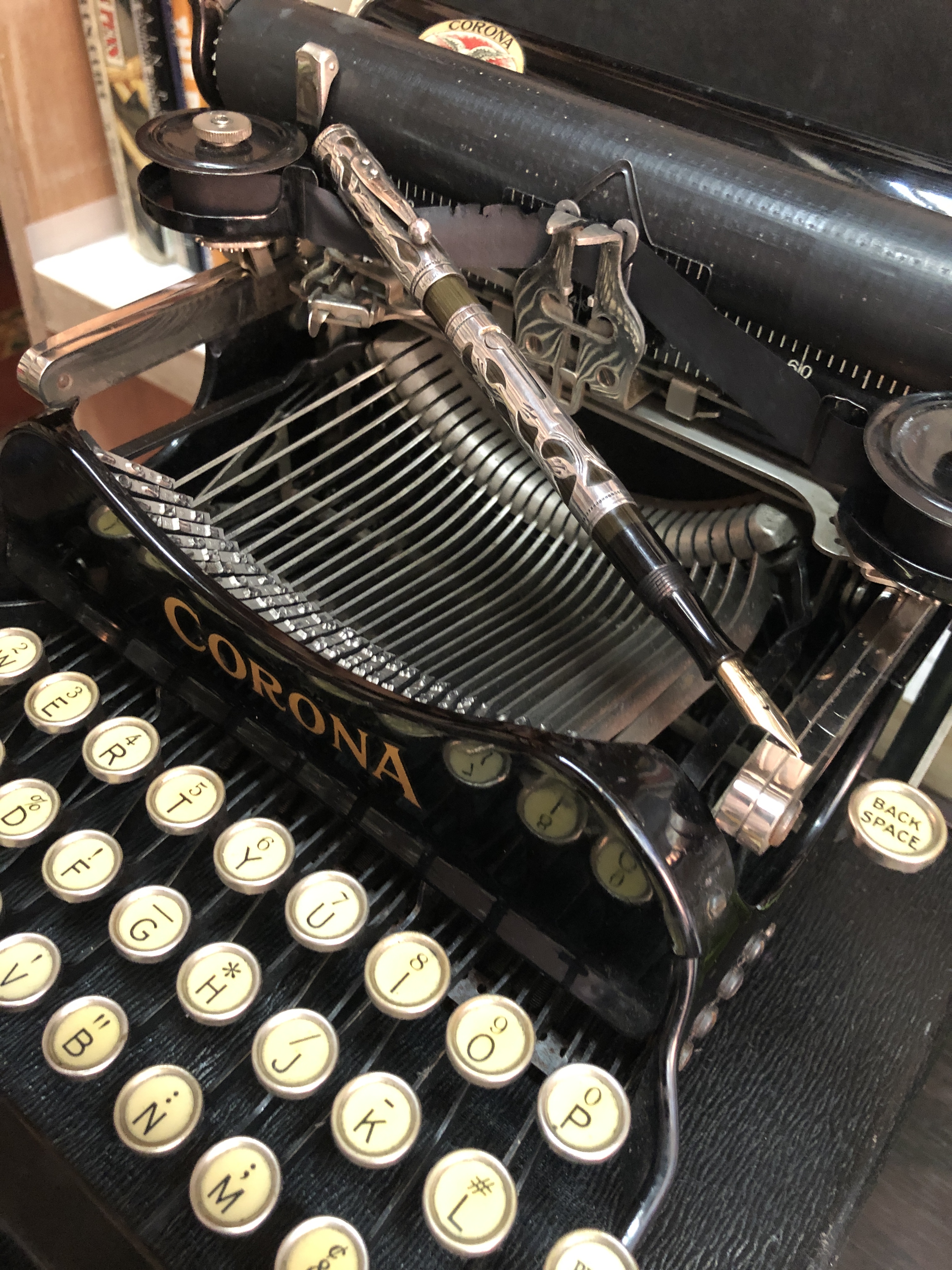
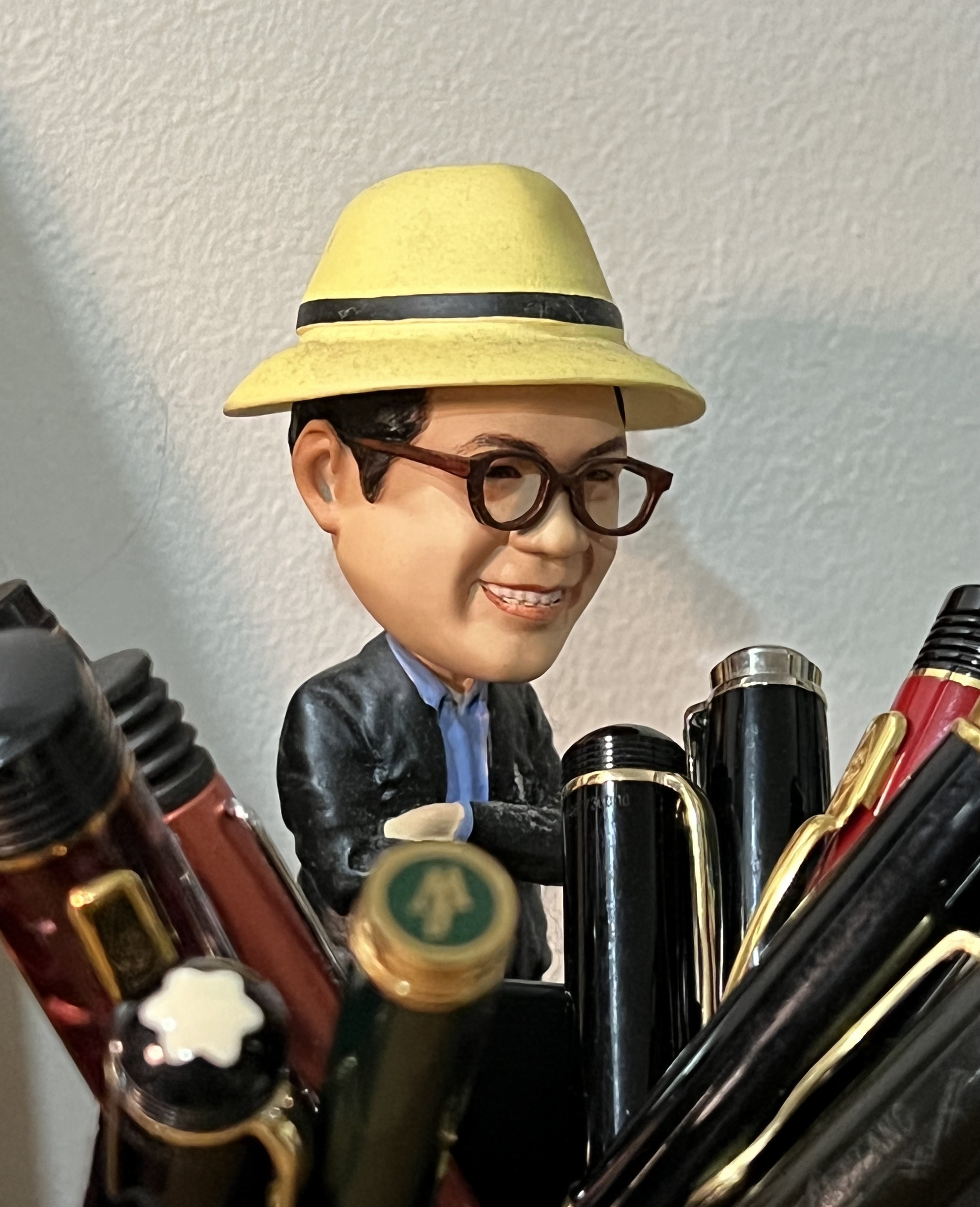
Some readers may wonder how a Lifestyle writer like me—obsessed with fountain pens, old books, Broadway showtunes, and digital gadgetry—ends up doing op-ed, which seems a far more serious and consequential calling. A brief self-introduction might be in order.

I dropped out of UP as an engineering freshman in 1971 and, against all odds (not having spent one day in Journalism class, and being all of 18), landed a job as a features writer and general assignments reporter with the Philippines Herald in 1972. My first task was to fill up half the Features page every day—something that schooled me forever on the importance of deadlines and of resourcefulness, because I had to come up with the topics on my own. I moved to Taliba as a suburban correspondent; was arrested for my activism shortly after martial law was declared; spent seven months in prison; and upon my release joined the information staff of the National Economic and Development Authority, where I would work for the next ten years, picking up a diploma in Development Economics along the way.

I returned to school, finished up my academics all the way to a PhD (more for teaching than for my writing), and taught full-time while writing stories and film scripts. In the mid-1990s, thanks to my friend and now fellow-columnist Jarius Bondoc, I was hired as an editorial writer for the newly opened newspaper TODAY. Being busy with other aspects of management, our boss Teddyboy Locsin trusted me to do about three editorials a week, including the newspaper’s very first one. 

I discovered that opinion writing was exhilarating—but also, again, fraught with responsibility. It got to the point that I found myself wishing I could write something less driven by analysis and conscience—small things like my rickety VW Beetle, double-knit pants, and my love of crabs, instead of ponderous topics like prison reform, the defense budget, and Philippines 2000. (I still have 113 editorials that I wrote on my hard drive.) So I asked for—and got—a Lifestyle column called “Barfly” on the back page, which helped me decompress and kept me sane, reminding me that life was much more than politics and that beauty and fun were as important as anything else to happiness.

I’m going to keep that escape valve open—I’ve promised Millet that I’ll continue contributing my “Penman” column every now and then—but I’ll approach this new task with the loftiness of mind that it deserves (although you’ll excuse me if I sometimes prefer to take a more comic tack, as the best criticism is often served up with a smile). 

Unfortunately I’m not a political insider; I don’t make the rounds of kapihans and have become something of a happy recluse over the Covid lockdowns. You’ll see my politics soon enough—unabashedly liberal (with a small L), middle-force, intensely uncomfortable with both Right and Left extremes. (I came out of the Left and worked briefly for the Right as a sometime speechwriter for five Presidents—but not the last two.) I thank God every night for my family’s safety and for our blessings and for the well-being of others, but I’ve had my differences with Church dogma and would rather spend my Sundays reflecting on human frailty and redemption by reading a book or writing a story.

But I do have a deep and abiding love of history, of which I have so much more to learn. This is why I’m keeping FSJ’s “Hindsight” for this column’s title. (When I returned to UP to resume my undergraduate studies, I dithered between English and History, and chose English only because I was likely to finish it sooner). I agree with Manong Frankie, among many others, that one of the greatest obstacles to our nationhood is the fact that we have a very poor memory—much less an understanding—of our past. We’re reaping the bitter fruit of that amnesia now, in the prospect of electing a dictator’s son to the presidency, a full half-century after the father plunged this country into political and moral darkness by declaring martial law to perpetuate himself in power.

There—it’s when vexatious thoughts like that cross my mind that my fingers begin to itch and I want to editorialize, the complete opposite of my impulse as a fictionist to show and not tell. (I often begin my fiction-writing classes by comparing an editorial on, say, justice for the poor with a short story dealing with the same concern, but without once mentioning “justice,” “poverty,” and such abstractions.) But even as I remain a fictionist at heart, there’s a time for telling, for gathering up the threads of an unfolding narrative and declaring, in plain language, what they mean. That’s what I hope to do.