Qwertyman No. 105: Pronouns and Parodies

Qwertyman for Monday, August 5, 2024
SOME DAYS, I swear, when I open my Facebook feed, I’m met by a flood of vexatious opinion certain to trigger my worst reflexes. Much as I’m tempted to respond, I rarely do, knowing that FB comments don’t really soften hearts and minds, but only make them harder. Also, I’m not the witty sort with one-liners that will go viral; my thoughts and words like to ramble and even lose their way, but at least you know it’s not AI or the “Forward” button at work.

Two topics did get me worked up a bit last week, and I’m going to use this column to write the kind of longish social-media comment no one will read. You’ll recognize both issues instantly if you haven’t been living under a rock.

The first was that picture of a seated gay “personality” (I’m never quite sure how persons become “personalities”) lecturing a waiter standing at parade-rest, reportedly for two hours, on gender sensitivity, all because he called her “Sir.” 

There’s a part of me that understands how and why that happened. Some will call this silly wokeness, but in UP, we take our students’ preferred pronouns and names seriously as a sign of respect for the person. 

But what I also know is, when I teach, I stand and my students sit. That’s not to emphasize my authority, but so they can relax, listen, and hopefully imbibe what I’m telling them. I realize that the lady said she invited the waiter to sit down, but I also understand why he declined. Staff don’t sit for a chummy chat with customers. And imagine this: if I (an old man, dirty or not) were the customer and I felt poorly served by a female employee, and I asked her to sit at my table for two hours while I educated her on the finer points of etiquette, would or should she oblige? And I hate listening to or giving long lectures. If I can’t get something across in twenty minutes max, then I’m a lousy teacher.

There’s politics which can be good and right—and people who may not be. Some of the most politically savvy people I’ve met have also been, as some would say, that part of you where the sun don’t shine. 

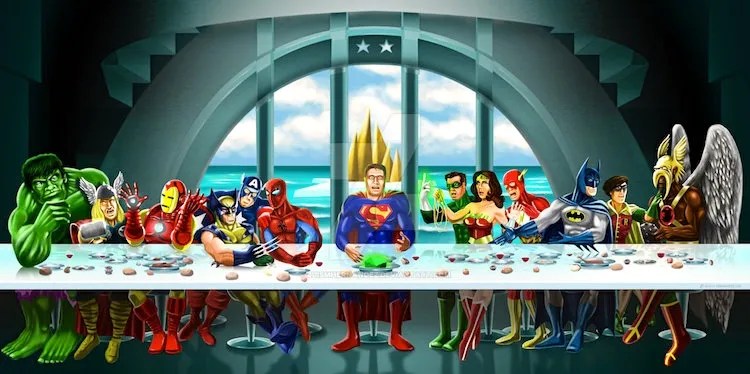
The other hot topic, of course, was the “Last Supper” tableau at the opening ceremonies of the Olympics in Paris, which allegedly mocked the Lord and Christianity itself by replacing Jesus and his apostles at the long table with a raft of drag queens and other presumably degenerate characters. 

I never saw so many Christians and especially Catholics (some of them my good friends) come out of the woodwork to profess their outrage at what they took to be willful sacrilege. And predictably, like wolves sniffing out red meat, many more friends from the other side piled on the “offendees” with mini-treatises on Bacchus and bacchanals, pagan elements in Christian ritual, art criticism, the French mentality and sensibility, and such other topics worthy of dissertations.

Now, as I’ve often confessed in this column (maybe losing five readers and FB friends every time I bring it up; in this context, maybe more), I’m not much of a churchgoer, and have continuing issues with the religion I was born into—and with all of organized religion for that matter, despite growing up in Catholic school. I prefer to pray on my own. I have nothing against people who stay in the fold, go to Mass regularly, post daily proverbs on Viber, and believe in the Bible as the one and only true source of, well, the truth. If their faith keeps them whole and happy—and I can see in many cases that it does—then well and good. Some may be hypocrites, but I’m sure many or most aren’t—and there are hypocrites as well (and worse) among apostates like me.

But back to Paris. What I’m not going to say is, “You shouldn’t have been offended.” If you were, you were. Even if you later changed your mind after listening to all the learned explanations (to some, I’m sure, excuses), the fact is, you saw something you didn’t like. (I just have to wonder—how many people responded directly to the tableau itself, and how many were nudged into seeing it and later objecting by another post screaming, “Hey, you have to see this! Look what they’ve done to Jesus!”? It works the same way on the right and on the left: a meme cascades swiftly down the Internet, and people react viscerally even before they can think.) 

Sure, the “Last Supper” is only a painting by one Leonardo da Vinci, that smart Italian fellow who also imagined flying machines, tanks, and other wonderful contraptions—so why not Jesus’ last meal? (I don’t think there’s an exact record in any of the four Gospels about how the scene was blocked for thirteen characters, except that Christ very likely sat in the middle for better reach, and certainly nobody knows who sat next to whom and leaned over whom. Some depictions down the centuries don’t even use a straight table but an inverted U, or have everyone reclining on mats and pillows, or sitting in a circle.) But even images and objects have symbolic meaning and power, so it’s easy to get hopping mad if someone, say, spits on a painting of your grandmother, or turns it into an unflattering cartoon. 

I do share the consternation over why a hyper-expensive and PR-conscious global enterprise like the Olympics would risk alienating half of France and a third of the world (presuming all Christians took umbrage at the Blue Guy) by—according to the charge sheet—deliberately, premeditatedly, and maliciously mounting a patently anti-Christian production for the whole planet to see. I know the French eat strange things like sheep testicles and have a law requiring skimpy trunks and head caps (yes, even if you’re bald) in public pools, but really now, mock the Last SupperSacré Dieu! (Or, excuse me, let’s use the milder sacré bleu!)

Given all of that, my only question is, where was all the outrage when that President was joking about raping captive nuns and cursing the Pope? And speaking of the Renaissance and the power of representation, remember that Pieta-like photograph of a grieving mother cradling her murdered son at the height of that same President’s tokhang campaign, that President who called Catholic bishops “gay SOBs”? Where was all the righteousness? But maybe we’re just getting started. There’ll be FB accounts I’ll be checking in on, the next time something wildly repulsive happens.

(Image from arnoldzwicky.org–Please condemn him. not me!)
Penman No. 464: A Fantasy Memoir

Penman for Sunday, July 7, 2024

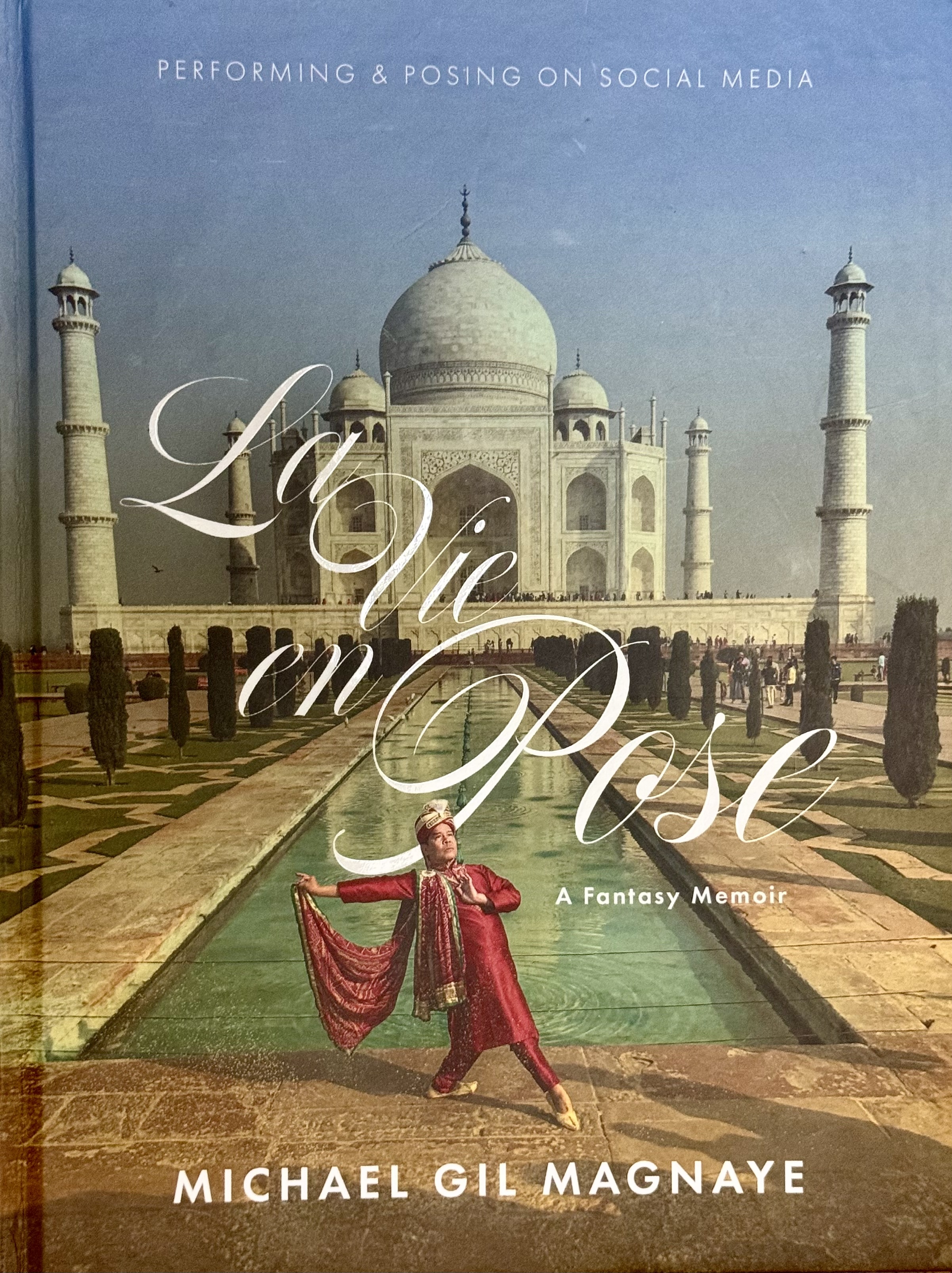
THE AUTHOR calls his book a “fantasy memoir,” and if it’s a genre you’re not familiar with, you wouldn’t be alone. Or maybe that’s just because you’re a dour and straight septuagenarian like me who doesn’t go out too much, watches true-crime shows to relax, and presses his pants and shines his shoes because, well, that’s the way it should be. I later googled the term, just to see what’s out there, and much to my surprise, it does exist—a genre defined by “imagination, escapism, and dreams,” with the stipulation that these fantasies, or products of the mind, are just as valid as memory in recreating one’s life.

Thankfully, from the cover onward, Michael Gil Magnaye’s La Vie en Pose makes it purpose clear to the most casual and non-literary of readers: to have fun—while raising some very serious questions on the side about who and what we are (or pretend to be), what poses we ourselves assume, consciously or not, in our everyday lives, and how our identities are constructed by something so simple as what we wear.

La Vie en Pose is one of those rare books one can truly call “inspired,” resulting from the kind of half-crazy “What if?” lightbulb moment that strikes you over your tenth bottle of beer at 3 in the morning. Unlike many such flashes, this one stayed with Gil, took firmer shape, and turned into a virtual obsession—a first book to be completed by his 60th birthday, not just any book, not one of dry prose between the covers, but one certain to make a personal statement for the ages.

Magnaye, who works as an advisor to an international NGO, describes the book as “a fantasy memoir told in a hundred photographs of the author in costume, striking a pose around the world. Designed and photographed over a decade, these vignettes depict media celebrities, politicians, literary characters and wholly fictitious figures drawn from Magnaye’s fertile imagination. The collection offers satirical, often hilarious commentary on noteworthy personalities in pop culture, politics and history, from Game of Thrones to Bridgerton, from Jackie Onassis to Ruth Bader Ginsburg.”

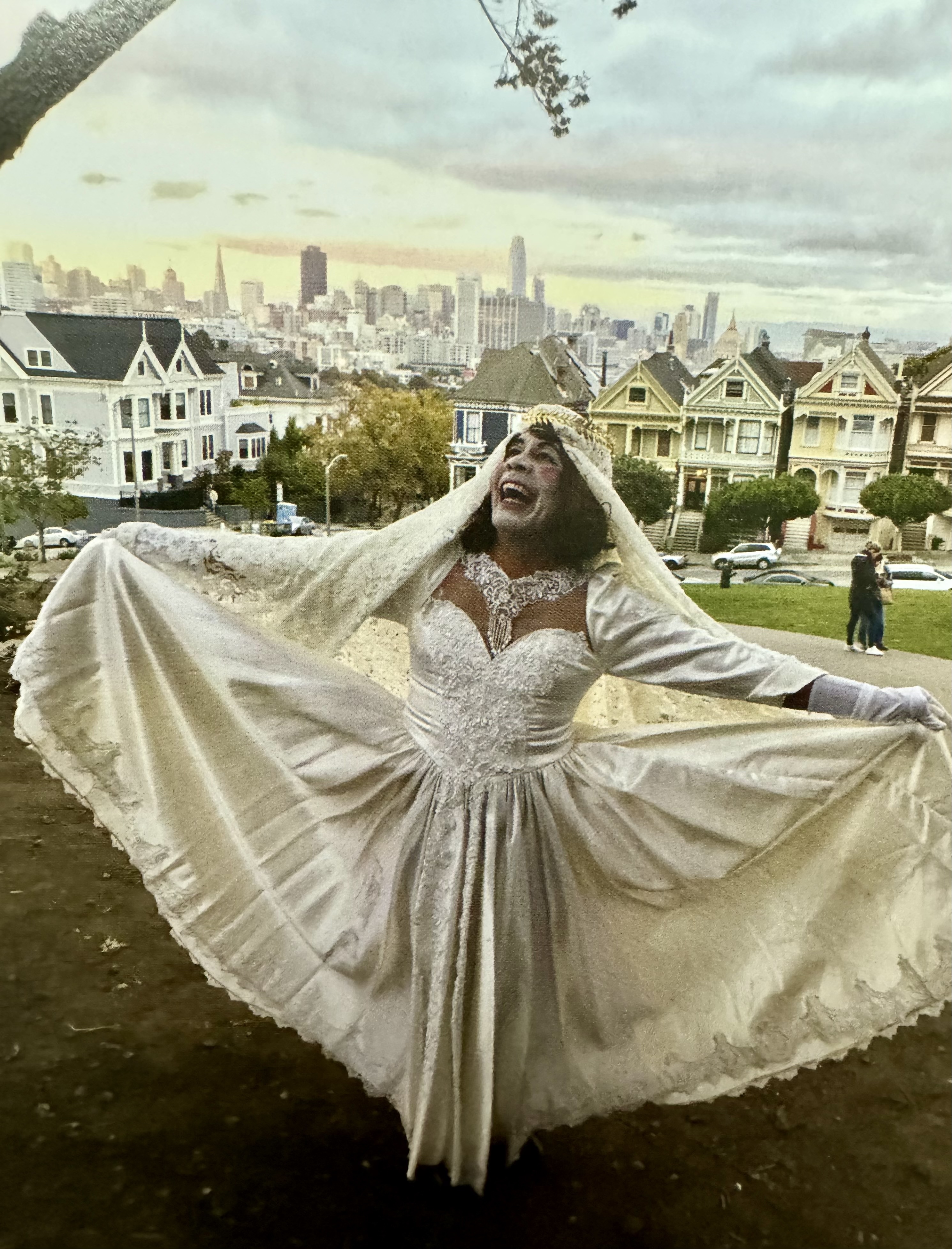
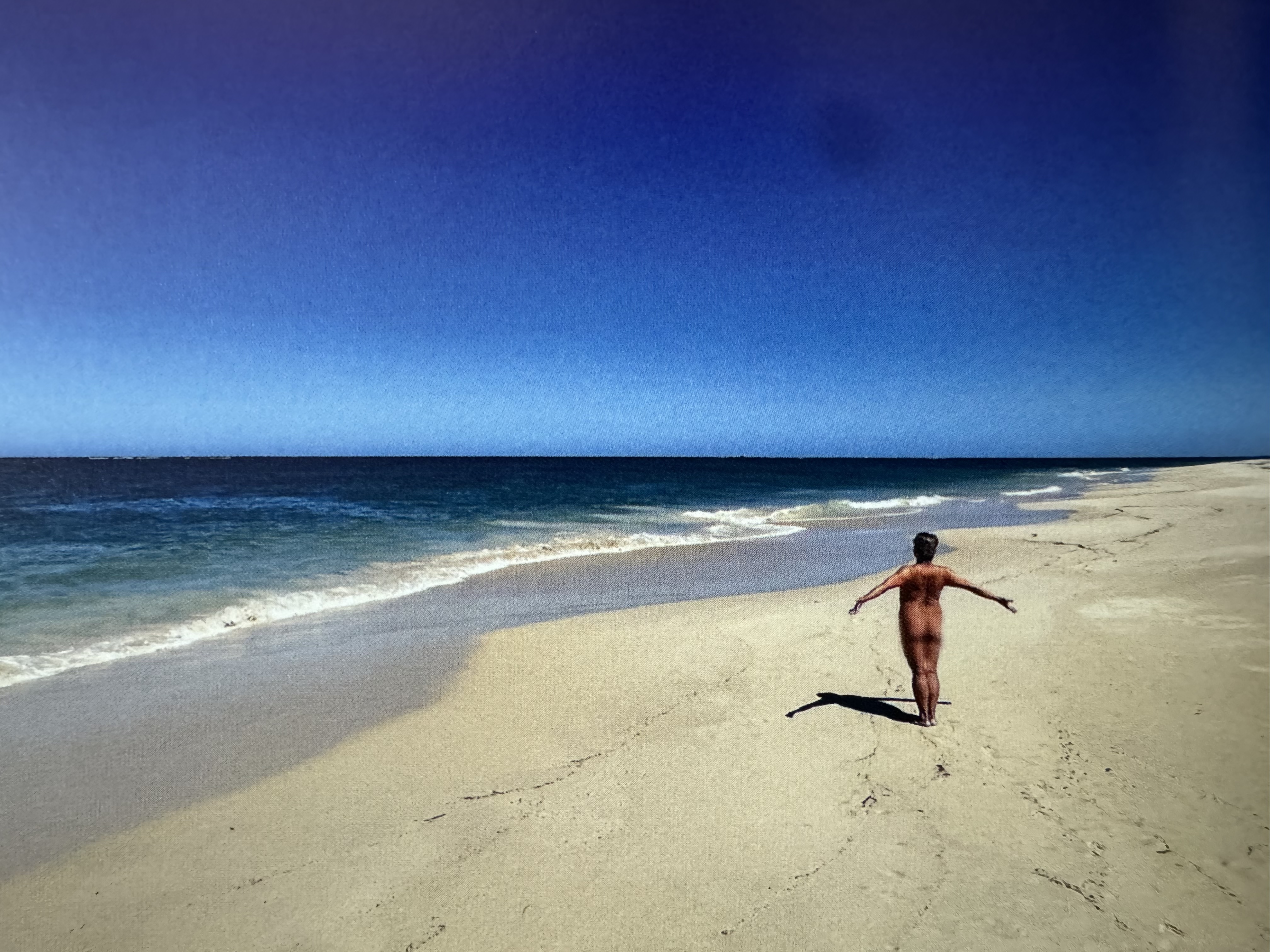
Divided into eight chapters and edited by the celebrated Fil-Am writer Marivi Soliven, the book takes Gil around the world (none of this is AI—the photography took many years and plane flights to complete), posing in various locales and contexts, often in costume, to mimic or to pay homage to familiar figures and situations. The pop-culture setups will likely elicit the most laughs and smiles—Tina Turner, Maria von Trapp, and of course Barbie all get their comeuppance—and the UP Oblation poses (thankfully just backsides) show the malayong lupain that our iskolars ng bayan have reached (Gil studied and taught Humanities in UP before going to Stanford for his master’s). The levity aside, he strikes thoughtful, almost architectural, poses against spare backdrops. He draws his husband Roy, a normally reticent software engineer, into take-offs on couples (Ari and Jackie, Ennis and Jack). The effect is both riotous and reflective, a visual essay on how pop and political culture have overwhelmed us, but also how we have appropriated and domesticated them for our own purposes, if only to say, “Hey, I can be as good that!”

The poet and queer theorist J. Neil Garcia explains it better in this note he posted online about the 30thanniversary of the landmark Ladlad anthology he co-edited with Danton Remoto: “Queer creativity is itself an integral component of the equality message, and not simply a means to an end. Since the freedom of the imagination is perhaps where all freedom begins, it is clear that giving the queer artist the power or the ability to create their own texts and art works needs to be seen as a vital objective of the equality movement, one of whose primary interests must be in securing this imaginative and/or cognitive ability above all. Hence, we need to insist on the truth that queer creativity isn’t simply a tool to promote the equality message and other activist agendas; rather, queer creativity itself is part of the agenda—is part of the equality message itself (and so, queer creativity is not just a means to an end; quite crucially, as the best evidence and enactment we have of individual and collective agency, even against the harshest of odds, it is an end, in itself).”

For Gil—whom I was friends with back when he still had a girlfriend and confronting his sexuality—the book is more than a personal celebration (he launched it in UP last June 23 to mark his 60th birthday); it’s also an assertion of his rights as a queer (the preferred term these days to “gay”) person—and by extension, of all other LGBTQ+ people as well—to express themselves creatively. In his introduction, he notes that “This book is born at a fraught moment in gender politics. Some states in the US have passed legislation that attacks transgender youth for their chosen wardrobe or preferred pronouns. A drag artist in the Philippines has been jailed for performing an irreverent dance interpretation of a Catholic hymn. Such adverse events would seem to suggest that cross-dressing is an act of subversion. I would argue that cross-dressing and mimicry are strategies that drag queens, drag kings, non-binary performers, and gender benders employ to resist, challenge, navigate, and extricate themselves from systems imposed by traditional constructs. And it’s a lot of fun.”

La Vie en Pose most surely is. Copies might still be available at the UP Center for Women’s and Gender Studies.

Qwertyman No. 74: A Church for All Humanity

Qwertyman for Monday, January 1, 2024

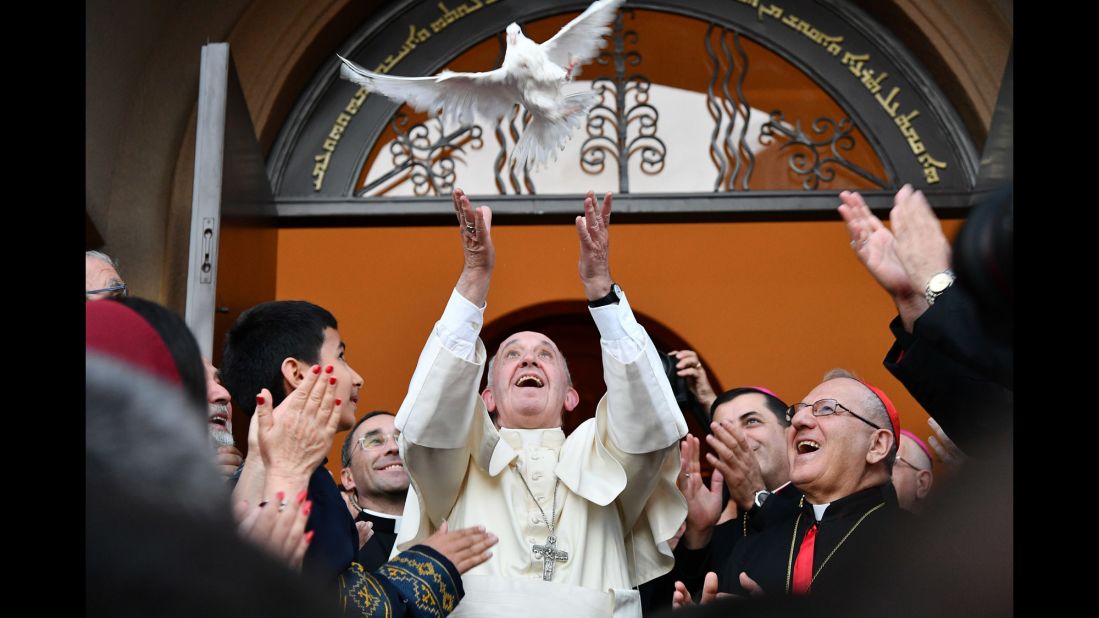
YOU NEVER see me write about religion, because I believe it’s an intensely personal thing (albeit with a communal aspect), but I can’t help being surprised and saddened by what seems to me to be the latent homophobia—intentional or otherwise—brought to the surface by Pope Francis’ recent statement allowing Church blessings for same-sex couples. Despite the fact that that statement was heavily qualified—that it wasn’t to be seen as “sanctification,” etc.—it still triggered a violent backlash from conservative Catholics, clergy and lay persons alike, who protested that the edict violates established Church doctrine. 

Some of these objectors are my good friends (and they will remain so, unless they say otherwise). Many among them will proclaim that they’re not homophobic at all, that gay people and couples are among their best friends, and that they’re merely upholding a key tenet of their faith—which just happens to exclude homosexuals from the blessings of the Church, because they’re fundamentally living in sin.

But I can’t see how that attitude—which some might call a holier-than-thouness—advances Christian love and charity. Pope Francis’ halfway gesture is compromised enough as it is, but would still have been a welcome step toward redefining a church that’s tried to keep a stiffly male face—despite the many gay people in its ranks—for millennia.

I grew up a church-going Catholic boy (inevitably for a La Sallista) but stopped going to Mass a long time ago, as a liberal feeling distanced from the Church’s positions on such hot-button issues as birth control, abortion, divorce, and homosexuality, not to mention its too-cozy relationship with authoritarian regimes in many places around the world. 

I do admire and support the efforts of many priests, nuns, and other religious to confront and ameliorate our social problems and fight for justice and freedom. I continue to pray, many times a day and at bedtime, for the sick and the oppressed, and to thank God for my blessings. I never formally studied theology nor the history of religions, but from what I can gather (and here I invite the experts to instruct me) what distinguishes the Catholic Church from others is its emphasis on good deeds as the path to heaven, rather than faith alone. You have to earn your sainthood; it is neither promised nor can it be bought. If so, that appeals strongly to me, as I’m sure it does to others. 

But whenever I think of the Vatican and its hierarchy of old men whose meals are answered for by the alms of billions of the faithful and investments in blue-chip companies and real estate, among others, I remember a side of the Church that depends on its moral authority to survive as both a keeper of beliefs and as a global industry. 

No one is surprised by the sordid financial and sexual scandals that have rocked the Church, as they merely prove that some people who run it are as fallible as anyone else. This is not why I left the Church, which I still want to think of as something transcendent, an idea of community above the mortal men and women who make up its body. What disaffected me was the arrogance of its orthodoxy—in which, among religions, it is hardly alone.

I’ll grant that every religion needs a body of core beliefs, some of which will be non-negotiable; if you don’t like what you see, you’re free to go somewhere else. I understand the dismay of the faithful over “cafeteria-style” religion where you can pick and choose what to practice and what not. But I had thought, perhaps mistakenly, that religions have a stake in inclusivity, in upholding beliefs and values that embrace persecuted minorities (as the Christian church itself once was).

I’ll acknowledge that apostates like me probably have no business lecturing devout believers on matters of doctrine. But this isn’t even about the finer points of doctrine, but rather about the broad strokes of faith and, ultimately, what and who that faith serves. If issues like gay relationships and marriage and divorce are to be the line in the sand that separates the true Church from the false (rather than, say, love of neighbor), then sadly I must stay out (to which the conservative core can say “good riddance,” or otherwise pray for my wayward soul). Exclusionary policies are never just internal matters, because they affect the perception of the excluded; indeed, they affect the excluded, and those who identify with them.

Pope Francis has been the first Pope in a long time to have revived my hope in a Church that finally embraces the idea of an inclusive love of humanity as central to its practice, if not its survival. The closing of minds and hearts in our growing Trumpian dystopia calls for a far more powerful spiritual force to overwhelm the spitefulness gripping much of the world today. I would rather look up to Pope Francis and such other figures as the Dalai Lama—rather than a consistory of ambitious cardinals and bishops—to show the way forward. 

I hope I won’t be alone in suggesting that much more work remains to be done, even beyond Pope Francis, toward such liberative measures as the ordination of women, for the Roman Catholic Church to be not just a church for the 21st century, but for all time, and for all humanity.

(Photo from cnn.com)

Qwertyman No. 24: Barangay Magulang

Qwertyman for January 16, 2023

(“Smishing: the fraudulent practice of sending text messages purporting to be from reputable companies in order to induce individuals to reveal personal information, such as passwords or credit card numbers; a form of phishing.”)

MANG KANOR had a problem. He was a contractor for a scamming operation that involved using 50 burner phones to ferret out people’s personal details with, which he ran from the basement of his house in Bgy. Magulang. It was all going well, thanks to his wife Fely, who also happened to be the barangay kapitana, and who could guarantee the peace and quiet his business needed. No one really understood exactly what the boys and girls hired by Kanor were doing—and to be honest, neither did Kanor, who could barely text a message to Fely, let alone spell “phishing” or explain what it meant. But the barangay loved them, because they employed Mang Tining’s son and Tita Ruby’s daughter, and even Sgt. Choy’s handicapped nephew.

It was their teenage son Boogie who had everything figured out, who had introduced the scheme to his parents for them to finance. He had dropped out of the novitiate, realizing that his true calling lay elsewhere, in the world of Dota, Tiktok, and Instagram. When Mr. X offered him a smishing franchise after seeing how adept he was at computers, he jumped at the opportunity. He would harvest personal data and turn it over to Mr. X, who mined it for money.

But he needed capital, and only his mother—who had a steady revenue stream from jueteng—could provide that. She bankrolled him for the 50 phones, three computers, and the ten high-school graduates he needed to man them, plus their snacks of bottomless iced tea and banana cue. His father Kanor provided the muscle—building the cubicles, laying out the wiring, and fronting as the shop’s manager.

The money poured in—Mama Fely was immensely proud of her baby’s entrepreneurial bent—until Kanor ran in one way, panting and waving a newspaper in Fely’s face.. “Boogie! Fely! Have you heard? They’re now requiring all SIM cards to be registered! They want the names and addresses of all SIM card owners. No registration, no activation!”

“Whatever for?” cried Fely. 

“It says here that they want to weed out scammers—people who use prepaid phones to get into other users’ accounts and take their money—I think they mean us!”

“But we just get their information, someone else takes their money, it’s not fair! We’re not subversives, we have privacy rights—”

Boogie didn’t seem bothered. “I’ve been telling you, if we expanded, we could do both, end-to-end—get data and make money. Then we wouldn’t need Mr. X anymore.”

“Are you crazy?” shrieked Fely. “That’s asking for trouble! You’d need protection all the way to the top, which we can’t afford. We’re only good for this barangay.”

“That’s the problem with us, Ma! We think too small. If we go bigger, you could become the mayor!”

“Wait, let’s solve this SIM problem first!” said Kanor, who was easily rattled by things he couldn’t understand.

“Leave it to me, Pa. I’ll look into it. From what I’ve seen on TV, there isn’t a law in this country without a loophole! You can even get away with murder if what they call the ‘chain of evidence’ is broken!”

“Oh, you’re such a smart boy,” gushed Fely. “If you’d gone on to become a priest you could be the Pope! But I’m glad you didn’t because we need grandchildren to continue the proud family tradition—”

“Ma, how many times do I have to tell you, I’m gay!”

“Oh, you’ll get over it, don’t worry. I’m setting you up next week with Mareng Siony’s daughter Olive. She’s sweet and sexy.”

“Wait, what will we do with this SIM law?” Mang Kanor screamed.

A few days later, Boogie had an answer. “I tried the system, and it’s pretty simple. You go to your provider’s website, and they ask for your name, address, official ID, and photo. That’s it, your SIM is registered to you.”

“So they’ll know it’s us who are running this racket? That’s not a solution, that’s the end of our business! Son, you have to do something. I don’t want to have to go back to chopping up cars—this is my first decent job!”

“Don’t worry, Pa, I have it all figured out. We can get around the system.”

“Really? How?” asked Fely.

“What else? By registering.”

“You mean, we go honest?” Kanor couldn’t believe it.

“Of course not, Pa. If they want names, addresses, IDs, and photos, we’ll give it to them.”

“And risk being caught? I’m a respected and responsible public official, son, I can’t afford the scandal!” said Fely.

“They’d be chasing ghosts. Can’t you see, Ma, Pa? All we need to do is to fake everything! There’s nothing in the system that checks to see if what you’re saying is true. So we just fill in the blanks, and we’re done.”

Kanor tried to wrap his head around the plan. “Do you mean we cheat the system?”

Boogie laughed. “Is it cheating if we give it what it’s asking for?”

“But how and where do we get the names and the pictures and so on? What about the IDs?” asked Fely.

“Ma! We’ll make up the names of people. Who was that councilor who called you a crook? We’ll use his family’s names. And which barangay was it that dumped their garbage here? We’ll use addresses there.”

“Oooh, that sounds like fun! But what about the IDs and the selfies?”

“What’s the computer for? We can copy any school, office, or senior ID you want. As for pictures, we can scan yearbooks, wedding albums, Facebook profiles—we can even create a whole new person through artificial intelligence! We can do anything, Ma!”

Doubts persisted in Kanor’s mind. “Surely they’ll verify the entries? What if they find out?”

“Find out when, Pa? Let me ask you—you and Ma applied for your National IDs, right?”

“Yes. Three months ago.”

“Well, do you have them?”

“No, not yet.”

“There you go. Everything in this place takes at least three months to happen. In three months, we buy new SIMs, and do the same thing all over again.”

“Why, if we can do this for ourselves, we can do it for others, for a fee—tell Mr. X!” said Kanor.

“You’re a genius, son! Oh, I love this family. I can’t wait for you to meet Olive! She’s studying accounting—your kids will be so cute and so smart!”

Penman No. 335: Senior Moments

Rainbow's_Suns_poster.jpg

Penman for Monday, January 7, 2019


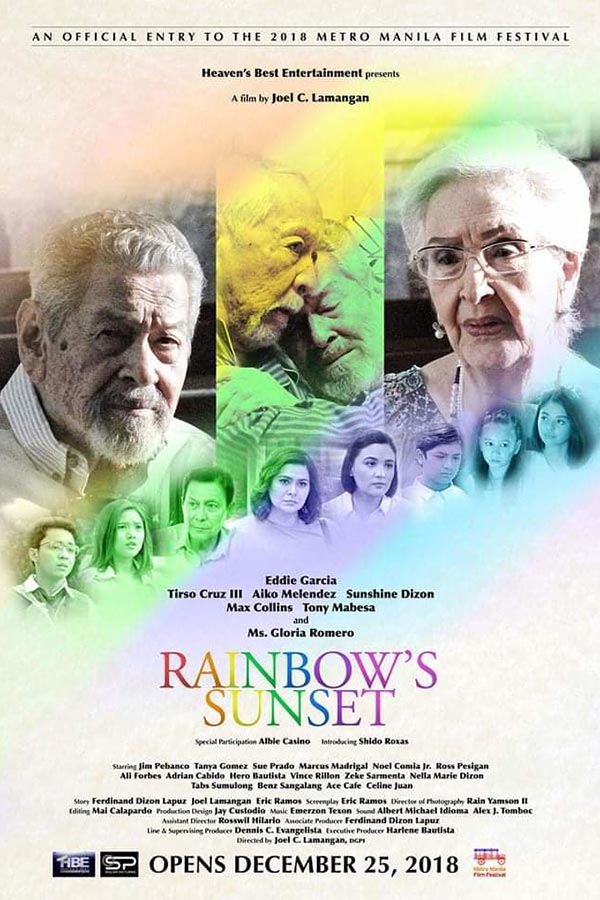
BEFORE ANYTHING else, I’d like to put in a word of praise for the only movie that my wife Beng and I really wanted to see among the entries to the recent Metro Manila Film Festival, Joel Lamangan’s Rainbow’s Sunset, a film about two gay old men on the brink of death and of the family around them. I’ve often said that in our youth- and gimmick-centered culture, we don’t have enough movies (or books and songs, for that matter) about old people, and not enough intelligent movies, either.

 Rainbow’s Sunset satisfies both criteria, offering a sensitive, often comic, in-your-face portrayal of the undiminished decades-old love between two men—and of the woman who loves them both—without losing sight of the very real complications it creates for others, no matter how sympathetically inclined. It’s a project that could very easily have given in to caricature and condescension, but it doesn’t. The acting performances are solid and engaging, both individually and as an ensemble. Aside from the lead actors Eddie Garcia and Tony Mabesa, of course, Gloria Romero and the three children—Tirso Cruz, Aiko Melendez, and Sunshine Dizon—are a delight to watch.

It’s far from a perfect movie—I find the title a bit strained (I get it, I get it) and there are a few off-key notes in the drama—but the minor flaws shouldn’t take much away from its overarching achievement. It will probably be gone from the mainstream theaters by the time this comes out, but it deserves more than passing notice, and I hope it leads to more good movies about seniors, who should know a thing or two about love and life.

WahlDeco.jpg

SPEAKING OF seniors, I started the New Year in the best and the worst possible way: by buying an old pen, I suppose as a late Christmas or early birthday gift to myself, but whatever the excuse, I’m happy, because it was one of the last of what we collectors call our “grail” pens (as in “Holy Grail”), something I had been dreaming about for, oh, thirty years.

I woke up early on January 1, and like most of us do, I picked up my phone to scan my messages—nothing too interesting there beyond the predictable plethora of New Year greetings. And then, unlike most of us, my digits drifted off to the fountain pen sites, just to see what people could be possibly up to. There is such a thing as a global fountain-pen community (just as there’s an antique typewriter community, a wristwatch community, a Japan-surplus community, and an Apple community—and yes, I belong to all of those, too), and it’s become my virtual hangout online.

Unlike real friends, with whom you have to chug beers and trade miserable stories that inevitably involve retirement options, Metformin, and political sleaze, these thing-centered, Web-based communities offer mostly good cheer and kind intentions. Sure, we get our share of jerks and trolls, but they’re pretty easy to weed out with a few keystrokes. These sites are the best distraction I can find from the front-page news (let’s not get started on that, shall we?), and they offer something often lost in today’s Twitter-driven dystopia: a sense of wonder and discovery, and for an aging romantic like me, an enchantment with things past. I know that we keep bemoaning how consumerism has turned us into heartless, mindless brutes, but you’ll be surprised how people can be their nicest, most civil, and most helpful selves when talking about flexing vintage Waterman nibs, locating the tension lever on an Olivetti Lettera 22, and using Stage Light in Portrait Mode on an iPhone X.

But all that’s a long excuse for treating myself in my creeping old age—I’ll hit 65 and retire in two weeks—with a new old pen. “Senior moments” are supposed to be about forgetting things, but they should also be about remembering things, chiefly that life is short and keeps getting shorter, which means that any treats you deserve or expect had better come sooner rather than later.

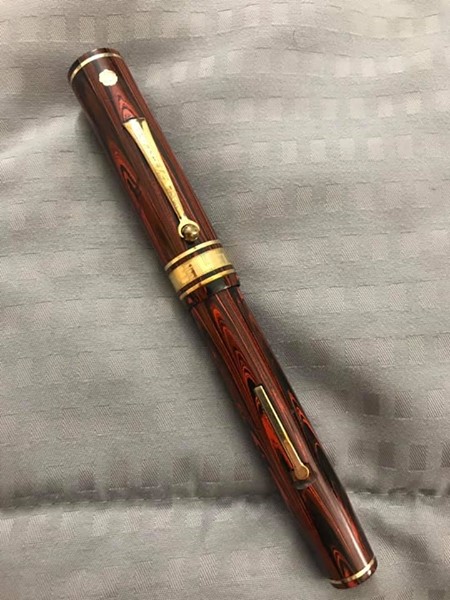
The fountain pen I grabbed when I saw it was a (hold your breath) Wahl-Eversharp Personal Point Gold Seal Deco Band Oversize in woodgrain ebonite with a factory 14K stub nib—meaning a large, fancy, impressive-looking pen with gold trim, great for loopy signatures and maybe for stabbing malevolent strangers in the dark (but with a stub or flat nib, it won’t do much damage). A 25-peso ballpoint will probably write better for most people, but with all due respect to most people, I’m a bit odd in some ways.

In its time, the W-E Deco Band was among the classiest of them all, alongside the Parker Duofold Senior and the Waterman Patrician—think Duesenbergs, Auburns, and Bugattis in terms of 1920s cars. This pen I got survived wars (and worse, people with clumsy hands), and given a few weeks, it will make its way from Pennsylvania to California and then to me. It won’t write a novel—maybe it’ll sign a few greeting cards—but even just sitting in my pocket, it will make a boy from Romblon feel like the Great Gatsby, for once in his Nick-Carrawayish life.