Qwertyman No. 123: A Forgotten Hero

Qwertyman for Monday, December 9, 2024
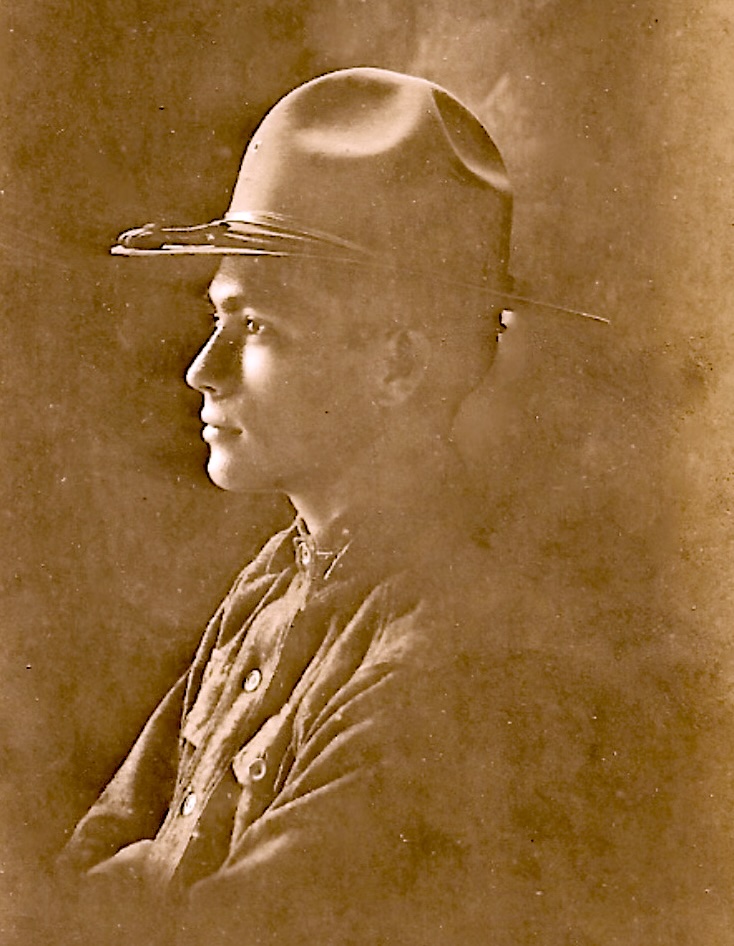
A HANDSOME book—as handsome as its subject—was launched last week by the Ateneo University Press, a biography of another unsung Filipino hero who would have faded into oblivion had it not been for the efforts of an American expat in the Philippines with a deep sense of history. 

The hero was Col. Narciso L. Manzano, the highest-ranking Filipino in the US Army during the Second World War, and the man who rescued his memory is Craig Scharlin, a former English teacher, gallery owner, and biographer who served for some time as Manzano’s personal secretary fifty years ago. I had met and known Craig earlier as the author, with his wife Lilia Villanueva, of the biography of Filipino-American labor leader Philip Vera Cruz; when he asked me to help him put together what eventually became The Manzano Memoirs: The Life and Military Career of Colonel Narciso L. Manzano, I agreed, especially after hearing his story of the life of this remarkable man. 

Craig had learned that the MacArthur Library in Virginia had a 260-page handwritten autobiographical manuscript that had been written by Col. Manzano in 1948, to which were later added another memoir written in 1983 for his grandchildren; his son Jaime had also written a family history. Craig acquired copies of all these and the necessary permissions to publish them; I helped stitch the manuscripts together into a more coherent whole and edit the text.

Though born in Manila in 1899, Manzano grew up in Atimonan, Quezon before leaving at age ten for Spain where his family hailed from. He was a mestizo through and through: Filipino by birth and allegiance, Spanish by blood, and American by military service and later citizenship. After returning to Manila and studying Engineering at UST, he signed up to join the US Army, hoping to fight in the First World War, which ended too soon for him. He went to the US for further military training, and served back home as a Philippine Scout, and then as a colonel in the US Army Corps of Engineers under Gen. Douglas MacArthur.

It had been one of Manzano’s pre-war missions to map out the Bataan peninsula carefully in preparation for War Plan Orange 3, which MacArthur eventually discarded. It was in this zone that Manzano would first earn praise for his bravery. As Craig’s introduction tells it, “It was Manzano, along with his American co-commander, Lt. Col. Skerry, who led their engineers in setting the explosives to blow the bridge at Calumpit, the last and most vital bridge in Central Luzon…. When Gen. Wainwright decided the bridge had to be destroyed to halt the rapidly advancing Japanese invading forces, the Army engineers assigned this task led by Manzano were on the wrong side of the bridge, the Japanese side. Manzano requested that Skerry wait to blow it until he and his men could get across… but Wainwright had no choice: the bridge had to be blown as the Japanese were advancing too fast in order to save the entire American and Filipino forces and allow them time to retreat to Bataan…. Somehow Manzano, along with another of his American officers was able to evade the Japanese on their own and made their way with all their men to Bataan.”
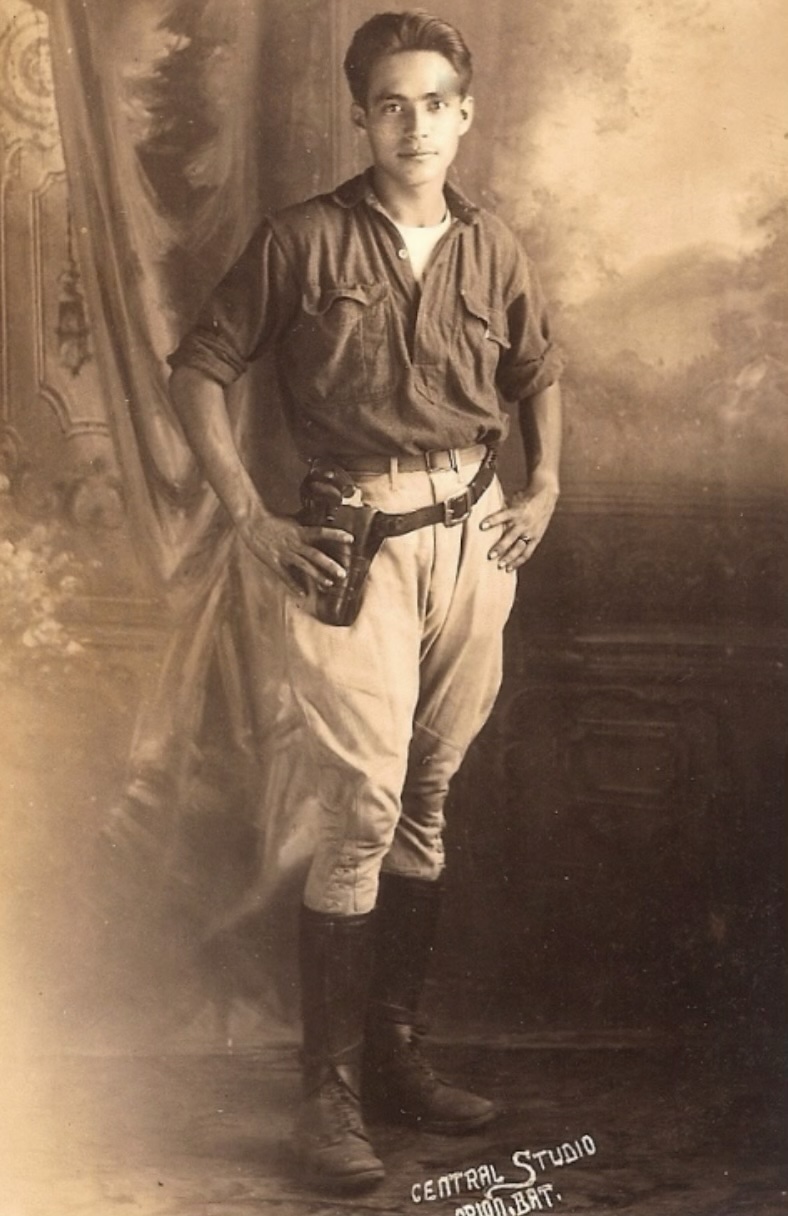
Working in intelligence in Bataan, he was later captured and imprisoned in Camp O’Donnell; upon release, he was quickly assigned to develop an intelligence network in Luzon, at which he proved exceptionally capable. His wife Charo was arrested and imprisoned by the Japanese. But he pressed on, and when his network was exposed, he moved to Mindanao from where he hoped to be taken by submarine to Australia so he could properly advise MacArthur, who was getting poor intelligence. MacArthur’s lackeys scotched that plan, forcing Manzano to improvise as a guerrilla until MacArthur returned. He later moved to the US with his family, where he died in 1986, proud of his life’s work despite being embittered by the betrayals he had to suffer, and disappointed at being passed over for the generalship he had expected.

That’s not even half of the story; brimming with the candor of a man with nothing to lose, Manzano’s memoirs are full of vignettes and reflections about people at war, and Manzano can be painfully scathing in his estimations of those he felt had betrayed his country. He whittles down MacArthur and his aides for what he saw to be their foolish and costly unwillingness to listen to lifesaving intelligence (an opinion shared by historians such as Hampton Sides, who wrote that “MacArthur’s judgement, clouded by his gargantuan ego, was sometimes deeply, dangerously flawed. The men who fought under him, and the civilians who happened to get in his way, often paid a terrible price.”) Manzano was highly critical of MacArthur’s abandonment of War Plan Orange 3, and even said that he would have testified in support of Japanese Gen. Masaharu Homma had he been asked.

He not only believed President Jose P. Laurel to be a collaborator, but plotted the failed operation to assassinate him on the golf course at Wack Wack. For this alone, the book should be well worth reading; I among others have a contrary view of Laurel, but Manzano was there and we were not. Manzano has spicy opinions of other wartime and postwar personalities whom we have named streets after—again, quite an eye-opener. He reserved some of his choicest words for Ferdinand Marcos, whom he called “a poser, a phony, a fake, a war profiteer.”

In his introduction to the book, Craig Scharlin recalls his first meeting with Col. Manzano in San Francisco in 1975: The movie “Scent of a Woman” with Al Pacino had not yet come out. However, the character Pacino played in that movie, Frank, was a retired lieutenant colonel in the United States Army. As portrayed by Pacino, the character had Old-World charm, dressed impeccably, and even in his older age had ramrod-straight posture, showed strength of character and conviction, and the demeanor of an officer who had commanded other men and led them into battle. But he also carried scars of resentment and a certain sadness, a lament of unfulfilled destinies, of real battles won and others lost. And of course it was all Al Pacino—short, dark, brooding, yet still incredibly charismatic.

“That was the man I met in 1975 in a well-appointed penthouse apartment on Nob Hill in San Francisco. The only difference was that this wasn’t Al Pacino nor a fictional movie character, but the real deal—a retired US Army colonel named Narciso L. Manzano.”

Meet the rest of the man in the book, which you can order here: https://unipress.ateneo.edu/product/manzano-memoirs-life-and-military-career-colonel-narcisco-l-manzano.
Qwertyman No. 92: The Return of the Old Normal

Qwertyman for Monday, May 6, 2024

FEW WILL remember it, but yesterday, May 5, marked the first anniversary of the official end of the Covid-19 pandemic as a global health emergency, as announced by the World Health Organization. Of course it didn’t mean that Covid was over and gone—it would continue to mutate into thankfully less lethal variants—but the worst was over. It had infected more than 765 million people around the world, and killed almost 7 million of them; in the Philippines, as of last month’s latest figures, over 4 million of us caught Covid, and we lost more than 66,000 friends, family members, and neighbors to the disease.

It’s amazing what a difference a year makes. The pandemic rules had been relaxed long before May 5 last year, and much of 2023 and 0f the present year had been spent by us trying to get back to life as we knew it pre-Covid at a frenetic pace—engaging in that new term, “revenge travel,” buying new cars, building new homes, and as of last week, complaining about the infernal heat wave like it was the worst thing to have plagued us in decades (maybe it was—since Covid). For the most part, we seem to have willed Covid out of our minds, eager to replace its bitter memories with fresh and happy ones—an entirely human thing to do, to cocoon ourselves against the pain of loss. Are we in the “new normal,” or have we returned to the old?

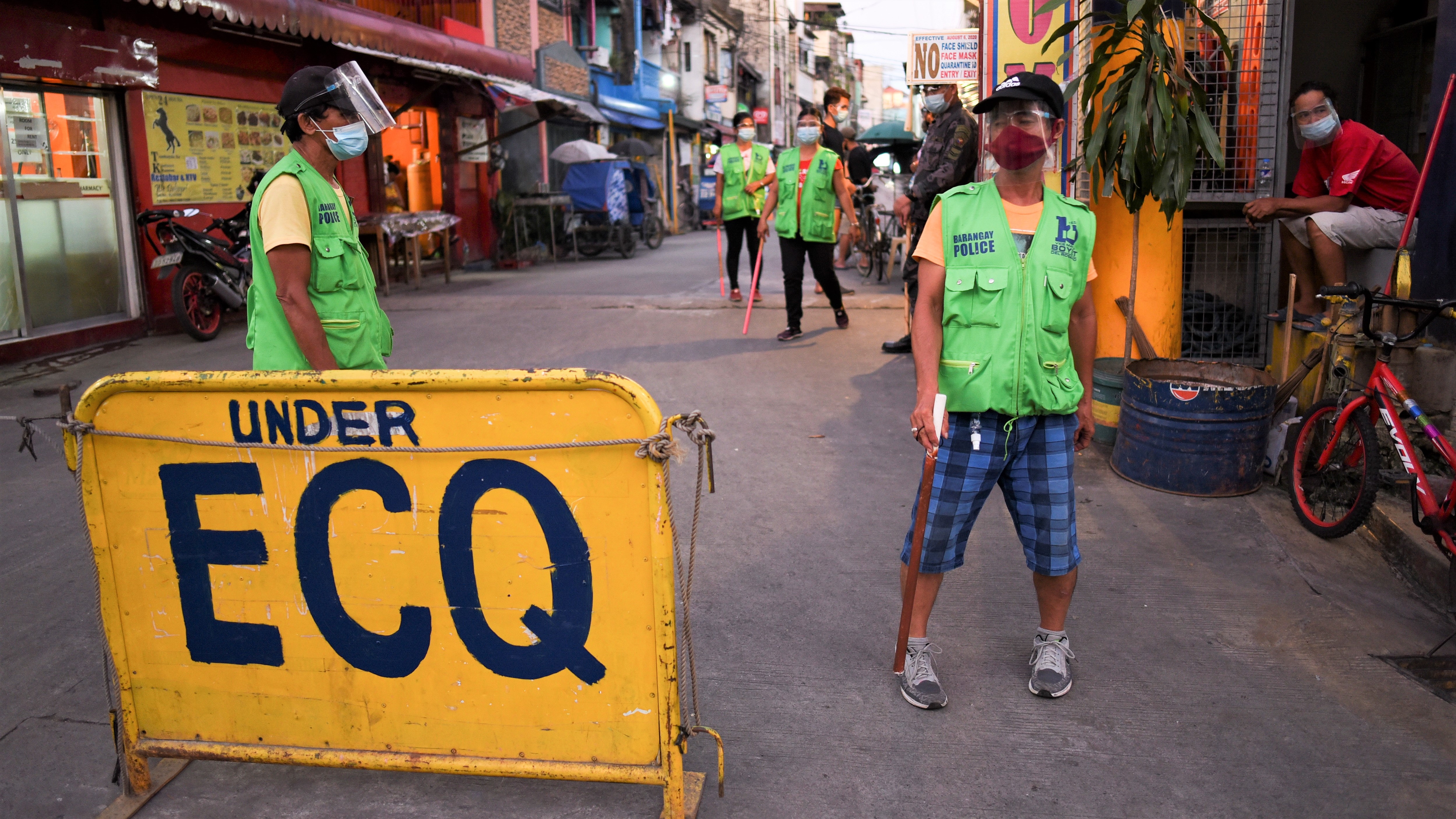
I remember most vividly the paranoia that gripped the country during the pandemic’s early days—the first reports of people we knew dying horrible deaths in isolation, the terror following a sudden and suspicious onset of coughing and fever, the constant fear of carrying the virus home to the innocent and the infirm in one’s shoes, one’s clothes, one’s merest touch, the rapid disappearance of disinfectants and bread from the shelves, the inevitable closure of cinemas and restaurants, the anxious eyes peering above face masks and through face shields, the physical boundaries beyond which only a select few could cross—and, of course, the near-endless wailing of sirens announcing the imminence of death and dying. Unfamiliar words and phrases entered our vocabulary: co-morbidities, social distancing, quarantine, lockdown, ECQ, EECQ, RT-PCR, community pantry, antigen, remdesivir, hydroxychloroquine, Ivermectin, Sinovac (and anti-vaxx), etc.

Like many others, I lost friends to Covid, from very early on when no one knew what was really going on and what could be done to save patients who were turning up feverish and could hardly breathe. One of them was my own cardiologist, who reportedly assisted a patient whom he didn’t know carried the virus. Others were academics and senior officials returning from conferences overseas. Fortunately, no one in our families died of the disease, although many of us, myself included, later caught it at some point despite all precautions. When I did catch it, I have to admit that it was with a strange sense of relief, not only because I could now count myself a participant in a grand if horrible experience, and also because I imagined, perhaps foolishly, that I would be rewarded with some kind of immunity from further and worse infection.

Those of us who survived Covid hopefully did so with a more profound appreciation of the gift and value of life, and of the need to do good in the time we have left. But the 2022 elections only seemed to prove the power of political patronage, which became even more keenly felt during the pandemic, when local officials down to the barangays held sway over their constituents like never before. Covid sharpened the already stark contrast between rich and poor, from access to what were seen as the most effective vaccines to self-declared exemptions from certain restrictions like liquor-lubricated parties and literal hobnobbing. In the end, the virus didn’t discriminate, scything rich and poor alike, although the poor, living in cramped communities, were always more likely to fall ill and die.

What the public often failed to witness—and therefore can’t remember—were the stories of the frontliners who met Covid head-on and served as heroes behind the scenes. I’m now working with Dr. Olympia Malanyaon—a pediatric cardiologist who also served as Director of the Information, Publication, and Public Affairs Office of UP Manila—on a book she’s writing to document the efforts of UPM and of the Philippine General Hospital (which is part of UPM) to respond to the Covid crisis. The PGH, the country’s largest public hospital, was designated a Covid-referral hospital almost as soon as the pandemic broke, and its people found themselves in the vortex of an unprecedented medical and social crisis, and we want to tell their stories in this forthcoming book.

The word “hero” gets bandied around a bit too easily these days, but if there was a time for heroes to emerge, it was during the pandemic, when what used to be the most routine decisions (“Should I report for work today?”) could mean a matter of life and death. When the death toll mounted, many PGH staff resigned for fear of infecting their families, but many more stayed on, with nurses pulling 16-hour shifts and some doctors remaining on duty for as long as 30 hours.

Even utility workers recalled how pitiful the plight of the afflicted was. One said that “They had no one with them, not even when they died. They would be put into body bags, which could not be opened. Then they would be cremated the next day, without being seen by their families.” And then, the staff felt shunned by society when they went home as ordinary neighbors. “When we ordered at the fastfood, the guard shooed us away when he learned that we worked in the Covid unit,” recalled another. “I was very upset. It felt very degrading to work so hard, to line up for food when you got hungry, only to be turned away.”

Thankfully, the crisis also brought out the best in some other Filipinos, such as those who poured their time and money into community pantries that served the hardest hit. For a while back there, we saw and felt the glimmer of our inner heroes. It was a spirit that I hoped would be sustained into a broader and more enduring wave of change in 2022, but as the pandemic receded, we realized how much of the old normal yet remained.

Covid made us aware of the precariousness of our health as individuals. Looking forward to 2025, I wonder what it will take for our people to value their well-being as a society and as a nation.

(Image from Reuters/Lisa Marie David)

Qwertyman No. 46: The Writer as Liberator

Qwertyman for Monday, June 19, 2023

AS PART of its Independence Day celebration, the J. Amado Araneta Foundation asked me to give a talk on “The Writer as Liberator” last Saturday, and today being Jose Rizal’s birthday, I’m very happy to share that talk in full (a shorter version appeared as my Qwertyman column in the Star):

When I was first asked to talk about “The Writer as Liberator,” the first thought that went through my mind was probably the thought that’s now going through yours, which was that of the writer as political revolutionary or dissident, in the mold of Jose Rizal, Marcelo H. del Pilar, Lorraine Hansberry, Alexander Solzhenitsyn, Nadine Gordimer, Wole Soyinka, and so many others of their caliber and stature.

That presumption, of course, is certainly valid and reasonable. Indeed, human history is fraught with examples of writers who fought colonialism, slavery, racial prejudice, and feudal and capitalist oppression and exploitation in India, South Africa, and the United States, particularly the American South, among many if not most other countries in the world. Wherever evil has reared its head, writers have arisen to call it out by name in all its forms—overweening pride among the ancient Greeks, blind ambition in Shakespeare’s time, lust and greed everywhere down the ages. 

The Philippines has been no exception. Decades before Rizal, Francisco Baltazar or Balagtas employed allegory in Florante at Laura to depict suffering and denounce injustice. Rizal and the whole Propaganda Movement followed, in a story of resistance and revolution that many of us already know. It’s a high climactic point that we could talk about all day but I won’t, because I’d rather talk about other things that most of us don’t know about writers and liberation. 

Again, to deal with the obvious, writers of all kinds have been at the forefront of political and social change. They included poets, playwrights, novelists, journalists, screenwriters, and today we would have to count bloggers and comic book script writers.

Our heroes and champions of freedom were poets—Rizal’s Mi Ultimo Adios and Bonifacio’s Pag-Ibig sa Tinubuang Lupa spring to mind, but they were also followed by the likes of Claro M. Recto, Francisco “Soc” Rodrigo, Carlos P. Garcia, and Diosdado Macapagal. These men—sadly, our political and even our cultural life was dominated then by the patriarchy—came from a generation when there was a very thin line between journalism and creative writing, when an opinion column could appear in verse, and when senators were expected to be literate and eloquent.

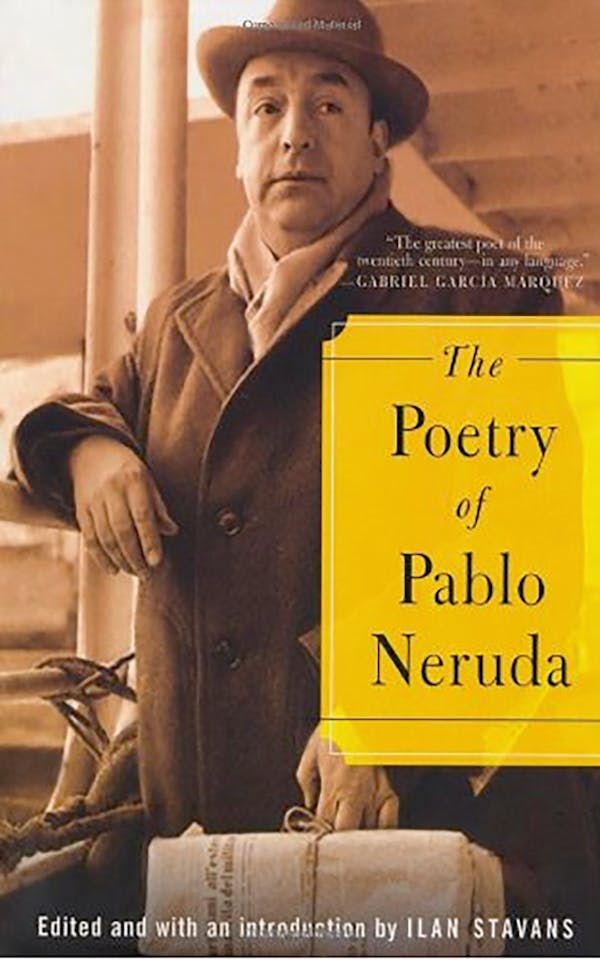
As I mentioned earlier, this was true of many countries around the world where people were fighting for freedom and justice. In South America, Simon Bolivar—who was known as The Liberator or El Libertador—led the fight for independence from Spain of what are now his native Venezuela, Colombia, Bolivia, Peru, Ecuador, and Panama, but he was also a poet, alongside the Cuban Jose Marti, among others. The Chilean poet and Nobel Prize winner Pablo Neruda wrote a poem in tribute to Bolivar, titled “A Song for Bolivar,” which I will read to you:

Our Father thou art in Heaven,
in water, in air
in all our silent and broad latitude
everything bears your name, Father in our dwelling:
your name raises sweetness in sugar cane
Bolívar tin has a Bolívar gleam
the Bolívar bird flies over the Bolívar volcano
the potato, the saltpeter, the special shadows,
the brooks, the phosphorous stone veins
everything comes from your extinguished life
your legacy was rivers, plains, bell towers
your legacy is our daily bread, oh Father.

The line “everything comes from your extinguished life” might as well have applied go Neruda himself, who was murdered by the fascist Pinochet government he opposed. Many writers have died for what they have written—and again we go back to Rizal—but others fought, lived on, and even succeeded in their struggles for national liberation. Two of the most prominent were Ho Chi Minh and Mao Zedong, who led long and ferocious wars against both local and foreign oppressors.

Imprisoned in China during the war, Ho Chi Minh wrote this poem in 1943 upon reading a book called the Anthology of a Thousand Poets:

The ancients liked to sing about natural beauty:
Snow and flowers, moon and wind, mists, mountains and rivers.
Today we should make poems including iron and steel,
And the poet should also know how to lead an attack.

In 1950, shortly after the Communists took over in China, Mao wrote this poem in reply to another poet named Liu Yazi:

The night was long and dawn came slow to the Crimson Land.

For a century demons and monsters whirled in a wild dance,

And the five hundred million people were disunited.

Now the rooster has crowed and all under heaven is bright,

Here is music from all our peoples, even from Yutian,

And the poet is inspired as never before. 

Note how, in these two poems, Ho and Mao locate the poet at the center of a collective struggle. This idea is developed even more strongly by Jose Ma. Sison—who by the way was an English major in UP—in his poem from the 196os titled “The Guerilla is Like a Poet”:

The guerilla is like a poet 
Keen to the rustle of leaves 
The break of twigs 
The ripples of the river 
The smell of fire 
And the ashes of departure. 

The guerilla is like a poet. 
He has merged with the trees 
The bushes and the rocks 
Ambiguous but precise 
Well-versed on the law of motion 
And master of myriad images. 

The guerilla is like a poet. 
Enrhymed with nature 
The subtle rhythm of the greenery 
The inner silence, the outer innocence 
The steel tensile in-grace 
That ensnares the enemy. 

The guerilla is like a poet. 
He moves with the green brown multitude 
In bush burning with red flowers 
That crown and hearten all 
Swarming the terrain as a flood 
Marching at last against the stronghold. 

An endless movement of strength 
Behold the protracted theme: 
The people’s epic, the people’s war. 

Given the aesthetics of the Philippine Left at that time, you could actually reverse this proposition to read “The poet is like a guerilla,” which Emman Lacaba certainly was, as was Ma. Lorena Barros, whose poem “Sampaguita” follows:

This morning Little Comrade

gave me a flower’s bud

I look at it now

remembering you, Felix,

dear friend and comrade

and all the brave sons and daughters

of our suffering land

whose death

makes our blades sharper

gives our bullets

surer aim.

How like this pure white bud

are our martyrs

fiercely fragrant with love

for our country and people!

With what radiance they should still have unfolded!

But sadness should not be

their monument.  

Whipped and lashed desperately

by bombed-raised storms

has not our Asian land

continued to bloom?

Look how bravely our ranks

bloom into each gap.

With the same intense purity and fragrance

we are learning to overcome.

Decades later, her namesake Kerima Lorena Tariman would write “Pagkilos,” a poem that celebrates motion in both nature and society:

Ang lahat ng bagay ay tila kitikiti,
Palagiang kumikilos at hindi mapakali.
Ang paggalaw ay kakambal ng bawat bagay,
Likas na kaugnay at hindi maihihiwalay.

Ang mga bagay-bagay ay kay hirap isipin,
Kung walang paggalaw, kung kaya, gayundin,
Ang paggalaw mismo ay di natin matatanto,
Kung wala ang mga bagay dito sa mundo.

Sa daigdig, halimbawa, nagpapahinga man ang pagod,
Matikas man ang estatwa at patay-malisya ang tuod,
Sila’y hindi naliligtas sa paggalaw ng planeta,
Ang pag-ikid at pag-inog ang palagiang sistema.

Kung kaya ang masa na akala mo’y walang imik,
Kapag natutong lumaban ay nagiging matinik!
May mga kasama man na natitigil sa pagkilos,
Ang rebolusyon sa daigdig ay hindi natatapos!

A, lahat ng bagay ay saklaw ng ating kilusan,
Katotohanan ito na di maaaring iwasan.
Kung kaya’t habang tayo ay may lakas at talino,
Sa pagkilos natin ialay ang ating bawat segundo!

Tragically, both Lorenas—and Emman Lacaba before them—would be killed in the struggle that they took on, and be hallowed as revolutionary martyrs.

Now, all this may sound like an open invitation for our favorite red-taggers to call all poets rebels, and all rebels communists. That would be ridiculous. Most poets are still happy and perfectly within their rights to write about the moon and the stars and undying love. Some rebel-poets were proud and self-admitted communists, at a time when the word was invested with a sheen of holiness. But the abject failure of communism to set up a truly free and egalitarian society and its appropriation in both China and Russia by new and autocratic elites has shed much of that romantic mystique, and it is supremely ironic that those writers and artists now fighting for civil liberties in both countries are considered enemies of the state.

“The Writer as Liberator” was an easier concept to deal with when we had a foreign occupier like Spain, America, or Japan. Today, our oppressors are internal, lodged within our society, and within our hearts and minds. The liberation we need today is from our worst selves, which is often the hardest enemy to face. Bad leadership has enabled and encouraged that side of us that accepts extrajudicial killing and unjust imprisonment as normal. 

The minds of so many of our people remain shackled by ignorance, falsehood, prejudice, superstition, fear, and a crippling dependency on the old and familiar, however self-destructive they may be. In an increasingly polarized and intolerant world, people everywhere face racial violence and discrimination, gender inequality, economic exploitation, and political repression.

The writers who will battle this chimera have many weapons at their disposal—not just books and the traditional press but social media, a universe of communication unto itself that Rizal and his contemporaries never dreamed of. Journalists fight with the truth, creative writers fight with the truth dressed up as artistic lies. 

I have often said that the best antidote to fake news is true fiction. By this I mean that it often takes artistry and good storytelling, more than a mere recitation of facts, to show people what is true.

Long before there were newspapers, writers gave voice to their people’s hopes and fears through what today would be called fiction: through myths, legends, tales, epics. These stories transported people from the crushing routine of their everyday lives to the realm of the gods, to a romantic past cloaked in the mists of fable and fancy. Indeed, these stories came even earlier than literacy itself, transmitted orally from one generation to the next. Creation myths validated and gave meaning to a tribe’s or a people’s existence; tragic drama reminded them of the consequences of our moral choices. 

When I started my Qwertyman column in the Philippine Star and began writing what I called “editorial fiction,” a columnist in another newspaper immediately cried “Foul!”, claiming that fiction cannot possibly be taken as opinion. I responded that all fiction is opinion, if you know how to read it closely enough. Like the mirror Perseus used to kill Medusa, we employ fiction to deal with truths we cannot bear to face.


I am under no illusion that the next revolution, whatever it may be against or when, will be sparked by a novel or a poem. Very likely, it will be a viral video that will ignite that flame. I pray it will not be violent, but rather a comprehensive conversion of our people’s minds and spirits for the good. But there will always be a place for the writer in the offices, kitchens, and workshops of democracy, on the bunkbeds where we lie dreaming of justice and prosperity for all. 

Let me close with a short poem that I wrote last year, titled “Freedom Is When”:

Freedom is when 

We don’t think about it

But it’s there like air

We seek only in its absence

When we’re gasping for breath.

Freedom is when

We can choose whom to love

Or whom or what to believe 

Without any fear

Of punishment or death.

Freedom is when

We can sleep without guilt

And dream without ghosts

Waking up to the aroma

Of steaming rice and stewed fish.

Ang kalayaan ay kung

Hindi natin ito iniisip

Tulad ng hangin

Hanggat ito’y mawala

At tayo’y maghingalo.

Ang kalayaan ay kung

Malaya tayong pumili

Ng iibigin, o paniniwalaan

Nang walang katatakutang

Parusa o kamatayan.

Ang kalayaan ay kung

Mahimbing tayong makakatulog

At managinip nang di minimulto

Hanggang tayo’y pukawin ng halimuyak

Ng bagong saing na kanin at pinangat.