
Qwertyman for Monday, May 11, 2026
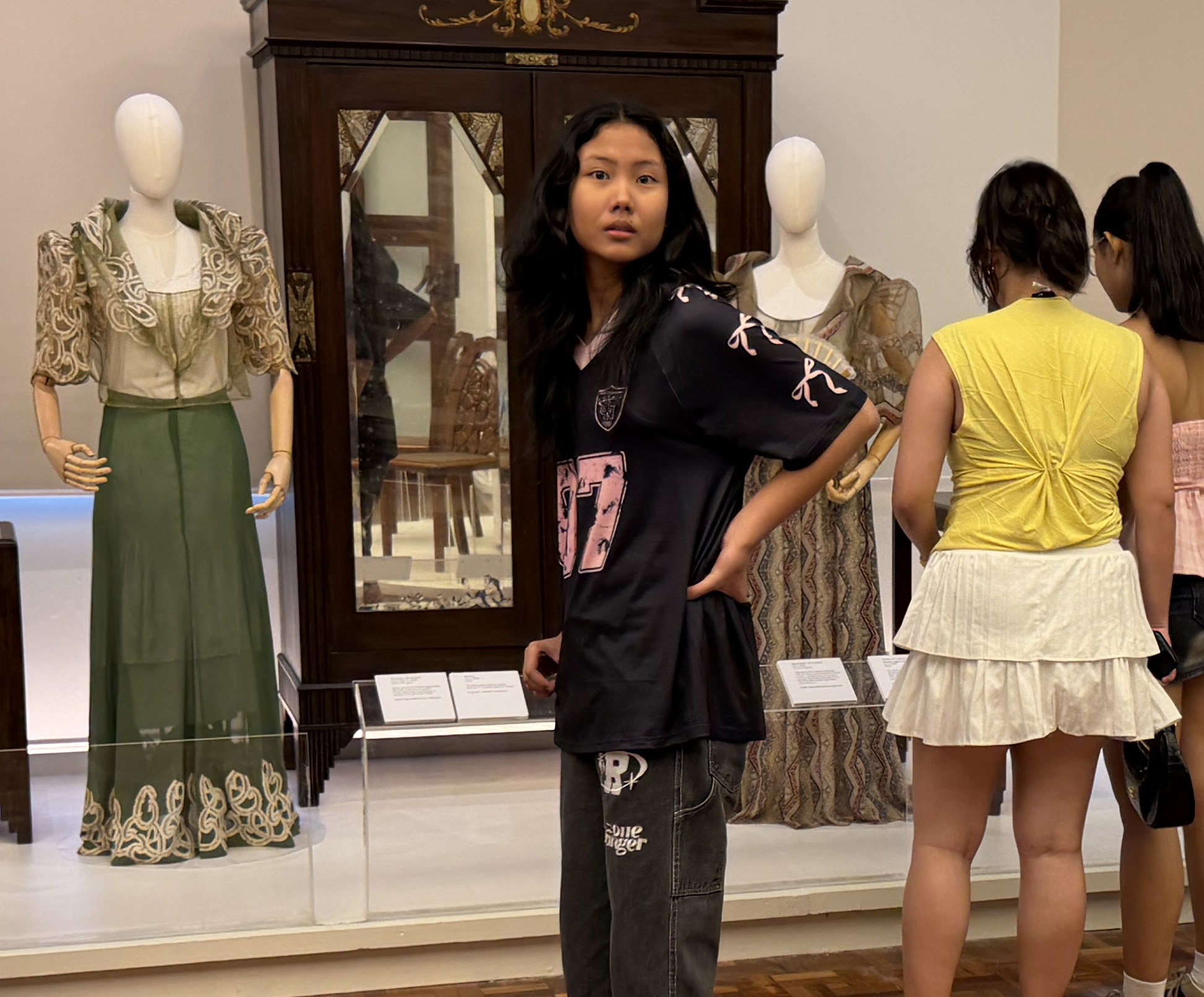
OUR FRIEND Toym Imao, among our most talented and productive sculptors, also serves as dean of the UP College of Fine Arts where my wife Beng teaches art conservation. Lately, like many academic administrators, Toym’s been feeling embattled because of the lack of resources given to his college, whose buildings may look new and good on the outside but whose roofs leak, among other ailments and deficiencies. (At least they have a building; my home College of Arts and Letters is still a vagrant in Diliman, more than ten years after the Faculty Center burned down.) Beng—who envisions the creation of a formal art conservation program and center in UP to serve the country’s longstanding needs in this area—sometimes has to teach in the garage of our campus home for lack of table space in their department.
Let me quote a few salient lines from Toym’s self-described “rant,” which he published online:
“When students are treated as customers (rather than our future), when education becomes a service (than a mission), and when institutions are driven by metrics, compliance, and efficiency, we lose something essential.
“We lose the art school as a space of imagination. As a space of critique and discourse. As a space where we form not just skills, but ways of thinking. A space of engagement and confrontation. A space to take risks and make mistakes in a nurturing environment.
“An art school is not a diploma factory, it is a well of souls, it is a spirit house. If we lose these purposes, we do not just weaken education. We weaken our culture, we lose our spirit as a nation.”
But now Toym & Co. are up against an even bigger enemy, beyond leaking roofs and bureaucratic indifference: a government-sponsored initiative to gut the humanities and to bleed it out of the college curriculum so young Filipinos could enter the workforce sooner.
The comeuppance of certain pseudo-journalists aside, no issue stood out in our FB feeds over this past week as much as the widespread outrage over the Commission on Higher Education’s proposed “Reframed General Education” program, cutting required GE units from 36 down to 18. They’ll do this by shoehorning the old (and already much-compressed) arts and humanities courses into such brainy-sounding but essentially hollow subjects as “Data, Evidence, and Ethics in a Knowledge Society” (which sounds to me like a puffed-up way of saying “Don’t use AI to plagiarize and write your homework,” which I’ll bet is how it’s going to be taught).
It isn’t hard to imagine how this act of cultural lobotomy came about: the CHED people were given marching orders from the start to find a way of cramming some GE subjects into a three-year curriculum. Never mind what kind of chop suey recipe they would come up with—like mixing a smattering of Philippine history into a sludge of Rizal; just fit everything in three years, and all will be well.
I’m not even going to discuss in detail how and why the CHED proposal is such a sad, silly, an even stupid solution to a problem that, to begin with, is ill-defined. You can look up the analyses of people more attuned to the theory of education than I am—aside from Toym Imao, experts like Profs. Antonio P. Contreras, Mark Joseph Calano, and Jose Wendell Capili have already written extensively about this, and about the necessity of the humanities in our formation as humans and citizens.
I will, however, raise a few points and questions for further thought:
Is the problem employability, of not teaching our young the skills our workplaces require? Are the arts and humanities–including language and history—therefore excess baggage that workers don’t need to do their jobs well?
General education isn’t about creating unemployable artists. It’s about helping ordinary people think like artists do—creatively, intuitively, critically, out of the box, to find better viewpoints and solutions than numbers alone can provide. And speaking of unemployed artists, why not build up and support creative industries like South Korea and other countries do, to channel our natural abilities in design, performance, and expression into globally competitive endeavors?
And who and where are the synoptic geniuses who are going to teach these massively integrated courses? Instructors who have a hard time teaching even basic English, and whose own grasp of history and philosophy is tenuous at best?
There’s a lot of the “digital” in the “reframed” GE program, a nod to the pervasiveness of the Internet and AI in education. But the real challenge is not how to detect and use AI, but to be naturally intelligent: to think and reason for yourself without reaching for your phone.
Bad education isn’t going to fix a bad economy and bad governance. But a good education that teaches young people the difference between right and wrong and between good and bad—and only the humanities can do that—will help them elect good leaders who can then make the best decisions for our economic well-being.
“We have to do something!” cried Beng, as always the more ardent activist between the two of us. “Let’s rally in front of CHED. Let’s show them how strongly we feel about this issue!”
Of course I’ll go march with Beng wherever she goes, but I suspect that in this day and age, rallies don’t work as well as they used to. You’ll shout yourselves hoarse telling your co-marchers things they already know, while the people inside the office go about making coffee and sharing BTS chismis. You might get on the evening news, in between a mugging and a fashion piece.
You have to find the people who can actually change policy, and exert pressure there. They’re in Congress and the Senate, which controls the pursestrings and can make state university presidents and agency heads mumble like marionettes at budget hearings.
The trouble is, even people you’d expect to know better don’t seem to know any better. Sen. Sherwin Gatchalian, who chairs the Senate Basic Education Committee while co-chairing the influential Edcom 2, is behind the push to cut college down to three years. His proposed Senate Bill 51 aiming for just that is the wind behind the CHED technical committee’s wings. That leaves us with Higher Education Committee Chair Loren Legarda, a staunch champion of the arts and culture, to bear the burden of our arguments in the arena where it matters.
She’ll have a lot of championing to do, against the likes of Sen. Robinhood Padilla, (mind you, the one in charge of constitutional amendments) who has opined that the job of opposition senators is, well, to oppose anything and everything. Indeed, the fact that we have people like him in the Senate is the best argument for a strong GE program—not just to educate them, but to make sure young Filipinos don’t vote donkeys (I’m using the kinder term here) into the Senate ever again.
Just thinking about it makes me want to put on my marching shoes, and I don’t care if Beng and I end up shouting into the wind.

