Qwertyman No. 113: My Lessons from Martial Law

Qwertyman for Monday, September 30, 2024

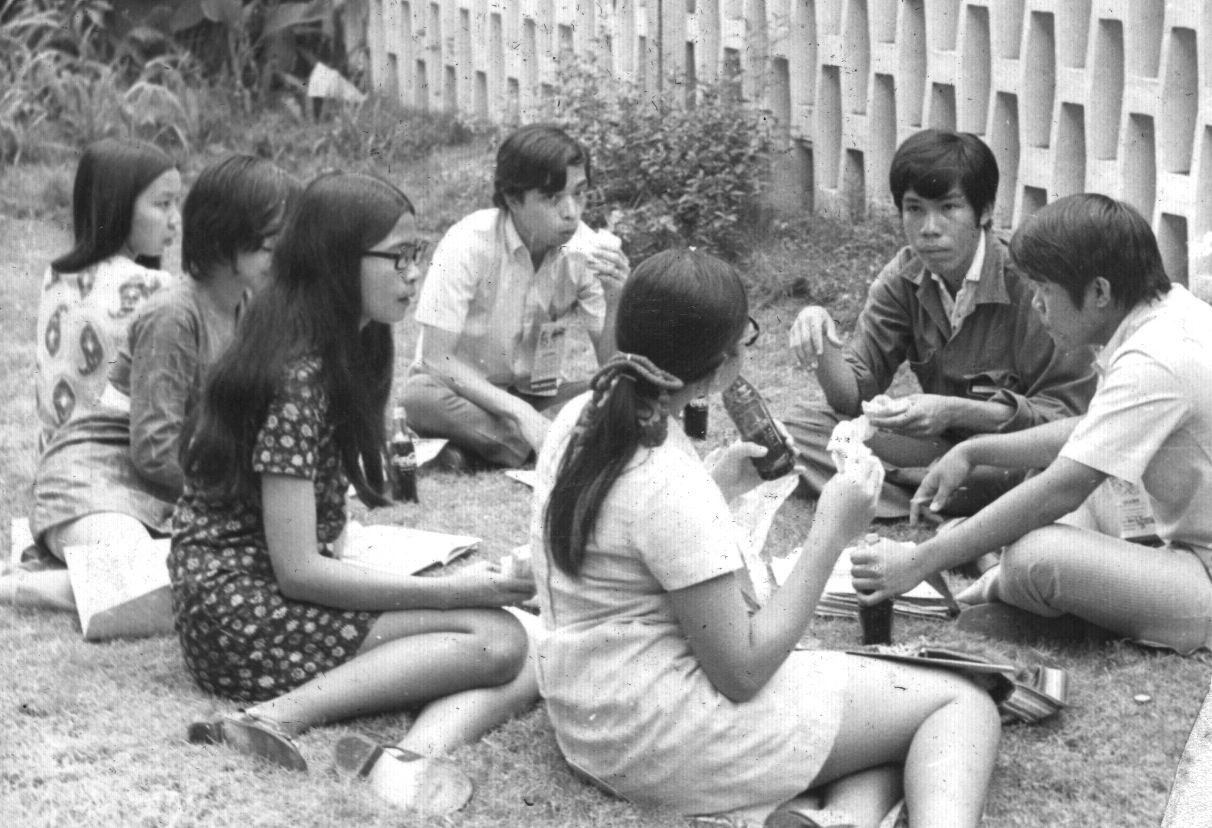
I WAS recently invited by a student organization at the University of the Philippines to speak to them about my martial-law experience, given that I had been a student activist in UP during what we called the First Quarter Storm, had been imprisoned, and had, against all odds, survived into a reasonably comfortable old age. It occurred to me, as I entered the SOLAIR building in Diliman where the event was going to be held, that I had last stepped into that place as a 17-year-old activist back in 1971 (that’s me in the picture, second from right, in that building). What had I learned since then? Here are some points I raised with my young audience:

1. We were always in the minority. Even at the height of student activism in UP and in other universities, those of us whom you might call truly militant or at least progressive were far smaller in numbers than the majority who dutifully went on with their studies and their lives and saw us as little more than a rowdy, noisy bunch of troublemakers. And the fact is, we were still in the minority in 2022, which is why Leni lost (yes, even in Barangay UP Campus). This bears emphasizing and thinking about, because sometimes we fall into the trap of believing that since we think we’re so right, surely others must think the same way. Which brings us to my next point.

2. We have to learn to communicate with other people with different views. The phrase “echo chamber” often came up in the last election, and with 2025 looming, it’s even more vital that we master modern propaganda as well as the other side does. This means sharper and more effective messaging. Enough of those two-page, single-spaced manifestoes written in the Marxist jargon of the 1970s and 1980s and ending with a string of slogans. Learn how to fight the meme war, how to navigate and employ Tiktok, Twitter/X, Facebook, Instagram, Youtube, and all the arenas now open in digital space.

3. When talking about martial law, don’t just dwell on it as the horror movie that it was for some of us. True, many thousands of people were killed, tortured, raped, imprisoned, and harassed. True, the trauma of that experience has lasted a lifetime for those involved. But most Filipinos never went through that experience, adjusting quickly to the new authoritarianism; many even look back to that period with nostalgic longing. That’s proof of martial law’s more widespread and insidious damage—the capture of the passive mind, and its acceptance or denial of the massive scale of theft and State terror taking place behind the scenes. Martial law imprisoned our minds.

3. People change; you could, too. One pointed question I was asked at the forum was, “Why is it that some very prominent student activists turned their backs on the movement and went over to the dark side?” It’s true—many of the shrillest Red-taggers we’ve seen these past few years were reportedly once high-ranking Reds themselves. So why the 180-degree turn? Well, it’s perfectly human, I said, trying to be as kind as I could, despite being at the receiving end of some of that calumny. People can hardly be expected to stay the same after twenty or forty years. Even if many if not most of my generation of activists have remained steadfast in our quest of the truth, freedom, and justice, one’s definition of exactly what is true, free, and just can change. Some people change their stripes out of conviction; some others do it for the oldest of reasons—money and power, or sheer survival. I’m saddened but no longer surprised by brazen betrayal. I learned from martial-law prison that people have breaking points, and some thresholds are much lower than others. 

4. We have to admit we were wrong about some things. This will vary from person to person, and there’s a line that could even constitute the “betrayal” I mentioned above. Some fellow activists will probably disagree with me on one of these key points: armed struggle didn’t work, and it won’t, not in the Philippines nor anytime soon. However we feel about the subject, the fact is, one armed Filipino revolutionary force or other has been at it for more than 80 years now—“the world’s longest running insurgency” as it’s often been referred to—with little gain to show for it. I don’t mean to denigrate the noble and heroic sacrifice of the thousands who gave up their lives fighting what they believed was a brutal dictatorship—many were personal friends—but how many more lives will it take to prove the efficacy of revolutionary violence, one way or another?

5. That leads me to the last point I made to my young listeners: live, don’t die, for your country. We can and will die for it if we absolutely have to (especially us seniors who have little more to lose), but today’s youth have options we never did. In the 1970s, if you were young, idealistic, politically aware, and daring if not brave, you could not but conclude that something was terribly wrong with Philippine society, and that change was badly and urgently needed. You chose between reform and revolution—and it was only a matter of time before you became convinced that the latter was the only way forward. 

Agreed, the basic problems of Philippine society may not have changed much—but one’s ways and means of addressing them have. The growth of civil society—the proliferation of NGOs covering a broad range of causes and concerns—offers practical, focused, peaceful, and professional alternatives to young people seeking social and economic change. One need not embrace the burdens of the entire nation, only to feel inadequate or ineffectual; one can do much if not enough by improving the lives of families and communities. Beyond feeling sorry or guilty for those who fought and died as martyrs, do what you can as a living, intelligent, and capable citizen to create a better Filipino future to the best of your ability.

If this sounds like the voice of a tired old man, it is. I’m tired of death and despair; I choose to fight for life and hope. 

Qwertyman No. 76: What I Have Learned

Qwertyman for Monday, January 15, 2024

PARDON ME if I wax a bit personal today, as I turn 70, much to my great surprise, coming from a generation that didn’t expect to live past 25. I’ve often noted that in your 20s, you seek purpose and direction; in your 30s, stability in terms of love, family, and work; in your 40s, professional success and serious money; in your 50s, acclaim and reputation; and in your 60s, good health and comfort. Now, on the threshold of my 70s, I find myself accepting and preparing for the inevitable, the average life expectancy of the Filipino male now hovering at 72.

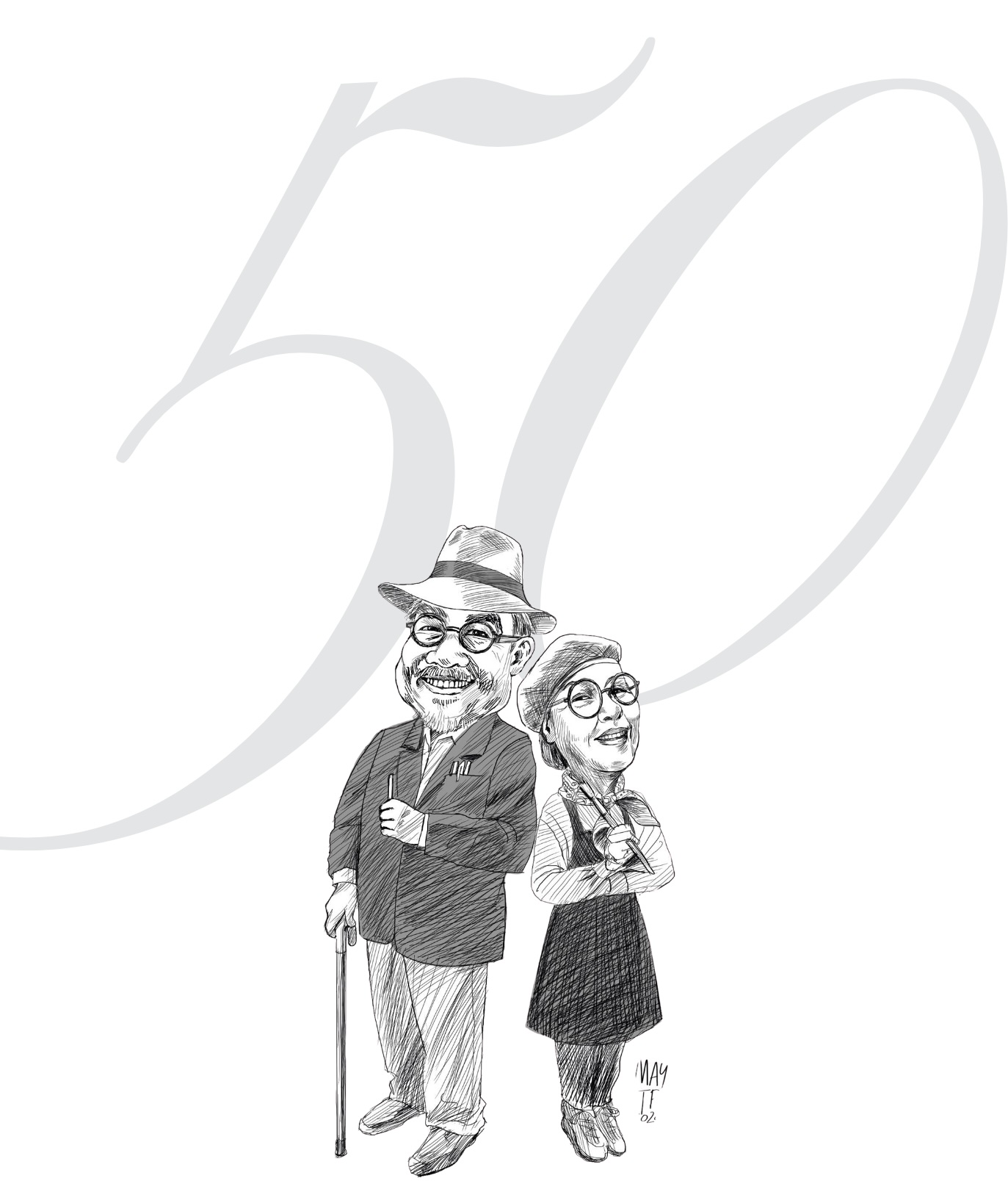
More significantly, my wife Beng and I are also celebrating our 50th anniversary. I’ve never quite resolved if it was a good idea to get married on my birthday—and just my 20th at that—but there was never any doubt that marrying Beng was the smartest decision I ever made, and that waking up beside her every January 15 is the best birthday gift I could ever ask for.

But I’ll spare you the love story, which, like all good love stories, has had its fragile moments. For now, let me share some lessons and insights I’ve learned from surviving the First Quarter Storm, martial law, EDSA, GMA, Ondoy, Yolanda, tokhang, and, for the moment, BBM. They’re by no means complete, and I still have a lot of learning to do in what I hope to be at least another decade of avoiding the lyres up there (or the pitchforks down there). But they’ll serve for now, hopefully to encourage newlyweds and young ones to hang on for the long and bumpy but also often exhilarating ride. 

First, survival matters. Fifty years ago, my comrades and I were all prepared to give up our lives for our cause, but today I’ll have to ask, “Must I?” Heroic self-sacrifice is symbolically important and can inspire others to take personal risks for the greater good, but a genuine and strategic movement for change cannot consist solely of martyrs willing to die in combat; its core must be formed of patient plodders willing and able to undertake the mundane tasks and chores of nation-building within their families and communities. For that one will need to co-exist with evil, if need be, if only to survive it and be able to do better. Co-existence does not necessarily mean surrender or acceptance, merely an affirmation of one’s right to live as well as anybody else. Resistance can take many forms, not all of them fatal; we need to be clever and resourceful in championing the truth, which is often starkly simple and clear but sometimes also just as complicated as the well-fashioned lie. 

Second, tolerance and cooperation are key to every successful relationship, whether it be a marriage or co-existence in a deeply fractured society. But also key to this idea is self-knowledge, which builds self-confidence and a greater willingness to understand and accept the other, and to educate oneself. Many early marriages falter because the protagonists are simply too young, too vulnerable, and still struggling to define themselves. Growing up on one’s own is difficult enough; growing up together is even more challenging, but necessary. I was 20 when I became a husband, and later that year, a father, and didn’t really know how to be either. Thankfully Beng and I had good role models in our own parents, and enough love to work things out and see things through. Eventually, we learned to define ourselves in terms of the other—so that today, for me, no trip is worth taking without Beng, and her joys and successes are mine as well. Forgiving oneself and accepting one’s imperfections are not only as important as acknowledging the other’s, but are prerequisites to mutual self-improvement.

Third, “compromise” is not a bad word, if we are to survive as a nation together and as individual citizens. In our 20s—much surer of our convictions than of our own squishy selves—we viewed the world in black and white, certain that the enemy was out there, was not us or within us, and had to be rejected and battled in all arenas, on all levels. I’ve since learned that life can’t be lived on an all-or-nothing, take-it-or-leave-it basis, and that one has to negotiate with oneself as well as with others to keep whole and sane. An absolutist will never find peace, nor satisfaction, and likely never happiness. Learning to take things as they are—and working from there—can be harder than to merely insist on things as they should be, and to do nothing when they are not. Just as important as highlighting our differences are finding and building on the things we can agree upon—like resistance to foreign encroachment on our territory, which helps clarify our self-image—regardless, though still mindful, of our suspicions of the other’s motives. Opportunistic politics can sometimes be the inadvertent handmaiden of good outcomes.

Fourth, I’ve learned my limitations, and to do my best within my foreshortened horizon. I’ve realized that I can be happy in not trying to do too much, living in the moment, and finding fulfillment in small achievements that bring change and hope to other people. I haven’t given up my dreams for a more just, progressive, and provident society, and will continue to fight for those ideals, but I will choose activities and means that will lead to something I can see and hold (and that others can repeat, improve upon, and grow for the future). Big ideas are great, but small deeds can be just as valuable. I want to make a difference in someone’s life today. 

And finally, there is an afterlife. I frankly don’t know if there’s a heaven or a hell as the colorful posters in my grade-school religion class depicted them, but what I’m sure of from having attended countless funerals is that an important part of that afterlife and of its very proof is the life of those you will leave behind. When you die, others live on; they’ll talk about and even shed tears for you for a few days, and then they’ll move on to more pressing matters like tax amnesties and next Tuesday’s price of gas. Now and then your name will come up over morning coffee or a late-night beer, and the smile, the laugh, the sigh, the wince, or the cuss word that your memory will provoke will say everything about who you were and what your life was all about. I’ll be happy with a smile—maybe a bit regretful, but mostly pleased to have crossed paths with and even to have learned something from me. Mabuhay!

(With many thanks to May Tobias-Papa for the illustration)

Penman No. 415: Stay Curious!

Penman for Monday, June 7, 2021

OVER THE past month, I was asked to speak to two groups—one an assembly of teachers, and the other of students—to share my ideas about college education, and specifically the kind of liberal, interdisciplinary education being offered at the University of the Philippines and other progressive universities.

Rather than talk about curricula and theories of education—never my strong suit—I opted to look back on my 36 years of teaching and on my own experience as a student to figure out what I truly learned from that crucial period in every young person’s life, beyond the books we read. Some of these realizations came long after college—which was all right, since one of the things that college should teach us is that education is a lifelong process that goes beyond degrees earned and seminars attended.

So I came up with a 12-point wish list of what I as a teacher want my students learn—whether in my classes or outside of them, at school and in life. 

I phrased these 12 statements as simply as possible, without too many elaborations, because I didn’t want to sound like a research paper. Rather, I wanted my listeners to think of these statements as provocations, things to keep at the back of their minds, and for the students to remember four or five years hence when they graduate from college. Here goes:

1. You don’t have to understand everything right away. In any case, you can’t. Some things in life will forever remain mysteries—some of them wonderful, some of them perplexing. Staying curious is what matters to the lifelong learner. Boredom is often just the absence of curiosity.

2. Engagement helps—and by engagement, I mean investing yourself, putting in your time, effort, and maybe even money behind some belief or idea or activity that means something to you. Sometimes engagement is the best way of knowing, learning, and finally understanding. 

3. Not everything has to have practical value—at least not yet, or maybe ever. Value can mean more than utility or money. Delight and discovery are their own rewards.

4. You are not the center of the universe. Not everything has to do with you. However, every connection you can make to the world around you leaves a mark that you were here—and that, in your own way, you mattered.

5. Learn to see time in years and centuries, not seconds or hours. If you want to foretell the future, look back to the past. We may seem to be headed for the future, but in fact we will all inevitably be part of the past. How will you want to be remembered?

6. Intelligence, cleverness, knowledge, and wisdom are very different things. Knowledge without values is worthless and even dangerous. The middling student who has a sense of good and bad and right and wrong is worthier than the summa cum laude who doesn’t.

7. The first thought that comes to your mind may not be the best one. Pause and think before you speak or write, especially in these days of Facebook and Twitter. Speech but also silence can require courage and good judgment.

8. Learn to love something larger than yourself, your family, and your prized possessions. “Nation,” “freedom,” “justice,” and “equality” are very attractive ideas, but you have to learn to bring these big words down to earth, in concrete forms, actions, and decisions. Can you accept that you are your housekeeper’s equal as a human being? 

9. Be prepared to take risks and to make mistakes—and even to fail. You can learn more from failure than from over-performance. Everybody—even the very best of us—will fail sometime, and it will be good to believe that we are all entitled to at least one big mistake in our lives.

10. Be prepared to change your mind. As you grow and learn, some things will become more simple, and others more complex. You are not a fixed entity; you are changing all the time, and you can change faster than the world around you. 

11. Technology can be deceptive. It can lead us to believe that the world is changing very fast and for the better. That may be true for some of us and for the way we live. But for many others left behind, the world is no better than it was a hundred years ago.

12. Competition is good, but cooperation or even compromise is often better—and necessary. Poems are written by solitary genius, but bridges, cathedrals, and nations are built by many minds and hands. The best way to deal with loneliness is to find meaning in the many—to learn from and to contribute to the experience of others.

With that, I wished the students the best on their next adventures in college, and just as Steve Jobs told us to “Stay hungry, stay foolish!”, I urged them to stay curious, so they will always enjoy learning, inside or outside of school.

Penman No. 256: Get a Life (2.0)

2222316043_844c033f3e_z

GET A LIFE Ver. 2.0

Jose Dalisay Jr., PhD

Address to the Graduating Class

University of the Philippines Baguio

22 June 2017


Chancellor Ray Rovillos, Members of the UP Baguio Faculty and Staff, Distinguished Guests, Members of the Graduating Class and their Proud Parents, Families, and Friends, Ladies and Gentlemen:


GOOD AFTERNOON, and thank you all for having me here today as your commencement speaker.

Let me begin with a confession. If you were expecting someone more famous, more accomplished, and more handsome than me to be standing at this podium here today, well, so was I. No one is more surprised than I am to be your guest speaker.

I woke up at 5 am yesterday to attend the UP Manila graduation at the PICC, rushed back to Diliman to pick up my bags, then took the long, leisurely ride up to Baguio, recalling the days when, as a young boy, I eagerly anticipated visiting this city, which used to involve a train ride to Damortis, La Union, before transferring to a bus that would wind its way up Naguilian Road. I recall my nostrils tingling when they caught the scent of pine. In high school in the 1960s, Baguio meant the CMLI, Teachers Camp, marching on Session Road to proclaim “student power,” pretty faces from a school called St. Theresa’s, and a dark and exciting place called the Basement—which some of your older teachers might remember.

Those happy memories embraced me as I arrived in my hotel last night. Chancellor Ray had thoughtfully sent me a copy of the program, and after dinner, just before I went to bed, I opened the program, curious to see who the commencement speaker was going to be. And then I saw my name. Oh my god—it was me!

And it’s all my fault, because I’d told Chancellor Ray that President Danicon couldn’t make it—he sends you all his warmest congratulations, by the way. But I had volunteered to represent him, because it would give me the best excuse to enjoy Baguio all over again, to sit here and listen to some wise person talk. Apparently, Chancellor Ray reasonably took that to mean that I was also going to speak in the President’s stead. So here I am, the dutiful surrogate who can’t refuse.

But I shall speak for myself, so you cannot hold our President responsible for the outrageous things that I will be saying to this hapless audience.

Thankfully, I had the perfect speech in reserve. That happens when you’re a professional writer and you write many speeches for other people. In this case, it was a speech that I had written for myself and delivered 12 years ago—at the Baguio Convention Center, to the graduating class of UP Baguio of 2005.

Since none of our graduates today was presumably here then—unless you’re a very slow learner—I thought I would resurrect that speech and update it as Ver. 2.0 for our very interesting if troubled times.

Former President Dodong Nemenzo—my old boss—was frankly not too fond of the phrase iskolar ng bayan to describe the UP student. We are all, of course, scholars of the people in this university, in the technical sense that our studies are subsidized by the sweat of the masses, whose hopes we bear upon our shoulders.

But his point was that scholarship was a distinction to be earned not merely by scoring well in an entrance examination, but by adopting a lifelong attitude of critical inquiry and rational judgment.

This, sadly and ironically, is something that many of us lose upon our entry into the University and our immersion in its life. The curiosity ends, the magic fades, the writing dries up, and we retreat to a cocoon—to a dimly lit room marked “Me & Myself”—there to spend the rest of our career fretting over the next fellow’s salary grade and so-and-so’s appointment as dean or chancellor.

Many years ago, when I ran for the chairmanship of the Department of English and Comparative Literature—among the oldest, largest, and most pala-away of our departments—I gave the usual homily about achieving excellence in teaching, research, and extension work.

And then, I said in my vision paper: “I expect our members to be actively engaged in interests other than their immediate subjects—in social and political concerns, in creative projects, in new technologies—to save them from the kind of small-mindedness or tunnel vision that can result from locking yourself up at the Faculty Center. In other words, get a life.”

“Get a life” has actually been one of my lifelong mantras. I have always believed that while a formal education is a wonderful thing, what I call an active life—with all its serendipitous detours and little accidents—is even better. It’s a cliché by now to say that there are many things we can never learn in school—but for those of us who are in school, it’s even more important to remember this.

As a mentor to many young students, I have always advised those burning with the desire to teach or to go on to graduate studies—in other words, those who want to stay in the university—to spend a few years first outside of it: to sell insurance, work at a call center, make some money—so they can get a sense of what everyone else goes through, and give their poor parents some relief. And then they can return, enriched by their experience.

When people complain to me about the emptiness and confusion in their lives, I feel sad because I know that only they can ultimately help themselves. But there’s a principle in fiction writing—in plotting and characterization—that might offer a solution to the perplexed. When my writing students tell me that they no longer know what their characters should do to solve their overwhelming problems, I tell them to take their characters out—literally and figuratively. Get them off their butts, make them walk, make them ride the MRT, put them on a Ferris wheel, bring them to the Navotas fish market at four in the morning. Too many stories try to resolve themselves in small cafes and bedrooms, behind shut doors and windows.

Some of the best things happen when we step outside of our own lives and begin to be engaged in those of others. Often, the answers to our own problems lie in others, and in their larger predicaments. While involvement in a great cause can also create its own kind of blindness to everything else, I believe that, at least once in our lives, we should embrace a passion larger than ourselves; even the disillusionment that often follows can be very instructive, and will bring us one step closer to wisdom.

I would not have been the writer I became if I had chosen the safe path and stayed where I was supposed to be.

At 17, shortly after graduating from the PSHS and entering UP as an engineering major, I dropped out as a freshman—over the tears of my mother, whose fondest hope was for me to graduate from UP just like she did. I wanted to join the revolution, like many of my comrades; at the same time I was impatient to get a job. At 18, I was working as a newspaper reporter covering hospital fires, US embassy rallies, bloody murders, factory strikes, and disaster operations. I spent most of my 19th year in martial-law prison.

At 20, I was a husband and father. At 22, still a dropout, I studied Development Economics as a special student, and later worked as an economist with the UNDP. At 26, I took my first foreign trip. At 27, I learned how to drive—and went back to school. At 30, I got my AB, and decided that what I wanted to do was to write and teach for the rest of my life. I found a scholarship in the US. It took me two years to finish my MFA, and only three to finish my PhD, to make up for lost time, and came home, and here I am, about 30 years and 30 books later.

It’s been a messy, crazy, but blessedly glorious life. I have been shot at, imprisoned, and worst of all, rejected by more crushes than I care to remember. Aside from my abortive career in journalism, I once worked as a municipal employee, checking the attendance of street sweepers at seven in the morning. And then I studied printmaking and sold my etchings cheaply by the dozen in Ermita. in the US, I worked as a cook-waiter-cashier-busboy-janitor, cutting 40 pounds of pork and chicken everyday before turning them into someone’s dinner.

Some of these events have found their way to my writing; most of them have not and never will. I believe that creative writing should generate its own excitement, beyond whatever may have happened to the author in his or her own life. But neither can I deny that my outlook has been influenced by what I have seen out there, as bright, as indelible, and as disturbing as fresh blood.

If we are to abide by the Phi Kappa Phi motto to “let the love of learning rule humanity,” we should first ourselves be ruled by the love of learning—learning from books, and learning beyond them.

On the other side of the equation, let me observe that there is, today, a nascent but disturbing strain of anti-intellectualism in Philippine politics and society. The vulgar expression of this sentiment has taken the form of the suggestion that we can dispense with brains and education when it comes to our national leadership, because they have done us no good, anyway.

It’s easy to see how this perception came about, and how its attractiveness derives from its being at least partially true. Many of our people feel betrayed by their best and brightest—the edukado, as we are called in our barangays—because we are too easily bought out by the powers that be. Marcos and Estrada had probably the best Cabinets in our political history, well-stocked with prestigious PhDs; but in the end, even they could do nothing against their President and his excesses.

Sometimes we never learn. Today, once again, some of us are tempted by the notion that because we seem to have made a mess of our freedom, because EDSA didn’t seem to work, then maybe giving up our rights and freedoms and letting someone else do the thinking and choosing for us is a good thing. Think again.

That’s what we UP people are good at—thinking, and thinking again.

To be a UP student, faculty member, and alumnus is to be burdened but also ennobled by a unique mission—not just the mission of serving the people, which is in itself not unique, and which is also reflected, for example, in the Atenean concept of being a “man for others.” Rather, to my mind, our mission is to lead and to be led by reason—by independent, scientific, and secular reason, rather than by politicians, priests, shamans, bankers, or generals.

You are UP because you can think and speak for yourselves, by your own wits and on your own two feet, and you can do so no matter what the rest of the people in the room may be thinking. You are UP because no one can tell you to shut up, if you have something sensible and vital to say. You are UP because you dread not the poverty of material comforts but the poverty of the mind. And you are UP because you care about something as abstract and sometimes as treacherous as the idea of “nation”, even if it kills you.

Sometimes, long after UP, we forget these things and become just like everybody else; I certainly have. Even so, I suspect that that forgetfulness is laced with guilt—the guilt of knowing that you were, and could yet become, somebody better. And you cannot even argue that you did not know, because today, I just told you so.

I thought that my hardest days as an activist were over at EDSA. Now I have to think again. I thought that I had done my bit for UP by serving as Vice President 12 years ago. When President Danicon asked me to take on the same job last January, I had to think again. I said yes, because you can’t refuse when UP calls—di rin magbabago ang damdamin. I actually wept when I told my undergraduate class that I was going to be a VP again, because nothing makes me more fulfilled than teaching a roomful of undergraduates, and working in Quezon Hall was going to pull me away from them. I’ll tell this to all of you now, 18 months short of retirement: teaching people like you has been my greatest privilege.

In the first edition of this speech that I gave 12 years ago, I told my young audience to do things like read a good book, play the guitar, learn how to swim, and have fun. I’m going to update that by sharing the sort of things I told my undergrads, things my wife and I have told our only daughter all her life.

  1. Do something different, do something stupid, do something risky. Just don’t die, or land in jail—although landing in jail gave me a prizewinning novel about martial-law prison 20 years later. Nobody who didn’t take risks ever made a difference.
  2. My teacher in German taught me a saying: “Ein Fehler ist kein Fehler”—one mistake is no mistake. Or as my billiards buddy used to say, “We’re all entitled to one big failure.” Nothing will teach you better than that one big mistake you’ll make—so go ahead and make it, but make it worth it.
  3. And finally, I’ll repeat what I said at the end of that first speech—get a life, and get a good one!

Mabuhay kayong lahat, mabuhay ang UP, at marami pong salamat!