Penman No. 482: Love in Ink: The Lost Art of the Love Letter

Penman for Sunday, February 8, 2026
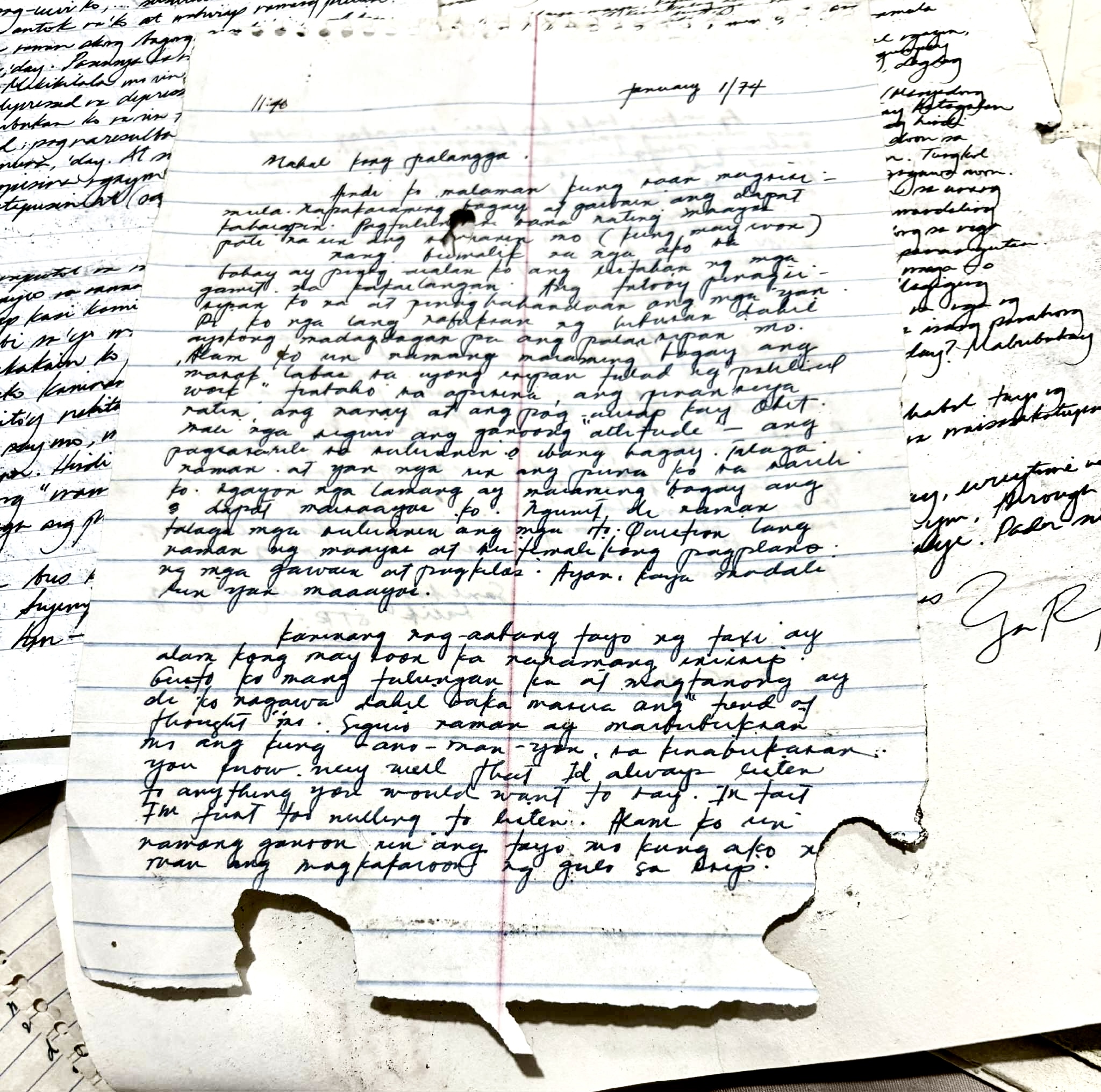
HAVING NO idea how Gen Z people write love letters (and if they even do), I asked AI, and this is what it told me:

“Gen Z love letters are characterized by digital-native, emotionally fluent, and, often, casual expressions that prioritize vulnerability, mental health, and boundary-setting. They frequently use lowercase, rapid-fire, multi-message formats, and ‘ily’ (informal) or ‘love ya’ to avoid excessive intensity. Common themes include a rejection of traditional, performative romance in favor of ‘soft launching’ relationships (gradually revealing a partner online) and a focus on authenticity over aesthetics.”

I have to confess that the answer left me feeling much relieved to be 72 years old and increasingly irrelevant. If I were young and seventeen today but with the mind and heart that I had back in 1971, I seriously doubt that I could make a significant connection to the Gen Z girl of my dreams, from whom I would have drawn derisive laughter for a long, convoluted, meandering letter asking for a first date (I will neither confirm nor deny that this actually happened). I may have lacked in “emotional fluency,” but certainly not for words, which were all I had when, in 1973, I met a pretty girl named Beng and pounded her with prose, in my crabbed, ungainly penmanship using a technical pen; within months we were married (and still are, 52 years later).

Time was when love needed to be declared in big, bold, wet letters—and I don’t mean letters as in ABC, but letters as in pages of paper filled with scribbled and impassioned professions of affection, sometimes of hurt, sometimes of longing, but always of desire for the addressee. Setting everything else aside, overtaken and overwhelmed by this most urgent need, a man or a woman sat at a desk—or kitchen table, or any hard surface on a beach or a moving vehicle—and put pen to paper to release a flood of pent-up emotion. 

It all came down to the same three-word idea: “I love you” (sometimes, or more often, with a fourth word, “but”). As with love poems, some letters were better, more unique, more persuasive than others; most, in hindsight, were likely mawkish or mediocre. But rarely—except perhaps to writers keen on grammar and style—did literary merit matter, neither to sender nor receiver; the profession of love alone was monumental enough. Because it was handwritten and signed, it was personal and deliberate, a statement of commitment impossible to deny. 

Indeed what was thought to be intimate and ephemeral sometimes became history. Little did lovers realize or perhaps care they would become famous, and that their private correspondence would become known—thankfully not to their peers but to posterity and the critical judgment of strangers. 

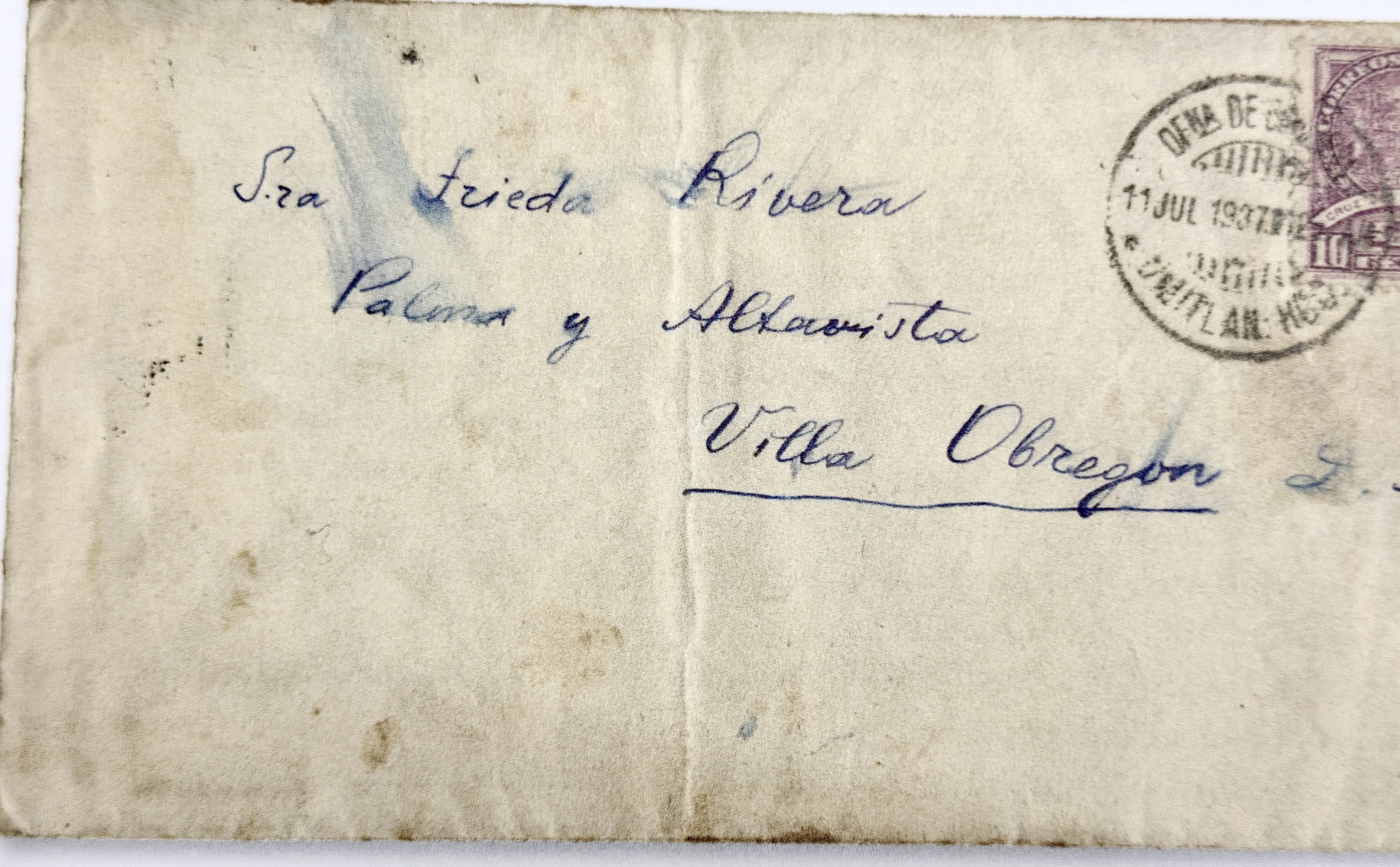
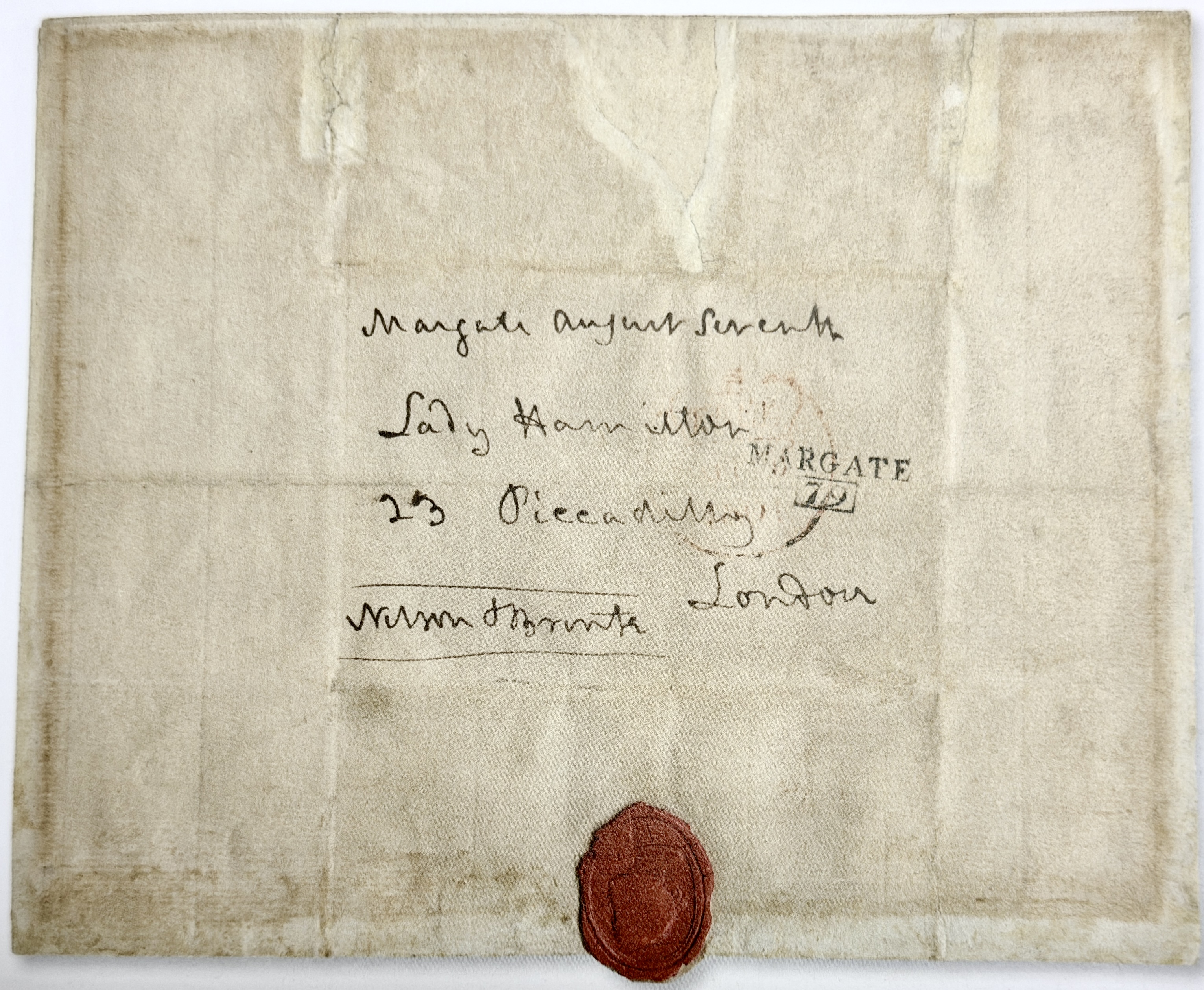
In one of the books I treasure most in my library titled The Magic of Handwriting: The Pedro Correa de Lago Collection (Taschen, 2018), two envelopes offer proof of love affairs—illicit in this case, as all the parties concerned were married to someone else—between Lord Nelson and his mistress Lady Hamilton, and between the revolutionary Leon Trotsky and artist Frida Kahlo (who had given the outcast Trotskys refuge in her home). 
This was the same free-spirited Frida who would write her husband Diego Rivera that “Nothing compares to your hands, nothing like the green-gold of your eyes. My body is filled with you for days and days. You are the mirror of the night. The violent flash of lightning. The dampness of the earth. The hollow of your armpits is my shelter. My fingers touch your blood. All my joy is to feel life spring from your flower-fountain that mine keeps to fill all the paths of my nerves which are yours.” (To be fair to Frida, Diego was far more liberal with his vagrant attentions.)

In one of literary history’s worst-kept secrets, Vita Sackville-West would write to Virginia Woolf that “I am reduced to a thing that wants Virginia… I composed a beautiful letter to you in the sleepless nightmare hours of the night, and it has all gone: I just miss you, in a quite simple desperate human way. You, with all your undumb letters, would never write so elementary a phrase as that; perhaps you wouldn’t even feel it. And yet I believe you’ll be sensible of a little gap. But you’d clothe it in so exquisite a phrase that it should lose a little of its reality…. I suppose you are accustomed to people saying these things. Damn you, spoilt creature; I shan’t make you love me any more by giving myself away like this — But oh my dear, I can’t be clever and stand-offish with you: I love you too much for that. Too truly. You have no idea how stand-offish I can be with people I don’t love. I have brought it to a fine art. But you have broken down my defenses. And I don’t really resent it.” 

Jose Rizal’s letters to Leonor Rivera were reportedly all burned, but as Ambeth Ocampo notes, two of her letters to Rizal survive, in which she uses the pseudonym “Taimis” and tells him that “I was very much surprised that you had a letter for Papa and none for me; but at first when they told me about it I did not believe it, because he did not expect that a person like you would do such a thing. But later I was convinced that you are like a newly opened rose, very flushed and fragrant at the beginning, but afterwards it begins to wither…. Truly I tell you that I’m very resentful for what you have done and for another thing that I’ll tell you later when you come.” We know how that story ended, with the both of them going their separate ways and marrying another, although Leonor was said to have pined for Pepe to the end.

Again thanks to Ambeth, I can quote Manuel L. Quezon’s 1937 letter to his wife Doña Aurora, where he engages in what today might be called “gaslighting”: 

“Darling, I am still wondering if you really think that I love you less. Please don’t doubt me, my love has never changed from the first day I have realized that I was in love with you. I have my weakness as you know, but, dear, it’s all superficial and you know also, that, except for the case of that bailarina, my weaknesses in this respect have not been serious. When you married me, you were frankly informed by me of my shortcomings. I did not want to deceive you by promising something that I could not fulfill. After we have been married you have placed [me], sometimes, in a position when I thought that it was better that I should not confess to you what I had done that might hurt your feelings, but I want you to know that whenever such a thing took place I have felt very bad about it, because nothing I dislike more than not to tell the truth and I always resented the fact that you should prefer to put me in such a situation, thus making me almost hate myself.”

That would still have been more preferable than receiving this ardent letter from a king, and falling for him: “But if you please to do the office of a true loyal mistress and friend, and to give up yourself body and heart to me, who will be, and have been, your most loyal servant, (if your rigour does not forbid me) I promise you that not only the name shall be given you, but also that I will take you for my only mistress, casting off all others besides you out of my thoughts and affections, and serve you only…. And if it does not please you to answer me in writing, appoint some place where I may have it by word of mouth, and I will go thither with all my heart. No more, for fear of tiring you.” The recipient, Anne Boleyn, lost her head in more ways than one, and the sender, Henry VIII, went on to court her successor, Jane Seymour, who wisely returned his love letter unopened—sparking his interest in her even more intensely.

The letter I found too coarse and too embarrassing (brimming with scatological detail) to even quote was written by James Joyce to his wife Nora, but the technologically adept will surely find it online.

My own letters to Beng, and hers to me, are stored in a moldering box that occasionally gets lost and then resurfaces in a year or two, and when we go over them we laugh and cringe at their melodramatic prolixity, as though life itself would run out soon (as it did for many of our generation, under the cloud of martial law, and thus the urgency).
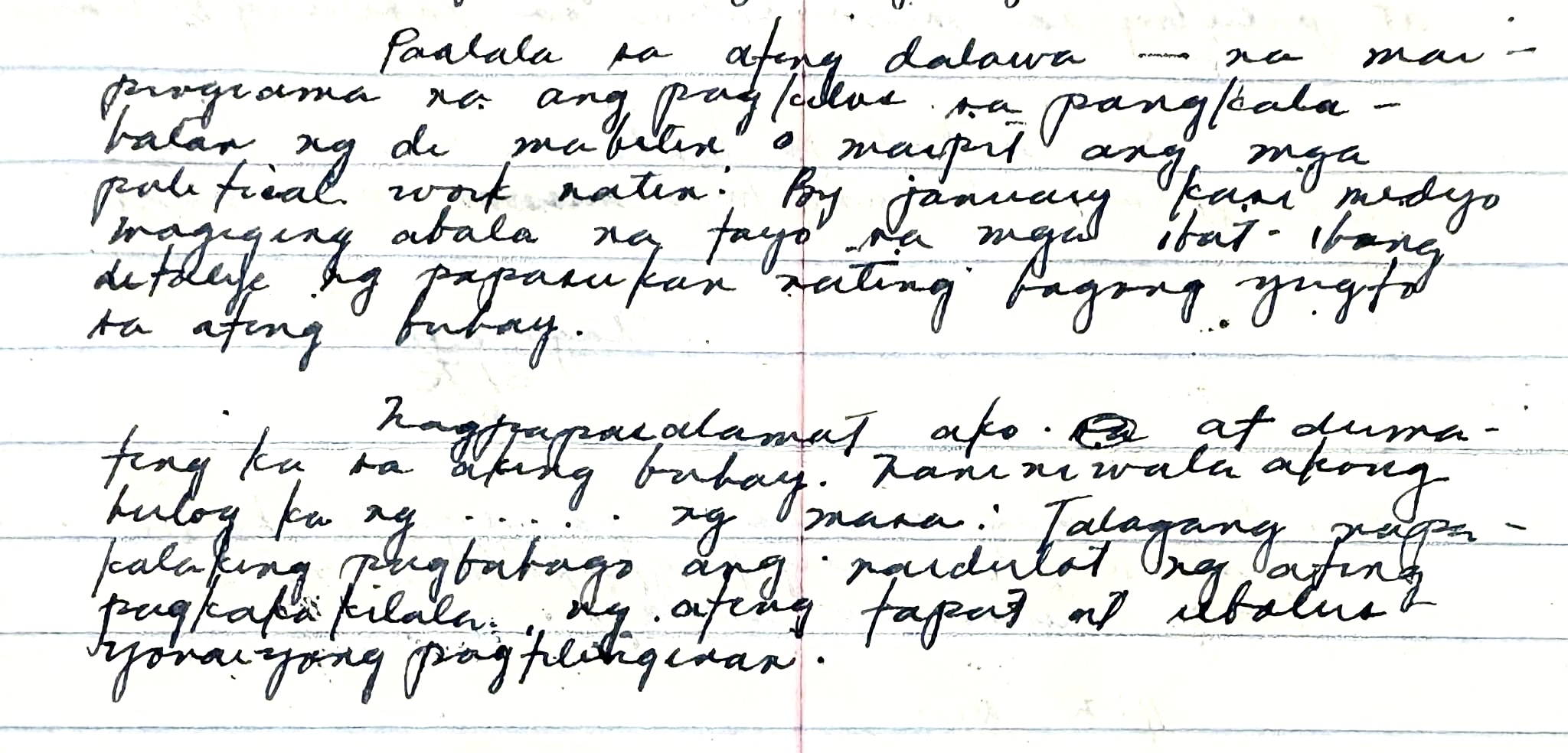
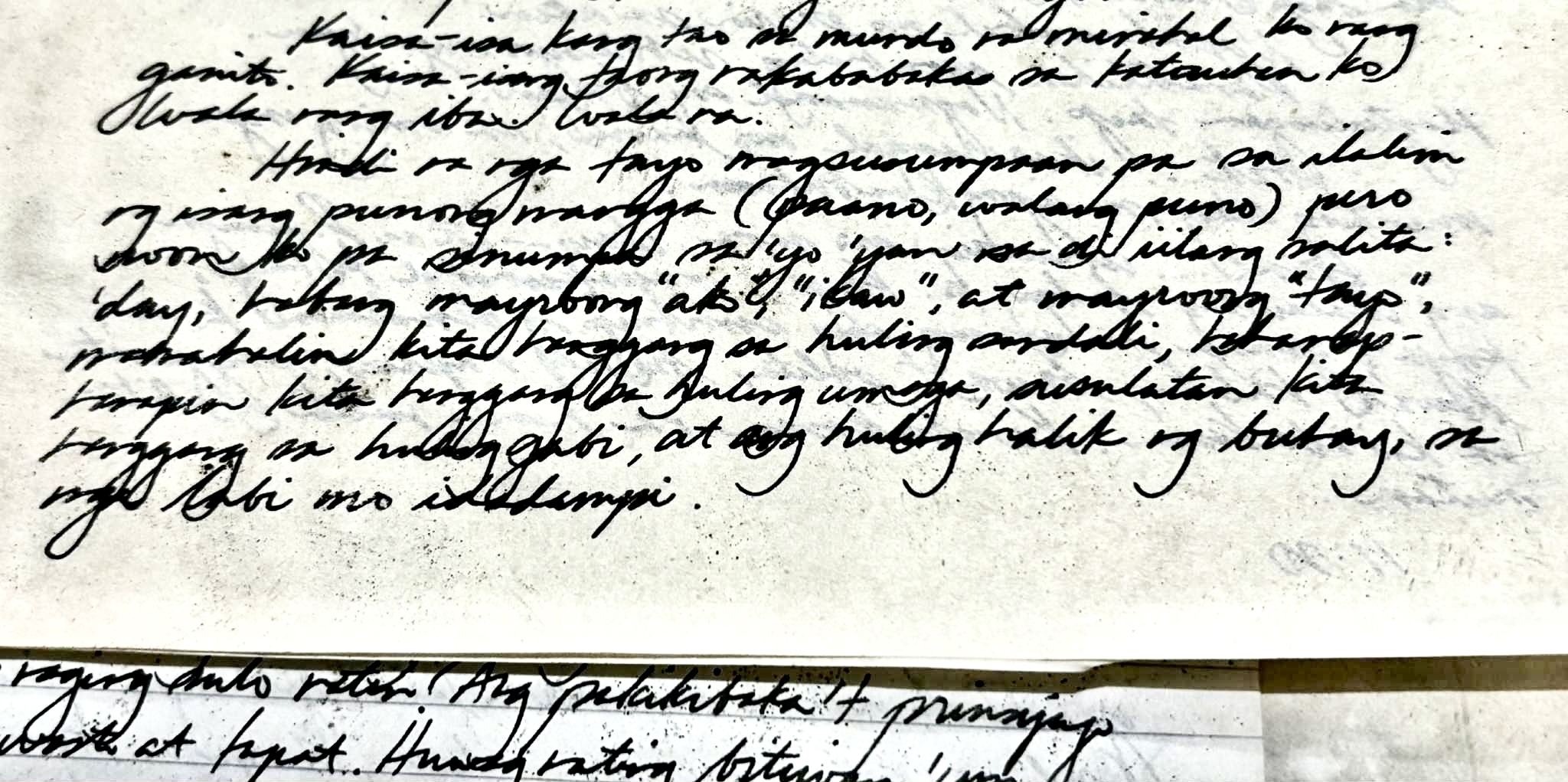
So how do the love letters that we—perhaps the last of the art’s practitioners—have written stack up against history’s and literature’s most memorable? But first, who are “we?”

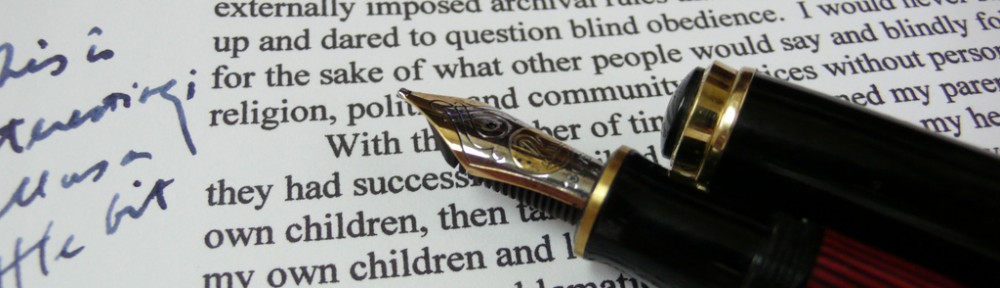
The immediate “we” are members of our Fountain Pen Network-Philippines who still value and use pens for handwritten communication, beyond signing checks and office forms. Old fogeys like me naturally fall into that category, but surprisingly, given the fountain pen’s and handwriting’s resurgence as a form of protest, if you will, against digital homogenization, many younger people, even some Gen Z’ers, have taken up the cause. Ballpoints are all right—but there’s still nothing better than a vintage fountain pen nib, which flexes with pressure and gives the inked line more character, to convey emotion. 
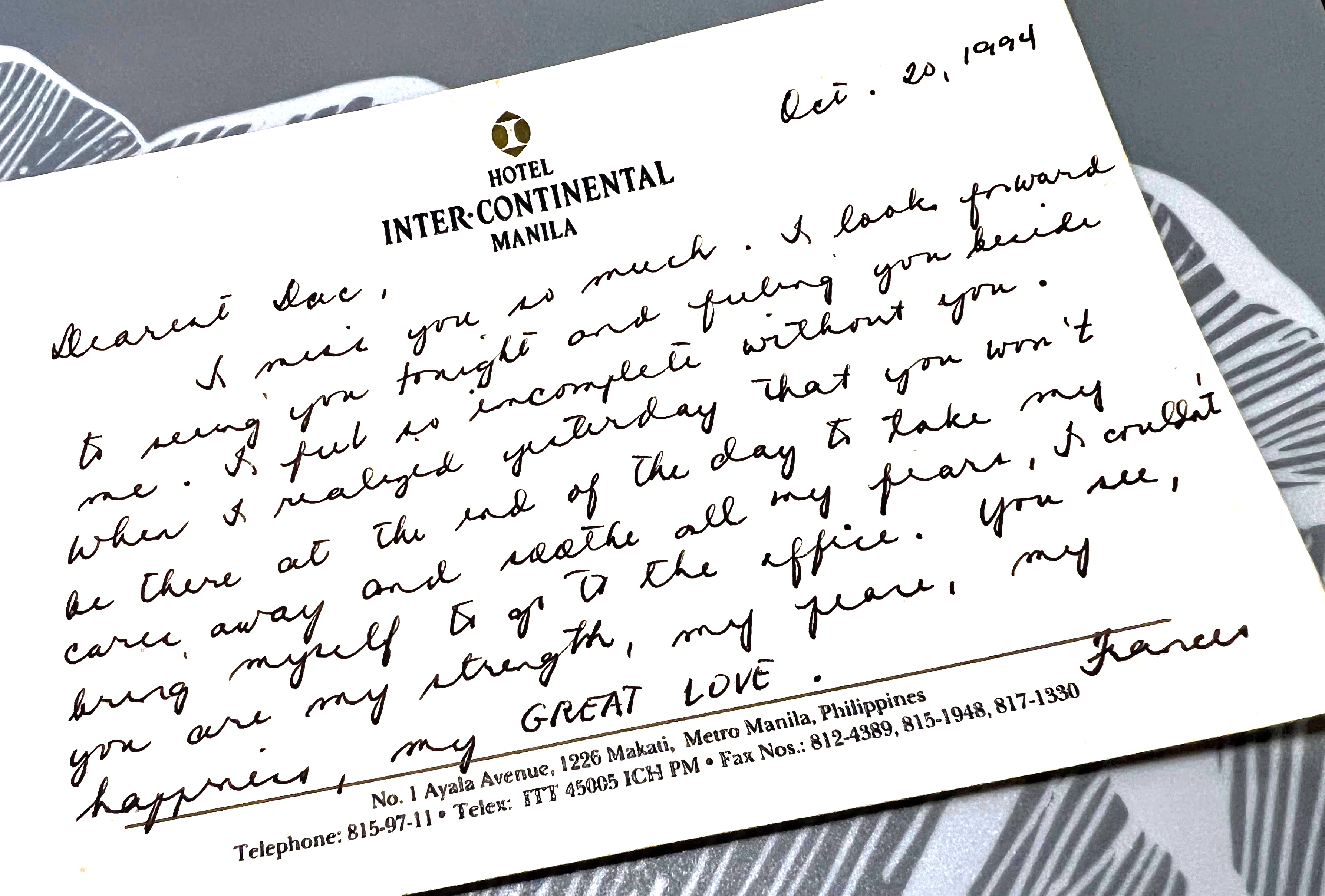
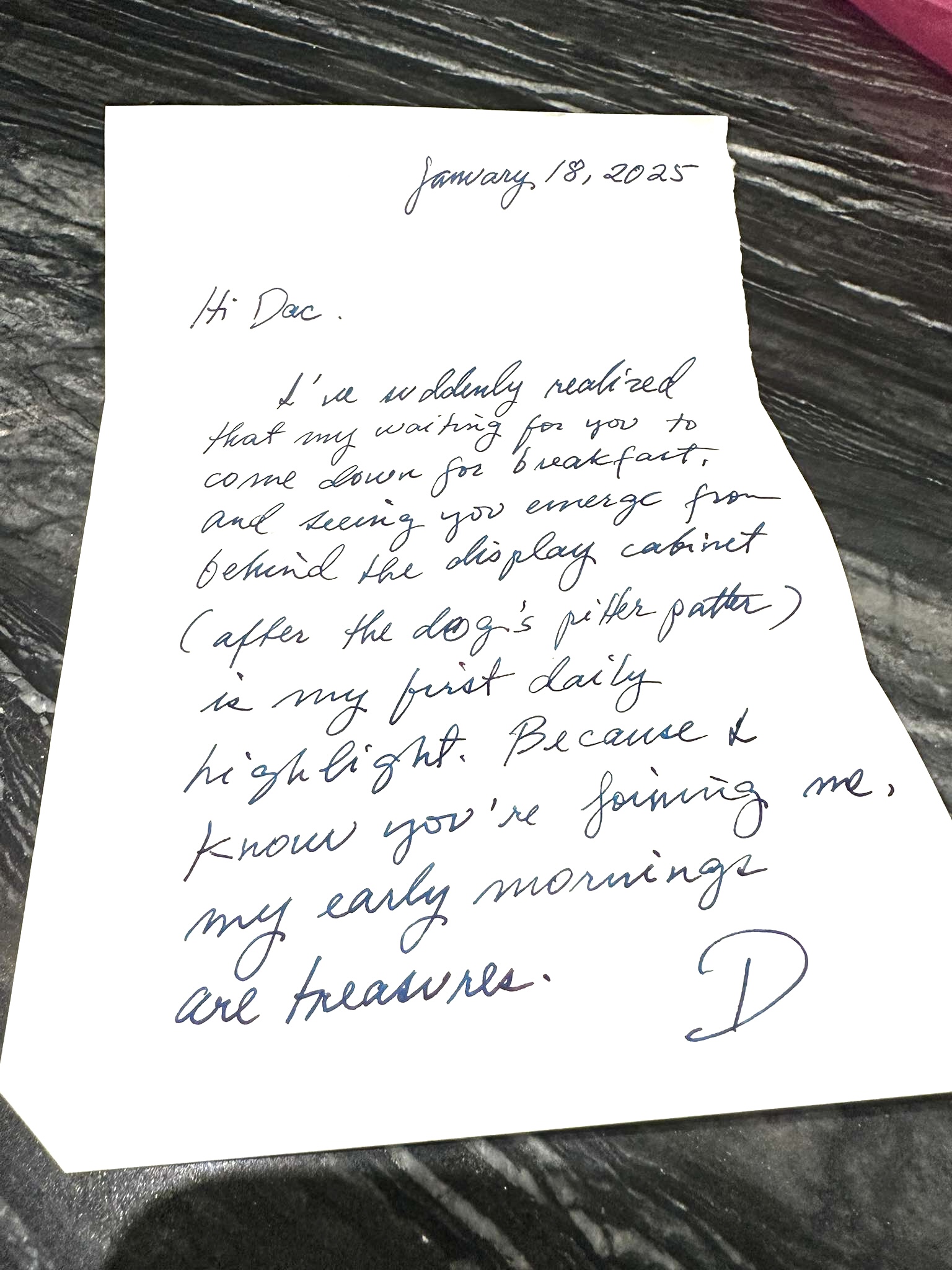
From what I’ve gathered, the best love letters people write go far beyond the often vapid promises and profuse assertions of courtship. They’re unbidden reminders and reassurances of affection, a note quietly written in the morning, a message of congratulations. This, too, is love with a deeper, more hushed voice that comes with maturity and assurance.
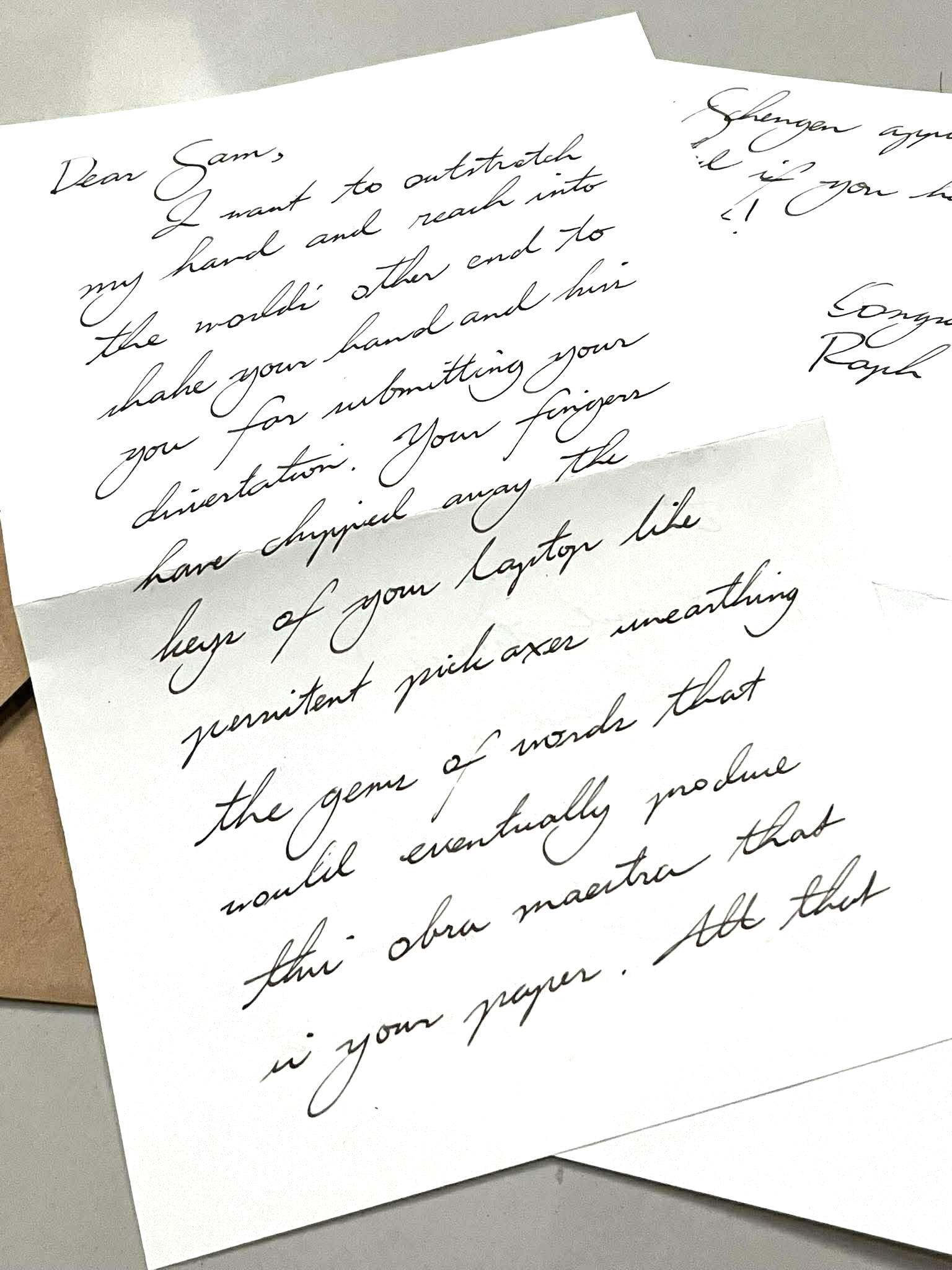
I should take my own advice and write Beng more love letters with my hundreds of pens, every single act of which would validate that pen’s existence and probably exorbitant purchase price. I should employ all the colors of ink stored in the dozen bottles that crowd my desk to express love in all its shades and moods, in the same spirit that Robert Graves wrote: “As green commands the variables of green, so love my loves of you.”

But sadly this old man’s fingers have become cramped from being curled too long over keyboards, and can barely finish a page of handwriting before tiring. So instead—though not quite a Gen Z’er accustomed to “lowercase, rapid-fire, multi-message formats”—I write articles like this and stories on Facebook that suggest, ever so obliquely, how central she remains to my life, albeit in Georgia 12 points and .DOCX rather than flowing script. My idle pens, dear Beng, are like the books I’ve yet to write for you, the words still forming in the opaque ink, like the colorful and wide umbrellas I keep buying to shield you with, waiting for rain. So there, and Happy Valentine’s.
Penman No. 371: Love Letters from Rody (1)

IMG_1124.jpg

Penman for Monday, September 30, 2019


IT’S NOTHING short of embarrassing to stumble upon other people’s intimacies—you know you shouldn’t be looking and you try to turn your eyes away, but you also know you’ll be taking at least a peek, as the curious and fallible humans we all are.

More than fifteen years ago, moving into a new home on campus previously occupied by an eminent professor who had retired and moved elsewhere, I went out to investigate a blockage in the culvert just outside our house. I was surprised to find a mass of papers, bundled up in plastic, that had apparently been tossed there by whoever had cleaned up the place in preparation for my taking it over. When I took the bundle apart, I realized—to my simultaneous horror and fascination—that these were Professor X’s private papers: her diaries, letters, and notes accumulated and saved over more than half a century of exemplary teaching.

Looking a bit deeper into the penciled entries (I told you I couldn’t resist), I spotted references to a nameless man with whom the writer was clearly enamored—but it was also and just as clearly a stillborn affair, as the writer professed, with fervid anguish, her commitment to a higher, spiritual calling. They would not become another Heloise and Abelard. My hands felt that they had been scorched by the papers, and I decided to turn them over to a friend, a poet who was among her most devoted disciples, for safekeeping.

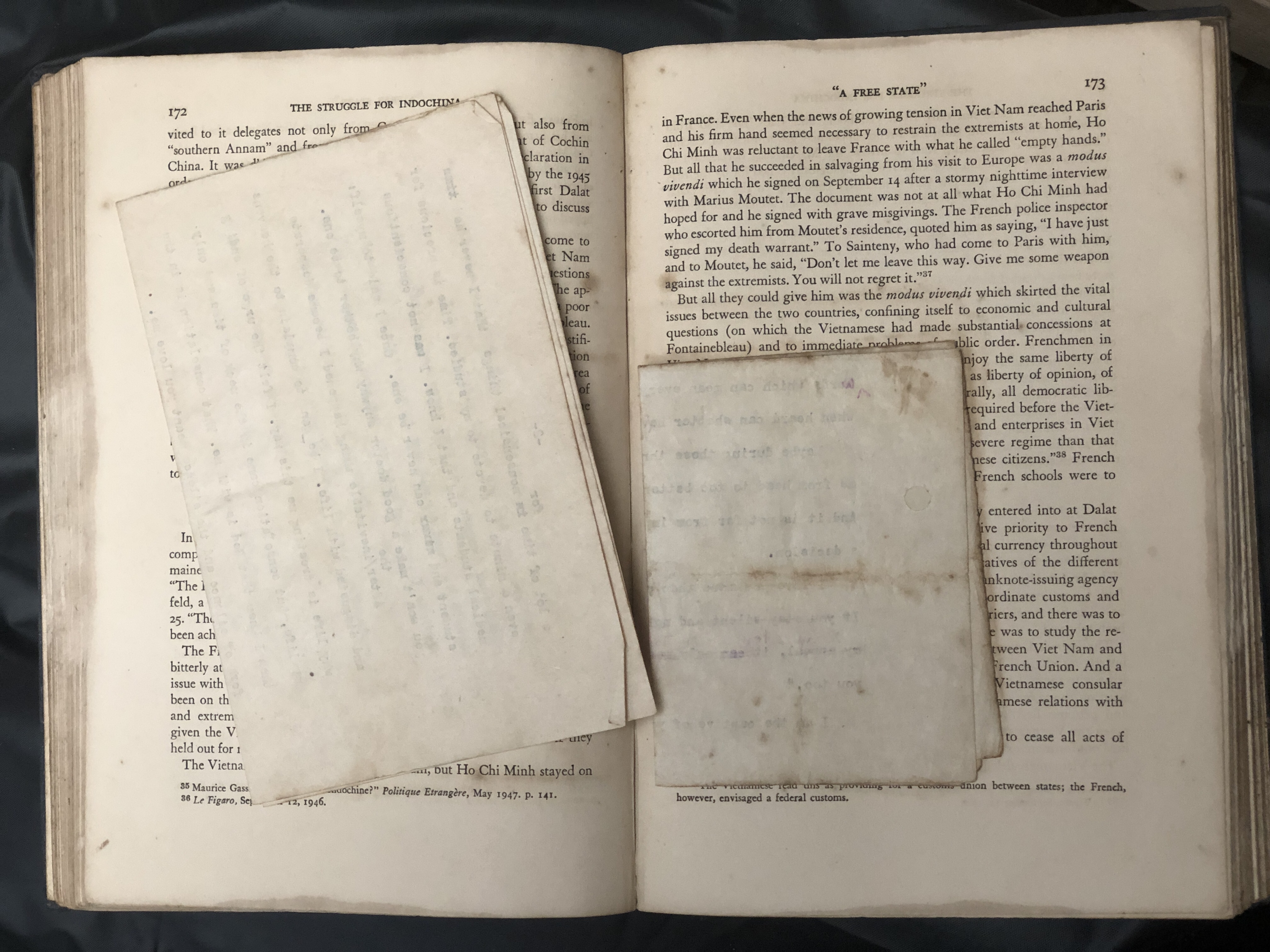
Two weeks ago, I bought a trove of books from a junk shop in Caloocan, books from the 1930s to the 1950s covering mainly political and historical subjects. I was really just after a good copy of Lope K. Santos’ Banaag at Sikat and Zoilo Galang’s For Dreams Must Die (a 1950 novel based on another star-crossed romance, between Jose Rizal and Leonor Rivera. When I began sorting out the lot, I noticed an unusual thickness in a book from 1953 about the struggle for Indochina, and fished out, from between pages 172 and 173, a folded letter; several chapters later I found yet another letter.

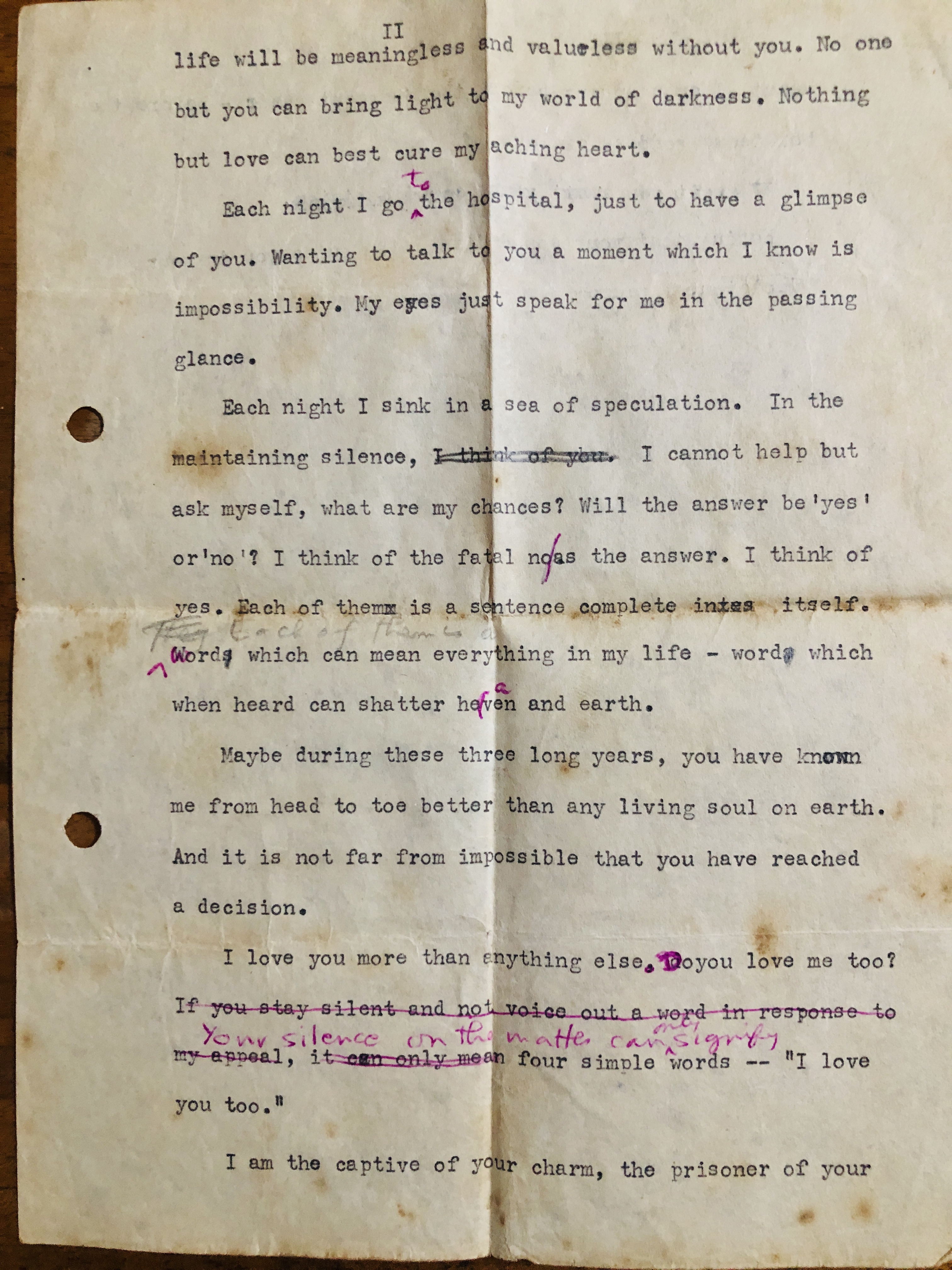
They were typewritten letters, probably drafts, with scribbled corrections between the lines—undated, unaddressed, unsigned, and unsent—written by someone who identifies himself in the second letter only as “Rody” (no, not that Rody). I was struck by the quality and quaintness of the prose; these were letters obviously crafted by an educated man, meant for a distant an unnamed beloved. All we can firmly gather from them is that she was a nurse in a hospital, while he—well, let’s read the first letter first, and take it from there. The second letter—and my speculations—will follow in a couple of weeks. Stay tuned.

IMG_1091.jpg

Maybe you will be surprised on receiving this letter—a letter unexpected at the most inopportune time. I was overwhelmed by a magic urge which I cannot understand or cope with. It induced my pen to scribble the words coming out of my heart.

The end of the world and the complete annihilation of mankind is at hand, they say. My love for you will never end through eternity. It will be enduring as the tides of time, as lasting as the sacred flames kindled by my burning heart.

Love works so many wonders, lovers say. It can deviate the earth from its course, it can make the giddy heaven fall. It can teach the torches to burn bright like rich jewels in an Ethiop’s ear. My love for you is as deathless as Gabriel’s love for Evangeline, as infinite as Romeo’s love for Juliet.

Three years elapsed like a click. For three years, I waited in patience for a ray of light on my love affair. During this period, I found the right meaning of love and can define it even in my sleep.

Through the years I found neither laughter nor peace. I cannot associate the past, the present nor the future. Will my future be bright? Or will it be gloomy as the present and the past? You are the key to the answer. My life will be meaningless and valueless without you. No one but you can bring light to my world of darkness. Nothing but love can best cure my aching heart.

 Each night I go to the hospital, just to have a glimpse of you. Wanting to talk to you for a moment which I know is an impossibility. My eyes just speak for me in the passing glance.

Each night I sink in a sea of speculation. In the maintaining silence, I think of you. I cannot help but ask myself, what are my chances? Will the answer be ‘yes’ or ‘no’? I think of the fatal ‘no’ as the answer. I think of yes. Each of them is a sentence complete in itself. Each of them is a word which can mean everything in my life—words which when heard can shatter heaven and earth.

Maybe during these three long years, you have known me from head to toe better than any living soul on earth. And it is not far from impossible that you have reached a decision.

I love you more than anything else. Do you love me too? Your silence on the matter can only signify four simple words—“I love you too.”

I am the captive of yoru charm, the prisoner of your heart. I am standing before the judgment chair—before the beauteous goddess of love.

Hoping that your sound discretion guide you in your decision, I pause


Penman No. 333: An Academy of Our Own

DSC_9291.JPGPenman for Monday, December 24, 2018


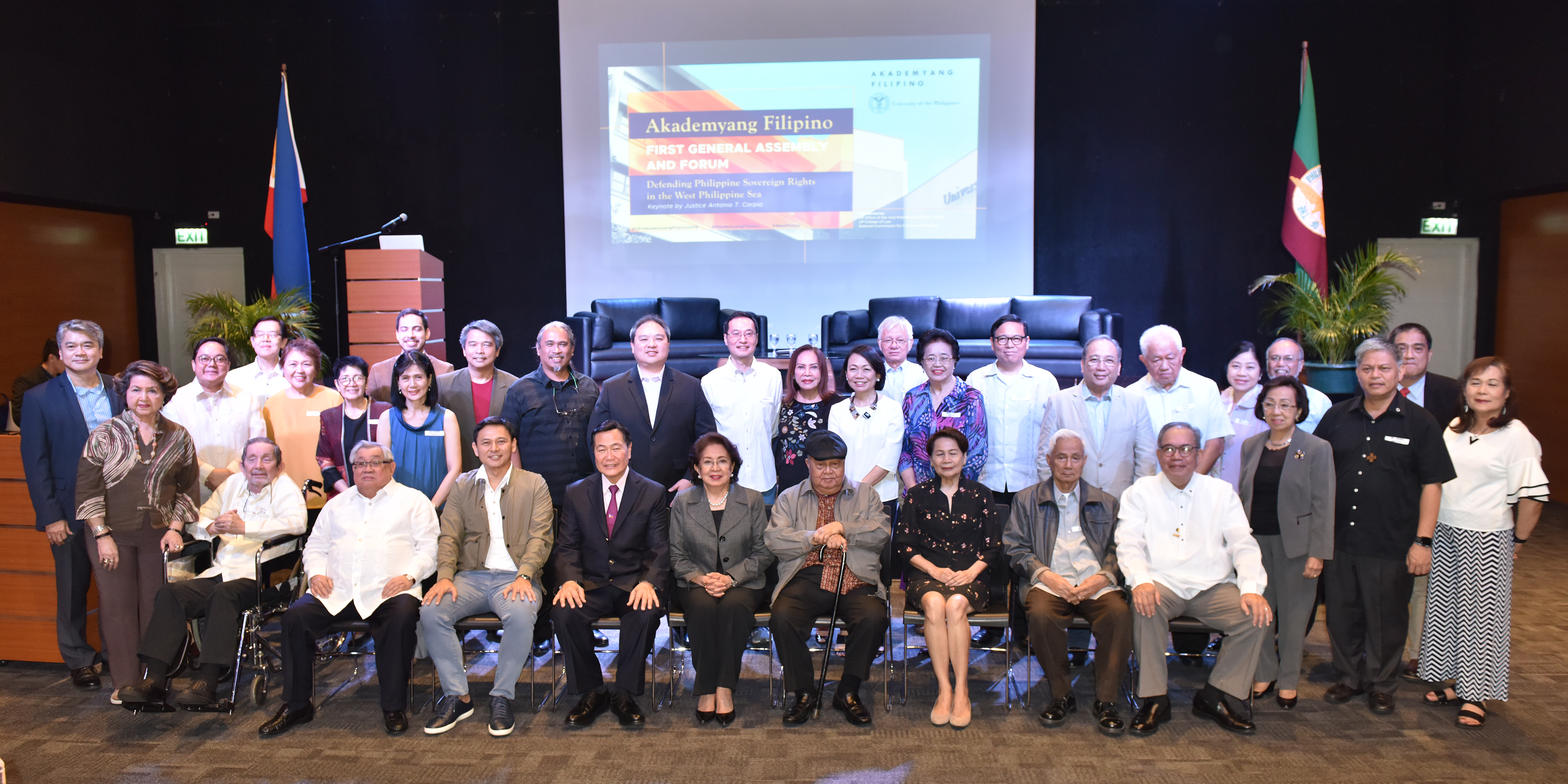
EXACTLY A month ago, in the auditorium of the newest campus of the University of the Philippines at Bonifacio Global City, an event of great historical significance took place—the first general assembly and forum of the newly organized Akademyang Filipino, the first Philippine academy of arts, sciences, and the professions.

Conceived together by National Artist F. Sionil Jose and the late Sen. Edgardo J. Angara, the independent and non-partisan Akademyang Filipino was set up for three main goals:

“To recognize and bring together, in one chamber, the best of Filipino minds and spirits, accomplished representatives of the Filipino arts, sciences, and professions, imbued with love of country and the spirit of service to the nation;

“To uplift the material and moral lot of the Filipino people, to define, promote and defend the best interests of the Filipino nation, and to find and nurture new sources of hope and inspiration for the Filipino youth; and

“To provide a forum for the rational discussion of pressing issues and the exploration of pathways to a better future.”

In other places, such academies have had somewhat more focused roles. The venerable Academie française is devoted to being the authority on the French language; the Taiwan-based Academia Sinica covers a broad range of disciplines but supports advanced research.

In the United States, the National Academies of Sciences, Engineering, and Medicine is the collective name of the three honorific academies in those disciplines. Since its founding in 1863, these national academies have pledged “to marshal the energy and intellect of the nation’s critical thinkers to respond to policy challenges…. When faced with a complex question, we bring together experts from across disciplines to look at the evidence with fresh eyes and openness to insights from other fields. These study committees survey the landscape of relevant research, hold public meetings to gather information, and deliberate to reach consensus, which results in a shared understanding of what the evidence reveals and the best path forward.” Studies and advice by the National Academies have covered such diverse topics as fixing the Hubble telescope, preventing wrongful convictions, and preparing young Americans for careers in science and engineering.

This is probably closer to what the Akademyang Filipino aims for—to repeat, “a shared understanding of what the evidence reveals and the best path forward.”

In our first forum, Justice Carpio gave a masterful presentation of the history of China’s claims to Philippine territories in the West Philippine Sea, using ancient maps to prove—as a good lawyer might be expected to do—the paucity of those claims. A panel of Akademya members and West Philippine Sea experts—De La Salle University’s Renato Cruz de Castro, UP’s Jay Batongbacal, and author and columnist Richard Heydarian—discussed the current Philippine government stand on the disputes was and warned against a policy of appeasement and surrender.(The DFA was invited but apparently declined to send a representative to the forum.)

The Akademya’s 100-plus founding members—a roster that could grow as more names are vetted—were selected by an interim board composed of NA Frankie Jose, National Scientist Angel Alcala, former Ombudsman Conchita Carpio Morales, Senior Associate Justice Antonio Carpio, Sen. Sonny Angara, former Sen. Ramon Magsaysay Jr., Atty. Felipe Gozon, Dr. Lydia Echauz, Ms. Doris Magsaysay Ho, and myself. We also elected Justice Carpio Morales our chairperson, and NA Jose as Chairman Emeritus.

Some easily recognizable faces at the launch included former UP President Emerlinda Roman, former Education Sec. Armin Luistro, former Foreign Affairs Sec. Delia Albert, former National Historical Commission Chair Maris Diokno, former Prime Minister Cesar Virata, historian Dr. Ricky Soler, Mapua University President Rey Vea, businessman Jack Ng, novelist Cristina Pantoja Hidalgo, sculptor Toym Imao, and Anvil Publishing chief Andrea Pasion-Flores.

A smaller group had met less formally for the first time in February last year, when Sen. Ed Angara was still around and very much involved in getting the academy off the ground alongside NA Frankie Jose. It still called itself the “Academia Filipina” then, but later changed its name in deference to an existing Academia Filipina de la Lengua Española.

IMG_0895.jpeg

This was the first but certainly not the last of our forums, and we intend to have several of these large assembly-type meetings every year for issues of great and general significance, concerning not just politics and business but also science and the arts. We need to create new interdisciplinary points of intersection and interaction. Our artists and scientists hardly ever get heard by our policy makers. With all due respect to the lawyers and the businessmen, they too might benefit from the insights of these other disciplines, so that we do not get mired in the kind of cynical pragmatism that drives too many of our decisions today, and remember to value such abstractions as beauty and logic.

The dues we collect will help support a very small back room and also our future activities. Sponsorships are of course needed and welcome, for so long as they do not compromise the independence of our association.

On that note I would like to thank, once again, aside from our speakers, our sponsors for the Akademyang Filipino event, including the UP College of Law, whose Dean, Fides Cordero-Tan, also happens to be the Executive Director of UP-BGC. I’d also like to thank the National Commission for Culture and the Arts, Sen. Jun Magsaysay, and other donors who prefer to remain anonymous for their assistance. My special thanks go to our Executive Director, Ms. Jette Jose Bergkamp, and my UP team from the Padayon Public Service Office and the Media and Public Relations Office.

Penman No. 285: A Scavenger’s Finds

Lettsr2 copy.jpg

Penman for Monday, January 8, 2018


LAST WEEK’S piece on my “passion for the past” apparently struck a positive chord with my readers—including a couple of friends who also happen to be professional historians, the eminent professor Bernardita Churchill and my UP neighbor Maris Diokno, who’ll be returning to teaching this semester after her stint with the National Historical Commission. Both messaged me to say that they enjoyed my column (many thanks!) and to invite me to speak to a group of history enthusiasts or to a class about my obsession and my forays into collecting historical memorabilia (I will).

To both friends, and to those who will be listening to me, I once again affirm that I am not a historian or a scholar. A true scholar of history will seek to palpate and to understand the full context of things—not just of objects but of actions, decisions, and ideas; he or she will be guided by some workable theory of human and social behavior, and a disciplined commitment to the truth; and the past could be important less for its own sake than as a window on the present and the future.

I appreciate and respect all these considerations, which is why I know and acknowledge that I can’t live up to them, at least not at the moment. For now, my most honest self-description would be that of a scavenger (“fetishist” also comes to mind), not unlike a dog who drags in interesting objects off the street—sometimes gruesome, sometimes delightful. I rummage through other people’s leavings (as an impoverished grad student in the States, I happily went dumpster diving), finding and retrieving objects of wonder. The material object is my prize; whatever else it leads to—some story, some insight, some unforeseen discovery—is pure bonus.

That’s applied to my vintage pens and books, some of which turned out to have been owned by famous or important persons. But some of my most interesting finds on eBay have involved the most common people and the most ordinary—and therefore the most plaintive and often poignant—revelations.

This is no truer than in the letters I come across on eBay, likely seen by many as the leftovers of estate sales, after all the valuable furniture, silverware, and knick-knacks have been carted away. I’ll admit that reading them feels a little voyeuristic, because there’s nothing more intimate than seeing into someone’s heart and mind, even when it doesn’t involve endearments or estrangements.

1934LetterB.jpg

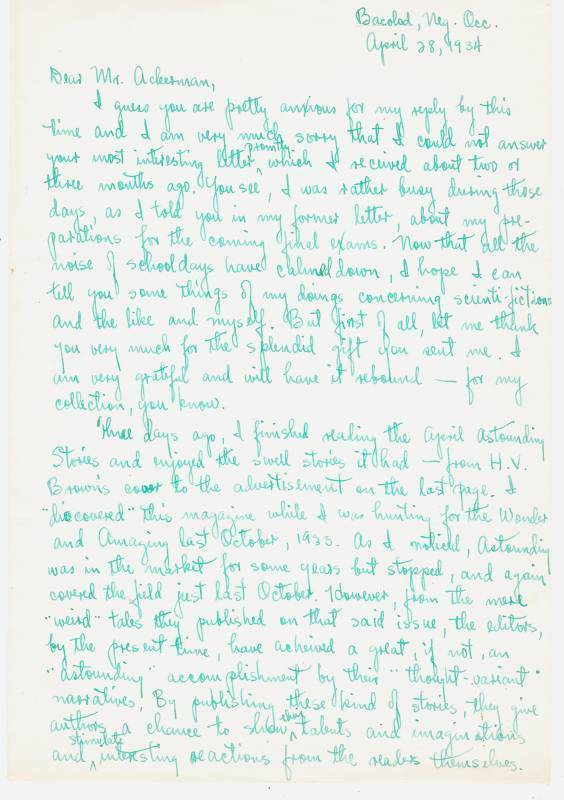
There were these letters, for example, which I saw last November, written by a teenager named J. R. Oyco (at least that’s what I can make of the signature, but I could be wrong) from Bacolod to Forrest J. Ackermann (1916-2008), whom sci-fi fans will recognize as one of the pioneers of the genre. What’s amazing is that the letters are from 1933-34, when Ackermann himself was no more than 18, so these were two teenagers chatting across the ocean in longhand about what today would be speculative fiction. “Three days ago,” Mr. Oyco writes, “I finished reading the April Astounding Stories and enjoyed the swell stories it had—from H. V. Brown’s cover to the advertisement on the last page…. As I noticed, Astounding was in the market for some years but stopped, and again covered the field just last October. However, from mere weird tales they published on that said issue, the editors, by the present time, have achieved a great if not astounding achievement by their thought-variant narratives. By publishing these kinds of stories, they give authors a chance to show their talents and imaginations and stimulate interesting reactions from the readers themselves.” Apparently Ackermann had responded to an earlier letter because J. R. thanks him for the gift of a magazine.

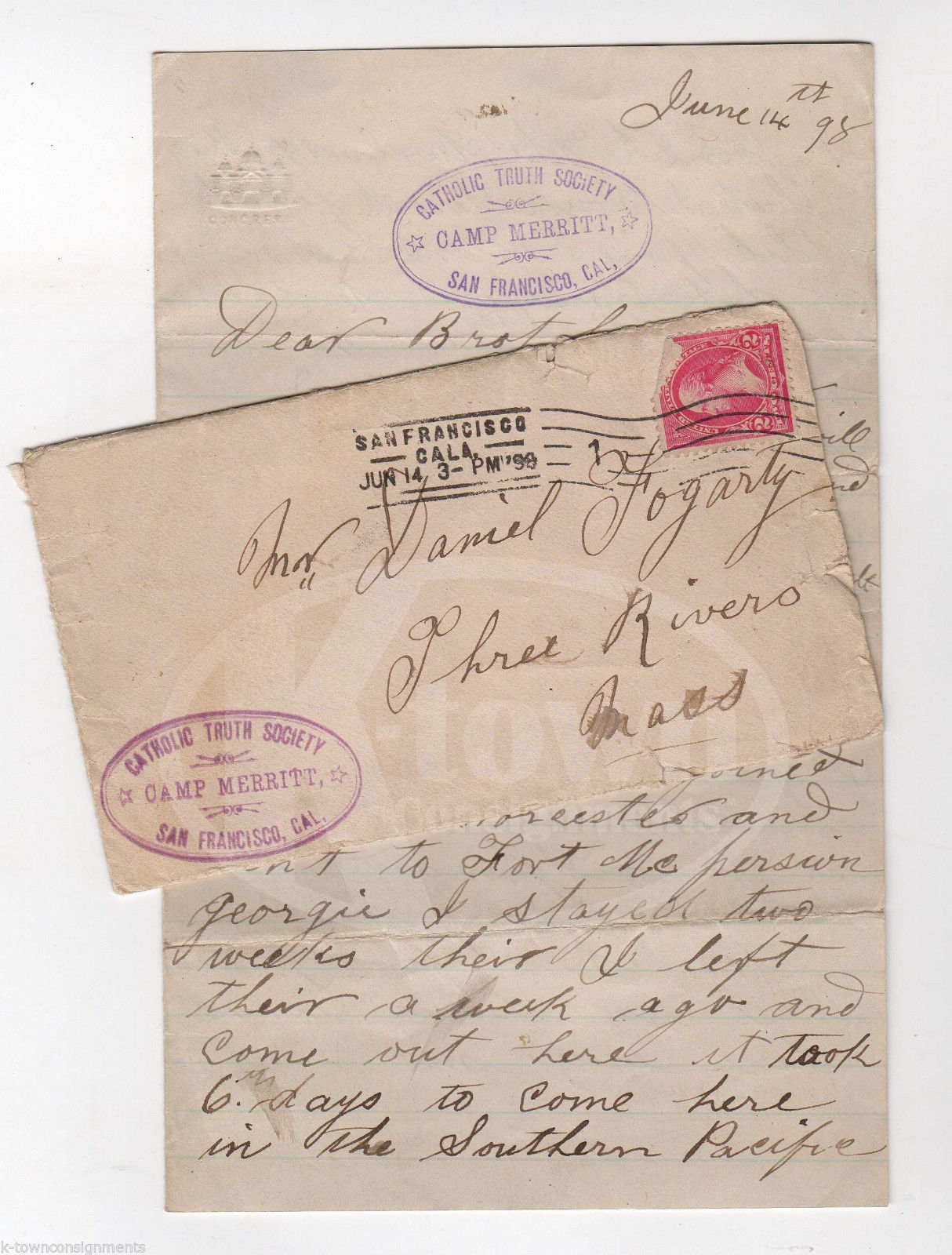
A letter dated June 14, 1898, comes from a soldier named Humphrey Sullivan, who’s in San Francisco on his way to war in the Philippines, to his brother-in-law in Massachusetts. He’s trained in Georgia and has more drills to do before shipping out, but in the meanwhile, he writes, “I don’t know when we will go it will be a long ride I guess the war will be over before I get there. I would like to get the chance of killing a few Spaniards as I come so far…. I am writing this letter where mass is celebrated every morning it is a blessing for the Catholic to have this society [the Catholic Truth Society in Camp Merritt] here. I am in a hurry I will have to go to drill.”

WACNurse1 copy.jpg

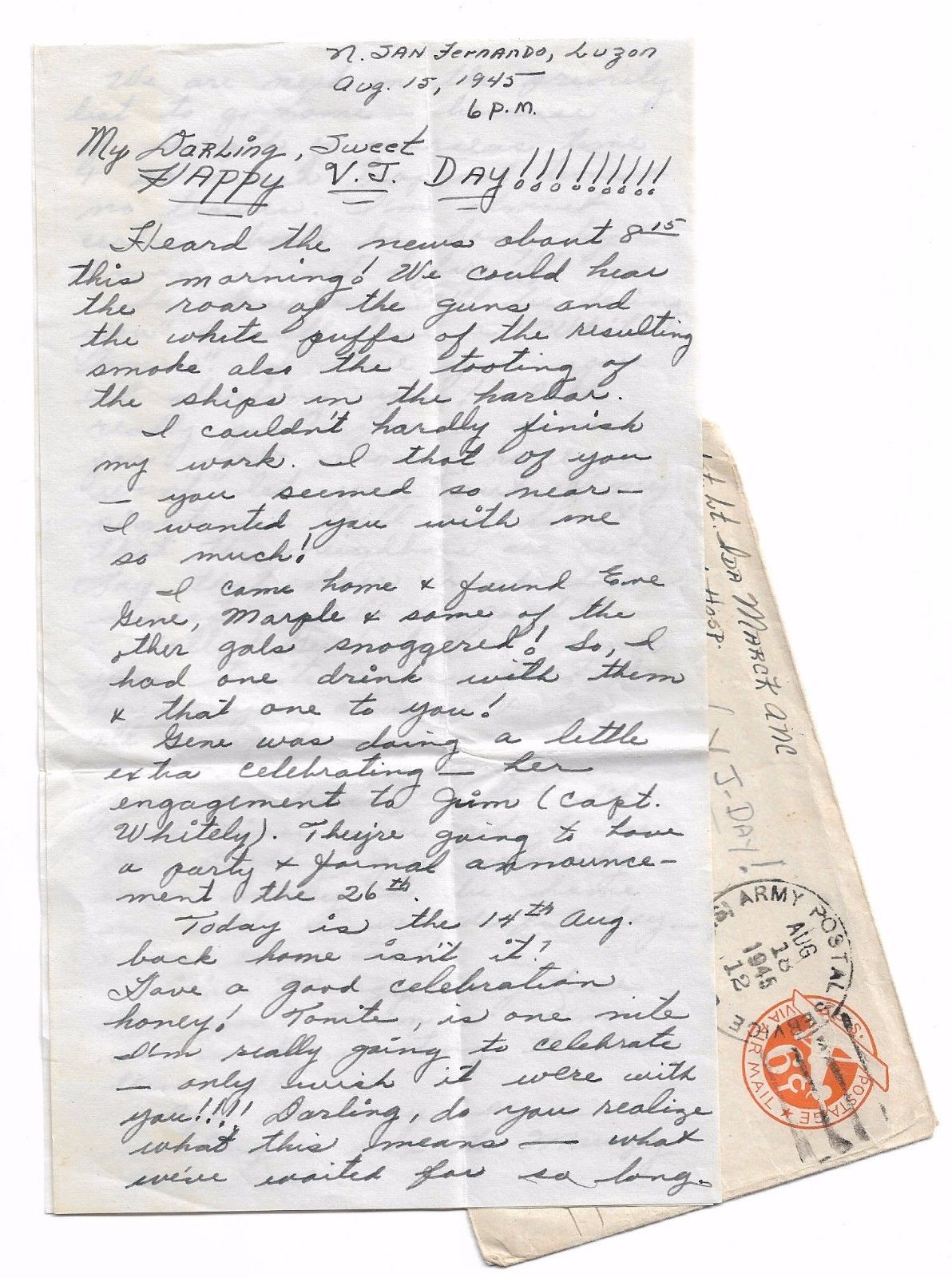
On Aug. 15, 1945, a WAC nurse writes “My Darling, Sweet” from San Fernando, Pampanga: “Happy V. J. Day!… Today is the 14th Aug. back home isn’t it? Have a grand celebration honey! Tonite is one nite I’m really going to celebrate—only wish it were with you!!!! Darling, do you realize what this means—what we’ve waited for so long…. So, Sweetie, “I’ll Be Seeing You” and we’ll have a “White Xmas.”… I’ll give you a run for your money, honey—won’t let you out of my sight—and I’ll see to it that the neighbors are out!”

And so on go the letters and the stories, many of which read better than fiction, written by the Parkers, Sheaffers, and Esterbrooks now lying still and silent in my collection. In many instances, I haven’t even had to buy these documents—it’s enough to read them online and save them for posterity on my computer. (But I’ll need some help soon with two letters written in French, from 1794 and 1798, coming my way.)

These objects affirm, for me, that the past happened, and more than that, that the past will be remembered. It may not matter to me when I’m gone—which, in my darkest musings, could mean that I will no longer have any sense of “me” or of time itself—but it matters to me now, to know that our words and deeds bear consequences, and that we will all leave some trail behind. And so I should write and act with that trail aforethought—so someone, a century hence, will be happy to find a book I wrote, or some note I scribbled, and smile at the memory.

Penman No. 79: Men of Letters (1)

ImagePenman for Monday, December 30, 2013

I’M AN incorrigible pack rat; I keep restaurant receipts and bus tickets from the 1970s, business cards from associates long forgotten or even departed, and notes and memos from various points of my engagement with one bureaucracy or other. These odds and ends molder in a large wooden baul that sits in a corner of my office, a chest Beng and I bought for our daughter’s wedding but which somehow stayed with me (our unica hija Demi will still get that baul, contents and all, on one of her visits home from California). Other old letters I keep in a leather briefcase, itself now an artifact, a souvenir from my first trip to the US in 1980.

I was rummaging through the papers in that chest and that briefcase a few weeks ago, looking for something I could contribute to the benefit auction we were holding for Writers’ Night, when I stumbled on some letters I’d received (and some I sent—I dutifully Xeroxed my outbound mail then) from writer-friends. The most interesting ones were those that opened a window on my friends’ minds as writers and as persons—as young men, really, on the road to emotional, intellectual, and artistic maturity.

One of those friends I exchanged long letters with was the late Bienvenido “Boy” Noriega Jr., very probably our finest playwright, and something of a prodigy who headed the Policy Coordination Staff at the National Economic and Development Authority in his early 20s; Boy went to Harvard in 1978, when he was 26, for his master’s in Public Administration, but cross-enrolled in theater courses at the same time. Another was poet Fidelito Cortes, who beat me out to a Wallace Stegner fellowship at Stanford in the mid-1980s (and who made up for it by greeting me in San Francisco with the gift of a Stanford sweatshirt when it was my turn to come in 1986). I also wrote letters to film director Lino Brocka, who preferred to use the telephone to respond (quite often forgetting, when I was in Milwaukee, that it was 2 am when he was calling from Quezon City).

Boy always hand-wrote his letters in small, fine script; Lito, like myself, used a typewriter; our letters went on for pages and pages, reporting on what we were writing, seeing, and thinking at that time, aware that we were standing on the doorstep of our lives’ great labors.

This week and next, let me share some excerpts from our exchanges, leaving aside more personal references. I’m translating Boy’s from the Filipino original.

Harvard U, 3 Nov 78

Dear Butch,

My drama course is the most exciting of all my subjects. We’re studying all the major dramatists. We’re done with Ibsen, Strindberg, Chekhov, Wilde, Shaw… Wagner, Dumas fils and Buchner, and soon to follow will be Brecht, Pirandello, Beckett, Miller, Williams, O’Neill, etc. The best for me are still Ibsen and Chekhov—Ibsen for characterization and Chekhov for his mastery of dramatic devices such as economy in dialogue, choice of moments, verbal counterpoint, and so on. You know, it’s only now that I’ve discovered how Chekhovian my [three-act play] Bayan-Bayanan is. When I get back home, I can return to it and give it a final revision because I know now how I can still tighten and improve it. One more thing I admire about Chekhov is his lifestyle—shy, pensive, self-assured.

I don’t know if I can still write for the CCP [Literary Contest]—I’m too pressed for time. What about you, are you all set for this, or are you working on your Filmfest entry first? My dilemma in joining contests always seems to be that I worry about how to write my play in a way that the judge who’s in a hurry will grasp. If it isn’t well-made (meaning, it has a very clear plot), it could be hard to appreciate or to draw attention. I guess that if Chekhov joined our contests, he’d lose…. His style is so refined compared to mine. Once, for example, he was asked what the “character” of one of his characters was, and he answered, “He wears a yellow tie,” and everything was in that answer.

19 Jan 79

What are the entries to the Manila Film Festival—are they any good? Have they started the songfest? These would be good to get into—I have a lot of ideas for songs, about country and love and life—but I need to look for a good composer and a good singer….

There must be many more good playwrights such as Sophocles, Shakespeare, Racine and Moliere, but I still don’t know them well enough. I’d like to understand them all—because I’d like to teach drama someday (as a sort of sideline in case I become a full-time writer). It looks like I keep looking to [Rolando] Tinio as a model—whatever is in my field, I’d like to know.

…. The more I learn here, the more I’m aware that there’s so much I don’t know. The truth is, I need philosophy, psychology, and more to put everything together in my head. What I’m doing now is crash education. My letter’s getting awfully long. I’m just trying out the ideas I’ve been picking up. That’s because I don’t have any students yet. I remember when PETA asked us to give a lecture about our plays. I feel like I wasn’t able to say anything. The audience’s orientation was also so different. That will never happen to me again. I will also organize my ideas.

…. This will be all for now, because I’m getting sleepy. It looks like both of us keep writing such long letters. I hope we’re not just repeating ourselves. But it seems to me that we’re progressing.

2 March 79

About some of the points you raised in your letter—you’re right about speechwriting there. The Philippines or the world won’t change because of one speech. I’ve tired of this myself. The problem there is, every presidential speech has to be a speech to impress. It would be easier if it were just a speech to inform. Another problem is that we still lack in achievement and vision, so it’s really hard to impress. If there’s truly a lot to show, there wouldn’t be much need for talk, right?

…. The finitude of everything probably remains debatable. Or maybe I’m just being optimistic—I suspect that man will always discover something to overcome natural forces…. In general, I think I’m still optimistic. Maybe this is because I believe there’s a God who guides our actions. The “meaning” of life probably just doesn’t manifest itself in its consequences (in its practical results) but in the way life is used. Could be in some small things (small acts of charity, love, etc.) that we sometimes fail to notice.

…. There was a point in my brief life (before I turned 21) when I asked myself these things—what was the purpose of life? Why are people the way they are? And so on. Every now and then, I still raise the same questions, but I’m no longer dismayed, like I used to be. I’m no longer surprised, either…. When I come home, I’ll write some essays (I’m preparing my topics)—I’d like to be able to contribute to the field of thought. I have so many plans.

Boy Noriega died of cancer in 1994 at 42; I was away on a writing fellowship in Scotland, working on what would become Penmanship and Other Stories, when I heard about it. I later put his letters to me together and gave copies of them to his family. Next week, some fun with Fidelito.