Qwertyman No. 138: Dutch Entertainment

Qwertyman for Monday, March 24, 2025
AS I’VE mentioned here before, I was a prisoner once—under martial law, for more than seven months, when I was eighteen. I had been arrested without a warrant for unspecified offenses against the State, on the strength of an Arrest, Search, and Seizure Order (ASSO) issued by Defense Secretary Juan Ponce Enrile. ASSOs were literally a catch-all piece of paper, meant to capture anyone whose face the regime didn’t like. I was sleeping at home when military agents barged in, and scooped me up in front of my terrified parents.

Our prison stood on a patch of land where the upscale BGC stands now; when we looked out at night we could see the neon lights of Guadalupe flashing. We had a small library in the back, TV in the mess hall, chess, calisthenics, and rumor-mongering for entertainment. It wasn’t too bad when there were just 40 of us occupying two Army barracks in the early months of martial law, but when we grew to over 200, the harsh realities of prison life set in, and people began escaping through the barbed wire.

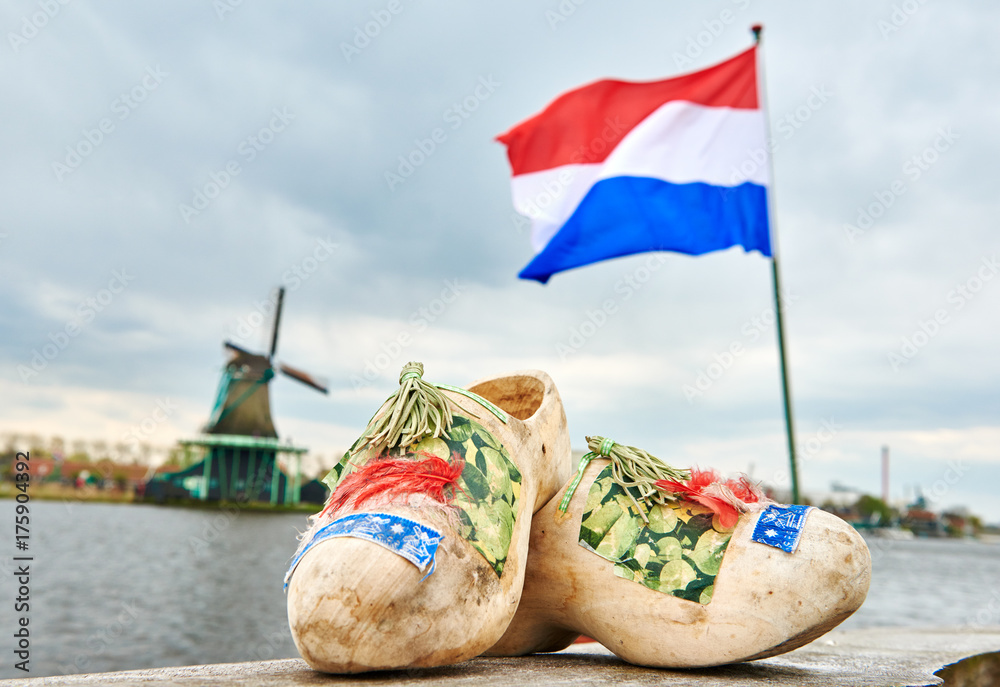
These recollections came back to me last week as I thought about the surprise arrest and deportation of former President Rodrigo Roa Duterte to a holding cell in the Netherlands while awaiting trial by the International Criminal Court.

By any legal reckoning, he’s going to be there for a while—he won’t be arraigned until September—so like it or not he’s going to have to adjust to his new abode over the next few months, like we had to in Bicutan.

His subalterns and supporters can make all the noise they want outside his prison, in the Philippines, and wherever in the world a DDS chapter exists, but RRD’s time ahead in Scheveningen will be largely spent in quiet and solitude.

From what we’ve seen online of his holding cell, Digong’s digs aren’t plush by any standard, but seem fairly adequate and comfortable—just spare enough to suggest to its occupant that he is in some kind of retreat, where he can ponder his worldly actions and contemplate the afterlife. Indeed the room—with its military cot and washbasin—evokes priestly economy, in stark contrast to the sybaritic excesses its previous tenants must have been accustomed to in their prime. In fairness to the incumbent, that lifestyle is something he has never been associated with; part of his popular appeal stems from his image as a man used to sleeping on hard beds and dining on the simplest fare.

There is a large flat-screen TV in the room, through which Digong can follow the news of the world and—given the way that world is going—feel upheld in his conviction that a hard fist and a knock on the head always makes things right. His heroes—Donald Trump, Vladimir Putin, and Xi Jinping (notably the same despots “quoted” by his trolls as expressing their support for him, like character references)—seem to be doing all right, keeping the world safe from the rule of law.

He might learn that the Dutch music industry is undergoing a boom on the strength of songs like “Anxiety” by Doechii and “Guilty” by Teddy Swims. Football, tennis, and golf are the favorite sports of the Dutch, although Digong might also be amused by a Frisian sport called klootschieten, which involves throwing a ball and sometimes drawing blood. Dutch cinema is a small industry, but The Punisher should still be thrilled by local crime classics like “Murder Story” (1989), “Gangsterboys” (2010), and “Accused” (2014).

Should RRD prefer interesting human conversation, I doubt he’s going to get it from the likes of Harry Roque, whose own tribulations must be coming out of Digong’s ears (“I want to go home, and you want to come here?”). If there are any CPP-NDF holdouts left in Utrecht, I’m sure they’ll have  a lot to talk about on a prison visit, going back to the Left’s early flirtation with their “nationalist” ally.

But truth to tell, if I were the former President, I would spend my time in Scheveningen writing my memoirs. I wrote a novel about my government-sponsored Airbnb experience, but given his bluntness, fiction probably won’t be RRD’s best suit.

I suspect Digong is a lot more articulate and maybe even more urbane than he lets on, because no Chief Executive could possibly be that vulgar and that ill-mannered without it being an act (you can imagine him rehearsing those PI’s before the SONA and turning up his collar to look even more roguish). All his life, he has presented himself to be a man of menace, projecting unforgiving brutality, steeping his hands into a cauldron of boiling blood to strike fear into his foes—but couldn’t all that have been just a show in the name of, uhm, good governance? 

The alternative narrative could go thus: In truth and deep at heart, all by his lonesome in his corner of the darkened Palace, he may have been a sensitive and tortured soul whose conscience reared and roared with every fresh report of another tokhang victim, who felt the anguish of every wife and mother like a stab to his own tender heart. He had done what he had to do for the noblest of purposes—the salvation of his suffering people from the stupor of narcotics (about which he knew something himself, but it was only to ease the pain from a motoring accident—all other uses were criminal).

RRD’s memoirs would not only be a spirited defense of his life—an apologia pro vita sua, as they used to be called—but a full, tell-all accounting of everything everyone ever did: henchmen, enemies, beneficiaries, and erstwhile allies alike. If he says he can’t get justice at the Hague, then at least he can dispense some of it from the safety of his albeit involuntary confinement.

Now that would not only be edifying but entertaining, wouldn’t it?
Qwertyman No. 58: A Long Grace Note

Qwertyman for Monday, September 11, 2023

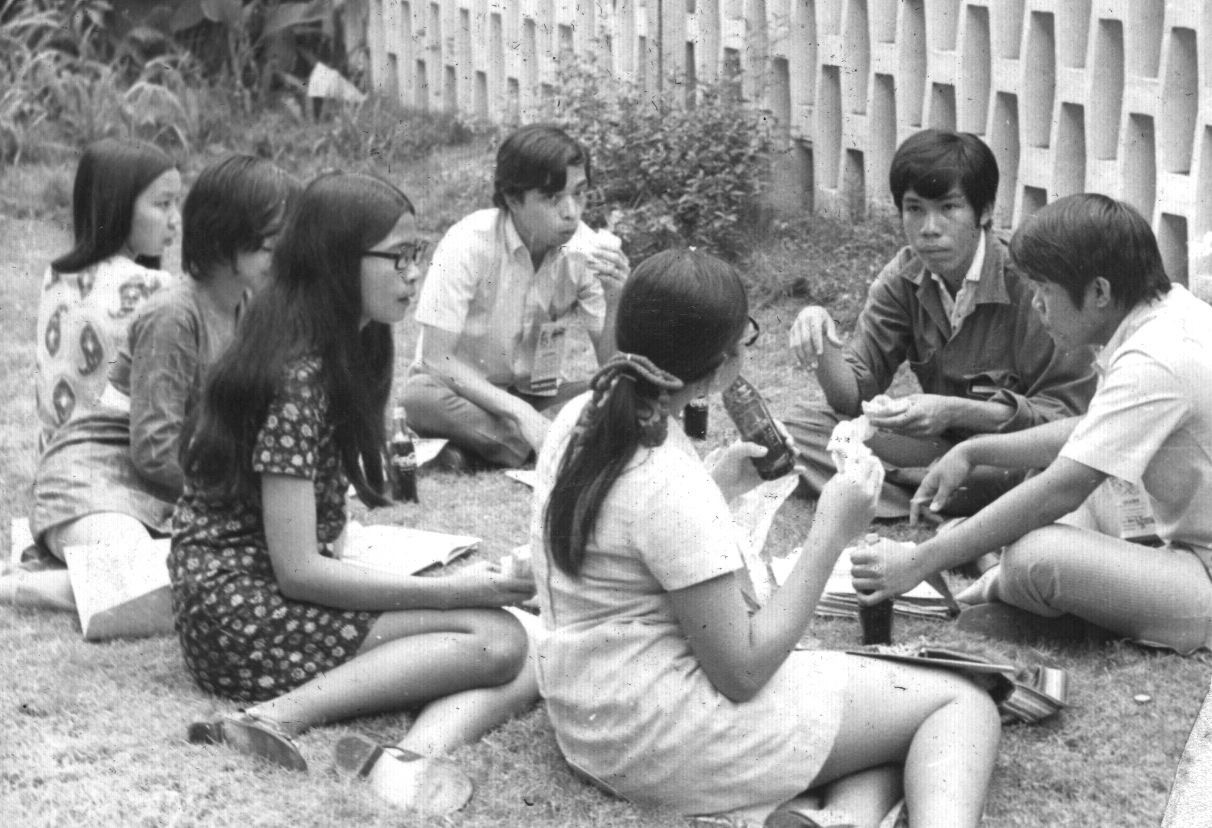
AT ABOUT this time fifty years ago, I was newly released from martial-law prison after seven months of what everyone euphemistically called “detention,” and wondering what to do with the rest of my life. I was just nineteen, so I suppose you could say that I had a lot of living ahead of me, but I felt very differently then. More than a dozen of my friends—all of them in their twenties or even younger—had died horrible deaths fighting the regime. We exalted them as the martyrs that they were, but grimly realized and acknowledged that given how things were going, we ourselves would be fortunate to see the ripe old age of thirty.

I had been arrested at home on a cold January morning in 1973, just past midnight. Like many student activists, I had dropped out of college during the First Quarter Storm of the early 1970s. But instead of joining “the movement” full-time, I improbably found a job with a newspaper as a general-assignments reporter. It was heady stuff at age eighteen, covering three-alarm fires, floodwater rescues, and the very same demonstrations I had joined on the other side of the police barricades. And then martial law was declared—I was actually covering a rally in UP, and thought I had a scoop when a radio station nearby came under fire from the Metrocom, only to be told by my night editor when I tried to phone the story in that we no longer had a newspaper to publish, because soldiers had taken over the office. 

Over the next few months I shuttled between part-time jobs and clandestine meetings with the anti-martial law underground, moving around the city. I wasn’t doing much, given how green I was, but I thought it was important to take part in the resistance in whatever way. And then when Christmas came, like a good boy, I went home to my parents and foolishly had a chat with a neighbor who turned out to be a military asset. Not long after, a posse of soldiers appeared at our door, and when my father nudged me awake, I had a gun pointed at my face. I was being arrested under a catch-all “Arrest, Search, and Seizure Order” or ASSO issued by the Defense Minister, Juan Ponce Enrile, for whom I would ironically be writing some speeches during his post-EDSA reincarnation (he won’t remember that, as I was a tiny mouse in the office).

My release in August 1973 came right out of a Kafka story. I was taking a shower one morning in our prison—which, by the way, is roughly where St. Luke’s BGC is today—when I heard my name being called over the PA system. “Dalisay, report to the guardhouse immediately!” The last time I had done that, after one Sunday dinner, I had been beaten up by some drunken guards just for the heck of it, so I groaned when I heard the announcement. Not again, and so early? As it happened, I was received by an Army officer with a stack of papers. He pulled mine out, squinted at it, and said, “Dalisay, you’re still here? Pack your things. We have nothing on you.” The first place I visited after I went home was the AS Steps in UP, where we had gathered for many a raucous rally; it was vacant and deathly silent, and I knew that I wasn’t going back to school just then. Only after a long detour—working as a printmaker, a writer, an economist, and meeting Beng and fathering Demi—did I return to UP and graduate with my degree at age thirty.

I’ve written about my activism and incarceration in my first novel, Killing Time in a Warm Place (Anvil Publishing, 1992), and it isn’t what this column is really about. Rather, it’s about the aftermath, about having a life after martial law, and an unexpectedly long one at that. 

For any activist from my generation who’s still alive, every breath we’ve taken after our 30th birthday is a grace note—what the dictionary describes as “an extra note added as an embellishment and not essential to the harmony or melody”—in other words, a bonus. Considering that we could have been gunned down like dogs or buried alive like some of our comrades were, you can understand why we feel that way. It’s almost absurd to contemplate, but education, marriage, career, success, fame, fortune—and all the downsides and flipsides that come with them—all these were a long string of surprises, any one of which might never have happened, but for a twist of fate or a stroke of luck (clichés, like life’s very milestones, but ones we appreciate).

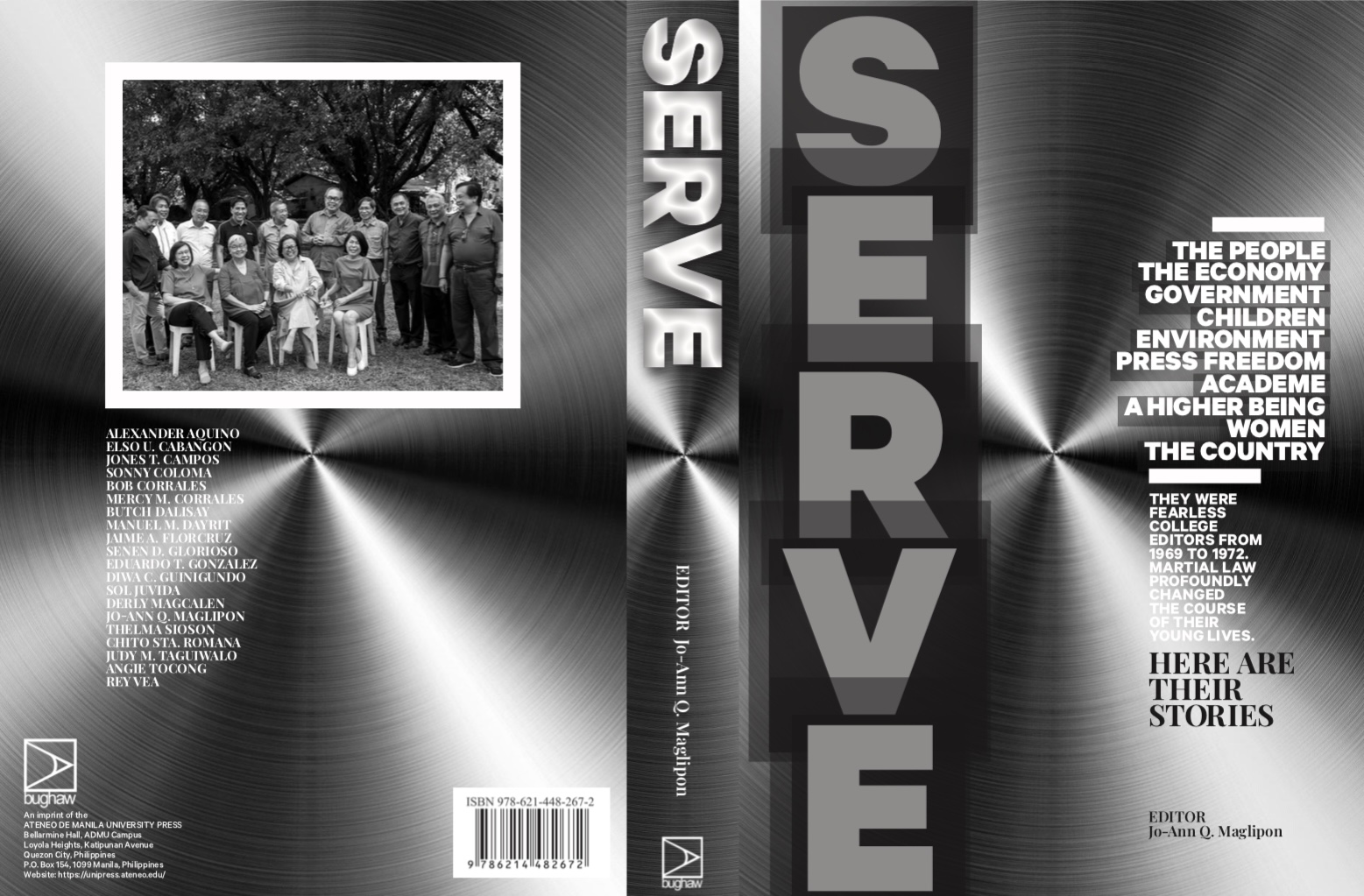
When my fellow FQSers and I—all college editors who were part of the SERVE book that I wrote about last week and that we launched last Saturday—gathered around a table before the launch to pre-sign some copies, we noted with much chuckling how surprisingly old we had become. We were beset by diabetes and hypertension, which were lethal enough but easier to bear than the four bullets one of us took to his face and body; he was with us that day, laughing, his spirits buoyed by his fervent Christian faith. 

We had become university presidents and professors, Cabinet secretaries, CEOs, magazine editors, pastors, and opinion-makers. I don’t think there was anyone in that room who believed any longer in the necessity nor the efficacy of violence, but neither did anyone imagine that our youthful goals had been met, that the country had become a kinder place, and that our work for justice and freedom was done. We had come to terms with our past, were busily in the present, and were hoping to enjoy what little we had left of our extended lives. But like those shaken passengers who stagger away from a crashed plane, leaving the uncounted dead behind, I’m sure that we felt driven by survivor’s guilt to make the most meaning of our gifted years, to do well and to do good, and to serve our people in any way we could. 

We learned that everything may be political, but also that politics is not everything, and that the road to happiness and deliverance may be wider than we had thought. I myself have resolved that even as I fight on for truth and beauty, I will not allow my happiness to be determined by our political vicissitudes, if I can help it. That will be my sweet revenge on my jailers. I will survive you, live a fuller life, and meet my Maker with a clear conscience and a smile.

Qwertyman No. 18: The Excavation

Qwertyman for Monday, December 5, 2022

PRISONER Q felt his shovel bite into the soil with what sounded like a sigh of satisfaction. It had rained, and the earth was dark and soft and yielded without complaint. Beside him, his fellow inmates attacked the job with gusto, happy to be outside under an overcast sky instead of stewing in their cells and taking turns napping, because of the limited space. The mayores or cell block leaders could, of course, sleep anytime; they even had bunks to stretch out on while everyone else languished on the floor or stood up against the railings. 

As an agurang or elder, Prisoner Q enjoyed a few privileges—he got into the front of the line at mealtimes, although he ate the same sweaty rice and slurped the same dishwater soup, and now and then he got a pack of cigarettes from his mayor or (he was told) even the warden himself because he could write in English and could draft special requests or letters of appeal, but otherwise, especially to the outside world, he was just one of them, another mouth to feed at the state’s expense.

So everyone was surprised when Prisoner Q volunteered to join the excavation detail that the warden ordered to be put together for a special project in a vacant lot toward the back of the prison. It wasn’t his body they questioned—he had stayed fit over the 14 years he had been in prison, and was in better shape than when he came in—but his mind. These labor details were usually assigned to newcomers who needed to be broken in, who needed to be jerked out of the utak-laya mindset they clung to with their fingernails. It was backbreaking work, and more than one inmate had collapsed from exhaustion or sunstroke. Many assumed that Prisoner Q merely wanted a change of scenery, a change of pace to ward off buryong, the prison blues that led to slashed wrists and, worse, running amok and causing mass mayhem.

They also wondered what all the digging was for, and why the warden didn’t just bring in a backhoe to do the job. At first it had seemed like all they were digging was a ditch, but it grew bigger and deeper by the day and by the week, until it was the size and depth of a swimming pool. And still they dug on for up to ten hours a day, their meals brought down to them, with a makeshift latrine in a corner for their immediate needs. The dig turned up old beer and soft-drink bottles, ceramic shards, a scorched wristwatch, and Army-issue spoons and forks, but nothing of extraordinary value, except for a silver ring that had lost its stone. Whatever they found was laid out on the surface on a white cotton bedsheet, and now and then the warden came by to inspect and to collect the more interesting pieces, tossing the rest back into the maw of the excavation. Sometimes the warden consulted a map that he had on his phone, which no one else could see, and measured distances. Rumors began to spread that the warden was after treasure, that he had gotten hold of a wartime Japanese map that indicated the presence of at least part of Yamashita’s marvelous loot in this particular quadrant of the prison. 

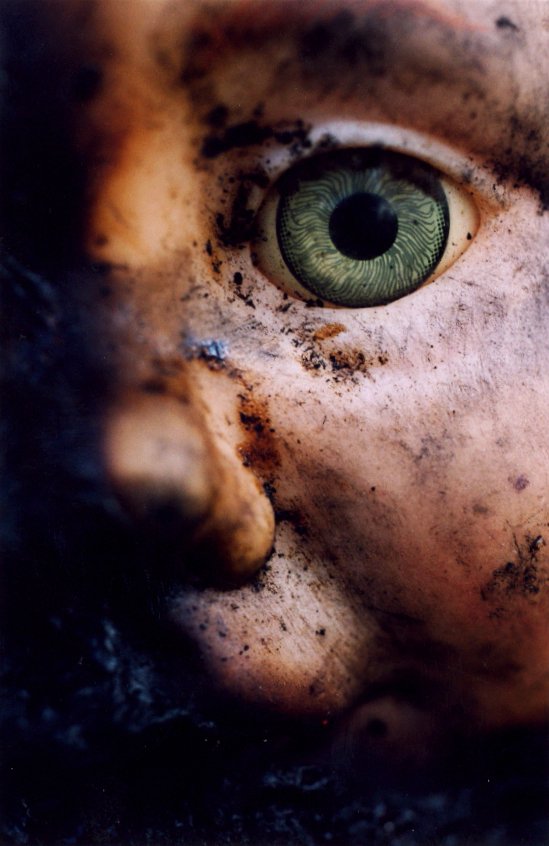
One day Prisoner Q dug up the head of a bisque doll, half of its face badly burnt. Its one good eye stared at him, and he threw it away. And then from a few inches deeper emerged the skeletons, a whole tangled mass of them, as if they had chosen to die together in some conflagration. A scrap of cloth bore a flowered print; the heel was peeling off a man’s shoe. The news of the bones’ discovery hardly caused a stir in the penitentiary, where corpses of even more recent vintage turned up all over. The warden picked through the bones like they were cattle, and pulled a thin gold ring from a finger. He ordered Prisoner Q’s gang to put the bones in the trash and to resume digging. Prisoner Q cradled the three skulls in his arms and set them down carefully on the wheelbarrow; one of them had a gaping hole on the right; another had lost its jaw. He wondered what kind of violence could have led to such a catastrophic end. He had seen terrible things done to people and to bodies in prison, and he had almost forgotten what violence meant. He felt impervious to injury.

That night, lying on his back, Prisoner Q’s thoughts drifted off to what it was like to sleep again on a soft bed with freshly ironed sheets and with a woman breathing evenly beside him, and much as he wanted to quench the thought, it grew, seemingly on its own, in his imagination. This was the utak-laya he had successfully suppressed within his first three years, making him forget the family he had forbidden from visiting him in prison; his share from the last robbery would take care of their needs for life, and last he heard they had a farm in Casiguran, facing another ocean. 

The woman lying next to him soon had a son of about six, who rode a red bicycle and was crazy about cars. When Prisoner Q offered him a car he had crafted out of a sardine can and bottlecaps, the boy turned away. Prisoner Q followed the boy to his room and saw how it overflowed with toys of all kinds—robots, guns, planes, and of course cars—and he jumped in surprise when a blue sportscar zipped between his feet and ran away, and the boy holding the remote control laughed gleefully. Then the woman came in and said, “It’s time for merienda. I made some biko and hot chocolate.” Biko, he tried to think, biko? The sticky rice clung to his palate and he could smell and taste the coconut milk in it, and he was smiling when he was shaken awake by a foot in his ribs, nudging him to get up. The dream exploded in his brain, and he tried to hold on to parts of it—that whiff of coconut, the boy’s taunts—but they came away in shreds. He wanted to lash out at the man who had woken him up, but it was just his friend Teroy, claiming his space on the floor.

That morning they dug some more, and then they ran out of earth, and hit solid adobe on which their spades were useless. No treasure could have been buried deeper than this virgin rock. The warden cursed at his misfortune and called the digging off. Prisoner Q’s grief was even greater; he was still scraping away at a hole that had opened up inside of him, and he could not stop.

Qwertyman No. 16: Prisoner Y

Qwertyman for Monday, November 21, 2022

PRISONER Y was still chewing on a tasty strip of cartilage that clung to the meatless rib he had fished out of the soup when he felt Cortes’ breath on his nape and heard his wheezing voice: “The warden wants to see you. Now.” He stood up, tossed the rib back onto his tray—a hand quickly grabbed it from nowhere—and turned to follow the guard. He wondered what the warden wanted this time. 

Nearly all the fans in the mess hall were out of commission and the inmates’ sweat mixed in the air with the fat curdling in the lukewarm broth, and Prisoner Y looked forward to the air-conditioning in the warden’s office, although he was sure the warden didn’t call him in for a conversation. The last couple of times, in fact, it was the warden’s secretary who had spoken to him, and he barely glimpsed the warden through the half-open door. 

The first time, he was picked up just outside the service gate by three men in an SUV, who brought him to a warehouse in Parañaque, where a man was trussed up, his head in a sack, screaming in a language Prisoner Y couldn’t make out. One of the men handed Prisoner Y a .45 and nodded; another man pointed another .45 at him; the third man held up his phone and recorded everything. Prisoner Y aimed at the victim’s head and fired; the body spasmed and stopped writhing. They drove him back to the prison, where Cortes met him at the gate and ushered him back to his cell. 

When his cellmates asked where he had been—now and then one of them would be gone like that for a day—Prisoner Y said that the warden had asked him to do some carpentry at his home; he had been a handyman in his past life, before the debts piled up and he learned to do other things with his hands. When someone asked him why he didn’t make a break for it while he could, and someone else remarked how all he wanted was an hour at the mall to savor the cool air and watch the salesgirls bending over, Prisoner Y said—truthfully, recalling how humid that warehouse was and how it reeked of stale oil and some shapeless menace—that he felt safer inside.

On his wife’s next visit that Sunday, she was deliriously happy. A man had come by their house, she said, and had dropped off some money in an envelope, saying that it was something owed her husband for a job he had done inside the prison. What did you do, she asked, did you build a house for the warden? It was enough to buy a new stove and a smartphone for Carmela, who needed it for school. I worked on the prison chapel, he lied, knowing it would make her happy; the old roof was leaking and you know the chapel is the warden’s pet project.

The second time it was different, because he had to ride on the back of a motorcycle that one of his handlers drove, and shoot his target on the run. The man, he realized to his horror, was the prison chaplain, walking the street in a Hawaiian shirt and slacks, as though on his day off, in search of a special meal or a movie to watch. Instantly Prisoner Y understood—the chaplain had spoken to the media about how prisoners complained to him about their food, how the prison officials skimmed a percentage off every sack of rice and kilo of stringy pork that entered the kitchen; there was talk of an investigation, although the inmates doubted anything would come out of it. He was there to make sure. It should have been easier to do with the priest in common garb, shorn of his soutane, but then the priest turned toward him as he fired and he could see the man’s terminal expression, one more of resigned acceptance than anything else. Despite himself, Prisoner Y muttered a prayer for forgiveness as they sped away.

Today Cortes led him past the secretary straight into the warden’s office and closed the door behind them. The warden was on his cellphone, a cigarette in his other hand; some ashes drifted onto his barong and he shot up from his seat to stub the cigarette into an ashtray and flick the ashes off without any change of voice in his phone conversation. “Of course, pañero, you don’t even need to ask, send my love to Mercy and the girls.” He shut his phone off and turned to Prisoner Y, who remained standing with his hands behind him. “How’s your wife? Is she happy? You know what they say—happy wife, happy life!” Prisoner Y murmured something like “Yes she is, thanks,” but the warden was already coming over to his side of the table. “Let’s take a walk,” he said. “I want to talk about your future.” What was there to talk about? The future was his life sentence for murder.

In his six years in the penitentiary, Prisoner Y thought he had seen everything, every grimy corner of it, even the luxury suites inhabited by the drug lords and out-of-power politicians, but now the warden led him past the kitchen down a corridor he had assumed led to cold storage, and he was right; when Cortes unlocked the doors and pulled them open, a blast of cold air stung his nose, along with an acrid curl of some potent chemical. 

The warden flicked the light switch on and Prisoner Y saw them: a swarm of cadavers—some on raised platforms, many just on the floor, under browning blankets that could not cover everything. He could see fingers withered dry. “Stabbings, cancer, TB, chokings—they all end up here, the ones without family, the ones no one will miss. We should just burn these but there’s a budget for their maintenance. I’ve made sure of that.” 

“Why did you bring me here?” 

The warden nudged the edge of one blanket with his foot. “Your next job will be so important that it will have to be done by someone who might as well be dead.” Prisoner Y rubbed his arm and said, “I still have a family.” The warden looked at him calmly and said, “I know. You do. That’s why we’re here.” Prisoner Y shivered from a chill colder than bare ice.

Penman No. 423: From Poetry to Treason

Penman for Monday, September 13, 2021

AS A COLLECTOR of old books and other objects of interest more ancient than me, I sometimes stumble across manuscripts and documents that turn out to be a bit more private than the usual accounts of travels to Sulu or the history of Negros sugar. I’ve found ardent and very carefully composed love letters (apparently never sent), poems to the departed, and receipts for unmentionables. Coming from a past where people wrote with physical ink on physical paper, these inadvertent mementoes of lives lived and loves lost convey emotion and meaning in a way that digital ones and zeroes never will.

Some of these discoveries have been particularly poignant. A few months ago, I wrote about finding a typewritten collection of essays written by Lyd Arguilla in the 1950s, where she stoically recounts her husband Manuel’s execution by the Japanese; tucked into that folder was a love poem she wrote in his memory after the war, in New York.

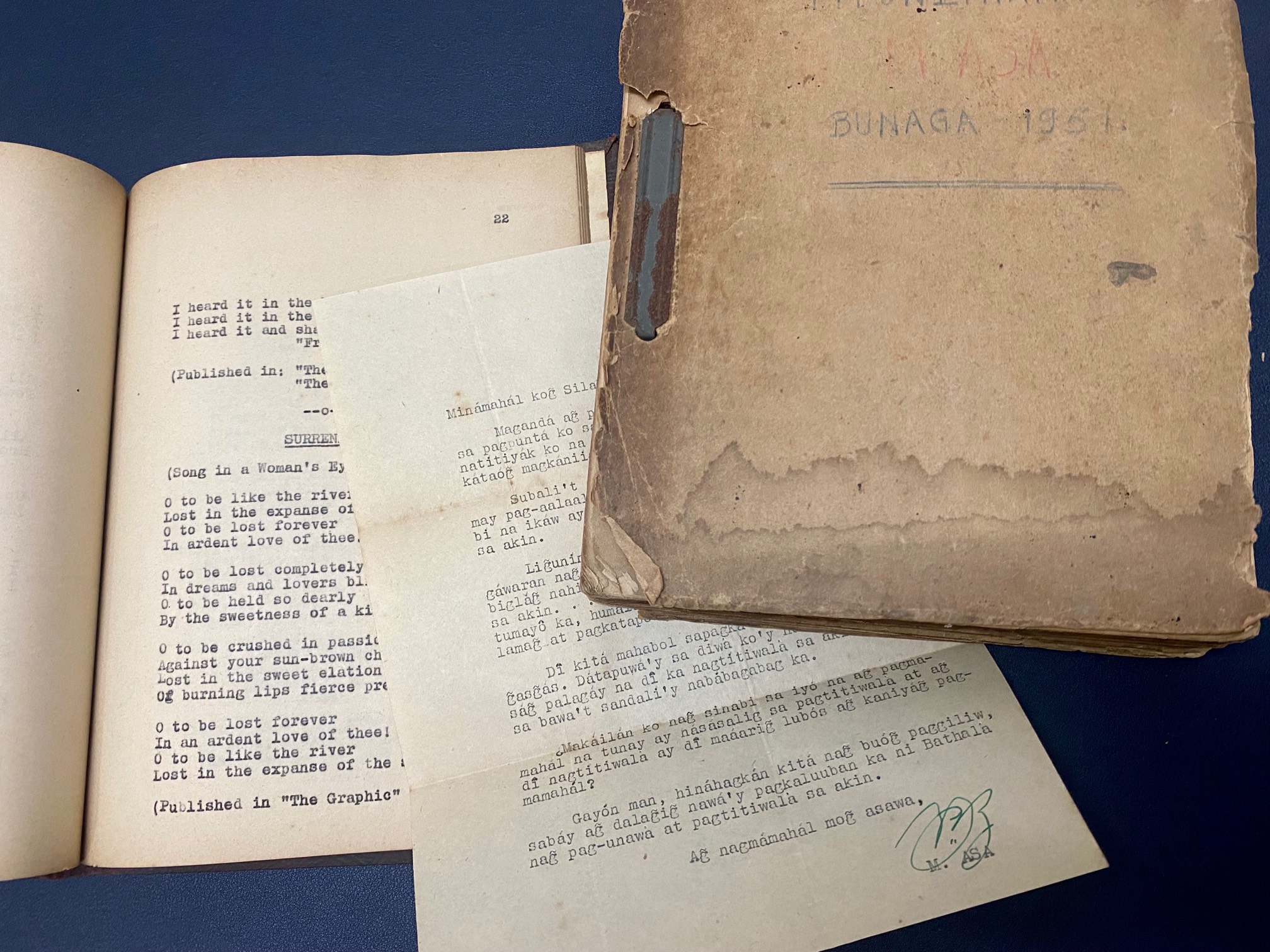
Last month, a bookseller offered me three items that had to do with one subject, from whose personal library they likely came. One was a scrapbook of sorts by this Filipino author, another a short biography—also typewritten—of the man and samples of his most popular works, and the third a published play written by his illustrious mother. The writer’s name was vaguely familiar to me: Aurelio S. Alvero, otherwise known by the pseudonym he adopted after the war, “Magtanggol Asa” (he himself spelled it “Magtanggul”), a play on his initials and on his ambition to become a lawyer—as well as being, of course, a self-descriptive epithet as the defender of hope. He was born in 1913  in Tondo to illustrious parents—Emilio Alvero, an artist and interior decorator, and Rosa Sevilla, writer, suffragette, and educator who founded the Instituto de Mujeres, a pioneering school for women in the Philippines.

Generations of Filipino schoolchildren have known him for his poem “1896,” written before the war, a favorite piece for choruses, because of its hypnotic rhythm and refrain. It begins:

The cry awoke Balintawak

And the echoes answered back…

“Freedom!”

All the four winds listened long 

To the shrieking of that song…. 

“Freedom!”

Just by this piece, no one can be faulted for thinking of Alvero as a patriotic poet—or in the very least a writer of patriotic poetry, and that he was. Indeed he was lauded by his peers and even later by scholars such as Grant Goodman and Augusto de Viana as a “brilliant” intellectual, one who could write equally well in Tagalog, English, and Spanish. He was a star student at the Ateneo and UST, winning a raft of medals for his scholastic achievements. 

But he was also described as a “complex” artist, a rather evasive and much kinder term for what his harshest critics would call him: a traitor to his people, convicted and imprisoned for wartime collaboration with the Japanese. The charges brought up against him by the postwar court were formidable: up to 22 counts of treason, from his active role in such pro-Japanese organizations as the Kalibapi and Makapili to selling war materiel to the enemy and participating in the destruction of Manila. The most outrageous offenses were damnably detailed: among them, that within one year, his trading firm—capitalized at only P15,000—earned a whopping P2,000,000 from sales to the Japanese (shades of Pharmally!), and that he personally directed the burning of a part of Pasay toward the end of the war. For these, and despite his spirited protestations, he was sentenced to life imprisonment in Bilibid, cut short by an amnesty granted by President Quirino in 1952. 

How could the same man, so gifted and so promising, turn out so badly? Even before the war, Alvero had railed against American imperialism, and—like Gen. Artemio Ricarte, among others—saw Japan as a friend and liberator. But unlike more rabid pro-Japanese Filipinos like Benigno Ramos, he opposed the atrocities of the Makapili, although he urged his countrymen to resist the Americans to the end. Complex indeed. Arguing that neither “patriot” nor “traitor” could fairly describe him, Dr. Goodman calls him “a romantic opportunist” who thought he could achieve his ideals by casting his lot with the devil.

Despite his early release from prison, the ordeal took its toll. While other writers accused of helping the Japanese like Camilo Osias lived on and even prospered, Alvero died of a heart attack in 1958 aged just 44, leaving a stain on his family’s name (his mother, Rosa Alvero, continues to be honored with a street in her name in Katipunan, Quezon City). Hardly any pictures of him can be found today, even on the Internet.

A letter from prison to his second wife, whom he called “Silahis,” reveals an inner torment that was probably the greatest cost of all. He writes:

“Makailan ko nang sinabi sa iyo na ang pagmamahal na tunay ay nasasalig sa pagtitiwala at ang di nagtitiwala ay di maaring lubos ang kaniyang pagmamahal? Gayon man, hinahagkan kita nang buong paggiliw, sabay ang dalanging nawa’y pagkaluuban ka ni Bathala ng pag-uunawa at pagtitiwala sa akin. Ang nagmamahal mong asawa, M. Asa.”

(How often have I told you that true love depends on trust, and that one who cannot trust cannot love completely? Nonetheless, I kiss you with all my heart, even as I pray that the Lord grant you trust and understanding for me. Your loving husband, M. Asa.)