Qwertyman No. 122: On Writing as a Profession

Qwertyman for Monday, December 2, 2024
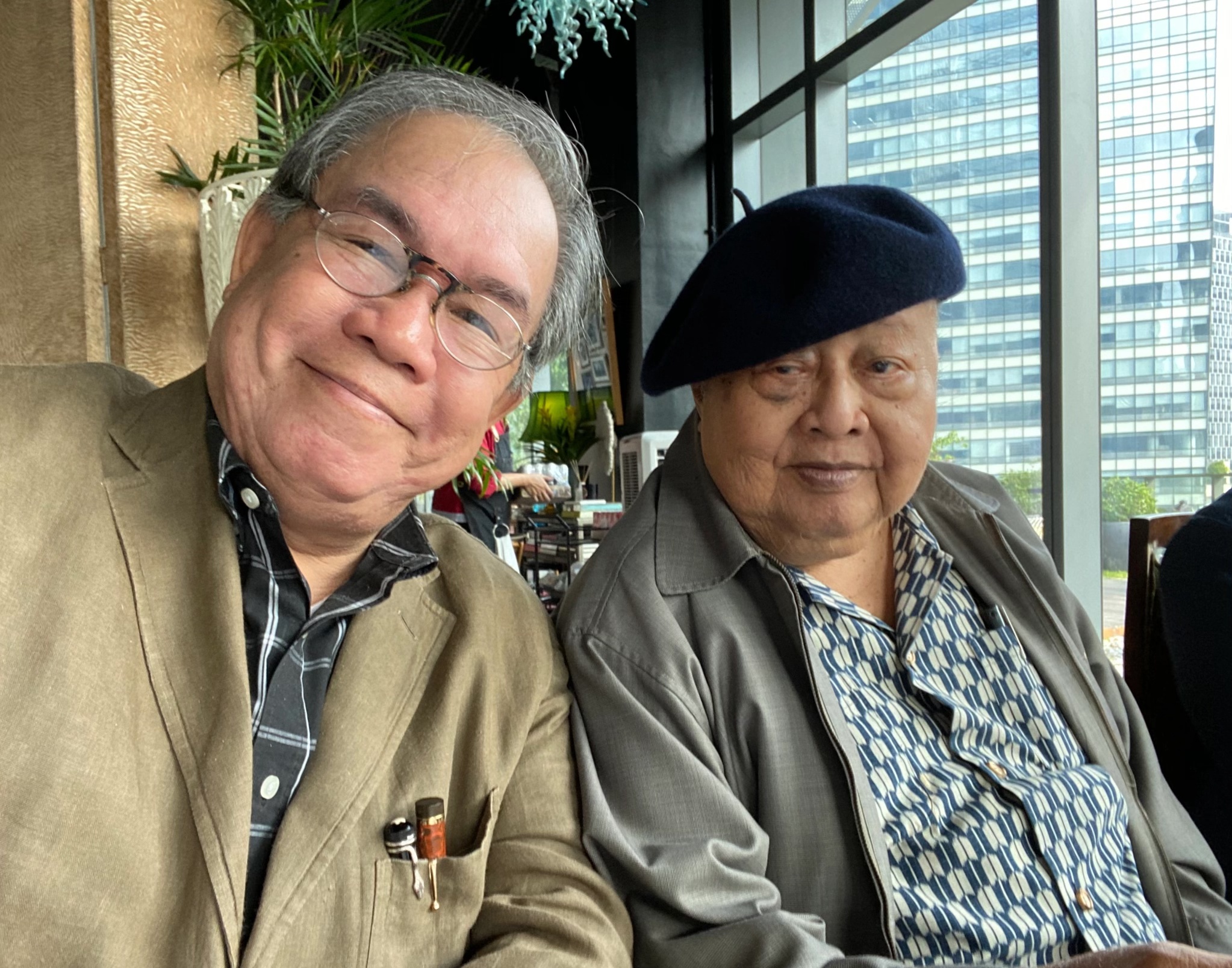
FOLLOWING THROUGH on last week’s piece about the challenges faced by creative writers trying to make a living in this country, let me share some further thoughts on that topic that I wove into my Rizal Lecture last week at the annual congress of Philippine PEN. My talk was titled “The Living Is in the Writing: Notes on the Profession of  Writing in the Philippines.”

Our writers of old made a profession of writing, often by working as journalists, speechwriters, and PR people at the same time that they wrote poems, stories, novels, and essays on the side. Some also taught, and of course some writing comes with that territory, but with teaching you get paid for your classroom hours than for your word count. (To which I should also add, so much of the writing that our literature professors do today is understandable only to themselves.)

Our best and most prolific writers lived by the word and died by it. The two who probably best exemplified this kind of commitment to writing—and nothing but writing—were Nick Joaquin and his good friend Frankie Sionil Jose. Both were journalists and fictionists (in Joaquin’s case, a poet and playwright as well). We can say the same for Carmen Guerrero Nakpil and Kerima Polotan, as well as for Gregorio Brillantes, Jose Lacaba, Ricky Lee, Alfred Yuson, Cristina Pantoja-Hidalgo, and Charlson Ong, among others. 

These were all writers whom you never heard to claim, as has been recent practice, that “I am a poet!” or “I am a fictionist!” They were all just writers, for whom the practice of words was one natural and seamless continuum, and a profession they mastered just as well as we expect doctors, engineers, mechanics, and lawyers to do. This was also when journalists could be poets who could also be politicians and even reformers, revolutionaries, and heroes.

This was paralleled in other arts such as painting, where artists such as Juan Luna, Fernando Amorsolo, and Botong Francisco routinely accepted commissions to support themselves and any other personal undertakings. (Of course, this was well within the old Western tradition of writers and artists having wealthy patrons to help keep them alive and productive.)

But then came a time when, for some reason, creative and professional writing began to diverge, as creative writing withdrew from the popular sphere and became lodged in academia, where it largely remains today. Professional writing, or writing for, money, came to be seen as the work of hacks, devoid of art and honor. Even George Orwell urged writers to take on non-literary jobs such as banking and insurance—which incidentally T.S. Eliot and Wallace Stevens did, respectively—rather than what he called “semi-creative jobs” like teaching and journalism, which he felt was beneath them. (Orwell himself worked as a dishwasher in Paris, where he wryly observed that “nothing unusual for a waiter to wash his face in the water in which clean crockery was rinsing. But the customers saw nothing of this.”)

An attitude of condescension soon emerged among poets and fictionists who looked down on journalists as a lesser breed—something I have always warned my students against, having been a journalist who had to turn in a story, any story, by 2 pm every day on pain of losing my job. Never knock journalists. Let’s not forget that when it comes to facing real dangers brought on by one’s written word, poets and fictionists have it easy. The last Filipino novelist who was shot for what he wrote was Jose Rizal; the only writers dying today are our journalists and broadcasters in the hinterlands offending the local poobahs. Governors and generals read newspapers, not novels; they are impervious to metaphor.

Professional writers, on the other hand, saw creative writers as artsy dilettantes enchanted by fancy words and phrases that no one else understood and very few people paid for. Creative writers took it as a given that they were wedded to a life of monastic penury, unless they had another skill or job like teaching, doctoring or lawyering, or marrying into wealth. It even became a badge of honor of sorts to languish in financial distress while reaping all manner of writing honors, in the misguided notion that starving artists produced the finest and most honest work. 

The fact is, both are two sides of the same coin, which is the currency of public persuasion through words and language. One is an artist, the master of design; the other is the artisan or craftsman, the master of execution. Both can reside in the same person, unless you’re foolish enough to disdain one or the other. You can produce great art, if you have the talent, the discipline, and the hubris for it; but you can also live off your artistic skills, if you have the talent, the discipline, and the humility for it. 

(That said, I have to report that in my forty years of teaching creative writing, some of the students who find it hardest to switch to fiction are journalists, who just can’t let go of the gritty and often linear reality they’ve been accustomed to; poets come next, those who feel preciousness in every word and turn of phrase, so much that they can’t move from one page to the next without agonizing, or, going the other way, without drowning us in verbiage.)

This was why, more than twenty years ago, I designed and began teaching an undergraduate course at the University of the Philippines called “CW198—Professional Writing.” Mainly intended for Creative Writing and English majors who had very little idea of their career options after college aside from teaching, the course syllabus includes everything from business letters, news, interviews, and features to brochures, scripts, speeches, editing, publishing, and professional ethics. The first thing I tell them on Day One is this: “There is writing that you do for yourself, and writing that you do for others. Don’t ever get the two mixed up.”

Qwertyman No. 121: Fame, Fortune, and the Filipino Writer

Qwertyman for Monday, November 25, 2024

CREATIVE WRITERS don’t earn much in this country, unless they lend their talents to someone else, for far less literary reasons than writing a novel or a collection of poems. A senator might need to deliver an important speech to an international audience; a taipan might be marking a milestone like a 75th birthday, and fancy having his biography written; a conglomerate might want to have its history written and published, to trumpet its accomplishments and contributions to society. 

For all these, many novelists, poets, and essayists will drop their pens and exchange their metaphors for the plainer but more remunerative prose of public relations. I know I have; I’m one of these people for whom writing isn’t just an art but a profession, a means of livelihood, a trade I’m grateful to be able to ply instead of hauling gravel or fixing carburetors. 

I’ve been writing for a living since I dropped out of college and became a newspaper reporter at eighteen, and I’ve been at it ever since, even throughout my whole other life as an academic (yes, I went back to school and got all the right degrees just so I could teach). At seventy, I’m still working on three or four simultaneous book projects for clients, with my own third novel in the back burner. (I’ve already drawn the line at seventy; after these, no more, so I can focus on my own work, and live modestly off my professor’s pension.)

I daresay, however, that most Filipino writers don’t operate like this, either because they can’t (you have to park your ego at the door and be extremely adaptable) or they won’t (for some, writing for money is selling your soul, although you can always say no to jobs and clients you don’t like, as I have). So creative writers have to keep day jobs like teaching or lawyering or newswriting and editing, and tap away at their magnum opuses on the side.

Why do they even bother? It’s not as if they’re hoping to write novels that will become bestsellers, make them millions, and get sold to Hollywood or Netflix. Ours is also a culture and society not known for buying and reading books, unlike, say, the Japanese whose faces you’ll find buried between pages on the Tokyo subway. In a country of around 115 million people, a new book will still typically be published in a first (and likely only) print run of 1,000 copies, which will probably take a year to sell out, if ever (Filipino relatives and friends also expect to be given free signed copies, which they won’t even read).

So again, what are we writing for? Perhaps thanks to Jose Rizal (who, let’s not forget, was shot for what he wrote), to be a writer still carries with it an aura of honor and fame, the suggestion of some extraordinary talent, a special way with words. We may not pay or read our writers, but w e admire them, maybe because they seem to know something most people don’t, like saying “I love you” in enchanting ways, or drafting convincing letters and papers, or even just fancy words like “somnolent” and “adumbrate.” There’s some glory to be won in writing—maybe even a little cash, if you know how to market yourself.

Last Friday, at the PICC, many of the country’s best writers got together to bask in that shared glory. In one of the highlights of the literary year, 54 authors were feted at the 72nd edition of the Carlos Palanca Memorial Awards for Literature. Begun in 1950 and faithfully and generously endowed by the Palanca family, the Palancas are the country’s longest-running and most prestigious literary competition, and for the past seven decades (almost uninterrupted except for the pandemic) have heralded the emergence of our finest writers—in English, Filipino, and more recently our other major Philippine languages.

According to the foundation that oversees the awards, this year’s competition drew in 1,823 entries in 22 categories, with 60 winning works produced by 54 writers. New winners outnumbered previous ones by 31 to 23, a good sign of new talent emerging—and not just new but young. Five winners were 20 and below, the youngest being only 14 years old (and the oldest 78). That’s quite a range, which tells us that the future of Philippine literature is safe and strong.

I myself won my first Palanca when I was 21, and of course I thought I was God’s gift to literature—until I lost for the next four years straight. I probably learned more from those losses than from my lucky win, and as I grew older the writing became more important than the winning, but the incentives—a little of both fame and fortune—that the Palancas provided never diminished in their attractiveness, especially during the martial law years when there was very little publishing going on.

You certainly don’t have to join the Palancas or win one to gain a literary reputation, and the value of such awards can easily get overblown, such as when egos get the better of writers starved for attention. Ultimately prizes don’t count nearly as much as publication, and all those honors will be meaningless until and unless one’s books are read, understood, argued about, and maybe even cherished. (With the Philippines poised to become Guest of Honor at next year’s Frankfurt Book Fair, we can expect the global readership for Filipino works to increase, and international publication will be a new goal for our writers to aspire for.)

Not everyone who writes for a living can win a Palanca, but not everyone who wins a Palanca can make a living out of writing, either. I’m blessed and thankful to have been able to do both, but at this point in my life I’ve come to realize that even more than seeking fame or fortune, a writer’s greatest mission is to tell and spread the truth, in that moving and memorable form only art can deliver.

Penman No. 108: Writing as a Job

Penman for Monday, August 4, 2014


PEOPLE OFTEN ask me about my work as a professional writer—meaning, someone who makes a living out of his writing, rather than someone who just loves to write the occasional poem for sharing with friends.

There are, in fact, quite a number of people in this country who can be considered professional writers: regularly employed journalists, ad-agency copywriters, screenwriters, textbook writers, and even professional bloggers, among others. But except for the few who possess the talent and the gumption to churn out popular novels, there are really no professional Filipino writers of creative work like fiction and poetry, because there’s no market for these products out here. The typical Filipino reader would sooner buy the latest iteration of Twilight or 50 Shades of Grey than, say, a new novel by my friend Charlson Ong.

That’s why fictionists like Charlson and me have turned to writing other things for other people—biographies, histories, speeches, audiovisual presentation scripts, and even advertising copy—to supplement our incomes as teachers and columnists. But let me hasten to add that it’s more than money—as welcome and as necessary as the money is—that drives us to do this. For me—and I’m sure it’s the same thing for the others—it’s the challenge of doing something different, often something with a clear objective and a well-defined if limited audience, such as a company history, as opposed to a novel that you float like a balloon into the night sky.

At UP, where I’ve taught a course called “Professional Writing” that seeks to equip our English majors with some practical skills and attitudes, I tell students on Day One that “There’s writing that you do for yourselves, and writing that you do for others, and never get the two mixed up.”

Like my father, who wrote speeches and correspondence for politicians, I’ve been writing for others nearly all my adult life—I earned my first paycheck for a TV drama script I wrote when I was 16—so I approach professional writing with the dry eye of the frustrated engineer that I also happen to be. (This also means that, when I revert to my own fiction, I can do so with extravagance and exuberance, although fiction has its own rigor and discipline; the poets themselves will tell you that “poetic license” is really anything but license.) Over the past three decades, since my first book (Oldtimer and Other Stories) came out in 1984, I’ve published nearly 30 books of my own, aside from books I’ve edited for others. Many of these were limited-circulation books, like those I wrote on the Philippine geothermal industry and the Philippine flag, so you would never even have heard of them, but they served their specific purposes, so the job was done.

Let me offer some advice to those who want to get into writing as a living.

First, drop the ego and the angst. I knocked on a lot of doors and was paid almost nothing (and sometimes nothing) for my earliest jobs, but each one taught me something about writing and about the business of writing, both the good and the bad. Take every job as both an earning and a learning opportunity. Prepare to be edited, contradicted, and countermanded, sometimes by people who know less about writing than you (if they knew as much, they probably wouldn’t have gotten you). Give it your best shot, and leave the rest to the client. Suck it up, have a beer, then move on. (You’d be surprised how easily and how well the world can move on without you.)

Second, learn your trade and your tradecraft. This means mastering your language, both in terms of grammar and style, and appreciating the nuances that every job will involve. Write bilingually; adjust, absorb, adapt.

Third, get interested in subjects beyond writing and literature. Read the papers. Acquire a working knowledge of business and economics, politics and public affairs, history, science and technology, sports, and entertainment. This versatility will enhance your marketability. To do a job well, you’ll need to understand and even to enjoy what you’re writing about.

Fourth, set your own opinions aside. Unless you’re writing under your own byline or are being hired for your ideas, you don’t need to personally believe in and stand by everything that’s being said—you’re speaking for someone else, and your own opinions could get in the way. If your own ideas and principles matter more than the job, then say no and walk away (I’ve done this, quite a few times)—it’s the fairest thing to do, both for the client and for yourself.

Fifth, learn to multitask. These days, I typically work on three or four book projects at the same time, in various stages of completion. Life’s too short to have to wait for one project to be completed before starting the next one. Each project takes about 18-24 months, so I’ve learned to pace myself. I’ve also learned to delegate work—to assign more basic research and drafting to good assistants, so I can focus on the final organization and styling of the material.

Sixth, know the business and what business means. Use contracts, observe deadlines, pay the taxman, pay your assistants well, buy a good suit and a good pair of shoes. Keep and respect confidences. Unless you’ve been shortchanged, don’t badmouth a client from whom you gladly took a check.

Seventh, simplify your life. You can only produce so much by also giving up so much, which for me means a vastly diminished social life. I’ve pretty much given up partying or going out with friends; my only indulgences are my pens, the biweekly poker night, and traveling with Beng (of which I can never have enough, which is why I do all this). But I’m happy, which in this world is the hardest job of all.