Qwertyman No. 144: A Better Fighting Chance

Qwertyman for Monday, May 5, 2025

TWO WEEKS ago, almost 18,000 young Filipinos and their parents awoke to the good news that they had qualified for admission to the University of the Philippines through the UP College Admission Test (UPCAT). Over 135,000 high school students had applied, so this year’s admission rate stood at just over 13%, almost 7% higher than last year’s outcome.

Whatever UP’s critics may think it’s become, entry into one of its eight constituent universities remains the highest of aspirations for many Filipino families, especially the poor for whom the tuition and cost of living at top private universities is impossible without a scholarship. 

UP oldtimers like to recall the days, decades ago, when the quality of public education was still high enough for public and private high school graduates to compete on fairly even terms for admission into UP. It wasn’t unusual for some provinciano wearing chinelas to step into a UP classroom or laboratory and beat the daylights out of some elite-school fellow in academic performance. Many of those provincianos—the likes of Ed Angara, Miriam Defensor, Billy Abueva, and Dodong Nemenzo—went on to stellar careers in government, education, the arts, and industry. UP was clearly doing what it was supposed to do, as its past President Rafael Palma put it: to be “the embodiment of the hopes and aspirations of the people for their cultural and intellectual progress.”

Ironically, by the time the UP Charter was revisited and revised a century after its founding in 2008, giving it the unique status of being the “national university,” UP’s student profile had changed. Jokes about UP Diliman’s parking problems began to underline the popular perception that UP was no longer a school for Filipinos across the archipelago and across income strata but one for the privileged, mainly from the big cities. The introduction of free tuition in state universities and colleges in 2017, while well intentioned, even resulted in subsidizing the children of the rich in UP, who could well have afforded going to Ateneo or La Salle.

But some good news is emerging, as this year’s UPCAT results bear out. Starting with last year’s UPCAT, there’s already been a reversal of the trend favoring graduates from private high schools, with 55% of qualifiers now coming from public and 45% from private high schools. UP President Angelo Jimenez—himself a boy from the boonies, coming out of tribal roots in Bukidnon—has pledged to do even more to give poor students outside of the big cities a better fighting chance of getting into UP.

“We started this banking on two things,” he says, “that UP will respond to the challenge of transforming the so-called common clay—the less-advantaged—into fine porcelain, and that the less-advantaged will respond to the challenge of opportunity. The task of leadership now is to set the enabling environment, structures, and systems to ensure the success of this two-pronged strategy. It’s a big bet, and it gets bigger. We still have the non-UPCAT track. This includes our Associate in Arts program, UPOU’s ODeL, talent-based modes, and finally, the UP Manila School of Health Sciences in Tarlac, Aurora, Palo, and Cotabato. We cannot solve all problems, we are not lowering standards. In fact, we must demand excellence regardless of social and economic status, and enforce it. But we are dropping rope ladders so people long staring up from the base of the fortress walls can have a better chance of scaling its sheer drop with something better than their bare hands.”

Those rope ladders include adding more UPCAT testing centers in faraway places, ultimately to have at least one in each province—a goal that will be met later this year. The testing centers are also being moved from private to public high schools. “We’ve seen that more students tend to participate when the tests are given in their national high schools,” says UP Office of Admissions director Francisco de los Reyes. Aside from more testing centers, UP is helping disadvantaged students prepare better for UPCAT through its Pahinungod volunteers, who distribute reviewers using real items from past UPCATs (these reviewers are also downloadable for UPCAT applicants) and use them for UPCAT simulations, guiding students even with such details as shading the exam oblongs. (De los Reyes reports that wrong shading has caused 20% of their machine counting errors.)

These steps are clearly paying off. Davao de Oro (formerly Compostela Valley), which previously accounted for less than 10 UPCAT qualifiers, has just produced 31, after a testing center was put up in Nabunturan. 

UP’s support for poor students doesn’t end with UPCAT. Every year, thousands of qualifiers from so-called Geographically Isolated and Disadvantaged Areas (GIDAs), even after passing UPCAT against all odds, fail to show up for enrollment after realizing that they cannot afford the costs of living on a UP campus. UP has rolled out a P50-million Lingap Iskolar program that provides such disadvantaged qualifiers who meet certain standards P165,000 a year to cover housing, meals, transportation, books, cellphone load, and other expenses. Almost 200 Lingap Iskolar grants were given out last year. In UP Manila, private donors fund daily meals for over 30 students.

I’m particularly happy to report that a dear friend of mine, Julie Hill, recently donated almost P21 million that will be used for a new Agapay Fund that will go toward the upkeep of poor students in UP’s School of Health Sciences, which has a unique ladderized program that enables rural midwives to become nurses, and nurses to become doctors. The program has already produced about 200 doctors who have served their communities back. 

Among them was Dr. Hannah Grace Pugong, who recently landed in the top 10 of the medical board exams, after placing No. 1 in the midwifery and No. 3 in the nursing exams. Dr. Pugong will soon be deployed under the Department of Health’s Doctors to the Barrios (DTTB) program, fulfilling her return service commitment. It is an obligation she willingly embraces, saying that “I have often reminded myself that how I treat my patients should reflect how I want my family members to be treated by other health workers.” 

If that’s not what being a national university should be about, I don’t know what is.
Qwertyman No. 136: Bringing In the No-Shows

Qwertyman for Monday, March 10, 2025

EVERY YEAR, about 100,000 Filipino high school seniors take the University of the Philippines College Admission Test (UPCAT), hoping to get into one of UP’s ten campuses nationwide. It’s an annual ritual that’s been taking place since 1968, except for a brief period during the pandemic when the test was replaced by an alternative system. (I didn’t even realize until I looked these figures up that I was among the third batch of UPCAT takers in 1970; thankfully I got in.)

Of those 100,000 hopefuls, only about 13,000-15,000 make it. That passing percentage may seem cruelly if not needlessly small, but there’s good reason for it. While we’d like more students to come to UP, admissions are limited by how many incoming freshmen UP’s campuses (or “constituent universities” such as UP Manila and UP Mindanao) can optimally absorb. Classrooms, housing, teachers, and facilities all come into play. Large campuses like Diliman and Los Baños can obviously take in more, but even so there’s a limit to admissions that needs to be observed if UP is to maintain the quality of higher education that it promises.

The more troubling statistics have to do with the distribution of those “passers” (technically, no one “fails” the UPCAT, which is just one of several factors that determine admission, including high school grades; each campus also has a different qualifying standard to rationalize admissions, so you can “fail” Diliman but qualify for UP Cebu). 

Last year, according to UP’s own statistics, 44 percent of UPCAT qualifiers came from private high schools. Another 27 percent came from the country’s science high schools. (which are publicly funded, but offer a much higher standard of education). Other public high schools accounted for only 29 percent of the total. Consider these figures against the larger picture, in which around 80 percent of our students go to public high schools, and less than 20 percent to their private counterparts. 

Compounding this gross inequality, about 70 percent of UPCAT qualifiers come from the big cities, mainly in Luzon. This, of course, is no big surprise. A recent study by UP professors showed what we didn’t need a study to know (but being academics, of course they had to prove it): that “income advantage” weighed heavily on one’s chances of passing the UPCAT and getting into UP. If you went to a good private high school, you were more likely to get in than a poor student from the boonies. To top it off, with tuition now free in public universities, we actually end up subsidizing many students from affluent families who could well afford to pay their way in private colleges.

This lopsided situation has long been the cause of much concern within and beyond UP, which, as the country’s “national university,” bears the dual responsibility of aiming to be the best university in the country bar none, and yet also serve the interests of the entire Filipino nation, and not just those of the urban elite that has apparently become over-represented in its student body. Various UP administrations have sought to address this seemingly paradoxical “excellence vs. equity” argument through different methods aimed at more democratic access—without, as current UP President Angelo Jimenez emphasizes, lowering UP’s standards. This remains a work in progress, but the aim is clear: make it possible for poorer Filipinos to get into UP so it can truly be the “university for the Filipino” it was envisioned to be.

Against all odds—and this brings me to my present point—many surprisingly do. I don’t have the actual figure on hand, but they number in the low thousands, of the 13,000-15,000 in an incoming batch. Encouraging, yes? But here’s the rub: about 1,500 of them never show up—what we call “no-shows”—not for lack of ambition, but for lack of means to cover the cost of living at a UP campus. Imagine that: it’s hard enough to get a good public high school education in what are called Geographically Isolated and Disadvantaged Areas (GIDAs), and harder still to pass the UPCAT from where you are. You’re elated to learn you made it, only to realize that you’re not leaving home after all, because you can’t afford the transportation, food, housing, books, and computers that come with college.

Thankfully, UP has initiated a new Lingap-Iskolar program to help out with these expenses and bring more GIDA passers in, starting with 300-500 students. Over the next four years, P250 million has been allotted by UP for this purpose. It’s a great initiative, but it still falls far short of minimizing the no-shows so the yawning disparity between UP’s rich and poor can be more effectively reduced.

With the education budget being squeezed even more under the current GAA, this is a great opportunity for the private sector to come in and make a clear and strategic impact on the future of the Filipino mind. If you’re a corporation or philanthropist in search of a good cause to support, look no farther—make it possible for a young Filipino from our poorest and remotest regions to study in UP. Sure, democratizing UP will require much broader and deeper moves, going back to basic education; but this step is solid, immediate, and tangible. 

I’m happy to report that I made this pitch to a dear friend in the US who had spent some time here in the Philippines more than 50 years ago with her late husband, who worked to help improve Philippine education. Responding to my call, that friend, Julie Hill, sold two HR Ocampo and Ang Kiukok paintings from her collection at a recent Leon Gallery auction, the proceeds of which she will be donating to the UP Foundation for a fund to be set up along the lines of Lingap-Iskolar. Despite being away for so long, Julie remains deeply attached to the Philippines; she’s not Elon-Musk rich and lives very modestly, but has sacrificed her best pieces so some bright young Pinoys she will never meet can have a better future and serve the nation.

If a foreigner can do that, I don’t see why our homegrown billionaires can’t. Support a GIDA scholar, and make a difference right now.

Qwertyman No. 47: An Open Door

Qwertyman for June 26, 2023

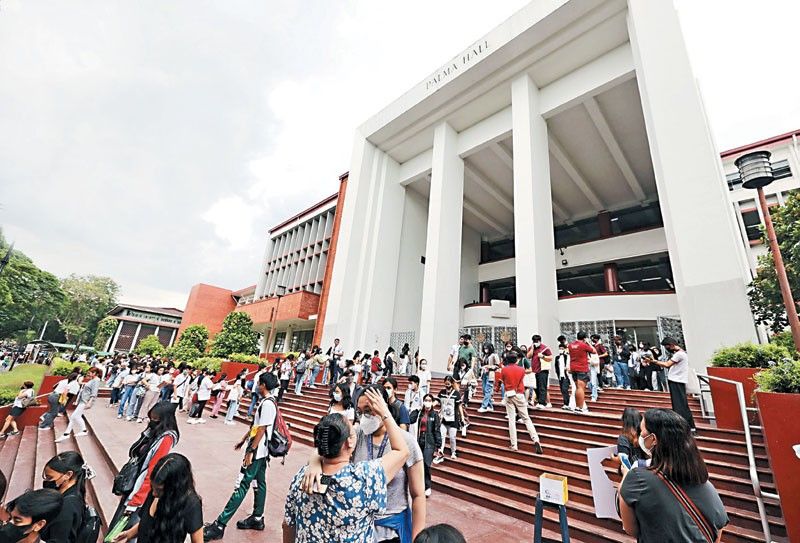
A FEW weekends ago, the traffic was tied up in knots around the University of the Philippines campus in Diliman, where we live, and we knew why. Many thousands of high school seniors hoping to enter UP were taking the university’s UPCAT or entrance exam, which had gone back to its old physical, face-to-face format after two years of being suspended in favor of a statistical formula because of the pandemic. This year, over 100,000 applicants took the UPCAT, out of whom about a tenth will be taken in, the actual number of admissions being determined by the capacity of UP’s eight “constituent universities” like UP Los Bañ0s and UP Mindanao, aside from Diliman, to absorb new freshmen.

As a campus resident and now a retired professor who still teaches a course every semester (an option I avail myself of, just to keep my foot in the classroom and know what the young people are thinking), I witness this ritual every year, and smile every time I see those bright and eager faces, squinting at the sun and looking a little lost; the first challenge every UP freshman faces is finding out where things are and the fastest way to get from Point A to Point B. 

That’s literally thinking on your feet, which is a survival skill we inculcate in our students. If there’s a smarter way to solve a problem than brute force, we’ll find it. (I recall how, in the middle of an exam for a Shakespeare class which I usually aced, I was stumped for the right answer, and in despair just responded with a quotation from A Midsummer Night’s Dream: “So quick bright things come to confusion!” My professor let me off with a 1.25.)

Frankly or perhaps unkindly, UP people are called pilosopomagulang, or maangas by those unfamiliar or uncomfortable with the forthrightness and cleverness that our academic culture encourages. At worst, we’re called “godless communists” by those who don’t see how packed our chapels and parking lots are (although of course, today, the most successful communists are called oligarchs). On this point, I can guarantee you that no one can be more annoyed if not enraged by a UP person than another UP person; our faculty feuds are legendary. Indeed that has become a liability with some employers who prefer to hire graduates who will simply do as they’re told without asking “Why?”

“Why?” may indeed be the wrong entry-level thing to say, but it’s also what has moved science and society forward, quickly followed by “How?” If no one asked it, we’d still be chasing animals over clifftops for food and sacrificing our first-borns for bigger harvests. This urge to apply reason to the most basic of human and natural functions again can be occasionally irritating, especially when it is accompanied by the unflinching (or perhaps juvenile) certitude that one is absolutely right. 

As a teenage activist in Diliman, I was sure that the only way out of the mess we were (and continue to be) in was an armed revolution; Marxist logic said so. Approaching 70, I’m just glad that I lived long enough to reason my way out of it, but looking back at that pimply 17-year-old who carried Harry Shaw’s College English in one hand and Mao’s Little Red Book in the other, I can understand why I thought the way I did. And no, it wasn’t like my professors force-fed me with rebellious notions. I was a reasonably bright kid who read the news—murders and massacres here, extreme poverty and hunger there, corruption and scandal all around, with few of our leaders seeming to care—and I was looking for a comprehensive and compelling framework to explain all this and map out a route forward. The Left offered that.

It’s important to note that then, as now, most UP students and certainly most Filipino students didn’t feel the same way and do as I and my comrades did, which was to put activism over academics. Our protests may have hogged the headlines and typecast UP for good as a school for rebels (although it had been a hotbed of student protest since Quezon’s time), but the majority of UP students then continued attending their classes, turning in their assignments, and picking up their diplomas, as was their right. Like I often emphasize, as vocal dissidents, we were (and are) in a distinct minority. That comes with the territory of resistance—not just in a university but in society as a whole.

Given what’s happened since, were we wrong to protest and did we waste our youth (and, as some politicians and red-tag-happy trolls might say, our people’s money as well)? Some of us persisted and stayed on that path; many paid with their lives, or devoted the entirety of their lives to their cause. Some turned 180 degrees and now rabidly renounce their past, casting their lot with their former enemies. Some, like me, now see moderate liberalism as the only viable way forward—to endure and survive, gaining ground from one generation and one community to the next, instead of in one fell swoop. Somehow I understand all of these outcomes, which are all human, all fallible, and none of them assured of success. I can only be hopeful, and not certain, that my option is the best one.

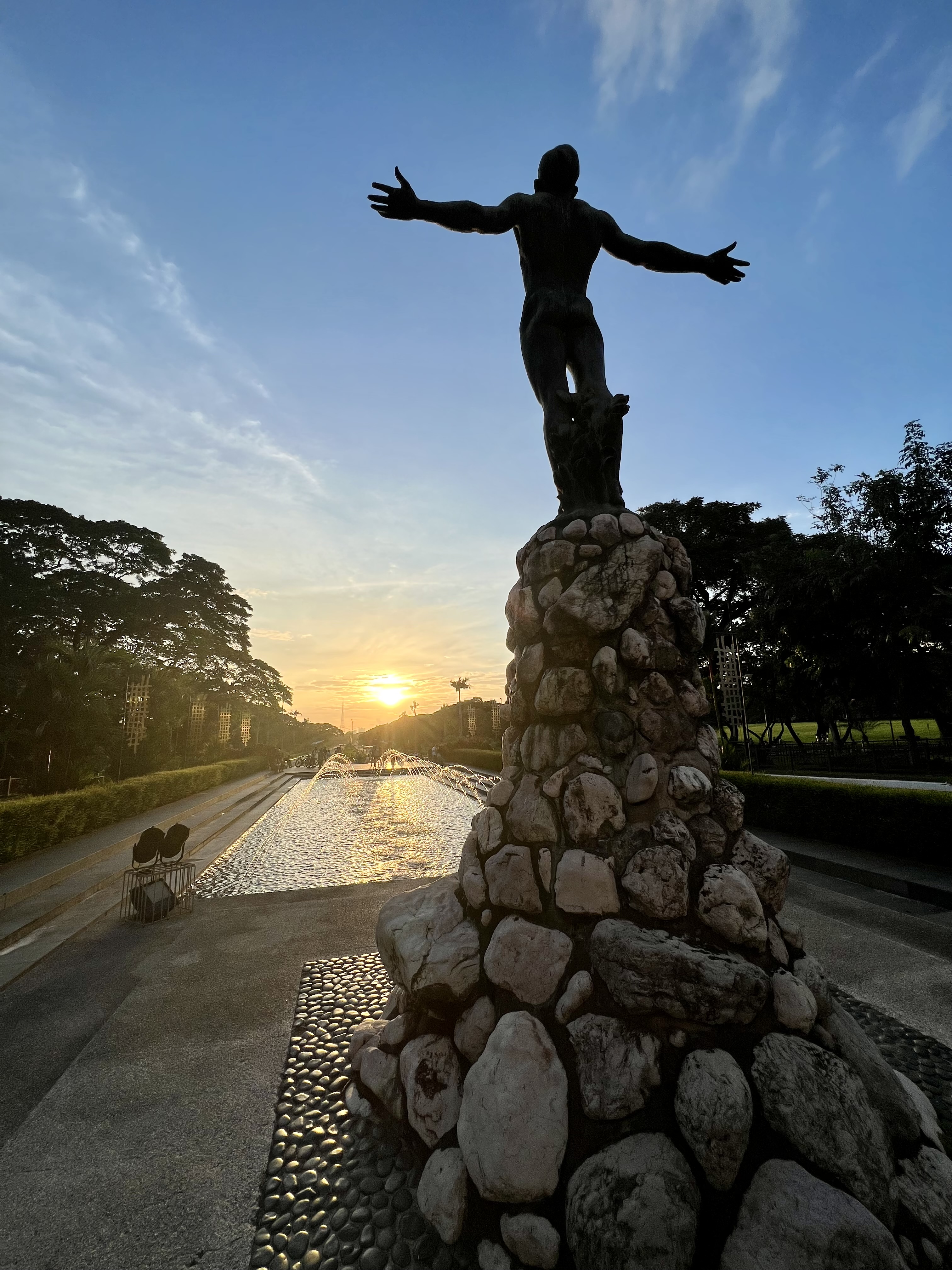
As I looked at the UPCAT examinees posing for selfies in front of the Carillon and the Oblation in Diliman, I remembered that eight UP students are now facing charges for their recent attempt to storm past a closed door at Quezon Hall to protest an unpopular decision by the Board of Regents. Among the complainants’ grievances, ostensibly, was that the wooden door was part of UP’s heritage, and had to be protected at all costs.

That saddened me, because the last image that one could imagine to stand for a university like UP is that of a closed and impregnable door. UP’s true heritage doesn’t lie in its furniture but in its tradition of free speech, and even of protest, the occasional overflow of passion included. I can only pray that UP’s new and compassionate president, Jijil Jimenez, can draw on his own activist past to see that point, and to keep an open door for his constituents to his mind and heart.

Qwertyman No. 38: Getting into UP

Qwertyman for Monday, April 24, 2023

(For this week, let me offer a little family drama about my favorite school, this being exam season, and before I get the usual calls from anxious friends.)

“HEY, UPCAT is back, they’re holding UPCAT live again!” Marides waved the newspaper in her husband Bong’s face. Bong was watching a car show on TV where they found old cars in barns and turned a bucket of rust into a gleaming, raging roadster. Somehow it gave him hope that, down the road when he became a senior and ached all over, they could ply him full of oils and sealants and make him go like a teenager again.

“What UPCAT?” At least the question proved he was listening. Marides had that godawful habit of intruding on his most blissful moments with some real-world problem, and then getting on his case when he ignored her. Twenty-five years of marriage, four kids, and she still didn’t know when to leave him be. 

“UPCAT—the University of the Philippines College Admission Test, the same one I took and passed thirty years ago, which led to me representing UP and meeting and beating you in an inter-collegiate debate, remember? After which you got my number and asked me out and proposed to me three months later, remember?”

Bong hated it when Marides reminded him of that first encounter and its outcome, which became a given of sorts in their household—she was smarter than him, she had all the better arguments, and who knows what she could have become—a corporate genius, a Supreme Court justice—if he hadn’t saddled her with babies and insisted on working for the both of them. He was good with the money, she had to grant him that, because he was the agreeable type who made all the right connections and who could hustle his way out of a guilty verdict if he had to, as he more than once had to. 

“So what if UPCAT’s back?” he asked for the sake of asking. On the TV, two mechanics were staring at a big hole where a Corvette’s engine should have been.

“Dondon is in his senior year. He’s supposed to be taking it soon. We need to make sure his papers are in order. Where’s that boy? Dondon! Come out for a minute, will you?” 

A teenager with frizzy hair and a phone glued to his ear straggled out of his room and deposited himself in the nearest chair, across the room from his parents, still mumbling on his phone.

“You know UPCAT is happening, right? Have you filed your application yet?”

“Yes, Ma—mumble mumble….”

“Will you please put that phone down while your parents are talking to you? Bong, could you teach your son some manners—”

Bong: “Mumble mumble….”

“I’m serious! You two listen to me—our family’s reputation is on the line!”

“What reputation, Ma?” Dondon grudgingly put his phone aside, and Bong yawned and stretched his arms to acknowledge that he was in for a long spell.

“The one I started, by passing the UPCAT, getting into UP, and serving the people any way I could!”

“But, Ma, all you ever did was to bear us babies, and look what we became—Ate Glo is divorced in the States, all Kuya Jeff does is drive Papa around, and Kuya Milo thinks more tattoos will make him a better rocker. And all of them passed the UPCAT because you told them to!”

“Well—that was my service—to them, and to our people. I give you the opportunity, and what you make of it, well, that’s your business….” Marides started sobbing, and Dondon ran across the room to embrace her.

“Aw, Ma, that’s not what I meant. I just wanted you to see that getting into UP doesn’t guarantee anything.”

“That’s what I’ve been saying all these years!” Bong added. “We’ve been sending our kids to a school for communists, and they don’t even make good communists anymore!”

“No, they don’t,” Marides shot back, “because those communists took the top five places in the bar exams!” She sniffled and Dondon handed her a box of tissues.

“Don’t cry, Ma. It’s all right, it’s all okay. Applications are done online now and my school sent all my papers in last week. I just didn’t tell you both because—well, Papa wanted to explore other options—”

“Other options? Like what?”

“Like sending him abroad to a school of his choice. We have the money—”

“What, you’ll be sending my baby, our bunso, away for the next four years?”

“Or he can pick any other school here he wants to! UP’s not the only good school for engineering or science in this country—”

“I don’t want to be an engineer, Pa….”

“What? You’re a science high school scholar! You have to be an engineer—or a chemist, a physicist, do something with numbers, you don’t have a choice!”

“I never did, Pa, you and Ma chose my high school for me, I just took the exam. Maybe I should have just failed it.”

“So what the hell do you want to do with your life? Who’s going to take over the business when I’m gone?”

“Maybe you should trust Kuya Jeff more. Keep him in the backseat with you. Me, I want to draw, to paint, to design, do something creative. I know I’m good—you’ve seen my sketches, you just haven’t paid much attention to them.”

“We just want you to be happy, son,” said Marides. “We’ll support whatever you decide—won’t we, Bong?”

“Uhm—yes, okay, sure, if it makes you happy, but will you stop crying? I’ll make sure Dondon gets into UP, even if he fails the UPCAT—”

“Pa!”

“I’ll call an old friend of mine, you know me, I know all the right people. He used to be a VP in Quezon Hall, I’m sure he can pull a few strings and get you in—”

“Pa, that’s not how I want to get into UP, that’s not what UP’s about—”

“Oh, you mean that guy who now writes a column about funny things like fountain pens and his wife Weng for a newspaper? Forget it. Chuchay called him last year to ask for the same favor, but he said sorry, no, he won’t do anything of the sort, that it’s just not done in UP!”

“Why, that useless jerk! Doesn’t he know how things work in this country? I’m sure UP’s just as full of jokers and crooks as Customs, Congress, the Palace, you name it! Don’t half the people in those places come from UP?”

“Maybe, Pa—but that’s why I want to go there, because it still has people like your friend who won’t let me in unless I pass the UPCAT! Don’t worry, Ma—I’ll do my best, I promise.”

“Oooh, my son’s going to be the next Amorsolo!” Starts singing: “UP naming mahal, pamantasang hirang….”

“I have a friend who owns a gallery….” Bong began.

Penman No. 314: Sourcing the Pinoy Crowd

IMG_7312

Penman for Monday, August 6, 2018


ART CRITICS often like to write about the Pinoy penchant to fill up vacant spaces—our horror vacui, evident in everything from our front yards to our jeepneys and desktops. And when there’s nothing to fill up a nice big void like an empty hall or open street with, heck, we fill them up with our own bodies, to form a healthy crowd.

We Pinoys usually don’t think too much about being caught in a crush at the LRT, the ballgame, or the rally. Indeed, students of crowd psychology will point out that while they may be uncomfortable, crowds can also generate positive synergies, and that even in the most seemingly unruly mob, an inner logic eventually emerges and prevails.

But we also know that crowds can turn ugly and deadly pretty quickly, as the stampedes that every and then convulse English football show. Even much less than that, there’s nothing funny about people fainting in a queue or in a surging mass of bodies desperate for one thing, whether it’s a glance from a rock star or a little slip of paper that could be a ticket to a first-rate college education.

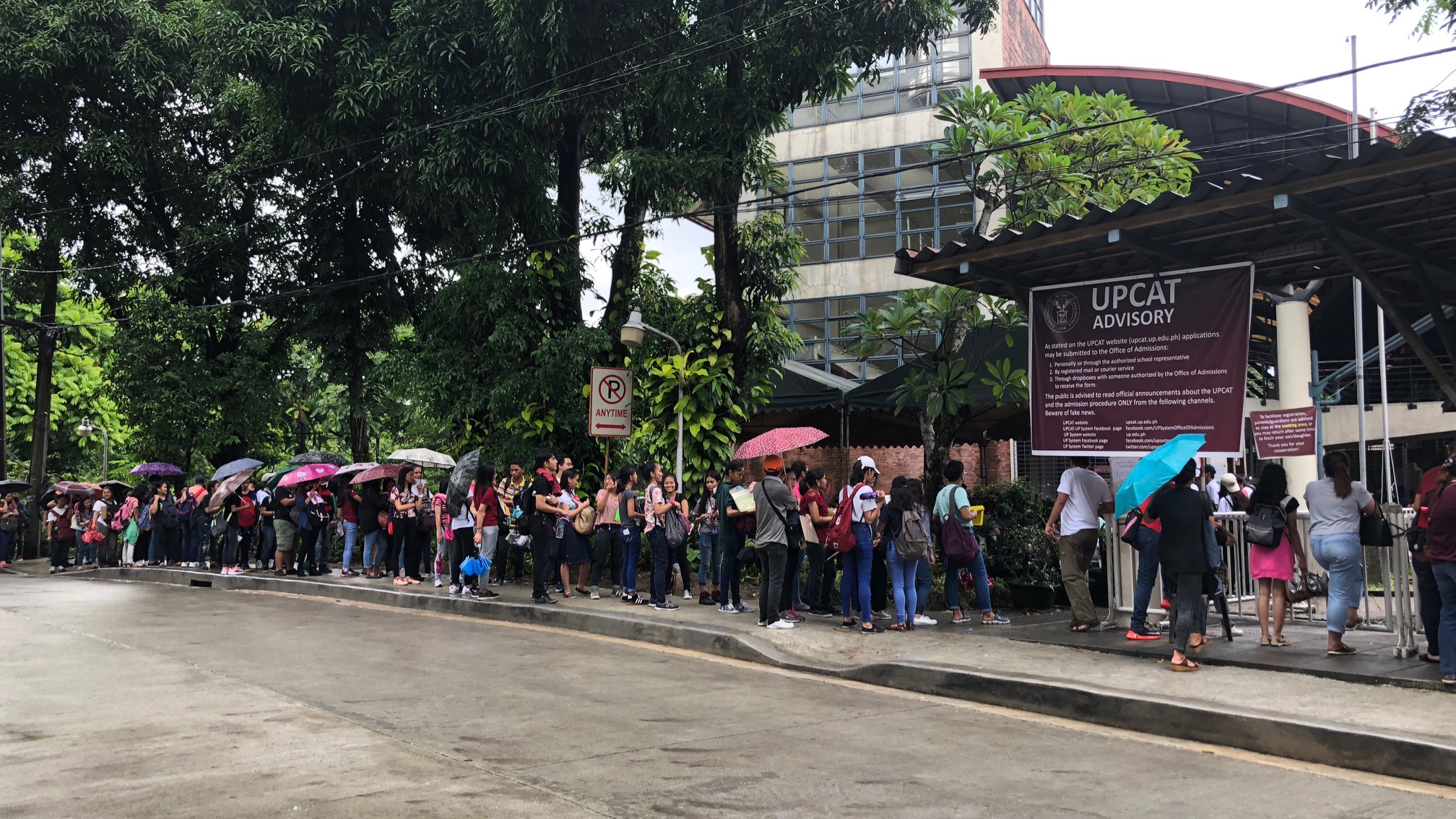
All this was on my mind last Monday as I dealt with one of my busiest days as a school administrator at the University of the Philippines, where an estimated 40,000 people converged at the Office of Admissions in Diliman in one day to submit their applications to take the UPCAT, UP’s entrance exam, in mid-September. To wrap your head around that figure, Diliman has 25,000 students on a normal day. But my guess is that at least half of those 40,000 were anxious parents taking a day off from work to accompany their kids.

It was actually the extended deadline for students of private high schools in Metro Manila (not public as erroneously reported—a lot of fake or unverified news went out that day and after, and a woman presenting herself as a network news reporter even urged the crowd to chant for an extension as her camera rolled). As a torrent of tweets soon reported, the lines kept growing longer, tempers flared, and panic seized more than a few people in the area. The media calls came soon after, and—as UP’s equivalent of, uhm, Harry Roque—I spent the rest of the day and part of the evening fielding questions.

Did we expect the size of the crowd? Well, yes and no. The surge in applications was unprecedented—in years past, we’d get something like 80,000 applications; last year it was 103,000, and this year, our estimate runs to about 167,000. What accounted for the sudden bulge? Free tuition, for one, and K-12, for another. (The actual number of qualified exam takers could be about 20 percent less, and the admission rate—those who “pass,” although there’s no fixed passing grade—about 17 percent of all takers, which is a function of UP’s carrying capacity.)

We did see that coming, but I guess what we didn’t anticipate was how many students (and/or parents) would choose to appear and line up in person, rather than avail themselves of other less stressful options clearly stated on the application webpage—to submit applications online, or by mail or courier, or in bulk with the help of their school. (UP provided the extra option of a drop box when it saw how large the crowd was.) That was probably because queuing up guaranteed—if all your papers were in order—a test permit at the end of the line. But that also meant that the line could take all day.

So we Pinoys are seguristas, willing to sacrifice comfort for the certitude of paper in hand. We still mistrust electronic processing, and can’t wait a couple of weeks to know our fate. I went onsite to see for myself what was going on, and was told by one exasperated guard that “They won’t listen! There’s a drop box right there, and we’ve told them they can courier the forms, but they’d rather line up for hours!”

You’d also have to wonder why Pinoys like to wait for deadlines to do the inevitable; July 30 was already an extension from July 27, and applications had been open for three weeks. But to be fair to the students and their parents, it wasn’t entirely their fault to have waited so late in the day to submit their papers. Some told me that their high schools had held their papers up; some were charging rather stiff fees for handling UPCAT forms.

And was there a class factor at play? When the turn of the public high school applicants came, the huge crowds dwindled, and the lines got shorter—and far fewer parents appeared, because they probably couldn’t afford a day off, or trusted their children to fend for themselves. Things moved more smoothly.

There are lessons for everyone to be learned here—by the students, by the parents, and by us, most of all—and we’ll continue seeking ways to ease procedures for everyone in the years ahead. Eventually, I foresee a time when all submissions will be made online, like visa applications—something we can’t enforce until every Filipino has access to the Internet, and overcomes his or her mistrust of information technology. Until then, we’ll all have to learn better crowd management, provide lots of water and Portalets, exercise patience, take the media brickbats, and soldier on.

Maybe this was a crowd that didn’t really need to be there, but on the other hand, and to put it positively, it was a stark visual reminder of the intensity of our people’s aspirations for a good college education. The best way to disperse it long-term would be to meet those needs, in UP and beyond.