Unknown's avatar

About penmanila

A Filipino collector of old fountain pens, disused PowerBooks, '50s Hamiltons, poker bad beats, and desktop lint.

Qwertyman No. 152: A Probinsyana from Paoay

Qwertyman for Monday, June 30, 2025

IT WON’T officially be out for another couple of weeks, but I’m happy to announce the publication of my latest book, the biography of one of the Philippine judiciary’s most fearless and remarkable women, former Supreme Court Justice and Ombudsman Conchita Carpio Morales. Begun during the pandemic, Neither Fear Nor Favor: The Life and Legacy of Conchita Carpio Morales (Milflores, 2025) traces the journey of a probinsyanafrom Paoay, Ilocos Norte to the country’s highest court, followed by an even more distinguished period of service as “the people’s agent” at the Office of the Ombudsman.

I’ve written a number of biographies of outstanding Filipinos before—among them the accounting titan Washington SyCip, former UP and Senate President Edgardo Angara, and the renowned economist Leonides Virata, as well as the revolutionary Lava brothers—but this was different in many ways. 

Foremostly, it was because my subject was a woman working her way up a heavily male-dominated system, constantly challenged to adhere to her fundamental values and principles in an environment of corruption, intimidation, and political accommodation.  For the men—given that they had the talent and the grit, and possibly the right connections—success was practically a given; for such women as Conchita, proving oneself worthy was often doubly difficult.

Since the Supreme Court of the Philippines was established in 1901, almost 200 justices have been appointed to that exalted bench; only 18 have been women as of 2023, and it wasn’t until 1973 that the first female justice, Cecilia Muñoz Palma, took office. After Morales was appointed to the SC by President Gloria Macapagal Arroyo in 2002, among the first cases to fall on her lap was the impeachment of no less than Chief Justice Hilario Davide, brought on by pro-Estrada congressmen who believed Davide had misused the Judiciary Development Fund. A fellow Justice approached the novice to ask her pointblank, “Chit, do you think you can handle this?” Inhibiting herself from the case would have been the prudent option, but she took it on, and wrote the decision disposing of the complaint.

She would soon be known for her fierce independence. Despite death threats—a grenade was once left outside her Muntinlupa home, along with a threatening message—she worshiped no sacred cows, spared no one from judicial scrutiny when the situation demanded. This was even much clearer when she retired from the Supreme Court and was appointed Ombudsman, in charge of investigating and prosecuting high-profile cases of graft and corruption in government. Among the cases that crossed her desk were those against PGMA, President Noynoy Aquino, former Senate President Juan Ponce Enrile, and former Vice President Jejomar Binay.

While most of a Justice’s or Ombudsman’s work is done quietly, away from public view, occasionally they come into the limelight even against their wishes because of our fraught political environment where issues often end up in court. One such case was the 2011 impeachment of Chief Justice Renato Corona, a highly significant and contentious case that centered on serious allegations of corruption and betrayal of public trust. 

Then the Ombudsman, Morales engaged a former Supreme Court colleague, Serafin Cuevas, in what came to be known as the “battle of retired justices. “I had been summoned as a hostile witness by the defense,” Conchita recalls. “I sensed that the defense wanted to embarrass and humiliate me even. They thought that my alleged opinion that Corona had millions of dollars in undeclared deposits had been based on the three complaints filed before the Office of the Ombudsman. But it was the Anti-Money Laundering Council that had furnished me with the CJ’s record of bank transactions. I had requested their assistance as reported by the media even before I was summoned to testify. The three complaints filed at the OMB never mentioned any dollar deposits. If the defense counsels had been insightful enough, they should have figured that out.” Corona was eventually impeached on a vote of 20-3.

Her confrontations with former President Rodrigo Duterte—a distant relative, through the marriage of her nephew Manases Carpio to presidential daughter Sara—were also the stuff of theater. At the 2016 wedding of Manases’ brother Waldo, the President and the Ombudsman walked down the aisle together arm in arm—he in a cream barong and she in a bottle-green gown—and appeared friendly, making small talk. The cordiality would not last long.

One year later, in October 2017, President Duterte challenged Conchita to resign as Ombudsman, claiming that she had exercised “selective justice” in asking her deputy, Arthur Carandang, to investigate his unexplained wealth. Duterte suspended Carandang, and threatened to impeach Conchita. “Resign now,” he told Morales, “at kung hindi, huhubaran kita!” The last line—which literally translates into “or else I’ll strip you naked”—was egregiously coarse, but came as no surprise to audiences familiar by this time with Duterte’s tough-guy and often misogynistic language.

Morales promptly hit back, vowing not to be intimidated. “If the President has nothing to hide, he has nothing to fear,” she coolly told a press conference.

What most people never saw was Conchita’s lighter side. The first time she went to Broadway in 1981, she watched Evita with her sister Vicky. Before watching, they had dinner at Gallagher’s, where the size of the steaks made Conchita’s eyes pop. She couldn’t finish her portion and, ever the Ilocana, wanted to have it wrapped to take home. Her sister told her not to do that, so Conchita went to the ladies’ room, got some tissue paper, and wrapped the steak. The following day, they went to Washington, where they went to dinner and had shrimp cocktail. Conchita then took out the previous day’s steak to the shock of Vicky, who said, “Don’t bring that out. Don’t embarrass me!” The steak ended up in the wastebasket. 

Lawyer Ephyro Amatong and others who trained with her were privy to Conchita’s moods and modes. “When she was in her ‘Justice’ mode, she was very strict, very sharp, very hard to read, with an incredible poker face. I knew lawyers like the co-head of litigation at a big firm who thought that she was scary,” Eph says. “But while she could be reserved, she could also be very charming and accommodating. She had a great sense of humor. I remember when she had to attend an en banc meeting or when she had a ponencia for deliberation, just before she went out the door, she might be laughing or making jokes about the grilling she might get, or mention what she was wearing and how fashionable she was. But once the door opened and once she stepped out, her ‘Justice’ face came on, ready for battle.”

You can read more about this feisty Filipina, the Ramon Magsaysay awardee for public service in 2016, in the book. Neither Fear Nor Favor: The Life and Legacy of Conchita Carpio Morales will be available on Shopee and Lazada or from milflorespublishing.com very soon.

Qwertyman No. 151: For Don, a Meditation

Qwertyman for Monday, June 23, 2025

(Photo of Los Cabos by Kurt Nichols)

I WAS looking for a topic for this column last week when it occurred to me that I had been staring it in the face, in the news and in the Facebook feed that, like for many, my days begin and end with. It was the omnipresence of death, in its many forms and guises, swift and slow, painless and agonizing, arriving on whispery feet and crashing through one’s roof or window. 

“A screaming comes across the sky,” the line with which Thomas Pynchon famously begins his novel Gravity’s Rainbow, was how death and destruction came last week to hundreds in Kiev, Tehran, and Tel Aviv, in missiles and drones designed and manufactured for but one purpose: to deliver death by inexact algorithm to place-names plotted on digital maps. 

In India we marveled at the horror and the mystery of one survivor escaping a catastrophic plane crash barely a minute after take-off: a moment when most of us would have just begun to fidget with the entertainment controls, wondering whether to take in a comedy or a thriller for the next two hours and what the meal choices will be. 

In Minnesota, a MAGA gunman stalked Democratic lawmakers and their families, shooting four and killing two on a long list of intended targets—murders that a Republican senator reflexively attributed to “Marxists not getting what they want.”

Most appalling was the report of Israeli tanks firing into a crowd of Palestinians lining up for food in Gaza, an incident that led to about 60 deaths and more than 200 wounded, for which the Israelis apologized with this statement: “The IDF regrets any harm to uninvolved individuals and operates to minimize harm as much as possible to them while maintaining the safety of our troops.”

As if the news isn’t enough, every time we scroll through our social media accounts, more deaths emerge, in the now-familiar solitary-candle meme and in the garlanded portraits of the recently departed. Facebook has become our new obituary page, our book of condolences, our virtual wake. The friend or the kinsman in us takes the loss with the requisite pain and grief; the enemy with muttered thankfulness, or more rarely forgiveness; the human with relief, that we are reading and not being read about.

Death in the news is meant to outrage us, and it still does, at least for a while, especially senseless and preventable death, willful murder, and patent genocide. But sadly we can only take so much, even with the keenest of consciences; there is something in our brains, a control or shut-off valve, that says “Enough” and leads us back into the immediate and comprehensible present, back to chocolate cupcakes, Torx screwdrivers, tomorrow’s court hearing, and Lola’s birthday. This, we remind ourselves, is life, the only one we have, our chief responsibility above all others to live and to give meaning to. 

We try to make sense of death as much as we do of life, and for those of us of a certain age, that means the acceptance of its inevitability. I suspect that those of my generation who came of age under martial law and fought it, who saw dozens of our comrades die, can do that with more equanimity than most, never having expected to live beyond twenty-five; every year and decade since has been a grace note, a blessing we have been careful not to waste. We are lucky to have come this far, and can leave without regret.

The Buddhists have what they call maranasati, the practice (says Google, meat-eating me being decidedly non-tantric) of contemplating one’s own mortality to cultivate mindfulness, reduce fear of death, and appreciate the present moment. The practical Swedes have döstädning, celebrated in The Gentle Art of Swedish Death Cleaning: How to Free Yourself and Your Family from a Lifetime of Clutter by Margareta Magnusson, a Nordic Marie Kondo who advises us to downsize and clean up our mess before we croak to save some grumpy nephew the trouble of sorting out which things go to the trash and which go to the resale shop. 

Speaking of which, my devotion to Japan-surplus stores and their wonderful bargains is tempered by the knowledge that most of these items were likely made available by the peculiarly Japanese practices of hikikomori, or withdrawing from society and living alone, and the even sadder kodokushi or “lonely death,” where the bodies and belongings of the forgotten might be found days after their passing. But then, as a collector of vintage fountain pens and antiquarian books, I am well aware that these precious objects have passed through many lives and survived their owners, and will certainly survive me, which is strangely reassuring. They offer proof of an afterlife—maybe not paradise, but the life of the people and things you leave behind.

In a way, death’s predictability (or the illusion thereof) is comforting, because we think we can therefore prepare for it, as for the coming of a friend who will lead us away by the hand, down to the smallest detail. Despite her surprisingly good health, my 97-year-old mother has written out her DNR instructions, and a year ago we made a light-hearted trip to the mall to pick out her funeral dress, in a deep, pacific blue. Well before my father died of an aneurysm almost thirty years ago—he was a chain-smoker and a candidate for early passage—I had written out a scene in my first novel where the protagonist comes home to his father’s wake, which was my way, the privilege of imaginative writers, of cushioning the real pain when it struck; when it did, I still wept like my father’s child.

I’m writing this because I’m actually not very good at dealing with death and processing grief, as detached or as flippant as I may sound about it. I avoid or don’t stay long at the wakes of friends because I tend to say the lamest things. 

Last week I lost good friend—a high-school classmate named Don Rodis, brother to lawyer Rodel and producer Girlie, whom more people know—our Philippine Science High School batch’s livewire and indefatigably perfect host, to those visiting him in San Francisco. On vacation with his family in Los Cabos in Mexico, Don was strolling on the beach when a rogue wave known by the locals as the mar de fondo caught and swept him out to sea. Despite a massive search, his body has yet to be found. We are all stunned and awash with grief, but what struck me was how pretty that beach was from all the pictures, how blue and inviting its waters. And now I’ll say a stupid thing, for Don: rather than dying from a rocket to your head, or rotting from within, or freezing alone in Yamagata, sometimes we die in beauty’s arms. 

(Don Rodis, 1954-2025, with his wife Jocelyn)

Qwertyman No. 150: Let the Curtains Rise

Qwertyman for June 16, 2025

UNLIKE MANY newspaper columnists, I don’t have much of a political or business network, being a not-very-sociable recluse who prefers to play poker with a few regulars and going out on dinner dates with the wife than to clink glasses with the cognoscenti. 

But every now and then I get a seat at the table with people who seem to truly know what is going on—political operatives and operators with the inside track on where people really stand and who’s in bed with whom, and bankers who find themselves serving as confessors to clients pouring out their tales of woe (e.g., the going rate of commissions on government contracts). 

As the fly on the wall with little to contribute but my amazement and credulity, I leave such meetings often profoundly depressed but also grateful to be more of a fictionist than a journalist, a writer who fancies the eternal verities of life instead of someone who has to gulp and swallow the unreportable.

Last week, I sat down to one of these powwows with a group of eminently connected friends whose identities shall go unmentioned, and the talk of course quickly went to VP Sara Duterte’s impeachment, and to the twists and turns the process has taken from the House to the Senate and back to the House again. The consensus among these pundits—who all come from different political persuasions—was that (1) Sara was guilty as hell of something or other; (2) but the trial wouldn’t take place; and (3) even if it did, she would surely get off the hook. 

The reasoning was that, as the last elections showed, the Dutertes were still surprisingly strong, and that the old man Digong’s banishment to the ICC only galvanized his base; therefore, Sara remained a viable candidate for 2028 (barring her impeachment and perpetual disqualification). If the administration slate had done better and had a lock on the numbers, that impeachment and Sara’s future would have been moot. 

But with the tide seemingly shifting Sara’s way—remember, she doesn’t need as many senators to acquit her as those required to convict her—then it may prove opportune for some senators to straddle the fence under cover of impartiality and assure their political future under Duterte 2.0 by at least keeping the door open for the lady. A more impish conjecture had it that this “remand” maneuver—which seems to have taken everyone by surprise except its chief instigator—provides an interlude during which certain crucial negotiations can take place. “It always comes down to money,” concluded one of our cohort. It was in everyone’s best interest not to have a trial, said another, because it would open a Pandora’s box of embarrassing revelations that would make Sara’s alleged transgressions look as petty as, well, Piattos.

Finally, the little Quixote in me had to speak up, and all I could say was, “If there’s no trial, there’ll be big trouble.” Feeling a bit bolder, I added, “And it’s not even just about winning, but holding people accountable—not just Sara but the senators as well.” Cynicism, I thought, was the real enemy in matters like these; we can’t let ourselves be paralyzed by cold reality, and it’s surprising what a little hope and even folly can do to change that reality.

Exactly what I had in mind when I said “big trouble,” I have to admit I wasn’t too sure of. I know people have been talking about an “Edsa IV” (let’s put that in Roman numerals to make it look more historic). But while I like the sound of it and would probably join the angry mob marching to the Senate to the beat of “Do You Hear the People Sing,” there’s an inherent problem or two with this “Edsa IV” scenario. 

Edsas are usually aimed at shaming and shooing someone out of office, but who would we be up against this time? Certainly not BBM (about whom more, later), who’s been enjoying a free ride on the center-left’s campaign against the Dutertes. VP Sara? She’s beyond shame and will never quit. SP Chiz Escudero? It would flatter him too much to be rallied against; besides, if you counted all the needles already being stuck into his homunculus by the enraged public, he’d look like a porcupine. Also, Edsas work when they reach a turning point, like when the Army decides to go south when they’re being ordered north; no such tactical possibilities here.

So it looks like we’re going to be stuck with the notion of a trial, which I believe will happen despite all the noises to the contrary because—take note I said this—we Pinoys can’t resist putting on and watching a good show and this impeachment promises to be a blockbuster of a melodrama. One way of framing it would be to present a beleaguered princess on the dock, invoking an exiled father and suffering the wrath of a cousin who usurped the throne; or, a comely damsel is revealed to be a hissing and slithering snake-witch when sprayed with the Holy Water of Truth by the village elders. There will be ample opportunity for all players to emerge as heroes or villains in this unfolding narrative.

And then there’s BBM, whose coy “hands-off” pronouncements no one at our table would take at face value. Even as I fought off cynicism, I reminded myself how we fictionists and dramatists sometimes have to be even more cynical than the most hard-bitten journalist to do our work well. We work with human nature—not with data, like good social scientists do, which is also how and why we can make people cry and laugh like the best scholars can’t. We have to see both the best and the worst in our characters to understand them thoroughly. “Ask yourself,” I often tell my writing students, “what does your character most strongly desire? What can he or she least afford to lose? In their moments of direst need, what do they pray for? If you can answer that, then you know who they are.”

So I asked myself: what does BBM want? To survive and prosper, of course—and then again, whether he’ll admit it or not, as a character in a play, he will want redemption, if not for the family name then for himself, to be a Marcos and yet be his own man. What does Sara want? Survival as well, of course, and exoneration—and beyond that, as she has made abundantly plain, revenge for betrayal and willful injury. 

I may not know that much about politics or business, but this has moved to the realm of theater. Mark my words, those curtains will be rising soon.

(Photo by Ted Aljibe/AFP)

Qwertyman No. 149: American Idiocracy

Qwertyman for Monday, June 9, 2025

IN HIS controversial but surprisingly popular 1987 book The Closing of the American Mind, the philosopher Allan Bloom lamented what he saw to be the decline of intellectual inquiry in America, indicting its universities for failing their students by promoting “relativism” over the time-honored values embodied by the “Great Books” of Western thought. “The consequences of the abandonment of the quest for the best are far-reaching and destructive,” Bloom intoned. 

Bloom was no flaming liberal; in fact, he was anything but—a true conservative who disdained rock music for its overtly sexual messages and its narcotic effects on the young (imagine what he would have said about TikTok). But his book and its arguments struck a responsive chord in many Americans—half a million of them bought hardcover copies—who were worried that the counterculture that had crept across American society since the tumultuous 196os had weakened it from within and had dulled the blade of American exceptionalism—the rock-solid article of faith that America was, or had to be, No. 1 in everything, because of its unique history and attributes.

That sounds a lot like “Make America Great Again,” although MAGA wasn’t driven by a longing to study Plato, but by deep-seated, grassroots-level grievances and prejudices. One wonders how Allan Bloom, who died in 1992, would respond to the political situation today, which on the surface mirrors some of his concerns, but only just so: a conservative President has declared war on America’s liberal universities, for all the wrong reasons, leading up to the “far-reaching and destructive consequences” that Bloom bewailed. 

Of course, Donald Trump is no Bloomian or even Reaganite conservative; all he seems to be about is unbridled power and money, and testing the limits to where they can go. “Trumpism” has been described as a mash of nationalism, populism, and industrialism, with a generous dollop of pettiness and egotism. 

Sometime last April, messaging on Truth Social (with a shift key typically gone berserk), Trump attacked Harvard University, claiming that “Harvard is an Anti-Semitic, Far Left Institution, as are numerous others, with students being accepted from all over the World that want to rip our Country apart. The place is a Liberal mess, allowing a certain group of crazed lunatics to enter and exit the classroom and spew fake ANGER AND HATE.” 

Shortly after, he ordered the federal government to withdraw more than $2 billion in funding for research grants to Harvard, and sought to cancel its ability to enroll international students. Trump wasn’t alone in declaring war on American academia. Years earlier, his VP-to-be JD Vance had told the National Conservatism Convention that “Universities in our country are fundamentally corrupt and dedicated to deceit and lies, not to the truth…. We have to honestly and aggressively attack (them).”

Not surprisingly, Harvard and a cohort of other leading universities have fought back, taking the administration’s tack as a frontal assault on academic freedom—and, more strategically, on America’s albeit waning intellectual leadership.

MAGAworld’s anti-intellectualism is interesting, because it draws on a long and dark tradition of tyrants from Franco’s Spain to Pol Pot’s Cambodia waging war on scholars—to cite only the most visibly horrifying examples under which hundreds of thousands of intellectuals were massacred. Mass murder makes the withdrawal of grants and visas seem benign, but they come from the same deep mistrust of critical thinking, contrary opinion, and the alien element. Dictatorships thrive on herd mentality and unquestioning obedience, both anathema to academia.

It’s not as if Trump and Vance never went to good schools. Trump went to Wharton and Vance to Yale Law; whether they learned something worth their tuition is another matter. Political instinct, not intellect, drives these men. 

Right now, that instinct is telling them that culture (or its reversal) is more important than anything else—specifically “woke” culture, the greatest threat to the hegemony of straight white men: civil rights, women’s empowerment, abortion rights, gay and gender rights, minority representation, affirmative action, Black heritage, environmental protection, and internationalism, among other values espoused by the liberal Establishment and its bastions like Harvard. 

The collateral damage of this insane and reckless urge to reshape America in Trump’s own image has included truthfulness, justice, accountability, sound science, and, ironically, America’s own long-term economic and academic well-being. MAGA’s success will be America’s diminution from the intellectual powerhouse that has accounted for more than 70 percent of all Nobel Prize winners (about 30 percent of them immigrants to the US) to the fools’ paradise contemplated in the 2006 movie Idiocracy—a comedy that won’t be so funny when it materializes.

Trump’s insistence on characterizing foreign students as potential terrorists and troublemakers will be particularly counterproductive, as it will banish many of the world’s best young minds to more receptive climates, and erode America’s influence on global thinking. 

That may not necessarily be a bad thing, as it reminds everyone that the US has no monopoly on excellence, and never really did. But as a two-time Fulbrighter who, like thousands of other pensionados to America, look back with gratitude and not a little pride on that opportunity to imbibe not just new knowledge but America at its welcoming best, I cannot imagine anything stupider than this willful squandering of American goodwill and soft power for the price of a few missiles. 

It will not even be Donald Trump & Co. who will pay that price, but generations of Americans down the road who will recall this period of infectious lunacy with bewilderment and regret. They will have no one to blame but their red-capped grandparents, who thought that trusting a despotic dunce with all that power was a bright idea. (And I know how much that statement smacks of the elitism that Trumpers hate, but tell me it isn’t true.)

Qwertyman No. 148: Pondering the Inconceivable

Qwertyman for Monday, June 2, 2025

IT SOUNDS like wishful thinking at the moment, but is there even a faint possibility that—in the aftermath of the midterm elections and looking ahead to the next big one down the road—President Bongbong Marcos might be willing to back a progressive candidate to take his place? And would liberal (with a small L) forces accept his help?

Just a few years ago this idea would have been totally preposterous, the relationship between the two sides being one of utter incompatibility and mutual revulsion. Marcos (more the name and what it stood for than Junior himself) was seen as the devil incarnate, while BBM would have deemed unforgivable his family’s ignominious banishment into exile in  Hawaii.

During the May 2022 election, Leni Robredo’s partisans (myself among them) made sure our people remembered the trail of blood and misery that martial law left behind, and the Marcoses’ unpaid debts to the treasury, and to the nation itself.

His election victory was met with profound disbelief and distress; we felt unmoored and stunned for a brief spell (much like the Democrats today, reeling under Trump’s relentless barrage of idiotic but effectively discombobulating executive orders). We took refuge in the certainty that this administration would quickly self-destruct from BBM’s incompetence and from its own internal contradictions—a prediction that has now partially come true, albeit with the most unexpected ramifications.

The spectacular collapse of the “Uniteam” was predictable; it had always been a marriage of convenience, seemingly forged to install BBM as a seatwarmer for VP Sara and the eventual restoration of the Dutertes in Malacañang. No one knew that better than BBM; there was talk (as there will always be, in this country of gifted storytellers) that the Dutertes weren’t even going to let him finish his term, but find a way to ease him out earlier so Sara could do a GMA and rule for longer than six years. So, went the buzz, BBM beat her to the draw by getting her impeached in the House (for good reason) and packing her father off to the Netherlands (for even better reasons).

Now comes the tricky part, which is getting Sara impeached (and struck out of the presidency for good) in the Senate—a newly reconstituted Senate that needs only nine of its 24 members to resist, and thereby keep the Dutertean dream alive. That court will convene sometime this month, with the outcome far from predetermined, but apparently leaning, at the moment, toward acquittal. Two administration senatorial bets—Imee Marcos and Camille Villar—jumped ship, making a crucial difference; the current pro-Sara tally now runs to a comfortable 11, if both Cayetanos, both Villars, and both Estrada siblings (now you see why dynasties are a bad idea?) see a longer horizon for their political futures with Sara on top. 

However, as they say, it ain’t over till it’s over, and the same opportunism that led to this tangle could just as easily turn it around within weeks or months, however long the impeachment trial is going to take. Observers note that at the last big impeachment trial—that of the late Supreme Court Justice Renato Corona—the odds were hugely in his favor at the start, but compelling evidence eventually made it not only unreasonable but politically untenable to acquit him at the end (although notably, his faithful supporter Senator BBM survived and even prospered). A strong prosecution—and, let’s admit, some backroom wooing and strong-arming—could yet land Sara in political limbo.

And that had better happen, because as BBM well knows, if the impeachment fails, his party has no candidate from within strong enough to take on the Dutertes. His apparent anointed, House Speaker Martin Romualdez, has about as much charisma and appeal as a thawed-out tamilok. Apart from the surprise victories of Bam Aquino and Kiko Pangilinan (about which more, later), the one big takeaway from the midterms was the continued strength of the Duterte forces on a national scale, never mind their isolation in Mindanao. An unverified post-election report (again, from the Bureau of Speculation) claimed that in a survey of early votes cast by the military and police, the Duterte slate scored a perfect ten. Why? Well, didn’t PRRD fatten the military, doubling their salaries and raising their retirement benefits? And aside from the mediagenic generals and admirals, who really wants to fight China in the West Philippine Sea? (Not my opinion, folks, just passing it along.)

If and when Sara wins, BBM and the Marcoses may find themselves taking another flight out in the night for parts unknown. The “bloodbath” Sara promised won’t be at the trial, but in its aftermath.

So we return to my first question: can and will BBM find it in himself to support a progressive and acceptable candidate from the middle forces, someone like Sen. Risa Hontiveros? If he insists on fielding his own man and the center-left puts up their candidate, it won’t take a political scientist to figure that as things stand, in a three-cornered fight, Sara will win. The Marcoses will be history (again) and the progressives crushed even more.

An argument can be made for the once-unthinkable. Against all expectations, BBM has done the right thing in de-Dutertizing government, (largely) stopping tokhang, and taking a firm stance for Philippine sovereignty in the WPS. On these issues, we can unite, at least for the time being. It will not be idle thinking to suspect that Bam and Kiko won not by divine miracle but with some backhanded nudge from the administration, who needed them to shore up its Senate votes (Bam, after all, was carried by the INC—as was Marcoleta, so it evens out). BBM’s Cabinet revamp shows signs of sensitivity to expectations and keenness on delivery, if only to shore up his administration for 2028.

He’ll never publicly admit it, but if BBM is truly intent on some measure of redemption for the Marcos name and on making his own mark on the presidency, this could be his historic opportunity. He will do well to support the progressives; it will be an easier and more logical switch than for the progressives to support an anointed trapo. BBM can take a free ride on the idealism of the middle forces, who are his best buffer against both Left and Right extremes.

But then again, all this comes to you sponsored by Willy Wonka’s Chocolate Factory, makers of the Everlasting Gobstopper and other fabulous confections.

Penman No. 474: Looking Back and Letting Go

Penman for Sunday, June 1, 2025

AS ANY friend who’s had the privilege of being invited to his Makati home quickly realizes, Ambeth Ocampo is more than the engaging public intellectual we all know, whose Looking Back series has made history come alive for young Filipinos. He’s also an inveterate collector of rare Filipiniana—books, ephemera, art, and historical objects—all of which come with the territory he works in. 

There have been many Filipinos of a similar bent—the legendary Alfonso Ongpin and the late Ramon Villegas come to mind, as well as the more contemporary Jimmy Laya, Melvin Lam, and Edward de los Santos, among others—but the way Ambeth has amassed his collection is noteworthy on its own, as it folds the personal almost imperceptibly into the professional. 

It comes pretty close to the classic prescription for murder—means, motive, and opportunity—all captured in his classic story of how he stumbled on and picked up Emilio Jacinto’s silver quill, a writing prize, from an antiques dealer who didn’t bother to learn what it was and let it go for its scrap value. (Having as much of Ambeth’s desire for antiquarian junk but with much less knowledge and certainly less means, I’ve often joked, between the two of us, that Ambeth’s the scholar and I’m the scavenger.)

Jacinto’s quill, along with a trove of other historical treasures from Ambeth’s personal collection, will be up for auction on June 7 at Leon Gallery. They include Juan Luna’s silver belt, Felix Resurreccion Hidalgo’s walking stick, an official copy of the Malolos Constitution, Philippine maps from 1616 and 1647, and the Noceda and Sanlucar Vocabulario de la Lengua Tagala from 1860, among many others.

Knowing how precious these objects were, I had to ask Ambeth more about them, and this is what he said.

What made you think of selling these treasures now? Surely it can’t be easy letting go of them after being their caretaker all this time?

Over the years, I have come to the realization that collecting is not the hobby it used to be. As a boy I collected stamps and learned geography, history, and the culture of foreign countries in the process. I was fortunate that my father’s company had an international correspondence, so every week his secretary would send me a batch of envelopes to sort out.

I started collecting Filipiniana books in the 1980s, stocking up from the National Bookstore Quezon Boulevard branch bargain bin where I completed my Nick Joaquin essay collection because they cost one peso each. After school, I went to the Heritage Art Center in Cubao that I learned only years later was the site of the old Philippine Art Gallery. It was a ramshackle grouping of rooms upon added rooms made from old house parts that Mario Alcantara, the owner, bought from mambubulok. I had a favorite nook where I did my homework and when bored I would explore the rooms that I think gave me an eye for art and the ability to choose what I thought was good or not.

Looking back my collecting, and my life, has been the happy intersection of skill and opportunity. Napoleon once said “ability is nothing without opportunity.” I have always seen collecting as a responsibility. Collecting significant Filipiniana is not a hobby. It is not an investment. Collecting is a responsibility, the collector a steward who preserves the collection for the next generation. 

The objects I put at auction have enriched my life in many ways and I think they will enrich the life of their next steward. Some of the lots like the Malolos Republic one-peso banknote and the printed copy of the Malolos Constitution have been tucked away in a drawer. If I drop dead tomorrow these might be carelessly thrown away as trash. They should go where they are better appreciated. Collectors de-accessioning keeps the market alive and buzzing.

Let’s get this out of the way: it’s none of our business, but what will you do with the money?


Since I am not a dealer the material reward does not really factor in the equation. I have sold other things before at cost or even at a loss, just thinking that my gain was the enjoyment I got chasing after them and acquiring them. What will I do with the proceeds? When I started selling my rare Filipiniana I thought that instead of having shelves of books, maybe I should just sell and use the proceeds to buy one or two incunabula or samples of early Philippine printing from 1593-1640. Instead of caring for a whole library I will just care for half a dozen very important books.

How did you start out as a collector of historical objects? How and where did you find them? Aside from Jacinto’s pen, what was your most serendipitous find?

Collecting historical objects came naturally from my work as a historian. I would find things in used bookstores and when supply was still plentiful in the Ermita antique shops. One of the serendipitous finds was the cedula or residence certificate of a certain Julian Felipe, a musician from Cavite. It was in a heap of old papers, initially priced at one hundred pesos. I haggled it down to fifty, paid, and ran away. 

Another time my favorite antique dealer brought a “European painting” of a Virgin and Child to my home. I looked at it and knew it was Philippine. When I opened the frame to inspect the painting, hidden under the frame was the signature of the Filipino master Mariano Asuncion (1802-1855). The silver belt of Juan Luna and the bank draft in his name were acquired from Mario Alcantara. It came with the famous trove of paintings inherited by Grace Luna de San Pedro that are now in the National Museum. While everyone was going wild over the paintings, I spent many afternoons browsing the boxes of memorabilia that included the bloodied uniform Antonio Luna wore when he was assassinated, the palettes and brushes of Juan Luna, the memorabilia, some architectural plans of Andres Luna de San Pedro, and much more. I offered to buy the palettes and brushes and the painter’s smock but Mario said these were destined for the National Museum. There was also the last letter Juan Luna wrote to his son from Hong Kong, written a day before his death, not only was this letter significant, Luna did a watercolor of Hong Kong Harbor on the first page of the double-sided letter. All I could afford was the silver belt that came with Luna’s black suit that Mario said was also destined for the National Museum. Unfortunately, the Heritage Art Center burned down and with it all these memorabilia.

Do you or can you separate the collector from the scholar? Did the collecting happen naturally as a consequence of the scholarship?

The collecting grew and was enriched by my research and scholarship. If I had a PhD in Math I probably would not have recognized these odds and ends now considered treasures. I have been divesting over the years. A large part of my Filipiniana collection was donated to the Center for Kapampangan Studies, Holy Angel, Pampanga. All I keep at home are the books I need for work for teaching, lecturing, and writing, but now that I am retired from Ateneo (but still employed on a post-retirement appointment) it is easier to let go. 

The full catalog of Leon Gallery’s Spectacular Mid-Year auction can be accessed on its website at https://leon-gallery.com

Qwertyman No. 147: Literature Has Many Flags

Qwertyman for Monday, May 26, 2025

IT WILL be a tempest in a teapot to most Filipinos still caught up in the aftermath of the midterm elections, a topic of interest to a limited few, but I’m bringing it up this week because it’s important enough for larger reasons.

The Philippines will be Guest of Honor (GOH) at this October’s Frankfurt Buchmesse (FBM), the world’s oldest and largest book fair. Being GOH means that the Philippines—its literature, culture, history, and politics—will be foregrounded in Frankfurt, through the dozens of writers, thousands of books, and the many exhibits and presentations that will be brought over to the FBM, through the combined efforts of the National Book Development Board (NBDB) and the National Commission for Culture and the Arts (NCCA), among other organizations. 

Much of the groundwork for this initiative, which began well before the pandemic, was laid by Sen. Loren Legarda, the principal advocate of arts and culture in the Senate. GOH status is an honor given every year to a different country, but it doesn’t come free; the project involves hundreds of millions of pesos, which its proponents see as a worthwhile investment in raising the global profile of the Philippines through its culture and expanding the international market for Philippine books and authors. The past two years have seen intensive efforts made by the NBDB and the Philippine GOH Committee to prepare the program, select the delegates, and arrange the logistics for our historic participation in October at the FBM.

Comes now a move, led by some prominent Filipino writers and activists, to boycott the FBM for various reasons, including what some see as the government’s misplaced priorities in funding our GOH participation, but primarily in protest of the FBM’s alleged support for Israel in its war in Gaza, and also of Germany’s complicity as an Israeli ally in that conflict. At the moment, it hasn’t gained much traction, but I wouldn’t be surprised if, in the intervening months between now and October, it gathers some steam—likely not enough to stop us from going, but enough to cause some dismay and dissension within our ranks.

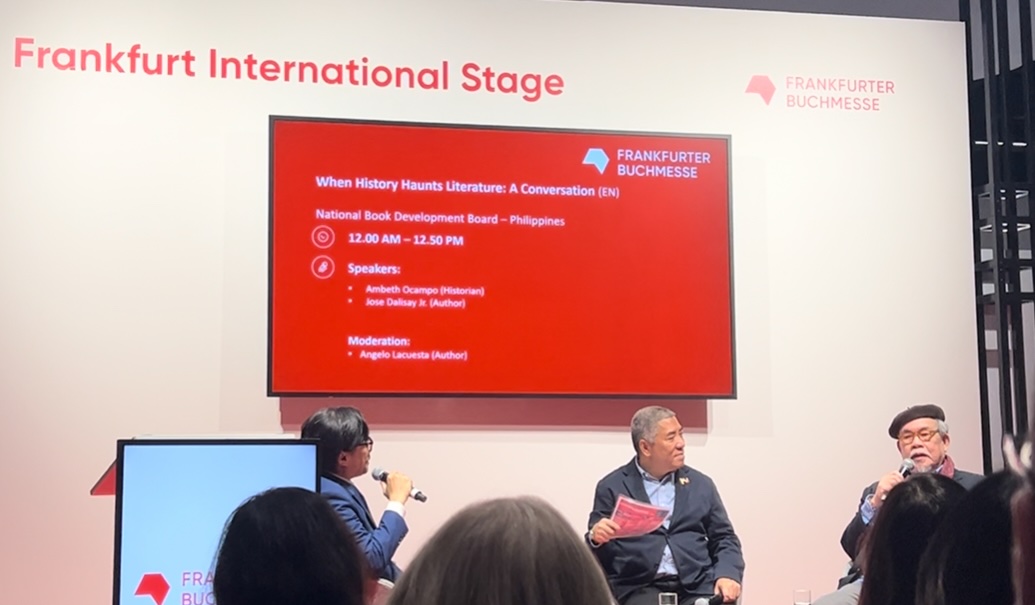
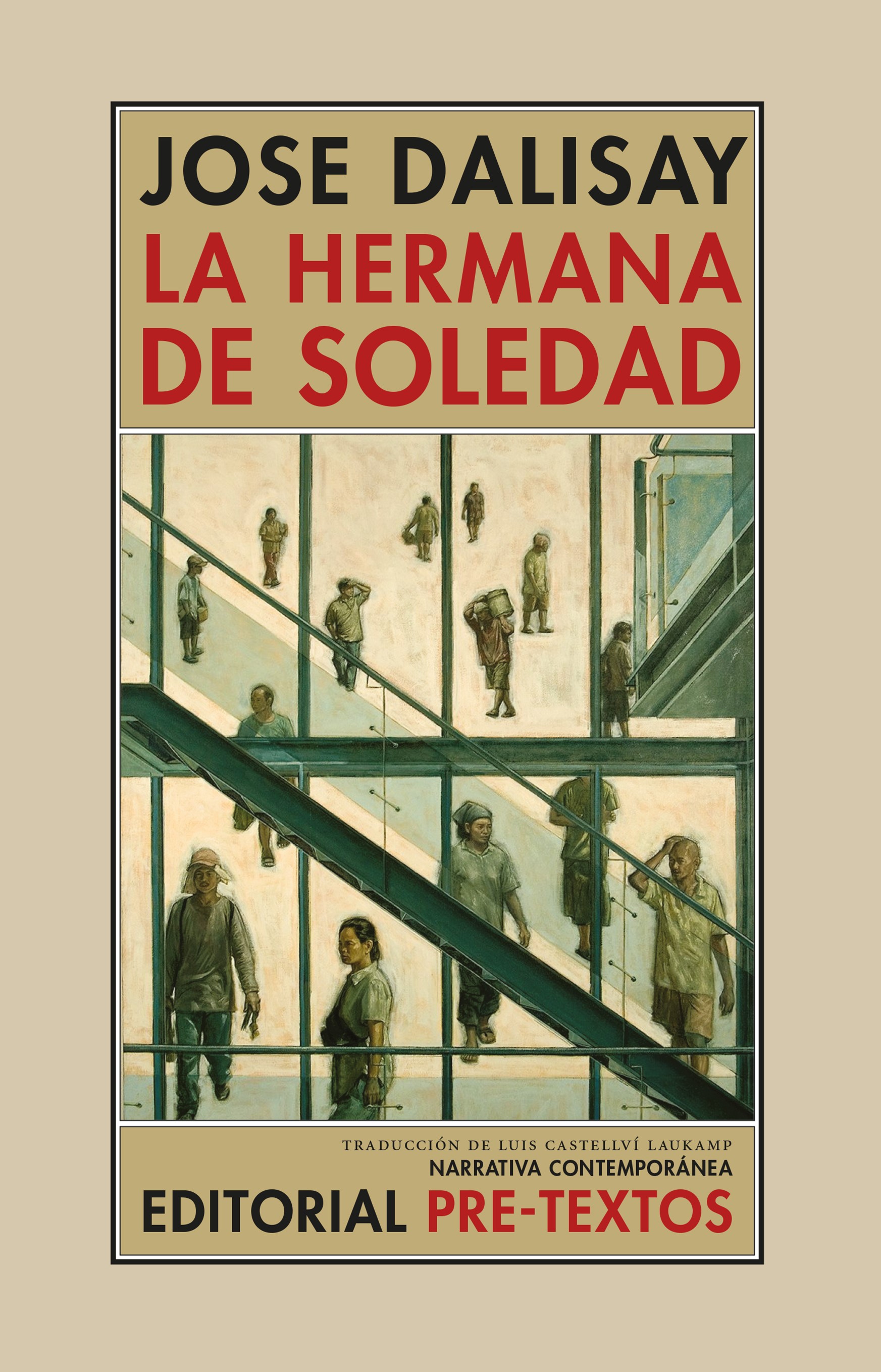
I’m not in favor of this boycott, for reasons I’ll shortly explain, but first, full disclosure: I have been formally invited to attend the FBM as a delegate, and have accepted the invitation; I will be involved in several events—a launch of the new Spanish translation of my second novel Soledad’s Sister, several book readings, and possibly some panel discussions. All my expenses will be answered for. This will be my third (and at my age, likely my last) participation at the Frankfurt book fair, as an author whose books have been translated into Italian, French, German, and Spanish editions. In other words, I have a vested interest in going to Frankfurt. (To those who have never been to the FBM, it is no junket; expect long hours manning the booths, talking to people, selling book rights, and walking kilometers of hallways on the enormous fairgrounds. Frankfurt is not a particularly scenic city, although a side trip to nearby Heidelberg and its Rizal connections will be a welcome break.)

Some readers might find the connection between the FBM and Gaza tenuous and the call for a boycott bewildering, but it does have some basis worth serious consideration. The relationship between Germany and Israel, or the Germans and Jews, is long and complex (highlighted by the Holocaust before Israel even came to be, and the 1972 Munich Olympics massacre, among others), but the immediate trigger for the outcry was the FBM’s controversial cancelation of an awards ceremony for the celebrated Palestinian writer Adana Shibli in the immediate wake of Hamas’ attack on October 7, 2023. 

The outrage is justifiable and widely shared. In this column and other media, I myself have written against Israel’s assault on the Palestinian people (see “The Country I Wanted to Love,” from April 19, 2024), as have many other commentators. Indeed, I know of very few Filipino writers who have cheered the onslaught on—typically those holding orthodox Catholic views upholding Israel as God’s chosen nation. 

Israel’s relentless pounding of Gaza, resulting in the wanton slaughter of innocents, has long outlived its excuse of neutralizing Hamas. It is genocidal butchery by any standard, this calculated starvation of Gaza’s remaining residents, the killing of aid workers, and the mechanical attribution of atrocities to “operational errors.” Netanyahu’s encouragement of Trump’s crass and bizarre proposal to depopulate Gaza so he can turn it into “the Riviera of the Middle East” reveals the utter moral depravity of these two men. 

Israel’s barbarism in its campaign of terror and annihilation has now exceeded Hamas’ own (yes, unlike many protestors, I hold Hamas accountable for its own brutality—something that will surely not endear me to the far Left on this issue). Those of us who study Elizabethan revenge tragedy know this only too well: the line beyond which the revenger no longer seeks justice but mindless retribution, and becomes a horrifying, blood-soaked caricature of the very object it opposes.

The question for us writers is: will any of this be helped by withdrawing our participation from one of the world’s largest (if arguably not freest) exchanges of ideas through books? Will we prevent ourselves at Frankfurt—should the need and opportunity arise—from expressing our opinions on Gaza, among a host of other global issues concerning human rights? (Current German rules restrict financial support to artists seen as anti-Israel, especially those identified with the Boycott, Divest, and Sanctions movement or BDS, among other repressive measures.)

My answer is no. I stand for peace and justice for both the Palestinian and Israeli people—indeed, for all oppressed peoples of the world, including our own. But divesting ourselves of a historic opportunity to express our collective resistance to injustice—not just in Gaza or over this one issue, no matter how pressing, will only be counter-productive. Unless it catches fire (other prominent authors elsewhere, as in Indonesia—which was GOH some years ago—have expressed support), a symbolic boycott will be as deafening and as consequential as a tree falling in the forest.

In the end, this will come down to an individual act of conscience, however one decides, for which we must reserve our respectful acceptance. Whether one goes or stays, one’s reasons or motives have to be clear, so the gesture will not be wasted. I will go to Frankfurt proudly, with neither guilt nor shame, to speak about our people and our struggles for freedom through my books. Engagement, not withdrawal, will be the best service writers can perform for their country and for all oppressed and silenced people everywhere. 

Politicians like to wave one flag—Filipino, American, Israeli, Palestinian. Literature, like all art, has many flags: peace, justice, freedom, equality, truth, love, beauty, and harmony. Let all these fly in Frankfurt.

(Image from Studio Dialogo)

Qwertyman No. 146: A Shift in the Tide

Qwertyman for Monday, May 19, 2025

THE PUNDITS have spoken and all kinds of analyses have been made about the recently concluded midterm elections, with most observers remarking on the surprise victories of Bam Aquino and Francis Pangilinan in the Senate and of Akbayan and ML in the partylist, as well as the steep decline of the hard Left alongside the continuing strength of the pro-Duterte forces. 

Some read the results as a sharp repudiation of the administration, others as a resurgence of the “Pinklawan” moderates, and yet others as just more proof of the Pinoy voter’s kabobohan in keeping the same old names in power. What’s clear is that it was a mixed outcome, giving everyone something to either crow or complain about.

At my favorite poker haunt, where I’ve been playing with a bunch of regulars for nearly twenty years, the table talk inevitably came around to the election results. The people here—mostly young and but with many seniors, mostly men, mostly middle class and urban (you need some money to play poker)—represent for me a good cross-section of our society, perhaps statistically imperfect but more grounded in gritty reality: neither scholars nor ideologues but homeboys coming from both Manila and the far provinces, brought together by nothing grander than chasing after a straight flush and pocket aces.

Maybe to rattle their opponents or to deflect attention from the cards, these guys can talk up a storm about politics. My general strategy is to shut up and smile to keep them guessing; although they know me as a UP professor and could presume on my liberalism, I’ve decided that listening rather than arguing would yield me a truer picture of the Pinoy mind, and protect my hand.

Back in 2022—to my great dismay—that mind was overwhelmingly pro-“Uniteam.” Despite all the information floating out there about Marcosian martial law and Dutertean bloodlust, my fellow pokeristas and even the dealers loudly proclaimed that they were voting for BBM, hushing the few Kakampinks in the room. 

Last week, the atmosphere in the poker place was decidedly different, one of great amazement and relief. There was surprise–but also joy—that Bam and Kiko won. The biggest buzz revolved around Pasig City Mayor Vico Sotto, less over the win that everyone expected than his political future, which everyone agreed should include the Senate and at least the vice presidency, the only concern being his youth (not that he was too young for the job, but for the legal minimum age). No tears were shed over the loss of popular entertainers and media personalities. Not much was said about BBM and VP Sara, who seemed strangely irrelevant, despite the fact that the midterms were effectively a proxy war between them.

Now of course you could say that a gambling den is hardly representative of the Filipino people, but then gamblers are among the most hardboiled cynics you can find, not easily given to idle wonderment. (And then again, poker wouldn’t thrive without foolishly hopeful patsies like me—called “fish”—who go all-in on a pair of deuces, hoping to catch a trio. Remember Anton Chekhov’s description of gamblers as people who “go out for their daily dose of injustice.”) That a shift in the tide seemed to ripple on the surface of these poker faces was encouraging. I suspect that these dehadista sentiments were there all along—but have now been emboldened to surface, and I can see this happening all over the country: it’s okay to hope, to bet on the long shot.

It’s probably a measure of how desperate we’d become, more than anything else, that progressives all over the country are ecstatic to have won two out of 12 seats in the senatorial race, never mind that the other winners were mostly your usual crowd of trapos and Family Feud participants.

After previous wipeouts and defeats that, we were convinced, only massive fraud could have engineered, these signal victories—along with a smattering of other partylist and local wins—have now raised our hopes for a more enlightened electorate and a resurgent opposition.

The question is, who will that opposition be, and who and what will it be opposing? Frozen out of the Palace and facing impeachment, VP Sara has claimed the mantle of opposition leader in her post-election statement. That’s “opposition” in the trapo sense of the word—another faction of the same ruling elite, another version of greed and lust for power.

It should be clear by now that a real, viable, and electable opposition can come only from the middle forces that are beginning to regain their footing after the hard loss of 2022. The sad but not surprising defeat of the more radical Gabriela and Bayan Muna partylist groups—which some see as the triumph of Red-tagging—puts the burden of the fight against corruption and for good governance on Bam Aquino, Kiko Pangilinan, Risa Hontiveros & Co., because it’s something that no one else in the government, certainly not the Dutertites, have the moral authority to undertake.

For this battle, and in preparation for 2028, this opposition has to adopt and master coalition politics—or rather their supporters have to learn how to unite, to maintain focus on the big picture, and to yield ground when necessary for the greater good.

For example, as I noted in an FB comment, Luke Espiritu and Heidi Mendoza turned in good performances—but they could have been better if some of our “liberal”-minded friends didn’t junk them on single issues: Luke for supposedly being an “abortionist” and Heidi for being a “homophobe.” Until we can get beyond our enclaves and agree on broader issues, the real evil will win. Sometimes we look for perfect candidates, people who align with all our principles, check all the boxes, lead blameless lives. But everyone’s flawed—any writer from the Greek playwrights onward knows that. 

We hand-wringers can be our own worst enemies. As a recent opinion piece in the New York Times put it, “Members of the educated elite… tend to operate by analysis, not instinct, which renders them slow-footed in comparison to the Trumps of the world…. Such elites sometimes assume that if they can persuade themselves that they are morally superior, then that in itself constitutes victory; it’s all they need to do.”

We have three years to see what was really achieved in May 2025, and if, like a good pokerista, our middle forces will know how to play a weak hand from a strong position, with a single-minded audacity and resolve.

Qwertyman No. 145: The Devil on My Shoulder

Qwertyman for Monday, May 12, 2025

TODAY, ONCE again, we troop to the polling booths in the hope of making our votes matter—votes that, if the cynics are to be believed, might as well be dust in the wind. The surveys have spoken, the winners named. All that remains is for this day to be over, for the formalities to be done with, for the supposedly inevitable to play itself out. And then we’ll watch the new-old Senators of the Republic proclaimed in a ceremony that will showcase the state of our electoral mind. 

As absurd as it may seem, many Pinoys will actually be happy with the outcome—that’s what the surveys are all about, aren’t they? These are the senators we wanted—or most of us, anyway. “Most of them” is probably what you’re thinking, if you’re a regular reader of this column and agree with most of my views.

I can’t think of a more complicated election in recent times, in terms of an answer to the question of “What’s in our best interest as Filipinos, and how do we make that happen?”

The idealist in me has the simplest and probably the morally most unambiguous response: vote for the best candidates, period: the intelligent, the progressive, the principled, the proven, the humane, the hardworking, the uncompromised. Whether they win or lose, it shouldn’t matter—you’ve done your best as a responsible citizen; in a sense, you’ve won. I sorely want to believe this, and to do this today.

But persistently, impishly, like a little devil perched on my shoulder, a contrarian spirit urges me to temper my idealism with some consideration of its practical costs.

Last week in California, a Fil-Am friend asked me to explain the significance of these elections. In the US, midterms usually mean a referendum on the incumbent President’s performance, and next year will most definitely be one for the Orange Pope and his systematic dismantling of American democracy.

For us Filipinos, May 2025 isn’t that clear-cut—although it should have been, if the armies of May 2022 had remained in place, leaving us with a stark choice between the good and the bad.

But the ruling “Uniteam” alliance has since collapsed, with each side fielding its own troubled slate of aspirants, all seething with the most primal of motives: survival, revenge, profit, and opportunity.

The opposition seems to be a loose coalition of liberal, Left, and anti-administration forces. Among these, four names have consistently surged to the top in the kind of social media neighborhood I inhabit. I’ll call them my Triple A candidates, the ones I won’t have any second thoughts about, leaving me with eight more spots to fill.

It’s those eight that give me pause—not for any lack of qualified and virtuous prospects, but because there could be dire consequences for not filling up the rest of my ballot, as some have suggested, or voting for names without a prayer of winning, as a matter of principle (or, by this time, by force of habit).

It’s interesting to observe how, unlike in previous elections where voting straight for a party’s slate was the norm, various formulas and menus have emerged on social media—cafeteria or halo-halo style—to reflect this urge for some balance between the ideal and the practical in this three-cornered fight. Even opposition stalwarts, including Leni Robredo herself, have been excoriated for their previously unthinkable endorsements of certain candidates from the other side. Whatever happened to ideological purity? (It was always an illusion: note the Left’s earlier alliances with a notoriously bloodthirsty Digong Duterte and an unabashedly capitalist Manny Villar.)

I think many Filipinos understand what’s at stake in this election—not just who will compose the next Senate, but what that composition will mean. As I told my Fil-Am friend, Rodrigo Duterte may be safely imprisoned in the Netherlands, but his specter looms large and heavy over these midterms, through his proxies led by his daughter, VP Sara and their “DuterTEN” team (now more like DuterTWELVE, if you add one Marcos and one Villar). Sara was all set to be impeached for grave threats against the First Family and grand theft Piattos—which would not only have taken her out as VP but disqualified her from running for President in 2028. But that procedure—needing at least 16 votes in the Senate—got kicked down the road, after the election, leaving Sara’s fate up to the newly reconstituted Senate to seal.

So again, I told my friend, presuming that the BBM administration’s game plan here is to freeze Sara out of the presidency so it can install its own man, 2025 is really all about 2028. It’s a referendum, sure—not so much about the present President, but rather the past and maybe the future one. We’re not just—or not even—voting necessarily for the best candidates, but for senators who will push Sara out, or keep her in. Daddy Digong’s summary extradition to the ICC, while a relief for many, merely intensified that drama, raising the stakes to a matter of survival for the Dutertes.

It’s another sad and sorry spot to be in, for these elections to come down to choosing among the lesser or the least of 8, or 16, or 24 evils, against the statistical near-certainty of another wipeout for the truly good. Should I support this fairly familiar trapo, the devil I know, over that manifest idiot, just to help ensure that the latter stays out? Or, again, should I simply disregard all the surveys and scenarios, and vote from my purest and most innocent of hearts for the best people on that ballot? (Was this how the cardinals chose Pope Leo XIV, or did more pragmatic considerations come into play?)

By the time you read this, I shall have cast an early vote as a senior in my barangay. Like we often say, we are whom we vote for, and there’s a part of me that fears what I’ve become or may have to be. I need some of that Holy Spirit with me today—we all will.

Penman No. 473: Taking Care of Emy

Penman for Friday, May 9, 2025

MY MOM Emy turns 97 today, May 9. Some years, her birthday coincides with Mothers’ Day, saving us a celebration. But that’s a bit deceptive, because when you have a parent this old living with you, every day is a blessing worth celebrating. 

It’s hard to believe that Mommy Emy is a lot healthier than she was a quarter-century ago, when we all feared that we were about to lose her, just a few years after our dad Joe Sr. passed away in 1996 from a ruptured aneurysm. After all, the stories usually went that way—one spouse dies, the other follows soon after, out of grief or a sense of life suddenly losing its purpose and meaning. Whatever caused it, Mom fell ill with tuberculosis, with the disease progressing so devastatingly that she was coughing blood and feeling terribly weak. Luckily, her doctor put her on a menu of cutting-edge pills that, over two years, miraculously banished the TB, well enough for her to secure a US visa to join my sister Elaine in California.

Over the next decade, she regained her strength, and even as she sorely missed our dad, indulged in a newfound zest for life—traveling with my sisters in the US, Canada, and Europe, visiting glaciers, going up the Tower of Pisa, and settling into in the quiet suburbs of Virginia just outside of DC with Elaine and her husband Eddie. She stayed there long enough to gain a green card, and we would visit her every now and then, sensing that, despite Elaine’s and Eddie’s loving care, she was pining for home. Eventually she did return to Manila, giving up her green card. “I want to die here,” she stated with finality, and that was that. 

One thing I love about my mom is her eminently practical sense. Since at least five years ago, she has written out clear instructions about what to do in case she was dying—no intubation, no extraordinary efforts to prolong her life, just as quiet and as painless a departure as could be managed. Last year we went out with her to the department store to pick out her funeral dress—a macabre chore to some, but for us, and especially for her, a cheerful excursion, with much discussion about this cut or that shade of blue (yes, she’s going in blue). 

She was born in Romblon a landlord’s youngest daughter, the apple of his eye, the only one to go to UP in Manila, from where she graduated with an Education degree. Growing up, she rode a horse on the farm and accompanied my Lolo Cosme on his trips to Manila. She remembers how easy and provident life was back then: “We would go to the beach and Papa would throw a net into the water, not far from shore, and it would come up teeming with fish, and the fish were everywhere, jumping in the air.” 

My father was a sharecropper’s grandson, too poor to finish college but with a sharp mind and a gift for words that must have swept Emy off her feet. Like many couples of their time and place, they decided to seek their fortune in Manila a few years after I was born. Their love was deep but often tested, given that there were five of us to raise. There was even a time when Dad was a barker for jeepneys, and Mom worked as postal clerk for minimum wage. Life sometimes felt like a soap opera, but we all pulled through, and often it was Emy’s internal toughness that made sure we were fed and ready for school.

Since her return from Virginia, my mom has been staying with us in UP Diliman, occasionally spending time with my three other siblings (Elaine is now in Canada). Still figure-conscious despite her age, she watches what she eats, but we indulge her every whim. It doesn’t take much to make her happy—almost daily Facetime calls from Elaine in Canada and our daughter Demi in the US, a weekly manicure, visits from her brood, and Tuesday Circle get-togethers with her group of neighborhood friends, among whom she is now most senior. 

What surprises people who meet her for the first time is how strong and alert she is. She uses a cane and a walker (but only because we insist), but she takes long walks daily around the yard and just outside the house. Her steps are getting slower and harder, but she marched for Leni in 2022, in gratitude for which the VP sent her a video greeting on her 95th birthday. She reads without glasses, and plays word games on her iPad with a passion; she follows Netflix, and watches the news with tart commentary. She’s as prayerful and religious as they come, but is staunchly liberal in her politics. “All my friends are dead” is her frequent complaint, quickly balanced by “But I’m so thankful for my children!” She and Beng share long meals and laughter-filled conversations. We have no doubt that as long as she takes her maintenance meds and doesn’t suffer a bad fall, she’ll live to be a happy hundred. 

Emilia Yap Dalisay’s name will never make it to the society pages, but she’s the biggest star in our small stretch of sky, and taking care of her has been our grandest privilege. Happy birthday, Mommy Emy, and may you have as many more years to come as God’s kindness will allow.