Penman No. 22: A Feast of Festivals

MILF3

Penman for Monday, Nov. 26, 2012

WHETHER BY design or sheer coincidence, November is turning out to be a kind of Literary Arts Month for the Asia-Pacific region, with a plenitude of literary festivals and conferences being held one after the other over the last four weeks.

First off—as I reported on last week—was the Reaching the World Summit held Nov. 5-9 in Bangkok, Thailand, under the auspices of the Asia-Pacific Writers and Translators Association and in conjunction with the SEAWrite Awards, in itself a major regional literary event. Going on at the same time, from Nov. 2 to 11, was the Singapore Writers Festival, featuring Michael Cunningham of The Hours as this year’s big name, backstopped among others by Marina Mahathir, a feisty political commentator who just happens to be the daughter of Malaysia’s famous PM.

And then, from Nov. 14 to 16, we had our own third edition of the Manila International Literary Festival, billed this year as “Read Lit District.” It was put together as usual by the inimitable and irreplaceable Andrea Pasion-Flores and the National Book Development Board, with the generous support of the Ayala Foundation, among other sponsors. And finally, the world’s biggest gathering devoted to nonfiction—the 2012 Bedell Nonfictionow Conference, with several hundred attendees expected—took place just last week from Nov. 21 to 24 in Melbourne, Australia.

I am, in fact, writing this in Melbourne as I await the opening of Nonfictionow, where I’ve been privileged to be asked to deliver one of the four keynote addresses. You’ll get a report from me very soon on how this conference turned out—and why, as I suggest in my keynote, there’s an even greater necessity for good nonfiction in this age of Facebook and Twitter, when almost any event is deemed newsworthy five seconds after its occurrence. More on this in the coming weeks.

Right now I’d like to focus on the MILF (something about that acronym keeps distracting me, and it has nothing to do with southern secessionists), the youngest of its kind in the region and perhaps necessarily the most modest, compared to its long-running forebears in Hong Kong, Shanghai, Sydney, Singapore, Bali, and Jaipur, among other places. But even at age three, it’s already shown both strength and precociousness, and the ability to attract both big-name writers and SRO audiences—many members of whom pay quite a bit of money just to listen—over its three-day run.

I’d have to admit that years ago, when Andrea first mentioned the NBDB’s plans to start an international literary festival in Manila, I was less than convinced that we could pull it off, having been spoiled rotten by the many others I’d attended abroad. How were we going to bring in world-class international authors? How many locals would turn up? Where were we going to hold the event?

As it turned out, all my misgivings went for naught. Practically since the beginning, the MILF has been a resounding success, attracting the likes of Pulitzer prizewinners Junot Diaz and Edward Jones last year and prizewinning Nigerian poet and novelist Christopher Abani this year, as well as international literary agents and editors, not to mention the usual suspects from the local literary community.

This time around, I sat on two panels—one on “Making the First Page Count” with New York-based author Tim Tomlinson and Soho Press senior editor Juliet Grames, and another with Chris Abani on “The Writer’s Demons.” Both sessions proved deeply instructive even for me, reinforcing the value of encounters like this even among old pros—just when you think you’ve heard everything, you haven’t.

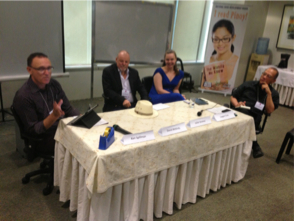
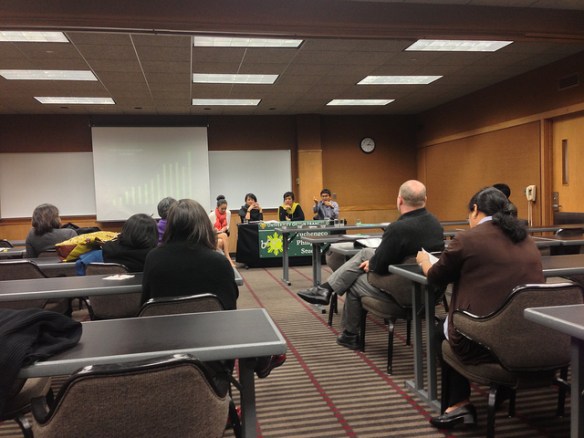
Most instructive of all was a session I attended on literary editing, featuring the prolific and versatile Australian author-editor Ken Spillman, the Hong Kong-based poet and editor David McKirdy, and again Juliet Grames. The session drew a full house—and a good thing it did, because literary editing remains a great unknown to most Filipino authors and publishers, leaving us with unpolished texts if unbruised egos. (Since Soledad’s Sister was picked up by an agent some years ago and subsequently by publishers and translators in Italy and France, aside from a US edition, I’ve had the good fortune—and the humbling experience—of dealing with literary editors, whose comments and suggestions proved insightful and helpful. No pain, no gain.) Here are some outtakes from what they said:

Ken Spillman: “The best writers respond well to criticism…. In my hands, on the average, the manuscript would be reduced by 10 percent…. I see editing as a partnership, helping the book become the best book it can be…. (In a good book) I suspect a lot of hard work has gone on behind the scenes but it is never evident in the reading.”

David McKirdy: “Don’t send a publisher something that’s neither fish nor fowl, and therefore unmarketable—like a combined collection of poems and prose. You should have a clear conception of your work. Don’t try to put lots of different things together—it doesn’t work.”

Juliet Grames, being the most experienced editor of the three, gave the longest and most novel presentation, beginning with the confession that she started off as a writer when she entered the publishing industry, thinking that she could learn the secrets of the trade from within, but soon found her calling as an editor. “Midwifery might be more for you than motherhood,” she said. Her first editing job was no earth-shaking novel—“It was No More Kidney Stones, revised edition,” she said with a wry smile—but it led to many others, and also impressed upon her the importance of the variety of projects a publisher undertakes. “Crime fiction supports the literary fiction that we publish,” she added.

Then like a teacher, she stood up and drew a series of Venn diagrams on the whiteboard: a set of diagrams each for readers, writers, and publishers. (If you’ll recall your high school math, Venn diagrams have to do with circles or sets and their intersections.)

Juliet explained: “For the reader, the three circles to consider are language, or words; story; and morals, issues, or topics. Readers read for these reasons, and my dream book would have all three.” For writers, it was passion, money, and message; for publishers, it was money, cachet, and ideology. Her final bit of advice resonated well with the audience: “Find yourself in these diagrams, and find and approach the right publisher.”

We are, of course, still a long way in the Philippines from having a passel of publishers to choose from, but then again the purpose of an international literary festival is precisely to remind our authors to expand their horizons beyond the local scene. With the right novel or nonfiction opus in hand, we might yet break into the global market of readers as have the Chinese and the Indians, and put Philippine writing squarely on the world’s literary map.

Penman No. 21: Literary Networking in Bangkok

Penman for Monday, November 19, 2012

BENG AND I had hardly stepped off the plane from weather-beaten New York when we were off again to sunny Bangkok, this time to attend a conference of writers and translators from all over Asia and the Pacific. I asked Beng to come along because we hadn’t visited Bangkok in a few years and had always enjoyed the place. Here, again, we were helped by the fact that our unica hija Demi works in the hotel industry, and she was able to find us a nice place in Sukhumvit—the Aloft, Bangkok’s iteration of a global chain of smart boutique hotels. More on the Aloft in a bit.

I was there to take part in “Reaching the World,” billed as Bangkok’s first international literary showcase, under the auspices of the Asia Pacific Writers and Translators Association (AP Writers for short) and the South East Asian Writers (SEAWrite) Award, hosted by the Faculty of Arts of Chulalongkorn University. I sat on the 2010-2012 board of AP Writers with fellow Filipino professor and STAR columnist Isagani Cruz, who served as its chairman.

A sizeable delegation represented the Philippine literary community in Bangkok, aside from Gani and myself: writer and scholar Cristina Pantoja-Hidalgo, who now divides her time between UP and UST; UP English department chair and Southeast Asian literature expert Lily Rose Tope; poet and UP professor Isabel Mooney; fictionist and UP Mindanao professor Jhoanna Cruz; poet and DLSU professor Dinah Roma; essayist and UP professor Jeena Rani Marquez; and UST literature professor Timothy Sanchez. Novelist Charlson Ong, this year’s SEAWrite awardee from the Philippines, joined the Bangkok conference in its last couple of days, coming from the Singapore Writers Festival which I had attended last year.

AP Writers emerged out of an earlier organization, the Asia-Pacific Writing Partnership founded by Jane Camens who had also helped establish the Hong Kong International Literary Festival. Jane, an Australian writer who has lived, studied and worked in the US, the UK, China, Macau, and Hong Kong, has been an indefatigable spirit bringing writers from all corners of the region together, and she will now serve as AP Writers’ general manager. The Sri Lankan-born but Hong Kong-based humorist and essayist Nury Vittachi will serve as AP Writers’ new chairman, backstopped by the Chinese-Indonesian-American fictionist Xu Xi, who runs the MFA low-residency program at the City University of Hong Kong, and by the translator Shirley Young-Eun Lee, who has roots in Korea but who read Classics and Persian at Oxford.

As you can see from just that small corner of the organization’s membership roster, AP Writers is both as regional and as global as you can get. This reflects an increasingly obvious fact in today’s literary world: international and inter-cultural exposure has become vital for writers, to expand both their perspectives and their networks. By “network” we mean here that web of connections that emanates from the writer and his or her work to the other people involved in the process of literary production and dissemination—agents, editors, translators, publishers, critics, booksellers, critics, reviewers, teachers, researchers, and, of course, students and general readers.

This year, in Bangkok, AP Writers paid special attention (and gave formal recognition, in its full name) to a vital but largely neglected member of that network, the translator. A literary work can’t be read beyond its original market unless it’s translated into another language, and that requires the skills of a very small group of specialists around the world. Literary translation isn’t just the kind of word-for-word interpretation you might get from a software program or even a live person—it involves the understanding and translation of one culture into another, the conveyance of nuances that, paradoxically, will never be perfect but will achieve interesting effects of its own. (I’m reminded of a quote attributed to Salman Rushdie, about the most interesting words of a language being the untranslatable ones.) In Bangkok, we were privileged to be in the company of some of the world’s best translators, including the Australian Henry Aveling, who has undertaken many translations from Indonesian and Malay.

We were also treated to a tour of the stately and historic Mandarin Oriental Hotel on the Chao Phraya River, probably the only hotel in the world where writers are revered. AP Writers held its business meeting there, after being regaled by Harold Stephens, an American expat and raconteur who’s written 30 books on travel and adventure and who also happens to be married to a Filipina, with stories of the old hotel from the days when the likes of Joseph Conrad (then still a ship captain), W. Somerset Maugham, Noel Coward, and Graham Greene stayed over. There’s a room and a lounge now maintained in their honor at the hotel—where, fittingly enough, Charlson would receive his SEAWrite Award later in the week from Thai royalty).

Readings and socials are an important part of any literary conference, and while some readings can be interminable (let’s face it: authors love to hear themselves), now and then you come across an entirely original voice. This time around that voice was that of Jang Jin-sung, one of Kim Jong-il’s favorite poets who defected when he could no longer take what was going in in North Korea.

The gut-wrenching hunger and desolation that Jang spoke of in his homeland contrasted, ironically, with the culinary and visual opulence of Thailand, which makes every visit there worthwhile. Beng was landing in the new Suvarnabhumi airport for the first time and was awed by the experience, even more so when the sleek commuter train took us from the airport to the city center for a mere 20 baht (about 30 pesos). We dropped our bags off at the Aloft—a jazzy, upbeat hotel with free wi-fi, a great buffet breakfast, and an iPod stereo player in every room—and dashed off in a cab to catch the weekend market at Chatuchak.

Thailand is a shopper’s and diner’s paradise but Beng and I contented ourselves with a bag for her and an iPhone case for me—and lots of fresh fruit, spicy chicken rice meals, and heavenly foot massages. It may not have seemed too auspicious when the printed menu in one streetside restaurant offered us “Steamed Crap,” but we survived the typo.

We came away much impressed by the Thais’ devotion to culture and literature, good reason for Bangkok to be named the World Book Capital for 2013 by Unesco (a distinction that, I bemoaned, Manila would probably earn by 2053). At the welcome dinner, Bangkok’s urbane and genial governor, M.R. Sukhumbhand Paribatra, ducked out of his busy schedule overseeing preparations for an upcoming world indoor football championship to break bread and share jokes with writers and translators. I’d like to believe we were well worth his and each other’s time.

Penman No. 20: Report from Lansing

Icophil

Penman for Monday, November 12, 2012


THANKS TO superstorm Sandy, which shut down nearly all public traffic on the US East Coast, my flight back to New York from Lansing, Mich. was canceled a couple of weeks ago, requiring me to stay for the last day of the International Conference on the Philippines (Icophil), where I had come to read a paper. I’d planned on leaving that Tuesday because our departure for Manila was set for Thursday, and I wanted the extra day to tie up loose ends and do some last-minute shopping with Beng, who was waiting at her sister’s in New York. But Sandy nixed all that, threatening even my flight home.

But Providence must have had other things in mind, because that last day at Icophil turned out to be a most productive one for me, in terms of making new contacts and friends and listening to provocative presentations.

Let me report, first of all, that Icophil 2012—the ninth of this once-in-four-year series—was a resounding success, with about 250 participants signing in, well over the 150 the organizers had been expecting. This means that there’s a lot of interest in the Philippines and in Philippine studies out there, not only from us Filipinos but also from foreign scholars specializing in Philippine concerns and affairs. (And if you’re wondering why, ask instead why not—given how we’re a fairly large country of more than 90 million people, living in one of Asia’s richest cultural crossroads and exporting our labor and talent to nearly every other country on the planet.) Indeed, about half or more than half of all the participants I met at Icophil weren’t based in the Philippines (from where, admittedly, going to international conferences can be quite expensive, especially without university or government support).

What were they interested in? As Icophil’s programme went, everything from archaeological digs, Pinoy boxing, and the Ati-atihan festival to the economy, indigenous peoples, peace building, and electoral reform. There’s never a dearth of subjects to be explored where the Philippines is concerned, and every door at Icophil was an invitation to a new dish at an intellectual smorgasbord. Everyone I spoke to agreed that they had a hard time choosing which session to attend, and I myself ended up walking into session rooms almost at random, imbibing whatever was on offer to get the full range of things.

I learned a lot by listening to Jay Gonzalez—who teaches political science while also serving as an assistant boxing coach at the University of San Francisco—talk about how he used boxing as an entry point to introducing his students to Filipino and Asian values and attitudes. Robert Balarbar of the National Museum explained the intricate process by which he and his team restored Botong Francisco’s “The Progress of Medicine in the Philippines,” a painting now hanging at the Philippine General Hospital. Robin Hemley of the University of Iowa undertook his own investigation of the controversy surrounding the alleged discovery of the Stone Age Tasaday tribe in Mindanao in 1971—a discovery soon denounced by critics as a hoax—and came to the tentative conclusion that the truth was probably somewhere in between the claims of both believers and naysayers. Sharon Delmendo, a professor at St. John Fisher College in New York who has written extensively about Philippine-American relations, shared the early fruits of her recent research on the “Manilaners”—Jewish refugees from Nazi persecution who found refuge in Manila under the auspices of President Manuel Quezon. Her findings were supported by film footage and interviews put together by independent Fil-Am filmmaker Sonny Izon. Speaking of film, award-winning director Nick Deocampo closed the conference with a screening of his brilliantly animated new documentary on American influences in Philippine cinema.

I’m becoming something of a recluse the older I get, but Icophil—and that extra day—reminded me of how valuable and important it was to keep in touch with fellow academics, particularly those engaged in significant and interesting research that very few other people can be expected to undertake. That’s the burden of scholars and scholarship: their concerns may seem obscure if not downright silly and useless to more practically oriented people, but their ultimate service is to help us better understand ourselves.

They don’t do our thinking for us so much as lay out possible ways of thinking about a problem or situation like migration, conservation, or resource management. I’m fairly sure that many scholars would make lousy executives (although this has been resoundingly disproved in some cases), but their insights into human and social behavior, not to mention their understanding of the physical and natural world, help politicians and businessmen make smarter decisions (unfortunately, not always more socially beneficial ones).

At Icophil, over the farewell dinner that I would have missed had I left on schedule the day before, I also had the pleasure of meeting Stephen Feldman and Mario Feir, who together run Asian Rare Books (www.asianrarebooks.net) from One McKinley Place in Global City. ARB had operated in New York City for over three decades before moving to the Philippines, where Stephen and Mario oversee an incredible, multi-thousand-volume collection of rare books. It’s accessible by appointment only, and I fully intend to avail myself of their kind invitation to visit them one of these days.

To digress a bit, I had one more reason to be rushing home to the Philippines, notwithstanding Sandy. As a shameless, diehard ‘60s liberal, I’m a big Obama fan, and wanted to see him re-elected. But I seem to have had a personal history with American presidential elections: I was in the United States on my first visit when Ronald Reagan won in 1980, and there again as a grad student when George Bush the Father won in 1988. In 2008, I was also in the US on a family visit, but left just a few days before the election, and Barack Obama won. Call it a voodoo jinx, but I knew I had to be out of there before November 6 if I wanted my guy to win. And that’s what happened—Beng and I managed to fly out of JFK on November 1, a day after the airport reopened. Barack, you owe me a big one.

Penman No. 12: A Spectacle of Orientalia

AK

Penman for Monday, Sept. 17, 2012 

I BELONG to a generation that grew up on Broadway musicals—before Broadway got all dark and grungy, and even if we’d never been to Broadway at that point. Thanks to the movies and to vinyl, it was perfectly possible to be transported from Boni Avenue in Mandaluyong to Salzburg and Manhattan, or from Barrio Malinao in Pasig to the South Pacific and Siam. It’s hardly surprising that today, as a grown man approaching 60, I can still sing songs from South Pacific, Carousel, The King and I, West Side Story, The Sound of Music, My Fair Lady, and Camelot with the verve, albeit without the voice, that I had at 17.

I’ve since had the opportunity to catch some musicals on Broadway and the West End, and while I’ve marveled at the visual and vocal pyrotechnics of such modern classics as Phantom of the Opera and Les Miserables, I miss the brave optimism of the old musicals—where, even in death, there was always a glimmer of hope in the end (“You’ll Never Walk Alone” in Carousel, “Somewhere” in West Side Story). I didn’t know then that this defiant cheerfulness was part of a commercial formula; I didn’t care. All I knew was that it felt good to whistle a happy tune, and that, approaching my crush du jour’s abode, I wanted to burst into a heartfelt rendition of “On the Street Where You Live” outside her window.

And so when I recently received an invitation from a long-time Penman reader and correspondent—the accomplished musical theater director Freddie Santos—to a preview performance of The King and I, there was no way that I was going to resist or refuse. The show took place at the Newport Performing Arts Theater at Resorts World a couple of Sundays ago, and my wife and I (or, as I rechristened the two of us, “The Beng and I”) arrived three hours early to see what the Resorts World buzz was all about, being staunch denizens of the North.

“I feel like I’m in Macau” was Beng’s first impression, and soon it was my jaw’s turn to drop when we entered the plush and capacious Newport Theater. It seemed like a daunting cavity to fill, but nothing fills space like music, and as soon as the overture began and the curtains rose, we were all elsewhere.

I had seen the Yul Brynner-Deborah Kerr film version of the musical many times, and so I wondered how Freddie Santos was going to convey all that convincingly in a practically all-Filipino production, but I needn’t have worried. Freddie earns this shameless plug: this is a wondrously good show, so good that The Beng and I will gladly return as paying patrons with friends to see it all again.

In a sense, The King and I is almost pre-programmed to succeed—which only raises the bar for any director assigned to it. Most musicals can be lucky to have more than one or two showstoppers that people will be singing afterwards (say, “I Know Him So Well” from Chess and “What I Did for Love” from A Chorus Line)—often without any idea of where the song came from. The King and I has at least seven of them: “I Whistle a Happy Tune”; “Getting to Know You”; “Hello, Young Lovers”; “We Kiss in a Shadow”; “Something Wonderful”; “I Have Dreamed”; and “Shall We Dance”. (The most difficult piece of all of these to essay—“Something Wonderful”—brought Beng to tears, although, without meaning to diminish Gina Respall’s achievement, I should add that Beng cries every time she sees The King and I, particularly when Yul Brynner dies in the title role.) Incidentally, Gina—as the sympathetic Lady Thiang—is a Filipino performer now based in London, where she has also played the role.

As was to be expected, the veteran Leo Valdez played King Mongkut with comic aplomb and authority. Monique Wilson (on leave from the London Performance School where she is a department head) inhabited her character thoroughly.

No Broadway musical can be complete without a pair of star-crossed lovers—think of Joe Cable and Liat in South Pacific, and of Tony and Maria in West Side Story—and the Tuptim-Lun Tha subplot in The King and I lends the narrative a romantic urgency that counterpoints the Anna-King relationship, which never goes beyond mild flirtation. Tanya Manalang as Tuptim and Lawrence Martinez as Lun Tha carried their duets with powerful poignancy.

The sets and costumes—the latter sourced directly from Thailand—were sumptuous. The allegorical “Uncle Tom’s Cabin” playlet was a masterful demonstration of ingenious stagecraft.

Of course it isn’t just Orientalia on display; after all, there’s no more quintessential East-meets-West piece of theater than The King and I. The 1951 Rogers and Hammerstein musical—based on Margaret Landon’s 1944 bestseller Anna and the King of Siam—purports to chronicle the contact between the British Anna Leonowens and Mongkut (great-grandfather of the present King Bhumibol) and thereby the incipient modernization of Thailand, but the academic in me has to add, at the risk of being a spoilsport, that the truth was far more prosaic than the play, which one critic called “a confection built on a novel built on a fabrication.” Some online sleuthing will quickly reveal that there was a real Anna (1831-1915) and she did go to the Siamese court to teach Mongkut’s wives and children for almost six years, and Mongkut did find her “a difficult woman,” but no, they didn’t waltz around the room “on a bright cloud of music.” Indeed, the movie musical was banned in Thailand when it first came out.

That said, people go to musical theater not for history and scholarship but for spectacle and romance. This unabashed and otherwise silly translation of human emotion and experience into song and dance is after all, from the very outset, a conscious departure from fact and reality, striving for truths of the heart rather than of the mind. Trust the historians and the journalists to lay out the facts, which can and should be appreciated in their own good time; but these momentary fictions and our need for them are also, inalienably, part of what make us human.

In other words, The Beng and I had an enormously good time, and we spent the long ride home singing along to the soundtrack I played off my iTunes in the car. The next morning, I took my usual walk around the UP Oval, with the Peabo Bryson-Leah Salonga version of “I Have Dreamed” streaming through my ears.

The show opened to the public just last Saturday and will run until December, with ticket prices ranging from P1,000 to P2,400—certainly not loose change for cash-strapped Pinoys, but think again of how much you’d be saving by not having to fly to London or New York for the chance of enjoying a world-class musical experience.

(Photo by Geoffrey Yusooncho)

Penman No. 12: Singapore’s Cultural Renaissance (2)

Penman for Monday, Sept. 10, 2012

ANYONE WHO doubts that Singapore is going through a cultural renaissance just has to drop by places like the Goodman Arts Center, the Arts House, the National Library Board building, and any one of the many museums that have sprung up around the city-state city-state celebrating everything from historical heritage to biodiversity and toys.

On a recent media visit to Singapore, I was shown by my hosts from the National Arts Council around many of these cultural hotspots, and they offered a wealth of insights into contemporary Singaporean society and its concerns.

Housed in what used to be a school run by the La Salle Brothers, the  seven-hectare Goodman Arts Center in the Mounbatten district opened last year and has quickly become Singapore’s largest arts enclave, serving as a studio, meeting place, and performance venue for both local and international artists. Studios in the GAC are generously subsidized by the government, and “There’s a long waiting line of artists wanting to use the center,” said Evan Hwong of The Old Parliament House Ltd., which manages the GAC.

Being a complex of converted school buildings, there is nothing particularly impressive about the GAC on the outside; but open one of the many doors and instantly a world of artistic creation meets the eye and swarms the senses. During our visit, we encountered Jerry Hinds, an expat Briton who’s helping young Singaporean cartoonists sharpen their skills not just in terms of drawing but also in sharpening their narratives; Iskander, a longtime transplant from the Netherlands, who’s working to help people see comics not just as entertainment but also as an art form; Sonny Liew, Malaysian-born but Singapore-based, who’s already drawn for Marvel Comics; Japanese artist Eriko Hirashima, who’s turning books into art objects in themselves; and Singaporean copywriter Amanda Lee and artist Winnie Goh, whose Studio Kaleido explores crossovers between visual and literary art.

Not only professional artists are welcome at the GAC. Ongoing at the GAC this month and open to the public are a batik painting workshop, a professional singing course in Mandarin, and classes in contemporary dance, hot glass bead-making, bookmaking, and pottery, among others.

Theater has always been particularly strong and popular in Singapore, and performance venues abound, such as the landmark durian-shaped Esplanade, the elegant Arts House at the Old Parliament Building along the river, and the Drama Theater of the School of the Arts.

We had a special encounter with an icon of Singaporean theater, the playwright and novelist Stella Kon, at the Peranakan Museum which had dedicated an exhibit to her play Emily of Emerald Hill, much performed and beloved of generations of Singaporeans since it debuted in 1982. Although born in Edinburgh (she later reacquired Singaporean citizenship), Stella is of Peranakan origins, referring mainly to the Chinese who settled centuries ago in certain places around the Straits of Malacca, particularly in Penang, Melaka, and Singapore. The Peranakans have contributed richly to the economy, culture, and cuisine of their host countries; most outsiders will recognize, for example, the sarong kabaya immortalized by the TV ad’s “Singapore girl,” a stylized version of traditional Peranakan dress.

Emily of Emerald Hill is a long dramatic monologue in English (most recently and brilliantly performed by the cross-dressing Ivan Heng) that takes the audience through the colorful life of Emily Gan, who rises from poor Peranakan girl to powerful matriarch. It’s a sad story but one that has resonated powerfully with its viewers (it’s being taught here in the Philippines by Dr. Lily Rose Tope, our new departmental chair in UP, in her Southeast Asian literature class), and it’s too bad that we didn’t get to see the play, but meeting the author herself as we walked through the Peranakan Museum was a special treat. “It used to be that being Peranakan was something of a disadvantage,” said Stella, “but today’s it’s become chic.”

The stories of the Peranakan—and much more—are lodged in the National Library of Singapore on Victoria Street, a breathtakingly modern building whose collections comprise not only the traditional hardbacks but a growing library of digitized e-books as well. (Just how far ahead Singapore is in the digital game struck me when I overheard someone mention a “Donate your old iPad” campaign being undertaken there for the use of schoolchildren.) “We don’t actually keep all that many books here,” a reference librarian told me, “because they’re sent out to the public libraries.” In other words, Singaporeans are busy reading. The National Library Board also runs a vigorous publishing program, and its products—such as an annotated bibliography of contemporary Singaporean literature in English—are available for free to anyone interested. The library’s collections are searchable online. At the time we visited, a large and groundbreaking exhibit featuring the letters of Singapore’s colonial founding father, Sir Stamford Raffles, was just about to open; there was also an exhibit upstairs of the personal memorabilia and writing tools (the pens were of particular interest to me) of some of Singapore’s most prominent writers. And here’s a travel tip: the best view of Singapore’s skyline can be had at the National Library’s Pod venue, open by special arrangement.

We ended our visit with dinner and music at Timbre at the Arts House, a bar and restaurant along the breezy riverfront operated by a group led by Danny Loong. Danny was himself a musician but has moved on to become one of Singapore’s leading arts managers and music entrepreneurs. (Danny told me that he was due to fly to Manila soon to judge at a blues-band competition; he’s also brought some Pinoy bands over to Singapore.) The music scene in Singapore was varied and dynamic, Danny told us—and we could hear that for ourselves, as a local trio essayed Bon Jovi on acoustic guitars. Some years ago, a Singaporean rap tune called “Why You So Like Dat?”—in Singlish, of course—was a big hit on the airwaves, and you can still catch it on YouTube. A message on the TV monitors at Timbre reminded the audience that they could send in their dedications to one another via SMS. It was a Monday, just the start of the work week, but the young Singaporeans around us were clearly enjoying themselves—and the great food and wide range of beers—at prices that weren’t going to bust anyone’s wallet.

It’s this kind of popular enthusiasm that Singapore’s cultural planners want to tap into, toward the creation of even more original material that would engage Singaporeans of all ages and levels. There’s a master plan behind all this, and it’s contained in the recently released Final Report of the Arts and Culture Strategic Review, which noted among others that “Since 1988, our cultural vibrancy has increased exponentially, with activities rising almost twenty-fold. Local audiences now have a year-round selection of festivals, fairs, events and activities to choose from. Demand for arts and culture has kept pace with vibrancy, with ticketed attendances and museum visitorship rising three-fold and eight-fold respectively.”

The review is a very detailed plan that our own cultural poobahs can learn a thing or two from—such a streamlining funding requirements for the arts (the NCCA, bound by COA procedures, makes our artists go through hoops of fire for the simplest things). And it should be noted that Singapore’s National Arts Council is backstopped by its Ministry of Culture, Community, and Youth—leaving us, again and parochially, one of the few large Asian countries without a Department of Culture to spearhead these initiatives at the highest levels of government.

On a more personal note, I was happy to be able to indulge myself this last visit in some of my favorite Singapore pastimes—feasting on the chicken rice at the Kopitiam, looking for bargains at the Sunday flea market on Sungei Road, and ducking into the Aesthetic Bay pen shop at ION Orchard for a bottle of ink. On my last morning walk, I stumbled serendipitously into a sidestreet that led me to Emerald Hill, the setting of that fabled play.

And even in Singapore’s smallest corners I found a Pinoy connection. Chatting with Kenny Leck, the owner of Books Actually (who publishes handsome little poetry chapbooks under the Math Paper Press imprint), I discovered that a Filipino poet—my old student and beer buddy Joel Toledo—lived just across the street in Tiong Bahru. Joel’s in Singapore to do his PhD, and has begun to make his mark there, with his Ruins and Reconstructions sitting on the same shelf alongside the works of Alvin Pang, Edwin Thumboo, and Kirpal Singh. I flipped through a copy of the Asia Literary Review in the bookshop, and found contributions by the Ateneo poet Anne Carly Abad and the Leyte-based poet Michael Carlo Villas. One way or another—and let’s not forget the forthcoming Singapore Literary Festival in November—Filipinos will figure in Singapore’s cultural reawakening.

Penman No. 11: Singapore’s Cultural Renaissance (1)

Penman for Monday, Sept. 3, 2012

I’VE BEEN to Singapore many times since my first visit in 1983—almost yearly, in fact, since 2008—but I don’t think I understood and appreciated the place as much as I did when I flew in again last weekend to cover the launch of this year’s Singapore Writers Festival. What I found was not only a vibrant writing and publishing scene, barely mindful of the censorship we instinctively associate with that city-state, but also an explosion of artistic talent in fields as diverse as cartooning, music, and theater. This week I’m going to report on the SWF and writing in Singapore, and next week I’ll talk about the other arts.

For Filipinos more accustomed to thinking about Singapore as a place for upscale shopping and high finance, the notion of “Singaporean culture and arts”may seem a strange one. Singapore, we’ve assumed, just buys and borrows someone else’s art. Indeed, thirty years ago, Singaporean writers were humble enough to acknowledge the fact that they had a lot of catching up to do. In his introduction to 1983’s Stories from Singapore, George Fernandez observed that “Multiracial Singapore is in the throes of evolving a national literature. In this field of national literature in English we are certainly only a fledgling, and we have much to learn from the older and more experienced countries like the Philippines and India.”

That was then. Today, the reality is that—thanks to substantial government support and to a newfound confidence among Singaporean writers and artists—Singapore has become a major cultural hub in Southeast Asia, attracting international talent while nurturing its own.

The Singapore Writers Festival—whose 15th edition will run from November 2 to 11—is a case in point. Formerly held every two years, its organizers have seen fit to turn the SWF into an annual event, bringing it up to the level of other regional events such as the Sydney Writers Festival and the Hong Kong International Literary Festival.

I was a participant in last year’s SWF, engaged in a very lively conversation with the British playwright and novelist Caryl Phillips, but it was different to be going backstage this time and to watch the event being set up. The festival was being launched more than two months in advance to start generating publicity and ticket sales, but our small press group (which included Susan Wyndham of the Sydney Morning Herald and Parisa Pichitmarn of the Bangkok Post) was treated to a preview of the kind of talent to expect at the festival itself, and to an introduction to the Singapore book scene.

Before we even met the authors, we met the books—and a familiar authorial accessory, beer. “Books & Beer” is a regular event that takes place around Singapore at different venues, and this time it was at Lil Papas Wieners Bistro at Tanjong Pagar Plaza, right next to the central business district. Aside from selling a mindboggling variety of craft beers from all over the world, Lil Papa’s features a revolving library operating on a simple principle: bring a book, and take one home. The crowd is decidedly young, but the books on the shelves go beyond perennial favorites Neil Gaiman, Haruki Murakami, and Alex Garland to include Anthony Burgess, John Fowles, and John Le Carre.

At Select Books on Armenian Street, we sat down with a group of Singaporean or Singapore-based writers—Hadijah Rahmat, who writes poetry and fiction in Malay; KTM Iqbal, a Tamil poet; Chow Teck Seng, a poet and fictionist in Chinese; Shamini Flint, an ex-lawyer from Malaysia whose crime mysteries and children’s books in English have sold over 500,000 copies since she began writing six years ago; and Neil Humphreys, a British humorist who has made Singapore his home and whose most recent book, Return to a Sexy Island, recently made Singapore’s bestseller list.

The multiracial composition of the group couldn’t have been more Singaporean, representing the four official languages (English, Malay, Chinese, and Tamil) and the experiences—both pluses and minuses—as well of each of these writers and the language they wrote in. Not surprisingly, Neil and Shamini found it easiest to break through to a larger market—Neil had just returned from a book launch in Malaysia—but even so, barriers remain. “I found that my publishers were much more interested in book with no Asian content,” said the eminently adaptable Shamini, whose books have gone as far as South Africa. Chow Teck Seng saw a way out of the madding crowd by publishing his poems with photographs and other catchy graphics that seem to have clicked with younger readers.

I was both relieved and distressed to find that Singaporean and Filipino authors had much in common. Books are expensive in Singapore, averaging about S$17 (almost P600) for paperbacks and $30 for hardbacks. With a population of 6 million, the market is inherently small. Translation grants—vital in a multiracial, multilingual society—are new and few. “We don’t read each other” was a lament I heard more than once, particularly across the linguistic divide. With the exception of Neil and Shamini, most local writers still need to keep day jobs, usually as teachers.

As for taboos and political no-no’s, they’re still in place—writing too pointedly about race and religion could land you in the hot seat, and Salman Rushdie’s Satanic Verses is still officially banned—but Singaporean writers have learned to test and push the limits. Humphrey’s solution is humor—lots of it. “I’m known as the foreigner who whacks Singapore and survives,” he said. “Regulation encourages creativity,” another writer told me. An anti-homosexuality statute is still in the books, but that hasn’t stopped Jee Leong Koh from writing and publishing overtly gay poetry. And sometimes the poetry comes from people you least expect to write poems, especially traditional sonnets, such as Joshua Ip—the pseudonym of a major in the Singaporean army—whose Sonnets from Singlish has been gaining some traction in the bookshops.

Speaking of book stores, there are around 40 of them in Singapore, including a few prized “indie” bookshops such as Select and Books Actually. The recent global closure of Border’s was a big letdown for book buyers, but old reliables like Kinokuniya are still operating, and even sell some local literature.

There’s a palpable sense of a cultural and literary renaissance in the place, and the forthcoming SWF will be sure to project Singapore’s cultural vitality even more strongly, with Pulitzer prizewinner Michael Cunningham (The Hours), travel essayist Pico Iyer, and Man Asian prizewinner Shin Kyung-Sook leading an impressive list of literary luminaries in attendance (including our own novelist Charlson Ong). All in all, the SWF will feature 138 local and 46 international writers in 200 events spanning ten days.

“And for the first time, we’re having a festival fringe focused on the origins of desire and sexuality in literature,” said the young and energetic festival director Paul Tan, from the National Arts Council. The staid riverside Arts House, which used to be the parliament building, will be hosting dicsussions on (surprise, surprise) 50 Shades of Grey and burning questions like “Do women write better sex?” and “Can you be a feminist and still enjoy women’s magazines?”

If only for that, it should be worth booking a visit to Singapore between November 2 and 11.

Penman No. 8: A Hotel with a View

Penman for Monday, August 13, 2012

A MONTH ago, I was invited out to lunch by Bobby Laurel and his sister Sallie Laurel-Lopez, who both help manage the Lyceum of the Philippines University which was established by their grandfather, the late President Jose P. Laurel, Sr., in Intramuros 60 years ago. I’m writing a biography of Bobby’s and Sallie’s father, the late Sen. Sotero “Teroy” Laurel, and we’d set up the lunch to interview some old Laurel family friends.

The interviews went well, as I’d expected. What came as a pleasant surprise was the venue for our lunch—the Bayleaf Hotel, specifically its 9 Spoons restaurant on the 9th floor. Bayleaf is just a few steps away from the main LPU campus. Externally, the nine-story building blends in with the Spanish colonial architecture of the district; it was an old building acquired from the Licaros family, and subsequently and brilliantly renovated by TI Vasquez Architects & Planners. Its interiors and amenities couldn’t be more modern, with five function rooms that can accommodate up to 500 people, and large LCD TVs and wi-fi access all over the place.

I saw these rooms and the Bayleaf’s suites myself, having asked for a guided tour of the place after a sumptuous lunch at the 9 Spoons (so named after the nine children of Teroy and Lorna Laurel; and before I forget, the crowd favorite at the 9 Spoons lunch buffet—the crunchy bagnet—is to die for). The 57 rooms—which start at around P4,000 a night, including breakfast—are very smartly appointed.

On top—literally—of all these is the Bayleaf’s killer feature, which isn’t even in the building itself: the view. The Bayleaf’s roof deck offers a 360-degree view of Manila Bay, Intramuros, and has quickly become the hotel’s choicest spot. The weather permitting, you could do worse than sit here at sunset with friends, sharing a cold beer.

The Bayleaf’s facilities tie in neatly with the Lyceum’s offerings in Culinary Arts and Hospitality Management, among its strongest programs today (historically, the school had been known for its Law, Foreign Service, and Journalism programs). LPU President Bobby Laurel, however, clarified that “We’re running Bayleaf as a business first, and as a training ground second. I’d describe it as a 3-4-5 star hotel: 3-star price, 4-star amenities, 5-star service. We got the best people we could find to run it. This is going to be an investment, a learning experience that we can duplicate in the other campuses if we do it right.” An avid and talented amateur photographer, Bobby also did some of the pictures in the hotel and the Cioccolata coffee shop on the ground floor.

The next time you’re in Intramuros and feel like having a hearty lunch or a cool drink at day’s end, give Bayleaf a try. Better yet, stay overnight and enjoy the view. I never thought I could say this about a city whose infernal traffic and grime I’ve resigned myself to embracing, but from the Bayleaf’s roof deck, Manila never looked so good.

* * * * *

SPEAKING OF Manila, I don’t get my fellow Manileños who’ve been griping about how badly Manila was portrayed in The Bourne Legacy, with its visual emphasis on the city’s poorer districts. I wonder what they were expecting when the Bourne people came over and said they were going to shoot here. Greenery? Bonifacio High Street? They can get that more cheaply—miles and miles of it—in Southern California.

Of course Manila isn’t all poverty (don’t we know that, every time we ride or drive into one of its gated communities, leaving our pedestrian IDs at the guardhouse), and of course it isn’t fair to portray just one side of things. But movies aren’t about fairness, especially action thrillers with the singleminded purpose of pumping more adrenaline into your bloodstream. They’re about achieving a certain effect, a mood or a backdrop against which the plot can move forward without too many distractions.

If there’s anything to complain about in the movie, it’s how the plot—so rich and complex at the beginning—seems to peter out in the end, after the long and well-executed chase scene. I don’t mean this to be a spoiler, but this movie is begging for a sequel (as if it wasn’t already a sequel to a sequel). Since Jeremy Renner and Rachel Weisz—who turned in very creditable performances—have already sailed off into the sunset (and more literally than you think), I don’t imagine we’re going to see more of Manila in this franchise’s future. Time to hit the slums of Mumbai?

* * * * *

THE RECENT flood—all the more infuriating to many because it didn’t even have a name—reminded me of my own baptism as a reporter for the Philippines Herald back in 1972. I was 18, a freshman dropout who’d wangled his way into a reportorial job at a broadsheet, realizing the dream of my albeit brief lifetime.

I’d been with the Herald for just a few months writing mainly news features when what would be called the July-August floods of 1972 broke over our heads and turned Manila and much of Central Luzon into a giant bowl of mud soup, like Ondoy a month long. That truly was a downpour of biblical proportions.

I did some research at Public Works and realized that the flood plans for Central Luzon hadn’t been reviewed or revised since 1935. I wrote that story up, and got it into the front page—the first time anything I wrote was ever worth the front page, so I’ve kept the clipping to this day.

But more interesting things were in store for me. I reported for work one morning, only to be told to return that evening and to pack a change of clothes. I was going to be sent out on a Navy ship to cover relief operations in Pangasinan, which was still heavily flooded. The ship turned out to be an LST, a Landing Ship Tank, which seemed to me to be a large metal box floating on the ocean—that’s certainly what it felt like when we sailed in rough waters along the coast that night.

The next morning my photographer and I disembarked in Lingayen Gulf, wading into the water like an invading army, and plunged into the wettest excursion of my life. The US bases were still around, and the folks at Clark had sent a big rubber raft along, and I clambered aboard, half-reporter and half-flood victim, to get stories from the flood. We spent a cold night at the governor’s house amidst bags of relief goods, after I’d phoned in my story to a deskman who took it all down on a typewriter with the phone clenched between his cheek and shoulder (ever wonder how newsrooms worked before cellphones and email?).

The following day an American helicopter arrived, a Jolly Green Giant they might have been using in Vietnam, and we hopped aboard—not knowing that its next stop was Clark Air Force Base. Stepping out of the chopper—smoother than any plane I’d ever flown, although I hadn’t flown too many then—I saw and gawked at all those warbirds on the Clark tarmac and imagined for a minute what it would be like to be transported out of this infernal wetness into some place like California; but I settled for the chocolate cake at the commissary (another word added to my vocabulary).

Sunny California would come into my life eight years later. Back in the office the next day, the desk then sent me out to interview Mrs. Imelda Marcos in Malacañang about the Palace’s relief work. She met me in front of a mountain of Nutribuns. I don’t remember much of what she said—charmed witless, I suppose. What can I say? I was eighteen, with hardly a notion that, just a few weeks down the road, an even darker and longer storm was about to fall all over the islands.

Penman No. 7: Creative Writing in Hong Kong

Penman for Monday, August 6, 2012

I WAS honored a couple of weeks ago to be invited to visit the City University of Hong Kong to conduct a workshop for their graduate writing students and to give a reading before a gathering of some of Hong Kong’s brightest writing talents, students and teachers alike.

I’d been to CityU before—two years ago, I attended a literary conference there, then stayed on for the Hong Kong Literary Festival. Established only in 1984, CityU (I kept calling it CUHK, until I realized that these initials were already in use by the Chinese University of Hong Kong) has distinguished itself as one of Hong Kong’s most dynamic and modern campuses, oriented toward the world and the future. Aside from the more traditional disciplines, for example, it has a School of Creative Media which teaches everything from Animation to Computational Art and a newly opened School of Energy and Environment where students can specialize in Climate Science and Energy Technology, among others.

The focus on business and technology is hardly surprising in a place like Hong Kong. What struck me was its apparent bid to become a cultural leader in the region as well—and not just in things Chinese, but in areas dominated and nearly monopolized by Western centers of learning.

A case in point was the CityU program that brought me over—Asia’s first and, so far, only low-residency Master of Fine Arts in Creative Writing (MFA) program. Only in its third year, the program has already attracted many first-rate students and teachers from around Asia and much farther beyond.

At the program’s helm is Xu Xi, a gifted fictionist and essayist who’s the living example of hybridity—she’s Indonesian Chinese, was raised in Hong Kong, and took her MFA at the University of Massachusetts-Amherst. She teaches at Vermont College, but has taken time out to direct the writing program at CityU. Though she’s now an American citizen, Hong Kong is in Xu Xi’s blood and imagination, permeating her fiction. She’s become one of the prime movers of creative writing in the region; we were fellow finalists for the inaugural Man Asian Literary Prize in 2007, and she came over as a panelist at the Dumaguete Writers Workshop two years ago.

In setting up their program, Xu Xi and CityU were deftly capitalizing on Hong Kong’s strategic position as an entrepot attracting people from all over the world, with its large expat community and a new generation of Chinese students writing in English. CityU’s English department was built up and strengthened by the likes of language and literature expert Kingsley Bolton (who gave a wonderful lecture on how the Chinese learned and used English, when I was there) who, a few years ago, co-edited a book with Ma. Lourdes Bautista on Philippine English.

The MFA, of course, remains the global standard for advanced studies in creative writing. (In a radio interview, my fellow Distinguished Visiting Writer, the English novelist Jill Dawson, and I were asked the perennial question: “If Charles Dickens didn’t need an MFA to write his novels, why should anyone?” We answered just as predictably: “You don’t need the MFA to write a novel, but it helps you to focus on writing your novel in an age full of distractions, which Dickens didn’t have to deal with. Besides, if painting and music can be taught and learned, so can writing.”)

There are hundreds of MFA and MA Creative Writing programs around the world today—the MFA tends to be longer and more intensive, and is considered a terminal degree—causing us teachers of writing to ask in wonder and consternation: “Why do so many people want to be writers?” The MFA’s low-residency version has been a recent innovation, with Xu Xi’s Vermont College among the pioneers; there are now around 50 such programs in the US, but only CityU offers one with a distinctly Asian orientation.

Under such programs, students sign up for one-on-one distance mentoring with the program’s international teaching staff, recruited from among the world’s best writers (including our very own New York-based poet Luis Francia). Once a year, for about ten days during the Hong Kong summer, everyone gets together on the CityU campus in Kowloon Tong for a series of intensive day-long workshops with the majority of the faculty in attendance. Students are required to produce a creative thesis, a substantial body of work, and the program should be doable in two years. (Two Filipinos—Karla Delgado and Sheree Chua—are in the program; I also met students from the US, the UK, Australia, and, of course, Hong Kong and China.)

There are pluses and minuses to this kind of arrangement, but it’s clearly a boon to those who may otherwise be too busy or just don’t have the option of attending classes and workshops physically in a university, especially a foreign one. It’s less expensive than a traditional campus-based MFA—certainly less than a US or a UK degree—given that one needs to fly in to Hong Kong only occasionally. But Hong Kong being what it is, it’s by no means cheap, especially for Filipinos used to paying UP tuition fees. The costs aside, the international character of the program in terms of both its students and faculty is its strongest aspect, privileging, for once, an Asian sensibility over the usual Anglo-American bias in creative writing in English.

This was something we could’ve done at the University of the Philippines—we’ve had a 30-year lead over everyone else in the region, after all, in offering degrees in Creative Writing—but sadly we just don’t have the funds and the flexibility to attract the kind of international teaching staff you need for a program of this scale and orientation.

But thinking in terms of the region, CityU’s MFA program is a boost for Asian writing and teaching as a whole, the beginning of the reversal of a century-old paradigm where we learned to write in English only in and from the West.

Penman No. 5: Encounters with History

Library

Penman for Monday, July 23, 2012

I HAD an unusual encounter with history last week, by way of two sorties to two different exhibits that turned out to have a bit more to do with each other than I might’ve initially thought.

The first trip was something I’d been meaning to do for years but just never came around to doing—a visit to the Presidential Museum and Library at Malacañan Palace. (Our tour guide took pains to point out that “Malacañan” referred specifically to the presidential seat of power and the more popular “Malacañang” to the entire place itself; I think we’ll go with Malacañang for the rest of this piece.)

It’s one of those sad ironies that we footloose Filipinos can make elaborate and expensive plans to visit the White House and Buckingham Palace without ever setting foot on our own presidential abode. It could be that for far too long—particularly all those years of martial law—Malacañang didn’t lend itself to friendly visitations by ordinary citizens. That, plus the fact that we Pinoys have never had much of a sense of history, beyond routine celebrations of Independence Day and tired if not tiresome commemorations of Edsa 1. We’ve been schooled to think of history as high drama, as a calendar of big events, forgetting that those events were forged in offices, classrooms, factories, and the shade of mango trees.

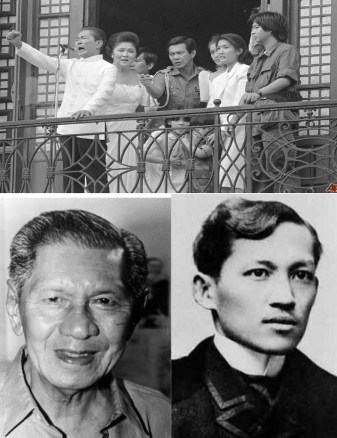
Malacañang is, of course, the perfect theater for high drama—one of the balconies in the museum was the setting for that famous picture of Ferdinand Marcos and his family vowing defiantly to stay and to fight on, shortly before decamping to America in February 1986—but it was also, and remains, home and office to a long succession of men and women who led the country, people doing nothing more earth-shattering on most days than signing letters of condolences and felicitations and proclamations declaring this or that period to be National Fire Prevention Week.

As a museum rat, I’ve always been fascinated by presidential and royal regalia, and by the mementoes left behind by the high and mighty—not to be awed by them, but to appreciate their humanity behind the pomp and the poses. George Washington’s signature blue coat is on display at the Smithsonian, but so are his dentures, which must have hurt far worse than mine, and I don’t even have to worry about putting a country together; the mock pockets on Jose Rizal’s jacket in Dapitan betray a sharp fashion sense even in exile (and the smallness of his body size—a surprise to many Filipinos expecting a titan of a hero—merely accentuates his real stature).

Last week, thanks to the invitation of Ronnie Geron—an undersecretary in the palace and an avid member of Fountain Pen Network-Philippines—our group of over 30 fountain-pen enthusiasts got to visit and tour the Presidential Museum and Library. Since fountain pens themselves are something of an anachronism, stepping back into presidential history was a treat for all of us, and we can’t be blamed for feeling that the highlight of the tour was staring at Emilio Aguinaldo’s pen, or what remained of it—a piece we quickly identified as being very likely a Waterman 52 in mottled red hard rubber (a sorry shell of a pen, in exchange for which I offered to provide a near-mint example from my collection—but no one seemed to be too interested).

There were no other pens to be found that day in the museum and library, but there were roomfuls of other memorabilia, from the time of the Spanish and American governors-general to the prewar, postwar, and recent presidents: photographs, paintings, clothes, books, furniture, documents, and campaign materials. Every president had either a room or a corner devoted to materials from his or her presidency, and our very knowledgeable guide—a young man named Louie—walked us through the history of every room, mindful that the building itself was historic, quite apart from its residents.

The museum and library are located in what is now known as Kalayaan Hall, a 1921 structure used by the Americans as their Executive Building; the Marcoses called it Maharlika Hall, but Cory Aquino gave it its present name. Aside from the Main Hall and Library (or the Gallery of Presidents), the building also contains the Old Waiting Room Gallery, with materials from the Spanish era; the Old Executive Secretary’s Office, with rare Rizaliana; the Old Governor-General’s Office, the Osmeña Cabinet Room, the West and East Staircases, the Quezon Executive Office, the Quirino Council of State Room, the Roxas Cabinet Room, and the Northeast and Southeast Galleries. Plan on spending at least an hour to see and imbibe everything.

What most Filipinos (including many of us) don’t know is that tours of the Presidential Museum and Library are available for a minimal fee to individuals or groups who make the necessary arrangements beforehand. (Call 784-4286 local 4945 or email pml@malacanang.gov.ph for details.) The entrance is through Gate 6, and parking can be had at the Freedom Park just outside the gates.

Another exhibit that I made a point of looking into was one at the Cultural Center of the Philippines Main Gallery, titled “ReCollection 1081: Clear and Present Danger (Visual Dissent on Martial Rule),” co-curated by Marika Constantino and Ruel Caasi, and staged by the CCP in cooperation with the Liongoren Gallery. ReCollection 1081 brings together a selection of artworks produced by Filipino artists during and after martial law, as well as publications produced by both the underground and alternative press.

Those who lived through martial law can’t possibly miss the irony of the exhibition venue—much hated and derided in Imelda Marcos’ time as the domain of the elite, but long since reclaimed by more ordinary folk.

This show was already written about by Constantino herself a few days ago here in the Star, so I’ll just have a few points to add—chiefly, that the artist’s protest against oppression, injustice, and exploitation both preceded and continued after martial law (see Jaime de Guzman’s Sabbath of the Witches, 1970, and Nunelucio Alvarado’s Tunok sa Dahon, 1986).

It was martial law, of course, that provoked both the most explicit and subtlest forms of protest, demanding both courage and wit of the artist, and this range of responses is on full display in the exhibit. Assembling these works was already a feat in itself, considering how many more such works (and their creators) have been lost in the crossfire. Their survival into another century and their installation in the cultural bastion of the dictatorship is sweet poetic justice.

ReCollection 1081 runs until September 30.

Penman No. 4: Writing for Dolphy—Almost

Penman for Monday, July 16, 2012

THE RECENT passing of Dolphy, inarguably the most talented and best-loved Filipino comedian of his generation, brought back some warm memories—not just of me as a kid enjoying Dolphy and Panchito do their “song translation” routine every Sunday on “Buhay Artista”, but also of what could have been a historic opportunity to work with this comic genius in a non-comic way.

The time was the late 1970s, and I had just started out in my screenwriting career with Lino Brocka, for whom I had already written some scripts. Lino and I would go on to do more than a dozen movies together, but the big one that got away was a project that Lino had lined up for Dolphy, Pilar Pilapil, and the very young Niño Muhlach, who had already been introduced as a dramatic sensation in Tahan Na, Empoy in 1977. Shortly after Empoy, which was a big commercial success, Lino was asked by a producer—Jesse Yu of Lotus Films, who had bankrolled Empoy—to think of a project that would involve Dolphy.

Lino then asked me to work up a storyline and a treatment, and we came to the agreement that it would be interesting if we took Dolphy out of the gay comedies he had become famous for (such as 1969’s Facifica Falayfay) and put him in a straight, dramatic role. After a week or so (that was all the time we had back then, when movies were routinely shot within a month), I came up with a storyline I tentatively titled Si Abe, Si Bugoy, at Si Pilar (yes, I liked Pilar Pilapil’s name so much that I decided to keep it for the character) where Abe was a kutsero driving his caritela in the Binondo area, Bugoy was his nephew and sidekick, and Pilar was a lady of the night. It shouldn’t be too difficult for you to guess the rest of the story from there (cut me some slack—I was only 23, and enamored of Fellini, neorealism, and all that jazz).

In any case, the movie never got made; the reason I heard, which could have been true or not, was that Dolphy thought it too abrupt a departure from the norm, his norm. I was crestfallen, but soon got busy with other Brocka projects like Inay (my personal favorite of all my Brocka scripts, a light domestic comedy starring Alicia Vergel) and Mananayaw (with Chanda Romero, breathlessly described by the movie blurb thus: “She’s Wild… and Dangerous! It Takes More Than Love To Tame Her!”). Meanwhile, Dolphy did go on to work with Lino and another very talented scriptwriter, Dandy Nadres, on the delightful 1978 Lotus melodrama Ang Tatay Kong Nanay, where Dolphy played a gay parent caring for a young son, Niño Muhlach.

I never did get to write a script for Dolphy, which was too bad (certainly more for me than for him). In those days I would’ve given my right arm for the love of art, and what the client wanted still mattered less to me than what my feverish imagination was urging; I had convinced myself, rightly or wrongly, that I could’ve written a script that Dolphy would have loved, once he had actually read and acted it out.

I don’t think that I ever got to meet Dolphy in person, either (not that I met all that many stars; despite scripting two dozen movies, I never became an industry insider, although I remained a lifelong fan of such fine actors as Dolphy, Nora Aunor, Vilma Santos, Gina Alajar, and Jacklyn Jose—and, of course, Sharon Cuneta, for whom I wrote three movies).

Well, I did get to write for Dolphy—in a way, in another capacity. When his autobiography—told to Bibeth Orteza and titled Hindi Ko Ito Narating Mag-isa (Quezon City: Kaizz Ventures, 2008)—was about to be published, I received a request to read the manuscript and to write a blurb for the back cover, and I was happy to oblige, a full three decades after our little Binondo project got aborted. Here’s what I said about that book, and about the man:

“This is an extraordinary memoir of an extraordinary man who has gifted generations of Filipinos with laughter, but whose own life has been a struggle to balance life and work, to meet the demands of family and fatherhood, to tame his prodigious passions. This story is told with searing candor and compassion, not only by Dolphy himself but also by the many people whose lives he touched (and, in many instances, brought forth)—his women, his children, his friends, his colleagues. I haven’t read a biography like this, ever, and the uncensored, unmediated first-person accounts strike home with a power and a poignancy you’d be hard put to find in any screen drama. There are moments of humor and irony as well, and all in all we gain a truly moving picture of a brilliant but complex man whom we feel like knowing, in many senses, for the first time.”

Today, with Dolphy gone, these words sound truer than ever, and I would urge you to go look for a copy if you really want to understand Rodolfo V. Quizon, beyond the well-deserved but familiar praises following his death. I was abroad during the book’s launch, but I soon received my copy, autographed thus: “To Butch Dalisay, Thank you for the extraordinary blurb. You are a gem of Phil. Literature. Mabuhay ka and God bless, Dolphy.”

I don’t know if Dolphy was just being his gracious self, or if he had actually read one of my novels or stories, but what I really wanted to tell him—forget the novels and the stories—was, “Naku, Dolphy, kung alam mo lang, I would’ve written you a script you would’ve been so proud of—sayang!” The sayang, again, was more mine than his, because he certainly didn’t need my skills to prove his acting genius. (One favorite Dolphy scene of mine—I’m not sure from where now—has his impoverished character sniffing a dried fish suspended over the dining table, and then sending the fumes down his gullet with a handful of rice.)

I’ve been asked since, “Does Dolphy deserve the National Artist Award?” I’ve always thought so, but it’s a good thing that the Palace didn’t succumb to the enormous pressure to give it to him in a hurry, just because it seemed like he was about to go. He’ll get it, in good time, for the right reasons. If he’s where most people seem to think he is, looking down at us with an arched eyebrow, he’ll see it happen, and crack a smile, tip his hat, turn on his heel, and saunter off, whistling.

[Dolphy’s pic from http://www.inquistr.com]