Penman No. 15: Nerds and Nationalists

Penman for Monday, Oct. 8, 2012

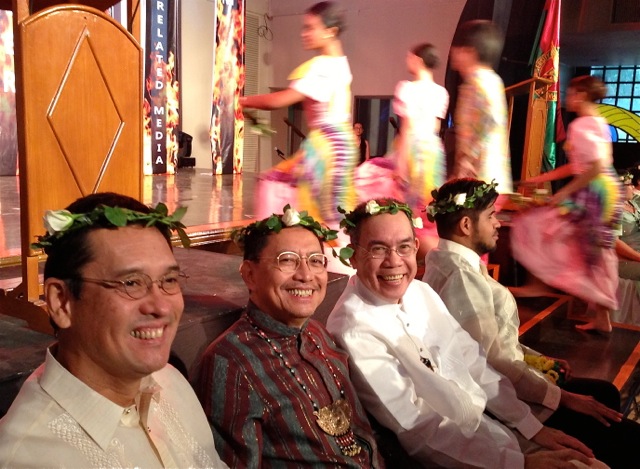
THIS WEDNESDAY, the fraternity I’ve belonged to for over 40 years will be celebrating its first half-century.

I joined Alpha Sigma almost as soon as I stepped into the University of the Philippines in Diliman as a wet-eared freshman in 1970. It was one of the three things I wanted to be a part of in UP, an ambition I’d nurtured over my high school days at Philippine Science—the Philippine Collegian student newspaper, Alpha Sigma, and an activist organization (which turned out to be the Samahang Demokratiko ng Kabataan, via the Nationalist Corps).

They were indeed all of one package: I looked up to Alpha Sigma because the Collegian was then being lorded over by fraternity members like Vic Manarang and Tony Tagamolila, both editors in chief, and Gary Olivar, who wrote a column. It seemed to be the frat where all the cool and brainy guys were, but more than that, it also attracted a strong core of dedicated activists—people like the then-imprisoned Nilo Tayag (one of the original founders) and a quiet but intense young fellow named Benny Tiamzon, now reputed to be the supremo of the New People’s Army.

I can imagine how strange this must sound to many readers who think of writers and academics as deskbound people who should have better things to do than gather around a campfire like cavemen, chug beer, and thump their chests, literally and figuratively. Indeed, in this age of Facebook, NGOs, and Rotary Clubs, fraternities can be seen by people as something of an anachronism, a throwback to feudal privilege and the days of Big Men on Campus. Frankly, I can’t blame them. Just about the only thing most of us hear about frats today is when they haze poor, hopeful neophytes to a bloody pulp. And as far as I’m concerned, frats that do that deserve to be treated like the criminals they are—punished in court and summarily outlawed.

I’d be the last to deny that there’s a lot of childish and sometimes fatal stupidity you can associate with this kind of alpha-male bonding. But to be just as honest, at least back in the day when I was a 17-year-old looking up at the Oblation, there were worse choices I could have made than to join up with this happy bunch of nerds and nationalists.

Alpha Sigma’s founders established it in UP in 1962 precisely to go against the grain of traditional fraternities, which seemed to be interested only in beating each other up, in finding cushy jobs for their alumni, and parading their cars around campus. The initials “AS” may have been suggested by the frat’s base in the College of Arts and Sciences, but they soon stood for “Advocates of Scholarship” and “Alay sa Sambayanan.”

Since then, the fraternity has produced a long line of brothers who have distinguished themselves in nearly all fields of endeavor—not just in the usual categories of business and politics, but also in the arts, in engineering, in public health, and, of course, in public service.

To name just a few, they include the likes of Smart Communications founder Doy Vea, sociologist and journalist Randy David, legal scholar and professor Raul Pangalangan, and the late playwright Boy Noriega. Dodo Banzon runs PhilHealth; over in Seattle, Oying Rimon manages the public health portfolio of the Gates Foundation. I could go on and on with this list, but you get the idea.

We have many brods in mainstream politics—Sen. Gringo Honasan, Cong. Miro Quimbo, and former GMA men Mike Defensor and Gary Olivar among the most prominent of them. But the Left can also count Alpha Sigmans among its most revered figures; aside from the aforementioned Nilo Tayag, Tony Tagamolila, and Benny Tiamzon, they include Billy Begg and Joey Calderon who, like Tony, heroically gave up their lives in the fight against the dictatorship.

Like blood brothers, we have differences, disagreements, and debates within the fraternity, which is a healthy thing. If I thought a brod was doing wrong, I’d consider it my duty and indeed the best thing I could do for him to tell him so. I’ve never believed in a culture of silence and secrets, nor in blind obedience. I do appreciate the opportunity that the fraternity has provided for people from opposite sides of the political fence to meet and to argue civilly without fear of being bashed or punished—something I wish we could do more of in our society at large. I can’t forget that on the run during martial law, many of us found shelter and succor with the brods.

And for the young men who come to UP like I did many years ago and who find their way into our brotherhood, I have a standard set of messages waiting for them. Build up both your mental and physical strength, I say, but eschew violence—it has no place in the university. Value scholarship and service; develop your talents, so you can serve the people better. Be an example for others to emulate.

When a resident brod enrolls in my class and introduces himself to me, I tell him that I will expect more from him than from his classmates, and that he had better be ready to recite on demand, because I don’t ever want it said that I gave a brod a free cut or went easy on him. That’s how we can maintain high standards of behavior and performance within the fraternity, and guarantee that it won’t decline into irrelevance.

If you’re an Alpha Sigman and would like to reconnect with 50 years of a glorious tradition of excellence and service, join us in our grand reunion this Wednesday evening, at the Shangri-La Makati. Please email me for more details.

Penman No. 10: Laurels for the Lyceum

Penman for Monday, August 27, 2012

LAST JULY, a school that has done more for Philippine education and public leadership than most Filipinos realize quietly celebrated its 60th anniversary. Tucked away in a corner of old Intramuros, the Lyceum of the Philippines University—known to generations of Manileños simply as the Lyceum—may seem to outsiders to be just one of the many private colleges and universities that sprang up in the metropolis in the 20th century and managed to stagger into the 21st, dazed and confused by the challenges of globalization and the daunting economics of higher education.

Not quite. Today, the LPU is a progressive six-campus university system, with full-grown offshoots in Batangas, Laguna, and Cavite, and a law school in Makati. Its original and main campus in Manila is home to 13,500 students who are enjoying the benefit of an education anchored squarely on one foot in the classical tradition and, on the other, in new, responsive programs designed to give them an advantage in today’s economy.

I rediscovered the Lyceum in the course of writing the biography of the Lyceum’s longtime president and moving spirit, the late Sen. Sotero H. “Teroy” Laurel, the son of the school’s founder, former President Jose P. Laurel.

There’s no question that the bigger, better-known schools—UP, Ateneo, La Salle, and UST, in particular—dominate Philippine higher education and the preferences of Filipino parents and their wards. These are universities that have produced most of our presidents and heroes, big-name artists and athletes, cutting-edge scientists, business tycoons, and government leaders. They have traditionally catered to, and have also helped to form and strengthen, the Philippines’ intellectual and economic elite. And need we add that these schools, their titanic rivalries, and their alumni (both illustrious and otherwise) hog the media’s attention.

But what we don’t appreciate as much is the fact that so many more of us went to smaller schools that have also offered a good and (importantly to many) an affordable, accessible education that prepared our young people well for productive and gainful lives.

This was the vision of former President Laurel when, close to retiring from a long career in government and politics, he thought of setting up what he called “an Alexandria for the masses,” drawing its name from Aristotle’s school, the lykeion. In a book that he wrote around the same time, Laurel lamented: “How can our schools develop moral character among the young, when the schools themselves have become the centers of shocking scandals in such matters as the procurement of supplies, the selection of textbooks, or in the case of private education, the diploma mills? And where will both teachers and pupils get the inspiration for developing moral character, when they see all around them high officials who have been involved in all sorts of irregularities?

“… The truth is, the wonderful institution established by mankind, known as education, can have only one function and this is the pursuit, in the words of our Mabini, of truth, honor and justice. It can have only one sublime and overriding purpose: the recognition and dignification of the human personality.”

The “old man” Laurel, as was often called, was well positioned and prepared to assume the academic mission that his fellow Tanaueño, Mabini, had effectively bequeathed to him. He himself had a prodigious intellect, capped by a doctorate in law from Yale and honed in service with all three branches of the government—as senator, Associate Justice of the Supreme Court, and Justice Secretary—before his service as wartime president.

The Lyceum opened in July 1952 on a 1.3-hectare lot that used to be the site of the old San Juan de Dios Hospital in Intramuros, acquired for the family by Laurel’s indefatigable wife Paciencia. Teroy Laurel, who had returned from his studies in the US and who was running a law practice with his good friend and compadre Jovito “Jovy” Salonga, joined the school as his father’s executive secretary, perhaps little knowing then that the Lyceum would be the great labor and crowning glory of his own life, apart from his work in the 1971 Constitutional Convention and the Cory-era Senate.

“Jovy used to tell me that he and Teroy would go to Intramuros in the evenings to watch the construction of the school. Jovito was, I believe, the one who drew up the corporation papers, as his line was corporate law,” says Teroy’s widow Lorna.

The new Lyceum may have been a tiny school compared to its well-established neighbors, but it had one thing going for it, something that the Laurel name (the wartime charges of collaboration—eloquently disputed by Salonga, who had suffered torture under the Japanese—notwithstanding) was able to invite: prestige. As I note in my forthcoming book, “The new school had assembled the most formidable array of legal luminaries that one could put together in the Philippines at that time. These were men who would lend their names to Manila’s major streets after their time. Jose P. Laurel was the school president, the dean of the law school was Claro M. Recto, and on the Lyceum faculty were such men as Law Vice-Dean Ambrosio Padilla, Sen. Pedro Sabido, Jorge Vargas, Leon Guinto, Eusebio Lopez, Ramon Avanceña, Aguedo Agbayani, Justo Albert, Isagani Cruz, Marcos Herras, Neptali Gonzales, Roberto Concepcion, Arturo Tolentino, and Gil Puyat—men who had been or would become senators, congressmen, mayors, Cabinet secretaries, and Justices of the Supreme Court.”

Not surprisingly, the law school became one of the Lyceum’s bastions. This was accompanied by very strong programs in Journalism, Foreign Service, and Political Science, with the likes of Jose Lansang Sr., Francisco Lava, Emmanuel Yap, and Jose Ma. Sison on the faculty roster. They instructed and inspired a generation of young nationalists who included Journalism majors Satur Ocampo and Tony Zumel.

The Lyceum would go on to produce a veritable rainbow of luminaries including at least 17 ambassadors and eight Justices, three generals, three senators (Jinggoy Estrada, Ernesto Herrera, Panfilo Lacson), Speaker Sonny Belmonte, Gov. Grace Padaca and three other governors, media men Isagani Yambot, Fred Gabot, Gus Abelgas, Gerry Baja, and Deo Macalma, actor Cesar Montano, film director Joel Lamangan, Philamlife president Rodrigo de los Reyes, and education advocate Milwida Guevara, among many others.

New offerings in such areas as Hotel and Restaurant Management, Computer Science, and (in its Batangas campus) Robotics and Digital Animation and Marine Transportation keep revitalizing the traditional curriculum and assure the Lyceum’s continuing responsiveness to the times.Today, Teroy’s eldest son Bobby is on top of LPU-Manila as its president, assisted by his sister Sallie. Under the watchful eye of their mother Lorna, most of the other Laurel siblings—notably Peter, who serves as president of LPU-Batangas—are also involved in this unique family enterprise, proving themselves worthy of their father’s and grandfather’s name, and giving thousands of young Filipinos a fighting chance for a better future.


Penman No. 7: Creative Writing in Hong Kong

Penman for Monday, August 6, 2012

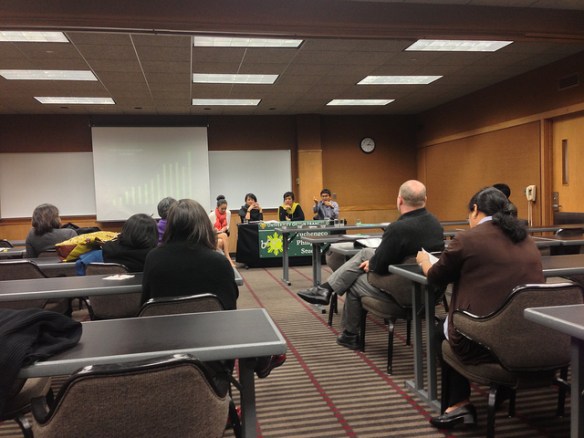
I WAS honored a couple of weeks ago to be invited to visit the City University of Hong Kong to conduct a workshop for their graduate writing students and to give a reading before a gathering of some of Hong Kong’s brightest writing talents, students and teachers alike.

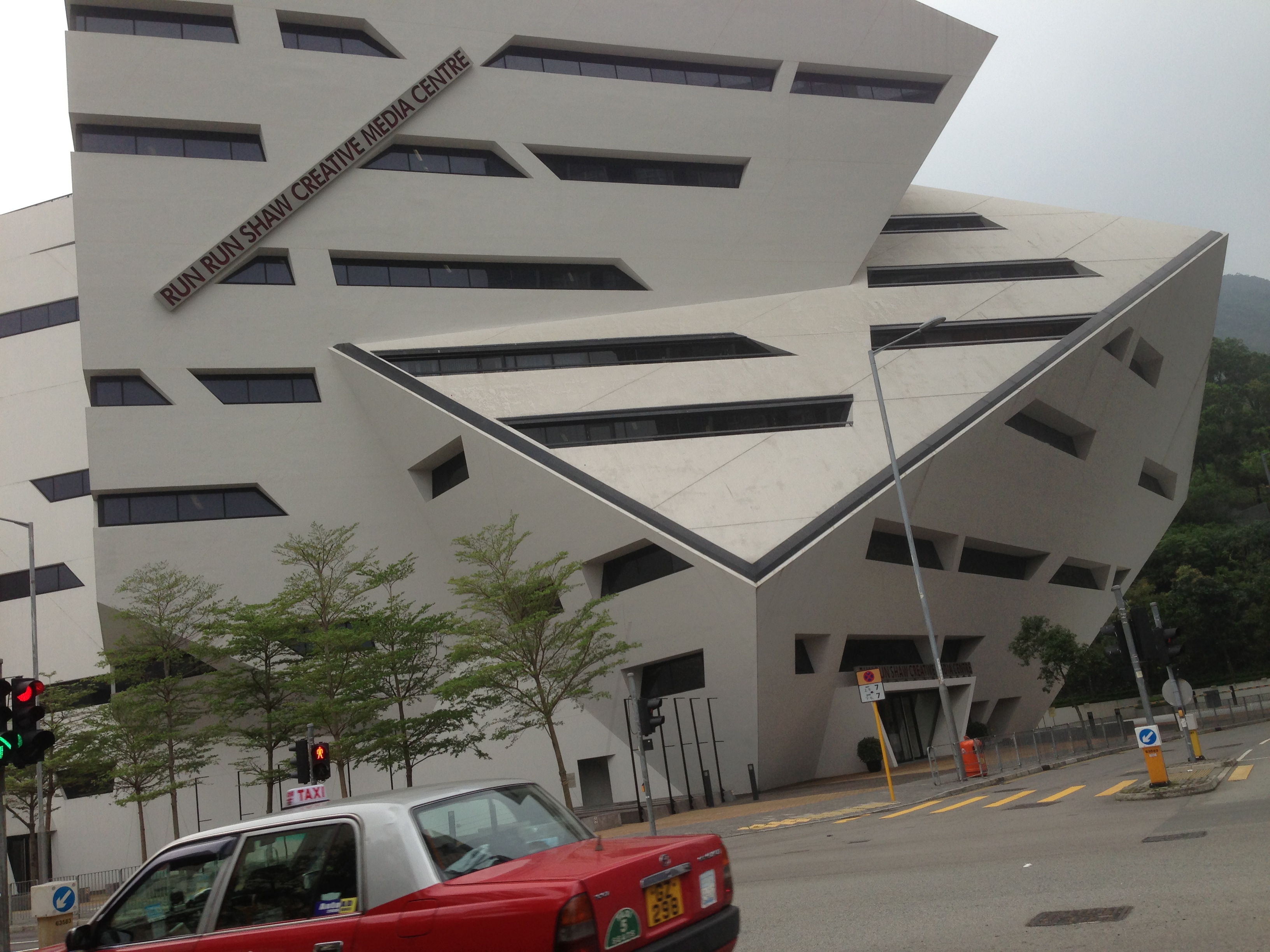
I’d been to CityU before—two years ago, I attended a literary conference there, then stayed on for the Hong Kong Literary Festival. Established only in 1984, CityU (I kept calling it CUHK, until I realized that these initials were already in use by the Chinese University of Hong Kong) has distinguished itself as one of Hong Kong’s most dynamic and modern campuses, oriented toward the world and the future. Aside from the more traditional disciplines, for example, it has a School of Creative Media which teaches everything from Animation to Computational Art and a newly opened School of Energy and Environment where students can specialize in Climate Science and Energy Technology, among others.

The focus on business and technology is hardly surprising in a place like Hong Kong. What struck me was its apparent bid to become a cultural leader in the region as well—and not just in things Chinese, but in areas dominated and nearly monopolized by Western centers of learning.

A case in point was the CityU program that brought me over—Asia’s first and, so far, only low-residency Master of Fine Arts in Creative Writing (MFA) program. Only in its third year, the program has already attracted many first-rate students and teachers from around Asia and much farther beyond.

At the program’s helm is Xu Xi, a gifted fictionist and essayist who’s the living example of hybridity—she’s Indonesian Chinese, was raised in Hong Kong, and took her MFA at the University of Massachusetts-Amherst. She teaches at Vermont College, but has taken time out to direct the writing program at CityU. Though she’s now an American citizen, Hong Kong is in Xu Xi’s blood and imagination, permeating her fiction. She’s become one of the prime movers of creative writing in the region; we were fellow finalists for the inaugural Man Asian Literary Prize in 2007, and she came over as a panelist at the Dumaguete Writers Workshop two years ago.

In setting up their program, Xu Xi and CityU were deftly capitalizing on Hong Kong’s strategic position as an entrepot attracting people from all over the world, with its large expat community and a new generation of Chinese students writing in English. CityU’s English department was built up and strengthened by the likes of language and literature expert Kingsley Bolton (who gave a wonderful lecture on how the Chinese learned and used English, when I was there) who, a few years ago, co-edited a book with Ma. Lourdes Bautista on Philippine English.

The MFA, of course, remains the global standard for advanced studies in creative writing. (In a radio interview, my fellow Distinguished Visiting Writer, the English novelist Jill Dawson, and I were asked the perennial question: “If Charles Dickens didn’t need an MFA to write his novels, why should anyone?” We answered just as predictably: “You don’t need the MFA to write a novel, but it helps you to focus on writing your novel in an age full of distractions, which Dickens didn’t have to deal with. Besides, if painting and music can be taught and learned, so can writing.”)

There are hundreds of MFA and MA Creative Writing programs around the world today—the MFA tends to be longer and more intensive, and is considered a terminal degree—causing us teachers of writing to ask in wonder and consternation: “Why do so many people want to be writers?” The MFA’s low-residency version has been a recent innovation, with Xu Xi’s Vermont College among the pioneers; there are now around 50 such programs in the US, but only CityU offers one with a distinctly Asian orientation.

Under such programs, students sign up for one-on-one distance mentoring with the program’s international teaching staff, recruited from among the world’s best writers (including our very own New York-based poet Luis Francia). Once a year, for about ten days during the Hong Kong summer, everyone gets together on the CityU campus in Kowloon Tong for a series of intensive day-long workshops with the majority of the faculty in attendance. Students are required to produce a creative thesis, a substantial body of work, and the program should be doable in two years. (Two Filipinos—Karla Delgado and Sheree Chua—are in the program; I also met students from the US, the UK, Australia, and, of course, Hong Kong and China.)

There are pluses and minuses to this kind of arrangement, but it’s clearly a boon to those who may otherwise be too busy or just don’t have the option of attending classes and workshops physically in a university, especially a foreign one. It’s less expensive than a traditional campus-based MFA—certainly less than a US or a UK degree—given that one needs to fly in to Hong Kong only occasionally. But Hong Kong being what it is, it’s by no means cheap, especially for Filipinos used to paying UP tuition fees. The costs aside, the international character of the program in terms of both its students and faculty is its strongest aspect, privileging, for once, an Asian sensibility over the usual Anglo-American bias in creative writing in English.

This was something we could’ve done at the University of the Philippines—we’ve had a 30-year lead over everyone else in the region, after all, in offering degrees in Creative Writing—but sadly we just don’t have the funds and the flexibility to attract the kind of international teaching staff you need for a program of this scale and orientation.

But thinking in terms of the region, CityU’s MFA program is a boost for Asian writing and teaching as a whole, the beginning of the reversal of a century-old paradigm where we learned to write in English only in and from the West.